Am I ready for school badminton team selection (Selection Readiness Guide)
It is the question every school player asks in the weeks before trials: am I ready for school badminton team selection? The honest answer rarely turns on the shot players most want to show. A powerful smash is only one part of playing a useful match, and selectors who watch whole games know it. Readiness is whether your basic shots, your movement and your decisions hold up when the shuttle becomes less predictable: whether you can serve into a sensible area, return without handing over an easy attack, move in balance and keep a rally going. This page checks readiness in that order, and it is plain from the start about one thing: the school makes the selection decision, and no course can promise a place.
Selection Check #1
What Selection Readiness Really Means
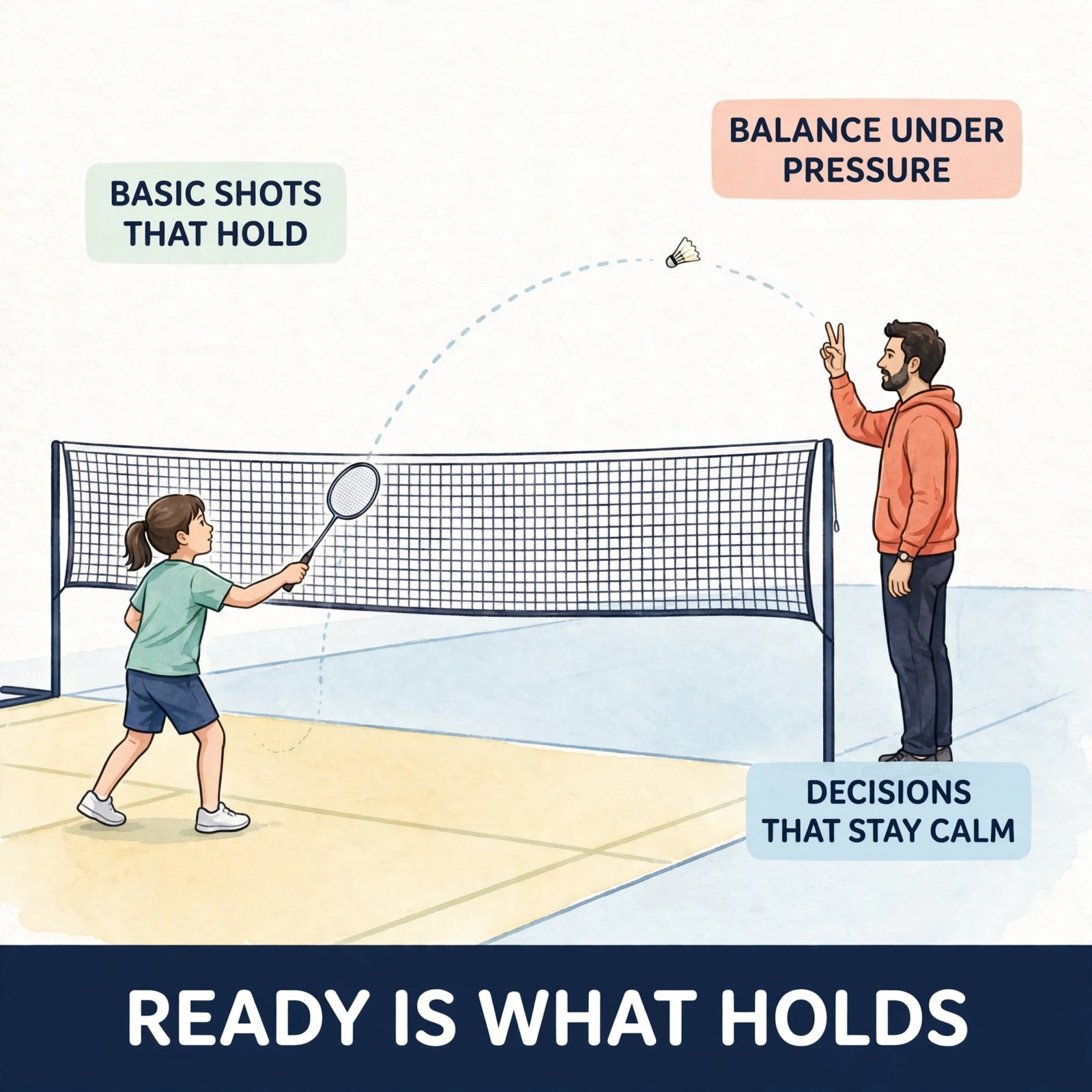
Selection readiness, in the way this page uses the term, is the set of reliable things a player brings into an unfamiliar game: a serve that starts the rally safely, returns that do not donate attacks, movement that arrives in balance, basic shots that hold when the feed stops being friendly, and decisions that stay sensible when the player is late, tired or behind. It is graded by what holds under pressure in games, not by what looks best in a drill. It also includes knowing what selection actually involves at your school, because readiness aimed at the wrong task is wasted work: the format, the criteria and the date are facts to collect before the training plan is written.
The cost of weak preparation is paid on the day, in predictable ways. A player who prepared for an imagined format, a particular drill or a ranking they assumed would matter, can find the real assessment measuring something else entirely. A player who only played matches arrives with weaknesses exposed but unrepaired; a player who only drilled arrives with clean technique that has never survived a stranger’s rally. And the player who forced winners all through preparation has trained exactly the habit selection punishes: donating points while reaching for highlights. None of these are talent failures. They are preparation failures, and preparation is the part fully within the player’s control.
Selection Check #2
Know The Task: Format, Serve And Return
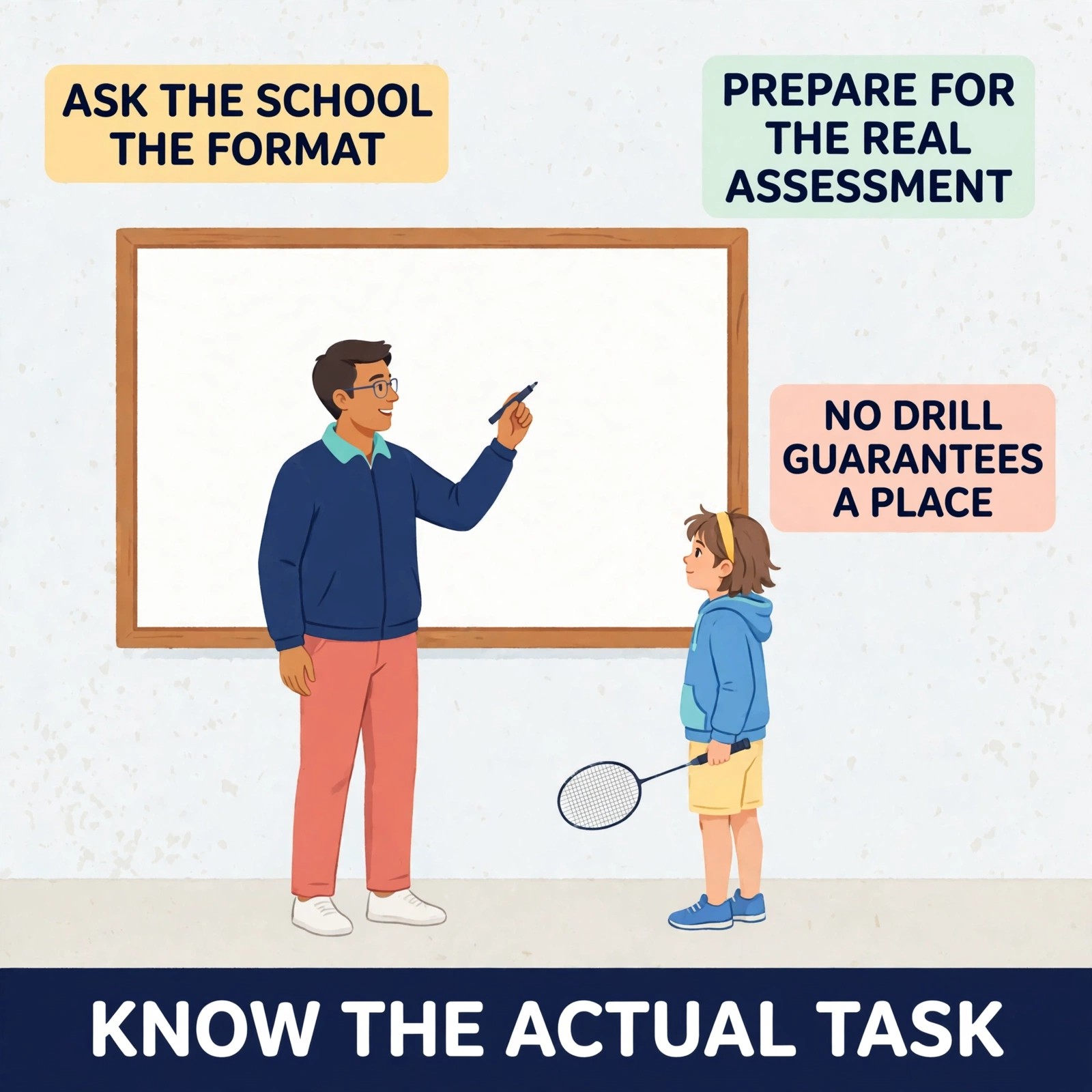
The preparation starts with facts, not training. Ask the school what selection actually involves: the format of the games or assessments, who is eligible, when it happens, and what the coaches say they are looking for. Different teams assess players differently, and two schools in the same district can run completely unlike trials. Prepare for the actual task rather than assuming a particular drill, ranking or past result will carry the day. With the facts in hand, share them with your coach: the date, your current playing experience and your school timetable. A plan built on the real format spends its weeks on what will actually be watched.
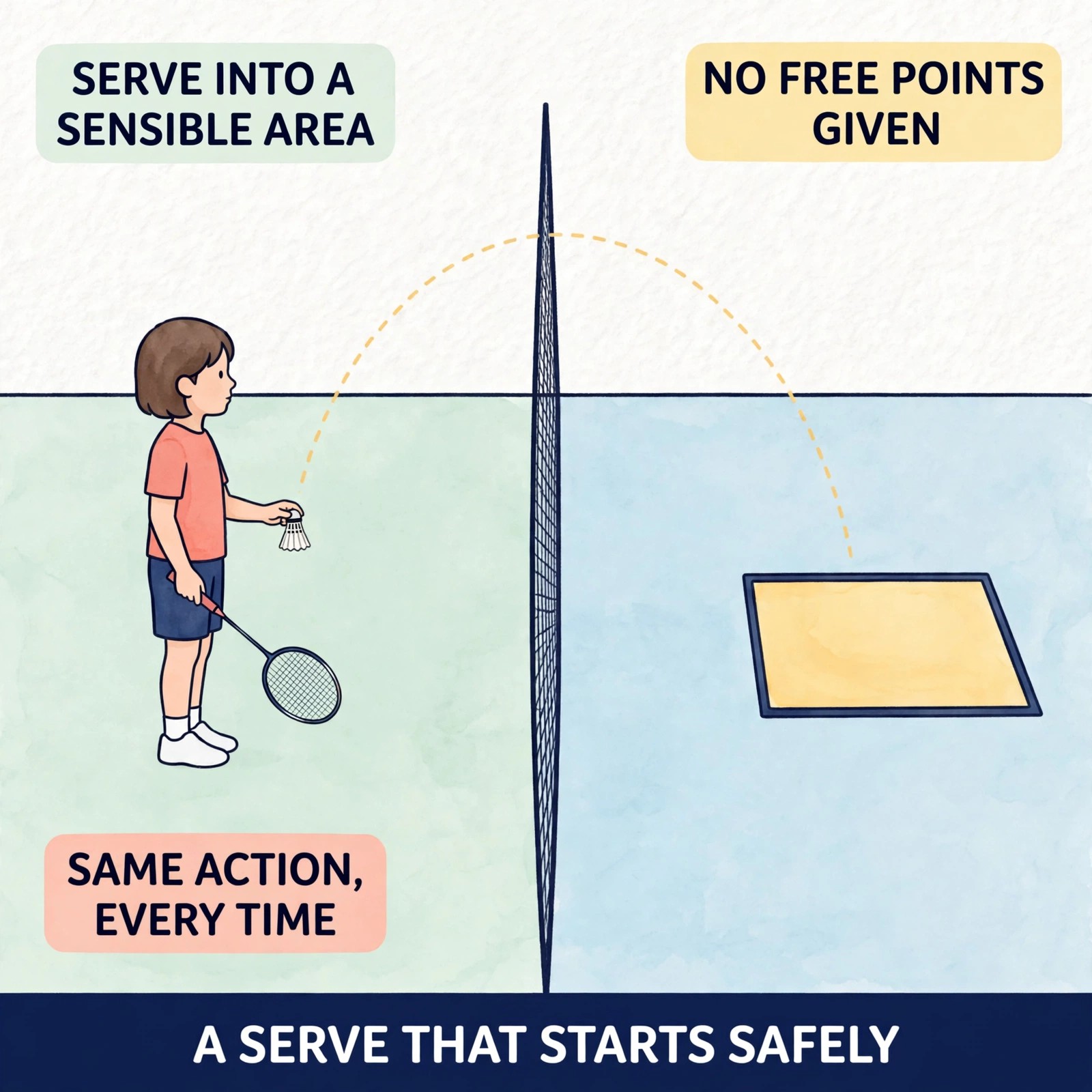
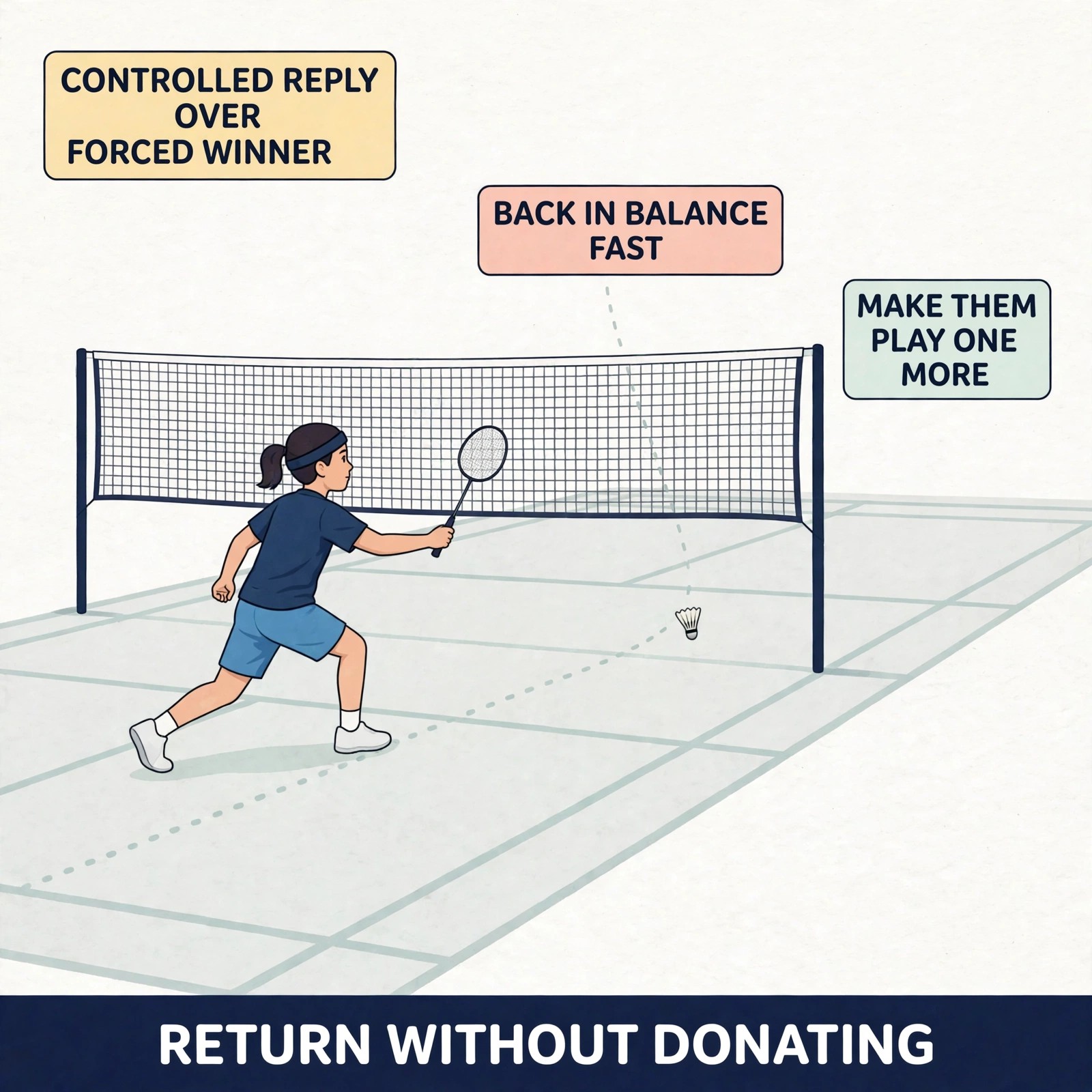
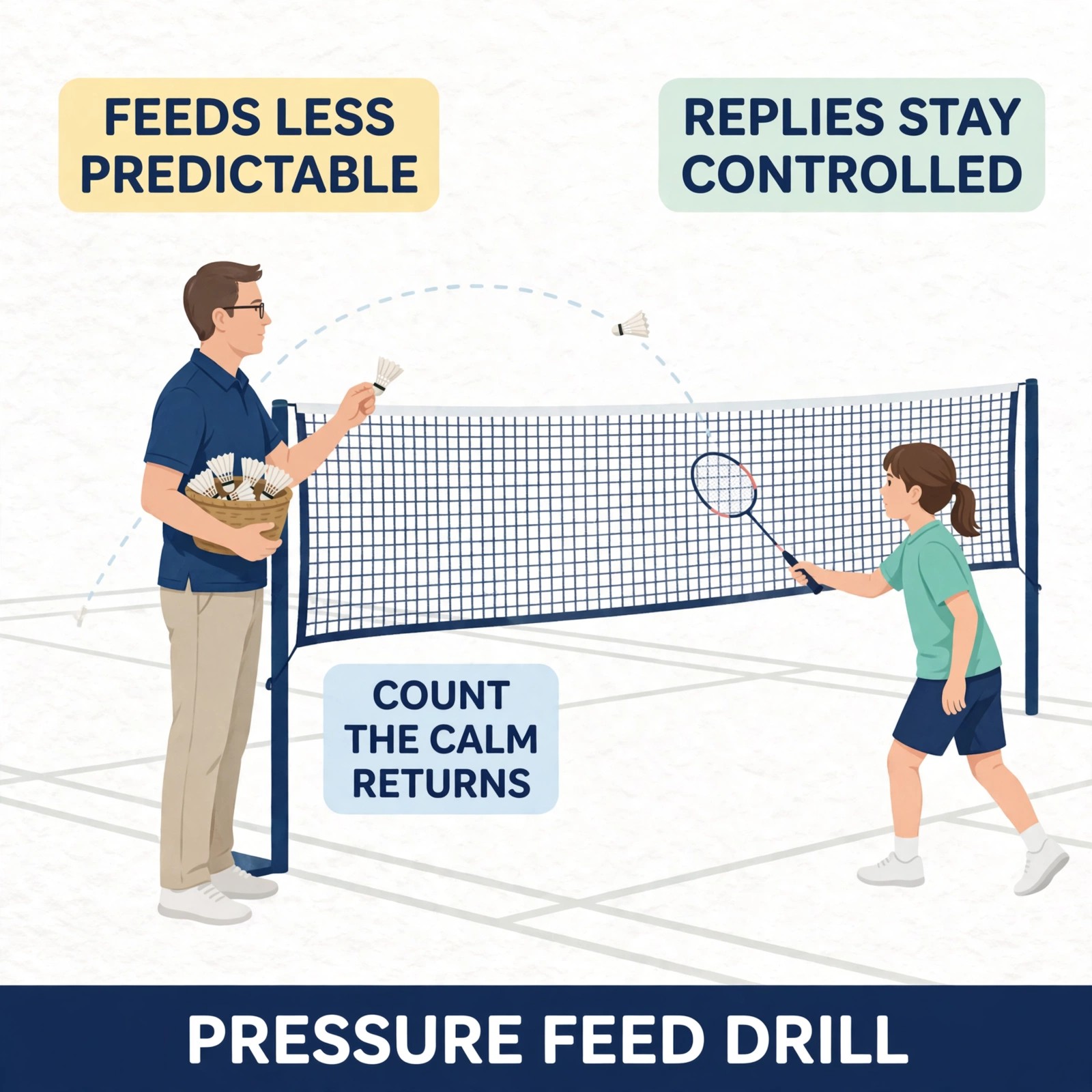
The base of readiness is a pair of unglamorous shots: the serve and the return. The serve must start rallies safely, into a sensible area, with the same action every time, because a selection game gives away nothing faster than free points at the start of rallies. The return must answer without donating: controlled replies that make the other side play one more shot, rather than forced winners that end the rally for them. Both are judged by selectors whether players realise it or not, because both happen in every rally of every game. A player whose serve and return are boring and reliable has built the floor everything else stands on.
Selection faults repeat on a short list. The forced winner, struck from a stretched position because a point felt important, which donates more than it wins. The admired shot, where the player watches their own good hit while the reply passes them. The guessed format, preparing for drills that never appear. The favourite shot diet, practising what is already good while the weakest repeated situation goes untouched. And the vanished routine, where schoolwork, sleep and rest fall apart in the very weeks they matter most. Each fault maps to a repair in this page’s order: facts first, serve and return second, the weakest situation third, games last.
Selection Check #3
Reading Under Pressure: Choices When Late Or Tired
Reading under pressure is where selection games are quietly decided. A feather shuttle is read by its arc, its height and its speed, and the read must survive disguise: opponents in trials are also trying to impress, and their swings will hold and flick. The trained habit is to watch the shape of the other side, the turn, the elbow, the racket carried early, and to hold your own position until the shuttle’s flight confirms the choice. The decisions that matter most come when you are late or tired: a controlled reply played from balance keeps the rally and your reputation alive, while a forced winner from a stretch usually ends both. Selectors remember the player who stayed sensible at the hard moments.
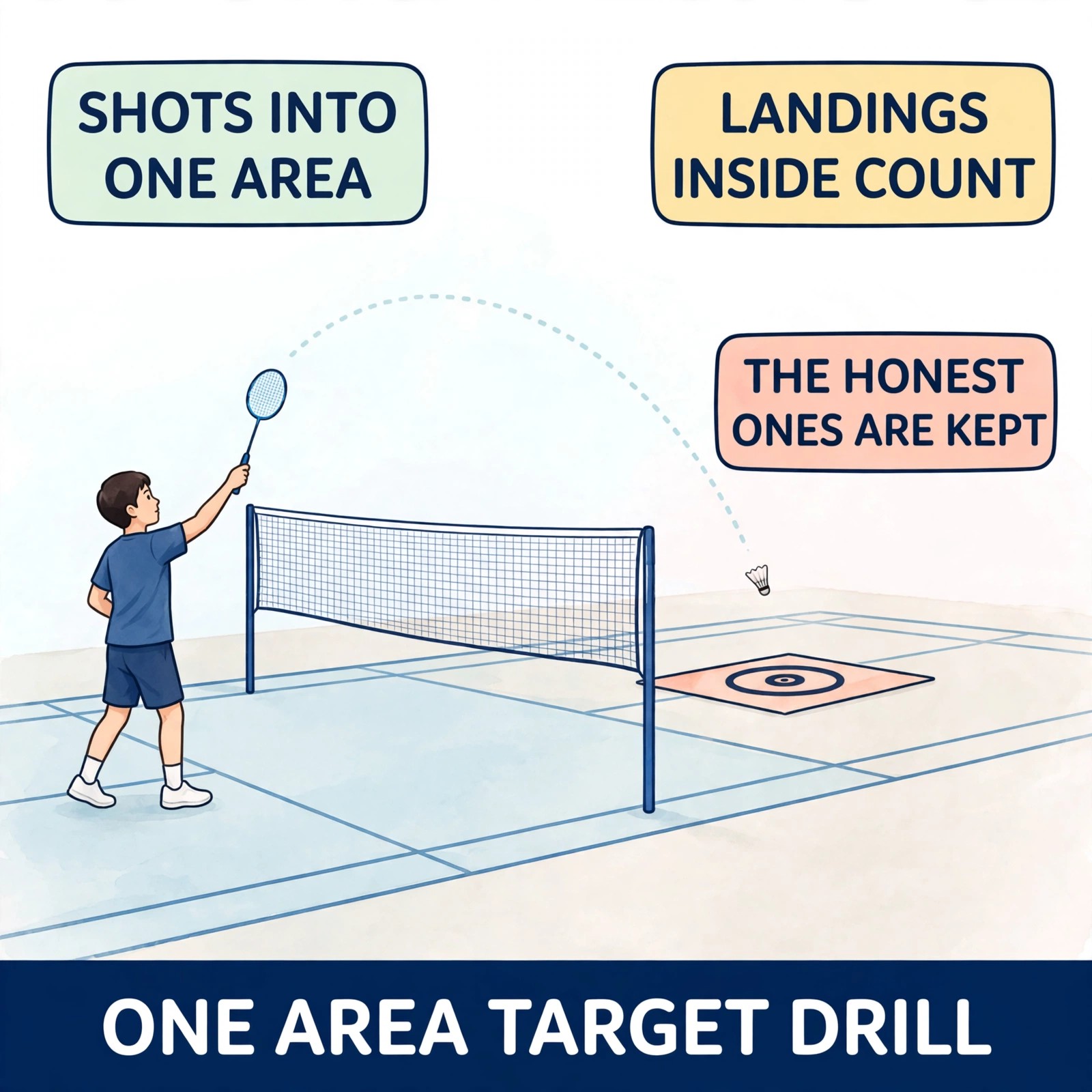
The honest target, in selection as in training, is an area rather than a moment of brilliance. Serves go into a sensible service area with margin. Clears go to the middle of the back area, drives to the middle spaces, returns to areas that make the next shot awkward rather than easy. A player aiming at areas keeps almost every rally alive and lets the opponent supply the errors; a player aiming at lines and winners supplies the errors personally. In preparation the count is plain: serves landing in the sensible area out of a set, returns that did not donate an attack out of a set, counted honestly, because those two numbers predict selection games better than any highlight does.
Choosing the reply is the decision skill selection weighs most. The rule is simple to say and hard to keep: control before force. From balance, with time, attack is honest. From a stretch, late or off balance, the controlled reply is the senior shot: it keeps the rally, rebuilds your position, and asks the other side to win the point properly. Young players often feel that trying something spectacular shows more; experienced watchers read it the other way, because they are selecting a team member who must be trusted at the hard moments of real matches. The player whose choices stay sensible when tired is the player coaches build teams around.
Selection Check #4
Choosing The Reply: Control Before Force
Movement for selection is judged as a round trip. Arrive in balance, play the shot, and return toward base before the reply is struck, because trials are full of players who reach the shuttle once and watch it. The lunge that recovers, the rear court shot followed by the push back, the base that shifts with the rally rather than sitting on a painted spot: these are the movements that make basic shots possible in the fifth game as in the first. A player who keeps arriving balanced makes the reliable shots look easy. A player who arrives stretched makes the same shots look brave and then, a rally later, absent.
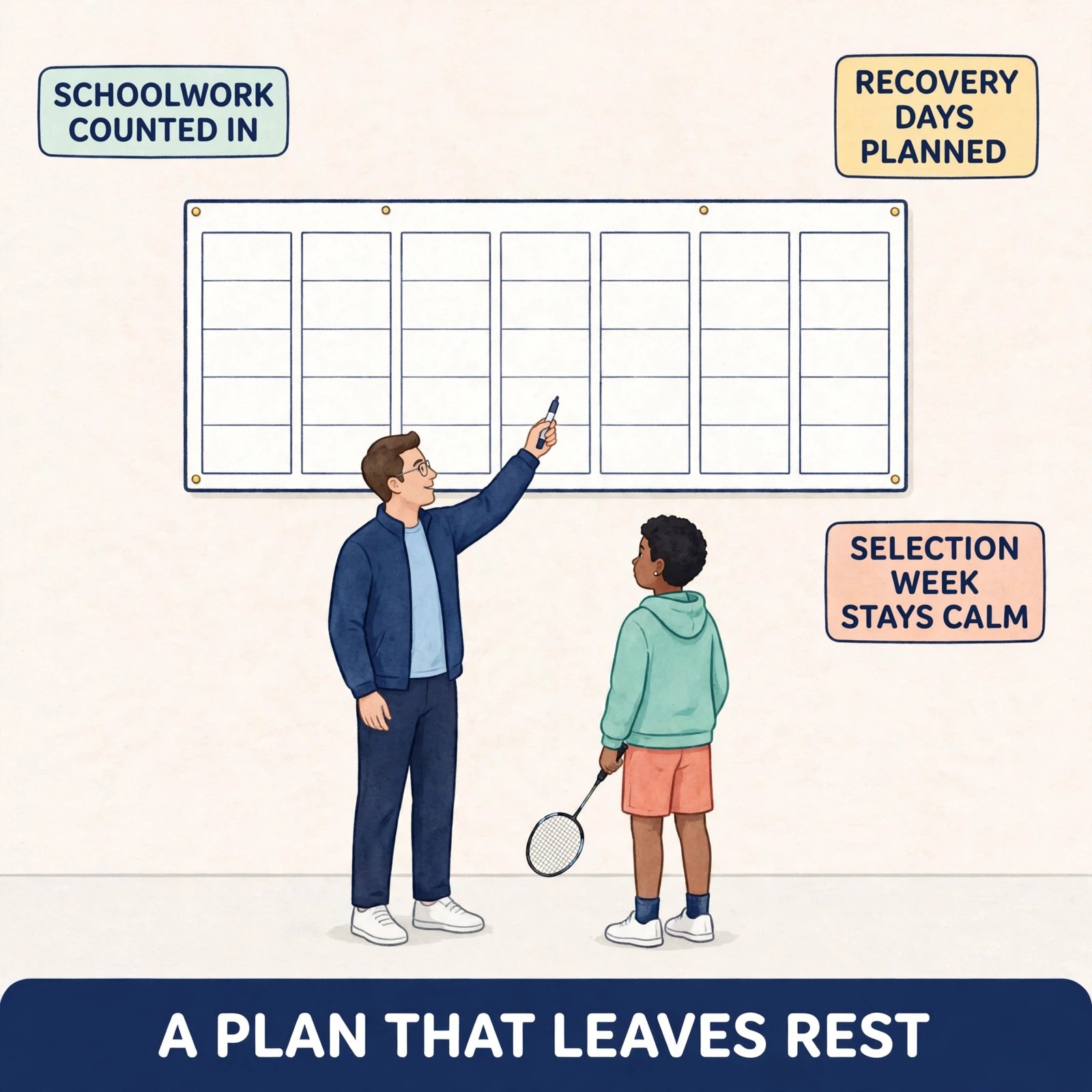
Recovery around selection is part of preparation, not a reward after it. The plan should leave room for schoolwork, sleep and plain rest, and it should be honest about attendance: a plan that needs every evening will collapse into the exam timetable or the family calendar, and a collapsed plan prepares nothing. In the final stretch before the day, the work tapers rather than crams: shorter, sharper sessions, the routines kept familiar, and no brand new technique introduced to fix a worry. Arriving rested with a grooved game beats arriving exhausted with a reinvented one, and selectors only ever see the player who actually walks in.
Nerves before selection are normal, and they are not evidence about readiness. Almost every player in the hall is carrying the same feeling, including the ones who look calm. What preparation can honestly offer is routine: the same warm up, the same first shots, a simple plan for the first rallies while the feelings settle. Respect is part of the frame too: trials are shared with schoolmates who want the same places, and the player who competes hard without turning the day into a war is the player schools are proud to pick. Effort and preparation are yours. The decision is the school’s, and holding those two apart is what maturity at selection looks like.

Selection Check #5
Selection Drills That Test The Base
We prepare students for selection in an order that mirrors the assessment. First, the facts block: the school’s format, date and criteria written down and aimed at. Second, serve and return sets: the sensible area and the non donating reply, counted out of sets until they are dull and reliable. Third, the weakest situation block: the one repeated situation where rallies die, fed and graded with feedback. Last, game sets: full games against different styles, where choices when late and tired are graded with the results. Each stage removes a surprise the day could otherwise hold, which is most of what preparation can honestly do.
Progress in selection preparation is counted in calm numbers. Serves landing in the sensible area out of a set is the first figure, because free points are the earliest leak. Returns that did not hand over an easy attack is the second, graded honestly even when the rally was later lost. And the weakest situation count: how often the named situation now ends in a controlled reply instead of a donation, compared with the first week it was counted. Feelings about trials are unreliable witnesses, since confidence rises and falls with the last game played. The counts describe the player the selectors will actually meet.
The signs preparation has taken hold are visible in games. The serve looks the same in the last game as in the first. Choices stay sensible at the moments they used to collapse: late, tired, behind. The weakest repeated situation still happens, but it stops being the place rallies go to die. And the player can describe the selection format, their own plan and their own honest chances in plain words, without inflating or shrinking either. That is when preparation is done: not when a place feels assured, because it never honestly can be, but when nothing about the day is left to imagination except the games themselves.
Myth vs Reality
Myths About Team Selection
Myth: one big smash earns the place, because selectors are looking for weapons. Reality: selectors are choosing team members for a season of matches, and they watch whole games: the serve, the returns, the movement back, the choices when tired. A huge smash struck from a rehearsed feed tells them almost nothing they can use, and the same player donating points with forced winners in the games tells them a great deal. Weapons matter once the reliable base is trusted. The player whose basics hold all game, with the smash as one option among them, is the player the weapon story actually describes.
Myth: only matches prepare you for selection, because selection is matches. Reality: matches show how skills transfer, but they are a poor workshop. In a match, the weakest situation may appear twice, surrounded by everything else, with no chance to repeat it while the lesson is fresh. Controlled tasks exist precisely for that repair: the situation isolated, fed at the right size, corrected and counted. Mature preparation uses both in their proper jobs: drills to repair, matches to test whether the repair survived. A player who only matches has a very accurate list of their weaknesses and no plan for any of them.
Myth: good training guarantees a school team place, so the right course is the one that promises it. Reality: selection belongs to the school and depends on its criteria, its needs and the players who attend on the day, and no honest coach can promise the outcome of someone else’s decision. What training can promise is preparation: the facts collected, the reliable skills counted, the weakest situation repaired as far as the weeks allow, and a player who arrives rested with a plan. A course that guarantees a place is selling the one thing it does not own. Honest preparation is worth more, because it survives even a disappointing day.

Why Choose Us
Why Players Choose ST Badminton Academy
Students choose ST Badminton Academy for selection preparation because we prepare for the real assessment rather than an imagined one. We start from your school’s actual format, count your serves and non donating returns out of sets, and train your weakest repeated situation with feedback until its numbers move. In a group of no more than four students, there is time to grade your choices in games, late and tired, where selection is decided. Many preparations chase highlights. We also count the calm numbers, and we tell you plainly that the school decides, because a player who trusts the preparation does not need to be sold a promise.
The sessions run the way this page describes. Selection work sits inside regular training: format facts first, serve and return sets early with the counts called, the weakest situation fed and graded in the middle block, and full games at the end against different styles. Coaches watch the choices together with the shots, since selection fails on decisions as often as on technique, and the notebook records serves in the sensible area and returns that did not donate, set by set. A student can point to the week the weakest situation stopped donating, and to the drill that did it.
We are based in Setapak, Kuala Lumpur, and students join us from across the Klang Valley, some travelling in from Wangsa Maju, Gombak and Setiawangsa for evening sessions. Selection preparation sits inside regular badminton sessions, not in a separate trials clinic: your serve, your returns and your weakest situation are trained in the same hour as your games, because that is where they have to hold, against schoolmates and strangers playing their own best. Preparation grooved only against friendly feeds is a rumour about yourself. The game sets in the same hour settle whether it is true.
FAQs: School Team Selection And Badminton Training in Malaysia (KL)
These are the questions students and parents ask us most about school team selection, before they book preparation and during the weeks leading up to trials. The short version runs through all of them: collect the real format, make the serve and return boring and reliable, train the weakest repeated situation, and count the calm numbers. The longer answers follow, including the ones about short preparation windows, fitting training around schoolwork, and how a first session with us actually works.
Can a student prepare for school team selection in Setapak or Gombak?
Yes. Preparation starts from your school’s actual format, which we will ask you to collect first, and runs in our Setapak sessions in groups of no more than four students. Serves and returns are counted from the first weeks, so readiness is measured in calm numbers rather than hoped for.
What is the first selection habit a student should build in KL?
The first habit is the reliable serve into a sensible area, struck with the same action every time. Selection games give away nothing faster than free points at the start of rallies, and a serve that is boring and safe builds the floor that every other part of your game stands on.
Why do reliable basics matter more than one big shot at a school level?
Because selectors choose team members for a season of matches, and they watch whole games. One rehearsed smash tells them little they can use, while a player donating points with forced winners tells them a great deal. Reliable serves, returns and movement make the strong shots believable when they come.
I only have a few weeks before selection. Should I play only matches or repair my weakest situation first?
Repair the weakest situation first, then test it in matches. Matches expose the weakness but rarely repeat it often enough to fix it, while controlled tasks isolate it with feedback and counted replies. With a short window, one repaired situation is worth more than many hopeful games played the same way.
How can I prepare for selection around schoolwork in between classes?
Plan around school rather than against it. Short serve and return sets, the weakest situation fed in one focused block, and games to test the repair can all live inside a school week when rest is planned first. A plan that needs every evening collapses; a smaller plan that survives prepares you.
Do you coach selection preparation beside badminton training near Wangsa Maju?
Yes. We coach selection preparation from our base in Setapak, a short drive from Wangsa Maju, and students from that side train with us every week. The work sits inside regular sessions rather than a separate trials clinic, so your serve, returns and weakest situation are coached beside real games.
Where does ST Badminton Academy teach badminton training in Malaysia?
We teach at our base in Setapak, Kuala Lumpur, and students travel in from across the Klang Valley. Sessions run with no more than four students per group, because selection preparation is built from choices graded rally by rally, and that coaching needs a coach close enough to call your decisions.
How do I book a trial session to test my selection readiness?
Message us to arrange a trial at a time that suits your week. Bring your racket, your court shoes and whatever your school has told you about the selection format and its date. We will count your serves and returns, name your weakest situation, and build the plan from there.
What makes Mr Eric Chuar a suitable coach for selection preparation in badminton?
Mr Eric Chuar coaches the academy sessions himself, with more than fifteen years of coaching in Malaysia and Singapore, so the person grading your preparation is the person who built the programme. His selection coaching is plain spoken: collect the real format, count the calm numbers, and never promise a place.
Badminton Selection Preparation Coaching in Action


We benchmark our selection coaching against World Badminton (BWF) coaching standards and our own academy values: before any player trusts a training plan, they deserve honest checks. You can verify our coaches' credentials through the Badminton Association of Malaysia (BAM) coach education pathway.
One standard governs how we coach selection preparation: the facts judge the plan first, and the calm counts judge it second. A coach here will ask what your school's selection actually involves and how many of your last set of serves landed in the sensible area before asking how your games went, and will check your weakest situation before admiring your strongest shot. We also hold an honesty rule about what preparation can promise: it can make your reliable skills visible and your weakest situation smaller, and it cannot promise a place, because the school decides with its own criteria. What coaching promises is honest preparation, counted in the open.
| Factor | The Reliable Builder | The Highlight Hunter SELECTION |
|---|---|---|
| Frequency | 1 or 2 times a week. Mostly for fun and sweat. | The highlight hunter prepares for an imagined selection: the format is never asked, the weeks go to a rehearsed smash, matches are forced into winner attempts, and schoolwork and sleep fall apart in the very weeks they matter. Nothing calm is counted, so the player walks in hoping the day rewards the one shot they polished. |
| Drills Focus | Basic static feeding. Minimal footwork pressure. | The reliable builder approach builds preparation in order: the school's real format collected first, a serve into a sensible area with the same action every time, returns that do not donate attacks, the weakest repeated situation trained with feedback, and full games to test what survived. Serves in the sensible area out of a set is the headline number, with non donating returns counted beside it. |
| Physical Conditioning | Rarely included. Just playing games on court. | Core, agility, and speed training included in every session to prevent injury and build stamina. |
| Tactical Awareness | "Just hit it over." No real game plan. | Video analysis, point construction, and learning to read the opponent's game. |
| Coach Ratio | Large groups (8-10 kids). Coach barely watches you. | Max 4 students. Mr Eric Chuar personally corrects every stroke and movement detail. |
| Goal Setting | Fun and exercise. | Because the counts separate serves from returns and donations, a shaky week shows up as numbers rather than as a story about nerves. The coach sees whether the format facts, the base or the weakest situation slipped, the player sees the same rows, and the remaining weeks are spent by evidence instead of by panic. |
| Long Term Result | Good recreational player. | The high-performance prepared player arrives rested with a grooved game: reliable basics, calm choices when late and tired, and nothing about the day left to imagination except the games. The casual version spends the trials donating points while reaching for highlights; the grooved version removes the waste in a fixed order and counts what is left. |
Badminton Selection Preparation Coaching in Kuala Lumpur
Your preparation starts with two honest steps. First, ask your school what selection involves: the format, the date and what the coaches look for, and write the answers down. Second, play one game and count two numbers: how many of your serves landed in a sensible area, and how many of your returns handed over an easy attack. Then bring the facts and the numbers to a session with us and we will build the plan from evidence: serve and return first, the weakest situation next, games to test it. No promise of a place. Just preparation you can trust.