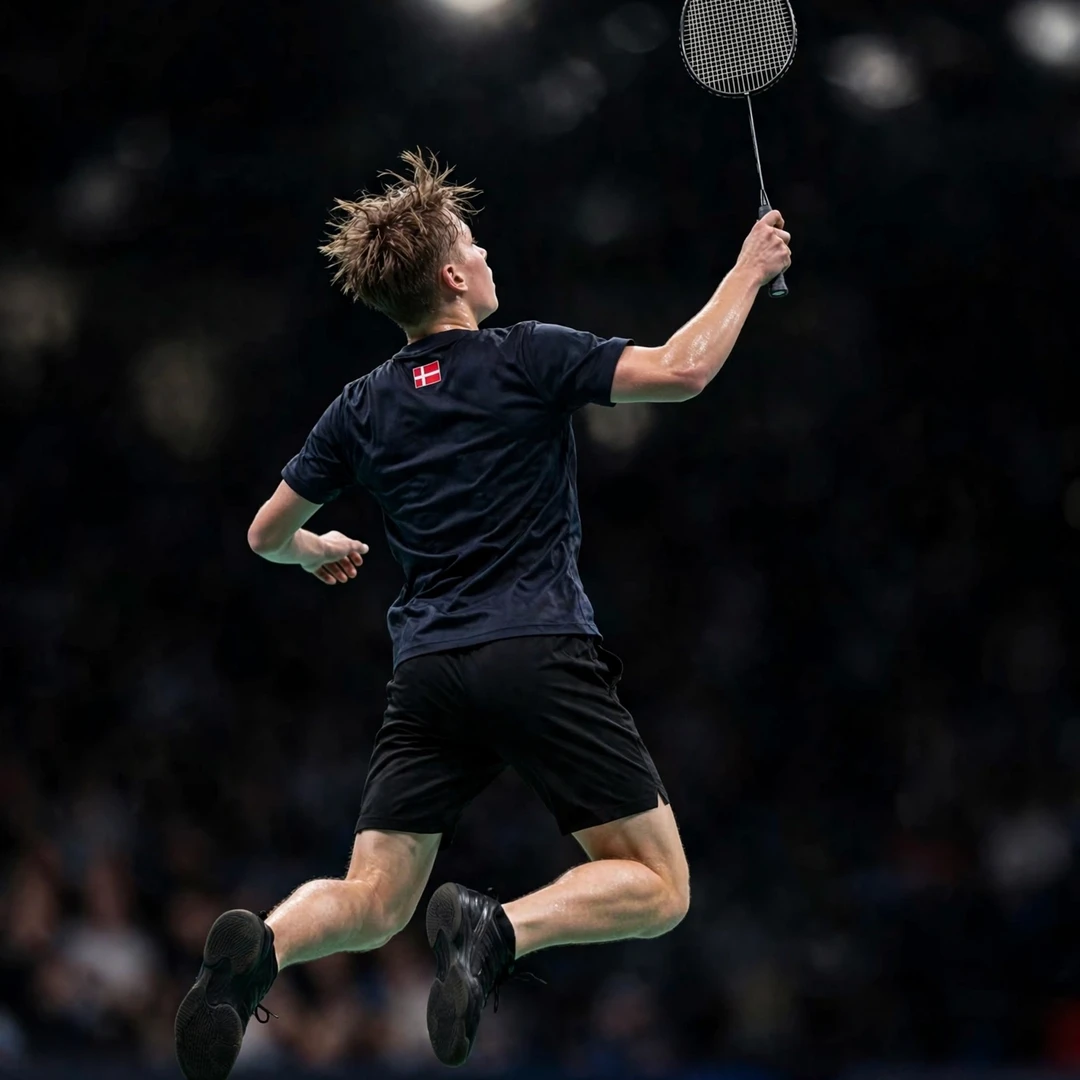
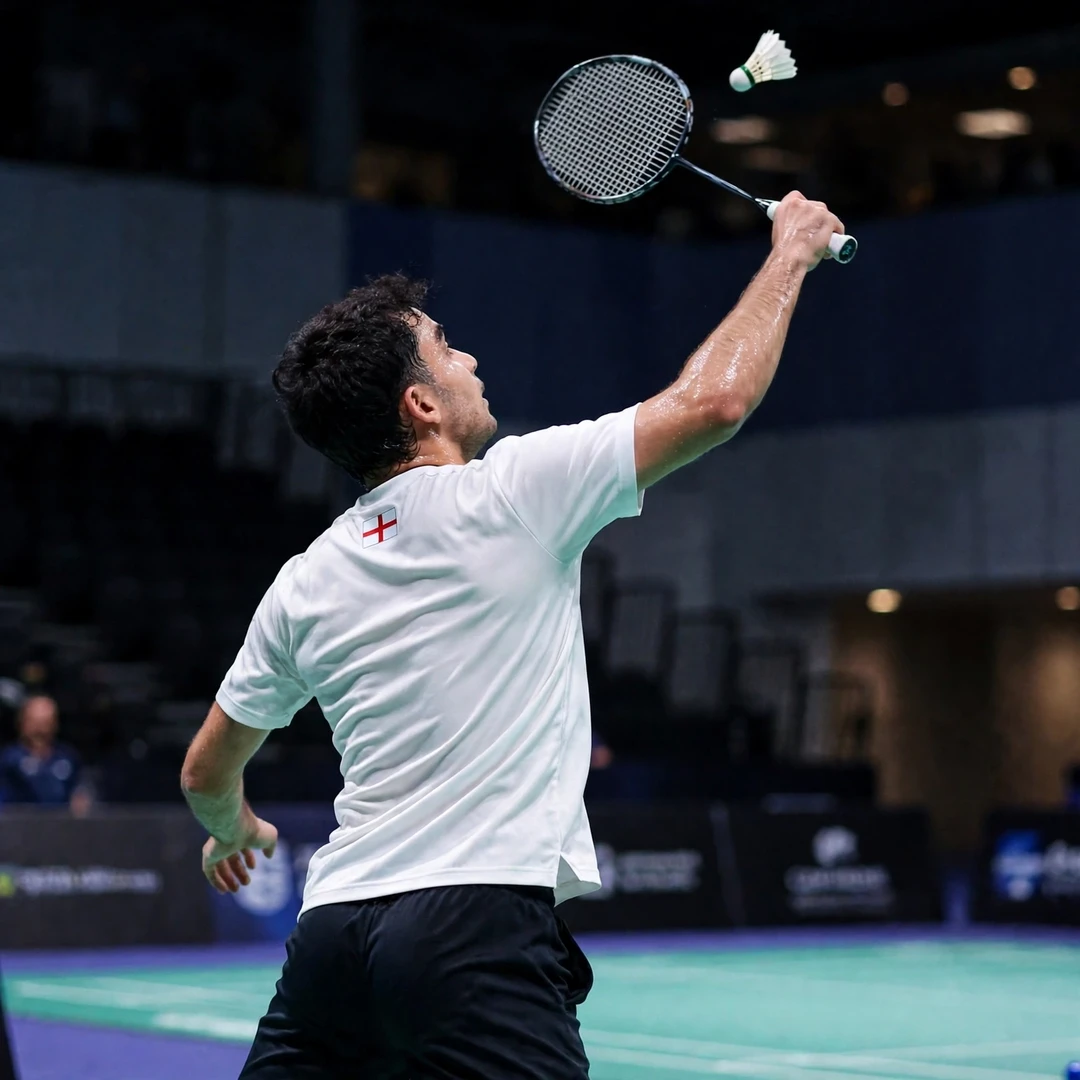
South Korean Men’s Singles Badminton Player
Cho Hyeon Woo

South Korea
Player Event: Men’s singles
Date of Birth: 29 August 2006, South Korea · Right-handed
Playing Style: Right-handed all-court counter-puncher built on a deep defensive base, patient rally construction and exceptional nerve in deciding games
Known For: Producing the upset of the tournament at the 2026 Thomas Cup, beating world No. 37 Lee Chia Hao 23–21, 12–21, 21–18 on his major team-event debut while ranked No. 173 in the world
Journey: Korea Junior Championships U17 semi-finalist · Dutch Junior International semi-finalist 2024 · Senior ranking debut at No. 450 in 2025 · Thomas Cup debut 2026 · Career-high world No. 131 · World No. 148 in October 2026
Understanding Cho Hyeon Woo (South Korean Badminton Player)
Cho Hyeon Woo is the South Korean men’s singles player who produced the upset of the tournament at the 2026 Thomas Cup. In the official BWF world rankings for Week 43, published on 20 October 2026, Cho Hyeon Woo stands at world No. 148 with 13,287 ranking points — but the number that explains him better is 173, his ranking in April 2026 when, on his debut at a major team event, he defeated Chinese Taipei’s world No. 37 Lee Chia Hao in three games to complete a famous Thomas Cup comeback for Korea. He is a right-handed counter-puncher whose game is built on defence, patience and nerve. This profile explains who Cho Hyeon Woo is, how he rose from the Korean junior circuit to Korea’s Thomas Cup team in barely a year of senior badminton, and what young players can learn from the way he seized the biggest chance of his career.
Early Life and Junior Career in South Korea
Cho Hyeon Woo was born on 29 August 2006 in South Korea. He was developed inside South Korea’s famously demanding badminton system, where talented children are identified early through school and junior competition and trained with professional discipline long before they turn professional themselves. Korea produces world-class badminton players generation after generation — Olympic and world champions in every discipline — and the standard a young Korean singles player must reach simply to be noticed is higher than almost anywhere else on earth. That environment is the first fact of Cho’s career: nothing in it was given, and every step had to be taken from opponents just as well coached as he was.
The Korean Junior Circuit
His first recorded step onto the national junior stage came at the Korea Junior Championships in Miryang in 2022, where he reached the semi-finals of the under-17 boys’ singles. The draw put him across the net from Lee Jong Min, a compatriot born two days before him who would later join him in Korea’s 2026 Thomas Cup squad as a doubles player — the kind of internal competition that defines Korean junior badminton. Reaching the last four of a national junior championship in Korea is no small marker: the field is drawn from the strongest badminton schools in the country, and a semi-final there told Korea’s coaches this was a singles player worth watching.
Dutch Junior International Campaigns
Korea tests its juniors in Europe, and Cho’s next classroom was the Dutch Junior International, one of the strongest junior events in the world. In the 2023 edition he contested the boys’ singles, facing Malaysia’s Eogene Ewe and Germany’s Luis Pongratz, and he also played boys’ doubles alongside Lee Jong Min. These trips are a deliberate part of Korean development: long flights, unfamiliar halls, European opponents with different styles, and matches that must be won without the comfort of a home crowd. Every Korean senior international has a junior record like this underneath the senior one, and Cho was building his, match by match.
Dutch Junior Semi-finalist in 2024
He returned to the Dutch Junior International in 2024 and went deeper, reaching the boys’ singles semi-finals. There he met China’s Hu Zhe An, one of the most decorated juniors of their generation, and the Korean’s run ended in the last four. A semi-final at the Dutch Junior International placed Cho among the leading juniors in a field that draws the best young players from Asia and Europe, and it closed his junior career with a clear signal: the level was there. What he did not yet have was a senior ranking, senior results, or any guarantee that the Korean system would find room for him in its senior singles queue.

Career Milestone #1
Senior Debut and the First Team Events
Cho’s senior career began in 2025, and it began at the bottom of the ladder. He entered the BWF world ranking in August 2025 at No. 450, and his first senior season was spent learning the circuit: qualifying draws, small halls, and the unglamorous work of turning junior promise into senior points. The clearest early marker came at the Korea Masters in Iksan in November 2025, a Super 300 event on home soil. Cho came through qualifying, beating compatriot Jeong Min Seon 21–17, 21–17, and then took Japan’s Yudai Okimoto — a player ranked far above him — to three games before falling 20–22, 21–16, 8–21. A qualifying win and a three-game fight against a leading Japanese opponent announced that the junior semi-finalist belonged on the senior tour.
In February 2026 came his first senior team call-up, at the Asia Team Championships in Qingdao, China. Team badminton asks different questions of a young player: your match can decide your country’s tie, your teammates are watching from the bench, and there is no hiding anywhere in the draw. Cho’s singles outings in Qingdao ended in defeat — he lost to Chinese Taipei’s Chi Yu Jen 17–21, 13–21 and to China’s Dong Tian Yao — but the selectors had seen what they needed. Korea’s coaches kept faith with him. Two months later, he was named in the squad for the biggest team event in men’s badminton.

Career Milestone #2
The Thomas Cup Upset of the Tournament
The 2026 Thomas Cup Finals in Horsens, Denmark, was Cho’s first major team event, and he arrived as the least experienced singles player in a young Korean squad. With the experienced Jeon Hyeok Jin missing from the line-up, Korea depended on untested singles players — Yoo Tae Bin, Choi Ji Hoon, Park Sang Yong, Cho Song Hyun and Cho himself, ranked No. 173 in the world. Korea’s group could hardly have been harder: Denmark on home soil, and a Chinese Taipei team that started among the tournament favourites. Few outside the Korean camp expected their singles players to matter much. Cho Hyeon Woo was about to change that.
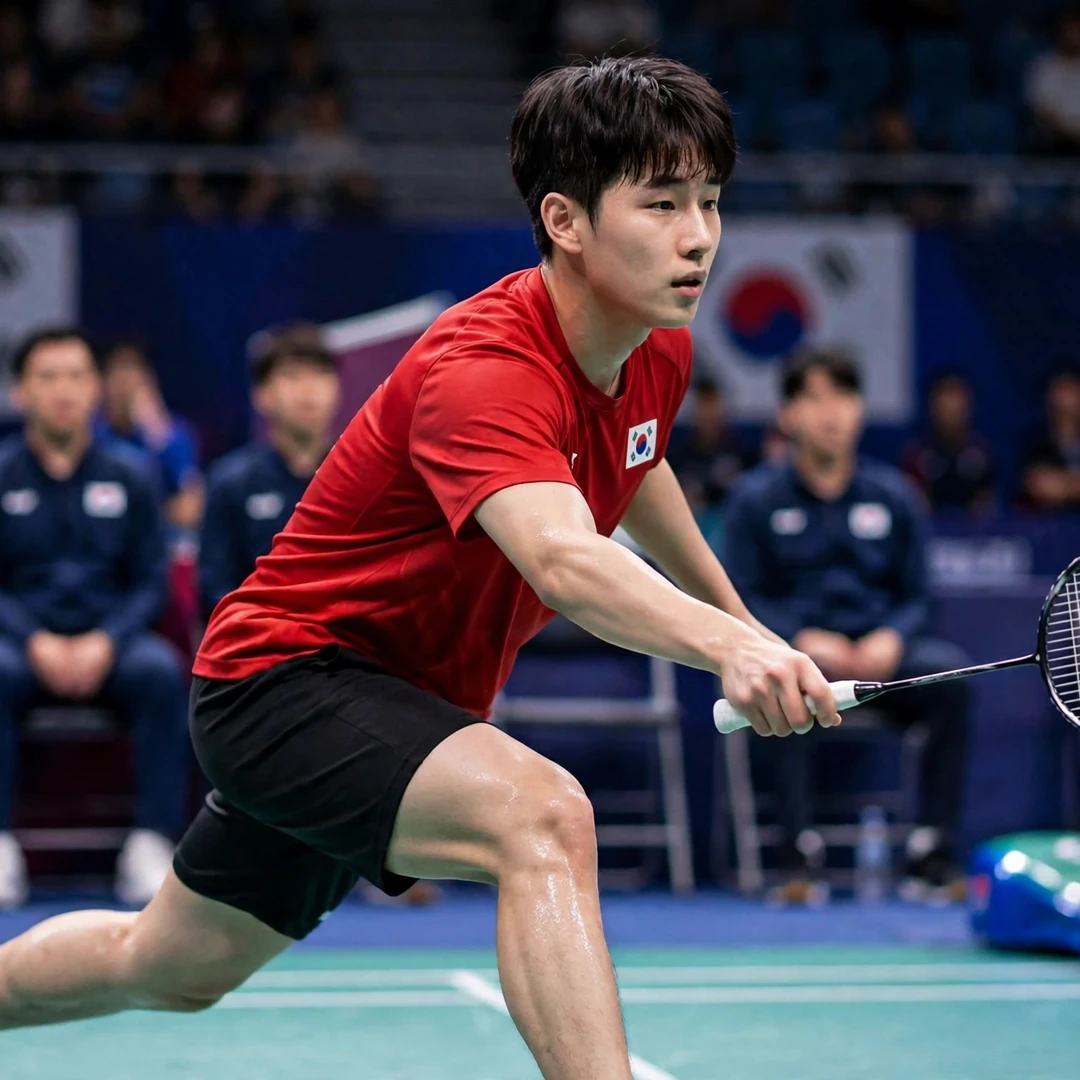
Korea lost their opening tie to Denmark, so the Chinese Taipei tie was win-or-bust — and it started terribly, Korea falling 0–2 behind. Choi Ji Hoon kept the tie alive by beating Chi Yu Jen, and the scratch doubles pair Cho Song Hyun and Kim Won Ho edged Lee Jhe-Huei and Yang Po-Hsuan in a third-game thriller. That left the deciding singles: world No. 173 against world No. 37, Cho against Lee Chia Hao, with the whole tie on the line. Cho took the first game 23–21, was swept aside 12–21 in the second, and then held his nerve through a deciding game that Lee kept threatening to steal, closing it out 21–18. The BWF’s own report called it the upset of the tournament. “I’ve never felt this nervous,” Cho admitted afterwards. “I’ve never been in this kind of situation, so definitely I had a lot of pressure going in.”
To understand the scale of the win, understand the opponent. Lee Chia Hao was no fringe player filling a gap in the draw: he was Chinese Taipei’s world No. 37, an experienced senior international in a squad that also fielded Chou Tien Chen, Lin Chun-Yi and Chi Yu Jen, and he had spent years playing — and winning rounds at — the biggest events on the World Tour. Cho had played exactly one senior team competition, in Qingdao, and lost both his matches there. On paper the deciding match of the tie was a formality. That is precisely what made it the upset of the tournament: not a favourite having an off day against a peer, but a world No. 173 dismantling the form book across three games, on demand, with his country’s survival resting on the result.
Career Milestone #3
Two Wins on Thomas Cup Debut in Horsens
Two days later he proved it was no fluke. Against Sweden, Cho beat Tim Mörk in straight games, 21–10, 21–12, finishing his first Thomas Cup with a perfect 2–0 singles record. Korea still missed the quarter-finals on countback, with Denmark and Chinese Taipei ahead in the group standings — a bittersweet ending that Cho answered with a team player’s priorities: “People expect Korea to win only the doubles. However, since we got wins for singles, I think it’s going to bring a positive influence.” The pattern of Horsens matters more than the heartbreak: twice picked for must-win matches, twice the young Korean delivered.
A Thomas Cup hero still has to earn his ranking the ordinary way, and the rest of Cho’s 2026 season was the grind of the Asia-Pacific circuit. He reached the quarter-finals of the Phuket International Challenge in Thailand, the Saipan International and the North Harbour International in Auckland, New Zealand — three quarter-finals built on several match wins each week. Around them came the full education of a first complete senior season: early exits at the Northern Marianas Open, the Vietnam International Challenge and the Pontianak Indonesia Masters, where he lost to China’s Zhu Xuan Chen, and a qualifying defeat at the Korea Masters in Asan. This is what a breakthrough season actually looks like from inside: one famous week in Denmark, and months of airports, qualifying rounds and small halls everywhere else.
The season is still running as this profile is published. In the week of the Week 43 rankings, Cho is back in Indonesia for the Kudus Indonesia Masters, where his campaign ended in the opening round — the circuit gives a young player no time to live on one famous week, and Cho’s camp would not want it any other way. The targets from here are plain: convert quarter-finals into semi-finals and finals on the International Challenge circuit, defend the points that hold his top-150 place, and take the first senior title that his Thomas Cup performance says is coming. Korea’s selectors, meanwhile, now know they hold something rare: a young singles player who has already won the kind of match most players never get picked for.
Career Milestone #4
The Climb to World No. 148
The ranking tells the story of that season in numbers. Cho’s career-high arrived on 28 July 2026, when he reached world No. 131. As older points expired, the number slid — by late September he had fallen back to No. 195, a reminder that a young player’s ranking is arithmetic, not a verdict. Then came the Malaysia Super 100 in Johor Bahru: Cho fought back from a game down to beat Indonesia’s Christian Adinata 12–21, 21–14, 21–9, defeated Chinese Taipei’s Chen Yu Cheng in straight games, and pushed compatriot Park Sang Yong through three games before losing 19–21, 21–13, 14–21. The run lifted him ten places, from No. 158 to world No. 148, in the Week 43 rankings of 20 October 2026, with 13,287 points from 12 counting tournaments.
Context makes the rise sharper. South Korea is one of badminton’s superpowers — the country of An Se Young, of Olympic champions and world No. 1 doubles pairs — but its men’s singles department has been rebuilding, and the 2026 Thomas Cup squad showed a federation willing to trust youth: five singles players, none of them established stars, asked to carry the singles points against the world’s best. Cho, the lowest-ranked of them, was the one who produced the tournament’s biggest upset. For a developing player, the lesson is not that rankings are meaningless — it is that preparation done properly can make a ranking irrelevant for one match, on one day, when your team needs it most.

Playing Style
The Patient Counter-Puncher Style
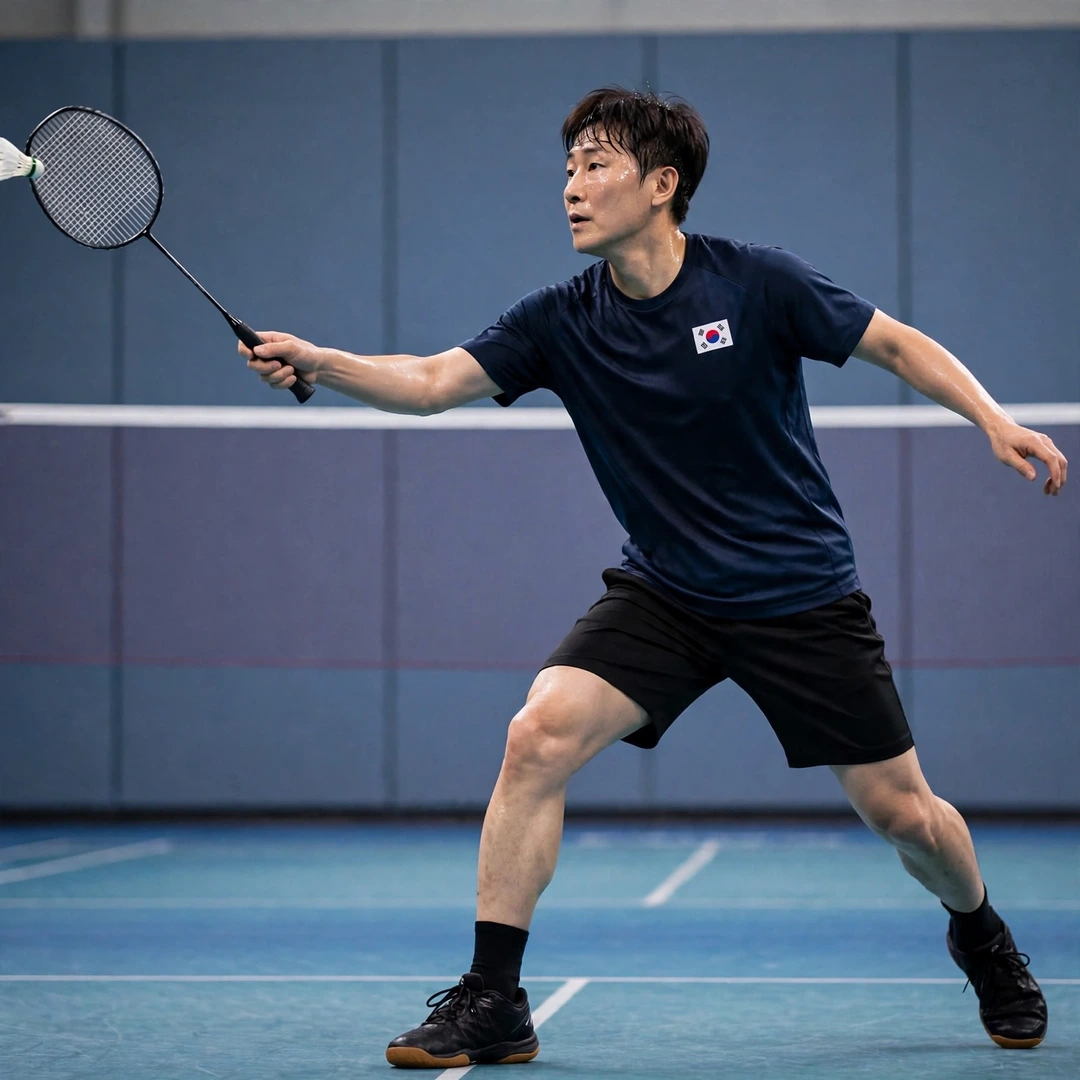
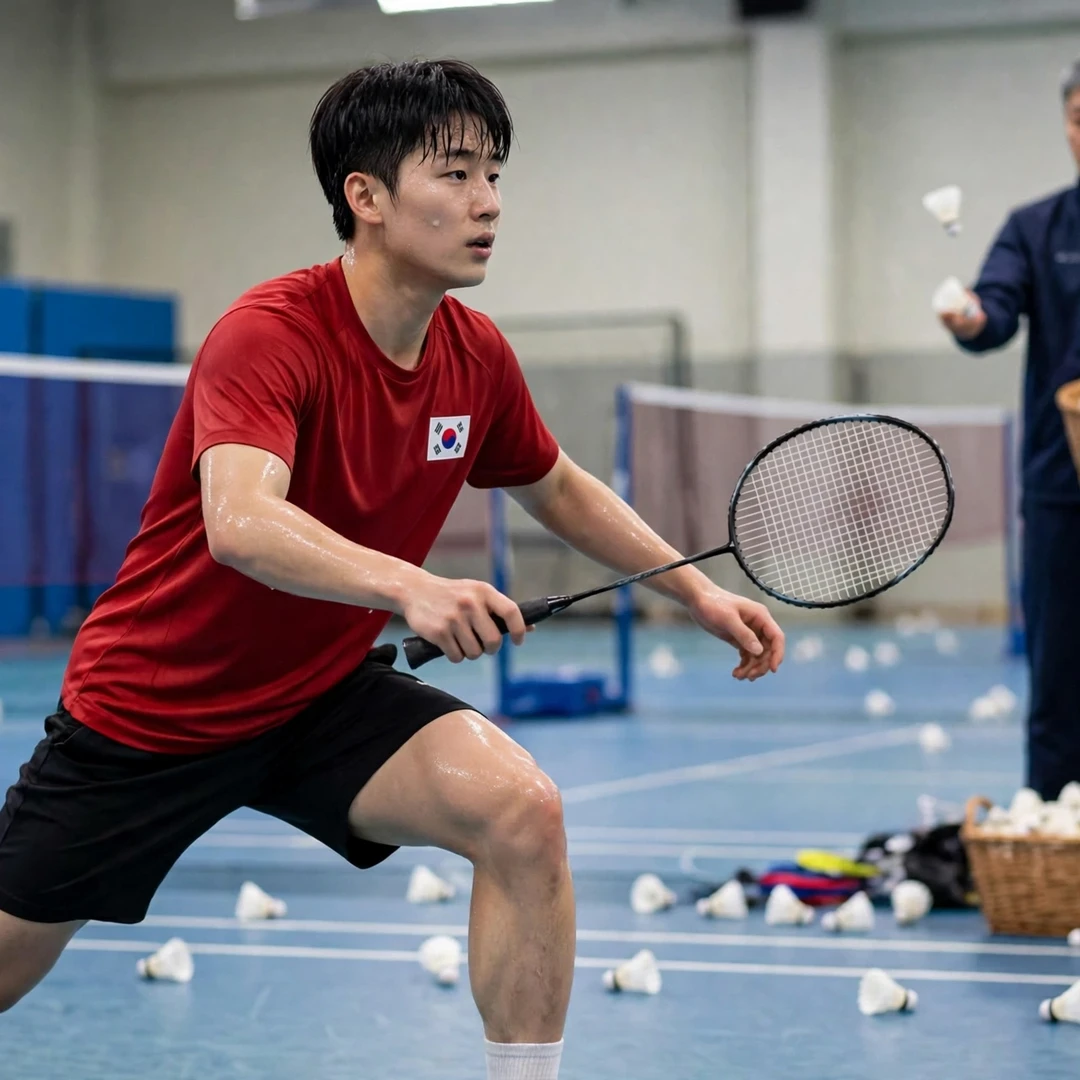
Cho Hyeon Woo plays right-handed, and his game starts from one of the strongest defensive bases in his ranking bracket. Watch his Thomas Cup matches and the first thing you notice is what does not happen: he does not leak cheap errors. His rally construction is patient — clears and drops placed to move the opponent rather than to finish the rally, a compact, well-balanced defence that keeps the shuttle in play from deep and awkward positions, and a willingness to play the fifth, tenth and twentieth shot of a rally with the same care as the first. Coaches call this a counter-puncher’s base: absorb the pressure, extend the rally, and let the opponent be the one who eventually forces the issue and misses.
His attack is the product of that patience. Cho does not smash his way out of trouble; he builds rallies until the opening is real, and only then strikes — often after long exchanges that have pulled his opponent out of position. The evidence sits in his biggest results: a 23–21 first game and a 21–18 decider against a world No. 37 who attacked him for three full games, and the comeback against Christian Adinata at the Malaysia Super 100, where he lost the first game 12–21 and then seized control of the match’s tempo to win 21–14, 21–9. When matches become tests of nerve and legs rather than of weapons, Cho’s structured, unhurried badminton holds up remarkably well.
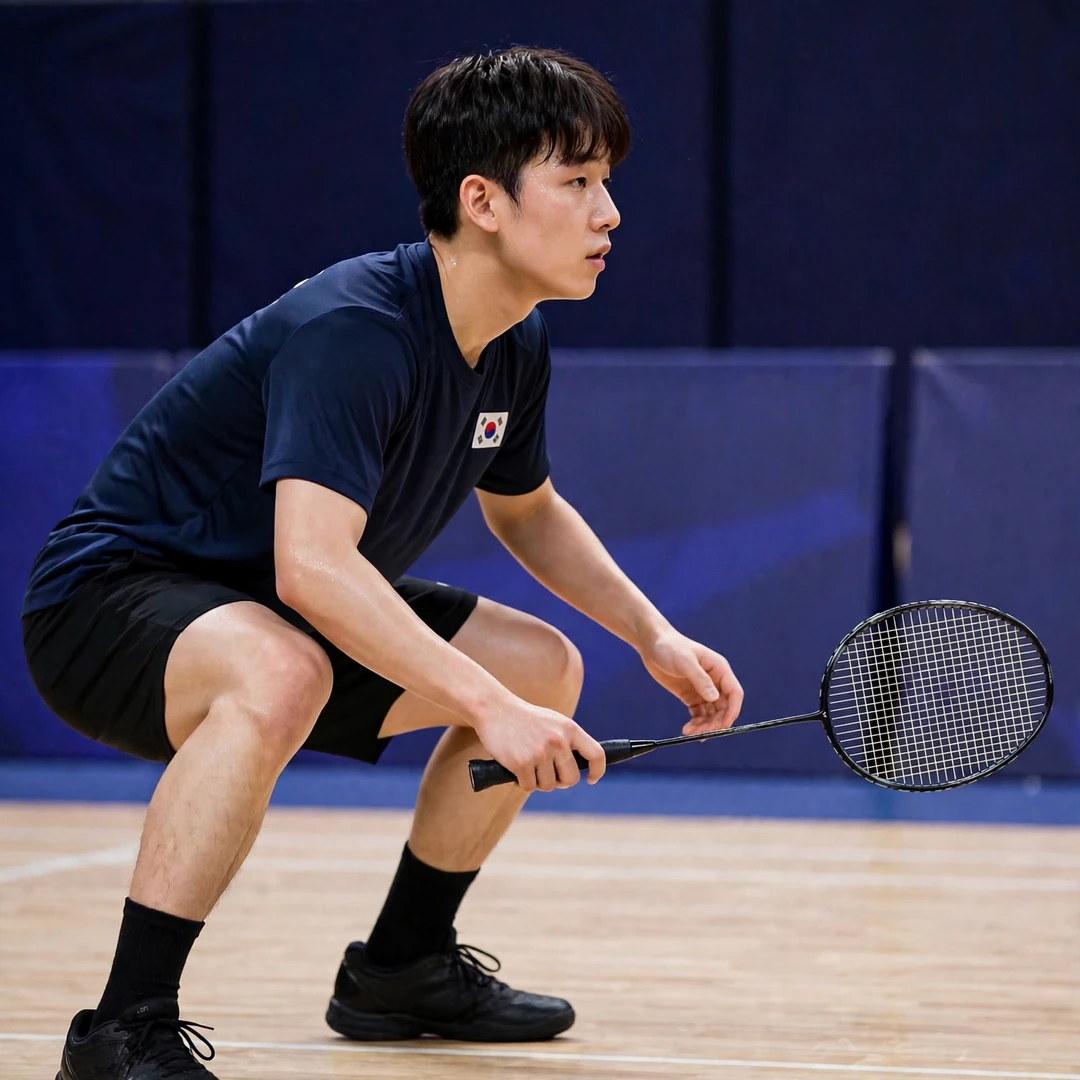
Young players should watch three things in Cho’s game. First, his defensive readiness: the racket stays up, the body stays balanced, and the recovery steps begin before the opponent has finished their stroke. Second, his between-points routine — the same calm walk and the same breathing, whether he has won a 30-shot rally or lost one, which is exactly why deciding games do not rattle him. Third, his relationship with the team bench: in Horsens he played his best badminton with a nation’s tie resting on his shoulders, feeding on the noise rather than shrinking from it. None of these are gifts. They are habits, and habits can be trained by any junior willing to do the unglamorous defensive work first.
Mental Strength
Nerve, Patience and Giant-Killing Belief
Consider the timeline. A national junior semi-final in 2022. Dutch Junior International campaigns in 2023 and a semi-final there in 2024. A first senior ranking of No. 450 in August 2025. A Super 300 qualifying win that November. A first team call-up in February 2026, and then, two months later, the upset of the Thomas Cup. A career-high of No. 131 in July 2026, a slide back to No. 195, and a fight back to No. 148 by October. Less than fourteen months separate his senior debut ranking from his top-150 position. Development is rarely this fast; when it is, it is usually because the fundamentals were built properly long before the results arrived.
His 2026 season also teaches the modern ranking lesson better than almost any other career on this list of profiles. In a single year Cho was ranked 173 at the Thomas Cup, 131 in July, 195 in September and 148 in October — four very different numbers for the same player with the same game. Young players often treat a ranking as a verdict on their worth; professionals treat it as arithmetic with a twelve-month memory. Cho’s response to the number has been the professional one: keep entering tournaments, keep banking quarter-finals on the Asia-Pacific circuit, and let the level he showed in Horsens make the argument about what he is becoming.
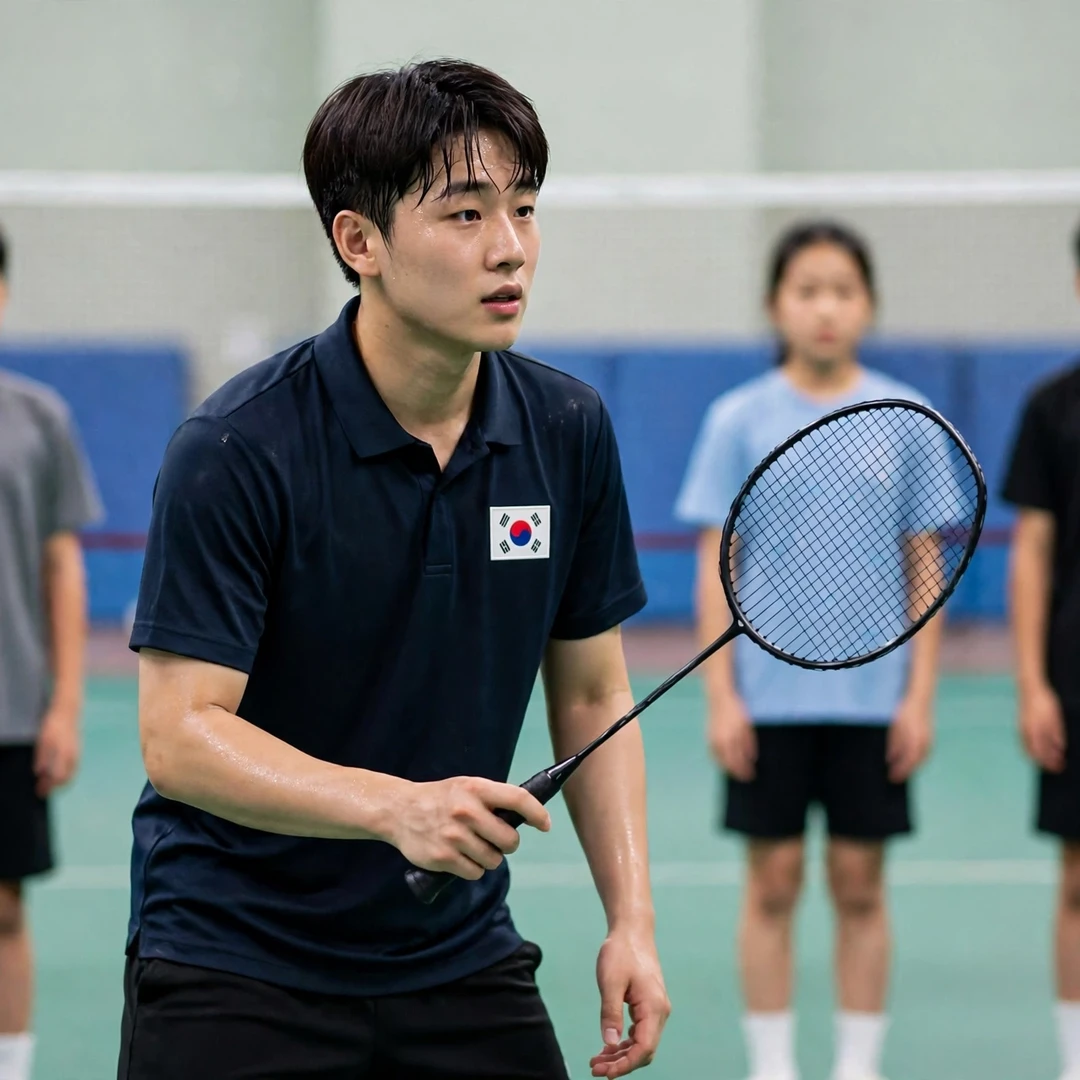
The deepest lesson from Cho Hyeon Woo’s journey is about readiness. When Korea’s selectors turned to a world No. 173 for the deciding match of a Thomas Cup tie, they were not gambling on talent alone — they were trusting preparation they had watched in training and in Qingdao. Cho’s own words after the match explain the rest: he had never felt that nervous, and he won anyway. For a junior, that is the complete lesson of elite sport: you do not rise to the occasion, you fall back on your training — so the training has to be good enough to fall back on. Build the defence, build the habits, and when your one big chance arrives, you will not need to be fearless. You will only need to be ready.
Learning Reference
ST Badminton Academy Connection
ST Badminton Academy has no partnership or commercial connection with Cho Hyeon Woo; this profile was written by our coaching team for education, so students and parents can study how a young Korean player rose from the junior circuit to Thomas Cup hero in a single senior season.
Our students study Cho Hyeon Woo because his story is the junior-to-senior transition at its most dramatic — and its most instructive. The national junior semi-final, the European junior campaigns, the first ranking of No. 450, the Super 300 qualifying win, the team call-ups and the giant-killing in Horsens are all stages our own advanced juniors can map onto their development. We use his Thomas Cup matches to teach defensive readiness, rally patience, deciding-game composure, and the mindset of a player who treats a must-win team match as an opportunity rather than a threat.
Most of all, we point developing players to what Cho did with his chance: nothing about his preparation changed when the stage grew — the same defence, the same patience, the same calm between points. If your child is willing to build those habits before the big moments arrive, Cho Hyeon Woo’s story carries the answer: book a trial class with ST Badminton Academy on WhatsApp at +60 17-684 2136, and start building the game that will be ready when it matters.
FAQs: Cho Hyeon Woo South Korean Badminton Player
Parents and students often ask our coaches the same questions about Cho Hyeon Woo, so we collected the ones we hear most, with honest answers drawn from his record.
Who is Cho Hyeon Woo and which country does he represent in badminton?
Cho Hyeon Woo is a South Korean men’s singles badminton player, born on 29 August 2006. He is a right-handed all-court counter-puncher who announced himself at the 2026 Thomas Cup, where — ranked world No. 173 on his major team-event debut — he beat world No. 37 Lee Chia Hao. In the Week 43 rankings of 20 October 2026 he stands at world No. 148, and his career-high is No. 131.
What are Cho Hyeon Woo’s biggest badminton achievements?
His biggest achievement is the Thomas Cup 2026 upset of Lee Chia Hao (23–21, 12–21, 21–18), which the BWF called the upset of the tournament, completed by a straight-games win over Sweden’s Tim Mörk for a perfect 2–0 singles record on debut. Beyond it stand a career-high world ranking of No. 131, a Super 300 qualifying win at the Korea Masters 2025, three International Challenge quarter-finals in 2026, and two wins at the Malaysia Super 100.
What is Cho Hyeon Woo’s playing style?
Cho Hyeon Woo plays a right-handed all-court style built on an exceptional defensive base: patient rally construction, accurate clears and drops, balanced defence that turns defence into counter-attack, and selective attacking shots played only when the rally has been properly built. His strongest trait is nerve in deciding games, where his calm structure repeatedly outlasts more experienced opponents.
How did Cho Hyeon Woo perform at the Thomas Cup?
Cho played two singles matches at the 2026 Thomas Cup in Horsens and won both of them. In the deciding match of the Korea–Chinese Taipei group tie, with Korea having trailed 0–2, he beat world No. 37 Lee Chia Hao 23–21, 12–21, 21–18 — the upset of the tournament, according to the BWF — and he then beat Sweden’s Tim Mörk 21–10, 21–12. Korea narrowly missed the quarter-finals on countback, but Cho’s wins were the story of their campaign.
How can my child learn from Cho Hyeon Woo’s training approach?
A child can learn that readiness beats reputation: Cho was ranked No. 173 when he beat a world No. 37, because his training had prepared him for exactly that moment. His career teaches defensive habits first, patience in rallies, a calm routine between points, and the willingness to spend seasons on the junior and senior circuits building a game properly before expecting it to shine on the biggest stage.
Did Cho Hyeon Woo win any junior titles?
Cho did not win a junior title, and this profile will not invent one for him. His best junior results were a semi-final at the Korea Junior Championships (under-17) in 2022 and a semi-final at the Dutch Junior International in 2024, where his run ended against China’s Hu Zhe An, alongside Dutch Junior singles and doubles campaigns in 2023. His junior record is one of deep runs against elite fields rather than trophies.
What are Cho Hyeon Woo’s best senior international results?
His best senior results are his two Thomas Cup wins in 2026 (over Lee Chia Hao and Tim Mörk), quarter-finals at the Phuket International Challenge, the Saipan International and the North Harbour International in 2026, two wins at the Malaysia Super 100 including a comeback victory over Christian Adinata, and a qualifying win at the Korea Masters 2025 that took him into the main draw of a Super 300, where he pushed Yudai Okimoto to three games.
What playing style should young players learn from Cho Hyeon Woo?
Young players can learn his defensive base and his patience: racket up and balanced in defence, the willingness to play one more accurate shot instead of forcing a winner, and composure in third games. His career also teaches opportunity-readiness — building your game in small tournaments so that it holds together on the biggest stage you will ever play on.
Does ST Badminton Academy have any connection with Cho Hyeon Woo?
No. Cho Hyeon Woo has no connection with ST Badminton Academy. We feature him purely as an educational example for our students, a young Korean player whose rise from a first ranking of No. 450 to Thomas Cup hero shows what preparation and nerve can do.
Cho Hyeon Woo Career Highlights

Career Statistics and Rankings
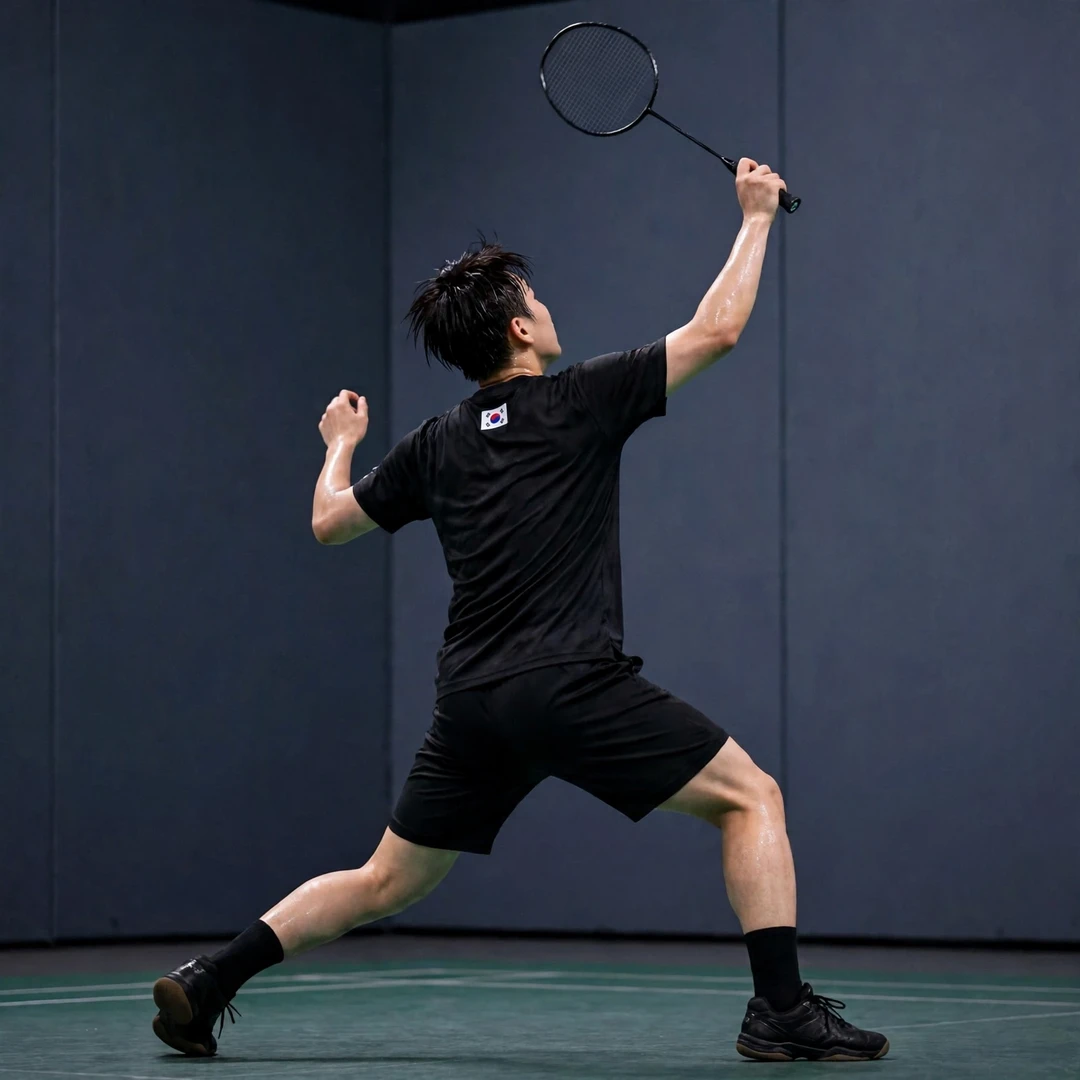
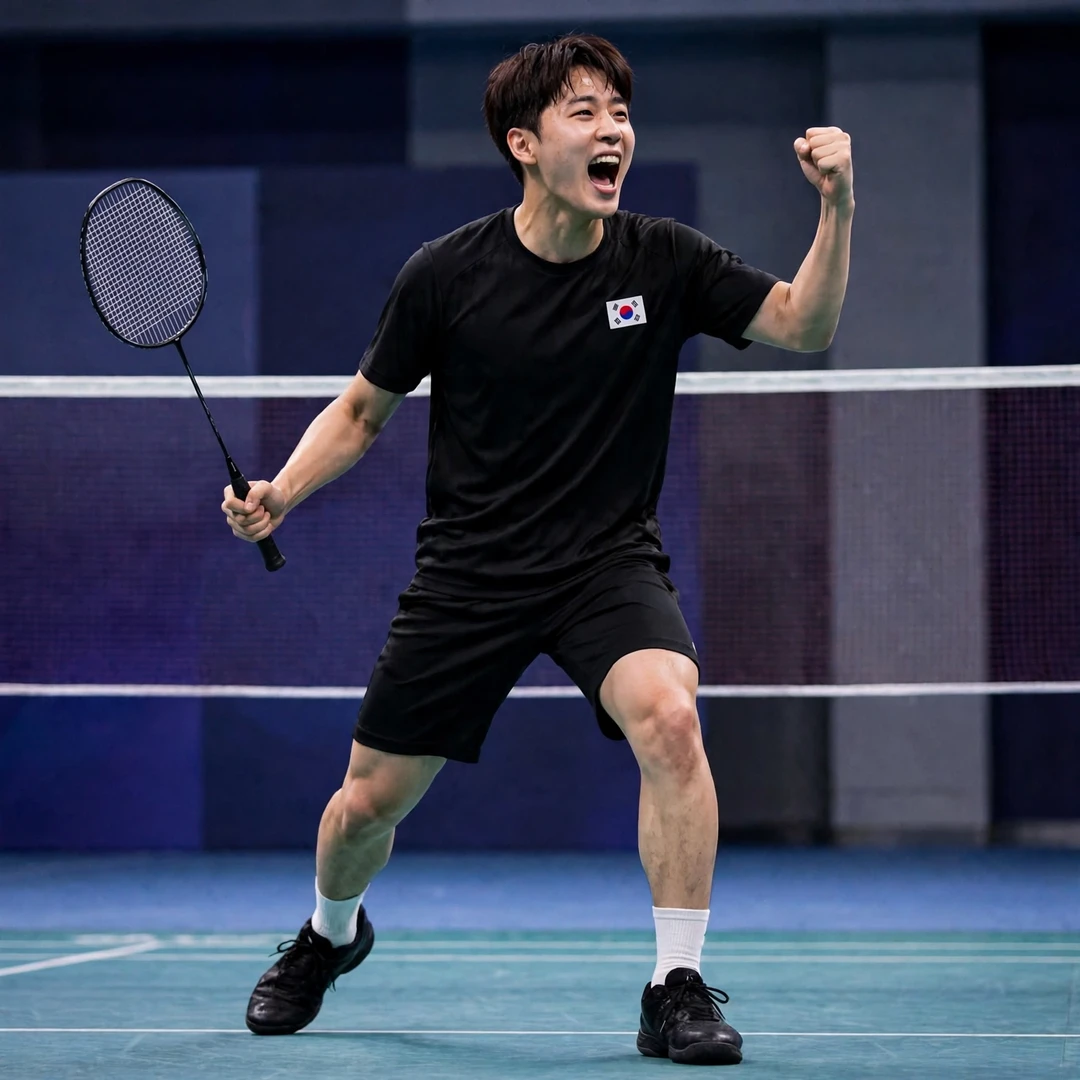
Cho Hyeon Woo, born 29 August 2006 in South Korea, has gone from a first senior ranking of No. 450 in August 2025 to Thomas Cup hero and world No. 148 in just over a year. A right-handed counter-puncher, he beat world No. 37 Lee Chia Hao on his Thomas Cup debut in 2026, reached a career-high world No. 131 that July, and holds 13,287 ranking points in the Week 43 list of 20 October 2026. He is still chasing his first senior international title — and on the evidence of Horsens, nobody should be surprised when it arrives.
| Development Area | Common Misconception | What Cho Hyeon Woo's Career Shows REALITY |
|---|---|---|
| Junior Foundation | Talent alone decides who becomes a champion. | Cho started with a structured junior base first: a Korea Junior Championships under-17 semi-final in 2022 and Dutch Junior International campaigns in 2023 and 2024 came before any senior success. |
| Playing Style Priority | Kids should copy the flashiest attacking shots. | Cho built a complete game first; his counter-attacking winners are the finishing touch on reliable footwork, defence and net play. |
| Fitness Importance | Juniors can out-train everyone without rest. | Cho banked quarter-finals across the Asia-Pacific circuit in 2026, in Phuket, Saipan and Auckland — his rise came from smarter scheduling, not more hours. |
| Mental Approach | Top players never get nervous or upset. | Cho had never played a major team event before the 2026 Thomas Cup and admitted he had never felt so nervous, yet he held his nerve to beat a world No. 37 — mental skills are trained, not inherited. |
| Attacking Training | Smashing harder is always the answer. | His 2026 Thomas Cup win over Lee Chia Hao (23–21, 12–21, 21–18) and his Malaysia Super 100 comeback against Christian Adinata came from controlled placement and defensive patience, not raw power. |
| National Milestones | Only world titles matter. | Cho's two Thomas Cup wins on debut and his career-high world No. 131 made him Korea's breakout singles player of 2026 — milestones build a career step by step. |
| Career Timeline | Champions peak once and fade fast. | From a first senior ranking of No. 450 in August 2025 to world No. 148 in October 2026, just over a year later, Cho proves sustained development beats a short peak. |
Study Cho Hyeon Woo's Work Ethic and Professional Approach
This profile explains who Cho Hyeon Woo is and why our coaches use him as an example of readiness: a complete defensive game, habits built on the junior circuit, and the nerve to beat a world No. 37 with a Thomas Cup tie on the line. Young players do not need a higher ranking before their big match arrives; they need Cho's habits, so train like Cho Hyeon Woo.