Understand the skill before increasing the pace
A drill is useful when you know what it is meant to change. Start with a movement you can repeat, then add shuttle contact, a choice of direction and the pressure of a rally.
Ask about training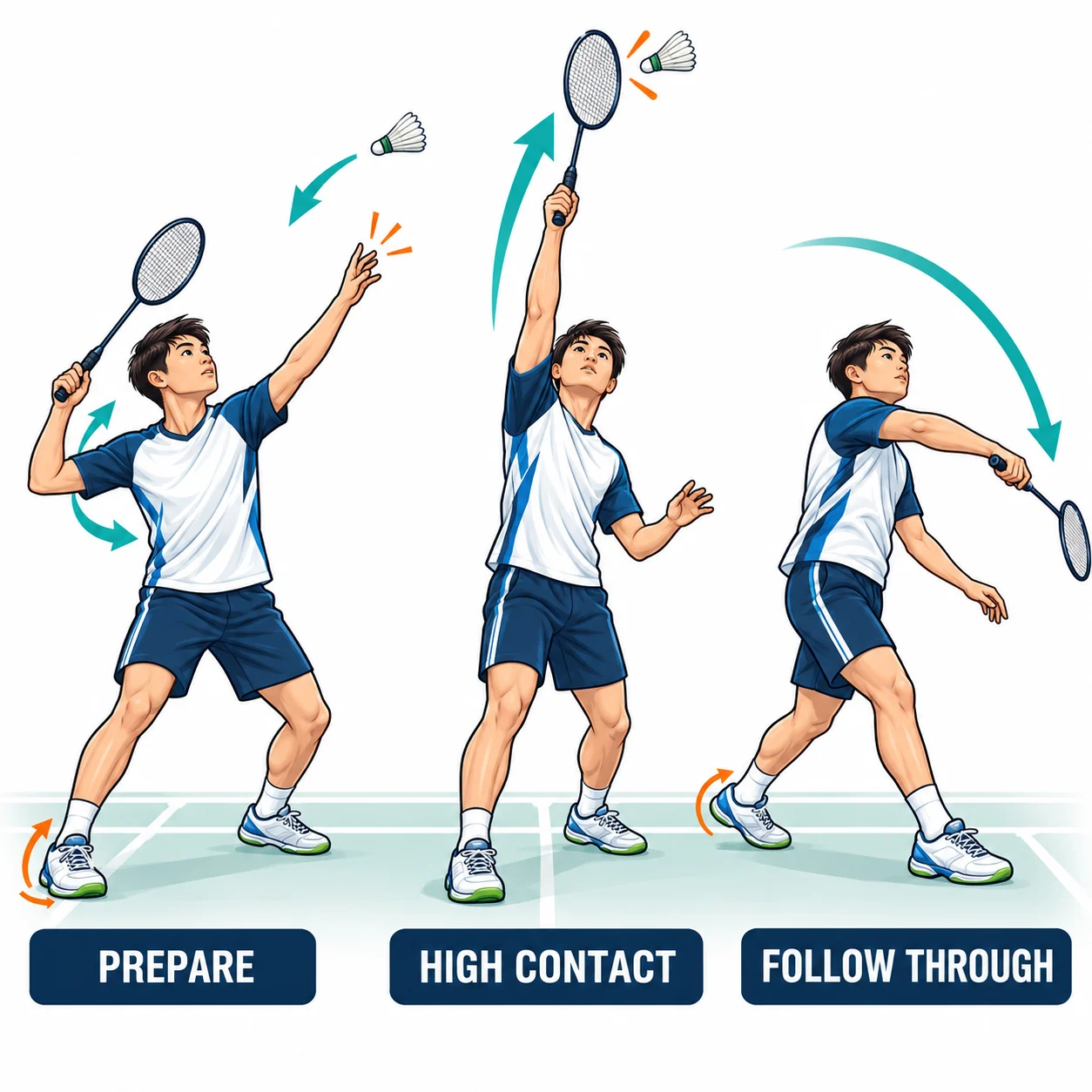
How to use this guide
The method guides below cover overhead contact, court movement, practising without a shuttle and transferring a corrected habit into play. Choose the part that relates to your current difficulty. A drill that is appropriate for an experienced player may need a simpler version for a beginner.
Connect technique with decisions on court
Use these guides to understand the purpose of a practice task. The coach can choose the pace and difficulty after seeing how you move and make contact.
Why Your Smash Isn’t Powerful: 3 Things We Fix in Our Badminton Classes
Badminton Doubles Strategy: Rotation and Positioning 101
Badminton Tournament Preparation Malaysia
Find a suitable next step
Ask yourself what you are checking: contact, balance, timing or recovery. If you cannot maintain that point, slow the task or ask for feedback before adding more repetitions.
Choose your next step
Tell us the learner’s age, current experience, the part of the game that feels difficult and your preferred location. STBA can discuss a suitable starting point and confirm availability, times and fees before you enrol.


