Best Badminton Coach in Malaysia: When the Teaching Language Is Hard to Understand (Language Guide)
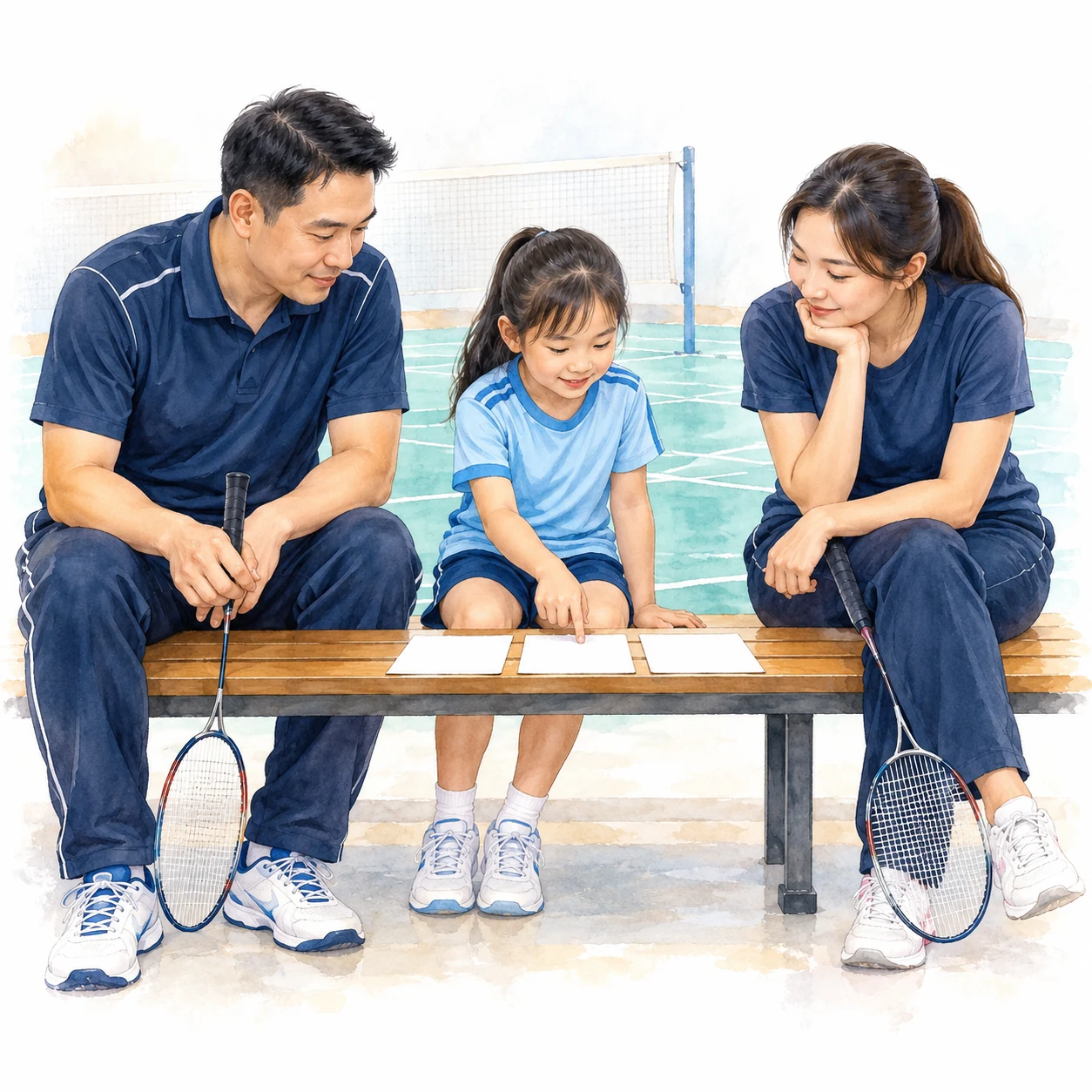
The lesson looks fine from the door. The coach explains, the group nods, your child nods with them, and the drill begins. But watch closely and the pattern shows: your child starts a half second after everyone else, eyes flicking sideways to copy a neighbour, doing the movement that was shown to the child beside them rather than the one that was asked for. At home, asked what the coach said, they shrug, not sullen, simply empty. Nothing is wrong with your child, and nothing is necessarily wrong with the coach. The lesson was taught in a language your child only partly follows, and the words travelled faster than the meaning. This page works through why words get lost, what carries meaning when words cannot, and what to ask any hall about it.
Language Check #1
What Teaching Across A Language Gap Really Means
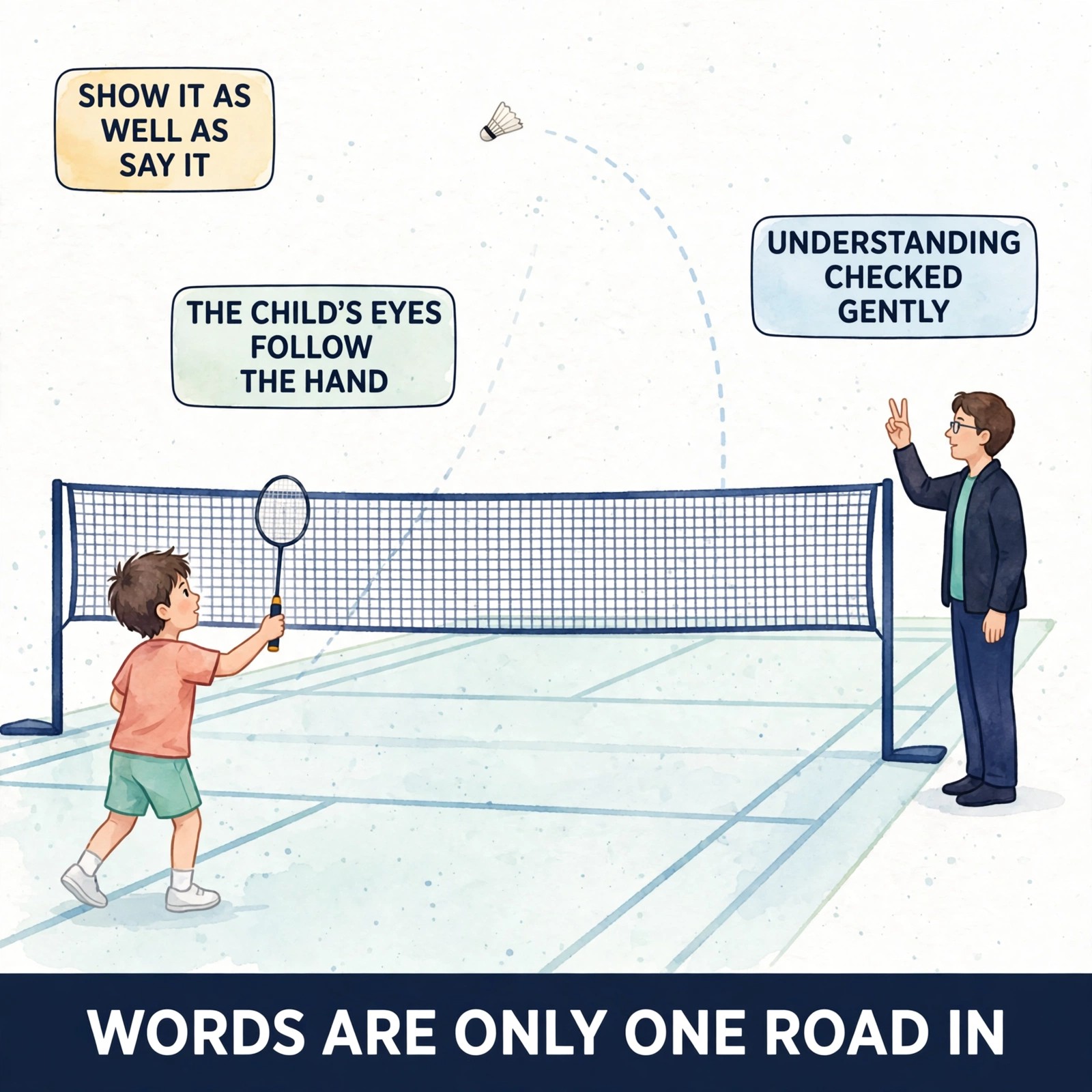
Understanding the coaching, in the way this page uses the term, is not a child translating the coach’s sentences in their head. It is the child knowing what to do next: which movement, starting how, aimed where, at what effort, and being able to begin it without copying anyone. That kind of understanding is visible rather than audible. It shows in a first attempt that matches the picture the coach demonstrated, and in a child who can show a new parent what the cue means without saying a word of it. A young player can understand a lesson deeply while carrying a small vocabulary in the coaching language, provided the teaching travels by more than one road. Words alone are the narrowest of those roads.
The cost of a language gap is paid quietly, in three places. The first is practice itself: a child who half understands practises the wrong movement confidently, and confident repetition of a wrong shape is harder to repair than no practice at all. The second is the child’s reading of themselves. The quiet one at the edge of the group gets described as shy, slow or not listening, when the truth is simpler and kinder: the instructions arrived in a code they only partly hold. The third cost lands on parents, who watch a child drift to the back of drills and wonder whether the talent or the effort is missing. None of this needs a careless child or a failing coach. It needs teaching that travels by words alone, into ears that catch only some of them.
Language Check #2
Inside The Lesson: Words, Hands And Pictures
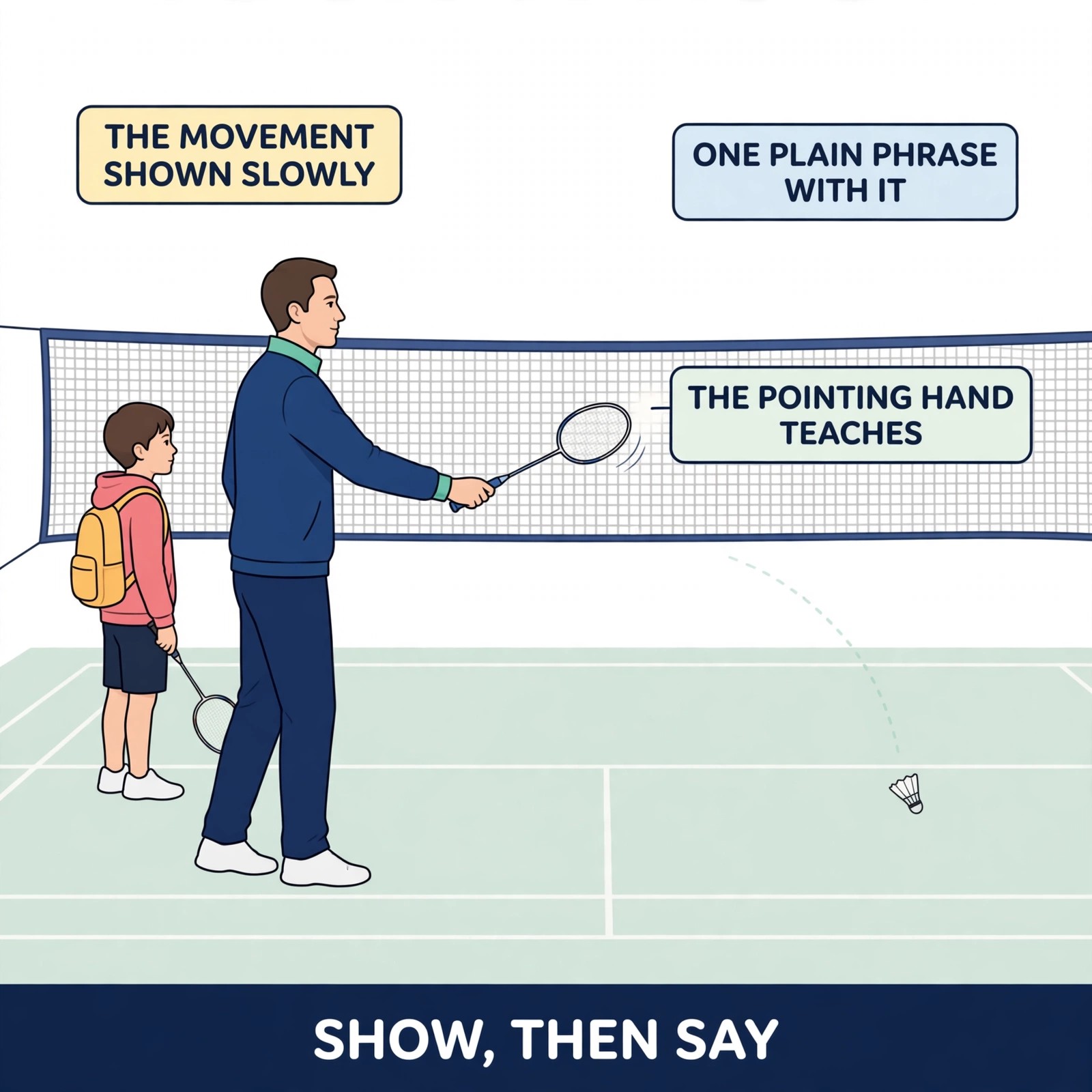
Start with the picture, because the picture needs no translation. A movement demonstrated slowly, from the angle the child will copy it, lands whole: the shape, the timing, the direction, all in one look. Words should arrive afterwards, attached to something already seen, so the child is naming a picture rather than assembling one from sentences. This order matters more as the gap widens. An explanation first and a demonstration second asks the child to hold unfamiliar words in memory while waiting for the image that gives them meaning, and young minds drop most of that load. Shown first and said second, the same lesson becomes learnable by any child in the room, whatever language they dream in.
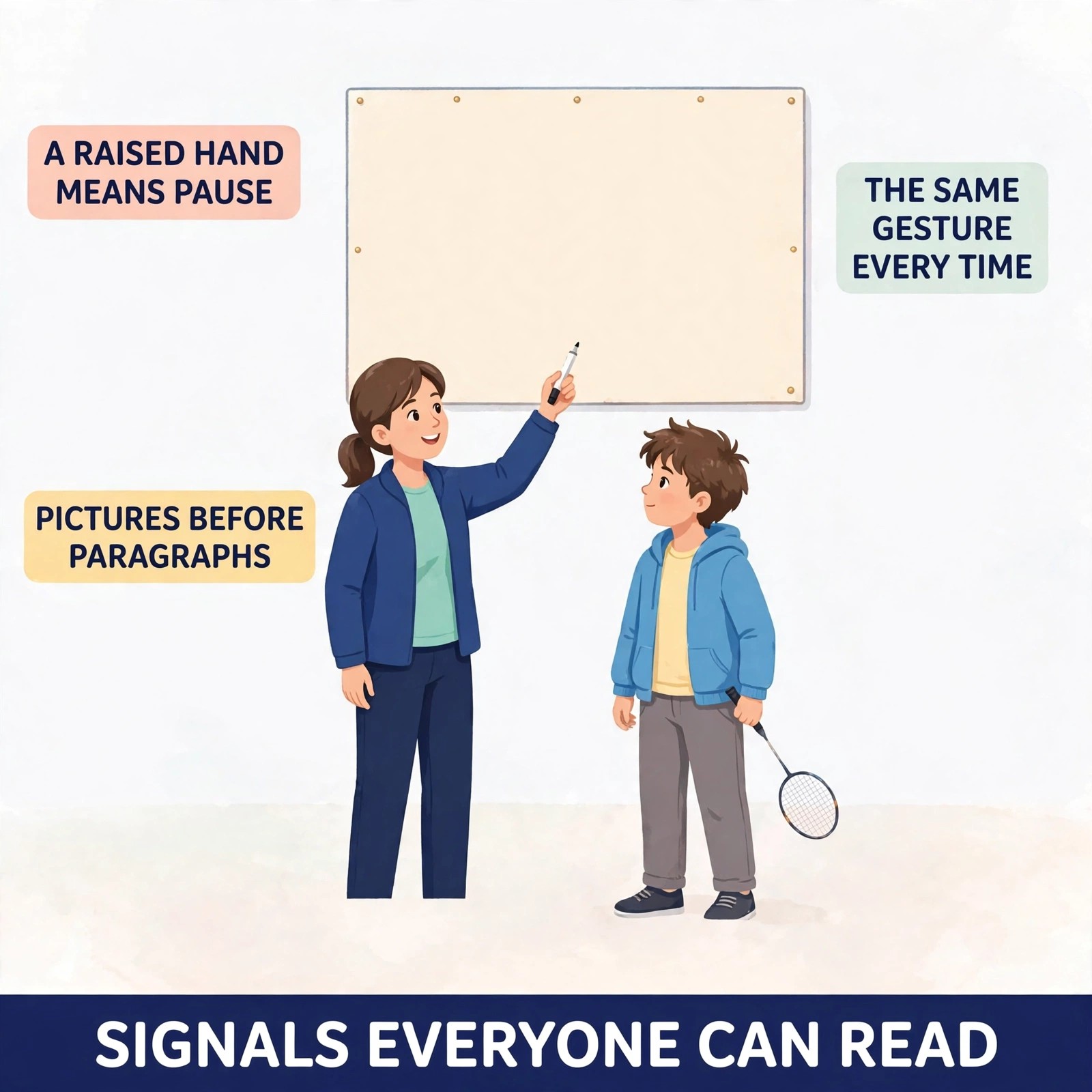
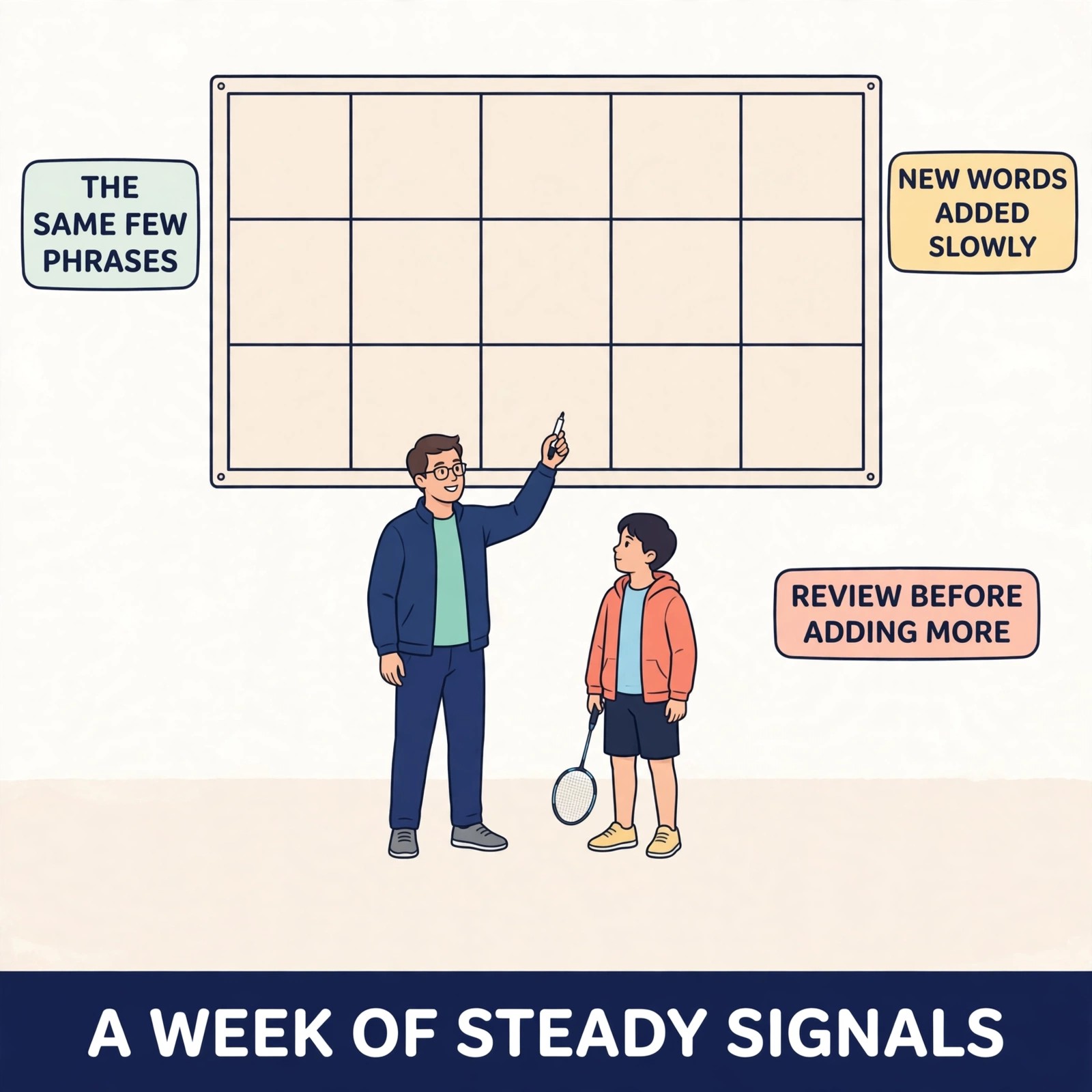
Then keep the words few, plain and stubbornly the same. A small set of coaching phrases, one phrase per idea, repeated word for word across weeks, becomes familiar ground a child can stand on. Each phrase is heard so often, attached to the same picture, that its meaning stops needing translation. New words are added one at a time, inside tasks the child already understands, never in a bundle. And the phrases stay the coach’s phrases everywhere: at home, parents who repeat them use the same wording, because a synonym offered helpfully is, to a child mid gap, a second instruction to decode. Consistency is not a lack of vocabulary. It is how a small vocabulary becomes a working one.
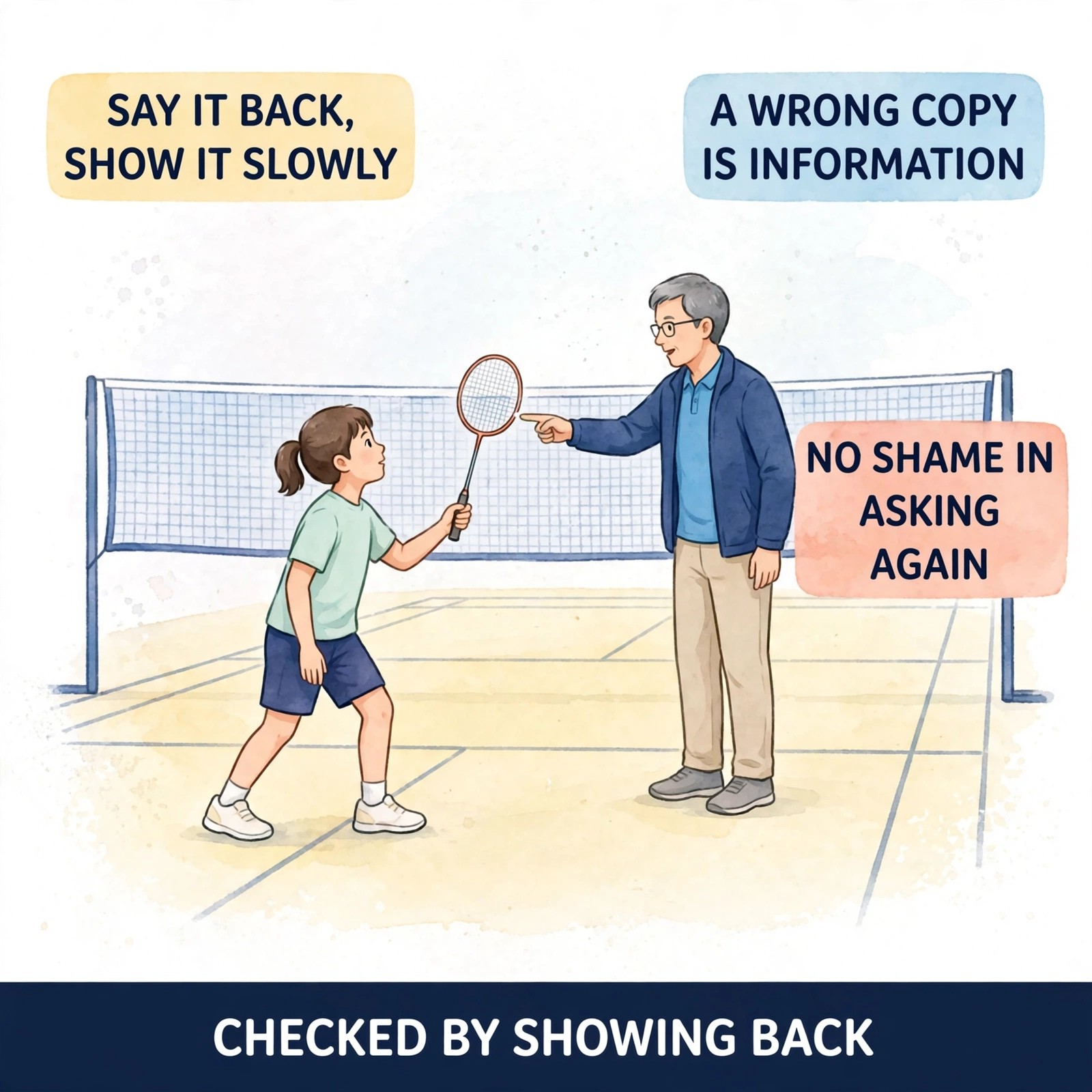
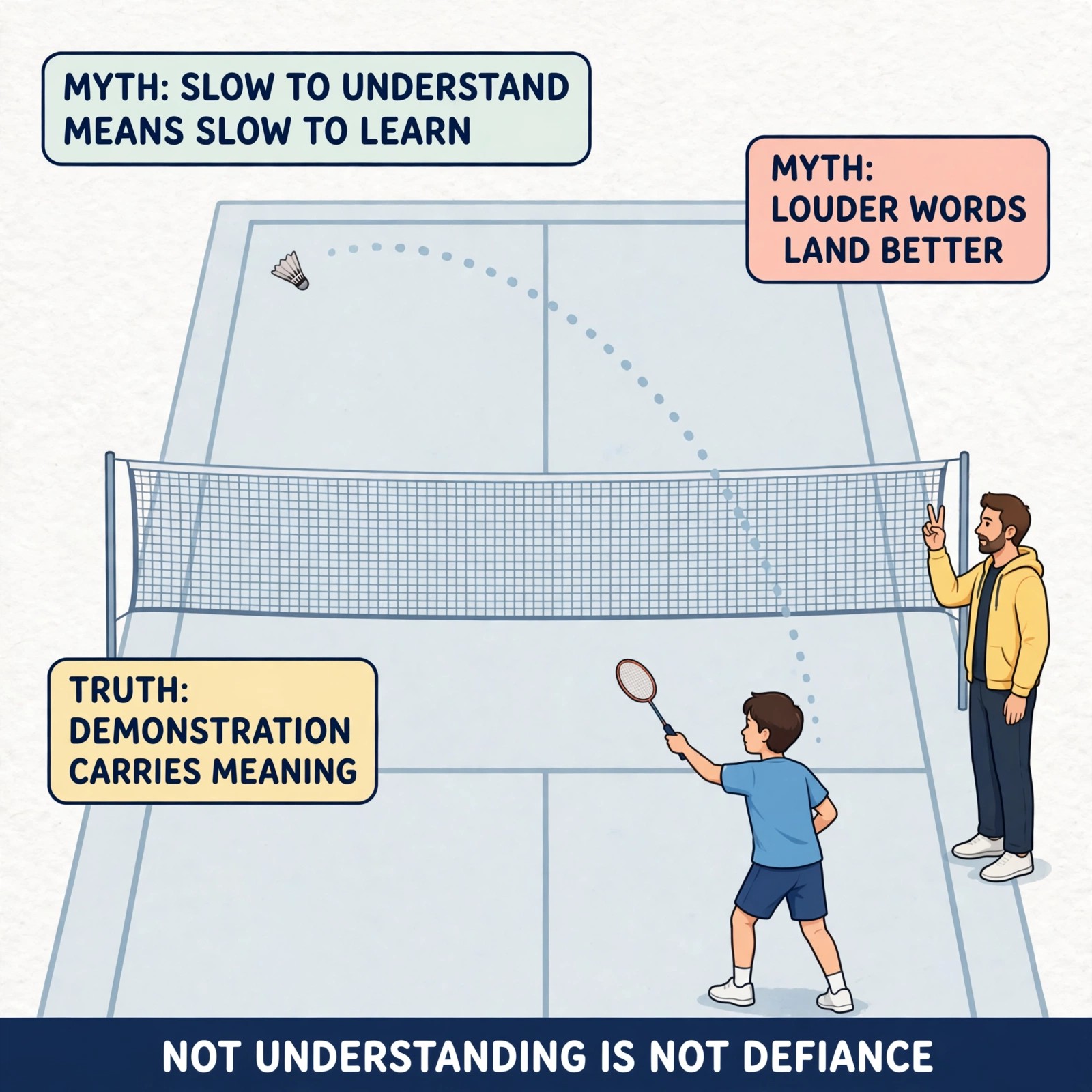
Word only teaching repeats on a short list. The nod accepted as understanding, when nodding is what polite children do at any sentence that ends. The same explanation repeated louder, as if volume were translation. The longer sentence, offered when the short one failed, doubling the decoding work. The bilingual classmate used as an interpreter, carrying a responsibility that belongs to the teaching. And the public correction of a child who did the wrong thing after misunderstanding the ask, teaching the whole group that the gap is a character flaw. Each fault has the same repair: show the movement, say it plainly in the kept phrases, and check understanding by watching the child show it back.
Language Check #3
The Honest Cost: When Not Understanding Looks Like Not Trying
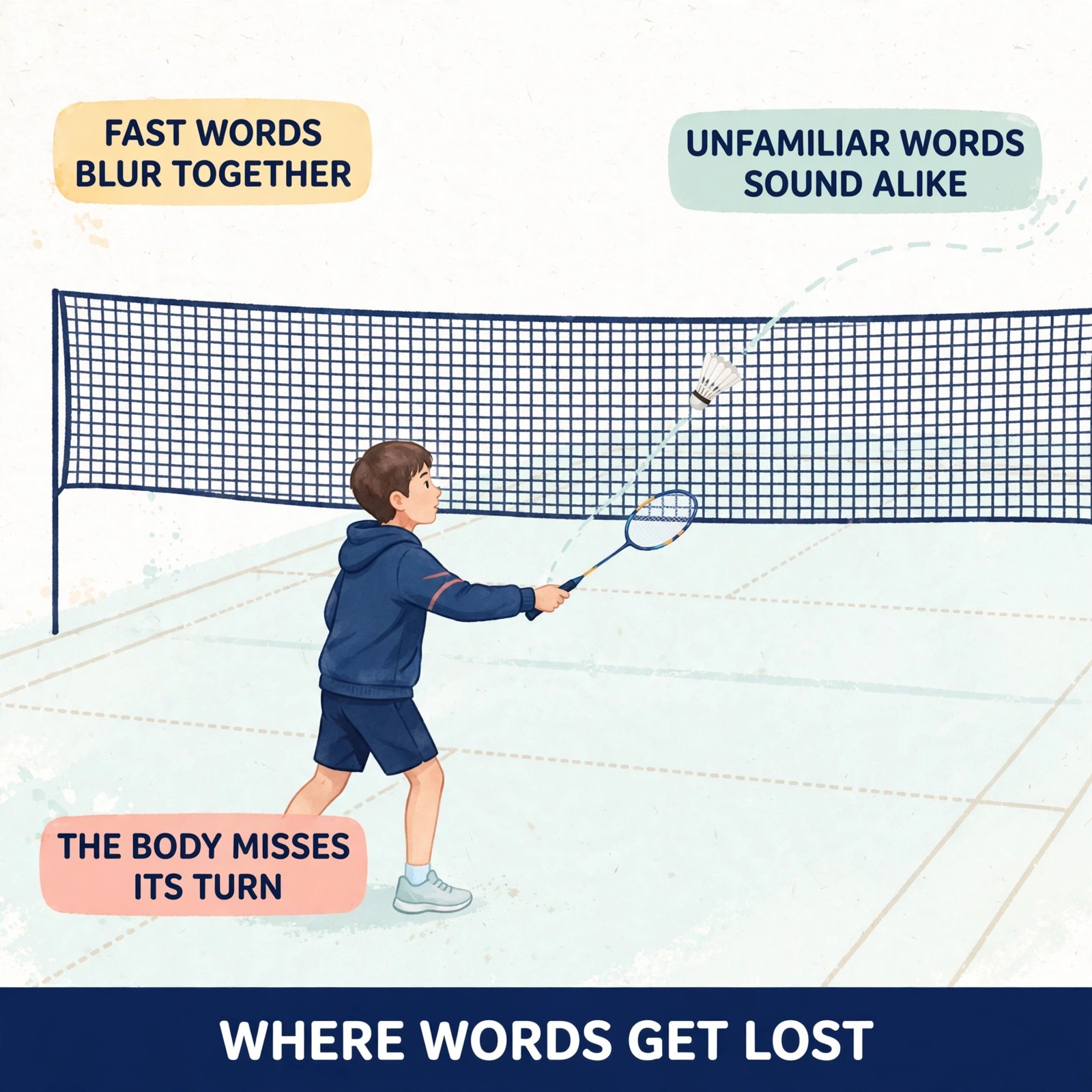
Look honestly at why the words get lost, because the reasons are mechanical rather than personal. Speech in a hall is fast, echoed and layered over shoe squeaks and other courts. Similar sounds blur: words a child would catch in a quiet room dissolve at ten paces. A second language is also processed a step behind the first, and sport allows no pause for catching up; by the time the first sentence is decoded, the demonstration has started and the eyes must choose between watching and listening. Children choose watching, which is the right instinct, and lose the words entirely. None of this is defiance, slowness or a poor ear. It is what happens when meaning rides on one channel into a busy room.
Check understanding with the body, because the body cannot nod along. Ask the child to show it back, slowly: the preparation, the first step, the target in their mind. A copy that matches the picture is understanding you can trust. A copy that wanders is information about the explaining, not evidence about the child, and it points at the exact place the meaning fell off: the start, the direction, the effort. Repair that place with a better picture, a plainer phrase, a gesture added, and check again. A child checked this way also learns something precious: that asking again is safe, that showing a wrong copy earns a clearer picture rather than a sigh. Understanding grows fastest where it is safe to display its absence.
Keep home talk on the movement, not the vocabulary. Ask your child to show you what they are working on, in a suitable space, slowly, rather than to recite what the coach said. What they show is the true state of the lesson as it lives in them. Repeat the coach’s kept phrases only in the coach’s wording, and resist adding a home translation or a second explanation, however well meant: two wordings are two instructions, and a child mid gap ends up carrying neither cleanly. Confusion that survives the week is worth carrying back to the coach in writing, briefly and without blame: this phrase never landed, this picture did. That note is gold to a coach who teaches by showing.
Language Check #4
Choosing Clearly: Simple Words, Honestly Checked
Agree the understanding plan out loud, all three parts of it. First, the picture leads: every new teaching point is demonstrated slowly before it is explained. Second, the words follow the same small set: the kept phrases, word for word, with new words admitted one at a time inside known tasks. Third, understanding is checked by showing back at every new point, kindly and without score, and gaps are repaired in the explaining on the spot. Written down in a line or two, that plan turns a language gap from a private struggle a child carries silently into a property of the teaching itself, where it always belonged.
Sometimes the honest answer is more language support, and sometimes it plainly is not. Extra tuition in the coaching language can help a child’s general confidence, and for some families that is a fair step for school reasons of its own. But it rarely fixes the lesson itself, because the child returns to the same word only teaching with slightly better decoding, while the showing that would have carried the meaning is still missing. Decide from evidence: give shown and said coaching a fair stretch of weeks, watch the first copies at each new teaching point, and only then judge whether the language, the teaching, or both need to change. A gap handled by better pictures usually shrinks on its own.
A gentle word for the parent watching their child stand quietly at the edge of a lesson, understanding less than the room around them. The worry underneath is rarely about badminton words: it is about whether your child is being misread, labelled as less able than they are, in every room where the language runs ahead of them. A language gap says nothing about a child’s intelligence, effort or feel for the game; it says the meaning was posted through a door they only partly hold the key to. Judge the teaching by whether the pictures carry it, across a fair stretch of weeks. And if the worry keeps circling beyond what the lessons show, it deserves a kind conversation of its own, with someone you trust.
Language Check #5
Language Drills That Teach Through The Eyes
We build understanding in an order that respects how a second language is actually heard. First, the movement is demonstrated slowly, from the copying angle, before anything is explained. Second, one plain phrase from the kept set is attached to the picture, said once, clearly, at ordinary volume. Third, the child shows it back slowly, and wherever the copy wanders, the picture is repaired rather than the child corrected. Last, new words are admitted one at a time, inside tasks already understood, so vocabulary grows on ground that is already solid. Each stage protects the one before, and nothing is asked of a child’s language that their eyes have not already answered.
Understanding is counted in first copies, inside the first task after each explanation. Copies that match the shown picture before any re-teaching is the headline figure. Beside it sit two quieter counts: the kept phrases recognised on hearing, because a phrase a child knows by ear is a phrase they can act on without waiting, and reads made inside games, because understanding that only survives the drill is a fair start rather than a finish. Nothing here is graded, ranked or compared with other children. The counts exist so a family can watch understanding arrive in plain sight, lesson by lesson, instead of guessing from how confidently their child seems to nod.
The signs the plan is working are ordinary and good to live with. Your child begins the drill on the first signal rather than a half second behind the group. They ask questions by pointing and showing, and accept the answer the same way. First copies land closer to the picture, more often, at new teaching points as well as familiar ones. The kept phrases start coming home in your child’s own conversation about the game. And the quiet child at the edge of the group turns out to be neither quiet nor at the edge: given a road in that their eyes can travel, they were a full member of the lesson all along.
Myth vs Reality
Myths About Teaching Across Languages
Why does demonstration carry what words cannot? Because a movement is a shape in space and time, and the eye takes a shape whole, in one look, while words arrive one at a time and must be assembled, and in a second language, translated first. The translation queue is the bottleneck: each unfamiliar word waits its turn, the sentence behind it piles up, and the drill begins before the meaning does. A demonstration skips the queue entirely. The child sees the finished shape, the direction, the effort, in the time a single sentence takes to say. Words then do what words are good at: naming the parts of a picture already understood, one phrase at a time, until the phrase alone can call the picture back. That is the whole method: eyes first, words as labels, understanding checked by the body that has to use it.
What does a complete shown and said explanation actually contain? Five plain parts. The picture: the movement demonstrated slowly, from the angle the child copies. The phrase: one short instruction from the kept set, in its exact wording. The signal: a gesture or raised hand that means the same thing every time, for the moments when even the phrase is too slow. The check: the child shows it back, and gaps are repaired in the picture. And the patience: the same parts, unchanged, next week, because familiarity is the teaching. Notice what is missing: no long vocabulary, no grammar of the game recited at speed, no interpreter borrowed from the group. The discipline is in the omissions.
One phrase set, kept word for word, is the rule that makes all the others work. A small vocabulary grows by attachment: each phrase, heard with the same picture across many weeks, becomes instant, costing the child no decoding at all. Every helpful synonym resets that attachment to zero; the child who heard three wordings for one idea owns none of them. So the set is protected the way the plan is protected: written down, shared with parents, used by any coach who takes the group, and changed only deliberately, one phrase at a time, with the change explained by a picture like everything else. A child carrying a small set of instant phrases stands in a lesson the way a traveller with a few sure words stands in a market: limited, and entirely able to manage.
Why Choose Us
Why Players Choose ST Badminton Academy
Parents choose ST Badminton Academy for language friendly coaching because we teach by showing first. We will demonstrate every new point slowly, keep one small set of plain phrases in their exact wording, and check your child’s understanding by watching them show it back, never by accepting a nod. In a group of no more than four students, the coach sees each child’s actual first copy, not a room in general, and can tell understood from merely agreed. Many halls explain well in one language and call the rest the child’s problem. We would rather hand you the picture, the phrase set and the check, because a child whose eyes are taught learns at full speed in any language.
A first session with us shows the system, if you know where to look. Tell us honestly which parts of lessons your child finds hard to follow, and which words they do catch. Watch whether we demonstrate before explaining, whether the phrases stay few and repeated, and whether your child is asked to show the movement back rather than say whether they understood. Afterwards, ask three questions. What is the phrase set my child will hear? How is understanding checked here? How will I know it is growing? The answers describe the whole approach in miniature, and they should be answers your child could act on without a word of translation.
Parents complete the bridge from their side with small, steady habits. Ask to be shown the movement rather than told about it, and greet the shown copy with interest in what matches and what wanders. Use the kept phrases at home only in the coach’s wording, and let the rest of badminton talk stay in whichever language your family is warmest in. Carry confusion back in a line or two of writing: this picture landed, this phrase never did. And keep other children out of the story entirely; a classmate who follows every word is weather, not evidence. A family and a coach tending the same pictures and the same few phrases is what turns a language gap into a narrow, shrinking thing.
FAQs: Coaching Children Across A Teaching Language Gap in Malaysia (KL)
These are the questions parents ask us most when the teaching language is hard for their child to follow, before they book and while a shown and said plan is settling in. The short version runs through all of them: the picture leads, the words stay few and the same, and understanding is checked by showing back. The longer answers follow, including whether changing classes helps, and how a first session with us actually works.
Can a child who finds the teaching language hard to follow be coached in Setapak or Gombak?
Yes. A child who finds the teaching language hard to follow is coached with us in Setapak, a short drive from Wangsa Maju, in groups of no more than four students. We show the movement first, attach one plain phrase, and check understanding by asking the child to show it back.
What should a parent ask first about coaching across a language gap in KL?
Ask how the teaching is shown, not only said: whether the movement is demonstrated slowly before it is explained, and how understanding is checked afterwards. Follow with which few phrases are kept the same every week. A hall that shows first can answer both questions in plain words.
Why does a teaching language gap worry parents at a junior level?
Because the gap is silent: a child can nod, copy a neighbour and finish a lesson having understood very little, while nobody did anything wrong. The worry is fair, and it deserves a steadier reading: what the child shows back, counted across a fair stretch of weeks.
My child nods in lessons but has not understood. Should we change classes or build understanding through demonstration first?
Build understanding through demonstration first. Changing classes swaps one set of words for another, while the teaching method travels with the child. Give shown and said coaching a fair stretch: demonstration first, a few plain phrases, checks by showing back. Change halls afterwards only if the evidence still asks.
How can parents support understanding at home in between classes?
Ask your child to show you the movement rather than repeat the words, and keep the few phrases the coach uses, in the coach’s wording. Show interest in what they can demonstrate, carry confusion back as a written question, and never add a rival explanation at home, however well meant.
Do you coach through demonstration beside badminton training near Wangsa Maju?
Yes. We coach through demonstration beside regular training from our base in Setapak, a short drive from Wangsa Maju, and families from that side train with us every week. The showing first method sits inside ordinary junior sessions, checked against each child’s actual first copy.
Where does ST Badminton Academy teach badminton training in Malaysia?
We teach at our base in Setapak, Kuala Lumpur, and families travel in from across the Klang Valley. Sessions run with no more than four students per group, because understanding is read from each child’s own shown copy, and that needs a coach close enough to watch one child at a time.
How do I book a trial session to test my child’s understanding in lessons?
Message us to arrange a trial at a time that suits your week. Bring your child’s racket and court shoes, and tell us honestly which parts of lessons they find hard to follow. We will show before we say, and check what your child understood by watching them show it back.
What makes Mr Eric Chuar a suitable coach for a child learning across a language gap in badminton?
Mr Eric Chuar coaches the academy sessions himself, with more than fifteen years of coaching in Malaysia and Singapore, so the person setting the phrases is the person who checks the copies. His language style is plain spoken: show it slowly, say it once, and let the child show it back.
Language Friendly Coaching in Action

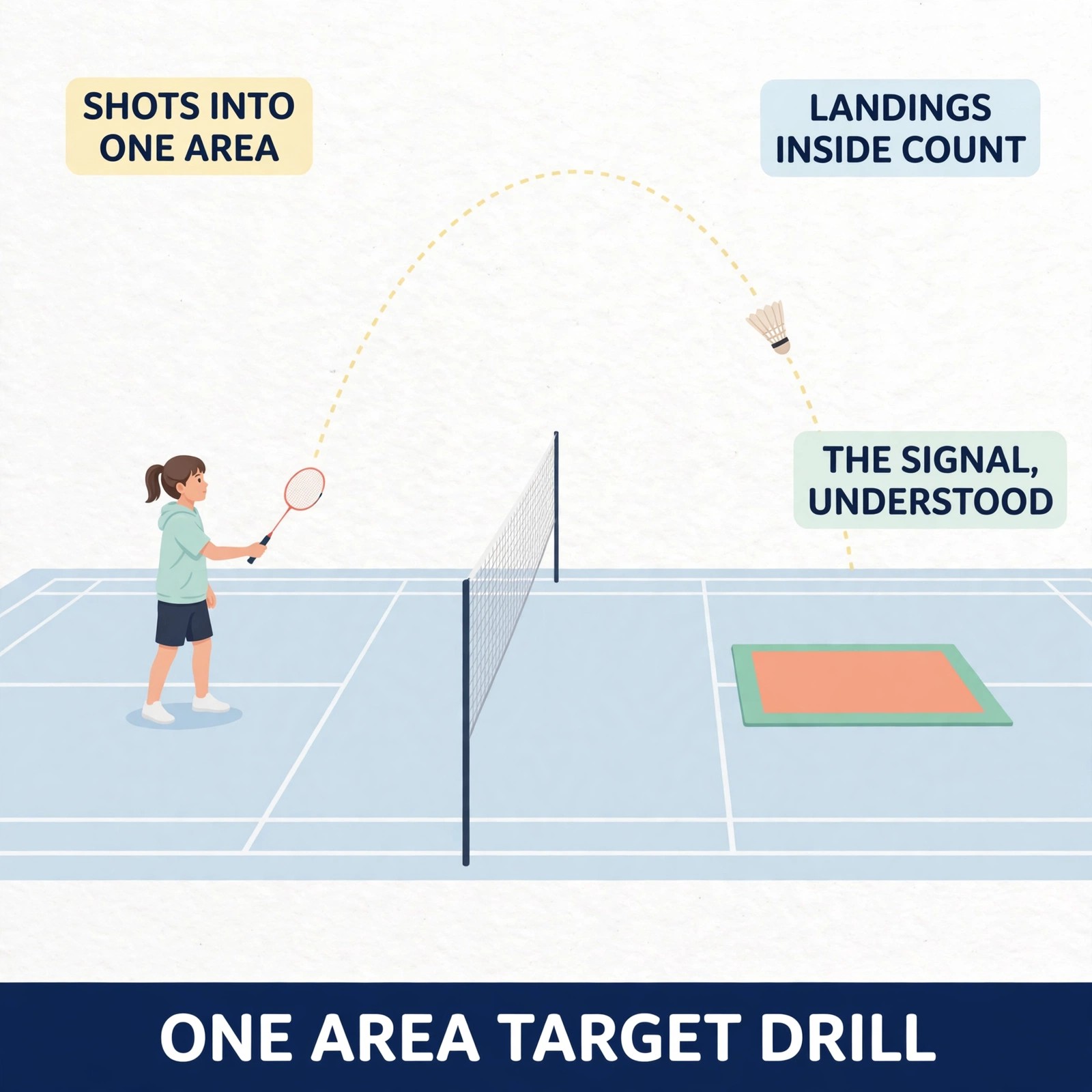
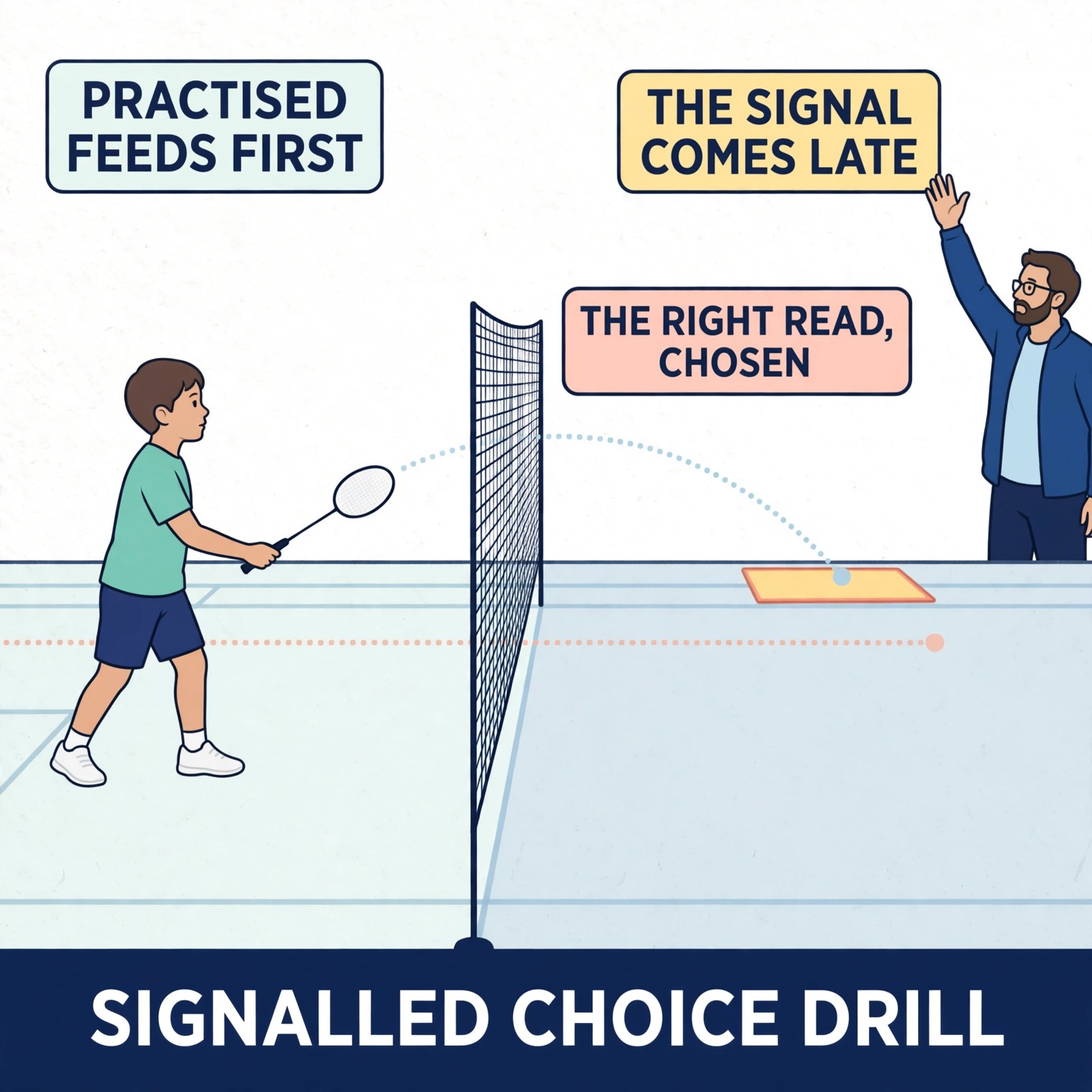
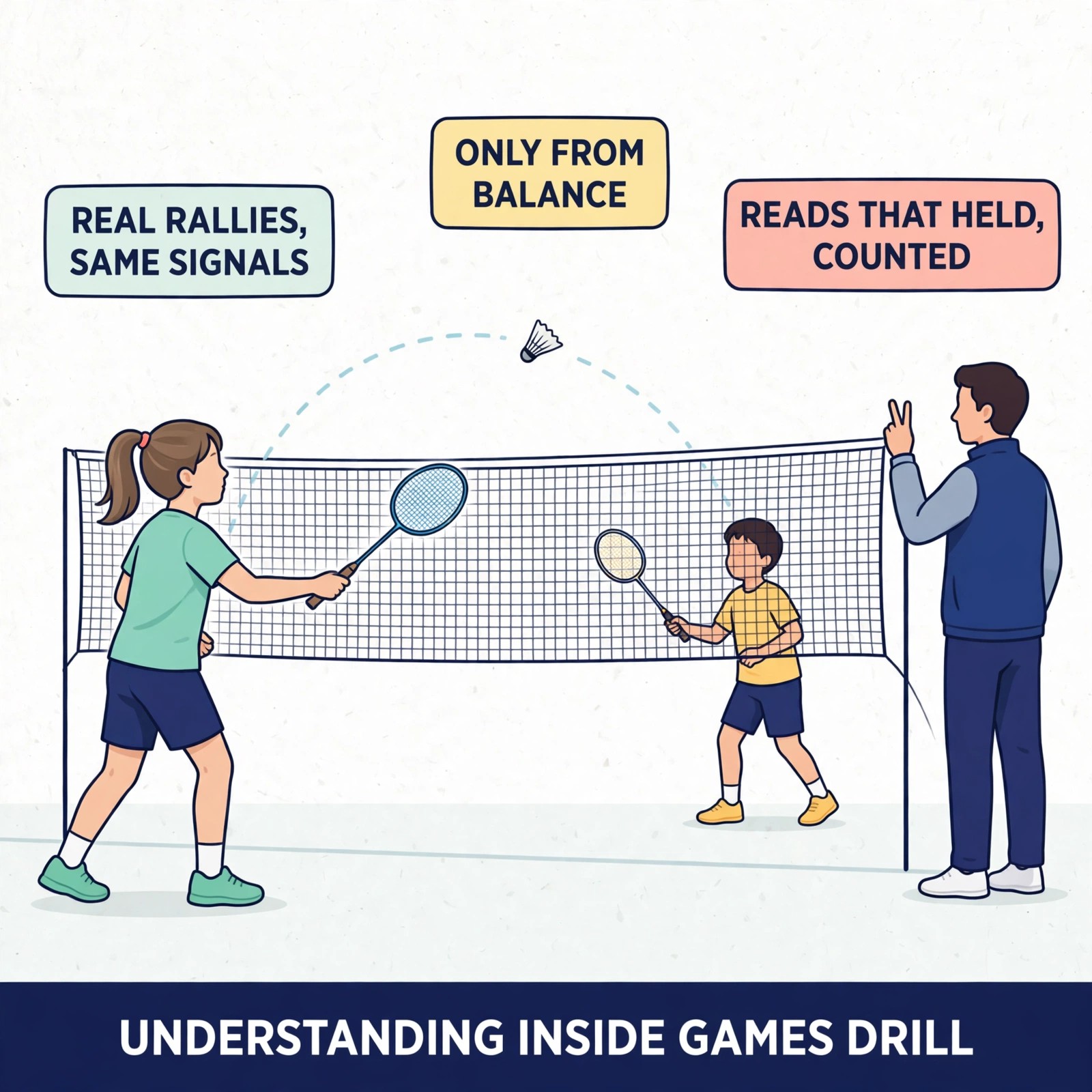
We benchmark our language friendly coaching against World Badminton (BWF) coaching standards and our own academy values: before any player trusts a training plan, they deserve honest checks. You can verify our coaches' credentials through the Badminton Association of Malaysia (BAM) coach education pathway.
One standard governs how we teach across a language gap: the child's first copy judges the explaining first, and the child's ease judges it second. A coach here will demonstrate on request, repeat the kept phrases without impatience, and report what your child actually understood rather than what was covered. We also hold an honesty rule about what shown and said coaching can promise: it cannot promise fluency, or that understanding arrives by a chosen date, because children pick up a new language at different speeds and lessons differ. What coaching promises is a picture for every point, a phrase set that stays put, and checks that tell the truth kindly.
| Factor | The Shown And Said Hall | The Word Only Hall LANGUAGE |
|---|---|---|
| Frequency | 1 or 2 times a week. Mostly for fun and sweat. | The word only hall explains everything in full sentences and takes the group's nodding as understanding. A child who follows half the language copies a neighbour, practises the wrong shape confidently, and is quietly misread as shy or slow while the real gap sits in the teaching channel. |
| Drills Focus | Basic static feeding. Minimal footwork pressure. | The shown and said hall demonstrates every new point slowly first, attaches one plain phrase from a small kept set, and checks understanding by watching each child show the movement back. Words stay few, the same and attached to pictures, so a child can learn at the speed of their eyes. |
| Physical Conditioning | Rarely included. Just playing games on court. | Core, agility, and speed training included in every session to prevent injury and build stamina. |
| Tactical Awareness | "Just hit it over." No real game plan. | Video analysis, point construction, and learning to read the opponent's game. |
| Coach Ratio | Large groups (8-10 kids). Coach barely watches you. | Max 4 students. Mr Eric Chuar personally corrects every stroke and movement detail. |
| Goal Setting | Fun and exercise. | Because the count is each child's first copy after an explanation, real understanding shows up as numbers rather than as nodding. The coach sees whether the picture, the phrase or the check failed to land, the parents see the same rows, and one part of the teaching is repaired instead of the child being blamed. |
| Long Term Result | Good recreational player. | The high-performance version produces a child who starts on the first signal and a lesson that teaches every child in the room. The casual version spends the term explaining louder; the shown and said version removes the guesswork in a fixed order and counts what was understood. |
Language Friendly Coaching in Kuala Lumpur
Your start can be the lesson your child nods through. Bring the phrases they hear now, as exactly as anyone remembers them, and an honest note of where their understanding tends to fall away. At a first session we will demonstrate before we explain, agree the small phrase set together, and show you the check by showing back. No blame for the gap, on your child or on any coach. Just pictures that carry the meaning, words that stay the same, and a child who finally gets to learn at the speed of their eyes.