Best Badminton Coach in Malaysia: Why Your Coach Should Explain a Technique Change
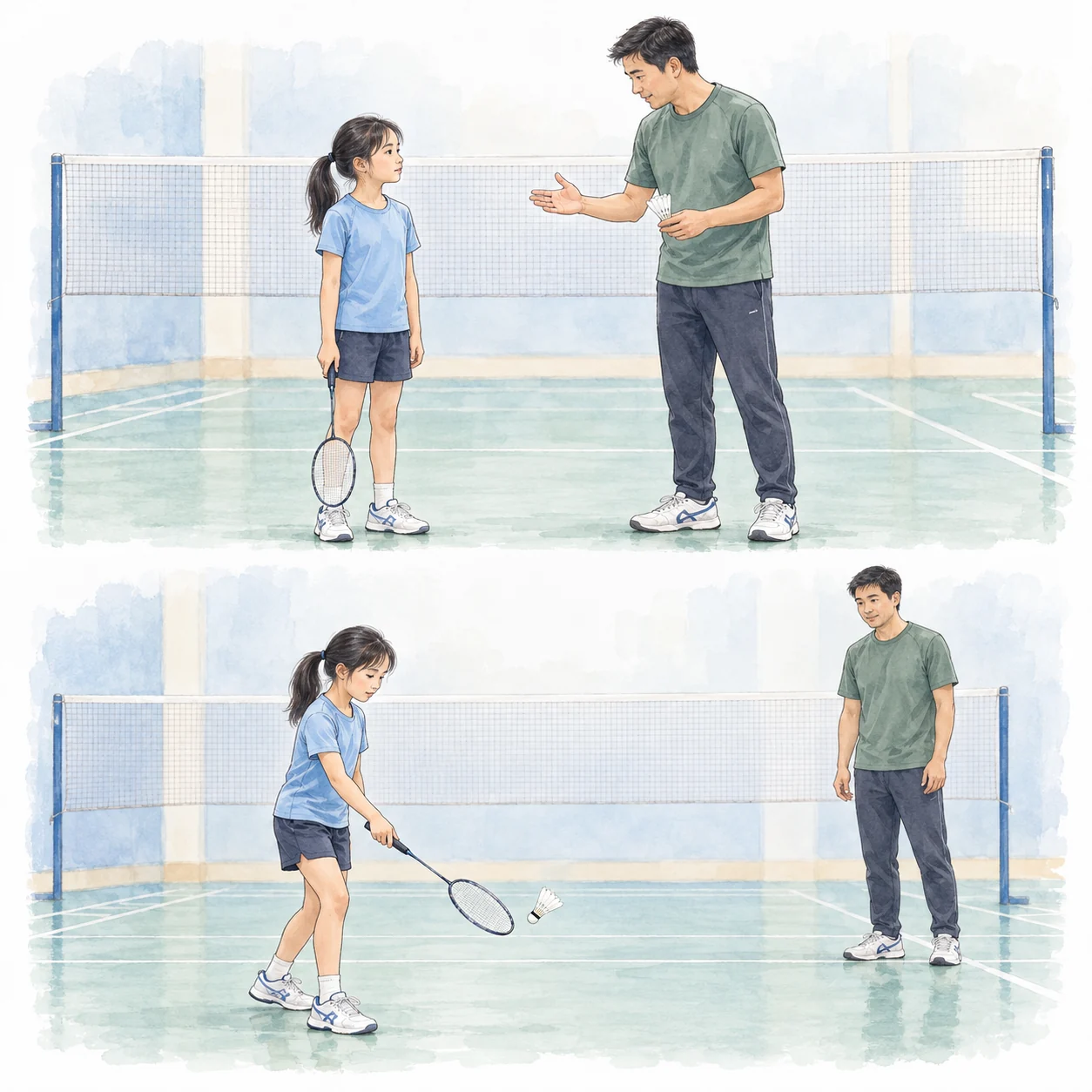
A badminton technique change should connect an observed problem to a clear next attempt. Ask what the coach noticed, what the adjustment is meant to help and how the learner will check it. Different movement does not by itself prove better learning. When searching for the best badminton coach in Malaysia, parents can look beyond an attractive demonstration and listen for this teaching explanation. A child may hear a new grip reminder, a movement cue or a different starting instruction without understanding why it matters. This guide explains how to ask useful questions while leaving the technical assessment with the responsible coach. Families considering badminton training at ST Badminton Academy in Kuala Lumpur can use it to discuss learning needs, not to prescribe a universal technique from an article. Images are AI-generated teaching illustrations with generic people, not photographs of Eric Chuar or actual students.
Know the teaching purpose
What problem is the coach trying to understand?
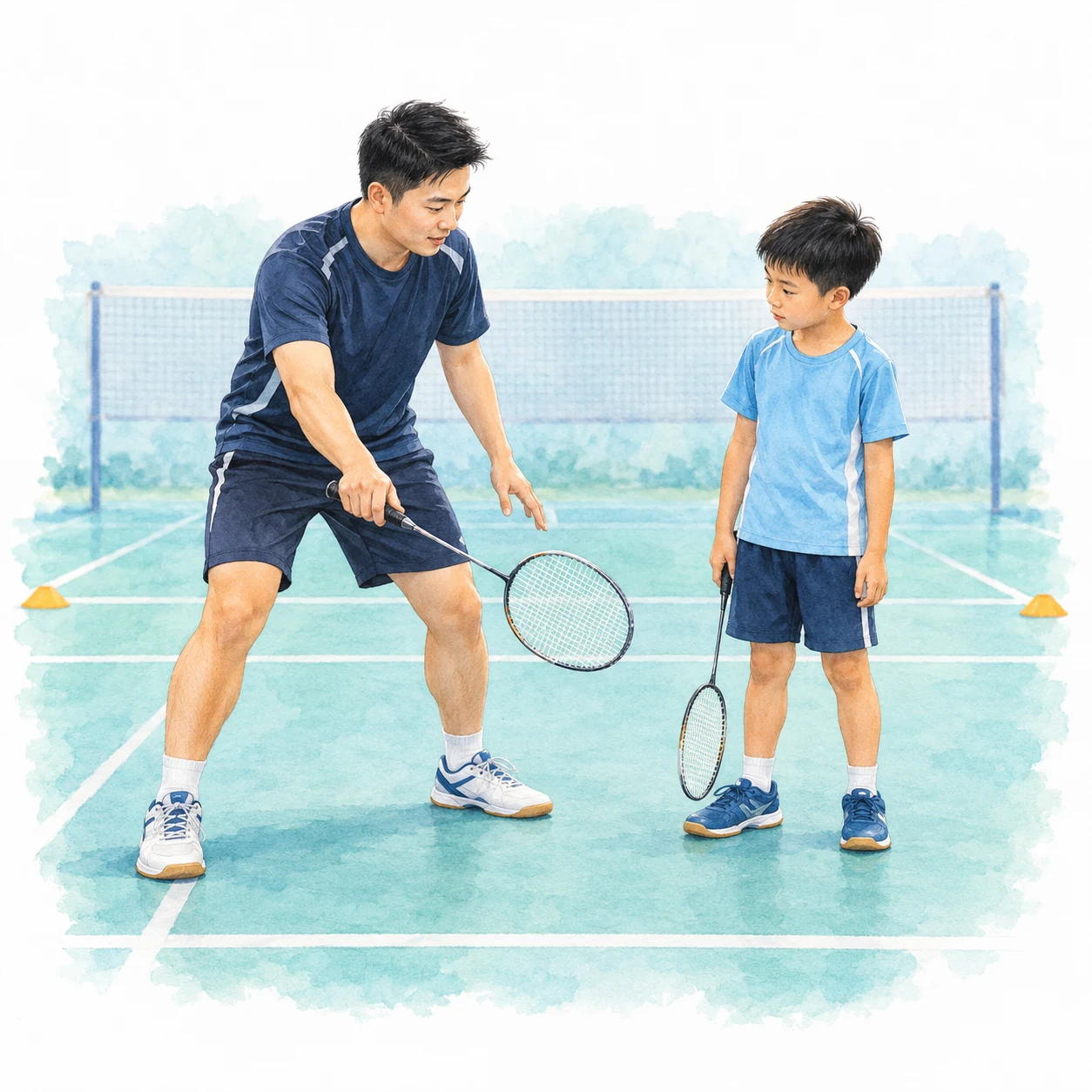
Start with the observation behind the adjustment. A coach might notice that an action does not fit the selected task, or that a learner is using a familiar response in a different situation. Those are teaching questions that need context. Ask the coach to describe the activity and the detail being considered. This is more useful than accepting ‘your technique is wrong’ as a complete explanation. The learner needs a reason that relates to something they can attempt, rather than a broad judgement about every part of their badminton.
Parents should also separate their view of the result from a technical conclusion. A shuttle that misses an area does not tell an observer, by itself, which part of the movement should change. Several conditions may have affected the attempt, including what the learner understood. Describe what you saw and ask how it relates to the goal. Do not use a single missed shot to demand several corrections. A clear teaching response begins with relevant information, not with the number of faults someone can name from the sidelines.
Understand the original task
Why does the activity matter before the movement is judged?
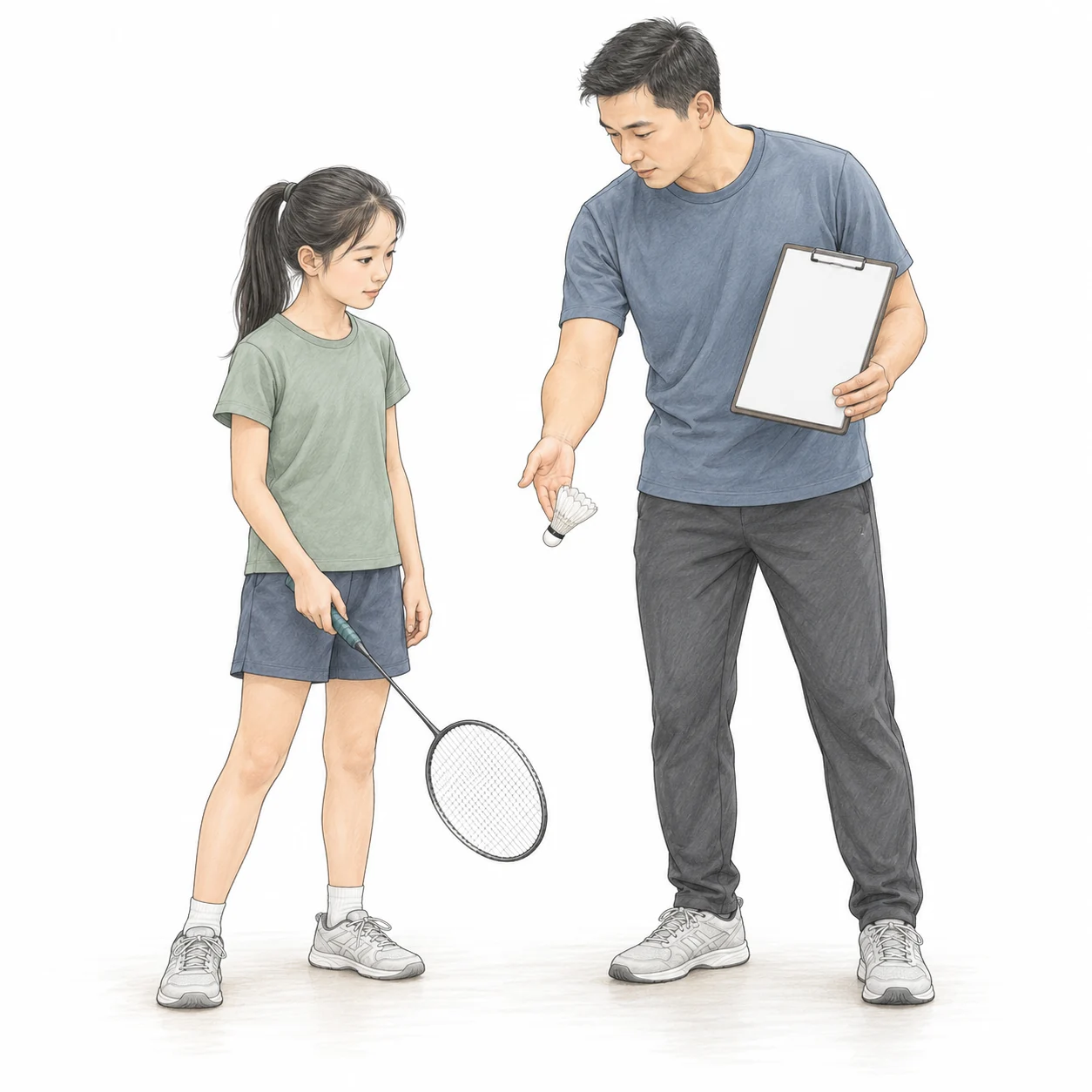
The same visible action can be part of different practice purposes. An activity may be introducing a movement, helping the learner recognise a cue or checking what happens when a simple situation changes. Before judging an adjustment, ask what this attempt is intended to teach. A beginner is not necessarily working on the outcome an experienced spectator expects. That does not remove standards; it makes the standard specific enough to assess fairly. The coach should be able to connect the explanation to the learner’s current task without turning it into a technical lecture.
Keep the learner’s understanding in view. A child may copy the coach’s demonstration while still being unsure when the action belongs in play. Another may understand the goal but need support organising the attempt. These are different starting points. A hypothetical coach might first ask the child to explain the target before introducing a new cue. The parent can ask why that check is useful, rather than assuming it is avoiding technique work. A change should fit what has been observed and understood, not simply make practice look more advanced.
Choose a manageable cue
What should the learner actually try next?
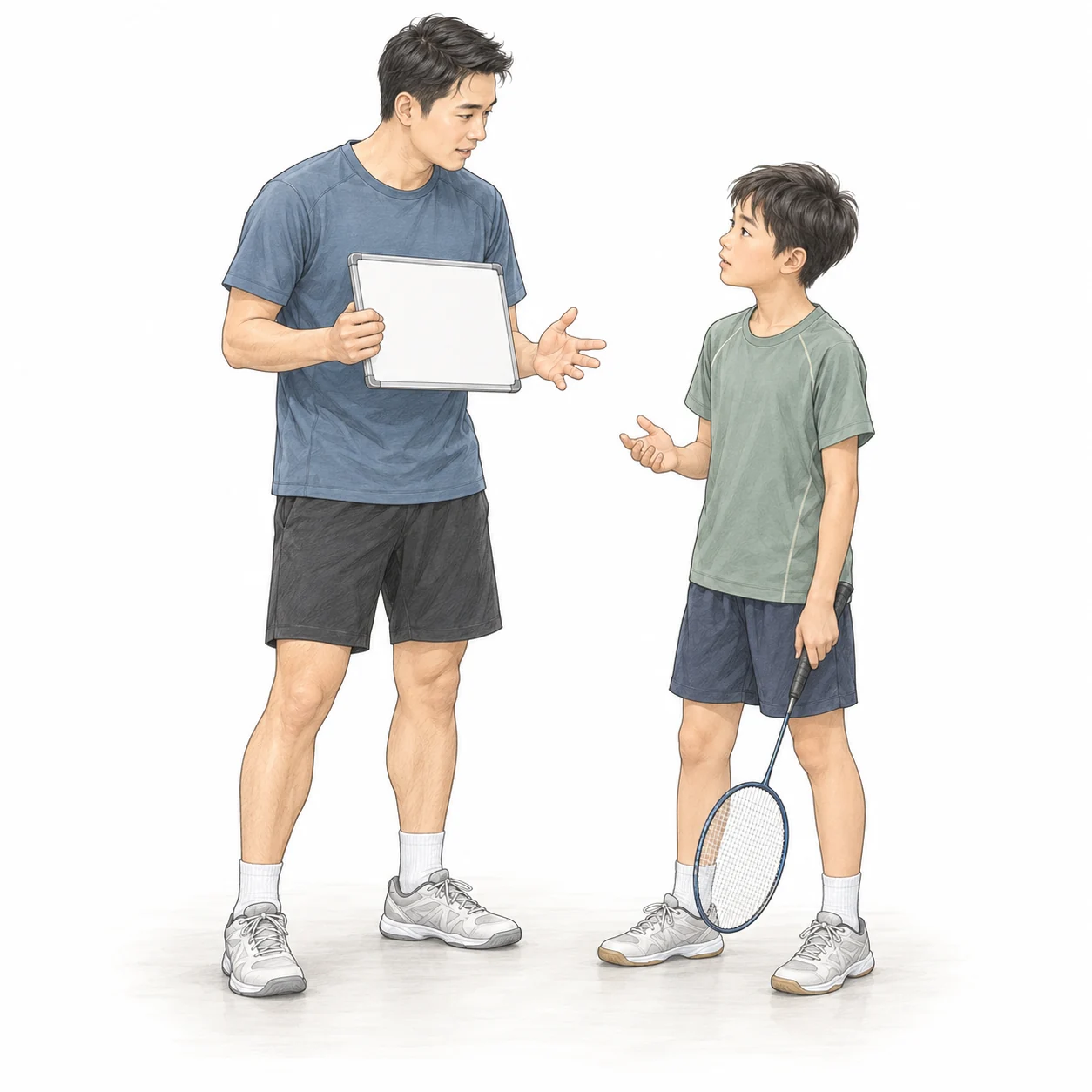
A good explanation reaches a usable next action. Ask for the cue the learner should use in the current activity, with a demonstration if that helps. The instruction needs to be short enough to remember while practising and clear enough to recognise afterwards. It does not have to contain every technical detail that a coach considers. Those details may inform the teaching plan without all becoming directions for the child at once. The useful question is whether the learner knows what to attempt next, not whether the explanation sounds complex to an adult.
Check that the cue arrived as intended. The coach can ask the child to describe the task simply or show the agreed starting action. A nod may mean politeness, recognition or partial understanding; it does not settle the question. Parents should not interrupt the activity to conduct their own test. Instead, notice whether the explanation and the learner’s response connect, and raise an unclear point at a suitable time. If a cue is not understood, simpler language or another demonstration may help more than repeating it louder.

Keep changes connected
Why not correct every visible detail at the same time?
Several observations can be valid without becoming several simultaneous instructions. A learner trying to remember many corrections may lose the purpose of the task. Ask how the coach is choosing the current priority and which other details will be considered later. This should be a teaching decision rather than an excuse to ignore important information. The parent does not need to choose the order of technical corrections from an article. The coach needs enough explanation for the family to understand why one adjustment is being made now.
An adjustment also does not have to make the whole movement unfamiliar. Some established parts may already support the task. Ask what remains the same as well as what is changing. This helps the child connect a new cue to a recognisable activity. Avoid praising a lesson mainly because it looks completely different from the previous one. Novelty can be noticeable without being useful. A badminton academy should be able to explain the relationship between the current adjustment and the goal, rather than rely on the appearance of constant technical reinvention.
Check the effect
How can the next attempt provide useful feedback?
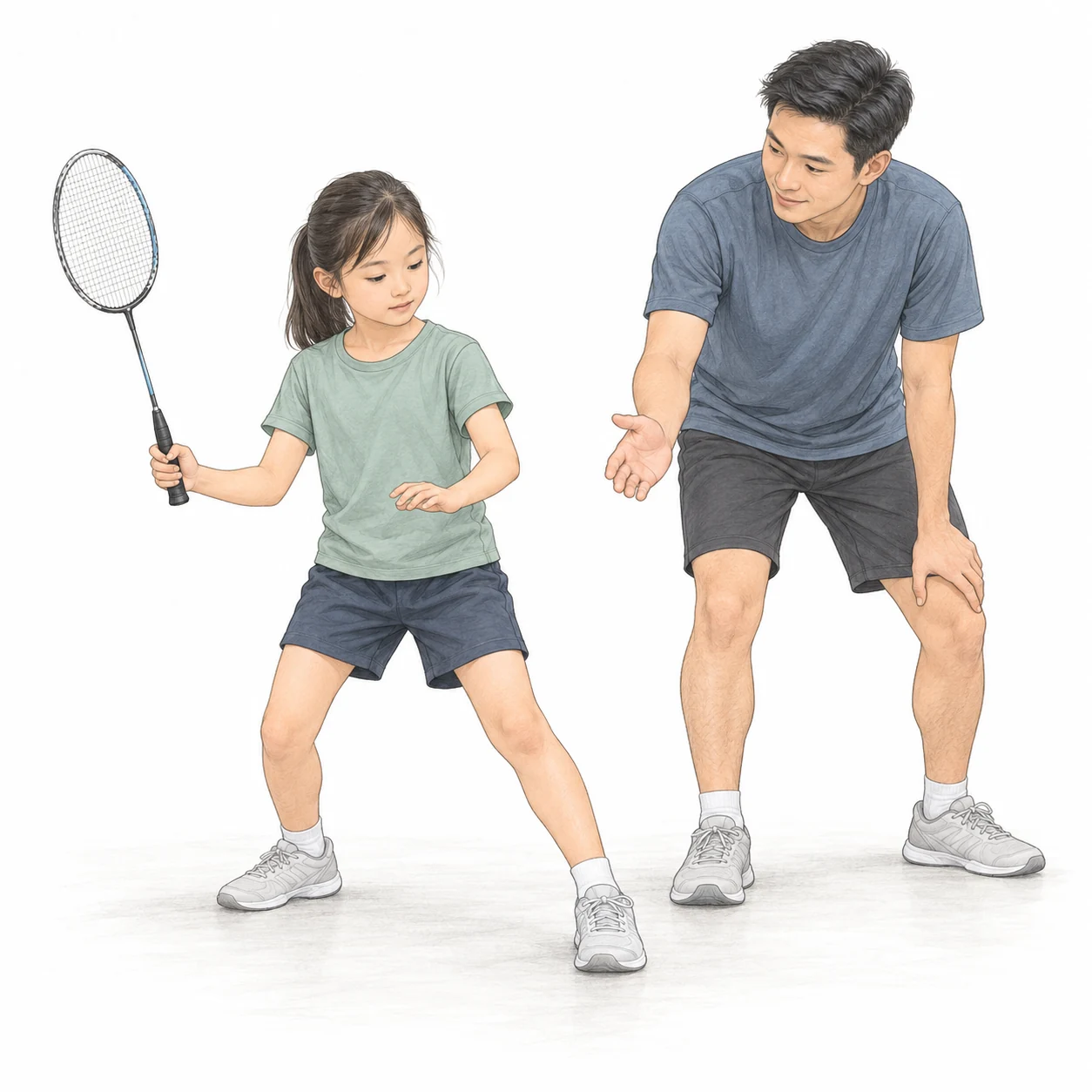
The next attempt should give the coach information related to the adjustment. Ask what the learner or parent could reasonably notice in that task. The answer might concern whether the child understood the cue, started the activity clearly or could recognise the selected check afterwards. Do not turn these examples into a universal assessment for every stroke. The coach chooses a suitable observation for the actual learner and activity. Naming the relevant check helps the family avoid measuring a different outcome from the one currently being taught.
A single attempt may still be unclear. The learner may have forgotten the cue, misunderstood the starting position or faced a changed situation. The coach can decide whether to explain again, simplify the activity or observe another suitable attempt. Parents should avoid treating one immediate success as proof that a change is permanently learned. Equally, an early mistake does not show that the adjustment is worthless. Feedback is information for the next teaching decision, not a reason to give the learner a fixed label after each shuttle.
Ask how a later check will connect to the current activity. A learner might begin with help and later attempt a familiar task with fewer reminders, when appropriate. The purpose is to learn what remains understandable, not to withdraw support abruptly. There is no universal number of repetitions that proves a technique change has transferred into play. A useful review keeps the task, cue and assistance visible. It helps the family discuss progress without inventing a deadline or making the child repeat a performance for approval.
Discuss different explanations
What if a new cue sounds different from advice you already know?
Bring familiar advice as a question, not as another instruction shouted during practice. You can say, ‘We heard a different cue before; how does that relate to this activity?’ The coach may explain that the wording serves a different task, that the child needs a simpler starting point or that a specific observation has led to a different choice. The family can ask for clarity without forcing the learner to decide between adults. Relevant experience deserves consideration, but it still needs to be connected to the current learning situation.
Keep technical discussion respectful and specific. Playing history and coaching qualifications can provide background, yet they do not remove the need to explain the next action. A former national player can also be a patient teacher; another coach can communicate well without that playing title. Notice what actually happens when a reasonable question is asked. Can the explanation become clearer? Does the learner know which cue to use now? These are more useful observations than deciding that one category of coach must always be superior.

Use the explanation to choose
What does this reveal when choosing badminton training in Malaysia?
When considering a badminton class for kids, follow one teaching adjustment from observation to explanation, attempt and review. This provides a practical view of coaching quality that a promotional highlight may not show. Ask whether the family can discuss relevant concerns at an appropriate time and how the child can request clarification. Observation arrangements vary, so confirm what is permitted rather than entering a teaching area uninvited. The aim is to understand how learning is supported, not to publish a scorecard about individual learners or compare every child’s results.
ST Badminton Academy enquiries can include a specific example of a cue your child did not understand or an adjustment you want explained. Describe the activity and the question without prescribing a solution. Ask about suitable learning arrangements in Kuala Lumpur and the information needed to understand the starting point. A useful next conversation can establish what to observe and what the learner should try. The application begins an enquiry; available arrangements and suitability still need confirmation, and no explanation alone guarantees a particular learning result.
Badminton technique changes: questions for a coach
A technique adjustment is easier to discuss when the family knows the task, the reason for the cue and the check that follows. These answers guide the conversation; they are not universal stroke instructions.
Should a badminton coach explain why a technique is changing?
The explanation should connect what was observed to the current task and the next action the learner should try. It can be simple, rather than a lecture on every technical detail. Ask what the adjustment is intended to help and what a suitable next attempt will reveal. This lets the family understand the learning purpose without taking over the coach’s assessment.
Does a missed shuttle prove the learner’s grip is wrong?
Not by itself. The task, cue, understanding and surrounding conditions all matter when interpreting an attempt. Describe the missed result and ask what the coach observed. Avoid prescribing a technical change from one outcome alone. The responsible coach should assess the learner and activity before deciding what deserves attention.
How many corrections should a beginner receive at once?
There is no universal number for every situation. The learner needs a manageable instruction connected to the current goal. Ask how the coach is selecting the priority and which details remain for later. Several relevant observations do not all have to become simultaneous directions; clarity matters more than demonstrating that many faults can be named.
What if my child nods but cannot explain the cue?
The nod may show only partial understanding or recognition. Ask how the coach can check the task through a simple explanation or demonstration appropriate to the child. Do not interrupt to test the learner yourself. If the meaning is still unclear, simpler wording or another demonstration may provide more useful support than repeated louder instructions.
Should the whole movement change after new feedback?
Not necessarily. Some familiar parts may already help the task, while one detail needs adjustment. Ask what stays the same and what the learner should change now. A lesson does not need to look completely new to be useful. The relationship between the selected adjustment and the current purpose matters more than novelty.
Does one successful attempt prove the change is learned?
One attempt provides information, not a complete conclusion about lasting learning. Ask how understanding will be checked again after appropriate practice opportunities. Keep the amount of help and the task context visible. A later attempt in a suitable situation can add useful evidence without requiring an invented repetition count or a rapid-result deadline.
Can parents mention different advice from another coach?
Yes, as context and a specific question at a suitable time. Ask how the familiar cue relates to the present activity rather than adding a competing instruction during practice. The learner should not be responsible for settling an adult disagreement. A clear explanation can identify whether the wording, task or actual teaching decision differs.
Does national-team experience guarantee clear technique teaching?
It can provide valuable playing knowledge, but teaching clarity still needs to be observed. Look at how the coach explains a task, checks the learner’s understanding and responds to a reasonable question. Do not dismiss a playing background or treat it as automatic proof that every child will understand the instruction. Assess the actual teaching response.
How do I ask STBA about an unclear technique change?
Use the application to describe the learner’s experience, the activity and the specific point that is unclear. Ask what information would help the coach understand the starting point. You do not need to diagnose the movement beforehand. The enquiry supports a discussion of suitable arrangements; it does not confirm a place or guarantee an outcome.
Educational illustrations: explaining and reviewing a useful change
Four questions that keep a technique change understandable
Follow the explanation rather than count corrections. Name the current task, ask what the coach observed and agree the cue the learner should attempt next. Then discuss what a suitable check can reveal. This framework helps parents organise questions without prescribing technique. Keep the child’s understanding in view and allow the coach to adapt the task, demonstration and amount of support to the actual learning situation.
| Teaching moment | Creates uncertainty | Makes the next step clearer Follow the purpose |
|---|---|---|
| A result is missed | Assume one outcome identifies the cause | Ask what was observed in the actual task |
| New technical advice | Give a broad judgement without a next action | Explain the purpose and one usable cue |
| Several observations | Turn every detail into a simultaneous instruction | Explain the current teaching priority |
| Learner nods | Treat recognition as complete understanding | Use an appropriate check of the task |
| Familiar different cue | Let the child manage competing adult directions | Discuss the relationship at a suitable time |
| One successful attempt | Declare the change permanently learned | Agree a later relevant review |
Discuss a technique change your child does not understand
Looking for badminton coaching in Malaysia that explains the purpose of practice? Tell ST Badminton Academy about the learner’s experience, the current activity and the cue that is unclear. Ask what information is useful for discussing a suitable next learning step in Kuala Lumpur. The application starts that conversation. Actual arrangements and suitability must be confirmed; this guide does not diagnose a technique or promise a particular result.