Best Badminton Coach in Malaysia: Questions to Ask About Substitute Sessions (Cover Guide)
It arrives as an ordinary message: your child’s coach is away next week, travelling, unwell, or called to family matters, and a substitute will run the session. Parents read it twice. Some feel relief that the week is covered. Some wonder whether to skip entirely, because a stranger with a whistle can turn a carefully built month into an evening of random games, or worse, an evening of corrections that quietly undo the cue your child has been carrying. Both instincts are understandable, and neither has to win. A substitute session can continue a child’s plan almost without a ripple, but only when certain things are true before it starts. This page works through the questions worth asking, what a good answer sounds like, and how cover is handled here.
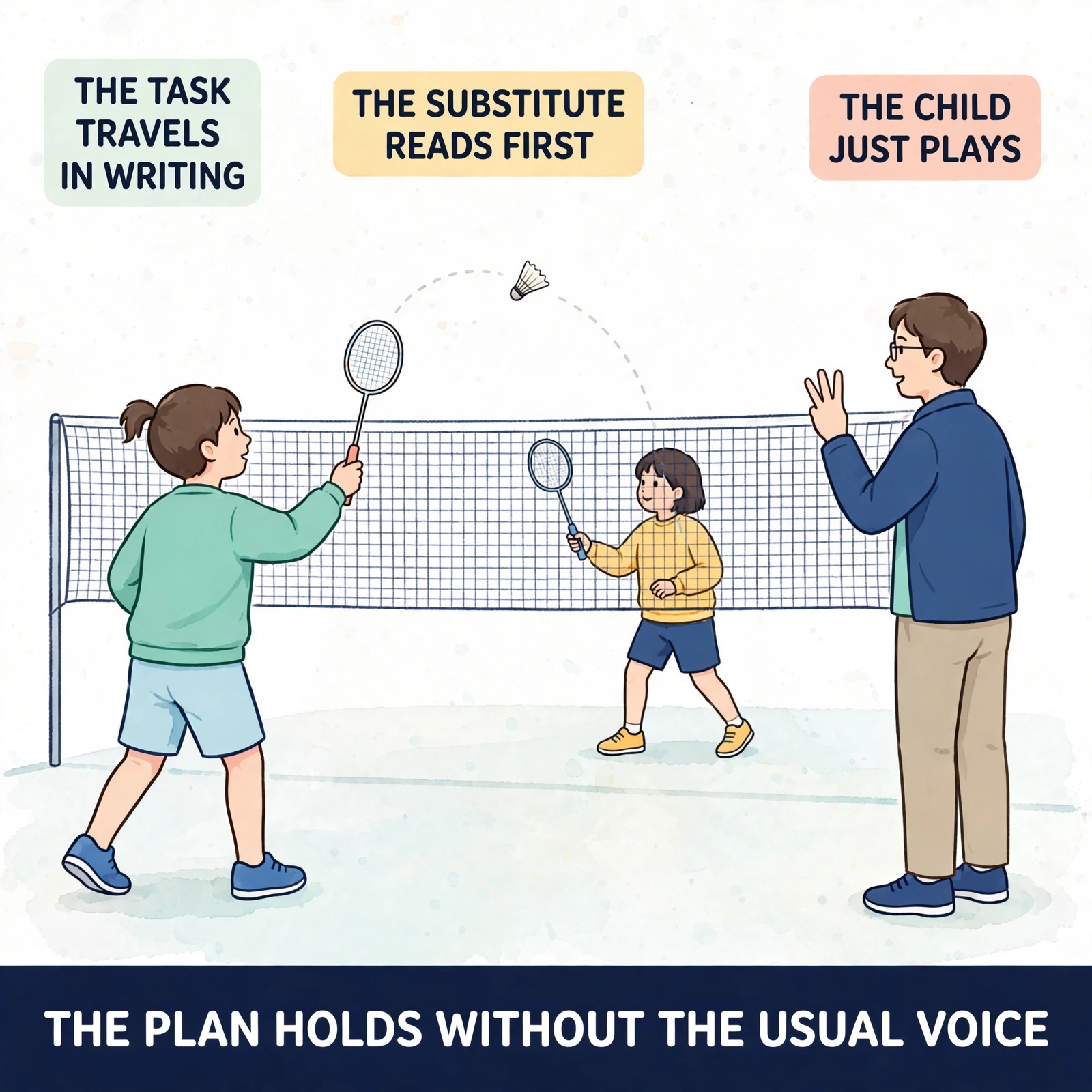
Cover Check #1
What A Substitute Session Really Is
A substitute session, in the way this page uses the term, is a planned session run by a different coach who has been properly briefed: told the current task in plain words, given the cue in its exact wording, warned what to leave alone, and expected to write back what happened. Cover without a brief is not a substitute session in this sense; it is a different lesson wearing the same timetable slot, taught to children whose real work waits untouched in another coach’s head. The distinction matters because families judge cover by its weakest version. A briefed substitute is one of the most ordinary, healthy things in a well run academy. An unbriefed one is a small leak in a child’s learning, repeated every time life, as it does, calls the regular coach away.
The cost of unbriefed cover is paid in drift, and drift is quiet. Finished work gets repeated because the substitute, working blind, reteaches what looks shaky and is actually settled. A cue gets taught against itself, when the substitute’s favourite wording contradicts the phrase the child has been carrying, and the child must now choose between two authorities in real time. And the returning coach, handed no report, reads the week after as a mystery and spends a session rediscovering where everyone is. Parents pay the deepest version of the cost in trust: the feeling of paying full price for a week that did not count. None of this needs a poor substitute. Substitutes are usually capable coaches. It needs a capable coach sent in without the three lines of writing that would have aimed them.
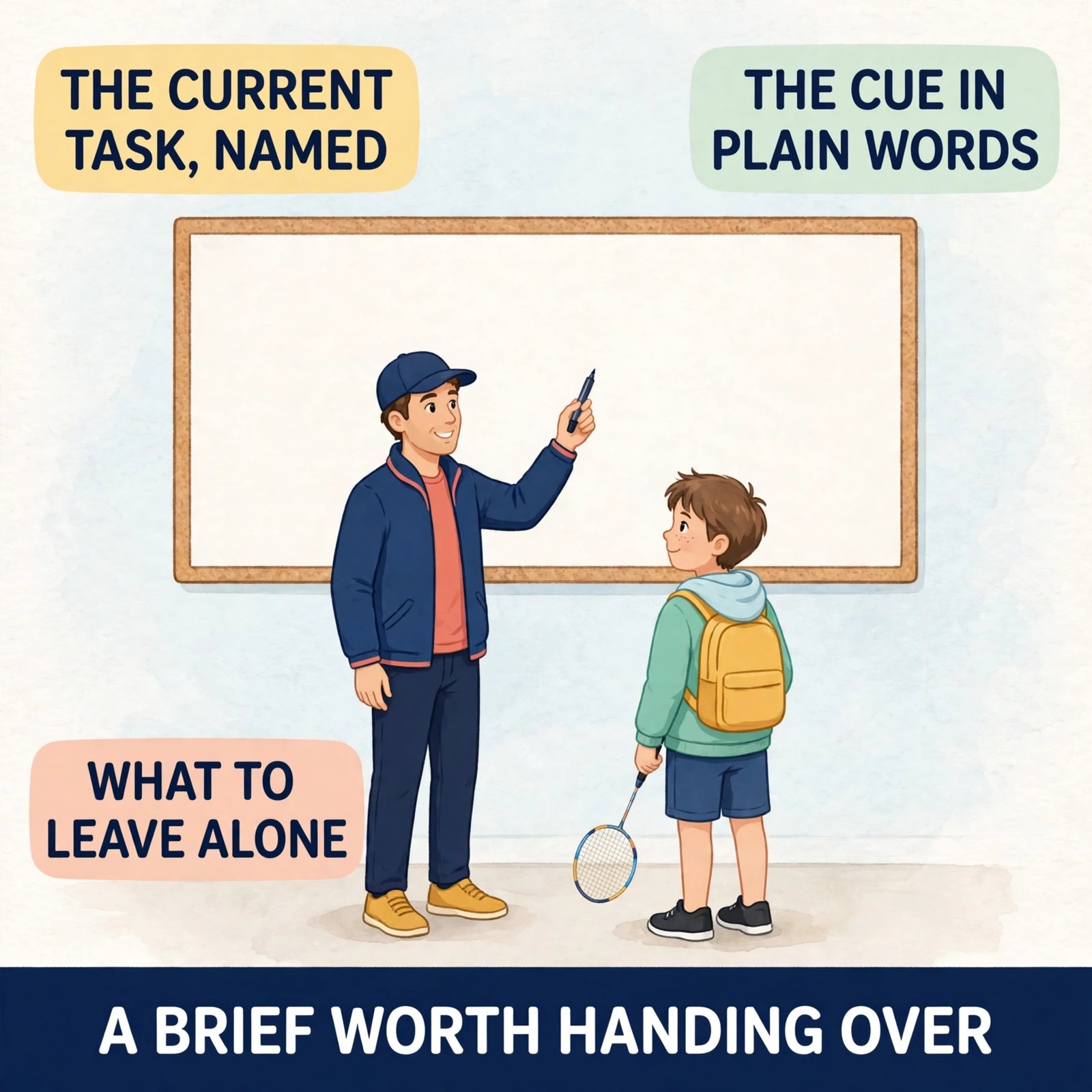
Cover Check #2
Inside The Cover: Brief, Session And Report
Start your questions with the brief, because the brief is the whole ballgame. Ask what the substitute is handed before the session, and listen for the working parts: the current task, named in plain words rather than as a level; the cue, in the exact words the children hear; the stage reached, including what is half built; and the parked items, the things deliberately waiting, so enthusiasm does not promote them early. Ask also who writes it, and when: a brief written by the regular coach, before the absence, from the living plan. A hall that can describe its brief calmly has a cover system. A hall that answers with reassurance alone has a hope, and hope is not a handover.
Then ask what continues, and what deliberately does not. The right shape of a cover session is conservative in the best sense: one priority from the plan continues, in its own wording, counted the same way as always, while everything ambitious waits for the regular coach’s return. No new system is unveiled, no second change is stacked on top of the carried one, no favourites from the substitute’s own teaching are promoted into the child’s week. This restraint is not a slight on the substitute; it is what makes the session measurable and the child steady. Ask the question plainly: what will the substitute not change? A thoughtful pause before that answer is a better sign than a confident list of everything they will improve.
Weak cover repeats on a short list. The games only week, where the session is filled with matches and described afterwards as a treat, while the carried task sleeps. The fresh eyes restart, where the substitute audits the group and begins their own programme from zero. The surprise cover, where nobody tells the children, who arrive to a stranger and spend the session reading the new adult instead of the shuttle. The verdict debrief, where the substitute’s impressions are collected as a judgement on the regular coach’s work. And the audit through the child, where parents interrogate the evening session by session. Each fault has the same repair: a brief written before, one priority continuing, a report written after, and every question travelling adult to adult.
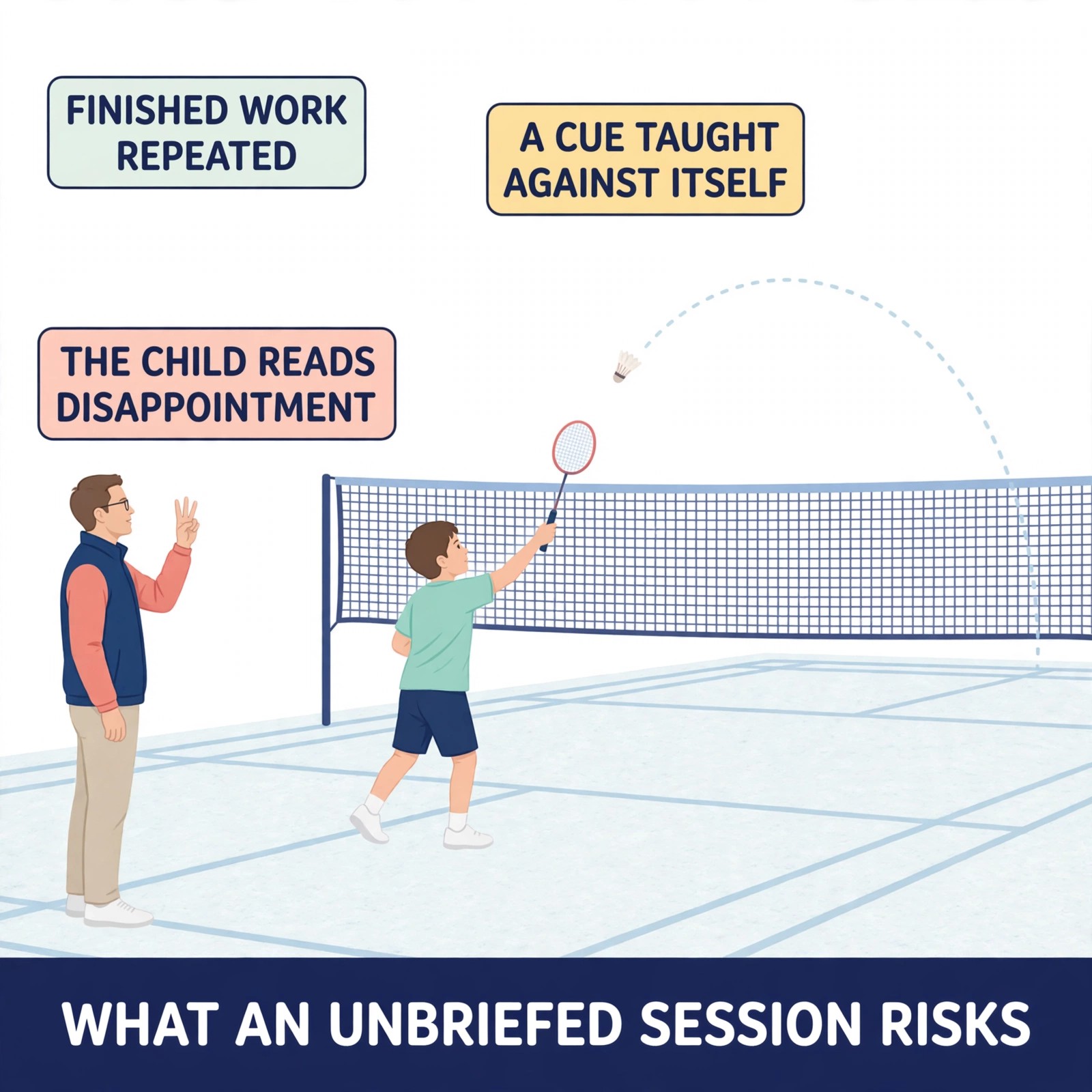
Cover Check #3
The Honest Cost: When Cover Means Starting Blind
Ask about the report with the same seriousness as the brief, because the report is what the returning coach teaches from. It need not be long: what was practised, how the carried task went, anything the substitute noticed that the regular coach should know, in a few honest lines, written while the session is fresh and shared with the family as well. Without it, the cover week’s evidence evaporates; the substitute’s observations, which can be genuinely valuable precisely because the eyes were new, are lost, and the regular coach restarts from guesswork. With it, an absence becomes a relay rather than a gap: brief out, session run, report back, teaching continues. Two short pieces of writing carry the whole weight, and any academy can produce them if it decides they matter.
Tell your child about the change before the session, plainly and early, and treat their account afterwards as information. Children settle quickly when a change is announced as logistics: coach is away, another coach is running Tuesday, the task stays the same. What unsettles them is surprise, and adults at home debating whether the substitute will be good enough in their hearing. Afterwards, ask what they practised, with genuine curiosity; a child’s answer is a fair part of the evidence about whether the brief was followed. Hold the clean line while you ask: what did you work on is information. Was the substitute better or worse is a verdict, and no child should be handed one about either coach.
Keep home talk about cover neutral, practical and brief. The reasons a coach is away are ordinary life, and ordinary life can be described without decoration: travelling, unwell, family matters. Never describe a cover week within a child’s hearing as a lesser week to be endured; children repeat the emotional version they overhear, and a child who arrives believing the session does not count will make it not count. Equally, resist recruiting your child to carry messages, comparisons or complaints to either coach. Questions travel directly between adults, in writing where it helps, and the child’s only job in the whole arrangement is to keep playing the task they were already playing.

Cover Check #4
Choosing Calmly: Questions Asked Before The Week
Agree the cover plan itself, as a small formal act with three parts. First, the brief is written by the regular coach before the absence and handed directly to the substitute: task, cue, stage, parked items, leave alone list. Second, the session runs one continuing priority, counted the usual way, with nothing new stacked on top. Third, the report is written back the same day and shared with the family, and the regular coach resumes from it rather than from memory. Agreed in advance, in a line or two each, those three parts turn any absence, planned or sudden, from a threat to a child’s progress into the most routine event in an academy’s year.
Sometimes the honest step is to skip, and the questions should make room for that answer. If a child is mid fragile rebuild, carrying a cue that has only just begun to settle, and no brief can honestly be written in time, a missed week can cost less than a contradicted cue. Equally, skipping as a reflex, whenever a familiar face is absent, wastes good cover and teaches a child that learning only happens under one adult, which is its own fragility. Decide from the plan’s condition and the brief’s existence, not from loyalty or anxiety in either direction. A family that asks the questions early will usually find cover is easy to say yes to, because the answers were arranged before they were needed.
A gentle word for the parent who feels a child’s progress is theirs alone to protect, standing guard over every week including the covered ones. Coaches expect absences; illness, travel and family life visit every hall, and a family that asks clear questions before a cover week is the family every academy finds easiest to cover well. The guarding instinct underneath is love, and it deserves a calmer job: ask the questions, read the report, judge the pattern across a stretch of weeks rather than one covered evening. And if the worry keeps circling after the plan is safely briefed and reported, it deserves a kind conversation of its own, with someone you trust, because no parent should carry a child’s whole learning alone.

Cover Check #5
Cover Drills That Keep The Plan Moving
We run cover in an order that keeps a child’s work intact. First, the regular coach writes the brief from the living plan before the absence: the current task, the cue in its exact words, the stage reached, the parked items and the leave alone list. Second, the substitute reads it before the session and asks questions early, while the regular coach can still answer them. Third, the session runs the one continuing priority and counts it the usual way, so the week stays comparable with every other week. Last, the report is written back the same day, shared with the family, and the regular coach resumes from it. Each stage follows from the one before, and at no stage is a child asked to impress a stranger.
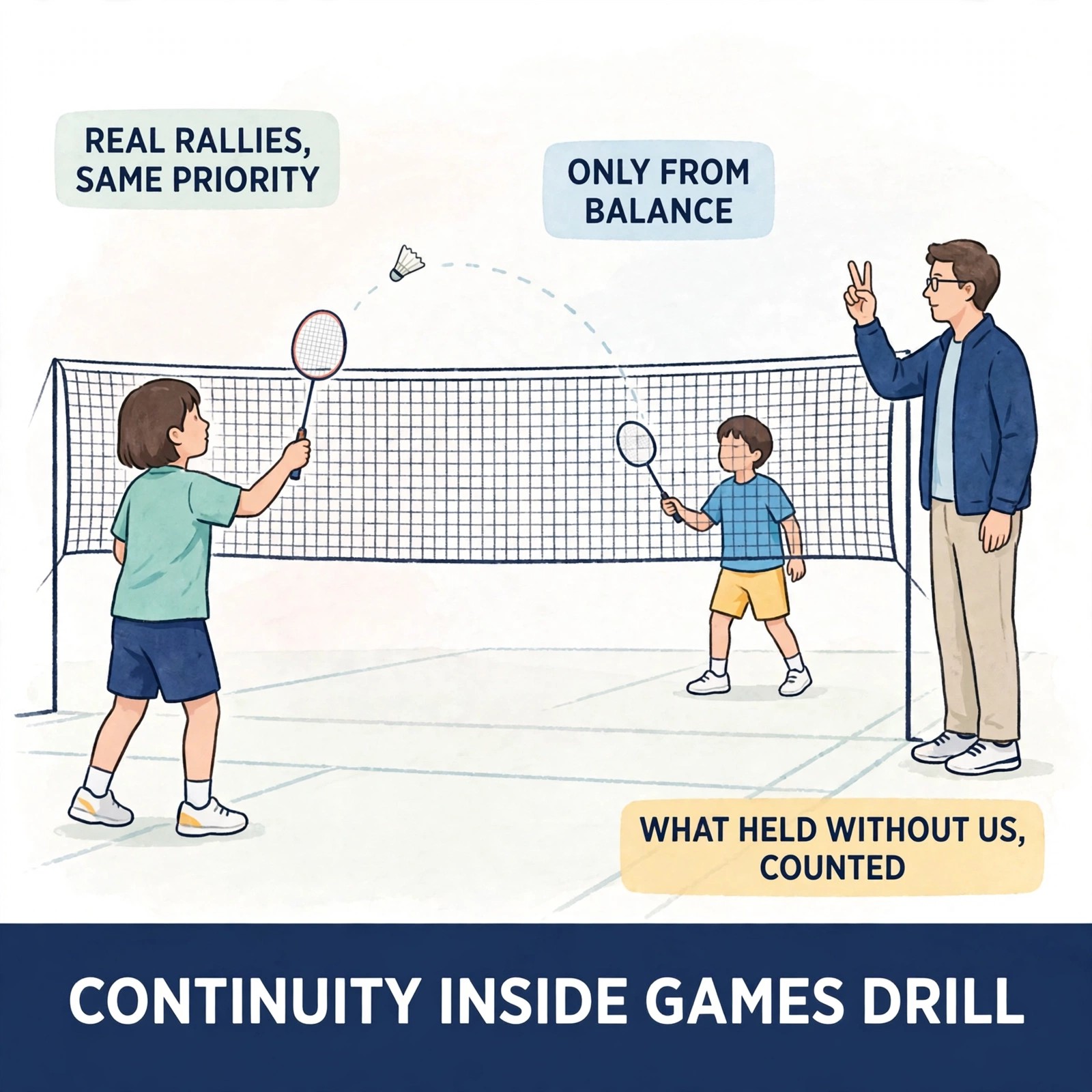
Continuity across a cover week is counted inside the carried task. Attempts made under the continuing cue, in its agreed task, is the headline figure, because it measures the very thing the brief existed to protect. Beside it sit two quieter counts: the child’s own account of what they practised matching the brief, since a session the player can describe was a session with a shape, and rallies holding together under a new voice, since learning that survives a change of adult was properly built. Nothing is compared with the regular coach’s numbers, and no coach is scored by the counts. They exist to show a family that the work travelled through the absence.
The signs cover has worked are calm ones. Your child walks in knowing who is teaching and what continues, and walks out able to say what they practised in the same words they would have used in an ordinary week. The returning coach opens the next session from the report rather than from rediscovery, and the repeated lessons families fear never appear. Your child stays relaxed about the whole subject, because the adults around them treated it as the ordinary, manageable event it is. That is when a substitute session stops being a risk to a child’s learning and becomes what it should be: the same room, the same work, a different kind adult holding the plan for one week.

Myth vs Reality
Myths About Substitute Sessions
Why does cover succeed or fail on two short pieces of writing? Because coaching knowledge lives in two places that do not transfer on their own. Half of it lives in the regular coach’s head: the reasons behind the cue, the stage reached, the thing deliberately not yet taught. The other half lives in the child’s body: the movement itself, which does arrive at the session, but unexplained, and can look to a substitute like a habit to be corrected rather than a stage to be continued. An absence moves the adult and leaves the first half behind, unless somebody writes it down. That is the whole case for the brief and the report. They are not bureaucracy and not a judgement on the substitute. They are the bridge between the half of the plan that stands on court and the half that would otherwise stay home with the regular coach.
What does good cover actually contain? Five short parts are enough. The brief, written before: task, cue, stage, parked items, leave alone list. The continuing priority, one only, named so the session has a spine. The counting, kept the same as every other week, so the covered week can be compared honestly with its neighbours. The report, written after, the same day: what ran, what was noticed, what the regular coach should know. And the neutrality, held by everyone: no verdicts on either coach, in any hearing, at any point. Notice what is missing: no new programme, no audition of the children, no comparison shopping between coaches. The discipline is in the omissions. Cover that tries to do everything protects nothing.
One continuing priority is the rule that makes cover countable. A child mid rally is already reading the shuttle, moving, choosing and recovering; the carried task rides on top of all of that, using attention that has to come from somewhere. A cover session that runs the same priority spends that attention honestly, and the week’s counts can sit beside last week’s without apology. A substitute who teaches their own favourite topic instead makes the week unmeasurable: nothing was continued, so nothing can be judged, and the plan quietly pauses while appearing to run. So the priority is protected in the brief, in writing, before the session: this continues, everything else waits. The topics that wait lose nothing by waiting. They were parked by a coach who knows the child, and they will be there, in order, when the regular voice returns.

Why Choose Us
Why Players Choose ST Badminton Academy
Parents choose ST Badminton Academy for substitute cover because we treat an absence as a relay, not a gap. We will write the brief from your child’s living plan before any cover week, have the substitute read it and ask questions early, run the one continuing priority, and write the report back the same day for you to read. In a group of no more than four students, the substitute watches the actual task the brief describes, per child, rather than managing a room in general. And the courtesy runs both ways: the report a substitute writes here is honest about what they saw, including anything that questions the plan, because cover that only flatters helps nobody. We would rather your child’s learning never notices that anyone was away.
A first session with us shows the approach, if you know where to look. Bring your cover questions before you ever need them: what is written, who writes it, what continues, what comes back. Watch whether we can describe the brief, the continuing priority and the report without hesitating, and whether the answers sound like a system rather than a favour. Afterwards, ask three questions. What exactly is the substitute handed? What will they deliberately not change? When do I read the report? The answers describe the whole method in miniature, and they should make an absence feel smaller, not larger, than it did before you asked.
Parents complete the cover plan from their side with the same plain habits. Announce the change to your child early and practically: who is coming, what stays the same. Ask afterwards what they practised, as curiosity, and let the answer be information rather than the start of an audit. Carry every real question directly to the coaches, in writing where it helps, and never through your child. And keep verdicts out of the house entirely; your child should be able to say what they are working on and who taught this week, and never need to say who was better. A family, a regular coach and a substitute passing two short pieces of writing between them is what turns an absence into a non event.
FAQs: Substitute Sessions And Coaching Cover in Malaysia (KL)
These are the questions parents ask us most about substitute sessions, before they book and whenever a cover week approaches. The short version runs through all of them: the brief is written before, one priority continues, the report is written after, and neither coach is judged by the arrangement. The longer answers follow, including whether skipping is ever the right call, and how a first session with us actually works.
Can a child’s training continue with a substitute coach in Setapak or Gombak?
Yes. A child’s training continues with a substitute coach with us in Setapak, a short drive from Wangsa Maju, in groups of no more than four students. The regular coach writes a brief first, one priority continues, and a short report is written back afterwards.
What should a parent ask first about substitute sessions in KL?
Ask what the substitute is handed before the session: the current task in plain words, the cue in its exact wording, and what to leave alone. Follow with who writes the report afterwards. A hall that briefs its cover can answer both questions without hesitating.
Why do substitute sessions worry parents at a junior level?
Because a cover week puts a child’s quiet progress in a stranger’s hands, and what is lost is invisible until the regular coach returns and starts repeating finished work. The worry is fair, and it deserves a practical answer: a written brief before, and a written report after.
Our regular coach is away next week. Should we skip the session or let a briefed substitute run it?
Let a briefed substitute run it. Skipping protects nothing when a brief exists: the session continues the same task, counts it the same way, and the plan loses no ground. Skip honestly only when no brief can be written and the child is mid fragile rebuild, where a contradicted cue costs more.
How can parents prepare a child for a substitute session at home in between classes?
Tell your child before the session who is coming and what stays the same: the task, the cue and the counting. Afterwards, ask what they practised, as curiosity rather than an audit. Carry every real question directly to the coaches in writing, and never ask your child to compare the two coaches.
Do you brief substitute coaches beside badminton training near Wangsa Maju?
Yes. We brief substitute coaches beside regular training from our base in Setapak, a short drive from Wangsa Maju, and families from that side train with us every week. The brief sits inside ordinary junior sessions, so the continuing priority is checked against real rallies rather than discussed in the abstract.
Where does ST Badminton Academy teach badminton training in Malaysia?
We teach at our base in Setapak, Kuala Lumpur, and families travel in from across the Klang Valley. Sessions run with no more than four students per group, because a brief is checked against rallies watched one child at a time, and that needs a coach close enough to see the task itself.
How do I book a trial session to test my child’s substitute session cover?
Message us to arrange a trial at a time that suits your week. Bring your child’s racket and court shoes, and bring your cover questions with you. We will show you the brief we would write for your child, and explain how a substitute week is reported back to you.
What makes Mr Eric Chuar a suitable coach for planning substitute cover in badminton?
Mr Eric Chuar coaches the academy sessions himself, with more than fifteen years of coaching in Malaysia and Singapore, so the person writing the brief knows the plan it protects. His cover style is plain spoken: brief first, one priority continues, and a report written back the same day.
Substitute Cover Coaching in Action


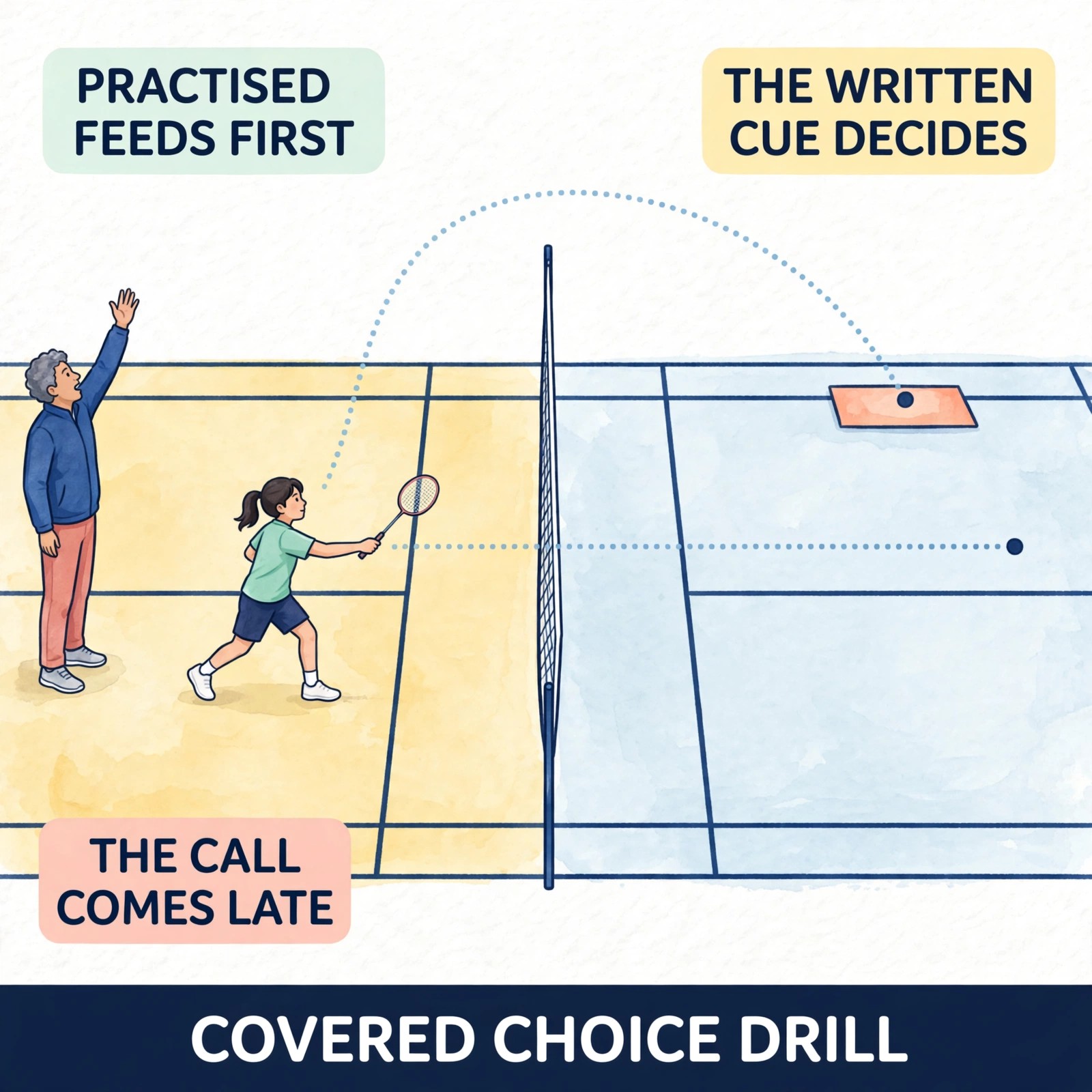
We benchmark our substitute cover coaching against World Badminton (BWF) coaching standards and our own academy values: before any player trusts a training plan, they deserve honest checks. You can verify our coaches' credentials through the Badminton Association of Malaysia (BAM) coach education pathway.
One standard governs how we handle substitute sessions: the carried task judges the cover first, and the child's calm judges it second. A coach here will show you the brief before a cover week on request, run the continuing priority openly rather than replacing it silently, and write the report the same day. We also hold an honesty rule about what cover can promise: it cannot promise that a substitute's eye equals the regular coach's, or that a covered week produces a particular result, because coaches differ and children learn at different speeds. What coaching promises is continuity, honestly carried: the same task, the same cue, and a report that tells you what actually happened.
| Factor | The Briefing Academy | The Hoping Academy COVER |
|---|---|---|
| Frequency | 1 or 2 times a week. Mostly for fun and sweat. | The hoping academy sends any available coach into a covered session with good wishes and no information. Finished work repeats, a carried cue gets taught against itself, and the returning coach finds no record of the week, so the child's plan quietly loses ground every time life calls the regular coach away. |
| Drills Focus | Basic static feeding. Minimal footwork pressure. | The briefing academy writes the cover down before the absence: the current task in plain words, the cue in its exact wording, the stage reached, the parked items and the leave alone list. One priority continues, counted the usual way, and a short report is written back the same day for the family and the returning coach. |
| Physical Conditioning | Rarely included. Just playing games on court. | Core, agility, and speed training included in every session to prevent injury and build stamina. |
| Tactical Awareness | "Just hit it over." No real game plan. | Video analysis, point construction, and learning to read the opponent's game. |
| Coach Ratio | Large groups (8-10 kids). Coach barely watches you. | Max 4 students. Mr Eric Chuar personally corrects every stroke and movement detail. |
| Goal Setting | Fun and exercise. | Because the counts follow the carried task inside its own rallies, real continuity shows up as numbers rather than as reassurance. The regular coach sees whether the brief, the priority or the stage reading was off, the parents see the same rows, and one part of the plan changes instead of the work pausing. |
| Long Term Result | Good recreational player. | The high-performance version produces a child whose learning never notices an absence and whose trust in coaching survives it too. The casual version spends the term hoping cover works out; the briefing version removes the guesswork in a fixed order and counts what crossed the absence. |
Substitute Cover Coaching in Kuala Lumpur
Your cover questions are best asked before the week you need them. Bring them to a first session with us: what the substitute is handed, what continues, what comes back in writing. We will show you the brief we would write for your child, walk through a covered week hour by hour in plain words, and agree how you will be told. No drama about absences, and no promises nobody can keep. Just a brief, a continuing priority and a report, arranged while everyone is calm, so that when life calls a coach away, your child's learning simply carries on.


