What Are The Top Tips For Choosing The Right Badminton Training Equipment? (Equipment Guide)
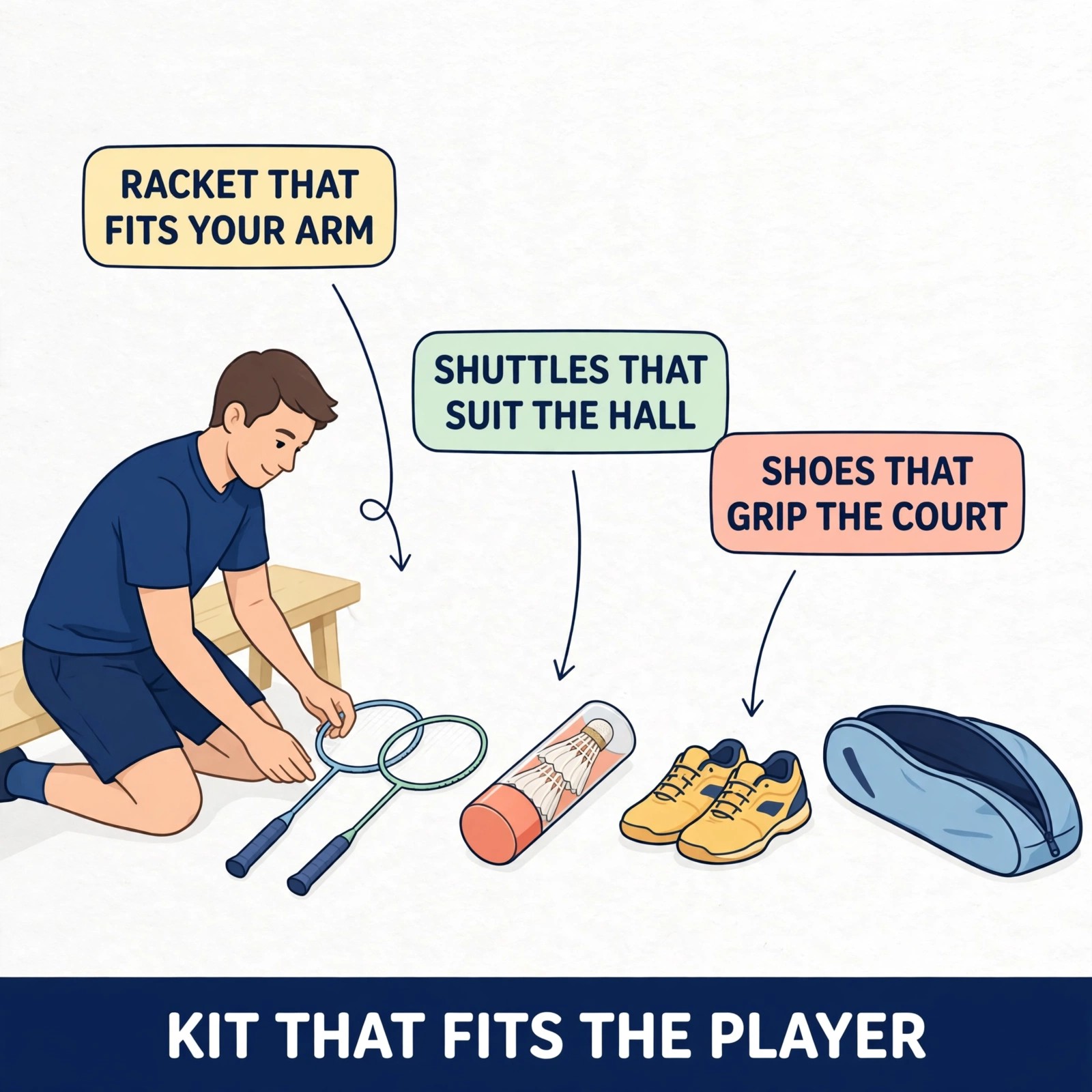
Walk into any badminton hall in Kuala Lumpur and you will see the same puzzle. One player trains hard every week with a modest racket and improves steadily. Another owns expensive gear and stays stuck at the same level for a year. Equipment matters, but it matters in a specific way: the right kit removes excuses and small daily frictions, while the wrong kit quietly fights you in every rally. This guide walks through the whole training kit in plain order: the racket and its weight, the strings, the shuttles, the shoes and grip, and the bag that holds it all. Each part gets a short, honest check you can do yourself.
Kit Check #1
Match the Racket: Weight Classes and Balance Points
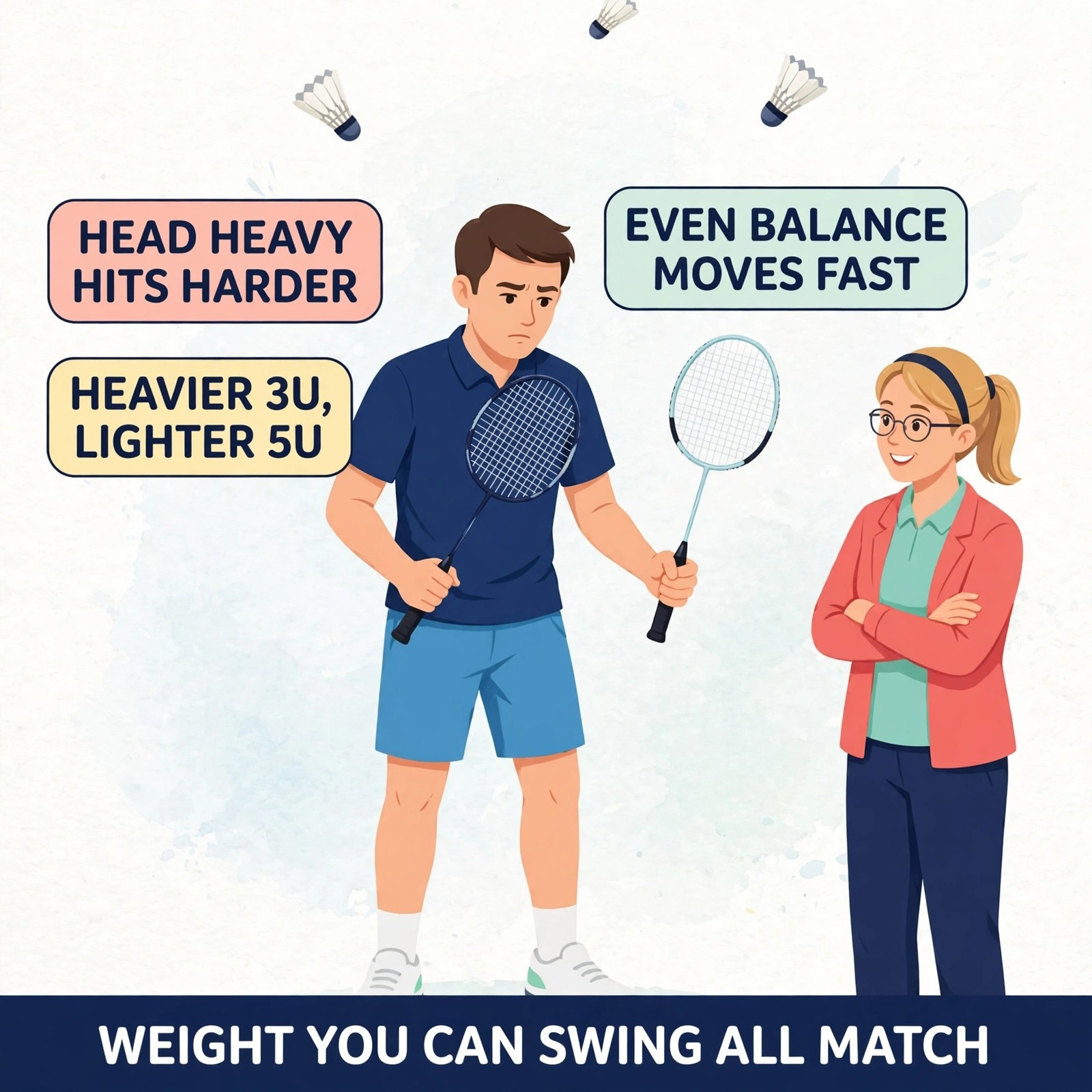
Start with the racket, and start with weight. Rackets are classed by weight codes printed on the shaft. A 3U racket weighs 85 to 89 grams, a 4U weighs 80 to 84 grams, and a 5U weighs 75 to 79 grams. Heavier rackets suit stronger players who want stability in defence and power they can lean on. Lighter rackets suit players who value fast swings, quick defence and easy handling at the net. There is no best class, only a match between the racket, your arm and your style of play. If your shoulder or elbow aches after sessions, or your defence feels late, the racket may simply be too heavy for you right now.
Weight is only half of the feel. The balance point, measured from the butt cap, tells you where the weight sits. Around 295 millimetres and above, a racket reads head-heavy and helps smashes and clears carry weight. Lower down, a head-light racket swings fast and defends quickly, while an even balance sits between the two. One honest correction to older advice: modern rackets are made from carbon graphite composite, not the steel and aluminium frames of decades ago, so judge a racket by its weight class, its balance and how it swings in your hand, not by old material talk. Swing before you buy whenever you can. Thirty seconds of shadow swings tells you more than any printed specification.
Kit Check #2
Strings and Tension: Feel, Control and Honest Changes
Strings do more for your game than most players realise, because they are the only part of the racket that touches the shuttle. String materials fall into two broad families. Multifilament strings feel softer and livelier, and suit most club and training players. Stiffer polyester style strings feel firmer and suit hard hitters who break strings often and want control. Neither family is better in the abstract. What matters is the match with your arm, your hitting power and how often you play. A string that feels dead or harsh is usually the wrong match, not a faulty product.
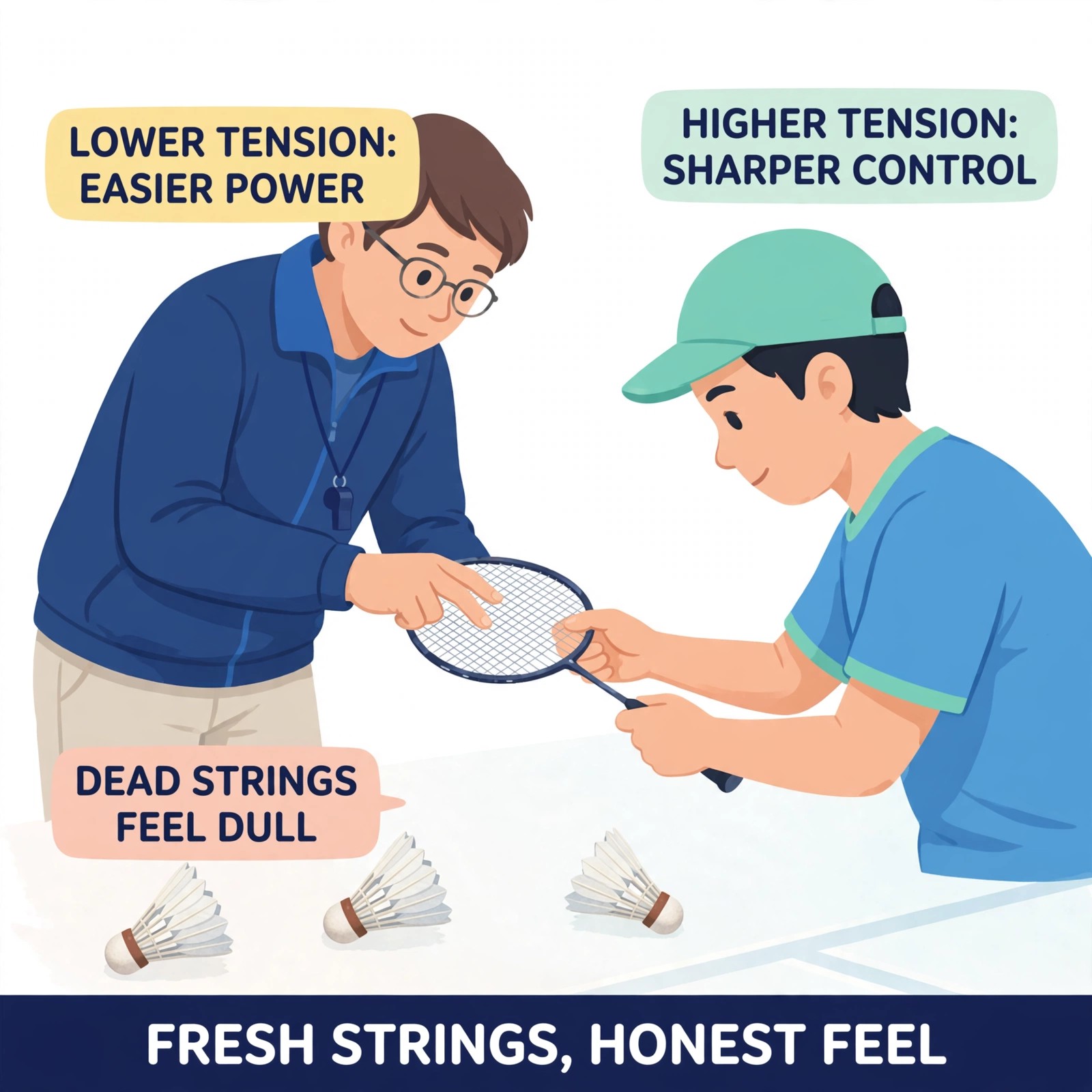
Tension is the other half of the string story, and it is personal. Lower tension gives a bigger, more forgiving hitting area, easier power and a kinder feel on the arm. Higher tension gives a firmer, more precise reply for players whose technique can find the middle of the strings again and again. Every racket has a recommended tension range printed on its frame or cone, and staying inside that range protects both the frame and your arm. Change tension one small step at a time, and play a few sessions before judging it. Big jumps teach you nothing, because you cannot tell what actually changed.
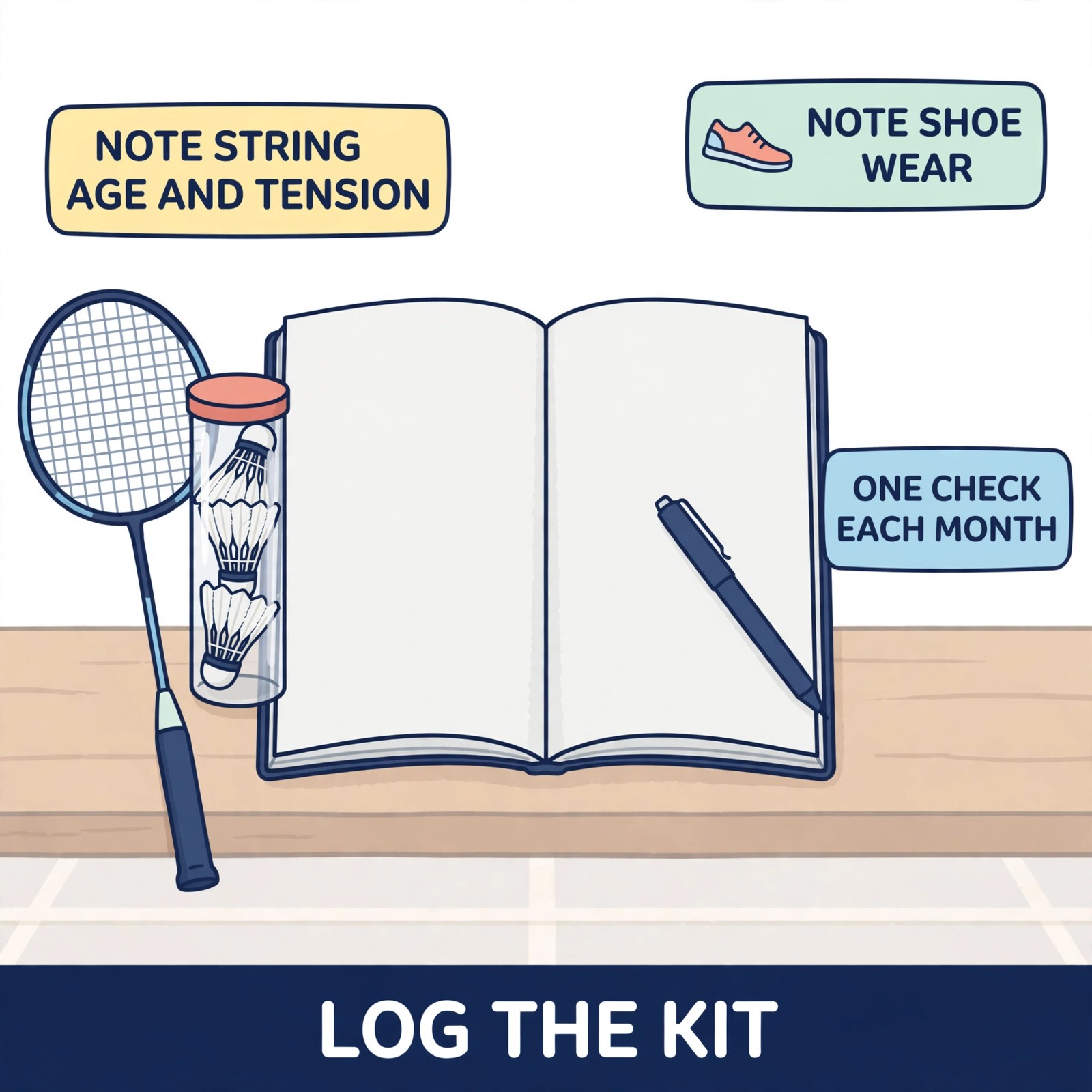
Know when strings are done. Fraying, visible notching where strings cross, a dull sound at contact and a trampoline feeling that comes and goes are all signs the string bed is tired. Dead strings make good shots feel random, and players often blame their technique for what is really worn string. If you train several times a week, expect to restring through the year rather than once in a long while. Keep a note of the string and tension you last used, so each restring is a comparison instead of a guess. Your future self, standing at the stringer’s counter, will be glad you wrote it down.
Kit Check #3
Feather or Nylon: Shuttles and the Speed Grades
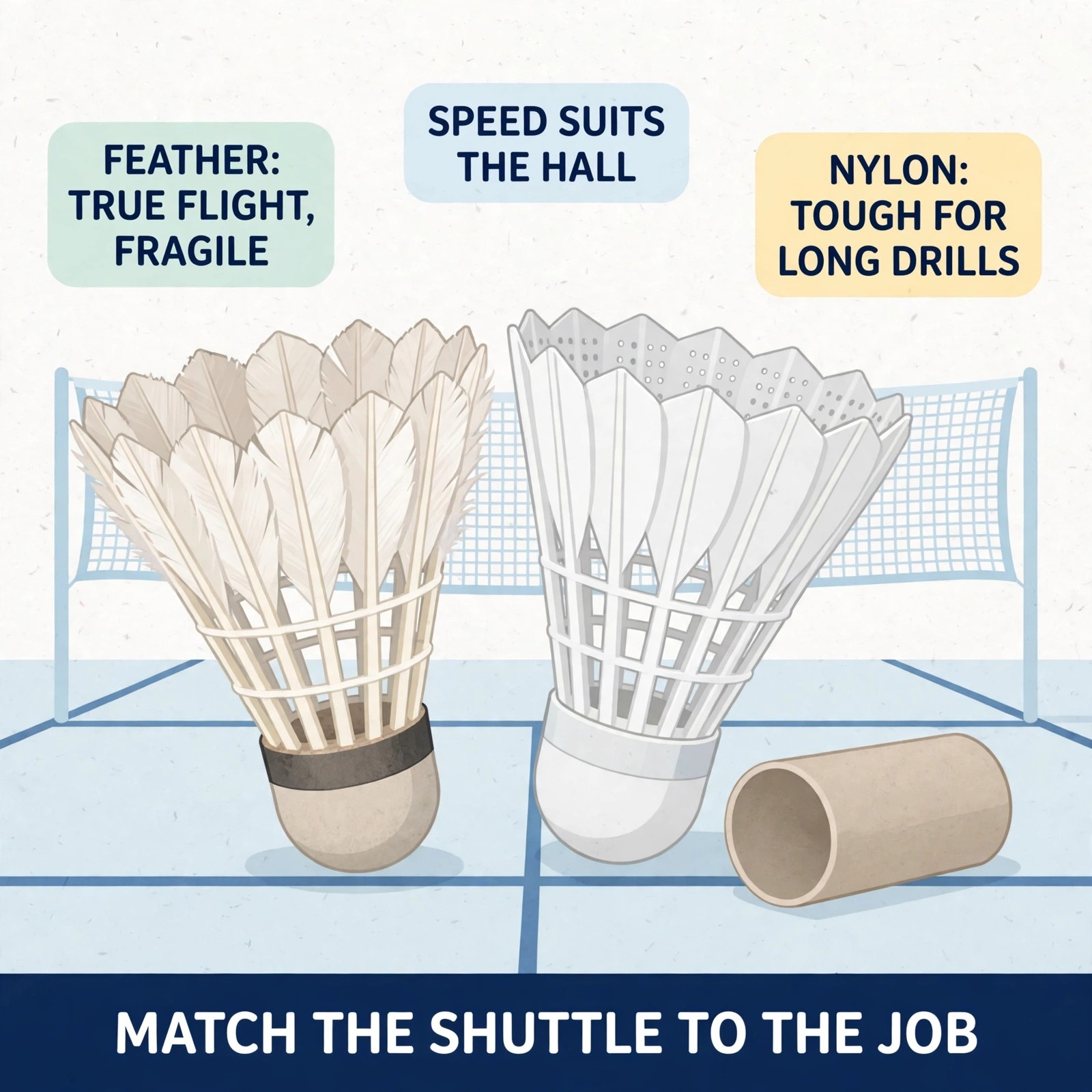
Shuttles come in two families, and both earn their place. Feather shuttles, made with real feathers set in a cork base, fly true, slow down the way a match shuttle should and give the exact feel used in competition. They are the honest standard for matches and for serious shot practice. Their weakness is simple: feathers bend and break, so a tube does not last long in heavy drilling. Nylon shuttles are tougher, hold their shape through long sessions and cost less per hour of play, which makes them the sensible workhorse for high volume training, warm ups and school or club programmes with many players.
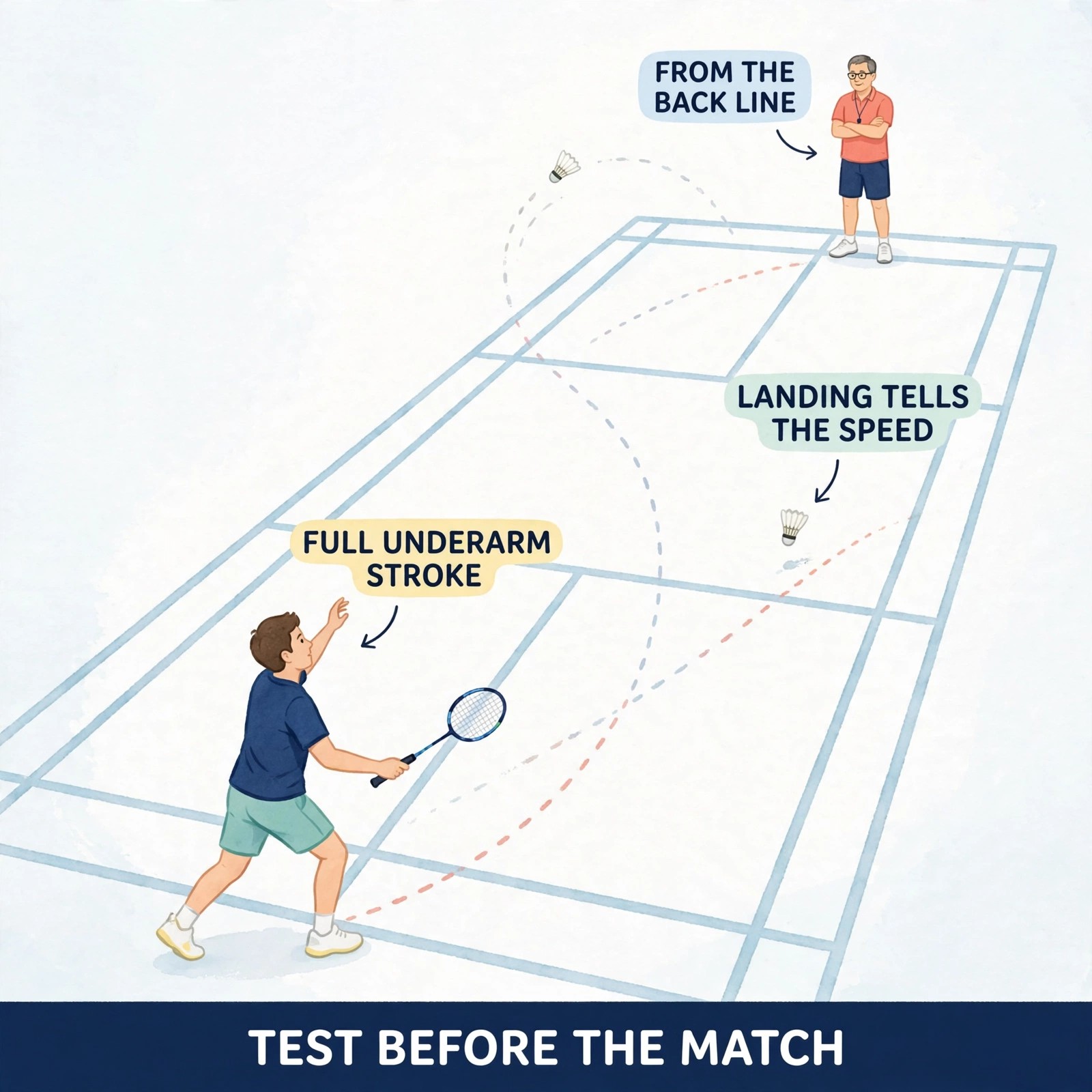
Speed grades confuse many players, so here is the simple version. Shuttles are graded for speed, commonly 75 to 78, and the right grade depends mostly on the hall. Warm air makes a shuttle fly faster, so a hot hall often needs a slower grade, while a cool, air conditioned hall may need a faster one. There is a standard test: a full underarm stroke from the back boundary line, hit upward, should land the shuttle between 530 and 990 millimetres short of the far back line. If your shuttles keep sailing long or falling short in normal rallies, the grade, not your arm, is the first thing to check.
A practical mix works for most training players. Keep feather shuttles for matches, match practice and the drills where flight matters most, like clears, drops and net spinning. Use nylon for feeding drills, footwork with shuttles and long sessions where dozens of shuttles take a beating. Store tubes away from heat and dry air, because feathers dry out and turn brittle. Whichever family you buy, stay consistent inside a session. Mixing speeds and types inside one drill teaches your timing two lessons at once, and it learns neither properly. Consistency is what lets your shots groove in.
Kit Check #4
Shoes, Grips and the Bag: The Supporting Kit
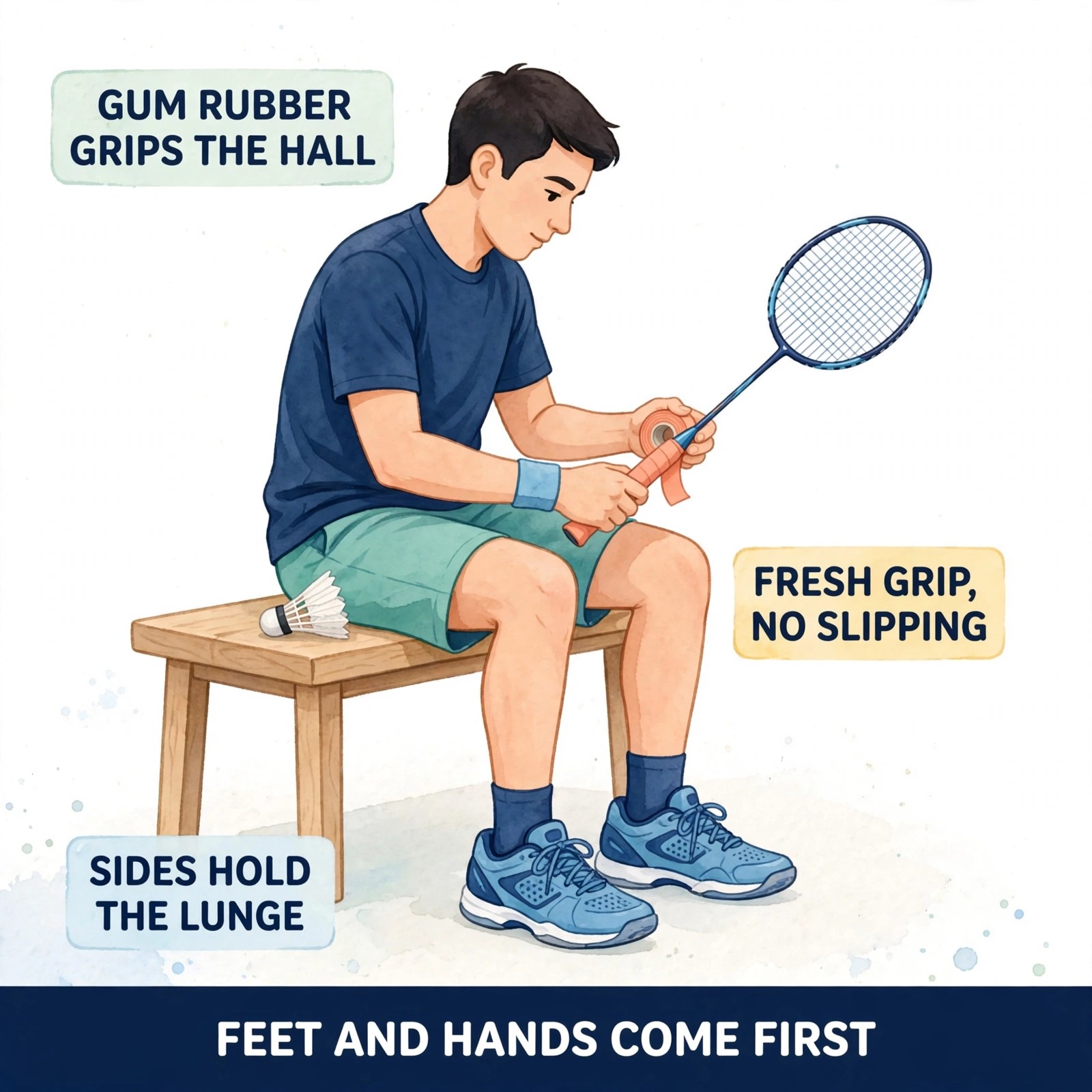
Shoes and grips get a short pass here, because each has a full guide of its own, but the basics belong in any kit check. Court shoes should have non-marking gum rubber soles that grip indoor floors, sides that support your foot through lunges and sideways movement, and a fit with about a thumb of room in front of your longest toe. Running shoes are built for straight lines and their high, soft heels can tip during a lunge, so keep them off the court. Your grip matters more than its small size suggests: it is the only part of the racket your hand actually holds.
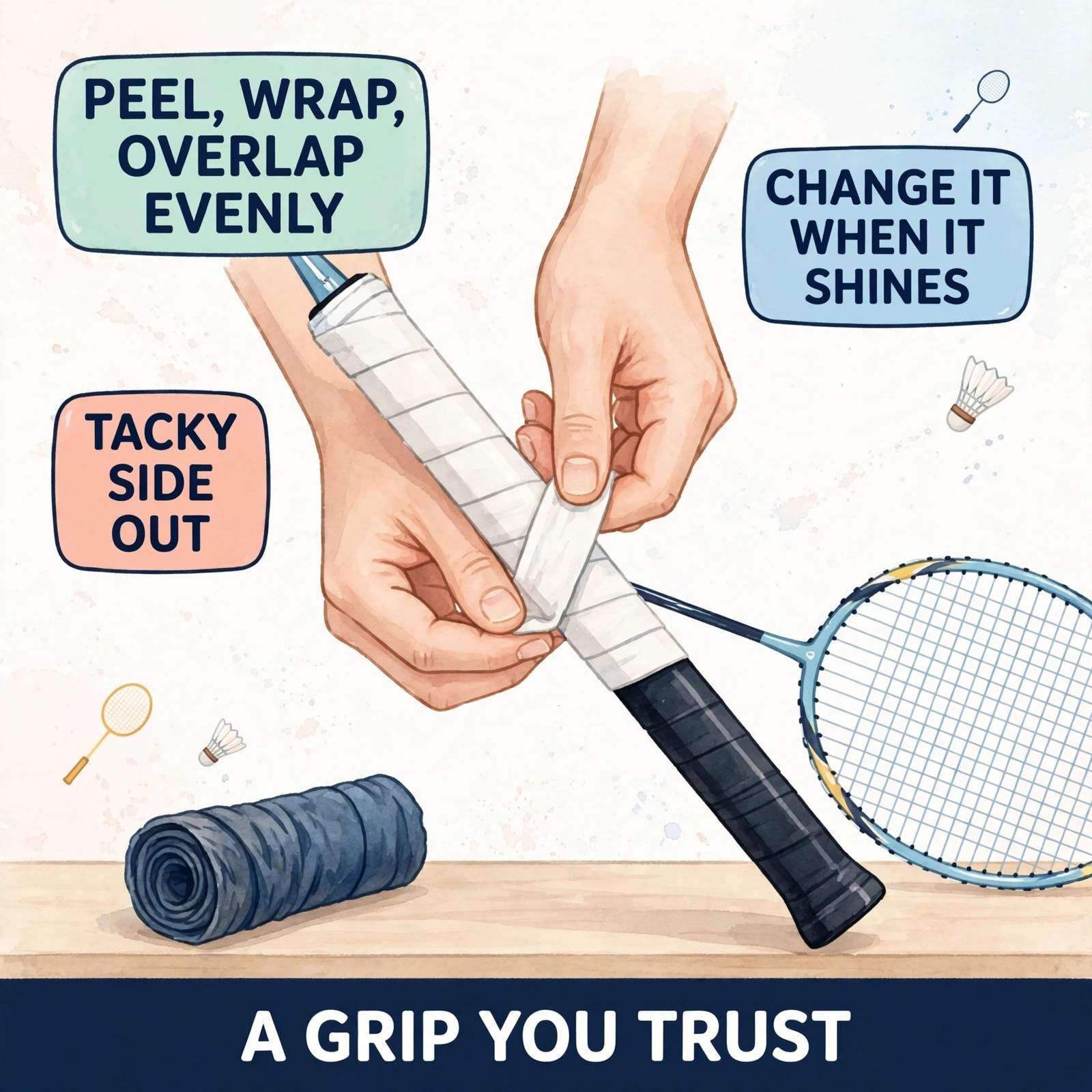
Grips come mainly as towel grips, which soak up sweat and feel soft, and synthetic grips, which stay tackier and last longer in dry hands. Players in Malaysia often prefer towel grips in humid halls, sometimes with grip powder. Replace a grip when it turns slippery, hard or shiny. A worn grip makes you squeeze the handle tighter on every shot, and that tight squeeze travels up the arm and stiffens the whole stroke. Grip thickness is personal too. Too thick and your fingers cannot work the handle for net shots and drives. Too thin and the racket twists on off centre hits. Small, cheap, changed often: the grip is the best value upgrade in the bag.
Finally, the bag itself. A training bag does not need to be large or branded. It needs a compartment that keeps rackets from knocking together, a separate pocket for shoes so dirt stays off grips and clothes, and space for two tubes of shuttles, a spare grip, a towel and a water bottle. A small first aid touch, plasters and tape, earns its corner too. Pack the bag the same way every session. When packing is routine, nothing gets left behind, and your mind starts the session on badminton instead of on a search for a missing grip or a forgotten towel.
Kit Check #5
Buy Honestly: Try First and Change One Thing
Buying honestly saves more players than any single product. The first rule is to try before you buy: swing the racket at the shop, borrow a friend’s for a session, or play a borrowed frame for a week before spending. The second rule is to change one thing at a time. A new racket with new strings at a new tension teaches you nothing when it feels different, because you cannot tell which change did what. The third rule is to let your current level set the budget. A sensible mid range racket, strung well and restrung on time, beats a flagship frame carrying dead strings every day of the week.
Second hand gear deserves an honest word, because it suits many beginners and juniors. A used racket from a known player, checked for cracks around the frame and shaft, can serve a first year very well. What matters is condition, not newness. Ask what tension it was strung at and when, and hold it against the light to spot frame cracks. And be calm about shop talk. Customisation offers, limited editions and pressure to upgrade everything at once are sales tools, not coaching. A good shop answers questions and lets you swing. A good coach checks your kit and tells you when what you already own is fine, which for most players is more often than shops suggest.
Keep a simple kit log and the whole topic gets easier. In a notebook or phone note, record your racket’s weight class and balance feel, your string and tension with the date of each restring, the shuttle grade your hall suits, and your shoe size in the model that fits you. Four short lines end most buying mistakes, because your next purchase starts from what you know instead of what a shelf suggests. Equipment will never hit a single shot for you. But the right kit, honestly chosen and quietly maintained, stops fighting you, and that is when training starts paying you back in full.
Myth vs Reality
Myths About Badminton Equipment
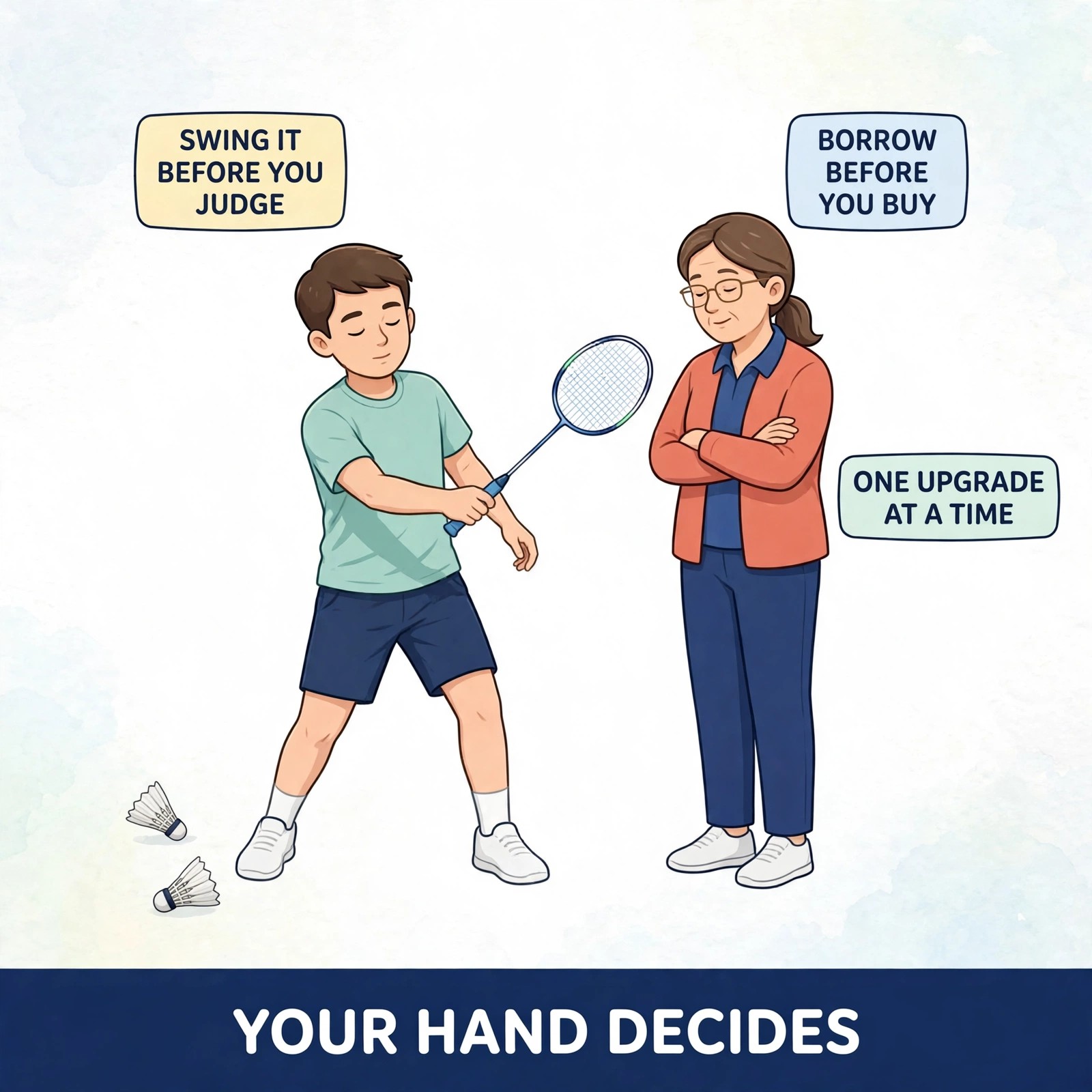
Equipment talk collects myths because shops, friends and old habits all repeat them. Three do the most damage. The first says an expensive racket makes a better player, as if skill arrived in the box. The second says higher tension is always better, and that anything below the professionals’ numbers marks you as a beginner. The third says feather shuttles are the only real shuttles, and that nylon is a toy for people who are not serious.
Each myth bends real buying. The expensive racket myth empties wallets while technique stays untouched. The tension myth sends club players to tensions their arms and timing cannot use, and their control gets worse, not better, because off centre hits now punish them fully. The feather only myth makes training expensive enough that players quietly train less, which costs far more skill than any shuttle choice. Myths survive because each holds one grain of truth: good rackets are good, firm strings reward clean technique, and feathers fly best. The damage is in the word always.
The honest position is duller and it works. Buy the racket class that matches your arm today. String at a tension your technique can actually use, inside the frame’s printed range. Practise with the shuttle mix your budget and hall support, feathers where flight matters most. None of this photographs well or impresses a shop. It simply puts every ringgit toward the thing that improves your game, which is training with kit that suits you. When a claim about equipment sounds like magic, it is marketing. When it sounds like a match between a tool and a player, it is probably true.
Why Choose Us
Why Players Choose ST Badminton Academy
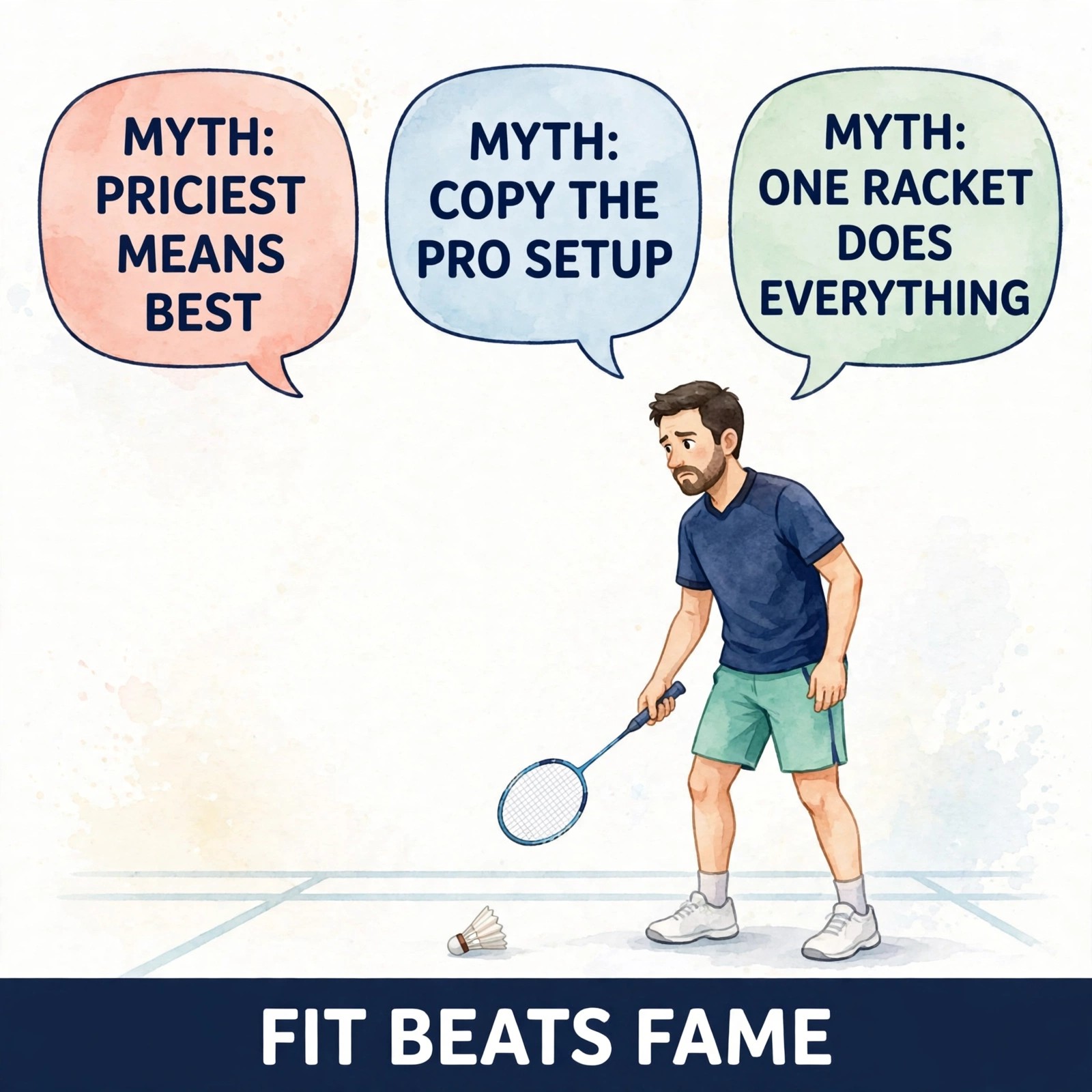
At ST Badminton Academy, equipment is part of coaching, not a shopping trip. In groups of no more than four students, the coach has time to look at your racket, feel its head weight, check the string bed and watch how your shoes behave in a lunge. Small mismatches get spotted early: a racket too heavy for a young arm, strings long past their life, a grip worn smooth enough to force a tight squeeze. These are five minute conversations that save months of quiet frustration, and they happen because the group is small enough for the coach to actually know your kit.
Our advice rule is simple: what you already own is fine until it is not, and we will tell you plainly which it is. Players ask us about rackets, strings and shuttles every week, and the honest answer is often to change nothing, or to change the cheapest thing first: a fresh grip, a restring, a shuttle grade that suits the hall. When a change is genuinely needed, we explain the check behind it, like the weight classes and the shuttle test in this guide, so you can judge the next purchase yourself. Coaching that equips you to decide is worth more than coaching that decides for you and sends you shopping.
That standard holds across our Kuala Lumpur sessions for kids, teens and adults. Bring your current kit to your first session, whatever it is. We will check it with you, set anything that needs setting, and build your training on the game you are actually playing. Players who understand their own equipment stop chasing upgrades and start chasing skills, and that is the moment progress speeds up. If your bag holds a racket you cannot describe and strings you cannot date, start there. One honest kit check, then train. The gear serves the player here, never the other way round.
FAQs: Choosing The Right Badminton Training Equipment in Malaysia (KL)
Equipment questions are the ones players ask most, because every purchase feels like a small bet. Here are the answers we give in the hall.
I am a beginner. Which racket weight class should I start with in Setapak or Gombak?
Start by swinging, not by labels. Most beginners and juniors settle well on a 4U racket, 80 to 84 grams, with an even balance, because it defends quickly and is kind to a growing arm. Stronger adults sometimes prefer 3U. In our small groups your coach watches your arm and defence, then tells you honestly which class suits you now.
What do the shuttle speed grades 75 to 78 mean in KL?
The grade is the shuttle’s speed. Common grades run 75 to 78, and the right one depends on your hall: warm air makes shuttles fly faster, so hot halls often need a slower grade. The standard test is a full underarm stroke from the back line landing 530 to 990 millimetres short of the far back line.
How often should I restring my racket at club level?
Restring when the string bed tells you to, not by the calendar. Fraying, notching where strings cross, a dull sound and shots that feel random are the usual signs. Players training several times a week usually restring a few times a year. Keep a note of string and tension each time, so every restring is a comparison, not a guess.
Should I buy feather or nylon shuttles for weekly training in Kuala Lumpur?
Use both, for different jobs. Feather shuttles fly true and match competition feel, so keep them for matches and the drills where flight matters most. Nylon shuttles survive long feeding sessions and cost less per hour, so they carry the high volume work. Mixing the two inside one drill is the only mistake, because your timing learns two lessons together.
How do I know when my strings are finished and need replacing?
Look and listen. Frayed or notched strings, a dull contact sound, and a bed that feels lively one shot and dead the next all say the strings are finished. Technique often gets blamed for what worn string is doing. If you cannot remember when they were last changed, that is your answer: change them, and start the note.
Do you check my equipment during training near Wangsa Maju?
Yes, gladly. Bring the racket you own now, whatever its age. In groups of no more than four, the coach has time to check its weight class, balance and string bed, plus your shoes and grip. Most players need no purchase at all, or only the cheapest fix first, like a fresh grip or a restring.
Where does ST Badminton Academy run badminton training in Malaysia?
The academy coaches in Kuala Lumpur, with our base in Setapak and players joining from across the Klang Valley. Sessions run for kids, teens and adults in groups capped at four students, and equipment is part of the coaching from the first session: kit checked honestly, settings explained in plain language, and no shopping list you did not ask for.
Can I book a trial session in Kuala Lumpur and get my kit checked?
Yes. A trial includes a full kit check: racket weight and balance, string condition, the shuttle grade your hall suits, grip and shoes. You will leave knowing exactly what to change, what to leave alone, and the simple checks behind each call, so your next purchase in any shop is one you can judge yourself.
Is Mr Eric Chuar a suitable coach for advising on equipment badminton?
Mr Eric Chuar coaches the academy sessions himself and gives equipment advice the way this guide does: match the kit to the player, the hall and the budget, cheapest fix first, nothing pushed. With over 15 years of coaching in Kuala Lumpur, he would rather tell a player their current racket is fine than send anyone shopping without a reason.
Badminton Training Equipment in Action
One Standard for Every Session and Every Player
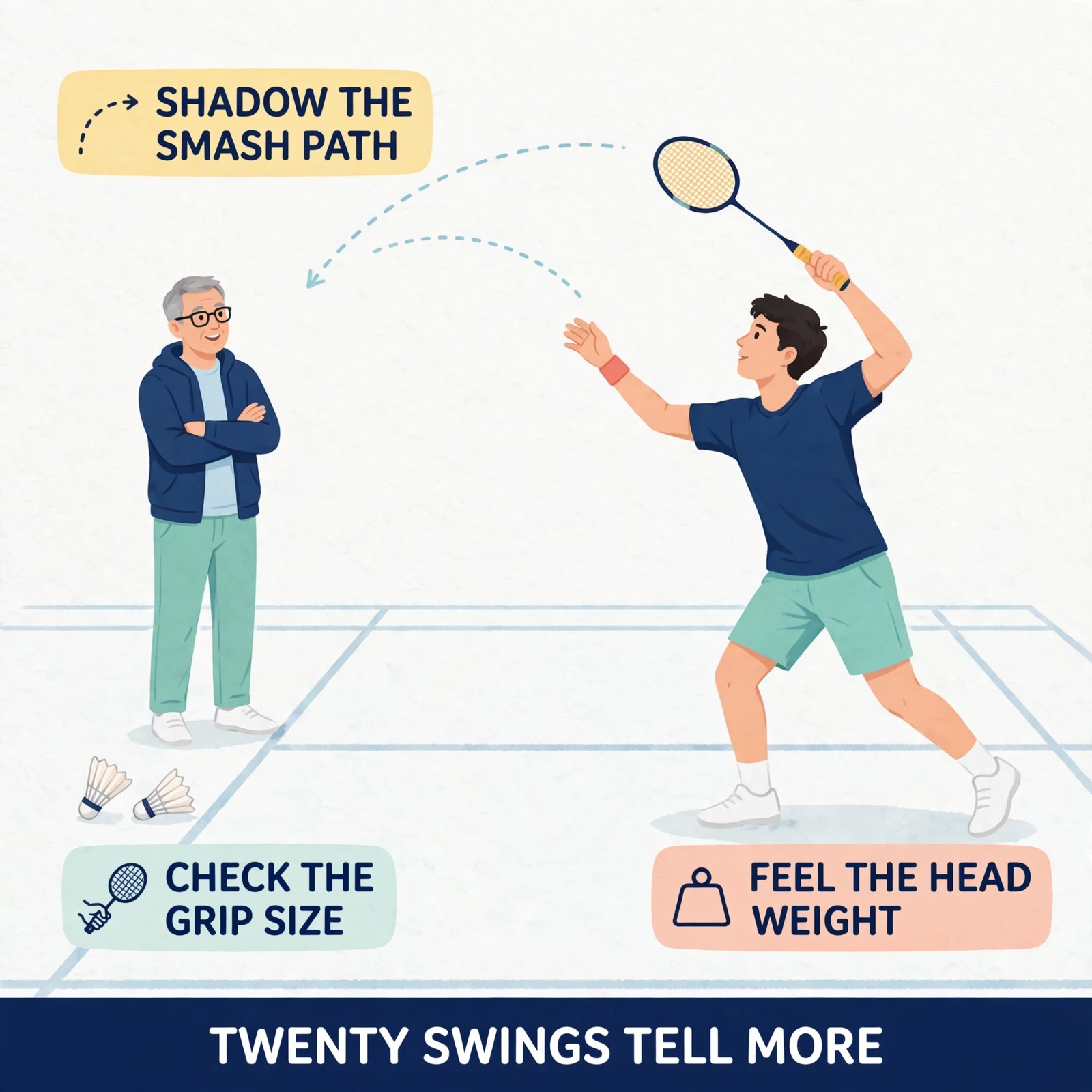
Our equipment standard is one honest rule for every player: the kit must match the player, the hall and the budget, and it must be checked, not guessed. Whether you train once a week for fun or prepare for school and district competition, the same checks apply: weight class, balance, string condition, shuttle grade, grip and shoes. Nothing is recommended because it is expensive or fashionable. It is recommended because it passed the same small tests described in this guide. One standard, plainly explained, means every player can check any future purchase alone, in any shop, with confidence.
| Factor | Random Kit | Checked Kit EQUIPMENT |
|---|---|---|
| Frequency | 1 or 2 times a week. Mostly for fun and sweat. | The racket's weight class and balance match the player's arm, so defence stays quick and smashes carry without strain. |
| Drills Focus | Basic static feeding. Minimal footwork pressure. | Strings are fresh and tension suits the player's technique, so good shots feel repeatable instead of random. |
| Physical Conditioning | Rarely included. Just playing games on court. | Core, agility, and speed training included in every session to prevent injury and build stamina. |
| Tactical Awareness | "Just hit it over." No real game plan. | Video analysis, point construction, and learning to read the opponent's game. |
| Coach Ratio | Large groups (8-10 kids). Coach barely watches you. | Max 4 students. Mr Eric Chuar personally corrects every stroke and movement detail. |
| Goal Setting | Fun and exercise. | Shuttles match the hall and grips are changed before they slip, so small frictions never tax a session. |
| Long Term Result | Good recreational player. | A well equipped player: kit that quietly fits, checked on a rhythm, changed one honest piece at a time. |
Badminton Training Equipment in Kuala Lumpur
Bring the racket you own now, whatever its age, and let us check it together. In a group of no more than four, your coach will weigh up your kit honestly, string, shuttle, grip and shoes, and tell you what to change and what to leave alone. No pressure to buy, no shopping list you did not ask for. Book a trial session in Kuala Lumpur and start your training with equipment that works for you instead of against you, from the very first rally.




