What Are The Top Tips For Choosing The Right Footwear For Badminton Training? (Footwear Guide)
Badminton is played on your feet, and your shoes are the only equipment that touches the court on every single point. Yet footwear is where many players guess: running shoes from the wardrobe, fashion trainers, or whatever was on sale, worn for lunges, jumps and sudden stops they were never built for. The right court shoe is not a luxury or a brand contest. It does four plain jobs: grip the indoor court without marking it, hold your foot during sideways lunges, fit your foot honestly, and survive the dragging and landing that badminton dishes out. This guide works through those jobs one by one, so you can judge any pair of shoes with your own eyes and feet.
Footwear Check #1
Start With the Sole: Gum Rubber Grip for Indoor Courts
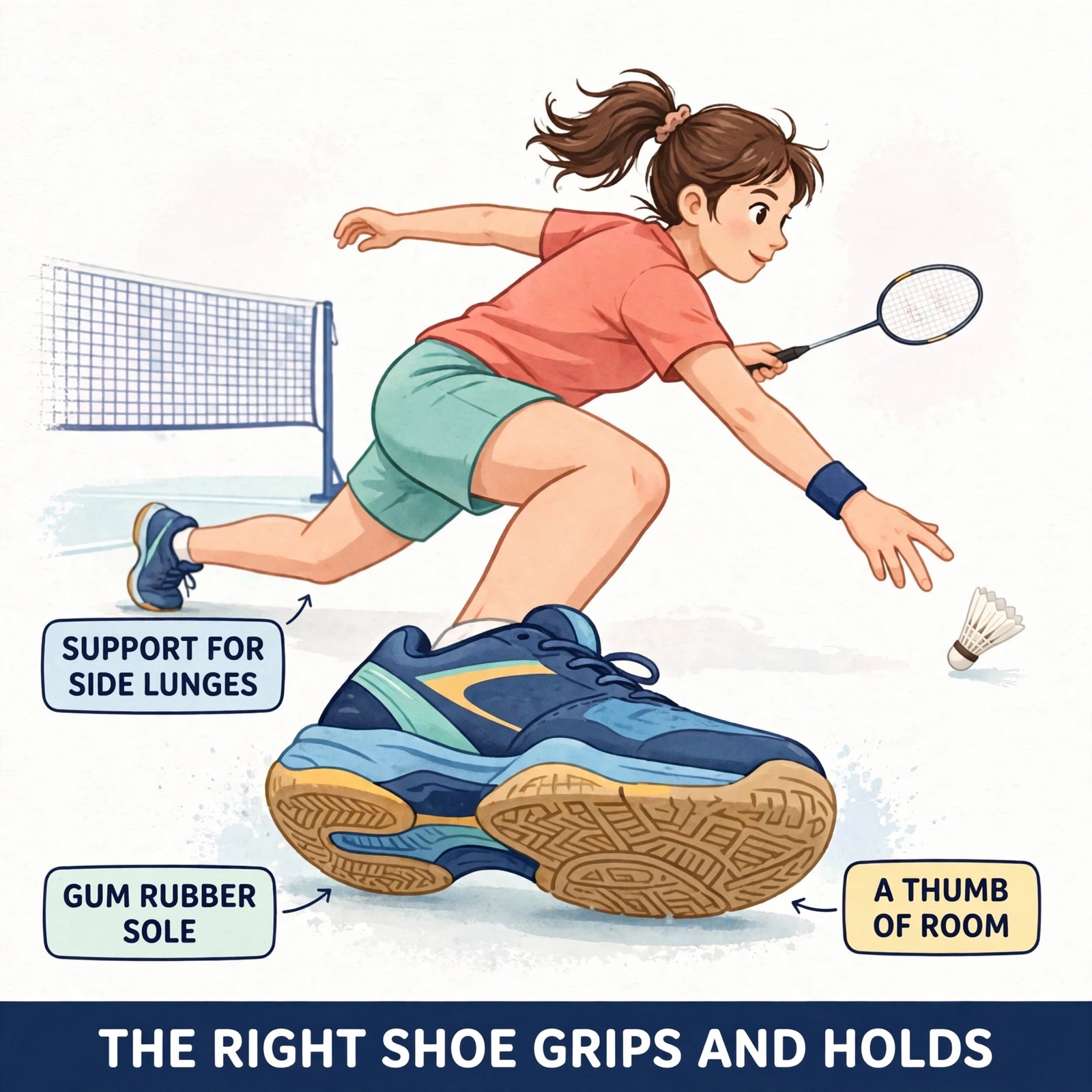
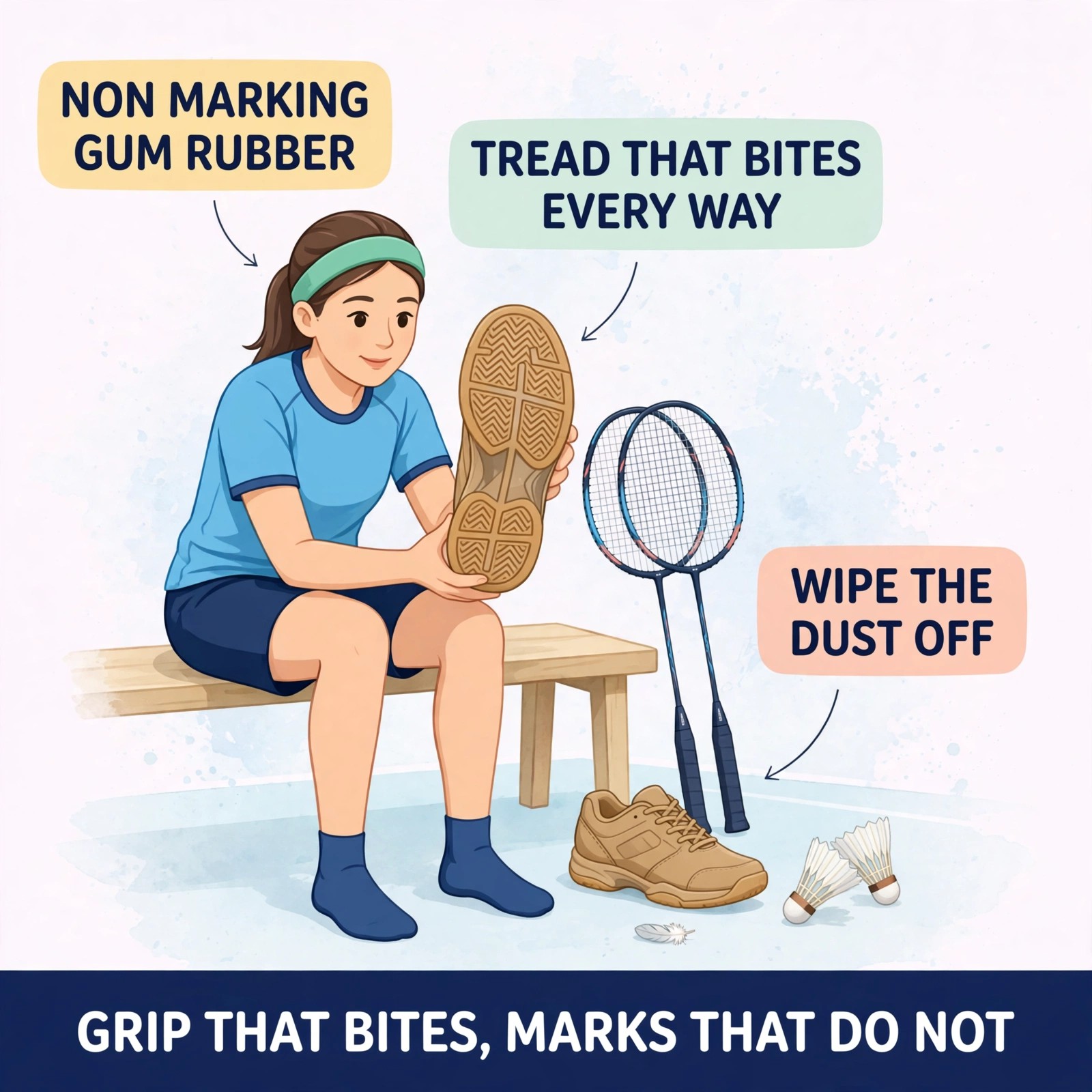
Start underneath, because the sole decides whether everything else gets a chance. Badminton courts are indoor surfaces, wood or synthetic mats, and they ask for a soft rubber sole that grips through friction: gum rubber, the natural, slightly tacky rubber you will see on most proper court shoes, in its natural tan colour or in white. Two words matter here. The first is non-marking: most halls require soles that leave no streaks on the floor, and gum rubber court soles are made exactly for that. The second is grip: a court sole should bite when you push off sideways, not skate. If a sole feels hard and plasticky in your hand, it will feel worse under a lunge.
Grip lives in the tread pattern as much as in the rubber. Look for a pattern with edges pointing in several directions, circles, herringbone or mixed shapes, across the whole sole and especially under the ball of the foot, because that is where lunges land and turns begin. A pattern worn smooth in that area is a warning we will return to later. One practical habit matters too: dust kills grip. Court soles pick up dust and hair from the floor and slowly turn slippery, so wipe your soles with a damp hand or a towel during breaks, the way you see experienced players do without thinking. Clean rubber grips. Dirty rubber lies to you.
Footwear Check #2
Support for Sideways Movement: Lunges, Landings and Turns
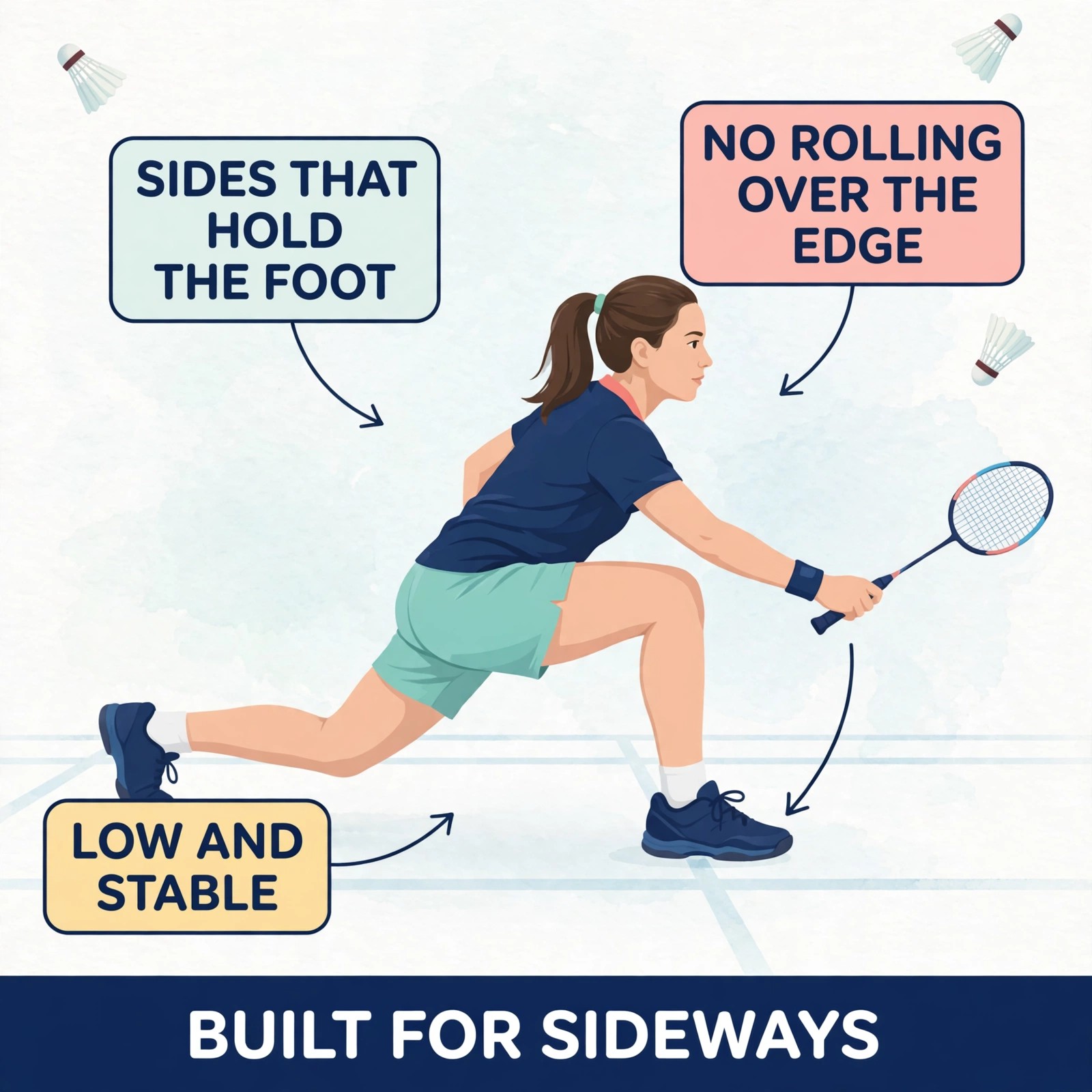
Badminton movement is sideways in a way almost no other common sport matches. The lunge is the signature move: one leg reaching far to the side or forward, the foot landing on its edge area, the whole body’s weight travelling over it, then pushing back. A shoe for this needs lateral support: sides that hold your foot on the sole instead of letting it roll over the edge, a midsole that stays firm under sideways load, and a shape that keeps you low and stable rather than perched. Run your hand along the shoe’s sides. If the upper folds over the sole easily under thumb pressure, imagine it under your full weight, at full stretch, in the third game.
Cushioning has an honest middle ground. Landings from jumps and lunges need some softness under the heel and forefoot, and a completely hard shoe will make long sessions ache. But very thick, soft cushioning raises your foot away from the court, and a high, squishy base feels unstable exactly when you land sideways and need certainty. Most court shoes sit lower and firmer than running shoes for that reason: enough foam to take the sting out of landings, not so much that balance becomes guesswork. Press the midsole with your thumb. It should give a little, then push back, not collapse like a sponge.
Two more features earn their place quietly. Weight: badminton feet move fast and often, so a heavy shoe taxes every rally; a court shoe should feel light in the hand for its size. Breathability: halls in Malaysia are warm, feet sweat, and a mesh upper that lets air move keeps feet drier and the shoe fresher across a long session. Then look at the drag area, the inside front edge of the lunging foot’s shoe, where players drag the toe during deep lunges. Better court shoes reinforce that patch with tougher material, because it is the first place most pairs wear through. None of these features needs a famous name attached. They need your eyes and hands, in the shop, before money moves.
Footwear Check #3
The Fit Test: A Thumb of Room and a Locked Heel
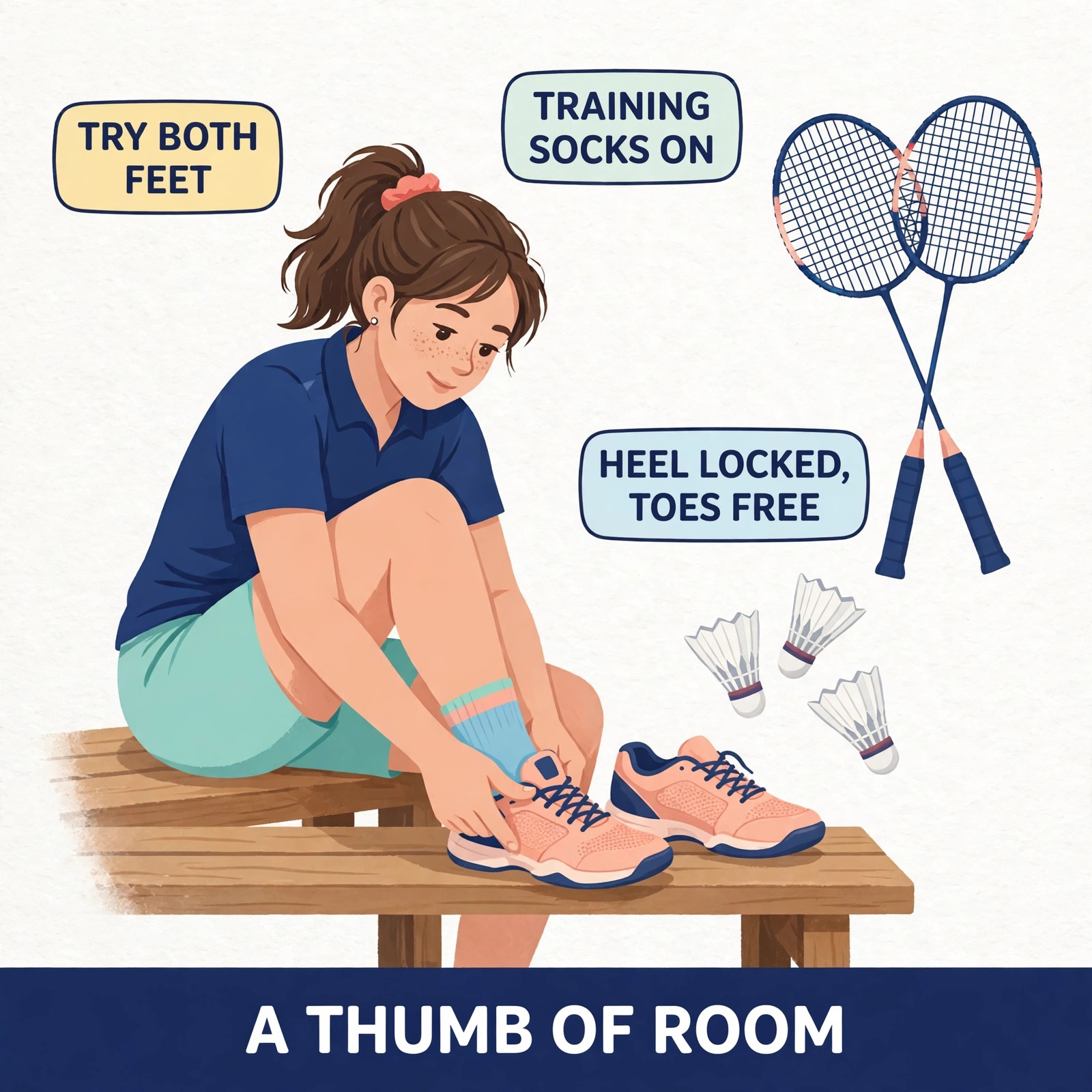
Fit is where good shoes are won or lost, and it starts with when and how you try them on. Try shoes in the afternoon or evening if you can, because feet swell slightly across the day and during play; a shoe that fits a fresh morning foot can pinch a training foot. Wear your actual training socks, try both shoes, and stand, walk and mimic a small lunge in the shop if the staff allow it. Sizes differ between makers more than players expect, so your number in one brand is a guess in another. The size printed inside means little. The space inside means everything, and your feet are the only measuring tool that counts.
Inside the shoe, three checks decide. First, room in front: with your heel settled back, there should be about a thumb’s width of space between your longest toe and the front of the shoe, because feet slide forward slightly in lunges and toes that strike the front will complain by the second game. Second, the heel: it should sit locked, not lifting out as you walk or rise on your toes, since a slipping heel means blisters now and late, unstable lunges later. Third, the middle: snug enough that the foot does not swim sideways, with toes still able to spread a little. If a shoe pinches in the shop, it will not improve on court. Shoes soften at flex points. They do not stretch wider where they hurt.
Break a new pair in gently, the way you would ease into any new load. Wear them around the house first, then for a short, easy session, then for normal training once they feel like yours. New shoes on tournament day is a classic and preventable mistake: stiff uppers, untested grip and feet that have not met the shoe yet, all arriving together under maximum pressure. Give the pair a week of ordinary life before they meet a match. And keep comfort as the final judge of everything in this section. A shoe can tick every technical box in this guide and still be wrong for your foot. The pair that disappears on your feet during a rally is the right pair.
Footwear Check #4
Court Shoes Are Not Running Shoes: Built for a Different Game
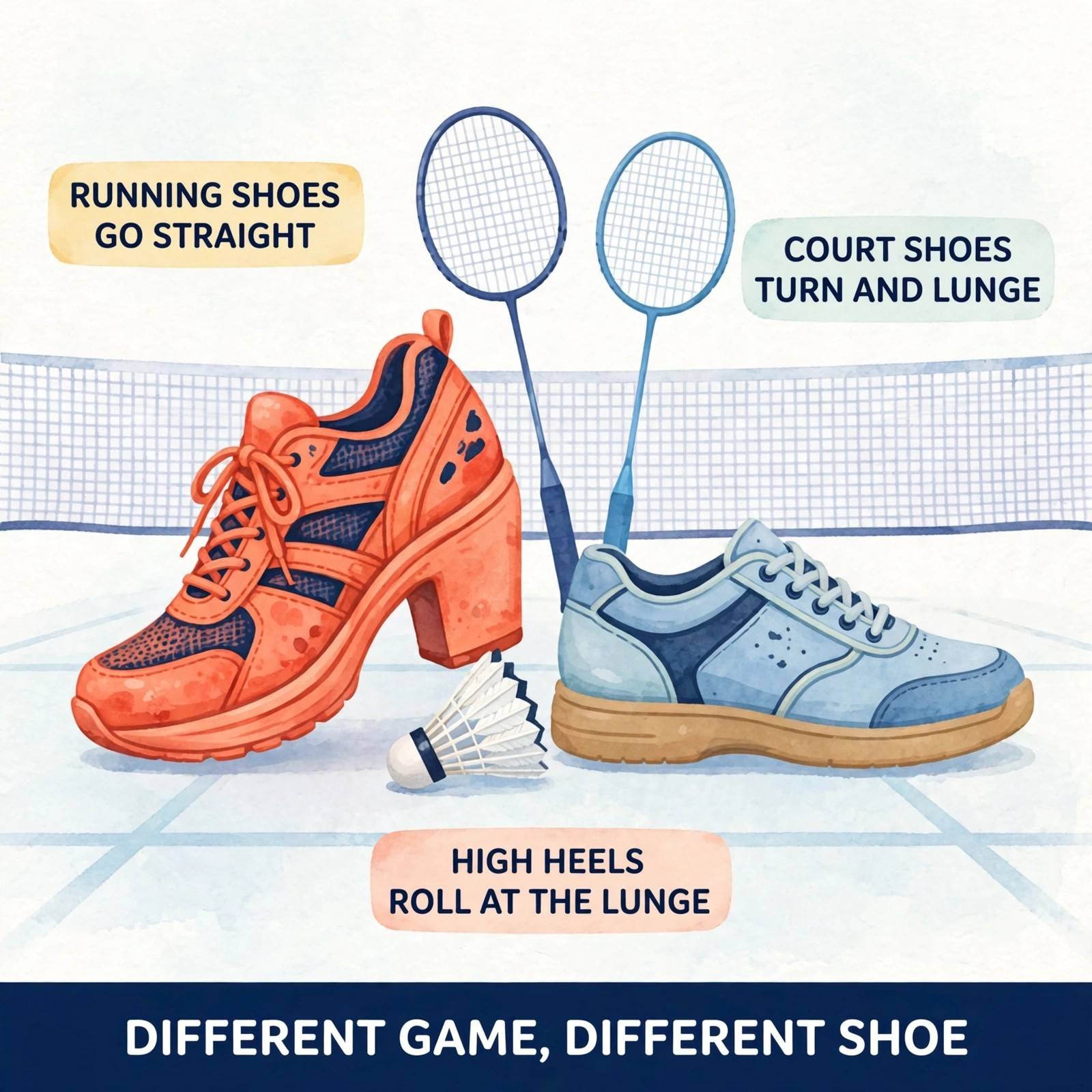
Now the comparison that settles most shoe mistakes: court shoes are not running shoes, because the games are built differently. A running shoe is engineered for one direction, forward, repeated thousands of times. It has a thick, soft heel to absorb straight line impact, a curved sole that rolls you forward, and a tread made for roads and pavements. All of that is good design, for running. On a badminton court, the thick heel raises you at the exact moment a lunge asks you to be low and stable, the soft foam lets the foot tip sideways over the edge, and the road tread skates on a smooth hall floor. The shoe is not bad. It is answering a different question.
The same logic judges other stand-ins fairly. Fashion sneakers are built for looks and street walking, with flat soles, little grip pattern and no sideways support to speak of. Old everyday trainers worn smooth are worse than either, because they promise familiarity while their grip is already gone. Indoor court shoes made for other court sports are a much closer cousin: they share the gum rubber thinking, the low profile and the sideways support, and in a pinch they serve far better than running shoes ever will. But the honest first choice remains a shoe made for badminton’s lunging, dragging and jumping, if you train regularly.
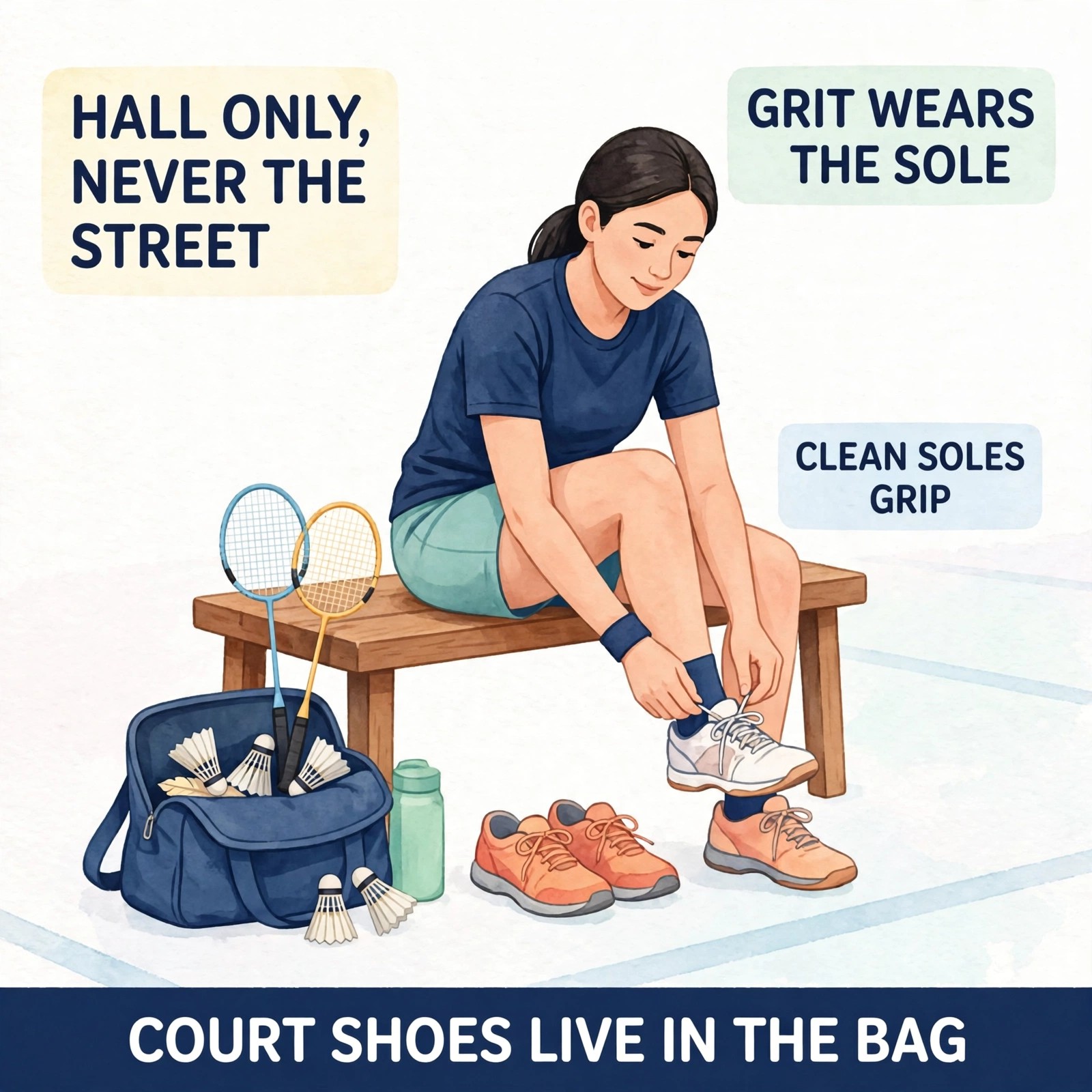
One more habit protects both your shoes and your hall: court shoes live in your bag. Wear street shoes to the venue, change into your court pair at the bench, and change back before you leave. Street grit grinds soles down and carries dirt onto the court, where it makes everyone slip; many halls ban outdoor shoes on their floors for exactly that reason. A dedicated pair also lasts far longer, because its rubber only ever meets clean indoor floors. Players who treat the change as part of arriving, like tying their laces properly, never have to think about it again. It becomes who they are: someone whose shoes are ready.
Footwear Check #5
Know When They Are Done: Wear Signs and Honest Checks
Every pair of court shoes ends, and the honest player learns to read the signs instead of waiting for a slide to teach them. Check the tread first: when the pattern under the ball of the foot goes smooth and shiny, the grip that lunges trust is gone, however good the shoes still look from above. Check the drag side: splits, holes or a flapping patch on the inside front edge mean the upper is finished. Press the midsole: cushioning that has gone flat, hard or deeply creased has stopped doing its job, and your knees and heels will start receiving the landings it used to absorb. Look at the heel counter too; a soft, collapsing back lets the foot wander inside the shoe.
Make the check a small routine rather than a rescue. Every month or so, turn your shoes over during a quiet moment: tread, drag side, midsole, heel. On court, listen to your own feet: if lunges that used to stick start sliding on a clean floor, if you feel the floor harder through the shoe than you used to, if your feet ache after sessions they once handled, the shoes are telling you their news. How long a pair lasts depends on how often you play, how you move and how you care for them, which is why honest checks beat any calendar. Replace the pair when the grip or the support is gone, not when a date arrives.
Care stretches whatever life the pair has. Air your shoes out after sessions instead of leaving them sealed and sweaty in the bag overnight. Untie them properly rather than forcing your feet out, so the heel keeps its shape. Keep them out of hot car boots, where heat ages rubber and glue. Players who train most days sometimes rotate two pairs, letting each dry fully between sessions, and both pairs tend to outlast a single pair used daily. None of this is fussiness. Shoes are the contact point between your training and the floor, and a little care is simply respect for the work both of you do.
Myth vs Reality
Myths About Court Shoes
Footwear collects myths because shoes are visible, priced and endlessly marketed. Three myths do the most harm. The first says any sports shoe works for badminton, so the running shoes in the wardrobe are fine. The second says the most expensive pair must be the right pair, so price can replace fitting. The third says more cushioning is always better, so the thickest, softest sole must be the safest choice for your joints. Each one sounds reasonable in a shop. Each one fails on a court.
The facts are plainer and cheaper. Sports shoes are built per sport: the running shoe’s thick forward rolling design is a liability in a sideways lunge, as the comparison section showed. Price buys materials and finish, but it cannot buy fit for your foot; a modest pair that matches your foot shape, grips properly and holds your lunges will serve you better than a costly pair that pinches or slips. And cushioning has a middle ground: too little stings, too much destabilises, and the right amount is the one where landings feel soft and lunges still feel certain. Judge shoes by sole, support, fit and wear, the four jobs, and the marketing goes quiet.
The honest version of choosing footwear is a checklist you can run in any shop, on any brand, at any budget. Sole: gum rubber, non-marking, patterned in every direction, clean. Support: sides that hold a lunge, a firm low base, a reinforced drag patch. Fit: a thumb of room, a locked heel, training socks, both feet, later in the day. Wear: tread, drag side, midsole and heel checked monthly, and the pair retired when grip or support goes. Run that list and you do not need to memorise models or chase releases. You need ten honest minutes with the shoes on your feet.

Why Choose Us
Why Players Choose ST Badminton Academy
Footwear is part of coaching in our sessions, not a shopping matter we leave at the door. At a player’s first sessions with us, we look at their shoes the way we look at their grip: kindly, and honestly. A player lunging in running shoes gets a plain explanation of why the shoe fights the movement, and what to look for instead, with no brand named and nothing sold. Groups are capped at four students, so these small safety details actually get seen. In a class of thirty, nobody notices a sliding shoe until the slide ends badly.
We also teach the checks. Players learn to wipe dusty soles during breaks, to change into court shoes at the bench, and to read their own tread before it fails them mid rally. Young players especially need this, because growing feet meet worn shoes quickly, and a child sliding in dead shoes is learning fear along with footwork. Parents are told plainly when a pair is finished, and why, so the next pair gets chosen by the four jobs: sole, support, fit and honest wear, rather than by colour, price or what a favourite player wears on television.
And we hold the line in training itself: shoes that slide do not stay in fast drills. A player whose grip has gone gets moved to gentler work until the footwear is sorted, because no drill is worth a twisted ankle. That is not strictness for its own sake. It is the same honesty this guide runs on: badminton asks a lot of feet, and feet deserve equipment that answers properly. Bring us your questions about shoes when you come. We would rather spend five minutes on your soles than five weeks on your injury.
FAQs: Choosing The Right Footwear For Badminton Training in Malaysia (KL)
These are the questions players ask us most about choosing badminton footwear. The short version is always the same: gum rubber grip, sideways support, an honest fit with room to spare, and wear checks that retire the pair on time. The longer answers are below.
I am a beginner. What shoes should I wear for training in Setapak or Gombak?
Wear an indoor court shoe: a non-marking gum rubber sole, sides that support sideways lunges, and a fit with about a thumb of room at the front. If you are starting out, judge any pair by four jobs: sole, support, fit and honest wear. Bring your current shoes to your first session and we will look at them with you.
Can I wear running shoes for badminton training in KL?
Please do not, once you train regularly. Running shoes are built for straight lines: a thick soft heel, a sole that rolls you forward, and road tread. In a sideways lunge that heel raises you, the foam lets your foot tip over the edge, and the tread skates on a hall floor. Court shoes are built for exactly those moves.
How much room should I leave at the front of the shoe at club level?
About a thumb’s width between your longest toe and the front of the shoe, with your heel settled back. Feet slide forward slightly in lunges, and toes that strike the front will complain by the second game. Your heel should stay locked, your midfoot snug, and your toes free enough to spread a little.
What sole should I look for in a badminton court shoe in Kuala Lumpur?
Look for gum rubber: soft, slightly tacky rubber, usually in its natural tan colour or white, marked non-marking so hall floors stay clean. The tread should have edges pointing in several directions, circles or herringbone shapes, across the whole sole and especially under the ball of the foot, where your lunges land and your turns begin.
How do I know when my court shoes are worn out and need replacing?
Turn them over and read the signs: tread worn smooth and shiny under the ball of the foot, splits or holes at the drag side, cushioning gone flat or hard, a heel back that collapses. On court, lunges that used to stick start sliding on a clean floor. Replace the pair when grip or support goes, not by a date.
Do coaches check footwear during training near Wangsa Maju?
Yes, kindly and honestly. At a player’s first sessions we look at shoes the way we look at grips, and a player lunging in running shoes gets a plain explanation of what to look for instead, with no brand named and nothing sold. Groups of no more than four students mean a sliding shoe gets noticed before it ends badly.
Where does ST Badminton Academy run badminton training in Malaysia?
The academy coaches in Kuala Lumpur, with our original base in Setapak and players joining from across the Klang Valley. Sessions run for kids, teens and adults in groups capped at four students, and footwear is part of the coaching: court shoes changed into at the bench, dusty soles wiped, and worn pairs named honestly before they fail.
Can I book a trial session in Kuala Lumpur and get my shoes checked?
Yes, and please bring the shoes you train in now. We will turn them over together: tread, drag side, cushioning and heel, and tell you honestly whether they still grip and support your lunges. If a new pair is needed, you will leave knowing the four jobs to judge it by, not a brand to chase.
Is Mr Eric Chuar a suitable coach for advising on training footwear badminton?
Mr Eric Chuar coaches the academy sessions and gives footwear advice as this guide sets out: the four jobs, sole, support, fit and wear, judged with your hands and feet, no brand pushed and nothing sold. With over 15 years of coaching in Kuala Lumpur, he would rather fix your shoes in five minutes than your ankle in five weeks.
Badminton Training Footwear in Action


One Standard for Every Session and Every Player
One standard runs through this guide and through our coaching: honesty about equipment. We will never push a brand, rank a model or tell you an expensive shoe fixes technique. What we promise is plain guidance you can test with your own hands and feet: the right sole, real support, a fit checked properly, and wear read honestly, inside sessions where someone actually looks at your shoes. Good footwear is not a secret. It is four jobs, done well.
| Factor | Guessed Footwear | Checked Footwear FOOTWEAR |
|---|---|---|
| Frequency | 1 or 2 times a week. Mostly for fun and sweat. | The sole is gum rubber with real tread, so lunges grip the hall floor instead of skating on it. |
| Drills Focus | Basic static feeding. Minimal footwork pressure. | Sides support the sideways game and the fit is tested properly, so feet stay stable, locked and blister free. |
| Physical Conditioning | Rarely included. Just playing games on court. | Core, agility, and speed training included in every session to prevent injury and build stamina. |
| Tactical Awareness | "Just hit it over." No real game plan. | Video analysis, point construction, and learning to read the opponent's game. |
| Coach Ratio | Large groups (8-10 kids). Coach barely watches you. | Max 4 students. Mr Eric Chuar personally corrects every stroke and movement detail. |
| Goal Setting | Fun and exercise. | Wear is checked monthly and pairs are retired on signs, so grip never fails quietly in the middle of a rally. |
| Long Term Result | Good recreational player. | A sure footed player: shoes chosen by four honest jobs, trusted on every lunge, changed before they fail. |
Badminton Training Footwear in Kuala Lumpur
Start before your next session: turn your current shoes over and check the tread under the ball of the foot, then press the midsole and look at the drag side. If the grip or support has gone, let your next pair be chosen by the four jobs in this guide. And when you book a trial session with us, bring the shoes: we will look at them with you, honestly, before the first rally.




