Indian Men’s Singles Badminton Star
Siddhanth Gupta

India
Player Event: Men’s singles
Date of Birth: 30 March 2003, Chennai, Tamil Nadu, India
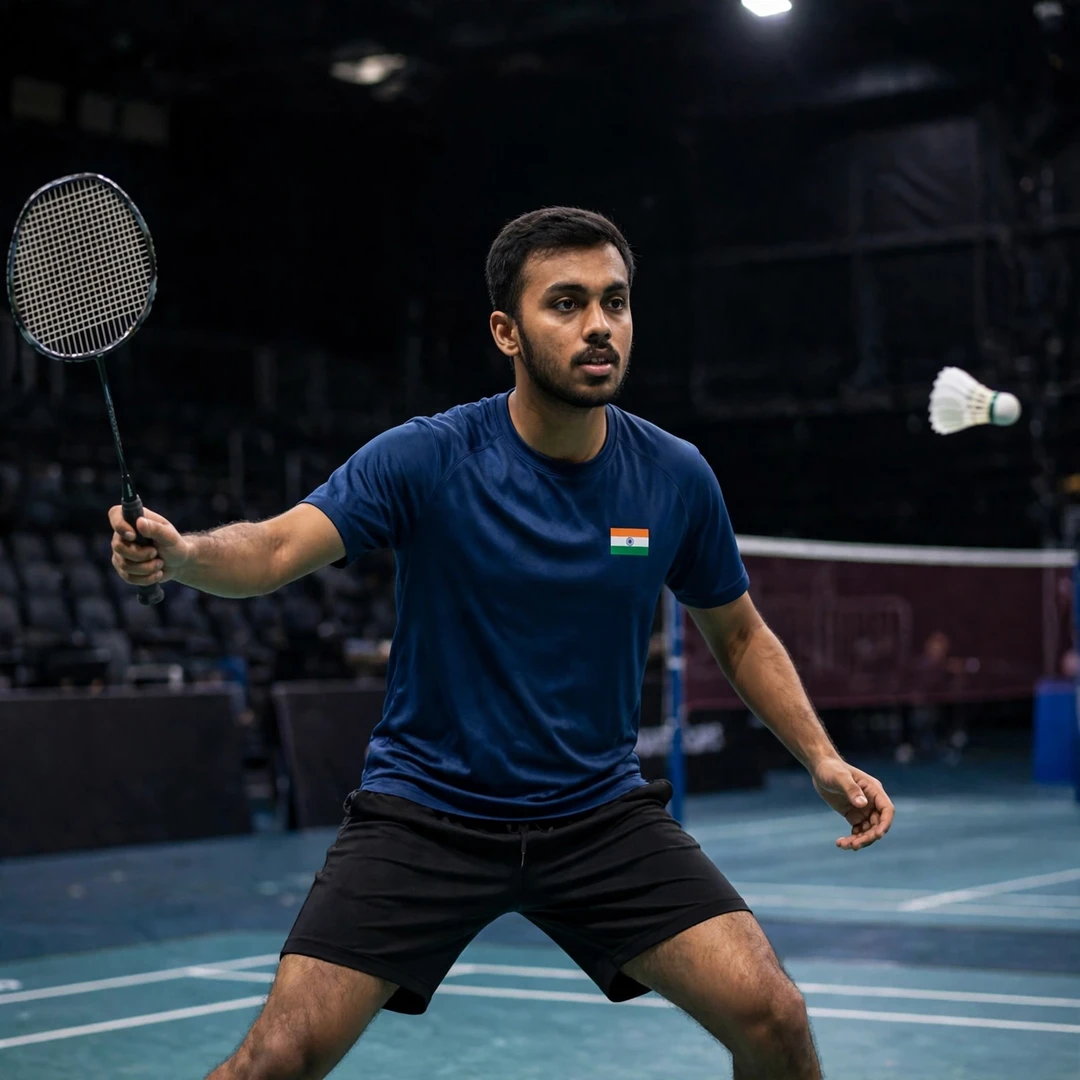
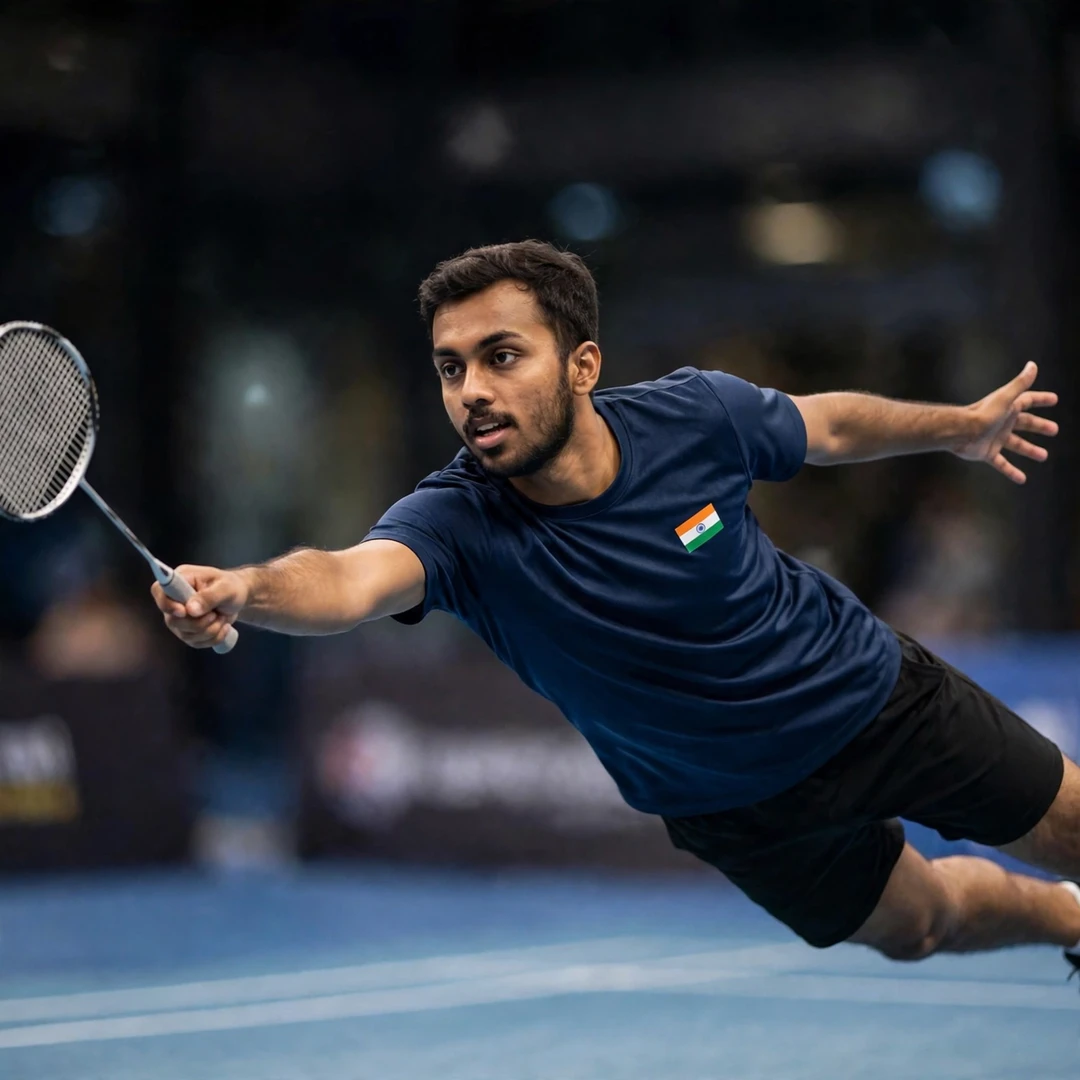
Playing Style: Right-handed all-court player who slows the rally down, spins the shuttle at the net with his trademark ‘dribble’ and refuses to let opponents attack
Known For: The spinning net ‘dribble’, International Challenge semi-finals in Kathmandu and Tehran, and a career-high world ranking of No. 102
Journey: Madras Cricket Club · coach Jerry Martin · HAP Badminton Academy Sivakasi · India Under-15 No. 1 · Asian Games selection trials 2023 · world No. 102 in 2025
Understanding Siddhanth Gupta (Indian Badminton Star)
Siddhanth Gupta is an Indian men’s singles badminton player who stands at world No. 128 in the BWF rankings (Week 43, 20 October 2026) with 15,150 points — and he has been famous in Indian badminton circles since he was a schoolboy. As a teenager in Chennai he was marked out as a prodigy: India’s Under-15 No. 1, an Asian junior international at fourteen, and the owner of a spinning net shot so distinctive that coaches simply call it ‘the dribble’. His senior career has been built the slow way — state finals, selection trials against his heroes, and a globe-trotting grind through badminton’s lower-tier circuit, peaking so far at a career-high world No. 102 in December 2025.
Early Life in Chennai and the Road to Sivakasi
Siddhanth Gupta was born on 30 March 2003 in Chennai, the capital of Tamil Nadu in southern India. His first badminton memories are of the Madras Cricket Club, where his father was a member: at around five years old he would watch his father play, pick up a racket, and refuse to leave the court. The talent was obvious early — Sanjiv Sachdeva, the former chief national junior coach of India, saw the youngster play and marked him out as a boy who could go far.
The Madras Cricket Club Beginning
Gupta began professional training at six years old, and his formative coach was Jerry Martin, who worked with him for four years. Under Martin he developed the habit of winning above his age: he was winning Under-15 tournaments while still an Under-13, and Under-17 matches while still Under-15. Later he trained at the HAP Badminton Academy in Sivakasi under senior coach Karthick, where his footwork was rebuilt — the wide-legged ‘Chinese movement’ of chassé steps and cross-behind recoveries — while the Chennai-based Quantum Leap Performance centre sharpened his reflex strength and speed.
India’s Under-15 No. 1
His junior peak came in 2017. Gupta spent around five months as India’s No. 1 in the Under-15 boys’ singles rankings, finished third at the national sub-junior championships in Tenali, and represented India at the Asian Junior Championships in Yangon, Myanmar, reaching the pre-quarter-finals — at the time, the biggest achievement of his young career. The national press noticed too: Sportstar profiled the schoolboy for its next-generation series, noting strokes that opponents simply could not read.
Asian Junior Championships Pre-Quarter-Finalist
The step up to senior badminton began at home. At the Tamil Nadu State Senior Championship in 2021, a teenage Gupta fought through the draw — beating Kaveen D in the quarter-finals and Sri Varshan in the semi-finals — to reach the final, where he faced fellow Tamil Nadu prospect Rithvik Sanjeevi. A year later he was testing himself internationally, reaching the pre-quarter-finals of the India International Challenge in Nagpur in 2022.
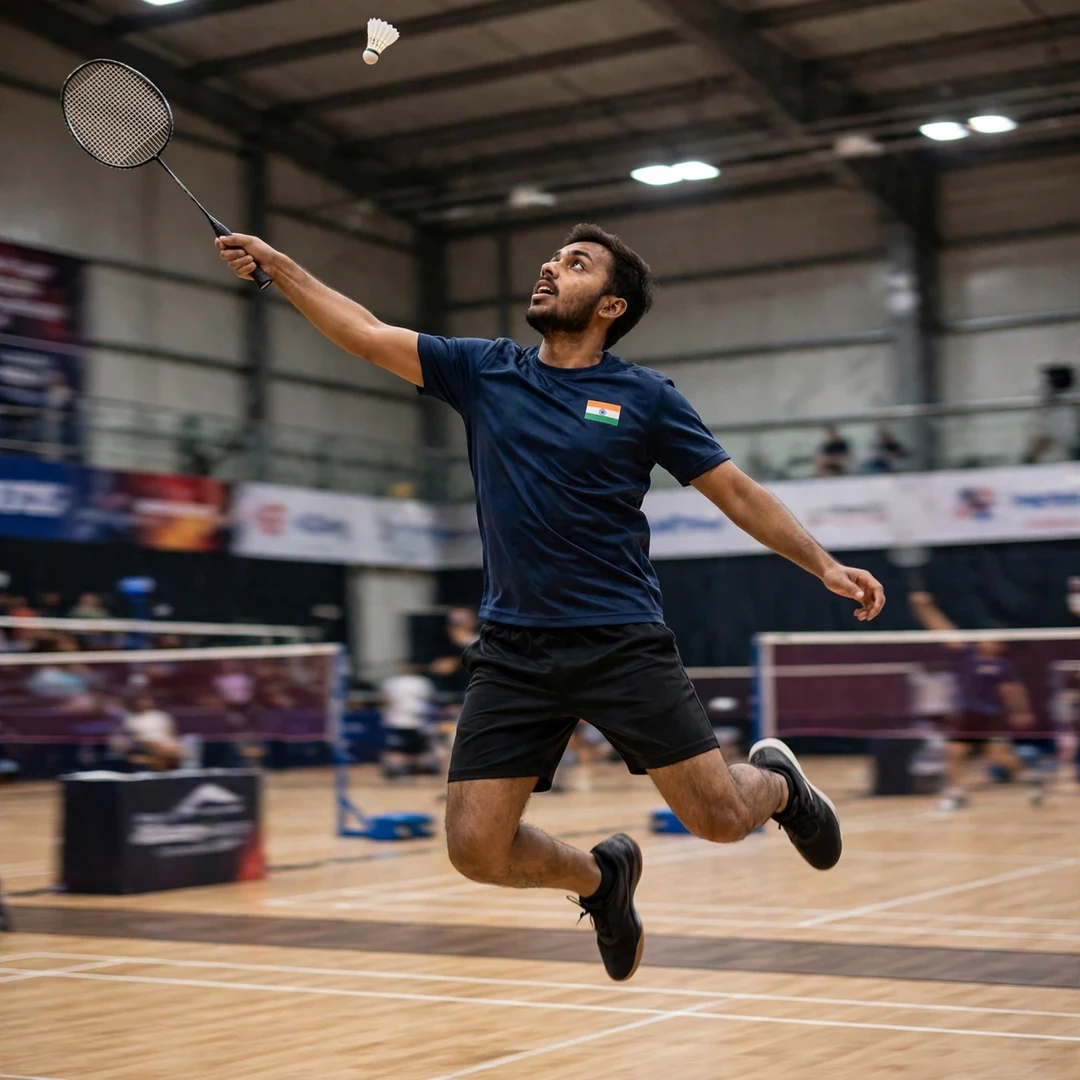
Career Milestone #1
State Finalist and the Long Senior Climb
In May 2023 came a week he will never forget: the Indian selection trials for the Asian Games, held at the Jwala Gutta Academy of Excellence in Hyderabad. Gupta beat Ansal Yadav in a three-game battle, and then walked on court against Kidambi Srikanth — a former world No. 1 and one of his heroes. Srikanth won 21-13, 21-16 and took the squad place alongside Lakshya Sen and H. S. Prannoy, but Gupta had measured himself against the very best in India and left knowing exactly what the level demanded.
Through 2024 the results began to stack up on the international circuit: quarter-finals at the Türkiye International Challenge and the Czech Open in the autumn, and then, in December 2024, his first international semi-final — at the Nepal International Challenge in Kathmandu. A semi-final at International Challenge level is worth 2,800 ranking points, and it announced that the Chennai junior prodigy was becoming a senior player of substance.
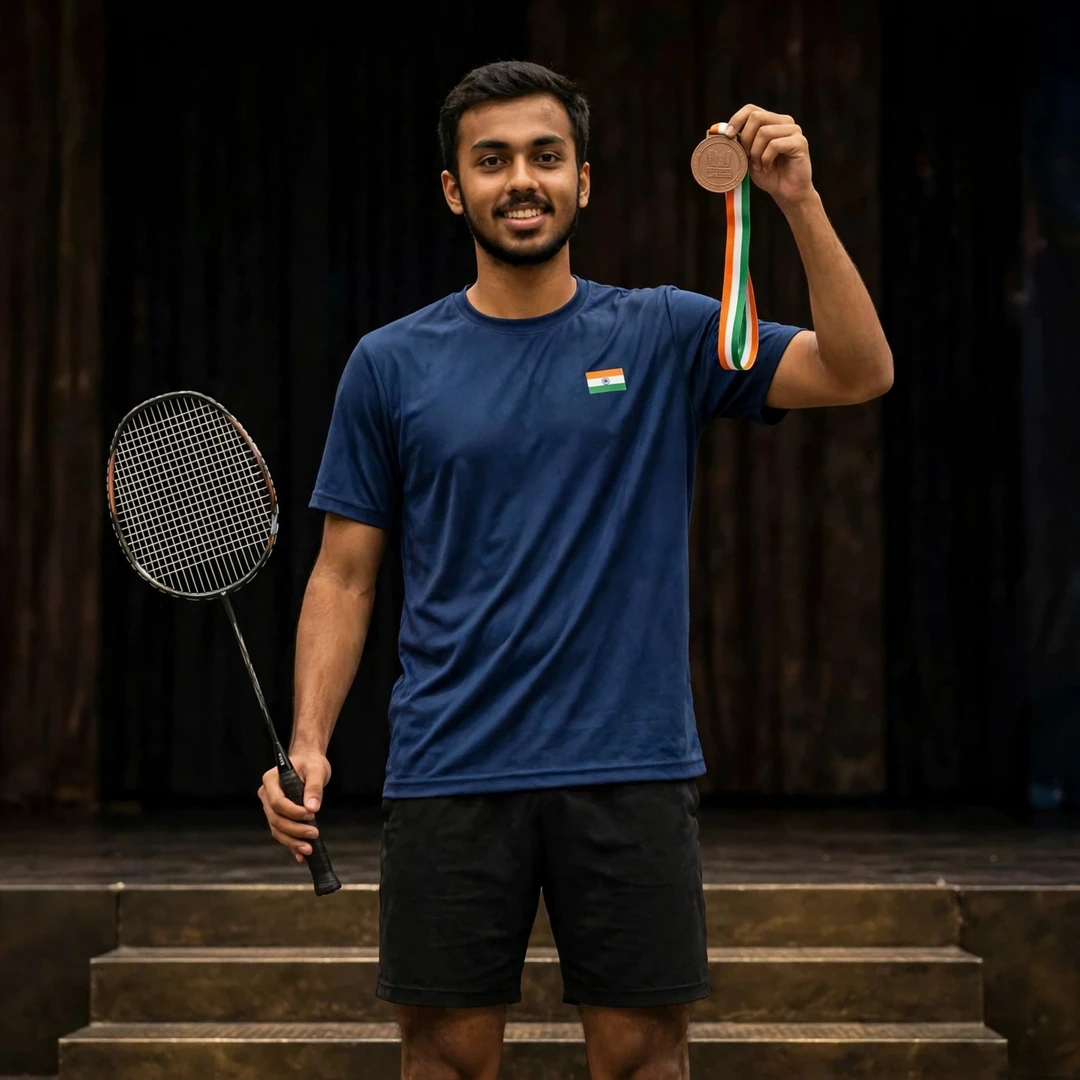
Career Milestone #2
Two International Semi-Finals: Kathmandu and Tehran
Two months later he did it again. At the 33rd Iran Fajr International Challenge in Tehran in February 2025, Gupta reached his second consecutive International Challenge semi-final. Back-to-back semi-finals on two different continents, in all kinds of conditions, is the signature of a player whose game travels — patience and net control work in every hall.
There is still no senior international title on his record — that is the honest state of his career, and this profile will not invent one. What the two semi-finals prove is proximity: Gupta keeps putting himself one win away from finals at International Challenge level, and on the lower-tier circuit, semi-finals and quarter-finals stacked month after month are exactly how a player climbs from the 300s into the top 100.
In 2025 he stepped onto the World Tour more often. At the Syed Modi India International, a Super 300 in Lucknow, he beat Bharat Raghav before losing in the round of 16 to Japan’s Minoru Koga. At the Al Ain Masters Super 100 in the UAE he reached another round of 16, and at the Odisha Masters Super 100 in Cuttack he beat Raghav again before an old rival stopped him — Rithvik Sanjeevi, his opponent from the 2021 state final, winning their Odisha rematch in three games.
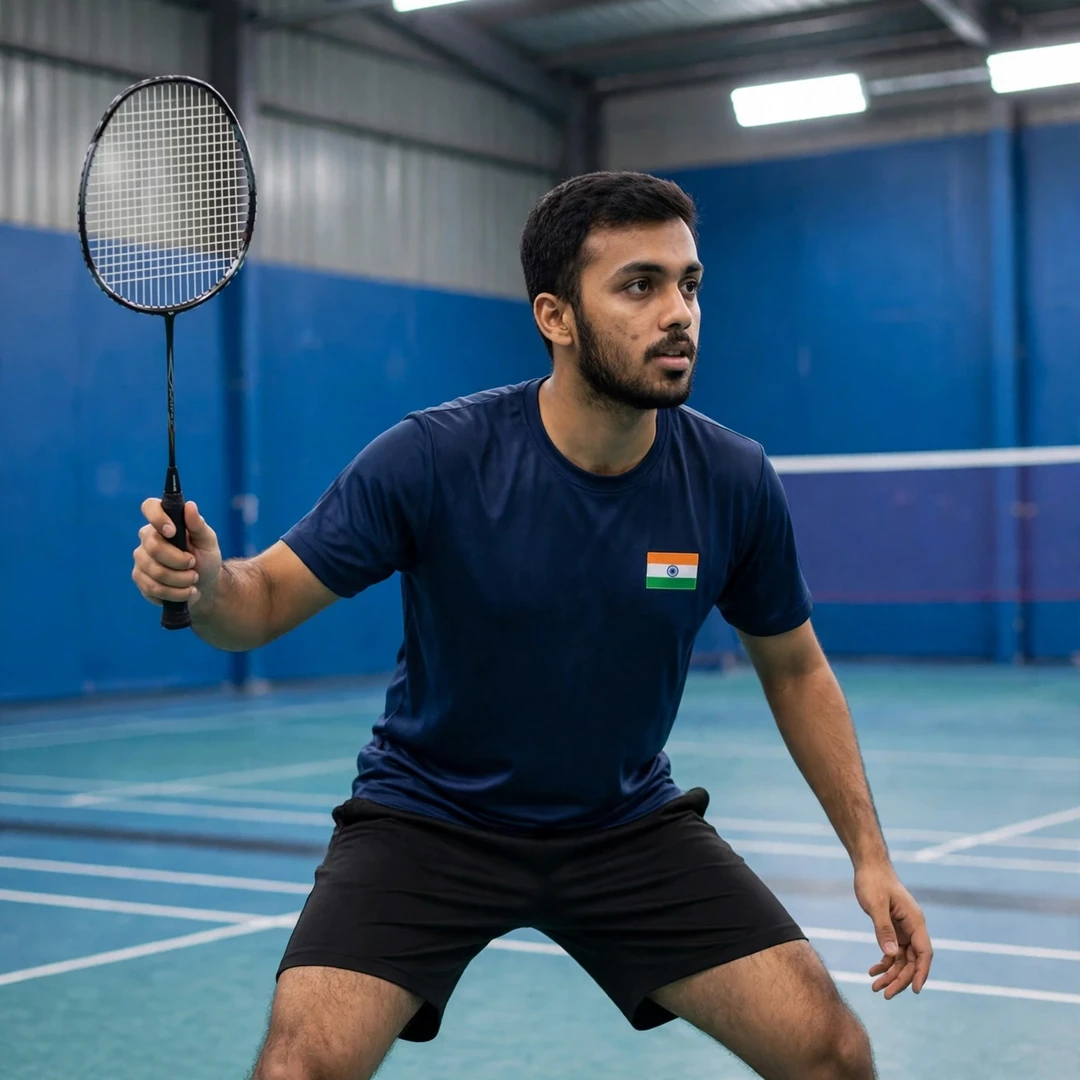
Career Milestone #3
Career-High World No. 102
The payoff came in December 2025. With the Kathmandu and Tehran semi-finals, the European quarter-finals and a string of World Tour round-of-16 finishes all counting together, Gupta’s ranking points peaked at 18,970 — and his world ranking peaked with them, at a career-high world No. 102. For a player who had spent years in the 200s and 300s, standing on the doorstep of the top 100 was the reward for the most consistent season of his life.
Rankings on the lower-tier circuit are a treadmill: points expire after 52 weeks, and through 2026 Gupta’s earliest results rotated out of his counting total. That is why, in the Week 43 rankings of 20 October 2026, he stands at world No. 128 with 15,150 points from 15 tournaments — lower than his December peak, but built from fresher results, including a quarter-final at the Singapore International Series in March 2026, where the rebuild began.
His best 2026 week came in Manila. Seeded ninth at the inaugural Philippine International Challenge, Gupta beat the United States’ Rylan Tan, then outplayed home favourite and three-time Philippine national champion Jelo Albo 21-11, 21-19, won again in the round of 16 and reached the quarter-finals. In October he was in Istanbul for the Türkiye International Challenge, beating Bharath Latheesh 21-16, 21-11 before losing a three-game round-of-16 battle to Indonesia’s Ade Resky Dwicahyo 15-21, 21-15, 15-21 — and at the Dutch Open he pushed Belgium’s Julien Carraggi through a 21-23 first game.
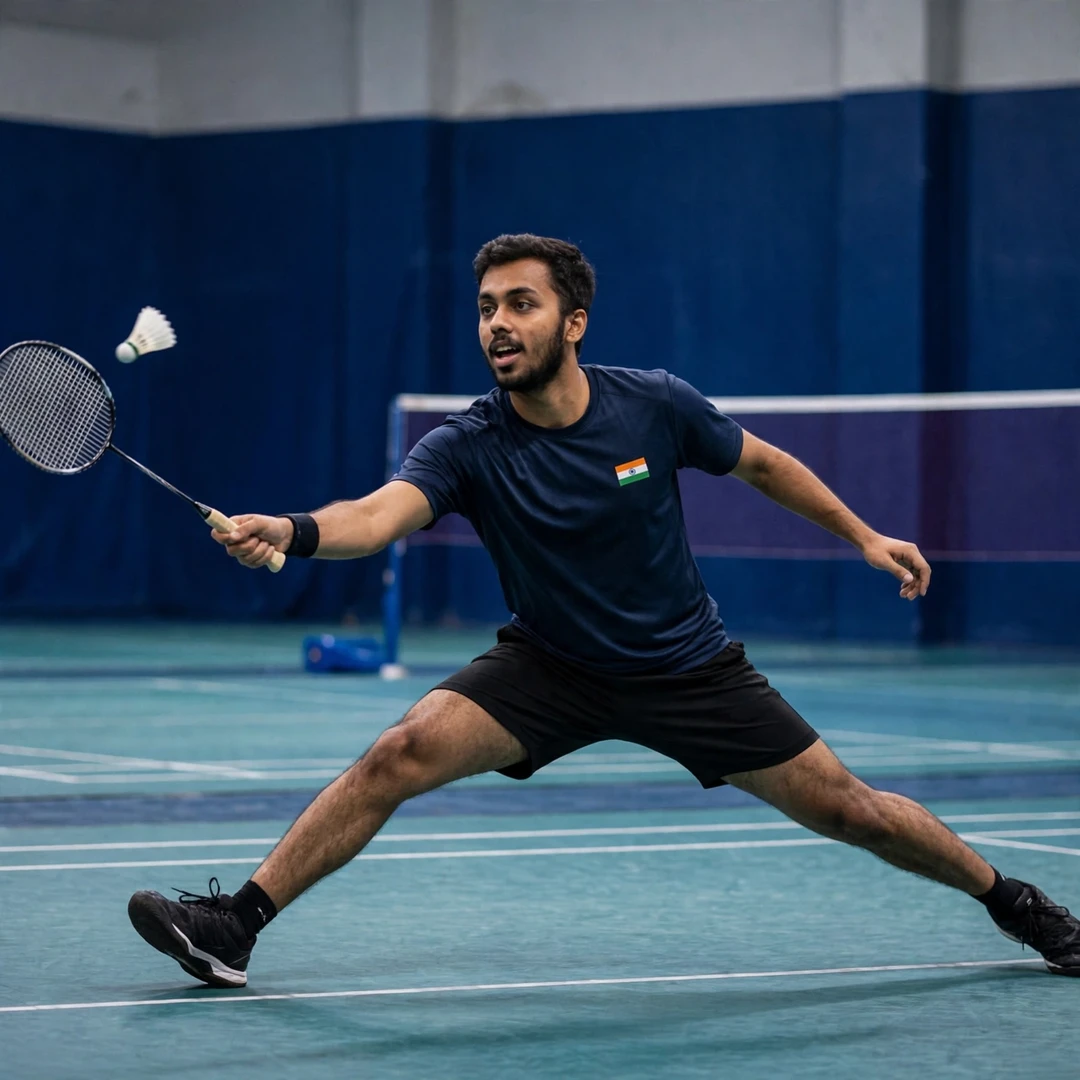
Career Milestone #4
The 2026 Season: Manila, Istanbul and Beyond
The season still has chapters to run. At the end of October, Gupta’s circuit comes home: he is on the entry list for the India International Challenge in Bengaluru, where a deep run in front of home crowds would start the climb back toward the top 100. The maths of his career has always worked the same way — no single miracle week, just points stacked patiently, semi-final by quarter-final, until the ranking follows.
The geography of his season tells its own story. In a single year Gupta has competed across Asia, Europe and Africa — Singapore, Vietnam, Réunion, France, the Philippines, Malaysia, Nigeria and Türkiye in 2026 alone, after a 2025 that took in Uganda, Cameroon, Iran, Sri Lanka, Thailand, Denmark, Italy, Macau and the UAE. Fifteen counted tournaments is one of the heaviest schedules in this ranking bracket; it is the reality of the lower-tier circuit, where ranking points are earned in small halls, one week at a time.
Playing Style
The Dribble: Spin, Patience and the Slow Game
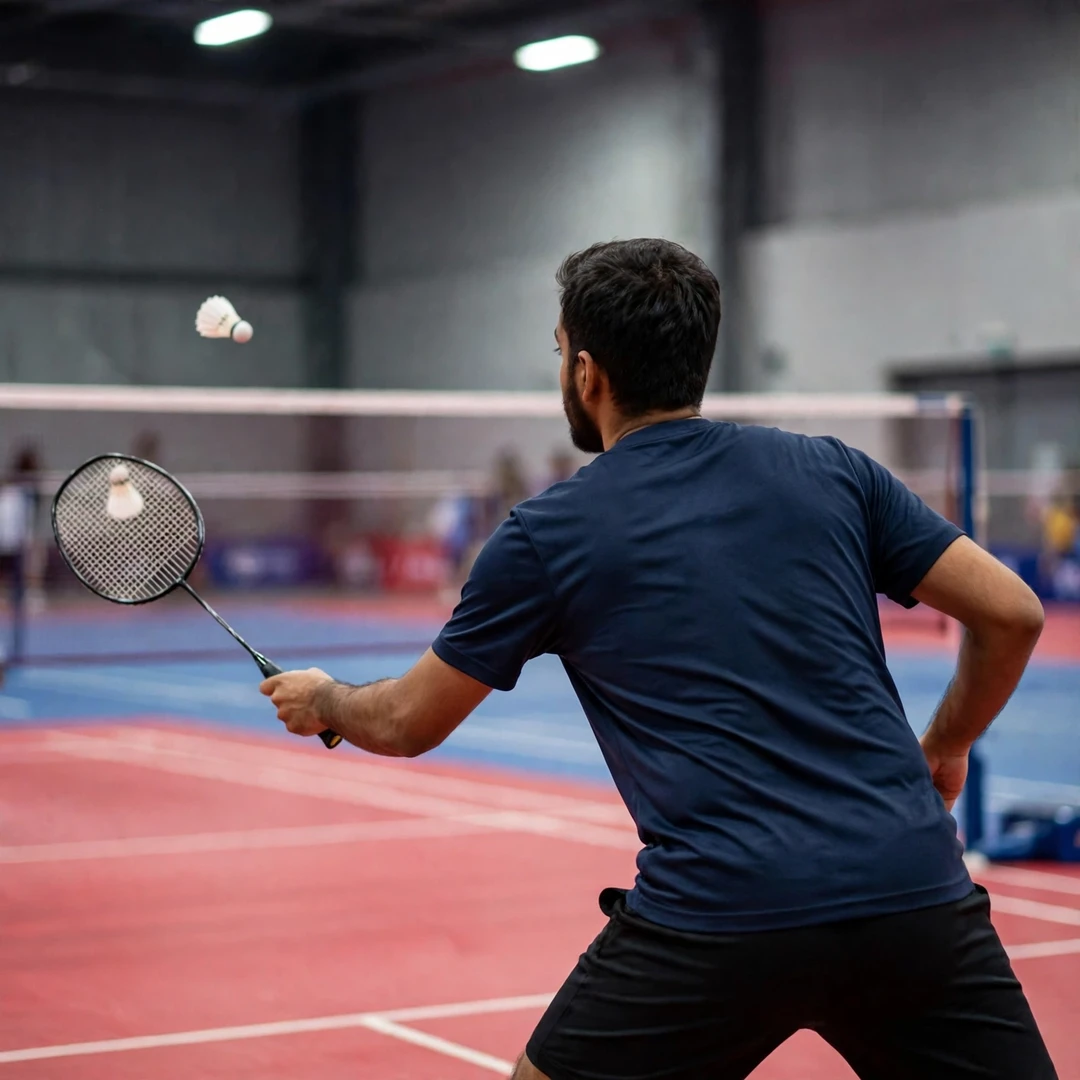
Ask any Indian coach about Siddhanth Gupta and one word comes back: the dribble. His signature shot is a spinning net shot — the ‘dribble’ — played so the shuttle tumbles and spins over the tape, making clean contact almost impossible for the opponent. Most players, forced to lift, open the court up; Gupta simply re-dribbles. ‘I don’t let them attack,’ he explained as a teenager. ‘I’ll make sure that I don’t let them smash or play fast — I use the high toss to make the game slow.’ Years on, that is still his game in one sentence.
Around the dribble sits a complete, patient all-court game. Coaches who worked with him describe strokes that are unusually hard to read — deception that is natural rather than performed — and a deliberate tempo: he can be a fraction late reacting at the forecourt compared with the fastest players, so his team sharpened his strokes to compensate, and his rebuilt footwork, all wide chassé steps and cross-behind recoveries, keeps him balanced deep into third games. He wins by making fast players play his pace.
Young players studying Gupta should watch what happens at the net. His spinning net shots are not tricks; they are repetition — thousands of hours of touch practice until the tumbling shuttle becomes automatic. Watch also how rarely he panics when an opponent speeds up: the high, deep toss resets the rally, his defence absorbs the attack, and the rally restarts at his speed. Control of tempo is a skill any junior can train, and Gupta is its textbook.
Mental Strength
Fearlessness, Patience and Playing Up
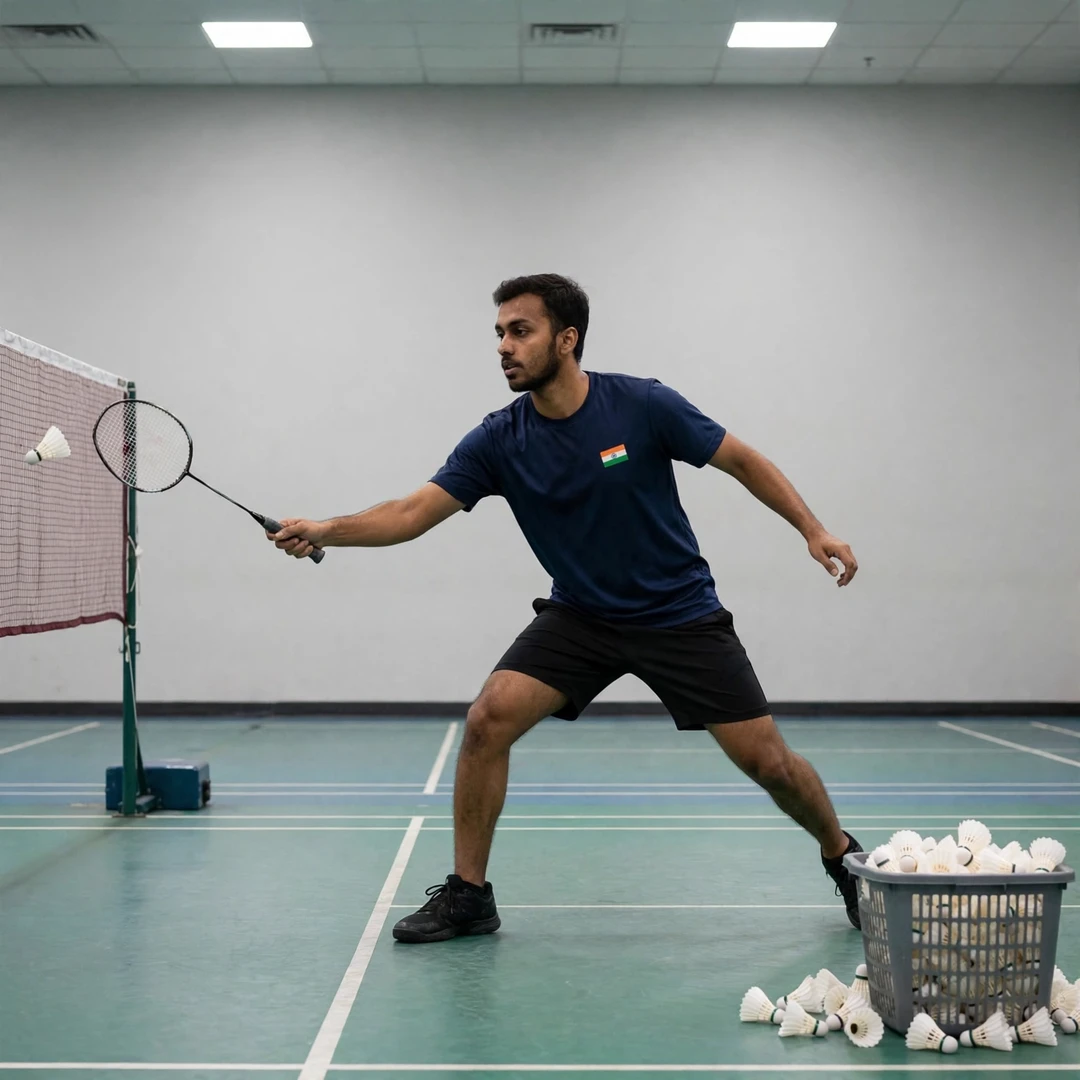
The mindset was there before the ranking. ‘Compared to other players of his age, he doesn’t have the fear of playing against older and better opponents,’ said coach Karthick when Gupta was fourteen — and the boy proved it by winning age-group matches against players two years older, then by walking into senior selection trials at twenty and beating grown men before falling to a former world No. 1. Fearlessness, in his case, is not recklessness: it is the calm refusal to change his game for a bigger name.
His career also teaches the other half of the lesson: what to do after the defeats. Srikanth beat him at the trials; Gupta went back to the circuit and stacked semi-finals. Rithvik beat him in Odisha; Gupta kept winning matches in the same season and climbed to No. 102. The ranking dip of 2026, as old points expired, is simply the latest test of the same habit — keep entering, keep stacking, let the arithmetic come back around.
Practical lessons from his journey include learning one signature shot so well that opponents must plan for it, building footwork patterns before chasing power, using the high toss to control tempo when a rally runs away from you, entering tournaments on every continent your budget allows because points live there, and treating selection-trial defeats against famous names as a free education rather than a verdict.

Learning Reference
ST Badminton Academy Connection
ST Badminton Academy has no official partnership or endorsement from Siddhanth Gupta. He is not connected with our academy, and this profile is published purely as an educational case study for parents and junior players who want to understand how a Chennai prodigy with a famous net shot is building a professional career the slow, honest way.
Many of our students from Malaysia and visiting learners from Singapore study his matches to understand net control: how the spinning dribble forces lifts, how a patient player drags attacking opponents down to his tempo, and how a junior star converts early fame into a top-110 senior career through sheer volume of competition. His 2017 junior season and his 2025 senior season are both required viewing in our discussions of tempo.
We encourage our students to observe his net game, his high defensive tosses and his calm resets after losing rallies — and to notice that his biggest weeks have come in Kathmandu, Tehran and Manila, not under television lights. Champions are not only made at the top of the game; sometimes they are assembled patiently, one semi-final at a time.
FAQs: Siddhanth Gupta Indian Badminton Player
Here are answers to common questions about Siddhanth Gupta’s career, achievements and what young players in Malaysia can learn from the Chennai shuttler and his famous spinning net shot.
Who is Siddhanth Gupta and which country does he represent in badminton?
Siddhanth Gupta is an Indian professional badminton player competing in men’s singles. Born on 30 March 2003 in Chennai, Tamil Nadu, he started at the Madras Cricket Club, became India’s Under-15 No. 1, and now plays the BWF circuit full-time, standing at world No. 128 in October 2026 with a career-high of No. 102.
What are Siddhanth Gupta’s biggest badminton achievements?
Gupta’s major achievements are his two International Challenge semi-finals — the Nepal International Challenge in Kathmandu in December 2024 and the Iran Fajr International Challenge in Tehran in February 2025 — a career-high world ranking of No. 102 in December 2025, a Tamil Nadu state senior championship final in 2021, and, as a junior, the Indian Under-15 No. 1 ranking and an Asian Junior Championships pre-quarter-final in 2017.
What is Siddhanth Gupta’s playing style?
Gupta plays a patient, right-handed all-court game built around his signature ‘dribble’ — a spinning, tumbling net shot that forces opponents to lift. He slows rallies down with high tosses, refuses to let opponents attack at their speed, and wins by making faster players play at his tempo behind unreadable strokes and rebuilt, wide-based footwork.
How did Siddhanth Gupta perform at the Asian Games selection trials?
Gupta played India’s Asian Games selection trials in Hyderabad in May 2023. He beat Ansal Yadav in three games, then lost to former world No. 1 Kidambi Srikanth 13-21, 16-21 in the final stage; Srikanth, Lakshya Sen and H. S. Prannoy took the three men’s singles squad places for the Hangzhou Games.
How can my child learn from Siddhanth Gupta’s training approach?
Young players can study Gupta’s approach by drilling the spinning net shot until it tumbles on command, practising the high toss as a tempo reset rather than a surrender, and building footwork wide and low the way his coaches rebuilt his. At ST Badminton Academy we use his Kathmandu and Tehran runs as video lessons in patience, then train the same patterns in net-spin and rally-tolerance drills.
Did Siddhanth Gupta win any junior titles?
Gupta’s junior honours were national rather than international titles: he was India’s Under-15 boys’ singles No. 1 for around five months in 2017, finished third at the national sub-junior championships in Tenali, and reached the pre-quarter-finals of the Asian Junior Championships in Yangon the same year — achievements that marked him as one of India’s top prospects.
What are Siddhanth Gupta’s best World Tour results?
Gupta’s best World Tour results are his round-of-16 finishes at the Syed Modi India International Super 300 in 2025 — where he beat Bharat Raghav before losing to Minoru Koga — and at the Odisha Masters and Al Ain Masters Super 100 events the same year. At International Challenge level he has two semi-finals, in Kathmandu and Tehran, and a 2026 quarter-final in Manila.
What playing style should young players learn from Siddhanth Gupta?
Young players should study Gupta’s complete game rather than one spectacular shot: the spinning net play that controls the front court, the high tosses that reset tempo, the defence that absorbs faster opponents, and above all the patience to win rallies at your own speed. His game is built from trainable skills, which is why coaches love teaching from it.
Does ST Badminton Academy have any connection with Siddhanth Gupta?
No, Siddhanth Gupta is not a student, coach or ambassador of ST Badminton Academy. He represents India and developed through the Madras Cricket Club, coach Jerry Martin’s programme and the HAP Badminton Academy in Sivakasi. However, coaches at our academy in Kuala Lumpur regularly use his matches as teaching material, because his career shows what a signature skill, patience and relentless tournament volume can build.
Siddhanth Gupta Career Highlights

Career Statistics and Rankings
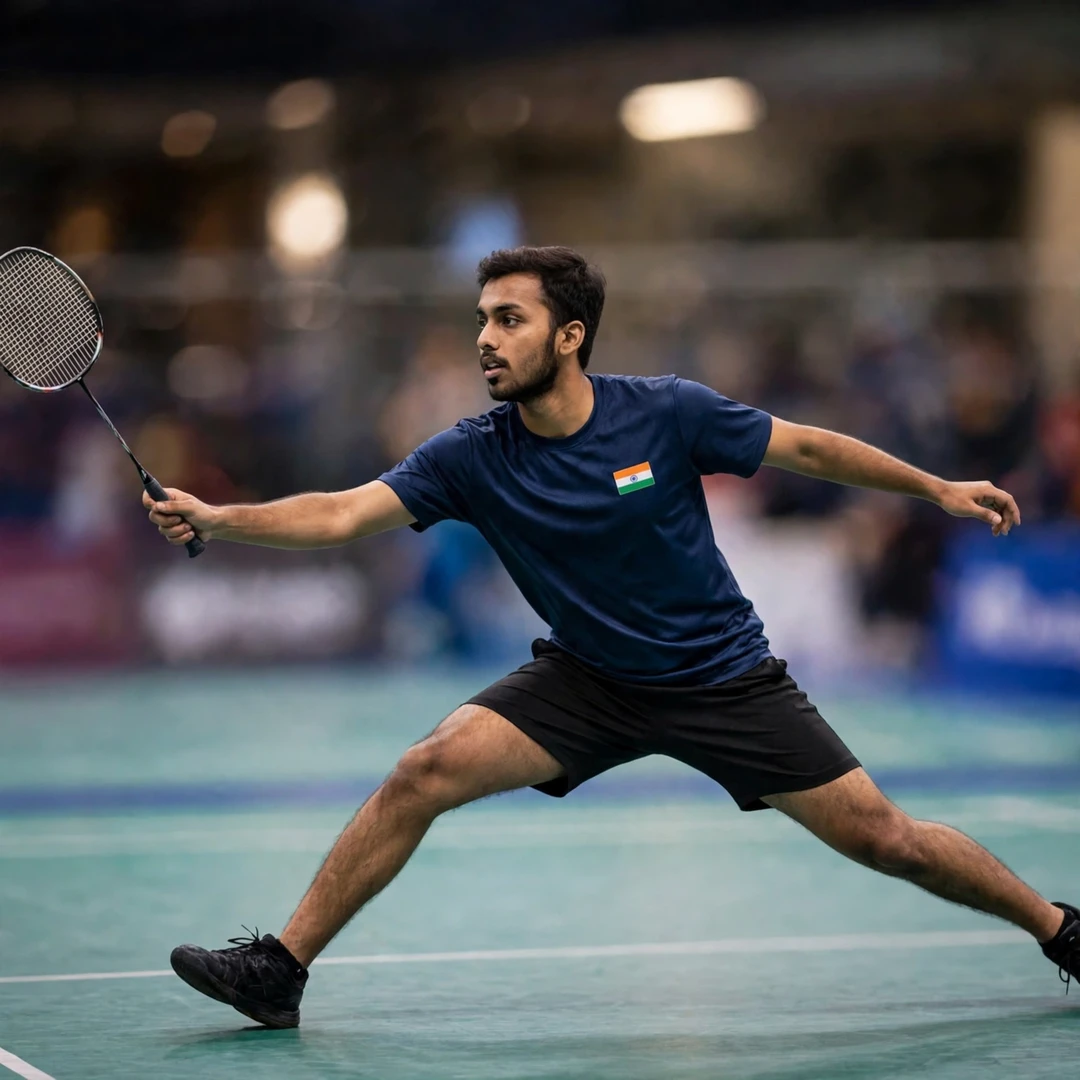
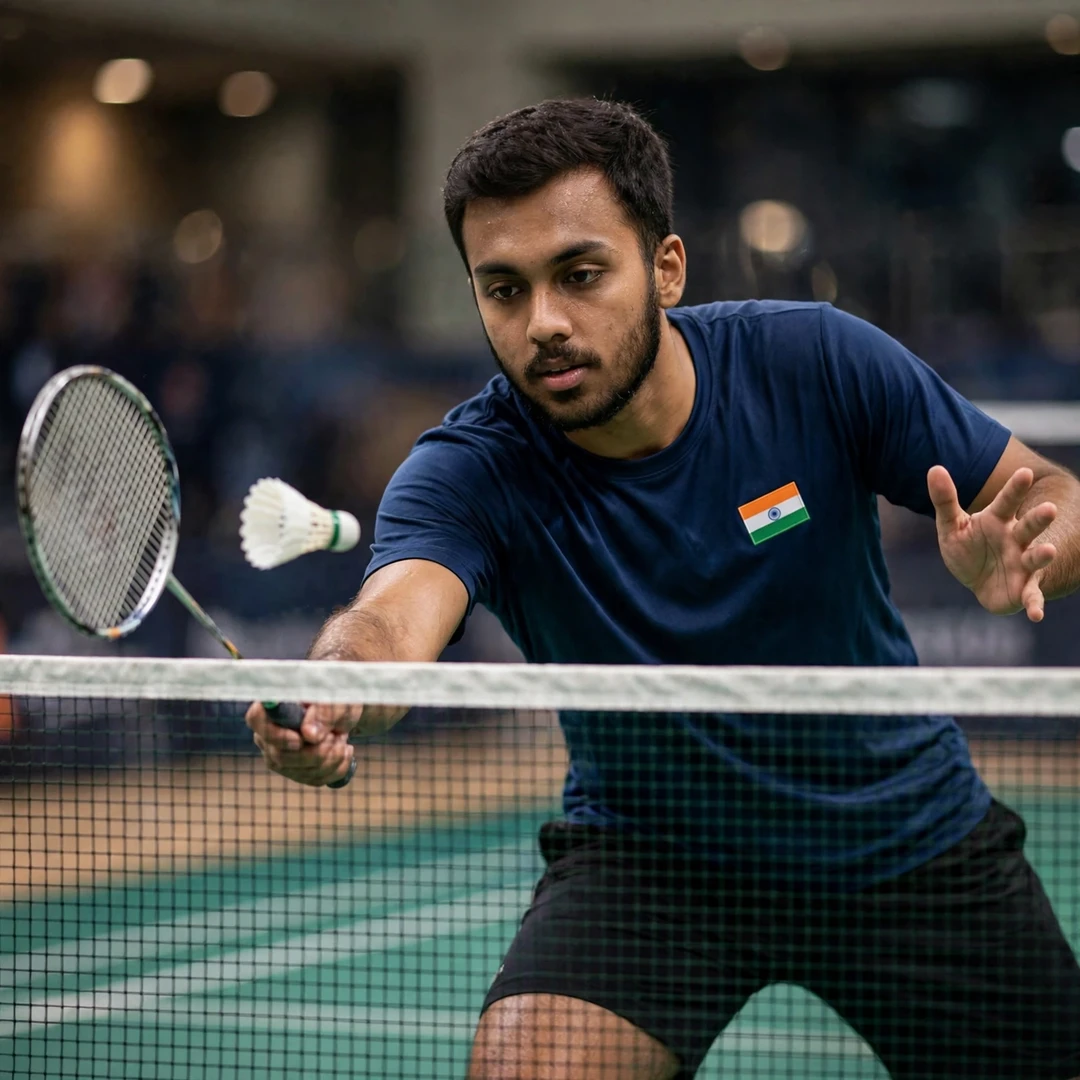
Siddhanth Gupta, born 30 March 2003 in Chennai, India, has travelled one of badminton's most patient roads: a child prodigy with a famous spinning net shot, India's Under-15 No. 1 at fourteen, a state senior finalist as a teenager, a triallist against Kidambi Srikanth at twenty, and a two-time International Challenge semi-finalist who reached world No. 102 at twenty-two — still stacking results across three continents at No. 128.
| Development Area | Common Misconception | What Siddhanth Gupta's Career Shows REALITY |
|---|---|---|
| Junior Foundation | Talent alone decides who becomes a champion. | Gupta started at the Madras Cricket Club at five and trained professionally from six — a structured junior base came first, and he was India's Under-15 No. 1 by fourteen. |
| Playing Style Priority | Kids should copy the flashiest attacking shots. | Gupta built a complete game first; his famous spinning 'dribble' at the net is the finishing touch on patient rallying, rebuilt footwork and stubborn defence. |
| Fitness Importance | Juniors can out-train everyone without rest. | Gupta plays one of the heaviest schedules on the lower-tier circuit — 15 counted tournaments across Asia, Europe and Africa in a year; managing travel and fatigue honestly is what keeps a rising player healthy. |
| Mental Approach | Top players never get nervous or upset. | Gupta's coaches describe a player with no fear of older opponents who stays calm at his own pace — mental skills are trained, not inherited. |
| Attacking Training | Smashing harder is always the answer. | His two International Challenge semi-finals — Kathmandu in December 2024 and Tehran in February 2025 — came from rally control and net spin, not raw power. |
| National Milestones | Only world titles matter. | Gupta's career-high of world No. 102 in December 2025, built from semi-finals, quarter-finals and round-of-16 finishes stacked across three continents, shows how milestones build a career step by step. |
| Career Timeline | Champions peak once and fade fast. | From Under-15 national No. 1 in 2017 to a career-high world No. 102 in 2025, Gupta proves sustained development beats a short peak. |
Study Siddhanth Gupta's Work Ethic and Professional Approach
This profile explains who Siddhanth Gupta is, his major achievements, and what developing players can learn from his journey. Whether you are a parent in Kuala Lumpur, Cheras or anywhere in Malaysia wondering whether a patient, skill-first game can carry your child to the professional circuit, Gupta's story carries the answer: master one shot completely, control the tempo, and never stop entering — book a trial class with ST Badminton Academy on WhatsApp at +60 17-684 2136 and let your child begin a development journey built to last.