Chinese Men’s Singles Badminton Star
Sun Chao
China
Player Event: Men’s singles
Date of Birth: 19 August 2003 · Zhejiang, China · Right-handed
Playing Style: Right-handed all-court controller who changes the pace, attacks the serve and return, and covers a huge area at the net
Known For: Winning the Ruichang and Baoji China Masters twice each, a 22-match international winning streak, and pushing Shi Yu Qi to a two-point finish at China’s National Games
Journey: Zhejiang provincial team · China national reserve squad · 2025 China national singles champion · Four BWF World Tour Super 100 titles
Understanding Sun Chao (Chinese Badminton Star)
Sun Chao is a Chinese men’s singles badminton player who stands at world No. 92 in the BWF rankings (Week 43, 20 October 2026) with 21,050 points — a career-high ranking, up ten places in a single week. On paper that sounds modest for a man who has won four BWF World Tour titles. In reality it is one of the most unusual stories in the modern game: Sun Chao has won the Ruichang China Masters and the Baoji China Masters twice each, put together a 22-match international winning streak, and yet still sits outside the top 90, because every one of his titles came at Super 100 level, the lowest rung of the World Tour, and his ranking counts just six tournaments. His rise was not blocked by better players. It was blocked by paperwork, patience and the mathematics of the ranking system — and he kept winning anyway.
Early Life in Zhejiang and the Provincial Team Road
Sun Chao was born on 19 August 2003 in China and developed as a player in Zhejiang province, one of the strongest badminton regions in the country — the provincial system that produced Olympic champions such as Chen Yufei, Zheng Siwei and Huang Yaqiong. He was registered as a young player in 2015 and progressed through Zhejiang’s provincial team structure, the demanding full-time pathway in which Chinese juniors live, train and study together while competing for the few places that lead towards the national squads.
The Age-Correction Twist That Cost Him His Place
His path then took a twist that no opponent could have inflicted. When Sun Chao was first registered in 2015, his birth year was recorded as 2005. In May 2023, a Chinese Badminton Association age re-verification corrected the record: his actual birth year is 2003, as the BWF now lists. The correction had real consequences — he was sent back from China’s national reserve squad to the Zhejiang provincial team and lost the international opportunities that came with that place. It was an administrative judgement, not a sporting one, but at 19 years old it could easily have ended his career before it had properly begun.
A First BWF Final at Ruichang in 2023
Weeks before that correction, in March 2023, he had shown exactly what he could do. At the Ruichang China Masters, a Super 100 event in Jiangxi, Sun Chao reached his first BWF World Tour final, losing the title match to his compatriot Sun Feixiang — a different, older player with a confusingly similar name. He entered the world rankings at No. 271 on 21 March 2023. A first World Tour final at 19 announced his level to everyone watching; then, through no fault of his own play, the pathway in front of him was pulled away.
The Quiet Years: Rebuilding with Zhejiang
What followed were the quiet years. Through 2023 and 2024 Sun Chao played almost no international badminton, and his world ranking drifted in the 260–300 band — his best mark in 2024 was No. 296 — while players his age collected points around the world. He kept working inside the Zhejiang provincial system, played domestic competition and represented Zhejiang in the China Badminton Super League. There were no headlines and no shortcuts. For coaches, this is the part of his story that matters most: development does not always show up in a ranking, and the players who survive the invisible years are the ones still training when the door reopens.

Career Milestone #1
The 2025 Breakthrough: National Champion and Two Super 100 Crowns
The door reopened in 2025. Sun Chao first won the men’s singles title at China’s National Championships (the national individual championships), the domestic crown that put him back into the national conversation. Then, in March 2025, he returned to the scene of his first final and finished the job: at the Ruichang China Masters he beat compatriot Zhou Xinyu in an all-Chinese final to win his first BWF World Tour title, two years after losing the same tournament’s final to Sun Feixiang.
Six months later he proved it was no fluke. In the Baoji China Masters final in September 2025, Sun Chao faced Hu Zhe An, one of the most decorated Chinese juniors of his generation, and won a final of the highest quality 23–21, 22–20 — saving his calmest badminton for the tightest points of both games. He finished the entire 2025 season unbeaten in international competition: 13 matches played, 13 won. By mid-September 2025 his ranking had climbed to No. 153, and a player who had been sent back to his province two years earlier was on every national-team watch list in China.

Career Milestone #2
Four Super 100 Titles: Ruichang and Baoji, Twice Each
In 2026 he defended both crowns. At the Ruichang China Masters in March, he beat Indonesia’s Muhamad Yusuf 21–19, 21–19 in the quarter-finals, swept Malaysia’s Cheam June Wei 21–19, 21–9 in the semi-finals, and defeated Indonesia’s Prahdiska Bagas Shujiwo 21–14, 21–11 in the final on 15 March 2026. Back-to-back Ruichang titles, won a year apart, against three different international opponents in the last three rounds.
The Baoji defence in May 2026 was even more emphatic. Sun Chao swept Japan’s Riku Hatano in the semi-finals in just 33 minutes (21–10, 21–19), then beat another Japanese, Riki Takei, 21–12, 21–13 in the final — the second game turning at 13-all with an 8–0 run of flat drives to the back line finished by net kills. The title stretched his international winning streak to 22 matches, and that spring he was invited to train with China’s national first team. Across his five Super 100 campaigns on home soil between 2023 and 2026, Sun Chao won 32 matches and lost only one: the 2023 Ruichang final.
So why is a four-time World Tour champion ranked only No. 92? The answer is arithmetic. A Super 100 title is worth 5,500 ranking points; a Super 300 title pays 7,000 and a Super 500 title 9,200. Sun Chao’s 21,050 points come from just six counting tournaments, the minimum profile of a player whose federation could only enter him where his ranking allowed. The jumps show the mechanism: a Super 100 final in Pontianak moved him from No. 142 to No. 105, and a round-of-16 finish at the Malaysia Super 100 helped lift him from No. 102 to No. 92. Rankings reward the level you are allowed to play at, not only the matches you win — his next task is earning entries to the bigger events his game already troubles.

Career Milestone #3
Testing the Elite: The National Games and the Super 300 Step
His quality against the elite is not theoretical. At China’s 15th National Games in November 2025 — the country’s biggest multi-sport event, held in the Greater Bay Area — Sun Chao played for Zhejiang in the men’s team final against Jiangsu, and his singles meeting with Shi Yu Qi, China’s world No. 1 star, was decided by just two points. Chinese media widely noted how close the provincial player had pushed the national team’s leader. Zhejiang’s run to that men’s team final was described as a historic breakthrough for the province, and Sun Chao’s near-miss against Shi Yu Qi was its signature moment.
The next step is learning the Super 300 level. After his spring invitation to train with the national first team, the autumn of 2026 finally took Sun Chao abroad regularly, and at the Korea Masters, a Super 300 event in Asan, he was promoted into the main draw, where his run ended against Japan’s Yudai Okimoto. Chinese analysts who study his game are precise about the gap: when opponents change their serve-and-return rhythm he adjusts a beat slowly, his attacking choices can narrow on the biggest points, and dense schedules drain his legs. None of those are talent problems. They are experience problems, and experience is exactly what he is now collecting.
His first overseas Super 100 final showed both sides of that education. At the Indonesia Masters II in Pontianak in September 2026, Sun Chao beat Zhu Xuan Chen in the quarter-finals and Dendi Triansyah in the semi-finals, then lost the final in straight games to Chinese Taipei’s Wang Po-Wei — the defeat that ended his 22-match winning streak on 6 September 2026. Three days later, given a late substitute place at the Vietnam Open, he lost his first match in three games to Malaysia’s Tan Jia Jie. In October, at the Malaysia Super 100 in Johor Bahru, he beat Korea’s Choi Ji Hoon and India’s Saneeth Dayanand before losing a three-game round-of-16 match to Japan’s Shogo Ogawa on 14 October 2026. The losses stung, but the points still carried him to a career-high No. 92 — proof his level travels, even while he learns to win abroad.

Career Milestone #4
Career-High World No. 92 — and Still Climbing
His ranking journey tells the whole story in numbers. First ranked No. 271 in March 2023; a best of No. 265 that year; a drift to around No. 296 in 2024 when he barely played; No. 153 by September 2025 after his first two titles; the 140s through the summer of 2026; No. 105 after the Pontianak final; No. 102 at the start of October; and No. 92 — his career-high — on 20 October 2026, at 23 years old. With only six tournaments counting towards his total, one or two strong Super 300 results could move him thirty places in a month. Few players inside the top 100 have more ranking headroom than Sun Chao.
His schedule is itself a lesson for young players. The Super 100 grind means back-to-back weeks in Ruichang and Baoji at home, then Pontianak, Vietnam and Johor Bahru inside a single month abroad — and his Vietnam stumble came just three days after the Pontianak final, a reminder that winning streaks usually end when recovery does. Planning tournament peaks, travelling honestly and telling your coach the truth about fatigue are professional skills, the same skills that kept his 22-match streak alive as the ones whose absence ended it.
Playing Style
The Patient Controller Style
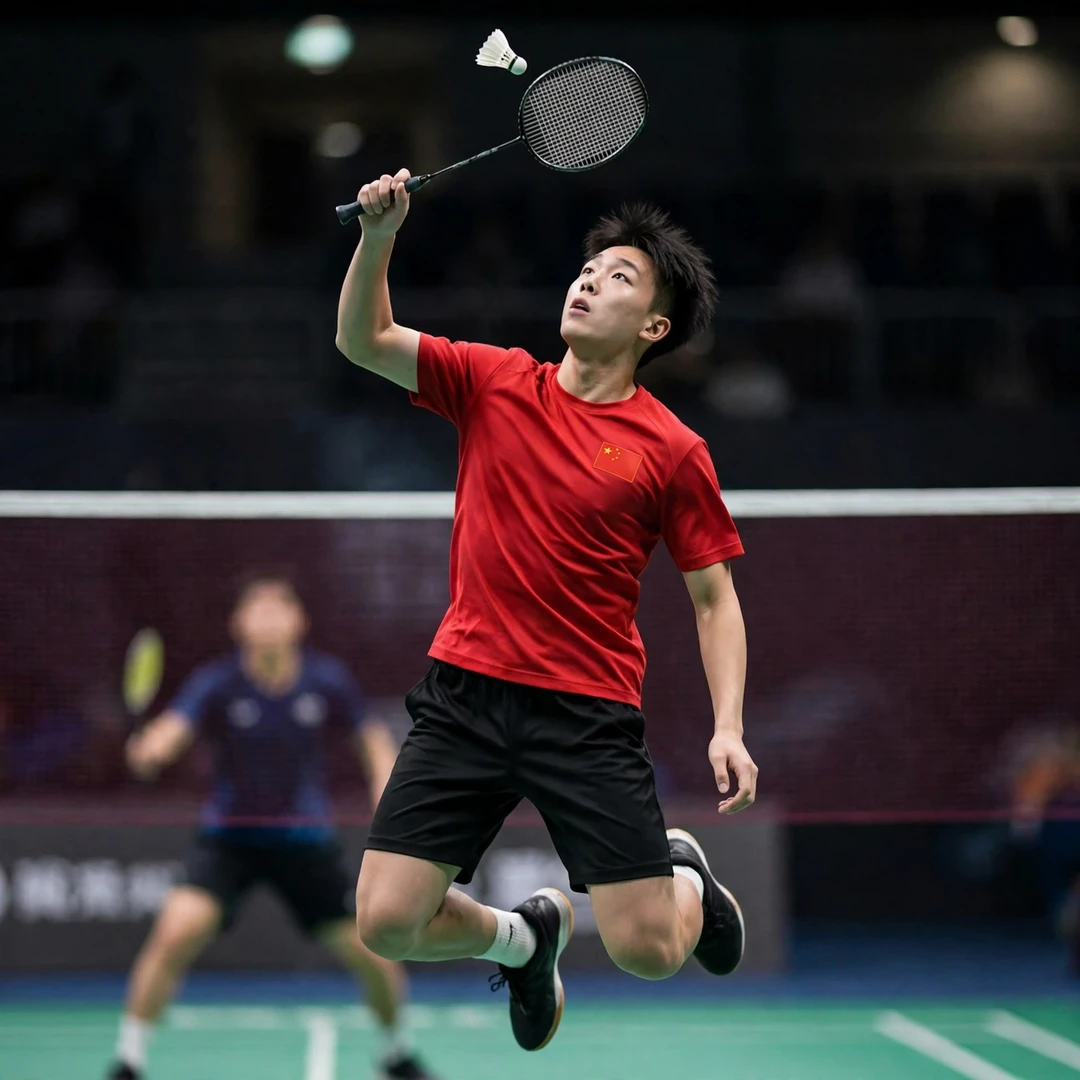
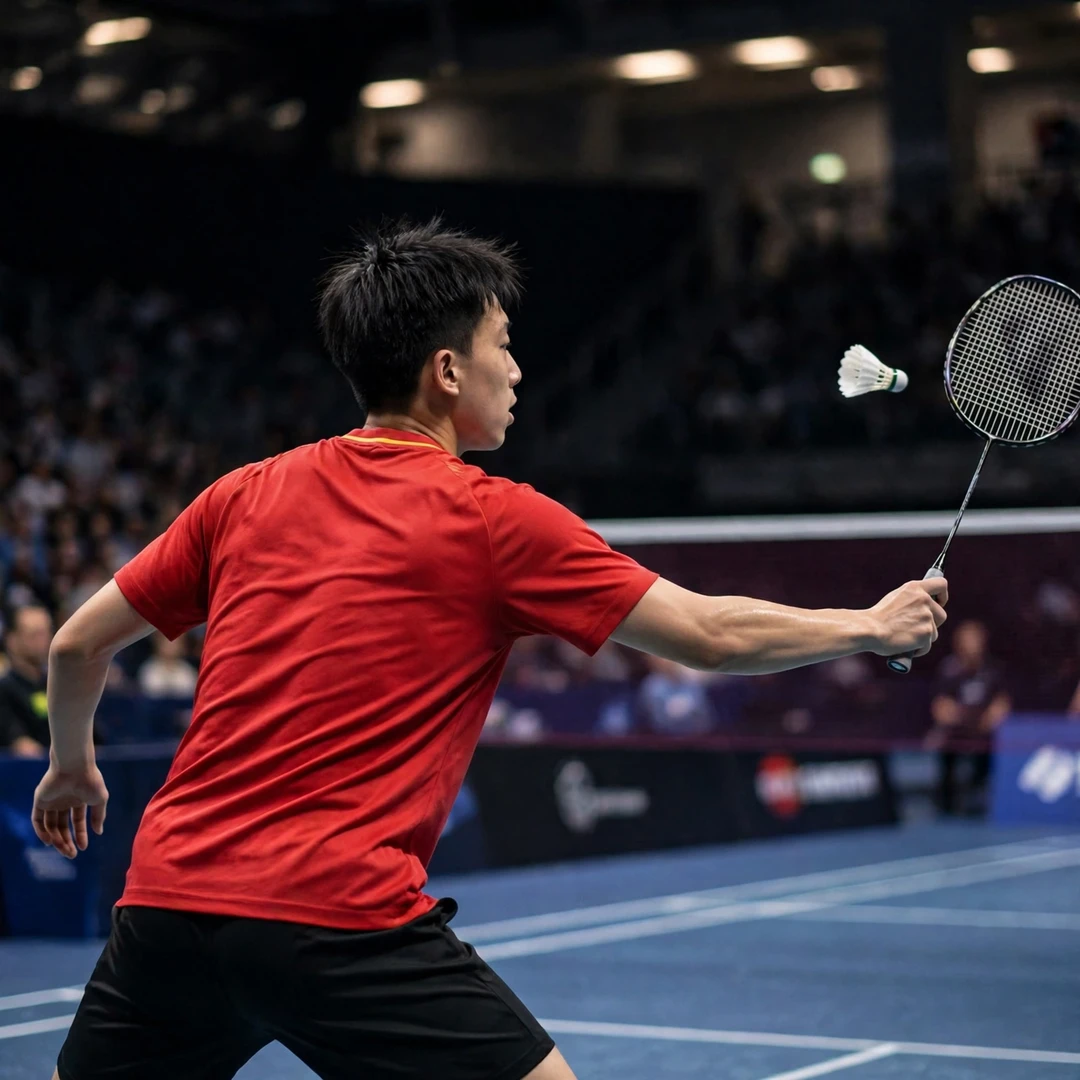
Sun Chao plays a patient, right-handed controlling game, and Chinese analysts begin with his physical reach: a tall frame gives him an unusually large coverage area at the net, so opponents’ favourite cross-court angles land inside his patrol zone. From the serve and return he looks to seize the initiative early — pushing and driving flat and fast to the back line before the rally settles — then he changes the pace constantly: patient clears and drops that move the opponent, sudden flat drives, and a net kill the moment a return drops short. He does not beat players with one huge smash. He beats them by making the court feel small and the rally feel long.
His weapons sit on top of dependable footwork and defence. He rarely looks rushed, his defensive shots turn defence back into neutral rallies instead of desperate lifts, and when the opening finally comes his attack is accurate rather than spectacular — placement first, power second. Watch the end of the 2026 Baoji final for the pattern in miniature: level at 13-all with Riki Takei, Sun Chao raised the tempo, pinned the back line with flat drives and finished at the net, eight points in a row, match over. Coaches also value his honesty file: the analysts’ noted weaknesses — a slower adjustment when serve-and-return rhythms change, narrower choices on key points, stamina dips in heavy schedules — are all trainable, and naming them is what turns a fan page into a coaching document.
Young players studying Sun Chao should watch how completely he owns the level he is playing at before chasing the next one. His clears and drives keep opponents pinned, his net shots stay tight, and his defence refuses to donate free points. Just as instructive is his serve-and-return game: he treats the first two shots of every rally as an attacking phase, not a formality. It is a style any junior can begin copying today, because its foundations are footwork patterns, shot quality and patience — not rare physical gifts.
Mental Strength
Patience, Belief and the Long Way Up
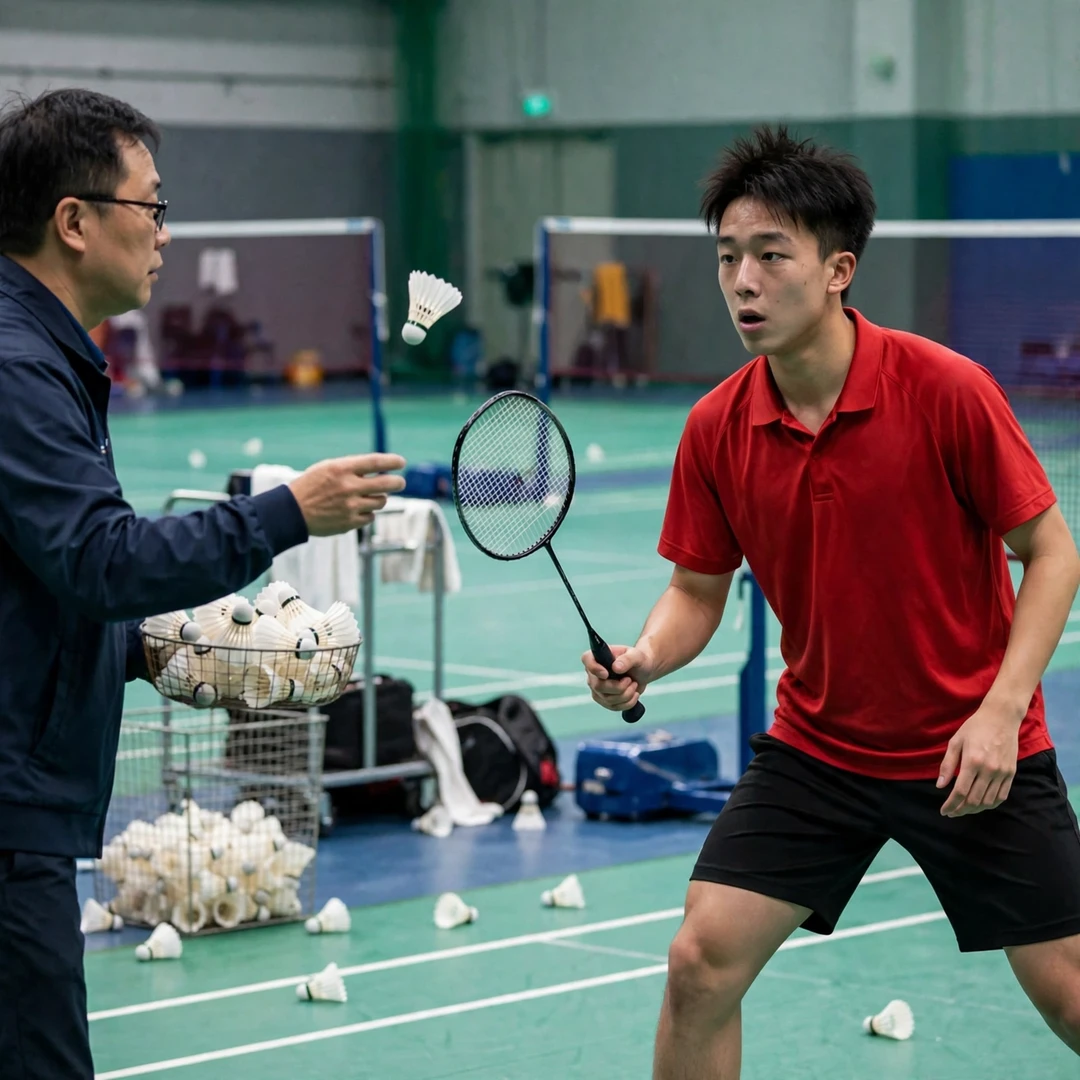
Sun Chao demonstrates what belief looks like when the system itself seems to close the door. Sent back from the national reserve squad to his provincial team at 19 because of a corrected birth year on a form filled in when he was 12, many players would have drifted out of the sport. He stayed in the provincial gym in Zhejiang, kept his fitness and his skills sharp through two invisible years, and when the chances finally came in 2025 he was ready: a national title, two Super 100 crowns and an unbeaten international season. Resilience, in his case, is not a slogan. It is a training attendance record.
His response to defeat is becoming a trademark too. His only loss in five Super 100 events at home was the very first final he played, in 2023. When the losses finally came abroad in the autumn of 2026 — to Wang Po-Wei, Tan Jia Jie and Shogo Ogawa in the space of six weeks — he simply kept entering, kept collecting points and still finished the stretch at a career-high ranking. For young players the pattern matters more than any single result: a loss, studied honestly, is information, and the next tournament is the place to use it.
Practical lessons from his journey include mastering the tournaments you can actually enter instead of waiting for bigger invitations, building a game that does not leak errors before chasing spectacular winners, treating the serve and return as scoring shots, and — his own story’s hardest lesson — controlling the things you can control when officials and paperwork decide the things you cannot. None of these lessons requires fame or money; they require patience, honesty and a training plan.

Learning Reference
ST Badminton Academy Connection
ST Badminton Academy has no official partnership or endorsement from Sun Chao. He is not connected with our academy, and this profile is published purely as an educational case study for parents and junior players who want to understand how a player can dominate his level of the tour, survive a bureaucratic setback, and climb into the world’s top 100 with only six counting tournaments.
Many of our students from Malaysia and visiting learners from Singapore study his matches to understand the power of owning your level: how back-to-back title defences at Ruichang and Baoji are built on tempo control, how a 22-match winning streak is assembled one unglamorous week at a time, and how a two-point game against Shi Yu Qi at the National Games can announce a player before his ranking does.
We encourage our students to observe his rally construction, his serve-and-return pressure and his net coverage — and to notice that his titles were won in Super 100 halls in Ruichang and Baoji, not under the brightest television lights. Champions are not only made in national teams; sometimes they are built in provincial gyms, one defended title at a time.
FAQs: Sun Chao Chinese Badminton Player
Here are answers to common questions about Sun Chao’s career, achievements and what young players in Malaysia can learn from the Chinese Super 100 champion’s long road up.
Who is Sun Chao and which country does he represent in badminton?
Sun Chao is a Chinese professional badminton player competing in men’s singles. Born on 19 August 2003, he developed through the Zhejiang provincial team, won China’s National Championships singles title in 2025, and has won four BWF World Tour Super 100 titles. In the Week 43 rankings of 20 October 2026 he stands at a career-high world No. 92 with 21,050 points.
What are Sun Chao’s biggest badminton achievements?
Sun Chao’s major achievements are his four BWF World Tour Super 100 titles — the Ruichang China Masters in 2025 and 2026 and the Baoji China Masters in 2025 and 2026 — the China National Championships men’s singles title in 2025, a 22-match international winning streak, a runner-up finish at the Indonesia Masters II Super 100 in 2026, and reaching the men’s team final at China’s National Games with Zhejiang, where he pushed Shi Yu Qi to a two-point finish.
What is Sun Chao’s playing style?
Sun Chao plays a patient, right-handed controlling game based on changing the pace, attacking the serve and return with flat pushes and drives to the back line, and covering a large area at the net thanks to his reach. He extends rallies, moves opponents with accurate clears and drops, and finishes at the net when returns drop short — placement and tempo first, raw power second.
How did Sun Chao perform at China’s National Games?
At China’s 15th National Games in November 2025, Sun Chao played for Zhejiang in the men’s team final against Jiangsu, and his singles match against world No. 1 Shi Yu Qi was decided by only two points. Zhejiang’s run to the final was a historic breakthrough for the province’s men’s team, and his performance against the national team’s top player was widely reported in Chinese media as proof of his level.
How can my child learn from Sun Chao’s training approach?
Young players can study Sun Chao’s approach by copying the habits behind his streak: train serve-and-return as an attacking phase, drill net coverage and flat-drive exchanges, and build the rally tolerance to change pace without donating errors. At ST Badminton Academy we use his 2026 Baoji final — especially the 8–0 run from 13-all in the second game — as a video lesson in tempo changes, then train the same patterns in multi-shuttle and rally-building drills.
Did Sun Chao win any junior titles?
No. Sun Chao won no international junior titles — and the reason is a famous twist in his story. Registered in 2015 with a birth year of 2005, he was in China’s national reserve squad when a 2023 age re-verification corrected his birth year to 2003 and returned him to the Zhejiang provincial team. His first titles were senior titles: the China National Championships and the Ruichang China Masters, both in 2025.
What are Sun Chao’s best World Tour results?
Sun Chao’s best World Tour results are his four Super 100 titles at the Ruichang and Baoji China Masters (2025 and 2026 editions of each), a Super 100 final at the Indonesia Masters II in Pontianak in 2026, a main-draw appearance at the Korea Masters Super 300 in 2026, and a round-of-16 finish at the Malaysia Super 100 in 2026, where he beat Choi Ji Hoon and Saneeth Dayanand.
What playing style should young players learn from Sun Chao?
Young players should study Sun Chao’s complete game rather than one spectacular shot: the footwork that keeps him balanced, the defence that refuses to leak errors, the tight net play, the serve-and-return pressure, and above all the patience to master the level in front of him. His game is built from trainable skills, which is why coaches love teaching from it.
Does ST Badminton Academy have any connection with Sun Chao?
No, Sun Chao is not a student, coach or ambassador of ST Badminton Academy. He represents China and developed through the Zhejiang provincial team. However, coaches at our academy in Kuala Lumpur regularly use his matches as teaching material, because his story — a paperwork setback, two quiet years, then four World Tour titles and a 22-match winning streak — shows what structured coaching, patience and persistence can achieve.
Sun Chao Career Highlights
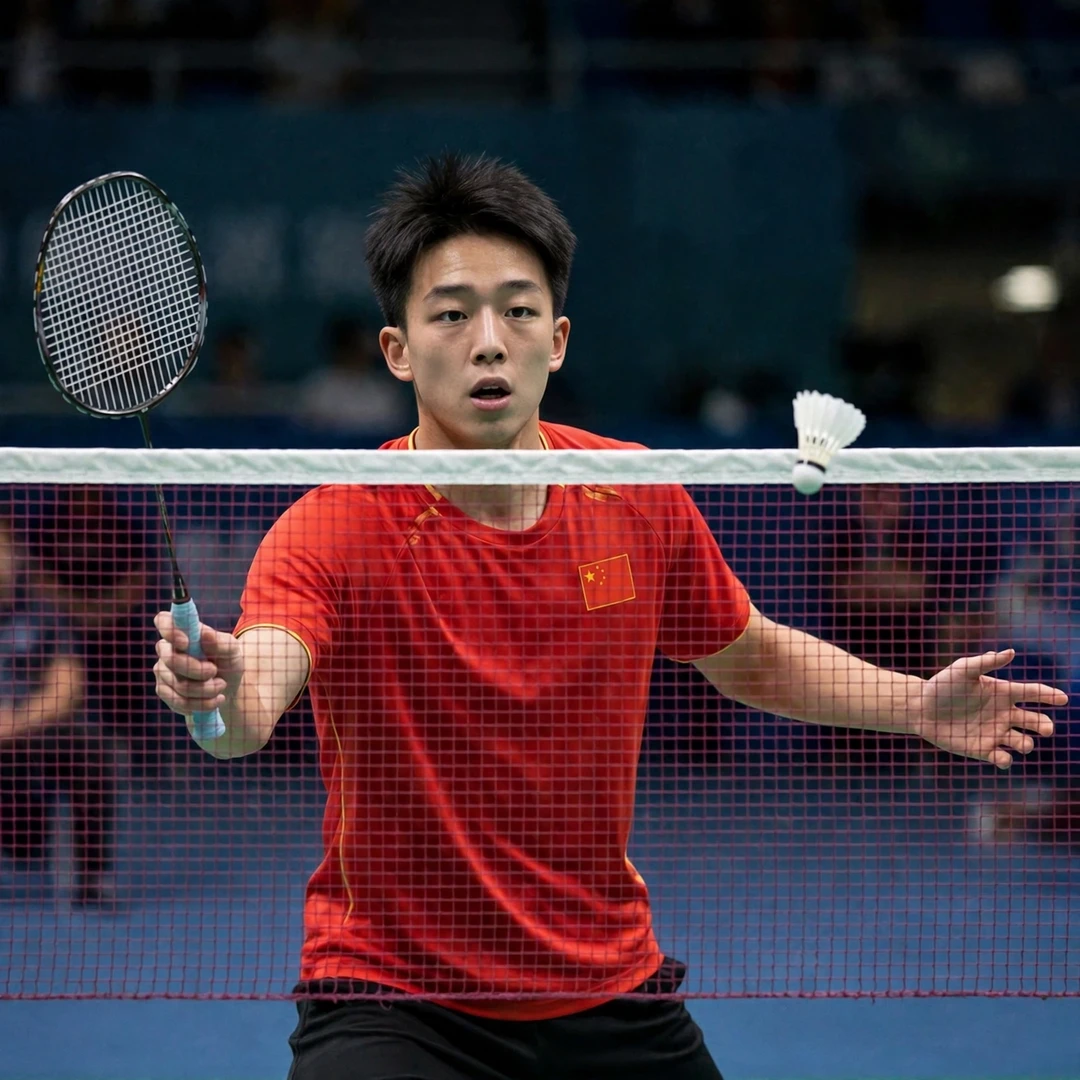


Career Statistics and Rankings
Sun Chao, born 19 August 2003, has taken one of the strangest roads into the world's top 100: a first World Tour final at 19, a bureaucratic exile to his provincial team, a national title and an unbeaten international season in 2025, four Super 100 crowns defended across two home tournaments, a 22-match winning streak, and a career-high of world No. 92 at 23 — with almost all of his ranking journey still ahead of him.
| Development Area | Common Misconception | What Sun Chao's Career Shows REALITY |
|---|---|---|
| Junior Foundation | Talent alone decides who becomes a champion. | Sun Chao has no junior international titles and spent two years outside the world's top 250 — he started winning on the senior Super 100 circuit at 21 and let results, not reputation, open the doors. |
| Playing Style Priority | Kids should copy the flashiest attacking shots. | Sun Chao built a complete rallying game first; his net kills and flat drives are the finishing touch on reliable footwork, a big net-coverage range and patient defence. |
| Fitness Importance | Juniors can out-train everyone without rest. | Sun Chao's 22-match winning streak was assembled in the tour's smallest halls — managing travel, recovery and fatigue across back-to-back Super 100 weeks is what kept it alive. |
| Mental Approach | Top players never get nervous or upset. | Sun Chao was sent back from China's national reserve squad to his provincial team by a registration correction in 2023, yet kept training and won a national title two years later — mental skills are trained, not inherited. |
| Attacking Training | Smashing harder is always the answer. | His Baoji China Masters title defence in 2026, won 21-12, 21-13 over Japan's Riki Takei after an 8-0 run from 13-all in game two, came from tempo changes and placement, not raw power. |
| National Milestones | Only world titles matter. | Sun Chao's four Super 100 titles at Ruichang and Baoji and his China National Championships singles title made him the standout of China's 2003-born men's singles group — milestones build a career step by step. |
| Career Timeline | Champions peak once and fade fast. | From world No. 271 in March 2023 to a career-high No. 92 in October 2026 with four World Tour titles, Sun Chao proves sustained development beats a short peak. |
Study Sun Chao's Work Ethic and Professional Approach
This profile explains who Sun Chao is, his major achievements, and what developing players can learn from his journey. Whether you are a parent in Kuala Lumpur, Cheras or anywhere in Malaysia wondering how a player breaks through when the pathway seems closed, Sun Chao's story carries the answer: master your level, stay ready, and let results argue for you — book a trial class with ST Badminton Academy on WhatsApp at +60 17-684 2136 and let your child begin a development journey built to last.