Indian Men’s Singles Badminton Star
Lakshay Sharma

India
Player Event: Men’s singles
Date of Birth: 21 September 2005, Ludhiana, Punjab, India
Playing Style: Right-handed all-rounder with patient rally construction, tight net play and a calm head in deciding games
Known For: Captaining India at the 2023 Asian Junior Championships, reaching a career-high world No. 107 in 2026, and the 2025 Hyderabad senior final run that beat the top seed
Journey: Ludhiana courts with his father-coach · Hungary junior champion 2021 · India junior captain 2023 · Kazakhstan senior finalist 2023 · Hyderabad senior silver 2025 · Uganda semi-finalist 2026
Understanding Lakshay Sharma (Indian Badminton Prospect)
Lakshay Sharma is an Indian men’s singles badminton player who stands at world No. 141 in the BWF rankings (Week 43, 20 October 2026) with 14,060 points. His numbers only tell half the story, though, because almost everything about his career breaks the usual rules of Indian badminton. He has never trained at a famous academy. He has no sponsor and funds his own travel to tournaments on three continents. And the only coach he has ever had — from his first rally at the age of six to the world top 110 — is his father. This is the story of how a boy from Ludhiana, Punjab, built an international career out of family belief, patience and sheer stubbornness.
Early Life in Ludhiana and Junior Career
Lakshay Sharma was born on 21 September 2005 in Ludhiana, the largest city in the Indian state of Punjab — a place far better known for industry, hosiery and hockey than for badminton. India produces most of its singles stars in Hyderabad and Bengaluru, where the big academies are, so a talented child in Ludhiana starts with fewer courts, fewer sparring partners and fewer spotlights. What Lakshay had instead was a father who knew the game deeply: Mangat Rai Sharma, an NIS-certified national-level coach who recognised his son’s talent early and decided to build the player himself, one session at a time.
Coached Only by His Father
Lakshay started playing badminton at six years old, and the talent showed almost immediately — he won an Under-10 state title at seven and an Under-17 state ranking title at twelve, against boys nearly five years older. Remarkably, through state titles, junior internationals and now the senior world circuit, he has trained solely under his father. There has been no academy transfer, no celebrity coach, no foreign training stint. The Sharmas’ philosophy was simple: master the fundamentals, play as many tournaments as possible, and let results — not reputation — open the doors.
Junior Titles Abroad and the Asia Captaincy
His junior career was built the same independent way. Playing for India on the junior circuit, Lakshay won the gold medal at the Under-19 Junior International Series in Hungary in 2021, and collected junior results across Europe and Asia, including the Dutch Junior International in 2023. That same year came the honour that confirmed his standing among India’s best juniors: he was picked as India’s No. 1 boys’ singles player from the national trials and captained the Indian team at the Badminton Asia Junior Championships in Yogyakarta, Indonesia. He also took bronze at the All India Junior Ranking Championship in Bengaluru in 2022 and won Khelo India Games gold representing Chandigarh University.
Hungary Junior International Champion
The Hungary title of 2021 deserves a closer look, because it announced the pattern of his whole career. Travelling to a small European junior event without the machinery of a big federation programme behind him, the teenager from Ludhiana simply outplayed the field and came home with gold. It was proof — to selectors, but most of all to himself and his father — that the home-built training model could produce an international champion. Every later breakthrough, from the Asia captaincy to the senior finals in Kazakhstan and Hyderabad, traces back to the confidence built in weeks like that one.

Career Milestone #1
Senior Breakthrough: The Hyderabad Run of 2025
His step up to senior international badminton brought a landmark result almost immediately. In December 2023, at the Kazakhstan International Series in Shymkent, the 18-year-old fought all the way into his first senior international final and took the silver medal — a run that pushed his world ranking up from around No. 316 to No. 250 in a single week. For a self-funded player, results like that are oxygen: every round won earns the ranking points and prize money that pay for the next trip, and Shymkent showed that Lakshay’s patient, rallying game already worked against senior professionals.
The results kept coming on the sport’s hardest-working circuit. In September 2024 he reached the semi-finals of the Polish International in Lublin, losing to Sweden’s Gustav Bjorkler, and through 2025 he became a regular in the late rounds of International Challenge and Future Series events across Europe, Asia and Africa — semi-finals at the Cameroon International and the Czech International Future Series in 2025 among them. None of these tournaments makes television; all of them are where world rankings are honestly earned, three and four matches at a time, in small halls far from home.
Career Milestone #2
First Senior Finals: Silver in Kazakhstan, Bronze in Poland
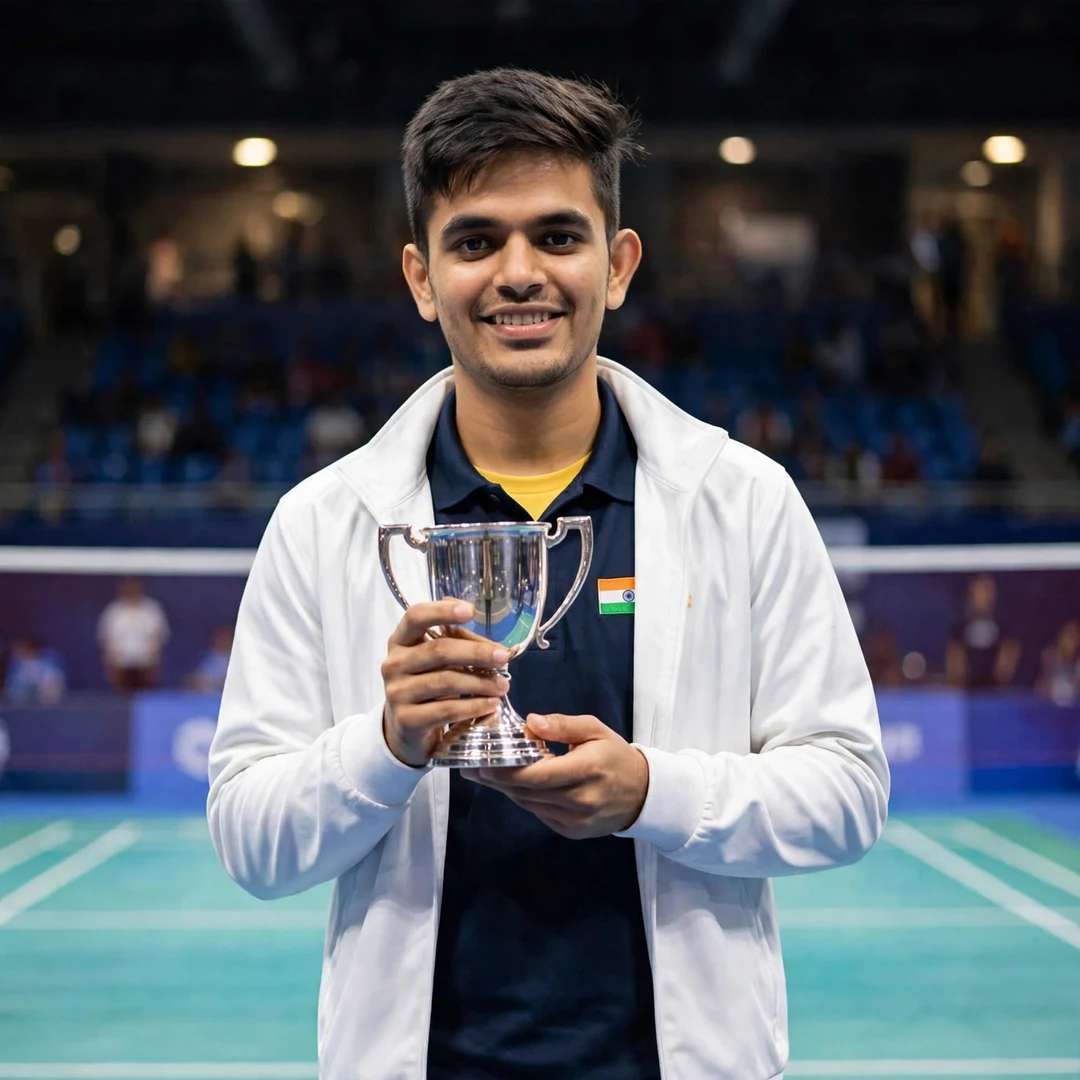
In India itself, his defining week came in May 2025 at the All-India Senior Ranking Tournament in Hyderabad, one of the toughest domestic events in world badminton — a men’s singles draw of 768 players. Lakshay, unseeded, cut through it round by round. In the quarter-finals he beat the third seed, Sanskar Saraswat, 21-18, 21-15. In the semi-finals he faced the top seed, Saneeth Dayanand, and beat him too, 21-19, 21-14. Two seeds, two straight-games wins, and a place in the final — against the form book, but exactly in line with the quiet belief inside the Sharma household.
The final, against Ginpaul Sonna, became one of the matches of the Indian season. Lakshay lost the first game 19-21, levelled the match 21-17, and in the decider fought all the way to 20-20 before Ginpaul edged the last two points, 20-22. Silver, not gold — but consider what the week proved. In a 768-player draw, against India’s deepest domestic field, the self-funded 19-year-old from Ludhiana was two points away from the title. Matches like that change how a player is seen: he arrived in Hyderabad as a prospect and left as a name every Indian coach knew.
What Hyderabad really showed was the completeness of his foundations. Beating a third seed one day and a top seed the next, then going 20-20 in a third-game final, cannot be done with one big weapon — it needs defence that does not leak, fitness that survives a week of matches, and a mind that treats 20-20 as just the next two rallies. Coaches who watched that tournament noted the same things his junior opponents learned years earlier: Lakshay Sharma is very, very hard to beat, because he almost never beats himself.

Career Milestone #3
The Senior Circuit Grind and Two Semi-Finals in 2025
Through 2025 he carried that form around the world. The Cameroon International and the Czech International Future Series both ended in semi-finals; there were quarter-finals in Astana and Turkiye, and main-draw appearances at bigger events, including the Syed Modi India International, a Super 300 in Lucknow — fittingly, the city where he had played his first world-level main draw years earlier as a teenager ranked around No. 700. Each trip added points, experience and scar tissue, the three currencies a young professional needs most.
Then came the best result of his career so far. At the Uganda International Challenge in Kampala in February 2026, Lakshay reached the semi-finals — his strongest finish at International Challenge level — beating three opponents before his run ended in the last four. Weeks later the rankings confirmed the leap: he climbed to a career-high world No. 107 in 2026, with 17,720 ranking points. For a player with no sponsor and no academy behind him, breaking into the world’s top 110 is an achievement that stands comparison with any in Indian badminton.
The 2026 season since then has been the honest grind of the professional circuit: a quarter-final at the Cameroon International, round-of-16 finishes in Lagos and at the Valence Alpes International in France, and early exits in Azerbaijan, Malaysia and Vietnam as he tests himself at higher-level events. His ranking has settled at No. 141 in the Week 43 list, with 14,060 points, as older results rotate out of the 52-week window — the normal arithmetic of a player moving up a level and learning to win there. Alongside the tour, he also finished second at the All India Inter University Tournament 2025-26, representing Chandigarh University, where he studies for a BA.
Career Milestone #4
Uganda Semi-Final and Career-High World No. 107
Lakshay’s story carries a financial subplot that young players and parents should understand. For years the family funded everything themselves — rackets, travel, entry fees, hotels — with no sponsor. Support finally arrived through the Airports Authority of India Sports Contract Scheme, worth Rs 30,000 a month for ten months, welcome recognition after he had already reached India’s top four in the national senior rankings. His stated ambition, repeated in interview after interview, is the biggest one available: an Olympic medal for India.
Managing a season like his is a discipline in itself. A self-funded player cannot enter everything; every tournament must be chosen for its points value, its cost and its place in the training cycle, and the travel — Africa one month, Europe the next, Asia after that — must be survived without breaking the body or the budget. Lakshay and his father plan the calendar together, coach and manager in one, which is another reason his development has stayed so steady: there is no gap between the person who sets the goals and the person who does the training.
Playing Style
The Patient All-Round Style
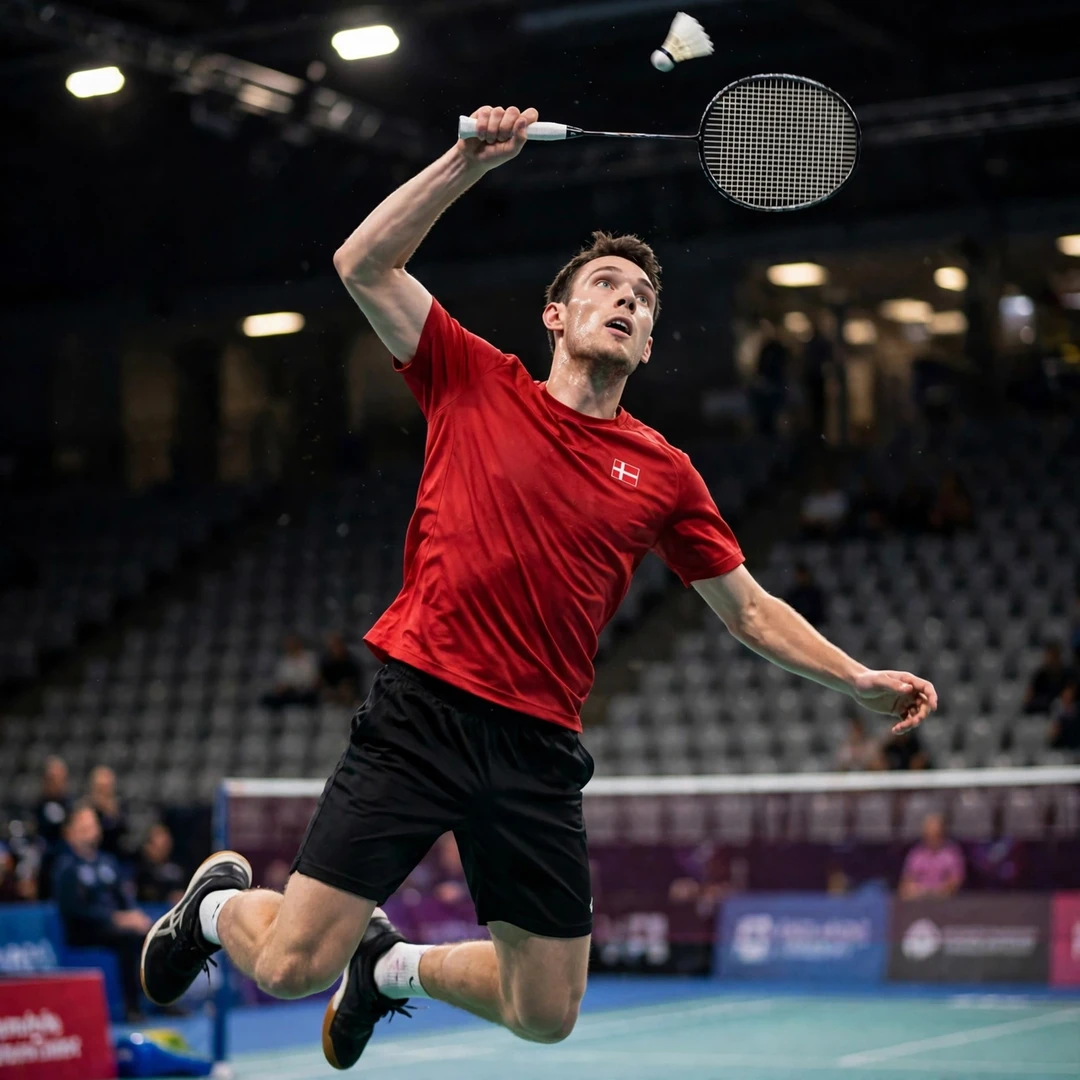
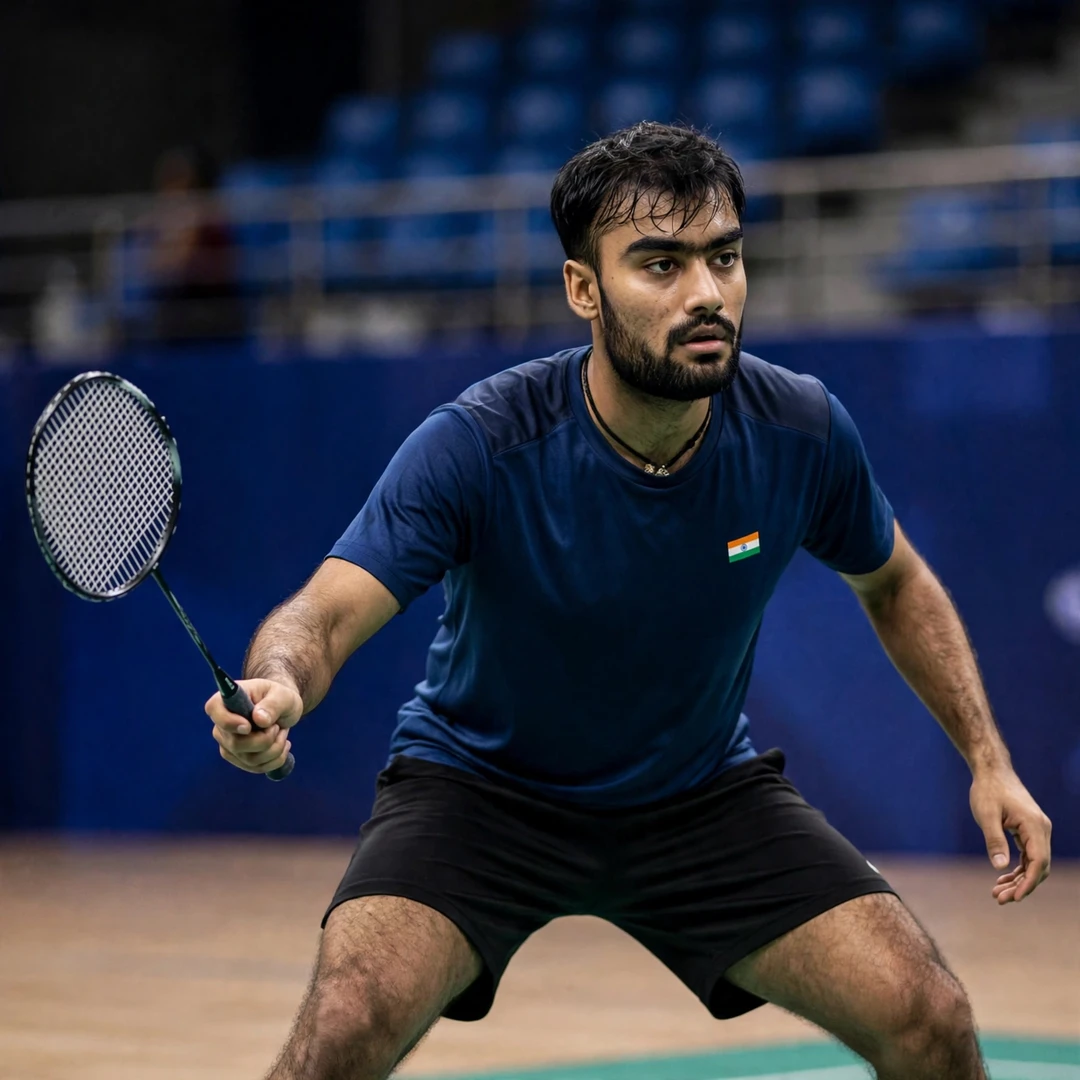
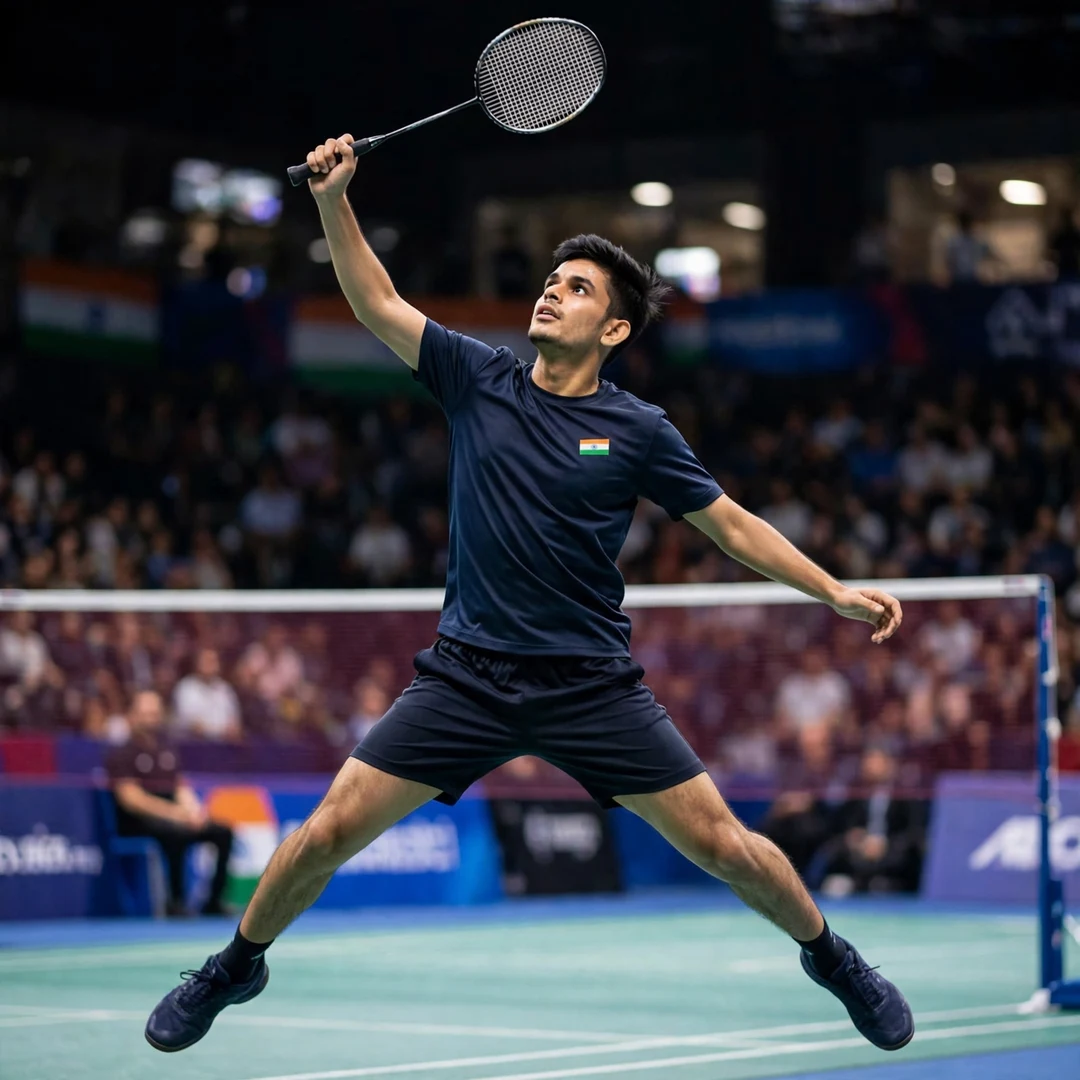
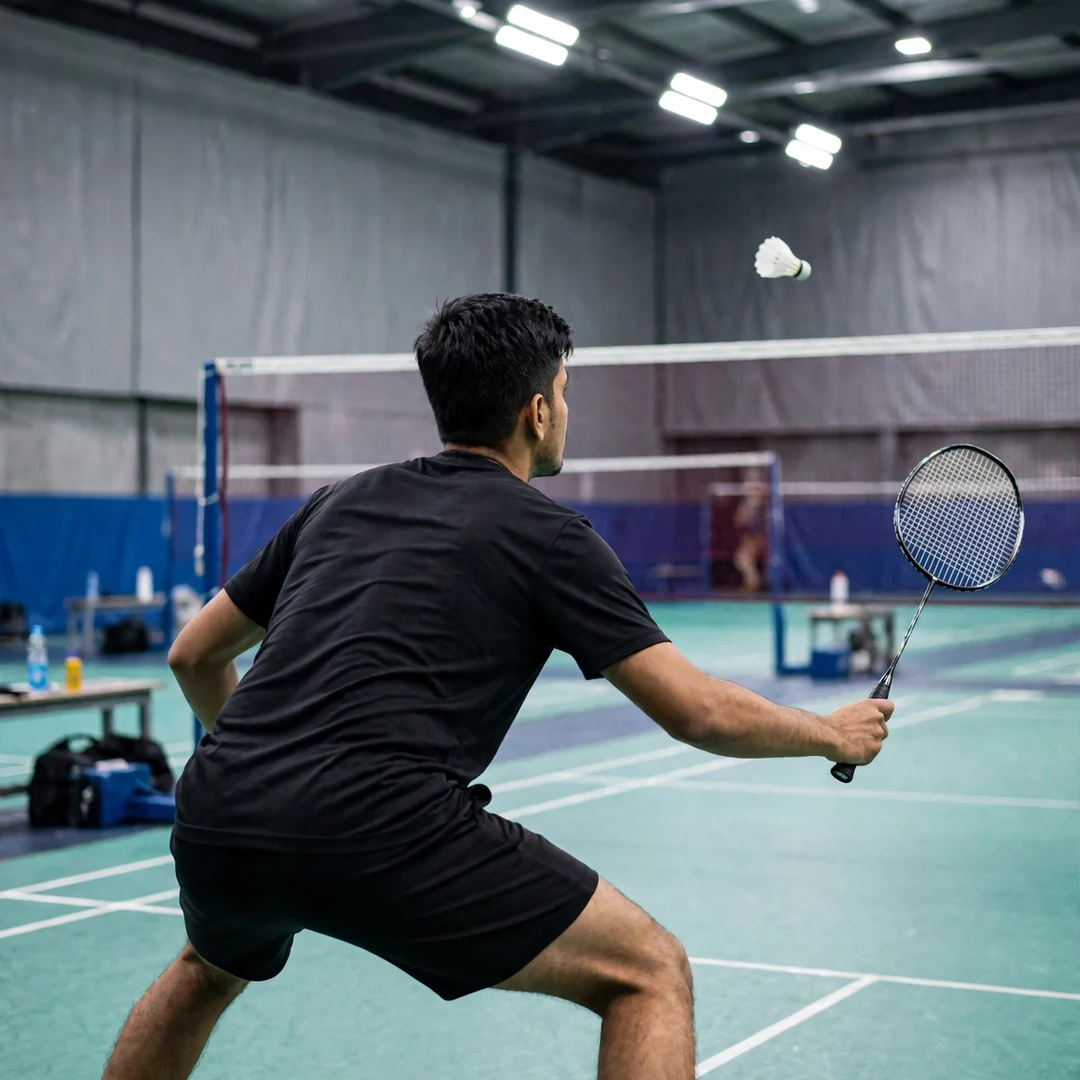
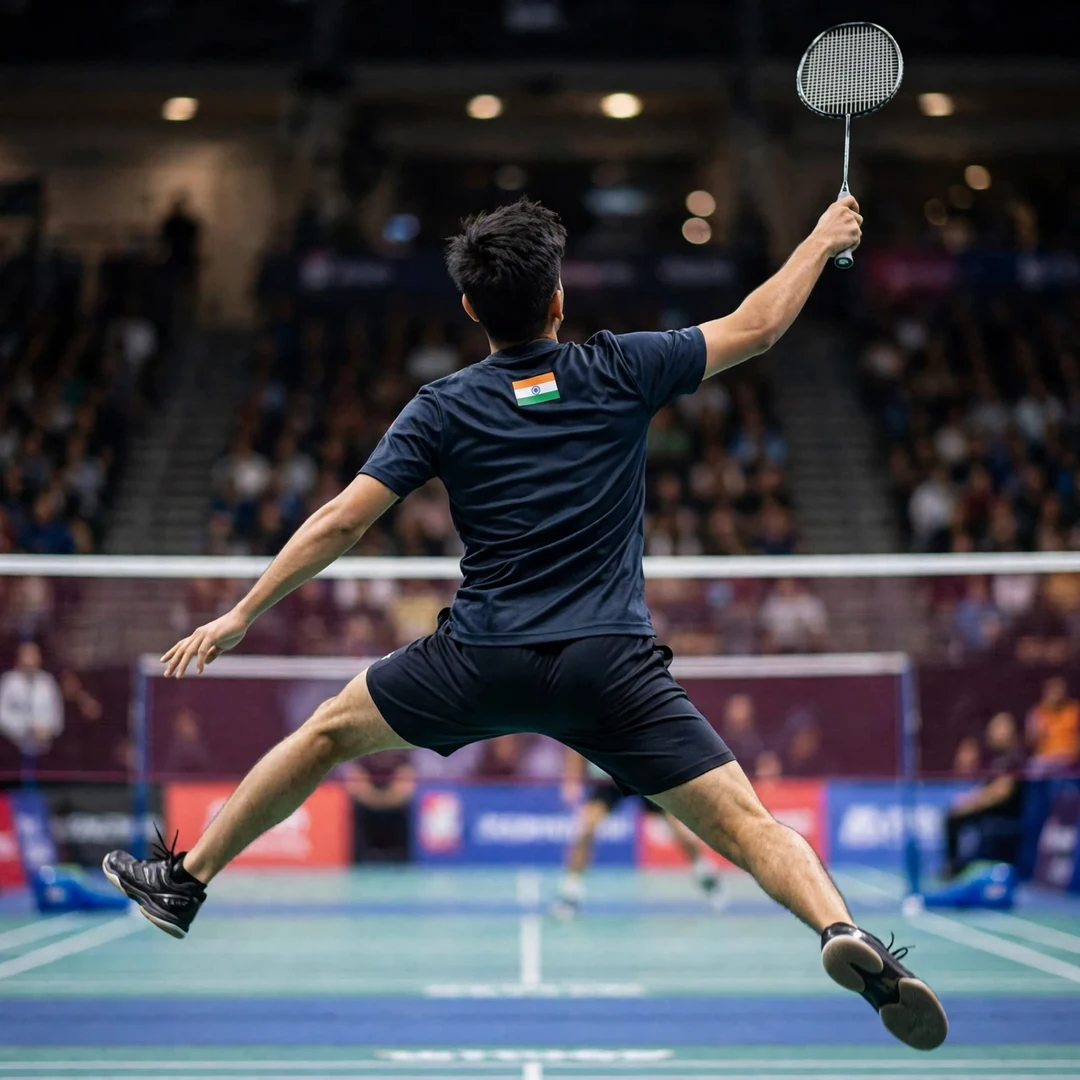
On court, Lakshay Sharma plays a patient, all-round style that reflects how he was built. Right-handed, he constructs rallies rather than gambling on them: solid, low defence that turns smashes back into neutral rallies, accurate clears and drops that keep opponents moving, and tight net play that earns him short lifts to attack. He is not a one-shot power player; his winners usually arrive at the end of long, careful constructions, when the opponent’s position finally breaks. It is a style that travels well — it works in small halls and big arenas, against attackers and retrievers alike.
His superpower is composure in the points that decide matches. The Hyderabad final is the perfect example: one game down, then 20-20 in the third, and his level did not dip — he played the same patient game at 20-20 as at 2-2 and lost only on the final exchange. That steadiness comes from thousands of training rallies with his father, where the score is always kept and the next rally is always the important one. Young players should notice: Lakshay rarely loses a match in a rush of errors. Opponents have to actually beat him.
Young players studying Lakshay should watch how he uses the full height and length of the court: deep clears that pin opponents to the back line, drops that pull them forward, and cross-court net shots that open the angles — a pattern that repeats until the court is stretched too wide to defend. His footwork is economical rather than flashy, always returning to a balanced base, which is why he can sustain his rallying game deep into third games and deep into long tournament weeks.

Mental Strength
Discipline, Belief and the Self-Funded Mindset
Lakshay demonstrates what belief looks like without connections. Most of the players ranked around him came through famous academies with sponsors, physios and sparring teams; he came through a family project in Ludhiana, coached by his father, paying his own way from event to event. His career is standing proof that the pathway matters less than the daily standard: the training was serious, the tournament volume was high, and the patience was total.
His response to near-misses is already a trademark. He lost the Hyderabad final by two points and responded with the best season of his life, climbing to world No. 107. He lost a Polish semi-final in 2024 and built a year of late-round finishes on top of it. For young players, the lesson is the pattern, not any single result: a defeat, studied honestly with your coach, is information — and nobody in Indian badminton has turned information into progress more steadily than this father-and-son team.
Practical lessons from his journey include starting with the tournaments you can reach rather than waiting for perfect backing, building a game that does not leak errors before chasing spectacular winners, choosing events for points value and not prestige when money is tight, and keeping one trusted coaching voice and listening to it for years, not weeks. None of these lessons requires fame, wealth or a famous academy. They require patience, honesty and a plan — which is exactly why his story belongs in every junior dressing room.

Learning Reference
ST Badminton Academy Connection
ST Badminton Academy has no official partnership or endorsement from Lakshay Sharma. He is not connected with our academy, and this profile is published purely as an educational case study for parents and junior players who want to understand how far a player can go on family coaching, self-belief and a game built on patience and consistency.
Many of our students from Malaysia and visiting learners from Singapore study his matches to understand the value of completeness: how a player with no single spectacular weapon reached a senior final in Kazakhstan at 18, beat the top seed at India’s senior ranking tournament, and climbed to world No. 107 without a sponsor. His 2025 Hyderabad run — quarter-final, semi-final and a 20-22 deciding game in the final — is required viewing in our discussions of composure under pressure.
We encourage our students to observe his rally construction, his error-free defence and his calm at 20-20 in deciding games — and to notice that his career was built on small courts in Ludhiana and hard weeks in Shymkent, Lublin and Kampala, not under television lights. Champions are not only made in academies. Sometimes they are made at home, by a father who believes, one rally at a time.
FAQs: Lakshay Sharma Indian Badminton Player
Here are answers to common questions about Lakshay Sharma’s career, achievements and what young players in Malaysia can learn from the Indian player’s remarkable self-built rise.
Who is Lakshay Sharma and which country does he represent in badminton?
Lakshay Sharma is an Indian professional badminton player competing in men’s singles. Born on 21 September 2005 in Ludhiana, Punjab, he has been coached throughout his career by his father, Mangat Rai Sharma, and has risen from junior titles in Hungary and the captaincy of India’s junior team to a career-high world ranking of No. 107 — all without a sponsor or a big academy behind him.
What are Lakshay Sharma’s biggest badminton achievements?
Lakshay Sharma’s major achievements are the silver medal at the All-India Senior Ranking Tournament in Hyderabad in 2025, where he beat the top seed and the third seed; his first senior international final, silver at the Kazakhstan International Series in Shymkent in 2023; a semi-final at the Uganda International Challenge in 2026, his best result at that level; the Under-19 gold medal at the Hungary Junior International Series in 2021; and captaining India at the 2023 Badminton Asia Junior Championships. He reached his career-high world ranking of No. 107 in 2026.
What is Lakshay Sharma’s playing style?
Lakshay plays a patient, right-handed all-round game built on rally construction, tight net play, accurate clears and stubborn, low defence. He does not gamble rallies away; he extends them, moves opponents around the full court, and attacks when the opening is genuinely there. His composure in deciding games — he went to 20-20 in the third game of the 2025 Hyderabad senior final — is the quality coaches praise most.
How has Lakshay Sharma performed on the senior international circuit?
On the senior circuit, Lakshay has reached an International Challenge semi-final in Uganda in 2026, senior semi-finals in Cameroon and the Czech Republic in 2025, and his first senior international final in Kazakhstan in 2023, where he won silver. In India, his silver medal at the 2025 Hyderabad senior ranking tournament — from a 768-player draw — is one of the outstanding domestic results by a teenager in recent seasons, and he has also played main draws at Super 300 level at the Syed Modi India International.
How can my child learn from Lakshay Sharma’s training approach?
Young players can study Lakshay’s approach by copying the habits behind his rise: build an error-free base game before chasing winners, treat every small tournament as a serious step on the ladder, and learn to play the next rally instead of replaying the last one. At ST Badminton Academy we use his Hyderabad final as a video lesson in composure and rally construction, then train the same patterns in multi-shuttle and rally-building drills — and we point parents to his story whenever they ask whether a child must join a famous academy to have a chance.
Did Lakshay Sharma win any junior titles?
Yes. Lakshay won the Under-19 boys’ singles gold medal at the Junior International Series in Hungary in 2021, took bronze at the All India Junior Ranking Championship in Bengaluru in 2022, and won gold at the Khelo India Games for Chandigarh University. His junior career peaked with the honour of captaining India at the Badminton Asia Junior Championships in Yogyakarta in 2023, where he was selected as India’s No. 1 boys’ singles player.
What are Lakshay Sharma’s best senior international results?
Lakshay’s best senior international results are his silver medal at the Kazakhstan International Series in Shymkent in 2023, his semi-final at the Uganda International Challenge in 2026, his bronze medal at the Polish International in 2024, and semi-finals at the Cameroon International and the Czech International Future Series in 2025. Domestically, his finest result is the silver medal at the 2025 All-India Senior Ranking Tournament in Hyderabad, where he defeated the first and third seeds.
What playing style should young players learn from Lakshay Sharma?
Young players should study Lakshay’s complete game rather than one spectacular shot: the patient rally construction that wears opponents down, the tight net play, the defence that refuses to leak errors, and above all the mindset that treats every tournament — however small, however far from home — as worth winning. His game is built from trainable skills and daily habits, which is why coaches love teaching from it.
Does ST Badminton Academy have any connection with Lakshay Sharma?
No, Lakshay Sharma is not a student, coach or ambassador of ST Badminton Academy. He represents India and was developed in Ludhiana by his father. However, coaches at our academy in Kuala Lumpur regularly use his matches as teaching material, because his rise from a home-coached childhood to the world’s top 110 shows what structured family coaching, patience and competitive volume can achieve.
Lakshay Sharma Career Highlights



Career Statistics and Rankings
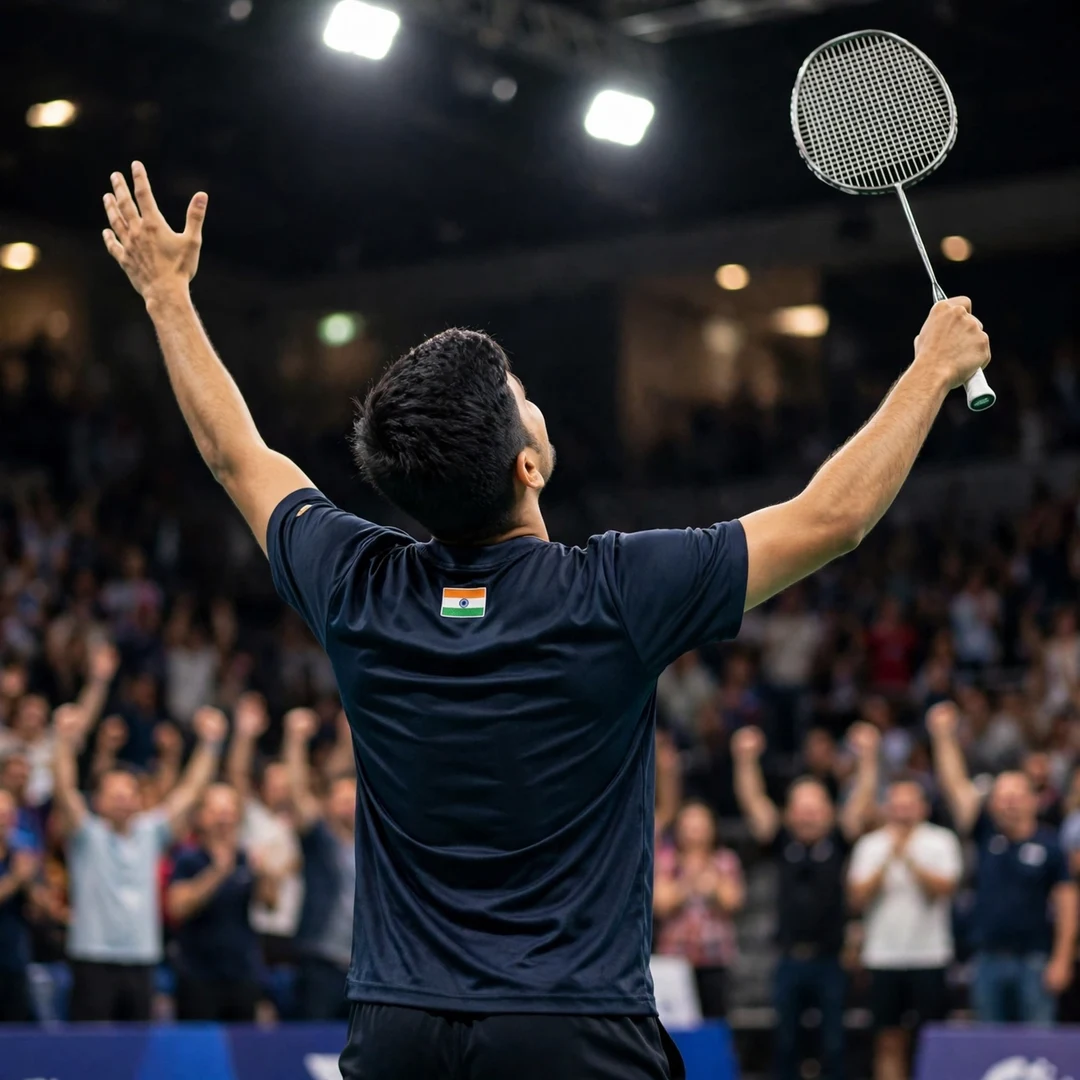
Lakshay Sharma, born 21 September 2005 in Ludhiana, India, has built one of the most unusual careers in modern badminton: a junior champion in Hungary at 15, captain of India at 17, a senior international finalist at 18, the giant-killer of Hyderabad at 19, and a career-high world No. 107 at 20 — coached at every step by his father, and funded for most of the journey by his own family.
| Development Area | Common Misconception | What Lakshay Sharma's Career Shows REALITY |
|---|---|---|
| Junior Foundation | Talent alone decides who becomes a champion. | Sharma started at age 6 in Ludhiana and won a state Under-10 title at seven — a family-built base came first, coached from day one by his father. |
| Playing Style Priority | Kids should copy the flashiest attacking shots. | Sharma built a complete game first; his attacking shots are the finishing touch on patient rallying, reliable footwork, defence and net play. |
| Fitness Importance | Juniors can out-train everyone without rest. | Sharma funds his own travel to tournaments on three continents without a sponsor — his progress has come from smart scheduling and family sacrifice, not more hours. |
| Mental Approach | Top players never get nervous or upset. | Sharma lost the 2025 Hyderabad senior final 20-22 in the deciding game, yet keeps returning to semi-finals — mental skills are trained, not inherited. |
| Attacking Training | Smashing harder is always the answer. | His 2025 Hyderabad wins over top seed Saneeth Dayanand (21-19, 21-14) and third seed Sanskar Saraswat came from controlled rally placement, not raw power. |
| National Milestones | Only world titles matter. | Sharma's Hungary junior title, his India junior captaincy and his senior silver in Kazakhstan made him a hometown hero in Ludhiana — milestones build a career step by step. |
| Career Timeline | Champions peak once and fade fast. | From India junior captain in 2023 to a career-high world No. 107 in 2026, Sharma proves sustained development beats a short peak. |
Study Lakshay Sharma's Work Ethic and Professional Approach
This profile explains who Lakshay Sharma is, his major achievements, and what developing players can learn from his journey. Whether you are a parent in Kuala Lumpur, Cheras or anywhere in Malaysia wondering whether your child needs a famous academy — or simply a serious coach, a patient plan and enough tournaments — to reach a high level, Lakshay's story carries the answer: book a trial class with ST Badminton Academy on WhatsApp at +60 17-684 2136 and let your child begin a development journey built to last.