Patient Badminton Coaching: Clear Standards, Specific Feedback and Discipline
I am Eric Chuar, and I value teaching that combines clear expectations with patient explanation. Parents looking for the best badminton coach in KL or Malaysia may hear “strict” and “patient” as if they describe opposite approaches. For me, the useful question is what the child is expected to do, how the coach explains it and what happens when the attempt is difficult. Teaching this way takes attention and effort; my satisfaction comes from the learner understanding the next task, rather than from sounding impressive. This guide explains that teaching ethos at ST Badminton Academy in Setapak, Kuala Lumpur. Images are AI-generated illustrations, not photographs of our lessons or real students.

Clear expectations
Explain the standard before asking the child to meet it
A standard should describe something the learner can understand and attempt. “Pay attention” becomes more usable when the coach explains what attention means for the current activity: listen to the cue, wait for the agreed signal or observe one part of the demonstration. The wording depends on the task. Children should not have to discover an unstated rule by being corrected afterward. Parents can ask what the expectation was and how it was communicated, without turning that question into permission to disregard the lesson’s boundaries.
I want a learner to know why a task matters and what we are working on now. That requires preparation and a clear explanation, followed by checking how the child understood it. A demanding approach can still begin with a manageable foundation. It does not need to rush into advanced practice to look serious. When comparing a badminton academy, look for the link between the stated standard and the activity. A large vocabulary or a loud delivery does not demonstrate that this link is clear.

Specific feedback
Give a correction that directs the next attempt
Feedback should identify a usable change rather than express frustration alone. In a hypothetical practice task, “begin from the agreed position before the feed” gives the learner something to check. “You always do it wrong” offers a label but no next action. One correction is not automatically enough for every situation, yet piling up several instructions can make the immediate priority hard to find. Ask which cue matters now and how the child will try it. The feedback should belong to the task actually being practised.
For me, patience means doing the work of explaining again when the first explanation has not been understood. It can mean changing the viewpoint, showing a smaller part or using fewer words. I do not want repetition to become a contest over who can say the same sentence most firmly. The learner still has a responsibility to attempt the agreed task. The coach has a responsibility to make that task understandable and review the response. These responsibilities support each other rather than cancel each other out.
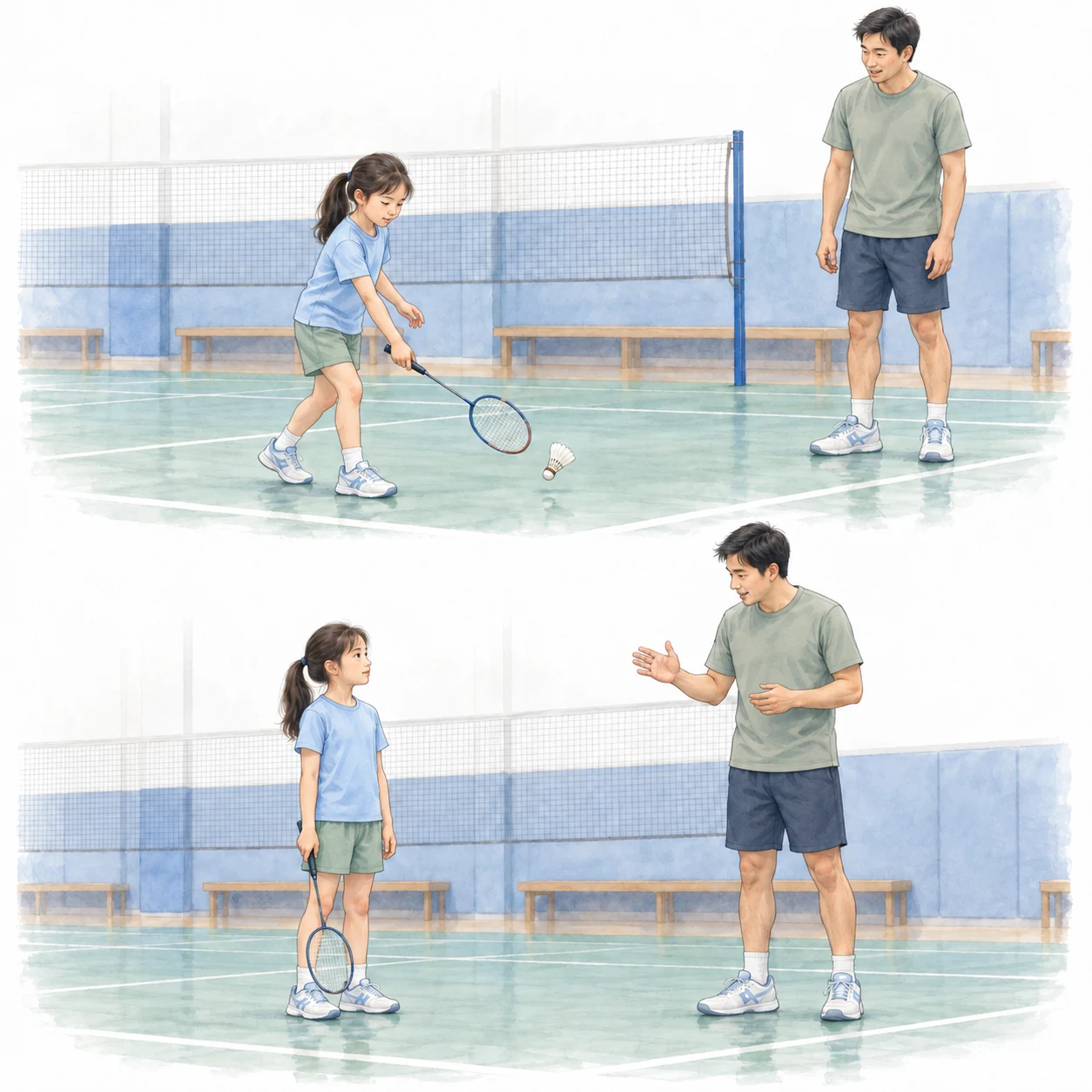
Patient practice
Keep the goal while making the next attempt manageable
A child can understand a cue and still need a suitable opportunity to apply it. The feed, movement and number of decisions may need reviewing. Simplifying one demand is not necessarily lowering the standard; it may allow the learner to practise the part that matters. The coach should explain the purpose of the change and observe what it reveals. Patient badminton training includes these decisions. It does not mean letting the class drift, repeating without review or promising that persistence must produce a particular outcome.
I am willing to spend effort on an ordinary foundation because an impressive-looking activity is not my only teaching goal. A learner needs a connection between explanation and action. Where the task remains unclear, I want the next step to address that uncertainty rather than hide it behind more complicated practice. This is a statement of my teaching values, not a report of a particular student’s result. Families should still discuss whether the actual training approach fits their child, their expectations and their practical circumstances.
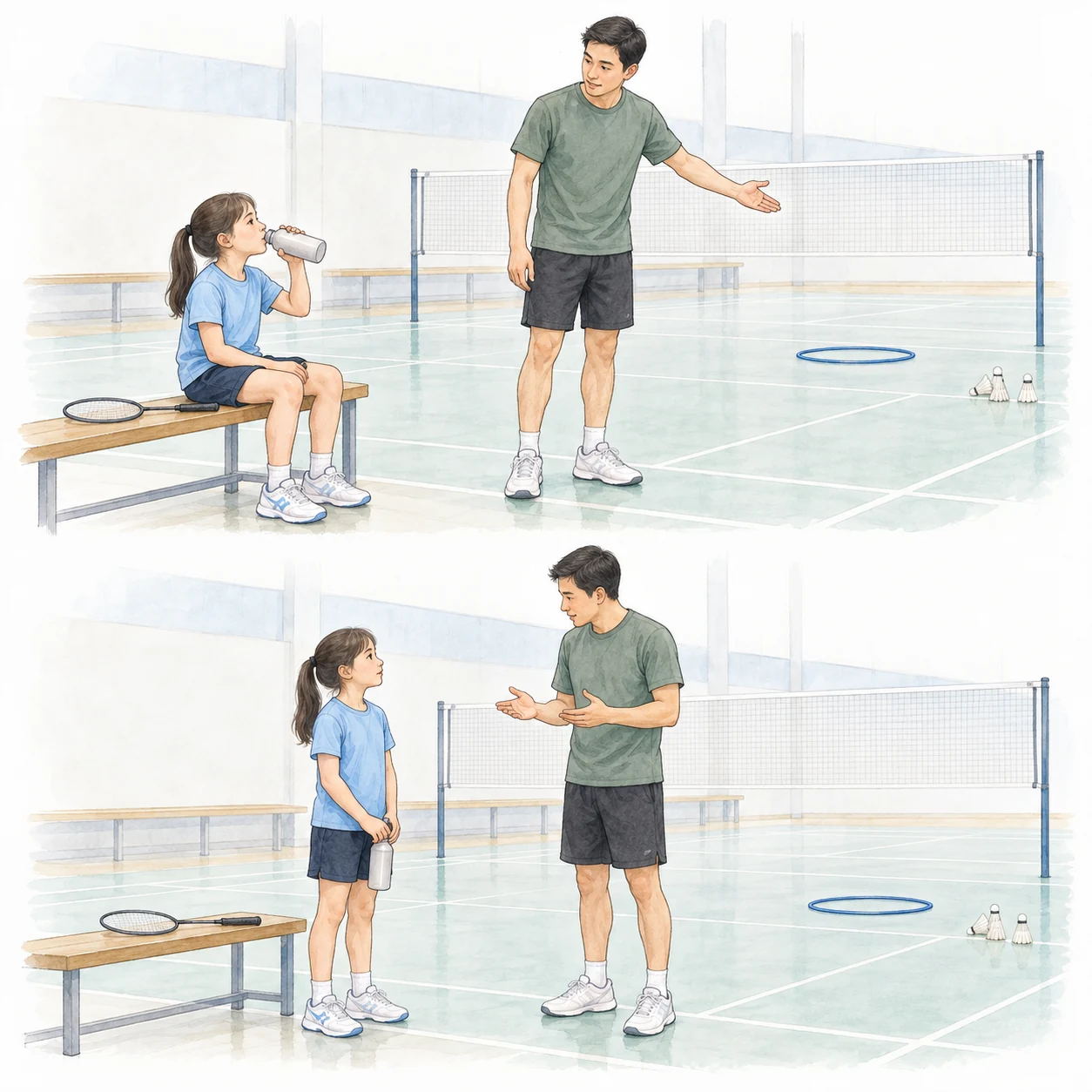
Discipline with purpose
Correct behaviour without humiliating the learner
Boundaries help organise a shared activity. Waiting for a signal, respecting another player’s practice space and listening during an explanation can be stated plainly. If an expectation is not followed, describe the behaviour and explain the relevant next response. Avoid turning the correction into a judgment of the child’s identity. A technical miss and ignoring an agreed boundary are different observations. Discuss them separately. Standards become difficult to apply fairly when every unsuccessful shot is treated as evidence that the child is being disrespectful.
Parents also contribute to a clear lesson environment. Use the academy’s communication arrangements and avoid adding a second set of commands during the child’s turn. If you disagree with an instruction, bring a factual question to the appropriate conversation rather than making the child choose between adults in the middle of practice. Neither coach nor parent needs to win that exchange. The useful aim is a shared understanding of the task, its boundaries and the next action. Respectful communication can remain direct when a standard needs clarifying.
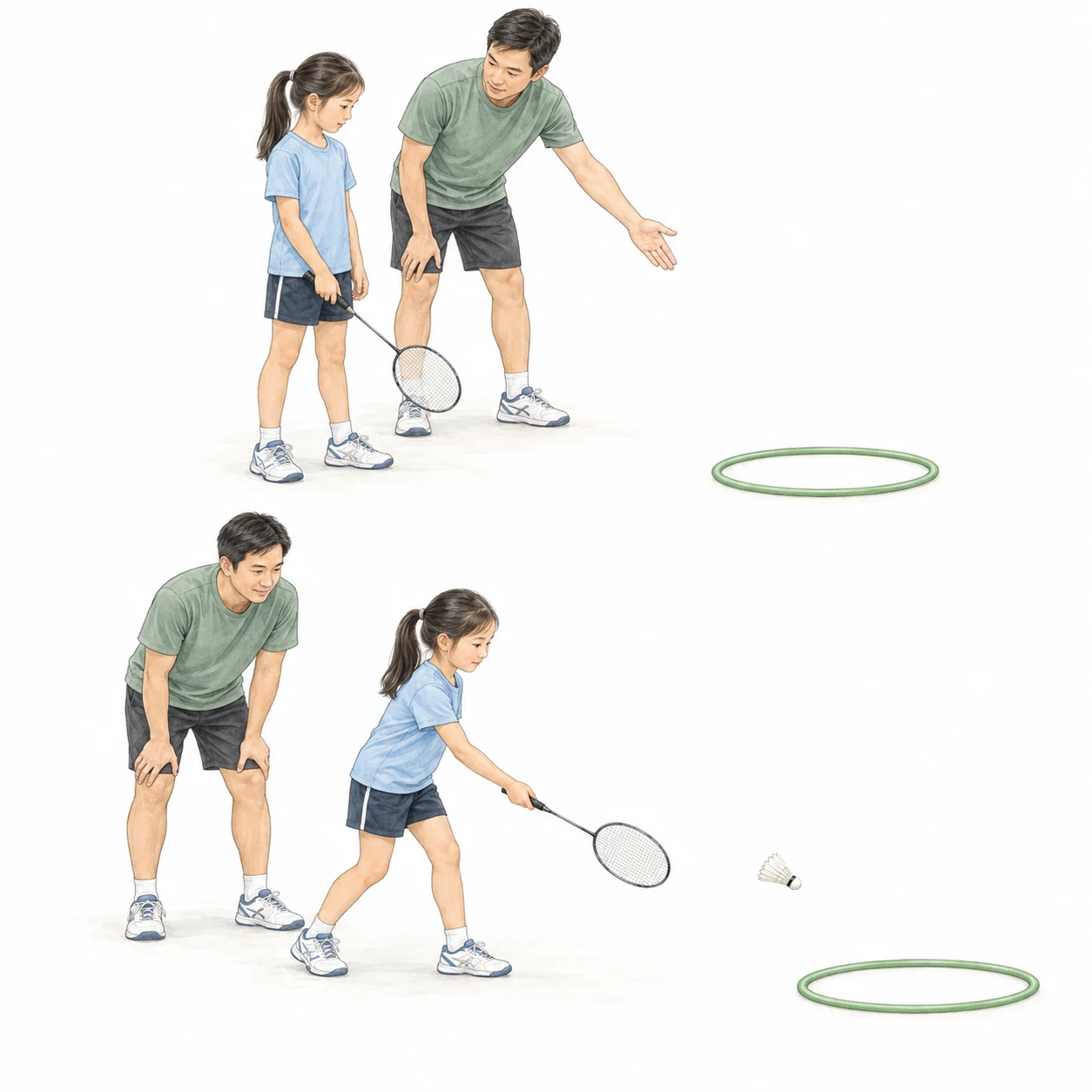
Myth vs reality
Patience and strictness need useful definitions
Myth: a patient coach never corrects a child. Reality: patience can include direct feedback, clear boundaries and repeated attempts. What matters is whether the correction explains something the learner can use. Warmth alone does not establish a suitable learning task, just as frequent criticism alone does not establish demanding teaching. Parents can ask what changed after the explanation and whether the child had a relevant chance to try it. Neither constant praise nor constant scolding is a complete lesson report.
Myth: strict coaching must sound harsh. Reality: a clear standard can be communicated calmly. The learner needs to understand the expected action, the purpose and the appropriate response when the boundary is not followed. Humiliation is not a teaching cue. This does not claim that every firm voice is harmful or that every learner needs identical wording. It asks families to examine the actual instruction and its usefulness instead of selecting a coach according to how intimidating the session sounds.
Myth: a playing title automatically settles whether someone teaches children well. Reality: playing experience deserves respect, while explanation, observation, feedback and task planning still need evaluation. Former national players can bring valuable experience, and they should not be stereotyped as impatient or unsuitable. Equally, a parent should not assume any profile guarantees a particular teaching style. If you search for the best badminton coach in Malaysia, ask about the learner’s needs and the proposed teaching process rather than treating a title as the entire answer.
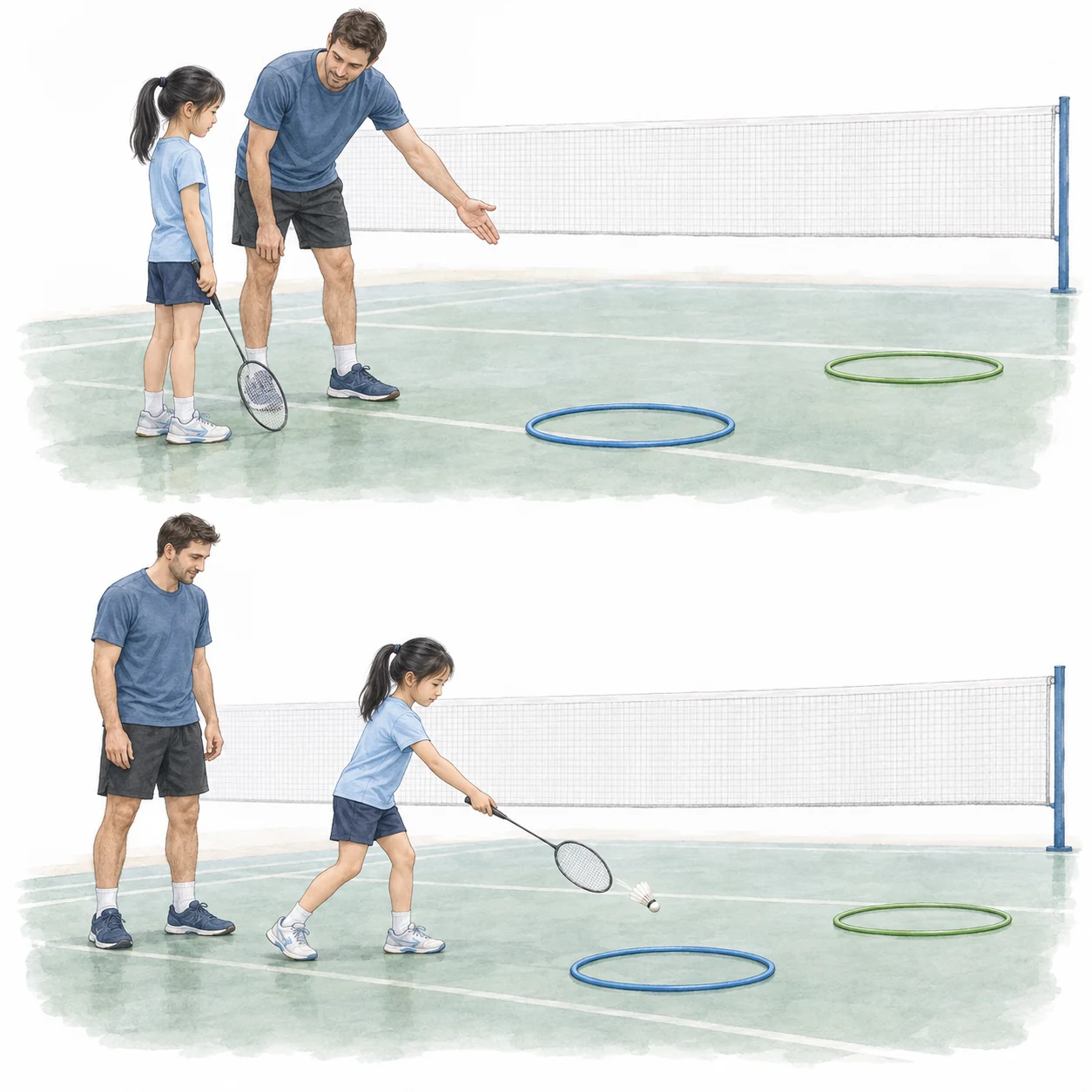
Effort and satisfaction
Value understanding without inventing a success story
Teaching requires noticing small details, choosing a manageable priority and staying attentive when an explanation needs another approach. I value that effort even when it is not dramatic enough for a highlight video. When a learner can connect a cue with the next action, that is the kind of understanding I find satisfying. This expresses why I care about coaching; it is not a claim that a named student achieved a result. I would rather describe the purpose honestly than use an invented story to prove it.
A coach’s satisfaction should not make the child responsible for protecting the coach’s feelings. The learner is allowed to ask questions and have an uncertain attempt. Review should remain about the task and the support required. I want families to understand that teaching can be demanding work without becoming a promise about winning, acceptance into a team or progress by a certain date. A clear learning conversation is useful in its own right. Its next step should be chosen from observation, not from a marketing deadline.
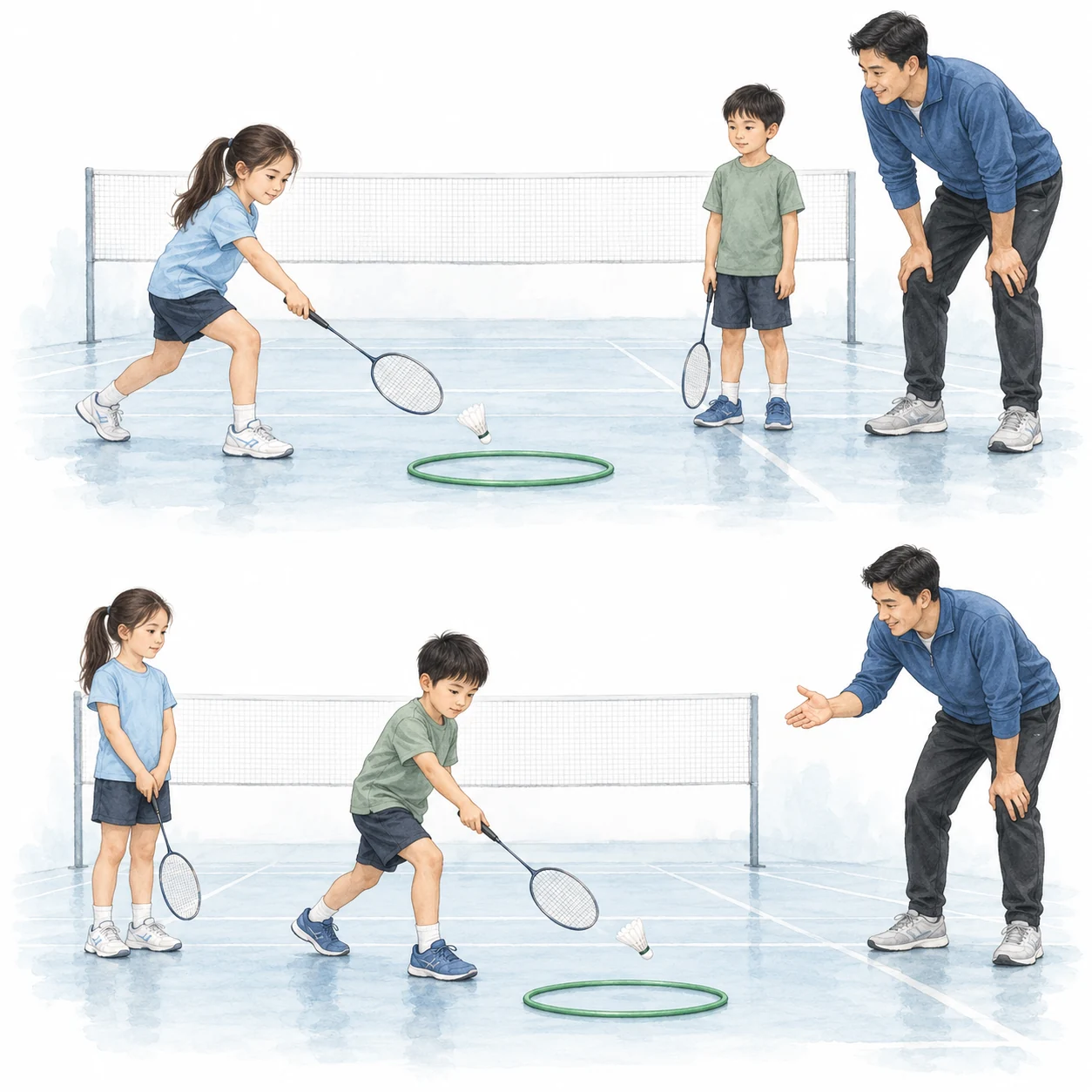
Choose a suitable approach
Ask how standards, feedback and review connect
When considering a badminton class for kids, ask the coach to explain an ordinary teaching sequence. What is the present foundation task? How is the expectation made clear? What happens if the child misunderstands or cannot yet apply the cue? How are behaviour boundaries communicated? A practical account of these connections is more useful than a promise to be either very strict or very friendly. You do not need to interrogate every coaching decision, but you should understand enough to consider whether the approach suits your child.
Begin an ST Badminton Academy enquiry through the website’s online application and describe the child’s experience, learning goal and any concern about feedback or discipline. Read the intake and application rules before proceeding, and use the training contact information for unresolved questions. An application is not a reserved place or a guaranteed result. Discuss the actual proposal and decide whether its expectations fit your family. My teaching values can guide that conversation, while suitability still depends on the learner and the arrangement being considered.
Questions about patient feedback and clear discipline
Use these answers to discuss the teaching process rather than assuming that a loud lesson is strict or a quiet lesson is patient.
Can a coach be both strict and patient?
Yes. Clear expectations can be combined with calm explanation, specific feedback and a suitable retry. Ask what the standard is and how the learner is helped to understand it instead of relying on either label.
Does patience mean repeating the same drill forever?
No. The coach should review what the attempts reveal. A task, cue or feed may need adjustment. Patience involves explaining and checking, rather than leaving unresolved confusion unchanged indefinitely.
What makes feedback specific?
It identifies a manageable action connected to the current task and provides an appropriate chance to try it. A personal label or a long list of faults may leave the learner without a clear priority.
Should behaviour and technical mistakes be treated the same way?
No. A missed shot does not by itself establish misconduct. Discuss the technical task separately from a specific behaviour and the agreed boundary. The child should understand the expectation and the next response.
What does Eric mean by satisfaction in teaching?
The article expresses a value: satisfaction in helping a learner understand the next task and connect explanation with action. It is not an invented student testimonial or a promise that a certain result will follow.
Should parents coach during every turn?
Avoid competing instructions and follow the agreed communication arrangements. Ask which cue is being taught, then raise questions at an appropriate time. The child should not have to resolve disagreement between adults during practice.
Does a national playing background guarantee a particular coaching style?
No profile alone establishes the style you will experience. Playing experience is valuable and deserves respect. Ask separately about explanation, feedback, task planning and how the proposed lesson fits the learner.
Can this approach guarantee faster progress?
No. This guide explains teaching values and observation questions, not an outcome timetable. Consider the task, feedback and support actually proposed without requiring a promised improvement date or match result.
How do we enquire about coaching at STBA?
Complete the online application first, describe the learning needs and read the intake rules. Use the training contact information for remaining questions. Discuss the actual arrangement; acceptance and availability are not guaranteed.
Illustrations of clear standards and patient teaching
Four steps in a clear teaching conversation
These are teaching steps, not achievement statistics. They describe how an expectation can be explained, attempted and reviewed.
| Teaching issue | A less useful response | A clear and patient response Teaching values |
|---|---|---|
| Standard | Leave the expectation unstated | Explain the action and its purpose |
| Feedback | Use a personal label without direction | Identify one manageable next action |
| Difficulty | Repeat despite unresolved confusion | Review the task and adjust one demand |
| Discipline | Treat every miss as disrespect | Separate the task error and behaviour boundary |
| Parent communication | Give competing commands during practice | Clarify the shared cue at an appropriate time |
| Coach selection | Assume a title settles learner fit | Respect experience and ask about teaching |
Discuss the teaching approach your child needs
Use the online application first to describe experience, learning goals and questions about feedback or discipline. Read the intake rules, then use the training contact information for remaining questions. Discuss suitability before deciding; applying does not guarantee acceptance, availability or a learning result.