Best Badminton Training: Check Foundation Progress Beyond Smashes
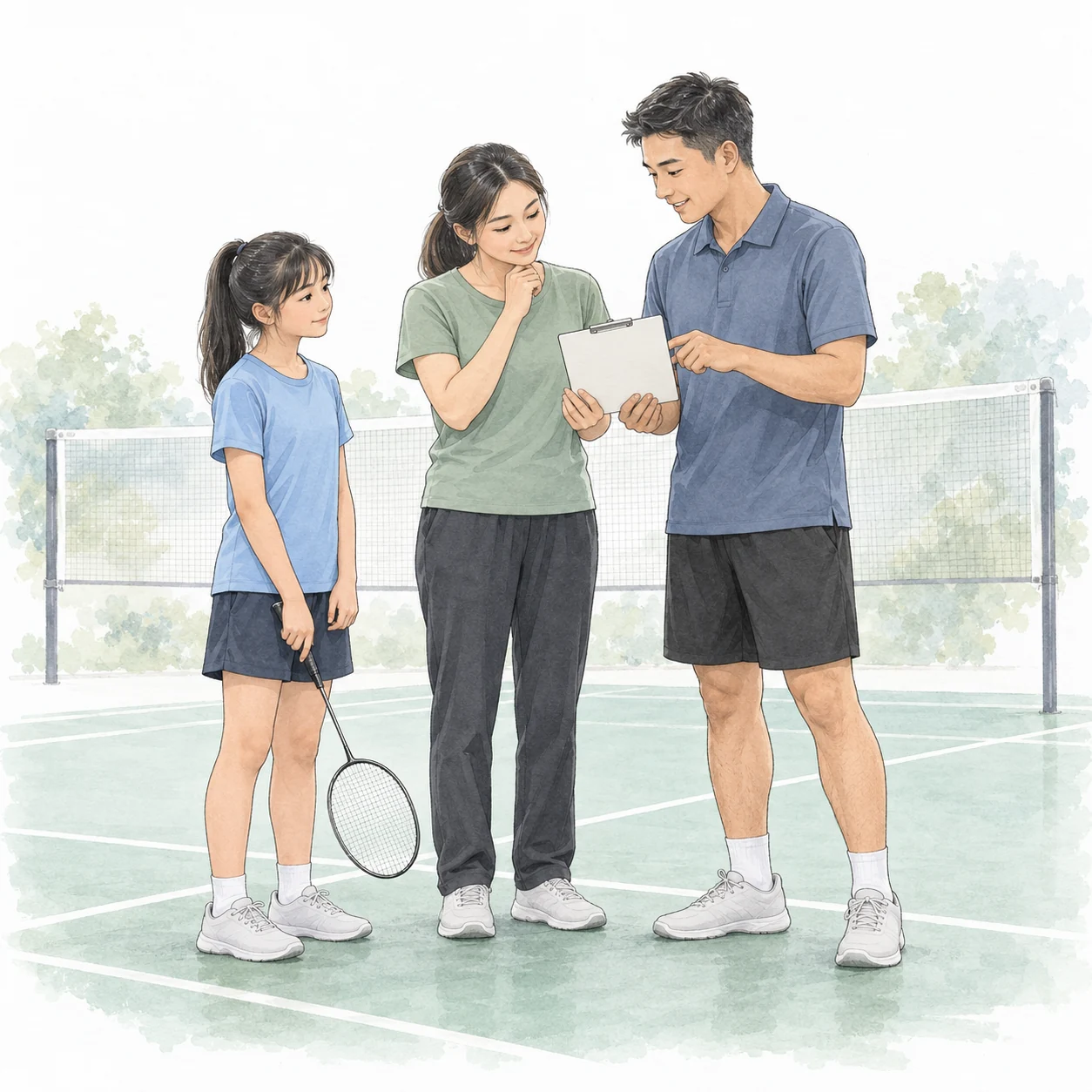
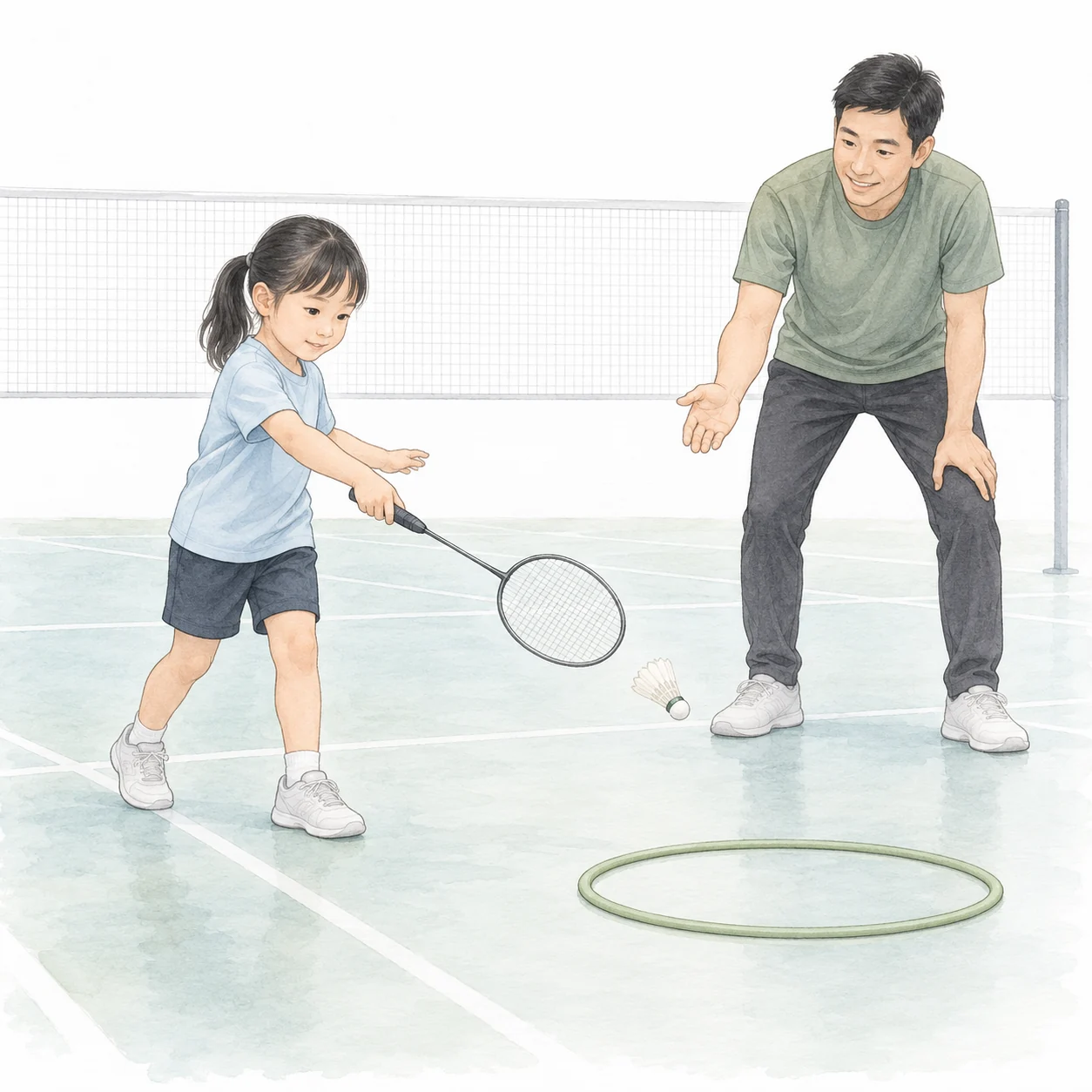
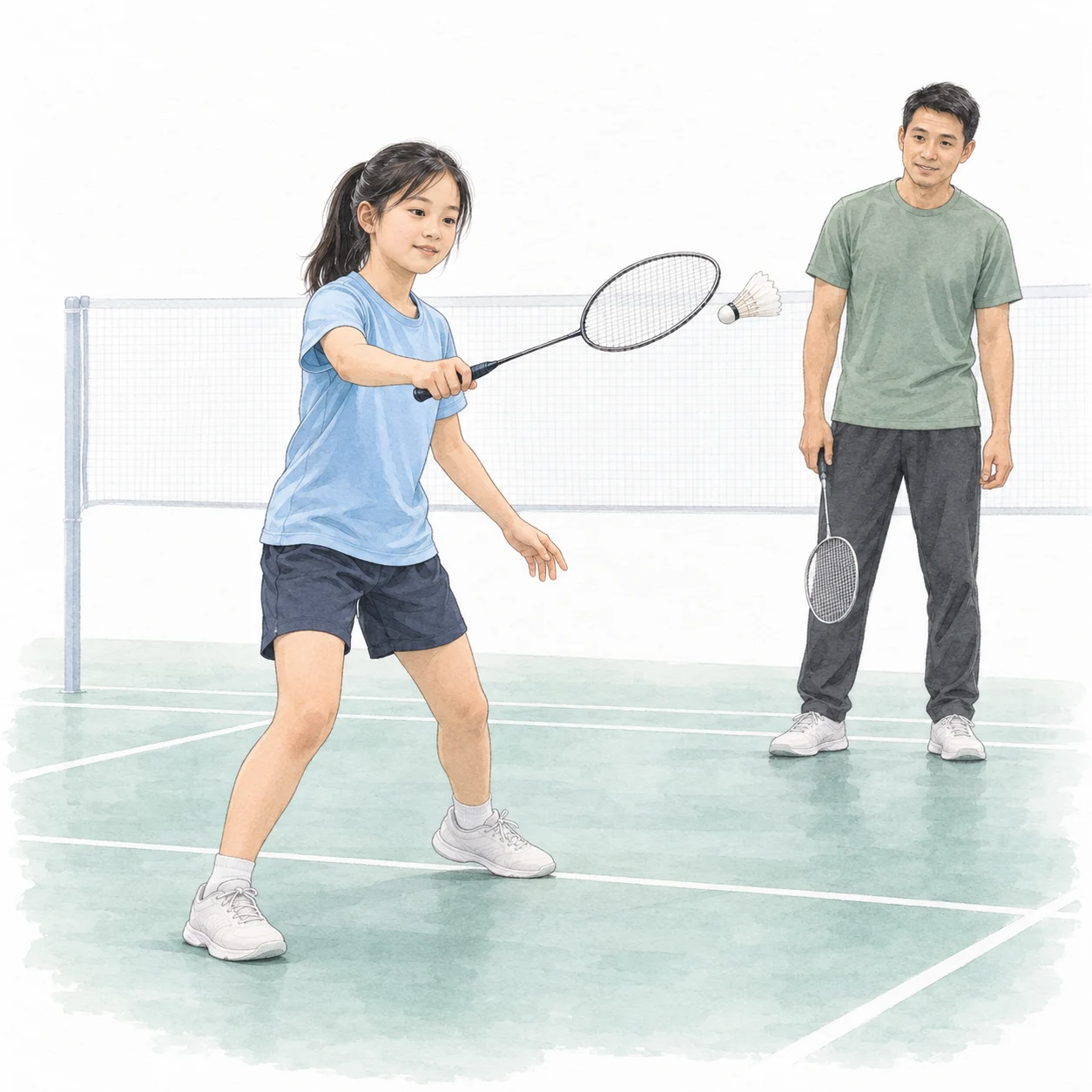
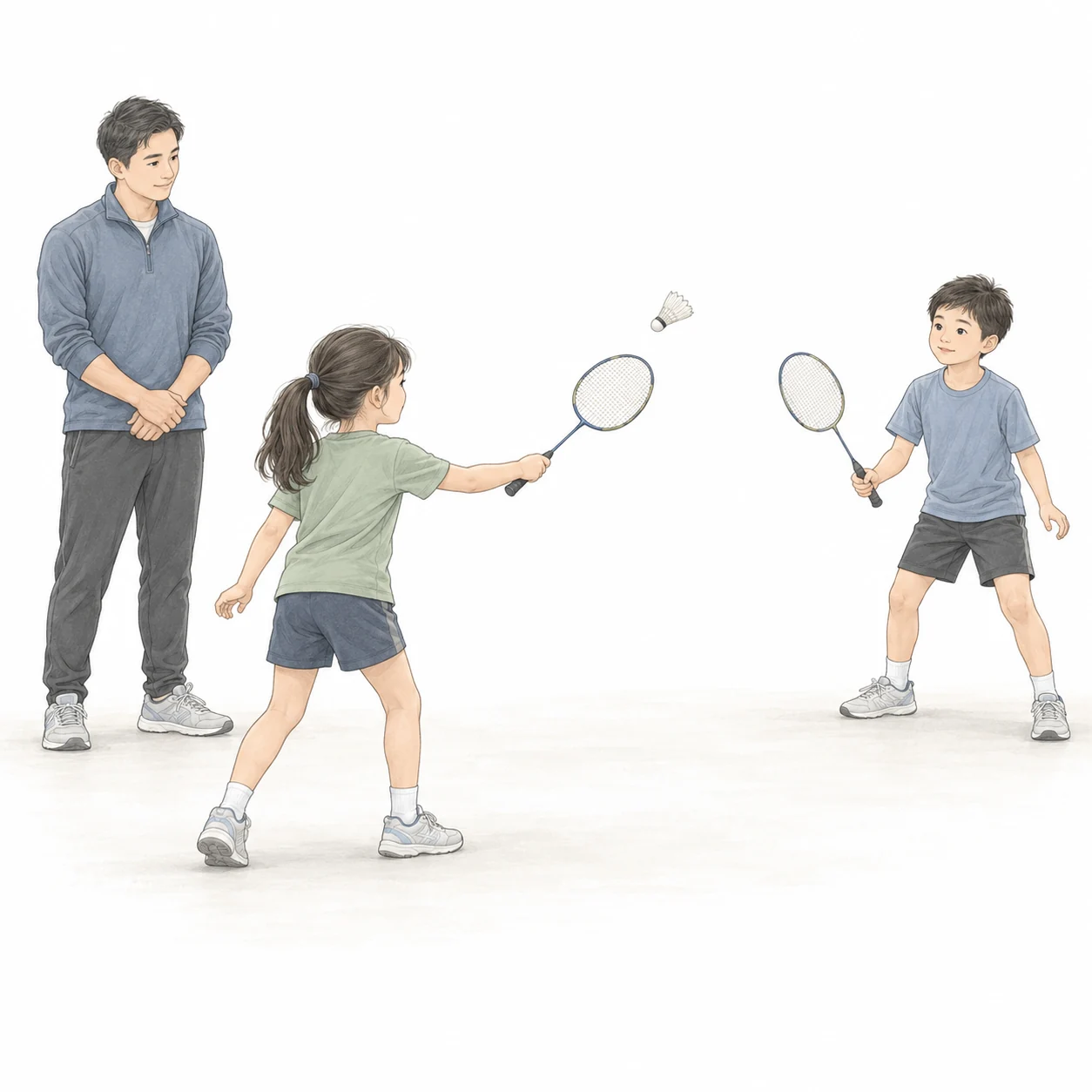
A louder smash or a medal can catch attention, but neither tells a parent everything about a learner’s foundation. When searching for the best badminton training in Kuala Lumpur, Malaysia, ask what the student understands, how the racket meets the shuttle, how movement is controlled and how the player prepares for the next task. These are teaching observations, not a ranking of academies or a promise of rapid progress. A badminton coach should be able to explain the current focus in words the learner can use. This guide gives parents practical questions for a badminton academy and a badminton class for kids. The educational images are AI-generated illustrations, not photographs of STBA students or lessons.
Check 1 · Understanding
Ask what the learner is trying to do
Begin with the task, not the outcome. Ask the learner to describe the target and the action being practised. Can the child explain why the coach has chosen a short controlled hit rather than a powerful smash? The explanation does not need advanced terminology. It needs to show that the learner knows what to attempt next. Copying a movement without understanding its purpose may look organised, while leaving the child unable to adjust when the feed changes.
A useful badminton training review connects the instruction, the attempt and the next decision. Observe whether the student can identify a clear cue, try it and describe what happened. If an adult supplies every answer, record that support honestly. Understanding develops through appropriate opportunities to practise and discuss; one correct answer is not a complete assessment. Give the coach the specific question the learner cannot yet answer instead of assuming that more intensity will solve the uncertainty.

Check 2 · Contact
Observe how the racket meets the shuttle
A shot reaching the other side is information, but not the whole story. Watch the preparation, the intended contact and the direction that follows. Can the learner repeat a manageable task with the cue the coach has given? A child who hits one spectacular shot may still need help organising the next contact. Keep the target suitable for the current exercise, so the observation reveals control rather than rewarding a lucky result from an unpredictable swing.
Ask the coach which part of contact is the teaching priority and how the next attempt will test it. A useful cue should refer to an action the learner can try, rather than several simultaneous corrections. The coach may simplify the feed or separate preparation from hitting when necessary. Parents should not diagnose technique from one distant view or combine conflicting online tips. The aim is a shared account of the task, with the coach responsible for detailed technical assessment.
Check 3 · Movement
Look for control in the movement task
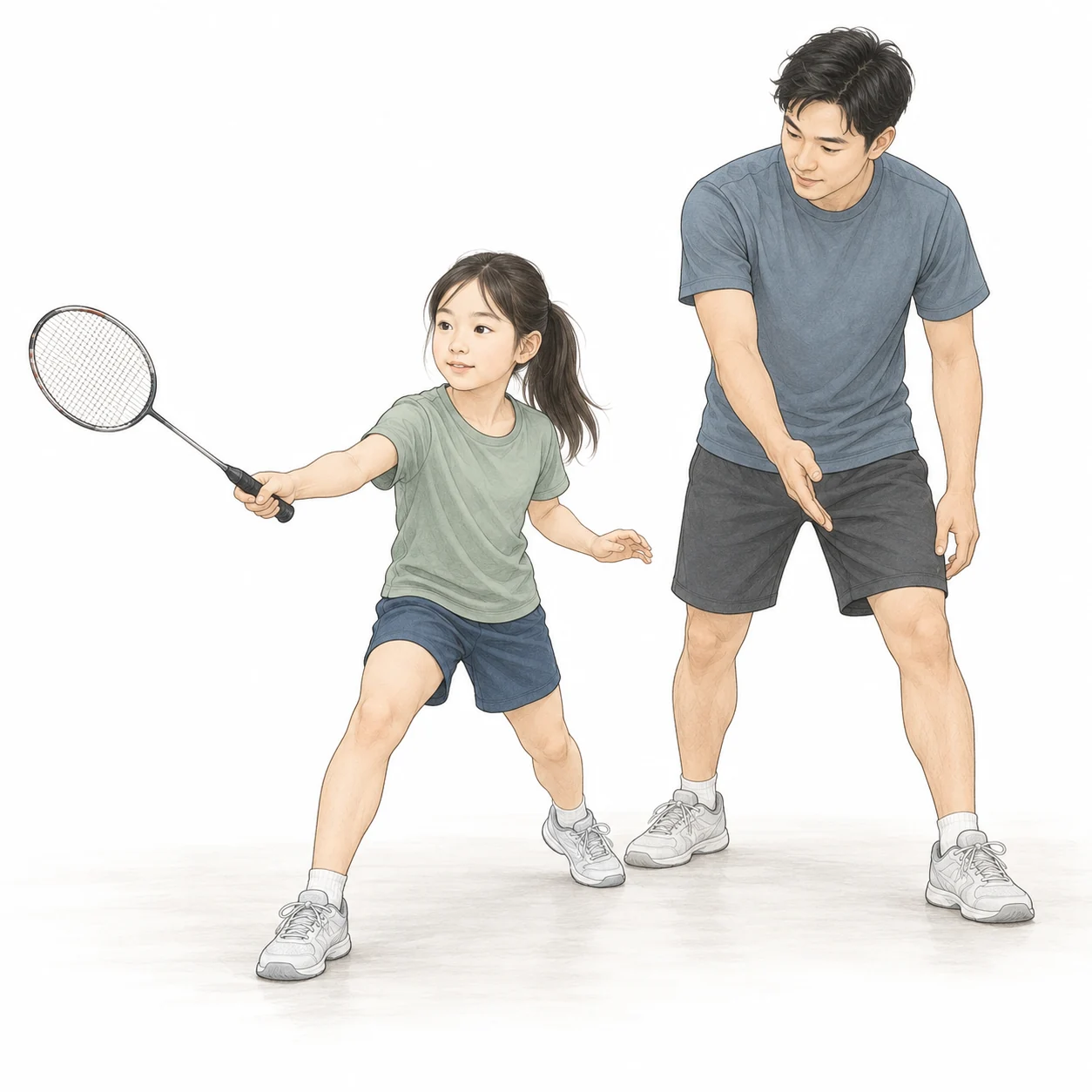
Balance is a practical observation within a particular task, not a demand that every learner hold the same frozen pose. Notice whether the child can move toward an appropriate feed, organise the body for the attempt and finish under enough control to respond to the next instruction. The activity should fit the learner and the available supervised space. If the child rushes past the task, a simpler movement exercise may give clearer information than adding speed immediately.
Ask what is changing and what is staying the same. For example, in a hypothetical exercise, the coach might keep the target predictable while asking the learner to move and stop with better organisation. That is an example of task design, not a claim about any real student’s result. Physical demands and movement details require the coach’s judgement. Clear spacing and manageable exercises support organised practice, but they are not an injury-prevention guarantee or a substitute for responding appropriately when a learner is uncomfortable.
Check 4 · Recovery
Check what happens after the shot
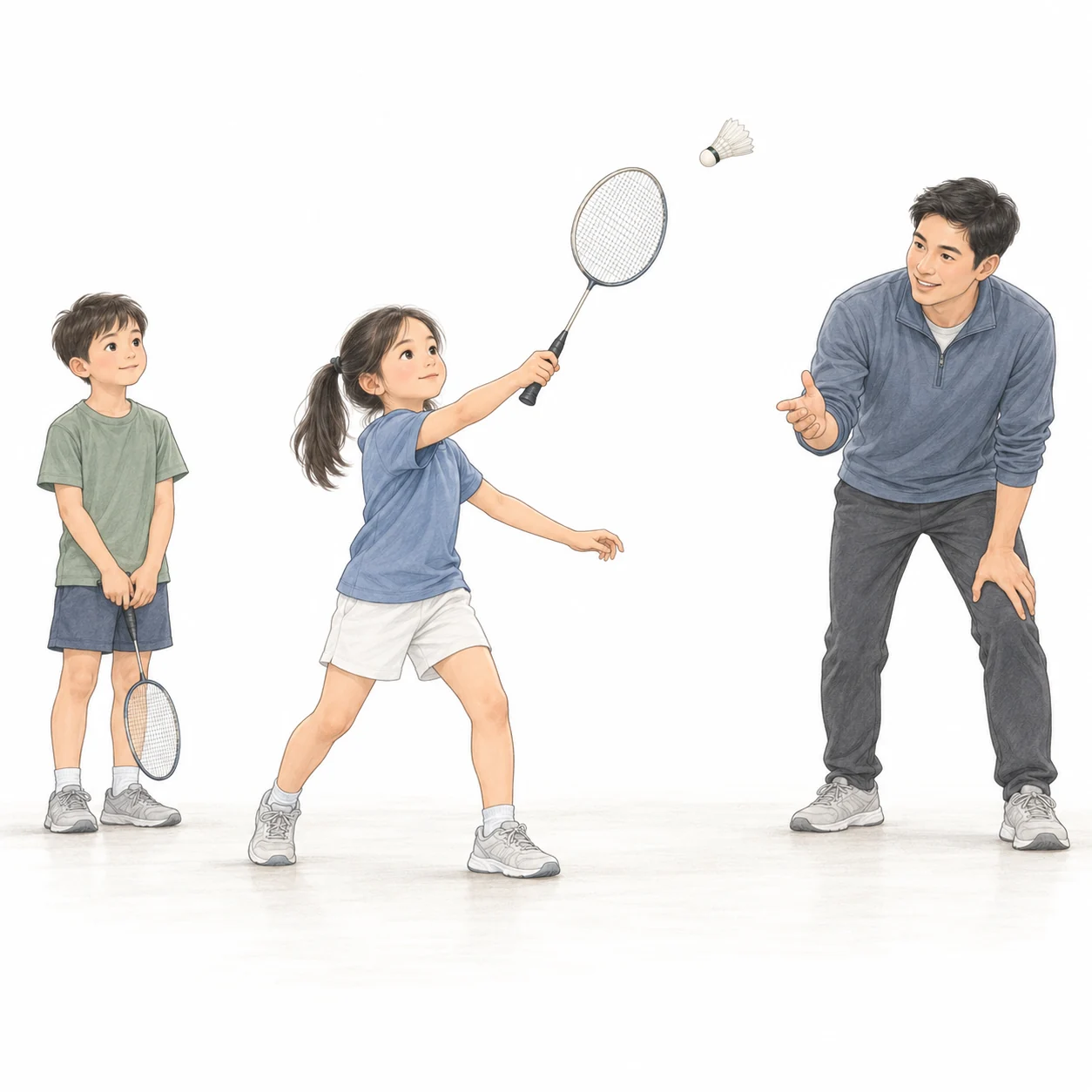
The lesson does not always finish at contact. Observe whether the learner follows the shot with the recovery action required by the exercise. Does the child know where to prepare, what to watch and when the next task begins? In a supported sequence, the coach can first explain that connection and then reduce the prompt when appropriate. A player who watches a successful shot without preparing again may need to learn the continuation, rather than simply hit harder.
Keep the recovery question specific to the activity. A cooperative feed, a short rally and a match situation do not demand identical decisions. Avoid teaching one fixed destination as the answer to every situation. Ask the coach to explain why the chosen reset is useful for this task. When the learner can attempt contact and recovery together, change a manageable element and observe whether the purpose remains understood. Do not describe a single successful sequence as proof of full match readiness.

Myth vs Reality
Progress needs evidence beyond power and prizes
Myth: harder hitting always means a stronger foundation. Reality: power is one visible outcome, while understanding, contact organisation and the next action still need attention. A learner can send a shuttle quickly without being able to explain the task or repeat a controlled response. That does not make the powerful shot worthless. It means the review should include the actions behind it and the support required, instead of treating sound or distance as the only evidence.
Myth: a medal or a famous playing title proves that every lesson is suitable. Reality: competition experience can be valuable, but an award does not describe the learner’s current task or the coach’s explanation. The best badminton coach for a particular learner must still make instruction understandable and adapt practice appropriately. Evaluate the teaching you can observe. This is a way to compare learner fit, not a claim that decorated players cannot coach or that STBA holds an objective number-one ranking.
Myth: every child should progress on the same timetable. Reality: the next useful question is what the learner can do now and what support remains necessary. Attendance, previous experience, the task itself and opportunities to practise may differ. Do not turn an illustrative teaching sequence into a guaranteed deadline. A clear progress conversation names an action, the conditions in which it was attempted and the next priority. It can recognise effort without inventing a future result or comparing unrelated children.

Check 5 · Review
Repeat a useful task and change one demand
Choose a task that makes the teaching goal visible. Observe more than a single attempt under understandable conditions, noting when a prompt or easier feed is needed. Then, when the coach considers it appropriate, change one demand: the target, the movement requirement or the amount of assistance. The change should help reveal learning rather than make the exercise impressive for spectators. A child needs enough clarity to know what remains the goal when one part becomes different.
Use a small record with context. Instead of writing that the child has become excellent, describe the attempt: the learner named the target, tried the agreed cue and completed the reset with support. The record is a teaching note, not a fabricated performance statistic. Review what worked, where the task still broke down and what to practise next. Parents can ask how that next focus relates to the earlier observation; they do not need to demand a new technique at every lesson. Keep notes from different conditions distinct. A controlled feed and an independently started exchange may ask different things of the learner. If the task changes, write what changed before drawing a conclusion about progress. This helps the next conversation stay fair: the coach can explain whether an easier condition revealed understanding or whether the learner managed a new demand with the same amount of support.
Check 6 · Discuss
Turn observations into a clear next step
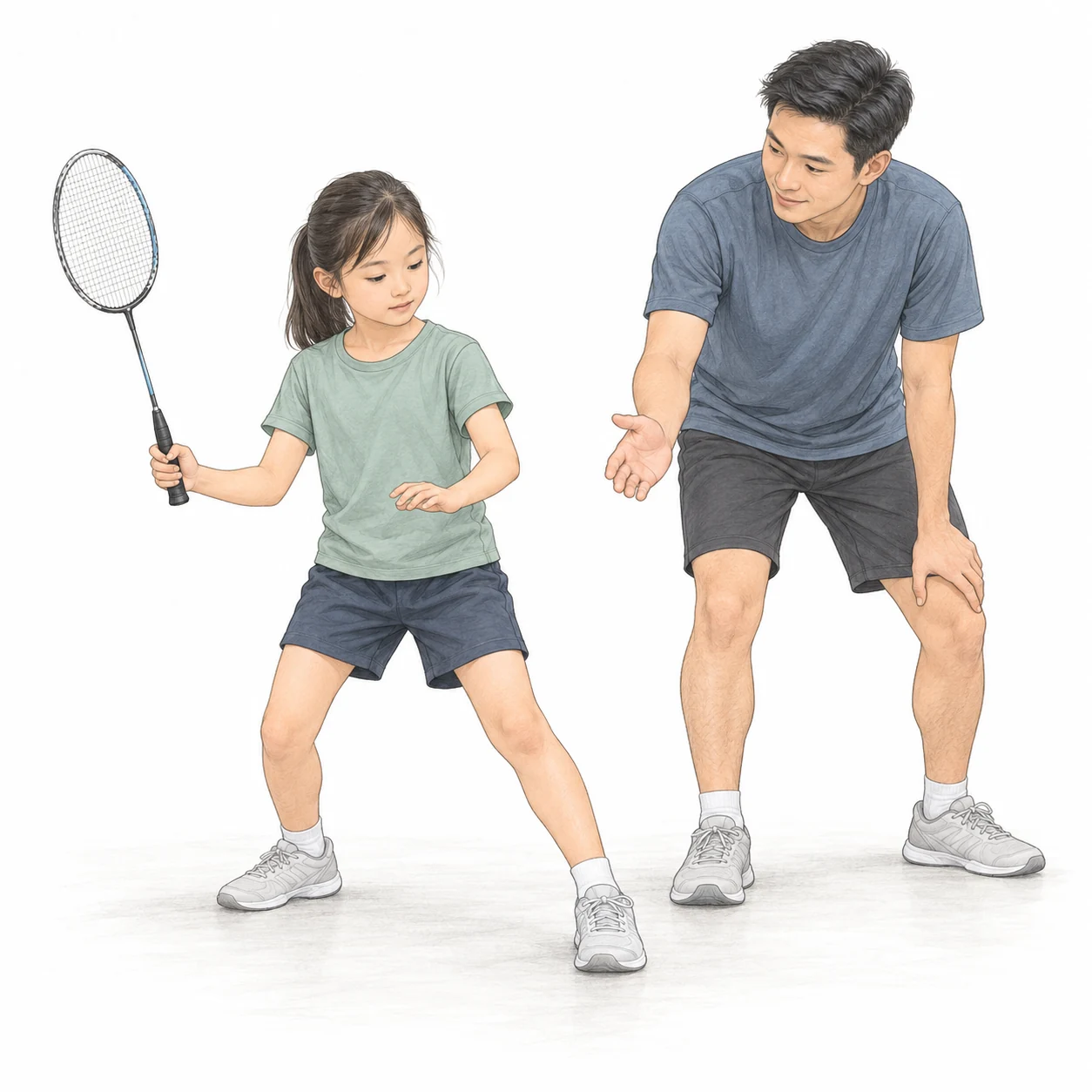
After a badminton class for kids, ask one concrete question and give the child time to answer. What was the target today? What should happen after contact? Avoid making the discussion an examination of every technical detail. Ask the coach which foundation connection is currently being taught and whether any practice outside class is appropriate. When feedback differs between adults, return to the agreed lesson focus rather than asking the child to satisfy several competing instructions at once.
For ST Badminton Academy in Setapak, Kuala Lumpur, begin with the online application and describe the learner’s present starting point. Mention the specific uncertainty about understanding, contact, movement or recovery, then read the intake rules. Use the training contact information for unresolved questions. The application begins an enquiry; it does not guarantee a place, schedule or learning outcome. Useful badminton training aims to make the next action clearer and more purposeful, with progress discussed through what was actually observed.
Questions about foundation progress in badminton training
Use these questions to discuss the current task with the coach. They are observation prompts, not a remote technical assessment or a promise of results.
What should I look for besides a stronger smash?
Look at the task the learner understands, the preparation and contact being practised, movement control and the required next action. Ask how much support was needed. A powerful shot can be useful, but it does not independently explain these connections or prove that every foundation has been learned.
Does a shuttle landing on target prove sound technique?
It is useful evidence of that attempt, but one result is limited. Ask the coach about preparation, the agreed cue and repeatability in the chosen task. A fortunate contact can reach the target. Technical conclusions require appropriate observation, rather than judging from the landing point alone.
How can a child show understanding without technical vocabulary?
The child can explain a simple target, name the action to try or show what happens after a shot. Use language appropriate to the learner. The purpose is an understandable next step, not memorising professional terminology or repeating a parent’s answer without connecting it to the activity.
Should every learner use the same movement pattern?
The coach should explain the movement needed for the particular task and adapt it appropriately to the learner. Do not demand identical frozen positions from different children. Observe whether the student can organise the attempt and follow the next instruction under the conditions being taught.
Why does recovery matter after a successful shot?
The next action may be part of the learning goal. A child may complete contact but remain unsure where to prepare or what to watch afterward. The coach can teach that connection with a supported sequence. Its meaning depends on the exercise, so avoid assuming one reset fits all situations.
Can a medal replace a foundation review?
A medal records a competitive result, not every detail of learning or instruction. It may be meaningful and worth recognising, while the current task still deserves observation. Ask what the learner can explain and do now, without treating an award as a guarantee of complete understanding.
How soon should progress become visible?
There is no universal timetable promised here. Ask the coach which action is being observed and what would count as a clearer attempt under the same conditions. Compare the learner with their own starting point. A teaching sequence is not a guarantee that all children will reach the same result by a particular date.
What belongs in a useful parent progress note?
Record the task, what was observed and what support was needed. Include the agreed cue and the next focus if the coach has explained them. Avoid invented percentages, mastery labels or comparisons with other children. A brief specific note is more useful than a flattering but unclear description.
What is the first step for an STBA training enquiry?
Complete the online application, describe the learner’s present abilities and concerns, and read the intake rules. Include questions relevant to the foundation focus. Use the training contact information for matters still unresolved. The process does not guarantee a place, a trial session or a progress deadline.
Foundation teaching scenes: understanding, contact, movement and recovery
Four steps for a useful foundation review
These numbers mark learning steps, not performance statistics. The coach can repeat or simplify a step according to the task and learner.
| Review question | Less helpful approach | Useful teaching approach Foundation-first practice |
|---|---|---|
| Understanding | Reward copying without checking the purpose | Ask the learner to describe the next action |
| Racket contact | Judge only one impressive landing | Observe preparation and repeated appropriate attempts |
| Movement | Demand identical positions from every learner | Explain control within the chosen task |
| Recovery | Finish the review at shuttle contact | Connect the shot to the required next preparation |
| Progress evidence | Treat titles and medals as the whole assessment | Describe the action and support actually observed |
| Learning timetable | Promise every child the same deadline | Review the starting point and choose the next focus |
Tell us which foundation connection needs attention
Begin with the online application and explain the learner’s current understanding, contact, movement and recovery. Read the intake rules, then use the training contact information for unresolved questions. A clear starting point supports the enquiry; it does not guarantee a place or a learning result.