A Good Badminton Coach Finds the Learning Difficulty Before Judging Attitude
Parents searching for the best badminton coach in KL or Malaysia often want to know how a coach responds when their child struggles. A repeated miss is something to investigate, not a complete explanation of the child’s attitude. The difficulty may involve understanding an instruction, contacting the shuttle or managing a task with too many demands. This guide describes practical coaching observation and questions to discuss with ST Badminton Academy in Setapak, Kuala Lumpur. It does not diagnose a medical condition or assume a learning disability. The images are AI-generated teaching illustrations, not photographs of STBA lessons or real students.
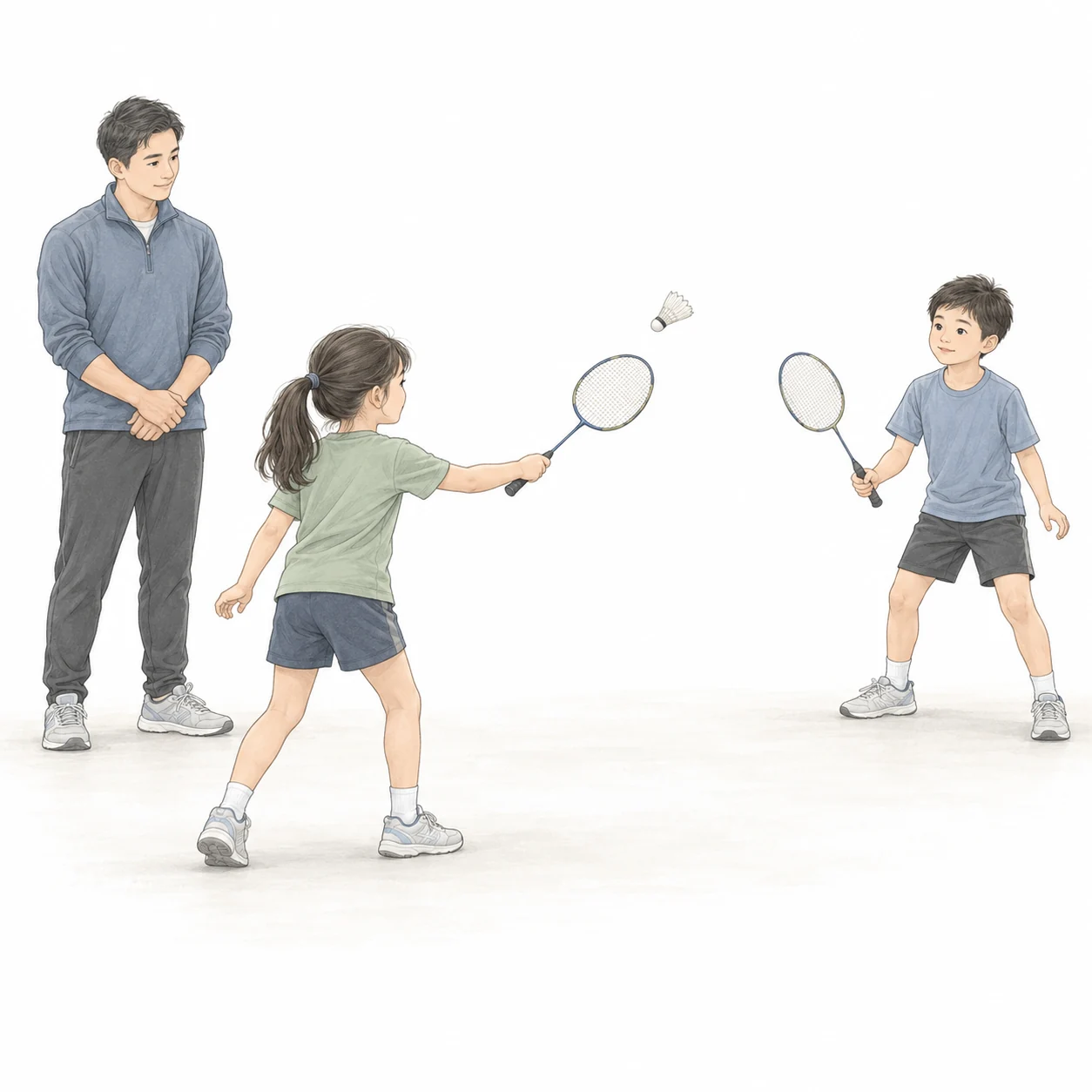
Observe before judging
Describe the difficulty as an action you can see
Begin with the activity and the action that breaks down. Does the child start from the intended position, recognise the target or know when to move? Describe what happened without attaching a character label. “The child began before the feed” is more useful than “the child does not care.” The first description gives a coach something to check. The second assumes a motive that may not be visible. One attempt provides limited information, so watch an ordinary pattern rather than selecting the least successful moment.
A coach can ask for another manageable attempt and compare it with the explanation. Notice whether the same difficulty occurs when the pace changes or the demonstration is shown again. These observations are teaching clues, not a clinical assessment. Parents should avoid diagnosing the child or insisting on a cause from the sideline. Ask the coach what was observed and what will be checked next. A clear answer should connect to the actual task, rather than promise that one method works for every learner.

Check understanding
Make sure the instruction means something to the child
A child can nod while still being unsure what to do. Ask them to explain or calmly show the next action, using language that fits the activity. They do not need to recite a technical definition. In a hypothetical net-shot task, the coach might ask where the shuttle should travel or demonstrate the starting action beside the learner. If the response reveals confusion, the explanation needs attention before the coach asks for more repetitions. Speaking more loudly does not make an unclear direction more usable.
Keep the correction small enough to remember. A short instruction, a visible example and a check of the child’s interpretation can be more useful than several new terms. The coach should decide which part matters now and leave additional detail for an appropriate stage. Different viewpoints or another explanation may help without assigning the child a fixed learning-style category. Parents can support the same cue afterward, but should first ask what was actually taught. An unrelated video or a second method can add another translation task.
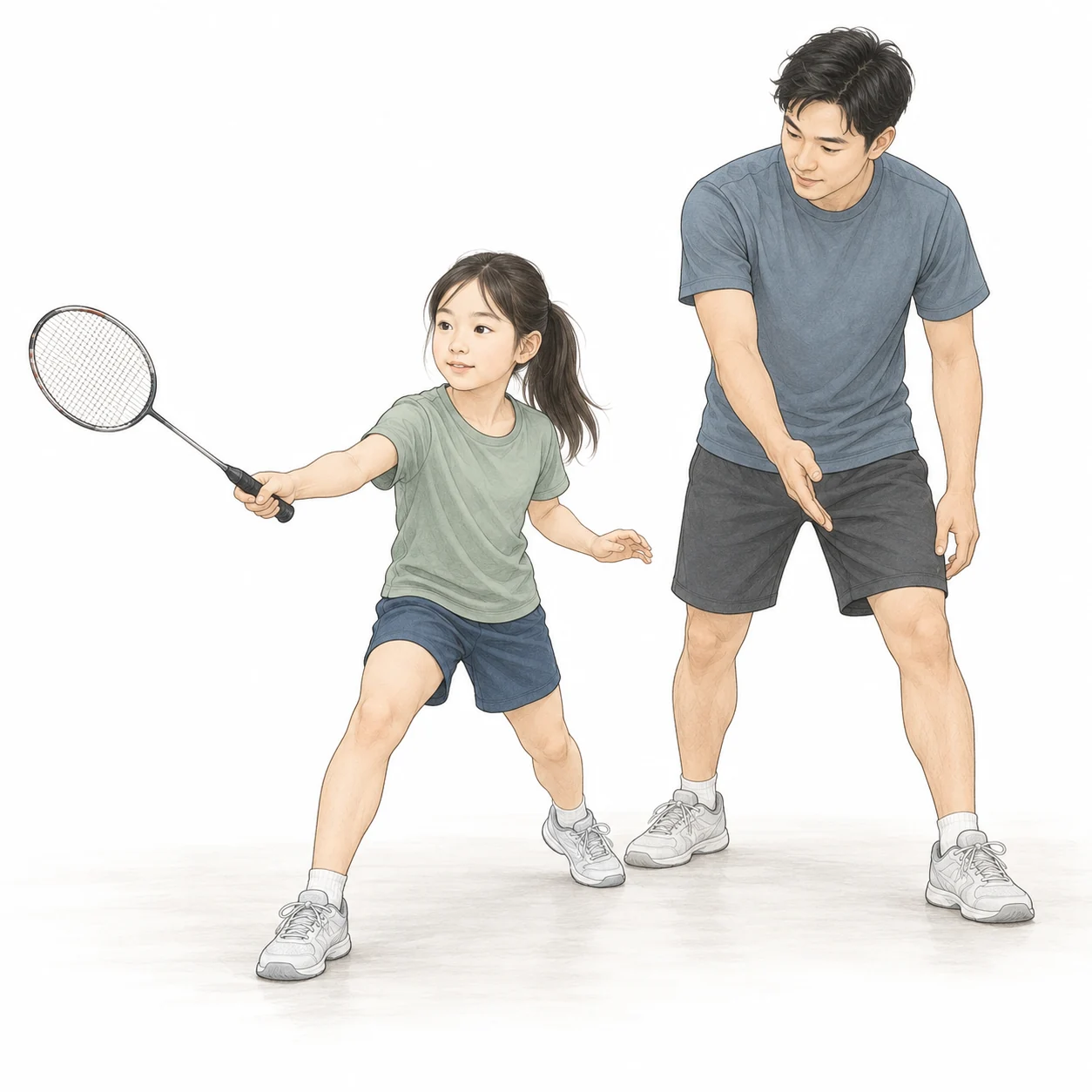
Check contact
Separate understanding from a difficult racket-and-shuttle task
A child may understand the target yet struggle to meet the shuttle reliably. That calls for observation of the task, not an immediate accusation of poor effort. A coach might check the starting preparation, contact timing and whether the feed gives a manageable opportunity. These are ordinary teaching questions. Avoid treating one grip picture or one miss as proof of a complete technical cause. The useful question is which small part of the action the learner can attempt with clearer guidance and a suitable feed.
For a hypothetical example, reduce the movement while practising gentle contact, then review whether the cue can be applied. The coach can add another component when the current action is understood sufficiently for the next task. This does not guarantee a successful shot or specify a universal progression rate. It makes the adjustment visible and reviewable. A parent observing a badminton class for kids can ask why the feed or distance changed, rather than assuming a simpler task means the child is being held back.
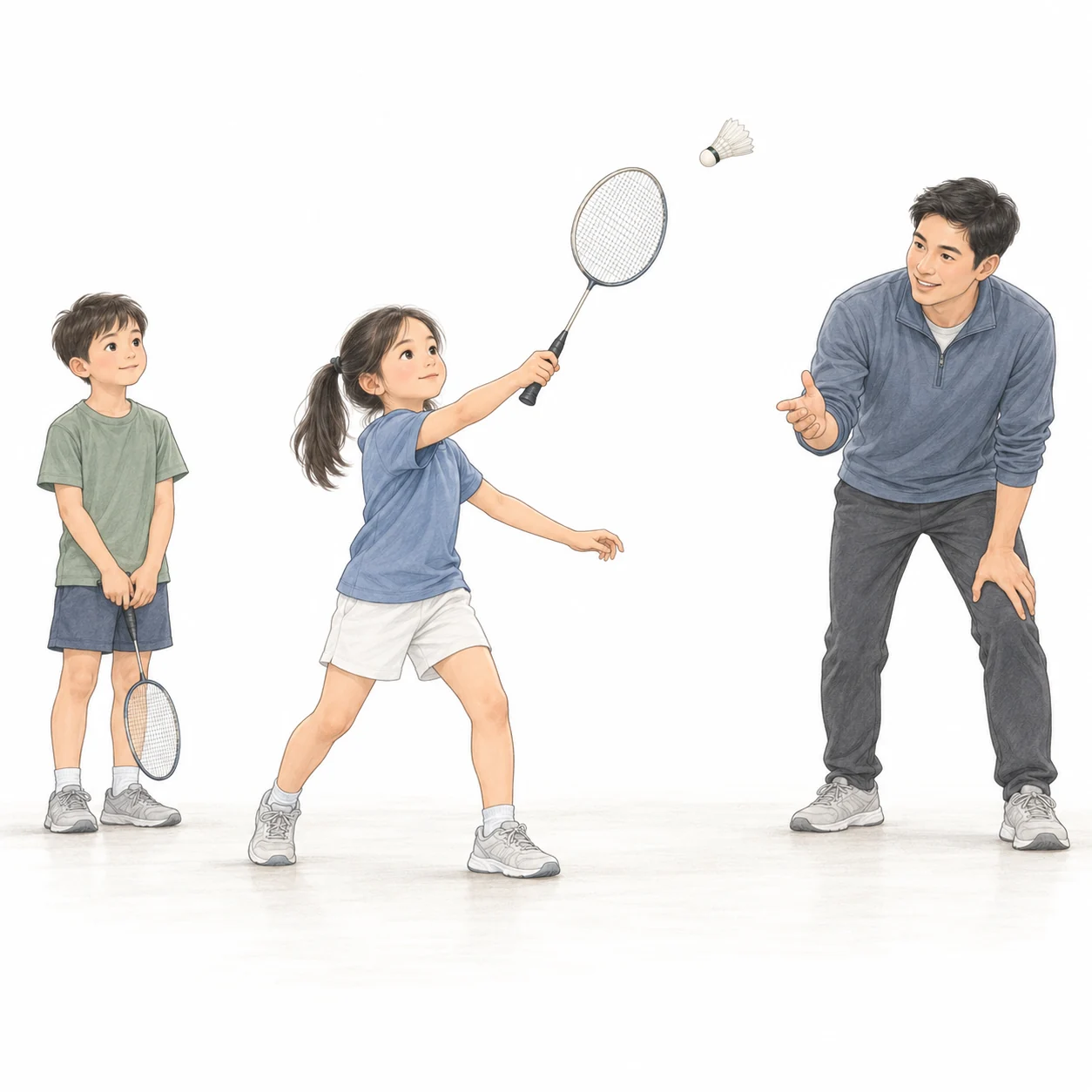
Check task difficulty
Notice when several demands arrive at once
An activity can ask a beginner to move, choose a direction, time a contact and recover with a partner. Missing one part does not establish which demand was confusing. A good teaching conversation separates the demands enough to investigate them. The coach may make the feed more predictable, shorten the movement or focus on one target. These changes should serve the stated purpose. Simply making everything easy without a learning objective gives parents little information about what the child is expected to understand.
Observe how the coach connects the simpler task to the original one. What will be checked before another demand is added? The answer may be a repeatable preparation or a child explaining the intended action, rather than a promised number of successful shots. Difficulty should be reviewed for the learner and activity in front of the coach. Age, enthusiasm, equipment and a parent’s expectations do not settle it alone. Useful badminton training allows a task to be adjusted without turning the adjustment into a judgment of the child’s worth.

Myth vs reality
Do not turn a teaching difficulty into a personal label
Myth: repeated misses prove a bad attitude. Reality: misses show an outcome, while understanding, contact and task demands still need checking. Behaviour such as interrupting or leaving the agreed activity can be discussed separately and specifically. A coach can maintain expectations without assuming that every error is deliberate. Ask what happened, what instruction was understood and what response is needed. That keeps the conversation on something the child can act on rather than a label they cannot meaningfully correct.
Myth: changing the task is making excuses for the child. Reality: an adjustment can help the coach find which demand needs teaching. The goal remains clear, and the coach reviews the response. For example, a predictable feed can make one contact cue easier to investigate before a more varied activity is tried. This is a hypothetical teaching choice, not a claim about an actual STBA student. Clear standards and sensible adaptation can belong to the same lesson.
Myth: a coach should identify a medical or developmental explanation from a badminton drill. Reality: coaching observation is limited to the teaching activity and the information supplied. This article does not diagnose conditions, infer disabilities or recommend treatment. Parents can share relevant information they consider appropriate without being pressured to disclose private details. If a concern extends beyond coaching, discuss it with an appropriately qualified professional. The coach’s immediate responsibility remains explaining the task, observing attempts and reviewing suitable practice.

Make feedback usable
Give the child one change and a chance to try it
Once the difficulty has been investigated, explain the next small change. Connect it to what was observed: which starting action, direction or contact cue is being reviewed? The child should have a relevant chance to try it and ask for clarification. More feedback is not automatically better if it arrives as several competing instructions. Equally, saying “good” after every attempt does not explain the task. A useful cue provides direction, while a calm review checks whether the learner understood it.
Parents can notice whether the coach changes the explanation when the same confusion remains. Patient teaching involves this work; it is not simply allowing an activity to continue indefinitely. Ask what the next attempt will help reveal, and what remains uncertain. Do not require the coach to claim certainty from a few shots. A responsible account can say that a particular demand is still being checked. That honesty gives the family a better basis for discussing suitability than an instant diagnosis or a result guarantee.

Discuss the next step
Bring a concrete observation to the coaching conversation
Instead of asking why the child is “not trying,” describe one recurring situation. Perhaps instructions seem clear until movement is added, or the child can show a preparation slowly but loses it during a feed. These are hypothetical descriptions that invite a practical explanation. Ask what was understood, what the coach observed and which adjustment will be reviewed. Respect the lesson’s communication arrangements and avoid issuing a second stream of commands. The aim is to help the coach and child share one understandable task.
For an ST Badminton Academy enquiry, complete the website’s online application first and describe badminton experience, the learning goal and the difficulty you want to discuss. Read the intake and application rules, then use the training contact information for remaining questions. Applying does not establish acceptance, a place or a particular arrangement. When comparing a badminton academy in Kuala Lumpur, look for a clear teaching explanation and a suitable proposal. “Best” should help you consider the learner’s needs, rather than replace observation with an unsupported ranking.
Questions about understanding a child’s practice difficulty
These questions distinguish coaching observation from judgments about attitude or assumptions about a child’s health.
Do repeated misses mean my child is not concentrating?
Not necessarily. Misses do not explain their cause. Ask what the child understood, whether contact was manageable and how the task was organised before concluding that attention or effort was the issue.
How can a coach check that an explanation was understood?
The child can explain or show the next action in simple terms. The coach can compare that response with the intended task and clarify one part. A nod alone gives limited information.
Does a simpler feed mean the class is too easy?
Not by itself. A predictable feed can help investigate a particular contact cue. Ask what the adjustment is meant to reveal and how the coach will review the next appropriate demand.
Should a coach ignore behaviour concerns?
No. Clear expectations still matter. Discuss the actual behaviour, the agreed boundary and the next response separately from technical misses. Standards are more usable when the child understands what is expected.
Can badminton observation identify a learning disability?
This guide makes no such claim. A lesson observation is a teaching clue, not a medical or developmental assessment. Concerns beyond the coaching task should be discussed with an appropriately qualified professional.
What should I tell the coach about the difficulty?
Describe the activity and what happens repeatedly, without assigning a motive. Explain the child’s experience and any relevant information you choose to share. Ask what the coach has observed rather than prescribing a diagnosis.
Should I add more instructions from the sideline?
Use the agreed communication arrangements and avoid competing commands. Ask the coach which cue is currently being taught. Supporting that cue is more useful than introducing a second method before checking the first.
Can a patient coach still be demanding?
Yes. A clear task, understandable feedback and a reviewed attempt can be demanding. Patience concerns the explanation and support; it does not require abandoning the learning goal or making unsupported promises.
How do I begin an enquiry with STBA?
Start with the online application, describe the current learning need and read the intake rules. Use the training contact information for unresolved questions. The application begins the discussion and does not confirm a place.
Illustrations of observation, explanation and adjusted practice
Four steps before judging the difficulty
These numbers identify teaching steps, not performance statistics or a diagnostic test. Each step stays connected to the activity being discussed.
| Teaching question | A premature conclusion | An observable teaching response Coaching approach |
|---|---|---|
| Repeated misses | Assume the child does not care | Describe the action and check the task |
| Understanding | Treat a nod as a full explanation | Ask for a simple show or explanation |
| Contact | Add several corrections at once | Review one cue with a manageable feed |
| Difficulty | Keep demands unchanged despite confusion | Adjust one demand and review its purpose |
| Behaviour | Label every technical miss as misconduct | Discuss the specific behaviour and boundary |
| Parent discussion | Claim an instant cause or result | Explain the observation and the next check |
Describe the learning difficulty you want to discuss
Start with the online application and explain the child’s experience, current task and recurring difficulty. Read the intake rules and use the training contact information for remaining questions. The application starts an enquiry; it does not guarantee acceptance, a place or a learning outcome.