Should Parents Coach from the Sidelines During a Badminton Class?
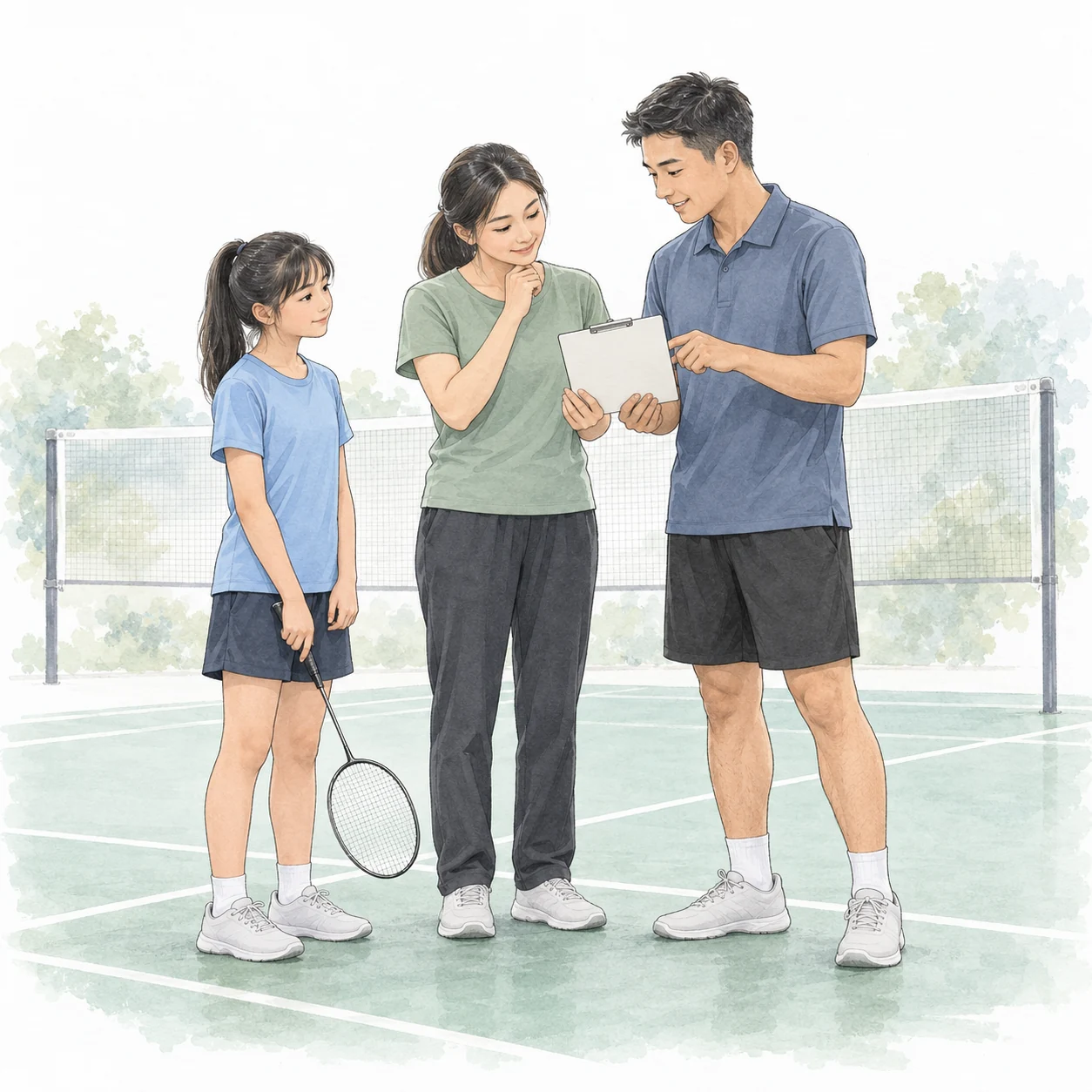
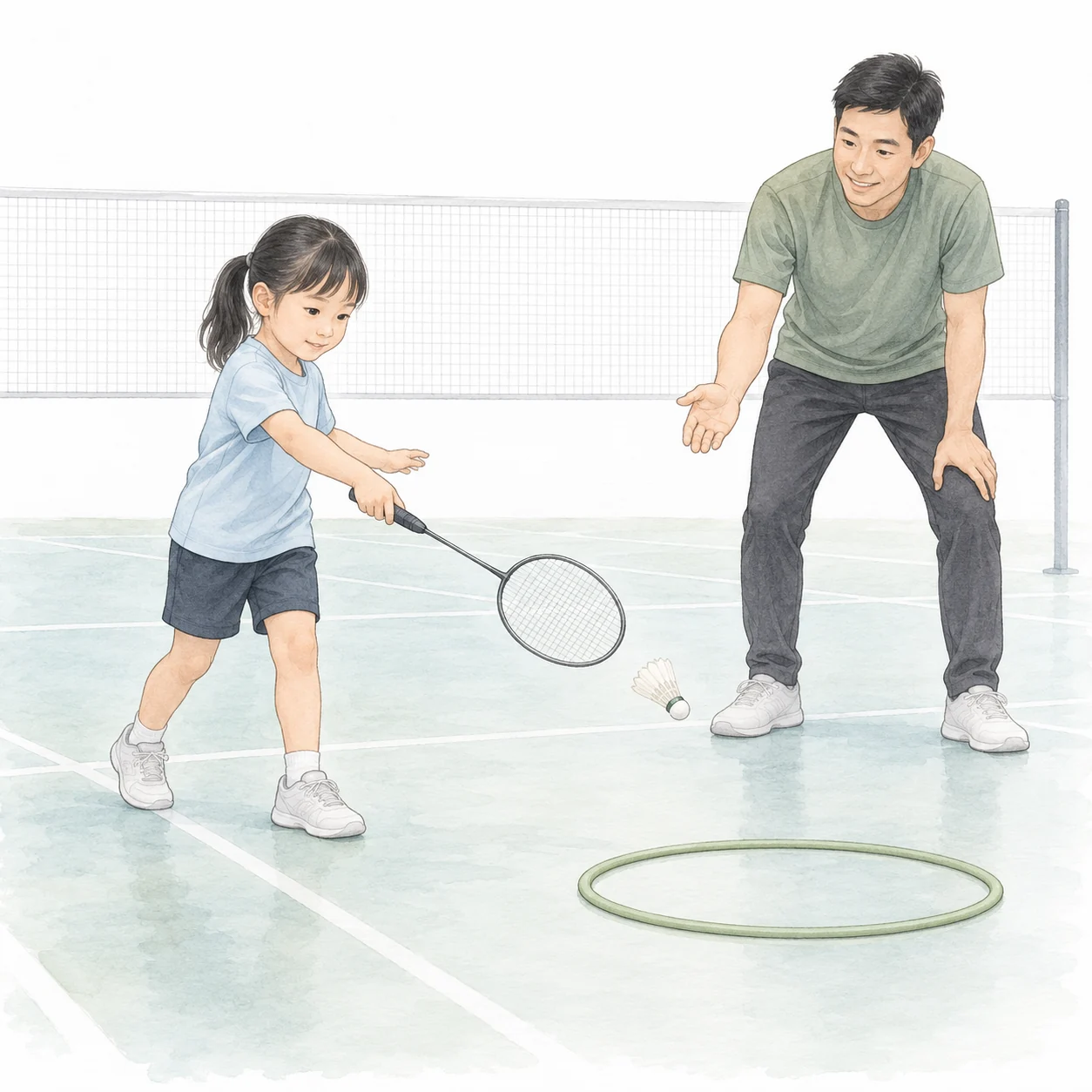
A parent sees a child miss a shuttle and naturally wants to help. A quick shout of ‘move forward’ or ‘hit harder’ may feel supportive, especially when the family has made time to attend badminton training in KL. Yet the child may already be following a different instruction from the badminton coach. Before adding another cue, it helps to ask what the child is practising and whose instruction they are expected to follow during that attempt. A useful partnership gives the child a clear learning task while keeping parents informed and able to speak up when needed. This educational guide discusses ways to build that partnership; it does not announce a blanket silence rule or a specific academy policy. The teaching illustrations are generated with AI and show generic people, not Eric Chuar or actual STBA students.
ONE ATTEMPT, ONE CLEAR TASK
Two well-meant instructions can become one confusing lesson
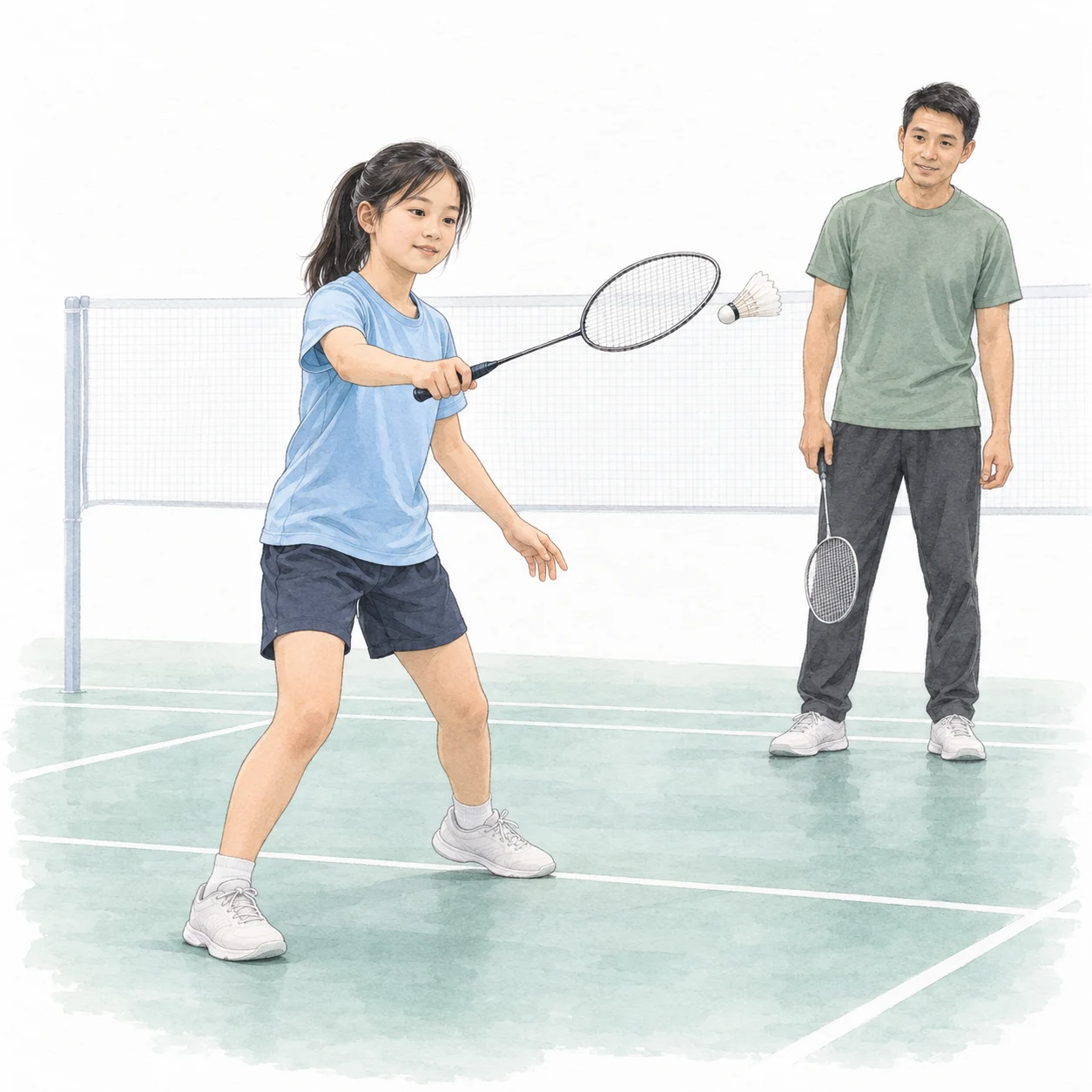
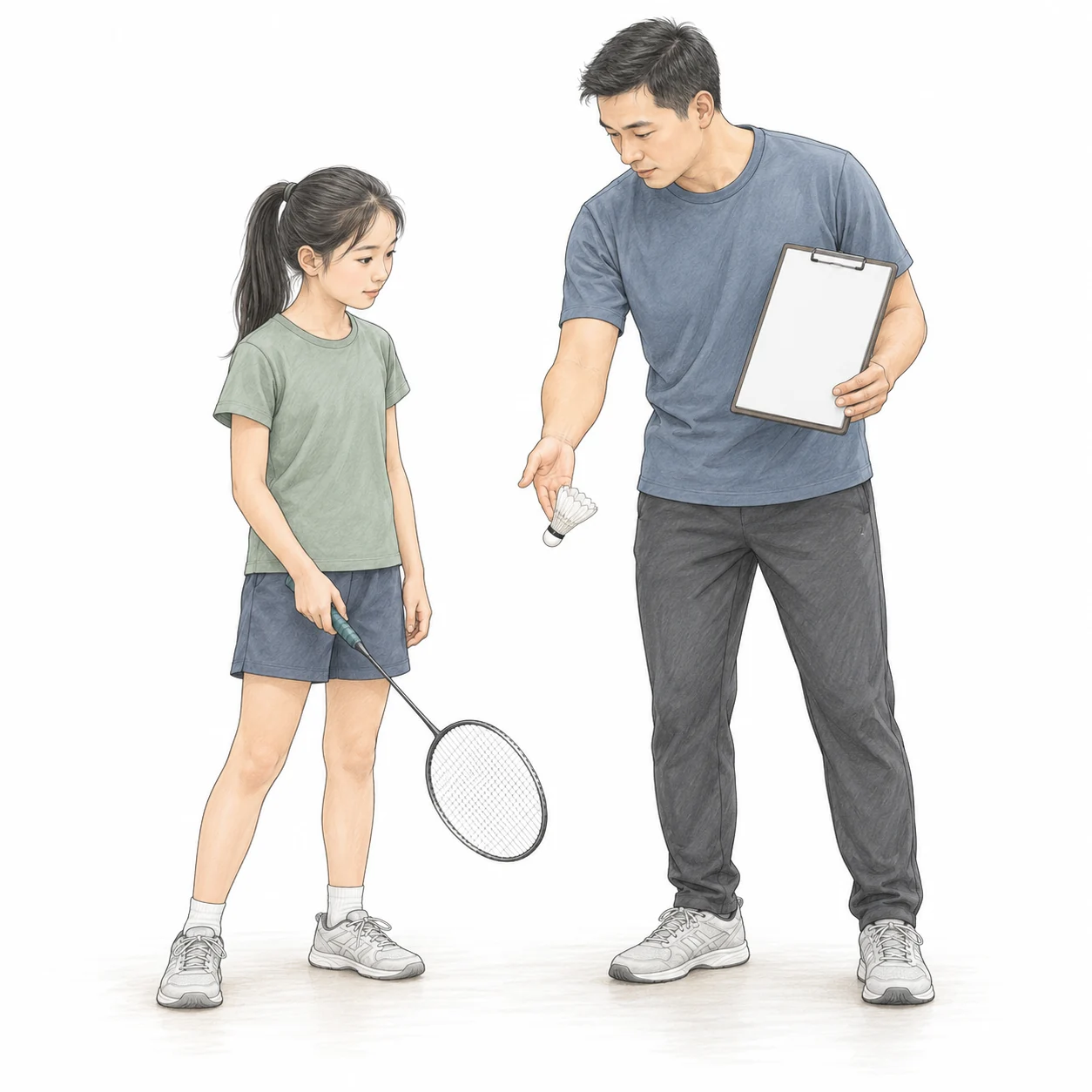
Imagine a coach asking a child to make a gentle contact so they can notice where the shuttle travels. At the same moment, a parent calls for a stronger hit because the shuttle did not cross the net. Both adults want improvement, but they are asking for different things. The child may switch attention between the voices, rush the next attempt, or seek approval from the sideline instead of checking the original task. A missed shot alone does not show that the coach has overlooked something. The intended learning task may be control, timing, positioning, or simply understanding the instruction before adding more difficulty.
The practical question is not whether parents know badminton. Some parents have valuable playing experience and know their child very well. The question is whether the extra instruction fits the task at that moment. During a badminton class for kids, one agreed cue is often easier to test than several competing corrections. Parents can watch what the coach asks, observe how the child responds, and discuss an apparent mismatch when the coach is available. This preserves a clear attempt while leaving room for a thoughtful conversation. It also helps the child distinguish advice they should use now from ideas that may be useful later.
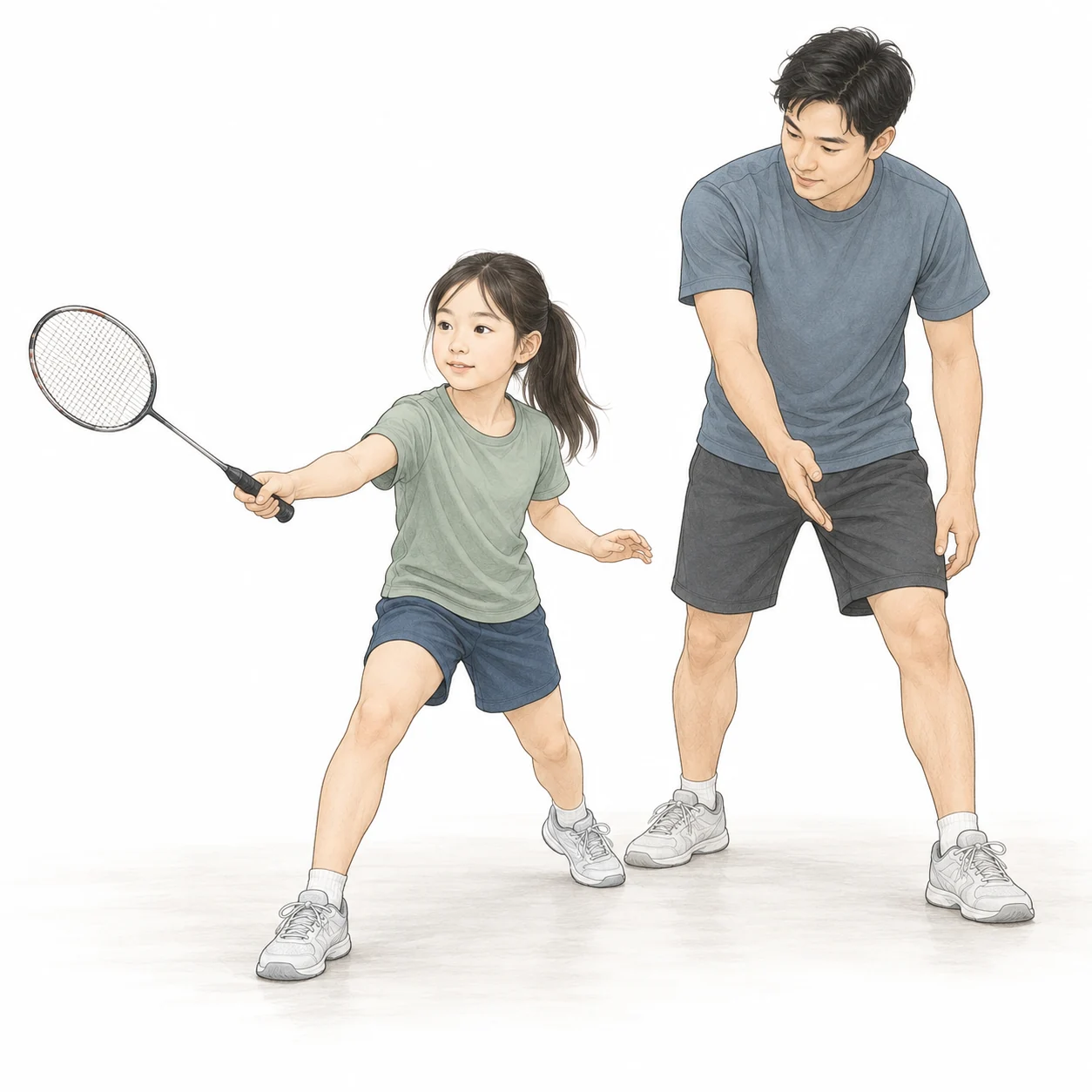
ASK ABOUT THE LEARNING GOAL
Watch what the coach is trying to teach before judging the result
A drill can look simple from the sideline and still demand a great deal from a beginner. A child might be learning where to stand, when to start, or how to stop safely after an attempt. Watching only the shuttle outcome can hide these smaller decisions. Parents can ask a badminton coach what successful practice would look like for that task. The answer should help them notice something specific, such as following the agreed start signal or returning to the waiting position. It need not become a technical lecture. A clear explanation gives families a better basis for evaluating teaching than the volume of shouting or the number of impressive demonstrations.
Questions are useful when they invite explanation rather than assume that every mistake needs immediate correction. ‘What is the main thing you want her to notice in this activity?’ opens a discussion about the learning goal. ‘Why is he still missing?’ can also be a fair concern, but it benefits from context: which attempt, which instruction, and what happened afterward? A badminton academy should be able to explain its approach through the actual teaching conversation. A coach’s playing background, including national experience, can be valuable; parents should also observe whether the explanation is understandable and suitable for the child in front of them.
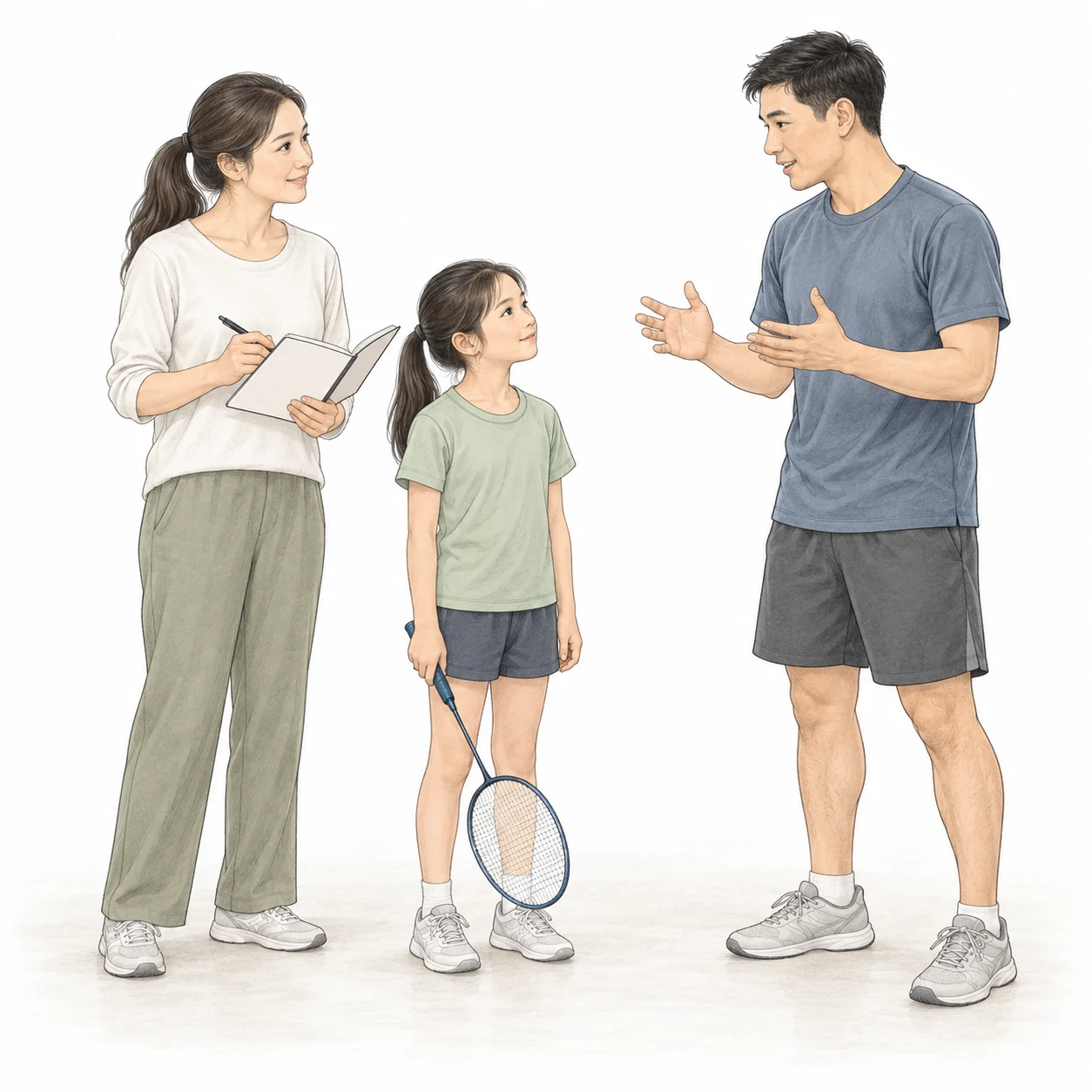
SHARE OBSERVATIONS, NOT EXTRA ORDERS
Parents can provide information the coach cannot easily see
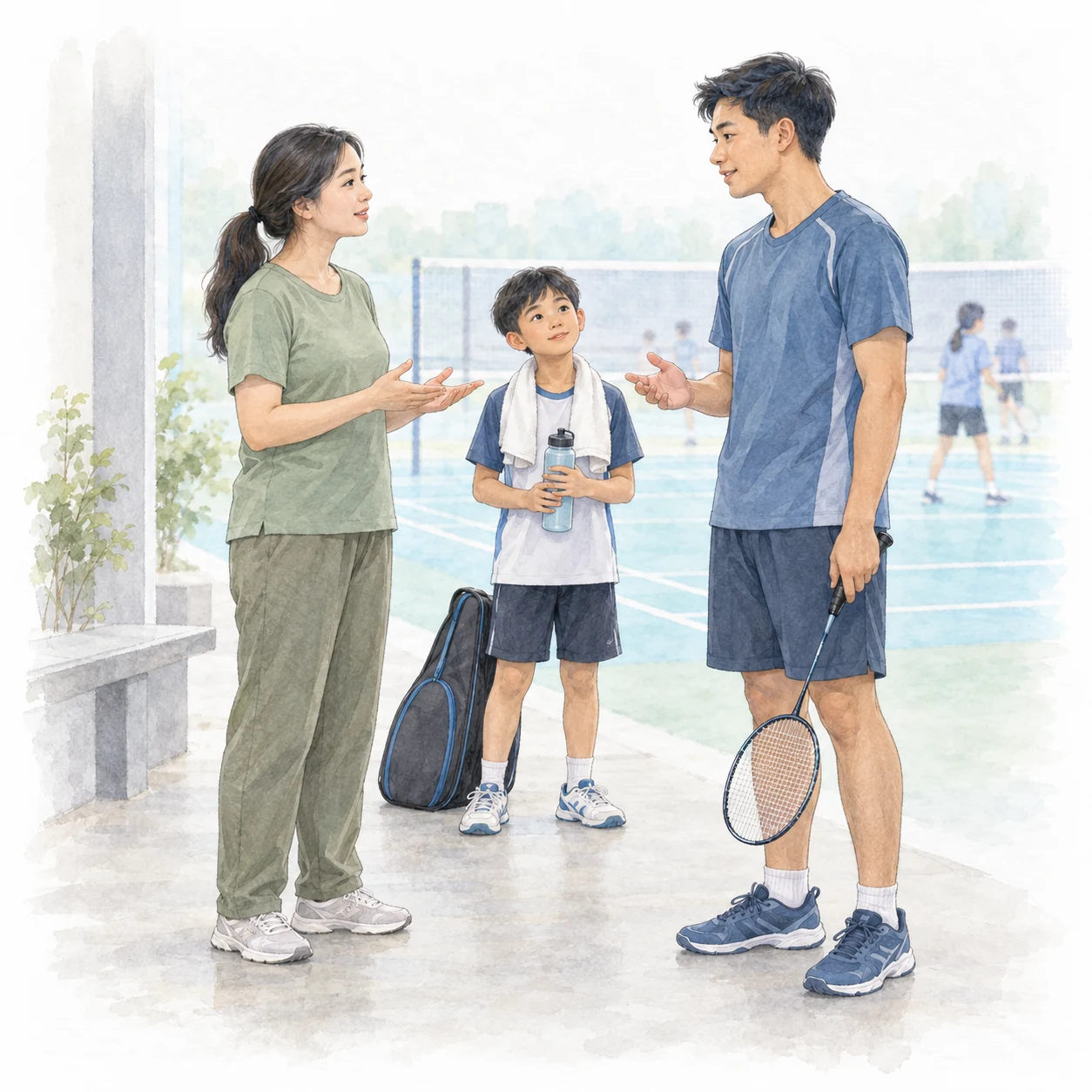
Parents often notice useful patterns outside the court. Their child may hesitate when several adults speak at once, struggle to describe an instruction, or become unusually quiet after being compared with another player. Sharing such observations can help a coach understand the learning situation. Describe what you saw or heard rather than assigning a motive. ‘She asked me which instruction to follow’ is more useful than ‘she is not listening.’ An observation also leaves room for another explanation. The coach may have seen a different moment, or the child may need the adults to clarify the task together rather than receive a stronger correction.
A parent does not have to collect a running list of faults to be involved. Choose a relevant example and include the context: what activity was happening, what the child appeared to hear, and what they did next. If the child says they are confused, invite them to explain that directly when possible, with support if they need it. The aim is not to speak over them but to make communication easier. Families searching for a badminton coach in KL can look for this willingness to exchange information. The conversation should support the child’s learning and dignity instead of becoming a contest over which adult understands badminton better.
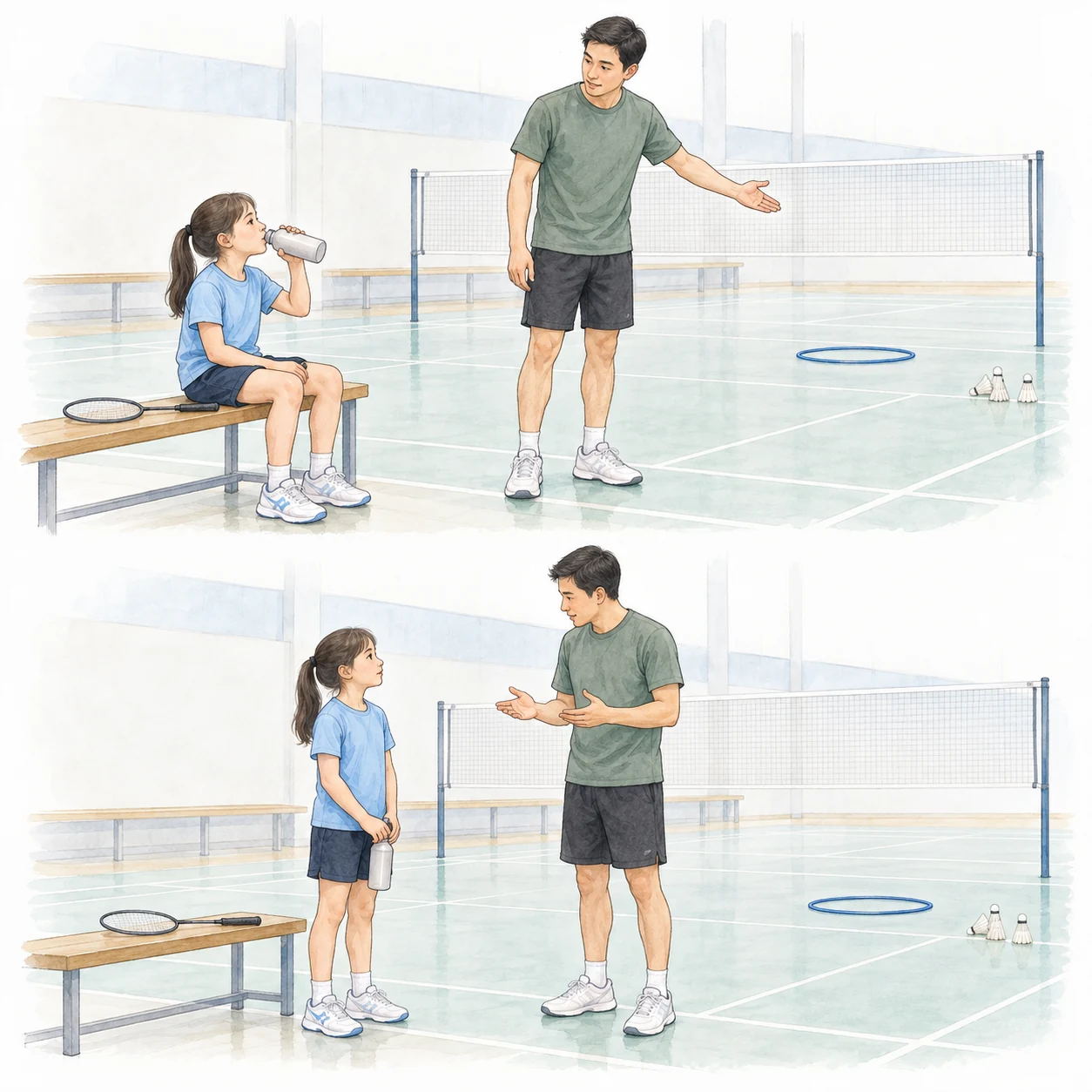
CHOOSE THE RIGHT MOMENT
Ask before interrupting, while treating immediate safety differently
For a non-urgent question, first check when the coach can talk without losing attention to the children currently practising. A pause, a transition, or the end of the activity may offer a suitable moment, but the actual arrangement depends on the class. Do not assume there is a particular STBA consultation schedule or a rule that every discussion must wait until the end. A simple request to find an appropriate moment respects the coach’s supervision responsibility and the parent’s need for an answer. If a concern cannot be resolved briefly, agree on how to continue the conversation rather than trying to settle it across the court during another child’s turn.
Immediate safety concerns are different from ordinary technique questions. If a child is about to enter another player’s swing space, or an immediate hazard is visible, speak up clearly and promptly so the responsible adult can respond. This guide does not tell parents to remain silent when urgent action is needed. After the immediate situation is addressed, discuss what the child should understand for the next attempt. Keep the distinction clear: an urgent warning protects a person in the moment, while a running stream of technical instructions changes the learning task. A useful badminton training environment gives both safety communication and thoughtful teaching discussion their proper place.
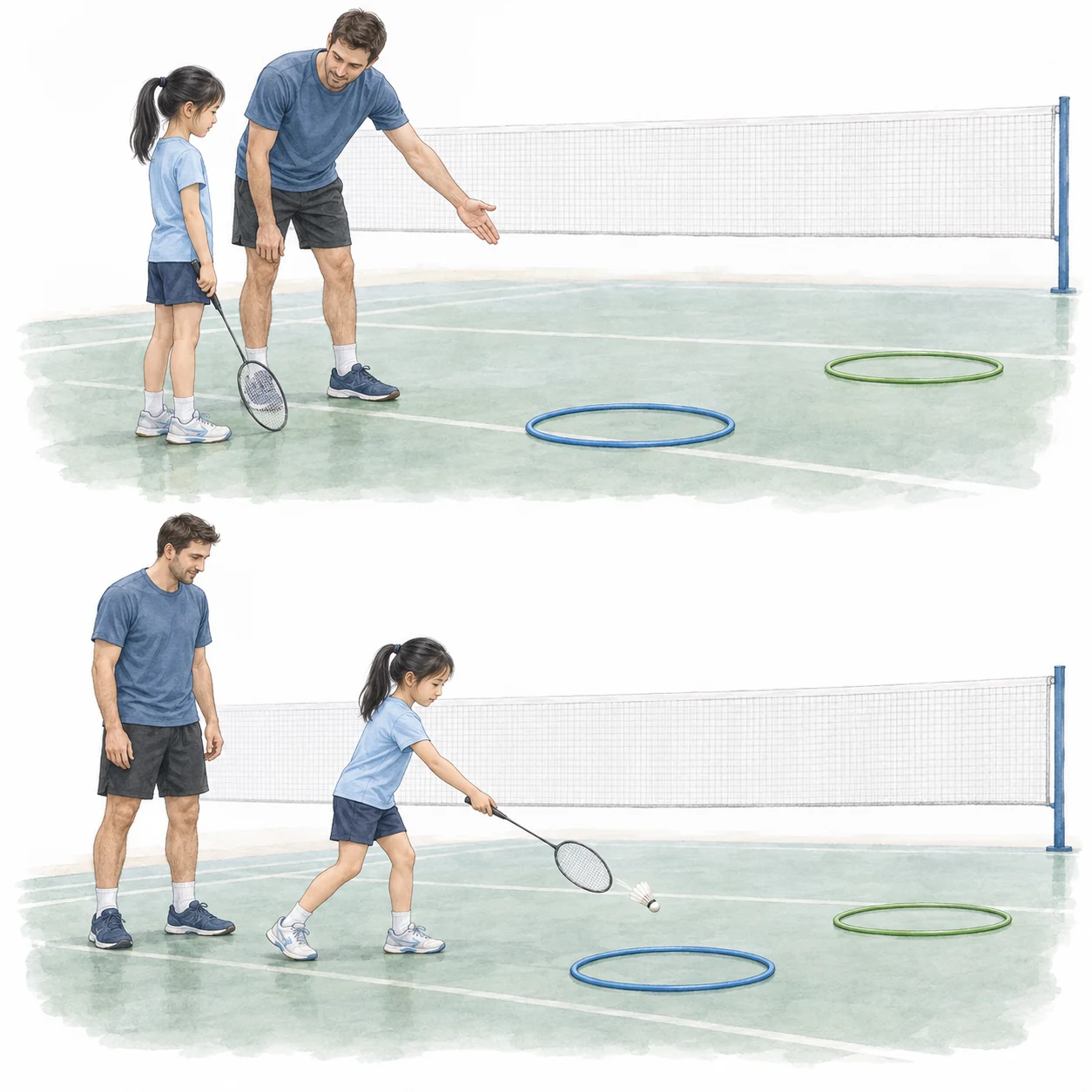
SUPPORT WITHOUT COMPARISON
Notice effort, decisions and understanding rather than another child’s score
Encouragement can be specific without adding a new technical command. A parent might acknowledge that a child tried the agreed cue again, asked a useful question, or waited until the court space was clear. These observations tell the child that attentive learning matters. They are more informative than calling every shot excellent, and they avoid making another player the benchmark for each attempt. Children can differ in experience, confidence and the task they are currently working on. A class should not be judged by whether every child produces the same result at the same time. The relevant question is whether the child can understand and use the next manageable step.
Comparisons often enter a conversation unintentionally. ‘Your friend can do it already’ may be meant to motivate, yet it gives little information about how to improve. It can also draw attention away from the task toward embarrassment or approval. Replace the comparison with an observation about the child’s own attempt: what instruction did they try, what changed, and what remains unclear? The coach can help define a suitable next step. A parent can support that step without promising success at the next lesson. The child then has something practical to work on instead of a demand to match another learner’s performance.
Support also includes listening to how a child experiences the lesson. Ask an open question such as ‘Which part made sense today?’ or ‘When did you want to ask for help?’ Give them time to answer without turning the journey home into another correction session. If they mention an issue, check the context with the coach instead of assuming either adult must be wrong. Children should be able to ask for clarification without feeling that they are disappointing the family. This kind of conversation makes parental involvement useful: it connects the lesson with the child’s understanding while keeping the next technical task coherent.
LET THE CHILD PRACTISE ASKING
Help children seek clarification rather than depend on sideline answers
A child who looks toward a parent after every attempt may be seeking reassurance, an instruction, or help with an unfamiliar activity. It is worth understanding the reason before treating the behaviour as defiance or dependence. Parents can encourage a simple question to the coach, such as ‘Which part should I try again?’ If a younger or less confident child needs support, help them find the words without inventing their answer. Over time, opportunities to ask and explain can become part of badminton training. The purpose is to make the next attempt understandable, not to require a child to handle every difficult conversation alone.
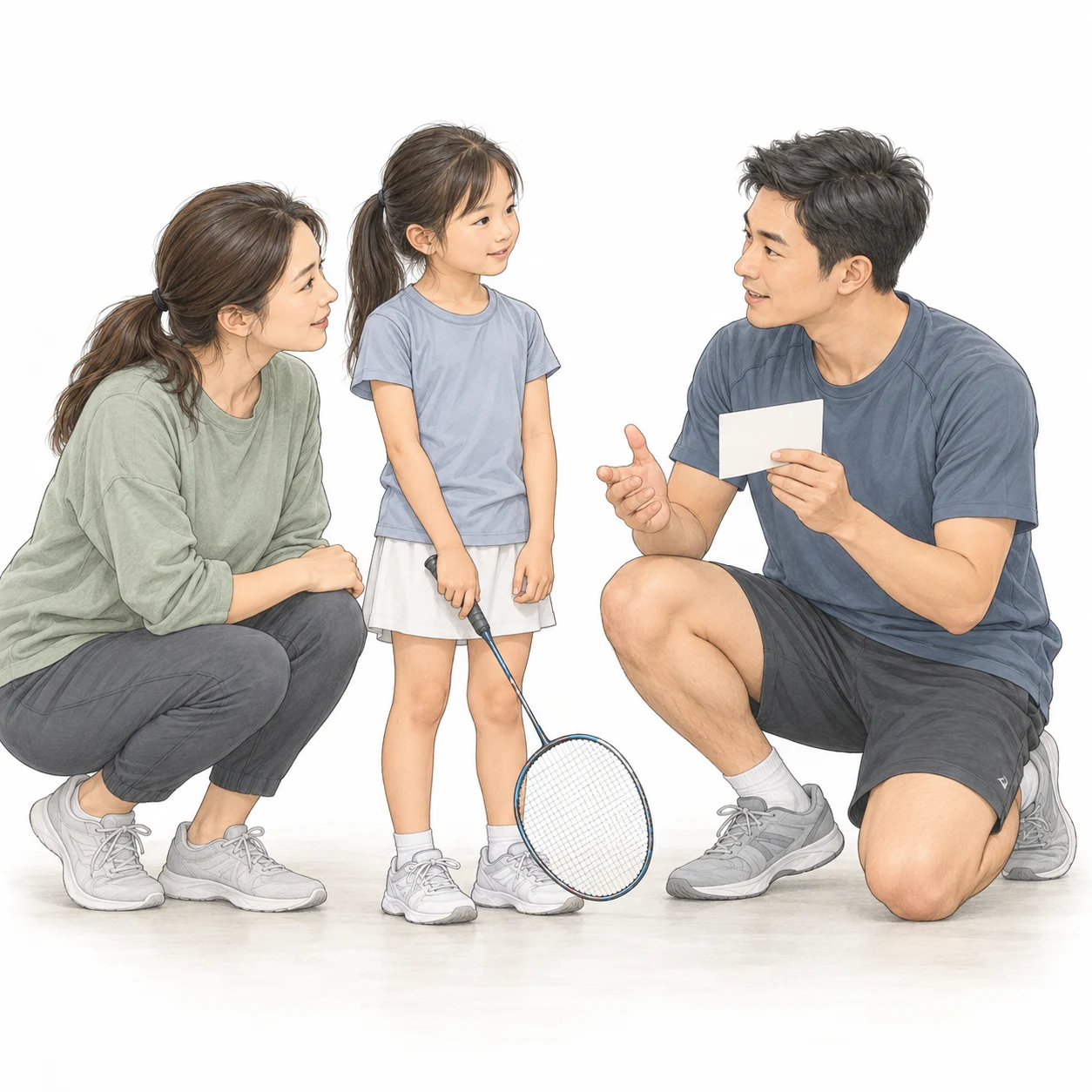
Adults can agree on a small communication plan for the current activity: the coach gives the task, the child can ask for clarification, and the parent shares relevant observations at an appropriate moment. This is a proposed approach to discuss, not a claim about an existing academy rule. Check that the child understands the arrangement. If they still receive conflicting messages, simplify it rather than blame them for failing to choose between adults. Good badminton coaching includes noticing whether the instruction has reached the learner. Good parental support includes helping that communication happen without becoming a second voice directing every movement.
BUILD A TWO-WAY PARTNERSHIP
Choose coaching that welcomes useful questions and clear learning roles
When evaluating a badminton academy, parents can observe both the lesson and the quality of communication around it. Does the coach explain the task in language the child can use? Can a parent raise a reasonable concern without being dismissed? Does the child get a chance to describe what they understand? A calm discussion of these questions is more useful than a claim that the best badminton coach must always be the loudest, most decorated, or most controlling person on court. Experience and qualifications may inform the conversation, but the teaching should also be visible in the way the next learning step is explained and checked.
Families considering badminton classes for kids in KL can begin with an application and describe the child’s experience, questions and learning needs. Use the same conversation to ask how parent observations are best shared and how the coach handles confusion during practice. An application does not guarantee a place or establish a particular timetable. It gives the academy information needed for a suitable discussion. The strongest partnership is neither constant sideline direction nor unquestioning silence. It is a shared understanding of the current task, a clear route for ordinary questions, and a willingness to act promptly when an immediate safety concern needs attention.
Parents, sideline instructions and badminton learning: common questions
Parental involvement can be helpful when it makes the learning task clearer. These answers address communication choices rather than prescribe a universal class policy. Use them to discuss your child’s situation with the badminton coach and ask what arrangement fits the actual activity. A routine technique question and an immediate safety warning deserve different responses.
Is it always wrong for a parent to give advice during badminton training?
No. Parents may have relevant knowledge and observations, and immediate safety concerns may need a prompt warning. The difficulty arises when extra advice conflicts with the coach’s current task or interrupts supervision. Ask how the advice fits the activity and when it can be discussed. A useful arrangement clarifies whose cue the child follows for the present attempt while keeping communication open.
What if my instruction is technically correct?
A technically correct idea can still be poorly timed for the child’s current learning task. The coach may be asking for a simpler attempt or concentrating on a different element. Share the idea and ask about the purpose of the activity. Avoid assuming that an accurate correction must be shouted immediately across the court. Timing and clarity affect whether advice is usable.
How can I ask about a lesson without sounding confrontational?
Use a specific observation and a question about the goal. For example, describe the instruction you heard and ask what the child was meant to notice. Choose a time when the coach can respond while maintaining supervision. You do not need to hide a reasonable concern; make it concrete enough that both adults can discuss the same moment.
Should I stay silent if I see an immediate safety hazard?
No. Speak up clearly and promptly when an immediate hazard needs attention. Ordinary questions about technique can usually be discussed at a suitable pause, but an urgent warning serves a different purpose. Once the situation is addressed, clarify the safer next action with the responsible adult. This guide does not create a rule requiring parents to ignore visible danger.
What can I say to encourage my child without giving another command?
Acknowledge something you actually observed: trying the agreed cue, asking for help, or waiting for clear space. Ask what they understood rather than comparing them with another child. Avoid praising a result you did not see or promising quick improvement. Specific support gives the child useful recognition while leaving the coach’s technical task intact.
My child keeps looking at me after every shot. What should I do?
Find out what they are seeking: reassurance, clarification or a new instruction. Help them ask the coach a simple question when appropriate. Younger or less confident children may need support finding the words. Discuss a clear arrangement for the activity rather than withdrawing support abruptly or assuming the child is deliberately ignoring the coach.
Can I practise the same cue with my child at home?
First ask the coach whether that cue is suitable outside the lesson and what the child should understand about it. Do not turn a brief conversation into an unverified home training prescription. If you do support practice, keep the purpose clear and avoid adding competing corrections. The child can also explain the idea in their own words without needing a court drill.
Does a national player automatically communicate better with parents?
National playing experience can offer valuable knowledge, but communication and teaching still need to be observed. Look for a clear explanation, a willingness to hear relevant concerns, and a task suited to the child. Do not dismiss national experience or assume that a playing record alone resolves every learning question. Evaluate how the coach applies that experience in the lesson.
How do we ask STBA about a badminton class for kids?
Use the application link in your language and describe the child’s experience and your questions. You can ask how to share parent observations and how learning instructions are clarified during class. The academy can then discuss the situation with you. Submitting an application does not guarantee a place, a particular session, or a stated improvement outcome.
Teaching illustrations: listening, observation and parent–coach conversation
Four steps for helpful parental involvement
Start by understanding the current activity, then decide whether your concern needs an immediate warning or an ordinary conversation. For non-urgent questions, bring a concrete observation and agree on one usable next cue with the coach and child. These steps are a discussion framework rather than a compulsory STBA policy; adapt them to the actual learning situation and supervision needs.
| Situation | Adds confusion | Supports learning Compare communication choices |
|---|---|---|
| A shuttle misses the target | Shout a different technical command immediately | Observe the agreed task before asking about the attempt |
| Two adults give different cues | Expect the child to choose which adult to obey | Adults clarify one cue for the current activity |
| An ordinary lesson question | Interrupt supervision across the court | Ask when the coach can discuss the question |
| An immediate safety hazard | Treat every concern as something that must wait | Give a clear, prompt warning and seek a response |
| Another child performs well | Use the other child as a repeated comparison | Notice the child’s own understanding and decisions |
| The child is confused | Add more commands or speak over the child | Support a simple question and check understanding |
Ask about badminton classes and parent–coach communication
Looking for badminton training in KL where the learning task can be discussed clearly? Send an application with your child’s experience and the questions you want to raise. Ask how to share observations, how the child can seek clarification, and what kind of support fits the lesson. STBA can discuss the situation before any placement is confirmed. Availability and a suitable arrangement need to be checked; applying does not guarantee a class place or a particular result.