Best Badminton Coach in KL: Progress Feedback Parents Can Use
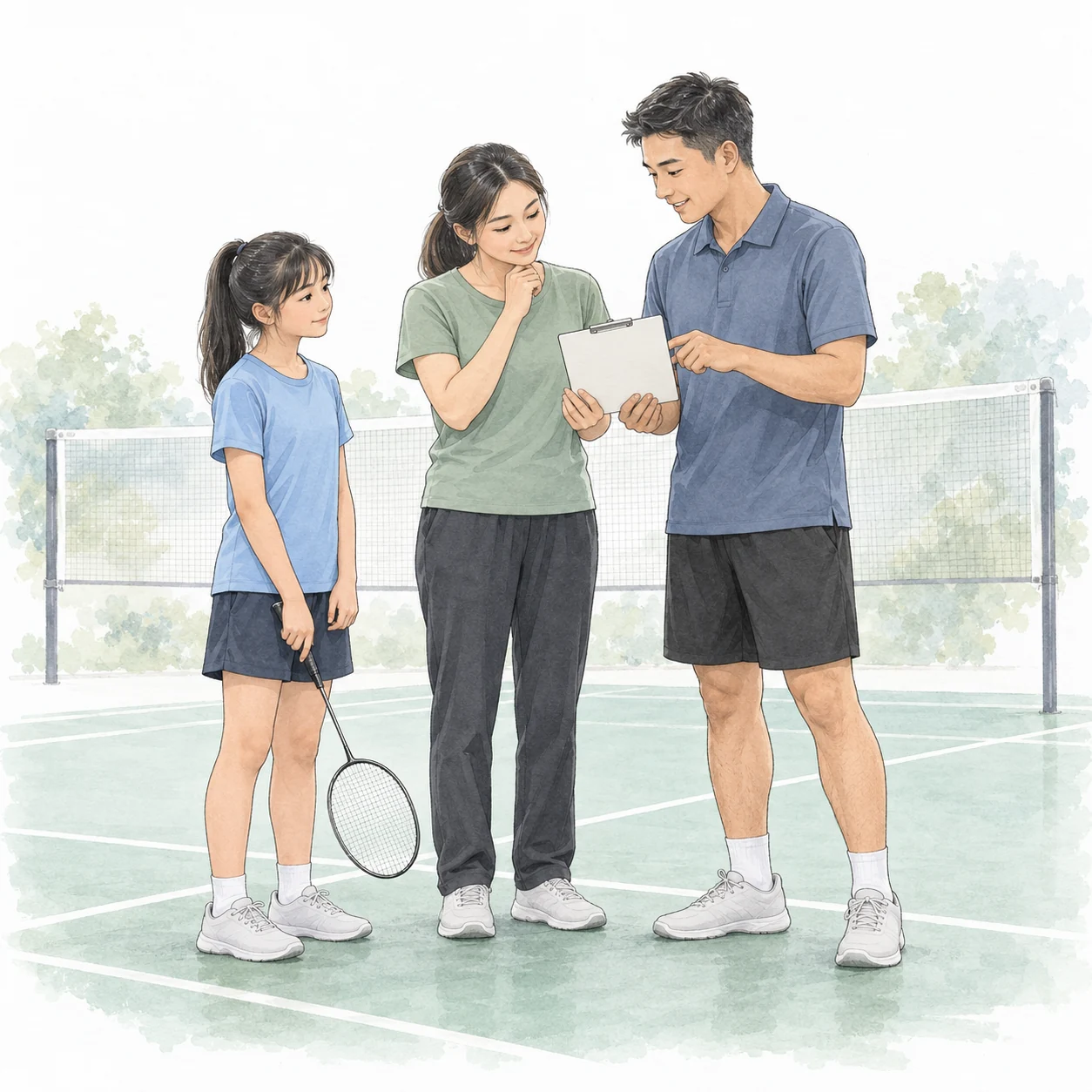
For me, a search for the best badminton coach in KL should include how clearly a parent can understand the child’s learning. A report that says only ‘good improvement’ leaves important questions unanswered. What was taught? What can the child now try without a reminder? What still needs attention, and what should happen next? I am Eric Chuar, and I see those questions as part of responsible teaching, rather than a demand for a medal after every lesson. This guide helps parents discuss badminton training in Kuala Lumpur, Malaysia, using concrete observations. Its images are AI-generated teaching illustrations, not photographs of ST Badminton Academy lessons. The examples are hypothetical learning tasks, not accounts of named students or promised results.

Name the learning
Ask what the lesson was trying to teach
Useful progress feedback begins with a recognisable teaching goal. ‘We worked on badminton’ is too broad to explain a child’s next attempt. A goal might concern a comfortable racket preparation, a controlled net contact or returning to readiness after a shot. The point is to name what the learner was trying to do, in language a parent and child can understand. It need not become a long technical report. Ask what the coach will look for in the next attempt, so the goal includes something observable rather than only a technical name.
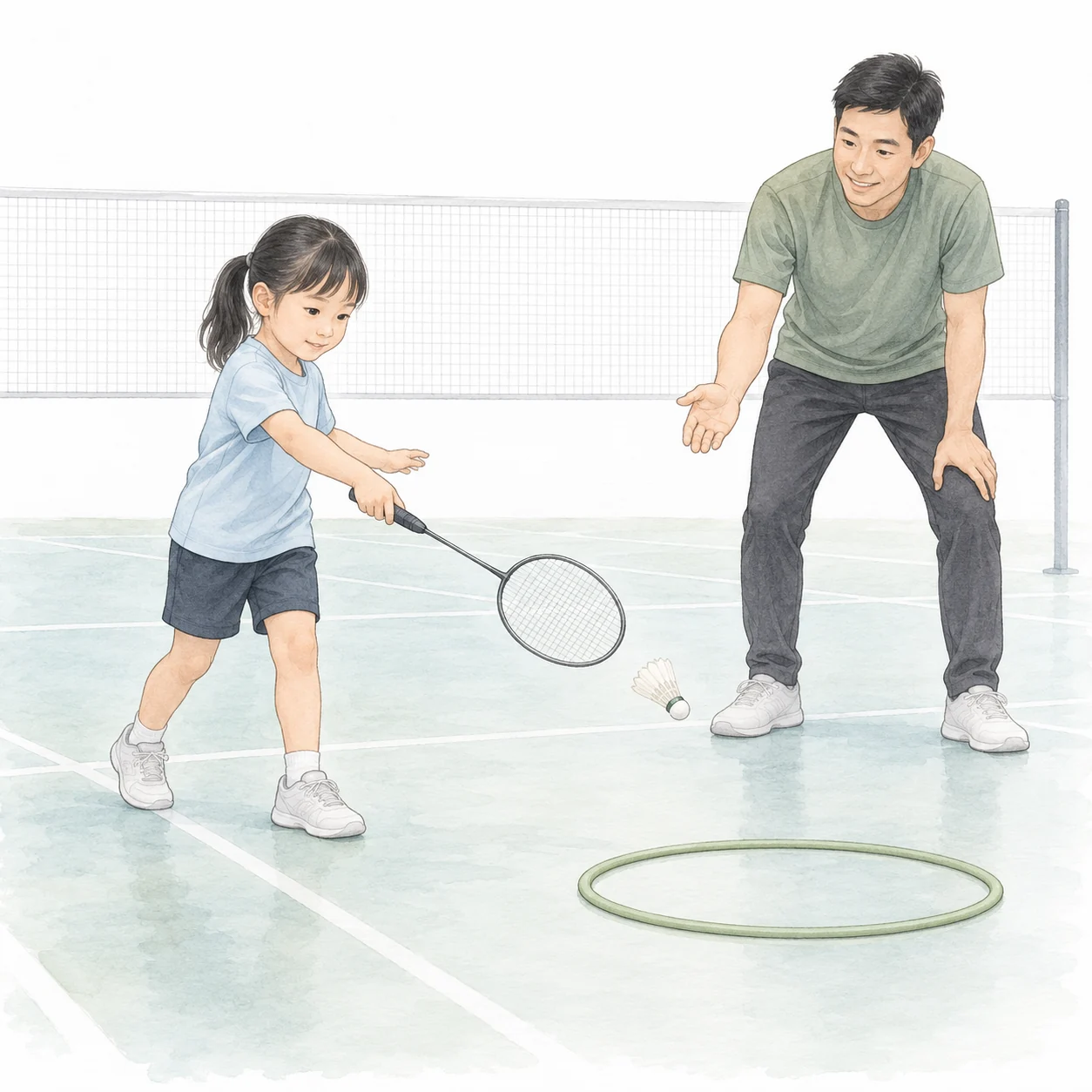
I want the goal to describe learning rather than merely the activity. Feeding a basket of shuttles describes a practice arrangement; it does not yet say what the child was learning from it. A parent can ask which part of the action mattered and which cue helped. This makes the discussion more specific without requiring the parent to become another coach or to supervise every contact from the side of the court. The same drill can serve different purposes, so clarify which part is the priority for this learner before interpreting the activity as progress.
Separate help from independence
Explain what the child did with and without reminders
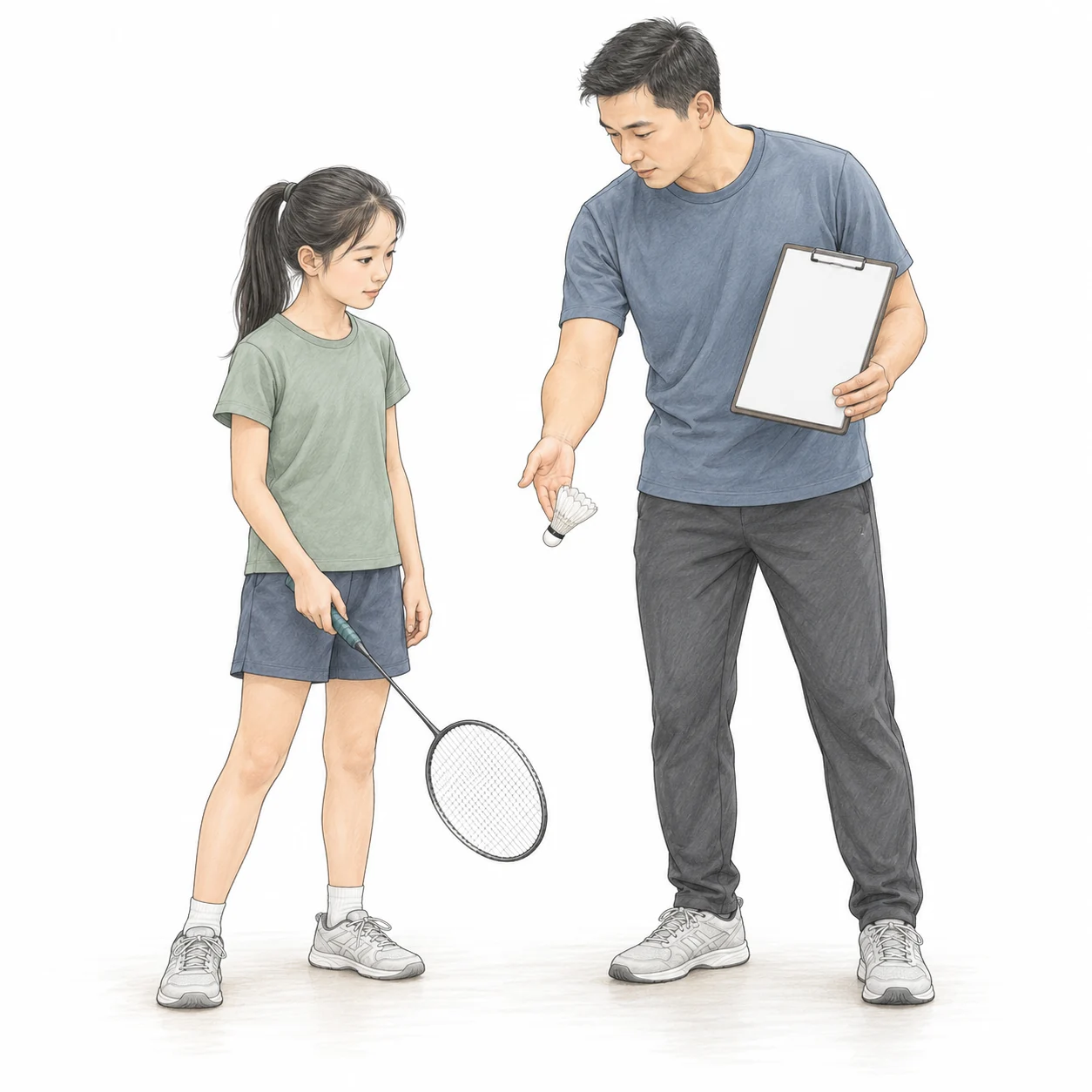
A successful attempt immediately after a demonstration is useful information, but it does not automatically show independent understanding. The child may still need the starting position arranged, a predictable feed or a repeated cue. Feedback should describe that support. ‘They controlled the contact when reminded to prepare the racket’ says something different from ‘They prepared and controlled it on their own in this exercise’. Both can describe meaningful learning. It is also useful to distinguish a cue given before an attempt from a correction afterwards; they show different parts of the learning process.
I do not want support to be treated as failure. Beginners often need it, and the next task can gradually reduce it. Parents can ask what the child recognised independently and where a reminder remained necessary. This separates an honest description from a broad ability label. It also prevents a correct attempt in one simple exercise from being presented as mastery in every rally or match situation. Ask which setup the child can organise alone and which part the coach still arranges, instead of treating independence as an all-or-nothing label.
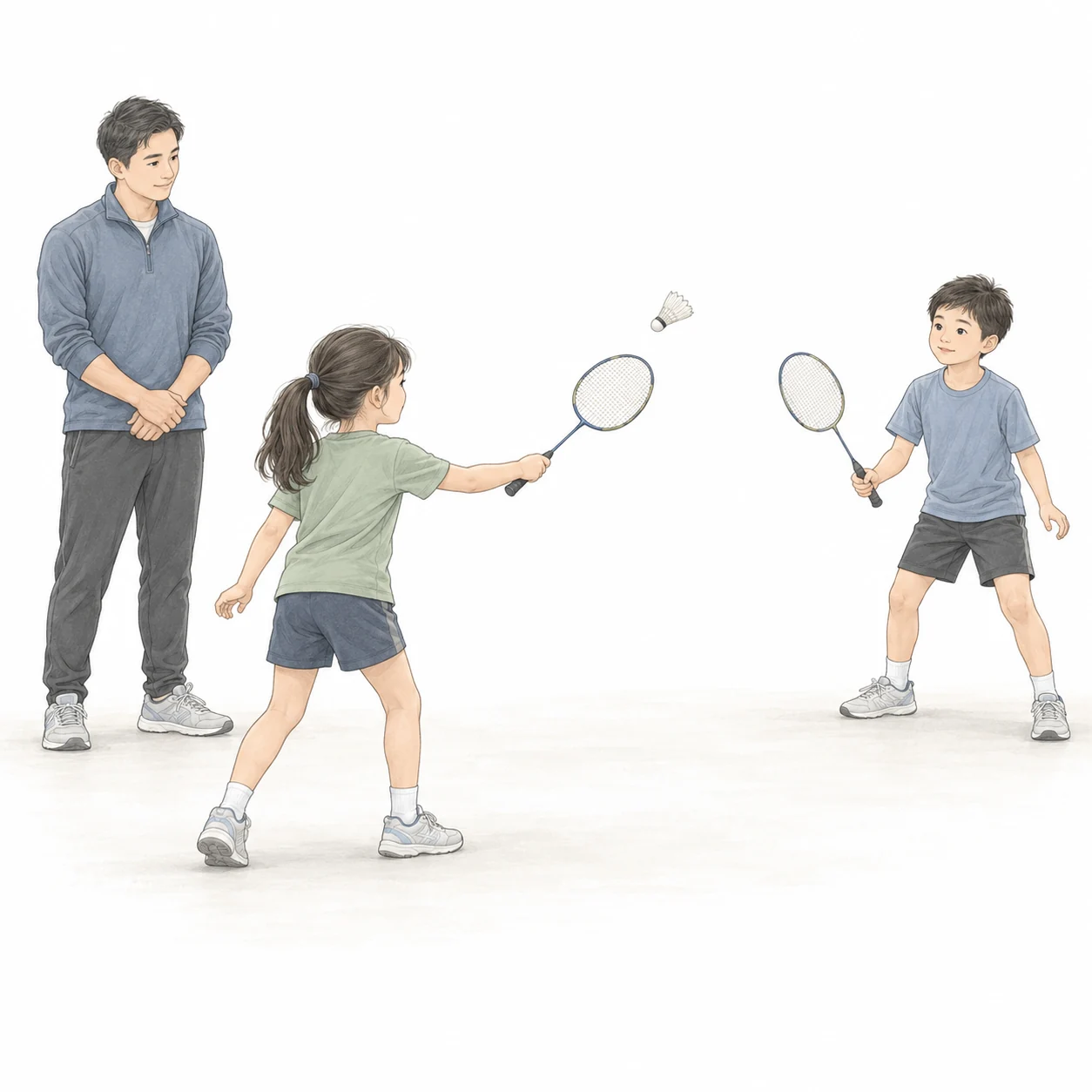
Use observable evidence
Describe actions rather than personality labels
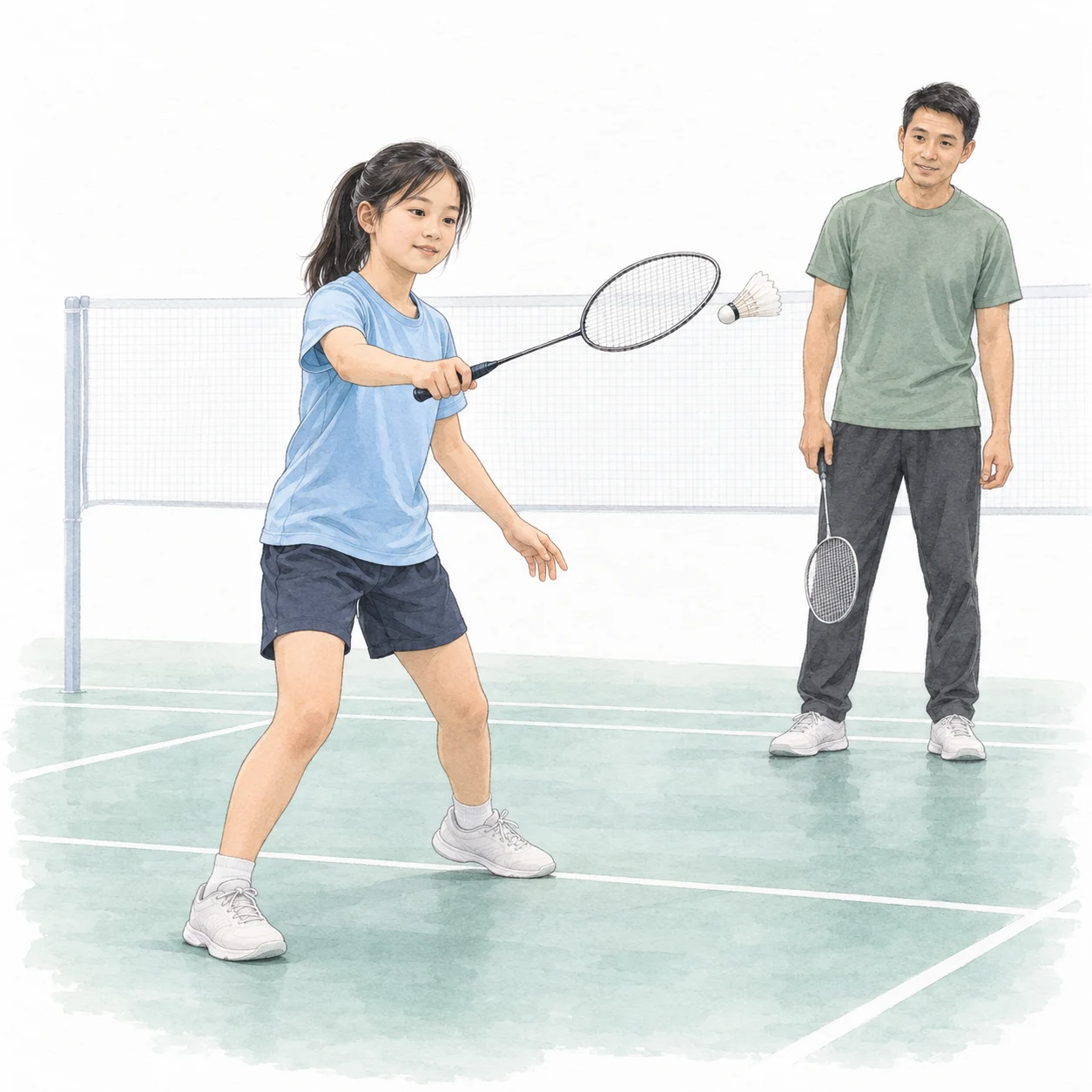
Feedback becomes more useful when it identifies an action that can be checked. ‘More confident’ may describe an impression, but a parent still needs to know what changed in the task. A hypothetical example might be that the child began showing the ready position before the next feed instead of waiting for that instruction. The example connects a visible action to a lesson goal without inventing a score or result. When comparing attempts, describe the relevant practice conditions too; a changed feed or starting position can affect what an apparent improvement means.
The same care applies to difficulty. Rather than calling a learner lazy or untalented, describe where the task broke down: a direction was misunderstood, preparation came late or recovery was forgotten. I value an explanation that helps select the next teaching step. These observations are about the current badminton task. They should not become a diagnosis of the child’s personality, health or potential based on a short view of a lesson. The child’s own account can help clarify whether they missed the instruction, understood another task or did not recognise when to begin.
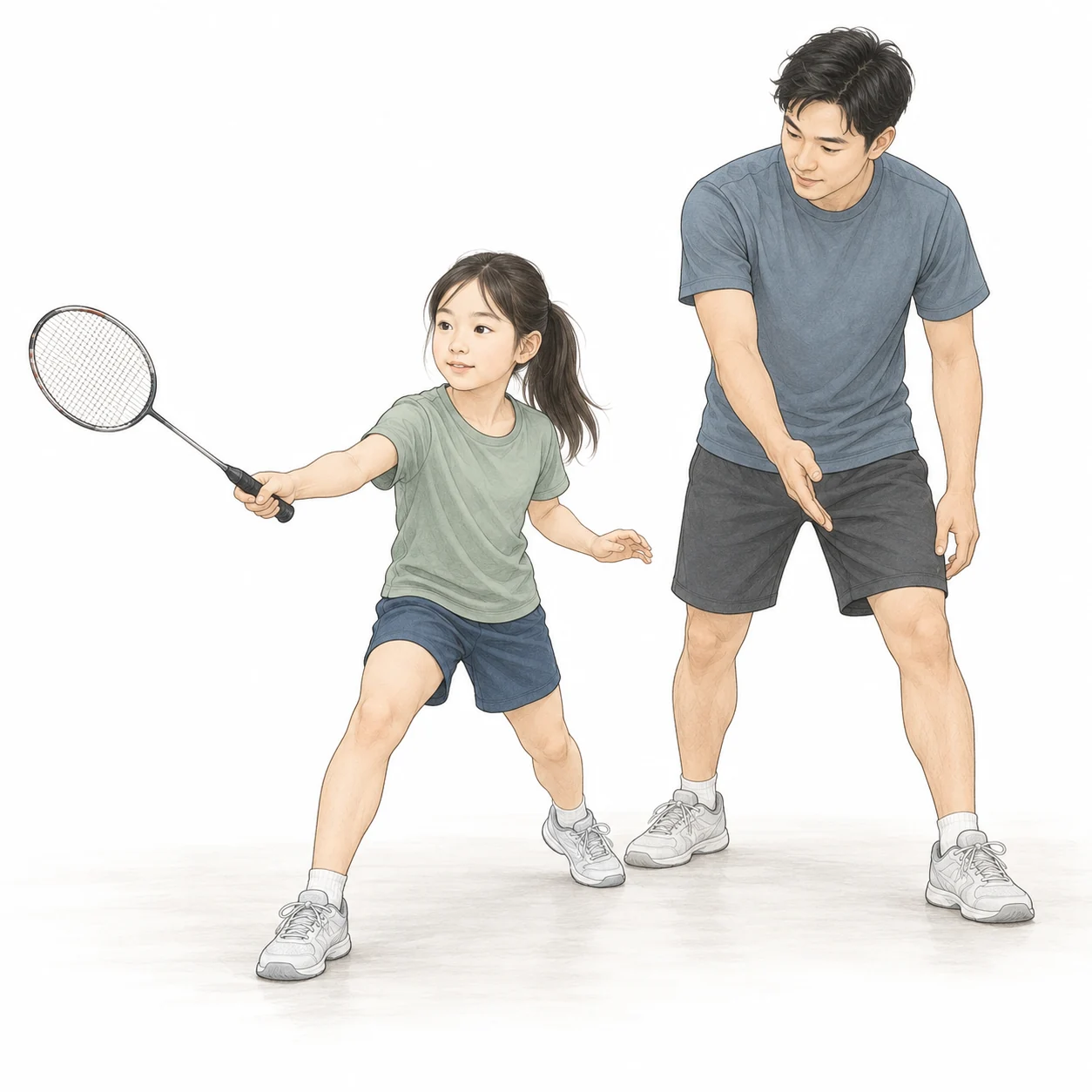
Check understanding
Let the child explain and try the teaching point
A parent does not need to test a child through a second lesson at home. A simple conversation can reveal whether the teaching point has meaning: ‘What were you practising?’ or ‘What did the coach ask you to notice?’ The child may show a starting position or explain one cue. Their words need not sound technical. Understanding is more useful than repeating a phrase without knowing how it relates to the action. One calm question is often a better starting point than asking for every correction; allow the child to explain the point they remember.
If the answer is unclear, take that information back to the coach. The explanation may need another demonstration, simpler language or a different task. I see that as a teaching question, not a reason to blame the learner. Ask whether the child can apply the point on another attempt under appropriate conditions. A correct explanation and a usable action provide different kinds of evidence, and neither alone proves complete match readiness. If you ask for a demonstration at home, clarify the task first and avoid requiring an unfamiliar swing merely to check a remembered phrase.
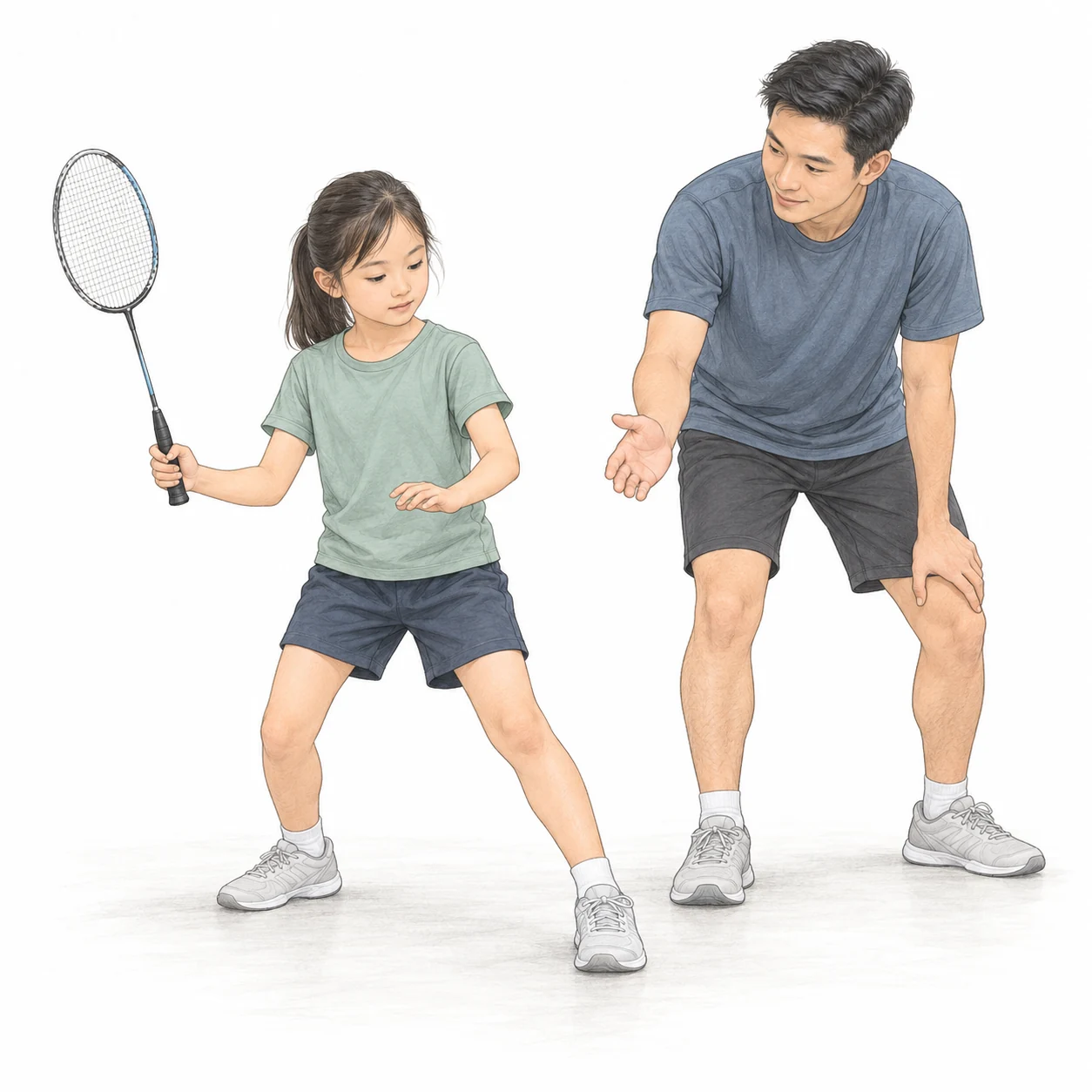
Myths and practical answers
Progress is broader than medals, praise or harder drills
A medal is not a complete report on a child’s learning. Match results can involve the opponent, the task and many decisions across the game. They do not tell a parent exactly which foundation was taught or whether it was understood. I prefer to discuss the relevant learning action alongside any competition experience. A beginner should not need a tournament result before a small, meaningful change is recognised. A loss can still be discussed through a relevant learning action, while a win does not explain which part of instruction the child understood.
Praise can encourage participation, but praise alone does not explain progress. A helpful update can recognise effort while naming a teaching point and the next attempt. It can also say that a movement still needs practice. Honest unfinished learning is more useful than claiming a child has mastered a skill because one attempt looked good. The purpose is to keep the conversation accurate and the practice direction clear. For example, appreciation can refer to trying the agreed preparation on another turn; that gives the child a clearer connection between effort and practice.
A harder drill is not automatically evidence of better learning either. Adding speed, movement or uncertainty before the child understands the simpler action can make the problem less visible. The next task should follow what was observed, not pressure to look advanced. Progress feedback is useful when it explains why difficulty is being increased, maintained or reduced. None of those choices guarantees a future ranking or a particular rate of improvement. Ask which feature is being changed in the exercise, such as the movement or the predictability of the feed, and how it relates to the goal.
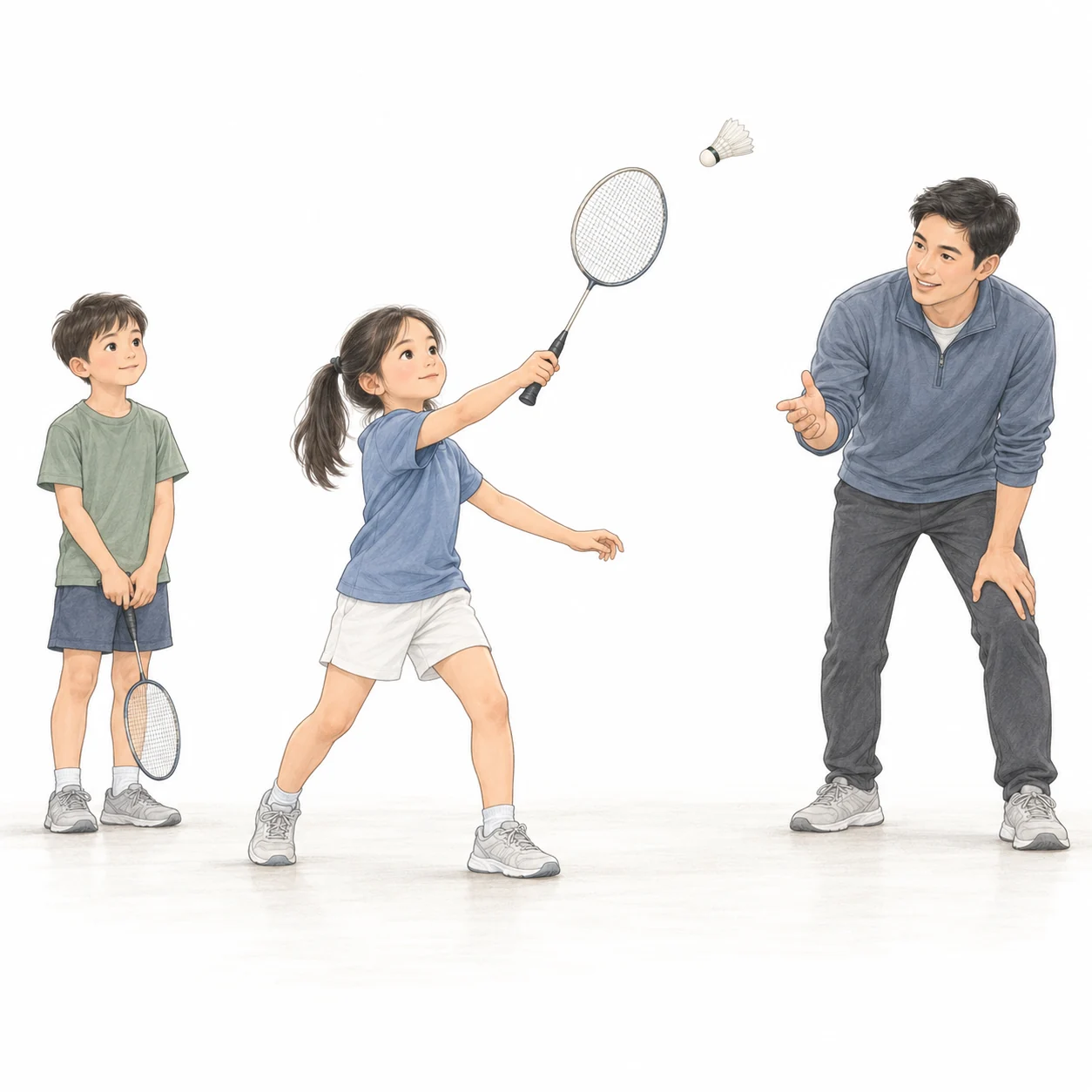
Agree on the next task
Connect feedback to one manageable teaching priority
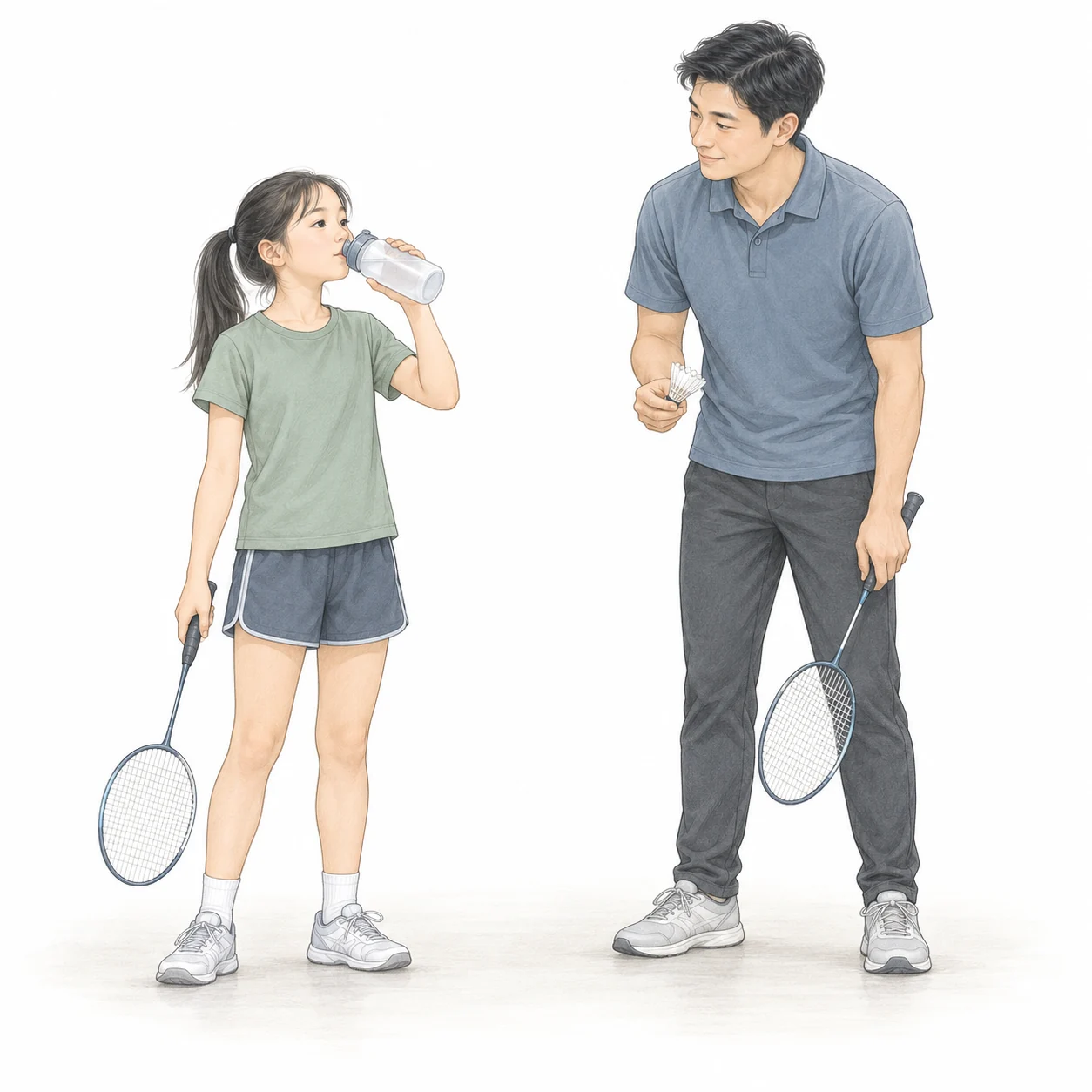
An update should lead somewhere. If preparation remains unclear, the next priority may be a simpler demonstration and controlled practice. If the child can use the cue independently in the current task, the coach may add an appropriate movement or choice. These are hypothetical teaching decisions, not a fixed ST Badminton Academy schedule. The essential link is between the observation, the selected priority and the reason for the next exercise. It can help to state the next priority as one action to observe, rather than a broad demand that the child play better overall.
Ask which point matters most now and how the coach will check it again. A long list of corrections can overwhelm a child even when every item is technically relevant. I want the next step to be usable rather than impressive on paper. For home support, clarify whether any task is recommended, what cue to use and what space is required. Extra practice should follow the current guidance rather than introduce a conflicting method. If a home task is discussed, ask what to stop or simplify when the instruction becomes unclear, rather than improvising a more demanding session.
Keep communication practical
Use feedback to discuss fit and continuing learning
Parents can bring short, relevant observations: the child is unsure of a direction, can explain a cue but cannot yet apply it, or cannot recall the purpose of an activity. Describe what happened without comparing the child with a classmate’s age, medals or apparent speed of learning. A useful conversation allows the coach to explain the task and consider what needs clarification. It does not require a promised outcome to make the discussion worthwhile. A short note about what the child said and when confusion occurred can make the question clearer without turning family time into a performance record.
When choosing a badminton academy or a badminton class for kids, ask how learning goals, current support and next steps can be discussed. Do not assume a particular reporting frequency or format is offered unless it has been confirmed. At ST Badminton Academy in Setapak, Kuala Lumpur, start an enquiry through the online application and describe the learner’s present experience and goals. Clear information makes it easier to discuss appropriate instruction without pretending a place or result is already secured. A parent may see only part of a session; explain the limits of that view and ask the coach about the context before drawing a conclusion.
Questions parents ask about badminton progress feedback
Use these questions to clarify learning and communication. Examples are illustrative, and a specific reporting arrangement should be discussed rather than assumed.
What makes feedback more useful than “doing well”?
It names the teaching goal, describes an observable action, explains any help still needed and identifies a suitable next task. General encouragement can accompany that information but does not replace it.
Does one good attempt prove that a skill is mastered?
No. Ask about the conditions, reminders and task. An action after a cue provides different evidence from independent use. Neither alone establishes performance in every game situation.
Should every lesson lead to a match result?
A match result is not a required measure for every learning task. Beginners can work on preparation, contact or recovery without a tournament result being used to validate the lesson.
How can I ask my child about learning without becoming a second coach?
Ask what they practised and which point they were asked to notice. Listen or let them show a simple position. Bring uncertainty to the coach instead of adding a new technical method.
What if the child explains the cue but cannot perform it?
Treat the explanation and action as separate observations. Tell the coach what you noticed and ask which practice conditions or demonstration can help connect understanding with an appropriate attempt.
Is a simpler next exercise a sign of poor progress?
Not necessarily. Reducing difficulty can make the learning point clearer. The useful question is why that task was chosen and what the coach will observe before changing it again.
Should I compare progress with another child?
A comparison can miss differences in experience, understanding and support. Ask about your child’s current task and next priority rather than using a classmate’s medals or pace as the only reference.
Does ST Badminton Academy promise a written report after every lesson?
This guide describes useful feedback principles, not a guaranteed reporting service. Discuss the available communication arrangement through the enquiry process and confirm the format rather than assuming one.
What should I include when enquiring about training?
Describe the learner’s experience, goals and relevant learning observations. Submit the online application first, review the intake rules and use the training contact information for further questions.
Teaching illustrations: making progress feedback concrete
Goal, evidence, understanding and next task
Keep the discussion focused on what the learner was taught and what can be tried next.
| Discussion point | Less informative approach | More informative approach Compare information, not coaches |
|---|---|---|
| Lesson goal | Describe only the drill or number of shuttles. | Name the action the child was learning. |
| Successful attempt | Call one good attempt complete mastery. | Explain conditions and reminders still needed. |
| Difficulty | Use a broad personality or talent label. | Describe where the current task broke down. |
| Competition | Treat a medal as the whole progress report. | Discuss results alongside relevant learning actions. |
| Next task | Choose a harder drill to look advanced. | Choose difficulty from the observed learning need. |
| Parent support | Add a separate method without clarification. | Ask for the current cue and recommended task. |
Start the conversation through the online application
If you are considering badminton training at ST Badminton Academy in Setapak, Kuala Lumpur, begin with the website’s online application. Describe the child’s experience, goals and any specific learning question, including how you hope to understand progress. Review the intake application rules and use the training contact information for further enquiries. Ask about the communication arrangement that can actually be provided; this guide does not confirm a reporting schedule. An application is the beginning of a discussion, without a promised place, trial or result. Useful information helps the next conversation focus on teaching that fits the learner.