Left-Handed Children in Badminton Class: Clear Coaching, Equal Foundations
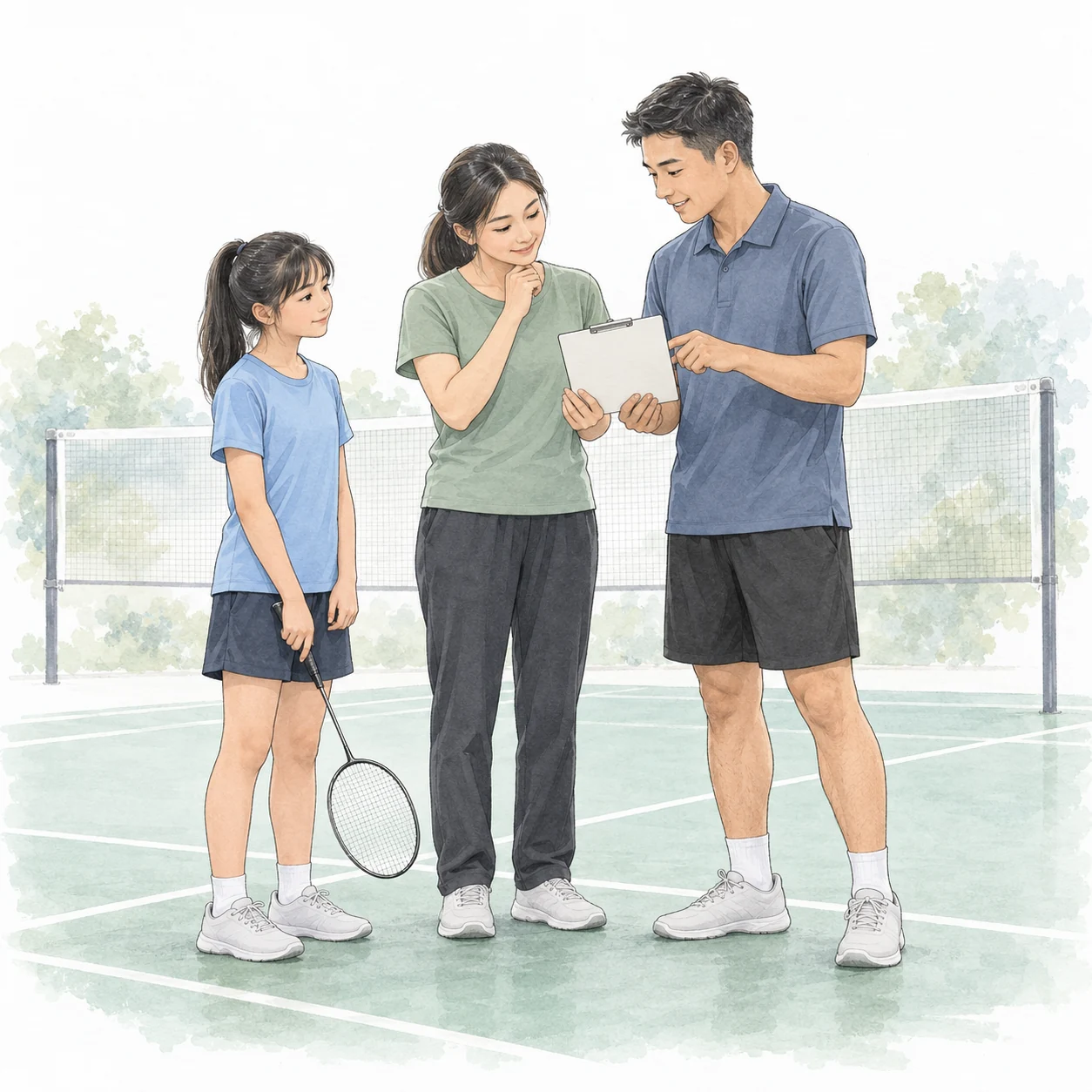
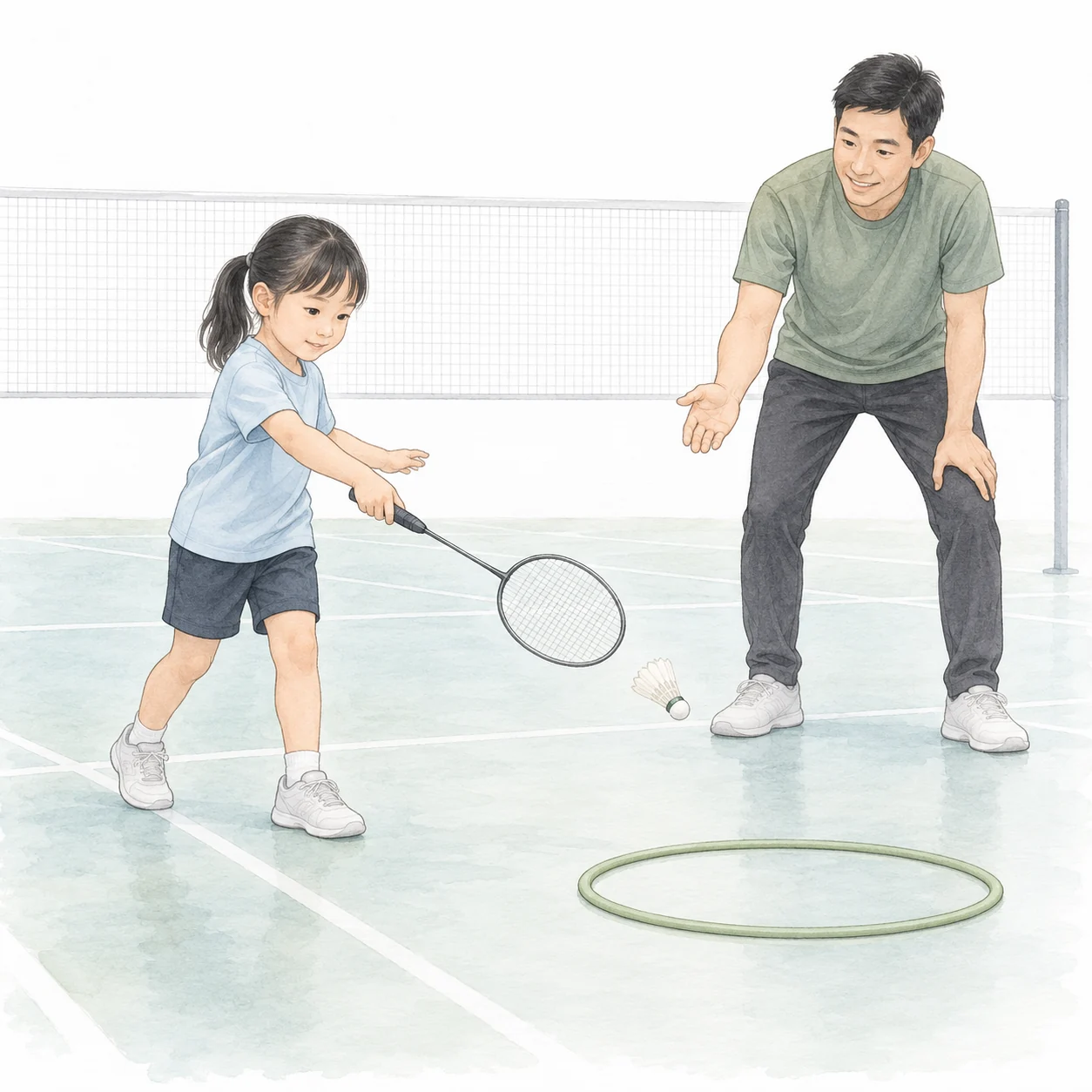
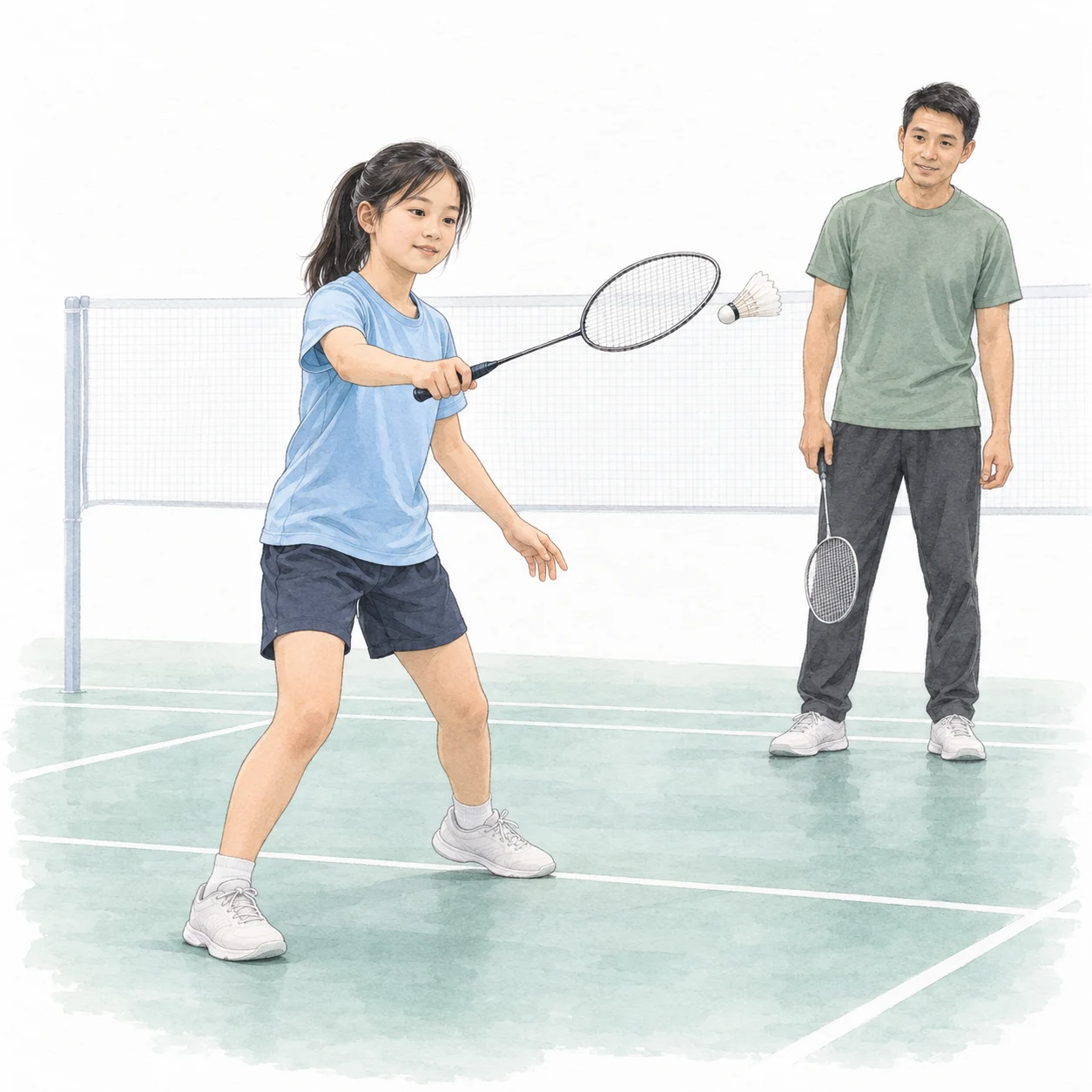
A left-handed child should be able to enter a badminton class without having to translate every instruction alone. The racket hand changes how a demonstration looks, where a useful feed arrives and how neighbouring players share space. It does not change the need to learn a sound grip, controlled contact, balance and recovery. For parents looking at badminton training in Setapak, Kuala Lumpur, the useful question is how the coach makes those foundations understandable to this particular learner. This guide explains what to observe, what to ask and how to support practice at home. Its educational images are AI-generated illustrations, not photographs of ST Badminton Academy lessons. The examples describe teaching choices, rather than promises about a child’s results.
Start with the learner
Respect the natural racket hand before choosing a correction
A child who naturally handles the racket with the left hand does not need to switch simply because the coach or most classmates play right-handed. Observe carefully how the child naturally holds, moves and controls the racket in a manageable task. A missed shuttle may reflect an unfamiliar feed, a rushed movement or a misunderstood instruction. It is not enough evidence to decide that the racket hand is wrong.
If the child genuinely seems unsure which hand to use, discuss that uncertainty with the badminton coach rather than changing hands after every mistake. Keep the task simple enough to observe comfort and control. Parents can mention the hand used in previous racket play, while recognising that writing hand alone does not settle every sporting preference. The next teaching decision should follow observation, not a demand to match the group.
Teach the same foundation
Explain the purpose of the grip and contact
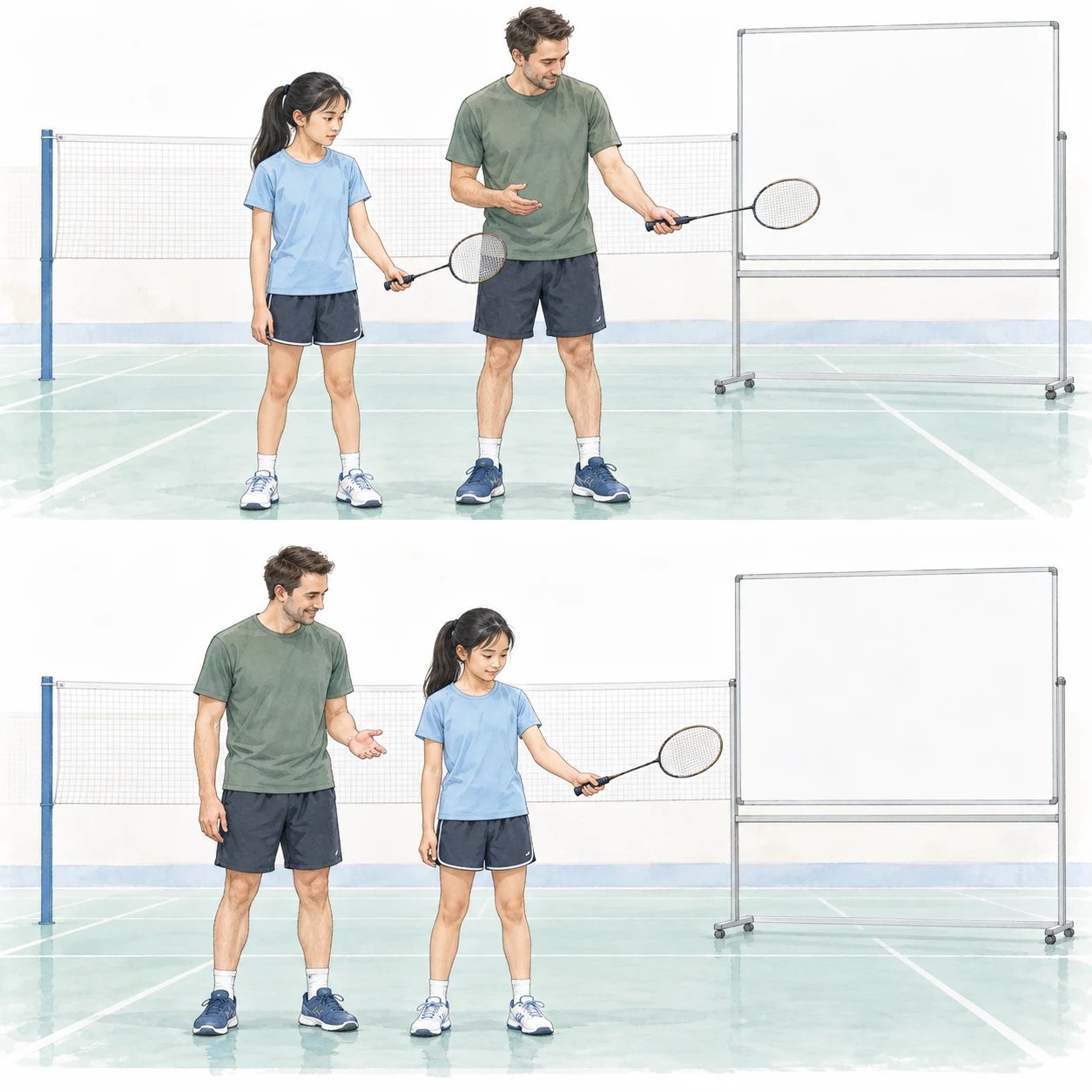
The foundation remains the same for left-handed and right-handed beginners: use a grip appropriate to the task, prepare the racket, meet the shuttle with control and finish in balance. What changes is the explanation of the racket side. A useful demonstration connects the hand position to the intended shot. Asking a child to reproduce an unexplained picture can hide whether they understand how to use the racket.
For example, during a simple net exercise, the coach can show the intended racket preparation, controlled contact and return to readiness on the child’s side. The aim is a usable action, not immediate power. A parent can listen for one clear cue and watch whether the child can try it. Several technical instructions delivered together may sound thorough but leave a beginner uncertain about the next attempt.
Make the view clear
Show what to copy and what to reverse
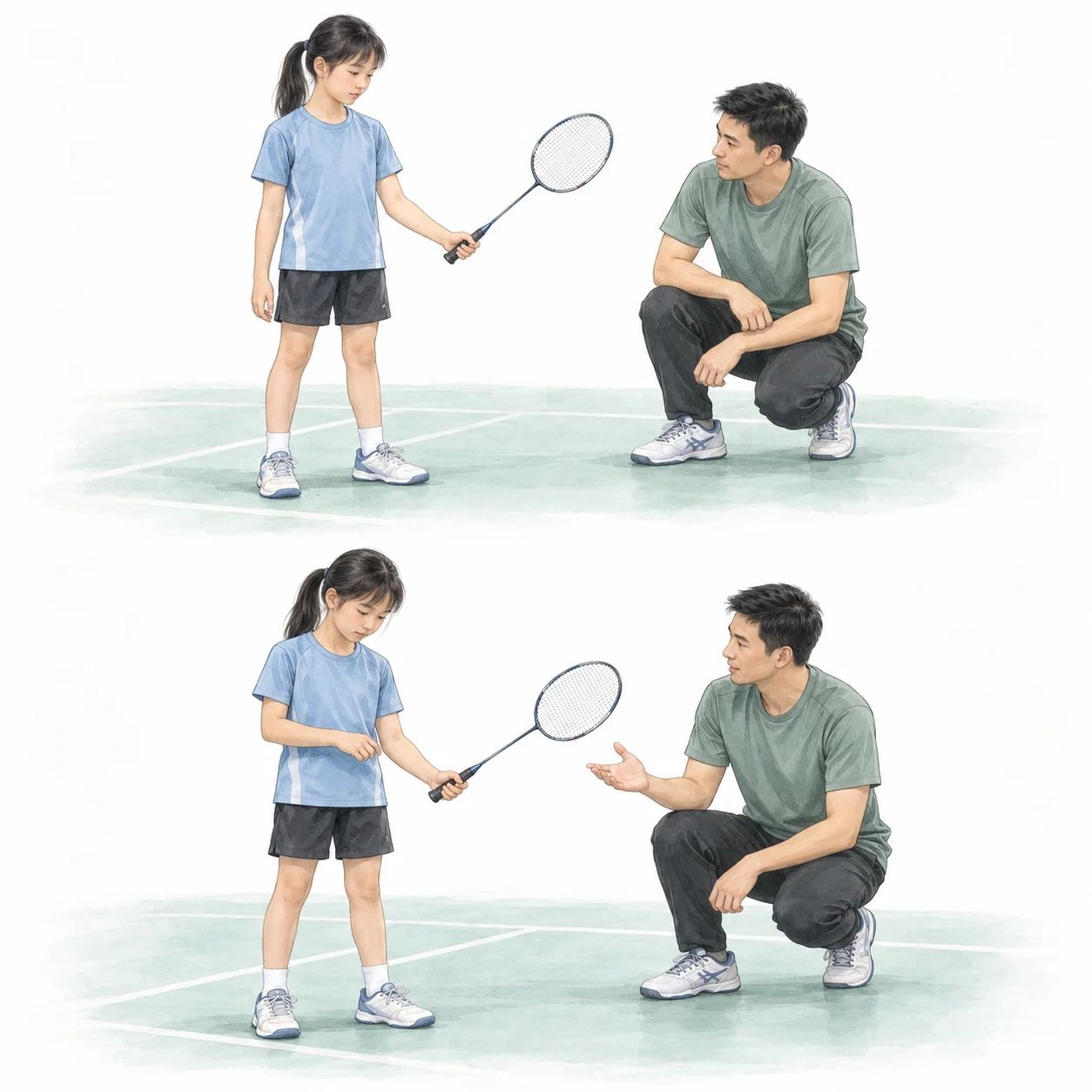
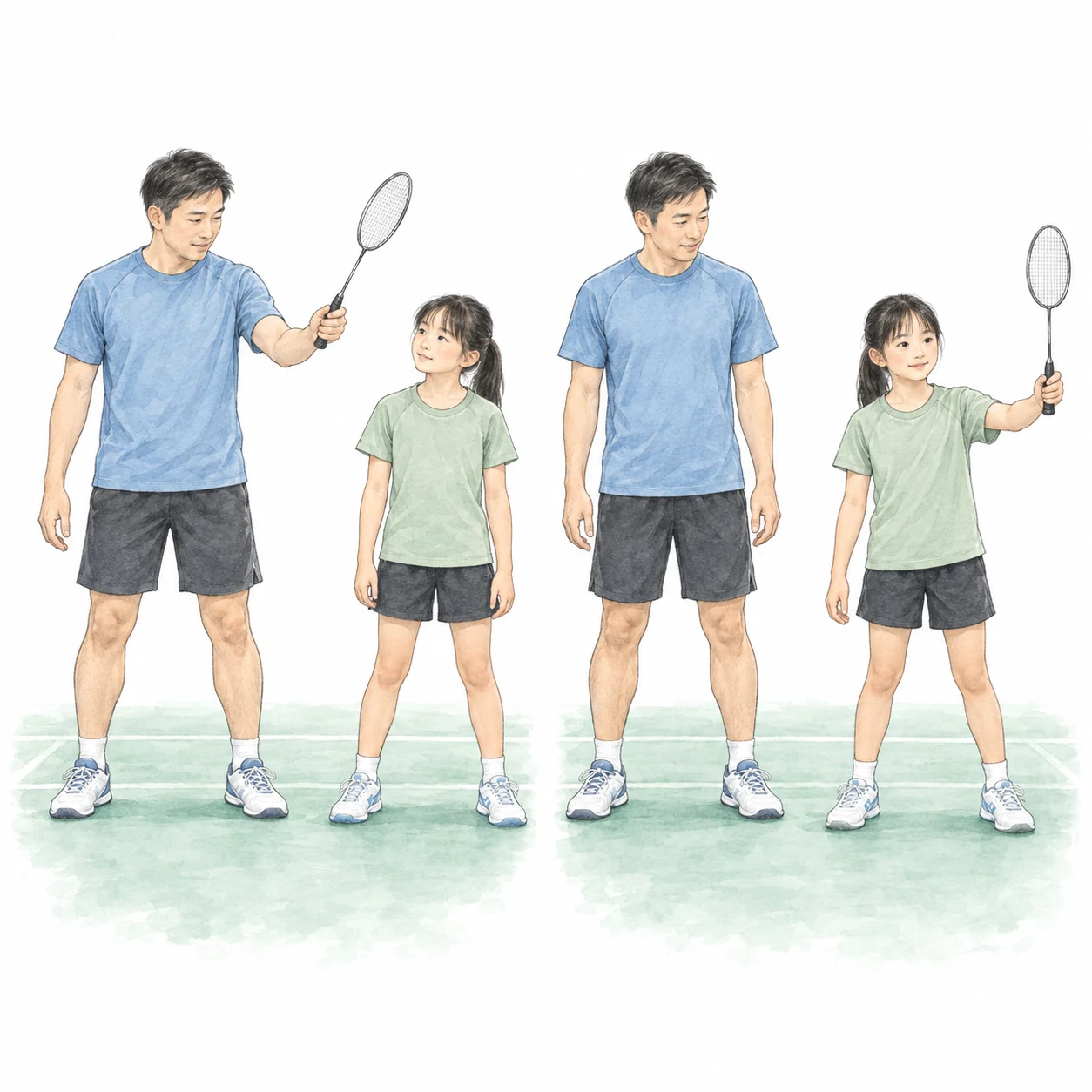
Facing a right-handed demonstrator can create confusion: the arm seen on one side of the picture is not necessarily the arm the child should use. The coach can show a left-handed version, change the viewing position or explicitly identify the racket hand and non-racket hand. There is no single viewing position that explains every movement. The practical test is whether the learner understands the current demonstration.
After showing the movement, ask the child to demonstrate the starting position or repeat the main cue in their own words. This reveals a direction mix-up before speed is added. If they cannot reproduce it, show the same point more clearly rather than simply repeating ‘copy me’. Terms such as racket side can help, but court directions still need explanation. Not every instruction in badminton should be automatically reversed.
Adapt the practice task
Choose useful feeds and rehearse the movement
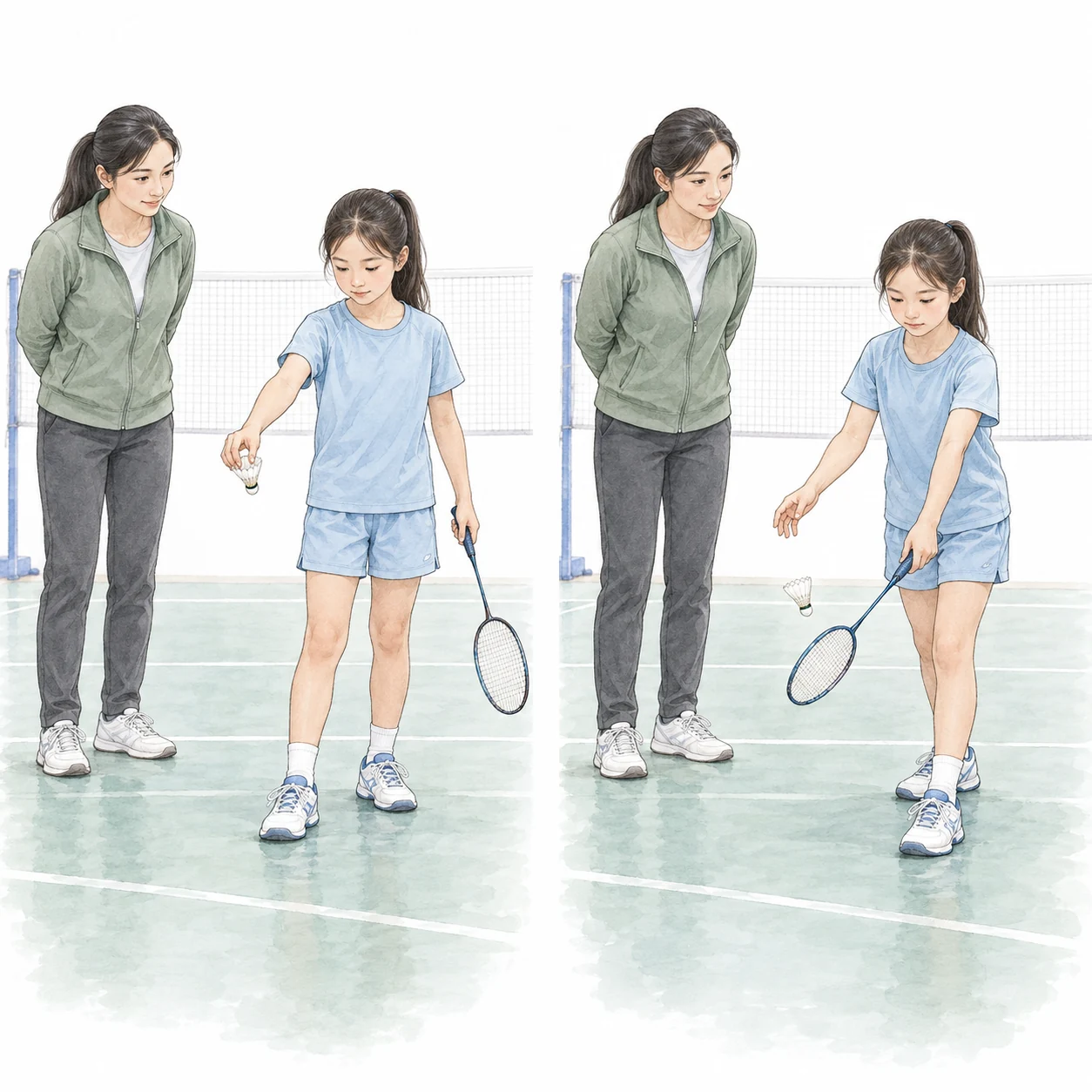
A feed should help the child practise the intended skill. For a left-handed learner, the coach may need to change the feeding position or shuttle path so that the exercise reaches the appropriate racket or non-racket side. Keeping the same physical feed for everybody can accidentally create different tasks. Explain the intended contact and movement first, then choose a feed that lets the learner attempt them.
If the movement is unclear, remove the shuttle briefly and rehearse the sequence at a comfortable pace. Then bring back a predictable feed before asking for more speed or choice. This is an adjustment to teaching, not a weaker standard. A useful question is whether the feed lets the child practise the named goal. Counting successful hits alone cannot show whether they are using the movement being taught.
Myths and practical answers
Left-handedness does not require a separate standard
The idea that a left-handed child must always have private coaching overlooks how a group can be organised. A well-explained activity can include both racket hands, with relevant demonstrations and clear practice lanes. Individual coaching may be useful when a learner needs more focused explanation or correction. That decision should depend on the learner and lesson arrangement, rather than the racket hand alone.
Another assumption is that left-handedness automatically produces an advantage. Handedness does not guarantee winning or remove the need to learn timing, movement and decisions. Keep expectations tied to an achievable task: perhaps recognising the correct starting position or recovering after a controlled shot. Avoid asking a child to prove a supposed natural advantage. Their learning should be evaluated through actions they can understand and practise.
Finally, adapting instruction does not mean lowering expectations. Judge the same relevant qualities: suitable grip, controlled contact, balance and recovery. A left-handed action may look different from a right-handed classmate’s picture while meeting the same goal. Feedback should explain the useful change, give the learner another opportunity to try it and check what happened. Appearance alone is an incomplete measure of a badminton foundation.
Share the court thoughtfully
Keep swing lanes and waiting positions clear
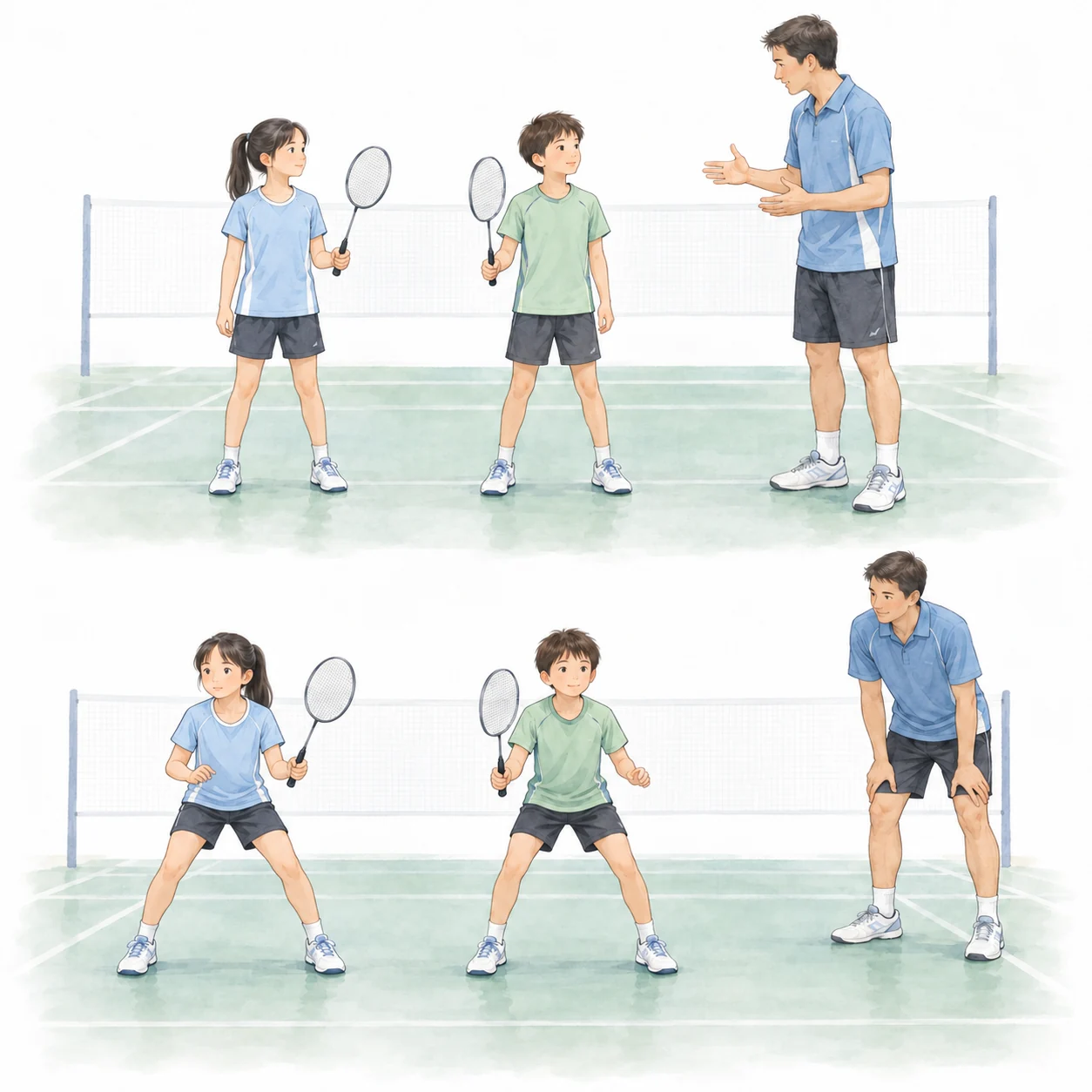
Left-handed and right-handed players can share a class, but everyone needs room for their racket swing and movement. The coach should arrange practice positions, feeding routes and waiting areas around the task being taught. A child waiting beside a partner should know where to stand and when to enter. Handedness is one relevant detail, alongside the size and direction of the activity.
Watch whether the group understands the start and stop signals, where shuttles are collected and which spaces belong to active players. Slow rehearsal can make these arrangements clearer before a live feed begins. Observation can also have a purpose: a waiting child might watch for a partner’s ready position. These are practical organisational choices, not a claim that left-handed children must always be separated from everyone else.
Connect class and home
Use consistent cues and review what the child understands
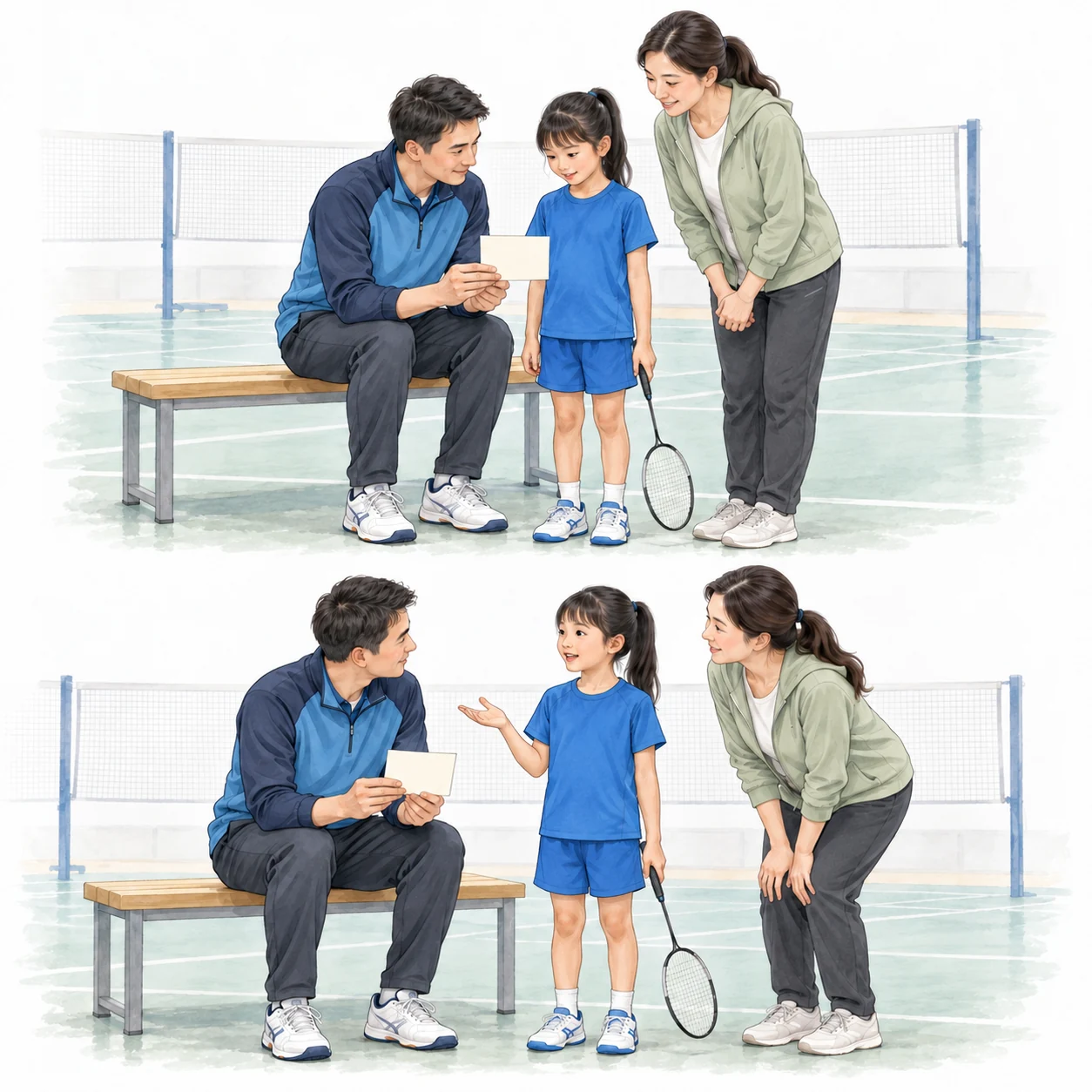
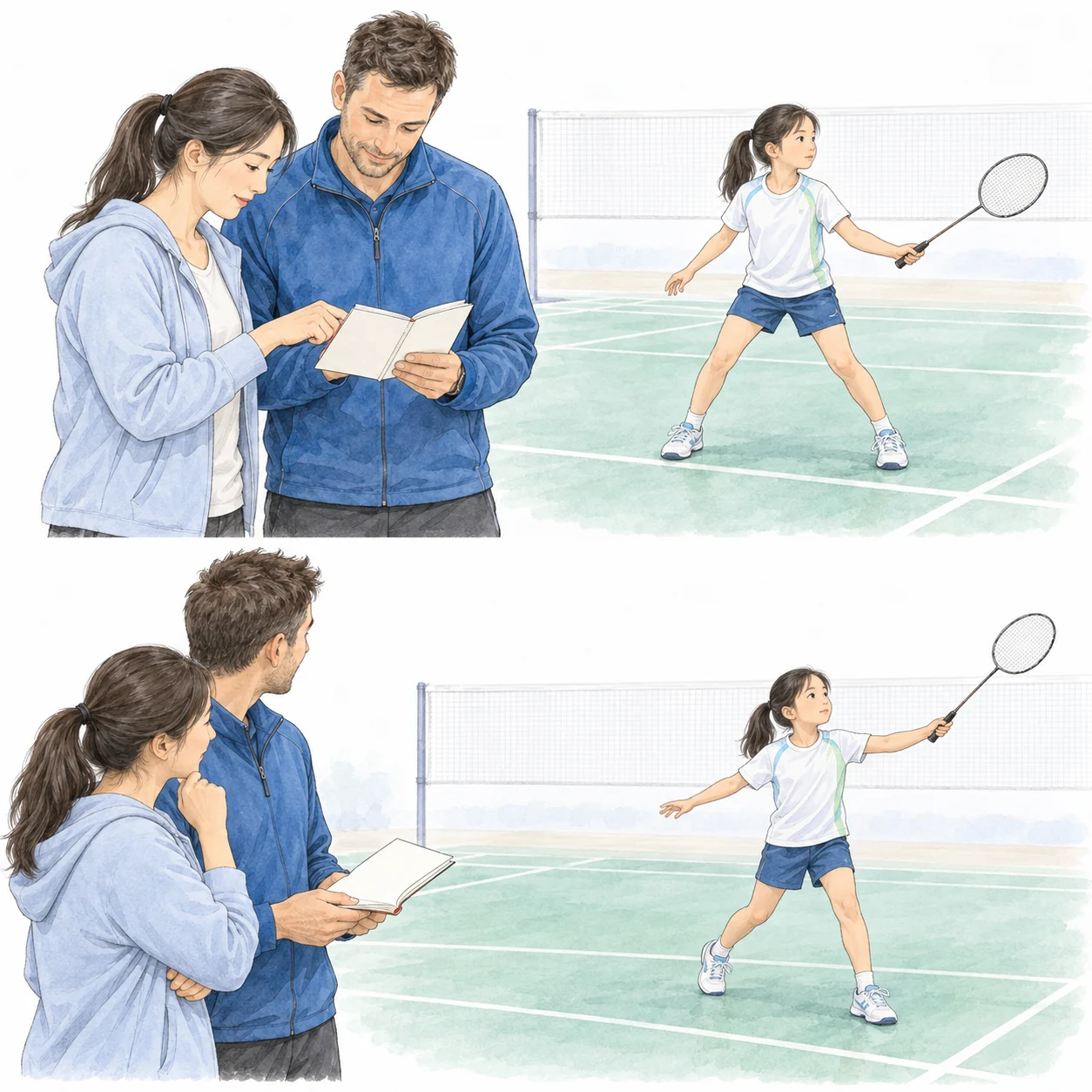
Before adding home practice, ask the coach which small task and cue the child is currently learning. A right-handed video can explain a principle, but it should not require the child to guess every reversal. Choose a clear space and a manageable activity that follows the lesson guidance. If the child repeatedly confuses directions, report the specific difficulty rather than prescribing more repetitions of an uncertain action.
Review understanding as well as visible performance. Can the child identify the racket hand, show the starting position and explain the practice goal? Can they try the correction on a later attempt? These questions give parents something concrete to discuss with the coach. When considering a badminton academy or a class for kids, describe the child’s present experience and learning needs through the online application before discussing the appropriate next step.
Parents’ questions about left-handed badminton learners
These answers help you discuss teaching choices. They do not replace observation of your own child or confirm a particular lesson arrangement.
Should a left-handed beginner be made to play right-handed?
Not simply to match the coach or classmates. Observe the child using the racket in a manageable task. A missed shot is not proof that their natural racket hand should change.
What if my child writes with one hand and plays with the other?
Tell the coach what you have observed in racket play. Writing hand is useful background, but teaching decisions should also consider the hand the child comfortably uses to control the racket.
Can a right-handed coach teach a left-handed child?
Yes, when the explanation is usable for that learner. Look for clear racket-side language, a suitable demonstration or viewing position, and a check that the child can reproduce the intended action.
Does every footwork instruction need to be mirrored?
No. Relate the movement to the shot, court position and racket side. The coach should explain the actual sequence rather than asking the child to reverse every left or right instruction automatically.
Does being left-handed mean my child needs private lessons?
Not automatically. A group can accommodate both racket hands with clear instruction and sensible organisation. Discuss individual coaching when the learner needs more focused support, rather than using handedness as the sole reason.
How should I respond when my child keeps copying the wrong side?
Describe the specific confusion to the coach. A clearer view, an explicit hand cue or a slower demonstration may help identify the problem. More repetitions are less useful when the action remains misunderstood.
What should I watch during a shared practice activity?
Look for clear swing space, understandable waiting positions and a suitable feed. The child should know the purpose of their turn and where to stand while another player is active.
Will a left-handed child have an automatic match advantage?
There is no guaranteed result from handedness. Technique, movement, choices and practice still matter. Discuss achievable learning goals instead of expecting wins because the child holds the racket differently.
What information should I include in an application?
Mention the usual racket hand, current experience, goals and any difficulty following demonstrations. Include relevant learning observations. The online application begins the enquiry; it does not itself confirm a place or lesson format.
Teaching scenes: clear instruction for a left-handed learner
Observe, explain, practise and review
Use this sequence to make an adaptation specific to the task and check whether the child can use it.
| Teaching point | Less useful approach | More useful approach Compare instruction, not labels |
|---|---|---|
| Racket hand | Change hands because a beginner missed a shot. | Observe natural handling and identify the actual difficulty. |
| Demonstration | Use one viewing angle without checking what was understood. | Identify the racket side and check the child’s starting position. |
| Direction cues | Ask the learner to reverse every instruction automatically. | Explain the movement for the shot and court position. |
| Feeding | Keep the same feed even when it changes the intended task. | Choose a feed that supports the relevant skill and side. |
| Group space | Leave swing lanes and waiting positions unclear. | Explain active areas, safe waiting positions and signals. |
| Feedback | Judge only power or similarity to a right-handed picture. | Check grip, controlled contact, balance and recovery. |
Begin with the online application
If you are considering ST Badminton Academy in Setapak, Kuala Lumpur, start with the website’s online application. Describe your child's usual racket hand, badminton experience, learning goals and any confusion when following demonstrations. These details create a clearer starting point for discussing appropriate instruction. You can also review the intake application rules and use the training contact information for further questions. An application is an enquiry, not a guarantee of a place, a trial or a particular timetable. The useful aim is to explain the learner's present needs so the next conversation can focus on suitable badminton training.