A Parent’s Badminton Progress Record: What to Track Beyond Winning
Your child attends badminton class, but a match score does not explain what they are learning. A short progress record can make the conversation clearer. Its purpose is to remember an agreed task and useful observations, rather than grade every lesson or compare your child with another player.
For families choosing a badminton academy around Kuala Lumpur, Setapak or Kepong, this record also helps connect the class with home conversations. Begin with the coach’s current teaching point. Keep the notes brief enough that your child still experiences training as learning, rather than another report card.
Apply online for a suitable training pathway
Agree on one learning question
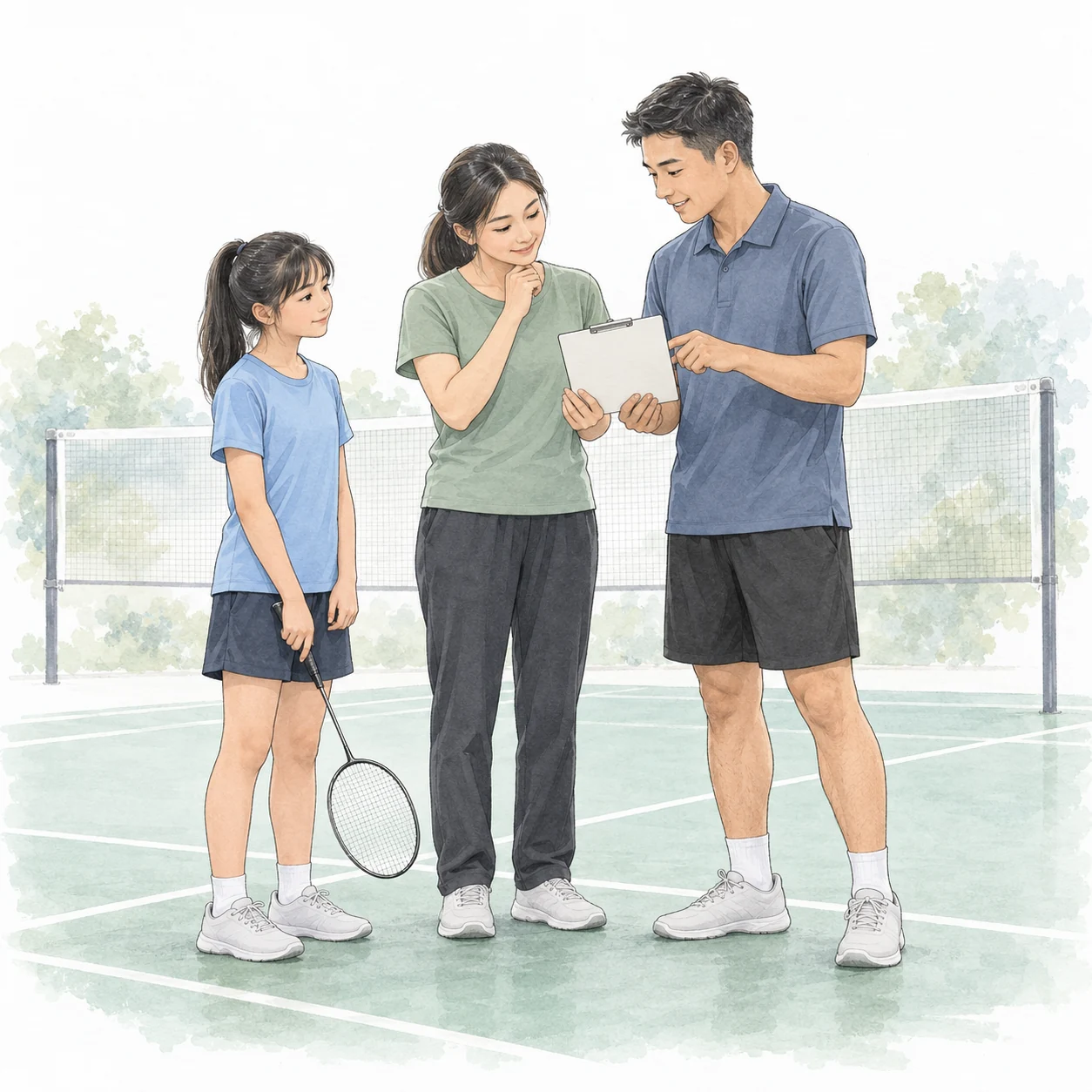
Ask the badminton coach what your child is working on now and what an understandable attempt should look like. A useful question could be whether the child prepares the racket before a gentle feed. ‘Become better at badminton’ is too broad to observe consistently. Do not choose a technical target from an online video without discussing its suitability.
Write the coach’s wording in a short sentence. If the child cannot explain it, ask for a simple demonstration before making the record. The goal is shared understanding, not a technical description that only the parent recognises.
Record the practice task and its conditions
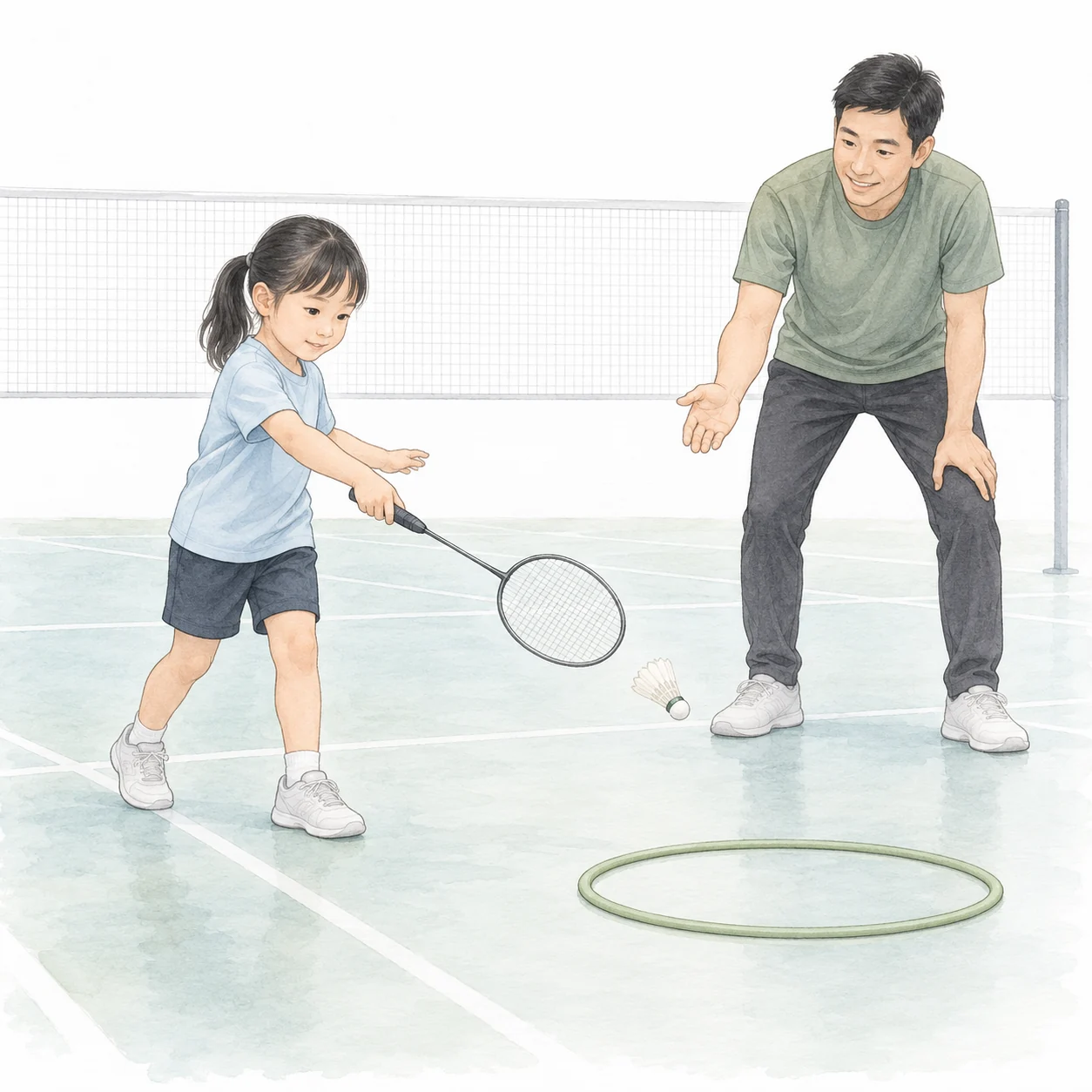
Use four simple fields: date, task, agreed cue and observation. Include enough context to distinguish a stationary exercise from moving practice or a rally. A note might read: ‘Gentle forehand feeds; prepare early; prepared without a reminder on some attempts, then needed help when movement was added.’
That description is more useful than ‘good lesson’ or ‘bad footwork’. It does not pretend that success in one situation proves mastery everywhere. If you count attempts, record the task and conditions too. A number without context can make a harder lesson look like lost progress.
Separate reminders from independent use
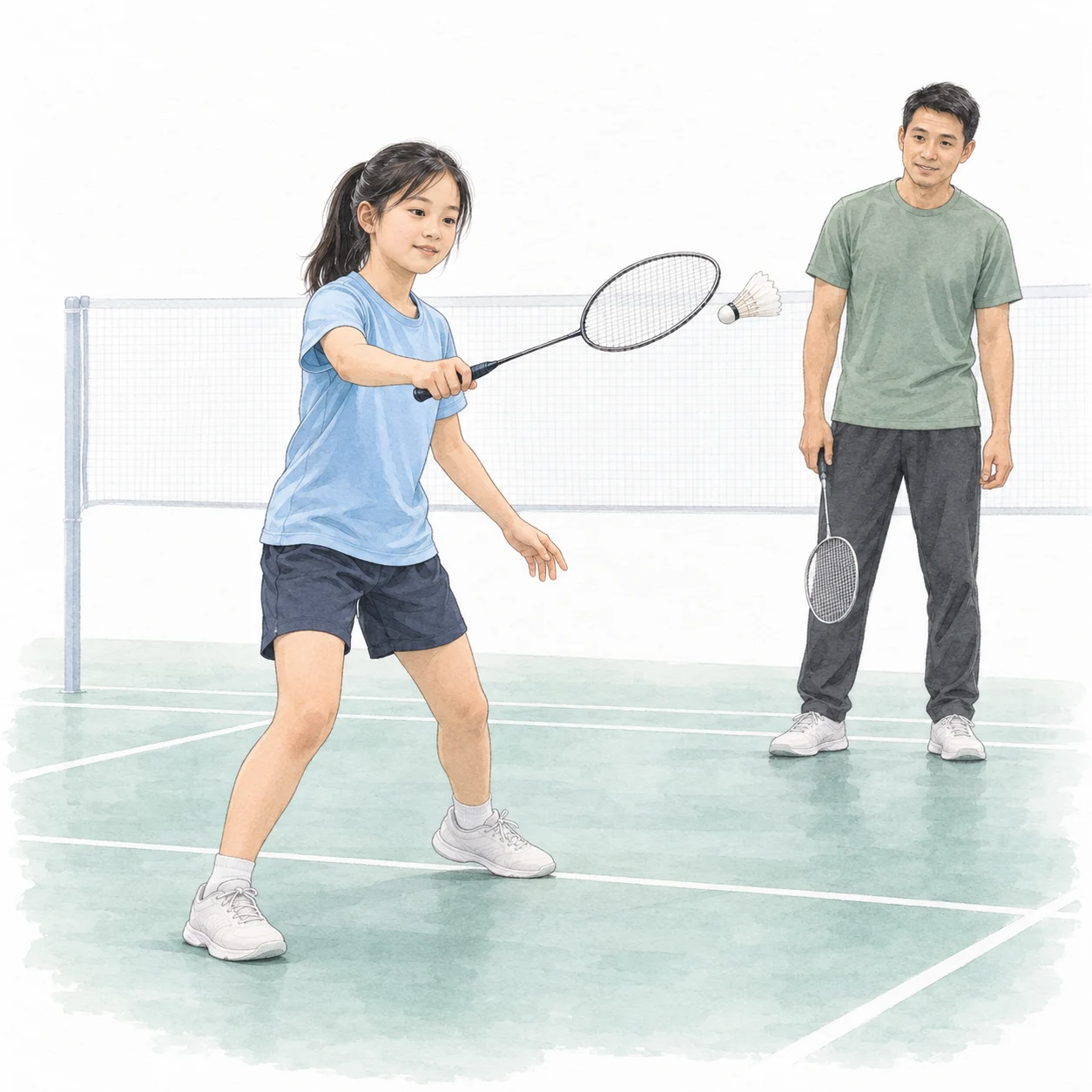
Notice whether your child can explain the cue, demonstrate it after a reminder and use it independently. These are different observations. A child may describe the instruction clearly but struggle when deciding where to move. Another may perform the action without being able to explain it confidently.
Do not turn those differences into labels such as lazy or talented. Note what happened and ask the coach what it means for the next task. Keep match results in a separate space if they matter to the learning goal; opponents and game demands change.
Include the child’s account and the coach’s feedback
After class, ask one open question: ‘What were you trying to do today?’ Write a short answer in the child’s own words. Then add the coach’s feedback when there is an appropriate opportunity. If the accounts differ, ask for clarification instead of deciding that someone must be wrong.
For example, your child may remember missing shuttles while the coach was observing earlier preparation. Both accounts can describe the same activity. Recording them separately helps the family discuss the actual teaching point without arguing over whether the whole class went well.
Review the record without creating pressure
Agree with the coach when the learning task will be reviewed and what information would help. Compare reasonably similar tasks before drawing a conclusion. If the cue remains unclear or the activity seems unsuitable, ask what should change rather than simply adding more practice.
Keep notes private and practical. Video is optional and requires the academy’s permission and care around other learners. A few written observations are often enough. The record should support a decision about instruction, placement or the next task, not produce a public ranking of children.
Questions parents ask
Do I need to write a report after every class?
No. Brief notes at agreed review points can be enough. Avoid making the record an extra assessment for your child.
Should I record every missed shuttle?
Only record details relevant to the agreed task. A miss alone does not explain preparation, instruction or difficulty.
Can match wins show progress?
They can provide context, but they do not isolate what was learned. Discuss the skills and decisions alongside the result.
What if the record shows no clear change?
Discuss task suitability, understanding and feedback with the coach. Agree on a useful reassessment instead of assuming more lessons will solve it.
Your next step
Bring one clear learning question and a few contextual notes when discussing your child’s next badminton training step.
Apply online for a suitable training pathwayRelated badminton learning guides: Intake rules | Contact information | Children’s foundation badminton classes