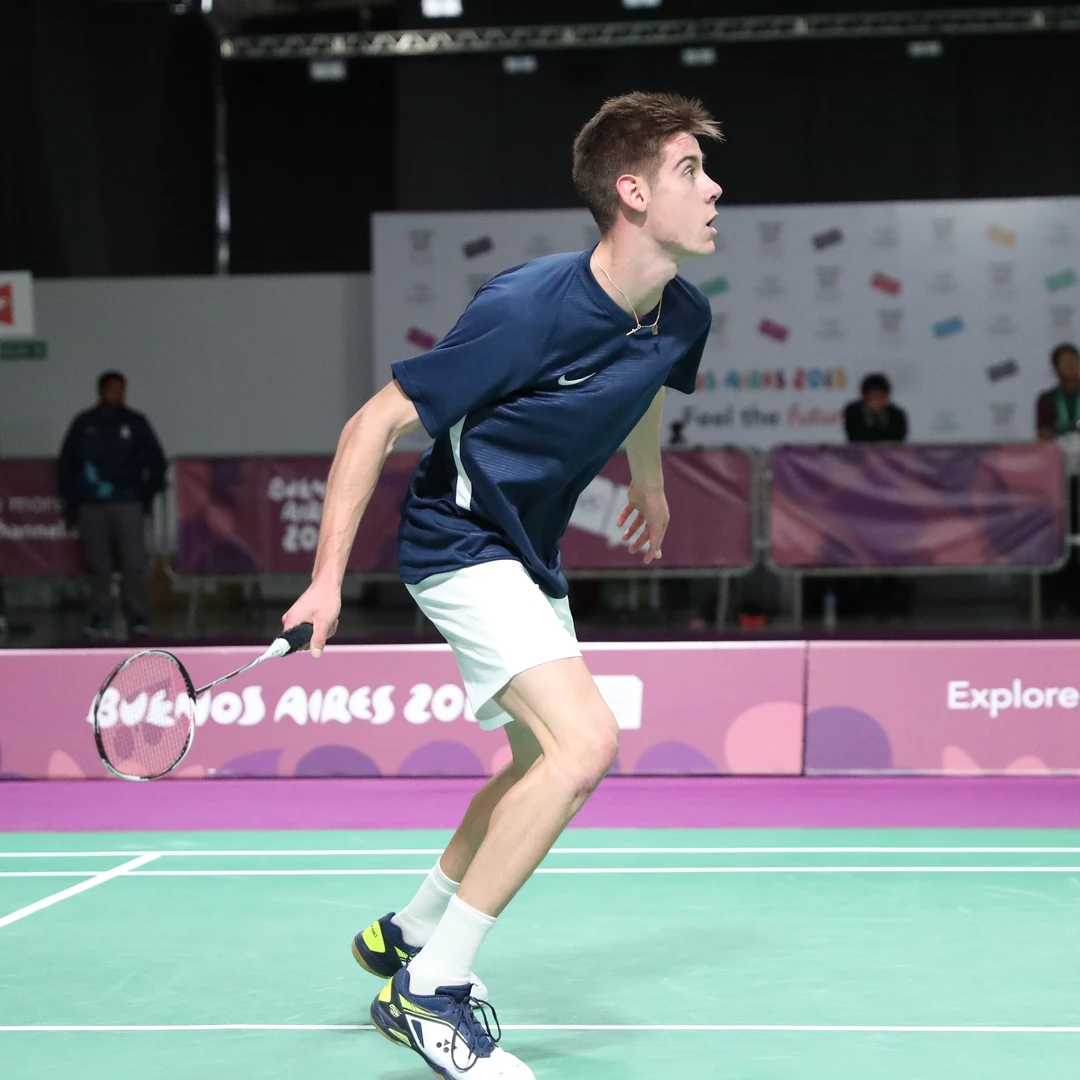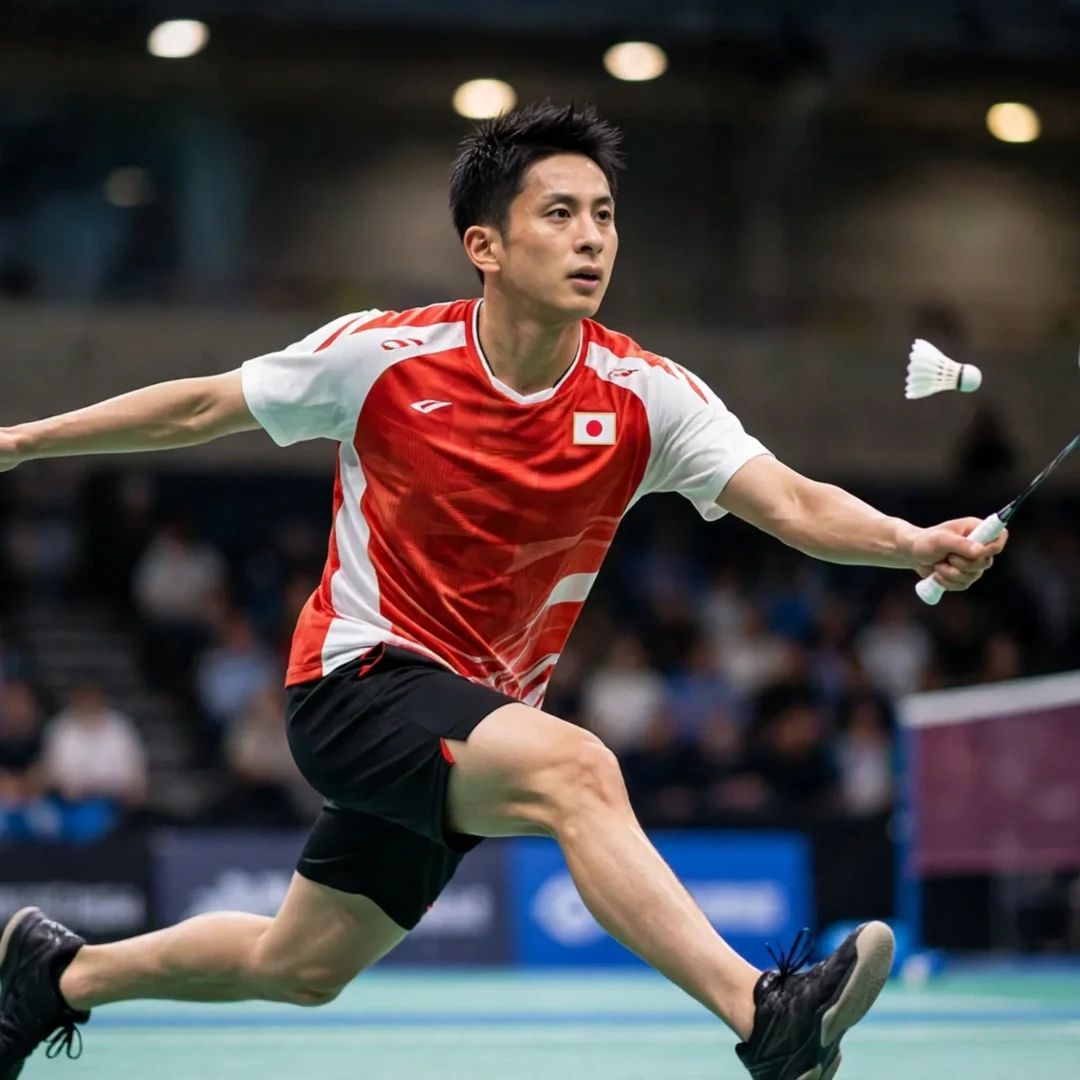
Japanese Men’s Singles Badminton Star
Minoru Koga
Japan
Player Event: Men’s singles
Born on 30 September 1996 in Fukuoka
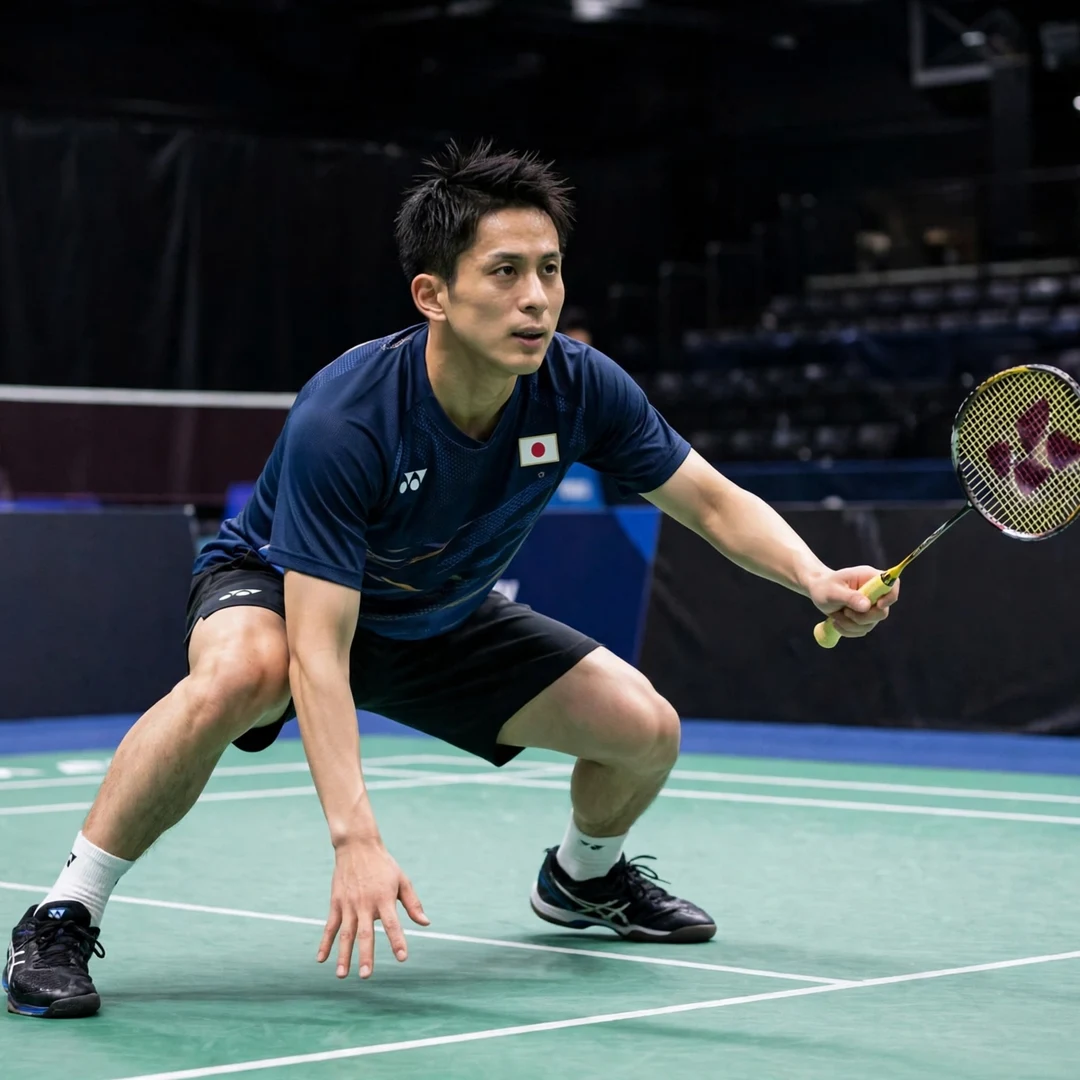
Left-handed tactical all-court player · Compact 1.66 m frame, elite footwork, defence and rally craft
Understanding Minoru Koga (Japanese Badminton Star)
Minoru Koga is a Japanese men’s singles player whose career is a masterclass in refusing to disappear. A champion at elementary, junior high and high school level, an Asian Youth Games gold medallist alongside Akane Yamaguchi, and a Waseda University star, he announced himself to the world in 2018 by reaching the Canada Open final while ranked 396th. Japan dropped him from the national team at the end of 2022, his ranking slid as low as No. 265, and in April 2025 he walked away from his corporate job at NTT East to turn professional with AC Nagano Parceiro, funding his own tour. The comeback has been remarkable: ten career international titles, a 2026 German Open giant-killing of world No. 6 Li Shi Feng, and a career-high world No. 49 in June 2026 — the ranking he still holds, with 32,240 points, in the BWF Week 43 rankings of 20 October 2026.
Fukuoka Roots and a Childhood Shaped by Illness
Koga was born on 30 September 1996 in Fukuoka, on Japan’s southern island of Kyushu, and started badminton at the age of six with the Okagaki Junior club. His childhood was not the easy sporting upbringing his later polish suggests: he suffered from asthma, pneumonia and severe food allergies, and making it through ordinary training days took careful dietary management by his parents. At 1.66 metres he was always going to be one of the smallest players on any court he stepped onto, and those twin realities — a fragile body and a small frame — pushed him towards the tactical, thinking style that still defines his game today.
The 2011 Earthquake and Five National Junior High Titles
In 2011, as a second-year student at Tomioka Daiichi Junior High School in Fukushima, Koga lived through the Great East Japan Earthquake: the ceiling lights of his school gymnasium came down during practice. He was evacuated back to Fukuoka, his badminton suddenly gone along with everything else, until the community of Inawashiro arranged a new practice environment for the displaced players about two months later. Driven by the wish to bring hope to a disaster-hit region, Koga swept five titles at the national junior high school championships that year — the first great proof of the resilience that runs through his whole career.
National Champion at Elementary, Junior High and High School
The school titles kept coming at every level of the Japanese system. Koga won the national singles championship at the All Japan Elementary School Championships in 2008, again at the National Junior High School Championships in 2011, and again at the National High School Championships — the Inter-High — in 2014, where he beat Kanta Tsuneyama in the final and also led Tomioka High School to the team title. Winning the same prize in all three school divisions is a rare clean sweep, and it marked him out early as a player who finds a way to win finals, not just matches.
Asian Youth Games Gold with Akane Yamaguchi
His junior career peaked internationally at the 2013 Asian Youth Games in Nanjing, where Koga won the mixed doubles gold medal together with a young Akane Yamaguchi — the future world champion and Olympic medallist — beating Thailand’s Dechapol Puavaranukroh and Puttita Supajirakul 21–19, 19–21, 21–17 in the final. A year later he added mixed team bronze medals at both the Asian Junior Championships and the World Junior Championships. Before he had played a single senior tournament of note, Koga had already stood on podiums at every level of Asian junior badminton.
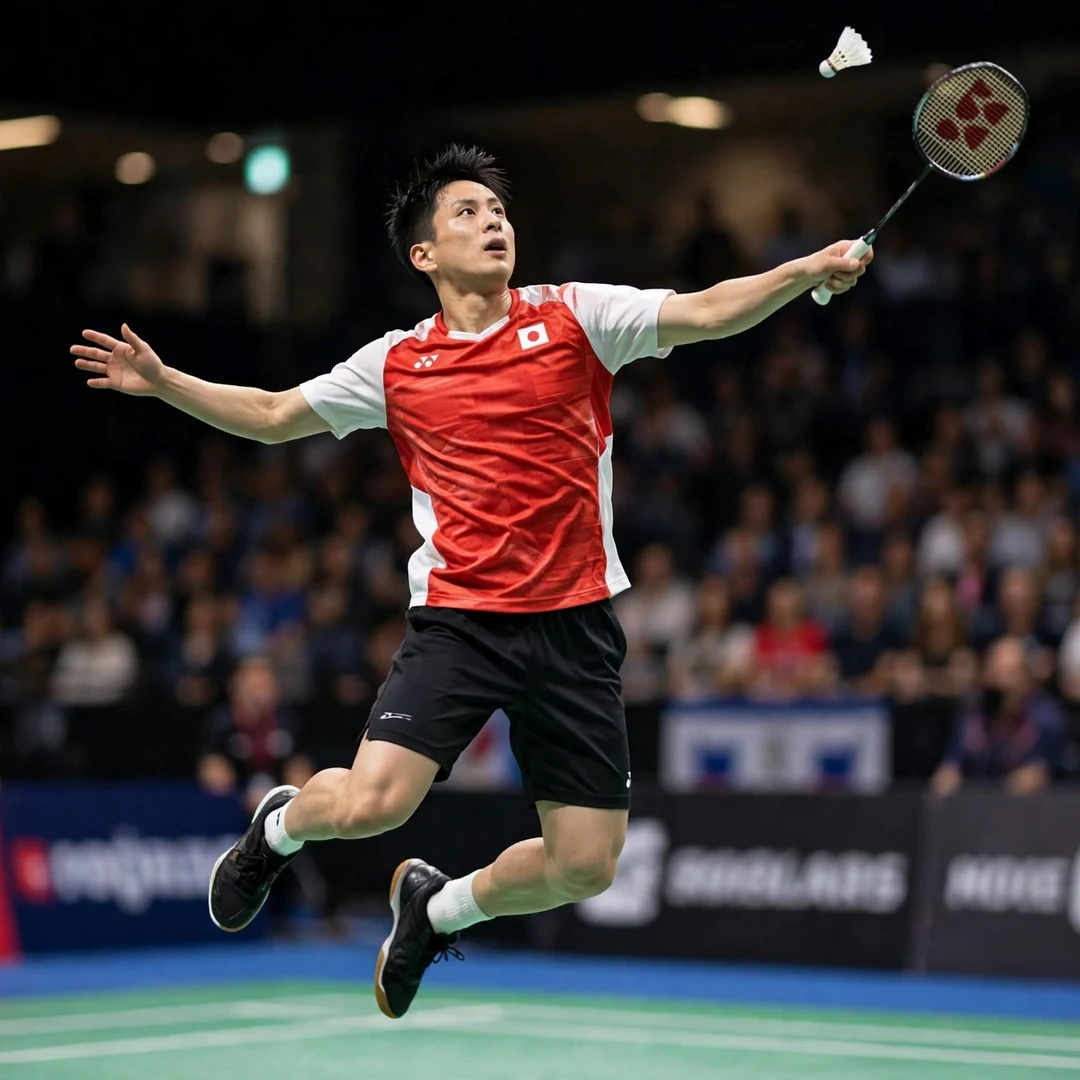
Career Milestone #1
Waseda University Champion and a Canada Open Final from World No. 396
Koga enrolled at Waseda University in 2015 to study sport sciences, and he dominated Japanese university badminton: All Japan Intercollegiate singles champion in both 2017 and 2018, and captain of the Waseda team that won the intercollegiate team title in his final year. In 2018 he was selected for Japan’s national B team — the official pathway into the senior squad — and the clever left-hander from Fukuoka looked set for a conventional rise through one of the deepest badminton systems in the world. What happened next was anything but conventional.
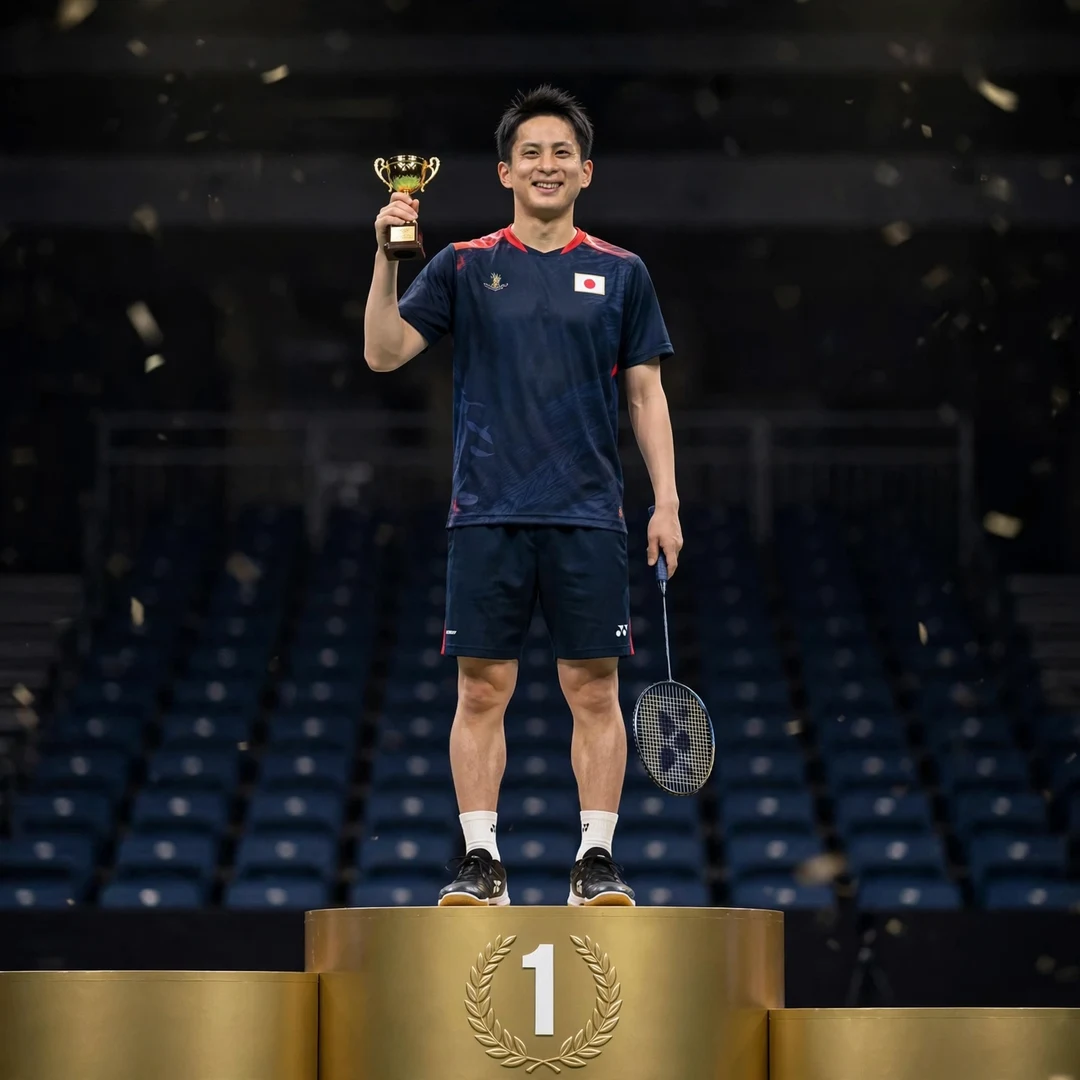
At the 2018 Canada Open in Calgary, a Super 100 event, Koga produced the run that still anchors his career story. He arrived ranked 396th in the world — barely a tour player at all — and kept winning until he stood in a BWF World Tour final. China’s Lu Guangzu beat him 21–15, 21–10 in the final, but the week announced him internationally: a qualifier from the 390s does not reach Super 100 finals unless the craft is real. Nearly a decade later, that Canada Open run remains his best World Tour result — the standard every comeback season since has been measured against.
Career Milestone #2
First Senior Title, Asia Team Silver and the COVID Pause
In March 2019 Koga won silver with Japan at the Asia Mixed Team Championships in Hong Kong, and on 1 April 2019 he joined the NTT East corporate team after graduating from Waseda. That season brought his first senior international title: the Swedish Open, where he beat Singapore’s Loh Kean Yew 21–11, 21–15 in the final. He also reached the Vietnam Open semi-finals — beating future world champion Kunlavut Vitidsarn on that run — and won the All Japan Members Championships, establishing himself as a national team regular with a title-winning habit.
Then the world stopped. Like every player of his generation, Koga lost the better part of two years of international competition to the COVID-19 pandemic, confined mostly to domestic events — though he did win the Japan Ranking Circuit in 2021. When the tour restarted he struck again quickly, winning the Mexican International in April 2022 by beating Brazil’s Jonathan Matias 10–21, 22–20, 21–13. But a lone quarter-final at that year’s All Japan Championships was not enough: at the end of 2022, Japan dropped him from the national team, closing a five-year spell that had begun in 2018.
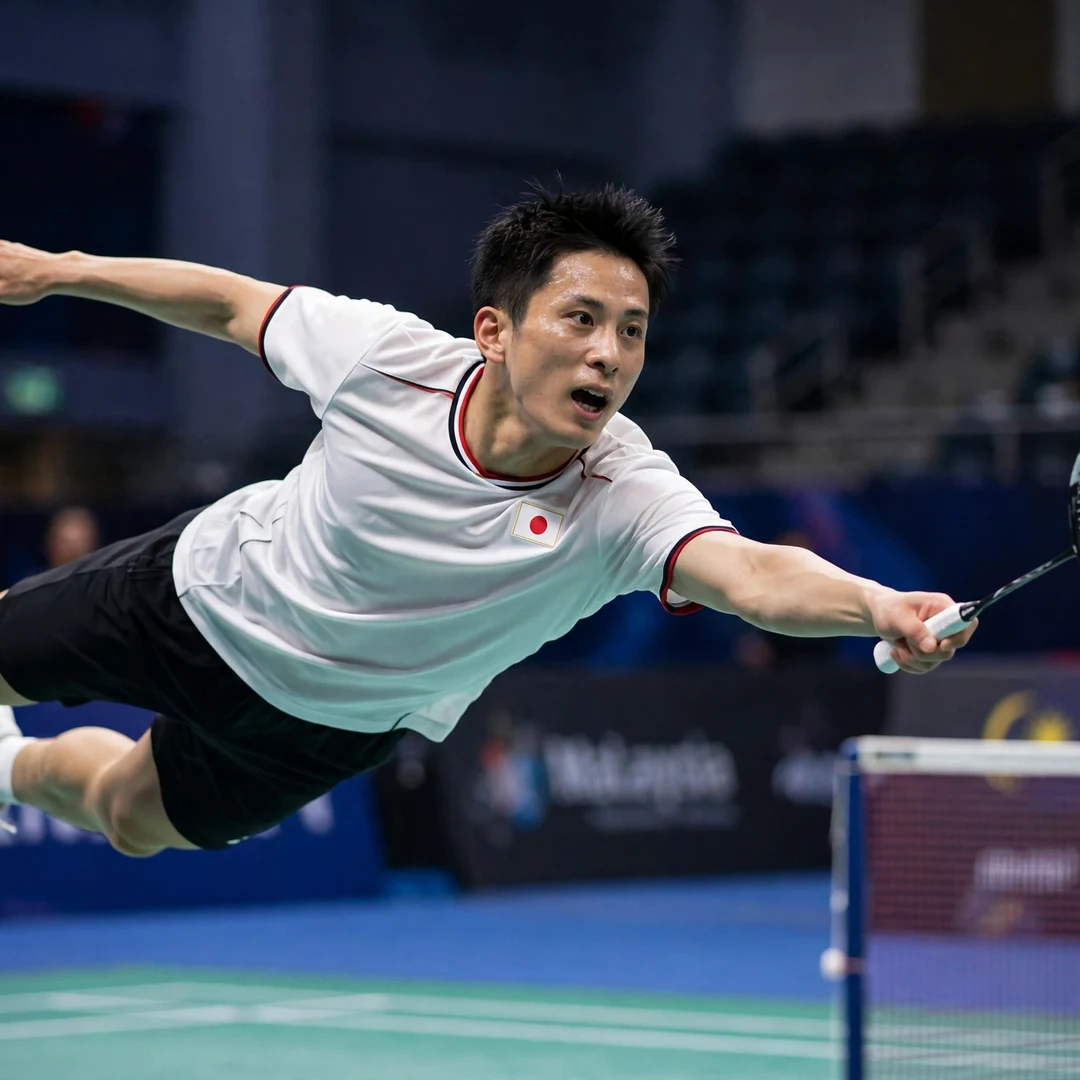
Most players fade at that point. Koga rebuilt instead, entirely outside the national system. In March 2023 he won the Thailand International, fighting back to beat Chinese Taipei’s Chi Yu-jen 15–21, 21–17, 22–20 and climbing to a then-career-high world No. 56. He added the Bahrain International — beating compatriot Riki Takei in another three-game final — and the Malaysia International, where he defeated Takuma Kawamoto, plus second titles at both the All Japan Members Championships and the Japan Ranking Circuit. Three international titles in a single season, won as a self-supported player, was a statement: the craft had never left.
Career Milestone #3
Dropped by Japan: Titles in Thailand, Bahrain and Malaysia
The grind, though, is unforgiving at that level. Koga defended his Malaysia International title in 2024, beating Riku Hatano 21–19, 15–21, 21–11, but he played only three tournaments all year, and his ranking slid to No. 198 by the year’s end and No. 265 by March 2025. He briefly considered retirement. Instead, on 1 April 2025, he left his corporate position at NTT East altogether and turned professional with AC Nagano Parceiro Badminton Club, taking responsibility for his own sponsors, travel and entry fees — one clear goal in front of him: the Los Angeles 2028 Olympic Games.
The professional gamble paid off within months. In 2025 Koga won the Slovenia Future Series, beating England’s Cholan Kayan 21–17, 24–22, then the Belgian International, defeating home favourite Julien Carraggi 21–14, 22–20 in the final, and finished runner-up at the Lagos International Classics to Indonesia’s Prahdiska Bagas Shujiwo. At the Syed Modi International, a Super 300 in India, he beat top seed Jason Teh in the quarter-finals before injury forced him to retire in the semi-final. From No. 284 in August he climbed back inside the world’s top 90 by the end of 2025 — momentum restored, and this time it was his own.
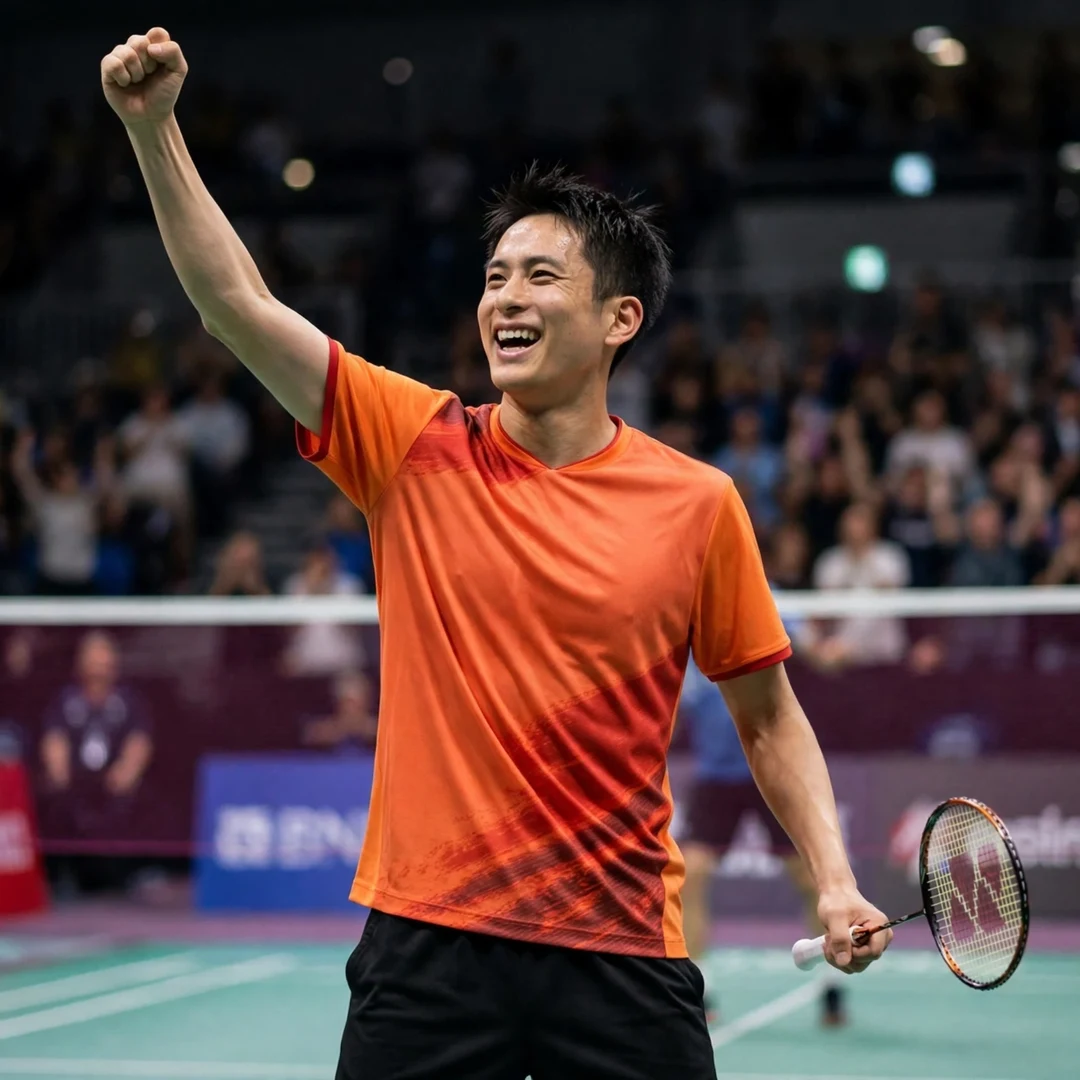
The new year opened with a statement: back-to-back titles in January 2026, at the Estonian International and the Swedish Open, beating Denmark’s Mads Christophersen in both finals — the Swedish title coming seven years after his first. Then came the week that defines his comeback. At the German Open, a Super 300 in Mülheim, Koga came through qualifying and in the very first round stunned second seed and world No. 6 Li Shi Feng of China, 21–16, 21–15. He beat Hong Kong’s Lee Cheuk Yiu in the next round before France’s Toma Junior Popov stopped him in the quarter-finals. A 29-year-old qualifier, self-funded, beating the world No. 6 in straight games: it was the biggest World Tour win of his career.
Career Milestone #4
Going Professional at 28, the 2025 Resurgence and a Career-High No. 49
The ranking followed the results. In May 2026 Koga reached the semi-finals of the Baoji China Masters, losing to compatriot Riki Takei, and in June he reached a new career-high world ranking of No. 49. His autumn kept the level: a run to the Vietnam Open semi-finals in September, and an Australian Open campaign that ended in the round of 16 against Indonesia’s Alwi Farhan — after Koga had taken the first game 22–20. When the BWF published its Week 43 rankings on 20 October 2026, Minoru Koga stood at No. 49 with 32,240 points: top fifty in the world, at 30 years old, on his own money.
Strip the story back and its shape is what young players should study. A sickly six-year-old in Fukuoka; an earthquake survivor at fourteen; national champion at elementary, junior high and high school; a youth games gold medallist; a university champion; a World Tour finalist ranked 396th; a national team player dropped at 26; a self-funded professional at 28; and a career-high ranking at 29. Every stage of Minoru Koga’s career was earned the slow way, and every setback was answered with work rather than excuses. That is the real curriculum of his career: resilience, compounded.
Playing Style
The Tactical Left-Handed Style
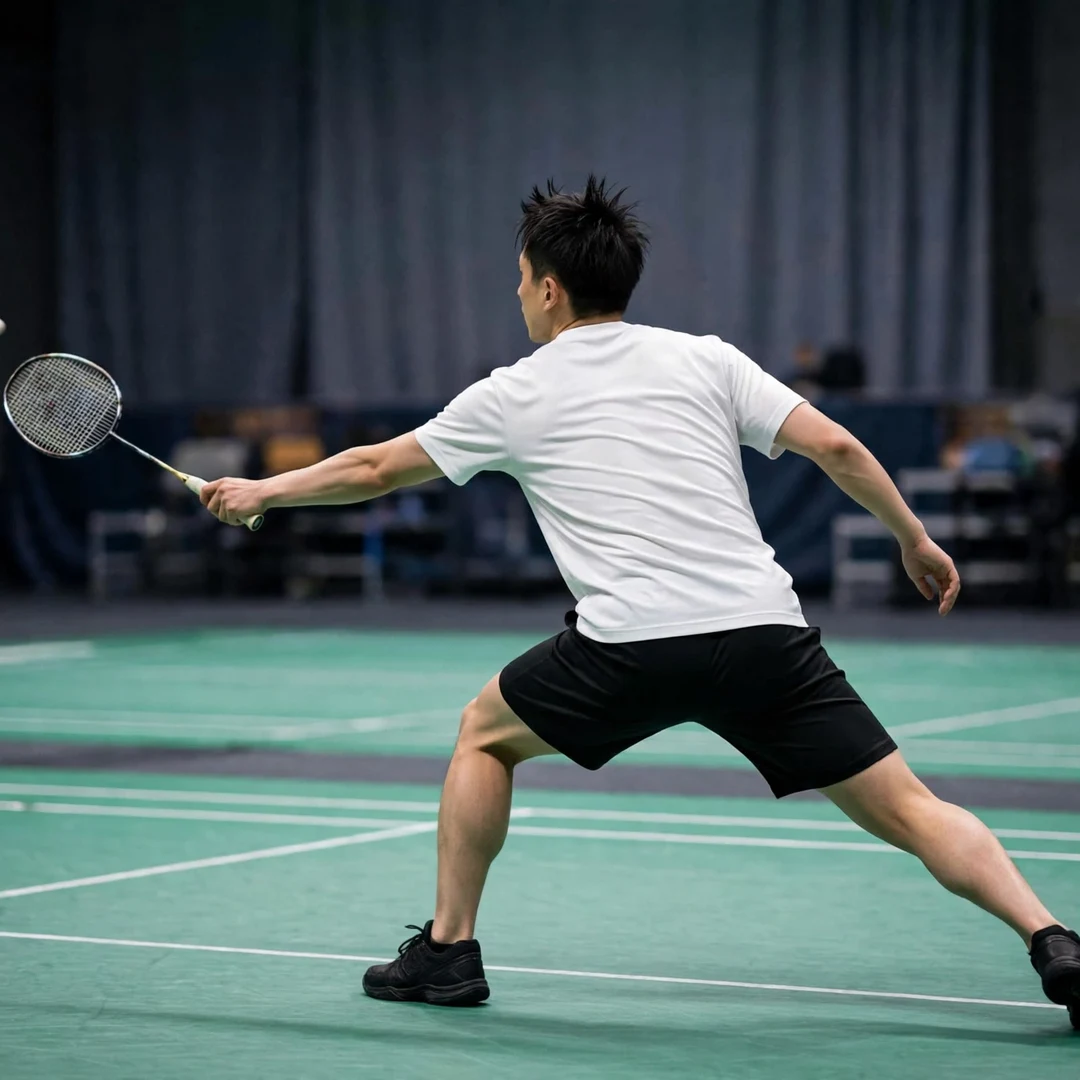
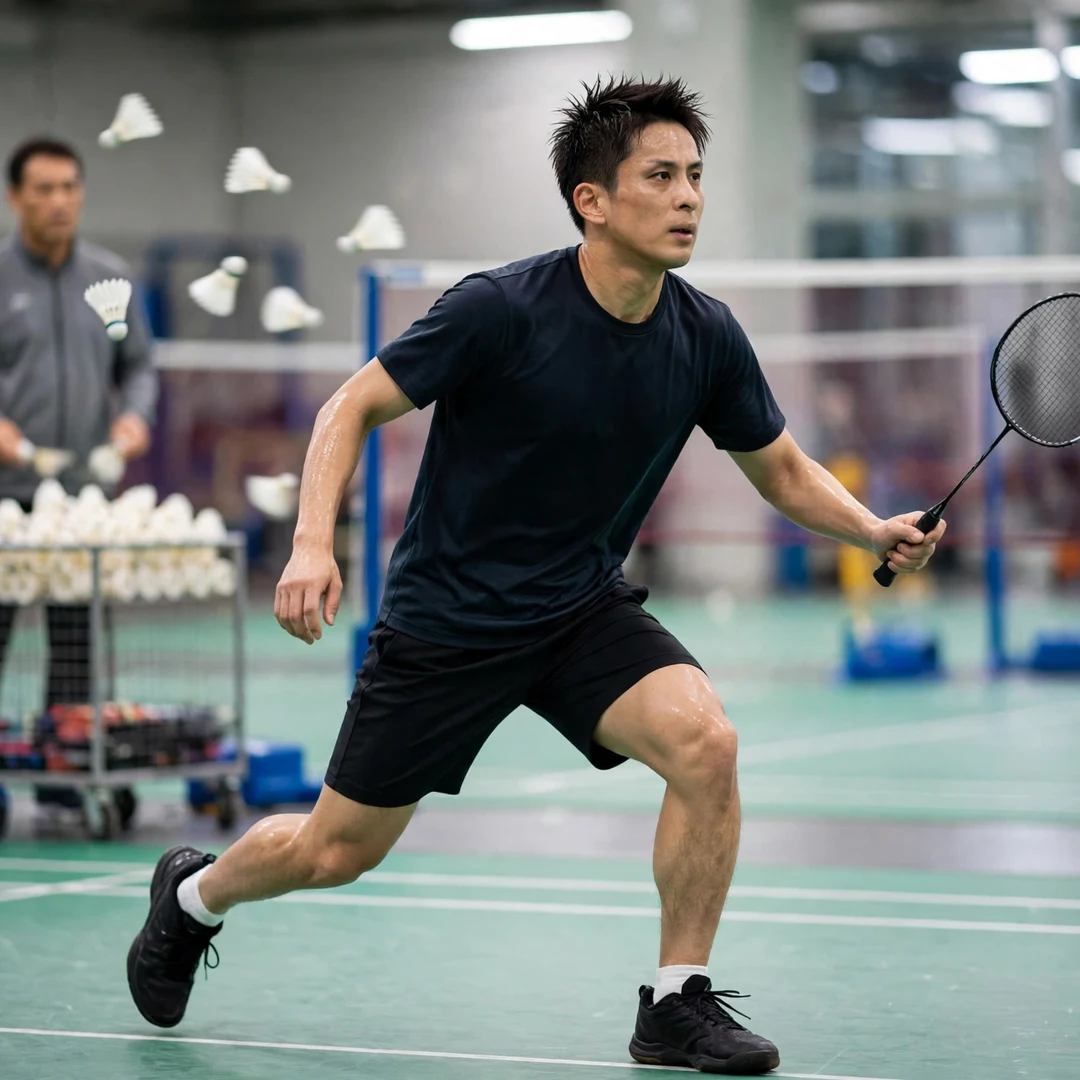
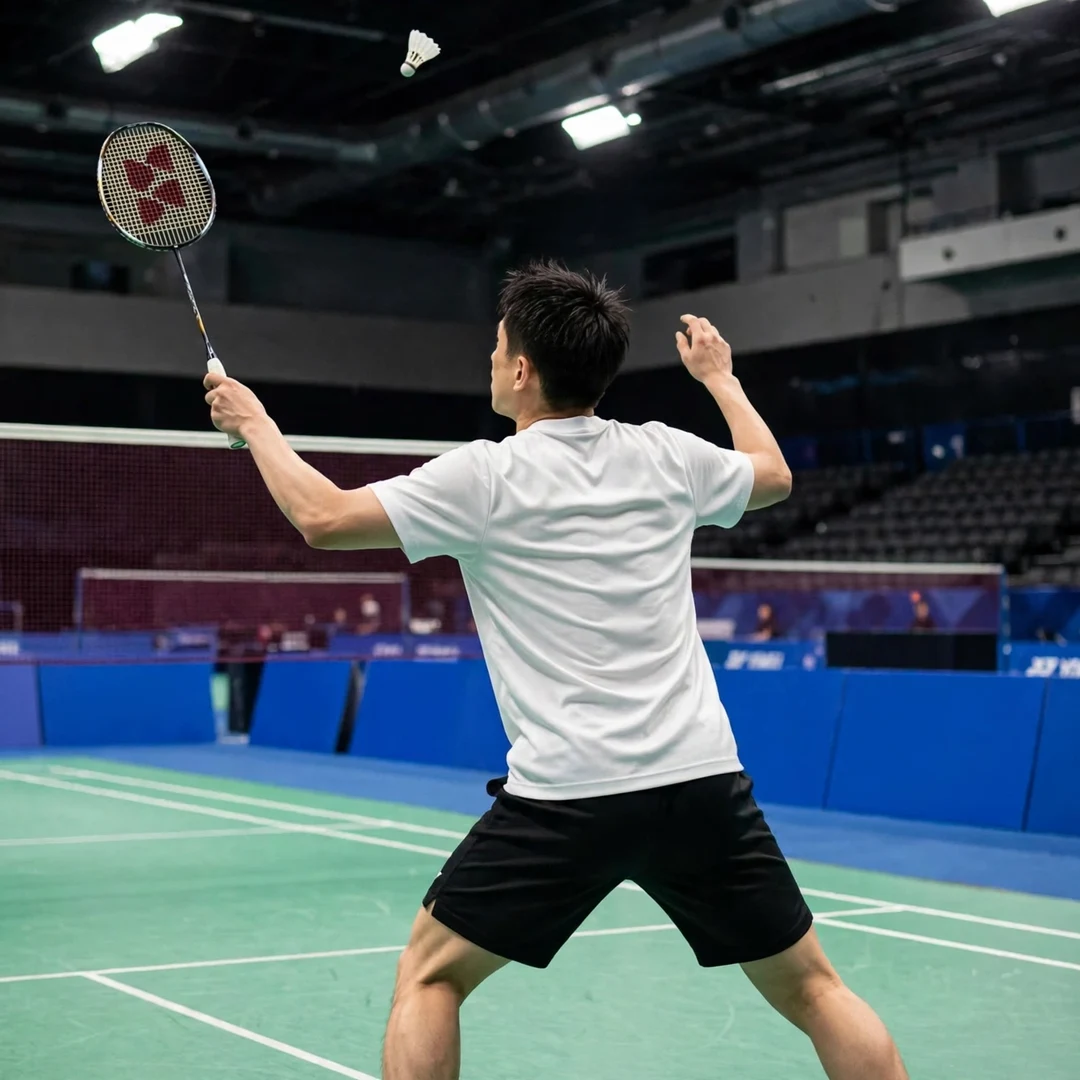
On court, Koga is a tactical left-hander who wins rallies with his brain before his racket. At 1.66 m he cannot bully anyone, so the racket in his left hand is used for angles and deception instead: spinning net shots that die over the tape, cross-court forehands that wrong-foot taller opponents, sudden changes of pace and direction, and a defence organised enough to keep returning one more shuttle. His footwork is economical and his rally tolerance is elite — opponents must win points two or three times against him. The style was not a choice of fashion; it was built, shot by shot, to compensate for the smallest frame on the tour.
The clearest evidence is the scoreline of his biggest win. Beating world No. 6 Li Shi Feng 21–16, 21–15 is not a power result; it is a tactical one — long rallies controlled, angles repeated, errors refused. The same pattern runs through his ten international final wins: the three-game comebacks against Chi Yu-jen and Riki Takei in 2023, the straight-games control of Loh Kean Yew in 2019 and of Julien Carraggi in Belgium in 2025. Koga’s closing skill is repeatable: when a rally or a match tightens, his decision-making stays clean one shot longer than the man across the net.
His next frontier is turning World Tour moments into World Tour weeks. The German Open quarter-final is the template — qualifying rounds survived, a top seed beaten, a quarter-final reached — and the task at 30 is to repeat it often enough to climb from No. 49 towards the top 32, where Olympic qualification for Los Angeles 2028 will be decided. He has the game to trouble anyone on a given day; the puzzle now is recovery, scheduling and doing it three rounds in a row, on a budget he raises himself. Few players in the top 50 carry a story half as instructive.
Mental Strength
Patience, Craft and Never Giving Up
The first lesson of Koga’s career is that a complete game is built in childhood and cannot be faked later. National titles at elementary, junior high and high school level came before any senior success, and the footwork, defence and net craft he learned at the Okagaki Junior club are still the shots winning his matches at 30. Young players who want his completeness should copy the order: movement and rally skills first; the spectacular winners are only the visible tip of a decade of basics.
The second lesson is that being dropped is information, not a verdict. Japan’s decision to cut Koga from the national team at the end of 2022 could have ended his career; instead it clarified it. He kept winning titles outside the system — Thailand, Bahrain and Malaysia in 2023 alone — and then took the braver step of turning professional with his own sponsors. A young player who loses a squad place, a scholarship or a selection has lost a structure, not a future. Koga’s career is the working proof.
The third lesson is professional patience. Koga treats his career as a project with levels: Future Series and International Series events to rebuild ranking points, International Challenge titles to bank prize money and confidence, then World Tour weeks chosen carefully — the Syed Modi semi-final, the German Open giant-killing. Nothing about the comeback was rushed, and nothing was left to hope. Juniors and their parents can copy that mindset exactly: pick the right level, peak for the right weeks, and let the ranking follow the results.
Learning Reference
ST Badminton Academy Connection
Minoru Koga is a Japanese professional player with AC Nagano Parceiro Badminton Club and does not coach for, teach at or endorse ST Badminton Academy, and there is no official connection between him and the academy. Students may occasionally see his name in academy discussions of the professional game because his comeback — dropped by his country, self-funded, and back in the world’s top 50 — is such a clear case study in resilience — but he has no coaching role, sponsorship or teaching relationship with the academy, and nothing on this page should be read as his endorsement.
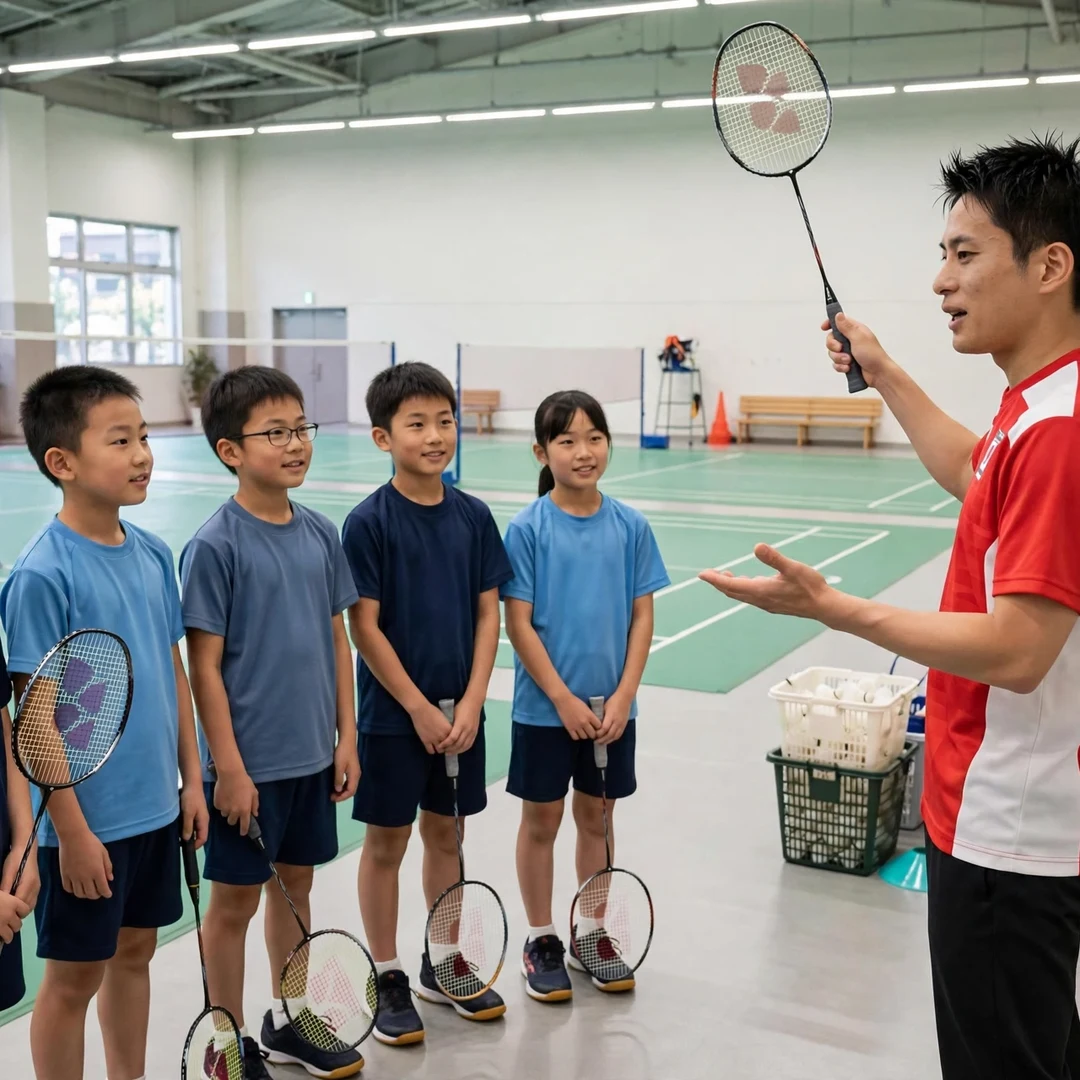
Coaches can use Koga’s 2026 German Open match against Li Shi Feng as a teaching film for left-handed tactics. Freeze the long rallies and count how rarely he gives away a cheap error; show juniors how a 1.66 m player uses cross-court angles, spinning net shots and changes of pace to neutralise a bigger hitter; then rebuild the same patterns in training — multi-shuttle defence, left-side angle drills, long-rally games with a no-error rule, and match plans written for specific opponents rather than generic aggression.
For parents, Koga’s timeline is a healthy reality check. He won national titles at every school level and a youth games gold medal, yet he reached the world’s top 50 only at 29 — after an earthquake, a pandemic, five years in and then out of a national team, and a season ranked outside the top 250. Progress measured in decades, not weekends; a career rebuilt twice — that is what real development often looks like, and it is worth trusting.
FAQs: Minoru Koga Japanese Badminton Player
Here are the questions badminton fans in Japan, Malaysia, Singapore and beyond ask most about Minoru Koga — his background, his ten international titles, his German Open win over Li Shi Feng, and what young players can learn from his patient, tactical, left-handed style.
Who is Minoru Koga and which country does he represent in badminton?
Minoru Koga is a Japanese men’s singles badminton player. Born on 30 September 1996 in Fukuoka, he is left-handed, stands 1.66 metres tall and plays professionally for AC Nagano Parceiro Badminton Club after five years in Japan’s national team. In the Week 43 rankings of 20 October 2026 he sits at a career-high-equalling world No. 49.
What are Minoru Koga’s biggest badminton achievements?
His biggest achievements are ten BWF International Challenge and Series titles — including the Swedish Open in 2019 and 2026, the Belgian International in 2025 and three titles in 2023 alone — a runner-up finish at the 2018 Canada Open on the BWF World Tour, mixed doubles gold with Akane Yamaguchi at the 2013 Asian Youth Games, silver at the 2019 Asia Mixed Team Championships, two All Japan Intercollegiate singles titles, and a 2026 German Open win over world No. 6 Li Shi Feng.
What is Minoru Koga’s playing style?
Koga plays a tactical, rally-based game built for the smallest frame on the tour. The left-hander controls rallies with elite footwork, stubborn defence, spinning net shots and cross-court angles, changing pace suddenly rather than relying on power. He developed the style as a child to compensate for his 1.66 m stature and a body affected by asthma and severe allergies — craft first, winners second.
How did Minoru Koga beat world No. 6 Li Shi Feng at the German Open?
At the German Open 2026, a Super 300 event in Mülheim, Koga came through the qualifying rounds and beat second seed Li Shi Feng of China — the world No. 6 — 21–16, 21–15 in the first round, controlling the long rallies and refusing cheap errors. He then beat Lee Cheuk Yiu of Hong Kong before losing his quarter-final to Toma Junior Popov of France. Tournament reports called it the upset of the event: a self-funded qualifier dismantling a top seed in straight games.
How can my child learn from Minoru Koga’s development path?
Children can learn from the order of his career: school titles at every level, a youth games gold medal, university championships, senior titles step by step, and a comeback built outside the national team when he was dropped. On court they can copy his craft — at the German Open he beat the world No. 6 with the racket in his left hand by playing one more patient, accurate shot than Li Shi Feng — and his habit of treating every setback, from an earthquake to a lost ranking, as information rather than an ending.
Did Minoru Koga win titles and medals as a junior player?
Yes. Koga won national singles titles in all three school divisions — the All Japan Elementary School Championships (2008), the National Junior High School Championships (2011) and the Inter-High (2014), where he beat Kanta Tsuneyama in the final. Internationally he won mixed doubles gold with Akane Yamaguchi at the 2013 Asian Youth Games in Nanjing and mixed team bronzes at the 2014 Asian and World Junior Championships.
What is Minoru Koga’s best result on the BWF World Tour?
His best BWF World Tour result is the 2018 Canada Open final in Calgary: ranked 396th in the world, the young Koga reached the Super 100 final before losing 15–21, 10–21 to China’s Lu Guangzu. His best World Tour runs since are the quarter-final at the 2026 German Open — where he beat world No. 6 Li Shi Feng — and the semi-final at the Syed Modi International Super 300 in 2025.
What playing style should young players copy from Minoru Koga?
Young players should copy his tactical patience: build rallies with footwork and defence, use angles and net craft to move opponents, and treat the smash as the finisher of a rally you have already constructed — especially players who are not the tallest on court. His career also teaches the mindset: a fixed routine, one more good shot under pressure, and the refusal to let a dropped selection or a low ranking decide the ending.
Does ST Badminton Academy have any connection with Minoru Koga?
No. Minoru Koga is a Japanese professional player with AC Nagano Parceiro Badminton Club and has no official connection to ST Badminton Academy. He does not work with the academy as a coach or ambassador, and the academy follows his career only as followers of professional badminton and as a case study in resilience and patient, step-by-step player development.
Minoru Koga Career Highlights

Career Statistics and Rankings
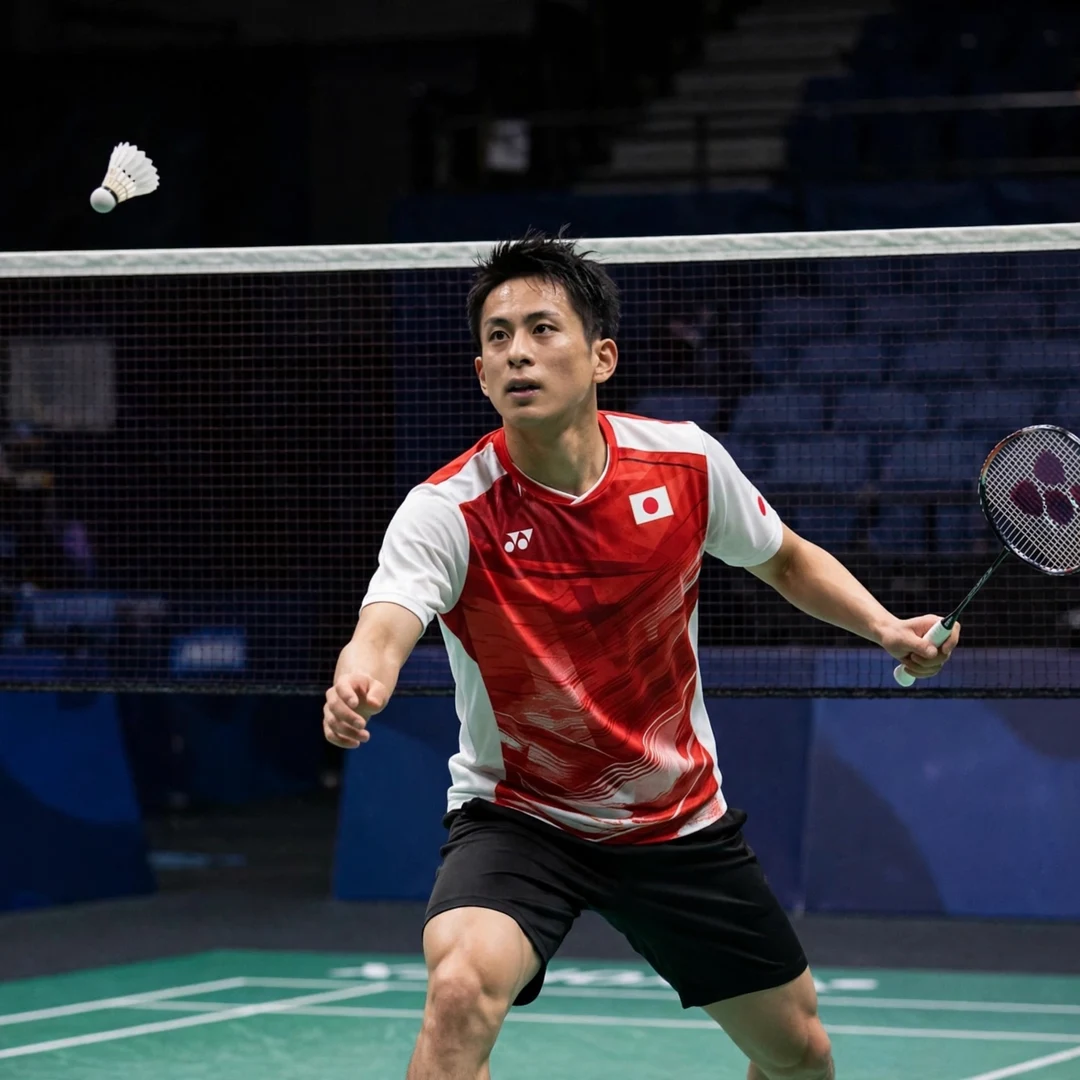
The next chapter is already being written. Koga turned 30 on 30 September 2026 holding a career-high world ranking of No. 49, built on January titles in Estonia and Sweden, a German Open quarter-final and a China Masters semi-final. The targets now are more World Tour quarter-finals, an eleventh international title, and a climb towards the top 32 as the qualification race for the Los Angeles 2028 Olympic Games — the goal he turned professional to chase — takes shape.
| Development Area | Common Misconception | What Minoru Koga's Career Shows REALITY |
|---|---|---|
| Junior Foundation | Talent alone decides who becomes a champion. | Koga started at age six at the Okagaki Junior club in Fukuoka and won national singles titles at elementary school (2008), junior high (2011) and high school (2014) — a structured junior base came first. |
| Playing Style Priority | Kids should copy the flashiest attacking shots. | Koga built a complete tactical game first; at 1.66 m he cannot rely on power, so his left-handed angles are the finishing touch on elite footwork, stubborn defence and net craft. |
| Fitness Importance | Juniors can out-train everyone without rest. | Koga was dropped from the Japanese national team at the end of 2022 and his ranking fell to No. 265 — his comeback to a career-high No. 49 came from going professional and funding his own schedule, not more hours. |
| Mental Approach | Top players never get nervous or upset. | Koga played through asthma, pneumonia and severe food allergies as a child, and through the 2011 earthquake that struck his school in Fukushima — mental skills are trained, not inherited. |
| Attacking Training | Smashing harder is always the answer. | His 2026 German Open win over world No. 6 Li Shi Feng (21–16, 21–15) and his 2019 Swedish Open final win over Loh Kean Yew came from tactical placement and rally patience, not raw power. |
| National Milestones | Only world titles matter. | Koga's Asian Youth Games mixed doubles gold in 2013, won with Akane Yamaguchi, and his 2019 Asia Mixed Team Championships silver made him a team player for Japan — continental milestones build a career step by step. |
| Career Timeline | Champions peak once and fade fast. | From a Canada Open final as world No. 396 in 2018 to a career-high world No. 49 in 2026, with ten international titles along the way, Koga proves sustained development beats a short peak. |
Study Minoru Koga's Tactical Intelligence and Professional Approach
Whether you are a Japanese supporter, a Malaysian fan who watched him defend his Malaysia International title in Ipoh, or a junior learning how the smallest player on the tour out-thinks the biggest hitters, Minoru Koga's matches reward close study. Watch how he constructs a rally and refuses to panic at the end of it — then bring that patience, and his professional approach to rebuilding a career, into your own training week.