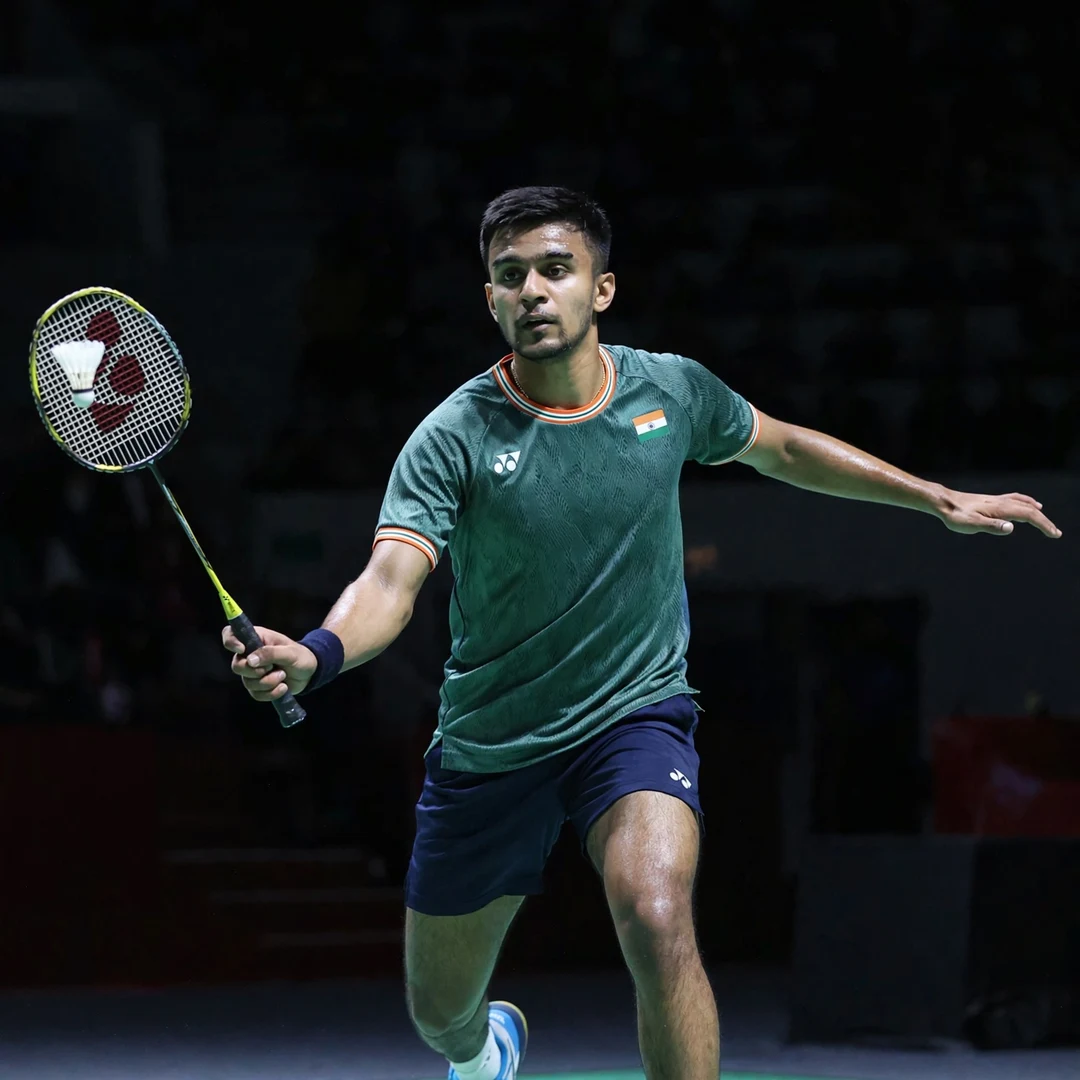
French Men’s Singles Badminton Star
Arnaud Merkle

France
Player Event: Men’s singles
Born on 25 April 2000 in Staffelfelden, near Mulhouse
Right-handed attacking player · 1.91 m of reach, steep smashes and a career rebuilt after hip surgery
Understanding Arnaud Merkle (French Badminton Star)
Arnaud Merkle is a French men’s singles player whose career has been built twice. The first version was the golden junior: European junior champion in 2018, a Youth Olympian who fought for bronze in Buenos Aires, and a first BWF World Tour finalist at 21. The second version is more remarkable — a player who discovered he had been born with an extra bone in his hip, had it surgically removed in December 2022 after fearing his career was over, and returned to produce the best badminton of his life: thirteen career international titles, six of them in a single season in 2025, European Championships singles bronze and European team gold in 2026, and a career-high world ranking of No. 32. In the BWF Week 43 rankings of 20 October 2026 he stands at No. 50 with 32,164 points, at 1.91 metres one of the tallest attackers on the tour.
Staffelfelden Roots: The Tall Boy from Alsace
Merkle was born on 25 April 2000 in Staffelfelden, a village in the Haut-Rhin department of Alsace, part of the Mulhouse area in eastern France, close to the German and Swiss borders. His full name is Arnaud-Sylvain-André Merklé. Alsace is not France’s traditional badminton heartland, but its clubs fed a generation of French talent, and the boy from Staffelfelden had one advantage nobody could coach: height. He grew to 1.91 metres — six foot three — with the reach to take the shuttle early and the leverage to hit down from almost anywhere in the rear court. The French federation system noticed, and by his mid-teens Merkle was on the national junior pathway, right-handed, attack-minded and already winning matches with steep, early hitting.
European Junior Champion: Silver at Home in Mulhouse, Gold in Tallinn
His junior peak came on home soil and then at the top of Europe. At the 2017 European Junior Championships in Mulhouse — effectively his home tournament — the 17-year-old Merkle reached the boys’ singles final before losing 14-21, 15-21 to Toma Junior Popov, while France took the mixed team gold. A year later in Tallinn he went one better in both events: France retained the mixed team title, and Merkle beat Christo Popov — Toma’s younger brother — 21-7, 21-14 in the singles final to become European junior champion. Two Popov brothers, two finals, one gold and one silver: the rivalries that would follow him into senior badminton were already written into his junior career.
The Youth Olympic Bronze-Medal Match in Buenos Aires
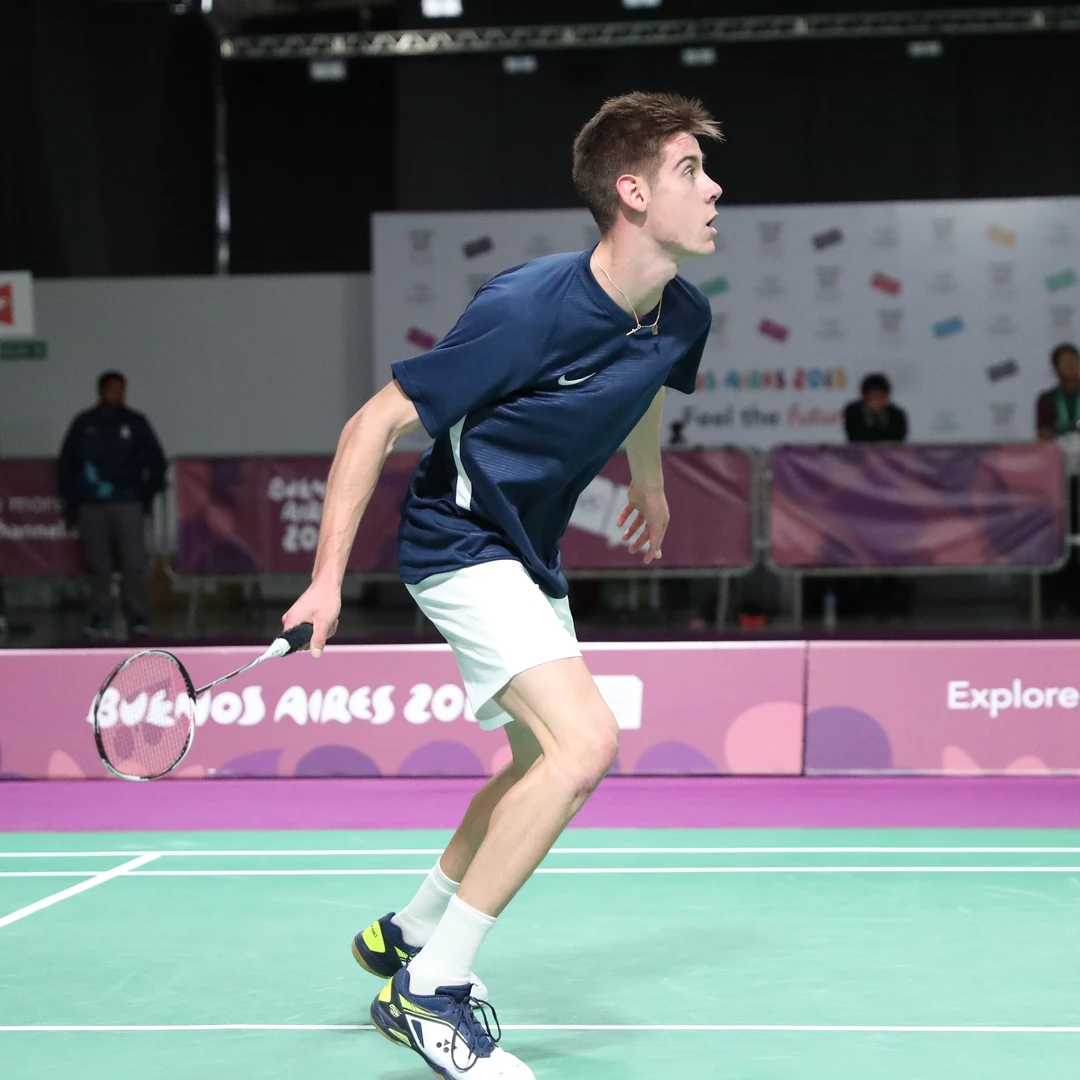
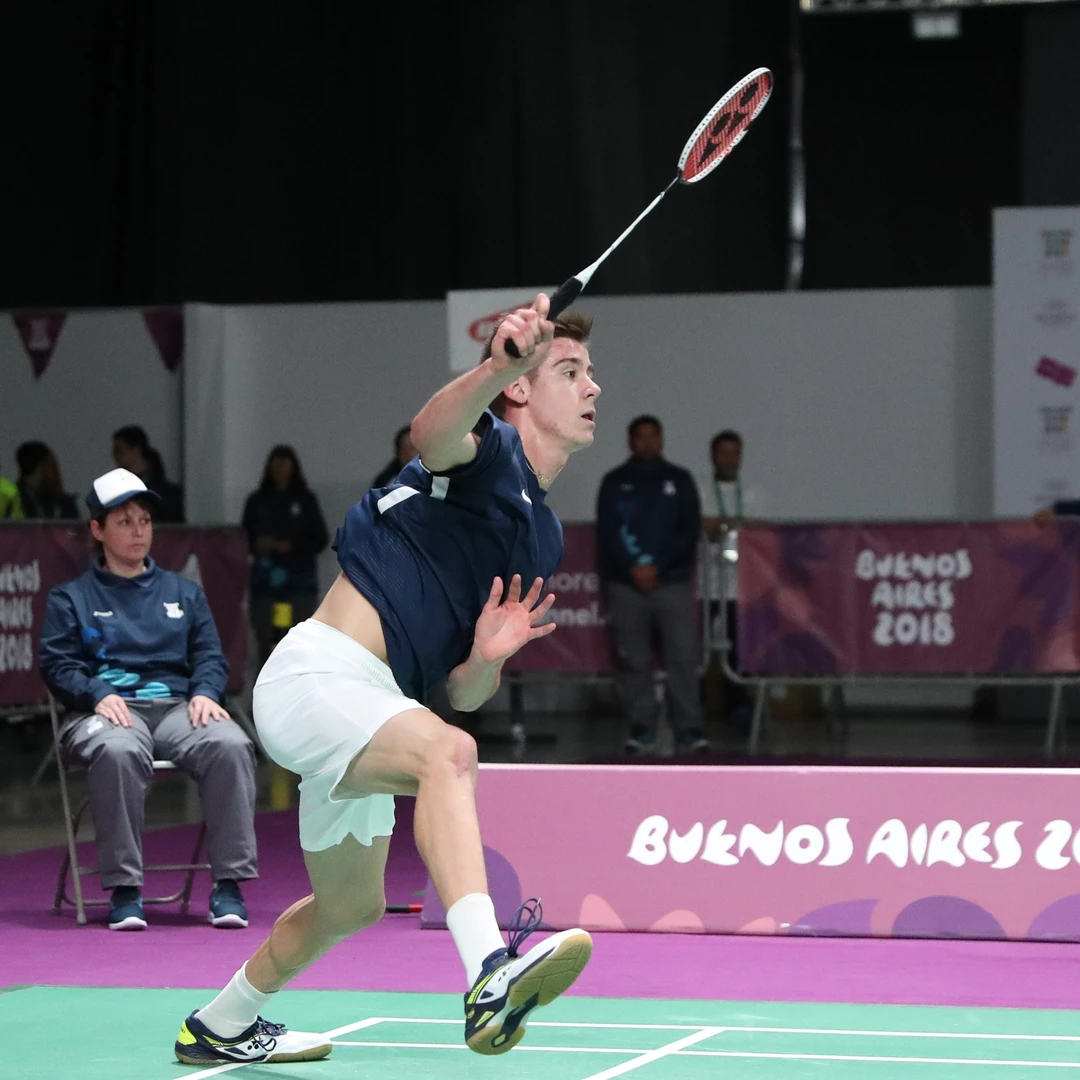
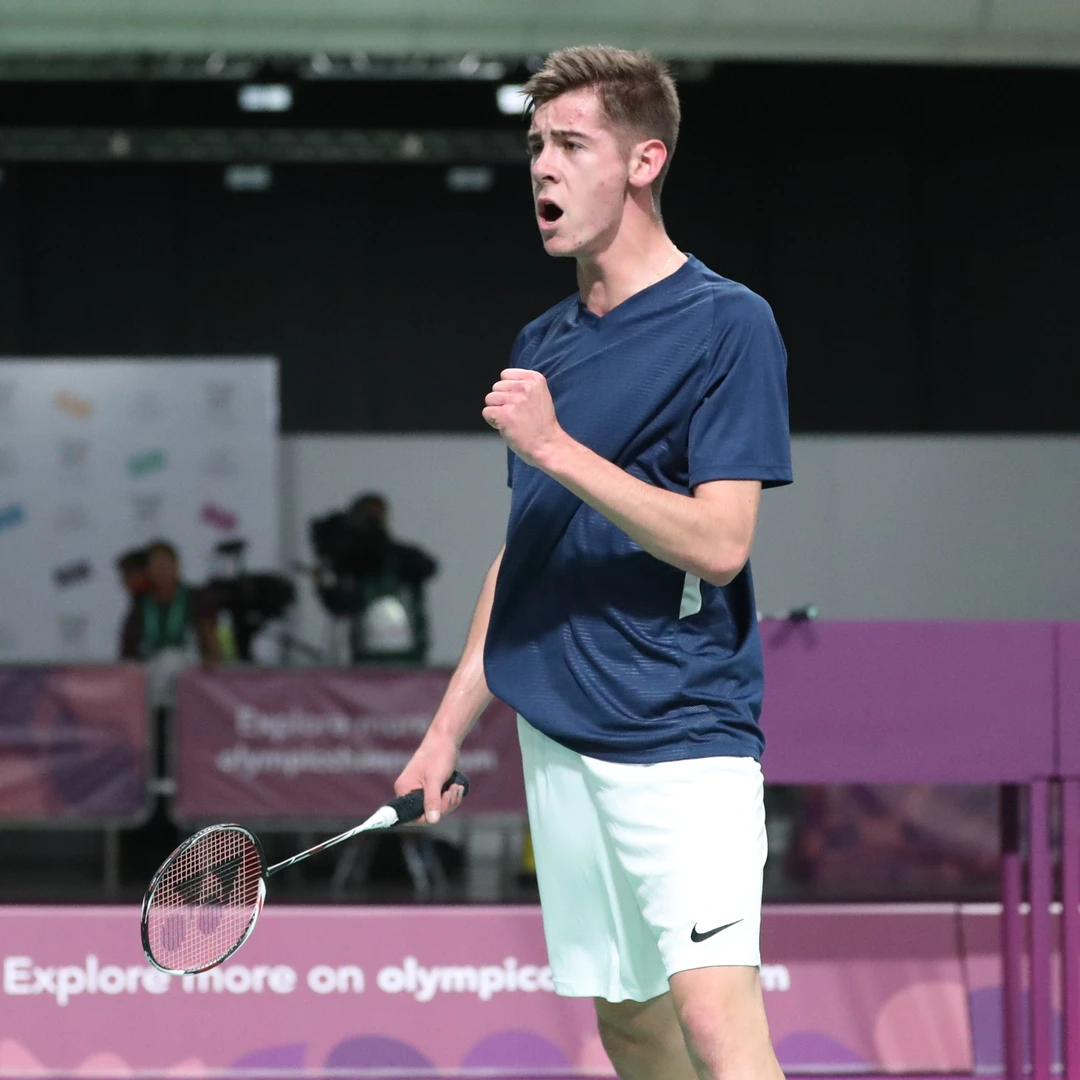
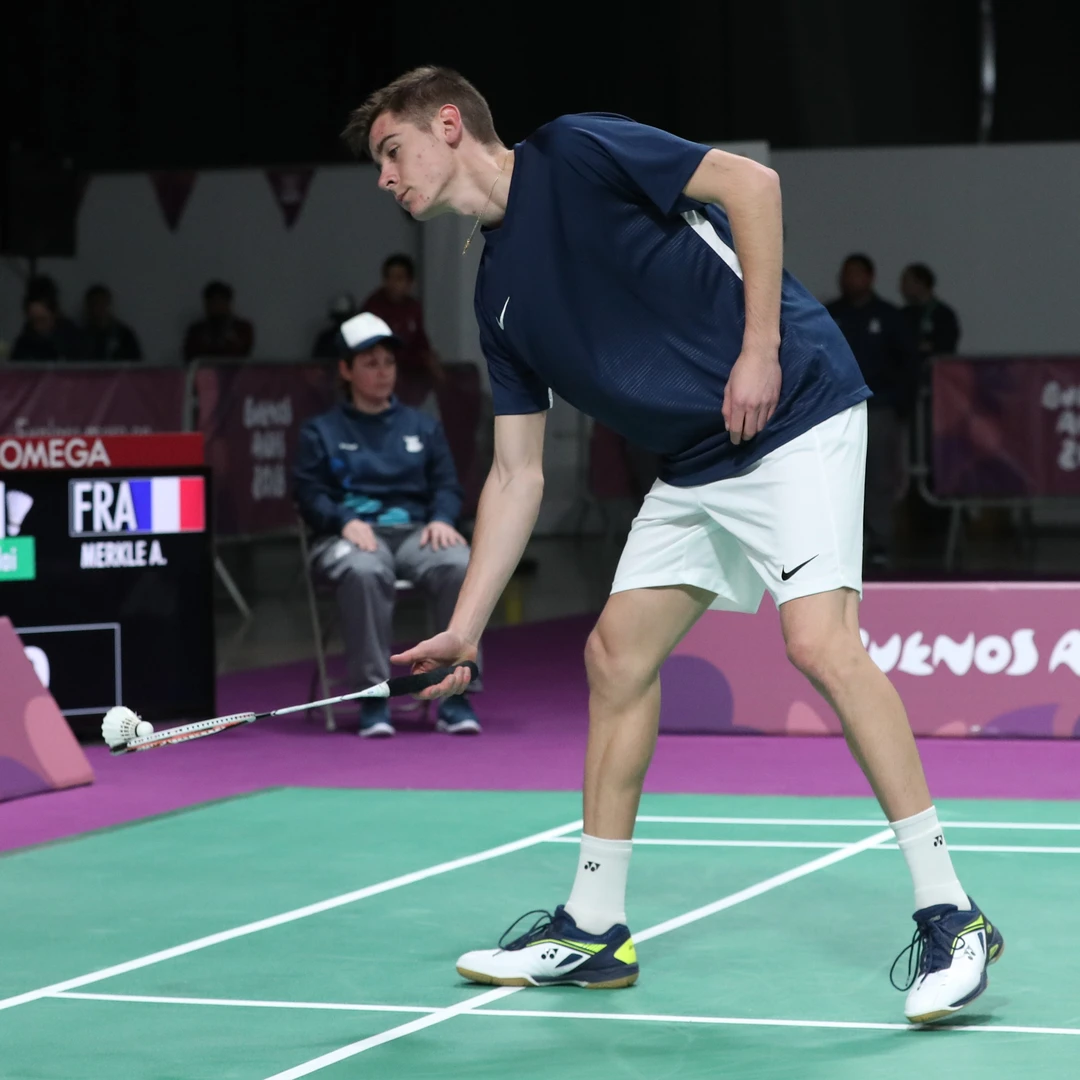
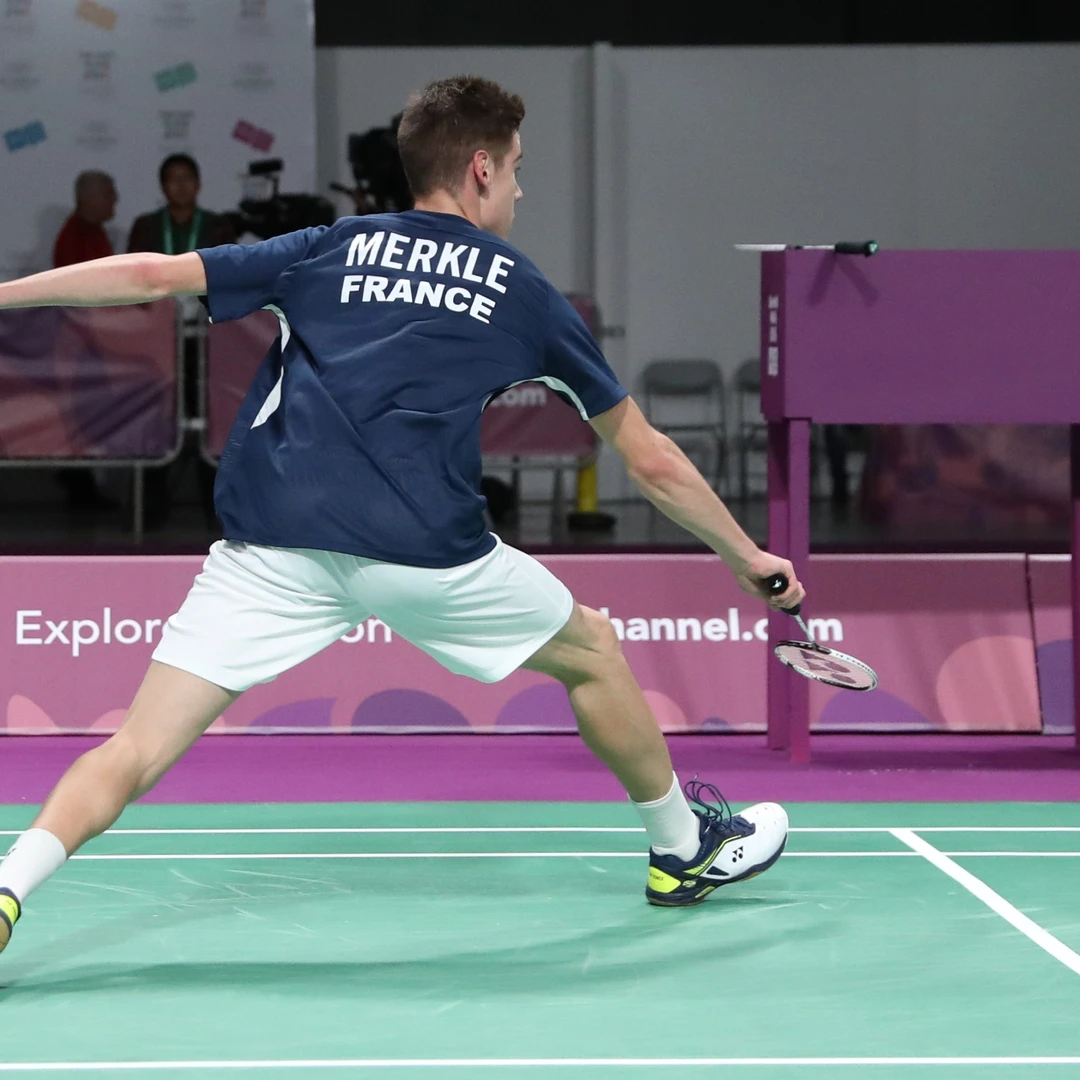
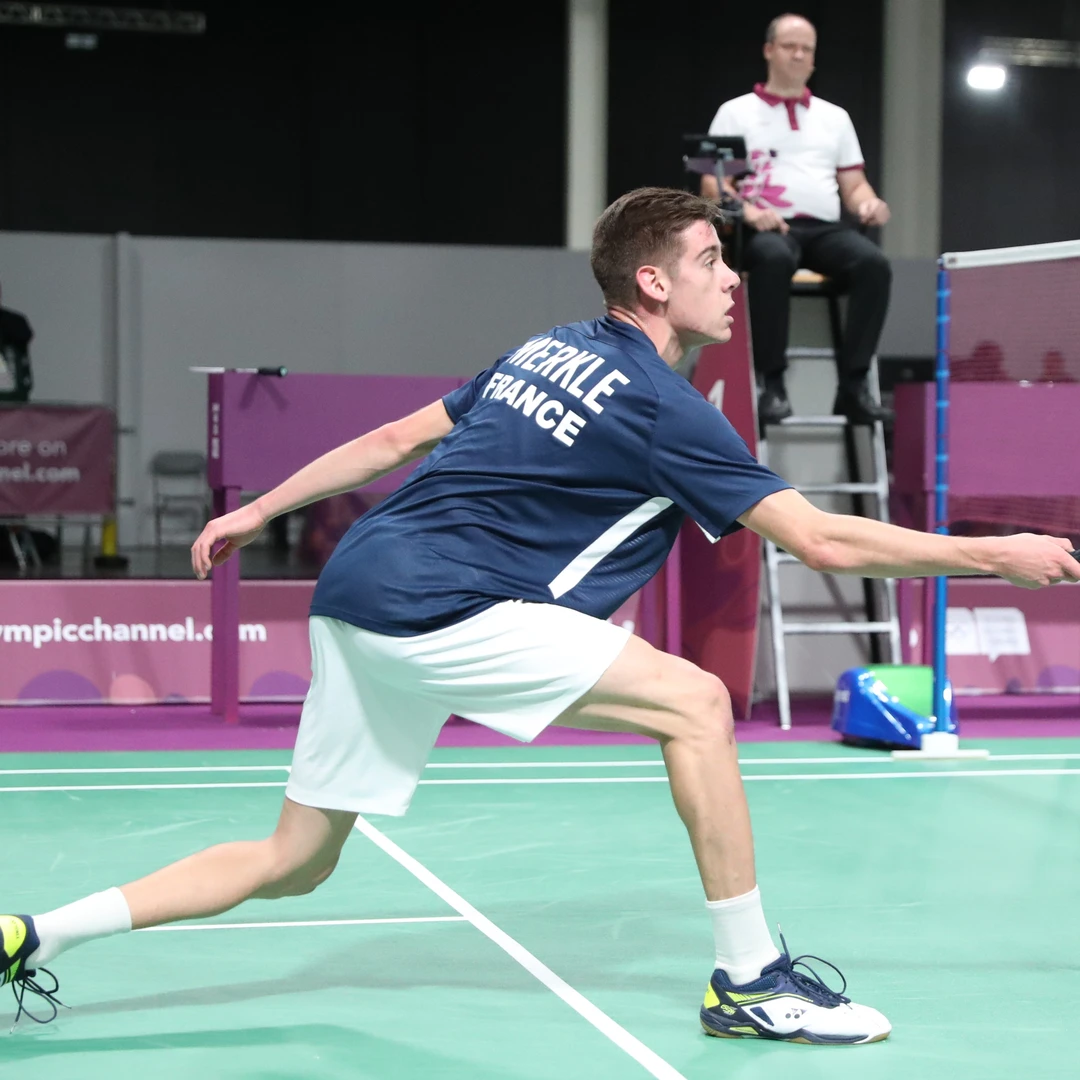
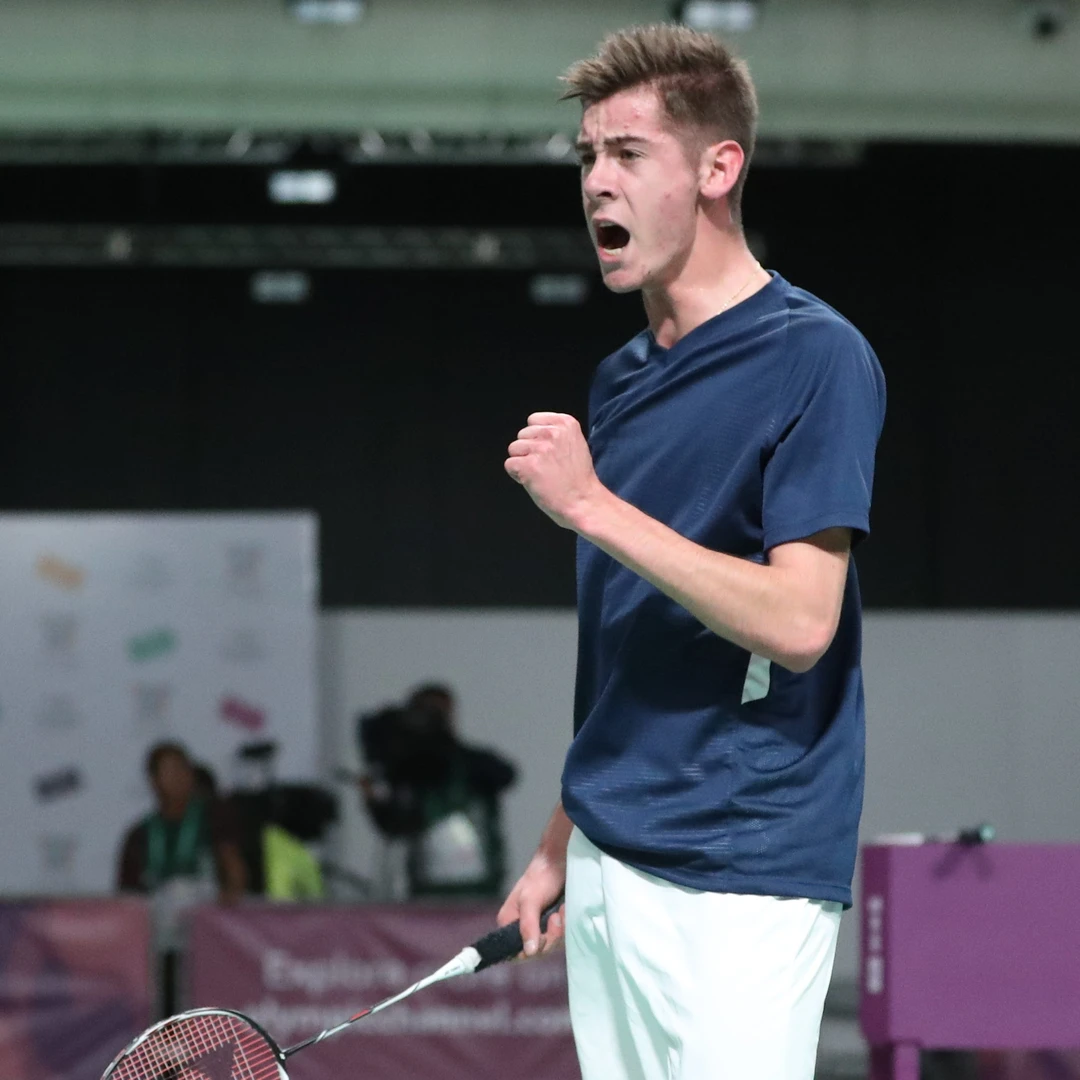
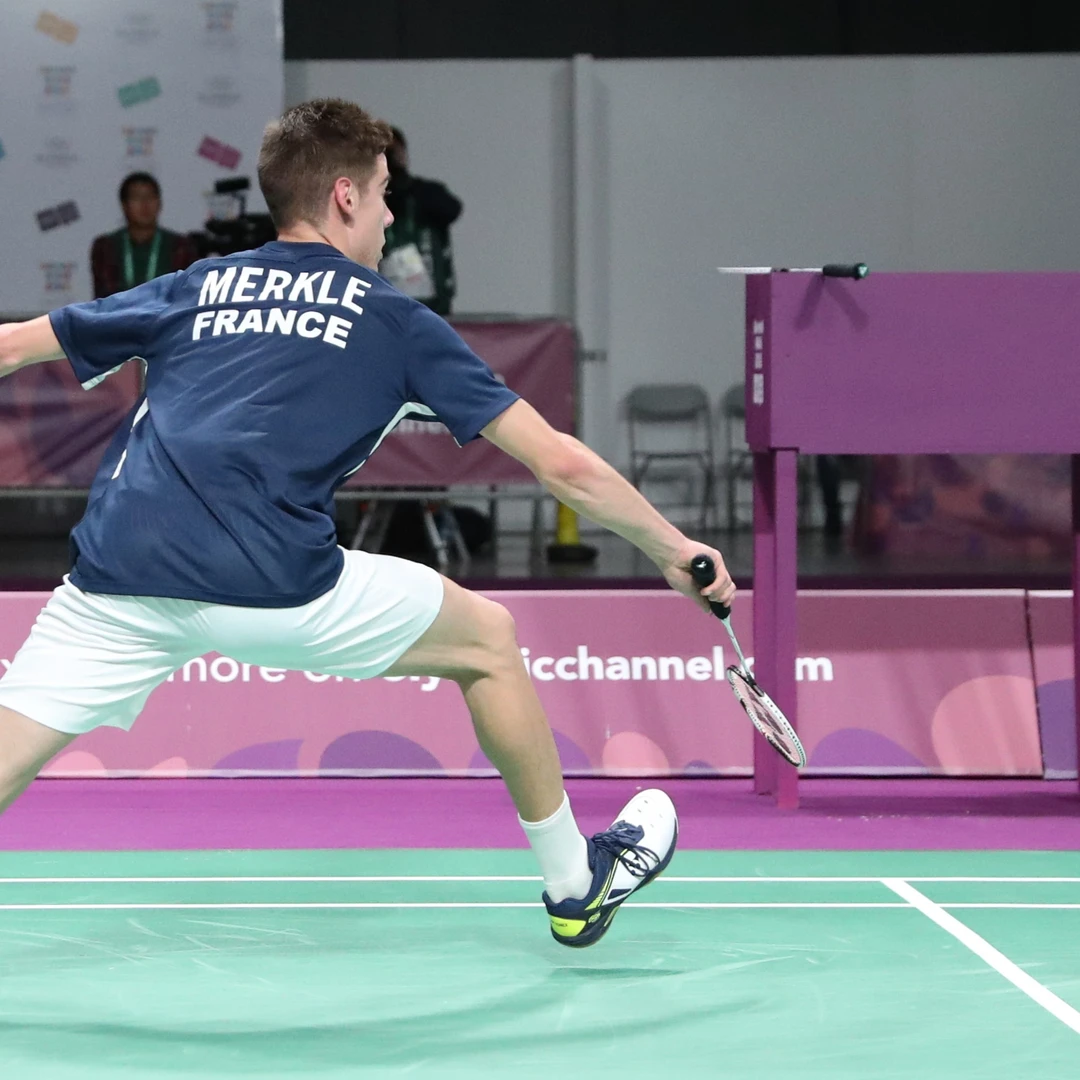
In October 2018 Merkle represented France at the Summer Youth Olympic Games in Buenos Aires, and he very nearly left Argentina with a medal. He fought through to the boys’ singles bronze-medal match, where Japan’s Kodai Naraoka — a future world No. 2 — beat him in a deciding rubber game. Badminton Europe’s report was headlined ‘Arnaud Merkle doesn’t leave without a fight’, and that was the accurate summary: fourth place at eighteen, against the strongest junior field on the planet, in a match he refused to let go quietly. The real photographs from that bronze-medal match, taken by Sandro Halank, include the hero image at the top of this page.
First Senior Titles in Estonia, Germany, Slovenia and Wales
The step into senior badminton brought steady, unglamorous progress. Merkle was runner-up at the 2018 Bulgarian Open, losing that final to Toma Junior Popov — the Popov family again — then won his first senior titles in 2019: the Estonian International, beating Joran Kweekel 21-8, 21-16, and the German International, beating Max Weißkirchen 22-20, 21-12. Two titles in his first full senior seasons marked him as a player who converted finals when he reached them.
Career Milestone #1
The World Tour Final COVID Took Away: Syed Modi 2022
In 2021 the collection grew up a level. Merkle added the Slovenian International — a ruthless 21-8, 21-10 final win over Panji Ahmad Maulana — and the Welsh International, beating Siril Verma in three games, while also reaching the Austrian Open final, where Maulana got his revenge in three games, and taking silver with France at the European Mixed Team Championships in Vantaa. By the end of 2021 he had four senior titles and a European team medal: a solid base, but the biggest week of his career so far was about to arrive in the strangest possible way.
In January 2022, at the Syed Modi International in Lucknow, Merkle reached his first BWF World Tour final — a Super 300 showpiece against his compatriot Lucas Claerbout, an all-French final that promised a breakthrough title for one of them. It was never played. Merkle tested positive for COVID-19 on the day of the final, the match was called off, and both Frenchmen were awarded runner-up honours with 5,950 ranking points each. A first World Tour final reached and lost without a shuttle being struck: it remains one of the unluckiest stories of the pandemic-era tour. Merkle’s response was to keep collecting titles at his level, winning the Uganda International in 2022 with a three-game final victory over Harshit Aggarwal.
Career Milestone #2
The Extra Bone in His Hip and the Surgery That Saved His Career
What nobody outside his team fully understood at the time was that Merkle was playing in pain, and the pain had a cause he had carried since birth. An extra bone in his hip — a leftover fragment that should not have been there — disturbed his deep lunges and triggered an inflammatory reaction that grew worse every season. The breaking point came at the HYLO Open in late 2022: after a gruelling three-game round-of-16 battle with India’s Kidambi Srikanth, Merkle could not walk for two days. ‘At one point I thought my career was over,’ he later told the BWF. ‘Badminton is everything to me.’
In December 2022, surgeons excised the extra bone from his hip. The estimate was five months of rehabilitation; with a specialist team and the support of the French Badminton Federation, Merkle was back on court in four months and a week — and he marked the comeback the only way he knows how, winning the Nantes International, beating Jason Christ Alexander in the final, and the Réunion Open, beating Huang Yu-kai 21-19, 21-19. The lunges that had tortured him for years were his again. What followed in 2024 was consolidation rather than fireworks: a silver medal with the French men’s team at the European Team Championships in Łódź, a ranking rebuilt into the world’s top fifty, and, in April 2024, the BWF telling his story to the world under the headline he had feared most — the career that nearly ended before it had properly begun.
If 2023 proved he could still win, 2025 proved the surgery had given him a second career. Merkle won six international titles in a single season: the Swedish Open in January, beating Jeppe Bruun in three games; the Polish Open in March, beating Joakim Oldorff in straight games; the Denmark Challenge, surviving 22-20 in a deciding game against Ting Yen-chen; the Dutch Open, beating Gustav Björkler in three games; the Irish Open in Dublin, beating Daniil Dubovenko 21-14, 26-24 in the final; and the Scottish Open, beating Oldorff again, 21-7, 21-17. Six trophies in eleven months from a player who had feared for his career three years earlier — by November 2025 he had climbed to world No. 37, and he was still rising.
Career Milestone #3
Six Titles in 2025 and a World Tour Final at Last
The same 2025 season carried his game onto the World Tour stage at last. At the Vietnam Open, a Super 100 event, Merkle reached his second World Tour final — and this time he got to play it, losing 16-21, 10-21 to Thailand’s Panitchaphon Teeraratsakul. In October he reached the semi-finals of the Arctic Open, a Super 500 in Vantaa, beating Japan’s Kenta Nishimoto — then ranked world No. 13 — on that run. The pattern was unmistakable: the man winning International Challenge titles in January was, by autumn, standing in Super 500 semi-finals and Super 100 finals. The operation had not just saved his career; it had raised its ceiling.
The spring of 2026 made him a European medallist twice over. First, France won the European Men’s Team Championships in Istanbul — Merkle part of the squad that took gold, completing a full set of team medals after the silver of 2024 in Łódź and the bronze of 2020 in Liévin earlier in his career. Team badminton has been a constant thread through his story, from the junior mixed team golds of 2017 and 2018 through the mixed team silver of 2021: when France needs a singles point in a tie, Merkle’s name is on the teamsheet.
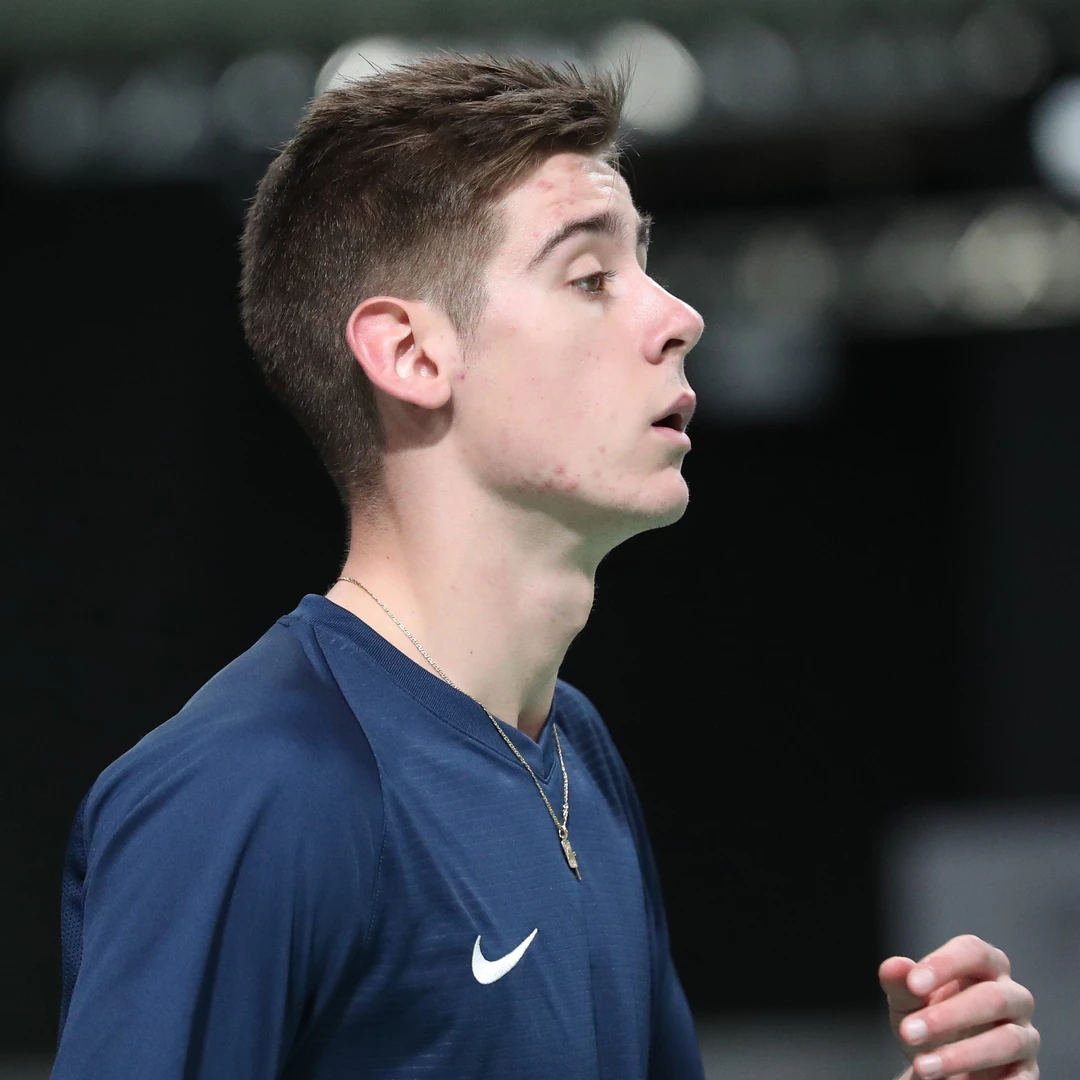
Then, at the individual European Championships in Huelva, Spain, he produced the best championship week of his life: straight-games wins over Markus Barth and Harry Huang, a quarter-final comeback against Alex Lanier — 17-21, 21-19, 21-18 against the French youngster many see as the future — and a semi-final defeat, 18-21, 13-21, to Anders Antonsen of Denmark, one of the most complete players in the world. The bronze medal was his, and on 14 April 2026 the rankings made it official: Arnaud Merkle, career-high world No. 32.
Career Milestone #4
European Team Gold, Singles Bronze and a Career-High No. 32 in 2026
Holding points at that altitude is another discipline entirely, and the autumn of 2026 has been the grind that follows every career year. In October Merkle lost a three-game Arctic Open first round to Chou Tien Chen in Vantaa and a Denmark Open first round to Kidambi Srikanth in Odense — the same Srikanth whose HYLO Open battle had pushed his hip to breaking point four years earlier. When the Week 43 rankings were published on 20 October 2026, Merkle stood at No. 50 with 32,164 points — a number that reflects expiring results more than current level. His immediate stage could hardly be more fitting: the French Open in Paris, his home Super 750, with a first-round meeting against Christo Popov — the friend and rival he beat for the European junior title in 2018.
Strip the story back and its shape is what young players should study. A village boy from Staffelfelden with a tall frame and a hidden defect in his hip; a European junior champion at eighteen; a Youth Olympian who lost a bronze-medal match in three games and smiled about the fight; a World Tour finalist whose final was cancelled by a virus; a patient who could not walk for two days after a match and chose surgery over surrender; and then, in his mid-twenties, a six-title season, a European bronze medal, a team gold and a career-high ranking. Every stage of Arnaud Merkle’s career was earned twice — once against the opponent, and once against his own body. That double resilience is the real curriculum of his career.

Playing Style
The Towering Attacking Style
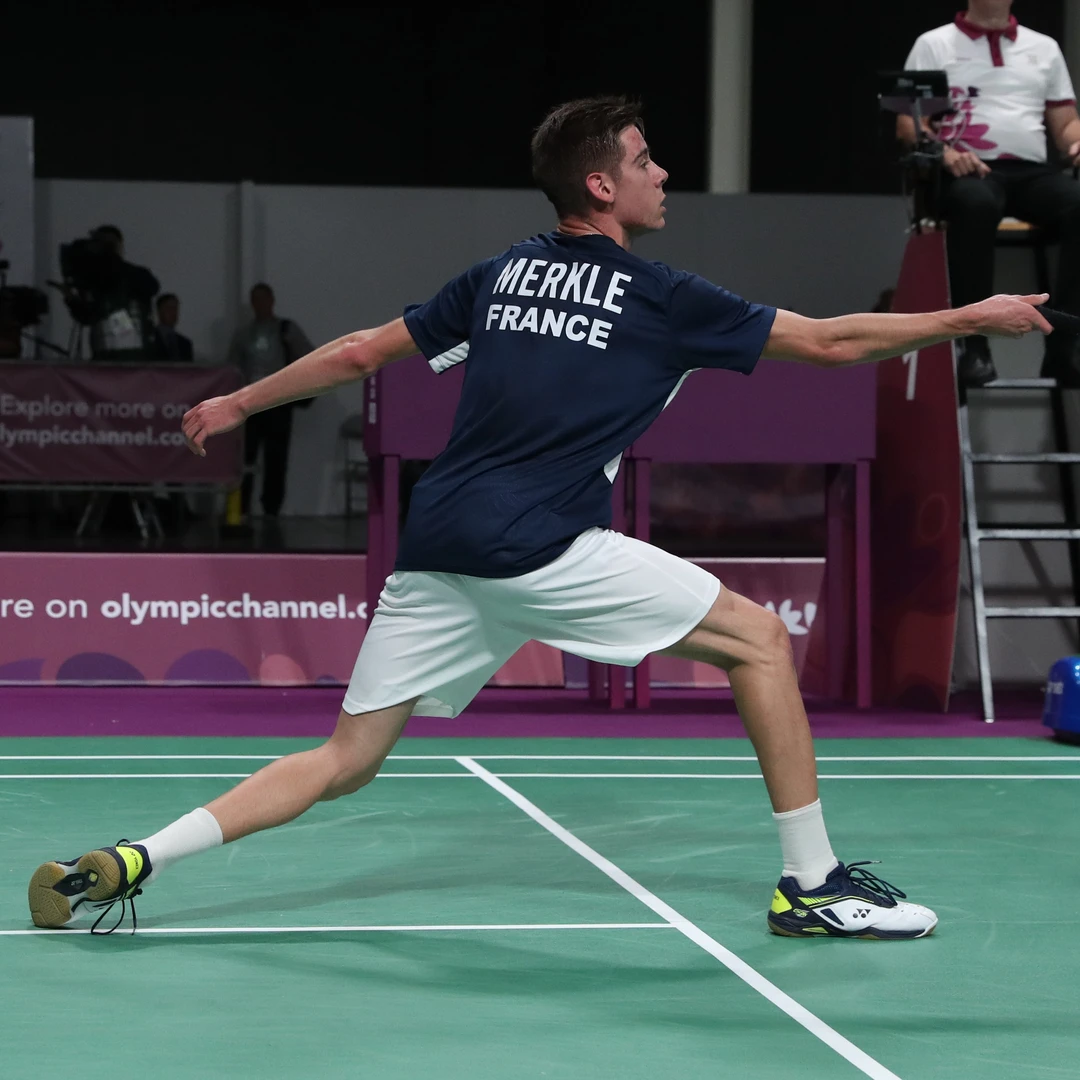
On court, Merkle is an attacker built around geometry. At 1.91 m he takes the shuttle earlier and higher than almost anyone in the top 50, so his smashes arrive at angles other players cannot produce — steep, short of the back tramlines, and hard to read because the contact point is so far above the net tape. His reach turns defence into counter-attack: one long stride covers ground that costs smaller players two steps, and his length at the net makes his tumbling shots and cross-court blocks a constant threat. Badmintonpeople described the young Merkle as ‘playing attacking badminton at its best’, and the adult version has kept the instinct while adding the rally patience his comeback demanded. The racket stays in his right hand throughout; the left arm is the counterbalance for those enormous levers.
The evidence is in the scorelines of his biggest recent wins. Beating Alex Lanier 17-21, 21-19, 21-18 in a European quarter-final is not a power result — it is patience, problem-solving and one clean decision after another against a faster, younger opponent. Winning the Irish Open final’s second game 26-24 against Daniil Dubovenko is not a power result either; it is nerve at game point down and up, repeatedly. And the defence that once depended on a damaged hip has been rebuilt around the repaired joint: the deep lunges that used to inflame it are now trained, loaded and trusted, which is why his rally tolerance in 2025 and 2026 looks nothing like the player who could not walk after the HYLO Open. The attack gets the headlines; the rebuilt base wins the matches.
His next frontier is converting dominance at International Challenge level into full World Tour weeks. He has the proof of concept — a Super 100 final in Vietnam, a Super 500 semi-final at the Arctic Open, a European Championships bronze — and the task at 26 is repetition: qualifying-free entries, second and third rounds survived, and enough points banked before the 2025 hauls start expiring in bulk. The road to the Los Angeles 2028 Olympic Games runs through the top of the rankings, and Merkle has already shown he can climb from the thirties; the puzzle now is staying there through a full season of Super 500 and Super 750 draws, with a body that finally lets him train the way his ambitions require.
Mental Strength
Height, Honesty and Refusing to Quit
The first lesson of Merkle’s career is that the junior base is built before anyone is watching. A European junior title, two mixed team golds and a Youth Olympic campaign all happened before his first senior trophy, and the footwork, defence and net craft from those years are still the platform under every senior win. Young players who want his completeness should copy the order: movement and rally skills first, height and power applied afterwards; the spectacular winners are only the visible tip of a decade of basics.
The second lesson is that unexplained pain is information, not weakness. Merkle played for years with an extra bone in his hip because the pain had no name; once doctors found the real cause, one operation and four honest months of rehabilitation changed his career more than any training block ever had. A young player with a recurring injury should copy the response, not the suffering: get the diagnosis, fix the actual problem properly, respect the rehab timeline — and notice that he beat even that, returning a month ahead of schedule because the work was done right.
The third lesson is level selection. Merkle’s 2025 was not built on glamorous draws; it was built on winning the tournaments in front of him — Swedish, Polish, Dutch, Danish, Irish and Scottish events whose points and prize money rebuilt his ranking until World Tour doors opened on their own. Juniors and their parents can copy that mindset exactly: pick the level you can win this season, bank the titles and the confidence, and let the ranking follow the results rather than chasing prestige entries you are not yet ready to convert.
Learning Reference
ST Badminton Academy Connection
Arnaud Merkle is a French professional player in the French national team set-up and does not coach for, teach at or endorse ST Badminton Academy, and there is no official connection between him and the academy. Students may occasionally see his name in academy discussions of the professional game because his comeback — a career feared over at 22, then rebuilt after hip surgery into a European bronze medal and a career-high ranking — is such a clear case study in diagnosis and resilience — but he has no coaching role, sponsorship or teaching relationship with the academy, and nothing on this page should be read as his endorsement.
Coaches can use Merkle’s 2026 European quarter-final against Alex Lanier as a teaching film for tall-player attack construction. Freeze the long rallies and show juniors how a 1.91 m player earns his smashes: early contact, steep angles into the body and the front forehand corner, then the net reach that punishes any loose reply. Then rebuild the physical base honestly in training — loaded lunge mechanics with correct hip tracking, single-leg strength work, and multi-shuttle defence — because Merkle’s career is the proof that the attacking heights only stand up if the joints underneath them are properly cared for.
For parents, Merkle’s timeline is a healthy reality check wrapped in a warning. He was European junior champion at eighteen and a Youth Olympian the same year, yet his career-high ranking arrived at twenty-six — after a cancelled final, a pandemic and an operation to remove a bone he was born with. Progress measured in years, not weekends; and beneath the timeline sits the harder lesson: when a young athlete says something hurts in a way that is getting worse, believe them early. The diagnosis that saved Merkle’s career was available years before anyone went looking for it.
FAQs: Arnaud Merkle French Badminton Player
Here are the questions badminton fans in France, Malaysia, Singapore and beyond ask most about Arnaud Merkle — his background, his thirteen international titles, the hip surgery that saved his career, and what young players can learn from his tall, attacking, right-handed style.
Who is Arnaud Merkle and which country does he represent in badminton?
Arnaud Merkle is a French men’s singles badminton player. Born on 25 April 2000 in Staffelfelden, near Mulhouse in Alsace, he is right-handed, stands 1.91 metres tall and plays in the French national team set-up. In the Week 43 rankings of 20 October 2026 he sits at world No. 50 with 32,164 points, having reached a career-high of No. 32 in April 2026.
What are Arnaud Merkle’s biggest badminton achievements?
His biggest achievements are a bronze medal in men’s singles at the 2026 European Championships in Huelva, gold with France at the 2026 European Men’s Team Championships, thirteen BWF International Challenge and Series titles — six of them in 2025 alone — the 2018 European junior singles title, two BWF World Tour runner-up finishes at the Syed Modi International (2022) and the Vietnam Open (2025), and fourth place at the 2018 Youth Olympic Games in Buenos Aires.
What is Arnaud Merkle’s playing style?
Merkle plays a tall man’s attacking game. At 1.91 m he takes the shuttle early and high, hitting steep smashes from contact points most players cannot reach, and his stride and reach turn defence into counter-attack. Since his 2022 hip surgery he has added rally patience and a trusted defensive lunge to the raw attack, which is why his biggest results — six titles in 2025, European bronze in 2026 — have all come after the operation.
What happened to Arnaud Merkle’s hip, and how did he come back from surgery?
Merkle was born with an extra bone in his hip that disturbed his deep lunges and caused worsening inflammation. After a 2022 HYLO Open match against Kidambi Srikanth left him unable to walk for two days, surgeons removed the bone in December 2022. Told to expect five months out, he returned in four months and a week, won two titles in 2023, and by 2025 was producing the best season of his career — ‘At one point I thought my career was over,’ he told the BWF.
How can my child learn from Arnaud Merkle’s development path?
Children can learn from the order of his career: European junior champion and Youth Olympian before any senior title, senior titles step by step, and a comeback built on an honest diagnosis when his body broke down. On court they can copy his construction — at Huelva he beat Alex Lanier with the racket in his right hand by building rallies until the steep smash was earned — and his habit of treating every setback, from a cancelled final to major surgery, as a problem to solve rather than an ending.
Did Arnaud Merkle win titles and medals as a junior player?
Yes. Merkle won the boys’ singles gold medal at the 2018 European Junior Championships in Tallinn, beating Christo Popov 21-7, 21-14 in the final, and took silver a year earlier in Mulhouse, losing the final to Toma Junior Popov. He also won mixed team gold with France at both the 2017 and 2018 European Junior Championships, and reached the bronze-medal match at the 2018 Youth Olympic Games in Buenos Aires, losing to Kodai Naraoka in three games.
What is Arnaud Merkle’s best result on the BWF World Tour?
Merkle has reached two BWF World Tour finals. At the Syed Modi International 2022, a Super 300 in India, the all-French final against Lucas Claerbout was called off after he tested positive for COVID-19, and both players were awarded runner-up honours. At the Vietnam Open 2025, a Super 100, he played the final and lost to Panitchaphon Teeraratsakul of Thailand. He also reached the semi-finals of the Arctic Open Super 500 in 2025.
What playing style should young players copy from Arnaud Merkle?
Young players should copy his attack construction: use whatever physical gifts you have — height, reach, speed — to take the shuttle early and hit steep, placed attacks rather than simply harder ones, and build the rally patience and defensive base that make the attack possible. Tall juniors especially can study how Merkle turns one long stride and a high contact point into pressure, and every young player can copy his professional response to injury: find the real cause and fix it properly.
Does ST Badminton Academy have any connection with Arnaud Merkle?
No. Arnaud Merkle is a French professional player in the French national team set-up and has no official connection to ST Badminton Academy. He does not work with the academy as a coach or ambassador, and the academy follows his career only as followers of professional badminton and as a case study in honest diagnosis, patient rebuilding and step-by-step player development.
Arnaud Merkle Career Highlights
Career Statistics and Rankings
The next chapter is already being written. Merkle defends the points of his career year through the autumn of 2026 from a Week 43 ranking of No. 50, with his home French Open in Paris — and a first-round reunion with Christo Popov — as the immediate stage. The targets now are turning Super 500 semi-finals into finals, a first BWF World Tour title to complete the story the virus interrupted in 2022, and a climb back towards the top 32 as the qualification race for the Los Angeles 2028 Olympic Games takes shape.
| Development Area | Common Misconception | What Arnaud Merkle's Career Shows REALITY |
|---|---|---|
| Junior Foundation | Talent alone decides who becomes a champion. | Merkle came through French junior badminton in Alsace and was European Junior champion in 2018, beating Christo Popov in the Tallinn final — a structured junior base came first. |
| Playing Style Priority | Kids should copy the flashiest attacking shots. | Merkle built a complete game around his 1.91 m frame; his steep smashes are the finishing touch on footwork rebuilt after hip surgery, stubborn defence and net craft. |
| Fitness Importance | Juniors can out-train everyone without rest. | Merkle was born with an extra bone in his hip, had it removed by surgery in December 2022 and was competing again in just over four months — his biggest seasons came after the operation, from honest diagnosis, not more hours. |
| Mental Approach | Top players never get nervous or upset. | Merkle lost a Youth Olympic bronze-medal match in three games at eighteen, then lost a first World Tour final without playing it, yet he keeps returning to finals — mental skills are trained, not inherited. |
| Attacking Training | Smashing harder is always the answer. | His 2025 Irish Open final win over Daniil Dubovenko (21-14, 26-24) and his 2026 European Championships quarter-final win over Alex Lanier came from steep angles and controlled attack placement, not raw power alone. |
| National Milestones | Only world titles matter. | Merkle's European Championships singles bronze in Huelva in 2026 and his European Men's Team Championships gold with France the same year made him a continental medallist in both formats — milestones build a career step by step. |
| Career Timeline | Champions peak once and fade fast. | From European Junior champion in 2018 to a career-high world No. 32 in 2026, with thirteen international titles in between, Merkle proves sustained development beats a short peak. |
Study Arnaud Merkle's Attacking Game and Professional Comeback
Whether you are a French supporter who watched him take European bronze in Huelva, a young tall player learning how far reach and steep angles can carry an attacking game, or a junior returning from an injury of your own, Arnaud Merkle's matches reward close study. Watch how early he takes the shuttle and how calmly he rebuilds a rally — then bring that patience, and his refusal to let a diagnosis end the story, into your own training week.