Best Badminton Coach in Malaysia: Helping a Student Question a Correction Respectfully
A student can question a badminton correction respectfully by naming the instruction, explaining what is unclear and asking what to try next. Asking why and refusing to practise are different situations. A useful teaching response helps the learner connect the reason to a manageable task. Families searching for the best badminton coach in Malaysia may want both clear direction and room for a child’s honest questions. This article explains how to discuss that balance without asking children to debate technical methods during every attempt. Families considering ST Badminton Academy in Kuala Lumpur can use these questions to explain learning needs and enquire about actual communication arrangements. Images are AI-generated educational illustrations of generic people, not photographs of Eric Chuar or real students.

Identify the question
What is the child trying to understand?
Start with the actual correction rather than a label such as ‘argumentative’ or ‘unmotivated’. The child might be unsure what the instruction means, why it was given or how it differs from a familiar cue. Those questions call for different explanations. Ask the learner to describe the uncertain part using ordinary words. A parent can help convey the question at an appropriate time without supplying a technical diagnosis. This gives the responsible coach information that can make the next task clearer.
A question may also follow frustration with an unsuccessful attempt. Listen to the words and the activity before deciding what the child intends. ‘Why do I have to do that?’ could ask for meaning, express disappointment or seek a different way to begin. Do not assume one sentence establishes a permanent attitude. The useful response is to identify what needs explaining and what behaviour needs guiding in that situation. Respectful discussion can acknowledge the feeling while keeping a clear expectation about listening and taking an appropriate next turn.

Choose a suitable moment
When can the learner ask without interrupting supervision?
Ask the coach how children can request clarification during the relevant programme. A short question before a turn may fit one activity, while a longer discussion may need a pause or another time. Actual class arrangements differ. The learner should know a workable way to signal uncertainty without calling across the court or interrupting another child’s attempt. This is part of clear communication, not a requirement that every question receive a long immediate explanation while the coach is responsible for several things at once.
Parents should follow the agreed arrangement too. Do not turn a child’s simple question into a public technical debate beside an active lesson. If the concern needs more discussion, ask when the responsible coach can give it proper attention. A suitable pause can preserve both supervision and an honest conversation. The family can ask for clarity without demanding unrestricted access during every activity. Confirming that route beforehand helps a hesitant learner know that asking is possible and helps the adults keep the lesson organised.

Use specific respectful words
How can the child ask about one correction?
A useful question connects to something concrete: ‘I am not sure what this cue means in this activity. Can you show the starting action again?’ The wording can be simpler for a younger learner. It is an example of communication, not a script every child must memorise. Naming the uncertain part invites an explanation. Saying that every instruction is wrong does not identify a teaching question. Help the child find words that express the actual difficulty without insulting the teacher or requiring a confident public speech.
The coach can clarify what was observed and what the learner should attempt next. That explanation may involve a shorter cue, a demonstration or a suitable change to the starting task. Parents can notice whether the child now understands the action rather than judge the answer by its technical vocabulary. An explanation need not include every detail that informs the coach’s decision. Its immediate job is to connect the correction to the activity closely enough that the learner can use it.

Connect the answer to an attempt
What happens after the question is answered?
Agree the next action and allow an appropriate attempt. A question becomes educationally useful when the answer helps the learner practise with a clearer purpose. Do not require the child to accept a claim about all future situations before trying one suitable task. Equally, repeated questions should not replace every opportunity to practise. The responsible coach can keep the activity manageable and explain what this attempt should help reveal. The focus remains on the current learning question rather than winning an argument.
Feedback after the attempt should connect to the explanation. Did the learner understand the cue? Was the starting action clearer? Is another detail still uncertain? These are possible questions, not universal technical tests for every badminton stroke. Let the coach select the relevant observation. A missed shuttle may still provide useful information, while a successful outcome may not resolve the original uncertainty. The family should keep the task and support visible instead of demanding that an explanation immediately produce a perfect result.
Separate disagreement from misunderstanding
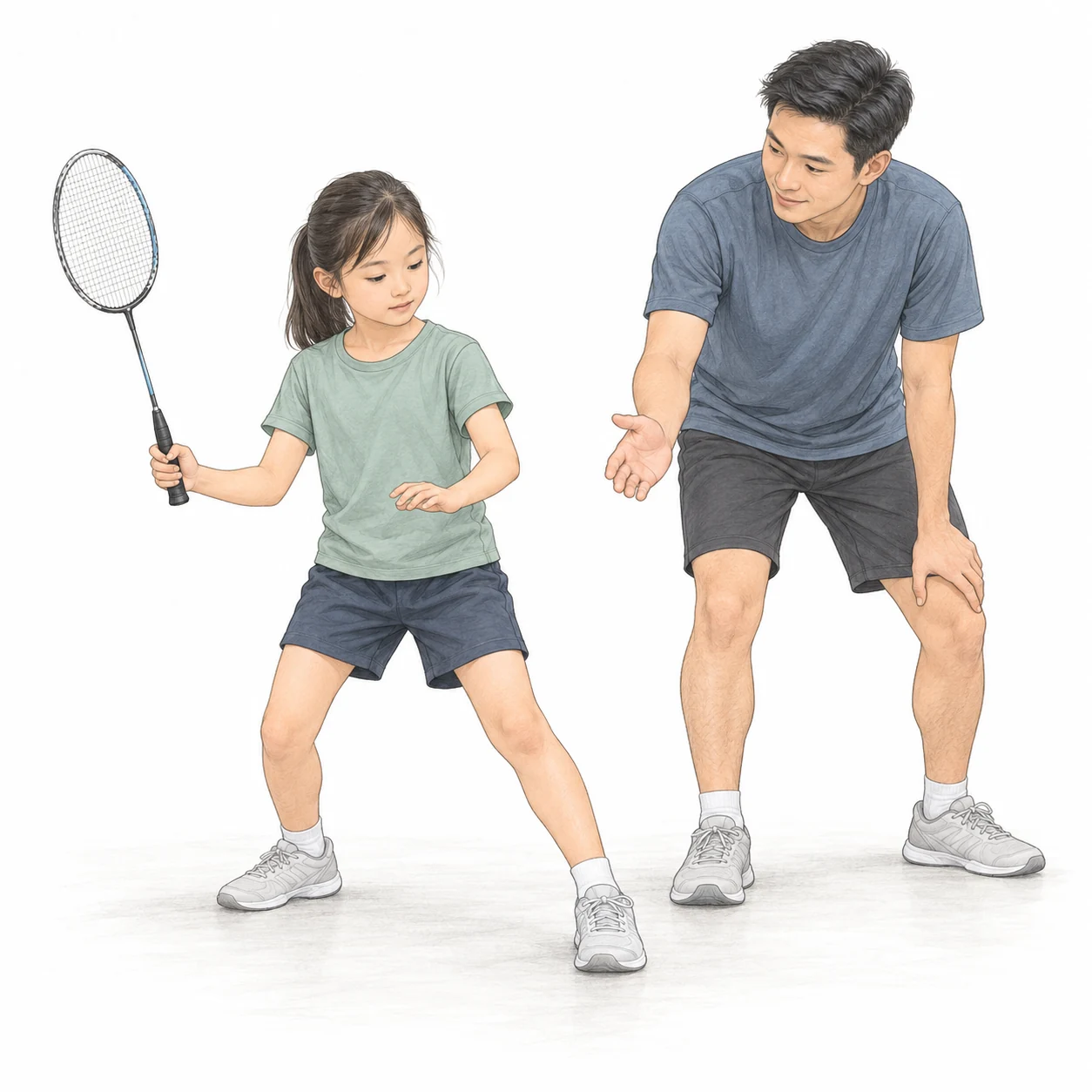
What if the learner thinks the correction contradicts earlier advice?
Treat the earlier advice as context. The child can say which cue they remember and ask how it relates to the present activity. Different words may serve a similar purpose, and different tasks may require attention to different details. Clarify that relationship before deciding the adults disagree. The learner should have one usable direction for the current attempt rather than several instructions to merge alone. A wider method question can be discussed later with the responsible adults.
A genuine difference in teaching judgement deserves an explanation appropriate to the learner. Ask what the coach observed and why the chosen adjustment fits this task. The question should leave space for assessment rather than demand the familiar advice be followed automatically. Parents should not enlist the child to defend a previous teacher or challenge another adult’s reputation. A calm discussion of the actual observation is more useful than asking the child to decide which coach is right during practice.
Playing achievements can provide valuable background without replacing this teaching response. A former national player may be excellent at explaining a correction to a child; another coach may also communicate well. Neither category should be praised or dismissed automatically. Look at what happens when a reasonable question is asked. Does the explanation connect to a task? Can uncertainty be addressed without humiliating the learner? These are relevant observations for choosing badminton coaching, while titles remain part of the broader context.
Guide repeated concerns
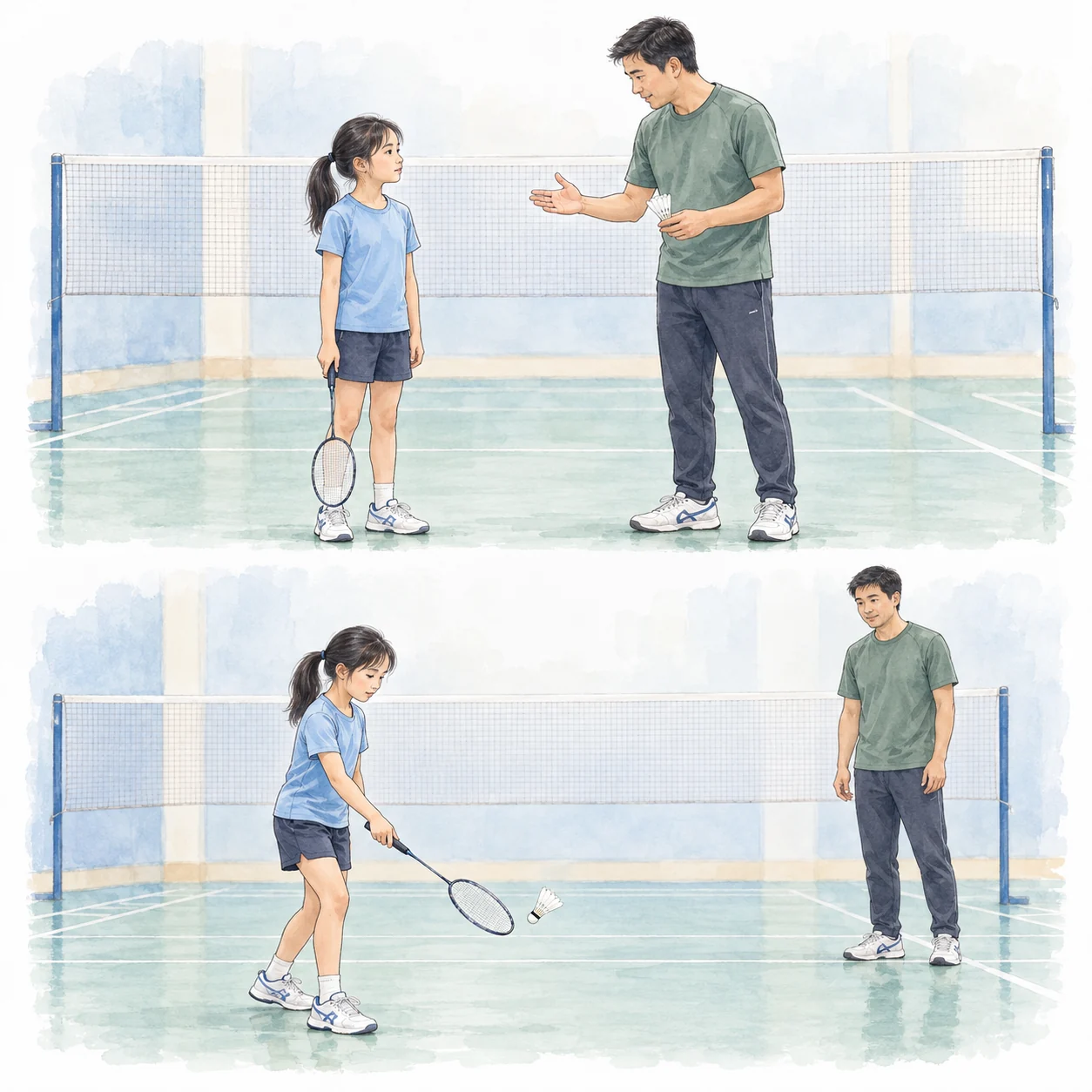
What if questions continue after the first explanation?
Repeated questions can mean the meaning is still unclear or the task is difficult to organise. Ask what part remains uncertain instead of repeating the whole instruction more loudly. The coach may choose a smaller starting activity, demonstrate a detail again or check understanding differently. Parents should not diagnose the learner’s motivation from the number of questions alone. The response needs to consider the actual task, explanation and attempts. If the concern continues, arrange a suitable conversation with a specific example.
A child may also need guidance about how to disagree respectfully and when to take the next turn. That guidance can exist alongside room to ask why. Make the expected behaviour concrete: listen to the explanation, describe the uncertain point and attempt the agreed activity when appropriate. Do not turn respect into a ban on questions or turn curiosity into permission to interrupt every instruction. A useful arrangement helps the learner practise and communicate, while keeping responsibility for classroom organisation with the coach.

Choose a teaching relationship
How can parents use this when comparing badminton classes?
When considering a badminton class for kids, ask how a student can request clarification and how a longer concern is handled. Confirm the actual arrangement rather than assume that friendliness means unlimited conversation. Notice whether a specific question receives an understandable response and a relevant next task. The teacher should not need to prove every technical decision to an online audience, but the learner needs enough meaning to participate. These observations provide a practical view of coaching that a highlight video cannot establish on its own.
Families enquiring with ST Badminton Academy can describe a correction their child found difficult and how the learner asked about it. Keep the example factual and avoid labelling either adult or child. Ask how current badminton training arrangements in Kuala Lumpur support suitable clarification and next-step feedback. An application begins that discussion; it does not guarantee a particular response format, class place or result. The aim is to find a learning arrangement with clear direction and a respectful route for genuine questions.
Student questions about badminton corrections
A useful question helps the learner understand the next task. These answers explain practical communication rather than prescribe a discipline policy for every class.
Is asking why the same as refusing badminton instruction?
No. A learner may be trying to understand the purpose, wording or starting action. Identify the actual uncertainty and the situation before applying a label. A respectful question should lead toward a clearer task and an appropriate attempt. The coach can guide both communication and participation without treating every question as rejection.
What is a useful way for a child to question a correction?
Name the cue and the part that is unclear. The child might ask for the starting action to be shown again or for an explanation of how the cue fits the task. Use wording appropriate to the learner. A specific question invites a teaching response more effectively than a broad claim that every instruction is wrong.
Should the coach explain immediately during any activity?
Confirm how clarification is handled in the actual programme. A short question may fit a turn, while a longer discussion may need a pause. The coach also has supervision responsibilities. The learner should know a suitable route to ask without interrupting another child’s activity or requiring a public debate beside an active court.
What should follow a clearer explanation?
Agree one manageable next action and allow an appropriate attempt. Then connect feedback to what the explanation was intended to help. A question is useful when it supports practice, rather than replaces every opportunity to try. The responsible coach chooses the task and relevant check for the learner.
Does a missed shot prove the explanation was useless?
Not by itself. Consider what the child understood, the task and the assistance provided. A missed result can still inform the next teaching decision. Equally, one successful shot does not settle every question. Ask how the attempt relates to the cue rather than demand a perfect outcome immediately after clarification.
What if the cue sounds different from previous advice?
Mention the familiar instruction as context and ask how it relates to today’s activity. Different words or task purposes may explain the difference. The child should have a clear cue for the present attempt and should not settle an adult disagreement. A wider method question can be discussed at a suitable time.
Should questions be judged by the coach’s playing title?
Playing experience can provide background, but the teaching response still needs observation. A former national player can explain patiently, and another coach can also communicate clearly. Look at how the actual question is addressed and whether the learner understands a next task. Avoid automatic judgements about a whole category of coaches.
How can repeated questioning remain respectful?
Identify the specific point still unclear and use the agreed route for discussion. Guidance about listening, timing and taking a suitable next turn can coexist with honest questions. Avoid louder repetition as the only response, a ban on all questions or constant interruption. The task, explanation and attempts should guide the next decision.
What example should I include in an STBA enquiry?
Describe the activity, correction and the child’s specific uncertainty. Mention how clarification was requested without labelling the learner or coach. Ask about actual communication arrangements and suitable next-step feedback. An application opens a discussion of learning needs; it does not confirm admission or guarantee a particular result.
Teaching illustrations: a respectful question and a clear next attempt
Four steps from uncertainty to the next task
Name the instruction and the part the learner does not understand. Use the agreed opportunity to ask a specific question. Connect the coach’s explanation to one manageable next action, then review what the attempt helps reveal. Keep adult disagreements away from the child’s immediate task. Clear guidance and honest questions can work together when the family understands the actual communication arrangement and respects the coach’s supervision responsibilities.
| Situation | Adds confusion | Supports learning Compare the next task |
|---|---|---|
| Question | Label every instruction wrong | Name the cue and the uncertain part |
| Timing | Interrupt another learner’s activity | Use the agreed suitable opportunity |
| Explanation | Judge it only by complex vocabulary | Check whether the next action is understood |
| Earlier advice | Make the child settle adult disagreement | Ask how the familiar cue relates to this task |
| Attempt | Demand a perfect result immediately | Review what the task and support help reveal |
| Repeated concern | Ban questions or allow constant interruption | Guide respectful communication and a clear next turn |
Discuss how your child can ask about a correction
Searching for badminton coaching in Malaysia with clear direction and understandable feedback? Tell ST Badminton Academy about the activity, the correction and the point your child wants clarified. Ask how the relevant programme in Kuala Lumpur handles student questions and longer parent discussions. The application begins an enquiry about learning needs. Communication arrangements, suitability and available places require confirmation; no single conversation guarantees an outcome.