Best Badminton Coach in Malaysia: Changing Coaches Without Losing Your Learning Plan
When changing badminton coaches, carry forward a clear learning question rather than a list of instructions the new coach must follow. Describe what the learner has practised, what is understood and what still needs help, then agree how the next coach will assess it. Parents searching for the best badminton coach in Malaysia often reach this decision after a move, a timetable change or concerns about their child’s current learning. A transfer can be sensible without proving that the previous coach was poor. The important work is connecting useful information to a fresh teaching assessment. This guide explains how to prepare that conversation when considering badminton training at ST Badminton Academy in Kuala Lumpur. It does not prescribe a transfer policy or promise a place. Images are AI-generated educational illustrations with generic people, not photographs of Eric Chuar or actual students.

Understand the reason
Are you changing the arrangement, the teaching or both?
Begin by naming the reason for the move. A family may need a different day, a more workable journey or a class that suits a changed learning goal. Those practical reasons are different from a concern about explanations or feedback. Write the main issue in ordinary language before looking at another badminton academy. If the problem is getting to a lesson reliably, a famous coaching name will not by itself resolve it. If the concern is unclear teaching, a convenient location still needs a conversation about what happens during practice.
Include the learner’s account without asking the child to decide which adult is better. Ask what they find clear, when they want help and what they hope will remain familiar. A child may miss classmates while still benefiting from a more suitable arrangement. Another may welcome the change but not know how to explain previous practice. Treat these as useful pieces of information, not a vote that settles every question. Parents can then separate the teaching need from the understandable feelings that come with entering a different class.

Carry useful information
What belongs in a short learning handover?
A useful handover names the current task, one cue the learner recognises and a question that remains unresolved. It can be a brief note rather than a folder of every drill ever completed. For example, a parent might record that the child practised directing a gentle shuttle toward an agreed area, could explain the target, but still needed help recognising when to begin. This is a hypothetical observation, not a diagnosis of technique. It gives the incoming coach a place to start asking questions without pretending the parent has completed an assessment.
Keep the wording factual. ‘The coach used this cue and my child tried it’ says more than ‘all the foundations are finished’. Equally, ‘my child is still unsure about this task’ is more useful than ‘the previous academy taught nothing’. Record what you actually know and leave gaps visible. If the old coach offers a summary, keep its context and date so the new coach can understand what was being assessed. A result from one activity does not automatically describe everything the learner can do in a new setting.
Observe before judging
Can the learner show a familiar task without a performance audition?
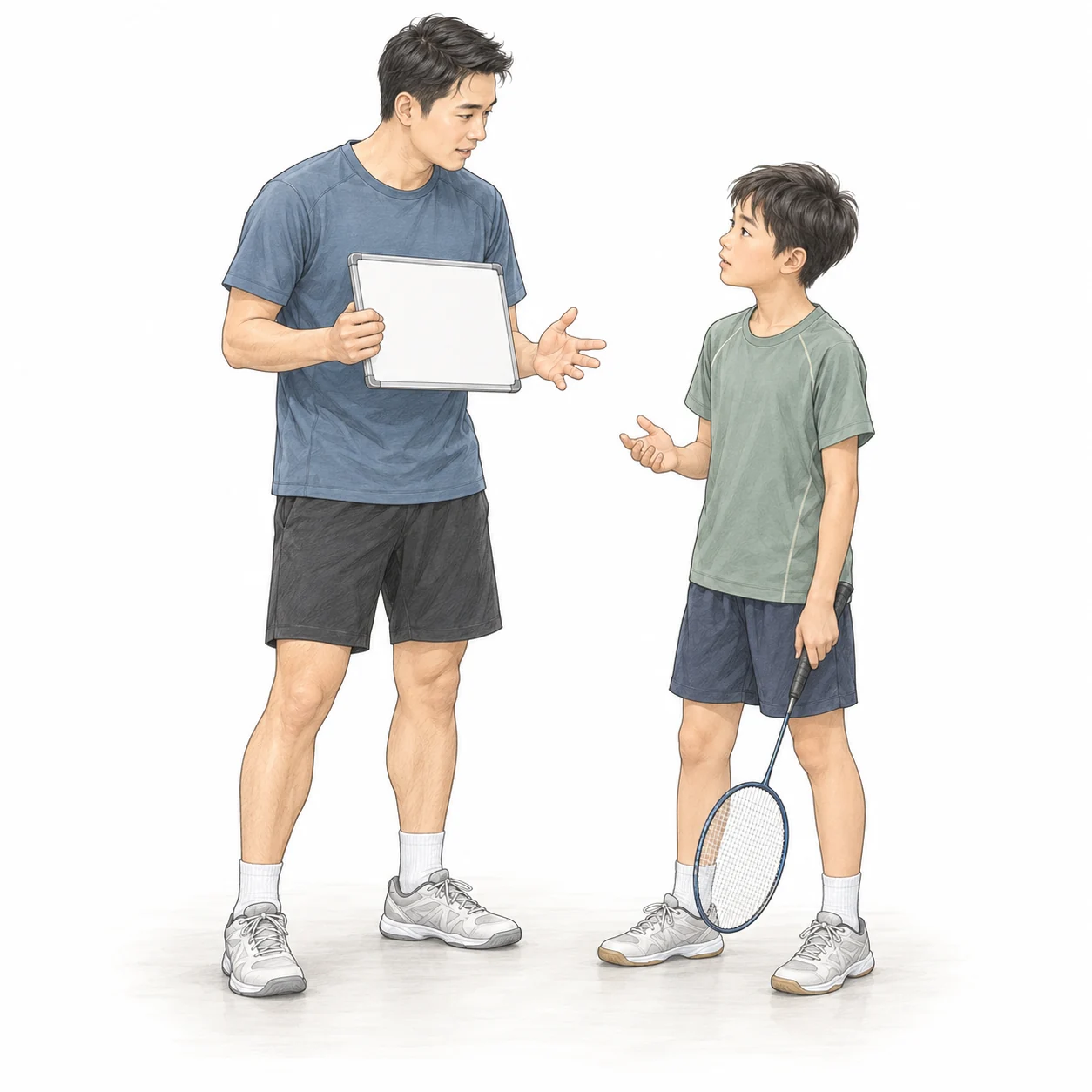
The new coach may need to see a manageable, familiar activity before deciding what should continue. Ask how that assessment will be organised and which information the coach hopes to learn. The purpose is to understand the starting point, not to impress a new provider with a difficult shot. A child who looks less confident in an unfamiliar place may need an explanation or a simpler beginning. That first response can inform teaching, but it should not be treated as the final story of the child’s ability.
A parent can describe a useful past example without demanding that the same performance appear immediately. Explain the task, the support that was present and what happened after the cue. Avoid arranging a private test at home simply to produce proof for the new coach. If a short video would help, first agree its purpose and permissions; do not include other children without an appropriate arrangement. A plain description may be sufficient. The information should help the learner receive clearer instruction rather than turn the transfer into a stressful comparison.

Make space for assessment
How should you explain the old approach to a new coach?
Bring previous information as context rather than as an instruction manual the incoming coach must obey. You can say, ‘This was the cue my child understood; can you explain how it relates to the task you are using?’ That question invites a teaching explanation. The new coach may keep the cue, simplify it or choose a different starting activity after observing the learner. What matters is whether the reason can be explained in a way the family and child can use, not whether every familiar word survives the move.
Respectful discussion also protects the learner from carrying an argument between adults. Do not ask the child to defend one coach against another in front of the class. If a concern needs a longer conversation, ask when the coach can discuss it while still meeting supervision responsibilities. A confident badminton coach can consider relevant information without accepting every parental interpretation as fact. Parents can listen to a different explanation while still asking specific questions about what the child is expected to attempt and how understanding will be checked.
Keep the next cue clear
What if the old and new instructions seem to conflict?
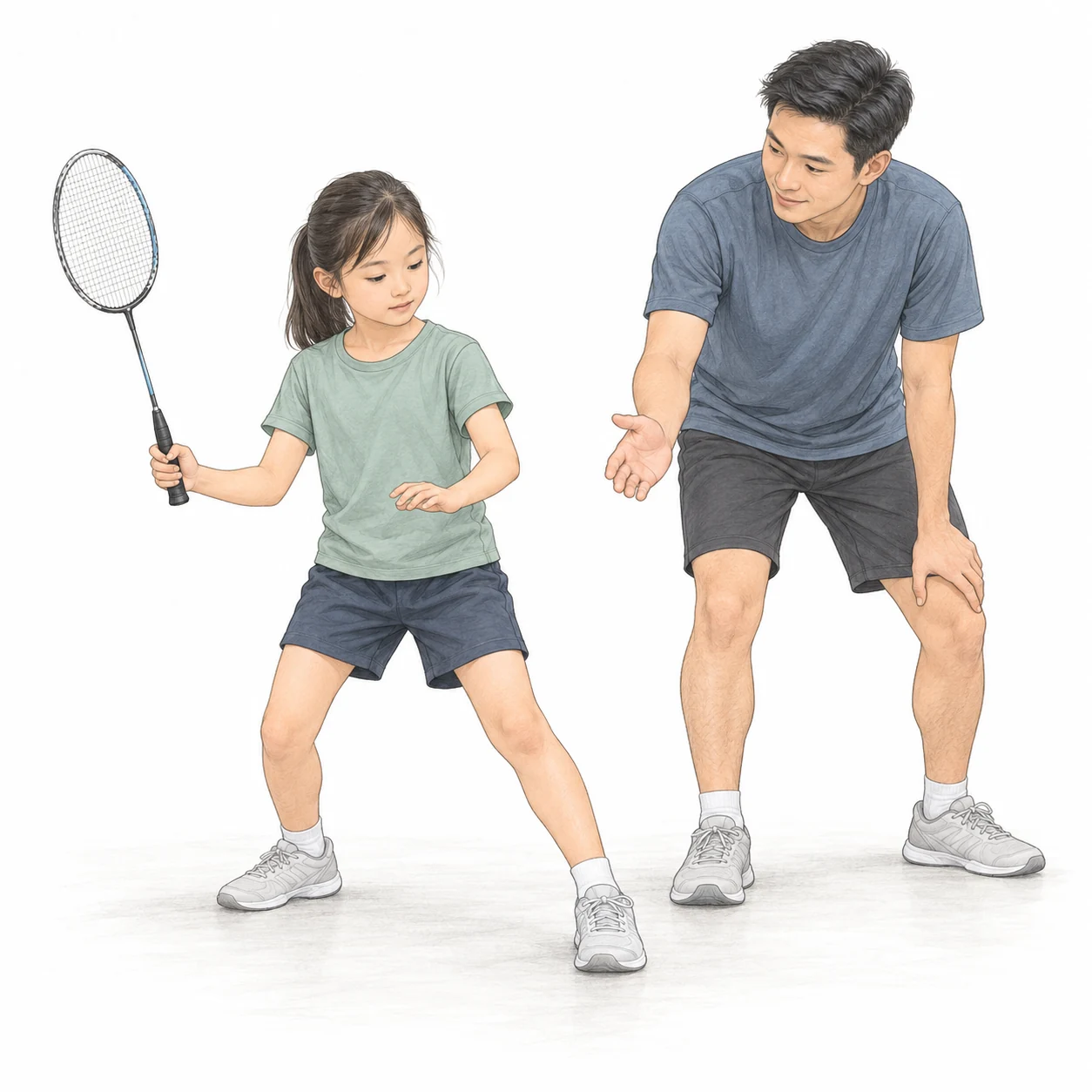
Different wording is not automatically conflicting teaching. Two coaches may be describing a similar purpose through different cues, or they may be working on different parts of a task. Before combining the instructions, ask what the current activity requires. The child should not be expected to merge several technical directions while trying to start a new lesson. Agree one usable cue for that activity and let the coach check its effect. Keep other questions for a suitable discussion so the learning task stays understandable.
A genuine difference needs an explanation, not an immediate verdict based on reputation. Ask what the new coach observed, what adjustment is being considered and what a suitable next attempt should reveal. This does not require the coach to prove a complete method in one lesson. It does require enough clarity for the learner to know what to try. If the child remains confused, the next step may be simpler wording or another demonstration rather than adding more directions. The parent’s role is to share the confusion accurately and help clarify the question.
Changing teachers also does not mean changing every habit at once. Some established parts may be useful, while another detail needs attention. Ask how the coach is prioritising the current adjustment. This helps distinguish a deliberate starting point from a stream of unrelated corrections. Avoid demanding a fixed number of changes because a new lesson must appear different to justify the move. The value of a transfer lies in a suitable teaching response to the learner, not in the amount of novelty introduced during the first meeting.
Review the learning thread
What should you look for after the first suitable opportunities?
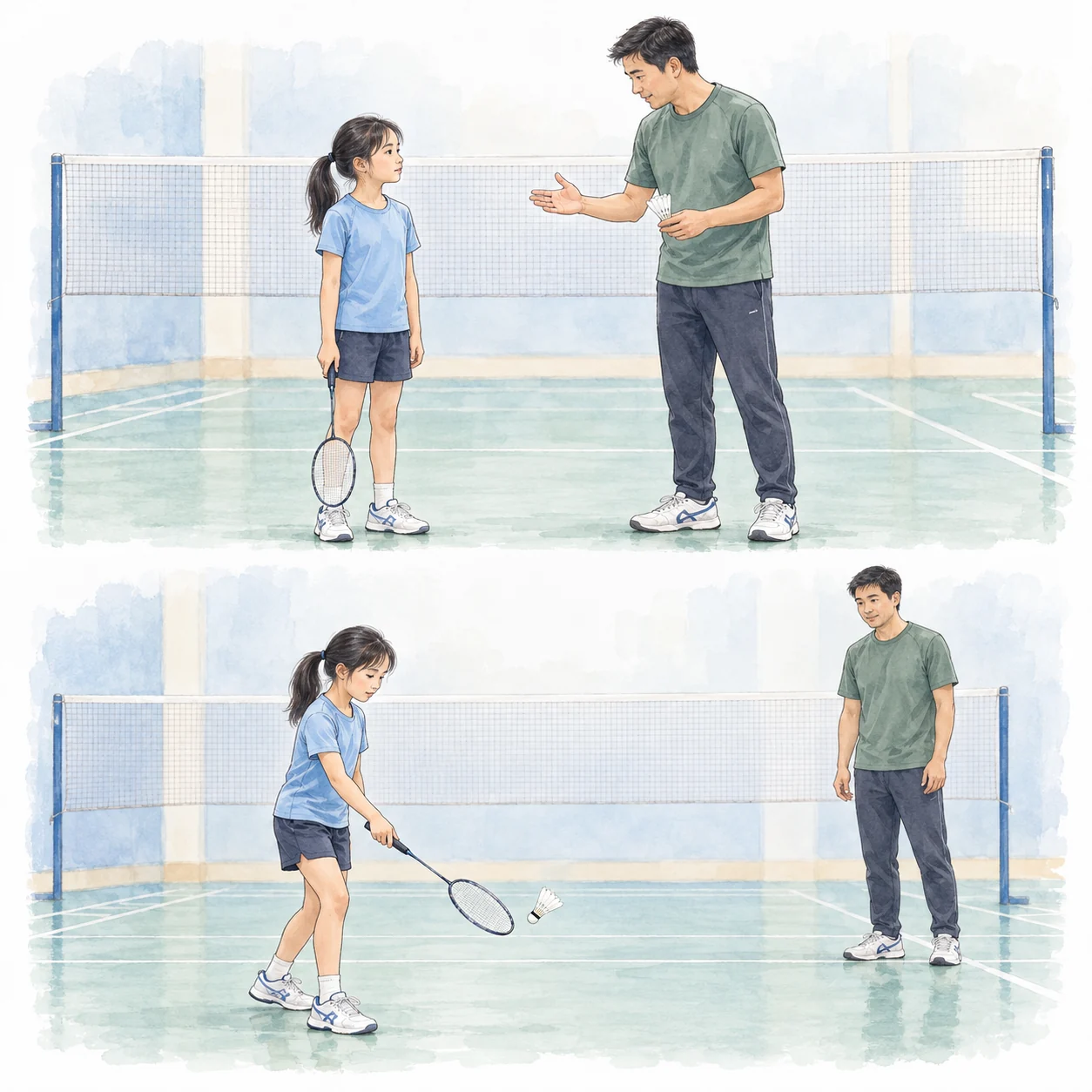
Agree how the current goal will be reviewed after the learner has had appropriate opportunities to practise it. The review might ask whether the child can explain the purpose, begin a manageable task or recognise one point to check. It should relate to the activity actually taught. Do not set an invented deadline for improvement simply because a transfer has occurred. The coach can explain what evidence is useful at this stage and what still needs more observation. Parents should understand that immediate performance and longer-lasting learning are related but different questions.
Look for continuity between the explanation, the child’s attempt, the feedback and the next task. A single impressive rally does not show that all the transfer questions have been resolved, and one difficult lesson does not show that the move has failed. Bring a specific example to the agreed review: what was attempted, which cue was used and what the learner understood afterwards. This makes the discussion more useful than asking whether the new coach is ‘better’ in general. It also helps the family decide whether the arrangement is workable enough to continue.

Choose with relevant evidence
How does this help you choose a badminton coach in Malaysia?
When comparing options, assess the teaching response to the actual handover. Can the coach identify what needs to be observed? Is the learner given a clear starting task? Can a reasonable question be discussed without making the child responsible for an adult disagreement? Qualifications and playing experience can provide background, but they do not replace these observations. A national player may also be an excellent teacher; the relevant question is how that experience becomes understandable badminton training for this learner. There is no need to dismiss a background or treat it as automatic proof of fit.
For families enquiring about a badminton class for kids in Setapak or elsewhere in Kuala Lumpur, a short account of previous learning and the reason for changing can make the conversation more useful. Ask ST Badminton Academy how the current need might be assessed and which actual arrangements are available. Keep the previous coach’s useful information, allow a fresh assessment and agree one next learning question. The enquiry is a starting point for discussion rather than a confirmed place or a guarantee that a different coach will resolve every difficulty.
Changing badminton coaches in Malaysia: questions parents ask
A move works best when useful information travels with the learner and assumptions remain open to assessment. These answers explain the handover conversation; they do not announce an academy transfer or admission policy.
Should I tell a new badminton coach about the previous class?
Yes, share a short, factual account of the current task, a cue the learner recognises and a question that remains unclear. Avoid declaring that every foundation is complete or that nothing was learned. The new coach still needs to observe the learner. Previous information is a starting point for assessment, not a requirement to reproduce the old lesson.
Does changing coaches mean the previous coach was bad?
No. A move may follow a different timetable, journey or learning need. Even when teaching concerns are involved, describe specific events rather than making a broad judgement. Ask what was explained, what the learner attempted and what feedback followed. Those details support a useful decision without turning a practical transfer into an unsupported accusation.
What should be in the learning note?
Keep the note to the current activity, one understandable cue and the next question. Include context if a past assessment or result is mentioned. A brief record that separates observations from interpretations is more useful than a long list of drill names. Ask the incoming coach whether any additional information would help before preparing more material.
Should the new coach use exactly the same words?
Not necessarily. Different wording can explain a similar purpose, and an observed difficulty may justify another starting cue. Ask how the new instruction relates to the current task. The child needs one clear direction to use at that moment, rather than several competing reminders. Keep broader method questions for a suitable conversation with the coach.
How do I handle two instructions that seem contradictory?
First clarify which task each instruction belongs to. Ask the current coach what the learner should attempt now and what a suitable next attempt would show. Do not expect the child to settle the disagreement. If confusion continues, report it specifically so the explanation can be simplified or demonstrated again before more corrections are introduced.
Do I need video evidence before changing badminton academies?
Usually the first question is whether a plain description and a suitable observed task will be enough. If recording is proposed, agree its learning purpose, handling and permissions, including the presence of other children. Do not publicly post a child’s clip to compare coaches. The aim is relevant teaching information, not a performance audition.
When should the new arrangement be reviewed?
Agree a review connected to the actual learning goal and reasonable practice opportunities. There is no universal number of lessons that proves a transfer has worked. Look at whether explanations, attempts and feedback connect, and whether the family can attend the agreed arrangement. Discuss a concrete example instead of demanding rapid results from a new name.
Is the most famous badminton coach always the best transfer choice?
A reputation can provide background, but the teaching fit still needs to be assessed. Notice how the coach receives relevant information, explains a starting task and responds to the learner’s questions. Playing at a high level and teaching this particular child are different kinds of evidence. Consider both without treating fame as a guaranteed solution.
How can I enquire about moving to ST Badminton Academy?
Use the online application and explain the learner’s previous experience, the reason for changing and the main unresolved question. Ask about assessment and current practical arrangements. You do not need to condemn the previous provider. An enquiry gives the academy information for a discussion; availability and suitability still need to be confirmed.
Educational illustrations: listening, explaining and planning a learning handover
Four steps for changing coaches thoughtfully
Treat the handover as a learning conversation. First name the reason for moving, then describe the current task without exaggerating what is known. Let the new coach assess an appropriate starting point, and agree how the family will review one next question. The child should receive clearer guidance rather than carry competing technical instructions between adults. Adapt the discussion to the learner and the actual class arrangement.
| Situation | Adds confusion | Supports learning Compare the next step |
|---|---|---|
| Reason for moving | Treat every move as proof of poor coaching | Name the practical or teaching issue specifically |
| Past learning | Declare all skills finished or nothing learned | Describe the actual task and support |
| Old coaching cue | Demand identical instructions without assessment | Ask how the cue relates to the new task |
| Different instructions | Make the child choose which adult is right | Clarify one usable cue for the current activity |
| First lesson | Judge the whole transfer from one attempt | Look for connected explanation, practice and feedback |
| Next review | Require an invented rapid-result deadline | Review the agreed task after suitable opportunities |
Enquire about a suitable next badminton learning step
Considering a change of badminton coach in Malaysia? Share the learner’s previous experience, the practical reason for moving and the question you want help understanding. ST Badminton Academy can discuss the information needed to assess a suitable next step in Kuala Lumpur. Ask about current arrangements before making plans. The application starts an enquiry; it does not confirm a class place or promise that changing coaches will produce a particular result.