Helping Your Child Remember Between Weekly Badminton Lessons
“You learned this last week. Why have you forgotten?” is an understandable question when a parent watches a child return to badminton class. However, repeating that question rarely tells us which part has become difficult. A child may recognise a movement when the badminton coach demonstrates it, yet struggle to describe the task at home or recognise when to use it in a different rally. The useful starting point is to find the missing connection rather than attach a label to the child. This guide explains how parents and coaches can make the lesson easier to recall without turning home into another training court. It focuses on a clear cue, a small opportunity to explain or replay the idea, and a recap at the next class. The illustrations are AI-created educational scenes featuring generic people; they do not depict Eric Chuar or actual students.
UNDERSTAND THE GAP
Forgetting does not tell the whole learning story
Start by separating recognition, explanation and independent use. A child who says “I remember” while watching a demonstration may be recognising the familiar scene. That is different from selecting the same movement when a shuttle arrives from another direction. A child who cannot name a technique may still show part of it correctly. Ask the coach what was actually taught and what the child was expected to do without help. That gives the conversation a concrete reference instead of relying on a general impression of good or poor memory.
The surroundings also matter. The coach’s voice, a target on the court or the order of the drill may have helped the child understand the task during the lesson. At home those signals are absent. In the following class the task might look different because the starting position, partner or feed has changed. Treat these differences as useful information to discuss. They do not prove that the child is lazy, that the previous lesson was wasted or that the coach should immediately replace the whole training plan.
A CLEARER TAKEAWAY
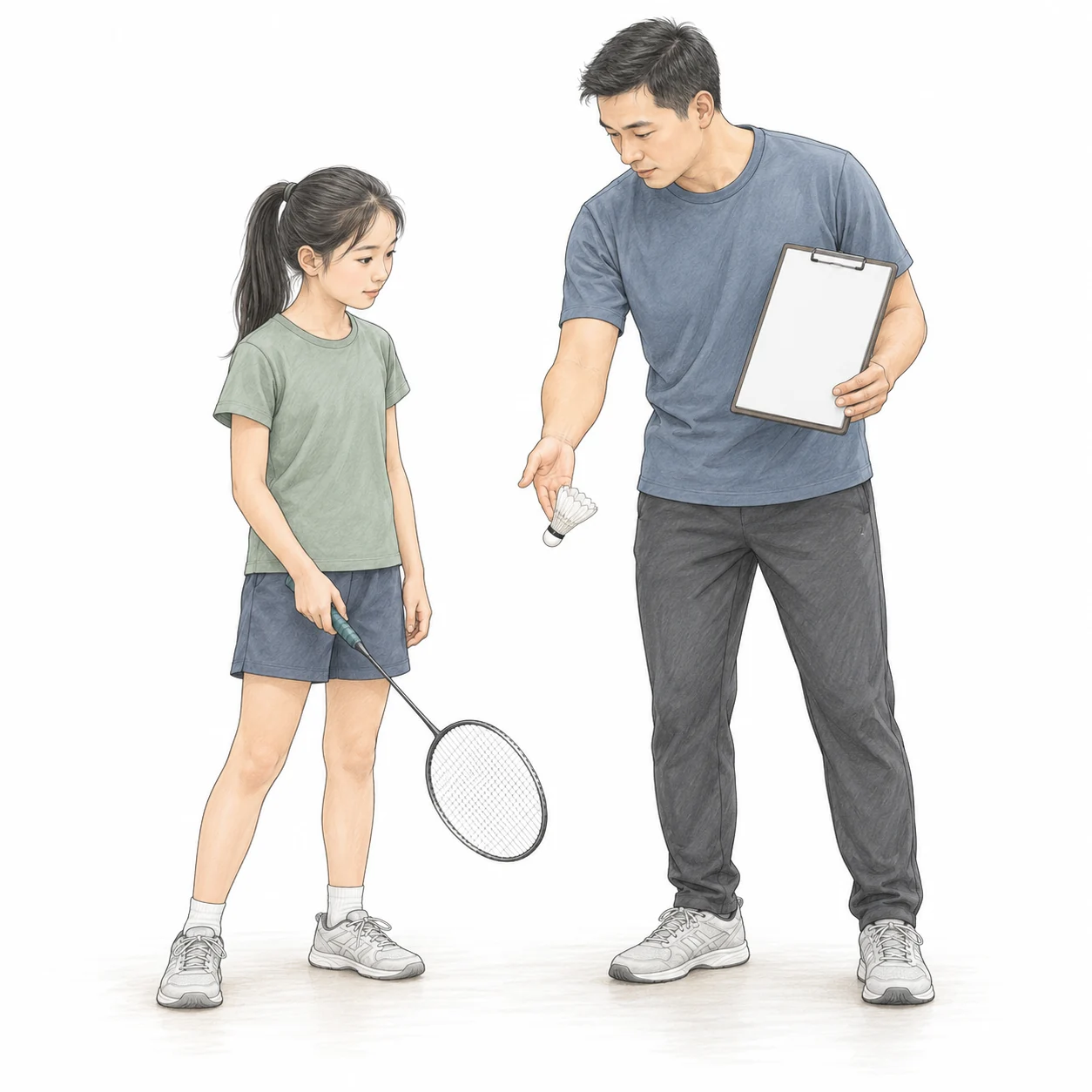
Finish the lesson with one usable cue
Before leaving, ask whether the coach can identify one idea worth carrying into the next lesson. It might concern the starting position, noticing the shuttle before moving, or returning to an appropriate ready position after a familiar action. The exact cue should come from what the coach has explained and checked with that child. Avoid collecting several new corrections simply because a parent wants something to practise. A shorter, meaningful takeaway can be easier to discuss than a list of technical terms the child has not yet understood.
A useful cue points towards an observable action and includes enough context to make sense. “Be better” does not explain what to change. A phrase that made sense beside a particular demonstration may still need the child to explain when it applies. Ask the coach to check that understanding rather than choosing your own favourite phrase from a video. Keep the wording consistent while the child is learning the idea, and tell the coach if the child interprets it differently outside class.
LET THE CHILD EXPLAIN
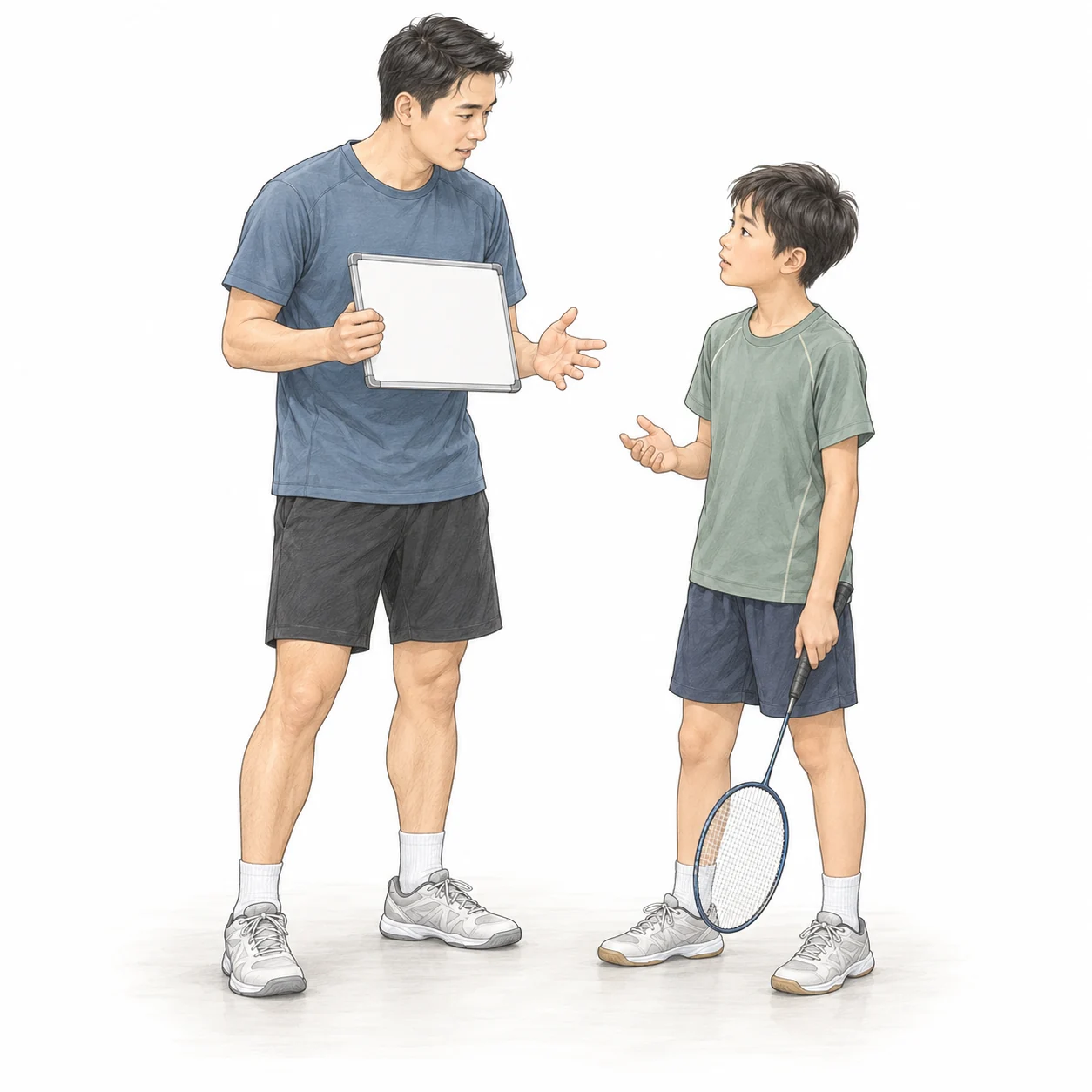
Ask what the task meant, not only what happened
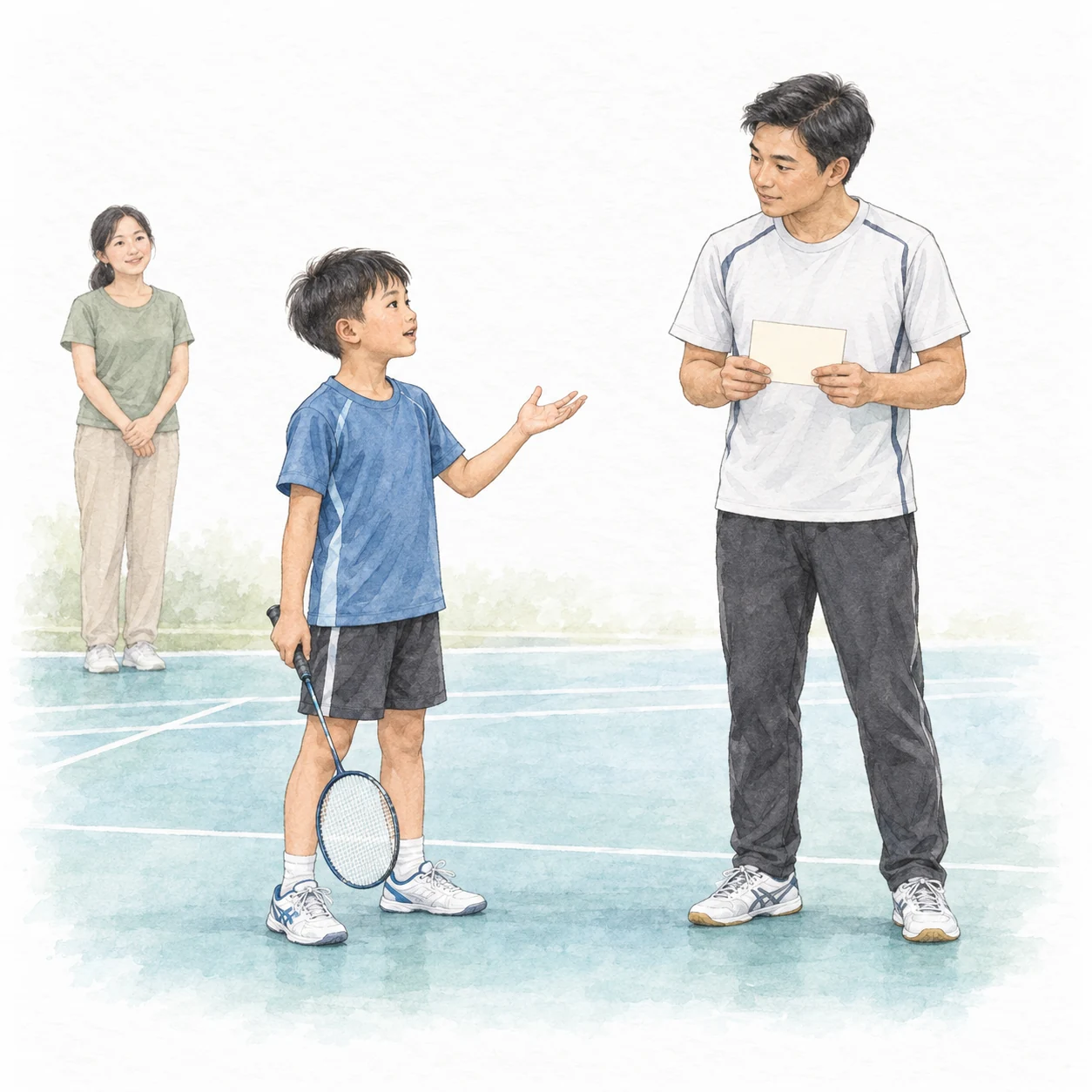
On the journey home, a relaxed question can reveal more than a test. Try asking, “What were you trying to notice before you moved?” or “What did the coach help you change?” Allow the child to answer in their own words, use a simple gesture or say that they are unsure. The purpose is to hear their understanding, not to demand an adult’s technical vocabulary. If the explanation sounds incomplete, make a note of the question for the coach rather than correcting the child’s story with a guessed answer.
When appropriate, the child can describe a familiar example: where they started, what the task asked them to watch, and what they would try next. They do not need a polished explanation. A child who says, “I forgot the words but I know where I stood,” has offered a starting point for the next lesson. Praise the attempt to explain and the willingness to ask. Avoid comparing siblings or classmates, because that changes a useful conversation about a task into a judgement about who learns faster.
A SMALL CONNECTION AT HOME
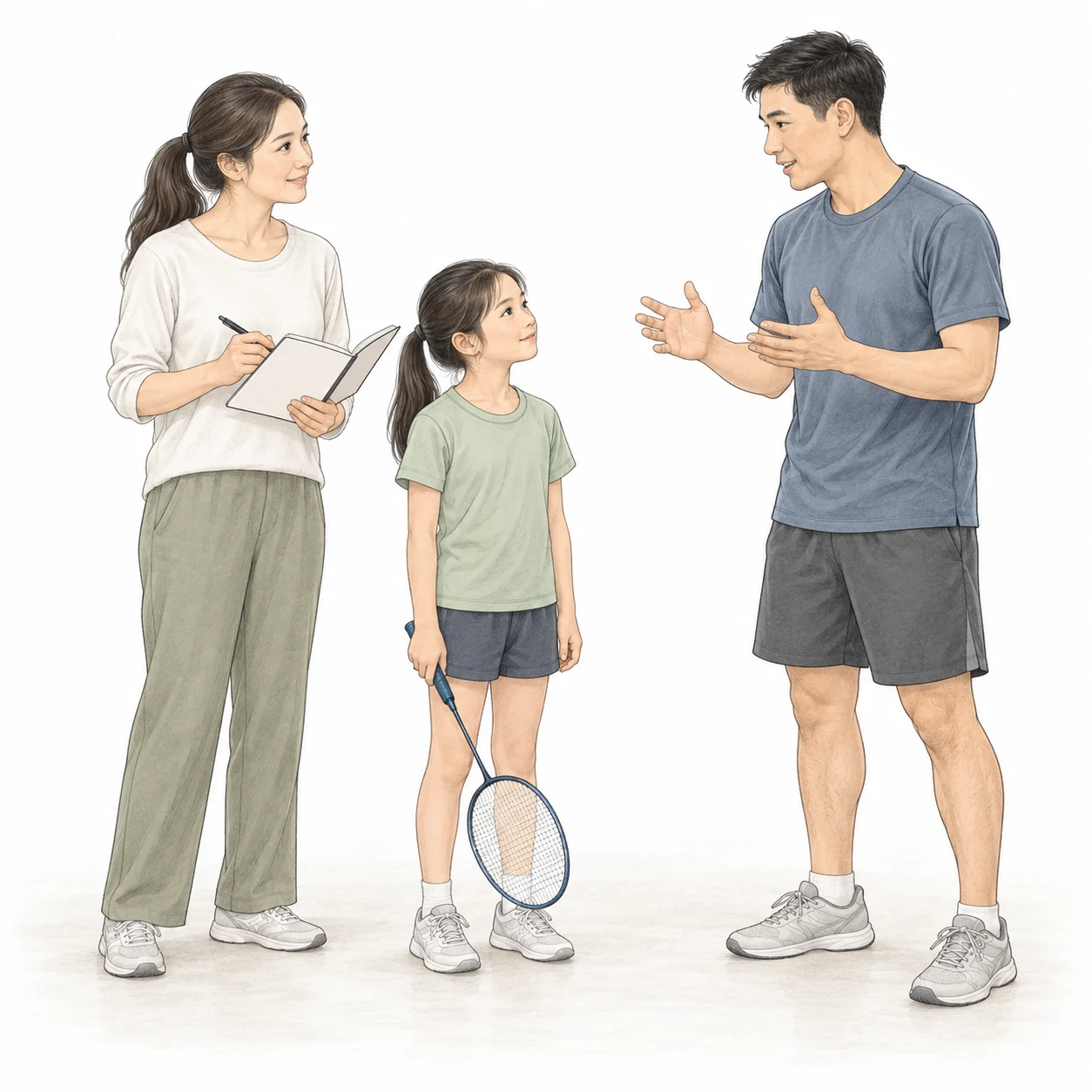
Support recall without becoming the coach
Home support does not require a badminton court, a wall drill or a compulsory exercise timetable. A brief conversation about the agreed cue can be enough to show the coach what is clear and what is missing. If the child enjoys keeping a note or a simple drawing, record the idea in the child’s own words. Leave space for a question as well as the takeaway. The note is a reminder for discussion, not evidence that the child must practise alone or achieve a particular result before returning.
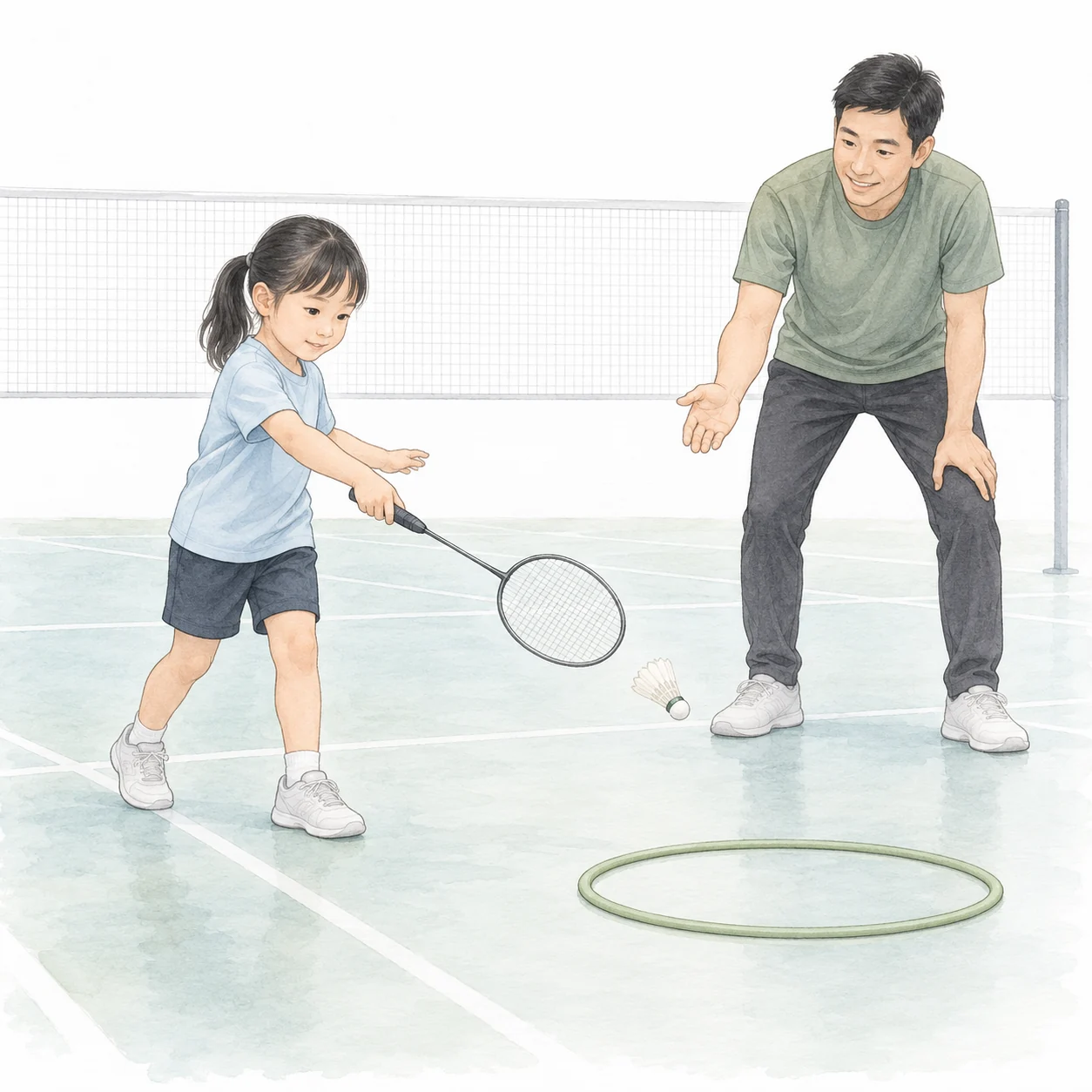
Only consider a recalled movement at home when the coach has explained it clearly and the setting is suitable. There should be enough safe, clear space, and the parent should not add speed, difficult movements or unfamiliar racket actions. If the child cannot remember what was asked, stop guessing and bring the question back to class. Parents can support interest and communication without replacing the coach’s observation. No child should need to swing beside furniture, hit towards other people or complete a prescribed number of repetitions to prove commitment.
RETURN TO THE IDEA
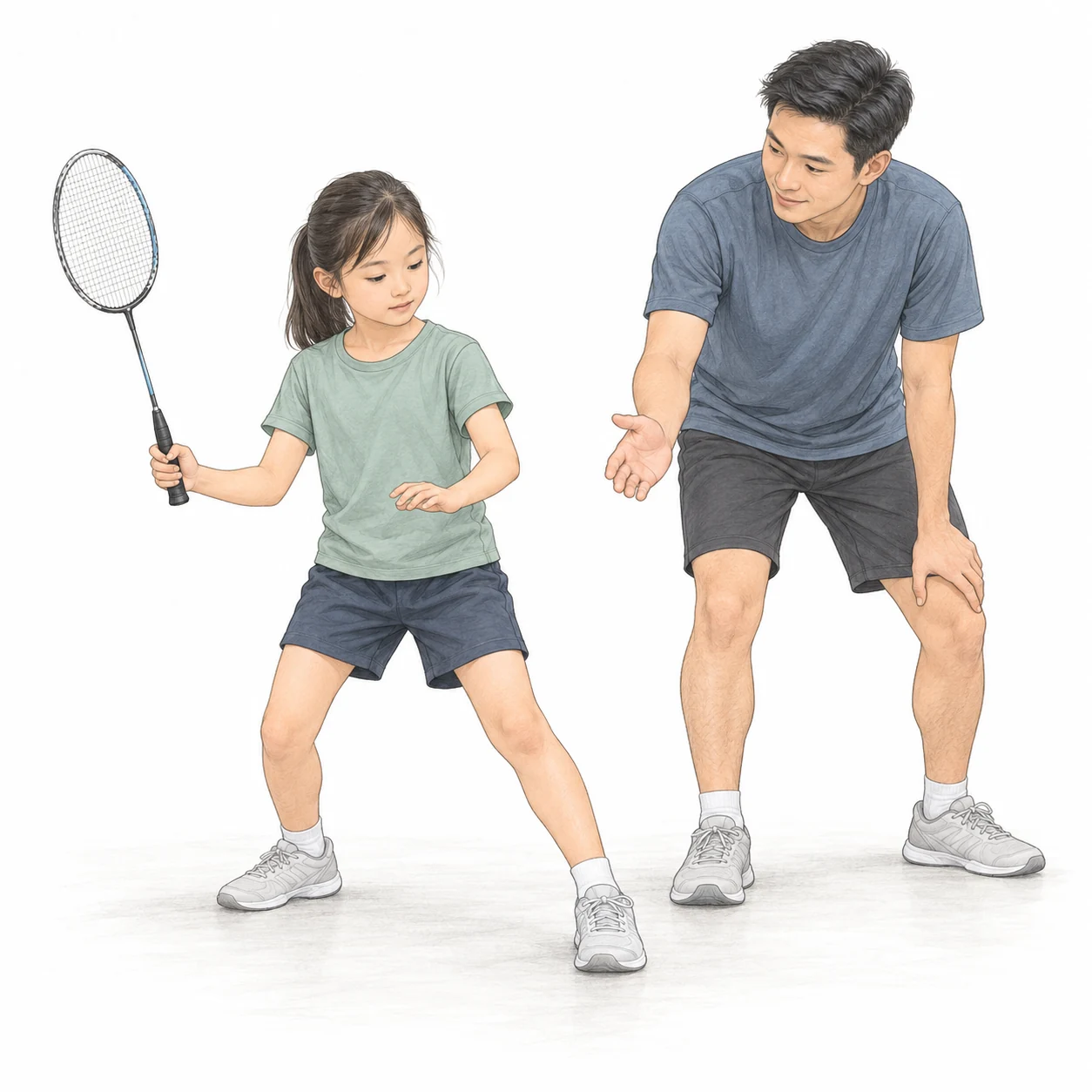
Use the next lesson to check, rebuild and connect
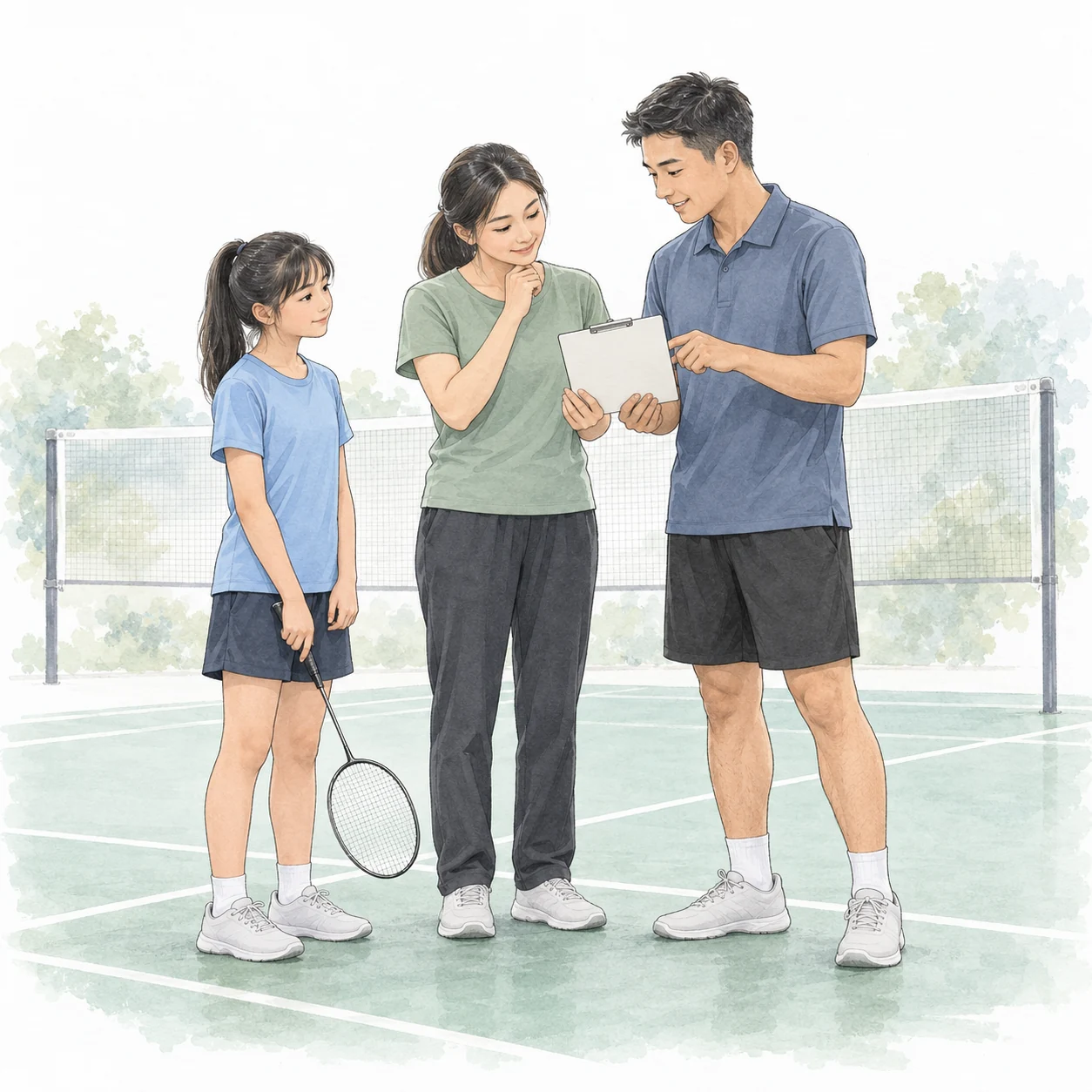
At the next class, an early recap can help the coach find the right starting point. The child might first explain the cue or attempt the familiar task with appropriate guidance. The coach can then see whether the difficulty lies in understanding the words, organising the movement or noticing when the idea is relevant. That check should shape what comes next. Repeating everything automatically may hide a small misunderstanding; introducing a new correction immediately may leave the previous idea disconnected from the current task.
A coach can rebuild the connection by returning to a familiar example before changing the situation. The important question is whether the child understands what they are trying to do and why it belongs in that task. A successful attempt with help can be a useful step, but it should not be reported as completely independent learning. Parents can ask which part still needs a reminder and what the coach plans to revisit. That keeps progress discussions honest without making each class a pass-or-fail examination.
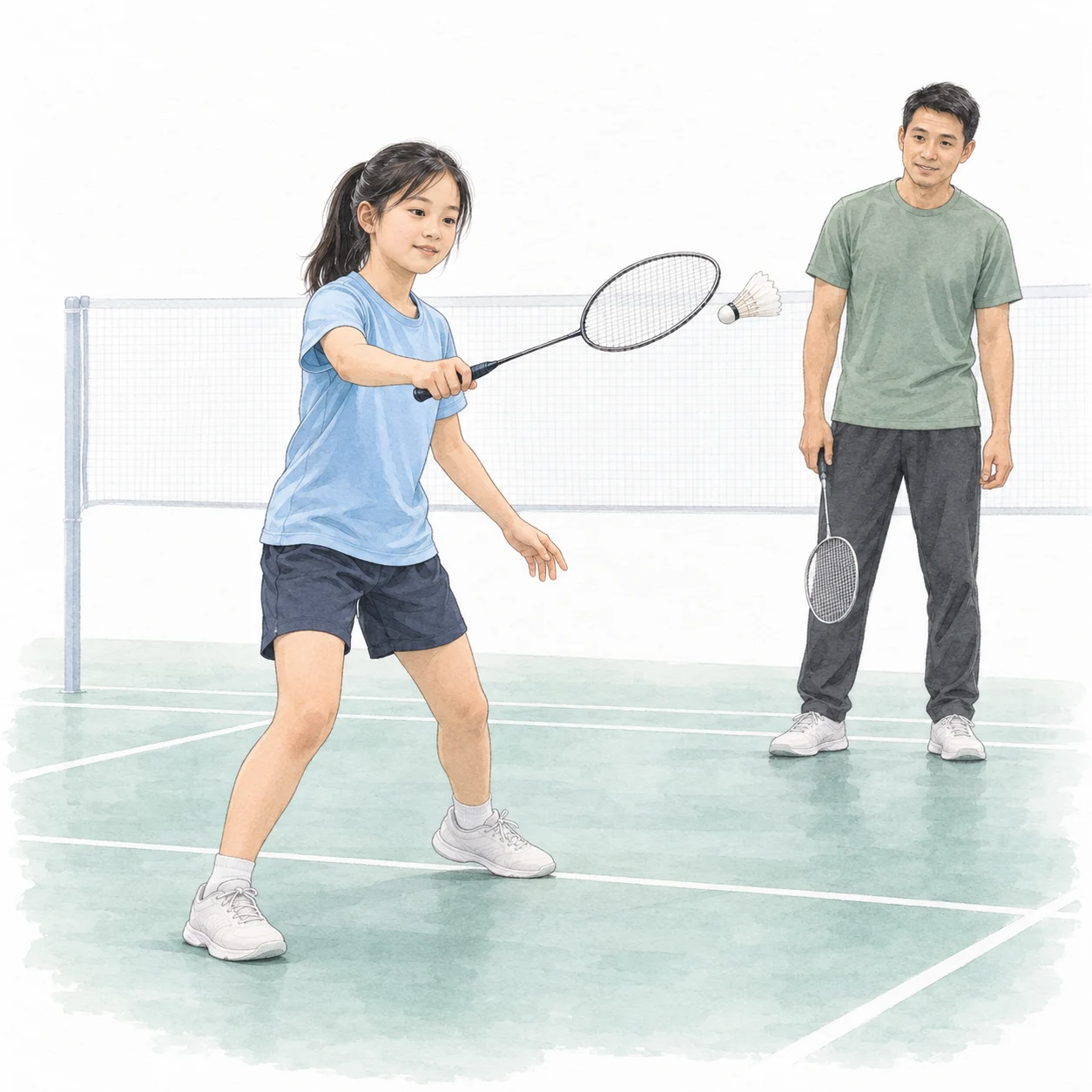
When the child appears comfortable, a related change can show whether the idea travels beyond the original drill. The coach might adjust a starting situation or ask the child to explain their choice during a simple rally, according to the child’s present ability. If the child becomes confused, the response should be to clarify the connection and adjust the task. Confusion in a changed situation is useful feedback. It is not a reason to shame the child, insist that all practice was pointless or push a harder exercise just to look advanced.
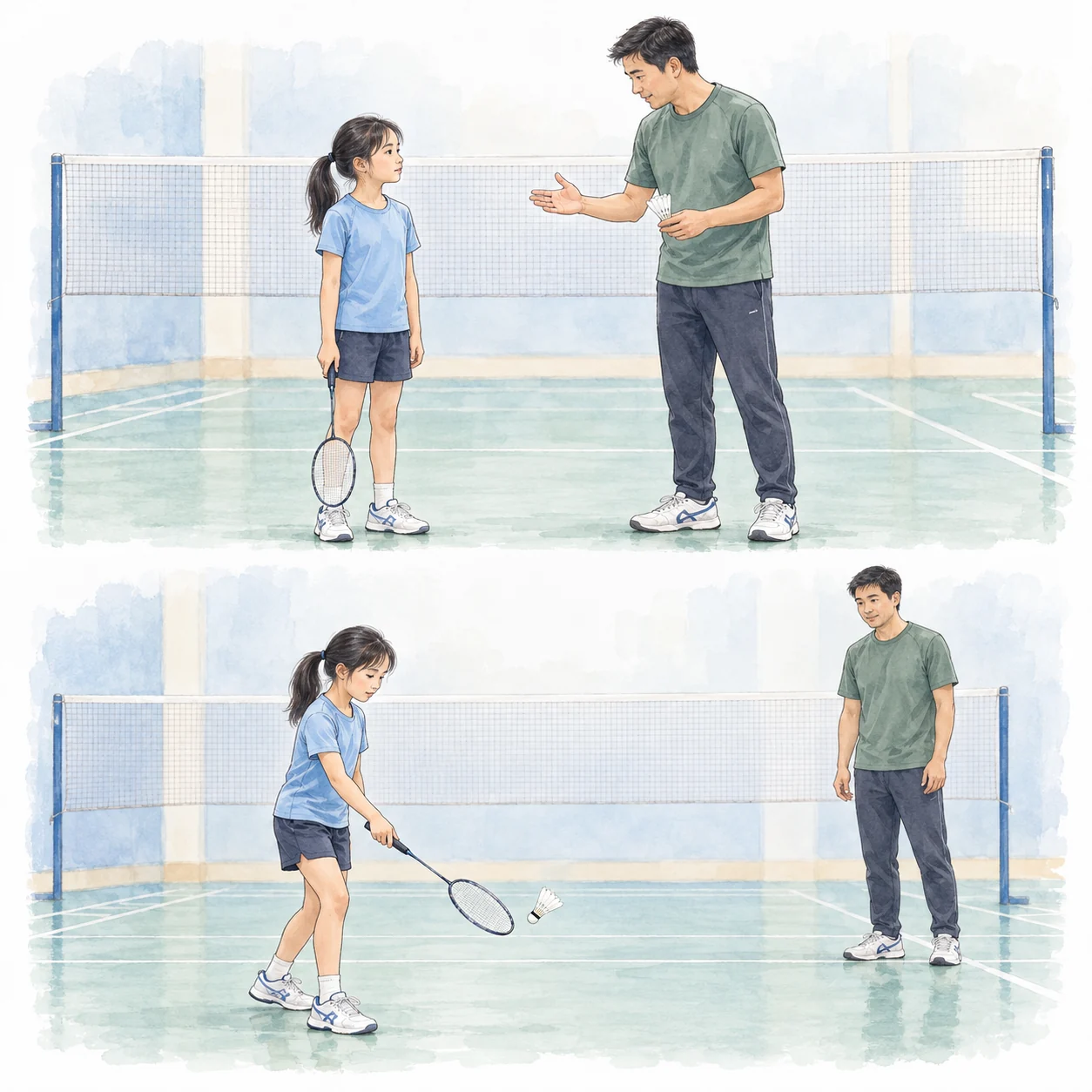
OBSERVE WHAT CHANGES
Look beyond whether the child remembers a label
Look for practical differences in how the child approaches the task. Do they recognise the agreed cue more readily, ask a clearer question, or attempt a familiar action with less prompting? Can they explain when they are unsure instead of copying without understanding? These observations can support a discussion with the coach. They are more informative than counting how many technical names the child repeats after class. Remembering a name, performing an action and deciding when to use it are connected parts of learning, but they are not interchangeable.
A simple parent update can describe what was observed without claiming a result. For example: “They remembered the starting position but could not explain the next step at home.” Include the child’s question and ask what the coach would like you to reinforce. Avoid announcing that the child has mastered something because they performed it once in a familiar setting. Equally, avoid saying they have learned nothing because the next class begins with a recap. Consistent, specific communication gives the badminton coach better information to work with.
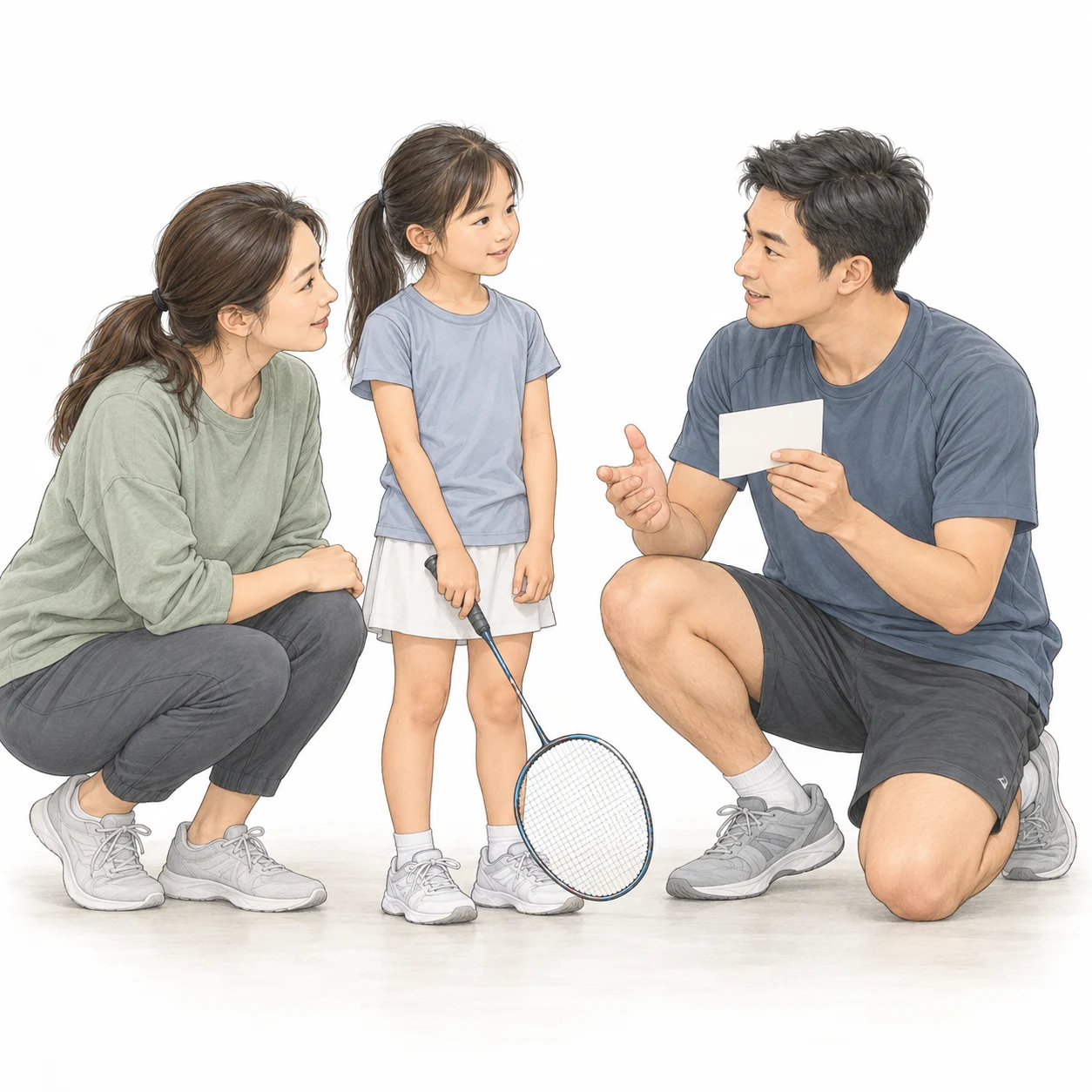
CHOOSE A SUPPORTIVE CLASS
Ask how the badminton academy handles recall
When comparing a badminton academy in KL or looking for a badminton class for kids near Setapak, ask how the coach checks understanding at the end of a lesson and reconnects with it later. A detailed answer about the child’s task is more useful than a promise that nobody forgets. Ask how parents can pass on a question and what home support is appropriate. Class suitability depends on the child’s present needs and the actual teaching arrangement, so confirm those details through the application process rather than assuming them from an article.
Good badminton training should make room for patient explanation, relevant practice and a realistic review of what still needs help. The best badminton coach for a particular child is someone whose teaching can address that child’s understanding, not simply someone who demands perfect recall. A former national player’s experience can be valuable, and it is reasonable to ask how that experience becomes clear instruction for a beginner. Evaluate the teaching you can observe and the answers you receive, while allowing the child to describe how the lesson felt.
Questions parents ask about forgotten badminton lessons
These answers offer a way to discuss the child’s learning with the coach. They are not a home-training prescription or a diagnosis of the child. Use the examples to ask clearer questions, then let the coach adapt the next task to what they observe in class.
Does forgetting mean the previous class was wasted?
No single forgotten detail establishes that. The child may recognise part of the task, remember a position or need a cue to connect the idea again. Ask the coach what the child can currently do and which part needs help. That gives the next lesson a useful starting point without dismissing the previous work.
Should I make my child practise every day?
This article does not prescribe a daily routine. Ask the coach whether any home support is useful for the particular task, and what it should involve. A conversation or a question brought back to class may be more suitable than unobserved racket practice. Consider the child’s interest and the safety of the setting.
What if my child says they cannot remember anything?
Keep the conversation calm and specific. Ask whether they remember a demonstration, a starting place or something they wanted to ask. Accept “I am not sure” as useful information. Share that with the coach so they can check understanding rather than asking the child to invent an answer to satisfy an adult.
Can a video replace the lesson recap?
A video may use different language or teach a movement in another context. Do not introduce it as an automatic replacement for the coach’s explanation. Ask whether the coach recommends a particular reminder for the current task. If something appears to conflict, bring the difference to the coach instead of combining instructions at home.
Should I correct the movement when my child shows me?
Avoid supplying technical corrections that you have not discussed with the coach. You can listen, check that the setting is safe and note what the child is uncertain about. If the demonstration is unclear, pause it and ask in class. The parent’s useful role is communication, not guessing a new coaching sequence.
What should a badminton coach check next time?
The coach can check what the child understood, what they can attempt in a familiar task and when they need a reminder. Those observations help distinguish a misunderstood instruction from difficulty using an idea in a changed situation. Ask how the recap connects to the next activity rather than requesting the entire previous lesson again.
Is a written notebook necessary?
A notebook is optional. Some children enjoy a short note or drawing; others explain more naturally in conversation. Choose a simple reminder that the child understands and the coach can clarify. Avoid using the record to pressure the child or compare them with others. The point is a clear connection between lessons.
How can I discuss progress without judging my child?
Describe a specific observation and invite the coach to interpret it. Say which cue the child recalled, which part was unclear and what they asked. Avoid labels such as lazy or forgetful. A concrete example helps the coach plan a response and allows the child to participate in the discussion with dignity.
How do I enquire about a suitable STBA class?
Use the application page and explain the child’s current experience, learning questions and practical needs. Ask about class suitability and available arrangements. An application starts that conversation; it does not confirm a place or a particular schedule. The academy can respond with the relevant details before you decide how to proceed.
Illustrated learning moments between lessons
Connect the lesson, the question and the next class
Begin with the task the coach actually taught. Ask the child to explain one useful cue without turning the conversation into an examination. Keep any unclear point as a question, then share it at the next class. The coach can use that information to check the connection and choose an appropriate next activity. This process is flexible; it does not require a home court, a fixed training schedule or a promised rate of progress.
| What to consider | A less helpful response | A more useful response FOLLOW THE CHILD’S UNDERSTANDING |
|---|---|---|
| A forgotten detail | Label the child careless | Find what is remembered and what needs a cue |
| Lesson takeaway | Collect several unfamiliar corrections | Agree one cue linked to the current task |
| Conversation at home | Demand technical words | Invite the child’s own explanation |
| Optional movement | Guess or add a harder action | Follow clear coaching guidance in suitable space |
| Next class | Assume the whole lesson must restart | Check the missing connection before moving on |
| Parent update | Compare the child with classmates | Describe the cue, difficulty and question |
Find a class that supports understanding between lessons
If you are looking for badminton training for your child in KL, start with an application enquiry. Tell STBA what your child has tried, what they recall and which questions you would like the badminton coach to address. Ask about a suitable badminton class for kids and the available arrangements. The application helps the academy understand your needs; class suitability, availability and the next steps still need to be discussed.