How Much Useful Practice Does a Child Get in a Badminton Class?
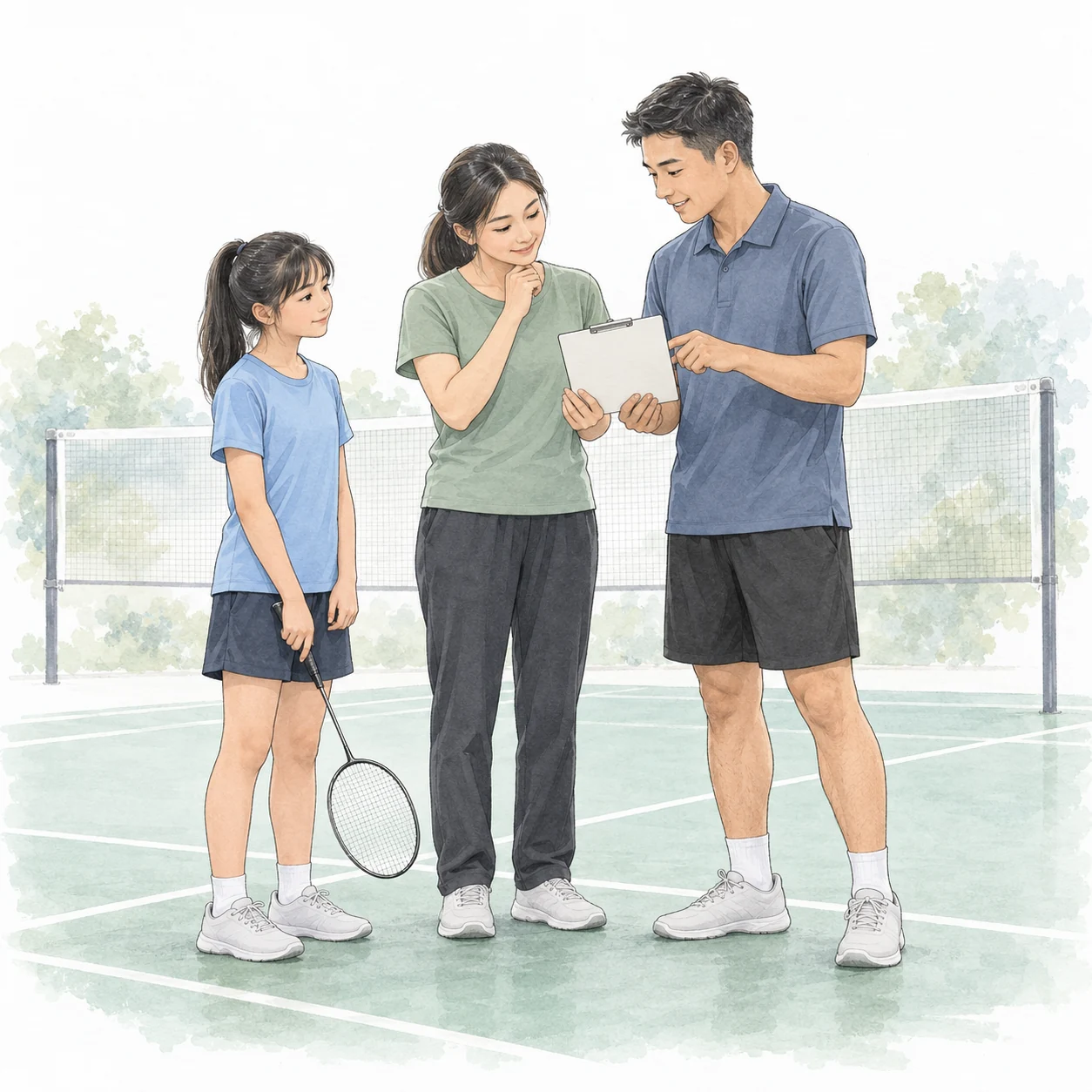
A badminton class can look busy without giving every child a clear learning task. Another lesson can look quieter while children watch a demonstration, consider a correction and prepare a better attempt. To judge useful practice, follow what your child is asked to do, what feedback they receive and whether they can try it again. This guide helps parents considering ST Badminton Academy in Setapak, Kuala Lumpur discuss participation without turning a lesson into a stopwatch contest. It does not promise a fixed amount of hitting time or a particular result. The educational images on this page are AI-generated illustrations, not photographs of STBA lessons or real students.
Useful practice
Watch a complete learning cycle
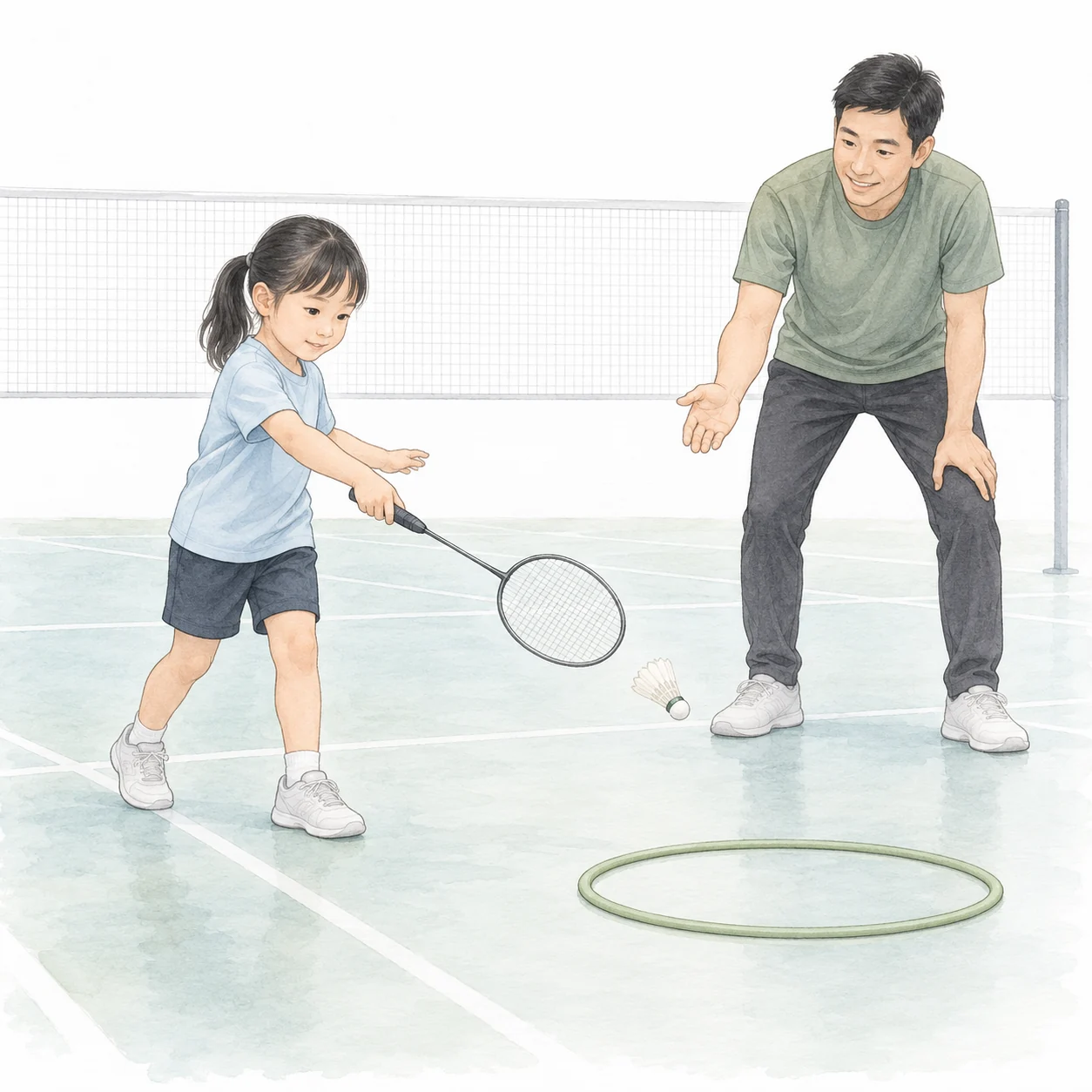
Start with one activity from its explanation to the next attempt. Does your child understand the purpose, know where to begin and recognise what they are trying to change? A simple task might be directing a gentle feed towards a marked area. Notice whether the coach checks understanding before asking for more repetitions. Merely holding a racket and hitting shuttles does not answer those questions. Equally, an unsuccessful attempt can still be useful when the child understands the task and receives information that helps them try differently.
Follow the connection between attempts rather than counting contacts in isolation. A child tries, the coach notices something specific, a clear cue is offered and the child has another opportunity to apply it. That sequence gives repetition a purpose. It may also reveal that the task needs simplifying. One complete cycle tells a parent more about instruction than an impressive shot seen from the doorway. This is a practical observation method, not a test that claims every lesson must follow one identical pattern.

Between turns
Separate purposeful pauses from disconnected waiting
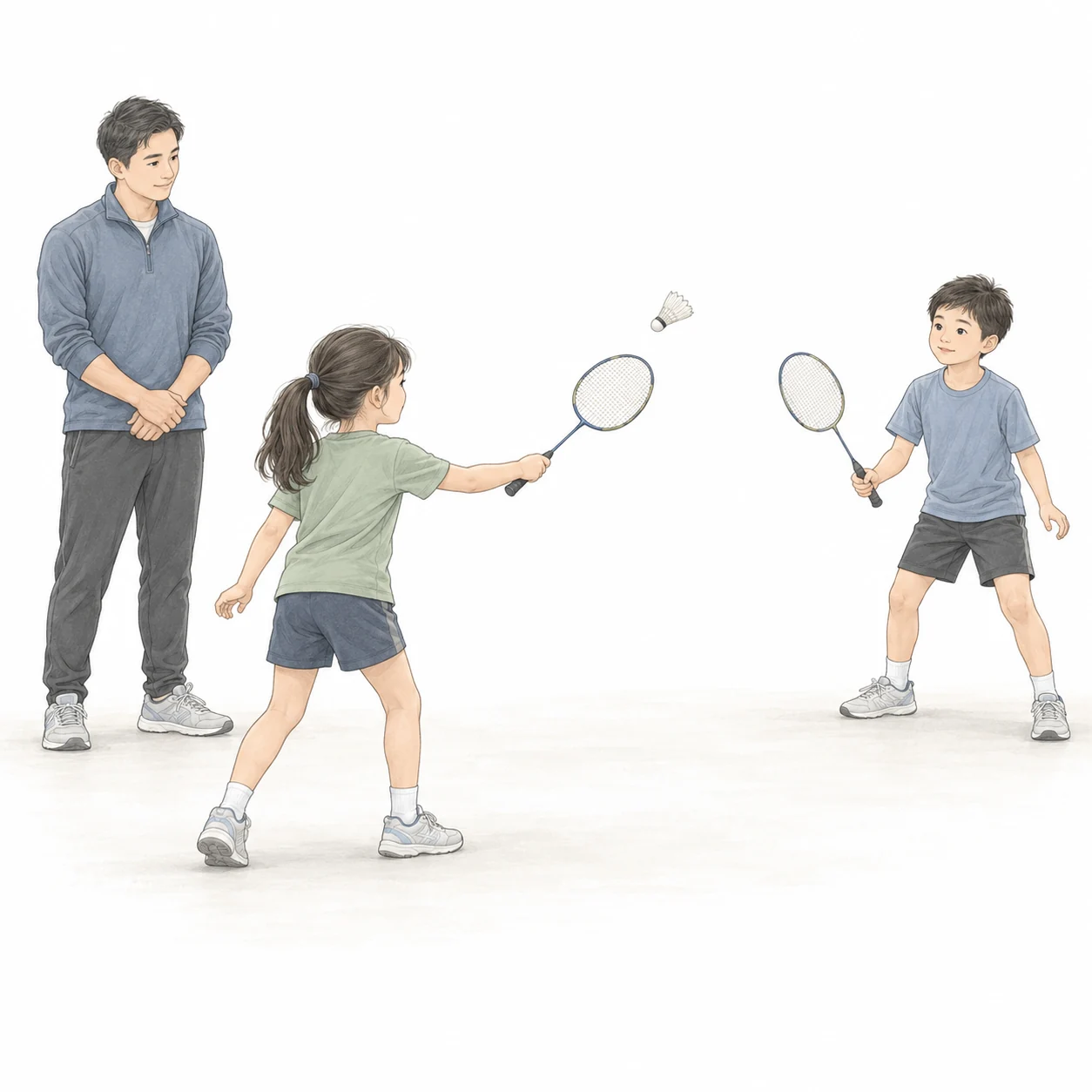
Watching another child can be a learning task when the observer knows what to notice. For a hypothetical example, a coach asks waiting children to look at where a gentle shuttle is contacted, then compare that with their own next turn. The observer has a focus and a connection to practice. Without that connection, watching may simply be time spent looking at the court. Ask what the waiting role is rather than assuming that every quiet child is learning or that every pause is wasted.
Brief explanations, equipment adjustments, water breaks and recovery can also have a legitimate place in the activity. The question is whether children know how the lesson resumes. Disconnected waiting looks different: the same children repeatedly lose the task, need the instructions again or stand without an understood role. Do not diagnose the whole class from one interruption. Look for a recurring pattern across activities and ask how turns are organised. A clear answer should describe the actual activity, not offer an unsupported promise that waiting never happens.
Usable feedback
Look for a correction the child can try
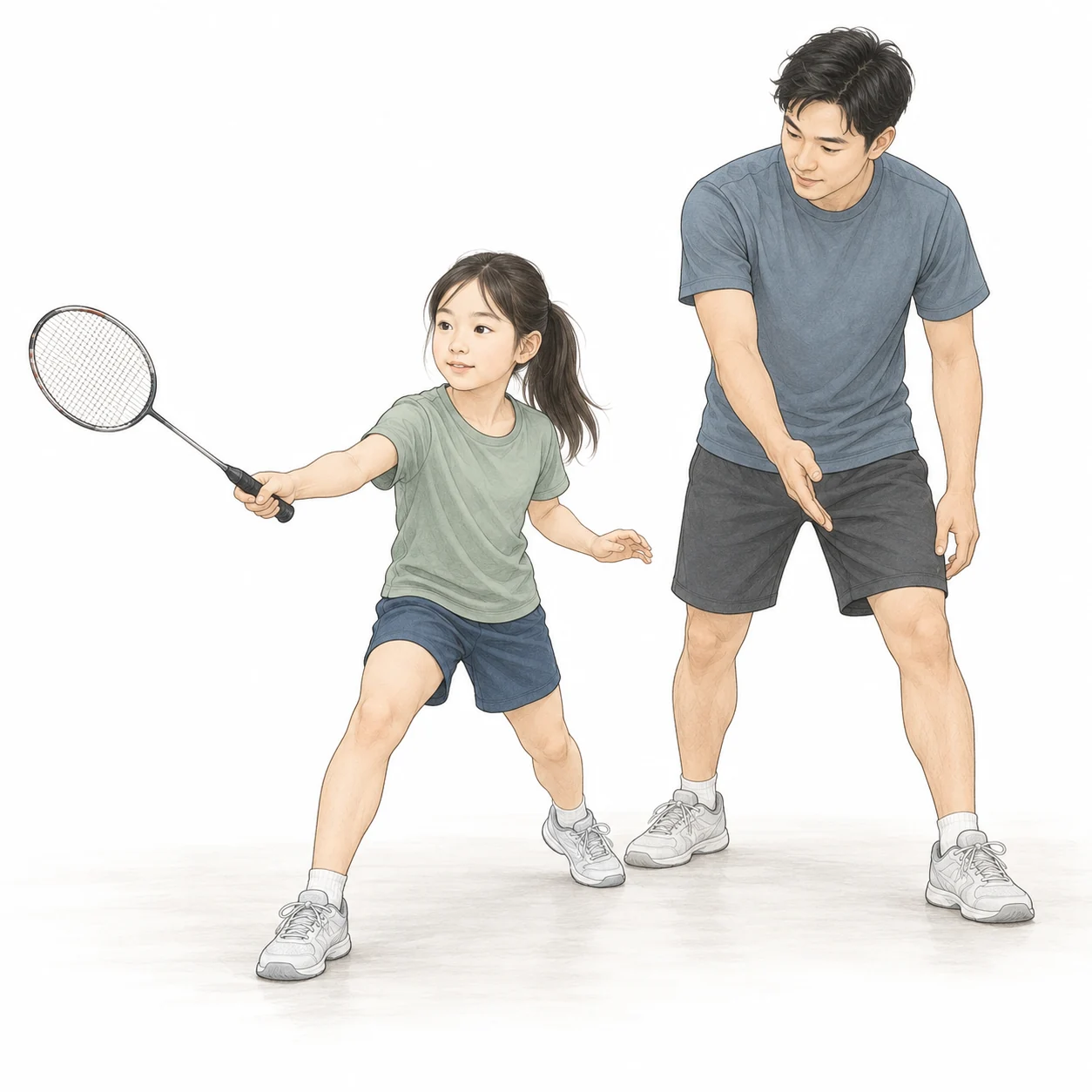
Feedback becomes useful when the child can understand it and use it in a relevant attempt. “Do it better” provides little direction by itself. A more usable explanation identifies the part of the task to change and, where necessary, shows it again. The wording should suit the child rather than display technical vocabulary for the parent. Listen for a manageable priority instead of a list of faults. Ask whether your child can explain what they are working on in their own words, without requiring a polished answer.
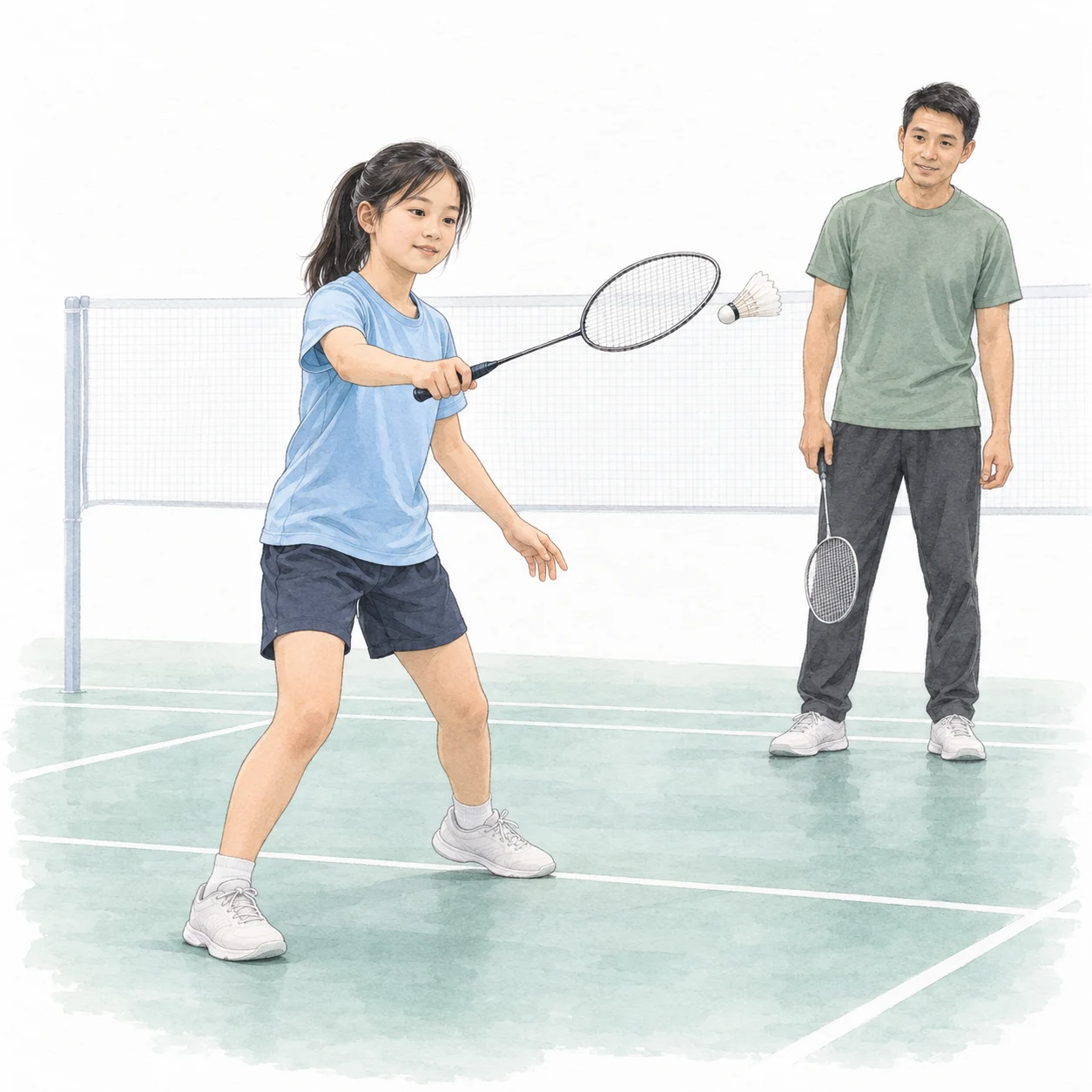
Then watch what happens after the explanation. Is there a chance to retry, or does the class immediately move to an unrelated exercise? Does the coach check how the cue was understood? A child may need another demonstration or a simpler feed rather than louder instructions. Correction does not need to accompany every single shot to be valuable. The important link is between the observation, the explanation and a usable opportunity to practise. Avoid treating constant shouting or constant praise as a measure of feedback quality.
Suitable tasks
Match repetition to the current foundation
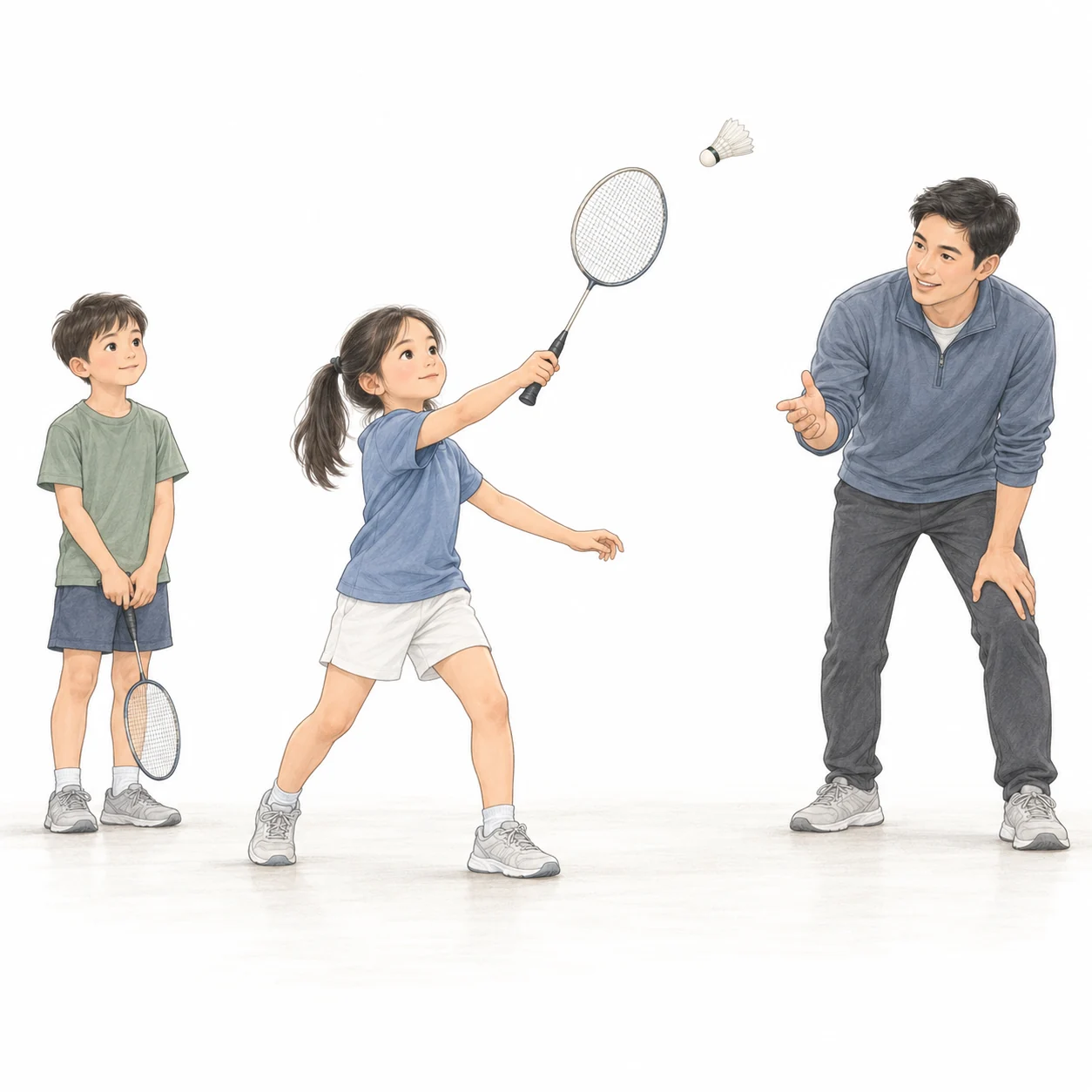
More turns cannot make an unsuitable task suitable. If a child does not yet understand the starting position or the intended racket action, repeated attempts may repeat the same confusion. Ask how the exercise can be adjusted: a more predictable feed, a shorter movement, a clearer target or another demonstration may be appropriate. The coach should decide what fits the learning task and the child in front of them. A parent can ask about that reasoning without prescribing a technical correction from outside the court.
The opposite situation also deserves attention. A child who understands the basic task may need a more specific challenge, not simply additional free hitting. The next step might be maintaining the intended direction while adding a movement component, if the coach considers that appropriate. Useful challenge depends on what the child can currently understand and attempt. It is not a label awarded for enthusiasm or age alone. Foundation-first badminton training should allow the task to be reviewed when it becomes confusing, too easy or disconnected from the stated purpose.

Myth vs reality
Hitting minutes are not a complete lesson report
Myth: a child should hit throughout the entire lesson for the class to have value. Reality: explanations, observation, feedback and recovery can support practice. They are useful when they have a clear role and connect to what happens next. This does not excuse indefinite idle queues. Parents should be able to ask what children are doing between turns and receive a practical explanation. Both continuous activity without a purpose and prolonged waiting without involvement deserve closer attention.
Myth: the child with the most shuttle contacts necessarily receives the best teaching. Reality: contacts show activity, but they do not reveal task understanding, suitable difficulty or whether a correction was used. A hypothetical child can hit repeatedly while misunderstanding the target; another can pause for clarification and then attempt the intended task. Neither example proves a result. They illustrate why a parent should examine the quality and connection of opportunities rather than declare a winner from a contact count.
Myth: a longer class automatically offers better value. Reality: advertised duration does not explain what any individual child experiences. A stopwatch can record elapsed time, but cannot tell you whether a demonstration was understood or an exercise was appropriately adjusted. Use time observations to ask a clear question if a recurring issue concerns you. Do not convert one informal observation into a percentage of learning, a universal acceptable ratio or a promise that another arrangement will produce faster progress.

Parent observation
Take a small note instead of running an audit
If observation is permitted and appropriate, choose one ordinary activity to follow. Write down its stated purpose, an instruction your child received and what happened on the next attempt. You do not need to record every child or monitor every second. Follow the academy’s arrangements and avoid interrupting instruction. A short factual note such as “the task was explained again before the next turn” is more useful than “there was no learning” when you have not checked what the child understood.
Afterward, ask a calm question: “What were you trying to change?” Your child may describe the cue, show the intended action or say they are unsure. Treat that answer as information for a conversation, not a verdict on the child or coach. A child can forget words while remembering part of a task. Ask the coach to clarify if needed. Compare the explanation with the activity you observed, and look across more than one moment before deciding whether the same participation concern keeps recurring.

Next learning step
Discuss participation before judging a class by its clock
Useful questions are specific: what is the current objective, how are turns organised, what should a child notice while waiting and what changes when the task is too difficult? These questions keep the discussion on teaching and participation. They also allow a coach to explain a legitimate pause or acknowledge an arrangement that needs attention. Avoid demanding a guaranteed number of hitting minutes as a substitute for this conversation. A promise about time alone would leave the underlying questions about suitable practice unanswered.
For ST Badminton Academy in Setapak, Kuala Lumpur, start with the website’s online application and describe your child’s experience and any concern about involvement. Read the intake and application rules, then use the training contact information for remaining questions. An application begins a discussion; it does not reserve a place or confirm a class arrangement. Assess the actual proposal against your child’s needs and practical commitments. Keep the final aim clear: understandable tasks, patient correction and opportunities to use what was taught, rather than activity that only looks busy.
Questions about useful practice time
These answers help parents ask about participation without assuming that every lesson, child or activity requires the same timing arrangement.
Should my child hit during the whole lesson?
No. Demonstrations, feedback and recovery may serve the task. Ask whether pauses have a clear purpose and connect to the child’s next attempt.
Is waiting always wasted time?
Not always. Observation can be purposeful when the child knows what to notice. Repeated waiting without a role or understanding needs a clearer explanation.
Can I compare classes by counting shuttle contacts?
Contact counts describe activity, not instruction by themselves. Also consider the task, its suitability and whether the child has a chance to apply feedback.
What does useful feedback sound like?
It gives an understandable, manageable change connected to the current task. The child should have an appropriate opportunity to try that change, with clarification if needed.
What if my child misses many feeds?
Ask whether the task is understood and appropriately challenging. A simpler feed or another explanation may be considered; repeated misses alone do not diagnose the cause.
Does a longer class guarantee more useful practice?
No. Duration does not establish learning quality or individual involvement. Ask how the proposed lesson is organised rather than assuming more time guarantees a better result.
Should I time each child’s turn?
That is usually unnecessary for this discussion. Observe a complete activity and its learning purpose. If a recurring delay concerns you, describe it factually and ask about organisation.
What if my child cannot describe the correction afterward?
Ask calmly and seek clarification from the coach. Forgetting the wording does not prove that nothing was learned; check how the task was explained and practised.
How do I discuss participation with STBA?
Start with the online application, describing your child’s experience and concern. Read the intake rules and ask remaining questions through the training contact information before deciding.
Useful practice and purposeful pauses
Four steps to useful practice
This sequence describes a teaching conversation, not a performance score. Follow how the explanation, attempt, feedback and retry connect in the activity you are discussing.
| Observation | Activity without a clear connection | Practice with a stated purpose Teaching approach |
|---|---|---|
| Task | Repeat without checking the purpose | Explain what the child is trying to change |
| Feedback | Offer a vague instruction | Give one usable cue connected to the task |
| Waiting | Leave the child without an understood role | Provide an observation focus or explain the pause |
| Difficulty | Repeat despite unresolved confusion | Check understanding and review the task |
| Observation | Use time alone as a learning score | Follow explanation, attempt, feedback and retry |
| Discussion | Demand an unsupported hitting-time guarantee | Ask how involvement works in the actual activity |
Start with a clear online application
Tell ST Badminton Academy about your child’s experience and participation concerns through the online application. Read the intake and application rules, then discuss the actual proposal before deciding. Applying does not confirm a place.