My Child Can Rally but Cannot Start a Game: Serve-and-Score Readiness
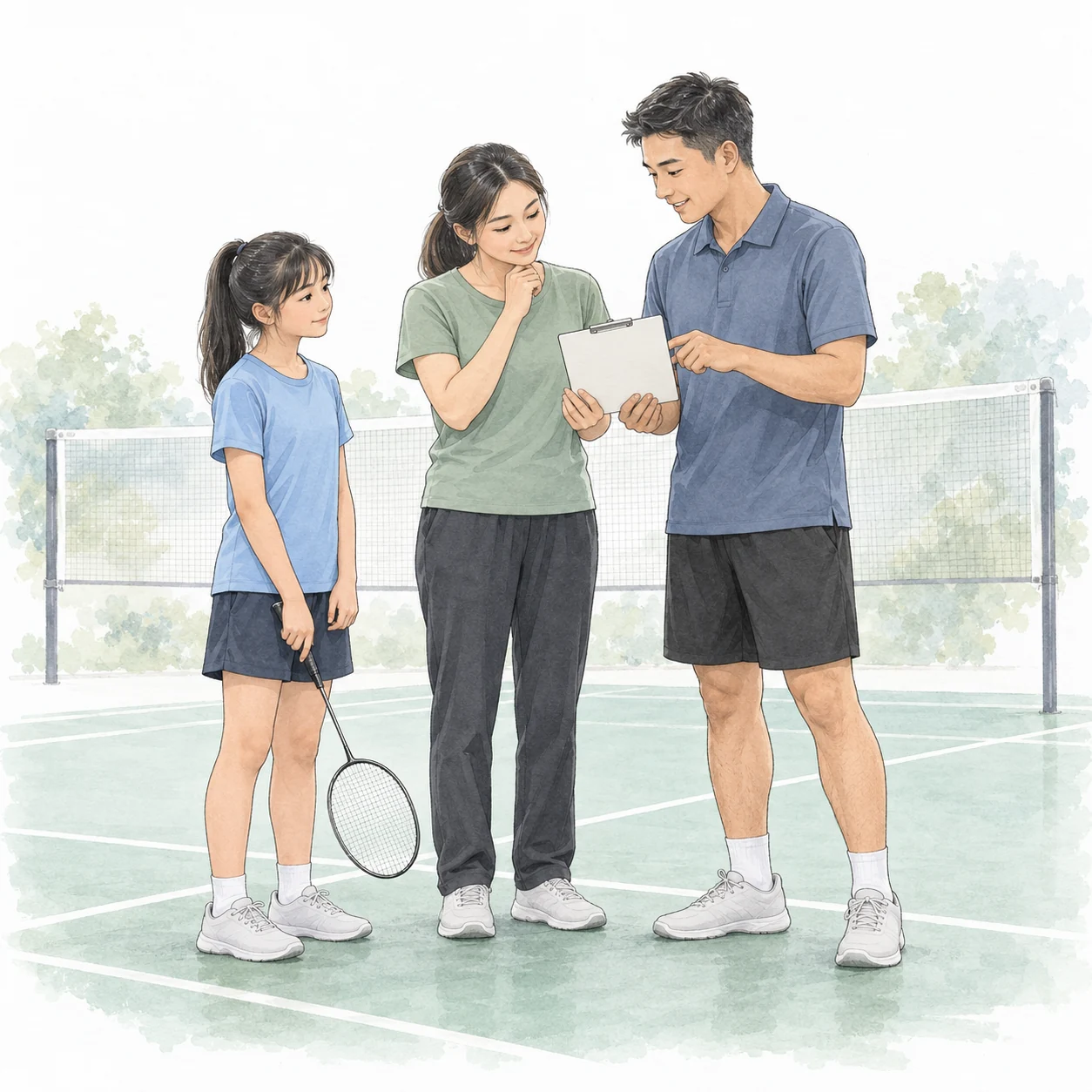
A child may return several shots during badminton training yet look uncertain when a partner asks to begin a game. That is a useful teaching observation, not proof that the child lacks effort. A cooperative rally practises keeping the shuttle moving; a game also asks the child to recognise roles, prepare a serve, notice the receiver, follow the score and organise the next start. A badminton coach can teach those connections in manageable steps. This guide explains what parents can observe, what to ask a badminton academy and how a badminton class for kids can bridge the gap without rushing into a full match. The educational images on this page are AI-generated illustrations, not photographs of STBA students or lessons.

Step 1 · Observe
Find the missing link between rallying and starting
Watch what happens before the first shuttle is struck. Does your child know who is serving, where the practice begins and what the partner needs to do? A learner may hit confidently when a coach feeds the shuttle but hesitate when holding it independently. Those are different tasks. Instead of saying that the child should already know, identify the precise action that causes uncertainty and make it the next lesson focus.
Use a small observation checklist rather than a judgement about talent. Notice preparation, a controlled serving attempt, the receiver’s attention, a shared score check and the reset after a rally. Record only what you actually see. If a child completes one part with a prompt, describe it as supported rather than independent. This gives the coach usable information and prevents a long rally from hiding a missing game routine.
Step 2 · Prepare
Build a calm, repeatable serving routine
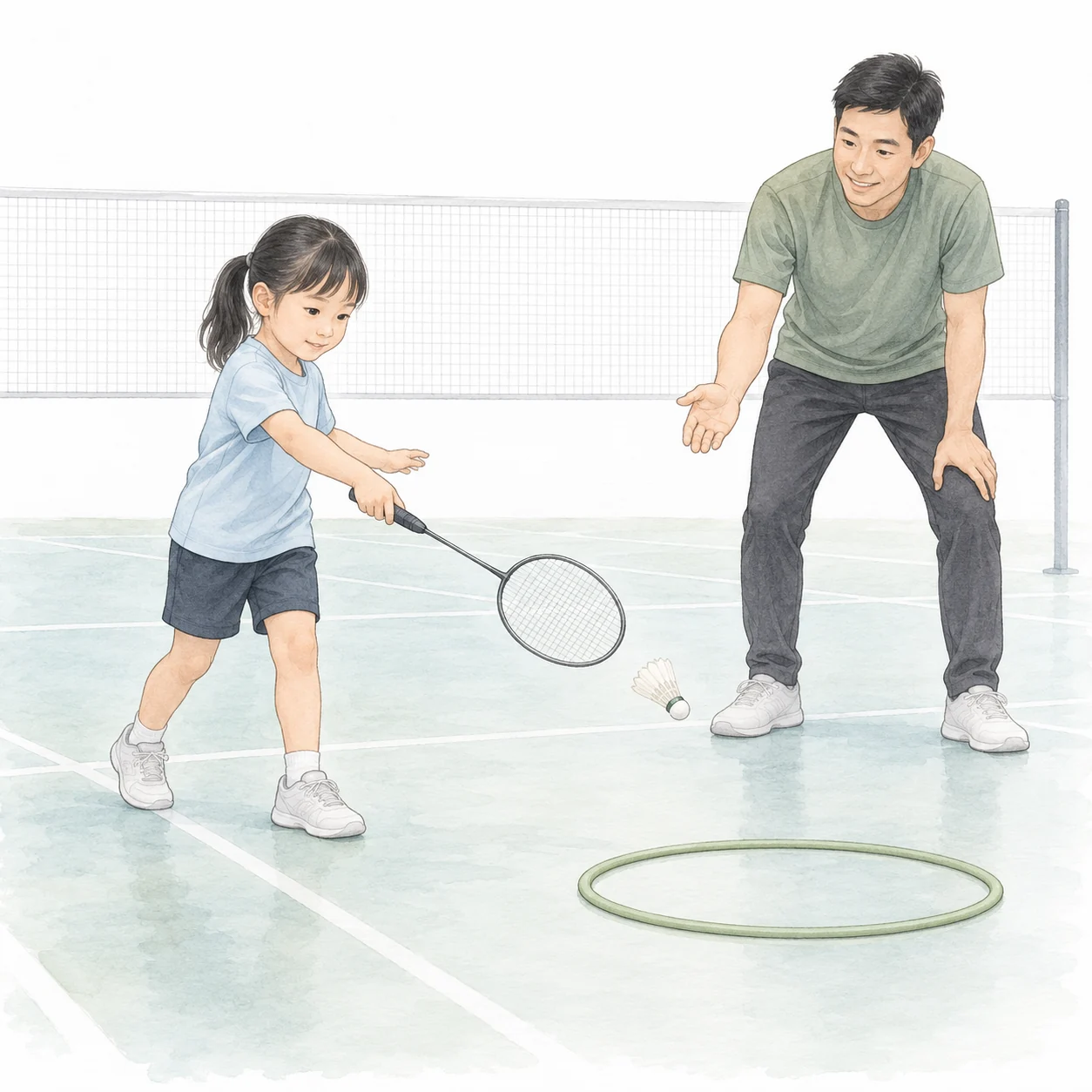
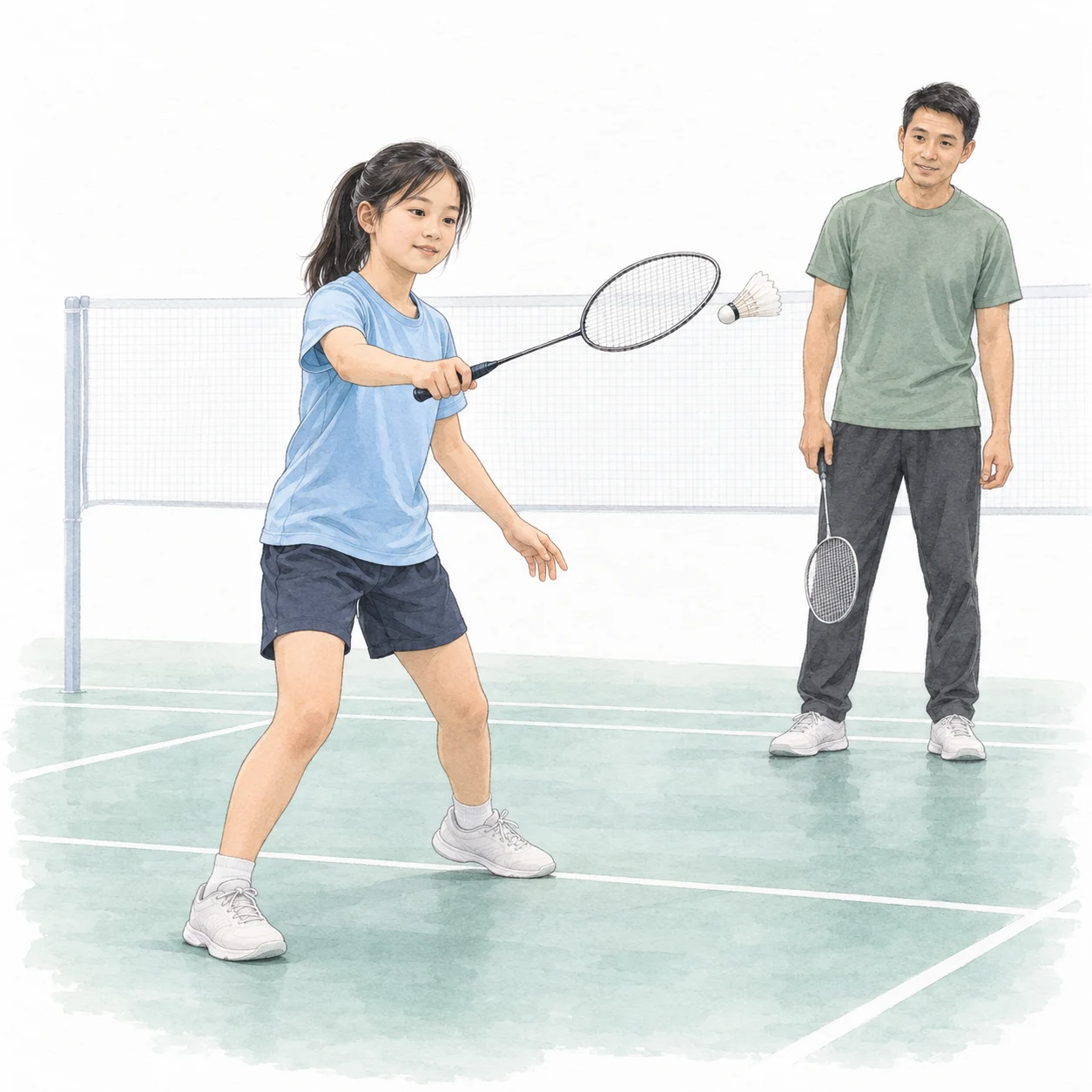
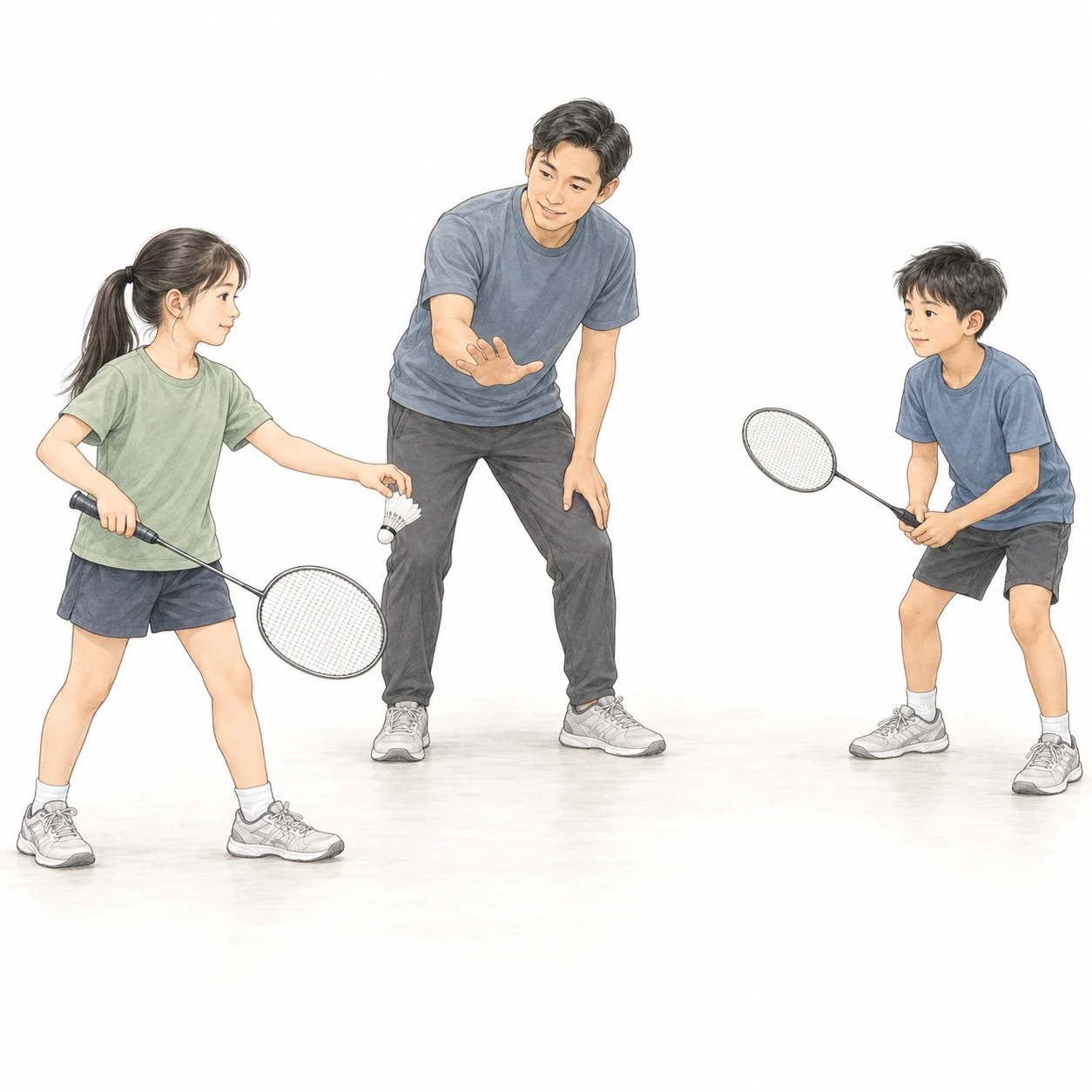
A serving routine begins before contact. The child prepares the racket and shuttle, faces the intended target and checks that the receiver is ready. The coach can first demonstrate this sequence slowly, then let the child describe it. Use a manageable target and one agreed cue. The purpose is a start the learner understands and can practise, rather than a powerful shot that succeeds occasionally without a dependable preparation.
If the action breaks down, separate the pieces. Practise holding and preparing, then controlled contact, then starting a short exchange. Ask the coach which cue should guide any practice outside class; several adults giving different instructions can make the task less clear. Detailed service technique and formal legality need appropriate coaching. This activity is a learning routine, not a claim that a simplified practice serve satisfies every current competition requirement.
Step 3 · Receive
Give the receiver an active role
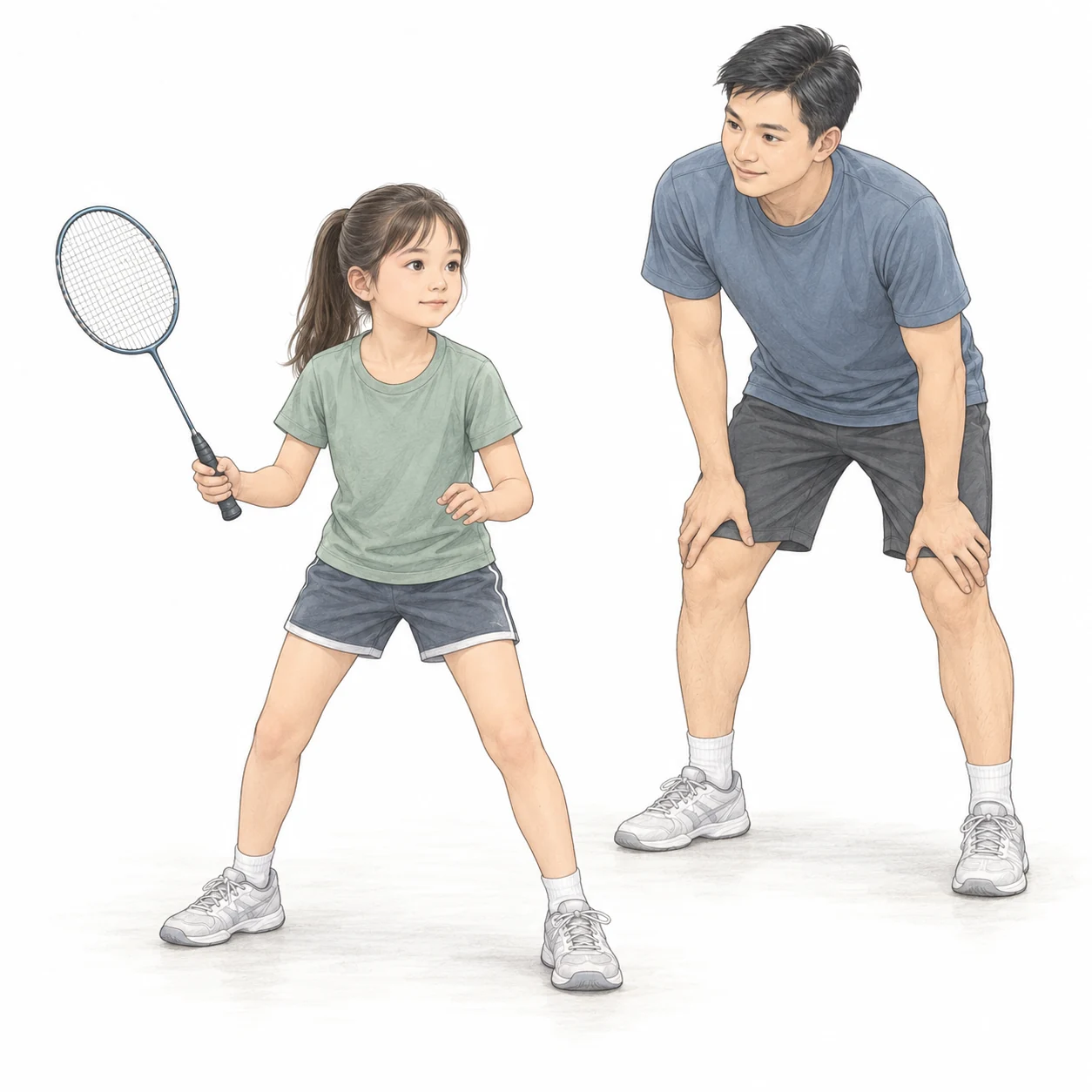
The receiver is learning even before the shuttle crosses the net. The child needs to recognise the receiving role, face the server, watch the shuttle and prepare to respond. If a learner keeps wandering or copies the server’s preparation, begin with a role exercise. Let each child name their task before a supported start. This makes attention and participation visible instead of treating receiving as an empty wait between shots.
Use a short start-and-return activity, then pause and reset. Exchange roles only according to the activity the coach has explained. Allow enough supervised space between learners and keep spare shuttles clear of the immediate activity area. If the receiver is distracted, wait and clarify the task before starting. Clear organisation supports a useful lesson; it does not remove every risk or replace the coach’s judgement about the court and the children.

Step 4 · Follow
Connect the score to the next action
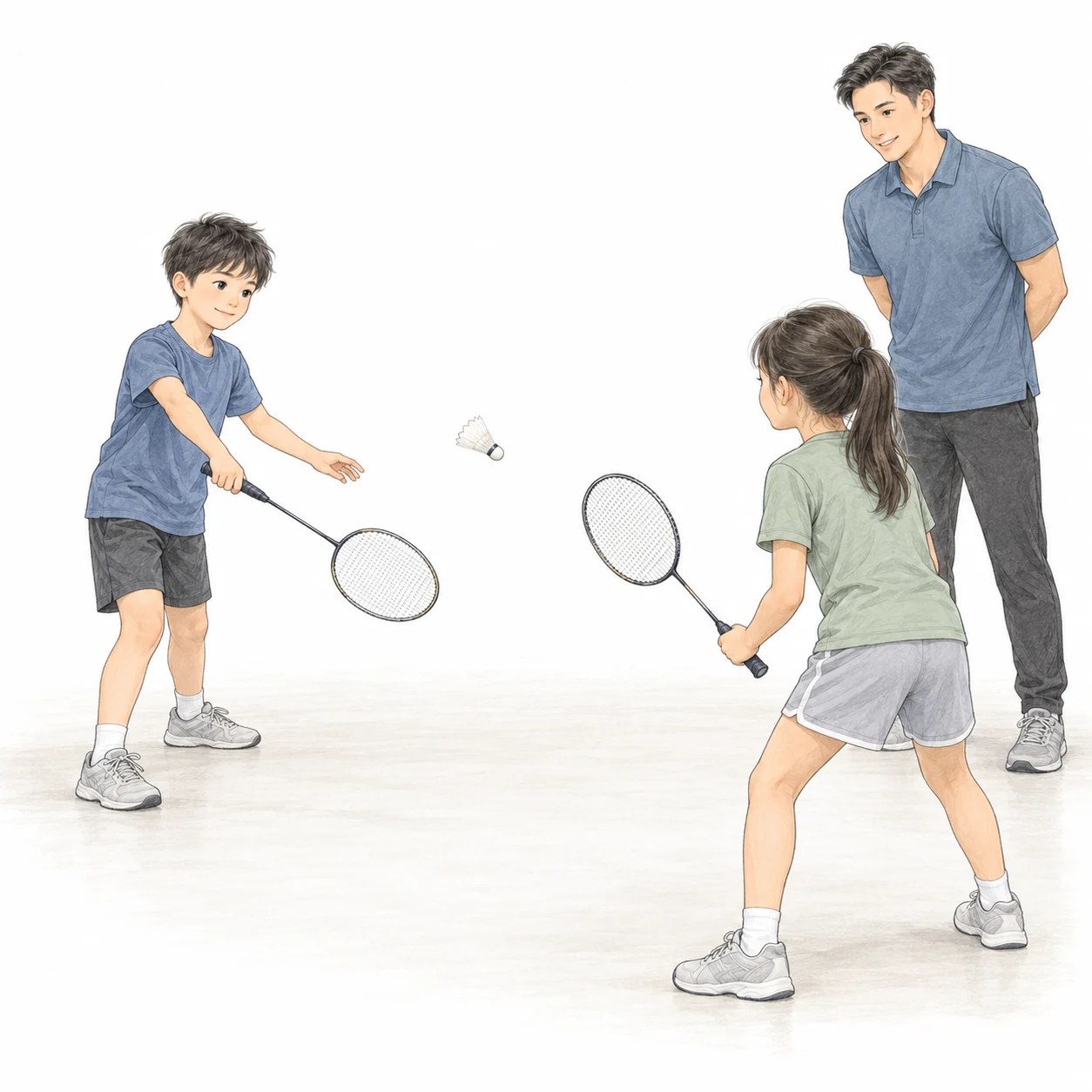
Score tracking is easier to understand when it belongs to a visible sequence. After an exchange, pause together: what happened, what does the chosen practice format count, and what is the next score? Say it clearly before beginning again. A coach can use a simple visible record while children learn. The aim is shared understanding, not testing who can remember fastest or letting the most confident child decide without agreement.
Then connect the record to the next start: who serves, who receives, where both prepare and whether they are ready. These arrangements must follow the practice format already explained. Do not mix a beginner activity with half-remembered match rules. Formal scoring, service courts, changing ends and competition procedures should be taught from the current official rules when required. For an introductory activity, make its agreed start, end and reset conditions clear first.
Myth vs Reality
Game confusion is information, not a character judgement
Myth: a child who can rally should automatically be able to play a complete game. Reality: rallying and organising play are connected but distinct learning tasks. A coach-fed exercise may remove the need to initiate, track a score or choose the next role. Discovering that gap is useful. It tells the coach where instruction is needed, rather than proving that previous practice was pointless or that the child is deliberately refusing to think.
Myth: more rules, shouted faster, will solve the problem. Reality: a child may know several words yet struggle to act on them at court speed. Choose one connection, demonstrate it and let the learner try. In a hypothetical lesson, a child might remember the serving action but forget to check the receiver. The next task would be that readiness check, not a lecture on every competition procedure or a demand for a harder serve.
Myth: the best badminton training always looks competitive and intense. Reality: a short, guided game can reveal more about understanding than a long match full of adult prompts. When comparing a badminton coach, ask how missing steps are identified and taught. Playing achievements can offer relevant experience, but they do not by themselves show how someone explains beginner routines. Evaluate the instruction your child receives rather than assuming any sporting title guarantees suitable teaching.
Step 5 · Combine
Use supported mini-games with a clear purpose
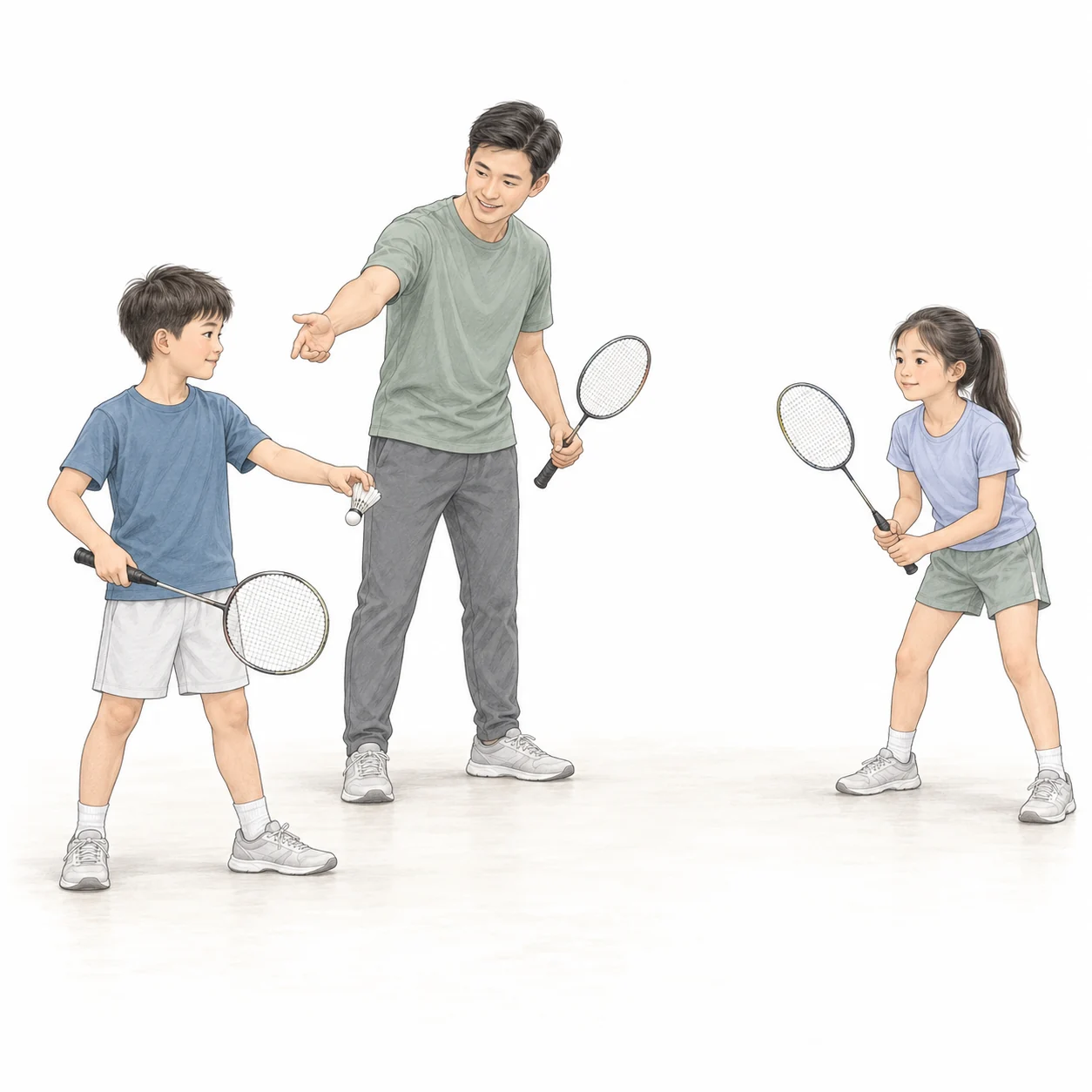
Join the pieces through a short activity: prepare, check the partner, start, respond, pause, review the record and reset. Tell learners how that particular activity finishes before they begin. The coach may choose a teaching goal or another clearly stated stopping condition, rather than demand a full competitive match. If a child becomes lost, reduce the number of decisions and practise the unclear connection separately before returning to the combined sequence.
Change one challenge at a time. For example, after the start becomes familiar, ask the child to announce the agreed score with less assistance while keeping the serving task manageable. This is a hypothetical teaching progression, not a promised timetable. Readiness varies. Notice whether the learner can explain the next action and attempt it with a partner. A winning result on its own says little about how independently the child managed the routine.

Step 6 · Review
Give parents a specific next step
After class, ask your child a concrete question: what do you check before serving, or what happens after a rally finishes? Keep the conversation brief and let the child answer before helping. Ask the coach which connection is being taught next and whether any practice away from class is appropriate. Avoid turning the family conversation into a rules examination. A useful record describes an action and the support needed, without comparing the child with other learners.
For badminton training in Setapak, Kuala Lumpur, begin with ST Badminton Academy’s online application and describe the present starting point: rallying, serving, receiving, score tracking or resetting. Read the intake rules before sending unresolved questions through the training contact information. This helps explain the learning need; it does not guarantee a place, assessment result or schedule. The teaching aim is to connect understandable actions so the child gradually participates in a game with clearer decisions.
Questions about children’s serve-and-score readiness
These answers concern guided beginner practice. Detailed competition requirements need the current official rules and the coach’s explanation of the format being used.
Does a long rally mean my child is ready for a complete game?
It shows a useful part of the skill set, but not every part. A rally may begin with an adult feed and contain no scoring decisions. Observe whether the child can also prepare a start, recognise the receiving role, follow the agreed record and organise the next exchange.
What should a parent observe first?
Start with the moment before contact. Does the child know the serving task, prepare calmly and notice the receiver? Describe the exact uncertainty to the coach. That is more useful than labelling the child careless or asking for a harder training session without knowing which connection is missing.
Should I correct every serving detail at home?
Ask the coach for one appropriate cue and whether home practice is suitable. Several corrections at once may leave the child unsure which action matters. Practise the agreed preparation in an appropriate space; leave detailed technique and formal service assessment to the coach rather than copying conflicting online instructions.
What if my child repeatedly forgets the score?
Pause, review what the chosen activity counts and say the score together before restarting. A visible record can help while understanding develops. Gradually reduce the prompt when the child can explain the next action. Do not shame the learner or continually answer for them before they have time to think.
Must a beginner learn all formal rules immediately?
The child needs enough clear guidance for the activity being taught. Introduce formal procedures progressively when relevant and use current official rules for accuracy. Explain explicitly when a simplified practice format differs from a match. Avoid presenting a convenient classroom arrangement as a universal competition rule.
How do we handle disagreement after a rally?
Stop before the next start and let both children describe what they noticed. The coach clarifies the activity’s agreed conditions and helps them reach a shared record. The aim is a fair, understandable restart. Encourage asking for help instead of rewarding whichever child speaks loudest or guesses first.
Should children change ends during a mini-game?
Follow the format the coach has chosen and explained. A teaching activity may include an organised movement exercise, while a formal match has its own requirements. Do not guess a competition procedure from a beginner drill. The children should understand where to move and when the next start is allowed.
How can I recognise progress without comparing children?
Compare the same task with the learner’s previous attempt. Note whether preparation, role recognition or score review needs less prompting and whether the child can explain the next step. One successful attempt is encouraging but does not prove mastery. Look for understanding across repeated, appropriate opportunities.
What should I include in the online training application?
Describe what your child currently does and what still needs support, such as rallying after a feed but hesitating to serve independently. Include the questions relevant to the learning need and follow the intake instructions. An accurate starting point is more useful than claiming the child is already match-ready.
Teaching scenes: from the first serve to the next start
Four steps from a rally to organised play
The numbers identify teaching steps, not performance statistics. Repeat or simplify a step when the learner still needs support.
| Learning question | Less helpful approach | Useful teaching approach Foundation-first practice |
|---|---|---|
| Starting uncertainty | Demand a full game immediately | Observe the exact missing starting action |
| Serving feedback | Give several changing cues at once | Use one agreed cue and a manageable target |
| Receiving role | Assume waiting means understanding | Name the role and practise a short return |
| Score confusion | Let the quickest answer settle the record | Pause and confirm the agreed format together |
| Competition rules | Present a simplified drill as a formal match | Distinguish practice from current official requirements |
| Progress review | Judge only the winning result | Describe the action and level of support needed |
Tell us which part of the game your child is learning
Begin with the online application, describe the present rally, serve, receive and score-tracking abilities, and read the intake rules. Use the training contact information for unresolved questions. The application starts the enquiry process; it does not guarantee a place or a training outcome.