Bored During Badminton Drills: Useful Repetition or Too Much Waiting?
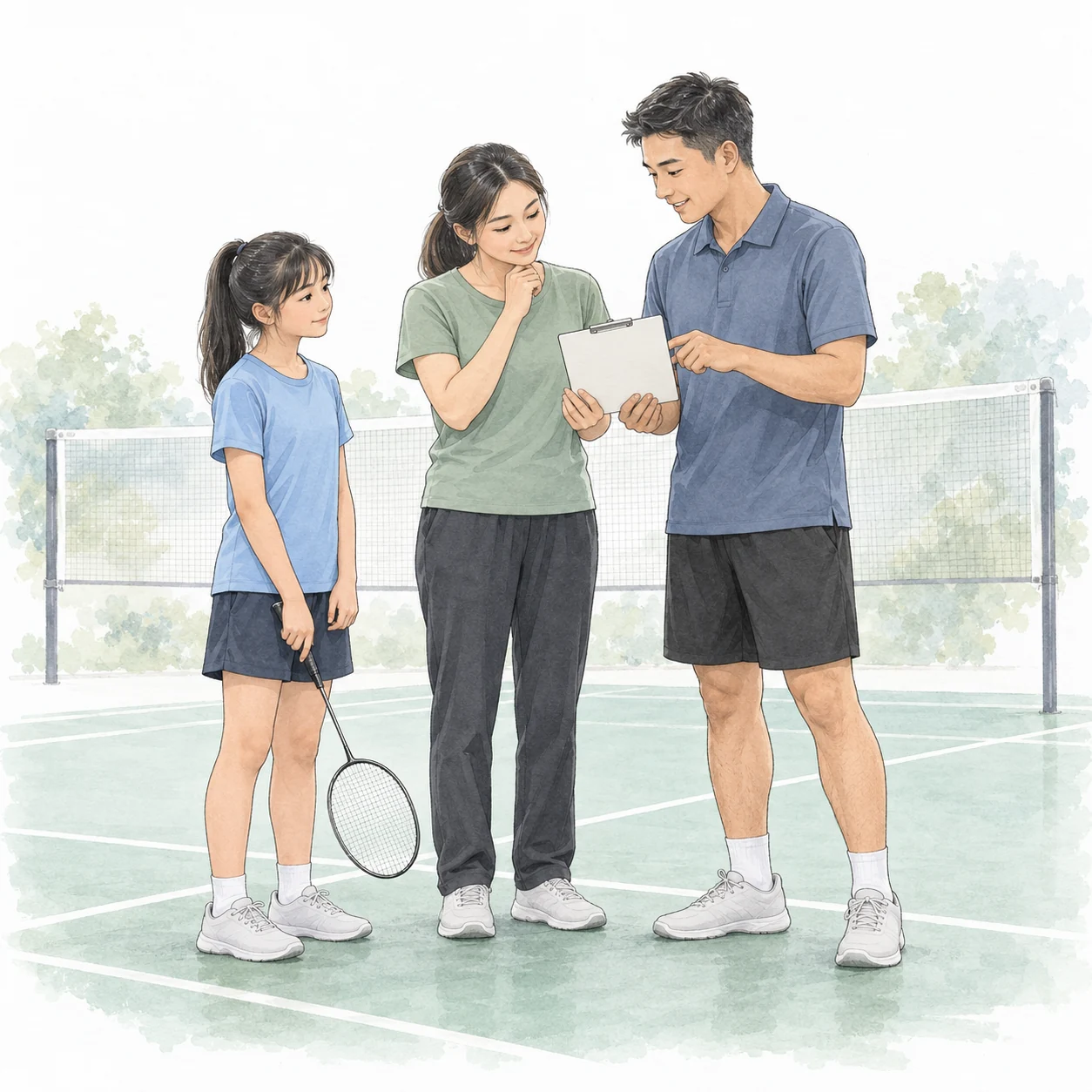
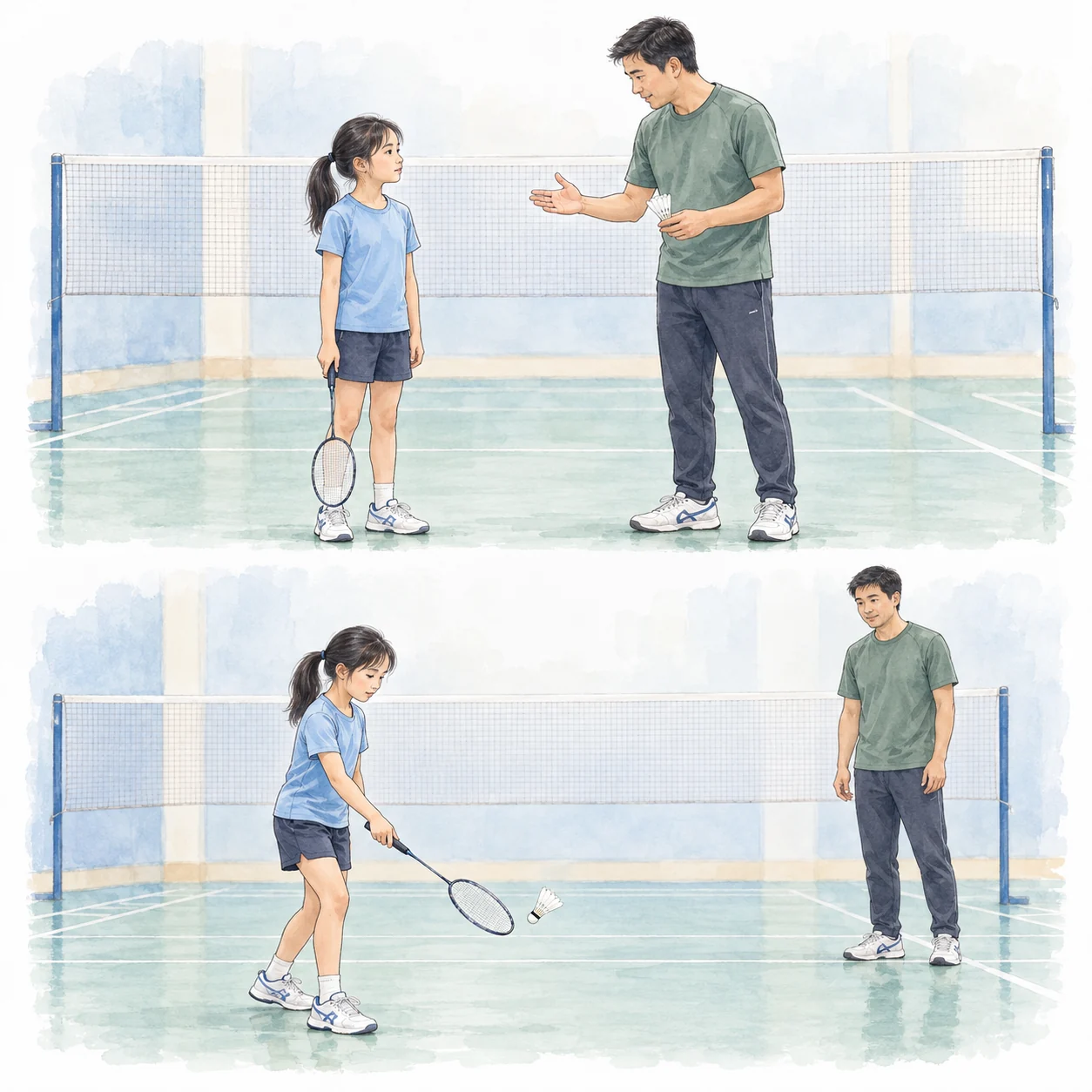
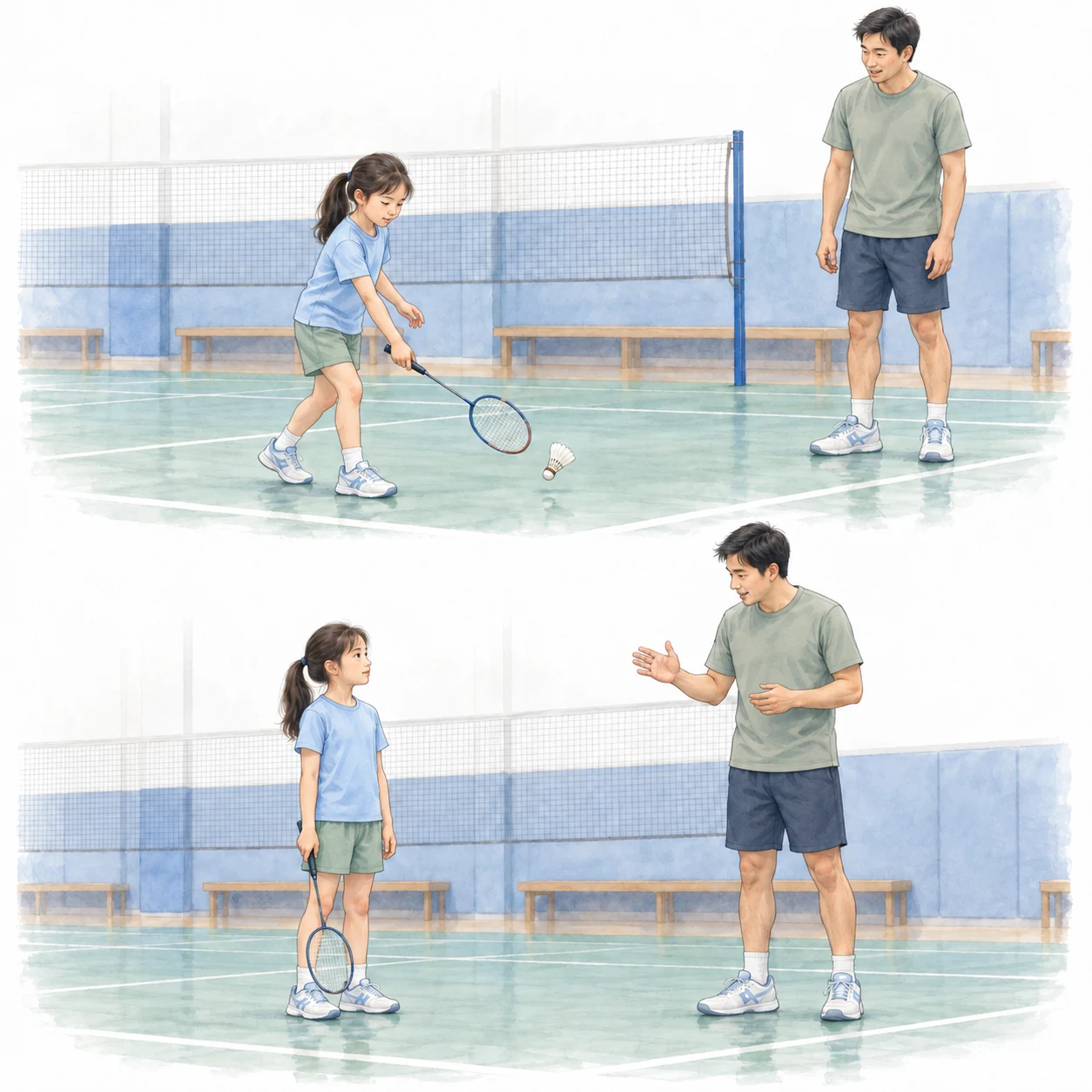
When a child says badminton training is boring, the next question is what happened during the lesson. Repeating a net shot with a clear contact cue is different from waiting in a queue without knowing what to do. This guide helps parents separate those situations and discuss them with a badminton coach. At ST Badminton Academy Malaysia in Setapak, Kuala Lumpur, a foundation-first approach means understanding the skill being practised before expecting a harder activity. Useful practice need not feel exciting every moment, but the learner needs a purpose, a manageable challenge and opportunities to act on feedback. The images here are AI-generated teaching illustrations, not photographs of actual STBA lessons.
Observe first
Find out what your child means by ‘boring’
Start with an open question after the lesson: which part felt boring, and what were you doing then? A child may describe waiting for a turn, repeating an easy task, missing every feed or being unsure what the coach wanted. These are different teaching questions. Avoid turning the conversation into a test or suggesting the answer before the child speaks. Ask for one concrete example, such as what happened just before their turn. If the child cannot explain it, that is a reason to ask the coach about the activity, rather than assume the entire badminton class for kids was ineffective.
Observation can add useful context, provided it is allowed and does not interrupt the lesson. Notice what the coach explains, what each learner tries and what happens after an attempt. A brief pause for demonstration, checking understanding or resetting an exercise is different from a long queue with no role. Record a neutral description: the task was a net shot, the child waited, then hit without a stated target. Do not label the coach or child from that one moment. The purpose is to identify an adjustable part of the lesson, not to judge quality by noise or constant movement.
Give repetition a purpose
One small task goal makes the next attempt clearer
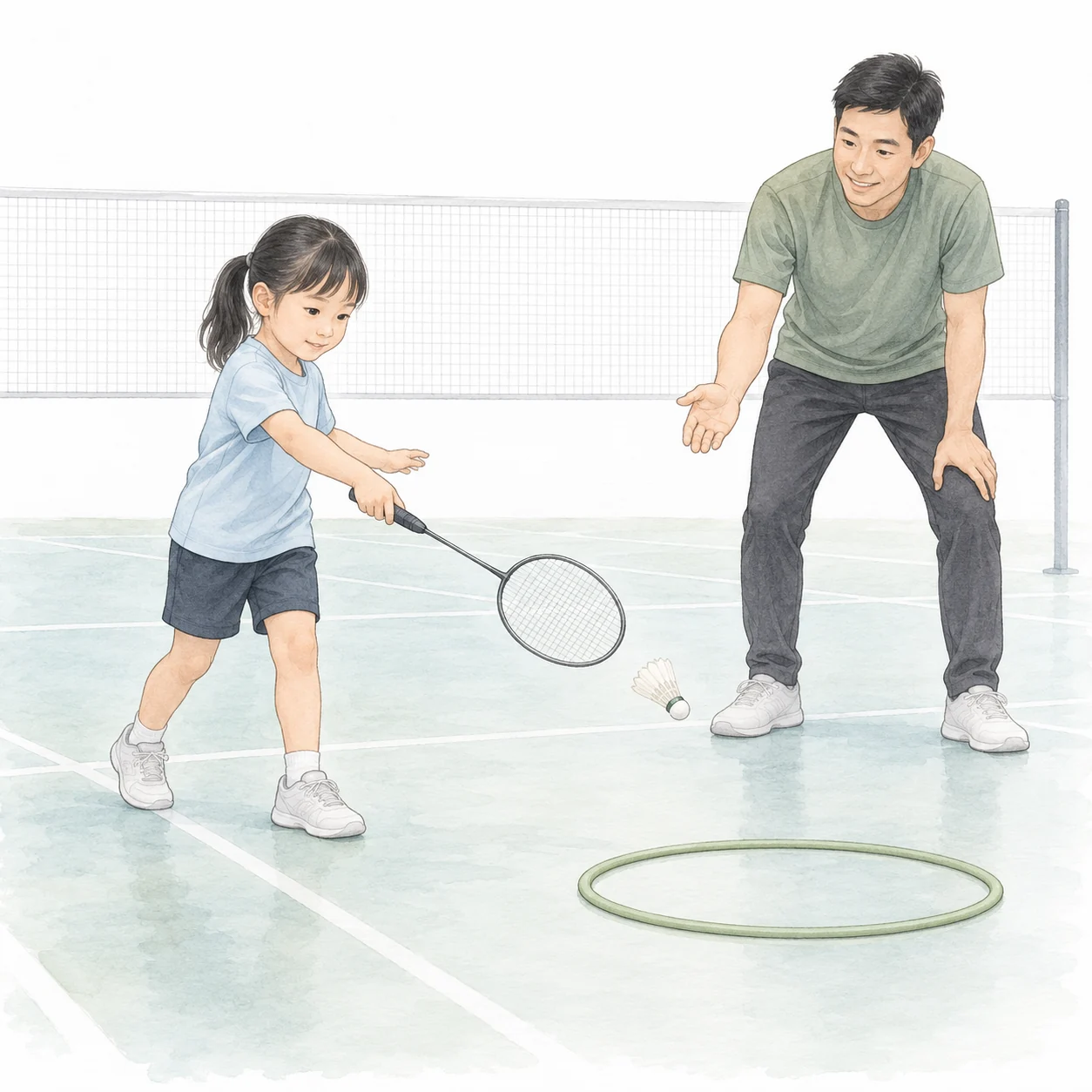
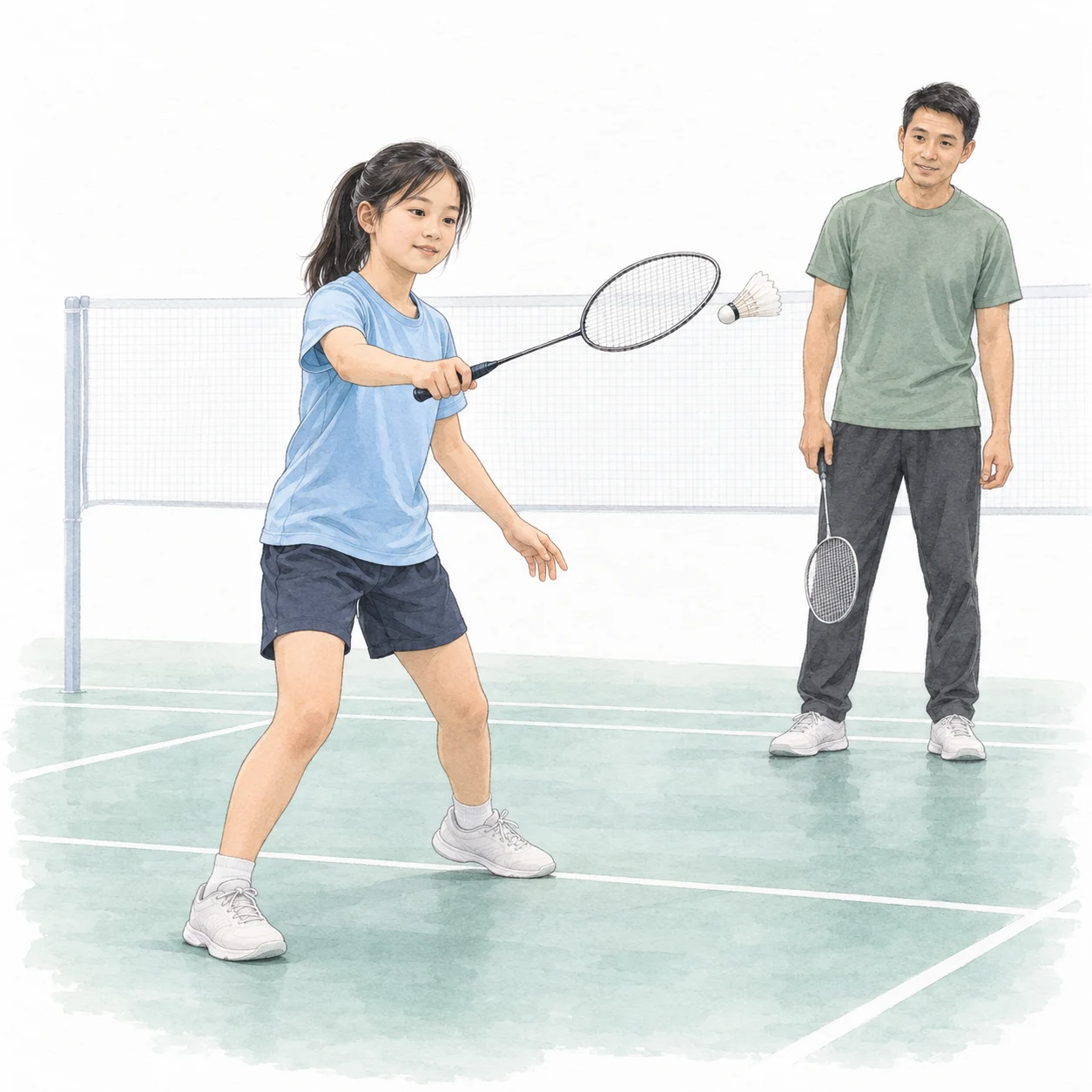
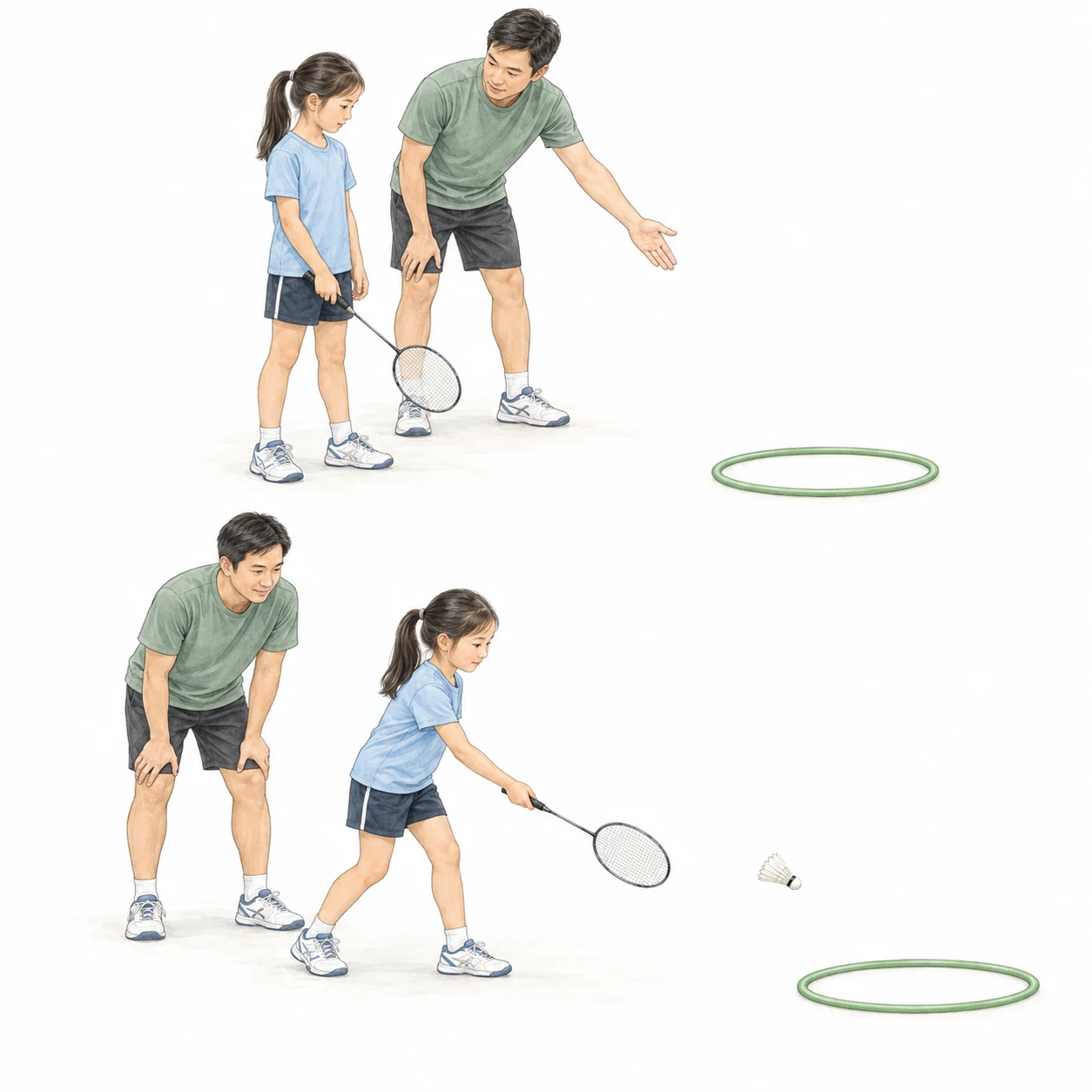
Useful repetition has a detail the learner can recognise. In a hypothetical net-shot exercise, the coach might ask a beginner to contact the shuttle in front of the body. A more experienced learner might work towards a chosen landing area while keeping a controlled racket face. These are examples, not instructions to impose on your child. The coach should select the cue for the actual learner. Ask whether the child can say, in simple language, what the next attempt is for. Hitting another shuttle is an action; noticing and testing a specific detail gives that action a learning purpose.
A task goal should be small enough to use during the drill. Asking a child to change grip, stance, contact, height and recovery together may leave them unsure where to start. The coach can prioritise one detail and check it before adding another. A parent can support that process by asking what the coach asked the child to notice, without inventing an extra correction from the sidelines. The goal is not a demand for a perfect shot or a fixed number of successes. It is a clear question for the next attempt, followed by feedback about what actually happened.
Look beyond the queue
Participation includes trying, noticing and receiving feedback
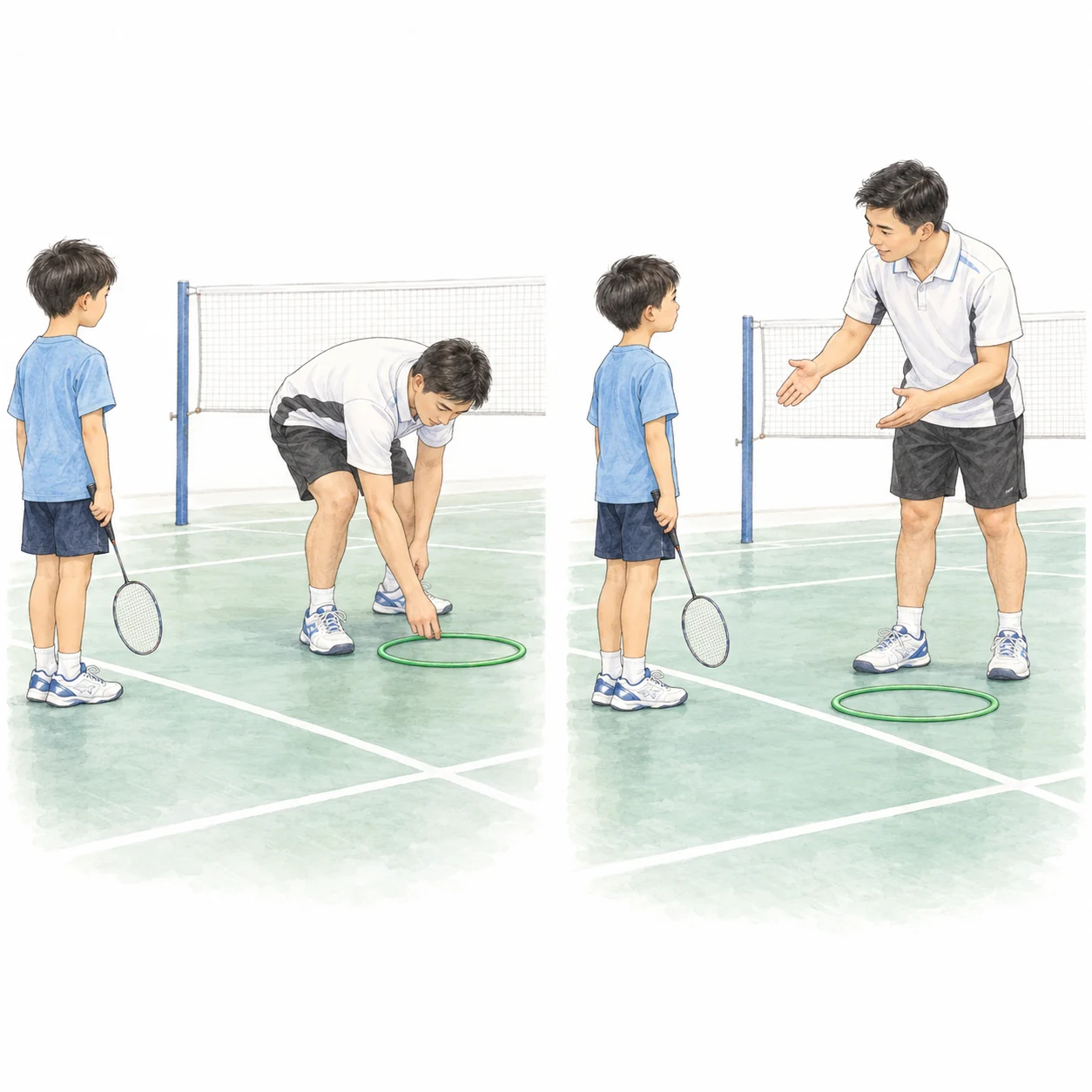
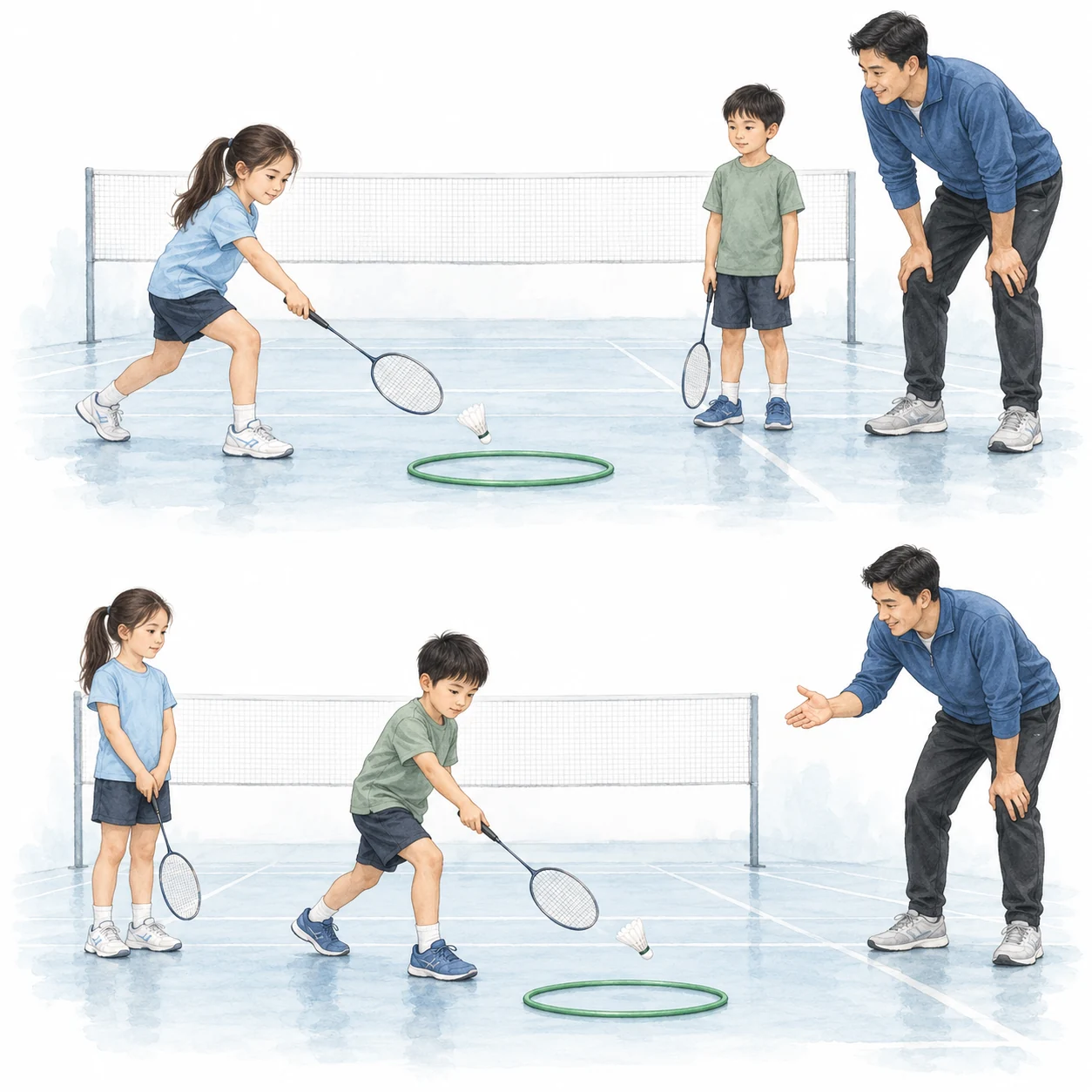
When observing badminton training, look at opportunities to practise the stated task rather than the advertised length of the lesson alone. Does each learner receive turns often enough to reconnect with the cue? When not hitting, do they have an appropriate role? Under the coach’s organisation, a partner might observe one agreed feature, prepare for the next turn or help reset after play stops. These roles should be clear and suitable for the court arrangement. A child should not independently enter an active hitting area to collect shuttles. Ask the coach how participation is organised before proposing a change.
Active attention is not the same as moving continuously. A learner may need to watch a short demonstration, think about the last attempt or hear an explanation. Equally, being physically busy does not show that they understand the task. Rapid feeds can give a child little time to use a correction; prolonged waiting can make the cue difficult to reconnect with. Look for the relationship between explanation, attempt and response. If waiting repeatedly leaves the child without a role, discuss that specific pattern. There is no universal queue length that proves good teaching, and no need to invent one.
Adapt the challenge
Change the conditions while keeping the learning goal
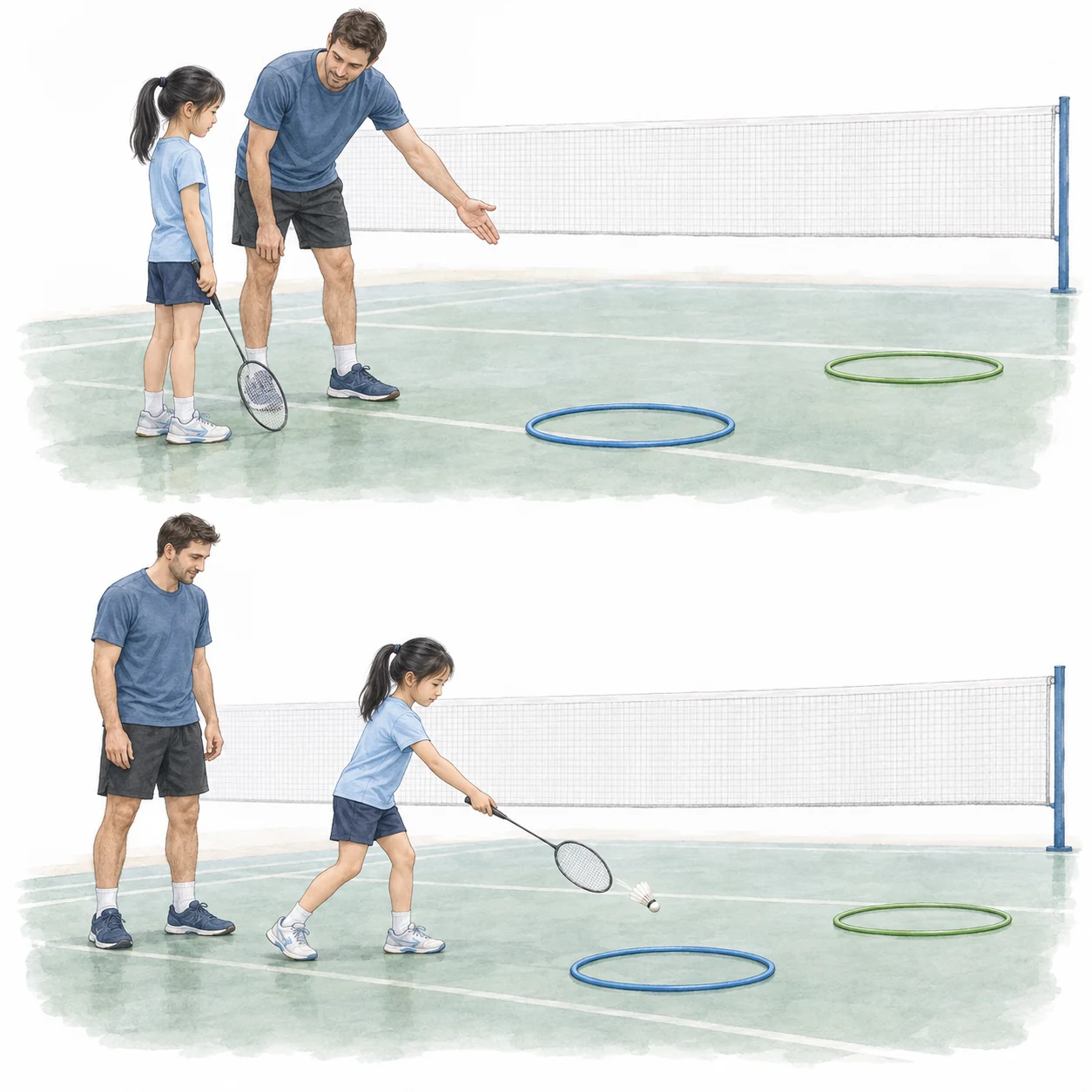
An exercise can feel dull because it is too easy, or discouraging because the child cannot meaningfully attempt it. Ask what the coach is checking before deciding which applies. In a hypothetical contact exercise, the coach might alter the feed, distance or target so the learner can attend to the selected detail. The purpose can remain the same even when the conditions change. Parents should describe what they observe rather than request a particular technical solution. ‘My child says they are unsure where to stand’ gives the coach something more useful to investigate than ‘Please make everything more entertaining.’
Once the child understands the task, a coach can introduce variation that tests the same skill: a different starting position, a choice of landing area or a short rally with an agreed aim. The adjustment should make the next question clear, rather than add uncertainty simply for novelty. Returning to a simpler condition may also help the coach explain a detail. This is a teaching decision, not evidence that the child is going backwards. A badminton academy can be assessed by how clearly practice is adapted and explained, rather than how many different activities appear in a single lesson.
Myth vs reality
Three assumptions that can hide the real problem
Myth: if a child is bored, every drill should become a game. Reality: a game may offer a useful chance to apply a skill, but it does not automatically explain the skill or provide suitable attempts. A focused drill and a short game can serve different purposes within teaching. Ask what each activity is meant to reveal. Entertainment alone is not a reliable measure of a badminton class, and an activity does not become worthwhile simply because it is called a game.
Myth: more shuttles or faster feeds always mean a better lesson. Reality: the child needs opportunities to notice the cue and respond to feedback. Rushing can hide misunderstanding, while excessive waiting can reduce involvement. A coach may pause to demonstrate or check a detail, then let the learner test it. The useful question is whether the sequence helps the child understand the task. Counting shuttles without knowing that purpose cannot tell a parent how meaningful the practice was.
Myth: saying ‘boring’ proves the child lacks discipline or should leave badminton. Reality: the word may describe an unclear instruction, an unsuitable challenge or an unproductive wait. It may also reflect a preference that deserves listening to. None of those possibilities should be decided from one comment. Seek an example, discuss it calmly and look again after a reasonable opportunity for an agreed adjustment. Repetition still asks for attention, but attention is easier to discuss when the child and coach share a clear task.
Talk with the coach
Bring an observation and ask for one practical adjustment
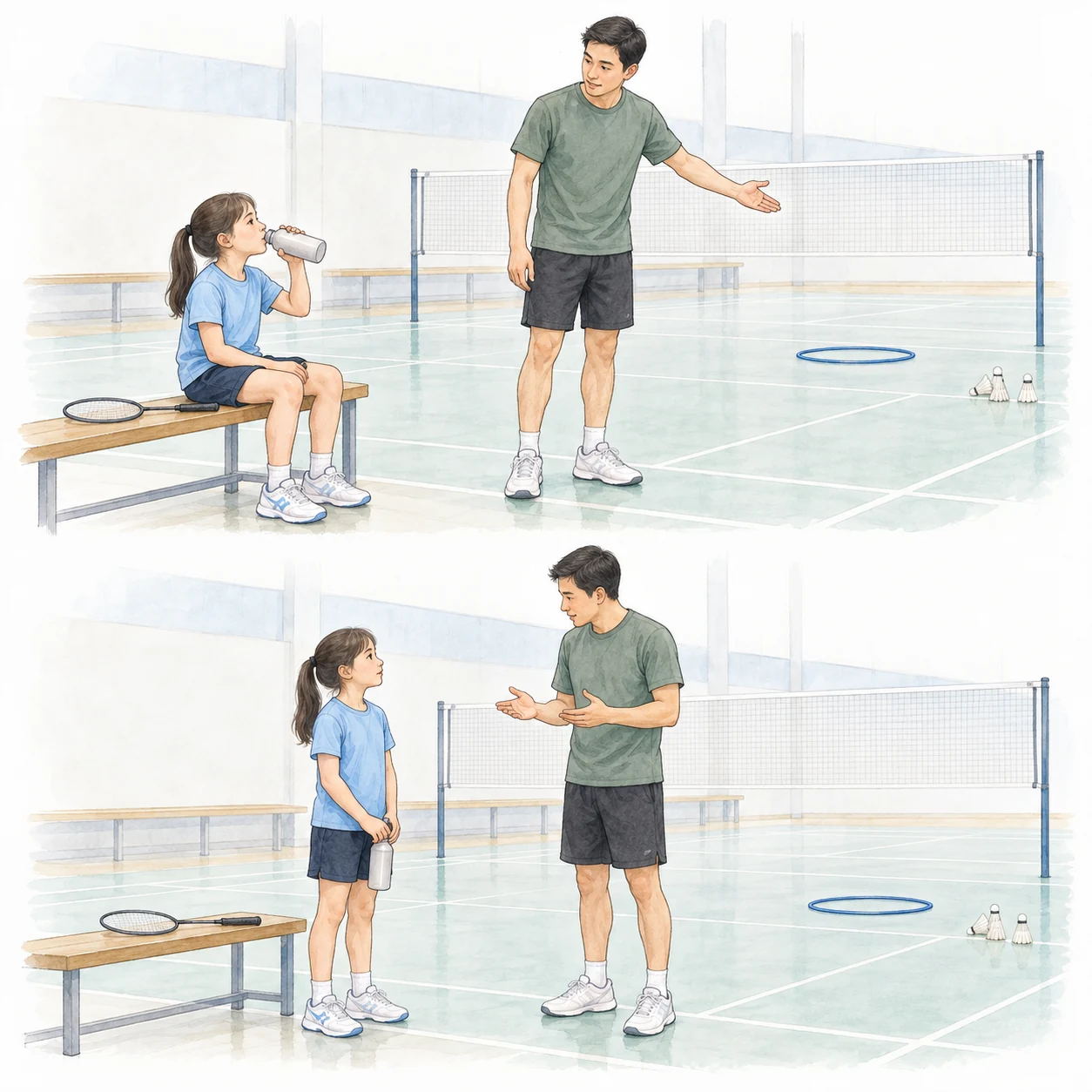
Choose a suitable time outside active teaching and share a short, neutral example. You could explain that your child enjoyed the rally but could not describe the aim of the feeding drill. Ask what the learning goal was, how the coach checks it and what the child should notice on the next attempt. Listen to the response before deciding that the format needs replacing. The coach may have seen something you could not observe from the sideline. A useful discussion connects the child’s experience with the teaching purpose, without asking the coach to guarantee that every exercise will be fun.
Agree on one thing to look for next: a clearer cue, a suitable target or a defined partner role, depending on the coach’s assessment. Afterwards, ask the child whether they understood the task and had opportunities to try it. Avoid asking only whether the lesson was fun, because that can miss a clearer explanation or a better fit in difficulty. If the same issue continues, review the class format with the coach using the observations you have collected. This is a conversation about learning needs, not a promise that one adjustment will change every child’s interest or performance.
Choose an informed next step
Connect your enquiry to the child’s actual learning needs
When comparing a badminton coach or badminton academy, ask how foundation skills are explained, how tasks are matched to a learner and how feedback informs the next attempt. Describe your child’s experience honestly: what they have tried, what they enjoy and which situation they call boring. Do not judge a programme only by dramatic drills, photographs or claims of fast improvement. This guide offers questions for evaluating teaching; it does not establish a ranking between providers. A suitable discussion should make the practice purpose and the next step easier for the family to understand.
For an enquiry to ST Badminton Academy Malaysia in Setapak, Kuala Lumpur, use the website’s online application as the first step. Supply the information requested and read the intake application rules before submitting. Include a concise learning concern if the form provides an appropriate place, rather than assuming a particular class, venue or time is available. Suitability and arrangements need confirmation from STBA. Keep the family’s decision grounded in a clear teaching conversation: what the child is learning, what they can attempt and how the coach will check understanding. No page can guarantee enjoyment, progress or an available place.
Questions parents ask about boring badminton drills
Use these answers to prepare a specific conversation with the coach. They explain what to observe, without diagnosing your child from a single lesson.
Does boredom mean my child dislikes badminton?
Not necessarily. Ask which activity felt boring and whether the child still enjoys other parts of the lesson. Waiting, an unclear goal and an unsuitable challenge call for different discussions. Listen to a specific example before assuming their interest has disappeared.
Must every drill include a game?
No. A focused drill can make one detail easier to notice, while a game can test its use in a different situation. Ask the coach how the chosen format serves the learning goal. Constant entertainment is not the only measure of useful teaching.
What does a useful drill goal sound like?
It names a detail the learner can understand and try, such as a coach-selected contact cue or landing area. The actual cue depends on the learner. It should guide the next attempt rather than demand perfect shots or introduce several new corrections at once.
How much waiting is too much?
There is no universal figure that settles the question. Observe whether the child has frequent purposeful attempts and an appropriate role between turns. Repeated long waits without a task are worth discussing. Short pauses for explanation or checking understanding may be useful.
Should I tell my child how to correct the shot?
Ask what the coach’s cue was and help your child recall it. Avoid adding your own technical instruction during the lesson. If a cue is unclear, ask the coach to explain it. Conflicting corrections can make the task harder to understand.
What if the exercise looks too easy?
Ask the coach which detail is being checked. A familiar exercise may still challenge contact or control. If it no longer offers a useful question for that learner, discuss a suitable change in conditions. Difficulty should serve the skill rather than appearance.
Can observing a partner count as participation?
It can support the task when the coach gives a clear, limited observation role. Watching without knowing what to notice is different. It should complement opportunities to practise, not become an indefinite substitute for the child’s own turns.
Should we change classes after one boring lesson?
Begin with an example and a conversation about an adjustment. Check whether the issue continues and whether the child understands the next lesson’s goal. If participation or task suitability remains a concern, review the format with the coach and the child.
How do we ask STBA about suitable training?
Start with the online application and read the intake application rules. Provide the requested information about the learner and describe the relevant concern accurately. STBA needs to confirm suitability and arrangements; this guide does not promise a schedule, trial or available place.
Teaching scenes: clear goals, useful turns and feedback
Four steps from ‘boring’ to a clearer task
Use this sequence to identify one teaching question. It is a conversation process, not a timetable or a guarantee of a change in enjoyment.
| What to review | Less useful reaction | More useful approach CLEAR PURPOSE |
|---|---|---|
| The child’s comment | Assume ‘boring’ means a complete loss of interest | Ask which activity felt boring and what happened |
| Repeated practice | Replace every familiar drill for novelty | Name one detail to notice on the next attempt |
| Waiting between turns | Judge only by the total lesson length | Review purposeful attempts and suitable partner roles |
| Level of challenge | Make the exercise harder without checking the goal | Ask the coach to adapt conditions to the learner |
| Feedback | Give several competing corrections from the sideline | Help the child recall the coach’s selected cue |
| Reviewing an adjustment | Ask only whether every moment was fun | Ask whether the task was clear and could be practised |
Ask about foundation-focused badminton training in Setapak
For an ST Badminton Academy Malaysia enquiry, start with the online application and read the intake application rules. Describe the learner’s experience and the specific practice concern. STBA will need to confirm suitability and arrangements; no class time, trial or available place is promised here.