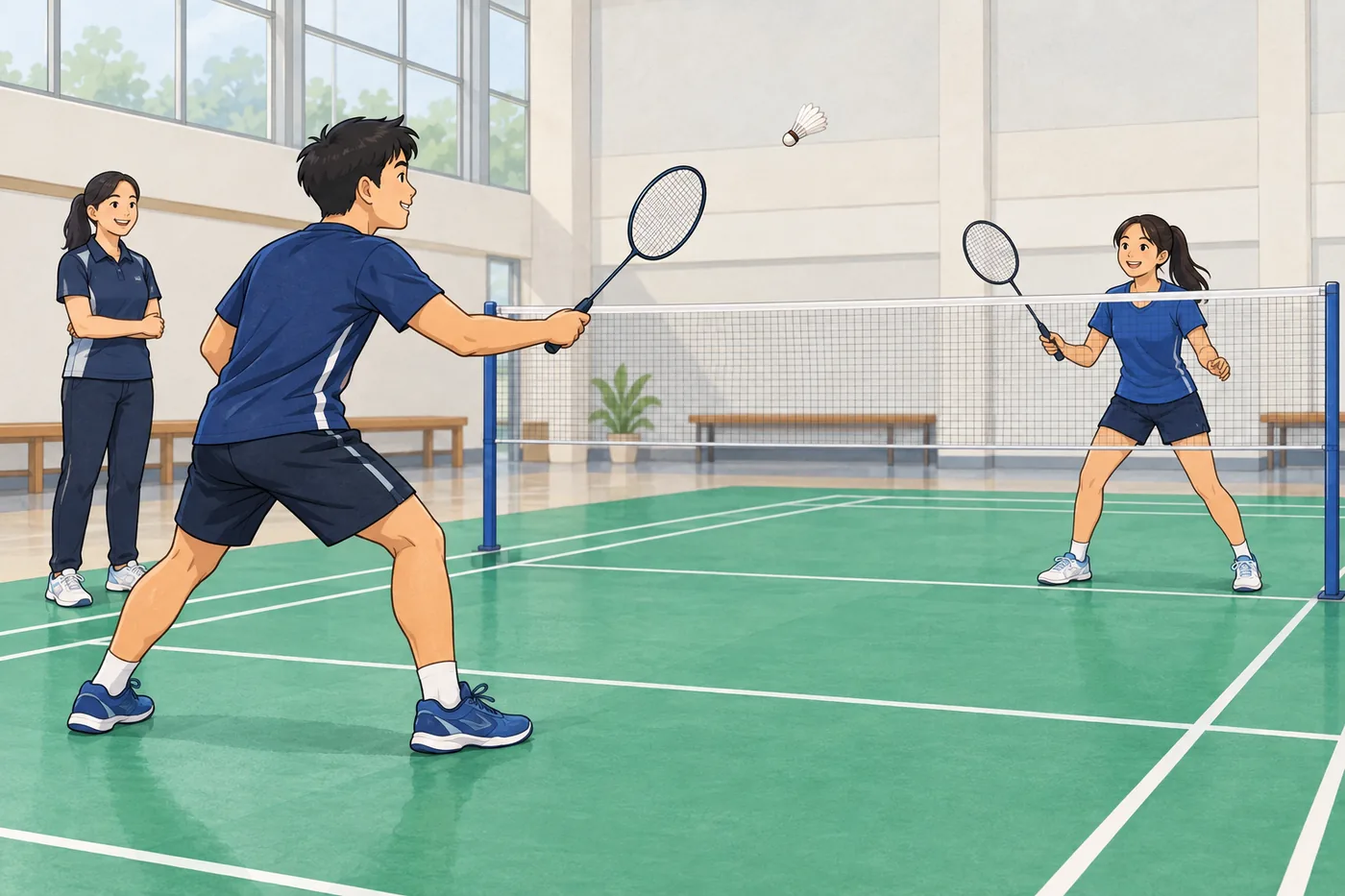
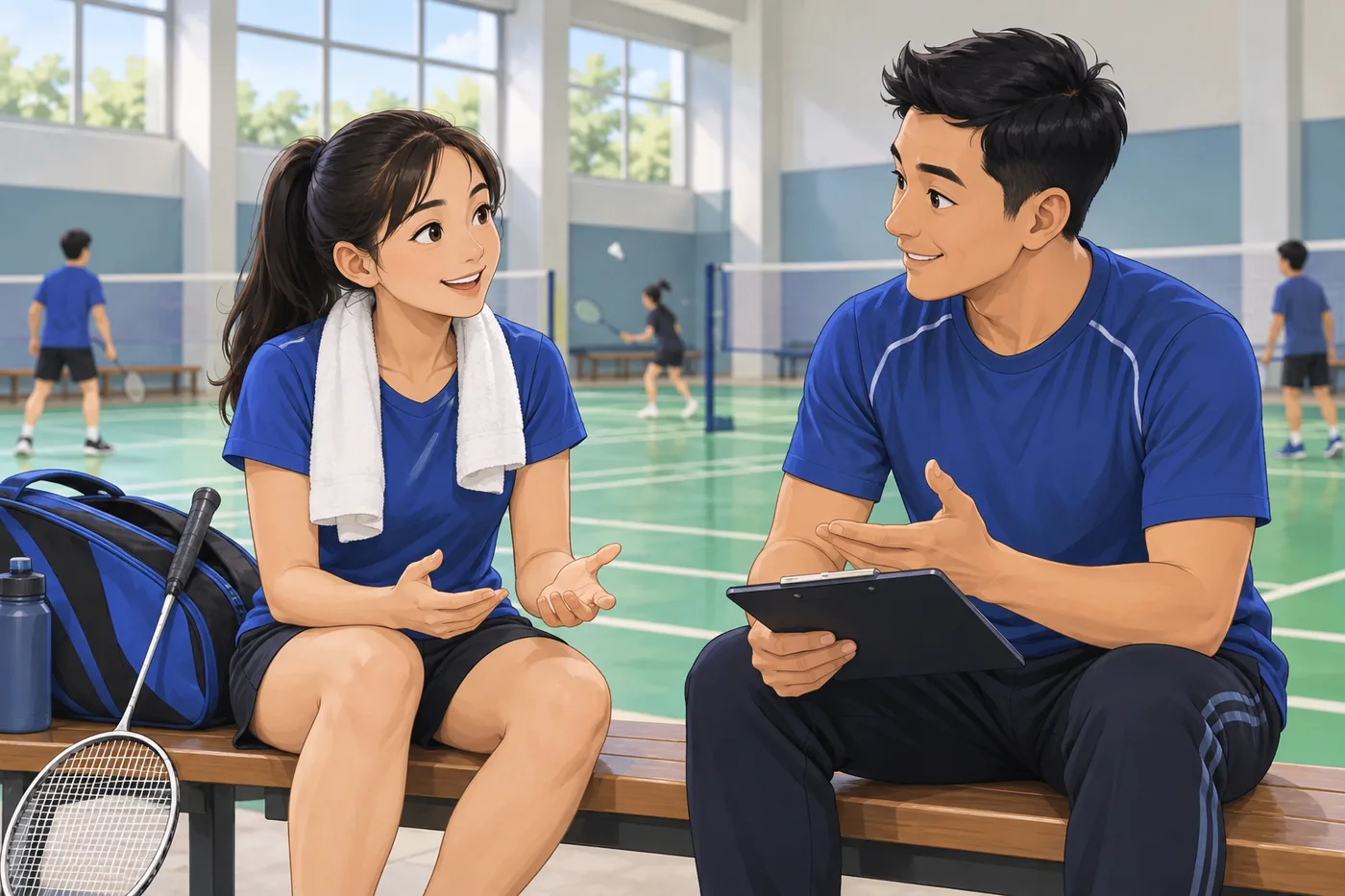
Badminton learning in Kuala Lumpur
Moving from Private Coaching to a Group Badminton Class
Moving into a group changes more than the number of players. Prepare for partner activities, shared instructions and a different feedback rhythm with this practical guide.
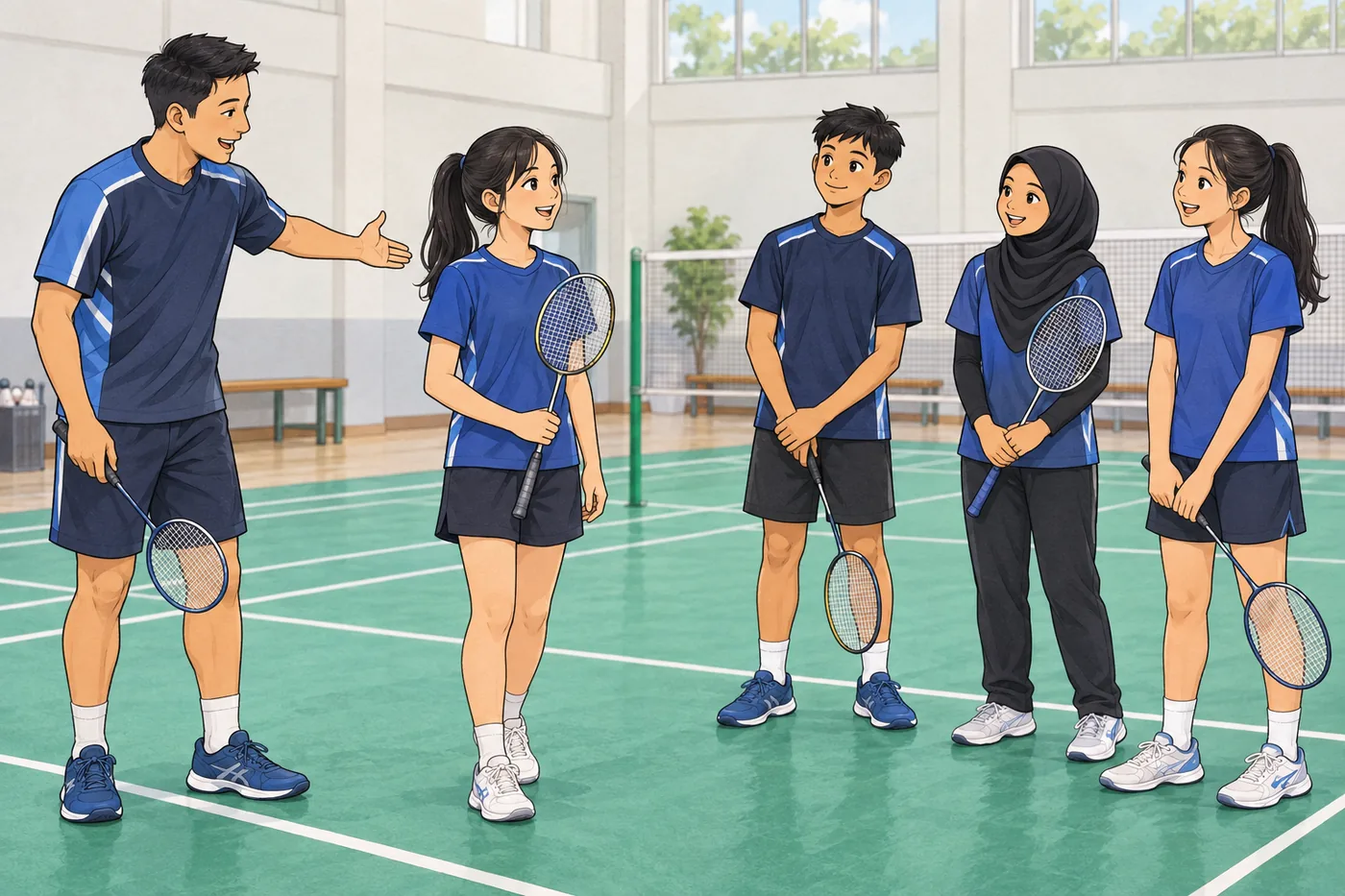
Moving from private badminton coaching to a group class can be a sensible change, but it should be based on the player’s needs and the actual group available. It is not automatically a promotion, a downgrade or evidence that private coaching has finished its job.
The important question is whether the player can take part meaningfully in the group’s activities with the support available. A player may be comfortable hitting with a coach yet unfamiliar with sharing instructions, practising with a changing partner or continuing a task while the coach helps someone else.
Before committing to a new arrangement, discuss those differences. This guide offers a transition plan for parents and players, including what to tell the coach, what to observe in the first sessions and when to adjust the plan.

Be clear about why you want to change
Start with the reason for the move. You might want more opportunities to practise with different players, a more suitable schedule or a training arrangement that fits your budget. Your child may simply want to take part alongside other children.
Each reason needs a slightly different conversation. If the main goal is partner practice, ask what partner activities the group actually uses. If scheduling is the issue, check the available class details directly rather than choosing a format that does not suit the player.
Do not describe group badminton training as something a child has to earn by becoming “good enough.” Nor should a return to private coaching be framed as a failure. These are different ways of organising a learning opportunity.
For example, Daniel has been taking private lessons and would like to play with other beginners. His parent can explain that aim to the group coach. The coach can then consider the available class, rather than assuming Daniel wants immediate competitive match play because he has already had individual instruction.
Separate playing ability from familiarity with group tasks
A player’s shot quality is only part of the transition. In a group, the player also needs to understand how the lesson works. Those routines can be taught; they should not be mistaken for fixed personality traits.
Ask whether the player understands a short demonstration, knows how to begin an activity and can ask when an instruction is unclear. Consider whether they can practise cooperatively with another beginner and stop when the coach calls the group together.
A child who looks confident in a private lesson may initially need reminders about turns or partner changes. A quiet player may understand everything but prefer to ask a question individually. Neither observation alone tells you that the class is unsuitable.
Discuss the level of support available rather than setting a universal entry standard. The useful question for the coach is, “Which parts of this class can the player already manage, and where would you need to help them join in?” An honest answer may include a recommendation to try a different group.

Give the new coach a short, useful handover
The group coach does not need a lengthy account of every lesson. A concise handover should describe the player’s experience, current learning focus and any relevant participation needs. If the player is old enough, involve them in deciding what to share.
- Experience: What kind of practice has the player actually done?
- Current target: What is the main action or decision being worked on?
- Comfortable tasks: What can the player usually manage without repeated prompting?
- Difficult situations: What changes when a partner or unpredictable return is introduced?
- Helpful explanations: What wording or demonstrations does the player understand?
- Relevant needs: Is there anything the coach should know to support safe participation?
Keep it factual. “She needs a demonstration before a new partner task” helps more than “She lacks confidence.” Share only information relevant to the lesson; a child’s private concerns do not need to become a group announcement.
Different coaches may use different terms. Ask them to clarify a change in explanation rather than leaving the player to reconcile two instructions alone.

Ask about the actual class, not the label
“Beginner group” or “intermediate class” can describe different arrangements. Find out how the coach introduces activities, chooses partners and adjusts a task when players need different levels of help.
Useful questions include whether the player can first observe, whether a trial or assessment is available, and how feedback is shared with parents. Do not assume any of these options are offered; confirm them directly.
Ask what a player is expected to do while the coach is working elsewhere in the group. An explained partner task is different from being left unsure what to practise. Also ask how the player should request help without interrupting every demonstration.
If you are comparing a beginner badminton class with your current arrangement, look at the available session rather than a general claim about group coaching. The relevant fit includes the task level, communication, schedule and the player’s willingness to participate. Price alone cannot describe those things.

Make the first sessions about joining the process
Set a modest initial purpose: understand the routine, take part in the activities and identify where help is needed. A first group lesson is not an occasion to prove that private coaching has made the player better than everyone else.
Before class, explain what you know and be honest about what you do not know. There may be a demonstration, partner practice and some waiting while instructions are given. Avoid promising a particular partner or activity unless the academy has confirmed it.
Afterwards, ask a few practical questions. “Did you know what to do?” and “Was there a time you wanted to ask for help?” are more informative than “Were you the best?” Let the player describe something they enjoyed too.
Daniel might report that the rally exercise was enjoyable but he became lost when the group changed partners. That is useful feedback. The next step could be asking the coach to clarify the changeover routine, rather than immediately concluding that Daniel is not ready for group training.
Review the transition using specific observations
Arrange an appropriate check-in with the coach. Avoid demanding a decision after one ordinary mistake or letting repeated confusion go unmentioned. A short review can distinguish unfamiliar routines from a more persistent mismatch.
| What you notice | What to ask before deciding |
|---|---|
| The player waits for individual instructions. | Did they understand the group demonstration and how to begin? |
| Partner practice breaks down quickly. | Is the task suitable for both players, and is its purpose clear? |
| The player rarely asks questions. | Do they know how and when to request help? |
| The player seems less successful than in private lessons. | Has the task become less predictable or more independent? |
| The player does not want to return. | What happened, and what change do they say would help? |
Include the coach’s observations and the player’s account. A parent watching from outside the court sees only part of the lesson. If the arrangement remains unsuitable, explore another class or format without treating the decision as a judgement of the player’s worth.

Decide whether to keep, combine or change the arrangement
Some players will prefer a group class, while others may still need or want individual attention for a particular task. There is no obligation to keep both formats, and more sessions are not automatically a better plan.
If you consider combining them, agree on the purpose of each. For example, a private session might address a specific difficulty identified during group play. Both coaches should understand the current focus where appropriate, so the player is not left with conflicting priorities.
Discuss affordability, travel and the rest of the player’s week as practical constraints. A plan that is difficult for the family to sustain deserves reconsideration, even if every individual session seems attractive.
Speak with the badminton coach about what can reasonably be provided in the available class. A suitable decision should be explainable in ordinary terms: what the player will practise, how they will receive help and when the arrangement will be reviewed.
Questions about this badminton training topic
Does a player need private coaching before joining a group class?
Not necessarily. Ask about the actual entry requirements and support in the available class. Do not assume private lessons are a compulsory first step for every beginner.
Why does my child seem less confident after moving into a group?
The routines, partners and level of independence may be unfamiliar. Ask your child what felt difficult and compare that with the coach’s observations before deciding what needs to change.
Should we stop private badminton lessons immediately?
Discuss the purpose of the change and the available schedule. There is no universal need to stop immediately or continue both; decide according to the player’s needs and practical circumstances.
What should I tell the group coach about previous lessons?
Share the player’s actual experience, current learning target and a few specific difficulties. Mention relevant participation needs, but avoid labels or unnecessary personal details.
How do I know whether the group class is a good fit?
Look for understandable tasks, appropriate support and meaningful participation. Ask the player about their experience and review specific concerns with the coach rather than judging only by game results.
Discuss your training
Considering a change to your badminton training in Kuala Lumpur? Contact ST Badminton Academy with the player’s current experience, reason for changing and preferred schedule. Ask which available class, if any, suits that starting point.