Badminton learning in Kuala Lumpur
Choosing a Badminton Academy When Your Child Is Quiet or Nervous
A quiet child does not need a personality makeover to learn badminton. Look for clear introductions, respectful feedback and a practical way to ask for help.
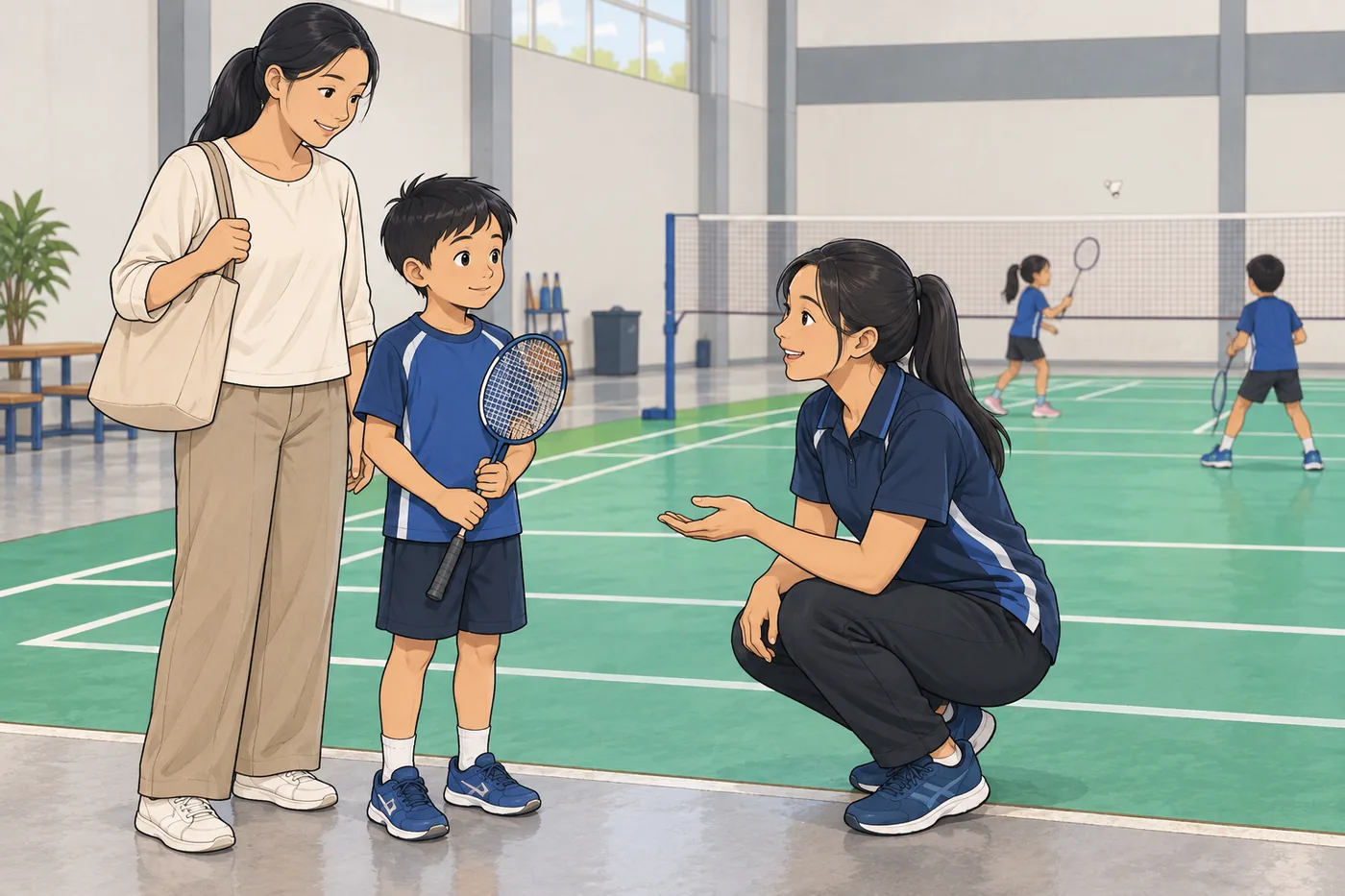
When your child is quiet or nervous about starting badminton, choose an academy by looking at how the actual class introduces activities, responds to questions and helps newcomers participate. Do not judge only by how outgoing the other children appear or how confidently an academy describes its programme.
A quiet child may be interested and attentive without wanting to speak in front of a group. Another child may be chatty at home but uncertain in an unfamiliar sports hall. Neither observation is a diagnosis or a reason to assume that badminton is unsuitable.
Your task is to understand what the child needs to begin and whether the available class can provide appropriate support. The following questions can help you have that conversation without promising that a badminton lesson will change your child’s personality or resolve worries outside sport.

Ask what feels unfamiliar before choosing a solution
“I don’t want to go” can refer to very different concerns. Your child might not know anyone, be unsure how to use a racket or worry about being asked a question in front of others. They may also simply not be interested in the activity.
Ask at a calm time, without presenting the conversation as a test. “What would you want to know before we visit?” lets the child identify something concrete. If they cannot explain yet, offer a small number of possibilities without insisting that one must be correct.
For example, Hana wants to try badminton but says she does not want everyone watching her. Her parent can ask the academy how new players are introduced. That is a more useful first step than telling Hana she must stop being shy.
Avoid making promises you cannot control. You may not know who will attend, whether a friend can join or what the first activity will be. Write down those questions and get the actual information before describing the visit to your child.
Look for a clear welcome and understandable instructions
The first few interactions can tell you how a class communicates. Is it clear where to meet, who is leading the lesson and what the child should do first? Does the coach explain unfamiliar activities rather than assume every newcomer knows the routine?
A useful introduction does not have to be elaborate. The child needs enough information to join the activity and know whom to ask for help. A coach might demonstrate the task, identify a starting place and check that the player understands what happens next.
Ask what happens if a child does not answer a question immediately. Can the coach show the action, offer a simple choice or speak with the child individually at a suitable moment? You are looking for an understandable process, not a promise of continuous individual attention in a group.
When asking about beginner badminton classes, describe your child’s previous experience honestly. “She has not been in a coached sports class before” gives the coach useful context without turning quietness into a problem to be corrected.

Notice the quality of feedback, not the volume of praise
Watch how the coach responds when a player misses a shuttle or misunderstands a drill. Useful feedback refers to the task and gives the child something manageable to try. It does not need to be delivered loudly or accompanied by constant praise.
“Let me show you where to start” provides information. Publicly labelling a child lazy, weak or difficult does not explain the next action. Ask how mistakes are handled and whether children can request a repeat demonstration without being embarrassed.
Also listen to how progress is described. A child who starts a partner activity independently has done something worth noticing, even if they are still quiet. Being the loudest player should not become an unofficial measure of commitment.
For Hana, a helpful review might be, “You understood the first activity and asked where to stand for the next one.” That observation is specific. “You finally stopped being shy” makes a broader judgement and shifts the focus away from what she actually did.

Ask how partner activities and group changes are handled
Practising with another child can be enjoyable, but the arrangement needs to make sense. Ask how partners are selected, how tasks are explained and what a child should do when a pair is struggling.
A newcomer may be unsure whether they are supposed to rally cooperatively, take turns feeding or play a point. If their partner has a different understanding, the activity can feel difficult for reasons unrelated to shot technique.
Find out how the coach handles disagreements or unkind behaviour. You do not need a guarantee that children will never disagree. You do need to know who they can approach and how the class responds when someone needs help.
If your child would prefer to attend with a friend, ask whether that is possible, but do not make it the only route to participation. A friend may have a different schedule or be placed in another activity. Confirm any arrangement before telling the child what will happen.

Prepare for a first visit without scripting a perfect performance
Check the practical details directly with the academy. Is an observation visit, assessment or trial available? What should the child bring? Where should a parent wait? These options and requirements vary, so do not assume they are included.
Once the arrangement is confirmed, explain it simply. You can tell the child who they will meet, roughly how the visit is organised and how to let an adult know they need help. Avoid making a first visit into an audition for a long-term sporting future.
- Confirm the venue, arrival instructions and session details.
- Ask which equipment and clothing are needed.
- Explain what is known about the first activity.
- Agree on a simple way for the child to request help.
- Clarify the parent’s role and waiting area.
- Leave room afterwards for the child’s own account.
Do not rehearse every possible mistake. Prepare the essentials, then allow the lesson to be a real experience. If you record photographs or video, obtain the relevant permission and respect other children’s privacy.
Review participation, comfort and understanding separately
After the visit, avoid asking only whether your child was “brave.” Ask what they did, what they understood and what they would want help with next time. A child can enjoy an activity while still finding parts unfamiliar.
| What to review | A question you can ask |
|---|---|
| Understanding | Was there an activity where you did not know what to do? |
| Getting help | Did you know how to ask the coach a question? |
| Partner experience | What was it like practising with your partner? |
| Interest | Was there a part you would like to try again? |
| Next visit | What would you want us to explain or ask beforehand? |
Share specific concerns with the coach at an appropriate time. “He did not know how to join after the partner change” is something that can be clarified. The coach may have observed a different part of the lesson, so listen to both accounts before deciding.
Do not require a child to appear cheerful or talkative before their experience counts as positive. Equally, do not dismiss a clear account of being treated unkindly as something they must simply endure.

Choose the fit, not a promise to make your child confident
A badminton academy can explain its coaching arrangements and how it helps children participate. It cannot responsibly promise a particular personality change, competitive result or deadline for feeling comfortable.
Look for a badminton coach who listens to relevant information, explains the class honestly and recognises when another arrangement may be more suitable. Continuous private support may not be available within a group session; it is better to discuss that openly than assume it will be.
If your child wants to continue, agree on what you will review next. If the class is not a good fit, consider a different session or approach without describing the child as a failure. Persistent or significant concerns beyond the badminton lesson deserve appropriate support rather than being treated as a coaching problem.
The aim is a workable opportunity to learn and take part. Your child can remain a quiet person while asking useful questions, practising with a partner and enjoying badminton.
Questions about this badminton training topic
Is badminton suitable for a quiet child?
Quietness alone does not decide whether a class is suitable. Consider the child’s interest, the activity level and how the coach explains tasks and supports participation in the available session.
Should I tell the coach that my child feels nervous?
Share relevant, specific information privately. Explain what your child has said or found difficult rather than using a label, and ask how the coach would introduce the class.
Should a nervous child start with private lessons?
Not automatically. Discuss what support is needed and what the available group provides. A private lesson is one possible arrangement, not a universal requirement for a quiet newcomer.
Can I stay next to my child during badminton training?
Confirm the academy’s arrangements before attending. Ask where parents can wait and how your child should request help; do not assume you can remain on court throughout the lesson.
What if my child does not want another lesson?
Ask what happened and listen without turning the answer into a judgement. Clarify specific concerns with the coach, then decide together whether an adjustment, another arrangement or stopping is appropriate.
Discuss your training
If you are exploring children’s badminton training in Kuala Lumpur, contact ST Badminton Academy with your child’s playing experience and any practical questions about joining. Ask about the available class and how a newcomer would be introduced before committing.