The Best Badminton Ankle Braces For Injury Prevention And Support (Ankle Brace Guide)
Almost every badminton player knows the sound and the feeling: a lunge that lands wrong, the ankle rolls, and the session ends early. Weeks later comes the harder question. How do you go back without doing it again? An ankle brace is one tool for that road, and this guide treats it honestly. A brace supports an ankle and helps it feel steadier. It does not heal ligaments, it does not promise you will never sprain again, and it cannot do the work of balance and strength training. Used inside a sensible return plan, though, it earns its place in many kit bags.
Ankle Check #1
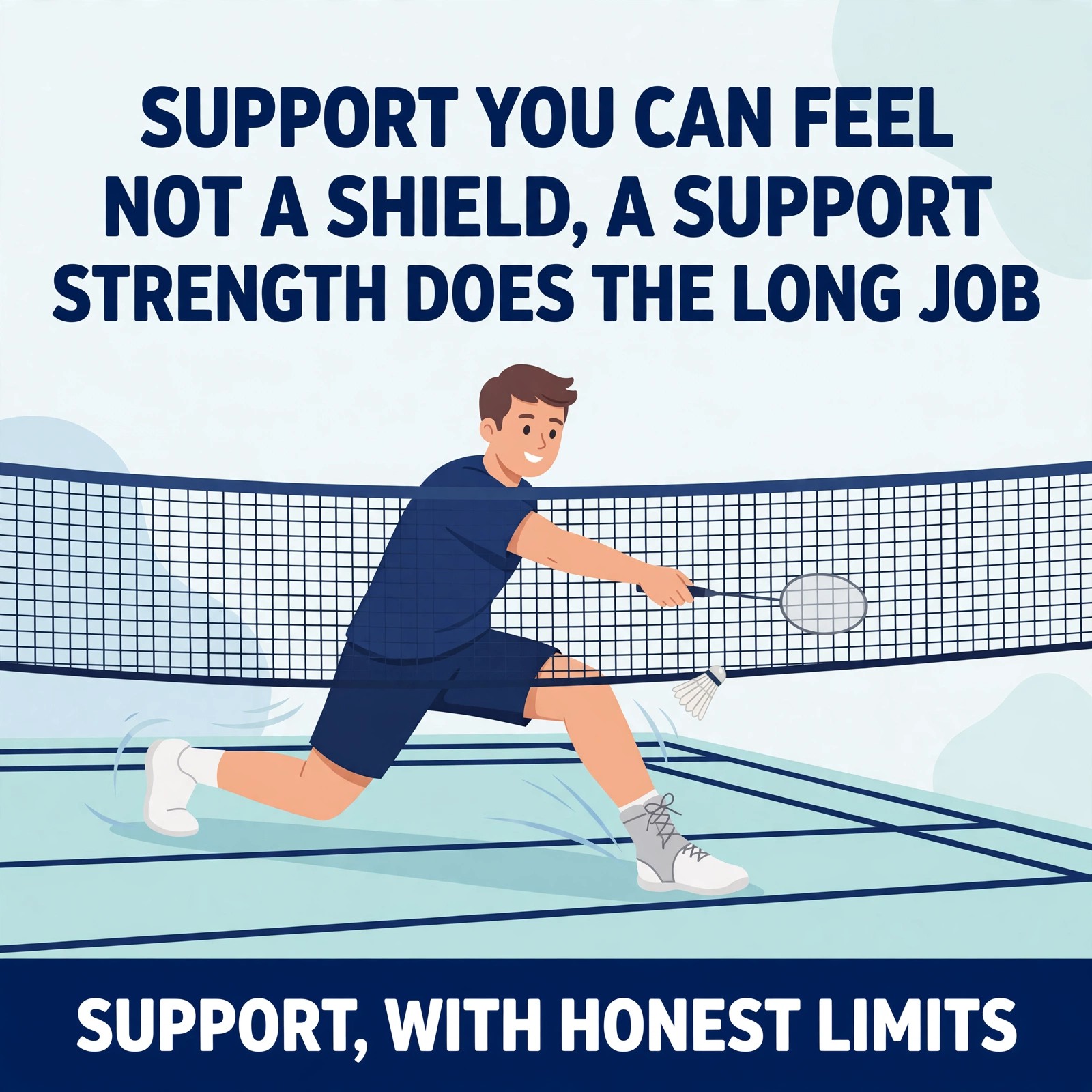
What an Ankle Brace Does: Support You Can Feel
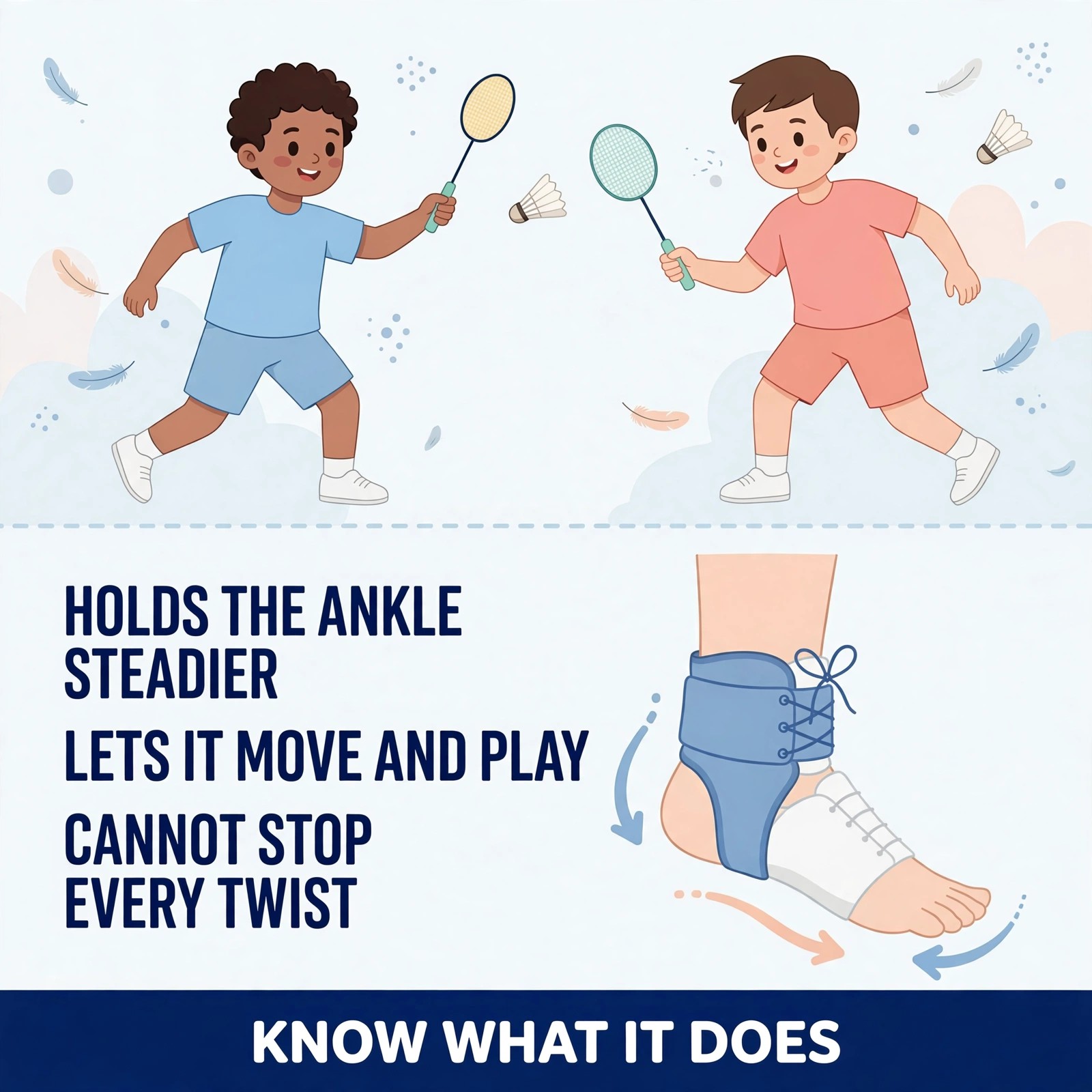
A brace wraps the ankle in firm fabric, with laces or straps that pull it snug. That wrap does two things. It limits how far the joint can roll sideways, so a small wobble is stopped earlier. And it presses gently on the skin and joint, which gives your body clearer feedback about where the ankle is in space. Players describe the result simply: the ankle feels held, steadier, less likely to surprise them. That steady feeling matters most on tired legs late in a game, when landings get sloppy.
Now the honest limits, because they matter more than the sales talk. A brace cannot stop a hard roll at speed, and it cannot hold an ankle against your full body weight falling badly. It does not repair a sprain, speed up healing, or remove pain that has a cause. The biggest trap is the feeling itself: a supported ankle can make a player bold before the joint is ready, skipping the slow stages and the strength work. A brace is a support on the road back, never the road itself.
Ankle Check #2
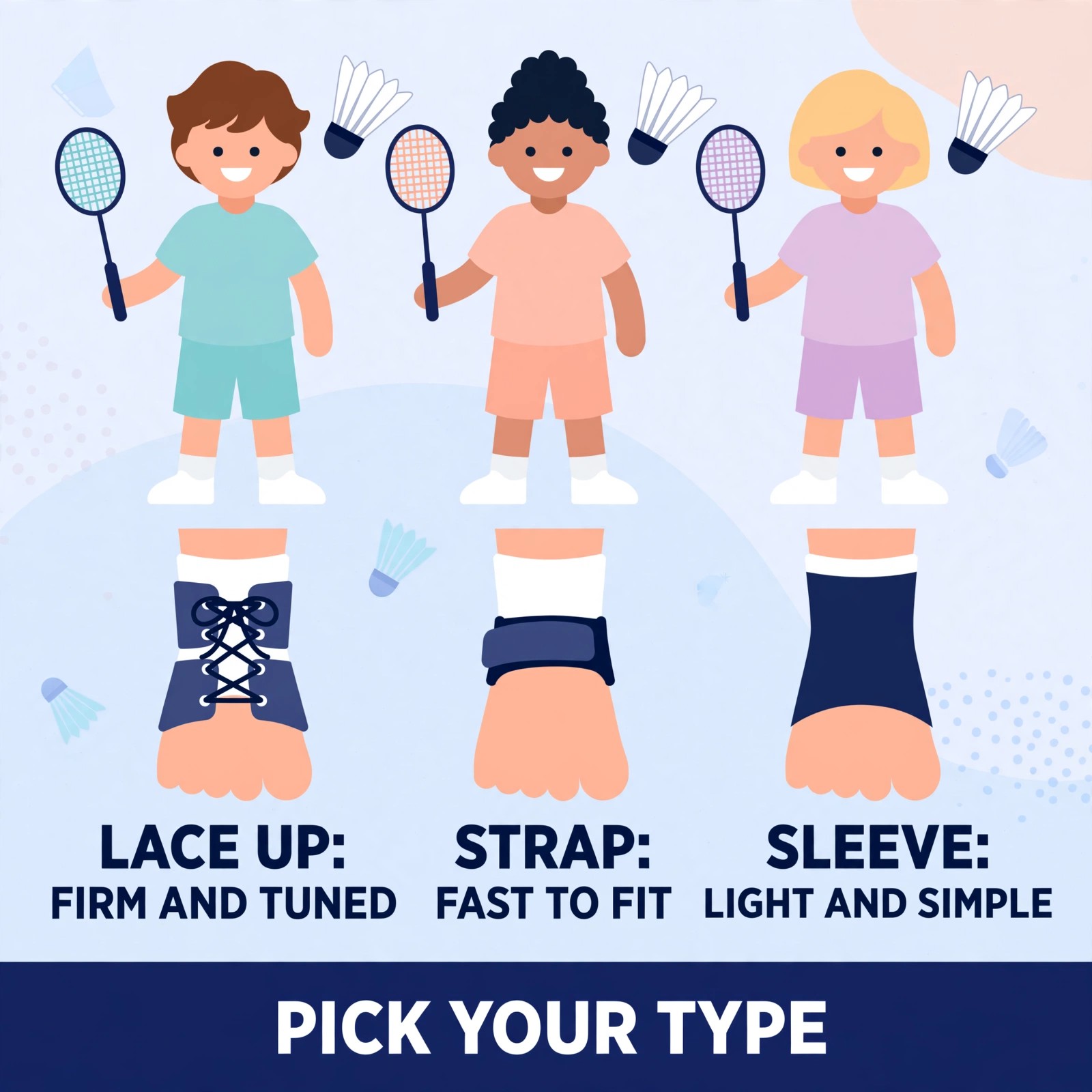
Lace Up or Strap: The Two Main Types
The lace up brace is the firmest common type. It wraps the ankle like a low boot, with criss cross laces down the front and often extra straps over the top. Because the laces adjust point by point, it gives the closest, most tunable fit, which is why physios often suggest it for the earlier stages of a return. The costs are time and bulk: it takes a minute or two to put on well, and it adds volume inside your shoe, so shoe fit needs checking with the brace on.
The strap brace is the simpler option: a lighter wrap closed by one or two wide fastening straps. It goes on in seconds, adjusts fast between games, and feels less bulky, but the support is a step lighter and less finely tuned than a lace up. Then there is the plain pull on sleeve, which offers a gentle squeeze and warmth rather than real holding support. None of these is best for everyone. The right type depends on your stage: firmer support early in a return, lighter support later, always guided by the advice you were given.
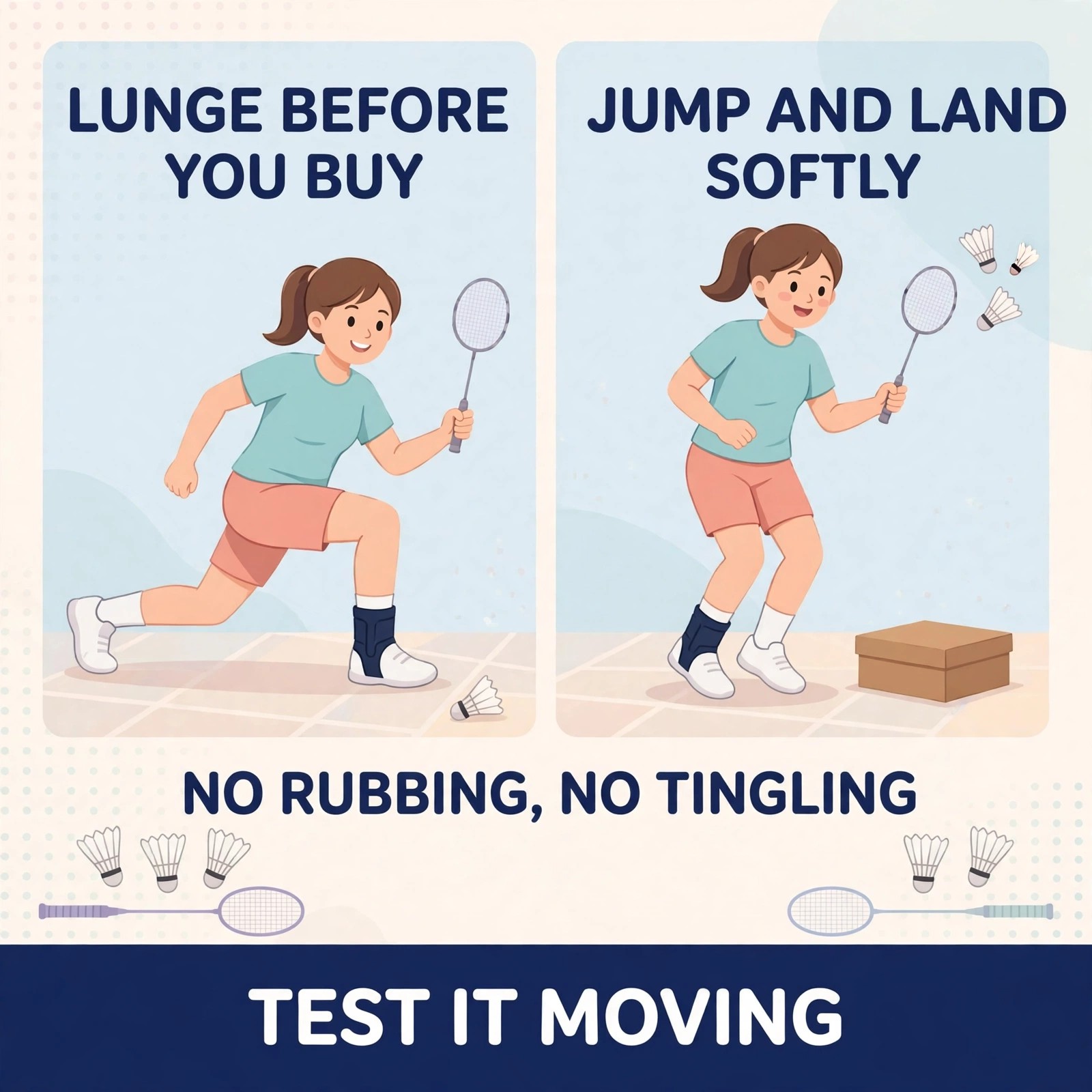
Whichever type you choose, fit decides whether it works. Wear the brace over a sock, snug and even, with the heel sitting locked into the back of it. Take your actual court shoes when you buy, because a brace changes the fit inside the shoe, and a shoe that turns tight will rub within one session. Your toes must keep full feeling, and the top edge should not dig in when you lunge. Test the whole thing moving: lunge low, jump, and land softly before you pay. A brace that only feels fine standing still tells you very little.
Ankle Check #3
Coming Back From a Sprain: Brace With a Plan
Coming back from a sprain goes best in stages, and the brace belongs inside that plan. The first stage is not on a court at all: get the ankle checked by a doctor or physio, especially if you could not bear weight, the swelling was large, or it keeps happening. From there a usual road runs through walking well, gentle movement drills, shadow footwork, controlled hitting, and only then full games. Many players wear the brace through the middle stages, where support and confidence are both still building. Your physio plan leads; the brace follows.
Pain and swelling are the feedback that keeps a return honest. A stage that suits your ankle leaves it calm the next day. Swelling that shows up the morning after, or pain that lingers into the next session, usually means the stage was too big, and the right move is a step back, not a tighter brace. This is where a short log earns its keep: note the stage you tried, and how the ankle felt during and after. Patterns show up on paper that memory smooths over, and your physio will thank you for real notes.
There is no fixed week when the brace comes off for good. As balance and strength return, many players find they need the support less: first dropping it for gentle drills, then keeping it only for full matches, then leaving it in the bag. Others, with an ankle that has rolled several times, keep wearing one for games as a long term habit, on their physio advice. Both roads are normal. What matters is that the decision follows the ankle in front of you, not a calendar, a teammate routine, or a guess.

Ankle Check #4
Balance and Strength: The Long Job
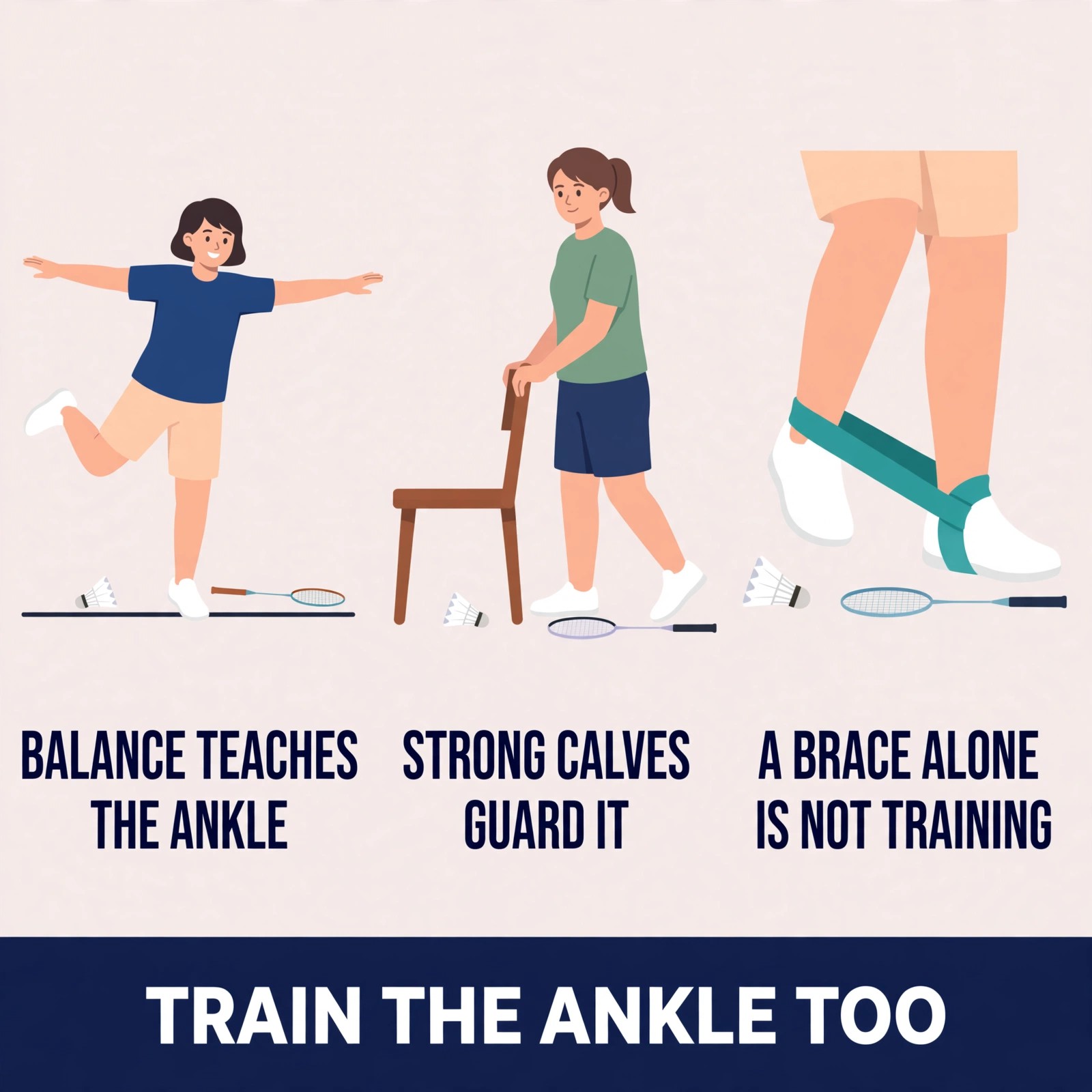
If the brace is the short term support, balance work is the long term guard. A sprain can dull the ankle sense of position, so it reacts a fraction late to a bad landing. Simple drills rebuild that sense: stand on one leg on a line, eyes ahead, knee soft, and hold your balance calmly. Start near a wall or chair, keep the holds short and clean, and train both sides. This looks too easy to matter, which is why players skip it, yet it is the work most likely to protect you next season.
Strength does the other half of the long job. Slow heel raises build the calves that absorb your landings. A loop band around the ankles, with small sideways steps, builds the muscles that steady the joint from above. None of this needs a gym or heavy equipment, and ten honest minutes a few times a week beats an occasional hard session. Strong, well trained legs land softer and recover faster from small mistakes. A brace can support an ankle; only training can make the ankle, and the legs around it, harder to hurt.
Landing habits tie the training together on court. Land soft, with the knee bending and tracking over the toes, rather than stiff legged with the knee caving inward. In our classes, coaches watch landings during footwork drills and correct them early, because a brace cannot fix a landing pattern that loads the ankle badly every repetition. The full picture is simple to say and slow to build: support for today, balance and strength for the season, and landing habits that stop asking the ankle to save you.
Ankle Check #5
Red Flags: When a Brace Is Not Enough
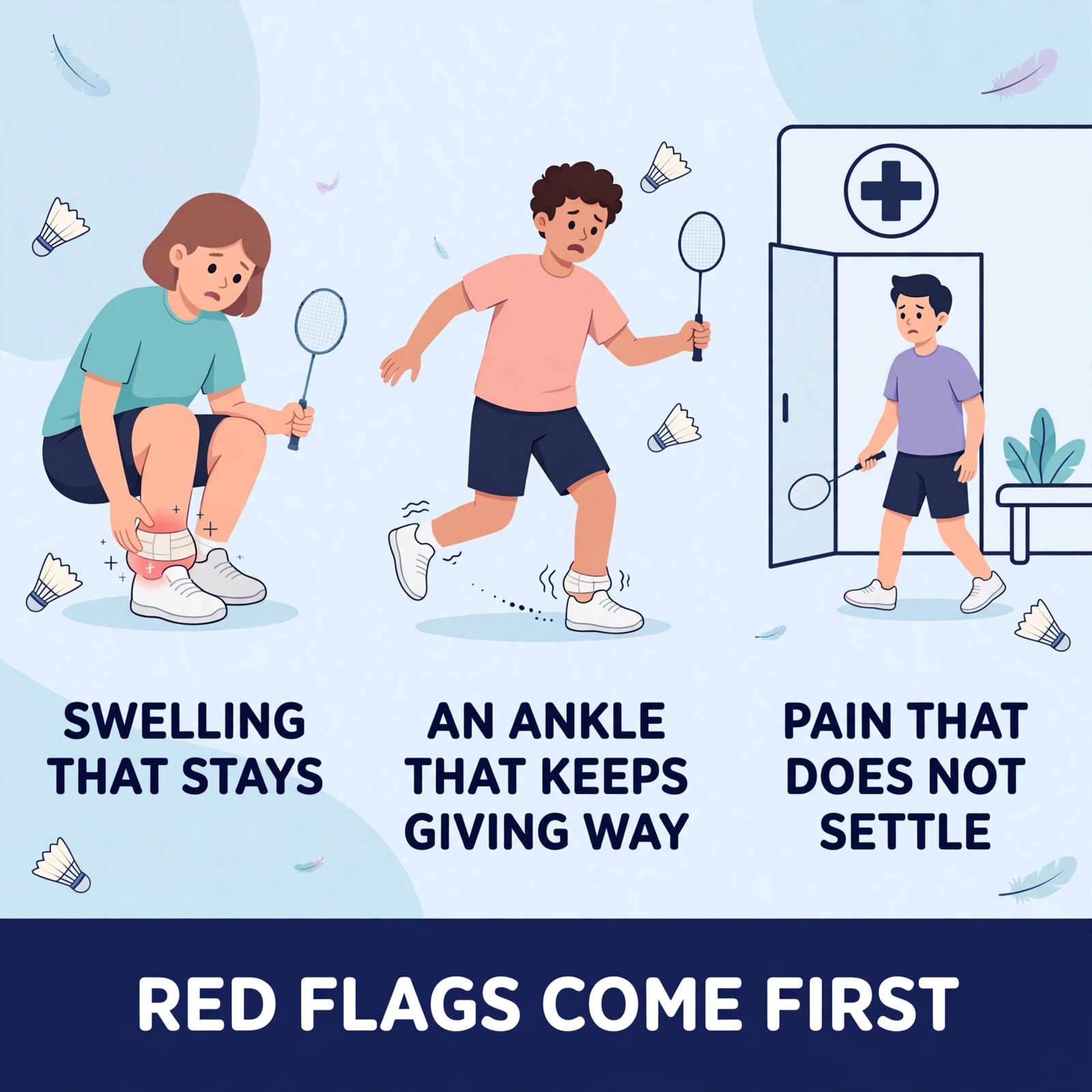
Some signs mean the brace is not the answer and the ankle needs a professional look. Swelling that stays for days rather than easing. An ankle that keeps giving way under you, on court or on flat ground. Pain that does not settle with rest. Trouble bearing weight. Numbness or strange feelings in the foot. Any of these deserves a doctor or physio visit before more badminton, not a firmer brace and another attempt. Playing through warning signs is how a sprain turns into a long layoff.
Repeated sprains on the same ankle deserve special respect. Each roll can leave the ligaments a little looser and the joint a little less sure of itself, so the next one comes easier. A brace worn over an ankle like that may hide the problem while it grows. A proper assessment can check stability, set a real strengthening plan, and say plainly whether a brace, a different support, or more time is the right call. That visit is not lost training time. It is the step that protects all the training after it.
When in doubt, rest and get checked. Missing one week of social games is a small price next to missing a whole season. Think of the brace as equipment for a supported return: it has a stage where it helps, and signs that say the stage is not yet, or not any more. Players who respect those signs come back once and stay back. Players who argue with them tend to meet the same injury again, usually at a worse moment, and with a longer road home.
Myth vs Reality
Myths About Ankle Braces
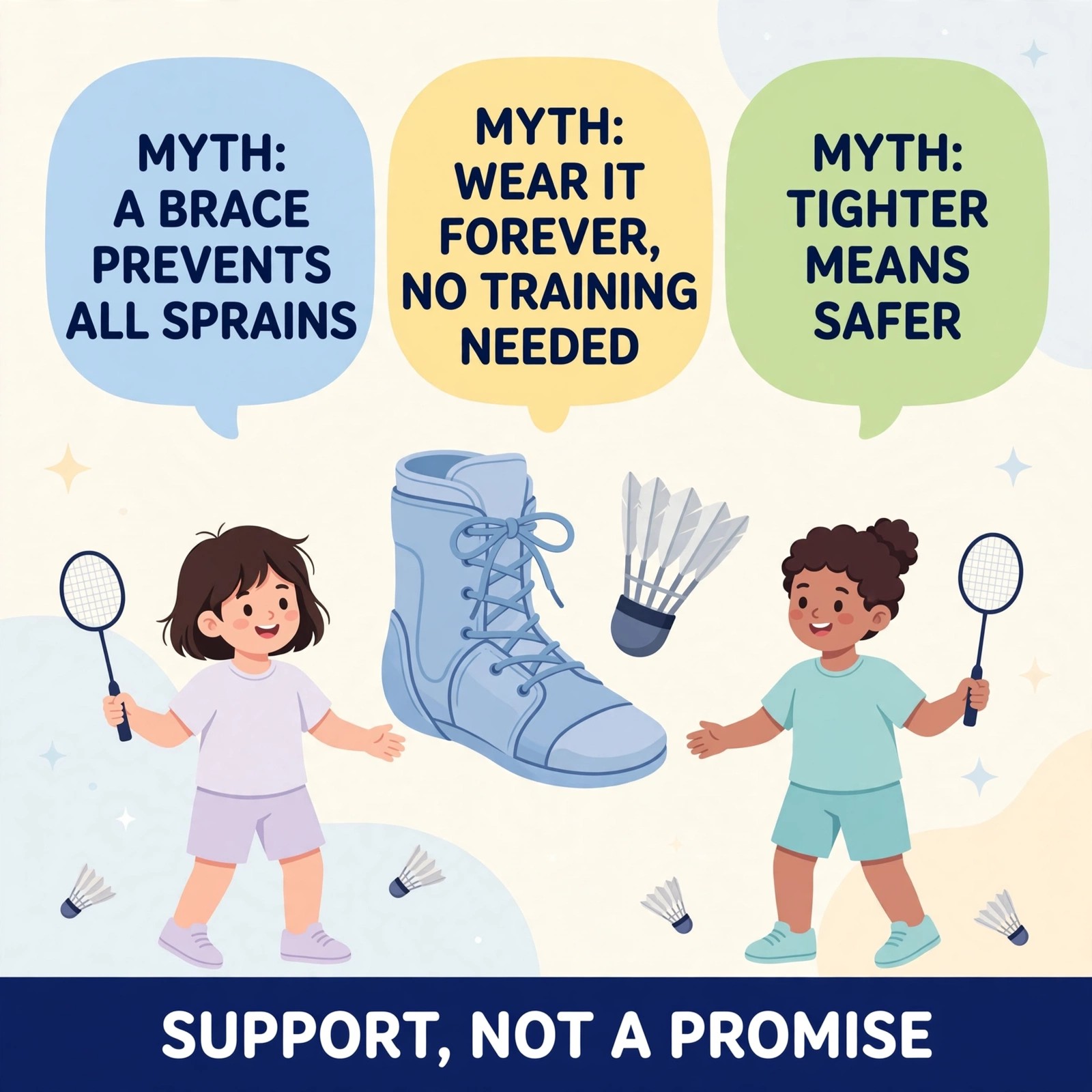
Myth one: a brace prevents all sprains. It does not, and any seller promising that is selling, not informing. A brace supports the ankle and limits how far it rolls, which can lower the risk and soften small mistakes. A hard landing at speed can still sprain a braced ankle, which is why the return stages, balance work, and landing habits in this guide matter as much as the brace itself. Treat the brace as one layer of a plan, and it will serve you well.
Myth two: wear it forever and skip the training. Fabric cannot build strength, and an ankle guarded only by a brace stays as weak as the day it was hurt. The support can even hide that weakness, feeling safe while the muscles and balance that truly guard the joint go untrained. The honest pattern is the opposite: brace for support while you return, balance and strength work to guard you long term, and less reliance on the brace as the ankle proves itself again.
Myth three: tighter means safer. A brace done up too tight cuts feeling and blood flow, and numb toes cannot sense the floor or react in time. Straps pulled to the limit also chew at the skin and make players loosen everything mid game, ending with worse support than a calm, even fit. The target is snug, even pressure with full feeling in the foot, tested while moving. If your foot tingles, throbs, or changes colour, the brace is too tight, whatever the size chart says.
Why Choose Us
Why Players Choose ST Badminton Academy
At ST Badminton Academy, coaches are coaches, not doctors, and we keep that line clear. When a student tells us about an ankle problem, we ask what their doctor or physio has said, and we coach inside that plan. If a student has not been checked and the story sounds like a red flag, we say so plainly and suggest the visit comes first. Once a plan exists, the brace, the stage, and the training load are all set to respect it. Honest limits, from us as much as from any brace.
Small groups make that respect practical. With a maximum of four students in a class, a coach sees every landing a returning student makes. A drill can be slowed, a movement swapped for a gentler one, or a student rested for a round without holding up a whole hall. The coach can also watch the return stages in real play, not just hear about them: is the ankle calm at this load, is the balance work showing, is the brace fitted and moving well? That watching is hard to offer in big groups.
We teach three habits around ankle support. First, follow the stage plan you were given, and let pain and swelling, not pride, set the pace. Second, do the balance work on off days, short and often, because that is the long guard. Third, log the return honestly: stage tried, swelling, pain, and how the ankle feels the next day. Around those habits sit simple kit checks: brace washed, straps sound, shoes taken to any brace fitting. Students who keep these habits tend to come back once, and stay back.
FAQs: Badminton Ankle Braces, Sprain Returns and Red Flags in Malaysia (KL)
Ankle brace questions usually come down to honest limits, the right type, and the road back after a sprain, so the answers below cover what a brace can and cannot do, how to choose and fit one, and how our coaches handle a returning student.
Can an ankle brace help me get back to badminton after a sprain if I live in Setapak or Gombak?
Yes, as one part of a staged return. Get the ankle checked by a doctor or physio first, then build back through gentle drills and controlled hitting before full games. Many players wear a brace through those middle stages, and our coaches adjust the load to your stage and watch your landings throughout.
Will wearing an ankle brace stop me spraining my ankle again in KL?
No brace can promise that. A well fitted brace supports the ankle and limits how far it rolls, which can lower the risk and help small mistakes stay small, in KL or anywhere. A hard landing can still sprain a braced ankle. The long protection comes from balance work, leg strength, and sound landing habits.
Should I wear an ankle brace for every badminton session, or only while I build back to full level?
For most players it is a return phase tool. It earns its place while you rebuild, supporting drills and early games while balance and strength work catch up. As the ankle proves itself, many players use it less, perhaps keeping it for full matches only. Your stages, your swelling notes, and your physio advice decide together.
Is a lace up brace always better than a strap brace, or does the right choice depend on the ankle?
It depends on the ankle and the stage. A lace up brace gives the firmest, most adjustable support, suiting earlier return stages and ankles that have rolled before. A strap brace is quicker and lighter, suiting later stages or mild support. If you are returning from a sprain, ask your physio which type fits your stage before buying.
What should I check before buying an ankle brace for badminton classes?
Check the type against your stage: lace up for firmer support, strap for lighter, faster fitting. Check the fit with your court shoes on, since the brace changes how the shoe feels. The heel should sit locked, pressure even, and your toes keep full feeling. Lunge and jump a little in the shop before paying.
Do you offer badminton coaching that works around an ankle problem near Wangsa Maju?
Yes. Our base is in Setapak, near Wangsa Maju, and students train with us at many stages of recovery. Tell the coach about your ankle and any physio plan before the session. Drills can be scaled, movements swapped, and rest rounds built in. We do not diagnose or clear anyone to play; that call belongs to your physio.
Does ST Badminton Academy help students return to play safely after injury in Malaysia?
Yes, inside clear limits. Coaches respect the return stages you were given, watch your landings during drills, build balance work into training, and rest you when the ankle complains. What we never do is diagnose an injury or promise that a brace, or any training, will prevent the next one. Medical checks come first.
How long should I keep wearing an ankle brace after a sprain, through my return to regular training?
There is no honest fixed number, because sprains differ. Many players wear a brace through the return stages and the first run of full games, then reduce it as balance and strength return. Swelling that stays, an ankle that keeps giving way, or pain that does not settle means hold your stage and check back with your physio.
How do the coaches at ST Badminton Academy help students return from an ankle sprain to badminton?
The coaches ask about your check and your physio plan first, then coach inside it. In class they watch your landings, scale footwork load to your stage, build short balance work into the session, and stop a drill if your ankle complains. The aim is a return built in stages, so you come back once and stay back.
Badminton Ankle Braces and Safe Returns in Action


One Standard for Every Ankle and Every Return
One standard runs through every answer we give about ankle braces: support, honestly described. A brace helps an ankle feel steadier on the way back from a sprain. It is not a shield, not a treatment, and not a promise. Strength, balance, sound landings, and good professional advice do the long job, and we would rather tell you that plainly than sell you false confidence. Kit chosen and used inside that honesty will serve you far longer.
| Factor | Support With a Plan | Brace and Hope ANKLE |
|---|---|---|
| Frequency | 1 or 2 times a week. Mostly for fun and sweat. | Strapping up and playing through pain and swelling. |
| Drills Focus | Basic static feeding. Minimal footwork pressure. | Getting checked, returning in stages, bracing inside the plan. |
| Physical Conditioning | Rarely included. Just playing games on court. | Core, agility, and speed training included in every session to prevent injury and build stamina. |
| Tactical Awareness | "Just hit it over." No real game plan. | Video analysis, point construction, and learning to read the opponent's game. |
| Coach Ratio | Large groups (8-10 kids). Coach barely watches you. | Max 4 students. Mr Eric Chuar personally corrects every stroke and movement detail. |
| Goal Setting | Fun and exercise. | Skipping balance work because the ankle feels held. |
| Long Term Result | Good recreational player. | A player who comes back once, stronger, and stays back. |
Badminton Coaching and Honest Support Advice in Kuala Lumpur
An ankle brace is a good servant and a poor master. Let it support the ankle while you do the real work: get checked, return in stages, train balance and strength, land softly, and watch the red flags without arguing with them. Chosen by type and stage, fitted moving, washed and checked like any kit, it can make the road back feel steadier. Just remember which parts of that road are fabric, and which parts are you. The fabric helps. The rest is the training, and that is good news, because training is yours to do.






