The Best Badminton Accessories For Enhancing Your Game (Accessory Guide)
Let us start with the honest line that shapes this whole guide: no accessory enhances your game by itself. A grip cannot fix a backhand, a towel cannot win a rally, and nothing in a kit bag adds skill you have not trained. So why write about accessories at all? Because the small ones do two real jobs: comfort and order. A fresh grip keeps your hand honest, a towel keeps sweat off your face, a tube keeps your shuttles alive. This roundup covers the small kit that earns its space, and the gadgets that promise too much and can stay in the shop.
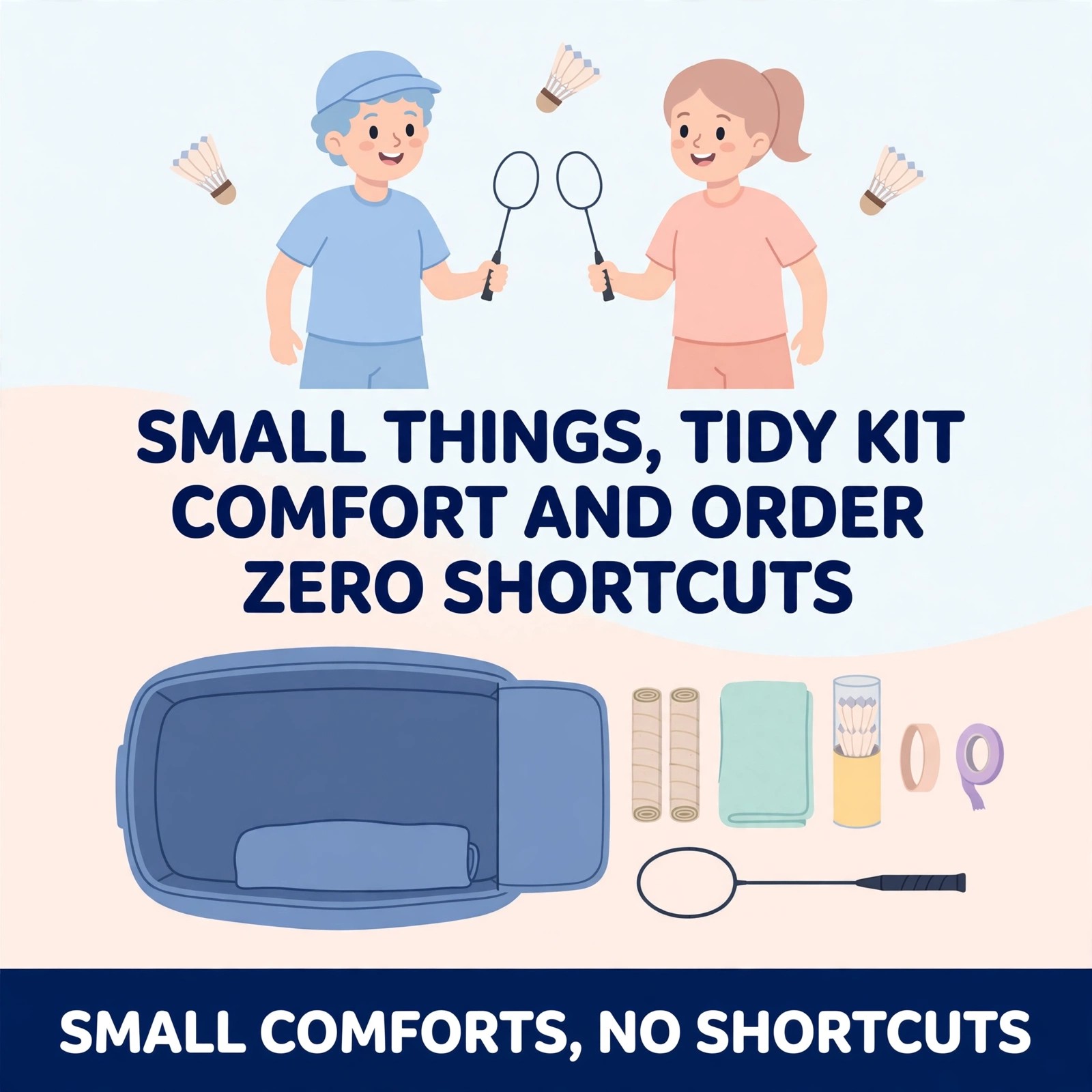
Kit Check #1
Start With the Grip: Overgrips and Spare Grips
Start with the accessory you touch on every single shot: the grip. An overgrip is a thin wrap that goes over the racket base grip, and it is the part your palm actually feels. When it is fresh, the feel is true and a light hold is enough. As weeks pass it turns smooth, then shiny, and the handle starts to twist on off centre hits, so you squeeze harder and your touch shots stiffen. Of every item in this guide, the humble overgrip has the most honest claim on your attention, because it wears out fastest and matters on every rally.
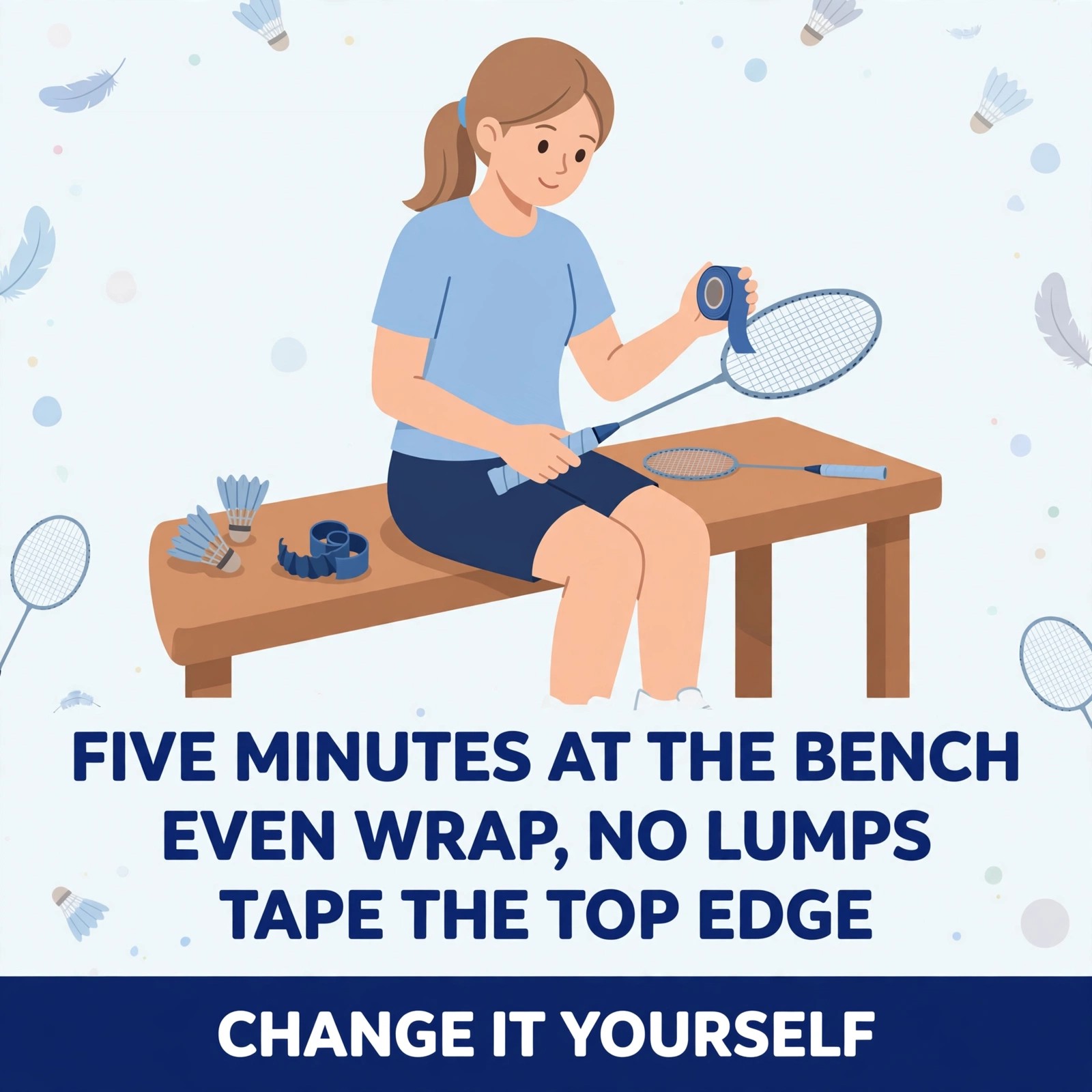
The fix is cheap and quick: keep spare overgrips in the bag. Changing one takes a few minutes at the bench. Peel the old wrap away, wind the new one on in even overlapping turns with no lumps, and finish the top edge with its tape. Towelling grips feel thirsty and suit sweaty hands; smooth synthetic grips feel thinner and crisper. Neither is better for everyone, so pick by your own palm. The sign to change is simple: shine. Once a grip shines under the hall lights, its best days are behind it, whatever the calendar says.
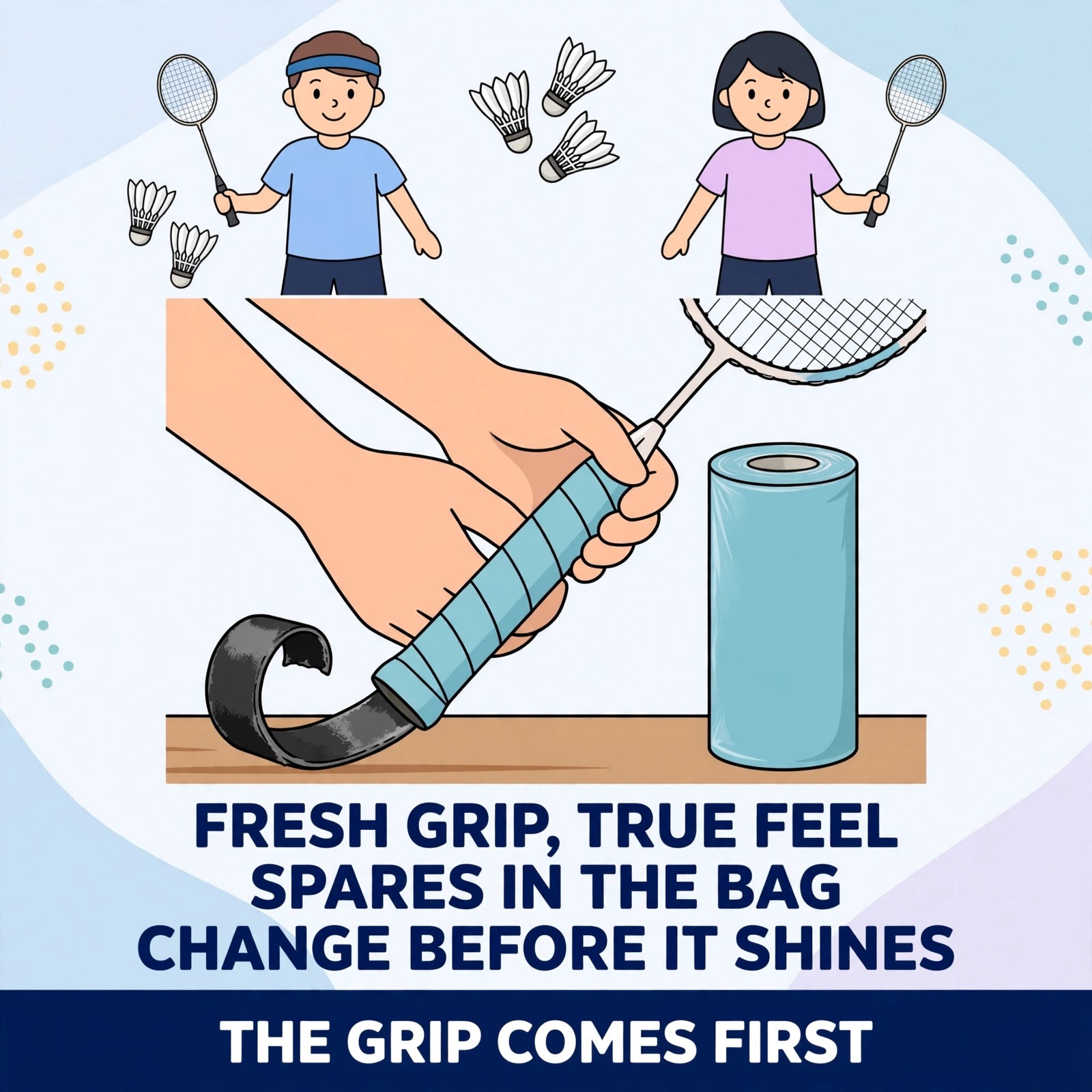
Kit Check #2
Towel, Wristband and Grip Powder: The Sweat Kit
The towel is the hardest working cloth in badminton. It dries your face, your neck, and your hands at every break, and in a warm hall it earns that work within the first game. Beside it sits the wristband, worn at the wrist on your racket arm, where it slows sweat running down toward your palm and doubles as a quick forehead wipe between rallies. Players who sweat heavily sometimes pair a wristband with an arm band worn higher up. None of this is glamorous. All of it is used every session, which is the test that matters.
Grip powder is the one item in the sweat kit where we stay neutral, because players honestly divide on it. Some dust a little on the palm before a match and like the dry, chalky feel. Others find a towel and a fresh grip do the whole job, and that too much powder cakes onto the handle and feels worse than the sweat did. Our advice is plain: towel first, grip in good condition second, and powder only if you have tried it and like it. It is a personal choice, not a must, and certainly not magic dust.
Put together, the sweat kit is a small system: towel at every break, wristband slowing the flow, a grip changed before it shines, and powder only for those who like it. Add a spare dry shirt for after the session and you have covered nearly every comfort complaint players raise in hot halls, for very little money and almost no bag weight. That is the pattern to look for in accessories generally: light, cheap, touched every session, and boring in the best way. If an item fails that pattern, it has to argue hard for its space.
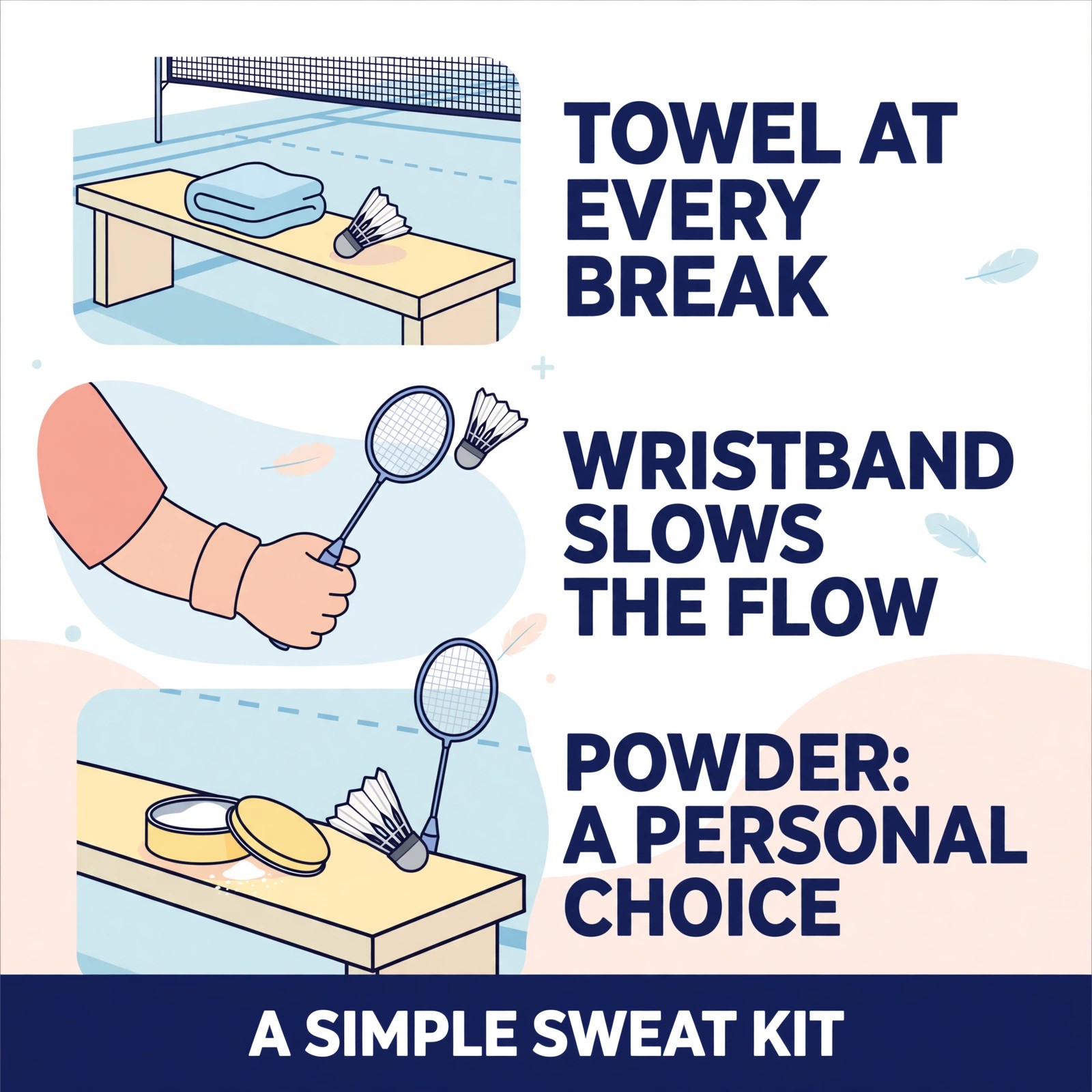
Kit Check #3
The Shuttle Tube: Small Box, Real Order
A shuttlecock tube looks like packaging, but treat it as equipment. Feather shuttles are fragile: the feathers bend, split, and pick up dust, and a loose shuttle rolling around a kit bag gets crushed under shoes, bottles, and books within a week. Inside its tube, a shuttle stands straight, feathers in line, with the cap keeping dust and damp out. Players who store shuttles loose go through them faster and blame the shuttles. Players who tube them find the same shuttles lasting longer and flying truer. Small box, real order, real savings in broken feathers.
The tube works best with a thirty second habit after play: sort the shuttles while you pack. Good, straight ones go back into the tube one by one. A bent or broken one comes out at once, because one crushed shuttle left in the tube bends its neighbours and quietly shortens their lives too. Keep the tube away from damp towels in the bag, since feathers like it dry. It is a tiny routine, almost too small to call a habit, but it is exactly the kind of small order that separates a cared for kit from a lucky dip.
There is a wider point hiding in the shuttle tube: a tidy bag changes how a session feels. When every item has a place, you find your grip, your towel, and your shuttles in seconds between games, instead of digging while your partner waits. Nothing about that is skill, and we will not pretend otherwise. It is calm and readiness, the unglamorous kind. One tube standing upright in the bag is a good symbol for the whole approach of this guide: small comforts, kept in order, asking for no credit they have not earned.
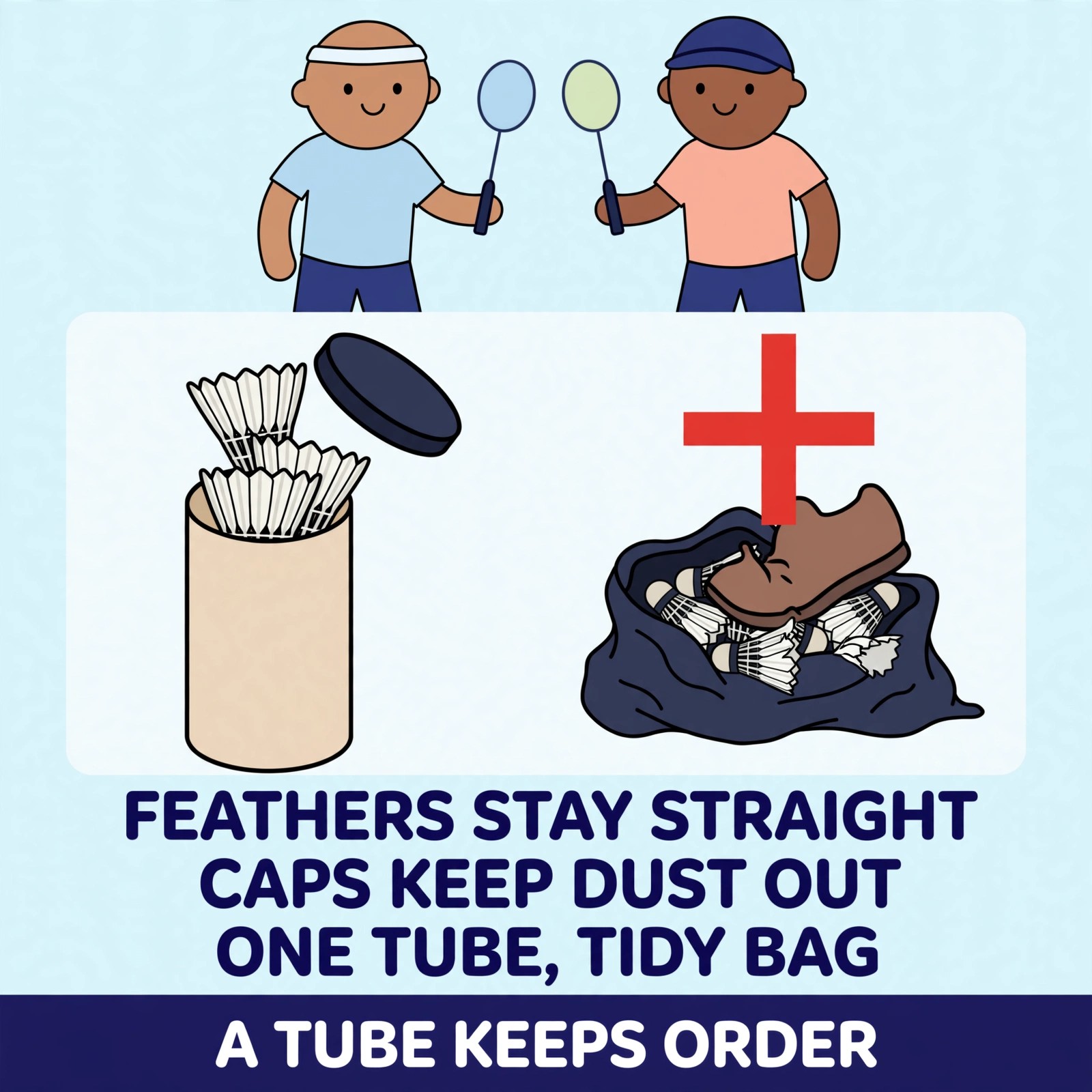
Kit Check #4
Little Extras: Tape, Scissors and a Spare Shirt
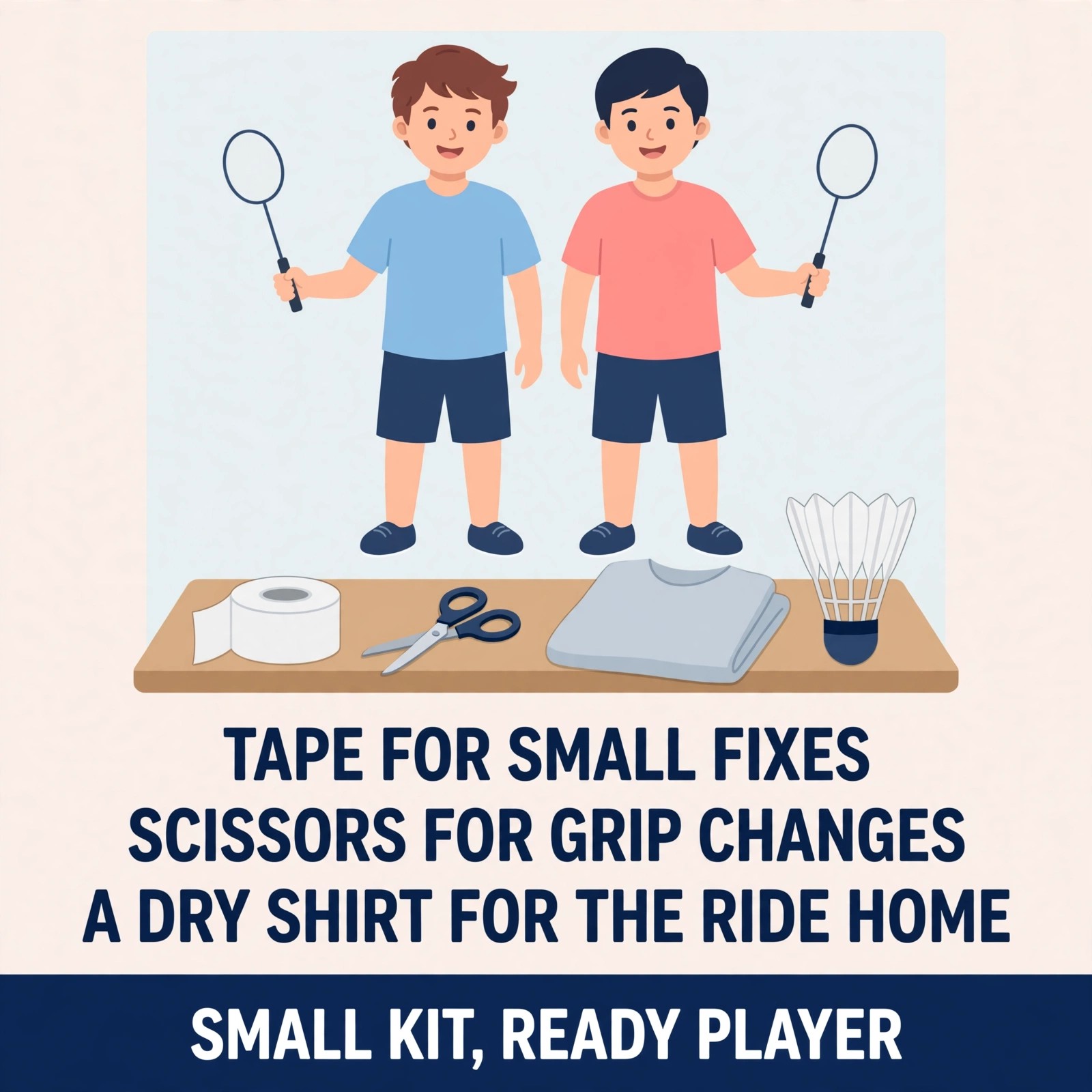
The little extras finish the kit. A roll of grip tape finishes the top edge of a new overgrip and handles small running repairs. Small scissors with rounded tips live for grip changes: trimming tape, cutting an old wrap free, snipping a loose thread before it becomes a torn shirt. A folded dry spare shirt is the most social item in the bag, a clean change for the ride home that your nose, and anyone sharing the car, will quietly thank you for. Each item is plain, light, and pulled out weekly or more.
Notice what these extras have in common, because it is the buying test for everything else in this guide. They cost little. They weigh almost nothing. And they pass the weekly touch test: if you play twice a week, your hands find them again and again. An accessory that fails that test is not automatically bad, but it should have to argue for its space, and most cannot. Players often discover, when they finally empty the bag on the floor, that a third of what they carry has not been touched in a month.
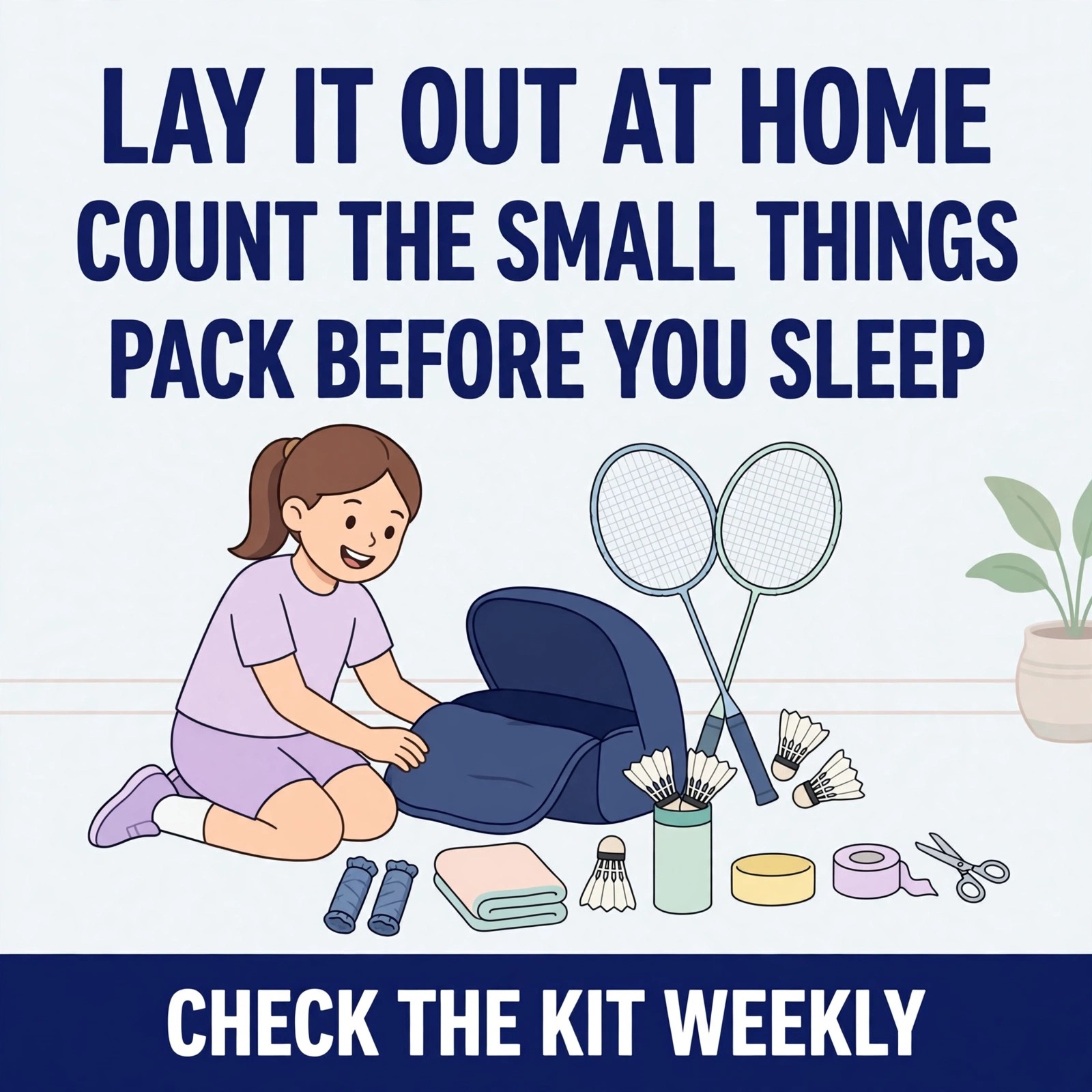
Keep the extras in one small pocket or pouch so they can be found in seconds, in hall light, with sweaty hands. Tape and scissors buried under shoes might as well be at home. The weekly kit check ties this together: lay the small things out at home, count them, notice what is running out or worn, and pack the night before rather than in a morning rush. Five calm minutes at home saves the small panics at the bench, and your future self, standing in the hall with a peeling grip, sends thanks.
Kit Check #5
What to Skip: Gadgets That Promise Too Much
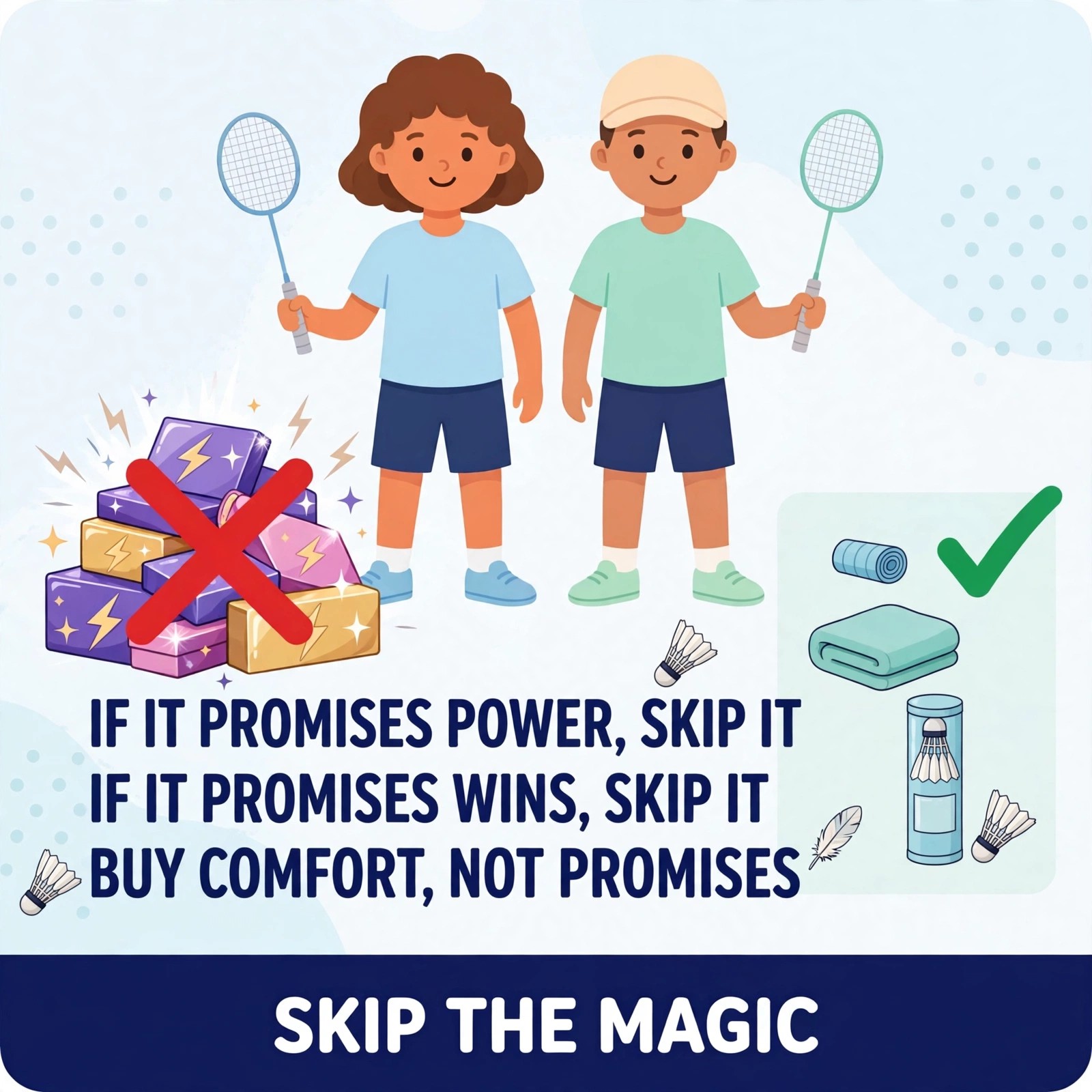
Now the shelf to walk past. Every season brings gadgets dressed in big promises: wear this and smash harder, clip on that and win more, spray this and never slip. Apply one test: if the box promises power or wins, skip it. Power comes from technique, timing, and legs. Wins come from training and decisions. No clip, band, spray, or charm adds either one, and the money spent chasing them would cover a year of honest overgrips. Sparkle, lightning bolts, and giant claims on the box are not features. They are the warning label.
The calmer rule is to buy comfort, not promises. Spend first on the things your hands touch every session: grips, a good towel, a tube for your shuttles. Let rare use gadgets wait until the basics are covered, and most will wait forever, which is the correct outcome. A simple log helps here too: note what you actually use for a month, and what never leaves the bag. The untouched list is your future shopping ban list, written by your own behaviour rather than by any coach, reviewer, or advertisement.
The last trap is copying the professionals. Yes, top players carry all sorts of extras, but they also train for hours daily, travel with support staff, and receive much of their kit free. Copying their bag does not copy their game, any more than copying their shoes copies their footwork. The arrow points the other way: they are good because they train, and the kit is just what they train with. Keep your own kit small, honest, and used, and put the saved money and attention where they actually work: coaching, court time, and rest.
Myth vs Reality
Myths About Badminton Accessories
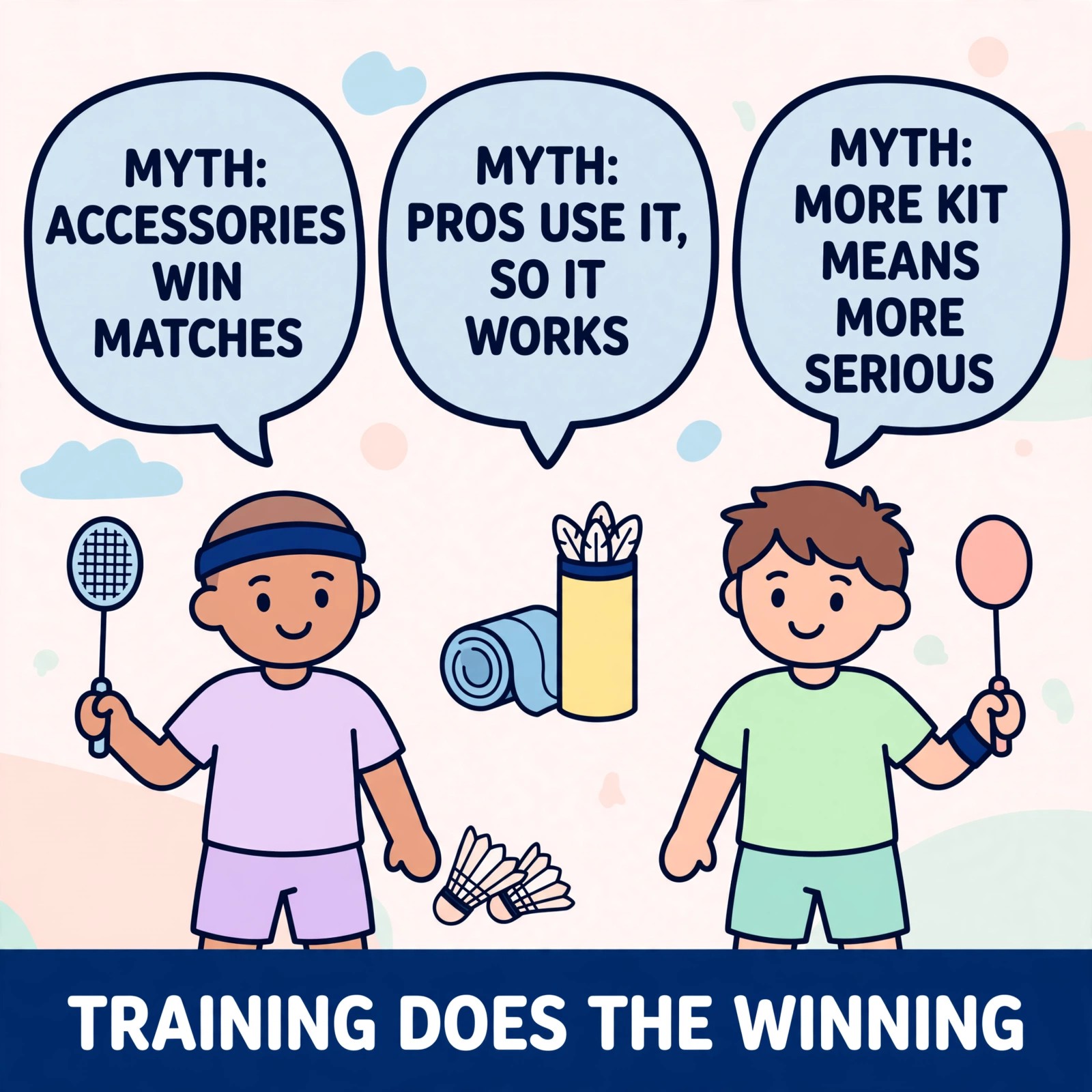
Myth one: accessories win matches. They do not, and believing it quietly harms your game, because it sends you shopping when you should be training. What good accessories do is hold your comfort steady: dry hands, a true grip, shuttles in order, so the skills you have trained can show up without small annoyances tripping them. That is a real and useful job. It is just not the same job as winning, and keeping the two separate will save you money and disappointment.
Myth two: the pros use it, so it works. Professionals use many things for many reasons: contracts, habit, superstition, or a genuine small preference built over years. Their results come from the years, not the extras. A club player copying a pro full kit usually ends with an expensive bag and the same backhand. If a pro habit is worth copying, copy the cheap and proven ones: fresh grips, a towel routine, shuttles stored with care. Those transfer. The gadgets mostly transfer money.
Myth three: more kit means a more serious player. Serious is a training habit, not a bag size. The most serious players we coach often carry the smallest kits: rackets, shoes, grips, towel, tube, tape, scissors, spare shirt, everything used, nothing decorative. Meanwhile the biggest bags in any hall often belong to hopeful shoppers. Judge your kit the way you would judge a toolbox: not by how much it holds, but by whether every tool in it has earned its place by being used, week after week.
Why Choose Us
Why Players Choose ST Badminton Academy
At ST Badminton Academy, accessory advice follows the same honesty as the rest of our coaching. We run no shop and push no products, so when a coach talks about your kit, the interest is only in your comfort and your game. Usually the talk is short: that grip is shiny, change it; your shuttles live loose in the bag, tube them; your towel missed the last three breaks. Small observations, small fixes, no receipt attached. Students seem to trust advice more when nothing is being sold, and we think that trust is worth keeping.
Small groups make kit problems easy to spot. With a maximum of four students in a class, a coach notices the grip twisting in a student hand during drills, the shuttle feathers bent from a week loose in a bag, the missing towel turning into a wet shirt sleeve used as one. In a big group those details vanish. In a small one they get fixed in a minute, often right at the bench, with the spare grip or the scissors from the student own bag once the habit of carrying them has formed.
We teach three kit habits until they run themselves. First, change the overgrip before it shines, not after it betrays you in a match. Second, lay the kit out at home once a week, count the small things, and pack the night before. Third, sort the shuttles after every session, good ones back in the tube, bent ones out at once. None of these habits costs real money. All of them together give a player that calm, ready feeling at the bench, which is the true product accessories should be selling.
FAQs: Badminton Accessories, Grips, Tubes and Kit Habits in Malaysia (KL)
Accessory questions usually come down to what is worth packing, what to skip, and how long things last, so the answers below cover the honest short list, grip timing, the grip powder question, and the kit habits our coaches teach in class.
Which badminton accessories are actually worth packing if I live in Setapak or Gombak?
The honest short list is short: two spare overgrips, a towel, a wristband, a shuttlecock tube with your shuttles inside, grip tape, small rounded tip scissors, and a folded spare shirt. Everything is light, plain, and used every week in warm halls around Setapak and Gombak. If a gadget promises power or wins, leave it in the shop.
Do badminton accessories really make a player better in KL?
Honestly, no. No accessory adds skill, power, or wins by itself, in KL or anywhere. The right small kit keeps your comfort steady and your gear in order: dry hands, a true grip, shuttles that survive the month. Getting better still comes from coaching, practice, and matches. Buy comfort and order, and train for the rest.
How often should I change my racket overgrip if I play at a social or club level?
When it tells you to: when the surface turns shiny and smooth, feels slick in a sweaty hand, or starts to smell tired. For players training once or twice a week, that often lands every few weeks, sooner for heavy sweaters. It is a five minute bench job, and the cheapest refresh in badminton.
Is grip powder a must for every player, or a personal choice at any level?
A personal choice, at any level. Many players never use grip powder and stay dry with a towel, a wristband, and a fresh grip. Others like a light dusting before a match, especially with very sweaty palms. If you try it, start with a little: too much cakes onto the handle and feels worse than sweat.
What should I check before buying badminton accessories for classes?
Ask four questions. Will I touch it every session? Does it add comfort or order, the two honest jobs? Does the box promise power, wins, or pain free play, in which case walk away? And is it plain and sound rather than flashy? Start small, log what you actually use, and let your own habits write the shopping list.
Do you give honest accessory advice during badminton training near Wangsa Maju?
Yes. Our base is in Setapak, close to Wangsa Maju, and kit talk is part of coaching, not a sales pitch, because we sell no accessories. Bring your bag to class and the coach will check grip condition, your sweat routine, and how your shuttles are stored. Most students need habits, not purchases: change grips earlier, tube the shuttles.
Does ST Badminton Academy teach kit habits to badminton players in Malaysia?
Yes. Kit habits are part of normal coaching at the academy, because small order protects your training. Students learn the bench grip change, the weekly layout and count of small items, shuttle sorting after play, and the sweat routine of towel, wristband, and spare shirt. Coaches check the habits in small classes the same way they check footwork.
How long do simple badminton accessories last with regular weekly training?
It depends on the item. Overgrips are consumables, changed in weeks. Towels and wristbands last many months with normal washing. A shuttlecock tube, tape roll, and scissors can serve for years if kept dry and findable. The honest measure is use: an accessory touched every session for a year has earned its cost many times over.
How do the coaches at ST Badminton Academy help students sort their kit for badminton?
The coaches teach kit as three small routines, then watch them happen. The bench grip change, done by the student with their own spare and tape. The weekly layout at home, counted and packed the night before. And shuttle sorting after play, good ones into the tube, bent ones out. Small classes make those checks easy.
Badminton Accessories and Tidy Kit in Action


One Standard for Every Accessory and Every Player
One standard runs through every accessory answer at ST Badminton Academy: buy comfort and order, never promises. If a product claims it will add power, wins, or skill, it fails the standard and stays in the shop. If it is small, plain, used weekly, and keeps your hands dry or your kit in place, it passes. That single rule, honestly kept, protects your wallet and your expectations at the same time, and it has never yet steered a student wrong.
| Factor | Small Honest Kit | Gadget Hunting KIT |
|---|---|---|
| Frequency | 1 or 2 times a week. Mostly for fun and sweat. | Chasing boxes that promise power and wins. |
| Drills Focus | Basic static feeding. Minimal footwork pressure. | Grips, towel, tube and tape, used every session. |
| Physical Conditioning | Rarely included. Just playing games on court. | Core, agility, and speed training included in every session to prevent injury and build stamina. |
| Tactical Awareness | "Just hit it over." No real game plan. | Video analysis, point construction, and learning to read the opponent's game. |
| Coach Ratio | Large groups (8-10 kids). Coach barely watches you. | Max 4 students. Mr Eric Chuar personally corrects every stroke and movement detail. |
| Goal Setting | Fun and exercise. | A giant bag of extras untouched for a month. |
| Long Term Result | Good recreational player. | A player with a tidy bag, dry hands and training on their mind. |
Badminton Coaching and Honest Kit Advice in Kuala Lumpur
A tidy bag will not win you a single rally, and this guide has promised you nothing of the sort. What the small kit does, grips, towel, tube, tape, scissors, spare shirt, is remove the small annoyances that nibble at a session: the twisting grip, the lost shuttle, the wet shirt in the car home. Small comforts, zero shortcuts. Put your money and hope in training, where they compound, and let your accessories do their quiet jobs in the background. That is the most any honest accessory can offer, and it is enough.






