A New Badminton Coach Finds Old Habits: What Should Parents Ask (New Coach Guide)
It happens in the first minutes of a first lesson. Your child has trained happily for a long while, and the new coach watches a few rallies and starts listing old habits: the grip is wrong, the preparation is late, the movement needs rebuilding. A parent hears that list two ways at once. It might be the honest eye your child needed. It might also be a sales pitch wearing a whistle. This page is about telling the difference, calmly and in order: what to ask, what a good answer sounds like, what can stay exactly as it is, and how a correction earns trust by being checked rather than by being announced.

Coach Check #1
What A New Coach Really Assesses
An old habit, in the way this page uses the term, is a movement a child learned earlier that now limits a shot: a hold that cannot push a backhand, a swing that starts so late that contact arrives behind the body, feet that admire a good shot instead of returning. A habit is a description of a movement, not a verdict on whoever taught before and not a flaw in the child. Habits form honestly, from early lessons, playground rallies and a growing body changing around old shapes. A useful assessment connects the movement to something observable on court: late contact, a smaller choice of shots, a recovery that never happens. Anything vaguer than that is an opinion looking for evidence.
The cost of a careless verdict is paid by the child first. Tell a young player that their earlier years were wasted and that they cannot play properly, and you have not corrected a grip. You have shaken the confidence every future correction will need. Children also end up caught between adults, defending one coach to another, when loyalty was never theirs to carry. And there is a quieter cost: a family that believes everything is broken may agree to rebuild everything at once, so nobody can tell which change helped, which hurt, and which simply confused a child who was progressing in most of the game already.

Coach Check #2
Inside The Tasks: Feeds, Rallies And Games
The first question is the simplest one: which shot? A coach who has truly seen a habit can name where it lives. During which shot does it create a problem? Does it appear in an easy task, only under pressure, or only while your child is adjusting to unfamiliar instructions in a strange hall? Those are different findings with different repairs. Ask the coach to demonstrate the alternative beside the habit, slowly, so you and your child can see the difference rather than take it on faith. A specific answer sounds like a lesson beginning. A general answer, many bad habits with no address on the court, is worry being sold back to you as expertise.
The second question is about consequence: what does the habit actually cost on court? One coach’s preferred style is not automatically the only acceptable technique, and tidy looking movement is not the same as effective movement. A habit deserves correction when it produces something a parent can watch for: contact arriving late, a choice of shots that quietly shrinks, a recovery that leaves the next shuttle unreachable, a backhand side opponents have learned to feed. Ask for that practical consequence in plain words. If the only consequence offered is that the movement looks wrong, keep asking, kindly, until the answer connects the shape to the rally it spoils.
Weak assessments repeat on a short list. The sweeping list, many bad habits named in the first minutes with none of them shown. The total rebuild, everything must change, offered before a single task has been watched properly. The missing demonstration, where the coach can describe the fault but cannot show the alternative. The dismissed past, where every earlier lesson is waved away as worthless without evidence. And the rushed package, where an expensive commitment is pressed on the family before the task has even been explained. Each of these has the same repair: slow the conversation down, name one habit, show it, and agree what will be checked.
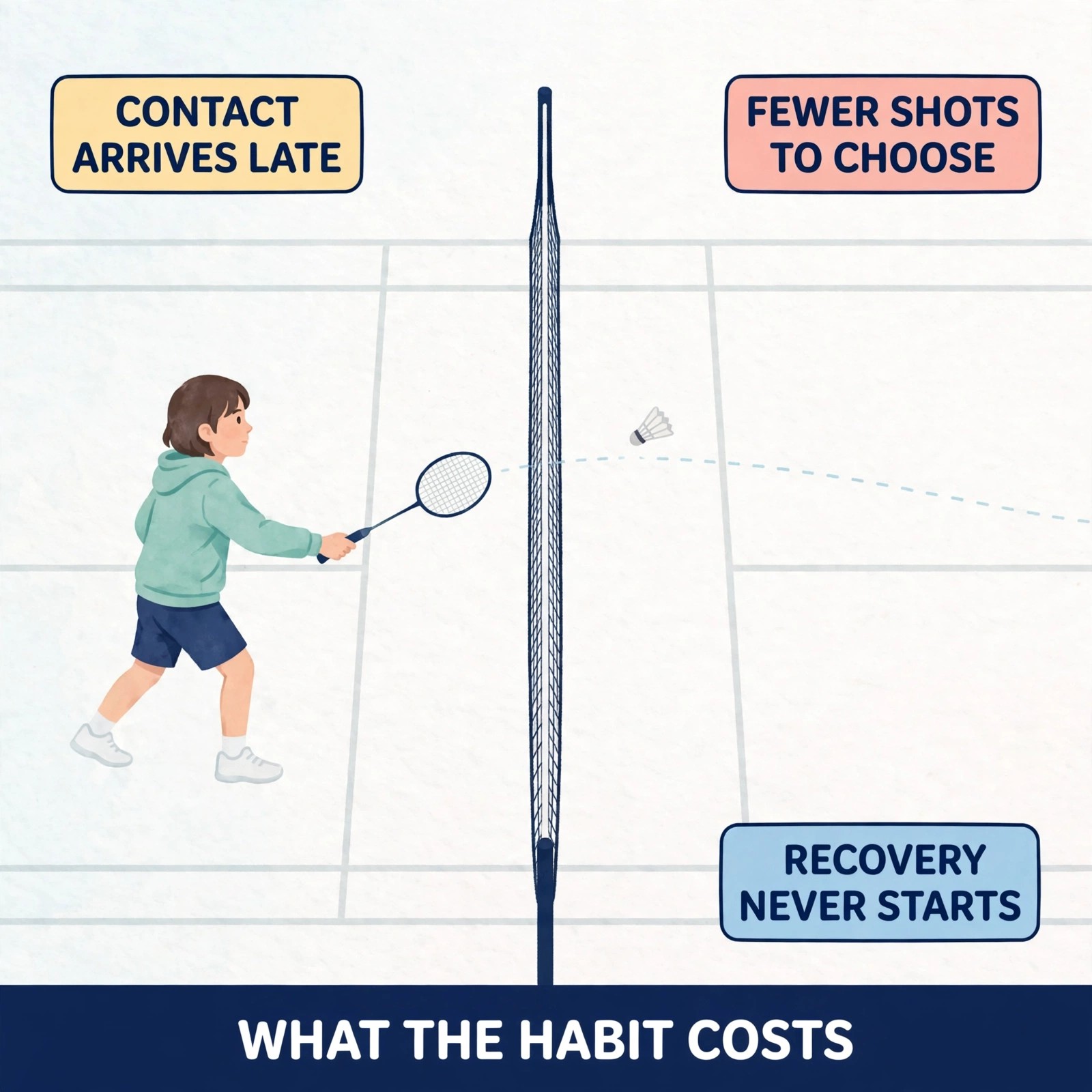
Coach Check #3
The Cost On Court: Shots, Timing And Recovery
Keep the earlier learning that still works, because a great deal of it usually does. Your child may have learned how to join a class, handle a racket, serve legally, rally with a partner, score a game and stay involved when a rally turns hard. A technique problem in one corner of the game does not erase any of that. Say so at home, plainly: the new coach found something to repair, and repair is what coaching is. Give the new coach the training history, the usual class format and any feedback you still have. Tell them which tasks your child finds comfortable and which ones fall apart in games. That handover is worth more than any argument about the past.
Ask for one correction priority before any talk of a complete rebuild. Suppose the habit is the hold that serves both sides badly. The coach should be able to show the change, build a kind task in which your child can practise it, and tell you what will stay unchanged while it is learned. Changing the grip, the swing, the stance and the recovery in the same month leaves a child trying four instructions at once and a family unable to say which one is working. The coach decides the sequence after seeing real tasks, not from a checklist alone, but the sequence should exist and should be speakable out loud: this first, the rest later, and here is why.
Your child’s own report belongs in the conversation too. Ask them, gently and without leading, what the new instructions feel like: what is confusing, what feels strange in the hand, what they think they are being asked to do. A child adjusting to an unfamiliar hall, a new voice and new wording can look full of habits that are really just adjustment, and a good coach knows the difference and says so. Children also hear adult verdicts more literally than adults intend. A child told their backhand is terrible may hear that they are terrible at the backhand side of everything. Keep the language at home as precise as you ask the coach to keep it in the hall: one movement, being repaired, on purpose.

Coach Check #4
Choosing What Stays: Protecting Skills That Work
A good handover runs in the other direction as well. Along with the history, bring one clear example: a short rally, a named task, a moment that shows the habit the way you have seen it from the side. One example discussed calmly teaches a new coach more than an hour of defending or attacking the old one. Ask what the first weeks will look like: which tasks stay familiar, which task carries the new priority, and how the priority will be fed kindly enough to be practised rather than merely survived. Parents are not intruding when they ask these things. A coach who teaches in the open expects questions and answers them with specifics.
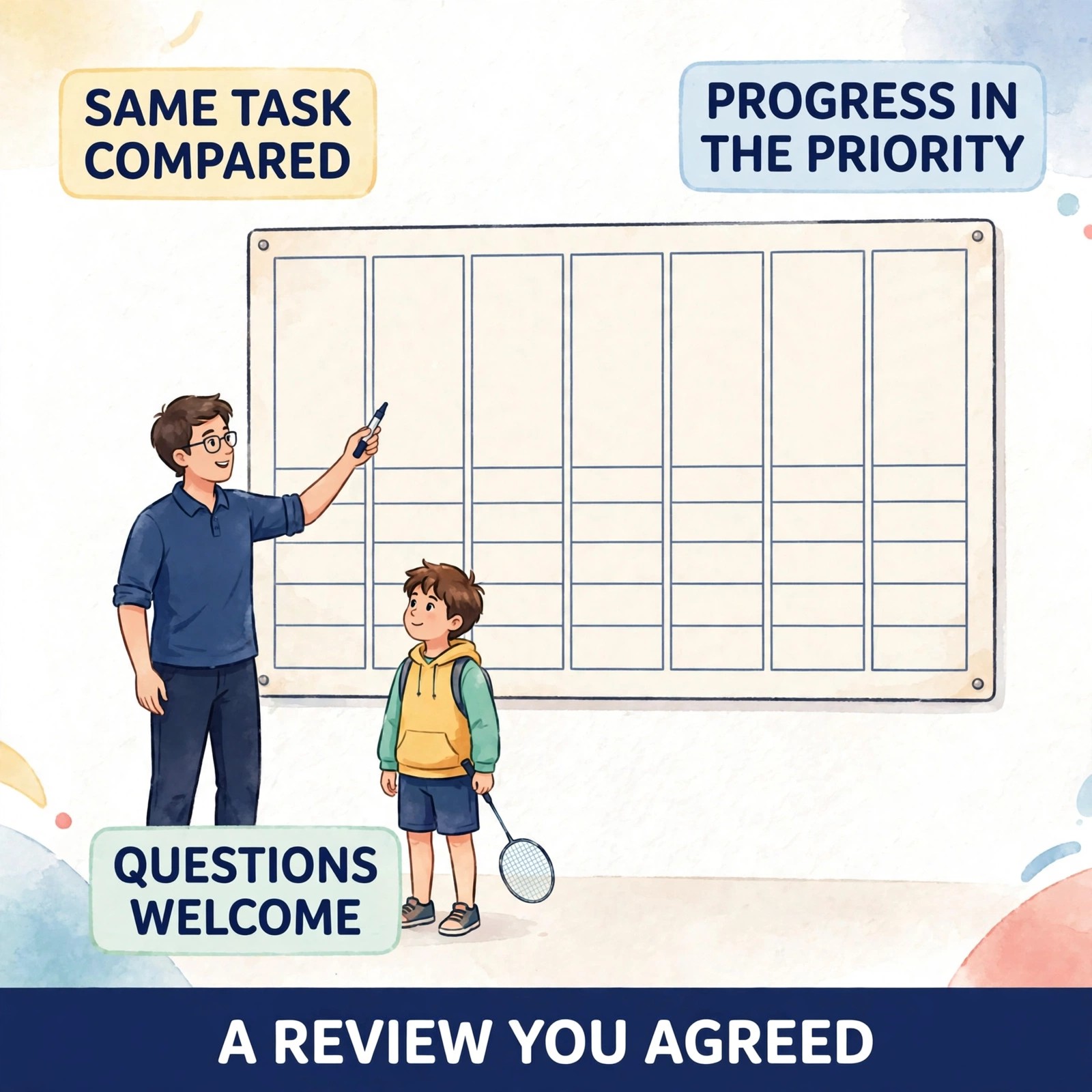
Agree on what the review will show before the correction begins. A plan needs more than a promised finish, because habits do not keep calendars. Ask what the coach expects to observe first: the new hold appearing in an easy task, the contact moving earlier, the recovery starting without a reminder. Agree that the same easy task gets compared before anyone judges a pressured rally, because comparing unlike tasks manufactures progress and failure alike. With the coach’s permission, a short clip of the agreed task can help everyone refer to the same action. Film the agreed task, not a collection of embarrassing misses. The aim is a shared picture of change, not evidence for an argument about which coach was better.
And if the explanation still does not feel trustworthy, that feeling is information too. It is reasonable to ask for clarification when a coach cannot demonstrate the issue, dismisses every earlier lesson, or presses for a large commitment before explaining a single task. You can seek another assessment without asking your child to choose sides, and a second coach judging the same task calmly is a fair way to test the first verdict. Judge the pattern across a few conversations rather than one sales moment. Lasting worry that does not settle deserves support beyond the hall as well, and a parent talking it through with someone they trust is doing the family a service, not making a fuss.

Coach Check #5
Repair Drills That Hold The New Shape
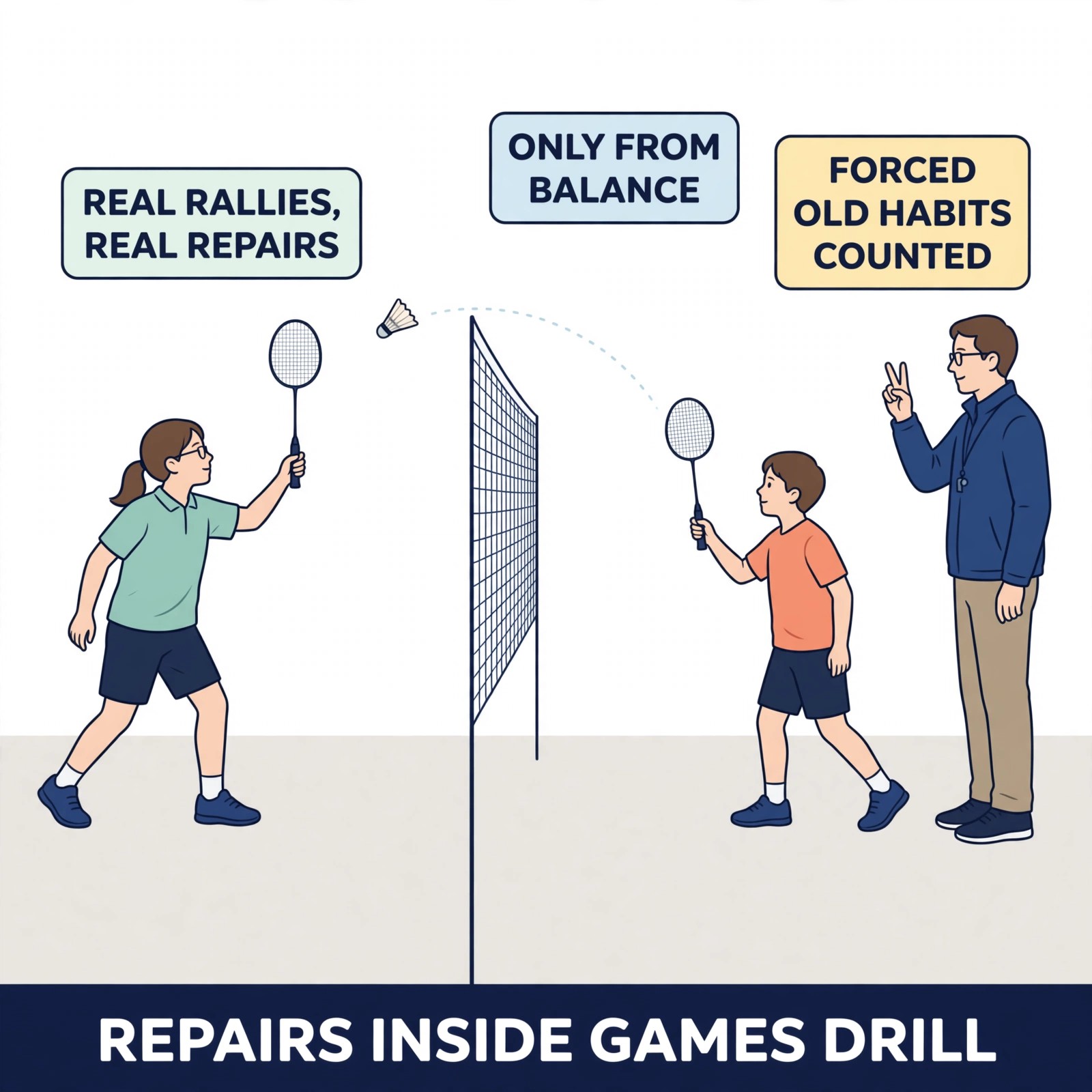
We assess in an order that keeps the child out of the argument. First, real tasks: easy feeds and short rallies watched properly, so habits are seen where they actually live. Second, one named priority, demonstrated beside the habit so the difference is visible. Third, the rest of the game deliberately left unchanged, named out loud so the child knows what is already trusted. Last, the priority practised inside kind feeds and tested inside the same tasks it was found in, with a review the family has already agreed to look at. Each stage follows from evidence gathered in the one before, which is what makes the verdict worth believing.
Progress on a correction is counted in the priority itself. Attempts where the new hold or shape appears without prompting, out of a set of feeds, is the headline figure. Beside it sit two quieter counts: the skills that were trusted staying trusted, because a rebuild that breaks three working things to fix one has not helped, and the child’s own words for the cue, because a correction a child can explain is one they can carry into a game. Feelings mislead in both directions here, since a focused week can feel like total change while the counts show a beginning. When the priority count rises and the trusted skills hold, the repair is genuinely under way.
The signs a correction has taken hold are mostly calm ones. The new shape appears in easy tasks without the child thinking about it, then starts surviving gentle pressure. Your child can say what changed and what deliberately did not, in their own words. The shots the habit used to spoil begin arriving with time to spare. And the earlier learning stands visibly beside the repair, the serving, rallying and joining in all still there, which is the proof the family actually needed: the years were not wasted, one movement was out of date, and out of date movements can be taught again. That is when the next priority, if there is one, earns its turn.
Myth vs Reality
Myths About New Coaches And Old Habits
Start with the shot, not the grip. When a new coach names a habit, the first useful question is which shot it changes. A grip held too tight or changed too late does its damage somewhere specific: overhead shots lose their snap because the hand cannot finish the change in time, and the recovery after them starts late because the body is still finishing the swing. Serving tells a different story about the same hand. A low serve asks for a small, calm movement, and many children serve perfectly well with a grip that fails them overhead, which is why a flat statement about a wrong grip means very little until it is tied to the shots it spoils. A habit is a movement pattern, not a verdict on earlier teaching. Patterns form because they once worked: the tight grip produced power at an easier level, and the late change survived slower rallies. Naming the shot turns a worrying label into a job with edges, something a coach can count and a parent can follow.
Assessment belongs inside real tasks. A habit that matters shows up when the shuttle is moving, the feet are working and a decision has to be made, which is why a careful coach watches feeds and short rallies rather than asking for isolated tricks. The picture that emerges is the one the repair will be built on. The order of the tasks matters too. Easy feeds come first, because they show the pattern without pressure, and short rallies follow, because they show whether the pattern survives contact with a real opponent’s choices. A habit visible in both is worth a repair; one that vanishes under rally pressure may need nothing but time. What gets counted during that watching decides the priority. The coach is noting which habit appears most, which one costs the most shots, and which one the child can already feel when it is pointed out. Those three answers, written down plainly, are what a parent is entitled to hear at the end of the lesson.
Some things must stay exactly as they are. When a repair begins, the trusted skills go on a protected list: the serve that lands, the rallying patience, the willingness to join a game and try. Those skills carry your child’s confidence, and a repair that damages them to fix a grip has traded the wrong things. Protection is practical, not sentimental. It means the protected skills are used in every lesson, in feeds, drills and games, at their normal standard, while the one habit is worked on beside them. The child keeps experiencing success in most of the hour, which is what keeps effort honest and attendance easy. It also means some shots wait. A habit list of four becomes a repair list of one, and the other three are named, noted and left alone until the review. Parents can help by repeating that order at home: this one first, the rest later, nothing about you is being rebuilt.

Why Choose Us
Why Players Choose ST Badminton Academy
Parents choose ST Badminton Academy for habit work because our verdicts are built to be checked. We assess inside real tasks rather than from a first impression, we demonstrate the alternative beside the habit, and we name one priority while saying plainly what will stay unchanged. In a group of no more than four students, there is time to watch the actual moment a shot succeeds or fails, and the counts from those moments are the review the family agreed to. Many assessments ask parents to trust a list. We would rather show you one habit, its consequence and its repair, because a family whose evidence is honest knows exactly what the next weeks hold.
A review earns its name by repeating the test. When the agreed review lesson arrives, the coach runs the same task from the first weeks, counts the priority the same way, and compares the two sets of numbers side by side. Feelings about effort are welcome, but the evidence is the count. The comparison decides the next step honestly. If the new shape holds in the task and in games, the next habit on the list becomes the new priority and the repaired one moves to maintenance. If it holds in feeds but breaks in games, the repair continues with more game shaped practice rather than more feeding. And if the count has not moved, that is information too. The teaching changes: a different cue, a slower build, a smaller step. What never happens in an honest review is blame landing on the child for a method that did not work. The method is the coach’s job.
Confidence survives change when the change is small and named. A child can hold one instruction in mind: loosen the hand before the clear. Ten instructions become noise, and noise feels like failure even when the shots are fine. The single priority is a kindness as much as a method. Counted progress does the rest. When a child hears that the new shape appeared in most attempts today, up from some last week, the repair becomes a story they are winning. Numbers said kindly, in front of the child, turn correction from criticism into a shared project with a score they can see. Parents protect that calm by keeping the same language at home. Ask what the one thing is this month, celebrate it when it appears in a game, and let the other habits stay unmentioned. If your child dreads lessons during a repair, say so early; a good coach would rather adjust the pace than lose the child.
FAQs: New Coaches, Old Habits And Badminton Training in Malaysia (KL)
These are the questions parents ask us most when a new coach finds old habits, before they book and during the first weeks of a correction. The short version runs through all of them: ask which shot, ask what it costs, keep what works, agree one priority, and review the same task. The longer answers follow, including the ones about whether the earlier coach failed, practising a new action at home straight away, and how a first assessment with us actually works.
Can a child with old habits be coached in Setapak or Gombak?
Yes. A child whose habits were learned under another coach is coached with us in Setapak, a short drive from Wangsa Maju, in groups of no more than four students. We assess inside real tasks, name the one habit and its cost, protect the skills that still work, and agree a review with you before anything else is decided.
What is the first question a parent should ask in KL?
Ask which shot the habit spoils. A grip, a preparation or a recovery only matters through the shot it changes, so that question turns a worrying list into a job with edges. Follow it with what the habit costs that shot, what will stay the same, and which single habit will be repaired first.
Why does a new coach habit list worry parents at a junior level?
Because it can sound like a verdict on the earlier teaching and on the child, when a habit is only a movement pattern that once worked at an easier level. Worry is fair, and it deserves specifics in return: the shot affected, the cost on court, and a calm order for repairs rather than a frightening list.
A new coach listed several old habits at the first lesson. Should we change everything at once or repair one habit first?
Repair one habit first. Changing everything at once muddies every measurement and overwhelms the child, while one priority can be counted each lesson and judged at an agreed review. The other habits are named, noted and left alone, and the skills that still work stay protected throughout, which is how trust in the repair is built.
How can parents support a habit repair at home in between classes?
Ask what was learned, let your child show you the movement, and share anything confusing or delightful with us at the next lesson. Keep the same words the coach uses, celebrate the one priority when it appears, and leave correction to the lessons, because two sets of live instructions split a child’s attention and slow the repair.
Do you coach habit repairs beside badminton training near Wangsa Maju?
Yes. We coach habit repairs from our base in Setapak, a short drive from Wangsa Maju, and families from that side train with us every week. The repair sits inside regular junior sessions rather than a separate clinic, so the new shape is practised against real feeds, real rallies and the games your child already loves.
Where does ST Badminton Academy teach badminton training in Malaysia?
We teach at our base in Setapak, Kuala Lumpur, and families travel in from across the Klang Valley. Sessions run with no more than four students per group, because an honest assessment is built from attempts watched one by one, and that needs a coach close enough to name a habit kindly and count its repair.
How do I book a trial session to test my child’s habit assessment?
Message us to arrange a trial at a time that suits your week. Bring your child’s racket and court shoes, and tell us what the new coach noticed. We will watch inside real tasks, name the one habit we would repair first, say plainly what stays the same, and agree how you would judge progress with us.
What makes Mr Eric Chuar a suitable coach for habit repairs in badminton?
Mr Eric Chuar coaches the academy sessions himself, with more than fifteen years of coaching in Malaysia and Singapore, so the person reading your child’s habits is the person who built the programme. His assessment style is plain spoken: name the shot the habit spoils, protect what works, repair one thing, and count the change.
New Coach Assessment Coaching in Action


We benchmark our assessment coaching against World Badminton (BWF) coaching standards and our own academy values: before any player trusts a training plan, they deserve honest checks. You can verify our coaches' credentials through the Badminton Association of Malaysia (BAM) coach education pathway.
One standard governs how we judge habits: the task judges the movement first, and the agreed review judges it second. A coach here will demonstrate any habit we name and connect it to its cost on court before asking a family to commit to anything, and will say plainly which parts of a child's game we trust as they are. We also hold an honesty rule about what correction can promise: a named habit can be repaired with patient practice, and nobody can honestly promise a finish date from a first look, because the task, the pattern and the child's understanding all set the pace. What coaching promises is one priority, shown clearly and counted in the open.
| Factor | The Repairing Coach | The Start Again Coach COACH |
|---|---|---|
| Frequency | 1 or 2 times a week. Mostly for fun and sweat. | The start again coach talks about your child as a rebuilding project: the old teaching was wrong, the basics are broken, and a long programme is the cure. Nothing is counted, trusted skills are discarded with the faults, and the child hears that their game so far was a mistake. |
| Drills Focus | Basic static feeding. Minimal footwork pressure. | The repairing coach names one habit, the shot it spoils and the cost on court, then protects everything that still works. One priority is counted each lesson inside kind feeds, drills and games, and an agreed review repeats the first task to judge the change honestly. |
| Physical Conditioning | Rarely included. Just playing games on court. | Core, agility, and speed training included in every session to prevent injury and build stamina. |
| Tactical Awareness | "Just hit it over." No real game plan. | Video analysis, point construction, and learning to read the opponent's game. |
| Coach Ratio | Large groups (8-10 kids). Coach barely watches you. | Max 4 students. Mr Eric Chuar personally corrects every stroke and movement detail. |
| Goal Setting | Fun and exercise. | Because the counts compare the same task at the start and at the review, parents judge evidence instead of sales language. The coach sees whether the cue, the pace or the priority slipped, and one part of the plan changes instead of the child being blamed. |
| Long Term Result | Good recreational player. | The high-performance repair produces a child whose trusted game survived and whose one habit visibly changed. The casual version spends the term rebuilding confidence it needlessly broke; the repairing version removes the waste in a fixed order and counts what is left. |
New Coach Assessment Coaching in Kuala Lumpur
Your next conversation with any coach can start with one clear example. Bring the previous feedback you still have and one task where the habit shows itself, and ask three things: which shot it spoils, what it costs that shot, and what the first priority would be while everything else stays trusted. Then bring those answers to an assessment with us and we will watch the same task, demonstrate what we see, and agree the review before any correcting begins. No verdict first. Just a task, a demonstration, and a plan the whole family can check.