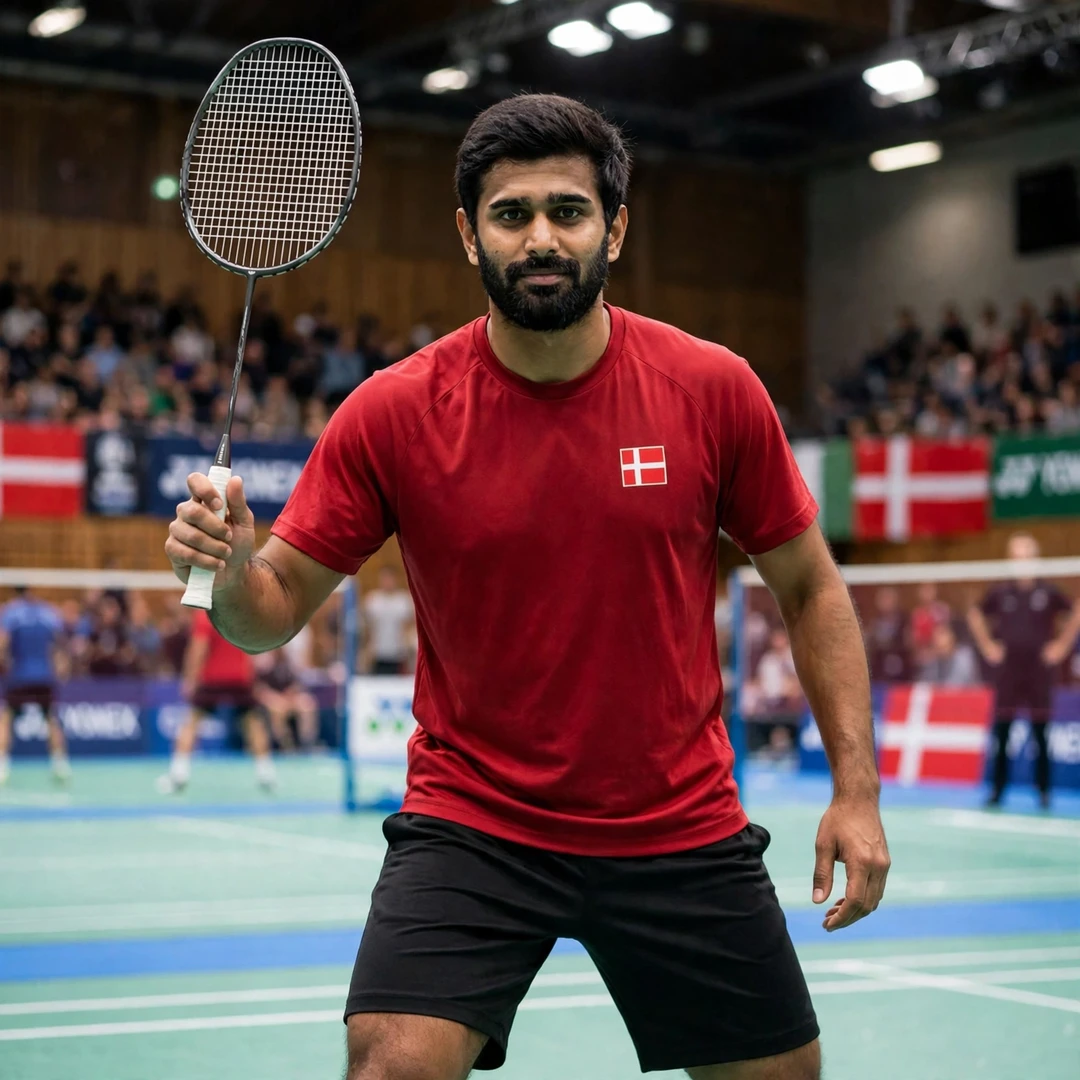
Danish Men’s Singles Badminton Star
Karan Rajan Rajarajan

Denmark
Player Event: Men’s singles
Karan Rajan Rajarajan · Denmark men’s singles · Right-handed · Born 30 October 1996
Karan Rajan Rajarajan is a Danish men’s singles badminton player and right-hander whose game is built on rally craft, patience and one of the strongest minds on Europe’s second tier. Indian-born and based in Denmark since 2016, he has played international badminton since 2015, rose to a career-high world No. 85 for India in 2018, switched to Denmark in 2019 and, in 2026, won the Italian Open and his first International Challenge title at the Belgian International.
Understanding Karan Rajan Rajarajan (Denmark Badminton Player)
Most professional badminton careers follow a federation’s plan. Karan Rajan Rajarajan’s was built by hand. He left India as a business student, settled in Denmark — the most demanding badminton culture in Europe — and spent a decade climbing the sport’s hardest ladder with no national programme behind him. In the World Ranking for Week 43 of 2026 (20 October 2026) he stands at world No. 125 with 15,570 points from 14 tournaments, and he arrives there in the best form of his life: two international titles in a single summer, at 29 years old, eleven years after his first ranking point.
An Indian Start
Rajarajan is Indian-born — his name and his origins are Indian, even if the flag beside his name today is Danish. He was ranked internationally for India from November 2015, when he entered the BWF world ranking at No. 1,357, and he spent his first seasons learning the trade the slow way: Future Series and International Series halls, long qualifying draws, and the weekly arithmetic of a ranking that only moves when results do. There was no big junior résumé behind him and no academy machine; there was a teenager with a racket, a ranking, and time.
The Move to Denmark: Study, Train, Repeat
The boldest decision of his career came in 2016, when he moved to Denmark to study business and train. Trinidad’s Newsday newspaper, profiling him at the 2017 CAREBACO Championships, described a 20-year-old living and training in Denmark for the past year, putting in two sessions a day, six days a week — four to six hours of work daily — while studying. He had chosen the hardest classroom in European badminton on purpose: Denmark produces world-class singles players in numbers no other European country matches, and every training hall there is full of sparring partners who punish loose shots.
World No. 85 in the Indian Years
The Denmark gamble paid its first dividend quickly. In August 2017 he was in contention at the CAREBACO Championships in Trinidad, and Newsday noted the pattern behind his rise: he had taught himself to stop losing the close matches, working deliberately on the mental side of the game. His stated targets were the top 100 by the end of 2017 and a place in India’s team for the Tokyo 2020 Olympics. In 2018 he played the Australian Open and the New Zealand Open — both Super 300 events on the BWF World Tour — and on 17 May 2018 he reached his career-high world ranking of No. 85. The Olympic team place never came, but the No. 85 stands as proof of what the move had built.
A New Flag: Denmark from 2019
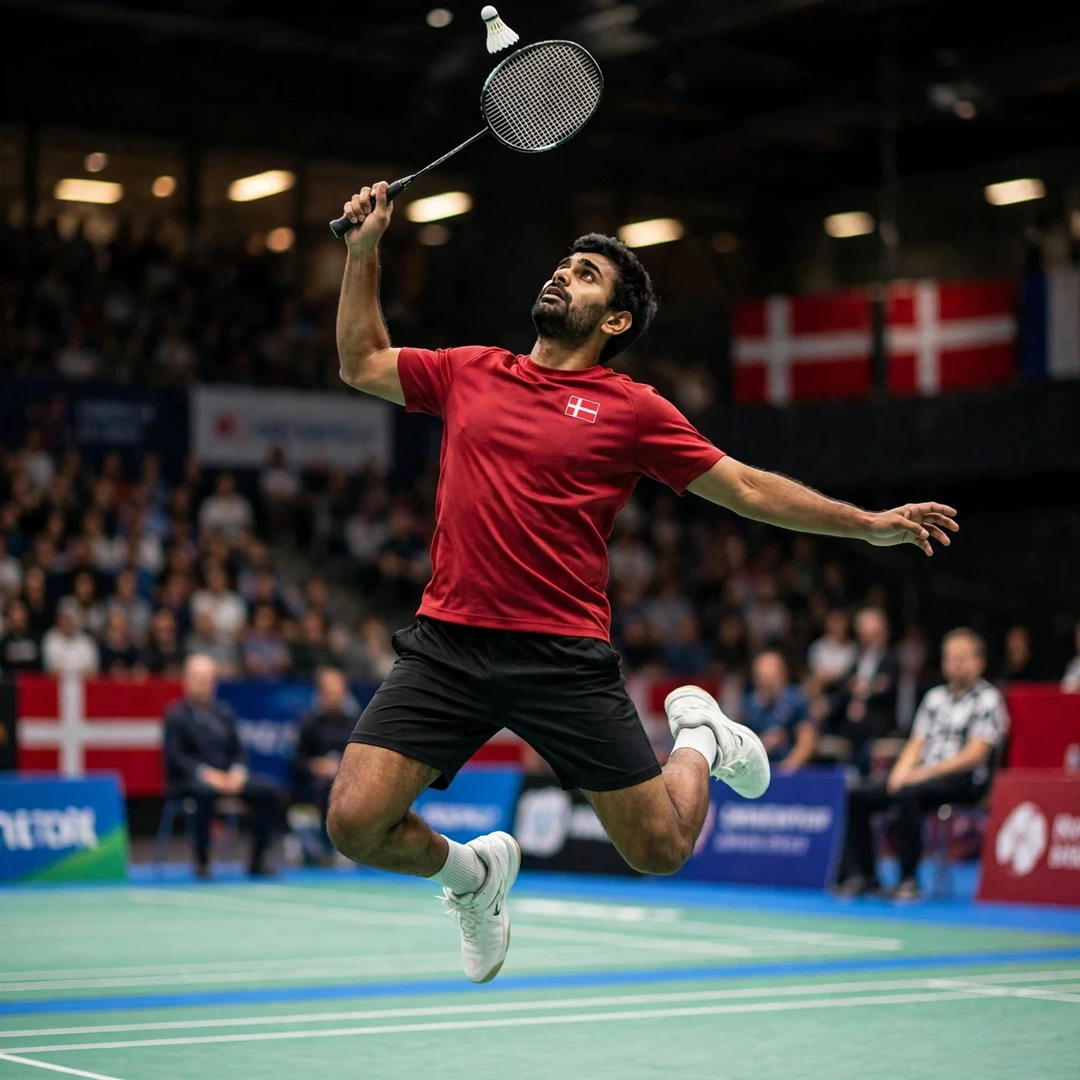
In May 2019 Rajarajan began representing Denmark, the country that had become his home. A flag switch resets a career in quiet ways: new federation, new entry lists, old relationships to rebuild. He kept the engine that had carried him to No. 85 — the European circuit. In 2019 he reached the semi-finals of the Slovenia International, and that autumn came the result that announced the Danish chapter properly: his first senior international title, won on Slovenian soil.
Career Milestone #1
First Title: Slovenia 2019, Then the Near Misses
At the Slovenia Future Series 2019 in Brežice, Rajarajan beat Czech player Jan Louda in the final to lift his first senior international singles trophy — as a Danish player, six months into the new chapter. Future Series titles are the small change of professional badminton, but they are also its entrance fee: they prove a player can close out a Sunday, and they fund the ranking points that open bigger draws.
The years that followed were the grind every circuit player recognises. He reached the semi-finals of the Slovak Open in 2020, then the final of the Portugal International in 2022, where he lost to Indonesia’s Andi Fadel Muhammad 11–21, 18–21. Runner-up finishes sting, but they also mark a level: by the early 2020s Rajarajan was a permanent feature of the European circuit’s second weekend, a player nobody wanted in a qualifying draw.
Career Milestone #2
The Long Road Back to a Title
In 2023 he reached the final of the Iceland International in Reykjavík, finishing as runner-up, and the semi-finals of the Dutch International — two more deep runs banked in a single season. The Iceland connection would matter later; Reykjavík became one of his happiest hunting grounds.
Through 2024 the pattern held: semi-finals at the Czech Open and the Hungarian International, quarter-finals and last-16 finishes scattered across the continent, and a league career in Czechia — he played for years in the Czech Extraliga with TJ Sokol Klimkovice — that kept his match sharpness high between ranking events. Nothing about the profile was glamorous, and everything about it was durable.
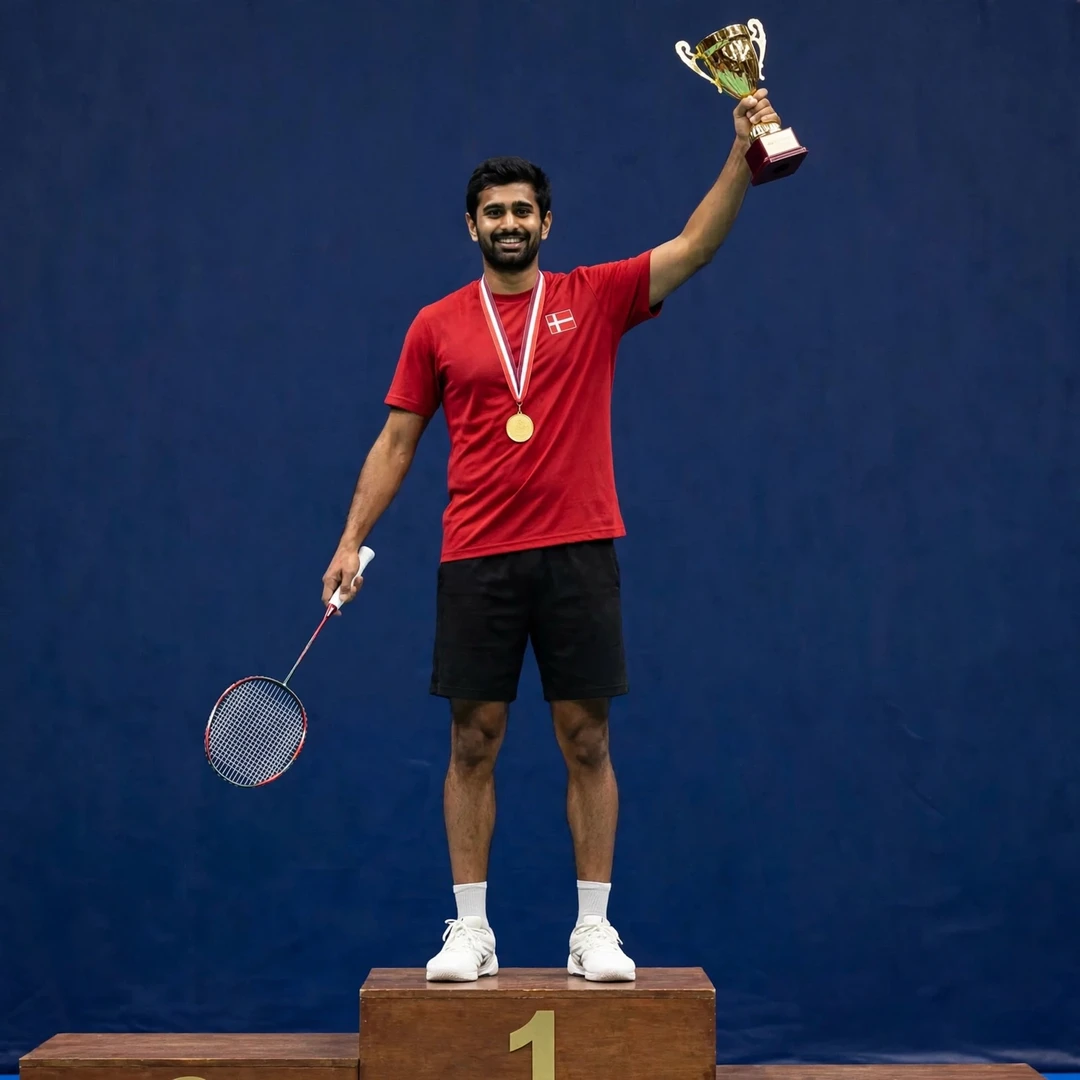
In 2025, six years after Slovenia, he won again — the Iceland International, completing the story he had started as the 2023 runner-up in the same hall. The season carried the usual supporting evidence, too: a semi-final at the Norwegian International and a quarter-final at the Italian Open, where he lost in three games to Denmark’s William Bøgebjerg. At 28, with a decade of circuit craft behind him, Rajarajan was not fading. He was loading.
Career Milestone #3
Summer 2026: Two Titles in Eleven Weeks
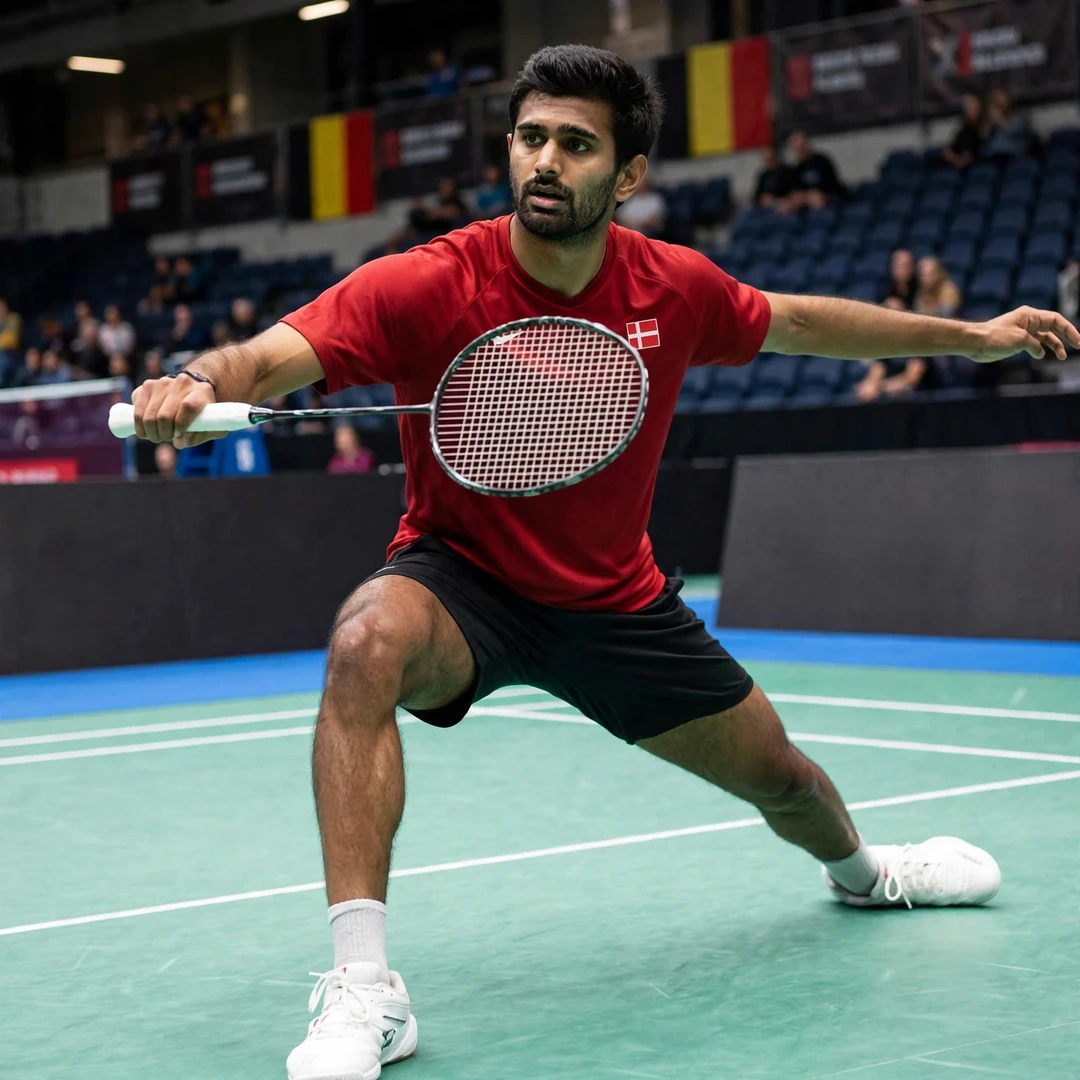
The breakthrough summer began in Bolzano. At the Italian Open 2026, an International Series event played from 25 to 28 June, Rajarajan won five matches in four days: he beat home player Giovanni Toti in three games in the quarter-finals, India’s Orijit Chaliha 21–12, 21–11 in the semi-finals, and Denmark’s Victor Ørding Kauffmann 21–19, 21–13 in the final. Title number three — and, notably, won against the kind of opposition that fills World Tour qualifying draws.
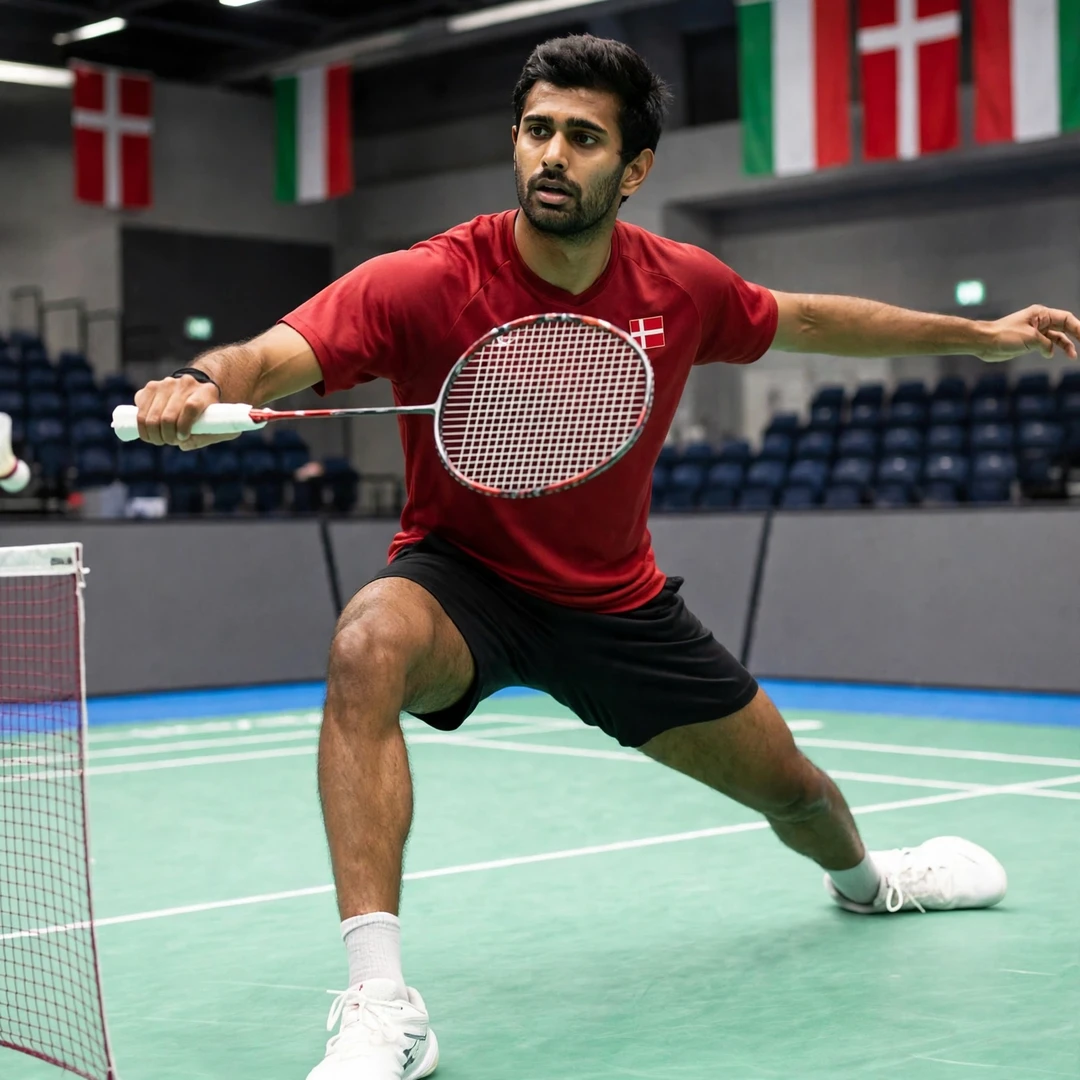
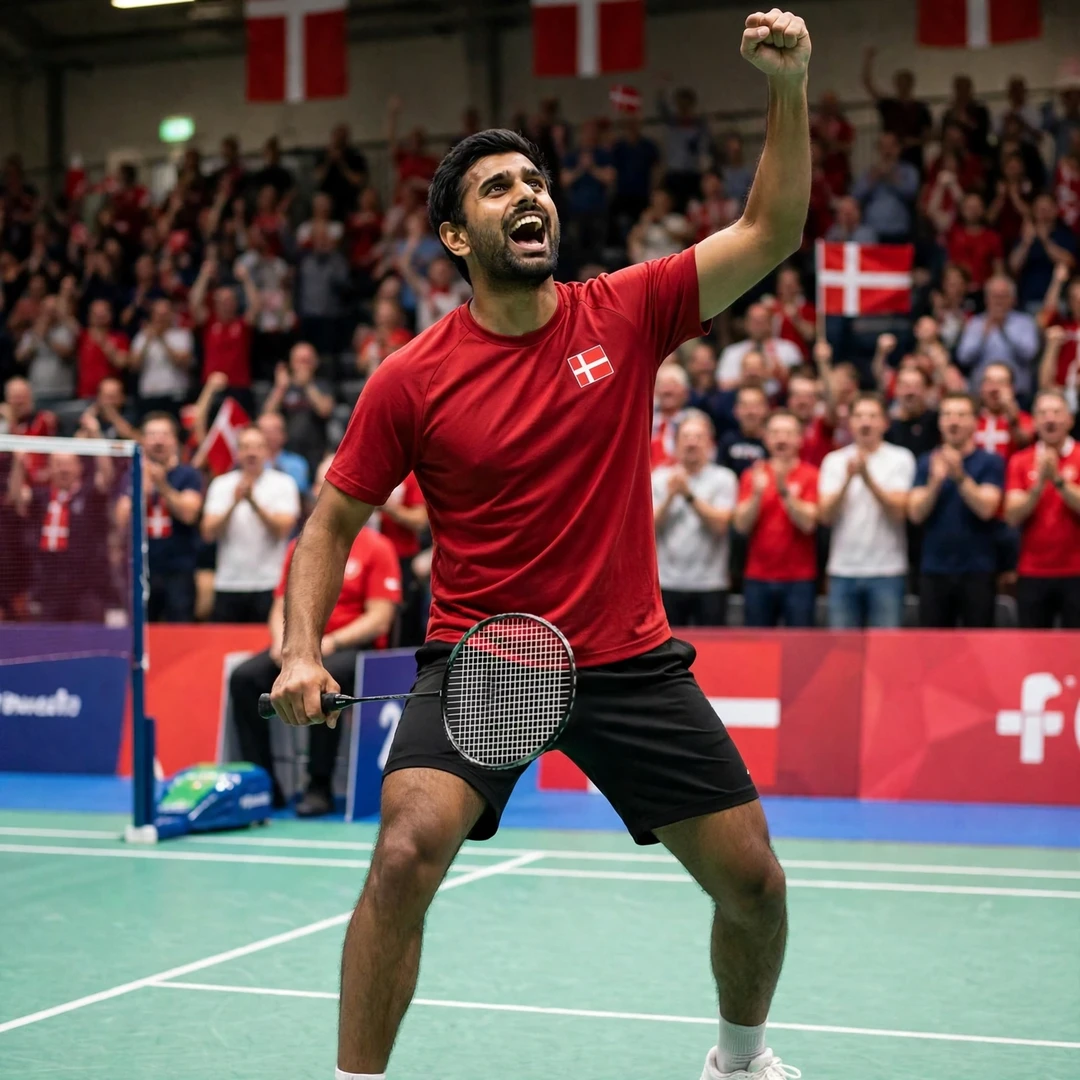
Eleven weeks later came the best week of his career. At the Belgian International 2026 in Nieuwpoort (9–12 September), an International Challenge event — one grade above Bolzano — Rajarajan beat Tobias Kuenzi, Enogat Roy, Aria Dinata and Ditlev Jaeger Holm just to reach the final, then defeated third seed Joakim Oldorff 21–15, 16–21, 22–20 in a decider that swung on two points at the death. Badminton Europe’s report called it his first International Challenge title, won against several higher-ranked players; Oldorff himself stood at world No. 62. Remember the 20-year-old in Trinidad who had taught himself to stop losing close matches? The 22–20 in Nieuwpoort is what that lesson looks like nine years later.
The titles sit inside a full 2026 campaign that shows their context: a German Open Super 300 qualifying run, last-16 finishes at the Estonian International, the Polish Open and the Czech Open — where he beat Amaury Lievre 21–8, 21–11 before losing to Magnus Johannesen — and a Türkiye International Challenge meeting with Sacha Leveque. September also brought a club move: after many Extraliga seasons with TJ Sokol Klimkovice, he signed for BK Benátky nad Jizerou for the 2026/27 Czech season.
Career Milestone #4
World No. 125 and Climbing Again
What the Belgian title really buys is belief with evidence. Rajarajan has now won tournaments at Future Series, International Series and International Challenge level, in three different countries, across seven years — a ladder climbed one rung at a time, in the correct order. Players who win a first title at 22 sometimes vanish; players who win their biggest title at 29, after a decade of semi-finals, tend to know exactly what it is worth.
In the Week 43 ranking he stands at world No. 125 with 15,570 points, up from No. 129 the previous week — the Belgian points working through his 14-tournament total. The career-high of No. 85, set in another life under another flag in 2018, is suddenly a live target again rather than a memory: the form of 2026 is the best of his career, and the ranking is finally starting to say so.
Playing Style
The Patient Rally Craftsman
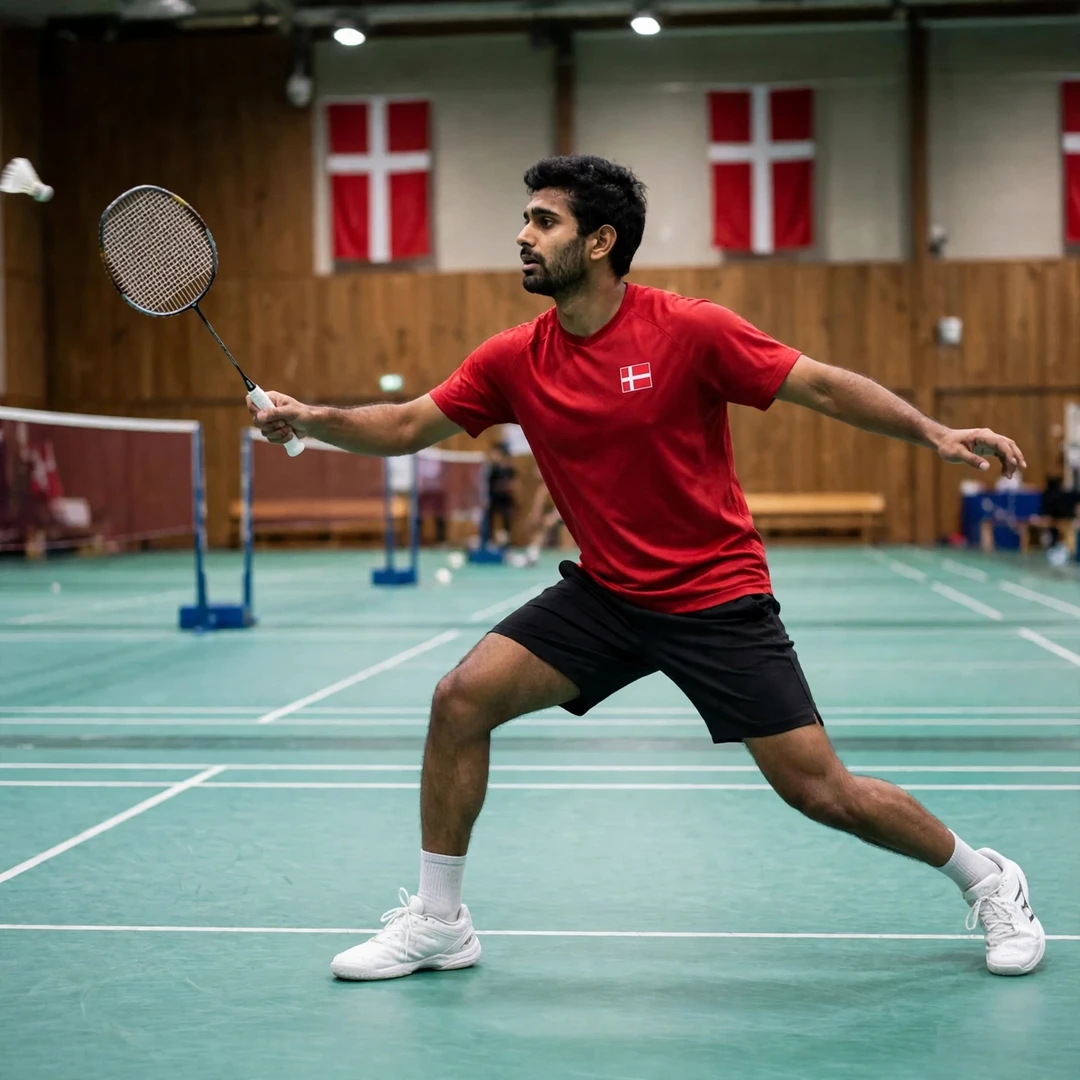
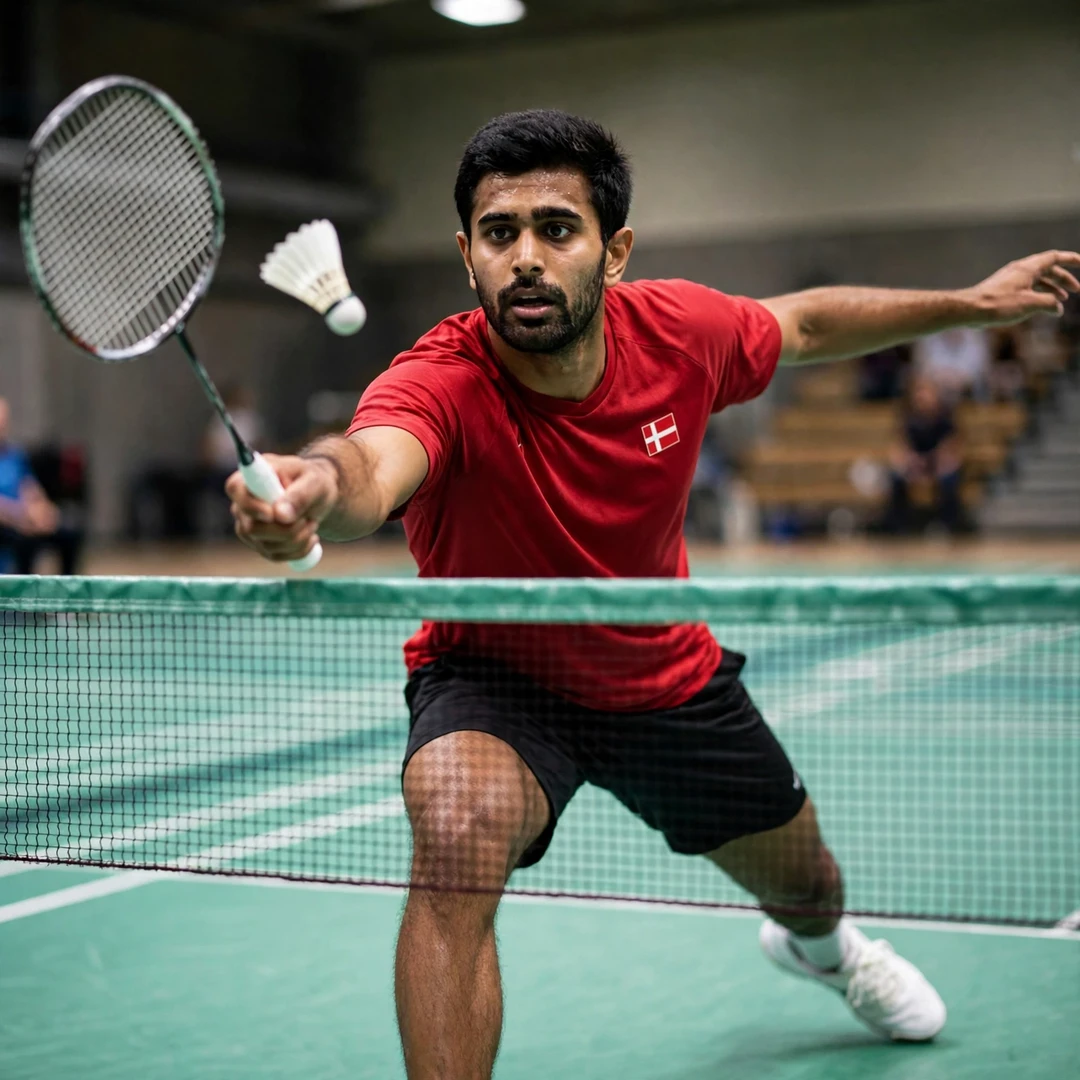
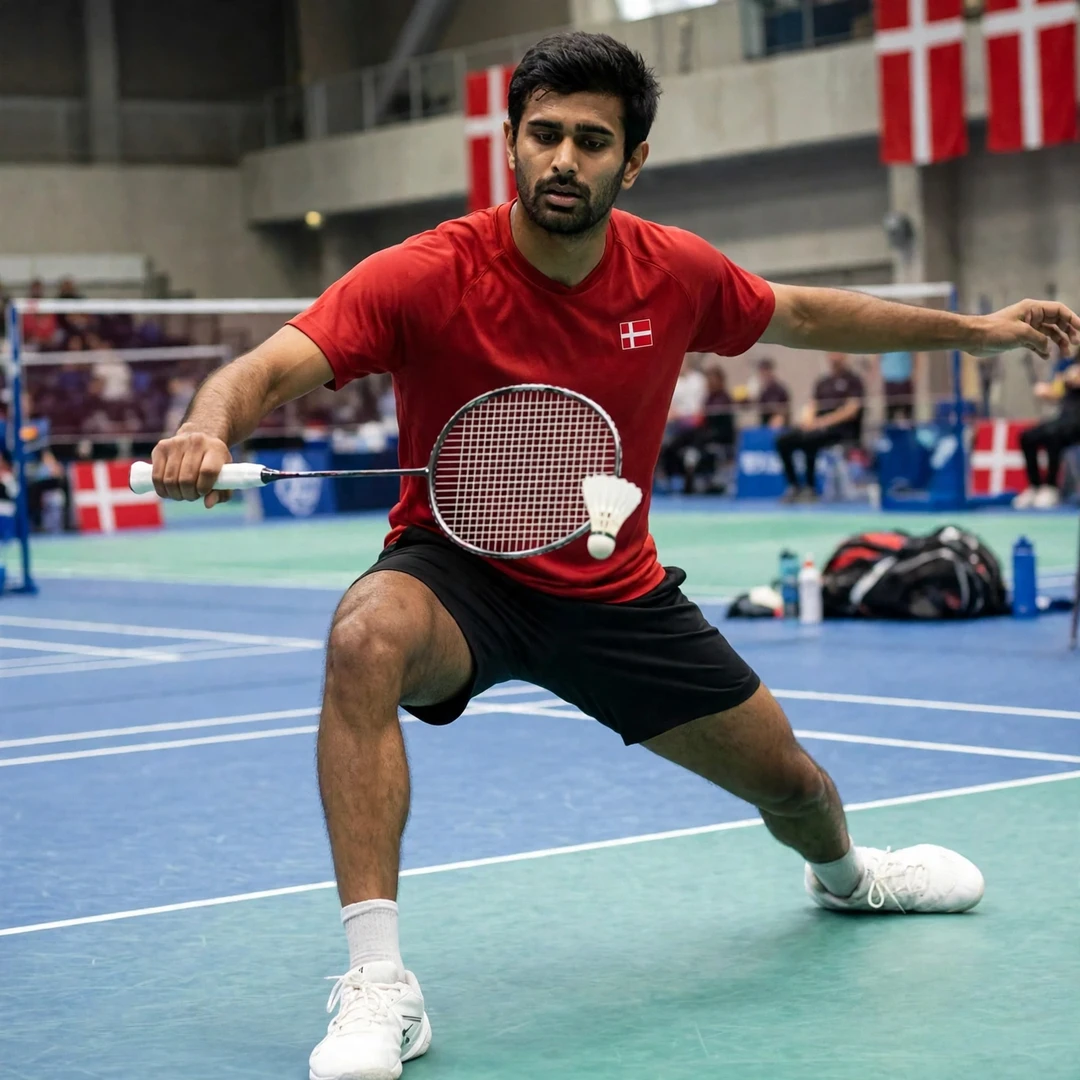
Rajarajan’s game starts from the rally, not the highlight. He is a right-hander who builds points with length and accuracy — clears and lifts that pin opponents to the back tramlines, a safe pair of hands in defence, and the patience to play the extra shot that makes aggressive players donate errors. Against the European circuit’s many similar athletes, his edge is shot tolerance: he simply stays in exchanges longer than most.
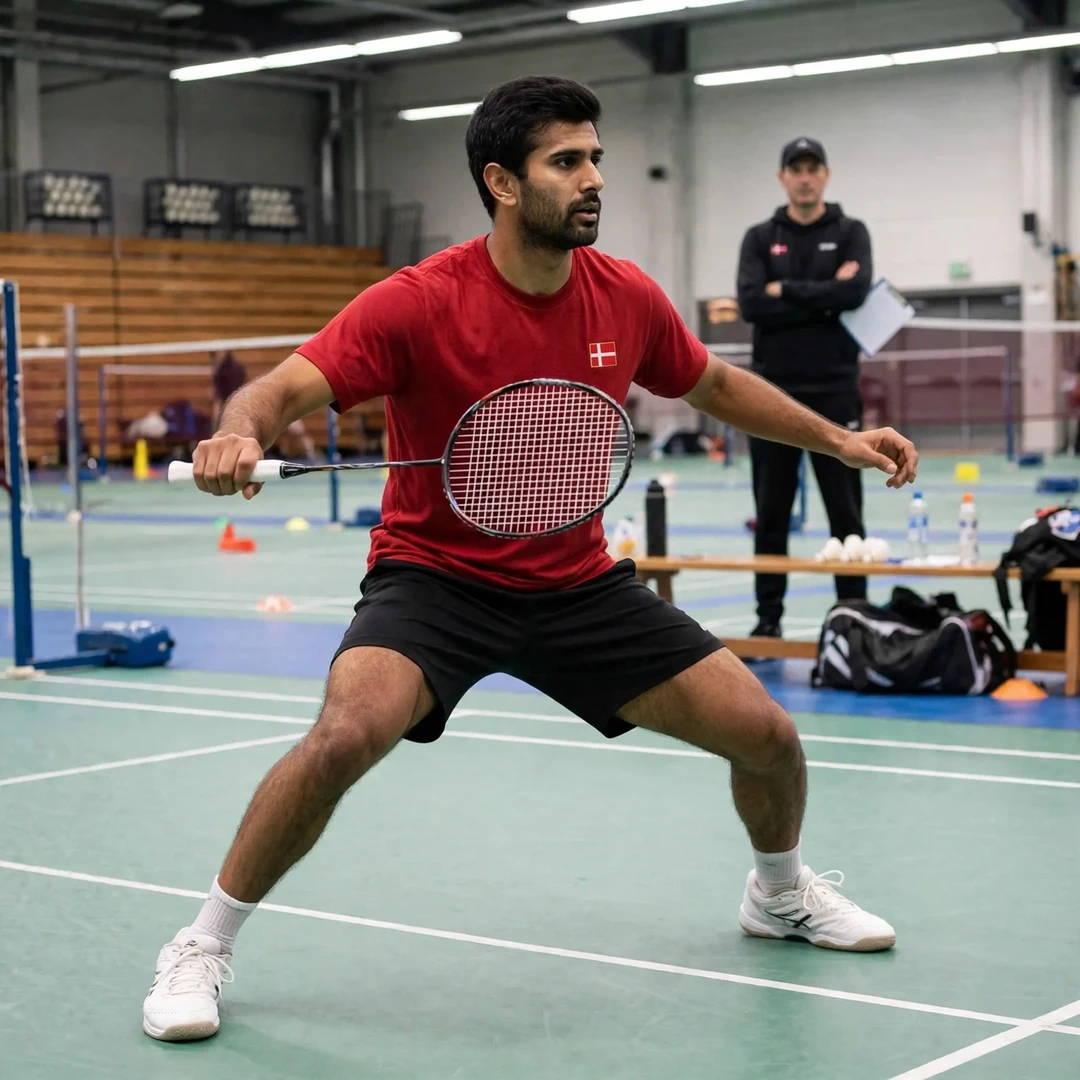
His second strength is the one he built on purpose. The teenage Rajarajan lost close matches; the adult version wins them. A 22–20 decider in an International Challenge final, a 21–19 opening game in the Bolzano final — his recent title runs are full of endgame points taken by the player who had rehearsed being calm. Coaches call it the mental game; his CAREBACO interview in 2017 shows he was already training it deliberately when most players his age were only training strokes.
The third piece is adaptability. A player who has competed for two federations, absorbed three badminton cultures — Indian beginnings, Danish training halls, Czech league nights — and stayed ranked for eleven straight years (his BWF ranking history runs to more than 500 weekly lists) has seen every style the second tier produces. There is no opponent type he meets for the first time, and no hall condition that surprises him.
Mental Strength
Patience You Can Practise
For young players, the usable lesson is sequencing. Rajarajan did not chase World Tour glamour before he could win on Sundays at Future Series level; he stacked titles grade by grade — Slovenia 2019, Iceland 2025, Italy 2026, Belgium 2026 — and let the ranking follow the results. Development looks slow from outside. From inside, it is compounding.
The long view of Karan Rajan Rajarajan is a study in refusing to leave. Eleven years on the ranking list, two federations, one career-high of No. 85, four senior titles — and the steepest improvement of his career arriving at 29, when most circuit players are managing decline. The Benátky signing for 2026/27 keeps his league base in Europe’s tough club scene; the two 2026 titles keep his entry position strong. If the No. 85 falls in the coming seasons, his story becomes one of the great slow-burn careers in European badminton. If it does not, the titles of 2026 already stand as the answer to every doubt the grind years raised.
Three habits from Rajarajan’s career transfer directly to a junior’s training week. First, train twice a day only if you can do it six days a week for years — his student-athlete schedule in Denmark was ordinary, relentless, and it worked. Second, practise the endgame deliberately: deciding rallies under fatigue at 19-all and 20-all, exactly the situations his titles were won in. Third, collect Sundays: enter events at the grade you can win, not the grade that flatters you — titles at the right level build the ranking, the confidence and the seeding that make the next grade winnable. Four of his matches repay study: the Belgian International 2026 final against Joakim Oldorff for endgame nerve, the Italian Open 2026 final against Victor Ørding Kauffmann for front-court pressure, the Portugal International 2022 final against Andi Fadel Muhammad for the near-miss years, and the Czech Open 2026 last-16 match against Magnus Johannesen for the level still above him.
Learning Reference
Karan Rajan Rajarajan and ST Badminton Academy
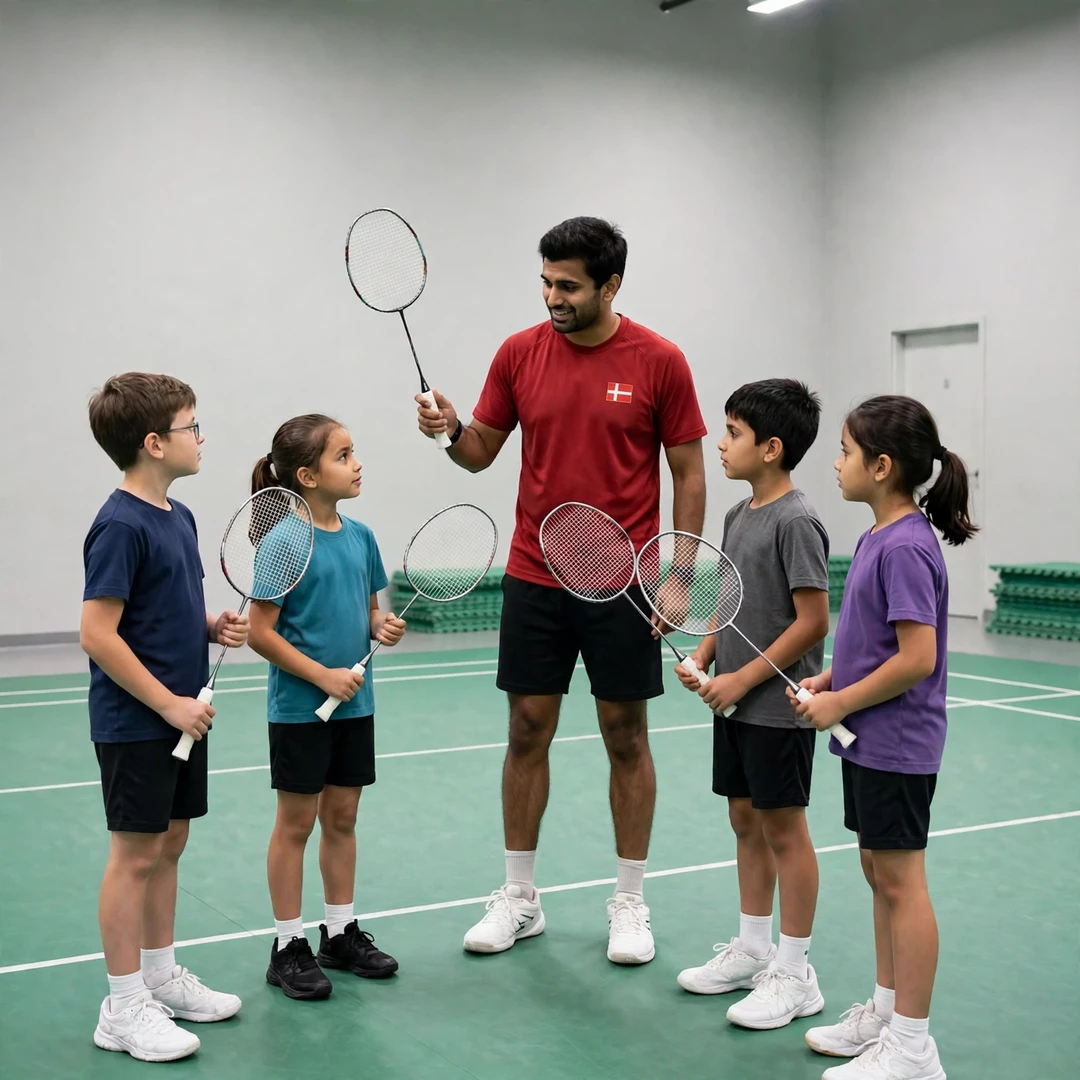
ST Badminton Academy has no official partnership or endorsement from Karan Rajan Rajarajan. This profile is an independent editorial study in the academy’s professional player series, published so that students and parents can learn from real careers at every level of the professional game — including the long, unglamorous, title-winning road travelled by players outside the top 50.
Many of our students in Malaysia and Singapore study his matches for one specific skill: how to keep winning points when you are not the most powerful player on court. His Belgian International final is a masterclass in exactly that — and in staying calm at 20-all in a deciding game.
We encourage our students to observe his rally construction, his defensive patience and the way he closes tight games, then to bring one habit — not ten — into their own training week. That is how Rajarajan himself built a career: one grade, one habit, one Sunday at a time. He will never be the most famous name in Danish badminton, but he may be its most instructive one.
Frequently Asked Questions
Quick answers about Karan Rajan Rajarajan’s nationality switch, his titles in Slovenia, Iceland, Italy and Belgium, his career-high ranking and his right-handed rally game.
Who Is Karan Rajan Rajarajan and Which Country Does He Represent?
Karan Rajan Rajarajan (born 30 October 1996) is a men’s singles badminton player who was born in India and represents Denmark. He played for India from 2015, moved to Denmark in 2016 to study and train, and has represented Denmark since May 2019. In the Week 43 world ranking (20 October 2026) he is world No. 125 with 15,570 points.
What Are Karan Rajan Rajarajan’s Biggest Achievements?
His four senior international singles titles: the Slovenia Future Series 2019, the Iceland International 2025, the Italian Open 2026 and the Belgian International 2026 — the Belgian title being his first at International Challenge level. He also reached a career-high world ranking of No. 85 in May 2018 and was a finalist at the Portugal International 2022 and the Iceland International 2023.
What Is Karan Rajan Rajarajan’s Playing Style?
He is a right-handed rally player who wins with length, accuracy and patience rather than raw power: deep clears and lifts, reliable defence, long exchanges that draw errors, and an unusually strong record in close endgames. His two 2026 titles were both sealed in tight finishes — 21–19 in the Bolzano final’s first game and 22–20 in the Nieuwpoort decider.
How Did Karan Rajan Rajarajan Win the Belgian International 2026?
At the International Challenge event in Nieuwpoort (9–12 September 2026) he won five matches in four days, beating Tobias Kuenzi, Enogat Roy, Aria Dinata and Ditlev Jaeger Holm before defeating third seed Joakim Oldorff 21–15, 16–21, 22–20 in the final. Badminton Europe described it as his first International Challenge title, earned against several higher-ranked players.
What Can a Child Learn from Karan Rajan Rajarajan’s Journey?
That a career can be built rather than given. He moved countries for training as a student, worked two sessions a day six days a week, trained his mental game on purpose after losing close matches, and climbed one tournament grade at a time for eleven years. The lesson for a child: habits held for years beat talent displayed for a season.
How Many Senior International Titles Has Karan Rajan Rajarajan Won?
Four senior international singles titles: Slovenia (Future Series) in 2019, Iceland (Future Series) in 2025, the Italian Open (International Series) in 2026 and the Belgian International (International Challenge) in 2026. He has also finished runner-up twice, in Portugal in 2022 and Iceland in 2023.
What Are Karan Rajan Rajarajan’s Best Results in 2026?
Two titles headline the year: the Italian Open in Bolzano in June (final win over Victor Ørding Kauffmann, 21–19, 21–13) and the Belgian International in Nieuwpoort in September (final win over Joakim Oldorff, 21–15, 16–21, 22–20). Around them sit a German Open Super 300 qualifying campaign and last-16 finishes in Estonia, Poland and the Czech Republic.
Why Is Karan Rajan Rajarajan’s Style Useful for Young Players to Study?
Because it is copyable. His game does not depend on rare height, reach or power; it depends on length, accuracy, defensive reliability and calm endgames — qualities any junior can drill. Studying him teaches a young player how rallies are actually constructed at professional level, and how matches are closed when the score reaches 19-all.
How Is Karan Rajan Rajarajan Connected to ST Badminton Academy?
There is no formal connection: this is an independent editorial profile in ST Badminton Academy’s professional player series, which studies the world’s top 150 men’s singles players so students and parents can learn from real careers. Rajarajan’s decade of self-built development — and his late-career titles — make him one of the series’ most relevant examples for families planning a long badminton journey.
Karan Rajan Rajarajan Career Highlights
Career Statistics and Rankings
Karan Rajan Rajarajan's story is the long way, walked properly. Indian-born, Danish by choice and by effort, ranked for eleven years, a career-high of No. 85 behind him and — after the Italian Open and Belgian International titles of 2026 — quite possibly his best badminton still in front of him. For every young player who was not chosen early, his career is the standing counter-argument: keep the habits, climb the grades, and let time do its work.
| Development Area | Common Misconception | What Karan Rajan Rajarajan's Career Shows REALITY |
|---|---|---|
| Junior Foundation | Talent alone decides who becomes a champion. | Rajarajan entered the world ranking at No. 1,357 in November 2015 with no junior titles behind him — his base was built as a senior, one result at a time. |
| Playing Style Priority | Kids should copy the flashiest attacking shots. | Rajarajan built a complete rally game first; his titles are the finishing touch on reliable length, defence and patience. |
| Fitness Importance | Juniors can out-train everyone without rest. | Rajarajan moved country and rebuilt his whole career in Denmark — his 2026 two-title summer came from a decade of structure, not a sudden breakthrough. |
| Mental Approach | Top players never get nervous or upset. | Rajarajan identified close-match losses as a mental problem at 20 and trained it deliberately — at 29 he won an International Challenge final 22–20 in the decider; mental skills are trained, not inherited. |
| Attacking Training | Smashing harder is always the answer. | His 2026 Belgian International final win over Joakim Oldorff (21-15, 16-21, 22-20) and his Italian Open title came from controlled rally pressure, not raw power. |
| National Milestones | Only world titles matter. | Rajarajan's four titles across three grades — Future Series, International Series and International Challenge — made him a fixture of European finals days — milestones build a career step by step. |
| Career Timeline | Champions peak once and fade fast. | From world No. 1,357 in 2015 to world No. 85 in 2018 and two titles at 29 in 2026, Rajarajan proves sustained development beats a short peak. |
A Career Built by Hand
ST Badminton Academy in Malaysia and Singapore helps children build the same foundations Karan Rajan Rajarajan's career stands on: footwork, rally discipline, mental skills and patient, grade-by-grade development. WhatsApp +60 17-684 2136 to ask about junior training and trial classes.