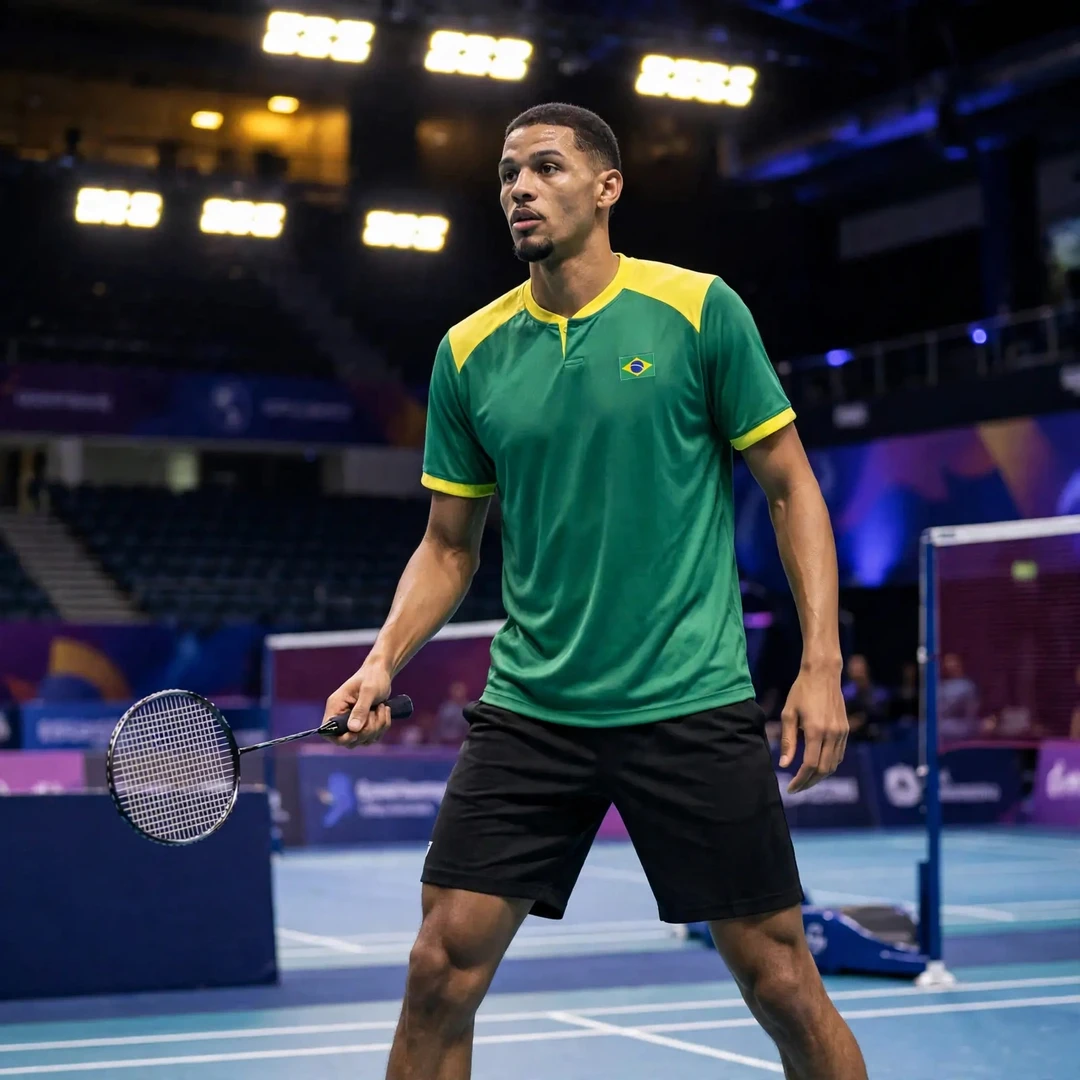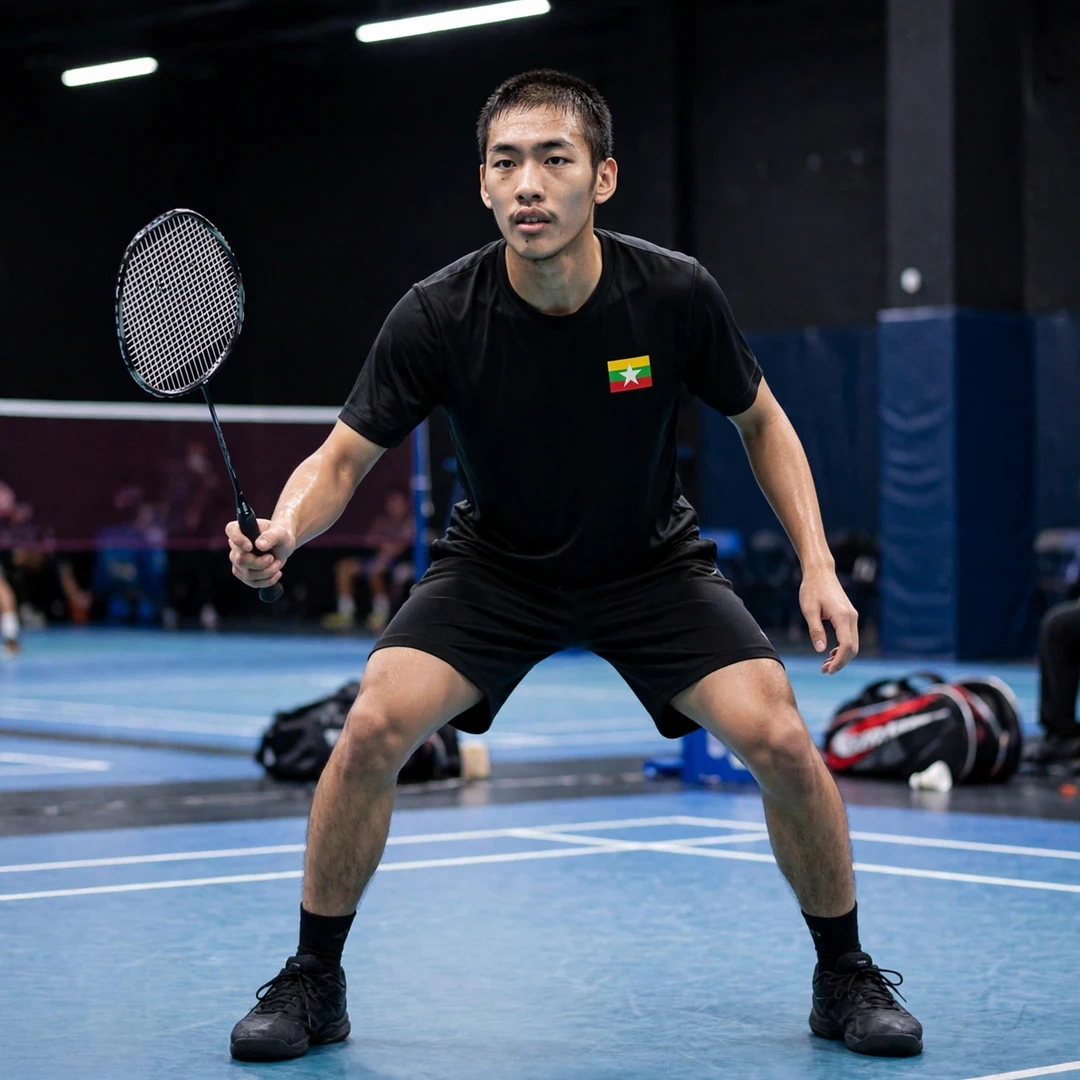
Myanmar Men’s Singles Badminton Star
Hein Htut

Myanmar
Player Event: Men’s singles
From Yangon, Myanmar · Born: 3 March 2006 · Right-handed · Myanmar national team player
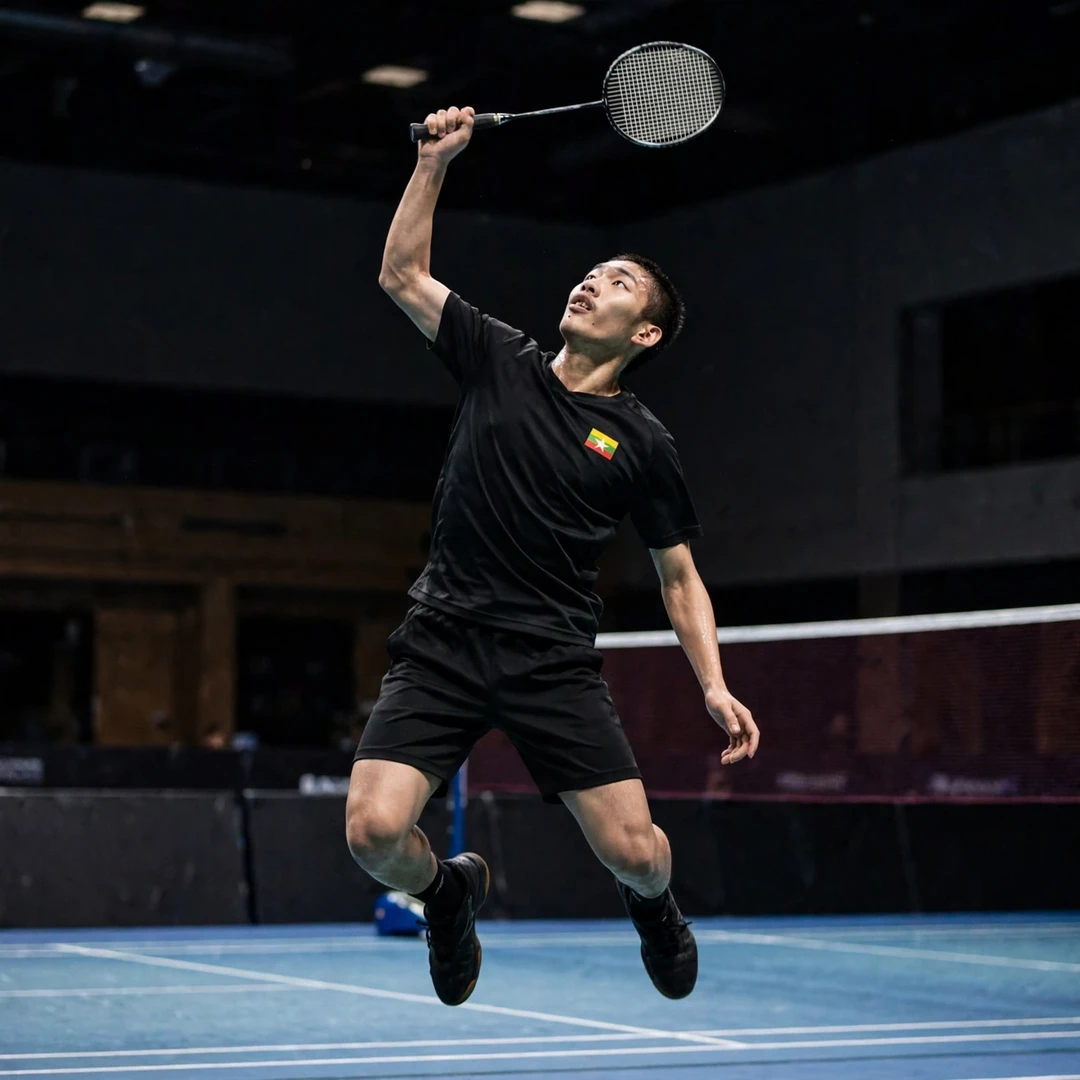
Playing Style: Fast, brave rally player — light on his feet, early to the shuttle, defends deep into the corners and counter-punches; still adding smash power and learning to cut out the simple errors
Known For: Winning the Uganda International Series in Kampala in 2025 and defending the title as top seed in 2026; a first World Championships match win in New Delhi; and the famous 2017 ‘breakfast match’ that made him a junior star at eleven
Teams: Myanmar national team
Understanding Hein Htut (Myanmar Badminton Star)
Hein Htut stands at No. 117 in the BWF men’s singles rankings released in Week 43 on 20 October 2026 — and that number is also his career high, earned with 16,106 points from fifteen counted tournaments. The 20-year-old from Yangon is Myanmar’s top-ranked men’s singles player: a two-time Uganda International Series champion in Kampala, in 2025 and again in 2026, a match winner at the 2026 World Championships in New Delhi, and a player who has climbed more than 1,200 places since he first appeared in the rankings at No. 1,359 in June 2023. His story began more strangely than almost any other in this series — at eleven years old, in front of a home crowd in Yangon, he won the first game of his international debut, was sick on court after his parents fed him too much breakfast, and flatly refused to give up. Nine years later, that same stubbornness is the first thing people in Asian badminton mention about him.
Yangon Beginnings: The Boy Who Idolised Lee Chong Wei
Hein Htut was born on 3 March 2006 in Yangon, Myanmar’s largest city, and grew up in a family that organised itself around his badminton. His father, Sai Peng Moong, is a businessman; his mother, Nang Saing Hom, gave up her job as an engineer to look after the family — the support structure behind the player. The family enforced one famous rule: only nutritious food, prepared carefully, because his body was the project’s most important equipment. The player he studied and idolised was Malaysia’s Lee Chong Wei, whose speed and defensive courage became the template for a small, quick boy from Yangon. In his early junior days his sparring partner was Aung Myo Htoo, and even then the coaches around the Myanmar team used the same word for him: brave.
The Breakfast Match That Made Him Famous at Eleven
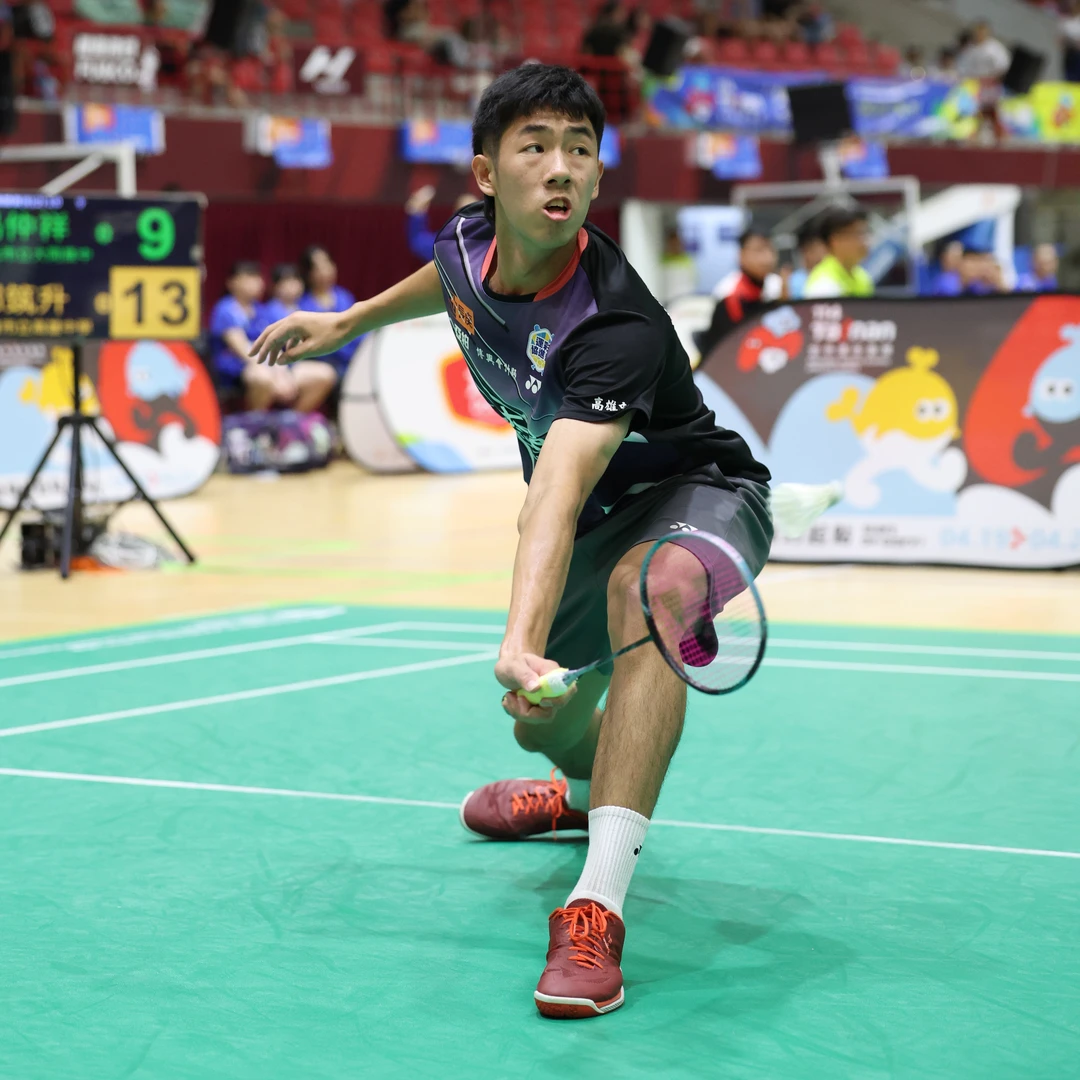
His international debut, at the Badminton Asia Under-15 and Under-17 Junior Championships in Yangon in October 2017, became Myanmar sporting folklore. The championships at Thuwunna National Indoor Stadium were the first international badminton tournament held in Myanmar for eighteen years, and the eleven-year-old Hein — four feet eleven inches tall, the smallest player in the draw — won the first game of his match against Macau’s Pui Chi Chon, 21-19. Then the morning caught up with him: his parents, anxious that he would run out of energy, had fed him a heavy breakfast, and in the second game he vomited on court and needed medical treatment. Spent, he lost 13-21 and 2-21 — but he finished the match, and the home crowd cheered his courage long after the result was decided. His coach, Zaw Maung Maung Soe, said the boy had a bright future. Hein himself was less romantic about it: fans kept bringing the story up for years, and he admitted he had ‘become famous for the wrong reasons’ — he wanted to be famous as a badminton player.
First International Win: Beating an Intanon in Surabaya
A year later, at twelve, he was back at the same championships in Mandalay, losing his singles first round to Indonesia’s Jason Christ Alexander, one of the seeded players, and a doubles match alongside Mote Htee Thar against a Singapore pair, 15-21, 14-21. Defeats, but educational ones: 2018 took him to tournaments in Indonesia, Thailand, Singapore and Japan, a travel schedule few twelve-year-olds anywhere in the world were keeping. His stated target in those years was the 2024 Paris Olympics. He did not get there — very few teenagers do — but the ambition tells you how the family thought: not about winning junior medals at home, but about the biggest stage in the sport.
World Juniors 2024: Two Wins and a Scare for the Fifth Seed
The first real result arrived in Surabaya, Indonesia, in December 2019, at the Badminton Asia Under-17 and Under-15 Junior Championships. After a first-round bye, the unseeded thirteen-year-old from Yangon met Thailand’s Ratchaphol Intanon — the younger brother of former world champion Ratchanok Intanon — and beat him 15-21, 21-18, 22-20: his first international win, sealed in a decider that went to setting. His self-assessment afterwards was strikingly honest for a thirteen-year-old, and it still reads like his coaching file today: ‘There is more power in my smashes. I am cooler under pressure, but I need to improve on my mental strength, as I still tend to make simple unforced errors.’ His ambition, stated in the same interview, was to help Myanmar win medals at regional events such as the SEA Games.
Career Milestone #1
The Long Senior Climb: From No. 1,359 Into the Top 150
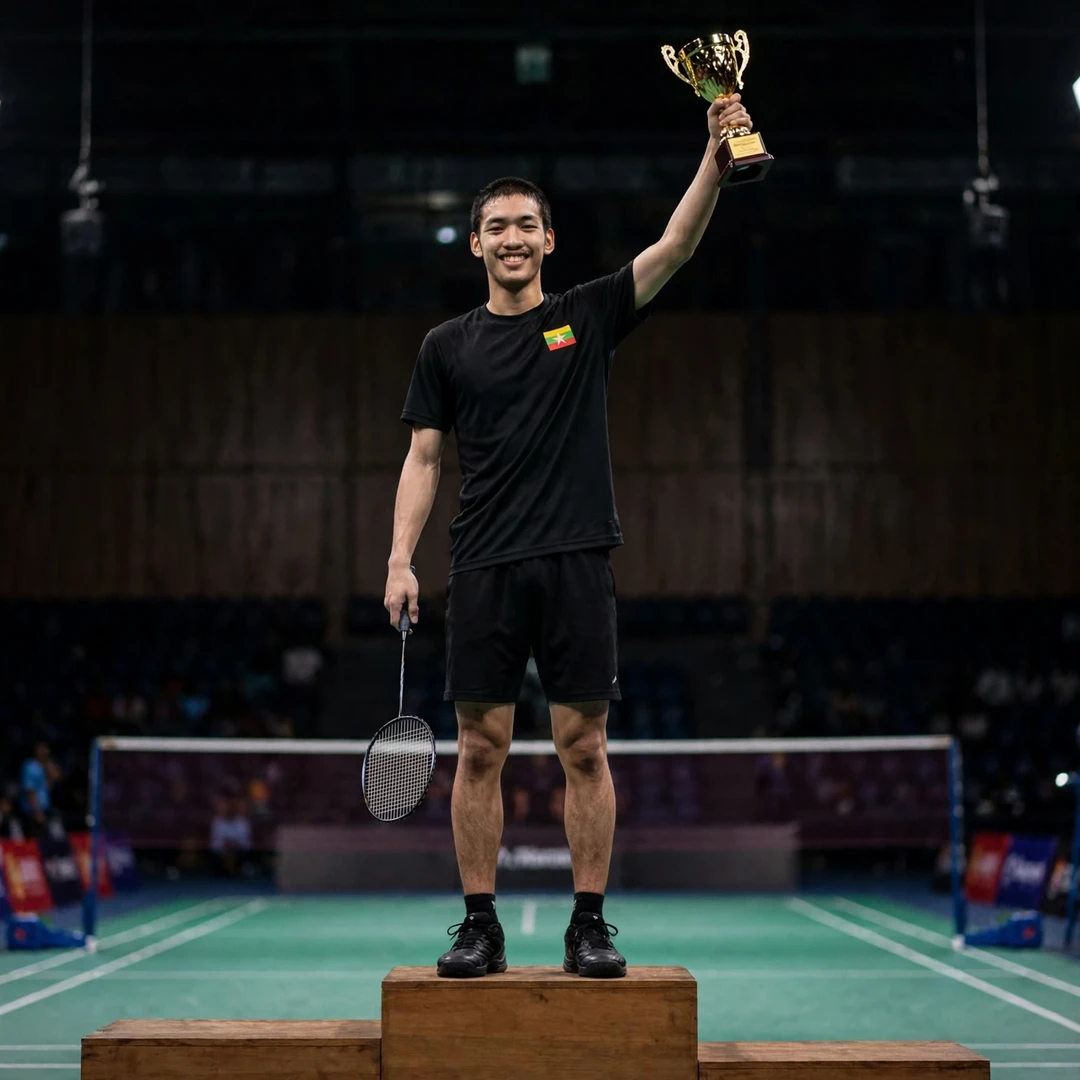
His last junior season peaked at the 2024 BWF World Junior Championships in Nanchang, China, in October 2024. Hein beat R. Roogsoo 21-10, 21-14 and L. Kurniawan 21-6, 21-8, then took the fifth seed, Bharath Latheesh, to a deciding game before falling 18-21, 21-16, 12-21 in the fourth round. Two wins and a three-game scare for a top-five seed: by eighteen, he was no longer a curiosity from a heart-warming story. He was a player seeded juniors had to work to beat.
The senior ranking tells the same story in colder numbers. Hein first appeared in the BWF world rankings on 13 June 2023, at No. 1,359. That same year, aged seventeen, he was already travelling to East Africa: a semi-final at the Uganda International Series and a quarter-final at the Kampala International, where Uganda’s Brian Kasirye beat him 12-21, 21-7, 17-21. By January 2024 he stood around No. 339, and on 19 March 2024 he broke into the top 300 at exactly No. 300. The method was established early and has never changed: travel far, play everything, bank the points.
Career Milestone #2
Kampala, His Second Home: A Final and a Title in Back-to-Back Weeks
Through 2024 and 2025 the calendar filled with the circuit’s engine-room events across Asia — Vietnam, Thailand, Malaysia, Singapore, Indonesia — and the results thickened as the ranking climbed past No. 255 in January 2025. In 2025 he reached the last sixteen at the Thailand International Challenge, quarter-finals at the Malaysia International Series and at the FELET Vietnam International Series, and a semi-final at the LI-NING Vietnam International Series, as well as representing Myanmar at the Badminton Asia Championships. On 30 September 2025 he broke into the top 200 for the first time, at No. 194 — and his best fortnight of the year was still to come, eight thousand kilometres from home.
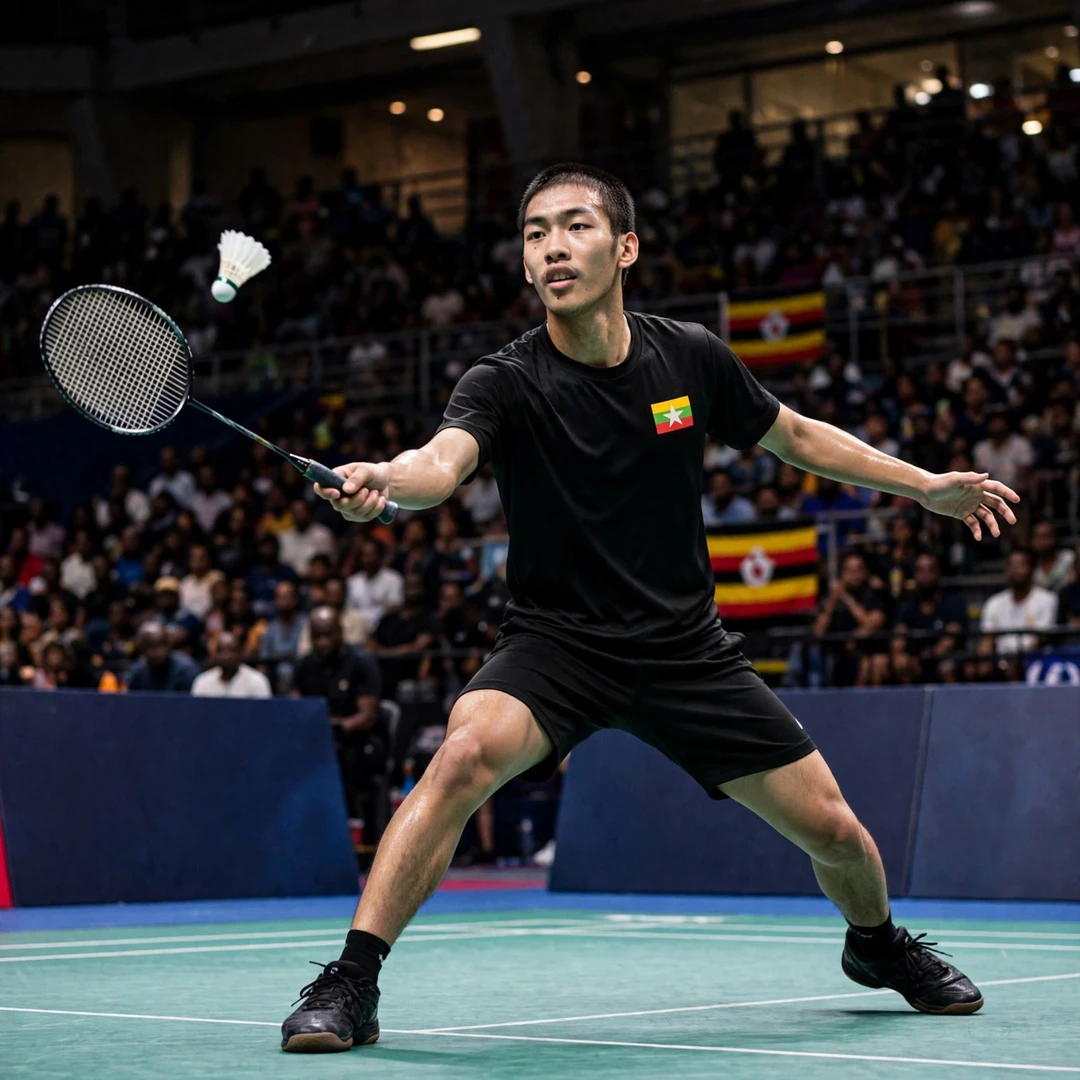
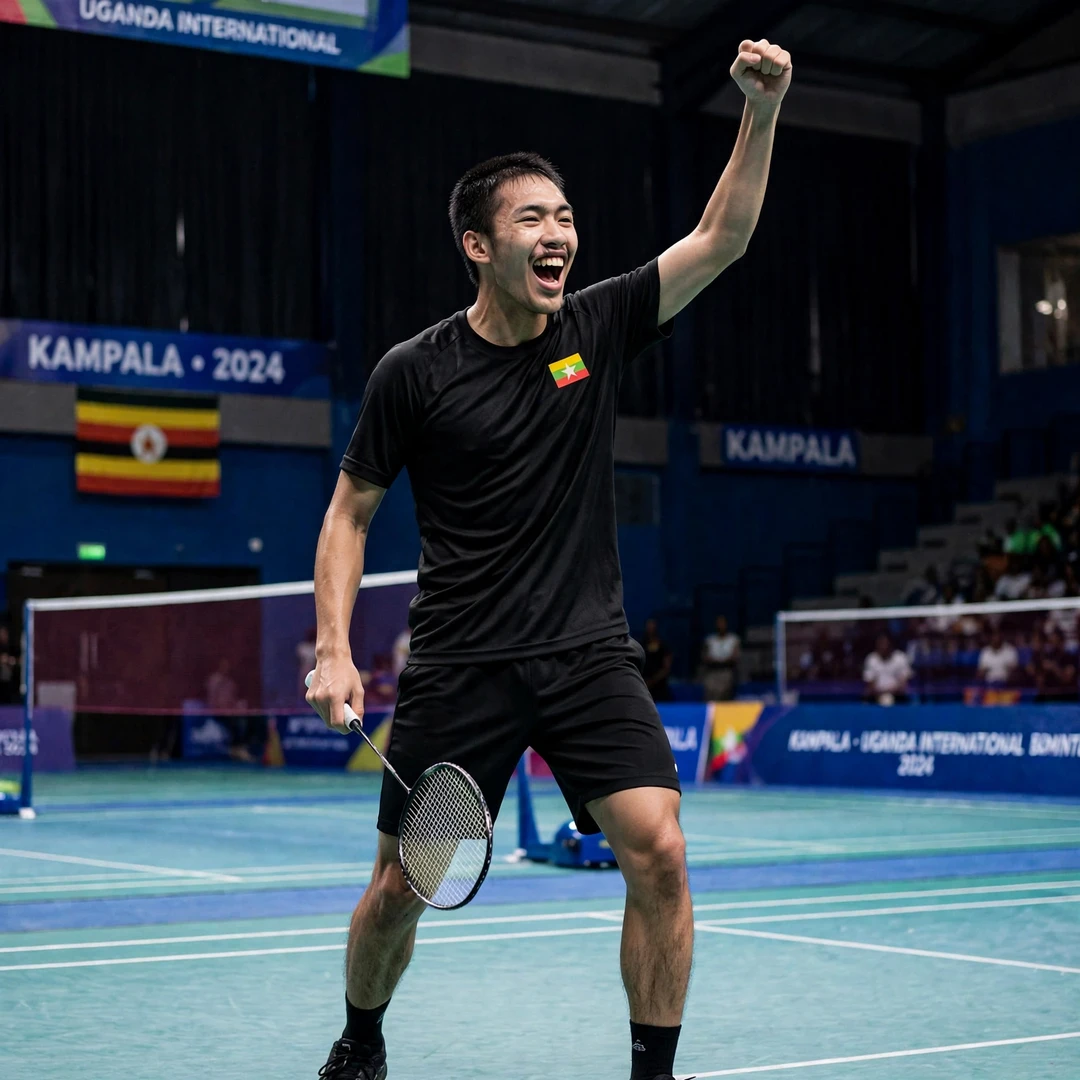
Kampala, Uganda, became his second home in the space of two weeks in the autumn of 2025. First came a run to the final of the Kampala International, a Future Series event at the Lugogo Indoor Arena, where he finished runner-up. The very next week, at the Uganda International Series in the same city, he went one better and won the title — his first senior international singles crown, reported back home by NTV Uganda: ‘Hein Htut from Myanmar emerged victorious in the men’s singles.’ Three weeks later, on 4 November 2025, the rankings caught up with the results: No. 142, inside the top 150 for the first time.
February 2026 brought a different kind of education: the Badminton Asia Team Championships in Qingdao, China, where Hein led Myanmar’s team against the region’s powers. Myanmar lost the tie to Malaysia 5-0, but their No. 1 singles pushed Malaysia’s Justin Hoh — a player ranked inside the world’s top forty — through two tight games before going down 21-18, 21-19 in forty-eight minutes. For a player from a small badminton nation, team championships are where you measure yourself against the elite with nothing to lose, and Hein’s score-line said the gap was measured in points, not in classes.
Career Milestone #3
Wearing the Flag: Team Myanmar and a First World Championships Win
The spring of 2026 was a working tour: a round of 32 at the Uganda International Challenge — Kampala again, this time in February — two Singapore weeks, a first-round exit in Hanoi, and then the Badminton Asia Championships in Ningbo, where he beat Mahd Shaikh 21-13, 21-13 in qualifying. Two wins followed at the Phuket International Challenge in June, and at the Macau Open he won his first qualifying match against India’s Alap Mishra before his run ended against Rounak Chouhan. None of it made headlines. All of it kept the ranking moving the right way through the world’s top 150.
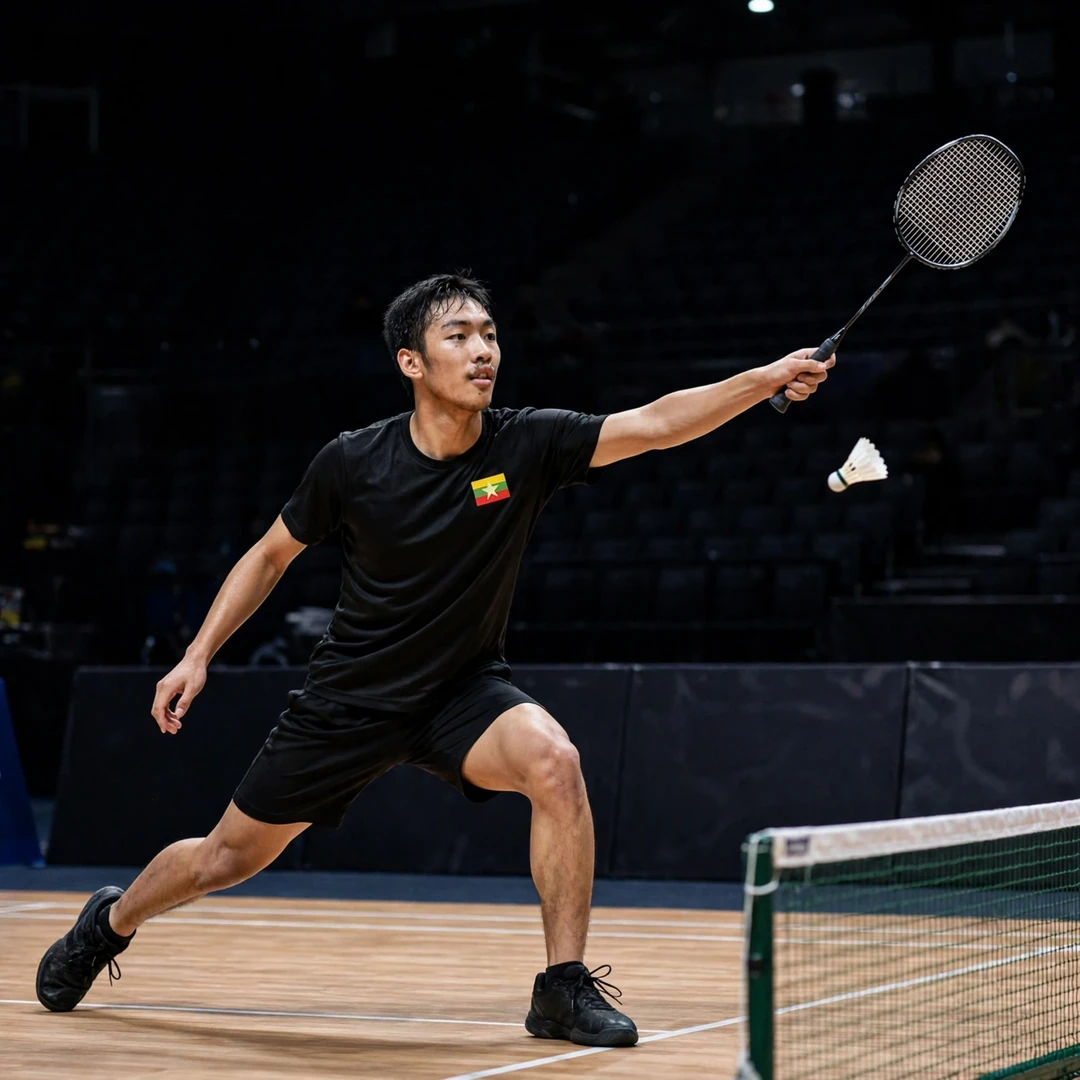
August 2026 delivered the biggest result of his career so far: a match win at the BWF World Championships in New Delhi. In the round of 64 Hein beat Poland’s Mikolaj Szymanowski 21-10, 21-17 — a controlled, straight-games win on the sport’s largest annual stage. The next round put him across the net from France’s Toma Junior Popov, a top-sixteen seed, and he lost 13-21, 11-21: the current distance to the elite, measured honestly. September kept the standard high — at the Vietnam Open, a Super 100 event, he beat Chinese Taipei’s Kuo Kuan Lin in three games before losing the last-sixteen match to Japan’s Minoru Koga, and he reached the round of 16 at the Nakhon Sawan International Series in Thailand with three more wins.
Then came the title defence. In late September 2026 Hein returned to Lugogo for the Kampala International and reached the semi-finals, stopped one match short of a second straight final there. A week later, at the Uganda International Series, he arrived as the top seed — the hunter now hunted — and played like it: five wins, no defeats. The semi-final was the test of the week, India’s Abhishek Kanapala taking the first game before Hein turned the match around, 16-21, 21-14, 21-10. In the final he beat Iran’s Ali Hayati, the third seed, to defend his title; Kanapala and Nigeria’s Victor Ikechukwu took the bronze medals. Two years running, the men’s singles trophy at the Uganda International Series belonged to a young man from Yangon.
Career Milestone #4
Champion Again in Kampala — and a Career-High No. 117
The ranking week itself was spent back at Super 100 level, which is exactly where his career is heading. At the Malaysia Super 100 in Johor Bahru he lost his round-of-32 match to Korea’s Jeon Hyeok Jin, 15-21, 16-21, then flew to Kudus for the Indonesia Masters Super 100 and won two matches to reach the last sixteen in the very week the new rankings were published. The Week 43 list of 20 October 2026 recorded the sum of it all: No. 117, 16,106 points, fifteen tournaments — up from No. 120 the week before, and the highest ranking of his life.
What remains is the next wall. The top 100 is the obvious checkpoint — no Myanmar men’s singles player of the modern era has made a home there, and Hein is now one strong Super 100 week away from knocking on it. The route is the same one that has carried him from No. 1,359: convert Super 100 round-of-32 draws into quarter-finals, keep the Kampala titles coming, and deliver on the ambition he stated at thirteen — medals for Myanmar at regional games such as the SEA Games. His curve has never spiked; it has simply never pointed down for long. Players built that way tend to last.
Playing Style
Light Frame, Fast Feet: How Hein Htut Plays
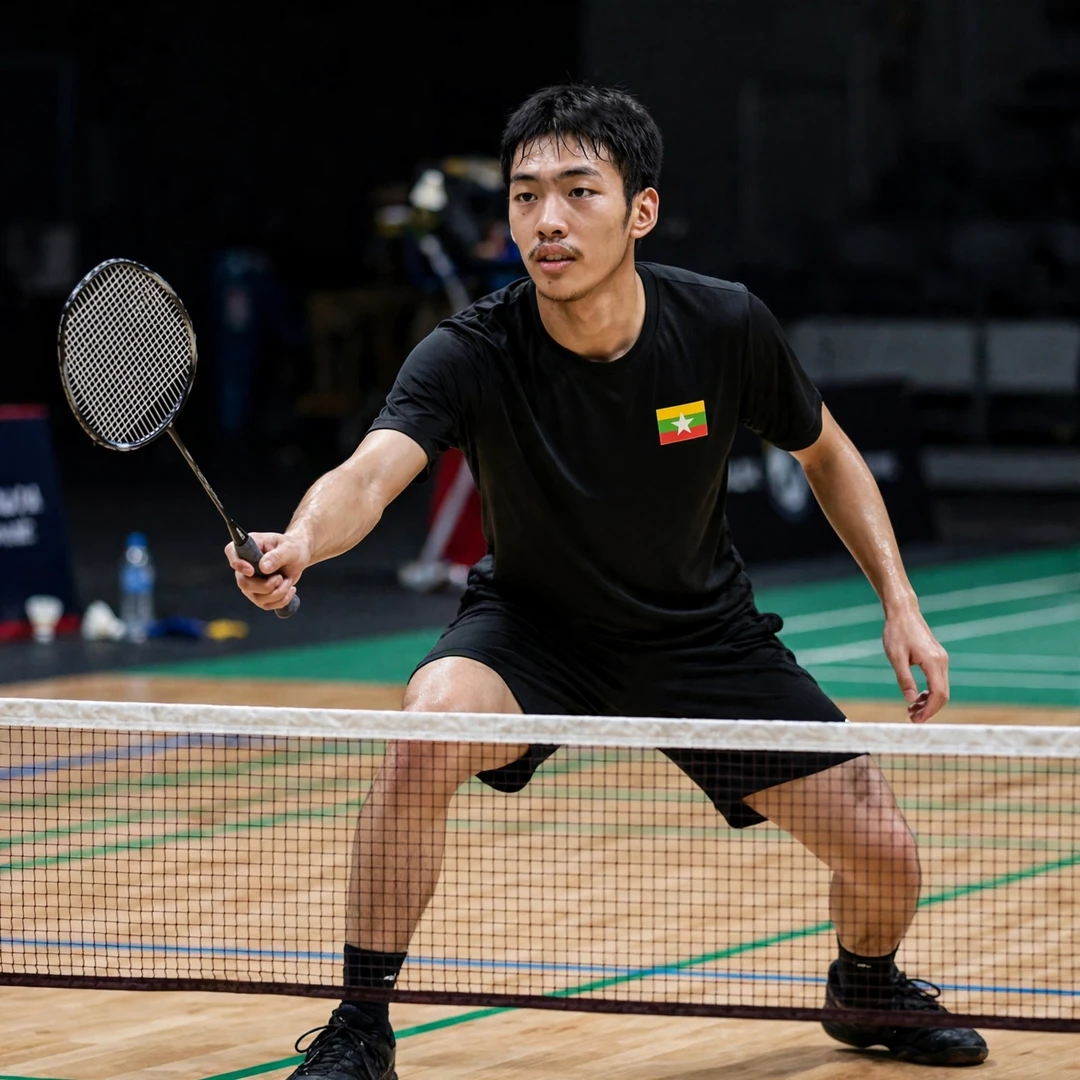
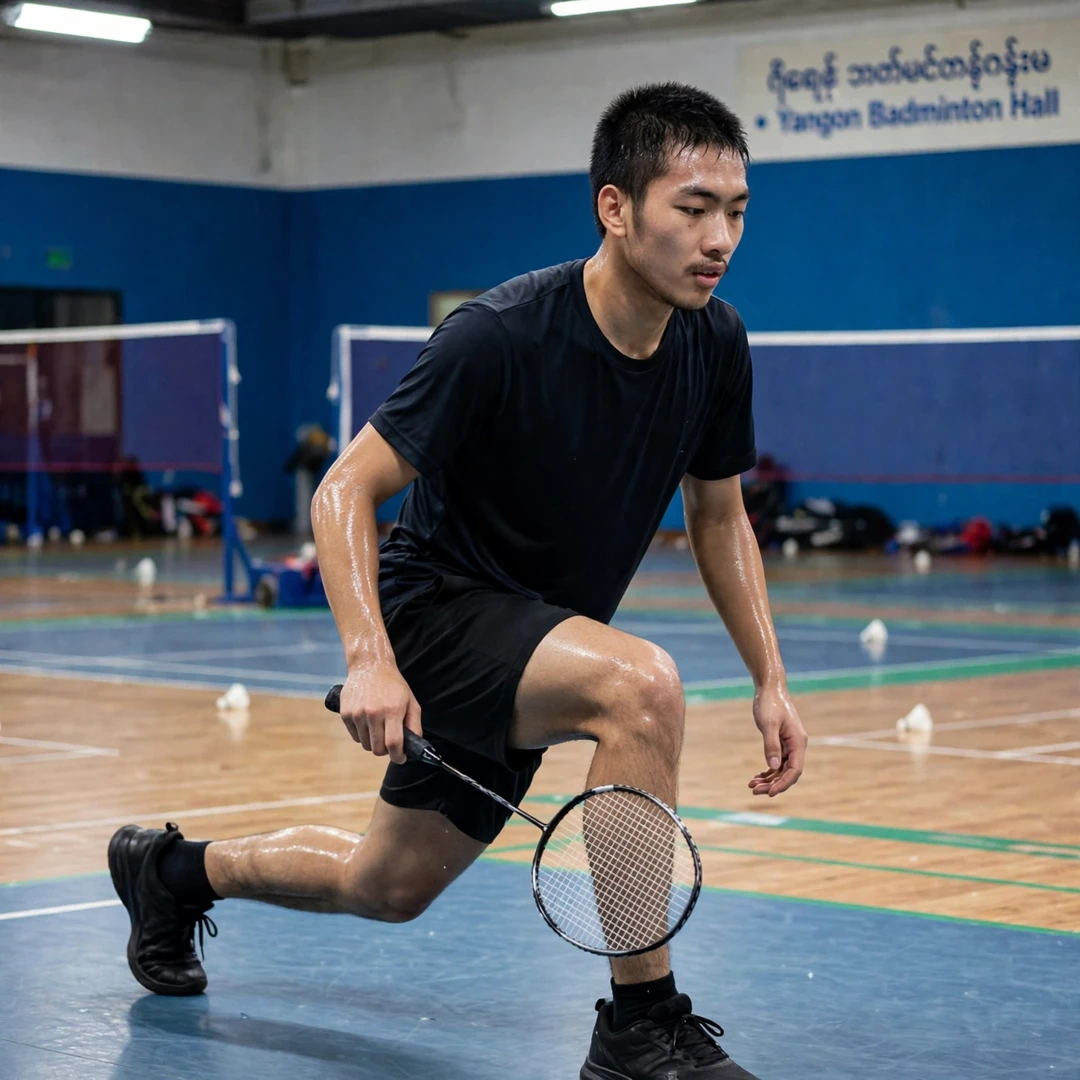
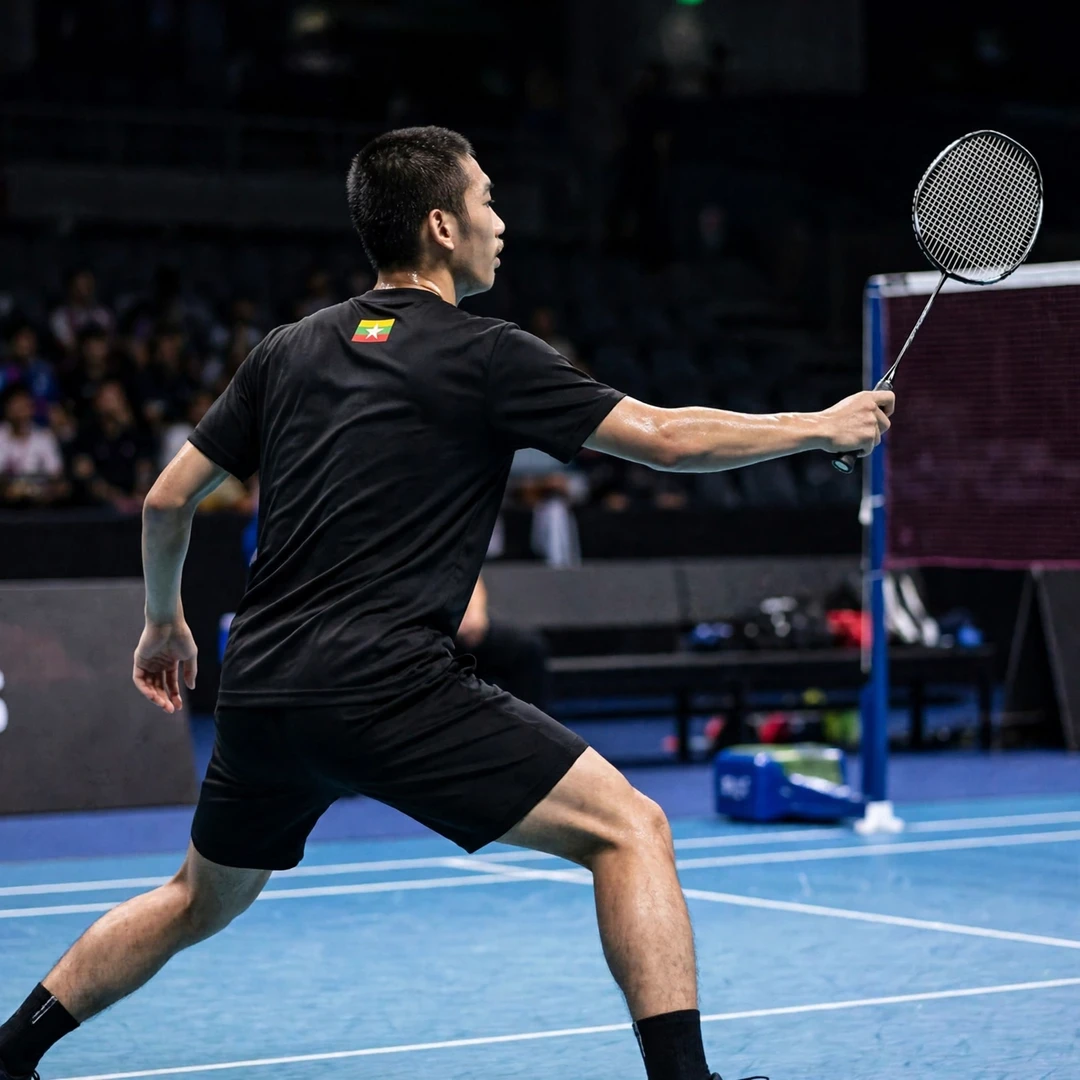
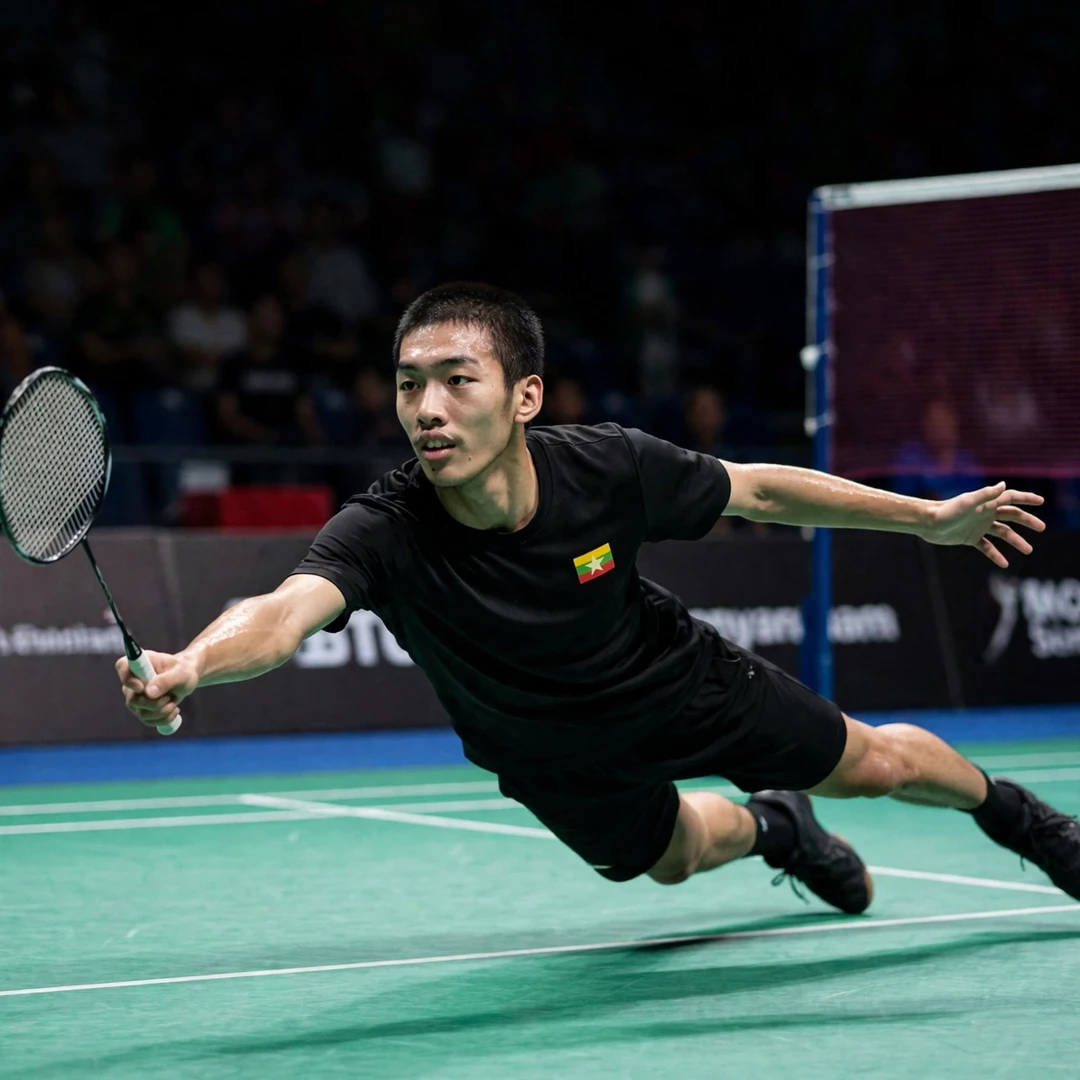
Start with the frame and the feet. Hein was the smallest player in his junior draws — four feet eleven at eleven years old — and he built his game the way small players must: speed first. He takes the shuttle early, defends deep into the back corners to buy recovery time, and treats long rallies as home territory rather than danger. The appetite that the Yangon crowd saw in 2017 is still the base of it: he chases balls other players concede, and opponents who expect a small player to fade in third games keep meeting the boy who finished a match he should medically have abandoned.
The attacking layer has been added year by year, in his own words: more power in the smashes, cooler under pressure. Watch the 2026 Kampala semi-final for the pattern — a game down to Abhishek Kanapala, no panic, longer and safer rallies to reset, then pace injected once the opponent’s patterns were read, and a 21-10 deciding game. It is the same shape as his first international win at thirteen, when he lost the first game to Ratchaphol Intanon and closed the decider 22-20. Comebacks are not accidents in his record; they are a method: stay close, gather information, finish stronger than you started.
The frontier is the one he named himself at thirteen: the simple unforced errors. Against top-sixteen opposition — Toma Junior Popov at the World Championships, Jeon Hyeok Jin at the Malaysia Super 100 — his rally game holds for stretches, but the errors arrive in clusters and the games close quickly, in straight sets. The physical side is part of the same project: building the strength to hurt bigger hitters with his smash, so that defence is a choice rather than a necessity. If the error count falls and the attack gains weight, the top 100 stops being a target and becomes an address.
Mental Strength
Lessons From a Nine-Year Climb
The first lesson of Hein Htut’s career is that a ranking is climbed in public, over years, one unglamorous week at a time. He became famous at eleven for the wrong reason, in a match he lost. He responded by spending nine years travelling — Yangon, Mandalay, Surabaya, Nanchang, Qingdao, New Delhi, Kampala — until the results made the story unnecessary. From No. 1,359 to No. 117 there is no single leap in his record; there are 175 weekly ranking entries of small steps, almost all of them forward. Developing players waiting for one breakthrough tournament should study that shape of curve: it is what real development usually looks like.
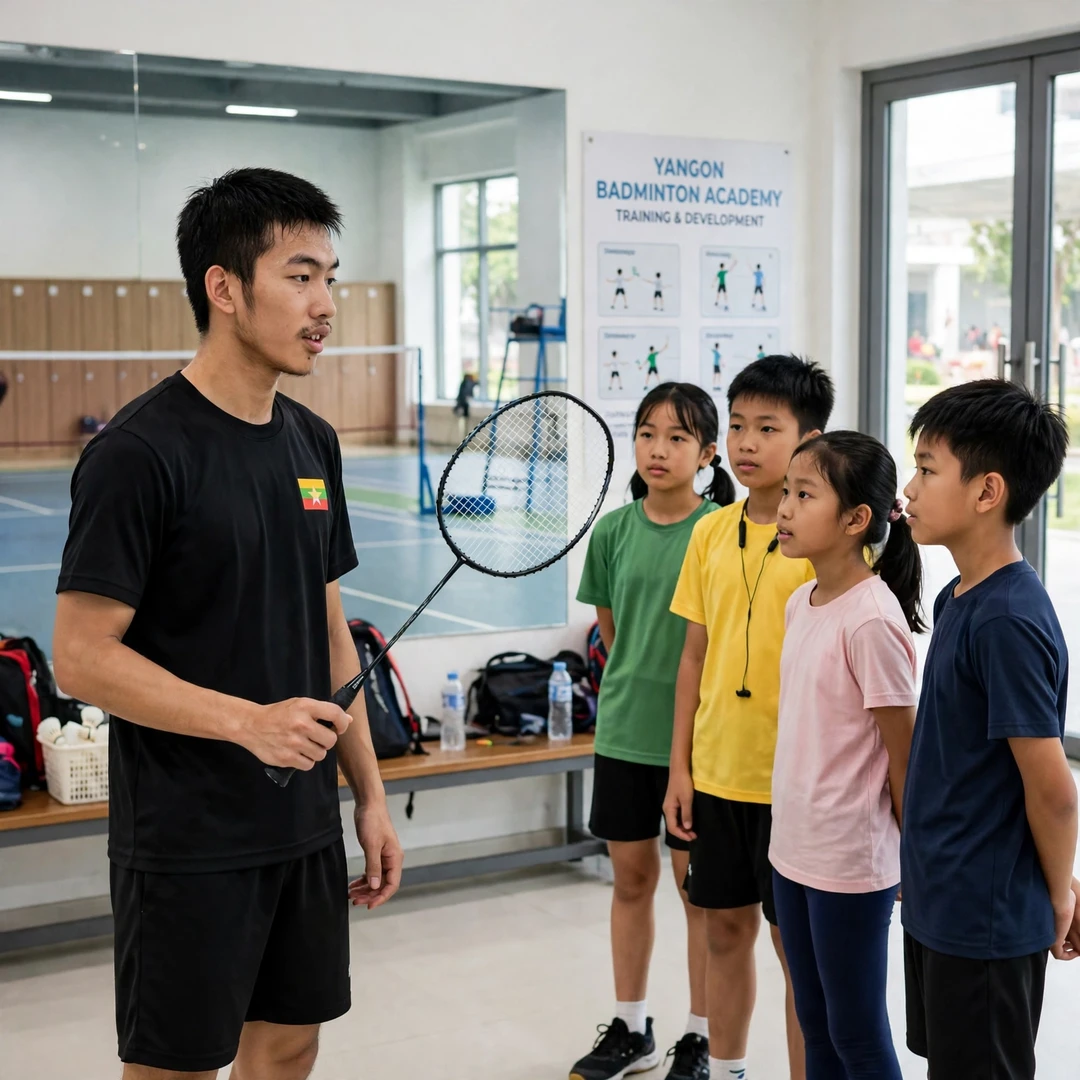
The second lesson is the family system behind the player. A father running a business, a mother who gave up an engineering career to run the home, a strict rule about food that once backfired so memorably — and underneath the famous story, a decade of logistics: passports, entries, sparring, school, travel to four countries in a single junior year. When Hein talks about wanting to win medals for Myanmar, he is talking about repaying that system as much as about himself. Young players often see only the athlete on court; professionals know the team at home is the first academy anyone attends.
Practical lessons from his journey include building your game around your natural gifts — in his case foot speed, defence and courage — rather than copying a bigger player’s power game; knowing your weakness and saying it out loud, the way he diagnosed his own unforced errors at thirteen; playing everywhere, because Futures and Series events in places like Kampala built both his ranking and his resilience; finishing matches — his signature wins, from Surabaya 2019 to Kampala 2026, were closed in deciding games after losing the first; and preparing like a professional — food, sleep, routines — long before the sport pays you like one.
Learning Reference
ST Badminton Academy Connection
ST Badminton Academy is not affiliated with Hein Htut and does not represent him or the Myanmar national team. This profile is published purely as an educational case study for parents and junior players who want to understand how a player from a small badminton nation climbed from an eleven-year-old’s infamous breakfast in Yangon to back-to-back titles in Kampala and a career-high world No. 117 — and what his nine-year climb teaches about development that lasts.
Many of our students study his matches to understand how a smaller player survives and wins at international level: the Kampala semi-final comeback against Abhishek Kanapala for match management under pressure; the team match against Justin Hoh for competing honestly with a top-forty player; the World Championships win over Mikolaj Szymanowski for closing out a winnable match on a big stage; and the 22-20 decider against Ratchaphol Intanon, won at thirteen, for composure long before he had the shots to go with it.
We encourage our students to observe his patience when a match starts badly, his refusal to treat any venue — a school hall in Mandalay or an arena in New Delhi — as too big or too small for his best effort, and the way a boy once famous for a breakfast story simply kept working until nobody mentioned it any more, and to notice that his rise ran through qualifying draws, Futures events and a second home in Uganda, not through a single televised breakthrough. Sometimes a career is built one ranking point, one tournament, one country at a time.
FAQs: Hein Htut Myanmar Badminton Player
Here are answers to common questions about Hein Htut’s career, achievements and what young players in Malaysia can learn from the Myanmar right-hander’s climb from world No. 1,359 to No. 117.
Who is Hein Htut and which country does he represent in badminton?
Hein Htut is a Myanmar professional badminton player competing in men’s singles. Born on 3 March 2006 in Yangon, he is a right-hander who plays for the Myanmar national team. He stands at world No. 117 in the BWF Week 43 rankings of 20 October 2026 with 16,106 points — his career-high ranking — having first appeared in the rankings at No. 1,359 in June 2023.
What are Hein Htut’s biggest badminton achievements?
Hein Htut’s biggest achievements are his two Uganda International Series titles in Kampala, won in 2025 and defended as top seed in 2026; a runner-up finish at the Kampala International in 2025 and a semi-final there in 2026; a first World Championships match win, over Poland’s Mikolaj Szymanowski, in New Delhi in 2026; and a fourth-round run at the 2024 World Junior Championships in Nanchang, where he pushed the fifth seed to three games.
What is Hein Htut’s playing style?
Hein Htut is a right-handed rally player built on speed and defence. Small in frame, he takes the shuttle early, defends deep into the corners, and wins long rallies before counter-punching; his smash has gained power year by year, and his record in deciding games — from Surabaya in 2019 to the 2026 Kampala semi-final — shows a player who finishes matches stronger than he starts them. By his own assessment, his next step is cutting out simple unforced errors.
How did Hein Htut perform at the 2026 World Championships?
At the 2026 World Championships in New Delhi, Hein Htut won his first-round match against Poland’s Mikolaj Szymanowski 21-10, 21-17 — his first match win at a World Championships. In the round of 32 he faced France’s Toma Junior Popov, a top-sixteen seed, and lost 13-21, 11-21, a clear measure of the level he is now chasing.
How can my child learn from Hein Htut’s training approach?
Young players can study Hein Htut’s approach by copying its foundations: build speed and defence first, compete constantly at every level available — including Futures and Series events far from home — prepare food, sleep and routines like a professional, and assess your own weaknesses as honestly as he did at thirteen. At ST Badminton Academy we use his Kampala comeback and his World Championships win as video lessons in rally patience, match management and closing out deciding games.
Did Hein Htut win any junior titles?
No international junior titles are documented for Hein Htut — his junior fame was of a different kind. At eleven he became known across Myanmar for finishing a match at the 2017 Badminton Asia junior championships in Yangon after being sick on court; at thirteen he recorded his first international win, over Thailand’s Ratchaphol Intanon in Surabaya; and at eighteen he reached the fourth round of the 2024 World Junior Championships. His titles arrived at senior level, in Kampala.
What are Hein Htut’s best senior international results?
Hein Htut’s best senior results are the Uganda International Series titles of 2025 and 2026 in Kampala — the 2026 defence completed as top seed with a semi-final comeback against Abhishek Kanapala (16-21, 21-14, 21-10) and a final win over Iran’s Ali Hayati; the Kampala International final of 2025 and semi-final of 2026; a Vietnam International Series semi-final in 2025; Super 100 last-sixteen finishes at the Vietnam Open and the Indonesia Masters in 2026; and a World Championships match win in New Delhi.
What playing style should young players learn from Hein Htut?
Young players should study how Hein Htut wins without being the biggest or most powerful player on court: early shuttle-taking, deep and patient defence, and a habit of finishing matches stronger than he starts them — his signature wins were nearly all closed in deciding games. Just as important is the mindset: a player who was famous at eleven for the wrong reason and answered with nine years of work, and who has carried Myanmar’s flag into the world’s top 120 almost entirely through Futures, Series and Challenge events.
Does ST Badminton Academy have any connection with Hein Htut?
No, Hein Htut is not a student, coach or ambassador of ST Badminton Academy. He represents Myanmar and is based in Yangon. However, coaches at our academy in Kuala Lumpur regularly use his matches as teaching material, because his journey — from world No. 1,359 to No. 117, with titles in Kampala and a World Championships win — shows what speed, honesty about weaknesses and relentless competition can achieve for a player from a small badminton nation.
Hein Htut Career Highlights
Career Statistics and Rankings
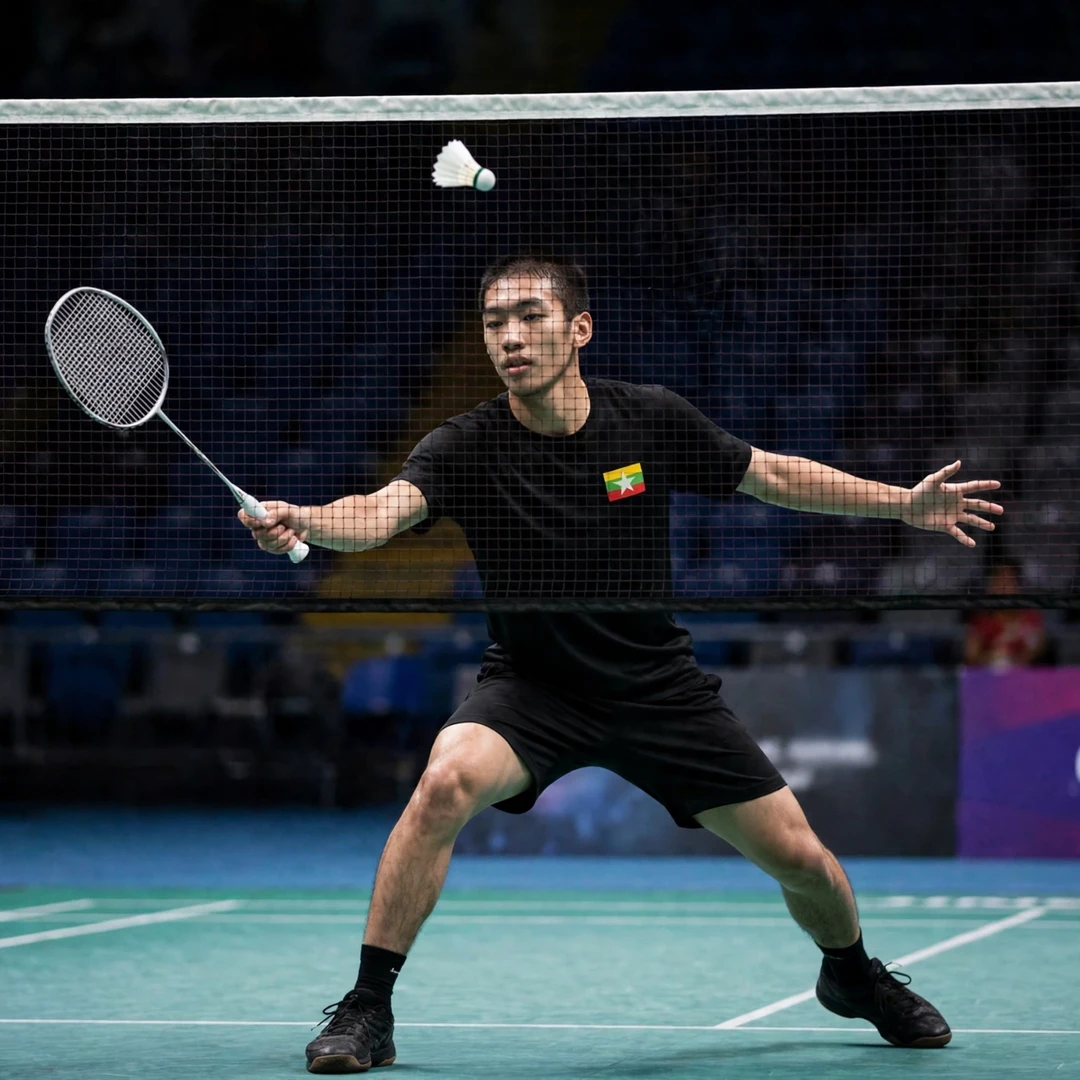
Hein Htut's rise is a nine-year lesson in patience: an eleven-year-old who became famous for a breakfast, a teenager who beat an Intanon and toured Asia, and a 20-year-old who now owns Kampala — champion there in 2025, champion again as top seed in 2026, and up to a career-high world No. 117 in the Week 43 rankings of 20 October 2026 with 16,106 points. The top 100 is the next checkpoint, and nothing in his curve suggests he plans to stop there.
| Development Area | Common Misconception | What Hein Htut's Career Shows REALITY |
|---|---|---|
| Junior Foundation | Talent alone decides who becomes a champion. | Hein was playing international junior badminton at eleven — and became famous at home for refusing to quit a match he was losing while ill; a structured base of courage and discipline came first. |
| Playing Style Priority | Kids should copy the flashiest attacking shots. | Hein built a complete rally game first; his growing smash power is the finishing touch on quick feet, deep defence and calm net play. |
| Fitness Importance | Juniors can out-train everyone without rest. | Far from protecting a light schedule, Hein played fifteen ranking tournaments in the year to October 2026 — his career-high No. 117 came from showing up everywhere and banking points, not from rest. |
| Mental Approach | Top players never get nervous or upset. | Hein is famously calm for a player in the spotlight since he was eleven, yet he still names his own weakness in public — his simple unforced errors; mental skills are trained, not inherited. |
| Attacking Training | Smashing harder is always the answer. | His 2026 Uganda International Series defence — a semi-final comeback against Abhishek Kanapala and a final win over Ali Hayati — came from rally control and patience, not raw power. |
| National Milestones | Only world titles matter. | Hein's two Uganda International Series titles (2025, 2026) and his Kampala International final made him a sporting hero far from home — international milestones build a career step by step. |
| Career Timeline | Champions peak once and fade fast. | From world No. 1,359 in June 2023 to a career-high No. 117 in October 2026, Hein proves sustained development beats a short peak. |
Study Hein Htut's Work Ethic and Professional Approach
This profile explains who Hein Htut is, his major achievements, and what developing players can learn from his journey. Whether you are a parent in Kuala Lumpur, Cheras or anywhere in Malaysia wondering what a small, late-developing child can still become in this sport, Hein Htut's story carries the answer: a boy from Yangon with a strict food rule and one famous morning is now the world's No. 117 — book a trial class with ST Badminton Academy on WhatsApp at +60 17-684 2136 and let your child begin building fundamentals that will hold up anywhere.