How to Play Badminton With Speed and Quickness: Techniques and Training Methods (Quickness Guide)
Every badminton player knows the feeling. The shuttle is already past the net, the corner is open, and your feet start half a second too late. The shot was not impossible. You were just slow to begin. Quickness in badminton is mostly about beginnings: how early you see the shot, how ready your body is when it comes, and how sharply your first step fires. Raw sprinting speed across a hall matters far less than most players think. This guide breaks quickness into its real parts, reaction, split step, first step and fast hands, and shows simple ways to train each one.

Quickness Check #1
Reaction Starts Before the Shot: Seeing and Deciding Faster
Quickness and speed are cousins, not twins. Speed is how fast you can cross the court once you are moving. Quickness is how fast you can start, stop and change what your body is doing. Badminton rallies are short and crowded with direction changes, so quickness wins more points than top speed ever will. A player with average legs who reads the game early and steps first will beat a faster runner who starts late. The good news is that quickness responds well to training. Your reactions, your split step timing and your first step can all improve within a few weeks of focused work.
Think of every rally as a race to start. The shuttle leaves the opponent racket and a clock starts in your head. Players who look fast have simply shortened that clock. They watch the right things, they are balanced when the shot is played, and their legs are loaded like springs. None of this needs special talent. It needs habits, repeated until they feel automatic. The sections below take the habits one at a time. Learn what each one does, practise it in short sharp sets, and you will feel rallies slow down around you.

Quickness Check #2
The Split Step: Landing Ready at the Right Moment
Reactions begin in the eyes. If you watch the shuttle only, you start moving when it is already flying toward you, and the fastest feet in the hall cannot buy that time back. Watch the opponent instead: their racket angle, their shoulder turn, the height of their backswing. A racket held high with an open face often means a drop or a clear. A flat racket close to the body usually means a drive. These small signs arrive a moment before the shuttle does, and a moment is all quickness needs. Train your eyes to live on the racket from the moment your own shot lands.
Being ready is the second half of reaction. Stand with the racket up in front of you, knees soft, weight on the front of your feet, body still but awake. Many club players drop the racket after each shot and have to lift it again for the next one. That lift costs time on every single rally. Keep the racket up and your hands become part of your reaction speed. Your eyes also need a home between shots. Bring them back to the opponent racket as you recover to base, so the next read starts early rather than late.
Reading is not guessing. A guess commits your feet before the shot exists, and good opponents punish early movers all night. A read uses evidence: the opponent favourite shots, their body shape, the score, the corner they are stuck in. Limit the likely options to one or two, stay balanced, and let the split step start your move the moment the shuttle is struck. You will still get fooled sometimes. Everyone does. But reads based on evidence win far more often than hunches, and they keep your balance when the trick shot finally comes.
Quickness Check #3
The First Step: Exploding Out in the Right Direction
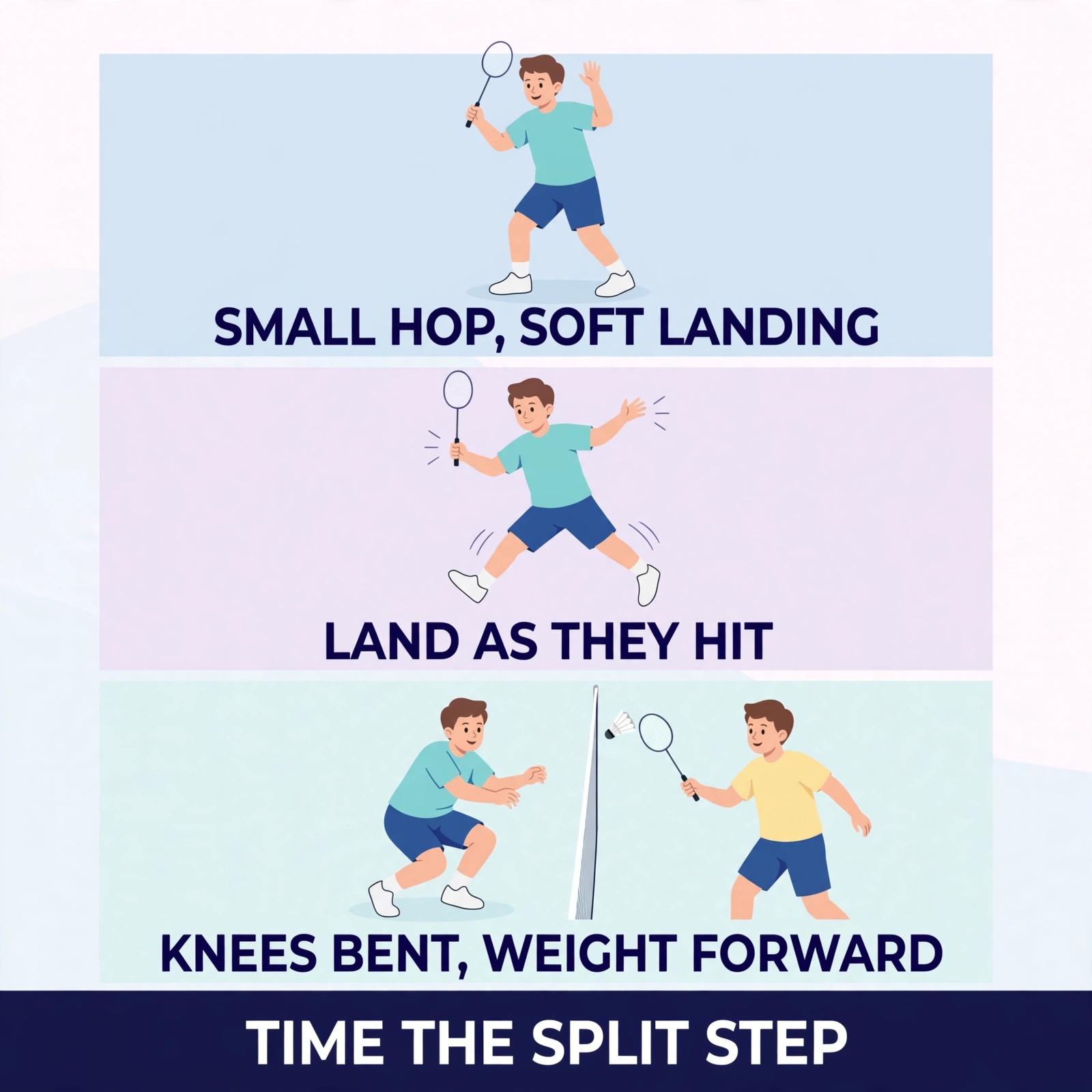
The split step is the smallest jump in sport and one of the most useful. As your opponent strikes the shuttle, make a tiny hop and land with both feet apart, knees bent, weight forward. Landing at the right moment loads your leg muscles like springs, and the stored energy fires your first step. Land too early and the spring is gone before the shot comes. Land too late and you are still in the air while the shuttle passes. The timing is the skill. You land as they hit, not before, not after, and your body is already leaning toward work.
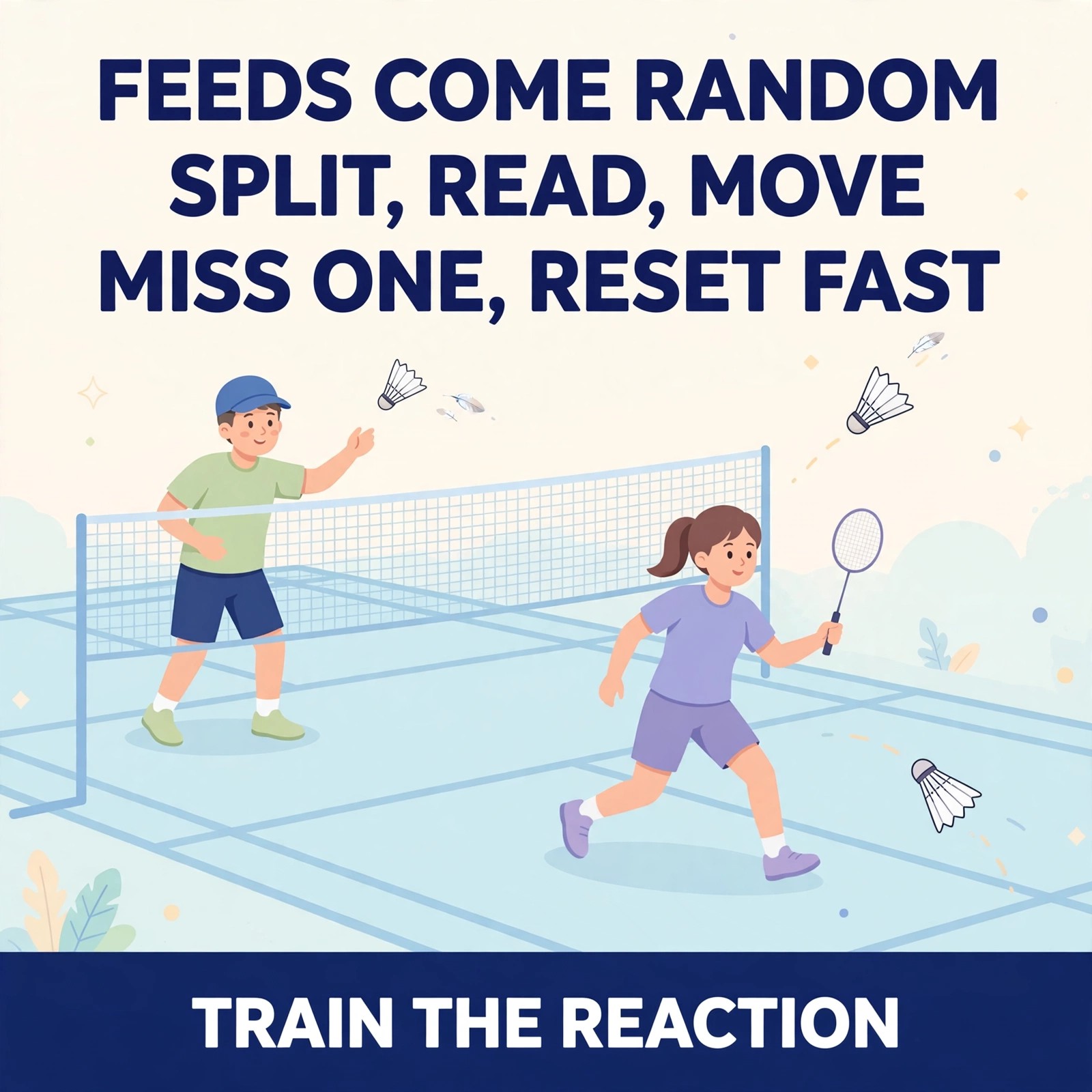
Practise the timing away from rallies first. Stand in base position while a partner feeds shuttles at a steady pace. Split as each feed is hit. Then ask for feeds at random times so the timing becomes a reaction, not a rhythm. In matches, the split step should feel almost invisible, a small bounce inside your recovery. Watch strong players and you will see it before every shot they face. Their quickness is not magic. It is this bounce, timed well, hundreds of times a match, giving every first step a head start.
One honest warning: the split step is not a big jump. Players who leap high land late and tired. Keep it low, quiet and quick, more like a skip than a jump. Your heels barely leave the floor. The goal is loaded legs and balance, not air time. Pair it with a low stance and a racket that stays up, and your whole ready position becomes a starting block. When all three are in place, opponents start saying you seem to read their minds. You are not reading minds. You are landing on time.
Quickness Check #4
Fast Hands: Quick Exchanges at the Net and in the Drive Game
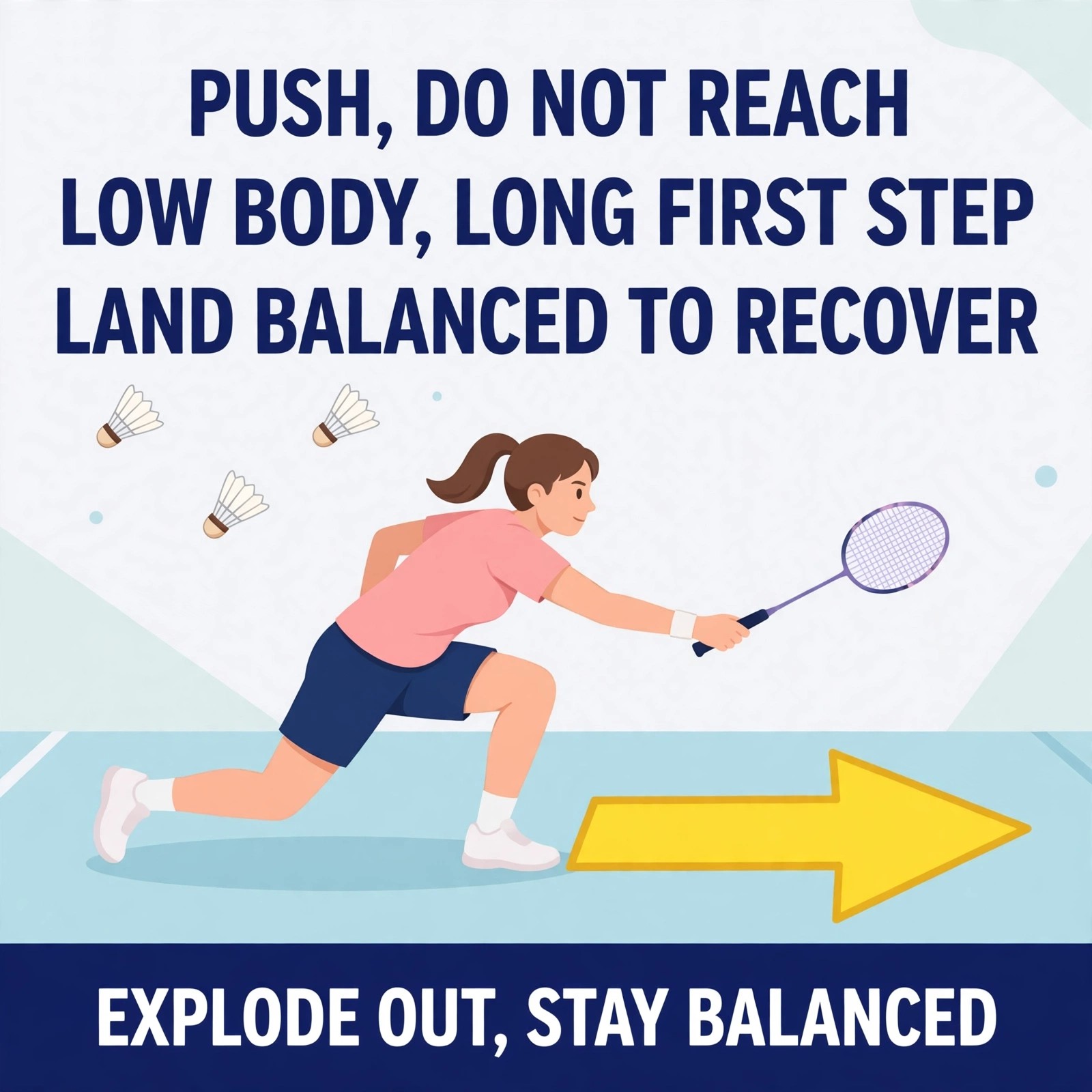
The first step decides whether the corner is reachable. After the split step landing, push hard through the leg on the opposite side of your target and let your body fall toward the shot. Pushing beats reaching. A reaching step starts with the near foot shuffling forward and the body upright, which is slow and weak. A push starts with force from the back leg, a low body and a long first stride. Your racket side leg usually lands last, close to the shuttle, in a lunge that can hit and recover. Practise the push from base: split, push, lunge, recover, without any shuttle at all.
Direction matters as much as power. Your first step should point your chest and hips toward the corner you are attacking, so the following steps run in a straight line. Steps that start sideways or backwards waste the force your split step stored. Keep the first step long but controlled. Overstriding drops your balance and slows the hit. Understriding leaves you stretching with the racket, and stretched shots are weak shots. The balance test is simple: at the end of the lunge you should be able to push back toward base without a wobble. If you cannot, the step was either too long or too rushed.
Recovery is part of the first step, not an afterthought. The same leg that pushes you out should push you back. Land on a bent knee, load it, and drive back toward the middle while your eyes return to the opponent racket. Quick players look quick because the whole cycle, out, hit, back, split, is one smooth habit. Slow players treat each corner as a trip they must recover from. Train the full cycle in your shadow footwork: six corners, out and back, always through base, always landing into the next split step. Speed lives in the cycle, not in any single step.

Quickness Check #5
Short and Sharp: Practice That Actually Builds Quickness
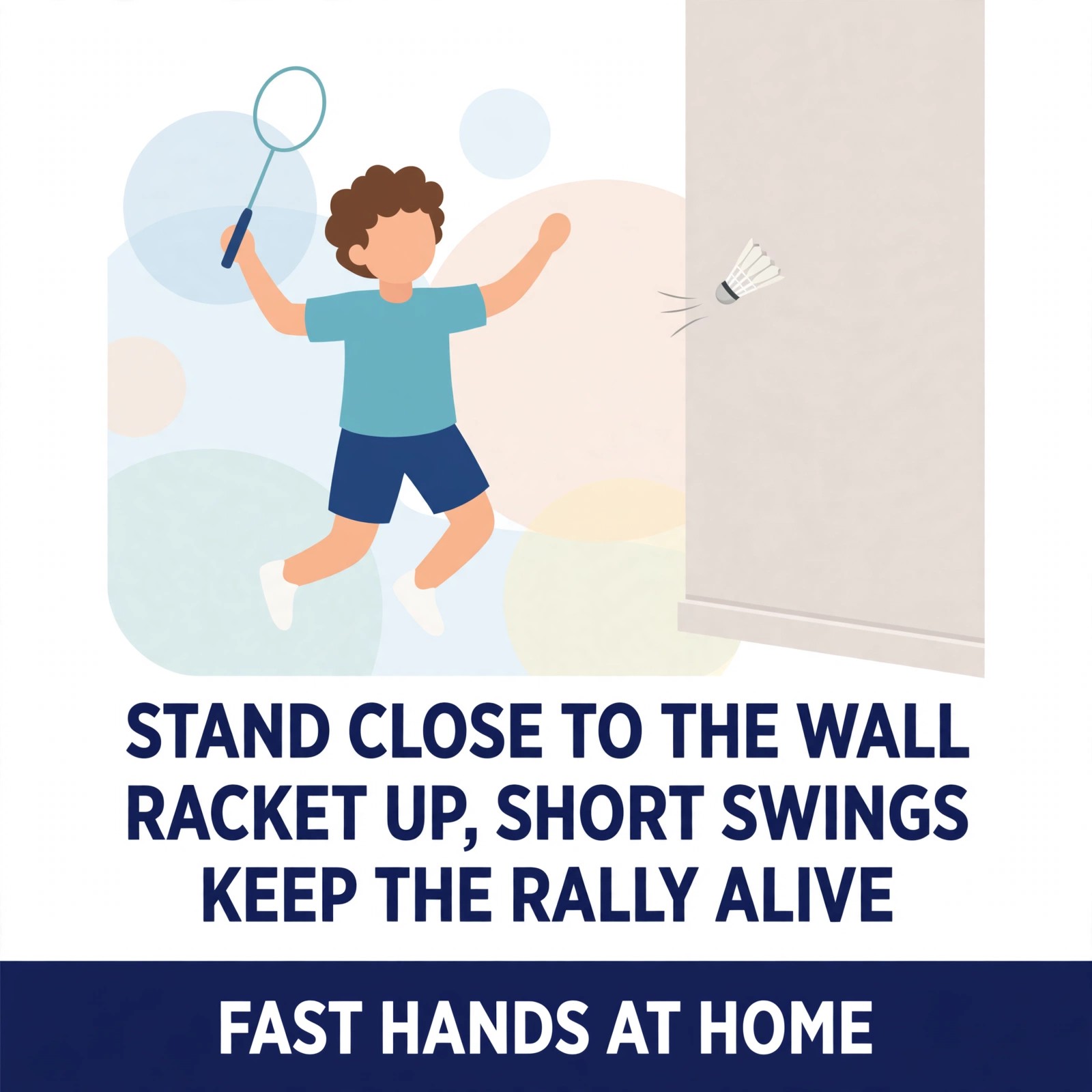
Fast hands finish what quick feet start. At the net and in flat exchanges, the player with the racket up and the shorter swing wins the race. Hold your racket in front of your body, head around shoulder height, and use compact movements: a small push, a short block, a quick tap down. Big swings feel powerful and arrive late. Fast exchanges are won by the player who is ready for the next shot while the other is still finishing the last one. Keep your grip relaxed between hits so your fingers can adjust for forehand and backhand without a pause.
Aim to rush, not to blast. In a flat exchange, shots at the body are gold. A drive into the chest or the racket hip jams the opponent swing and often pops the shuttle up. Vary the target between body and open space so they cannot settle. Your own defence improves the same way. A compact block from a ready racket beats a desperate lunge, and a block into the net area flips the pressure back. Fast hands are calm hands. Tension slows the wrist, so shake your fingers loose between rallies and keep the grip pressure for the moment of contact only.
Net play rewards the quickest hands most of all. Take the shuttle as early and as high as you safely can. An early contact means your opponent has less time, and your options grow: spin it tight, push it flat past them, or flick it deep if they crowd you. Arriving early is a feet job, but finishing early is a hands job. Meet the shuttle in front of your body with the racket head up, and play the shot with fingers and forearm rather than a full arm swing. Small, early and calm beats big, late and rushed at the net, every single time.
Myth vs Reality
Myths About Quickness and Reaction Speed
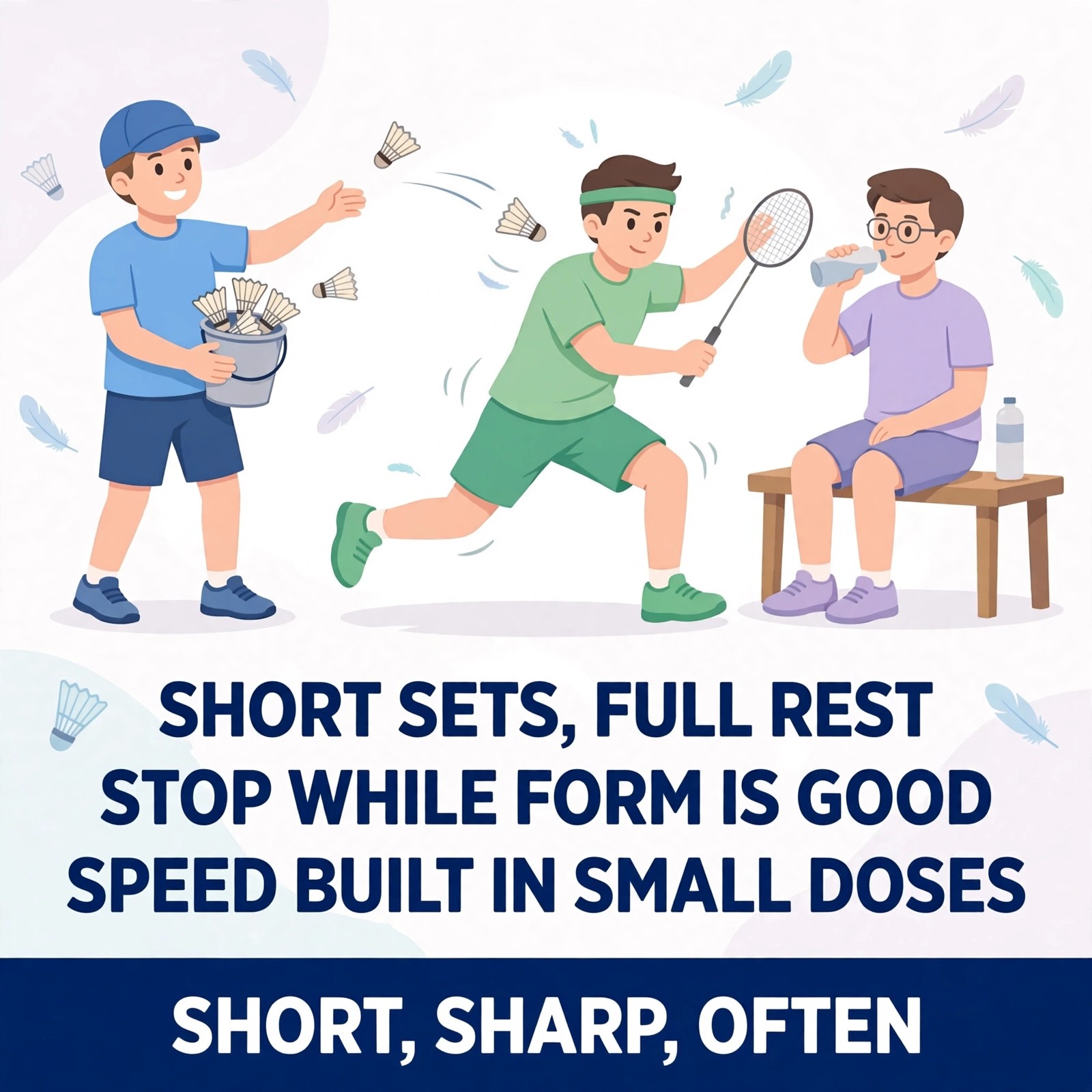
Quickness attracts myths like a magnet. The loudest one says fast players are simply born that way, so training is pointless. Reaction habits, split step timing and first step mechanics are skills, and skills improve with practice for almost everyone. Another myth says quick players run more. Watch them closely and you see the opposite: they run less, because they start on time and take shorter paths. A third myth claims tired, grinding practice builds speed. It builds tired movement. Speed work needs fresh legs and full effort, in short sets with real rest.
Here is the honest picture. You cannot change your basic build, and this guide will not promise you the reactions of a professional. What you can change is the half second most club players waste. A better read here, a timed split step there, a pushing first step instead of a reaching one, and rallies that used to rush you start to feel roomy. Players who train quickness for a month often report the same surprise: the game feels slower, not faster. Their opponents have not changed. Their own starting clock has.
So keep the rules that work. Eyes on the racket. Racket up, body loaded, split step on time. Push, do not reach. Small swings, calm hands. Short sets, full rest, and stop while form is sharp. These are boring habits, and that is the point. Quickness is not a lightning strike that visits lucky players. It is a chain of small, trainable moments, and every link in the chain is yours to strengthen.

Why Choose Us
Why Players Choose ST Badminton Academy
Players choose ST Badminton Academy for quickness training because the work here is specific. We do not just tell students to move faster. We break their rallies down: where the eyes went, when the split step landed, how the first step fired. Small group sessions, with a maximum of 4 students per coach, mean your habits get watched closely and corrected on the spot. Reaction feeds, wall work and first step drills are built into regular training, so quickness grows alongside your shots instead of sitting in a separate fitness corner.
The academy runs group training for adults and juniors across Kuala Lumpur and Setapak. Sessions mix technique, footwork and game play, with quickness built into the rally work itself. Coaches use random feeds and late calls to train real reactions, not rehearsed patterns. Over a term, students feel the change in matches first: late corners become reachable, flat exchanges stop feeling rushed, and the net stops being a scary place. Progress is steady and honest. No one is promised professional speed, but everyone is given a clear, coached path to quicker starts.
If your rallies feel like they are always one step ahead of you, come and train the start of the movement with us. Book a trial session, bring your racket, and let a coach watch your split step and your first few steps. Most players are surprised how much time is hiding in those small moments. We will show you the drills, time your reactions, and set a simple focus for your first month. Quicker badminton is not a gift. It is a set of habits, and habits can be coached.
FAQs: Badminton Speed, Quickness and Reaction Training in Malaysia (KL)
Below are the questions players ask us most about speed, quickness and reaction training at ST Badminton Academy. If your question is not covered, message us and we will help you plan your first session.
Where should a beginner start quickness training in Setapak or Gombak?
Start with the split step and your ready position, because they help every shot you play. Land your split step as the opponent strikes, keep the racket up, and push rather than reach on the first step. Add random reaction feeds twice a week in short sets. Most club players feel a difference within a month of this work.
Can adults improve reaction speed and first step quickness in KL?
Yes. You cannot change your build, but reaction habits, timing and first step mechanics are trainable at any age. Adults often improve quickly because they understand the ideas and practise with purpose. Gains are honest rather than huge: a cleaner start, an earlier read, fewer rushed shots. Over a season, those small gains add up to a quicker game.
How often should I train quickness drills each week at my current level?
Twice a week is a good start, in short blocks inside normal training. Ten to fifteen minutes of reaction feeds, wall rallies or first step drills, with full effort and full rest, beats one long weekly session. Speed work needs fresh legs, so place it early in a session, before long rallies tire you, and stop while form is sharp.
Do I need special equipment for reaction training, or just a racket and shuttles?
Basic court shoes and a balanced racket you already play with are enough. Very heavy rackets can feel slow in fast exchanges, so if you are buying, ask us to show you lighter, even balanced options to try. But do not blame the racket first. Racket up, short swings and calm hands matter more than a few grams either way.
Is quickness training safe for my knees and ankles in classes?
Kids learn quickness through games: reaction races, late call drills, wall rallies and small sided games where starting fast wins points. We keep it playful and safe, with plenty of rest. The split step and first step habits arrive naturally inside the games, so young players build a quick base without grinding adult style drills or heavy fitness work.
How soon will I feel quicker on court near Wangsa Maju?
Soon for the feeling, steadily after that. Many players notice rallies feeling less rushed within three to four weeks of twice weekly work, because the split step and ready habits click early. Bigger changes, like reaching corners that beat you, build over a term of training. No honest shortcut exists, but early wins come fast enough to keep you going.
Where does ST Badminton Academy run quickness focused training in Malaysia?
Sessions run at our Setapak base and at halls around Kuala Lumpur, with group training for adults and juniors through the week. Groups stay small, with a maximum of 4 students per coach, so your habits get individual attention. Your first visit can be a trial. Message us with your area and preferred days and we will suggest a group.
How do I book a trial session to test my quickness?
Message us on WhatsApp or via the website form. Tell us your playing level and where you feel slow on court, like the net, back corners or flat exchanges. We will suggest a group and a session time. Bring your racket and court shoes, and in the trial we will watch your reactions and footwork and set your first focus.
What should I bring to my first quickness session for badminton?
Wear proper non marking court shoes and comfortable sports clothes, and bring your own racket if you have one, plus a water bottle. Shuttlecocks are provided in sessions. If it is your first visit, arrive a little early so we can meet you, hear about your game, and place you in the right group for your level.
Quickness Training in Action


One Standard for Every Session and Every Player
Every quickness session at ST Badminton Academy follows the same coaching standards. Speed work is done fresh, in short sets, with full rest, and it stops while form is good. Groups are capped at a maximum of 4 students per coach. Drills train real reactions with random feeds and late calls, not rehearsed patterns. Coaching is honest about what training can and cannot change, and no one is promised overnight speed. Players get quicker because the habits are coached carefully, practised often, and checked against real rallies every week.
| Factor | Slow Starts | A Quick Game QUICK |
|---|---|---|
| Frequency | 1 or 2 times a week. Mostly for fun and sweat. | Split step timed to the opponent’s strike, racket up, first step pushed not reached. |
| Drills Focus | Basic static feeding. Minimal footwork pressure. | Short reaction blocks twice a week, done fresh, with full rest between sets. |
| Physical Conditioning | Rarely included. Just playing games on court. | Core, agility, and speed training included in every session to prevent injury and build stamina. |
| Tactical Awareness | "Just hit it over." No real game plan. | Video analysis, point construction, and learning to read the opponent's game. |
| Coach Ratio | Large groups (8-10 kids). Coach barely watches you. | Max 4 students. Mr Eric Chuar personally corrects every stroke and movement detail. |
| Goal Setting | Fun and exercise. | Fast hands at the net: small swings, early contact, no big wind up. |
| Long Term Result | Good recreational player. | A player who starts rallies early, reaches balls balanced and stops feeling rushed. |
Badminton Quickness Coaching in Kuala Lumpur
Stop starting late. Come to ST Badminton Academy in Kuala Lumpur and train the split step, the first step and the fast hands that make rallies feel slower. Book a trial session this week, bring your racket, and feel how much time a better start gives you. Your quicker game is a set of habits away.






