Best Badminton Class in KL: Learning When Rackets and Experience Differ (Sharing Guide)
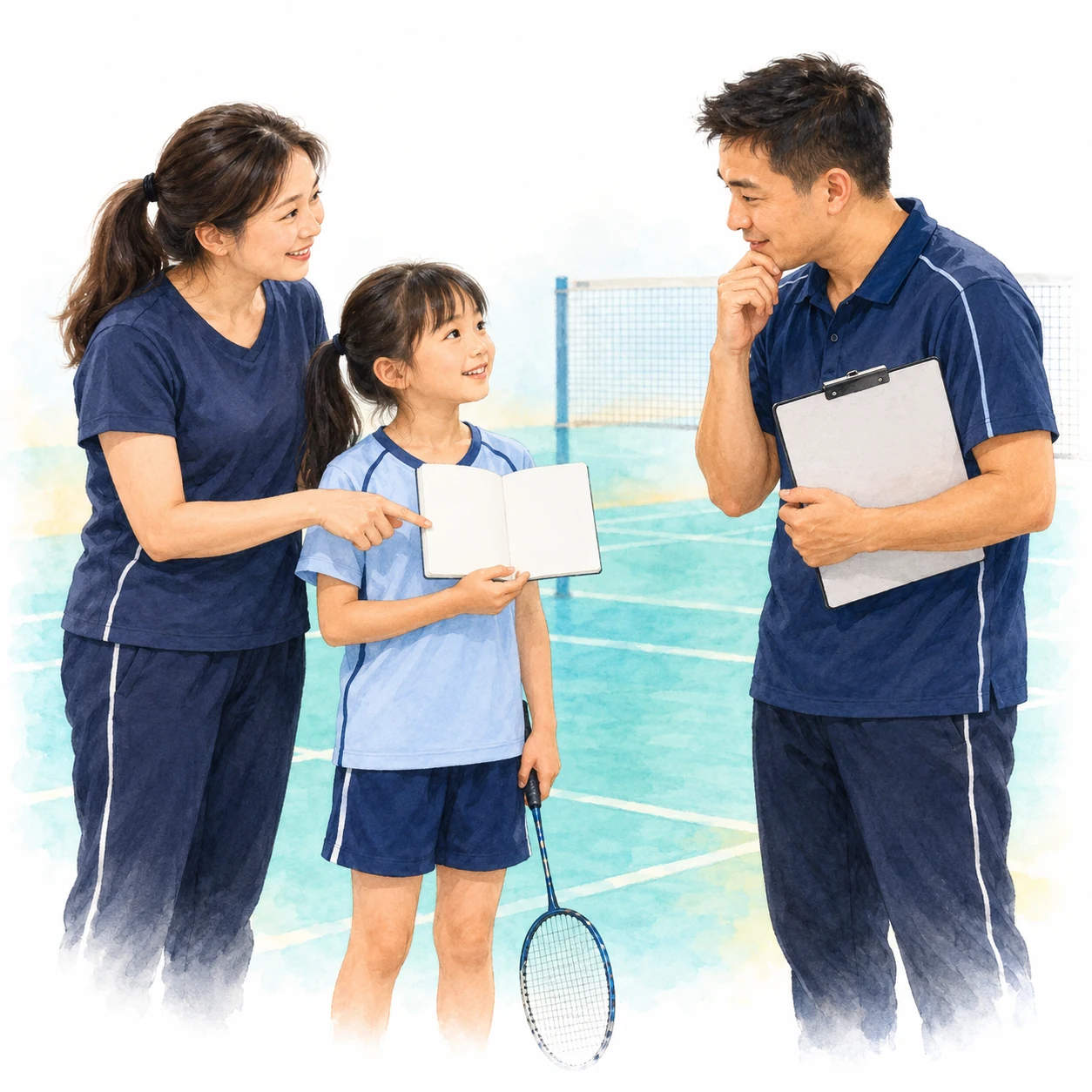
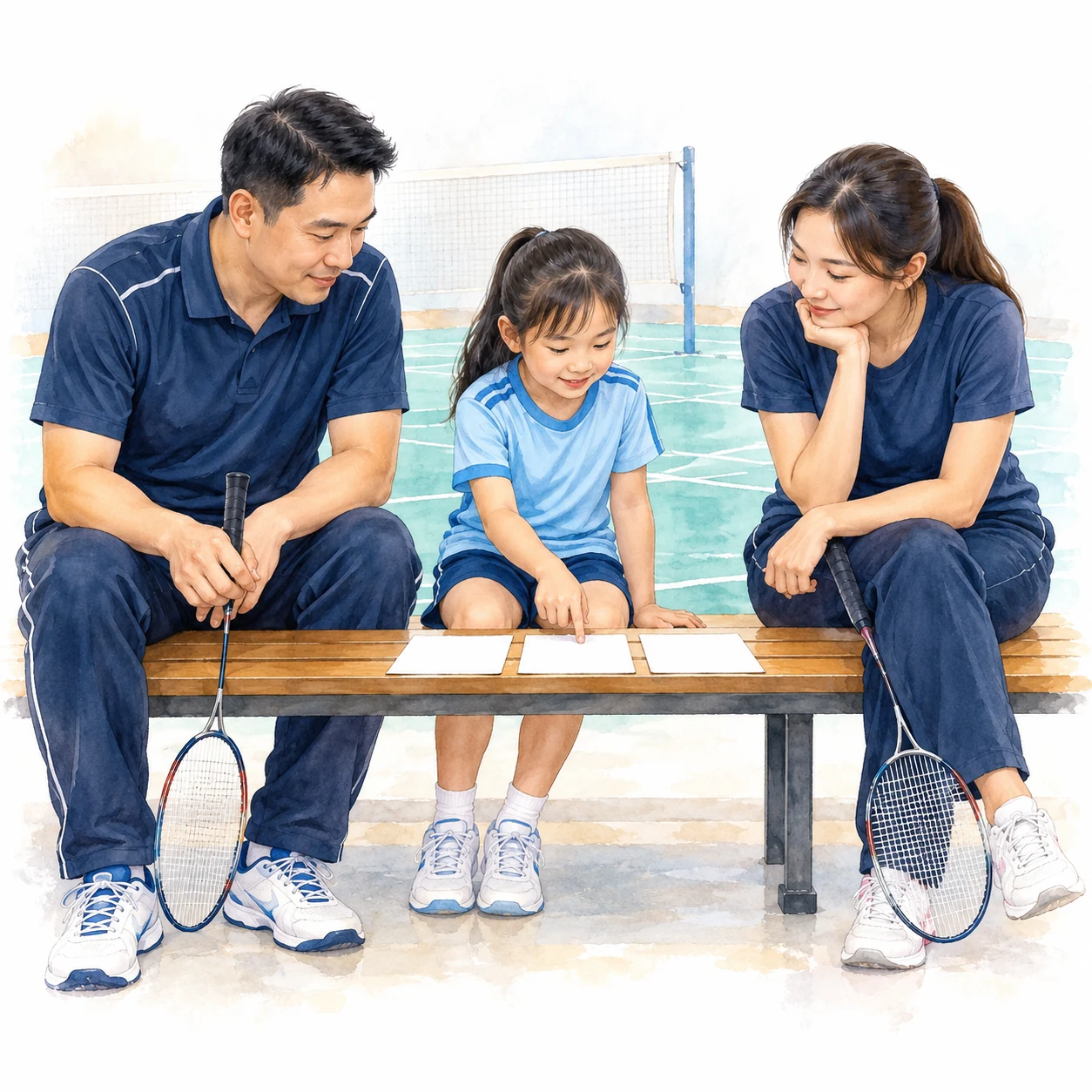
Two rackets lean against the bench, and a parent reads them like a league table. One is new, glossy, clearly the kind that costs serious money; the other is older, scuffed, borrowed looking. The children holding them are mid lesson, and the parent is already composing the question: should we get one like that? Underneath it sits a second, quieter notice: another child in the group looks smoother, older in the game, repping the drill as if they have done it for years. Both notices are understandable, and both mislead in the same way. A racket is not a ranking, and experience in a group is a spread to teach with, not a verdict on your child. This page works through what actually decides learning when kit and experience differ, and what to ask any hall about it.

Sharing Check #1
What Learning With Different Kit Really Means
Learning with different kit, in the way this page uses the term, is an ordinary mixed class run properly: each child working on a task fitted to their own stage, with help matched to their own need, using whatever sound racket they hold. The racket’s job is narrow and honest: be safe, be whole, be roughly suited to a young hand. Everything else that parents watch, the smoothness, the confidence, the clean sound off the strings, is produced by teaching and practice, not purchased with the frame. Experience differs in every real group, because children start in different months with different histories; a class that waited for identical children would never open its doors. Difference is not the problem to solve. It is the raw material the teaching is for.
The cost of reading kit as ranking is paid in three places. The first is money spent at the wrong moment: a family upgrades a frame to fix a feeling, and the feeling, which was about comparison, survives the purchase untouched. The second cost lands on the child’s reading of themselves. Children are fluent in the bench league table long before parents say a word: whose is newest, whose is borrowed, whose arrived with a famous name on the bag. A child who concludes their racket explains their mistakes stops interrogating the movement, which was the only place the answer lived. The third cost lands on the group: borrowing turns awkward, spare kit goes unshared, and turns become a quiet contest. None of this needs a snobbish child or a careless coach. It needs adults reading equipment as evidence.

Sharing Check #2
Inside The Class: Sharing, Borrowing And Turns
Start with the activity, because the activity is what a parent can actually judge. Ask what the class is being taught to understand this month, and what your child’s version of that task looks like at their stage. Two children standing side by side may be receiving different cues, different amounts of help and different success measures inside the same drill, correctly. A newer racket in the next court changes none of that arithmetic. When the teaching is visible at this size, kit shrinks to its true dimensions: a tool that must be safe and sound, while the learning is carried by the task, the cue and the counting, exactly as it is for the child with the glossy frame.
Then keep help matched to the learner, openly. In a mixed group, fairness is not sameness: the child in their first month and the child in their second year should not receive identical tasks and call it equal. Turns are kept fair, attention is kept fair, and counting is kept honest, while the work itself is sized per child. Said out loud, this protects everyone: the newer child is not measured against a stage they have not reached, and the experienced child is not held at a stage they have passed. Parents can ask for this matching in plain words at any hall: what is my child’s version of the task, and how will I see it working? A hall that sizes the work can answer both without hesitating.
Kit comparison repeats on a short list. The upgrade leap, where a wobble in confidence is answered with a purchase instead of a question. The copy the champion move, where another child’s whole setup is imitated down to the grip, without anyone asking what it was for. The borrowed shame, where a child hides a loaned racket as if it were evidence. The identical attempt fallacy, where learning is judged by whether attempts look the same rather than whether each child is working on their own next step. And the provision guess, where families assume what a programme provides from a photograph or a rumour. Each fault has the same repair: ask about the task, the help and the turns, and let the racket be a tool again.

Sharing Check #3
The Honest Cost: When Kit Becomes A Ranking
Look honestly at why the bench comparison feels so convincing, because the reasons are visual rather than real. New kit is simply easier to see than good teaching: a frame catches the light, while a well sized task looks, from the door, like nothing at all. Smoothness misleads the same way: the experienced child’s clean attempt is the visible end of unseen months, and comparing starts with finishes is a trick every parent has played on themselves in every school subject. Children, meanwhile, are comparing too, with a child’s instruments: newest, loudest, most owned. None of this is vanity or snobbery in any deep sense. It is what happens when the most visible thing in the room is the least important one.
Handle borrowing like the small social contract it is, because how a class shares teaches as much as how it drills. The rules here are plain and sayable by a child: ask before you take, hold it like it matters, return it with thanks, and never comment on what someone else’s racket is or is not. Spare rackets live in the open, offered by the coach rather than begged from classmates, so no child has to negotiate for a tool in front of an audience. Turns with any shared item rotate on the same fairness as turns at the drill. A class that borrows kindly has quietly solved the ranking problem: a racket that passes through many hands cannot stay a badge for long.
Keep home talk about rackets technical, brief and boring, because boring is protective. A racket can be sound or due for a check, suited to a hand or due for a change as the hand grows; those are tool questions with tool answers, settled with the coach. What it cannot be, in home language, is the reason a child is behind, ahead, serious or not trying. Resist narrating other children’s kit entirely; a classmate’s new frame is weather, not evidence, and children repeat the emotional version they overhear with interest added. If a purchase is genuinely near, ask the coach what your child’s current setup helps and hinders, in that order, and let the answer be about your child’s task rather than about the bench.

Sharing Check #4
Choosing Kindly: Rackets As Tools, Honestly Shared
Agree the kit and turns plan out loud, all three parts of it. First, the task is fitted per child: each learner’s version of the month’s work, named in plain words. Second, the sharing rules are held in the open: ask, care, return with thanks, spares offered by the coach, and no commentary on anyone’s equipment. Third, turns and attention are counted fairly across the group, so difference never becomes rationing. Written in a line or two, that plan turns a mixed class from a comparison trap into what it should be: several children learning at their own stages, in the same room, with tools that stay tools.
Sometimes the honest answer is a new racket, and sometimes it plainly is not. A frame that is cracked, warped, far too heavy for the hand that holds it, or simply outgrown is a tool problem, and tool problems deserve tool answers, settled plainly with the coach. But a racket bought to close a confidence gap closes nothing: the gap was made of comparison, and comparison finds new material the following week. Decide from the task: if your child’s current setup lets them attempt the work honestly, the setup is not the lesson’s problem. Purchases made for the work itself last well. Purchases made against another child’s bench rarely do, and no honest coach will pretend otherwise.
A gentle word for the parent doing quiet arithmetic on the bench: if we spend this, will he finally keep up? The worry underneath is rarely about a racket: it is about whether your child belongs in the room, is rated fairly in it, and is not being quietly sorted by things money decides. Belonging in a class is built from tasks fitted honestly, turns kept fairly and a coach who can say what your child is working on without mentioning their equipment at all. Judge the class by those things across a fair stretch of weeks. And if the worry keeps circling after the plan is plainly fair, it deserves a kind conversation of its own, with someone you trust.

Sharing Check #5
Sharing Drills That Teach With Any Racket
We run mixed classes in an order that keeps the task in front. First, the month’s work is named, with each child’s version of it sized to their stage. Second, the sharing rules are kept in the open: asking before taking, care in the hand, thanks on return, spares held by the coach. Third, turns and attention rotate on a count everyone can see, so fairness is a fact rather than a promise. Last, learning is counted inside each child’s own task, never across children, so the numbers describe growth rather than rank. Each stage follows from the one before, and at no stage is a child’s equipment asked to explain their learning.
Learning is counted inside each child’s own task. Attempts made at the fitted version, with the help agreed for that stage, is the headline figure. Beside it sit two quieter counts: turns received across a session, because fairness in a mixed group is a number before it is a feeling, and the task itself moving stage, since a child whose version advances was learning whatever racket they held. Nothing is compared across children, no kit is priced, ranked or listed, and no count is ever attached to what a family spent. The counts exist so a family can watch learning arrive in their own child’s row, lesson by lesson, instead of reading it off a bench.
The signs the plan is working are ordinary and good to live with. Your child talks about their task, not about rackets: what they are working on, what their version is, what comes next. Borrowing becomes invisible, a racket requested, used and returned inside a minute of ordinary chatter. The experienced child in the group becomes a resource rather than a standard, watched the way you watch weather ahead on a walk: useful, not personal. And your child’s own frame, new or scuffed, stops featuring in their account of the lesson at all. That is when a mixed class stops being a comparison with walls and becomes what it should be: children at different stages, learning in the same kind room.

Myth vs Reality
Myths About Rackets And Experience
Why does the task decide what the racket cannot? Because a badminton shot is made by a body solving a problem: reading the shuttle, moving early, shaping the swing, recovering for the next one. A racket is the last few inches of that chain, and while a sound one matters, a better one cannot read, move or decide on the body’s behalf. Experience works the same way: it is the accumulated solving, stored in the body, and it transfers only through work fitted to the solver’s stage. That is why copying a setup copies nothing: the frame arrives without the months inside the other child’s hands. The honest lever is never the purchase. It is the fitted task, the matched help and the counted turns.
What does a complete mixed class plan actually contain? Five plain parts. The fitted task: each child’s version of the month’s work, named before the session. The matched help: the amount and kind of support each stage honestly needs. The sharing rules: ask, care, return with thanks, spares offered by the coach. The fair count: turns and attention rotated openly, visible to any parent at the door. And the private numbers: learning counted inside each child’s own row, never across the group. Notice what is missing: no kit list, no ranking, no purchase advice dressed as coaching. The discipline is in the omissions, and a plan that runs to five sayable parts is one a family can actually hold a hall to.
Fair turns are the rule that makes mixing honest. A mixed group holds a real temptation: the experienced child is rewarding to teach, rallies flow, and attention drifts uphill toward competence. Counted turns reverse the gravity. When every child’s attempts are tallied as openly as their names are called, the newer child’s work receives its full share of court, feeds and coaching eyes, and the experienced child’s help stays the kind that stretches rather than the kind that merely shines. So the count is protected the way the plan is protected: kept by any coach who takes the group, shown to parents on request, and never traded away when a session sparkles. A group counted fairly can hold any spread of experience and any spread of kit without either becoming a hierarchy.

Why Choose Us
Why Players Choose ST Badminton Academy
Parents choose ST Badminton Academy for mixed classes because we fit the work to the child and keep the tools as tools. We will name your child’s version of the task, match the help to their stage, hold the sharing rules in the open, and count turns fairly where you can see them. In a group of no more than four students, the coach watches each child’s actual task rather than a room in general, and difference stays what it is: the raw material of teaching. Many halls let the bench do the talking and call the comparison that follows ambition. We would rather hand you the fitted task, the sharing rules and the fair count, because a child learning at their own stage learns at full speed with any sound racket.
A first session with us shows the approach, if you know where to look. Tell us honestly what your child currently plays with and what they have done before, without apologising for either. Watch whether we ask about the task and your child’s stage before anyone mentions equipment, whether the sharing rules are stated like ordinary housekeeping, and whether turns visibly rotate. Afterwards, ask three questions. What is my child’s version of the task? How are turns counted here? What would ever make you suggest changing my child’s racket? The answers describe the whole approach in miniature, and the last one should be short, practical and entirely about the work.
Parents complete the plan from their side with small, steady habits. Keep racket talk at home technical and brief: sound or due for a check, suited or outgrown. Ask your child what their version of the task is, and greet the answer as the real news of the lesson. Never narrate another child’s kit, good or bad, within your child’s hearing; the bench league table is built from exactly those sentences. Settle any real equipment question directly with the coach, about your child’s task, and let borrowing stories stay boring: asked, used, returned, thanked. A family and a coach keeping tools as tools is what lets a mixed class stay a class rather than become a market.
FAQs: Learning When Rackets And Experience Differ in Malaysia (KL)
These are the questions parents ask us most when rackets and experience differ in a class, before they book and while a mixed plan is settling in. The short version runs through all of them: the task is fitted per child, the sharing rules stay in the open, and turns are counted fairly where everyone can see. The longer answers follow, including whether a new racket ever helps, and how a first session with us actually works.
Can a child learn well in a class where rackets and experience differ in Setapak or Gombak?
Yes. A child can learn well in a class where rackets and experience differ, with us in Setapak, a short drive from Wangsa Maju, in groups of no more than four students. The task is fitted to each child’s stage, and the help is matched to their need.
What should a parent ask first about rackets and experience in KL?
Ask what your child’s version of the current task is, and how turns and attention are counted across the group. Follow with what would ever make the coach suggest changing your child’s racket. A hall that fits the work can answer all three questions in plain words.
Why do different rackets worry parents at a junior level?
Because a newer racket is easy to see and good teaching is not, so comparison does the judging before anyone asks what the lesson is for. The worry is fair, and it deserves a steadier reading: your child’s fitted task, and their turns, counted across a fair stretch of weeks.
Another child has a newer racket and smoother shots. Should we copy the setup or ask what my child is learning first?
Ask what your child is learning first. Copying a setup copies the frame without the months inside the other child’s hands, and a sound racket was never the thing producing the smoother shot. If your child’s current setup lets them attempt the work honestly, the setup is not the problem.
How can parents talk about rackets at home in between classes?
Keep racket talk technical and brief: sound or due for a check, suited to the hand or outgrown. Ask your child what their version of the task is, and let that be the news of the lesson. Never narrate another child’s kit within your child’s hearing, kindly meant or not.
Do you teach mixed experience groups beside badminton training near Wangsa Maju?
Yes. We teach mixed experience groups beside regular training from our base in Setapak, a short drive from Wangsa Maju, and families from that side train with us every week. Fitted tasks sit inside ordinary junior sessions, so the matching is checked against real rallies rather than discussed in the abstract.
Where does ST Badminton Academy teach badminton training in Malaysia?
We teach at our base in Setapak, Kuala Lumpur, and families travel in from across the Klang Valley. Sessions run with no more than four students per group, because a fitted task is watched one child at a time, and that needs a coach close enough to see the work itself.
How do I book a trial session to test my child’s class with different rackets?
Message us to arrange a trial at a time that suits your week. Bring your child’s racket and court shoes, exactly as they are, and tell us what they have done before. We will ask about the task and stage before anyone mentions equipment, and show you the turn count.
What makes Mr Eric Chuar a suitable coach for a class where experience differs in badminton?
Mr Eric Chuar coaches the academy sessions himself, with more than fifteen years of coaching in Malaysia and Singapore, so the person fitting the task is the person counting the turns. His style is plain spoken: task first, help matched, and equipment talked about last and briefly.
Mixed Kit Coaching in Action


We benchmark our mixed kit coaching against World Badminton (BWF) coaching standards and our own academy values: before any player trusts a training plan, they deserve honest checks. You can verify our coaches' credentials through the Badminton Association of Malaysia (BAM) coach education pathway.
One standard governs how we run a mixed class: each child's own progress judges the teaching first, and each child's belonging judges it second. A coach here will name any child's fitted task on request, show the turn count openly, and report what your child actually did rather than what the group in general managed. We also hold an honesty rule about what mixed coaching can promise: it cannot promise that a purchase changes a child's learning, or that experience gaps close by a chosen date, because children learn at different speeds and lessons differ. What coaching promises is a fitted task, fair turns, and counts that tell the truth kindly.
| Factor | The Fitting Hall | The Bench Hall SHARING |
|---|---|---|
| Frequency | 1 or 2 times a week. Mostly for fun and sweat. | The bench hall lets equipment do the talking. Parents read the rackets like a league table, children hide borrowed frames, upgrades are bought to fix feelings, and learning is judged by whether attempts look identical rather than whether each child is working on their own next step. |
| Drills Focus | Basic static feeding. Minimal footwork pressure. | The fitting hall names each child's version of the task, matches the help to their stage, holds the sharing rules in the open and counts turns fairly where everyone can see. The racket stays a tool: safe, whole and suited, while the teaching carries the learning. |
| Physical Conditioning | Rarely included. Just playing games on court. | Core, agility, and speed training included in every session to prevent injury and build stamina. |
| Tactical Awareness | "Just hit it over." No real game plan. | Video analysis, point construction, and learning to read the opponent's game. |
| Coach Ratio | Large groups (8-10 kids). Coach barely watches you. | Max 4 students. Mr Eric Chuar personally corrects every stroke and movement detail. |
| Goal Setting | Fun and exercise. | Because the counts follow each child's fitted task and their turns received, real learning shows up as numbers rather than as bench talk. The coach sees whether the fitting, the help or the turn count was off, the parents see the same rows, and one part of the plan changes instead of a purchase being blamed. |
| Long Term Result | Good recreational player. | The high-performance version produces a child who talks about their task instead of their racket. The casual version spends the term comparing benches; the fitting version removes the guesswork in a fixed order and counts what each child actually learned. |
Mixed Kit Coaching in Kuala Lumpur
Your start can be the class your child already attends, seen plainly. Bring their current racket exactly as it is, scuffed or glossy, and an honest note of what they have done before. At a first session we will ask about your child's task and stage before anyone mentions equipment, agree their version of the work, and show you the turn count. No ranking, no sales talk, and no promises nobody can keep. Just a fitted task, kind sharing rules and fair turns, and a child who gets to be a learner rather than a comparison.