My Child Practises Smashes but Still Struggles with Basic Badminton
The lesson includes powerful-looking smash practice, but your child still struggles to start a rally, reach a routine shuttle or continue after hitting. Parents may feel reassured by an advanced exercise while wondering why ordinary games remain difficult. The question is how that exercise fits the child’s current learning.
Discuss your child’s training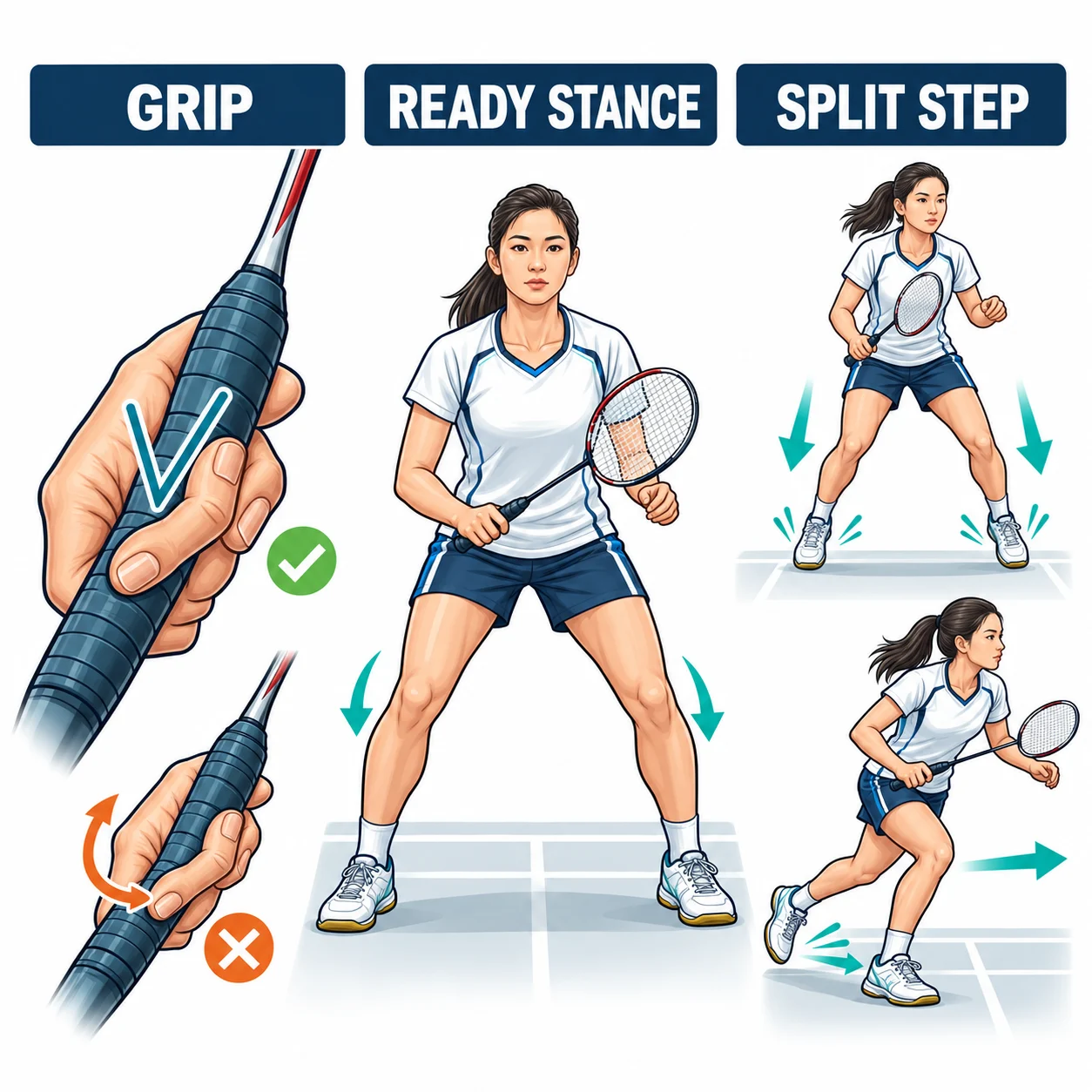
An advanced-looking exercise is not a level certificate
Trying a smash does not by itself make a child an advanced player. A coach may introduce a shot for interest or as part of a carefully simplified task. That can be reasonable, provided the learner understands the purpose and the task fits them.
The concern is not that children must never try an exciting shot. It is that the exercise could become the main focus while a recurring foundation problem goes unaddressed. Ask what the coach is teaching through it and what the child needs for the next step.
Trace the difficulty through an ordinary rally
Pick a situation your child recognises: getting ready for a serve, reaching a manageable shuttle, returning it and preparing for the next one. Ask the coach where the sequence breaks down. There may be a different priority from hitting harder.
For example, a strong hit from a predictable feed does not show that the child can get into position during a rally. Likewise, missing a smash does not tell you that the whole lesson is wrong. Assess the actual task and its place in the wider progression.
A simple checklist for your next conversation
| What impresses or worries you | A useful follow-up |
|---|---|
| The child practises a powerful smash | What is the learning purpose, and what do they control in this task? |
| The ordinary rally still stops quickly | Which part of preparation, contact or recovery needs attention? |
| The programme sounds advanced | What is the entry task, and how is readiness checked? |
| The coach returns to a simple exercise | Which problem does it address, and how does it connect to the game? |
Ask how the class connects one stage to another
A useful explanation shows the current task, what the child is expected to control and how the coach will gradually change the demands. If movement or preparation is missing, ask how that is being addressed alongside the shot practice.
You do not need to demand an identical syllabus for every child. Different starting points can need different priorities. What you should be able to understand is why this child is doing this task now, and what will show they are ready to move on.
Compare capability rather than the name of the drill
Two classes may both say “smash training” while asking learners to do very different things. One could use an easy feed to explore contact. Another may combine movement, placement and recovery. The name alone does not tell you which fits your child.
The same applies when comparing private and group formats. Ask about the actual learning task, relevant feedback and opportunity to practise. An impressive video of someone else’s session is not evidence about your child’s readiness.
Discuss a foundation priority without making the child feel demoted
Explain that practising a basic action is part of making the game work, not a punishment for failing to smash. Use the coach’s agreed task and let the child recognise what changes. Do not present every simplified exercise as going backwards.
For families choosing badminton training in Malaysia or travelling from Singapore, start with the learner’s current tasks and realistic attendance. Confirm the actual venue, schedule and suitability directly. Buying a more advanced-sounding programme does not replace an assessment.
Questions parents ask
Should children avoid smash practice until every basic is perfect?
That is not the point. A coach can introduce different shots in suitable tasks. Ask whether the lesson also addresses the foundation issue your child is showing.
Does a hard smash prove good progress?
It shows something about that attempt, not the whole game. Look at preparation, control and what happens when the next shot changes.
Is foundation training a step backwards?
A simpler task can help isolate a problem. Its value depends on the purpose and how the learning is later used.
Should we enrol in an advanced class to speed things up?
Check the actual requirements and your child’s readiness first. A class label is not a reliable shortcut past an unresolved learning need.
A practical next step
Ask for an assessment of an ordinary rally and a clear foundation priority. Then compare training formats that can give your child the appropriate task and feedback.
Compare badminton training options and children’s private badminton training. Confirm the suitable group, venue, times and fees directly before enrolling.
For the wider picture, read the slow-progress review, the guide to changing established habits, or return to badminton learning problems.


