Choosing the Best Badminton Coach in Malaysia: Look for Independent Learning
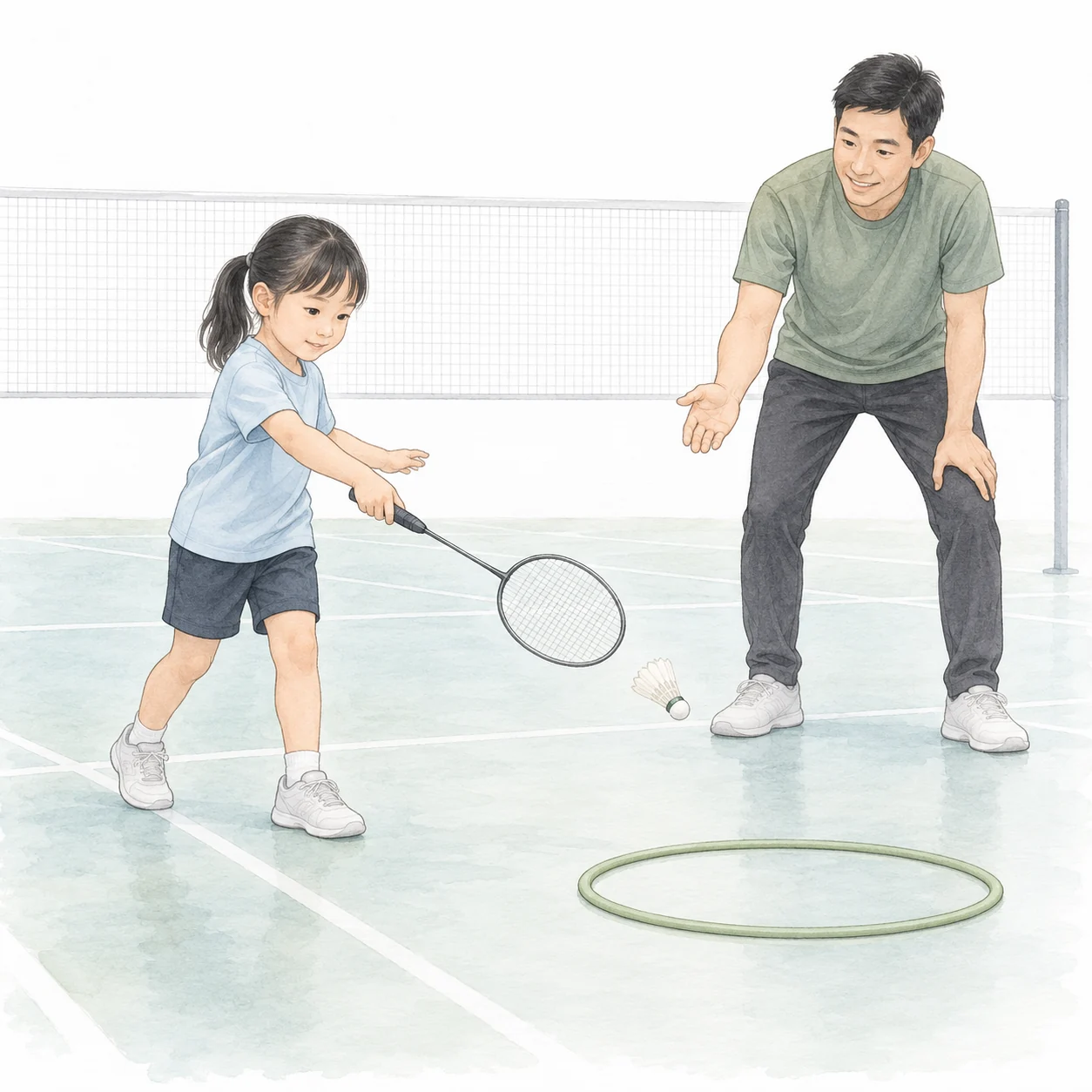
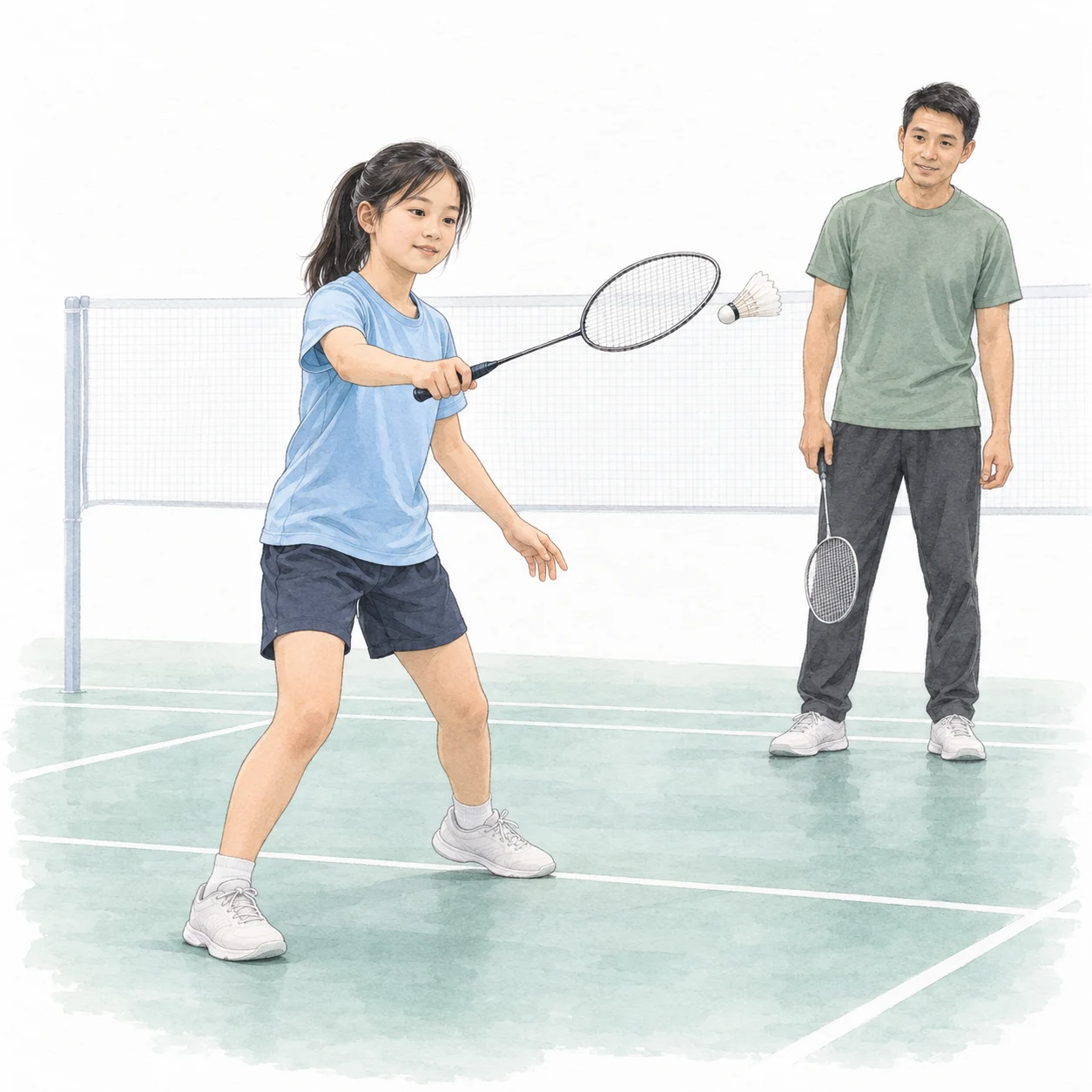
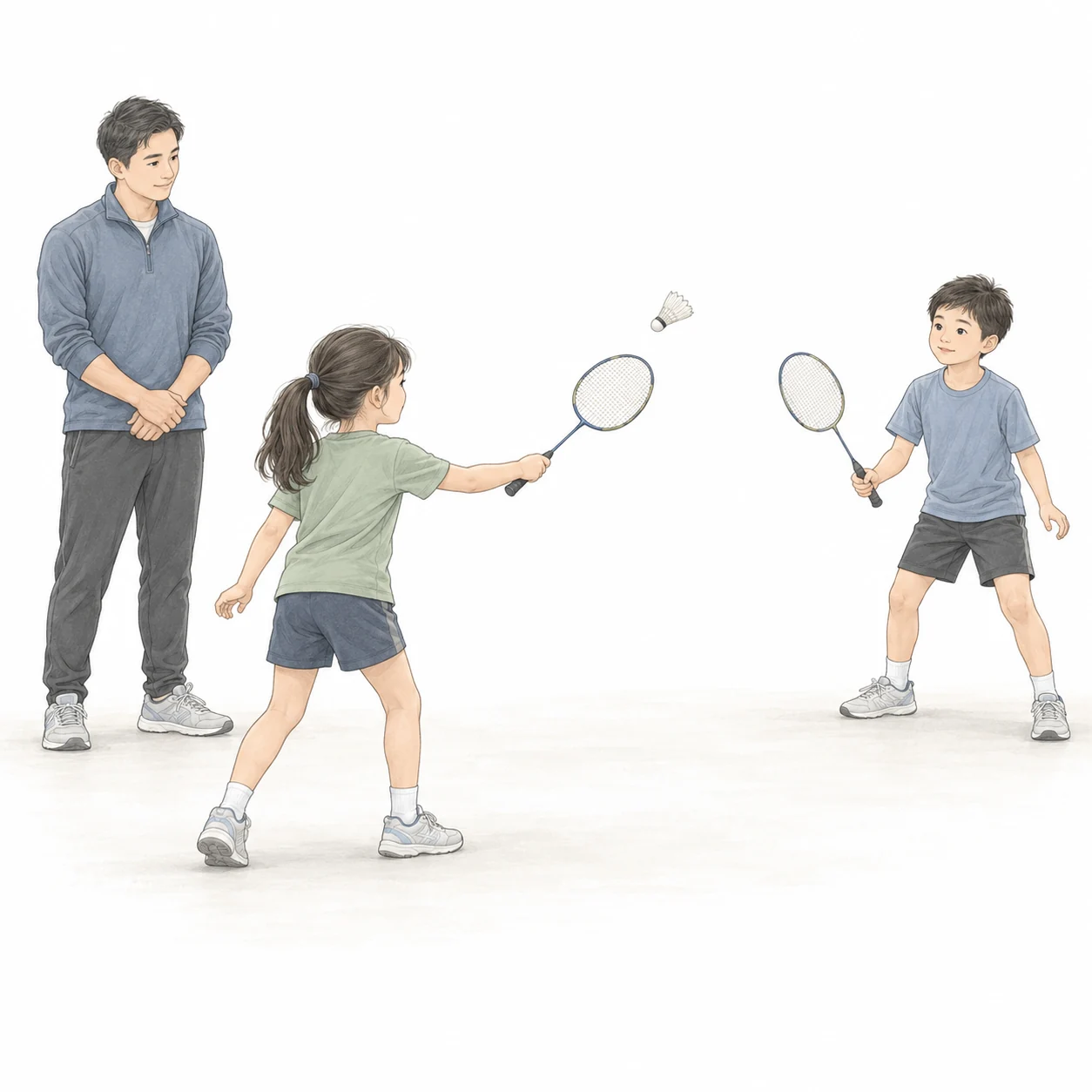
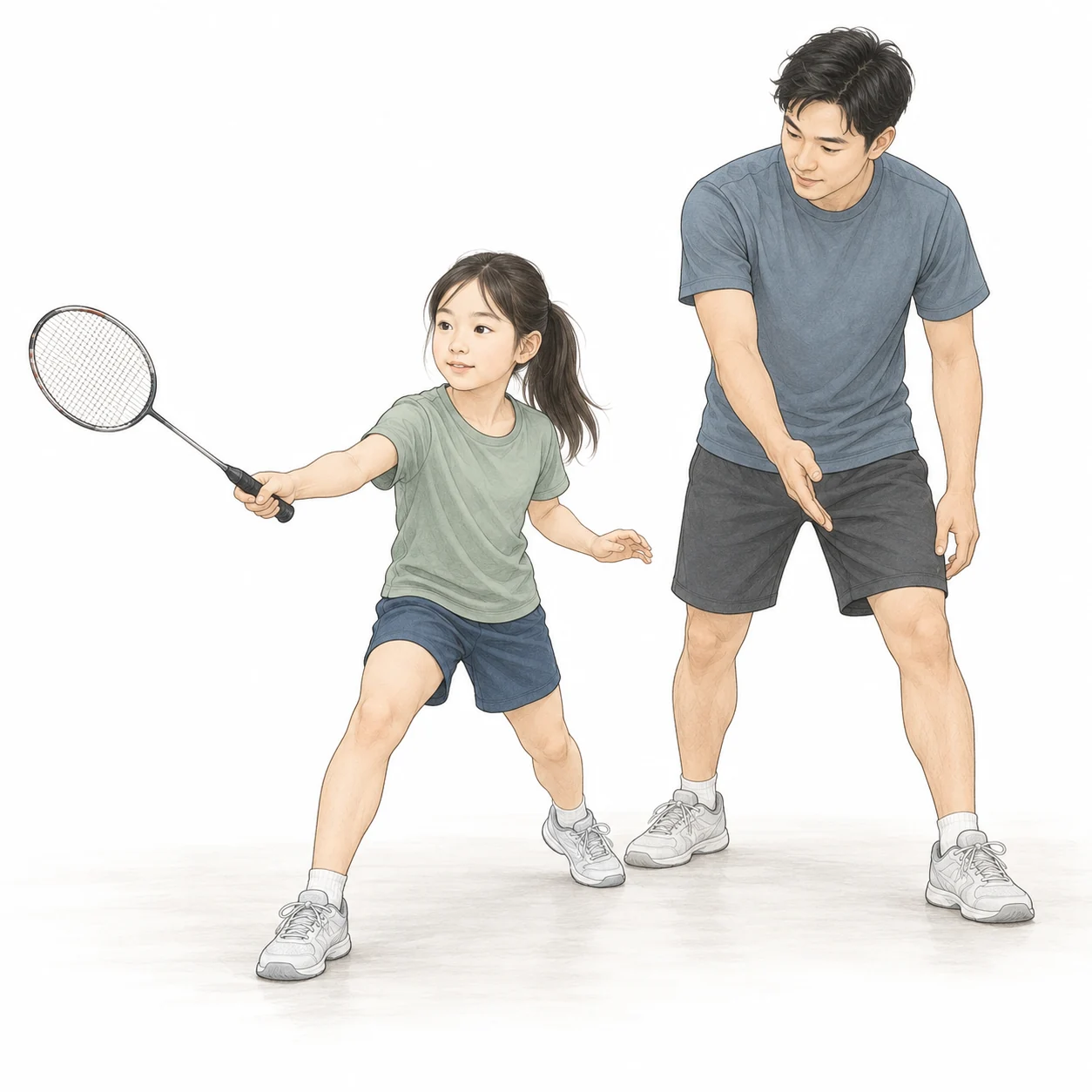
When parents search for the best badminton coach in Malaysia, a famous name or impressive playing history can be easy to notice. A quieter question is more useful for a child’s learning: what can the child still understand and attempt when the coach stops supplying every reminder? Independent learning does not mean leaving a beginner alone. It means teaching clearly, providing appropriate help and checking whether that help can gradually reduce. This guide explains what to ask when considering badminton training at ST Badminton Academy in Setapak, Kuala Lumpur. It offers observation principles, not a ranking or a promise of progress within a fixed number of weeks. The images are AI-generated teaching illustrations, not photographs of STBA lessons or real students.
Beyond the reminder
Separate doing it now from learning it for later
A child can complete a task while a coach gives a cue before every movement. That tells you something about performance with assistance, but not everything about learning. Look for a later opportunity to start the same manageable task after the explanation has ended. Does the child recognise the goal, choose a suitable starting action and know what to check? A mistake is not proof that nothing was learned. The question is which parts remain understandable and which still require help. Observe the actual task rather than deciding from one attractive shot or a confident spoken answer.
Remembering and applying are related but different questions. Remembering asks whether the child can return to a familiar task after a gap, without receiving the whole explanation again. Applying asks whether the idea can be used in a slightly different, suitable situation. A hypothetical learner might remember how to direct a gentle shuttle to one marked area, yet need assistance when the target changes. That is useful information for planning the next task, not a reason to label the child incapable. Ask what was familiar, what changed and what help was offered before drawing a conclusion.

Appropriate support
Notice whether a prompt teaches or merely directs
Beginners often need demonstrations, short cues and repeated explanations. Those are legitimate teaching tools. A helpful prompt makes the task more understandable: it connects an action to its purpose and gives the child something usable to check. A direction that simply tells the child every next move may produce an immediate response without revealing understanding. Ask whether the coach sometimes lets the child describe the goal or attempt a reasonable choice. This should be appropriate to the activity, not a demand that a confused beginner solve an unfamiliar problem without instruction.
Watch the pattern across opportunities rather than counting every reminder. If the same cue is needed each time, the coach can review its wording, demonstrate again or simplify the task. The answer is not automatically to stop helping. Help may need to become clearer before it can become smaller. A child who asks a relevant question is also participating in learning; asking for clarification is different from depending on someone to dictate every action. Good badminton coaching should make room for both support and a gradual check of what the learner can do with that support reduced.
Fewer useful prompts
Reduce assistance in manageable steps
An appropriate progression might begin with a demonstration, continue with a short cue, and then offer an attempt in which the child starts without that cue. The coach observes and intervenes when clarification is needed. These are possible steps, not a compulsory sequence or a timetable. Some tasks need more explanation than others. Removing all help at once can hide the difference between an unclear task and a task the child is learning. Ask how assistance is adjusted, what the coach watches and when a prompt is restored or changed.
A simple self-check can support the transition. For a hypothetical example, the child first says where the shuttle should go, attempts the task, then compares the intended direction with what happened. The coach can ask one focused question rather than supplying an instant verdict. This is not an invitation to analyse every technical detail alone. The self-check must fit what the child understands and can observe. If it becomes confusing, the coach can return to a clearer demonstration. The aim is usable awareness within the lesson, not silence from the coach as an achievement in itself.
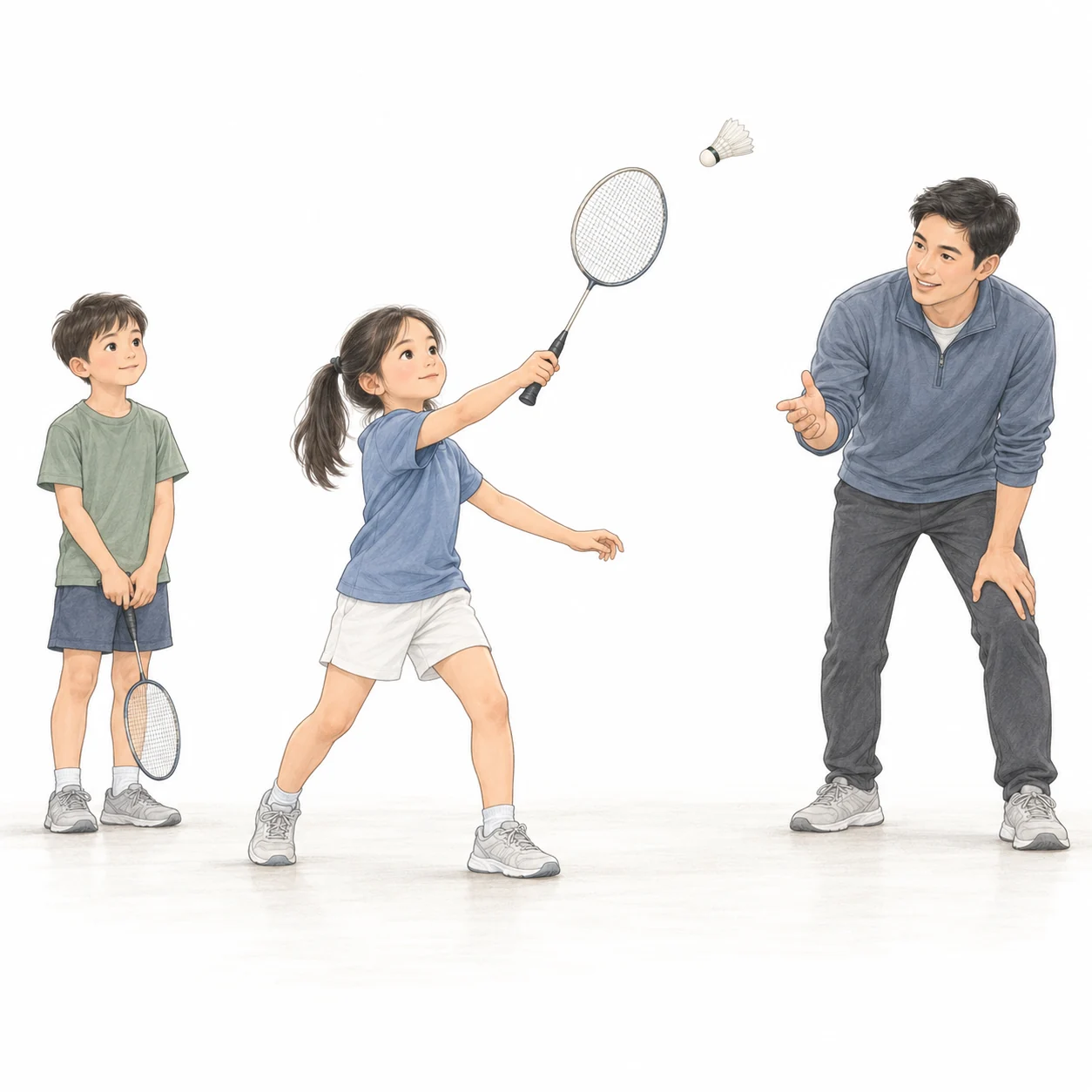
A suitable change
Check application without turning it into a surprise test
Transfer should be checked through a variation the learner can reasonably attempt. A changed target, a slightly different starting position or a simple choice between two suitable responses may reveal whether the idea travels beyond one memorised pattern. Change only what serves the learning question. Adding several new demands at once makes it difficult to know why the attempt changed. The coach should explain the task and provide help that remains appropriate. Do not confuse a surprise challenge with a fair opportunity to use what was taught.
Keep the foundation visible during variation. If the child loses the intended action when a choice is added, the coach can reduce complexity, review the foundation and reconnect it to the situation. Returning to a simpler task is not necessarily going backwards. It can clarify the part needed for the next attempt. Equally, repeating a familiar drill indefinitely does not by itself show that the child can use the idea elsewhere. Useful training connects familiar practice, a manageable change and a review of the child’s response. It does not promise automatic match performance.

Myths and teaching reality
A title cannot answer the learning question
Myth: the coach with the strongest playing history must be the best teacher for every child. Reality: playing experience can inform coaching, while explaining, observing, adjusting and reviewing remain teaching responsibilities to examine separately. Respect a coach’s background and ask how a beginner’s understanding is checked. Neither a prominent title nor the absence of one tells you everything about the actual lesson. Compare the proposed teaching with your child’s needs instead of treating status as a substitute for observation.
Myth: immediate success without a visible mistake proves lasting learning. Reality: a well-timed reminder or predictable feed can help an attempt succeed. That can be valuable practice, but it does not establish what remains after the reminder or what transfers to a changed task. Conversely, an imperfect attempt can reveal a useful independent decision. Ask what support was present, what was being checked and whether the observation is repeated later. Avoid turning one moment into a permanent judgment of either child or coach.
Myth: a good coach should make a child independent within a set number of weeks. Reality: tasks, understanding and opportunities differ. Responsible discussion describes the next learning step and the support still needed, rather than guaranteeing a deadline. Independence is also not the refusal of all guidance. Experienced learners still use feedback. The practical question is whether the child increasingly understands the task and takes appropriate responsibility for parts of it, while the coach continues to review and explain.

Eric’s teaching commitment
Value understanding rather than obedience alone
I am Eric, and the teaching commitment I want parents to examine is straightforward: I aim to explain patiently, notice where a learner is unsure and give help that the child can actually use. I value a child understanding why an action is being practised, rather than only following my next command. I find satisfaction in the teaching aim of helping a learner recognise a task and make a thoughtful attempt. That is a statement of my values and effort, not a claim that every student achieves the same result or that I hold an objective world ranking.
Parents can support this discussion with a calm question after training: what were you trying to do, and what could you check yourself? Let the child show an action or say that they are unsure. This is not a memory examination or a reason to demand perfect technical language. If the explanation is unclear, ask the coach what the current focus is and how prompts are being used. Avoid adding a competing instruction during the lesson. A useful conversation connects the child’s response with the coach’s teaching intention and a reasonable next opportunity.

A practical next step
Ask how independence will be observed
When choosing a badminton academy or a badminton class for kids in Kuala Lumpur, ask concrete questions: which task is being learned, what help is currently necessary, and how will the coach check understanding when that help is reduced? Ask how a familiar task may be revisited and what suitable variation could follow. The answer should describe a teaching approach, not claim that credentials alone guarantee learning. Consider practical participation and the child’s current foundation alongside these questions. The best fit is a decision about the learner and the actual proposal.
For ST Badminton Academy in Setapak, start with the website’s online application. Describe the child’s experience, learning concerns and what you hope to understand about guidance. Read the intake and application rules before using the training contact information for remaining questions. Applying begins a discussion and does not reserve a place or confirm a class arrangement. Review what is proposed before deciding. Keep the purpose clear: patient instruction, appropriate support and opportunities to remember and apply a task, with progress discussed honestly rather than promised on a fixed schedule.
Questions about learning with fewer reminders
These answers distinguish appropriate help, independent attempts and the responsible interpretation of a child’s response.
Does independent learning mean the coach stops teaching?
No. The coach still explains, observes and gives appropriate feedback. Independence concerns parts of a task the child can understand and attempt with less prompting, not the absence of guidance.
Is an immediate successful shot proof of learning?
It shows an attempt succeeded under those conditions. Check what assistance was present and whether the task can be understood later or used in a suitable variation before making a broader judgment.
Should a beginner receive fewer reminders immediately?
Not necessarily. Unclear explanations or unsuitable difficulty may require more useful support first. Ask how the coach decides when to reduce, change or restore a prompt.
What is the difference between remembering and applying?
Remembering concerns returning to a familiar task after a gap. Applying concerns using the idea in a suitable changed situation. Both can inform teaching without being treated as a pass-or-fail label.
Can I assess this from one lesson?
One observation can suggest a question but cannot establish a lasting pattern. Ask how the task is revisited and compare several relevant opportunities rather than judging from a single moment.
Are questions from the child a sign of dependence?
Not automatically. A relevant request for clarification can show engagement with the task. Distinguish asking to understand from waiting for someone to dictate every action.
Does a famous coaching title answer these questions?
A background or qualification may be relevant, but it does not describe the child’s current instruction. Ask about explanation, usable feedback and how understanding is checked in the proposed training.
Can STBA promise independence within a few weeks?
This guide makes no such promise. Discuss the child’s task, current support and next teaching step. Any proposal should be reviewed without assuming a guaranteed result or a fixed learning deadline.
How do we begin a discussion with STBA?
Submit the online application with the child’s experience and learning concerns. Read the intake rules, then ask remaining questions through the training contact information before deciding on a proposal.
From clear guidance to a thoughtful attempt
Four steps towards a more independent attempt
These steps describe opportunities to learn, not a deadline or an achievement score. Support can be adjusted again whenever the task requires it.
| Teaching question | Support without a learning check | Support connected to understanding Teaching approach |
|---|---|---|
| Purpose | Direct every action without checking the goal | Help the child recognise what the task is for |
| Prompting | Repeat the same cue without reviewing confusion | Clarify and adjust help to the task |
| Remembering | Judge only the immediate attempt | Revisit a familiar task after a suitable gap |
| Application | Add unrelated difficulty without explanation | Use a manageable variation of the learned idea |
| Child’s response | Treat uncertainty as a permanent label | Ask what was understood and what help is needed |
| Coach selection | Use status as a guarantee of learning | Examine explanation, observation and review |
Begin with the online application
Tell ST Badminton Academy about your child’s experience and the guidance questions that matter to you. Submit the online application first, read the intake rules and discuss the actual proposal before deciding. Applying does not confirm a place or a learning result.