Badminton And Barre: Exercises For Core Strength And Balance (Barre Guide)
Badminton is won on small margins of control. The lunge that stays steady, the landing that stays quiet, the trunk that stays tall when the legs are tired. Barre training builds exactly that control. Borrowed from the ballet studio, barre work uses a rail for light support while you move through small, precise positions: plies, releves and holds that train posture, core strength and balance together. This page shows how barre exercises support badminton, which basics to learn first, and how a short barre block fits around court training without ever replacing it.
Control Check #1
Barre Is Support Work, Not a Dance Class
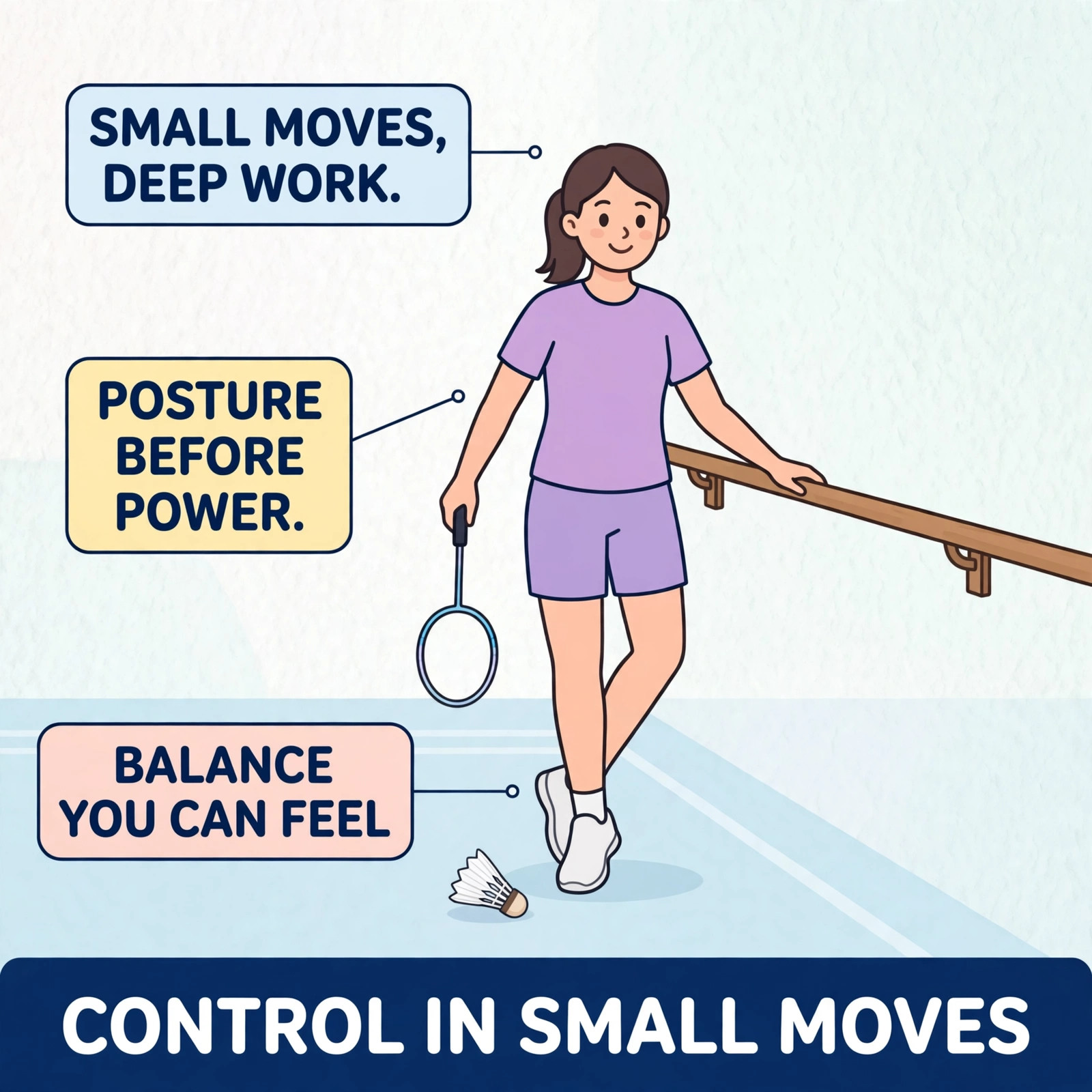
A barre is simply a sturdy rail fixed at about waist height. You stand beside it, rest one hand lightly on top, and work through slow, small movements. Nothing travels far. Heels lift a few centimetres, knees bend a short way, one leg rises and holds. Because the range is small, there is nowhere to hide: your posture, your breathing and the deep muscles around your middle do the work, and every wobble shows up at once.
That honesty is why barre suits badminton players. On court, the same deep control decides whether a lunge finishes tall or collapses, and whether the next shot starts from balance or from a scramble. Barre slows those moments down and repeats them, so the body learns the shapes at walking pace before it needs them at match speed.
Control Check #2
Why Posture Decides How Clean Your Shots Look
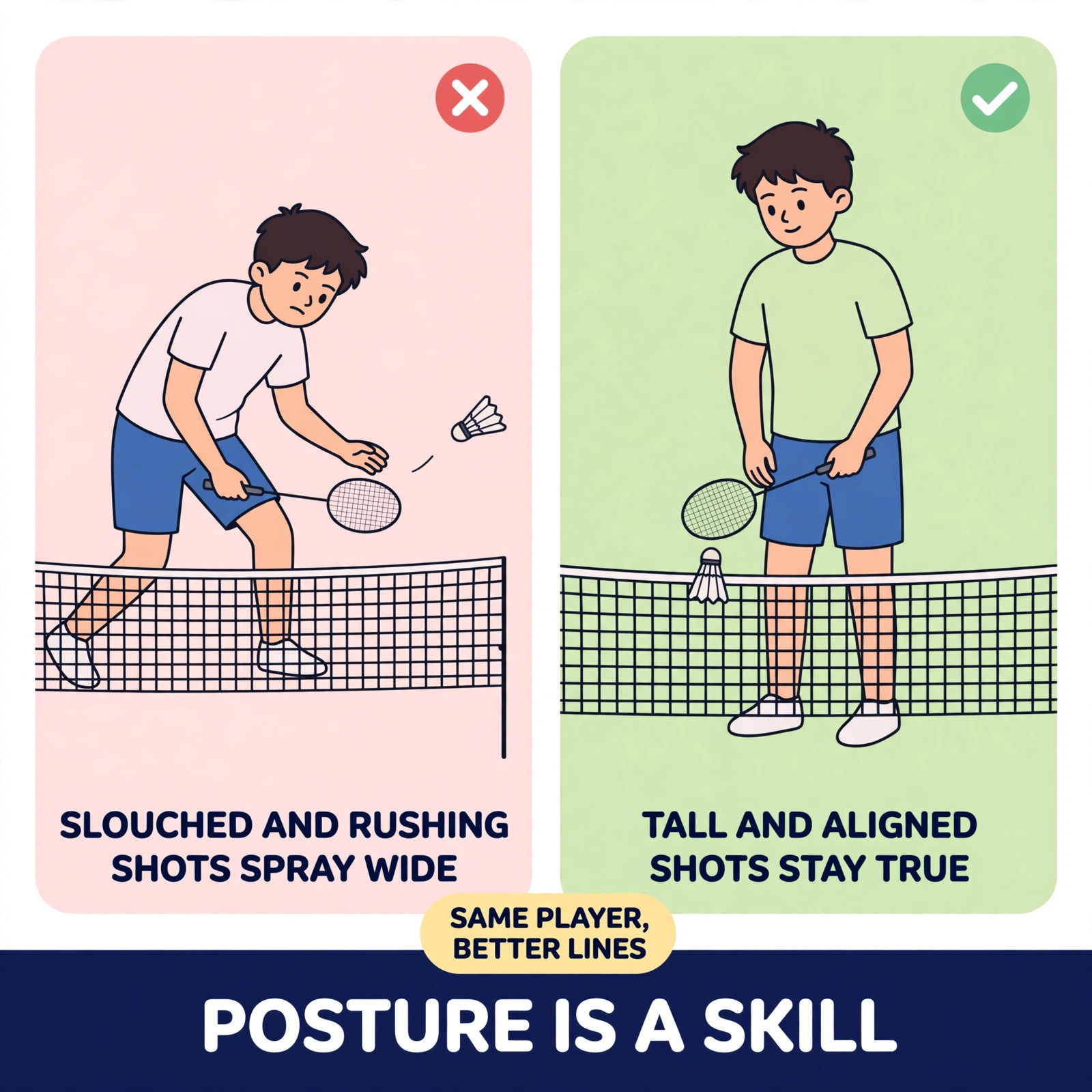
Watch a player whose shots spray wide late in a match and you will usually see posture go first. The shoulders round, the trunk tips forward, the racket head drops, and the shuttle follows the body out of line. Shots do not stay true because the arms try harder. They stay true because the body behind them holds its shape.
Barre trains that shape directly. Standing tall at the rail with ribs down and spine long is the same organisation a player needs at the net: chest open, head still, weight ready to move either way. Repeat the tall shape slowly, under light fatigue, and it starts to appear on court without thinking.
There is a second benefit. Small controlled movements load the small stabilising muscles around the ankles, knees and hips, the ones big gym lifts often skip. Stronger stabilisers mean steadier landings and cleaner direction changes, which is where badminton balance is really tested.
Control Check #3
Three Barre Basics Every Badminton Player Can Learn
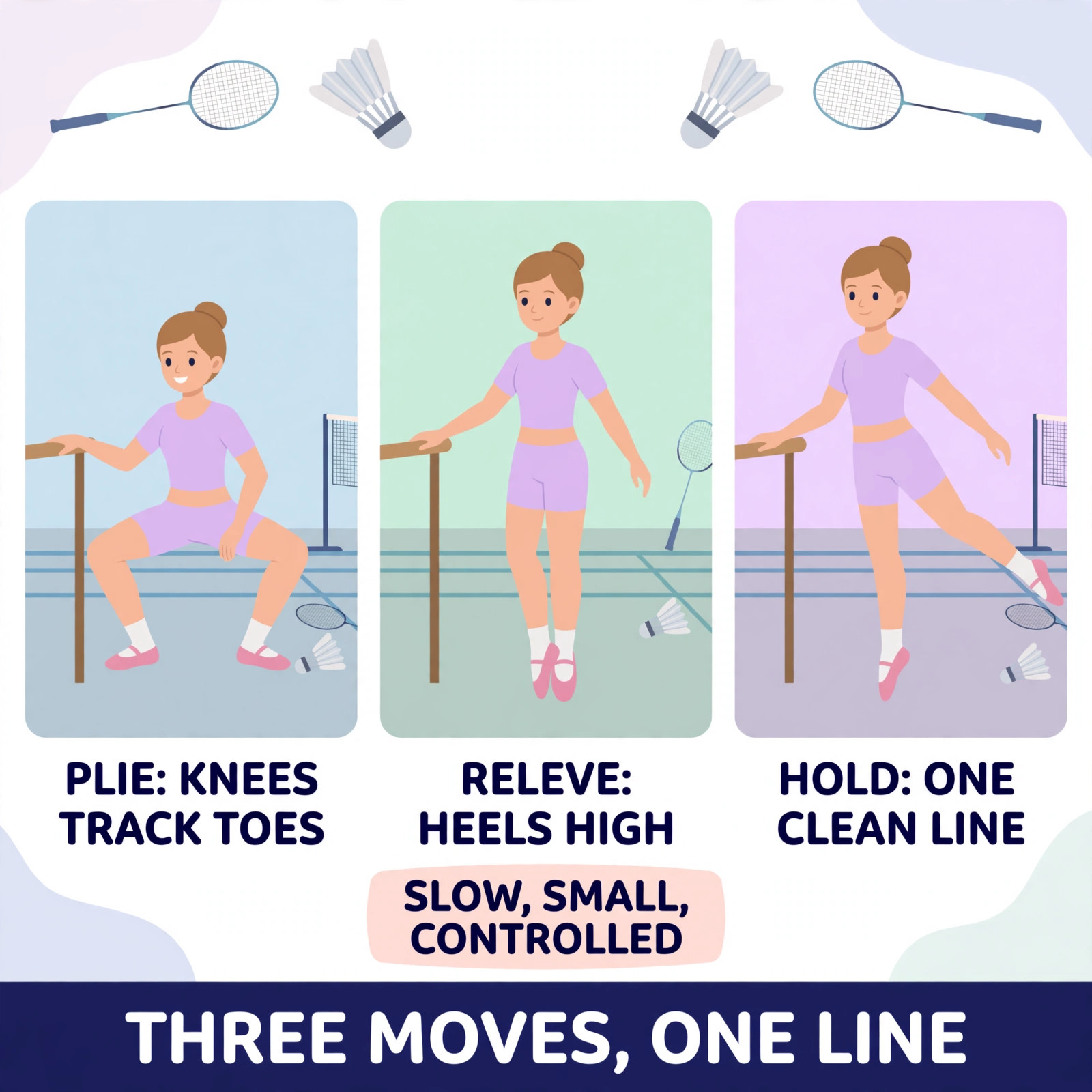
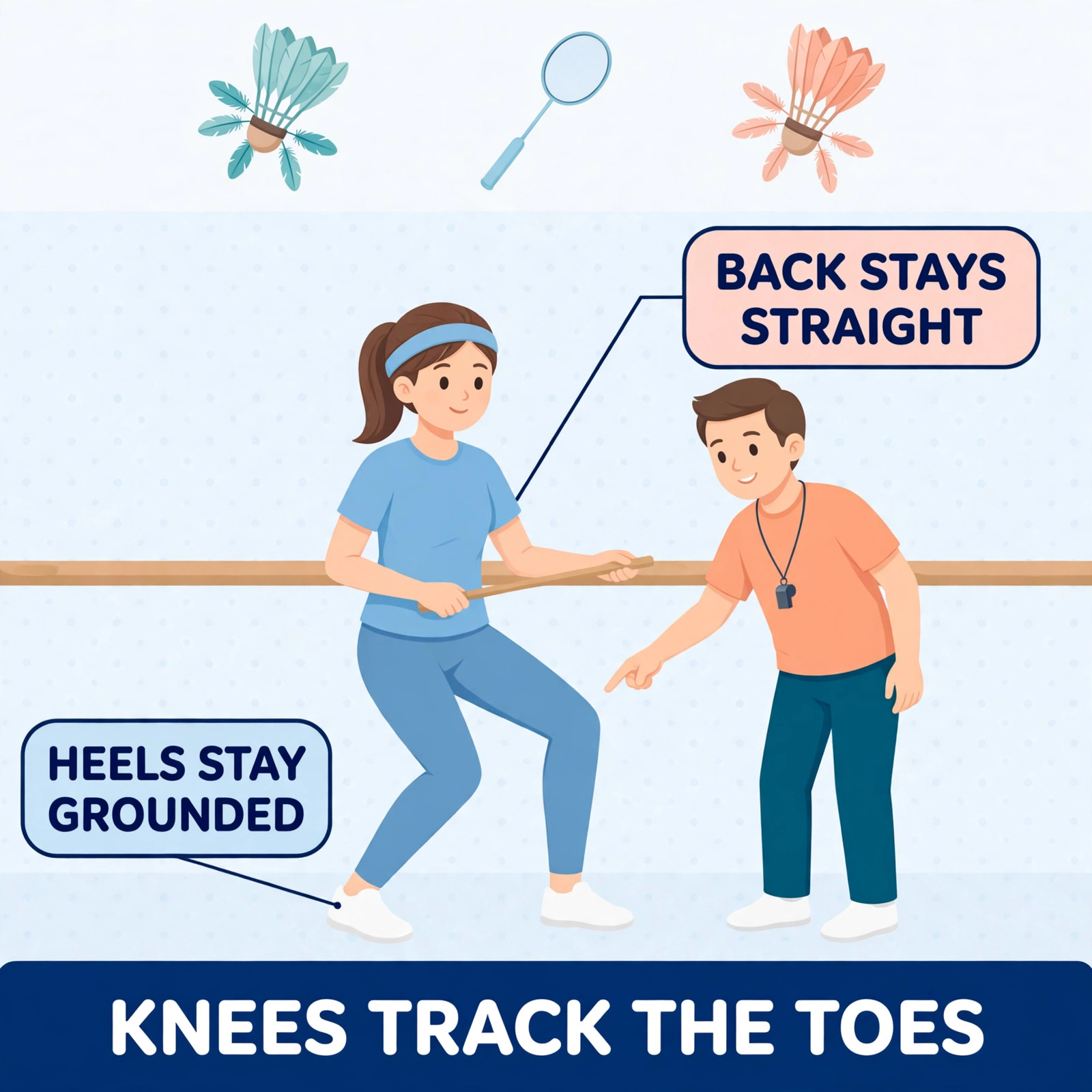
Start with the plie. Stand sideways to the rail, feet under your hips, and bend the knees a short way while the heels stay grounded. The knees track in line over the toes and the back stays straight. Rise slowly and repeat. It looks simple. Done slowly, with the trunk tall, it teaches the exact knee line a safe lunge needs.
Next, the releve. From standing, lift the heels high and hold, ankles steady, body in one tall line. Lower slowly, with control, never dropping. Releves build calm strength in the calves and ankles, the base every split step and landing stands on. If the ankles wobble, the shot above them wobbles too.
The third basic is the hold. Lift one leg slightly, or rise into a releve, and simply stay there: ten seconds, then twenty, breathing calmly. Holds teach the body to be still under effort, which is the hidden skill inside every tight net shot and every controlled landing. Small, slow and repeated, these three moves cover most of what badminton asks from barre.
Control Check #4
Core Strength and Balance, Built the Slow Way
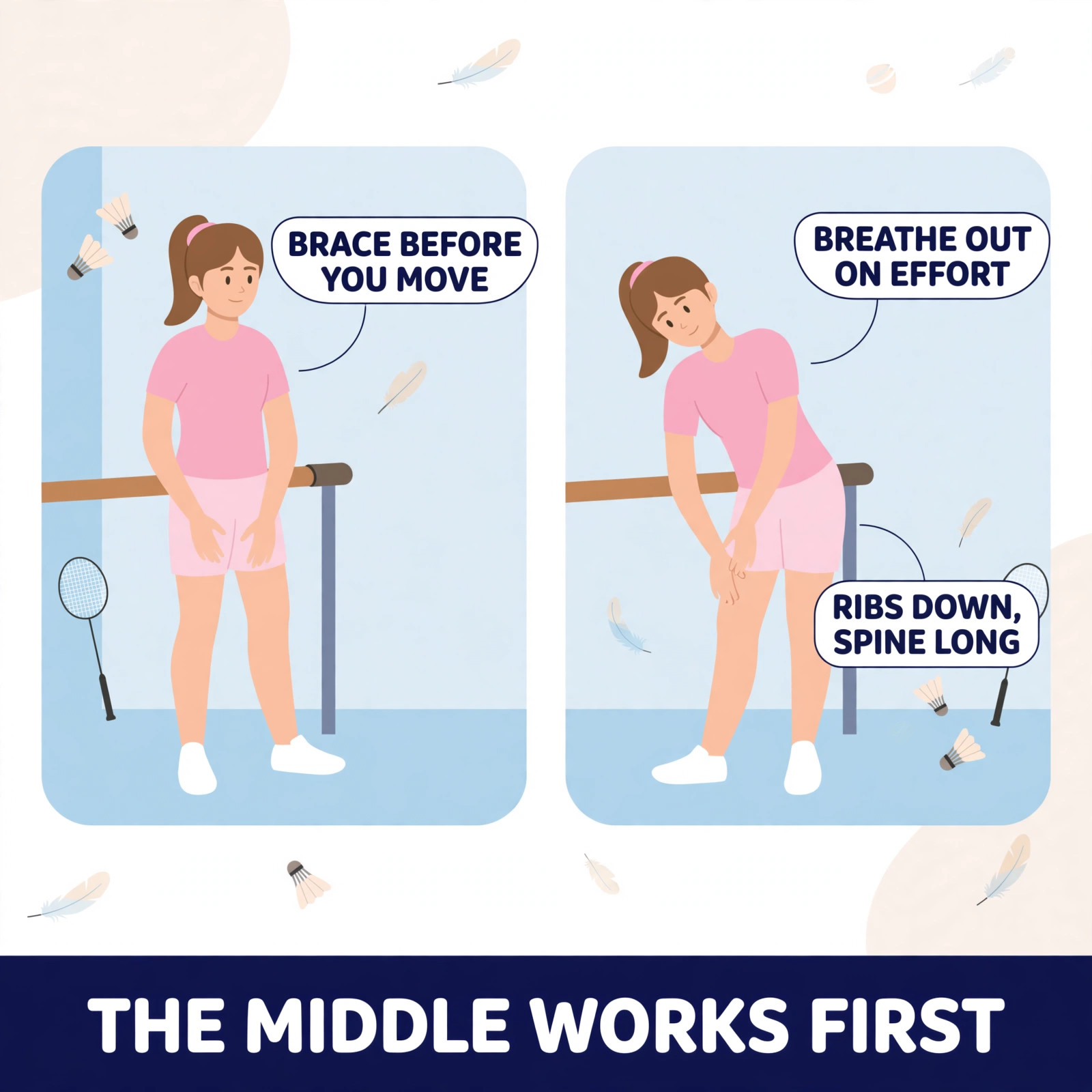
The middle of the body works first in every barre set. Before any movement, brace gently, breathe out on the effort, and keep the ribs down and the spine long. That brace is not a held breath or a stiff plank. It is quiet tension that lets the arms and legs move freely while the trunk stays organised.
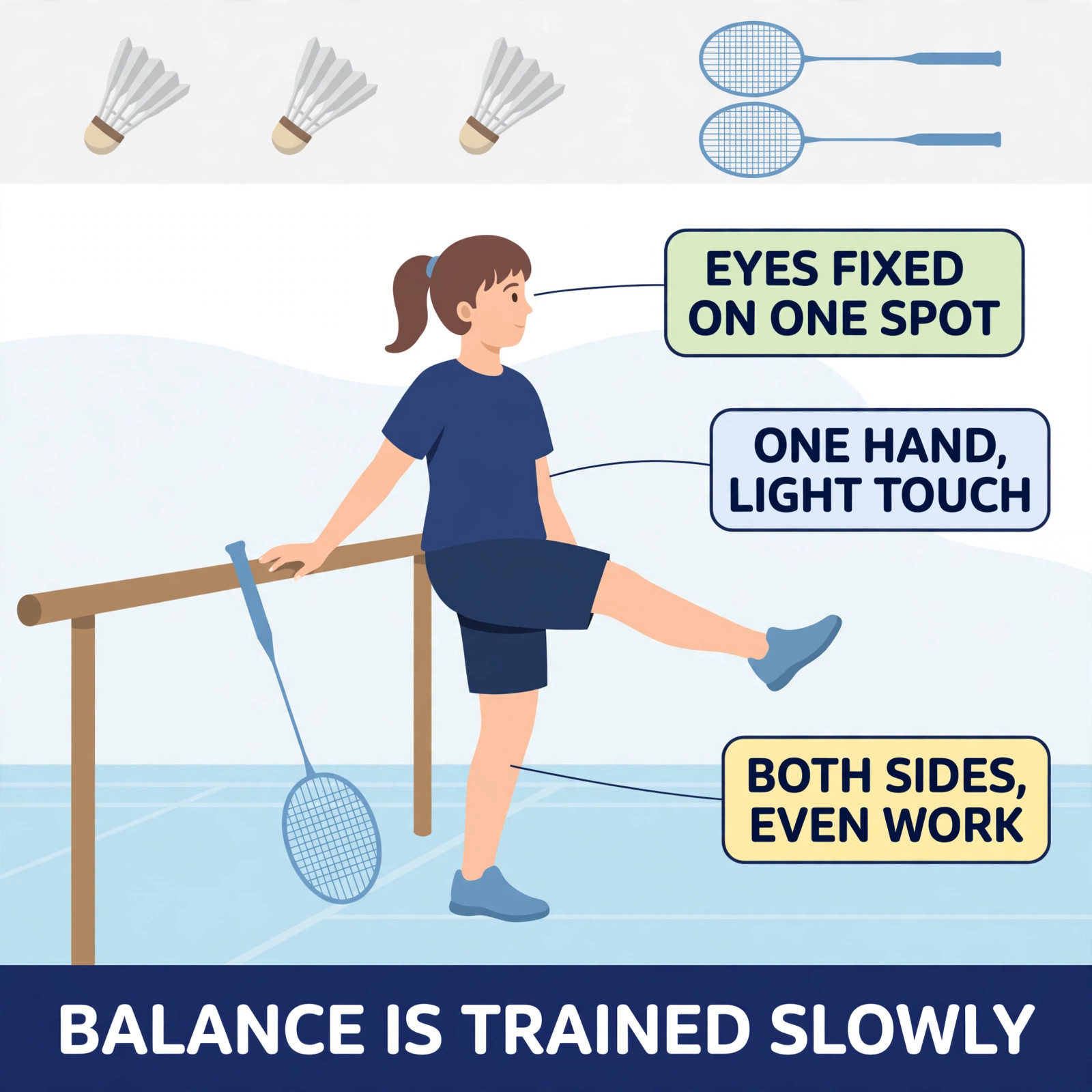
Balance work follows the same slow logic. Stand on one leg beside the rail with one hand resting lightly on top. When that feels easy, use one fingertip. When the fingertip feels easy, take the hand away for a few seconds at a time. Each step is earned, never rushed, and both sides get even work so one leg never carries the other.
Keep the difficulty honest. If you are gripping the rail hard, swaying, or holding your breath, the step is too advanced. Drop back one level and own it there. Balance grows from clean seconds, not from surviving messy ones, and the same rule protects your ankles and knees while the strength builds.
Control Check #5
How Barre Fits Around Court Training
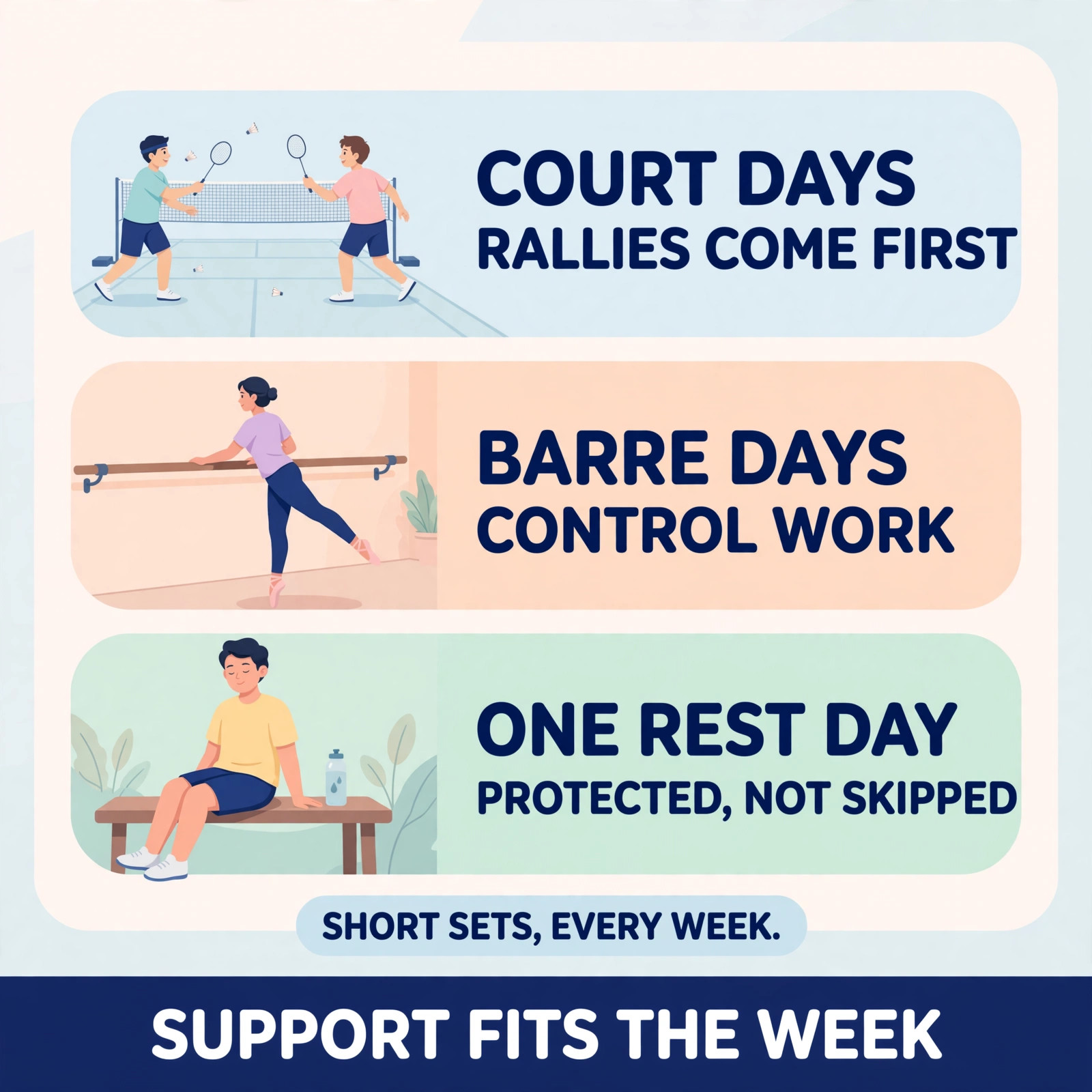
Barre is support work, so it sits around court training, never on top of it. A practical week keeps court days for rallies and skills first, adds two or three short barre blocks on separate days or after light sessions, and protects one full rest day. Ten to twenty minutes is plenty when the work is slow and honest.
Order matters on shared days. Do barre after court work or on its own, not before a speed session, because tired stabilisers change how you land. Fresh legs learn movement patterns; tired legs rehearse survival. Keep the hard court days hard, the barre days controlled, and the week stays balanced.
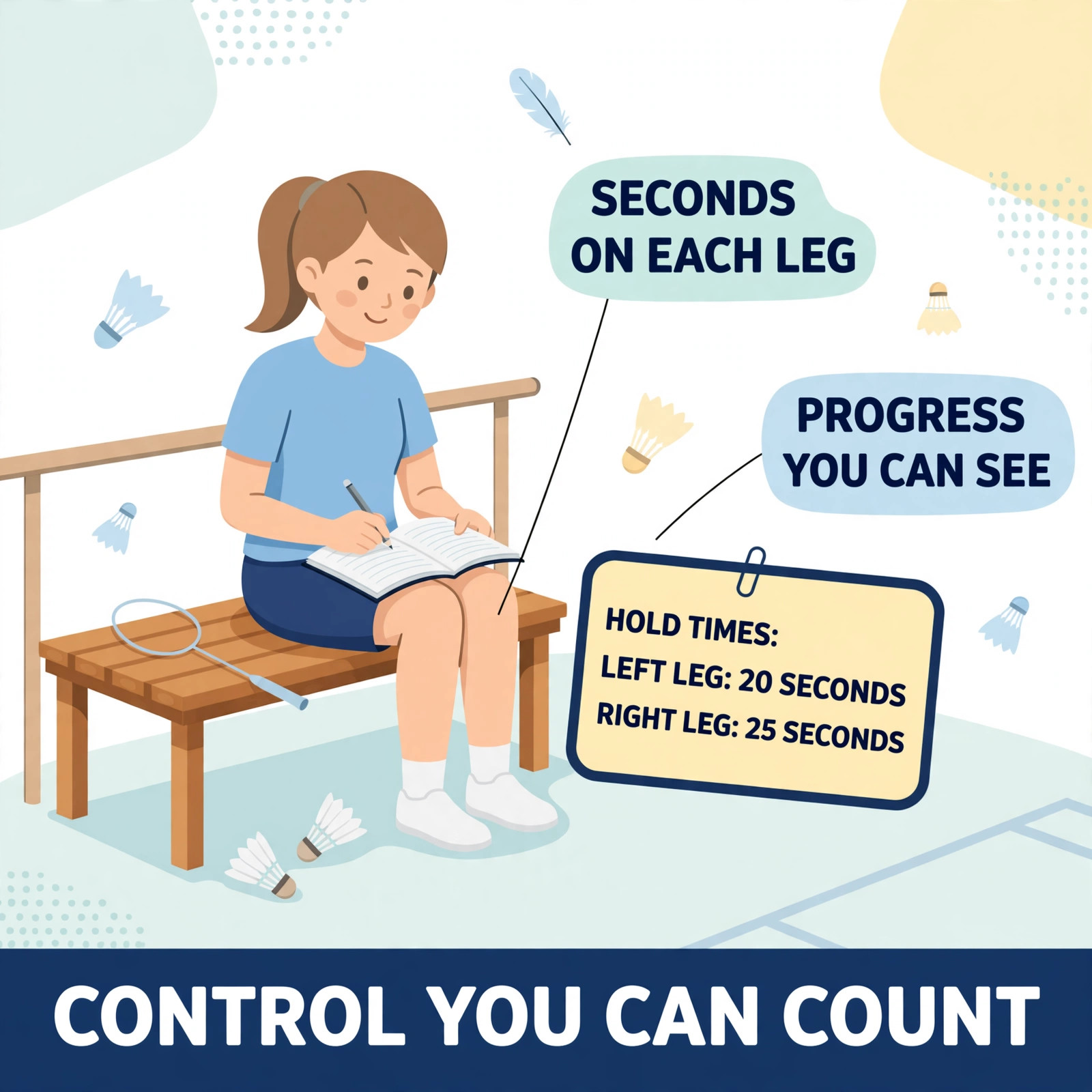
Progress is easy to track. Write down your hold times for each leg, note when you moved from a full hand to a fingertip on the rail, and record how steady the first lunge of a session feels. Small numbers, honestly kept, show the control growing long before it shows in results.
Myth vs Reality
Myths About Barre Training
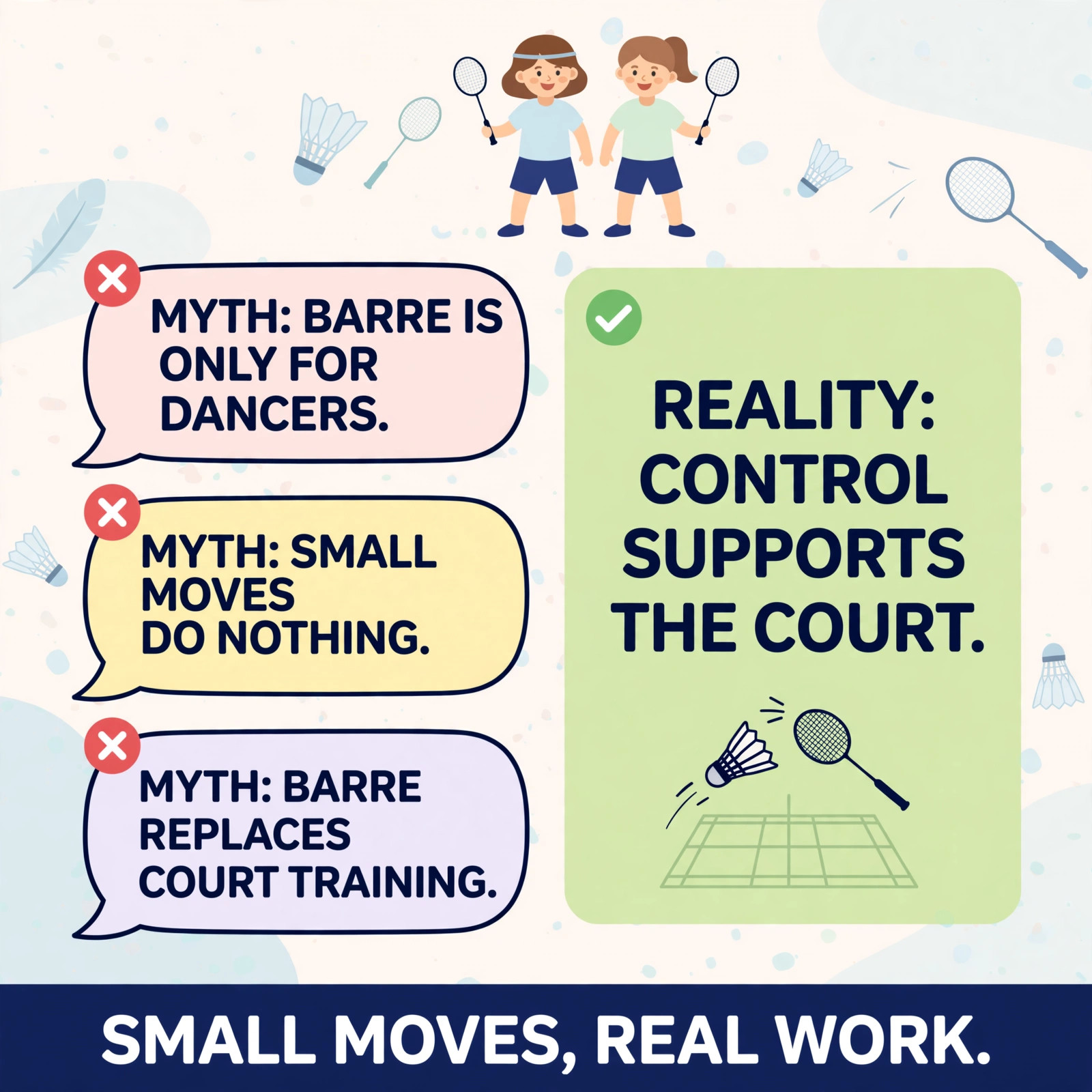
The first myth is that barre is only for dancers. Dancers use it because it works: precise positions, patient repetitions, honest feedback. Badminton players borrow the same tool for the same reasons, pointed at lunges, landings and net control instead of the stage.
The second myth is that small moves do nothing. Small moves done slowly are hard precisely because momentum cannot help. A two centimetre heel lift held for twenty seconds asks more of the ankle than a quick bounce ever will, and the burn players feel in a slow plie settles the argument quickly.
The third myth is the dangerous one: that barre can replace court training. It cannot. No rail work teaches reading an opponent, timing a smash, or choosing shots under pressure. Barre supports the court by building the body that plays on it. The rallies still come first, always.
Why Choose Us
Why Players Choose ST Badminton Academy
Every session at ST Badminton Academy is planned around the player in front of the coach. Groups are kept to a maximum of 4 students, so your lunge line, your landing and your balance faults are seen and corrected in the session, not written down and forgotten. Support work like barre is added only where it serves your game.
Your coach is Eric Chuar, who has coached badminton in Singapore and Malaysia for more than 15 years. That experience shows in the details: which correction to give first, when to slow a drill down, and when a player needs strength work beside the court rather than more rallies on it.
The academy is based in Setapak, Kuala Lumpur, where it has run classes for years. Players come for honest coaching, small groups and steady progress they can measure. If you want support training that respects the court instead of competing with it, this is a good place to start.
FAQs: Badminton And Barre Exercises in Malaysia (KL)
Parents and players ask the same fair questions before adding barre work to a badminton week. Here are straight answers, with no hype and no promises we cannot keep.
Do I need dance experience to try barre work?Gombak?
None at all. The movements borrow their shape from dance training, but every exercise here is taught as body control for badminton: stand tall, bend cleanly, lift the heels, hold still. If you can stand beside a rail and follow a slow count, you can start. Coordination improves with practice, like any other skill.
How often should a badminton player do barre exercises?KL?
Two or three short blocks a week is enough for most players. Ten to twenty minutes of slow plies, releves and holds, done with full control, beats one long tiring session. Place the blocks after court training or on lighter days, and keep at least one full rest day in the week.
Will barre training make my legs slow or bulky?level?
No. Barre work builds strength through slow, controlled contractions, mostly with your own body weight. That kind of training tones and strengthens without adding bulk, and the control it teaches tends to make first steps cleaner, not slower. Speed still comes from court footwork practice, which barre supports but never replaces in your week.
What should I feel during a barre set?
A deep, steady burn in the working muscles is normal, especially in the calves during releves and the thighs during slow plies. You should not feel sharp pain, pinching in a joint, or strain in your lower back. If a joint hurts, stop, reset your position, and make the movement smaller before going again.
Can barre work help my balance in lunges?
Yes, that is one of its main uses. The single leg holds and slow plies train the same ankle, knee and hip control a lunge needs, at a pace where you can feel mistakes and fix them. Transfer is gradual: steady holds at the rail first, then steadier first lunges on court over the following weeks.
Is barre training suitable for beginners?Maju?
Yes. Barre basics are low impact, easy to scale, and honest about difficulty: hold the rail with a full hand, make the movements smaller, shorten the holds. Beginners often enjoy how quickly they can feel progress, because the first wins are simple and visible, like standing tall for ten calm seconds on one leg.
What do I need for a barre session?Malaysia?
Very little. A sturdy rail, a chair back, or a wall edge works for support, plus floor space to stand and lunge. Wear clothes you can bend and balance in, and train in bare feet or flat shoes so your ankles get honest feedback from the floor. No special equipment and no dance clothing needed.
Should barre replace my normal gym or court work?
No. Barre is one support tool beside two bigger ones: court training for skills and rallies, and general strength work for the whole body. Think of it as the control layer. It sharpens posture, balance and ankle strength so the other training lands better, but a week built only on barre would leave your game behind.
How soon will my balance feel different?badminton?
Most players feel steadier holds within three to four weeks of two or three short sessions a week. You will notice small things first: less gripping on the rail, longer calm holds, a quieter first lunge in training. Keep a simple record of hold times, because balance improves gradually and the numbers prove it.
Badminton And Barre Training in Action


One Standard for Every Player and Every Session
Control is a trainable standard, not a talent. At ST Badminton Academy, support work follows the same rule as court work: small groups, clear progressions, honest feedback, and no shortcuts. Your balance is tested, trained and retested, so progress is something you can point to, not just something you hope for.
| Factor | Random Extras | Planned Support Work SUPPORT |
|---|---|---|
| Frequency | 1 or 2 times a week. Mostly for fun and sweat. | Two or three short barre blocks a week, placed around court days. |
| Drills Focus | Basic static feeding. Minimal footwork pressure. | Plies, releves and one leg holds, progressed from full hand to fingertip support. |
| Physical Conditioning | Rarely included. Just playing games on court. | Core, agility, and speed training included in every session to prevent injury and build stamina. |
| Tactical Awareness | "Just hit it over." No real game plan. | Video analysis, point construction, and learning to read the opponent's game. |
| Coach Ratio | Large groups (8-10 kids). Coach barely watches you. | Max 4 students. Mr Eric Chuar personally corrects every stroke and movement detail. |
| Goal Setting | Fun and exercise. | Posture, core control and balance that hold under rally pressure. |
| Long Term Result | Good recreational player. | A player who stays tall, lands quietly and recovers in balance. |
Badminton And Barre Training in Kuala Lumpur
Bring your questions to a trial session. Watch how the coach checks your posture and your lunge line, feel a short barre block done properly, and decide from experience. Good control is built one honest session at a time, and your first session can be this week.




