Badminton And Agility Training: Drills For Improving Speed And Coordination (Agility Guide)
Badminton speed is not a straight line sprint. It is a first explosive step, a hard stop, a turn, and a push back, repeated thirty times a rally. Agility training builds exactly that: quick feet, sharp direction changes and coordination that holds together when the legs are burning. This page walks through the drills that matter, split steps, ladder patterns, jump rope work and multi-directional movement, and shows how to fit them into a normal training week so speed grows without wrecking technique or joints.
Speed Check #1
Agility Is a First Step Problem
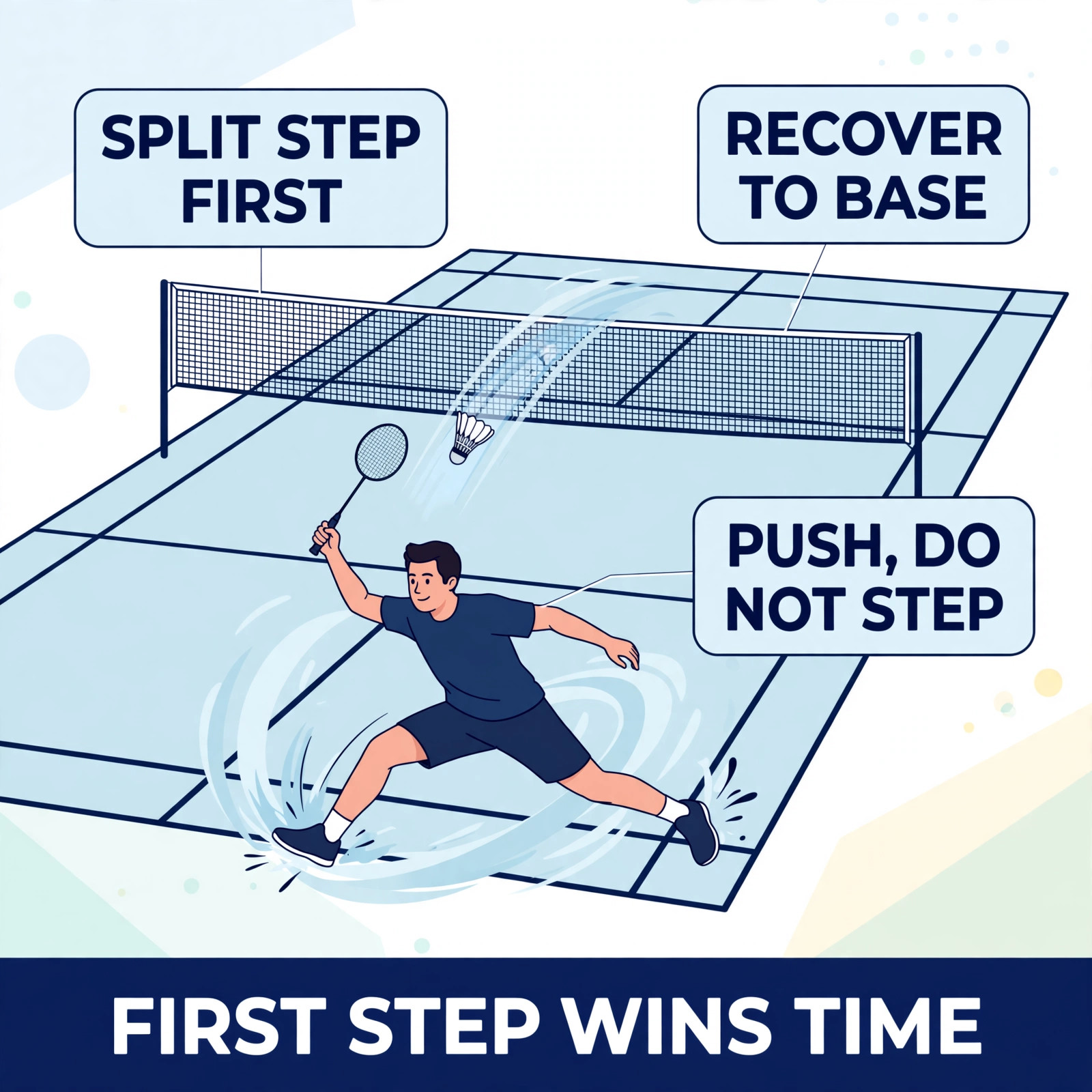
Watch a rally closely and count how far anyone actually runs in a straight line. Almost every movement is short: two steps to the net, a scissor kick at the back, a lunge, a recovery. The player who wins those short races is rarely the fastest sprinter. It is the player whose first step starts earliest and lands ready.
That is why agility work starts with reaction, not running. Your eyes read the opponent, your body splits, and your feet choose a direction before the shuttle arrives. Training that skips the reading part produces fast feet that move late. Training that includes it produces speed you can actually use in a rally.
Speed Check #2
Why Every Speed Drill Starts With the Split Step
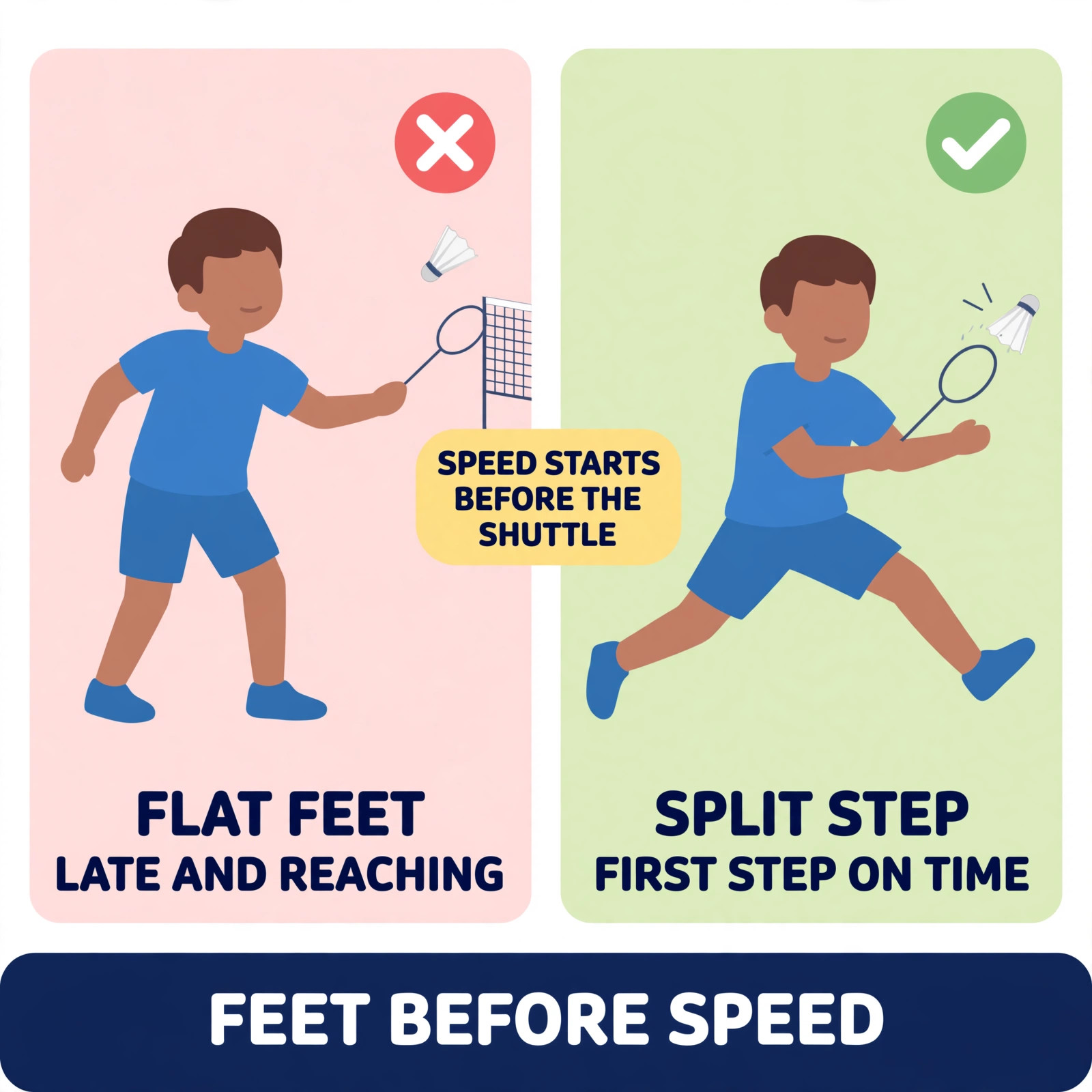
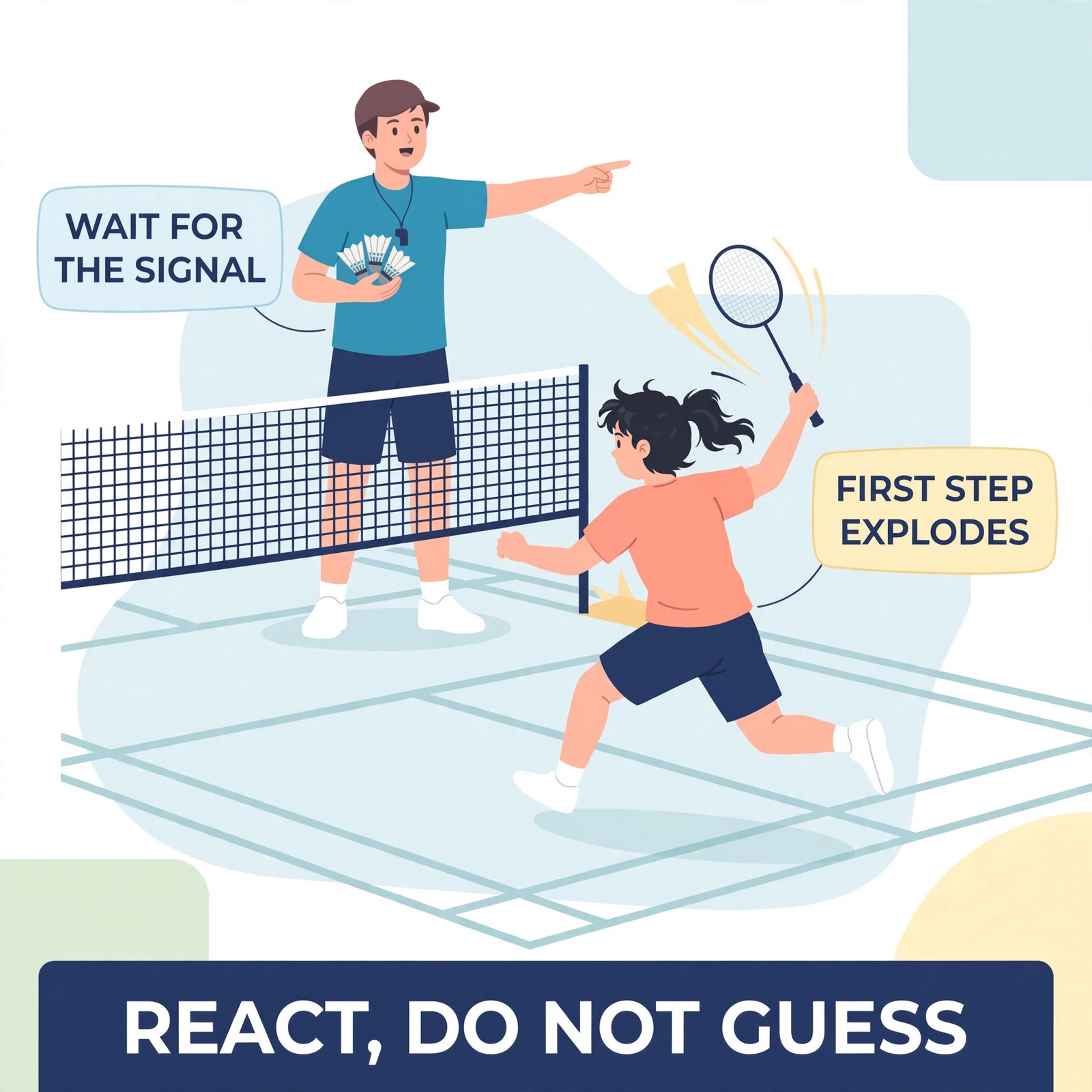
Every coach in this academy teaches the split step before any speed drill, because the split step is the launch pad. As your opponent strikes, land softly on both feet, knees bent, weight on the forefoot, body coiled. From that small bounce, any direction costs the same effort, which is the whole point.
The mistake players make is splitting too late or too high. A split that lands after the shuttle is struck is just a hop, and a high jump wastes the very time it should save. Keep it low, keep it timed to the opponent racket, and the first step out of it feels almost automatic.
Drill it plainly: a partner points left or right at random, you split and push two steps that way, then recover. Ten clean repetitions beat fifty sloppy ones. When the split step is timed and balanced, every other agility drill on this page starts paying off faster.

Speed Check #3
Ladder Drills for Quick Feet and a Quiet Body
The agility ladder looks simple and humbles everyone. Patterns like one foot in each square, two feet in each square, and in-in-out steps train the feet to move quickly while the body stays quiet. That quiet body is the real lesson: fast feet under a calm trunk is exactly what a controlled shot needs.
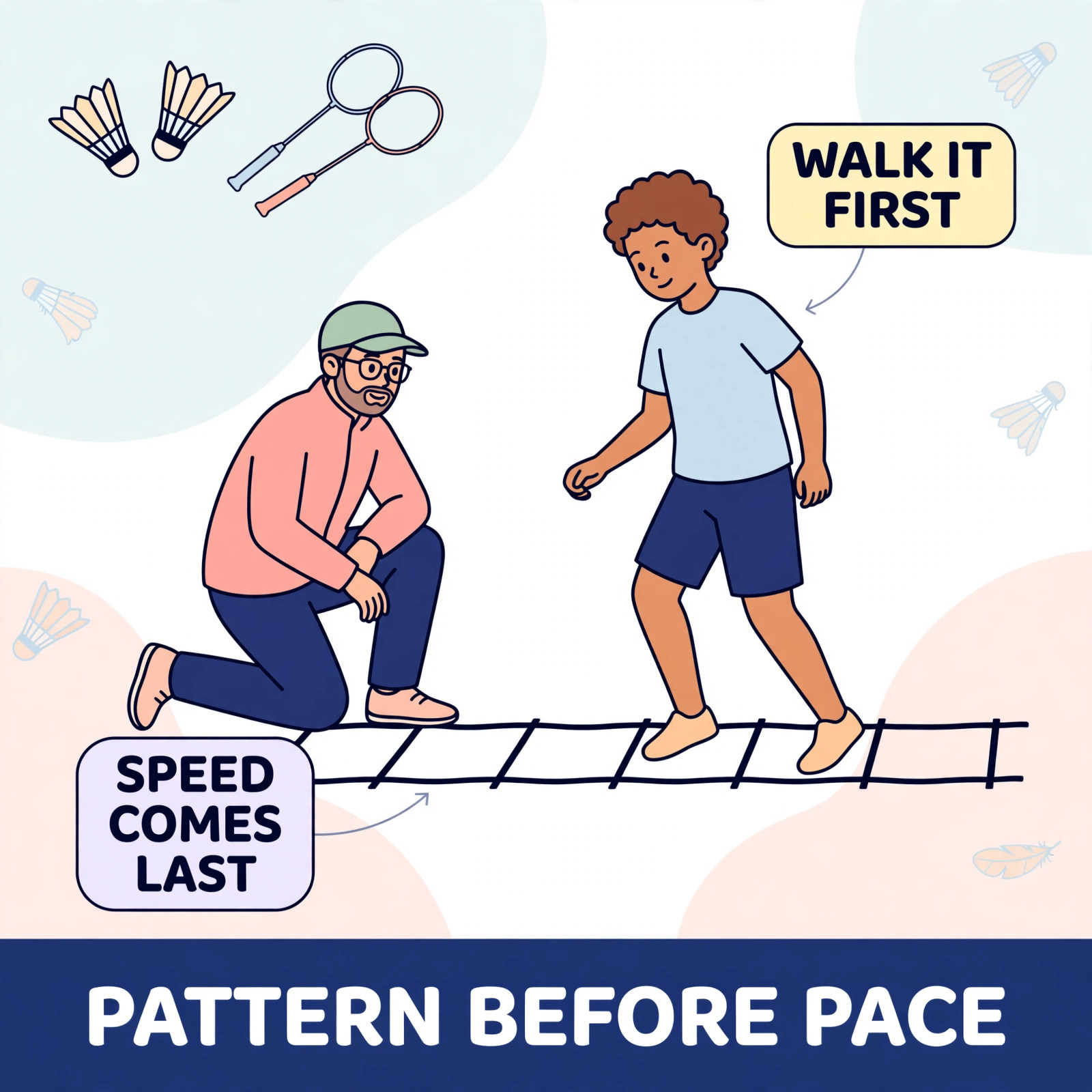
Run ladder patterns at a pace you can keep clean. Feet light, eyes up, arms relaxed, no staring at your shoes. When a pattern stays clean for three passes, add a little speed or a new pattern. When it falls apart, slow down. The ladder rewards honesty, because sloppy speed here becomes sloppy footwork on court.
Coordination grows from variety. Mix forward, sideways and backward patterns through the ladder, and finish some passes with a two step push toward an imaginary net or back corner. The shuttle is never impressed by ladder tricks, but the feet that learned them arrive earlier and steadier everywhere on court.

Speed Check #4
Jump Rope and Multi-Directional Work
Jump rope is the oldest agility tool in racket sports and still one of the best. Light, quick contacts teach the ankles to spring instead of sink, and the rhythm ties hands, eyes and feet together. Two foot bounces to start, then alternate feet, then short bursts on one leg each side.
Keep rope work short and sharp: thirty to sixty seconds a round, full rest between rounds, and stop the moment the jumps get heavy and loud. Heavy landings mean the spring has gone, and grinding on teaches the wrong pattern. Done fresh, rope work builds the elastic ankles that split steps and recoveries run on.
Multi-directional drills tie it together. Set markers around you and move on a call or a point: forward lunge, side shuffle, backward scissor steps, always returning through the middle. Start at a walk, learn the routes, then build pace. Change of direction is where badminton speed lives, and it is trained, never wished for.

Speed Check #5
How Agility Work Fits Around Court Training
Agility work is intense, so place it with care. Two or three short blocks a week is plenty for most players, ideally when the legs are fresh: before court training as an extended warm up, or on separate days. Speed trained on exhausted legs becomes slow practice, and slow practice teaches slow habits.
A simple week works well. Court days stay for skills and rallies. Agility blocks of fifteen to twenty five minutes sit on two of those days before the main session, or on one off day. Keep one full rest day. If a match is coming, cut the last agility block before it and arrive fresh.
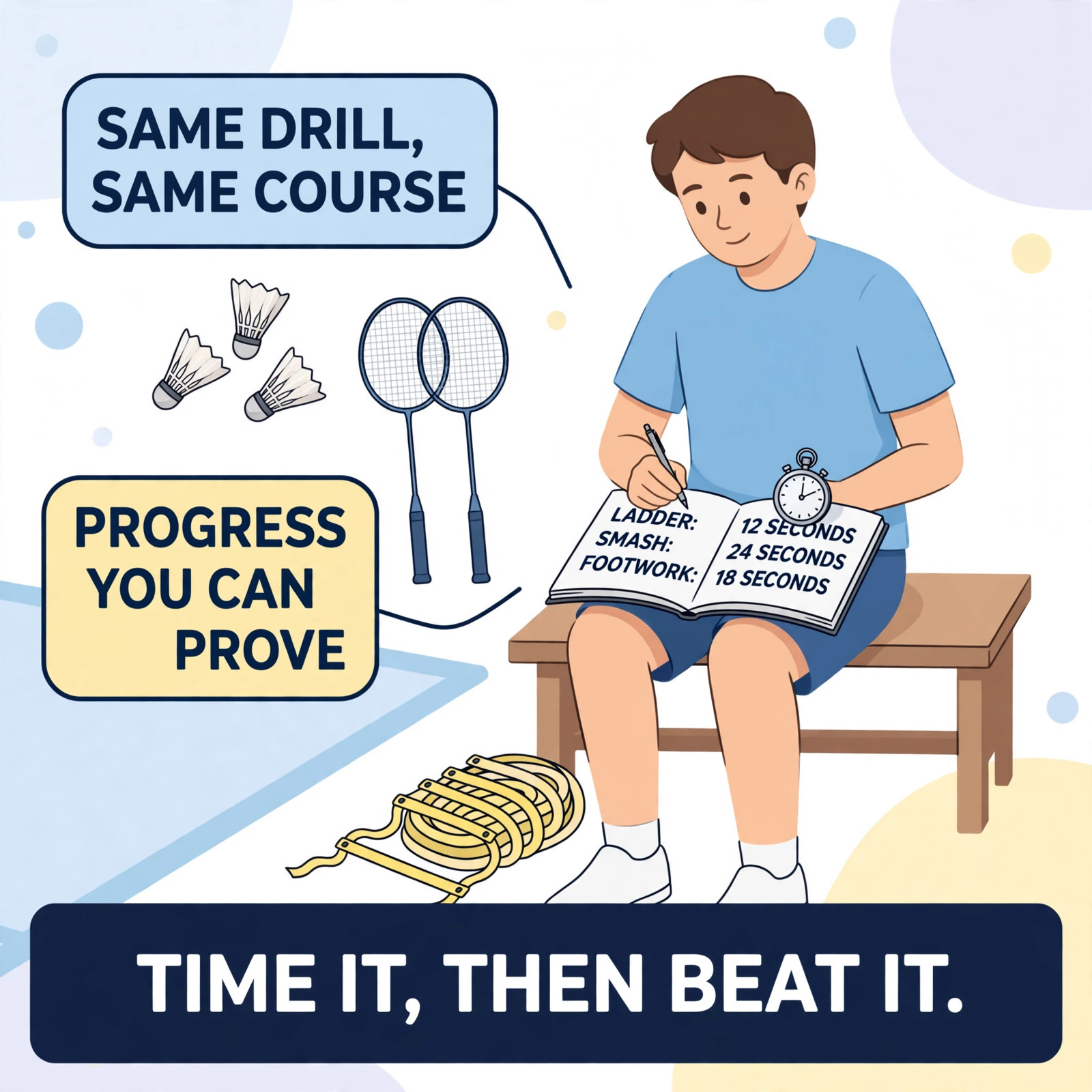
Progress needs a clock. Pick one drill, like six shuttles to the corners or a timed ladder pass, and test it every few weeks under the same conditions. Write the numbers down. Agility improves in small slices, and the player who tracks them keeps training honestly instead of guessing.

Myth vs Reality
Myths About Speed and Quickness
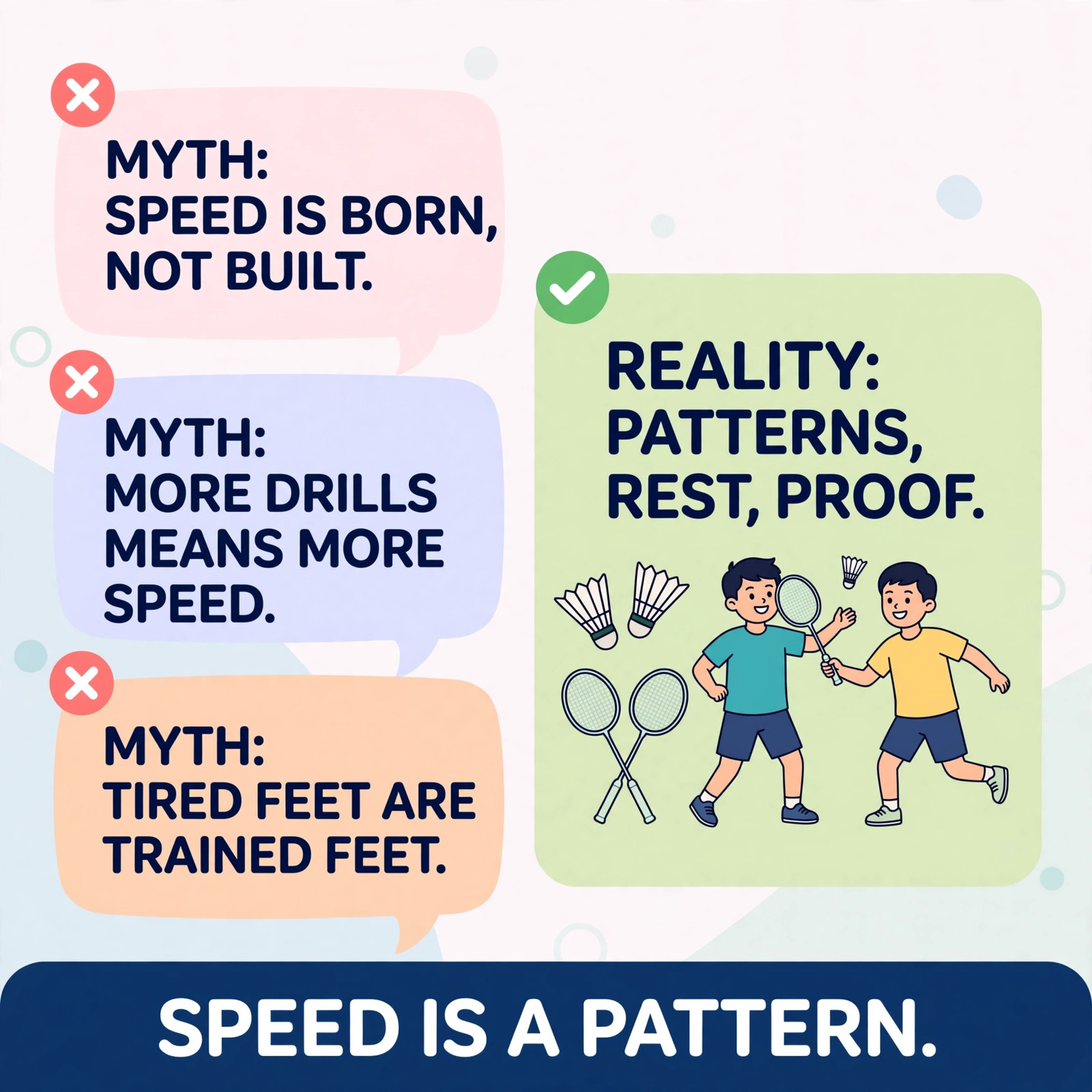
The first myth says agility is a gift: you are born quick or you are not. Reaction, timing and foot patterns are all trainable skills. Players who look naturally quick are usually players whose split step is early and whose feet know the routes. Both can be taught, drilled and measured.
The second myth says more speed work is always better. Speed is high cost training. Daily maximal agility work flattens players, dulls their legs for matches, and raises the strain on knees and ankles. Short, fresh, well placed blocks beat tired volume every week of the year.
The third myth says fancy patterns win matches. A player who dances through a ladder but splits late in rallies is still late. Drills are tools for first steps, stops and turns. The test is always the rally: did you arrive earlier, balanced, with the racket ready? Everything else is decoration.
Why Choose Us
Why Players Choose ST Badminton Academy
Every session at ST Badminton Academy is planned around the player in front of the coach. Groups are kept to a maximum of 4 students, so your split step timing, your landing line and your recovery routes are watched and corrected live. Small groups turn agility work from general exercise into coaching aimed at your game.
Your coach is Eric Chuar, who has coached badminton in Singapore and Malaysia for more than 15 years. He builds speed the way rallies demand it: read, split, move, recover. Players are tested on simple timed drills, so progress in quickness is a number you can see, not a feeling you have to trust.
The academy is based in Setapak, Kuala Lumpur, and has run classes there for years. If your feet feel one step behind your eyes, a structured block of agility work inside real coaching is the honest way to close the gap. Come and test your first step with us.
FAQs: Badminton Agility Training in Malaysia (KL)
Speed raises fair questions: how much, how often, and how to stay safe while getting quicker. These answers keep it simple, honest and practical.
What is the difference between speed and agility?Gombak?
Speed is how fast you cover ground in one direction. Agility is speed with decisions: starting, stopping, turning and changing direction in response to what you see. Badminton needs agility far more, because rallies are short bursts in every direction. Train both, but let agility lead, since it carries your reaction and balance with it.
How often should I train agility each week?KL?
Two or three short blocks a week suits most players. Fifteen to twenty five minutes of split step work, ladder patterns, rope rounds or multi-directional drills, done while fresh, is enough to progress. Quality decides the dose: when the feet get heavy and the patterns blur, the useful part of the session is over.
Do ladder drills really make players faster on court?level?
They help, with honest limits. Ladder drills train foot speed, rhythm and coordination, and those qualities transfer when the same patterns are practised at court pace toward real corners. A ladder alone will not fix a late split step or poor reading of the game. Used as one tool inside coaching, it earns its place.
Is jump rope useful for badminton?
Yes. Rope work builds springy ankles, light contacts and rhythm, all of which show up in split steps, recoveries and quick direction changes. Keep rounds short, land quietly on the forefoot, and stop when the jumps turn heavy. It is cheap, portable and easy to scale for beginners through to advanced players.
Should agility drills come before or after court training?
Before, while you are fresh, for most players. Speed and coordination work needs a clear head and springy legs, so it works well as an extended warm up before court training. Doing hard agility drills after a long court session usually means practising tired movement, which teaches slow habits and raises the risk of sloppy landings.
Can beginners do agility training safely?Maju?
Yes, with progressions. Beginners start at walking pace, learn the routes, and keep contacts light and short. Patterns get quicker only when they stay clean. Anyone with knee or ankle trouble should build up gradually and stop if a joint complains. Good coaching scales the drill to the player, never the other way round.
What surface and shoes suit agility work?Malaysia?
A flat, grippy surface is best: proper court flooring when you can, or clean flat ground. Wear badminton or indoor court shoes with real lateral support, not soft running shoes that roll on side steps. The drills involve hard stops and turns, and your footwear is the only thing between those forces and your ankles.
How do I know my agility is improving?
Test one drill and track it. Time six shuttle runs to the corners, or a fixed ladder pattern, every few weeks under the same conditions, and write the results down. You should also feel it: earlier split steps, quieter landings, and rallies where you arrive set instead of stretching. Numbers plus feel is the honest measure.
Do I need cones, ladders and lots of equipment?badminton?
No. A ladder helps, cones help, and a rope is cheap, but tape lines on the floor work, and shadow drills need nothing at all. The irreplaceable parts are timing, variety and honest pacing. Expensive kits do not make feet quicker; well run repetitions, corrected by a coach who watches closely, do that job.
Badminton Agility Training in Action

One Standard for Every Player and Every Session
Speed at this academy is tested, not promised. Timed drills at the start of a training block and again weeks later show exactly what changed, and the small group format means your movement faults get corrected while they are still habits you can change.
| Factor | Straight Line Sprints | Rally Speed Training SPEED |
|---|---|---|
| Frequency | 1 or 2 times a week. Mostly for fun and sweat. | Two or three short agility blocks a week, trained while fresh. |
| Drills Focus | Basic static feeding. Minimal footwork pressure. | Split steps, ladder patterns, rope rounds and multi-directional moves. |
| Physical Conditioning | Rarely included. Just playing games on court. | Core, agility, and speed training included in every session to prevent injury and build stamina. |
| Tactical Awareness | "Just hit it over." No real game plan. | Video analysis, point construction, and learning to read the opponent's game. |
| Coach Ratio | Large groups (8-10 kids). Coach barely watches you. | Max 4 students. Mr Eric Chuar personally corrects every stroke and movement detail. |
| Goal Setting | Fun and exercise. | First steps, stops and turns that match real rally demands. |
| Long Term Result | Good recreational player. | A player who arrives early, balanced, with the racket ready. |
Badminton Agility Training in Kuala Lumpur
Book a trial session and bring your current footwork with you. We will time a simple drill, show you the split step standard, and map the agility work your game needs first. One honest session answers more than a month of guessing.




