Chinese Men’s Singles Badminton Star
Wang Zheng Xing

China
Player Event: Men’s singles
Date of Birth: 21 February 2002, Huaihua, Hunan, China
Playing Style: Left-handed attacking singles player built on explosive speed and rear-court power — steep jump smashes, fast flat drives and a relentless early pace. Known for: World University Games singles gold in Chengdu, a first BWF World Tour title at the 2024 Ruichang China Masters, a dream run to the 2025 China Open Super 1000 final, and a career-high ranking of world No. 16.
Understanding Wang Zheng Xing (China’s Left-Handed Attacker)
Wang Zheng Xing represents China in men’s singles badminton and is one of the most naturally gifted left-handers of his generation. Born on 21 February 2002 in Huaihua, Hunan, he stands 1.83 metres tall and plays an all-out attacking game: fast feet, a heavy jump smash and a willingness to take the shuttle earlier than almost anyone. His honours include the men’s singles gold medal at the World University Games in Chengdu, team gold with China at the 2024 Badminton Asia Team Championships, one BWF World Tour title and five more World Tour finals — including the 2025 China Open, where he beat Kodai Naraoka and Anders Antonsen before losing an epic final to Shi Yuqi. That run lifted him to a career-high world No. 16 in August 2025. A long slump followed, and after his 2025 points expired he stands at world No. 82 with 23,111 points in the Week 43 rankings of 20 October 2026, having announced in April 2026 that he was stepping away from China’s national team at just 24. His rise, his peak and his struggles make him a fascinating study for developing players — and for the coaches at ST Badminton Academy.
Early Life in Huaihua and Junior Career
Wang Zheng Xing was born on 21 February 2002 in Huaihua, a city in western Hunan province in China. Like most Chinese internationals, he was spotted young, moved through the Hunan provincial system and earned his place in the national set-up — a pathway where hundreds of talented juniors compete for a handful of senior places. That depth is both a gift and a pressure: a young Chinese singles player trains every day against world-class opposition, but he also knows that one poor season can cost him his spot in the squad.
Hunan Roots in the Chinese System
China’s badminton system is famous for its depth, discipline and internal competition. Provincial teams feed the national squad, and selection for the biggest tournaments is earned through results, not reputation. Growing up inside that machine shaped Wang Zheng Xing’s game: the explosive first three shots, the drilled footwork patterns and the physical power all come from years of high-volume, high-standard training. It also meant his chances arrived step by step — university and international-challenge events first, then the World Tour — and he had to take each one when it came.
World University Games Glory in Chengdu
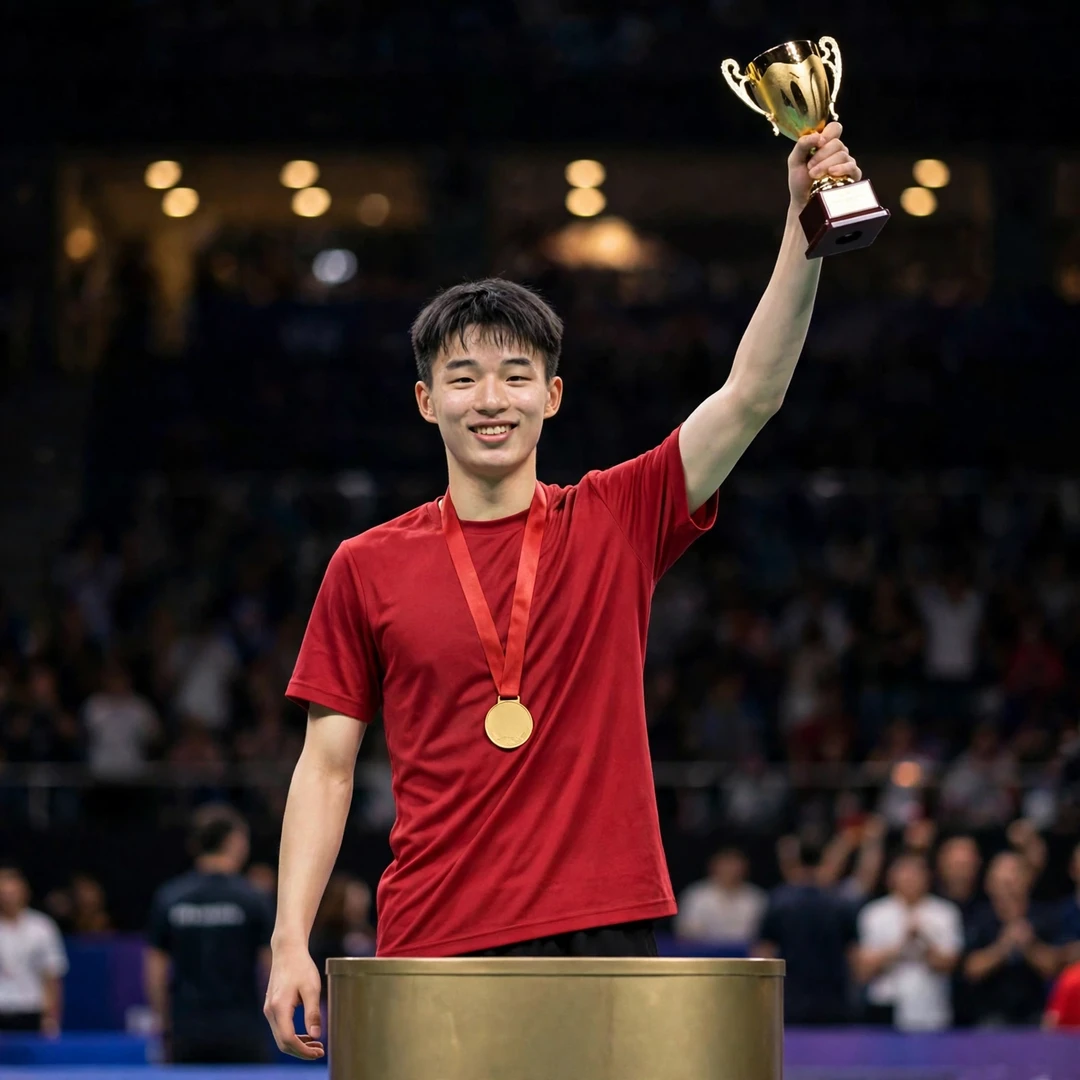
His first big international statement came at the World University Games in Chengdu — the 2021 edition, played in the summer of 2023. In front of a home crowd, Wang Zheng Xing won the men’s singles gold medal, beating Thailand’s Panitchaphon Teeraratsakul 21–16, 21–14 in the final, and added a silver medal with China in the mixed team event. Winning a multi-sport games title at 21 marked him out inside the Chinese system as a player who could handle a final, not just a promising junior with fast feet.
First International Titles in 2023
The rest of 2023 turned that promise into ranking points. Wang Zheng Xing won the Bahrain International Challenge, defeating India’s Ayush Shetty 21–19, 21–14 in the final, and reached the final of the Vietnam International, where he lost to his compatriot Liu Liang in three games. Those results on the International Challenge and Series circuit are unglamorous but essential: they are how a young player climbs from the world’s top 200 into World Tour qualifying draws, and Wang used them exactly as intended.
Career Milestone #1
Senior Breakthrough and a First World Tour Title
The 2024 season was his breakthrough. In February he was part of the Chinese squad that won the men’s team gold at the Badminton Asia Team Championships in Selangor, Malaysia. Weeks later came his first BWF World Tour title: at the Ruichang China Masters, a Super 100 event on home soil, he beat Liu Liang 21–19, 17–21, 21–17 in an all-Chinese final. For a 22-year-old still fighting for selection, a World Tour trophy changed how the national coaches — and the rest of the tour — saw him.
The finals kept coming. Wang Zheng Xing finished runner-up at the Baoji China Masters to Hu Zhe An, runner-up at the Vietnam Open to Japan’s Shogo Ogawa by the narrowest of margins, 19–21, 20–22, and then runner-up at the Korea Masters, a Super 300, where he lost the final to world champion Kunlavut Vitidsarn 18–21, 18–21. He also reached the semi-finals of the Guwahati Masters in India. One title and three more finals in a single season announced a player whose ceiling was clearly higher than the Super 100 level.
Career Milestone #2
China Open 2025: The Super 1000 Run
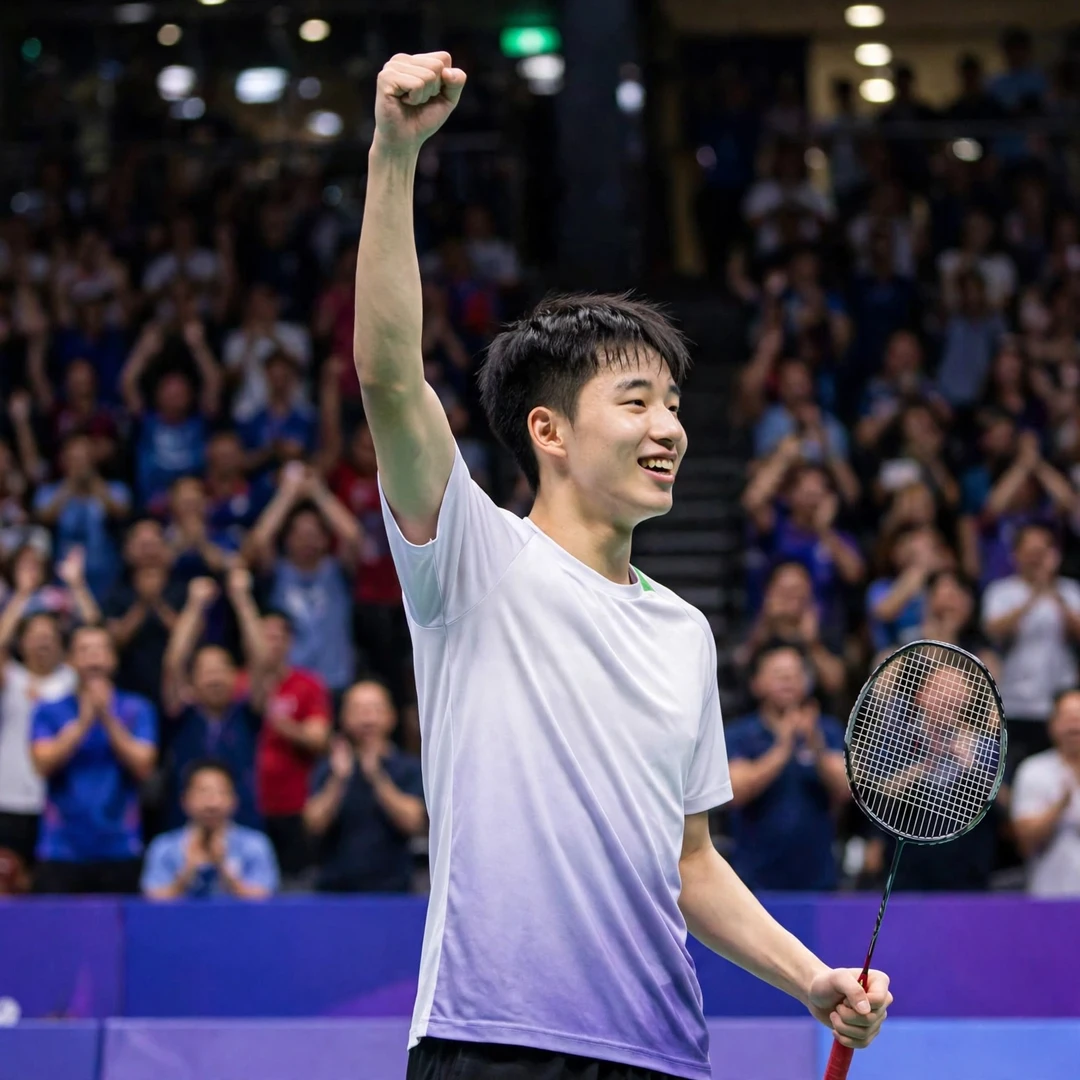
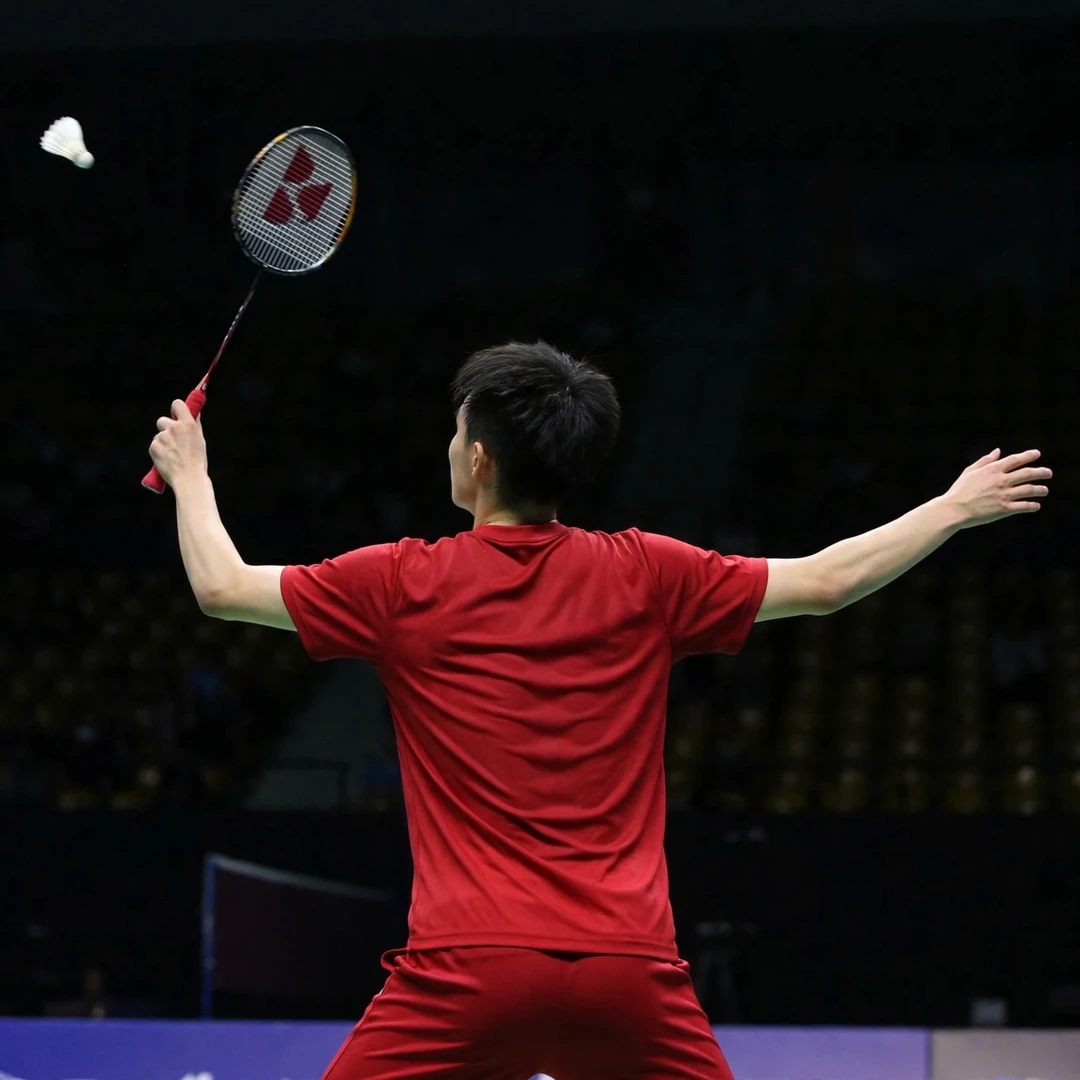
Everything came together in Changzhou in July 2025. At the China Open, a Super 1000 — one of the four biggest events on the world calendar — Wang Zheng Xing produced the week of his life. He beat Japan’s Kodai Naraoka on the way, swept past France’s Christo Popov 21–6, 22–20 in the quarter-finals, then stunned Denmark’s world No. 3 Anders Antonsen 21–18, 21–15 in the semi-finals. Suddenly the world No. 30-something from Huaihua was in a Super 1000 final, in front of a roaring home crowd.
In the final he faced Shi Yuqi, China’s No. 1 and the world No. 1 at the time. Wang Zheng Xing attacked without fear and took the first game 21–14; Shi Yuqi’s experience told in the end, 14–21, 15–21, but the 64-minute final was no formality. Afterwards Shi Yuqi admitted he had struggled to withstand the younger man’s speed and power. Runner-up prize money and 11,500 ranking points transformed Wang’s season — and within two weeks he climbed to a career-high world No. 16, announced on 5 August 2025.
The China Open run matters beyond one week. Beating a reigning world champion-calibre field — Naraoka, Christo Popov, Antonsen — proved his attacking game works against the very best, not just against players ranked around him. It is also the week young players should study: watch how early he takes the shuttle, how his first step explodes toward the front court after every rear-court shot, and how his flat drives rush even elite defenders. The ceiling shown in Changzhou is the reason Chinese fans nicknamed him a possible successor in the line of Lin Dan and Chen Long.
Career Milestone #3
Team Gold with China and the Lessons of the Slump
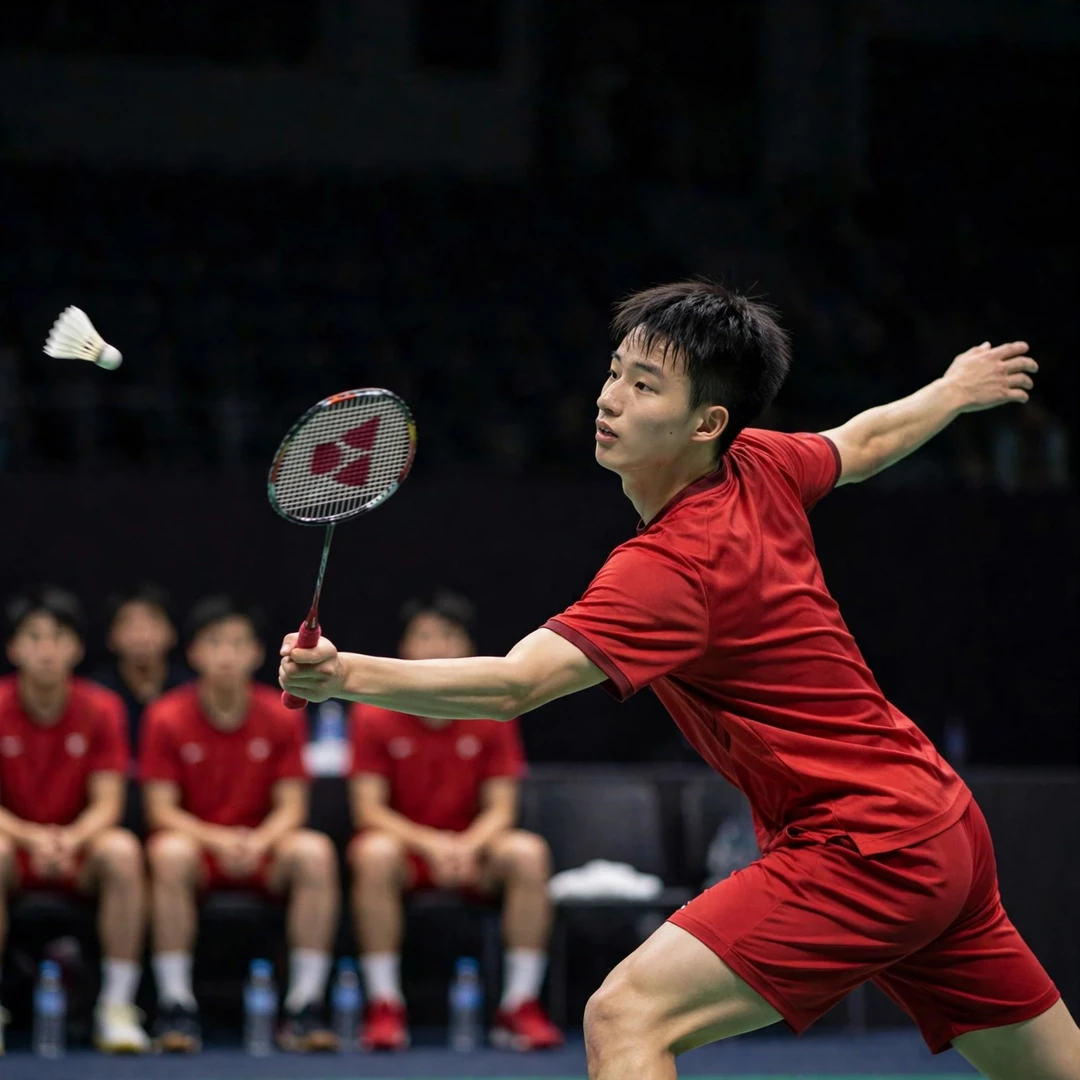
Team badminton has always mattered to Wang Zheng Xing. He helped China win the men’s team title at the 2024 Badminton Asia Team Championships in Selangor, and he was again central to the squad at the 2026 edition in Qingdao, where China took silver on home soil. In February 2026 he played a key role in a dramatic 3–2 comeback win over Korea during that campaign. Playing for the team, with the bench roaring behind every rally, suits his emotional, momentum-driven style.
But the months after the China Open final were brutal. Wang Zheng Xing lost in the first round at five straight big tournaments in late 2025: to veteran Chou Tien Chen at the Hong Kong Open, then early exits at the China Masters, the Korea Open and the Arctic Open, and a 19–21, 12–21 defeat to Denmark’s Rasmus Gemke at the Denmark Open. The same all-out attacking style that had overwhelmed Antonsen now produced errors, and opponents who weathered his first burst of speed found he had no second plan yet. His ranking slid out of the top 30 as quickly as it had risen.
Early 2026 brought more of the same pattern: flashes, then frustration. He beat Chou Tien Chen at the Swiss Open before losing to Anthony Sinisuka Ginting, beat Lee Chia Hao at the Orleans Masters before losing to Magnus Johannesen, and fell to Li Shifeng in the first round of the All England. In April 2026, Chinese media widely reported that Wang Zheng Xing had announced his retirement from the national team, alongside Gao Fangjie — a 24-year-old stepping away from international badminton while still young enough to rebuild. He has since appeared at domestic events in China, including the Lin Dan Cup in Shenzhen.
Career Milestone #4
Career-High World No. 16
The ranking line tells the story of his career in numbers. Career-high: world No. 16 on 5 August 2025, reached on the back of the China Open final and a quarter-final at the Indonesia Open. At his peak he was, briefly, one of the sixteen best men’s singles players on the planet — in a discipline where China alone fields half a dozen men capable of beating anyone. That peak was built on one huge result, however, and ranking points in badminton expire after 52 weeks.
When the 11,500 China Open points dropped off his total in 2026 and no equivalent result replaced them, the fall was steep. By the Week 43 rankings of 20 October 2026 he stands at world No. 82 with 23,111 points. It is a number that says little about his talent — anyone who watched Changzhou knows what he can do — and everything about the sport’s unforgiving maths: in modern badminton, one great week makes your ranking, and only consistent quarter-finals protect it.
Playing Style
The Left-Handed Attacking Style
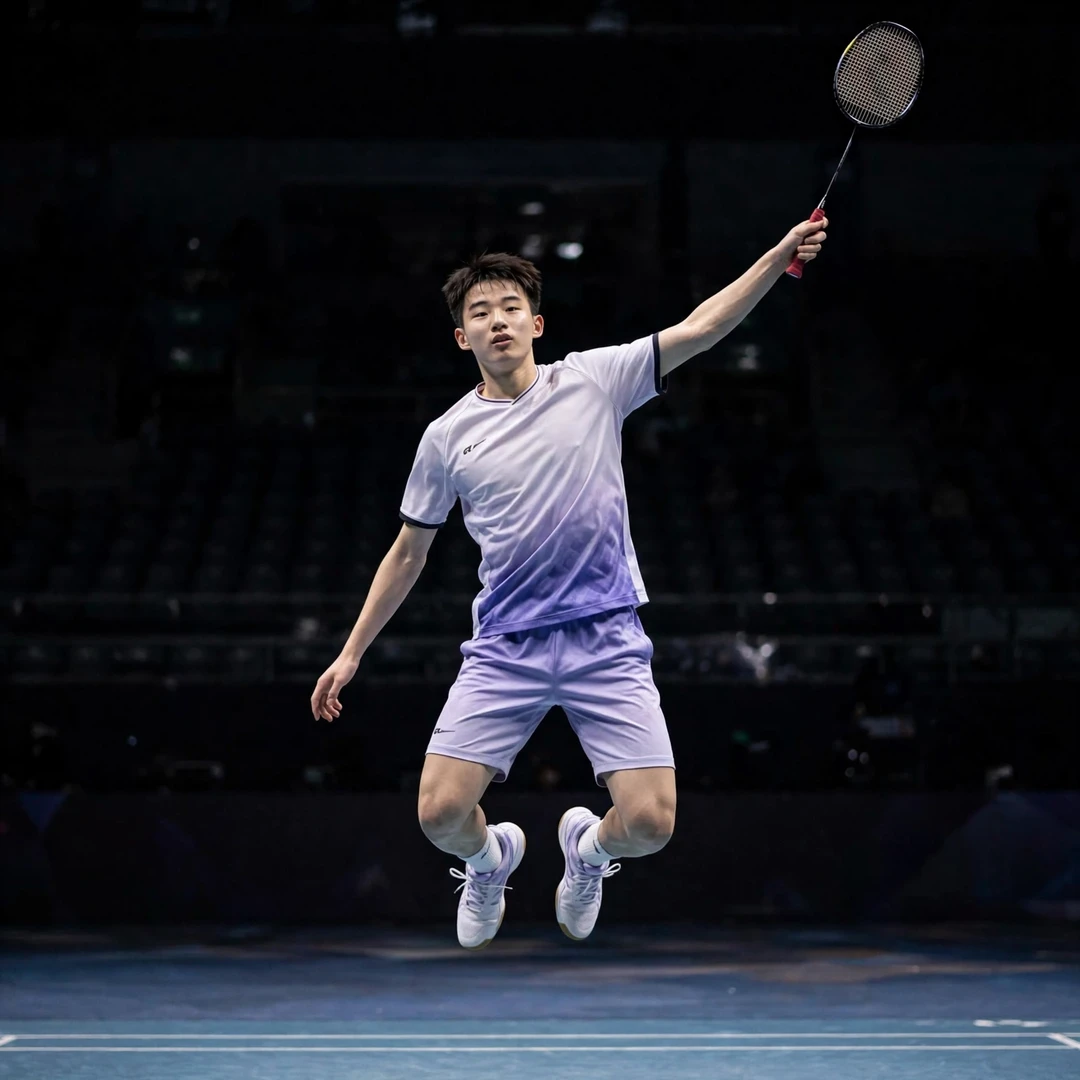
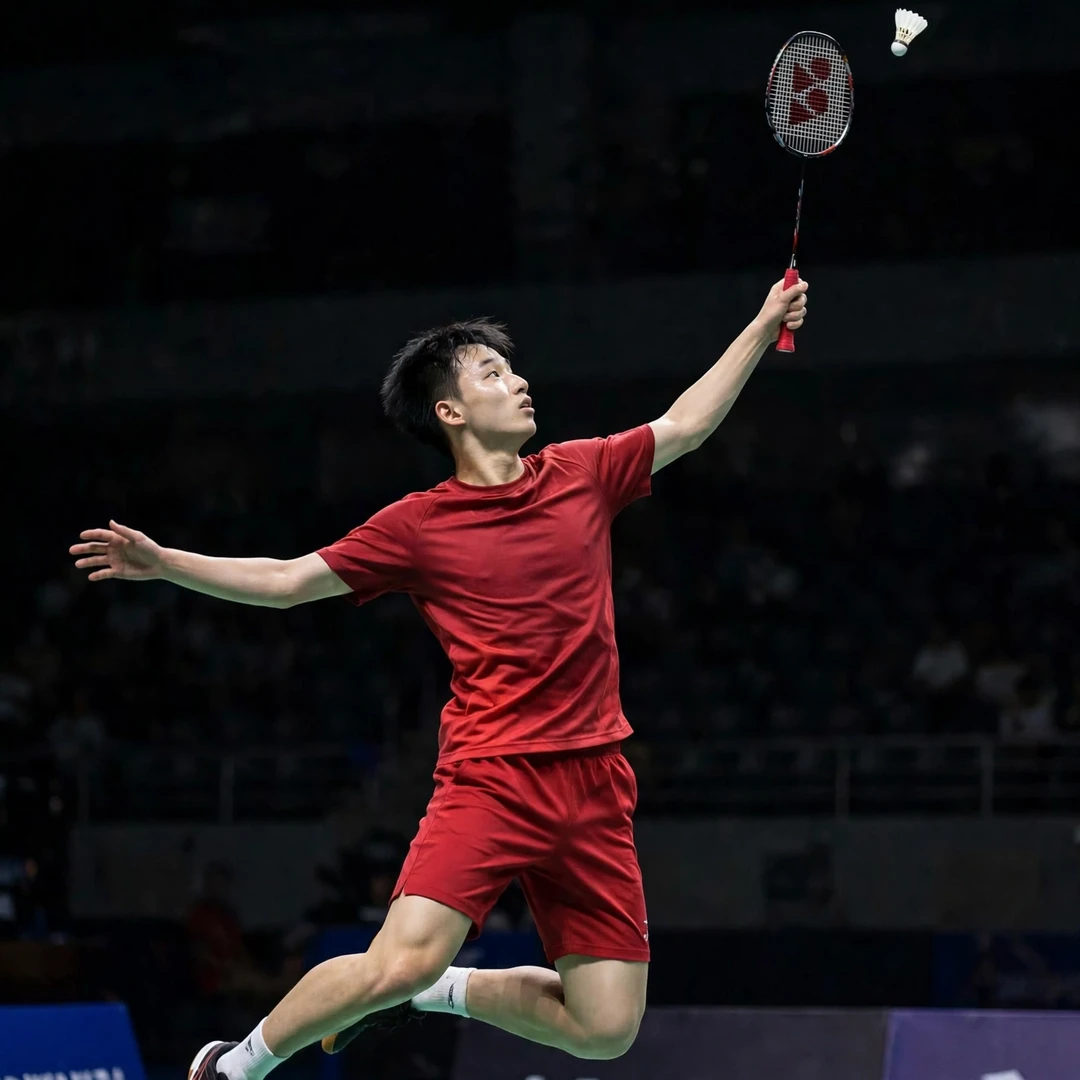
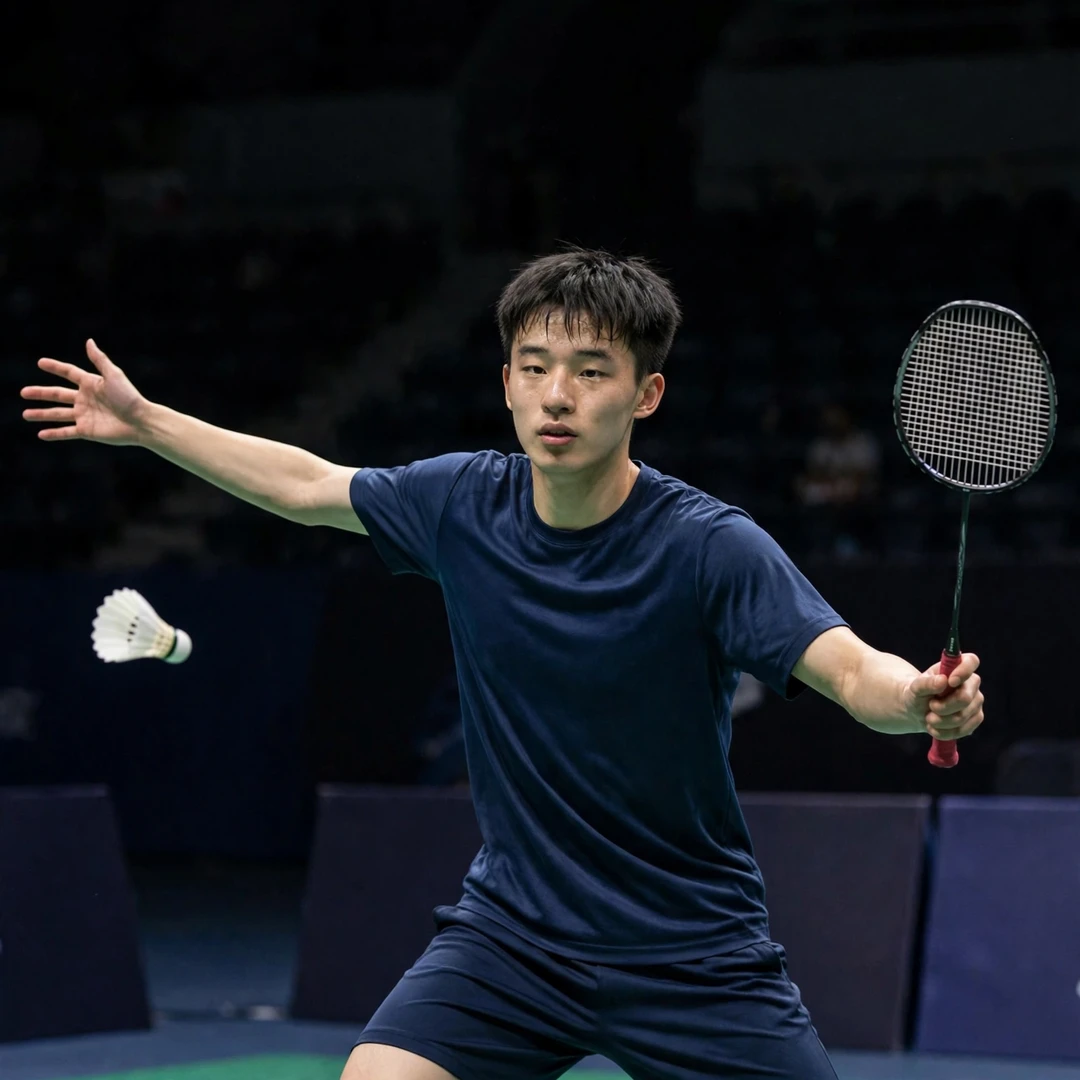
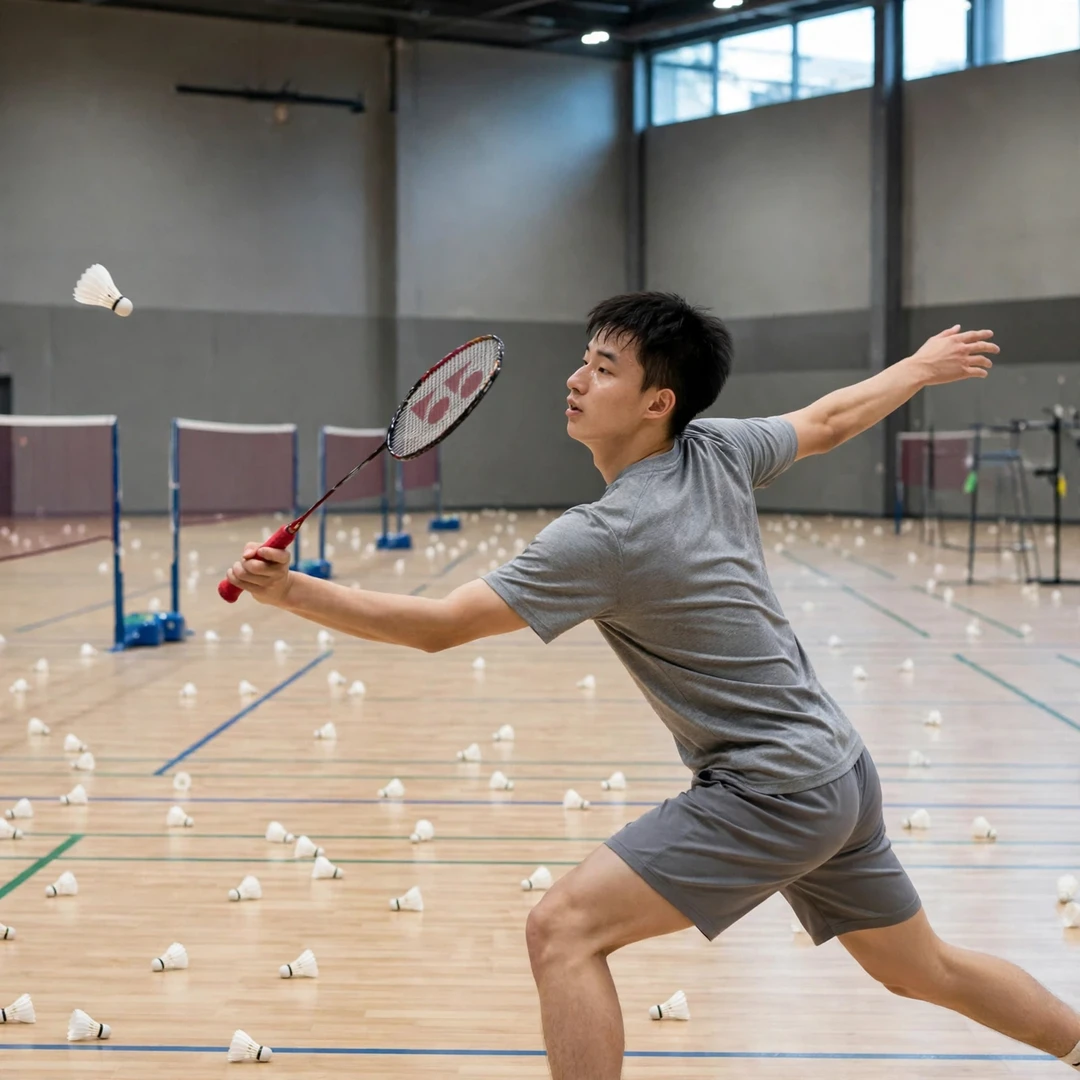
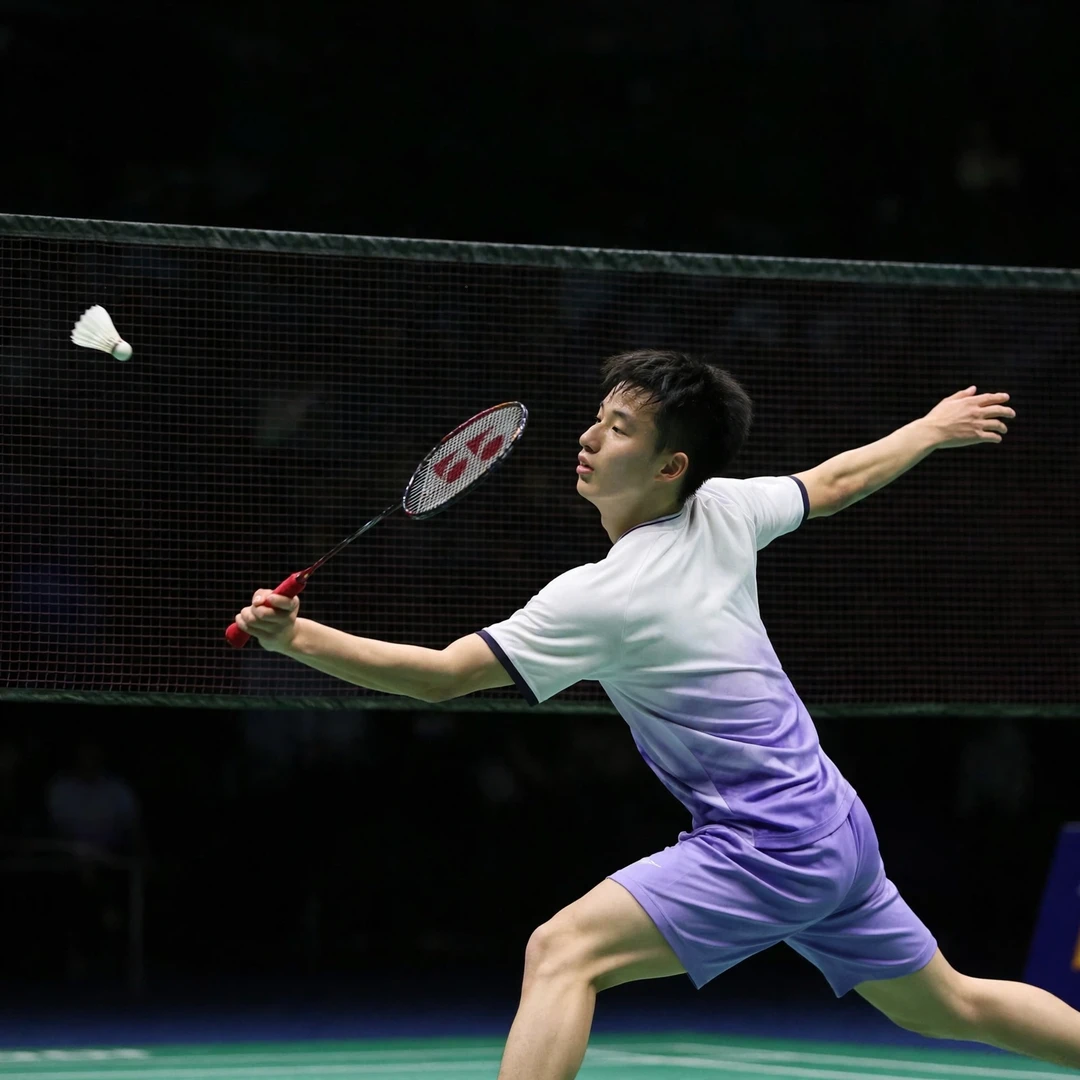
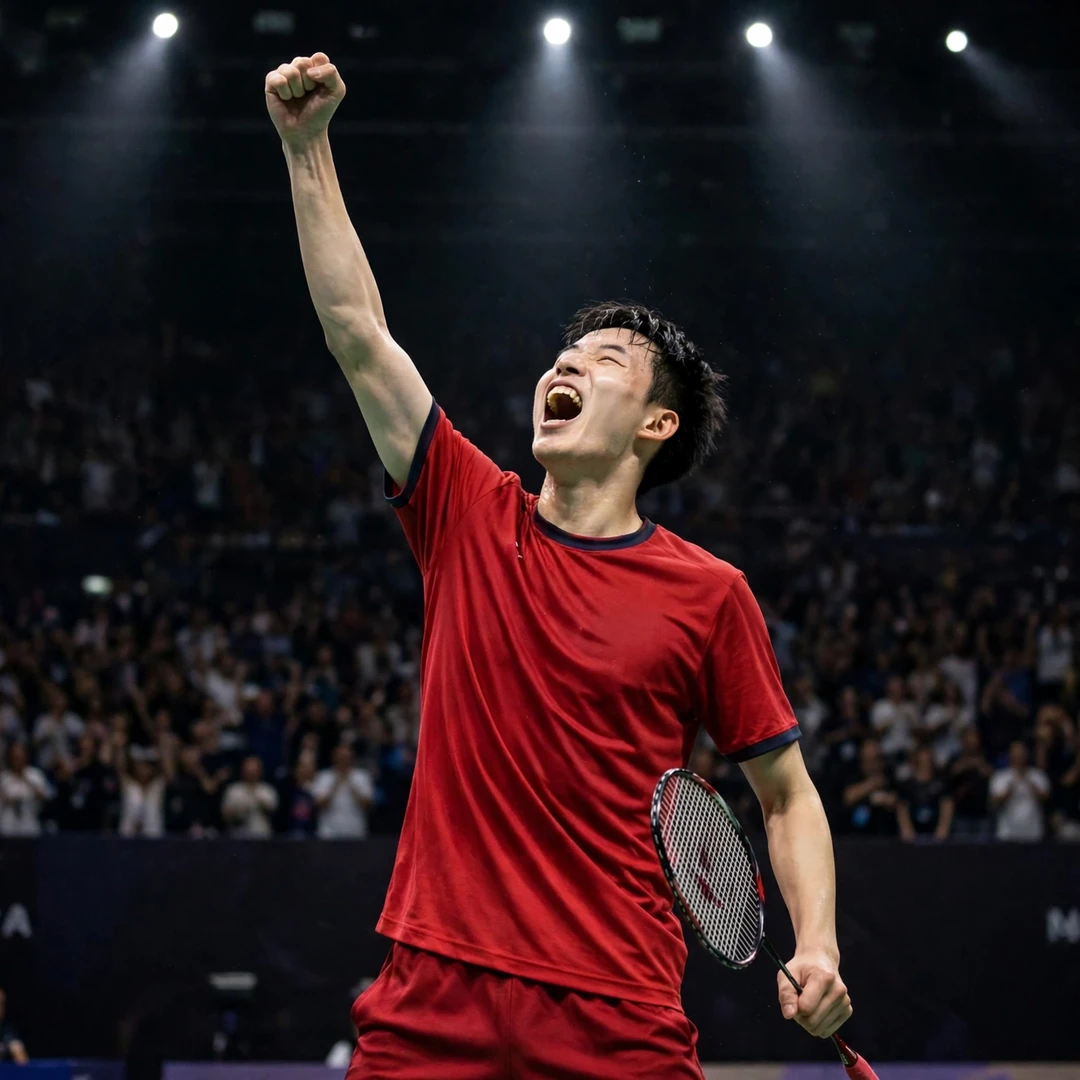
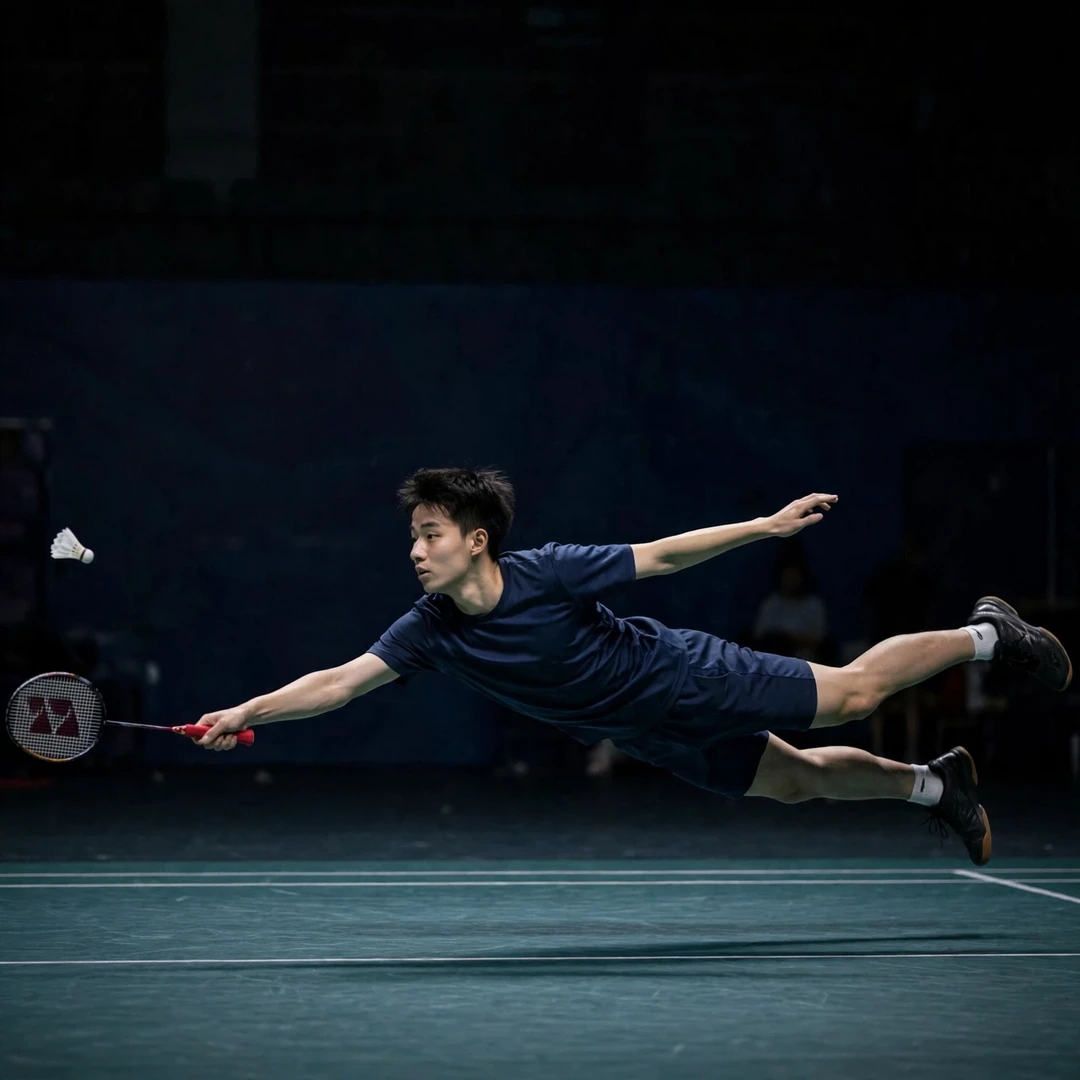
Wang Zheng Xing is a left-hander, and that shapes everything about his game. His forehand corner is the mirror image of a right-hander’s, so his cross-court attacks arrive on angles most defenders see far less often. His signature weapon is the jump smash from the rear court — hit steeply, often down the line into the right-hander’s backhand side — and Chinese analysts describe his game with the phrase ‘rear-court sudden attack’: he waits in a neutral rally, then detonates. At 1.83 metres he has the reach to take the shuttle high and early.
What separates him from other big hitters is the speed of the first three shots. His serve-and-return game is aggressive, his flat drives are played at full pace, and after every rear-court attack he surges forward looking to kill the rally at the net. Watch his matches and count how many rallies end inside ten shots when he is playing well: his badminton is designed to shorten points, overwhelm opponents physically and ride the momentum of the crowd. When commentators called him ‘little Lin Dan’, it was that left-handed explosiveness they meant.
The same analysis explains his weaknesses. Chinese technical breakdowns of his game note that multi-rally endurance and shot selection under pressure are his unfinished lessons: when patient opponents drag him past twenty shots, his error count climbs and his attacks lose their sting. That is the honest, complete picture young players should copy — not just the spectacular smashes, but the understanding that an attacking style must be built on fitness, patience and a Plan B for the days the smashes come back.
Mental Strength
Speed, Stamina and Learning to Last the Rally
The lesson of Wang Zheng Xing’s career so far is that breaking through and staying there are two different skills. His breakthrough was built on discipline: years in the provincial and national system, unglamorous International Challenge titles in Bahrain and Vietnam, and team duty whenever China called. Nobody reaches a Super 1000 final by accident — the Changzhou week was the visible tip of six years of structured work that almost nobody watched.
Staying there proved harder. The five straight early exits after his peak were not a talent problem; they were the classic young-attacker problem of shot selection, recovery between tournaments and learning to win ugly on slow days. His reported decision to leave the national team in April 2026, at 24, closes his international chapter far earlier than anyone expected after Changzhou — and it underlines the lesson for every junior: the tour rewards the players who can manage their bodies, their schedules and their form across fifty weeks, not five.
For developing players, the practical takeaways are clear. First, build the physical base before the spectacular shots — his speed came from footwork drilling, not talent alone. Second, collect results level by level, as he did from university gold to Challenge titles to the World Tour. Third, study your own weaknesses as honestly as Chinese analysts studied his rally endurance. A young player who copies Wang Zheng Xing’s work ethic and attacking intent — and adds the patience he was still learning — has a template worth following.
Learning Reference
ST Badminton Academy Connection
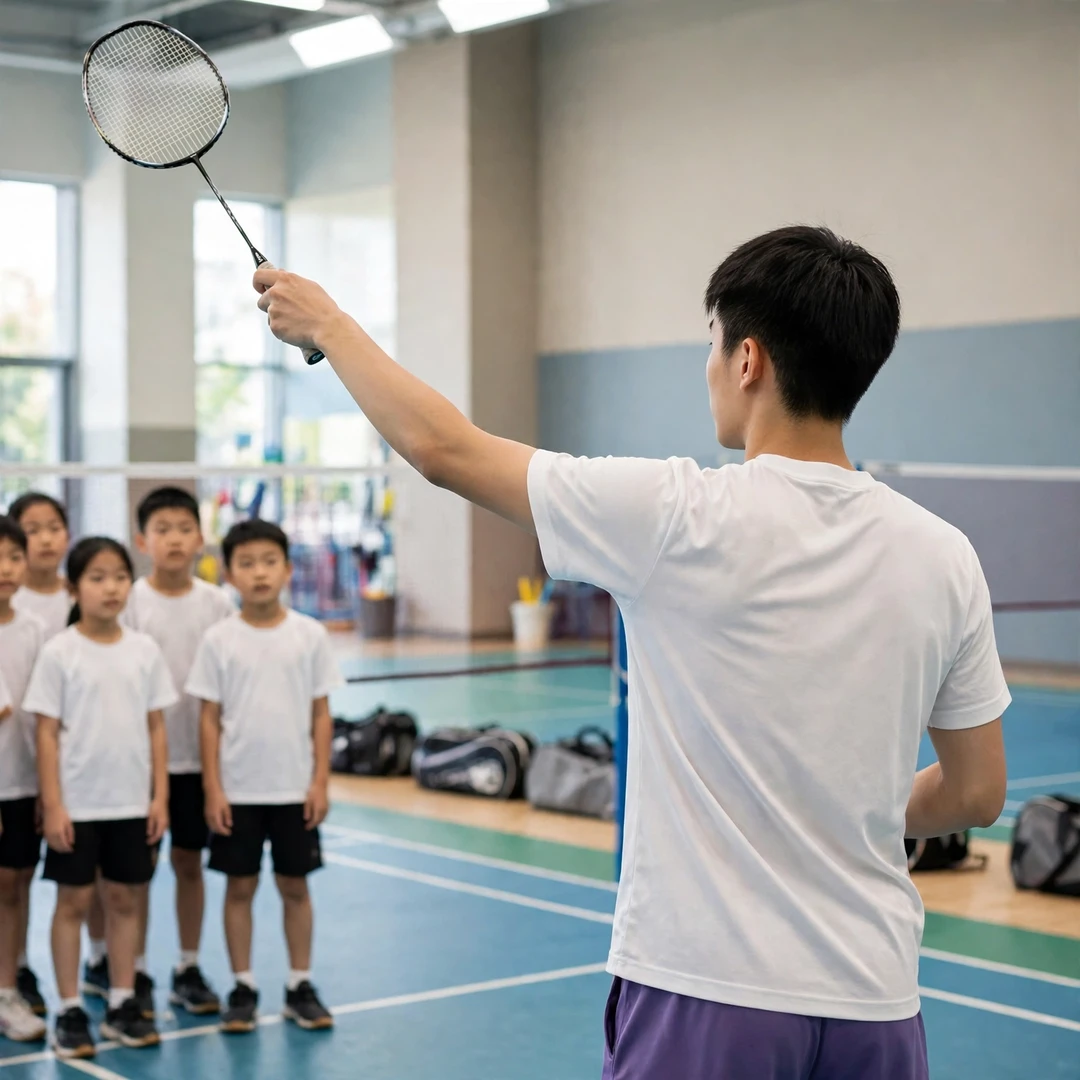
ST Badminton Academy uses Wang Zheng Xing’s matches as study material for one simple reason: Malaysia and Singapore produce very few left-handed junior attackers, and his footage shows exactly how a left-hander constructs points. Our coaches break down his rear-court attacking patterns, his first-step speed after the smash and his flat-drive exchanges in video sessions, then rebuild the same situations in drills so students can feel why his angles are so hard to defend against.
The academy is based in Malaysia and welcomes junior and adult players who want structured, professional coaching. If your child is a left-hander — or simply loves attacking badminton — studying a player like Wang Zheng Xing gives them a clear picture of what the style demands: explosive footwork, bravery in taking the shuttle early, and the fitness to defend when the attack comes back. Our beginner-to-elite pathway develops those qualities step by step, from grip and footwork fundamentals to full-court tactical play.
Parents often ask whether a child should copy a favourite player’s style completely. Our answer, with Wang Zheng Xing as the example, is no: copy the principles, not the player. Copy his early preparation and attacking intent; copy his commitment to the basics; but build the child’s own game around their body, their handedness and their temperament — and add the rally patience that even a Super 1000 finalist was still learning. That is how study of the stars turns into real improvement on court.
FAQs: Wang Zheng Xing Chinese Badminton Player
These frequently asked questions explain who Wang Zheng Xing is, what he has won, how he plays and what young players in Malaysia and Singapore can learn from his career, including his China Open 2025 run and his career-high world ranking.
Who is Wang Zheng Xing and which country does he represent in badminton?
Wang Zheng Xing is a Chinese men’s singles badminton player from Huaihua, Hunan, born on 21 February 2002. He represents China internationally, won the World University Games singles title in Chengdu, and reached a career-high world ranking of No. 16 in August 2025 after finishing runner-up at the China Open.
What are Wang Zheng Xing’s biggest badminton achievements?
His biggest achievements are the men’s singles gold medal at the World University Games in Chengdu, team gold with China at the 2024 Badminton Asia Team Championships, his first BWF World Tour title at the 2024 Ruichang China Masters, and five more World Tour finals — at Baoji, the Vietnam Open and the Korea Masters in 2024, the Thailand Masters in 2025, and the Super 1000 China Open in 2025, where he beat Anders Antonsen in the semi-finals.
What is Wang Zheng Xing’s playing style?
Wang Zheng Xing is a left-handed attacking player. His game is built on explosive speed, steep jump smashes from the rear court, fast flat drives and taking the shuttle early. He tries to shorten rallies and overwhelm opponents; his known challenge is sustaining accuracy in very long rallies.
How did Wang Zheng Xing perform at the China Open 2025?
He reached the final of the China Open 2025, a Super 1000 event in Changzhou — the best result of his career. He beat Kodai Naraoka and Christo Popov, stunned world No. 3 Anders Antonsen 21–18, 21–15 in the semi-finals, and took the first game off Shi Yuqi in the final before losing 21–14, 14–21, 15–21.
How can my child learn from Wang Zheng Xing’s training approach?
By copying principles, not highlights. Wang Zheng Xing’s speed came from years of footwork drilling and level-by-level results — university gold, Challenge-circuit titles, then World Tour finals. A structured academy programme builds the same foundations: footwork first, then attacking skills, then the rally patience and shot selection that decide matches at higher levels.
Did Wang Zheng Xing win any junior or university titles?
His biggest title as a young player was the men’s singles gold medal at the World University Games in Chengdu, where he also won mixed team silver. In 2023 he added his first senior international trophies, winning the Bahrain International Challenge and reaching the Vietnam International final.
What is Wang Zheng Xing’s highest world ranking?
Wang Zheng Xing’s highest world ranking is No. 16, reached on 5 August 2025 after his China Open final. In the Week 43 rankings of 20 October 2026 he is ranked world No. 82 with 23,111 points, after his 2025 points expired and he stepped away from the national team.
What playing style should young players learn from Wang Zheng Xing?
Young players should learn his attacking intent and preparation: taking the shuttle early, explosive first-step footwork, brave rear-court attack and fast flat drives — balanced with the fitness and patience for long rallies. Left-handed juniors in particular can study how he uses mirrored angles that right-handed defenders rarely face.
Does ST Badminton Academy have any connection with Wang Zheng Xing?
No, Wang Zheng Xing is not a student, coach or ambassador of ST Badminton Academy. He represents China and is profiled here purely as an elite player whose technique, speed and career story our coaches use as study material for students in Malaysia and Singapore.
Wang Zheng Xing Career Highlights
Career Statistics and Rankings
Wang Zheng Xing, born 21 February 2002 in Huaihua, Hunan, China, has packed an entire career arc into a few seasons: World University Games champion, team gold medallist with China, World Tour winner at Ruichang, Super 1000 finalist at the China Open 2025 and world No. 16 at his peak — followed by a slump, a slide to No. 82 and a reported national-team retirement at 24. Few modern players show both the rewards of all-out attack and the cost of inconsistency so clearly.
| Development Area | Common Misconception | What Wang Zheng Xing's Career Shows REALITY |
|---|---|---|
| Junior Foundation | Being a left-hander is a shortcut to the top. | Wang Zheng Xing came through the Hunan provincial system step by step — World University Games gold came before any World Tour success, not the other way round. |
| Playing Style Priority | Kids should copy the flashiest attacking shots first. | Wang Zheng Xing's jump smash only works because his footwork gets him behind the shuttle early — the attack is the finishing touch on speed, balance and defence. |
| Fitness Importance | Juniors can out-train everyone without rest. | After his 2025 peak, five straight first-round defeats showed what happens when form, recovery and shot selection slip together — managing the full season matters as much as training hard. |
| Mental Approach | Top players never get nervous or upset. | Wang Zheng Xing rides momentum and crowd energy when he is winning; learning to reset after lost rallies is the mental skill every young attacker must train, not inherit. |
| Attacking Training | Smashing harder is always the answer. | His 2025 China Open wins over Kodai Naraoka, Christo Popov and Anders Antonsen came from early shuttle-taking and placement under pressure, not from smashing every shot at full power. |
| National Milestones | Only world titles matter. | World University Games gold, an Asian team title with China and a first World Tour trophy at Ruichang built Wang Zheng Xing's career step by step before the Super 1000 final. |
| Career Timeline | One huge result protects a ranking for a whole career. | From University Games champion in 2023 to Super 1000 finalist and world No. 16 in 2025, then a slide to No. 82 — Wang Zheng Xing's arc shows a peak is only the start; sustaining it is the real skill. |
Study Wang Zheng Xing's Speed and Professional Approach
This profile explains who Wang Zheng Xing is, how he plays, his major achievements — including the World University Games gold, the Ruichang China Masters title and the 2025 China Open final — and what developing players at ST Badminton Academy in Malaysia can learn from his speed, his left-handed angles and his career lessons.