Sri Lankan Men’s Singles Badminton Star
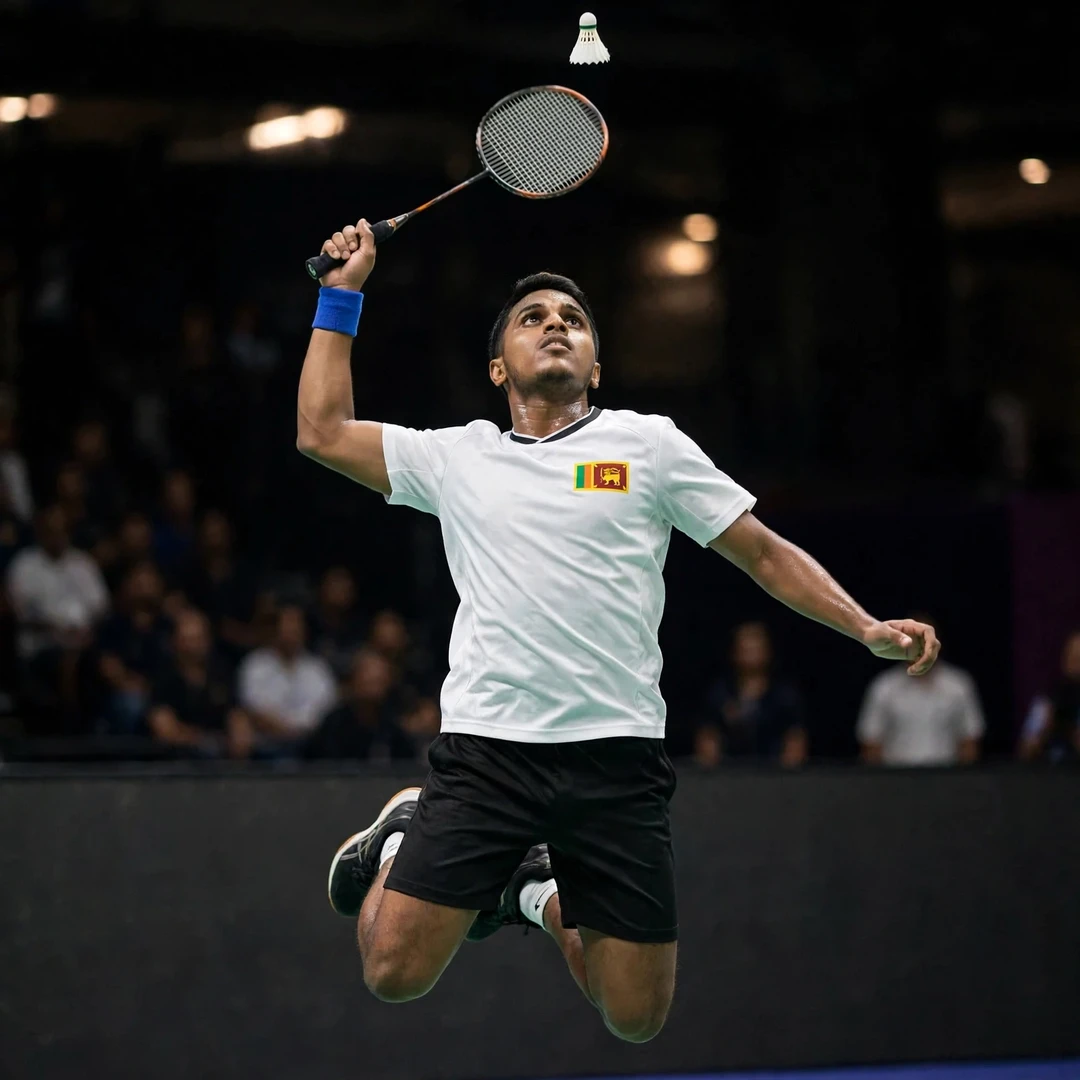
Dumindu Abeywickrama

Sri Lanka
Player Event: Men’s singles
Date of Birth: 5 March 2003, Colombo, Sri Lanka
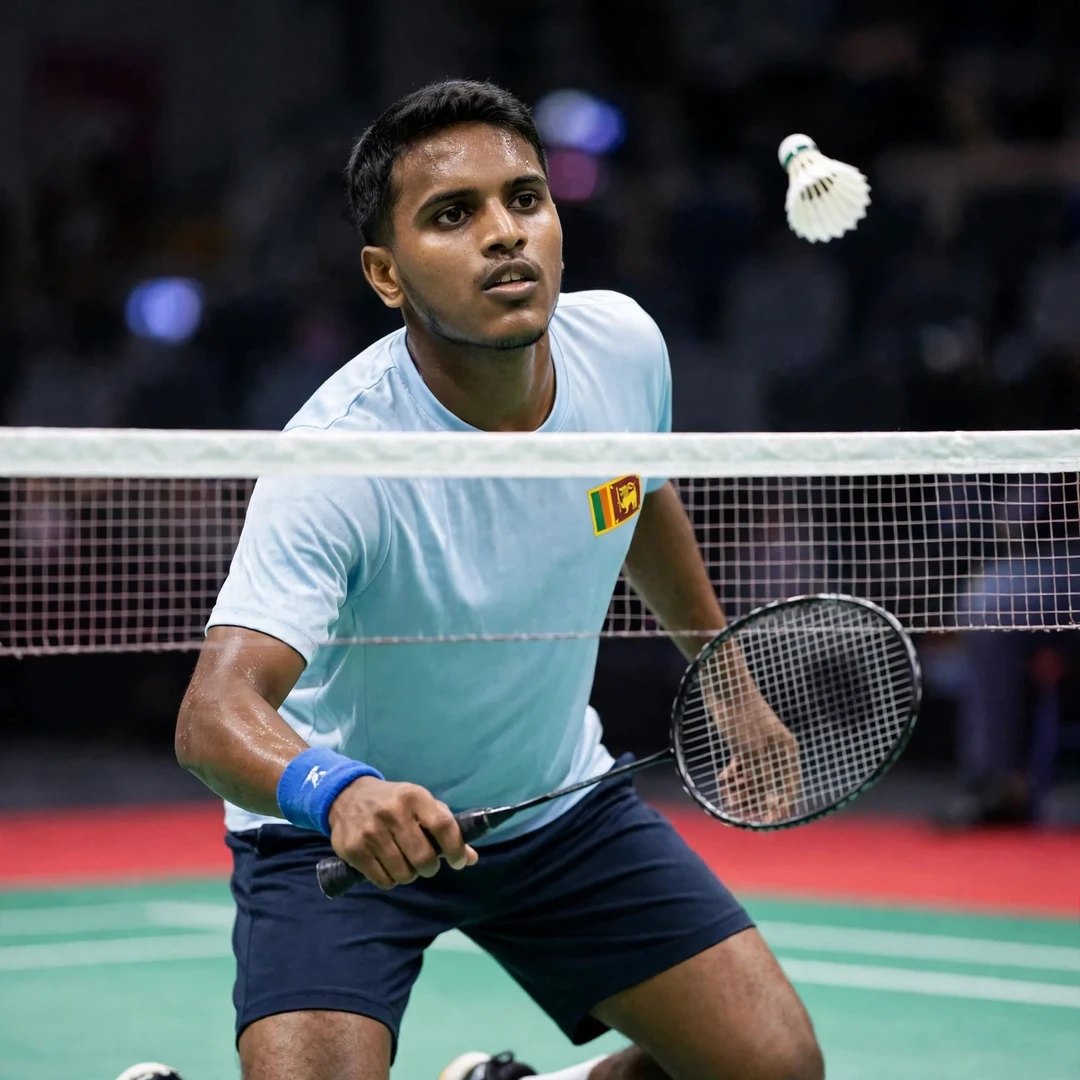
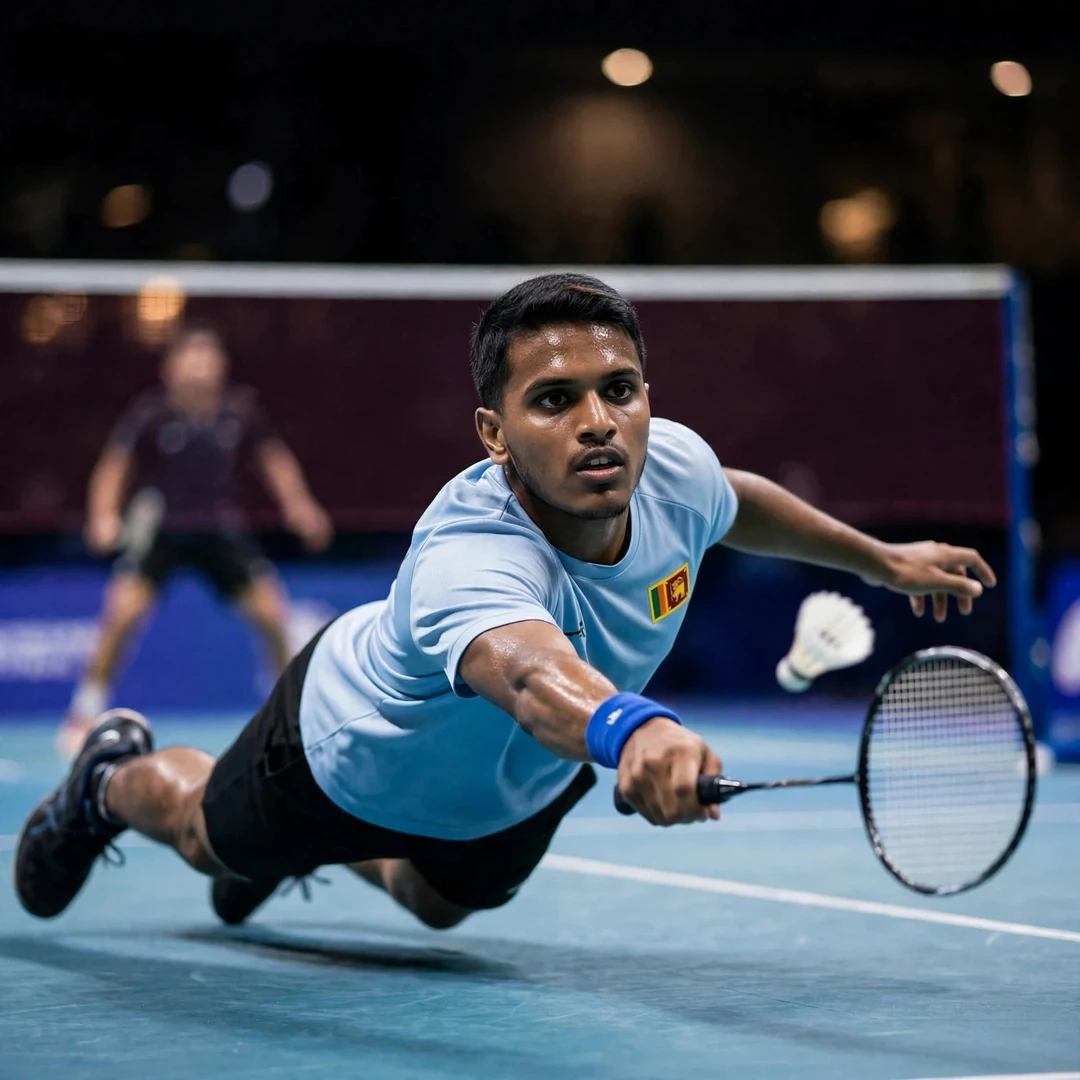
Playing Style: Right-handed all-court singles player who builds rallies with patience, changes the pace with late cross-court shots and defends with full-length dives. Known for: two international titles on the 2025 Latin American tour in Guatemala and Venezuela, seven consecutive international podium finishes, a Commonwealth Games round-of-16 run in 2022, and a career-high ranking of world No. 82 — achieved while largely funding his own career.
Understanding Dumindu Abeywickrama (Sri Lanka’s Self-Funded Trailblazer)
Dumindu Abeywickrama represents Sri Lanka in men’s singles badminton and owns one of the most unusual origin stories in the sport: he only plays badminton because a doctor told him to. Born on 5 March 2003 in Colombo and educated at Royal College, he started in tennis, switched indoors on medical advice at the age of ten, and has since climbed to a career-high world No. 82. In the Week 43 BWF rankings of 20 October 2026 he stands at world No. 83 with 22,500 ranking points. Along the way he has reached the last 16 at the Commonwealth Games, won two international titles in Latin America, played at two World Championships and done almost all of it on his parents’ money, with around US$300 a month of government support. For the coaches at ST Badminton Academy, his career is a lesson in how far patience, psychology and self-belief can carry a player from a small badminton nation.
Early Life in Colombo and a Doctor’s Advice
Dumindu Abeywickrama grew up in Colombo, a city where cricket dominates every schoolyard, television screen and sporting conversation. His first racket sport was actually tennis — but a stubborn middle-ear infection forced him to stop, and his doctor advised him to choose an indoor sport instead. He picked badminton, almost by accident. “I was playing tennis, but I had a middle-ear infection, so my doctor told me to choose an indoor sport. After that, I chose badminton. That’s how I started,” he told Outlook India. What began as medical advice became a passion, and the boy who was not allowed to play outdoors slowly built himself into Sri Lanka’s leading men’s singles player.
Royal College Colombo and the Junior Top 40
He is a proud product of Royal College, Colombo, one of Sri Lanka’s most famous schools, where his badminton developed under a succession of experienced coaches. The junior results followed: Abeywickrama broke into the top 40 of the BWF junior world rankings — a serious level for a player from a country with a small badminton budget — and established himself in the Sri Lanka national squad while still a schoolboy. That school-to-national-team pathway, built on discipline rather than money, gave him the tactical education and the match toughness that his senior career still runs on today.
Commonwealth Games 2022: The Birmingham Breakthrough
His senior breakthrough came at the 2022 Commonwealth Games in Birmingham, aged just 19. In the men’s singles he beat Mauritius’ Aatish Lubah in three games (21–7, 20–22, 21–11) and Malta’s Samuel Cassar in straight games (21–11, 22–20) to reach the round of 16 — a result Sri Lankan media recorded as a small piece of national badminton history. There he faced India’s former world No. 1 Kidambi Srikanth and lost 9–21, 12–21, but the week also included a run to the quarter-finals with Sri Lanka’s mixed team, which lost to Malaysia. For a teenager from Colombo, Birmingham was proof that he belonged on a multi-sport games stage.
First International Medal: Bronze in Kazakhstan
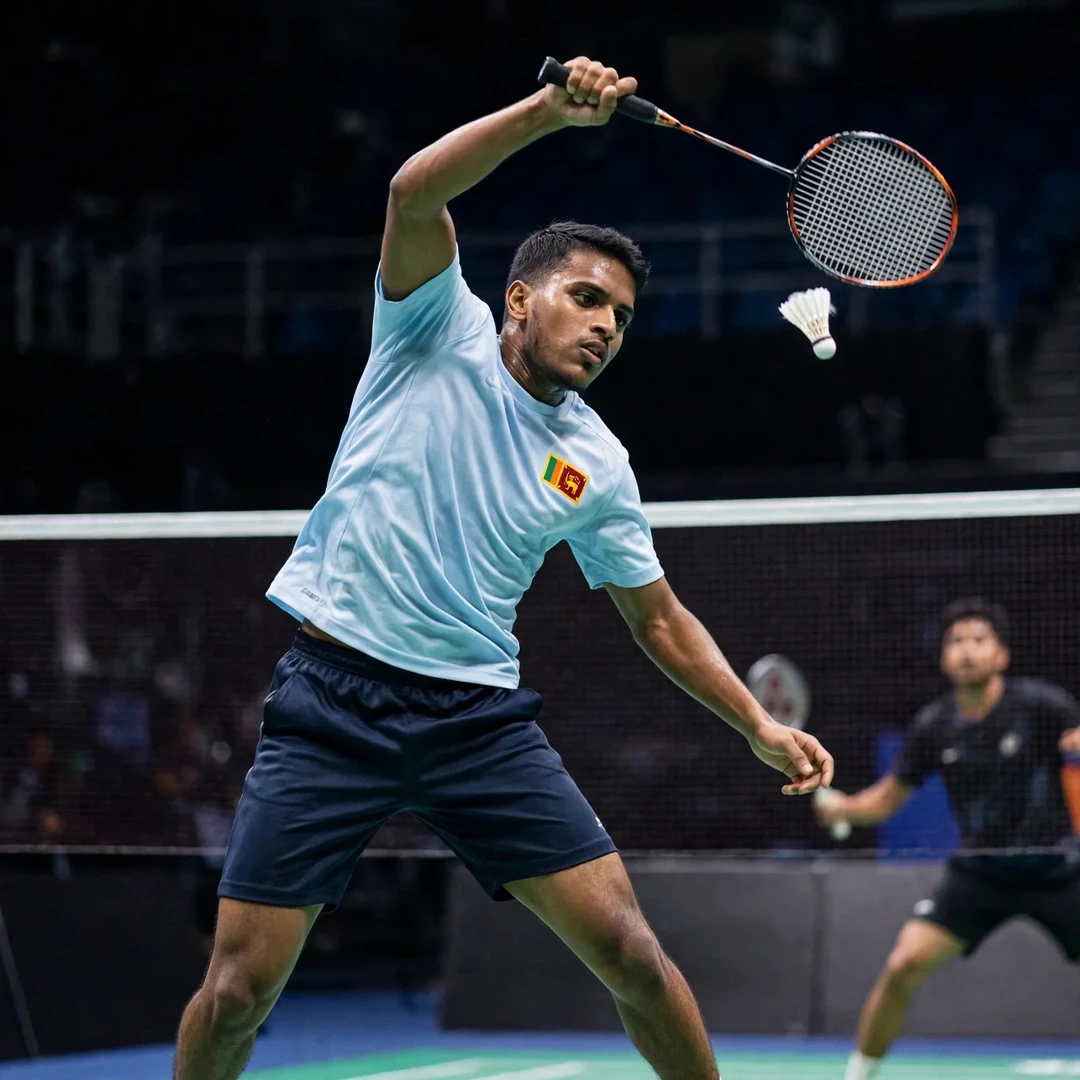
A year later came his first senior international medal. At the 2023 Future Series in Shymkent, Kazakhstan, the 20-year-old Abeywickrama — then ranked around 197 in the world — fought past Lan Gabriel Vargas of the Philippines 19–21, 21–9, 21–9 and India’s Akash Singh 21–17, 19–21, 21–15 to reach the semi-finals, where Kazakhstan’s Dmitry Panarin stopped him 21–4, 21–11. The bronze medal mattered less for its colour than for what it proved: he could travel alone to Central Asia, beat higher-ranked players and reach the final weekend of an international event. The same season he also recorded a win over India’s Ayush Shetty — a result that would look remarkable three years later.
Career Milestone #1
The Latin American Tour: Seven Straight Podiums
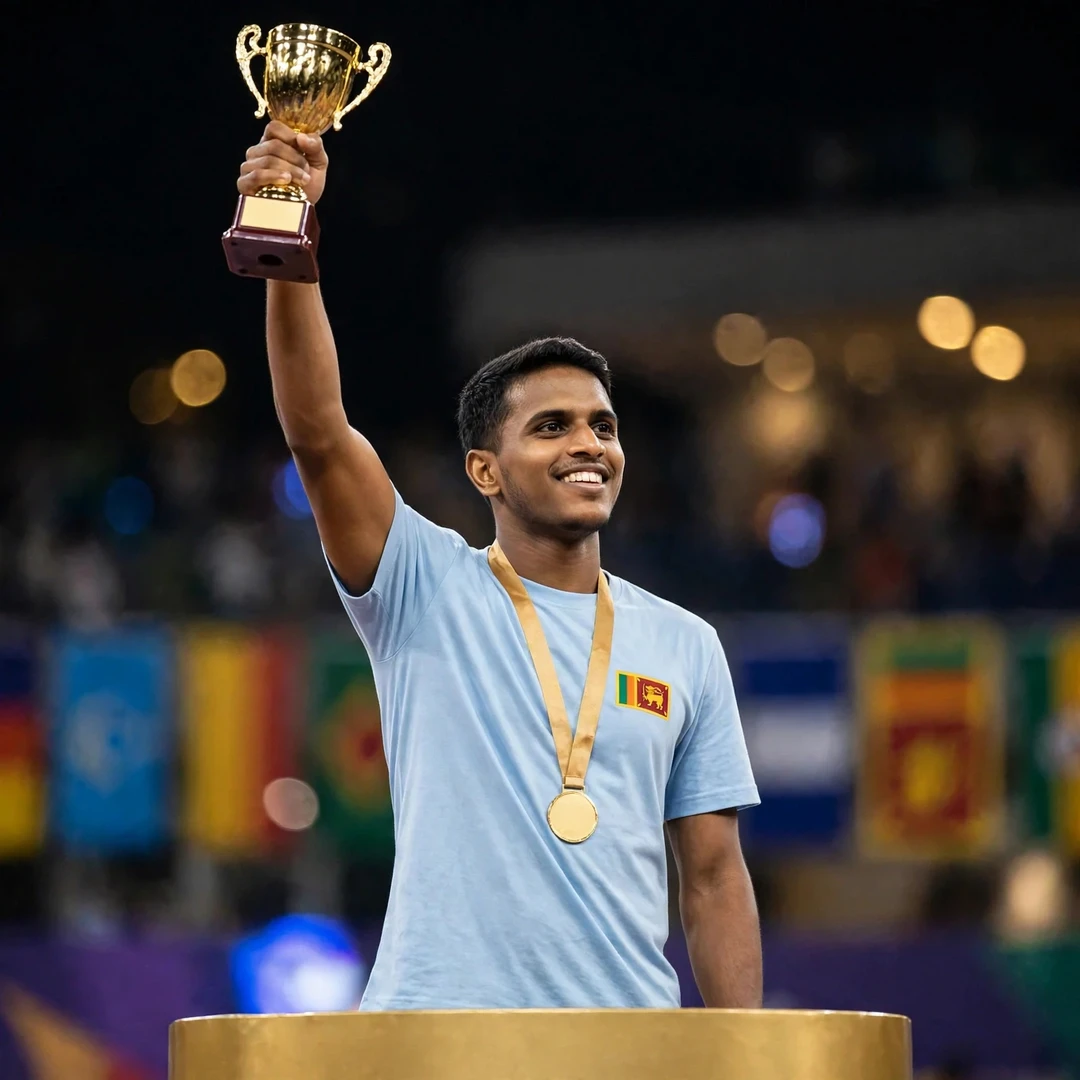
The tour that changed his career was the Latin American circuit of September and October 2025, a self-planned ranking expedition across six countries. It began with bronze at the Guatemala Future Series, where he lost his semi-final to the eventual champion, Olympic medallist Kevin Cordon. Silver followed at the Costa Rica Future Series, where Cordon beat him again in the final, and another silver at the La Perla del Otún Future Series in Colombia, where he won match after match in straight games before losing a three-game final to the USA’s Enrico Asuncion. Then came the breakthrough: at the Guatemala International Challenge he beat Peru’s Adriano Viale in the quarter-finals, Croatia’s higher-ranked Aria Dinata in the semi-finals and the USA’s Mark Shelley Alcala 21–18, 21–13 in the final — his first international title.
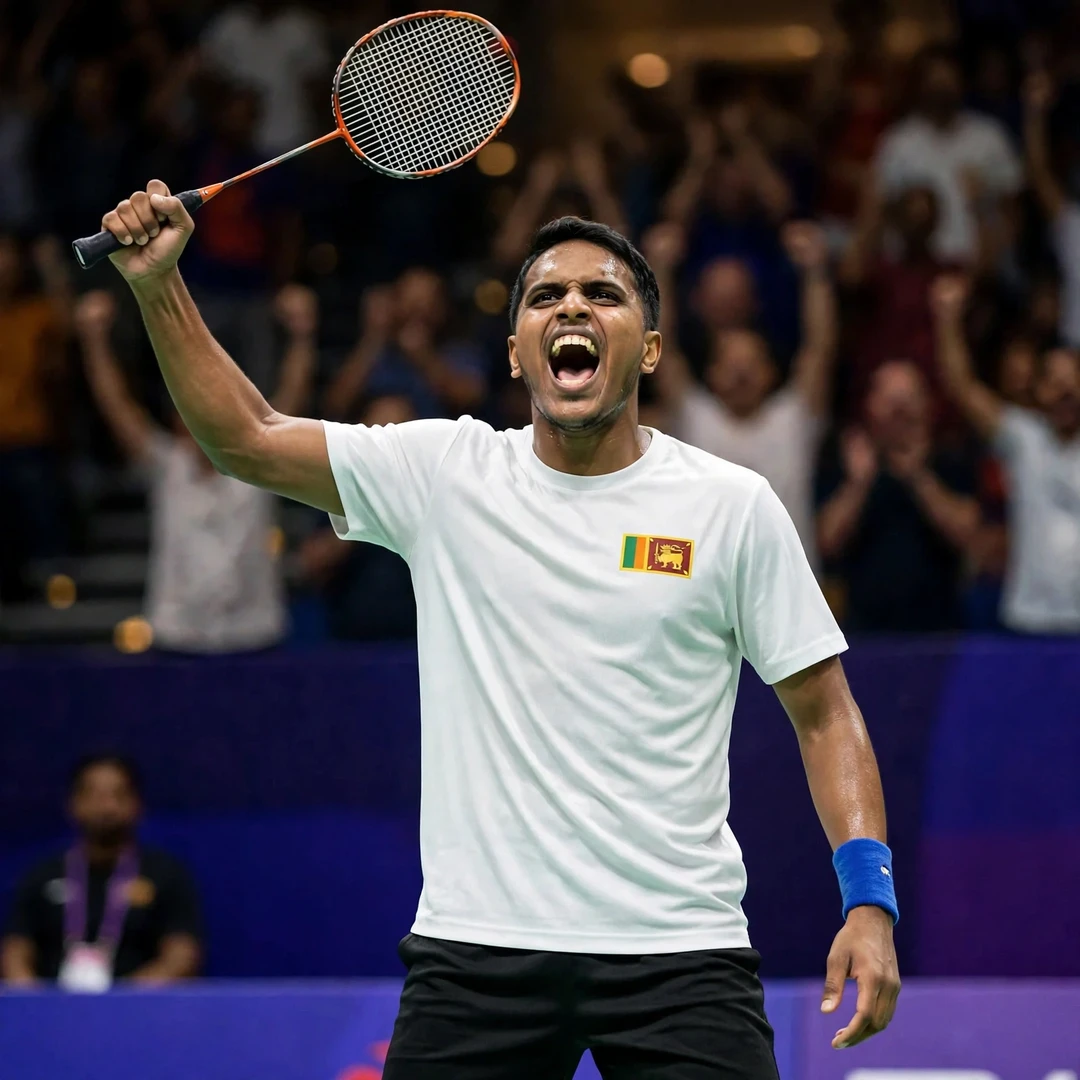
He was not finished. At the Santo Domingo Open in the Dominican Republic he took bronze, losing a 54-minute semi-final to Alcala 16–21, 19–21. A week later at the Venezuela International he won his second gold, coming from a set down to beat Switzerland’s Tobias Kuenzi 10–21, 21–18, 21–12 in the final. The tour closed with silver at the Mexican International, where Alcala beat him 21–13, 21–11 in the final. The final count was extraordinary: seven consecutive international podium finishes — two gold, three silver and two bronze medals. The run lifted him into the world’s top 100, and by November 2025 he stood at No. 94, only the third Sri Lankan player ever to reach the top 100.
Career Milestone #2
World Championships: Paris 2025 and New Delhi 2026
By then he had already made his World Championships debut. In Paris in August 2025 he drew Japan’s Kodai Naraoka, one of the most relentless retrievers in the game, and lost in the first round — a harsh but valuable education in what the very top level demands. Around the big events he kept grinding the circuit that pays the ranking bills: the US Open in 2025, a quarter-final at the Canadian International Challenge in December 2025, and further Challenge events in Uganda and Singapore in early 2026. None of it was glamorous, but it is how a self-funded player defends a top-100 ranking: points collected in small halls on four continents.
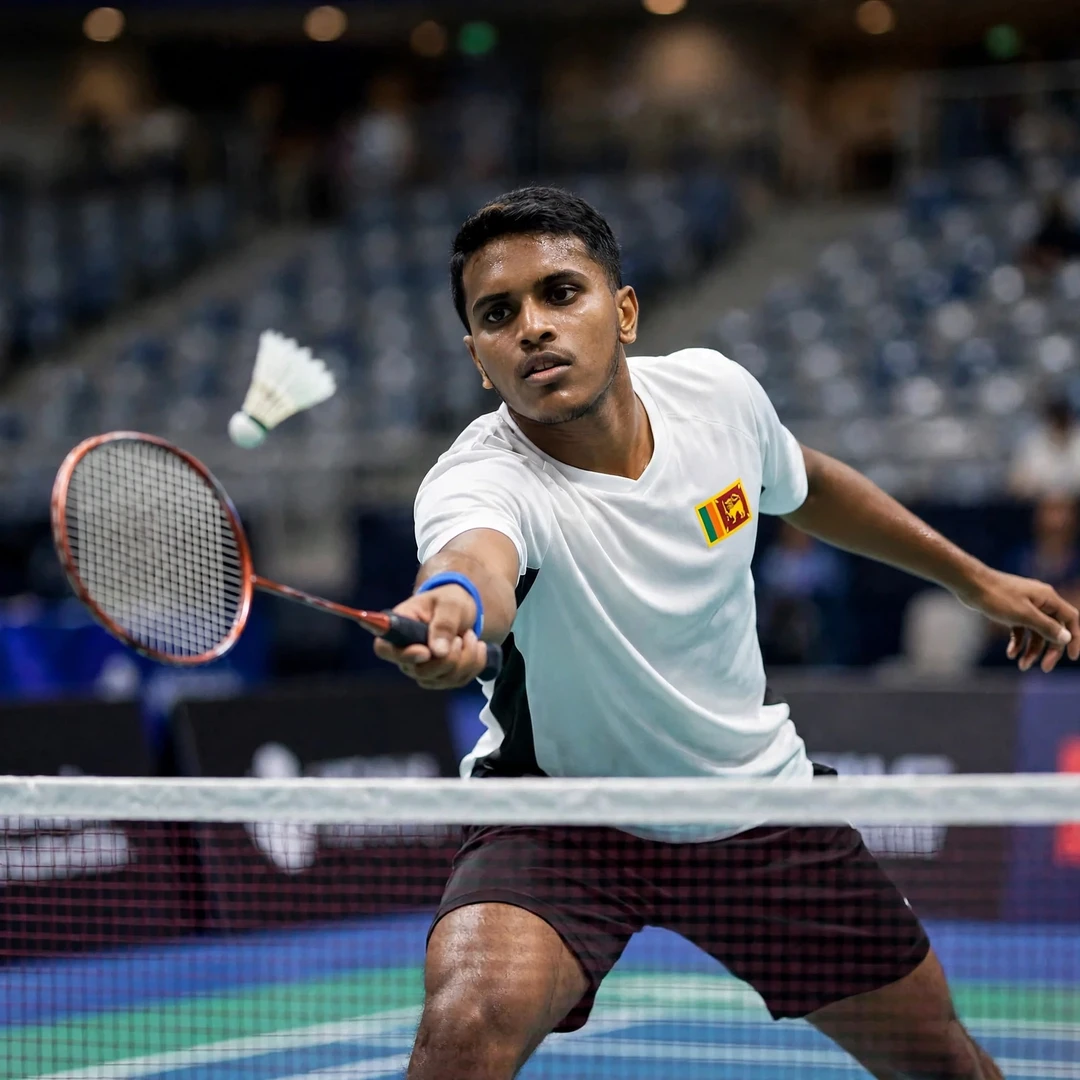
His second World Championships, in New Delhi in August 2026, brought his first win on the sport’s biggest stage. In the round of 64 he recovered from losing the first game to beat Peru’s Adriano Viale Aguirre 17–21, 21–15, 21–9. The round of 32 paired him with India’s Ayush Shetty — the same Shetty he had beaten in 2023, now transformed and fresh from one of the upsets of the tournament, a win over defending champion and world No. 1 Shi Yu Qi. Shetty won 21–8, 21–10 in 26 minutes. Abeywickrama’s verdict was honest and free of excuses: “I will play with him in 2023. That one I won. But now, it’s totally different. He has improved a lot. So I need to improve more. That’s the only thing.”
The New Delhi week also showed his mental growth. Asked whether facing a player who had just beaten the world No. 1 added pressure, he shrugged it off: “Already I know he’s better than me, so it’s not a pressure to me.” That calm acceptance — measuring himself against the best without fear or fantasy — is the mindset of a player who understands exactly where he stands and what the next step costs. His stated ambition remains the biggest stage of all: to feature at the Olympic Games and bring fame to his motherland. At 23, with a career-high ranking just banked, he has time — the question is whether the support system around him can grow as fast as he has.
Career Milestone #3
A Training Base in Seattle and the Search for Support
To keep improving, Abeywickrama has built himself an unusual training structure. He now trains in Seattle, in the United States, under veteran coach Rohith Halase Gowda, while Sri Lanka’s national coach Yukthi Perera coordinates his programme from home under the Sri Lanka Badminton development structure. On the Latin American tour it was Gowda who guided him courtside through the medal run. Splitting his life between Colombo and Seattle is expensive and lonely, but it gives him the daily training quality and sparring level that a top-100 singles player needs — and it shows how seriously he is investing in his own career.
Almost everything, however, has been paid for by his family. “This is my mom’s and dad’s money. All, until now, it’s a lot of money,” he said in New Delhi. Government support amounts to roughly US$300 a month, and Sri Lankan badminton players have no salary structure: “For badminton players, you won’t get any salary… I think slowly, slowly it will become better.” His first real sponsorship arrived only in August 2026 — a deal with Kawasaki signed two days before he flew to the World Championships. “Now only I got the sponsor from Kawasaki, just two days before. All new. I’m quite good because they gave me my world rank. So I’m happy.” For a player who reached the world’s top 85 with no sponsor at all, the deal was recognition as much as money.
Alongside full-time badminton, Abeywickrama is completing a degree in psychology, which he expects to finish in March. It is not a fallback plan — he chose the subject to understand himself and his opponents better: “I chose psychology as I wanted to understand how I behave, how other people behave and why. The shuttle, the tactics and everything, I wanted to understand the mentality about it. I wanted to understand things like neuroplasticity, how the brain can change, grow and reorganise its connections, and how that can affect the way we learn and play badminton.” The study shows in his routines — or rather, in their simplicity. Before a World Championships match he does nothing special: “No, I just don’t think so. Same as like I go for practice, I’m going for the tournament.”
Career Milestone #4
Career-High World No. 82
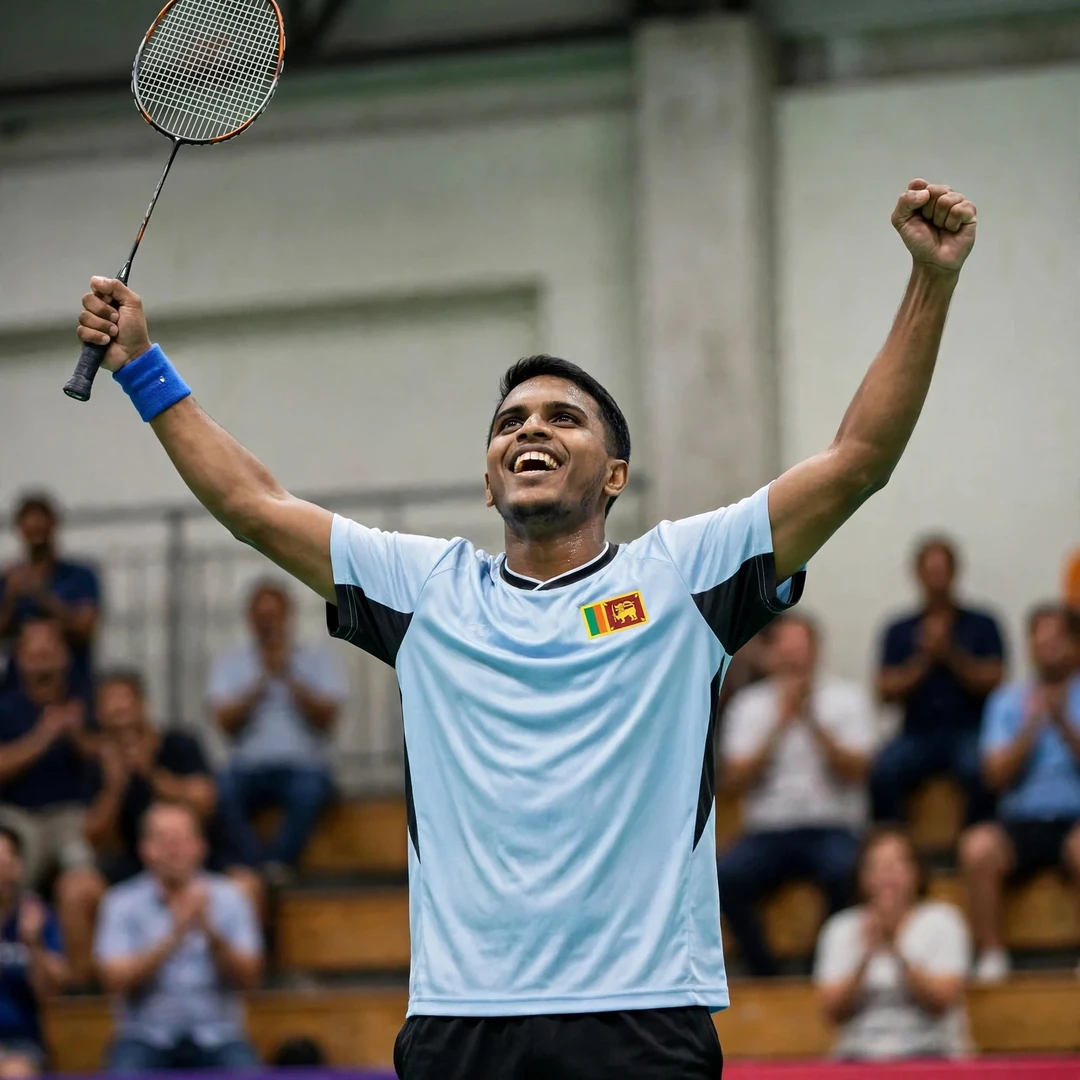
The ranking line charts the climb. From around No. 197 when he won his Kazakhstan bronze in 2023, he rose through the top 120 on the back of the Latin American tour, entered the top 100 in late 2025, and in August 2026 — World Championships month — reached world No. 82, his career high, and held it for eight consecutive ranking weeks. For context: Sri Lanka is a nation of 22 million people where badminton fights cricket for every column inch and every rupee, and before him only two Sri Lankans had ever stood inside the men’s singles top 100. No. 82 is not a footnote; for Sri Lankan badminton it is close to the ceiling of what one self-funded player has ever achieved.
In the Week 43 rankings published on 20 October 2026 he stands at No. 83 with 22,500 points, one place below his peak. The maths of the next step is clear even if the path is hard: the players above him live on World Tour main draws, where a single quarter-final pays more points than a Future Series title. Every week he holds a top-85 place keeps him in qualifying range for Super 300 and Super 500 events — the arena where the next jump must come from. Whether he makes it will depend as much on funding and scheduling as on forehands and footwork, which is precisely why his story resonates with developing players everywhere.
Playing Style
The Patient All-Court Rally Game
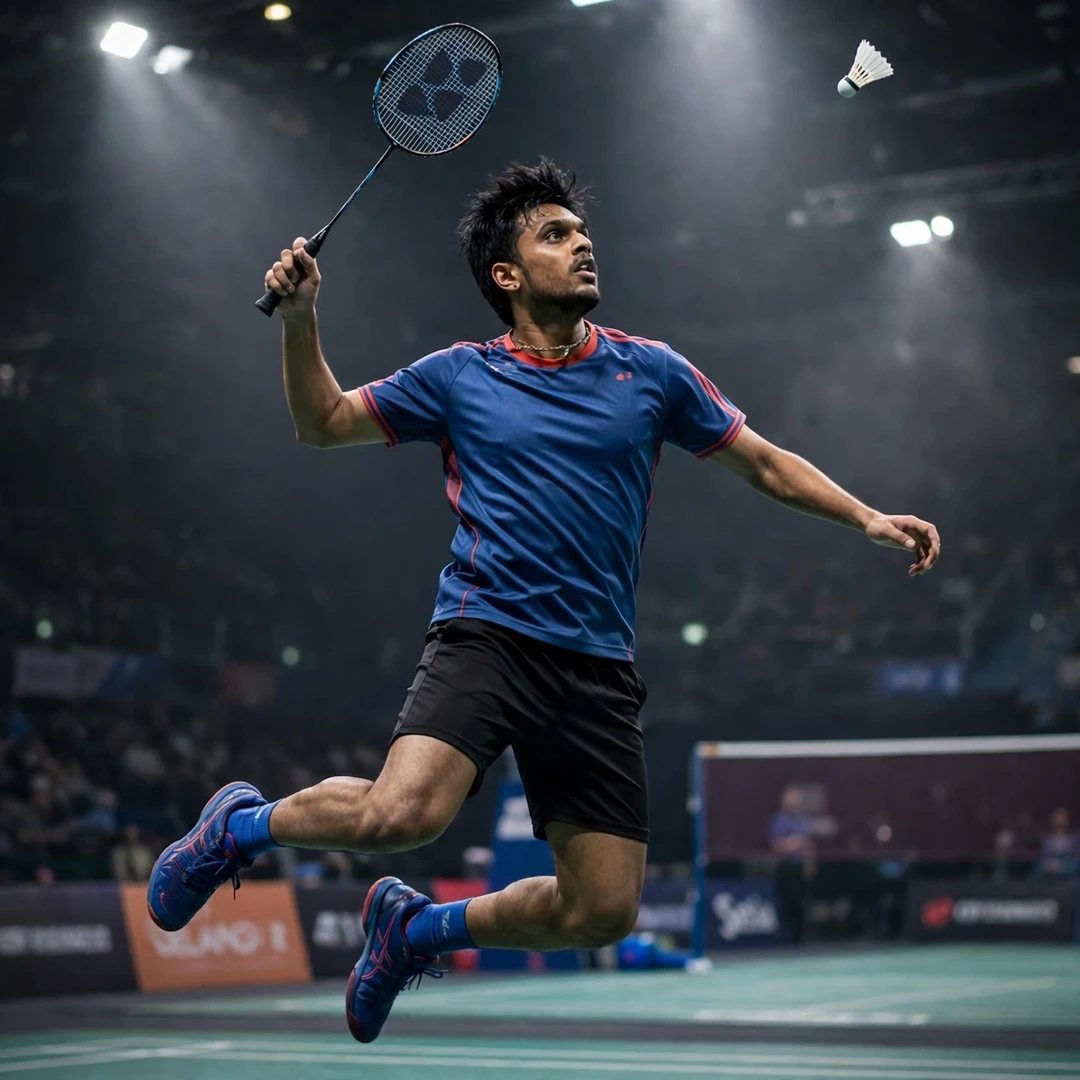
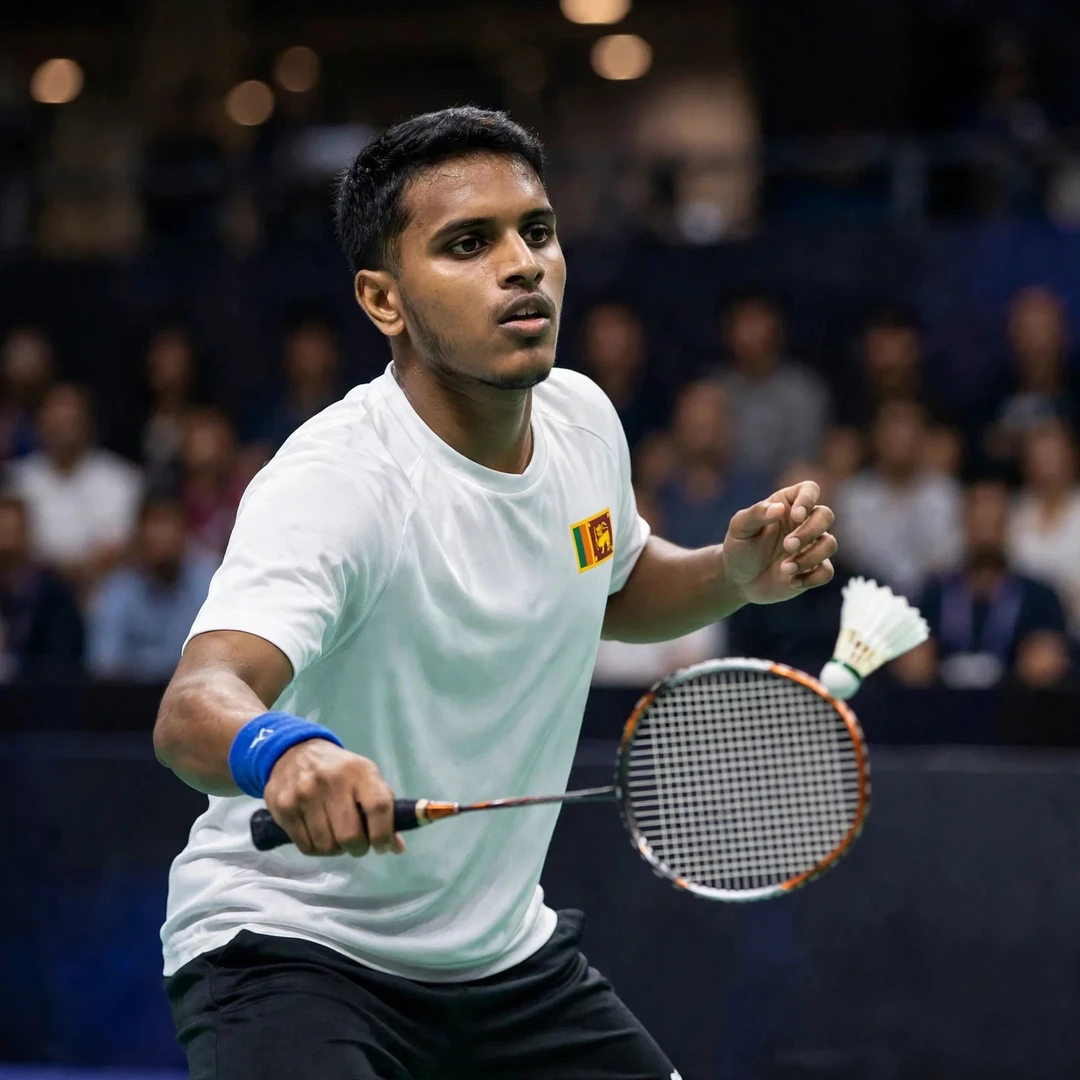
Abeywickrama is a right-handed all-court player whose game is built on rally construction rather than one knockout weapon. He is comfortable defending deep, lifting and clearing to length, then changing the pace suddenly with late, wristy cross-court shots that wrong-foot opponents who have settled into the rally rhythm. His matches are full of long exchanges because he trusts his legs and his patience: opponents often have to win the point two or three times before it is really won, and the diving, full-length retrievals that appear in his highlight clips are a genuine part of the system, not showmanship.
His signature strength is what happens late in matches. Look at the evidence: the Venezuela title was won from a set down, 10–21, 21–18, 21–12. His first World Championships win in 2026 was the same shape — 17–21, 21–15, 21–9. In Colombia in 2025 he strung together straight-games wins all the way to the final. This is a player whose level rises as matches lengthen: his defence tightens, his shot choices sharpen and his cross-court changes of direction start to bite against tiring legs. Coaches call it deciding-game quality, and it is one of the hardest things to teach — which is why his footage is so useful for juniors who tend to panic when a match goes to a third game.
The honest picture also includes the gap above him. Against the very best — Srikanth in 2022, Naraoka in 2025, Shetty in 2026 — the pattern repeats: he can stay in rallies, but he cannot hurt elite defenders early enough, and once a match runs away at the start (8–21 against Shetty) his patience has nothing to build on. Adding first-strike power and a more dangerous opening ten shots is the technical project of his Seattle training block. A young player copying Abeywickrama should copy the whole picture: build the rally base first, then add the weapons — never the other way round.
Mental Strength
Psychology, Patience and Playing Without Fear
The first lesson of Abeywickrama’s career is that there are no shortcuts, but there is a ladder — and he climbed every rung. School badminton at Royal College. A junior top-40 ranking. A Future Series bronze in Kazakhstan. Future Series finals in Costa Rica and Colombia. International Challenge titles in Guatemala and Venezuela. The Commonwealth Games, then two World Championships. Each level funded the next, in ranking points and in belief. For juniors in Malaysia and Singapore the message is direct: you do not need to start at the top of the sport. You need to win the level you are at, then move up one level and win there too.
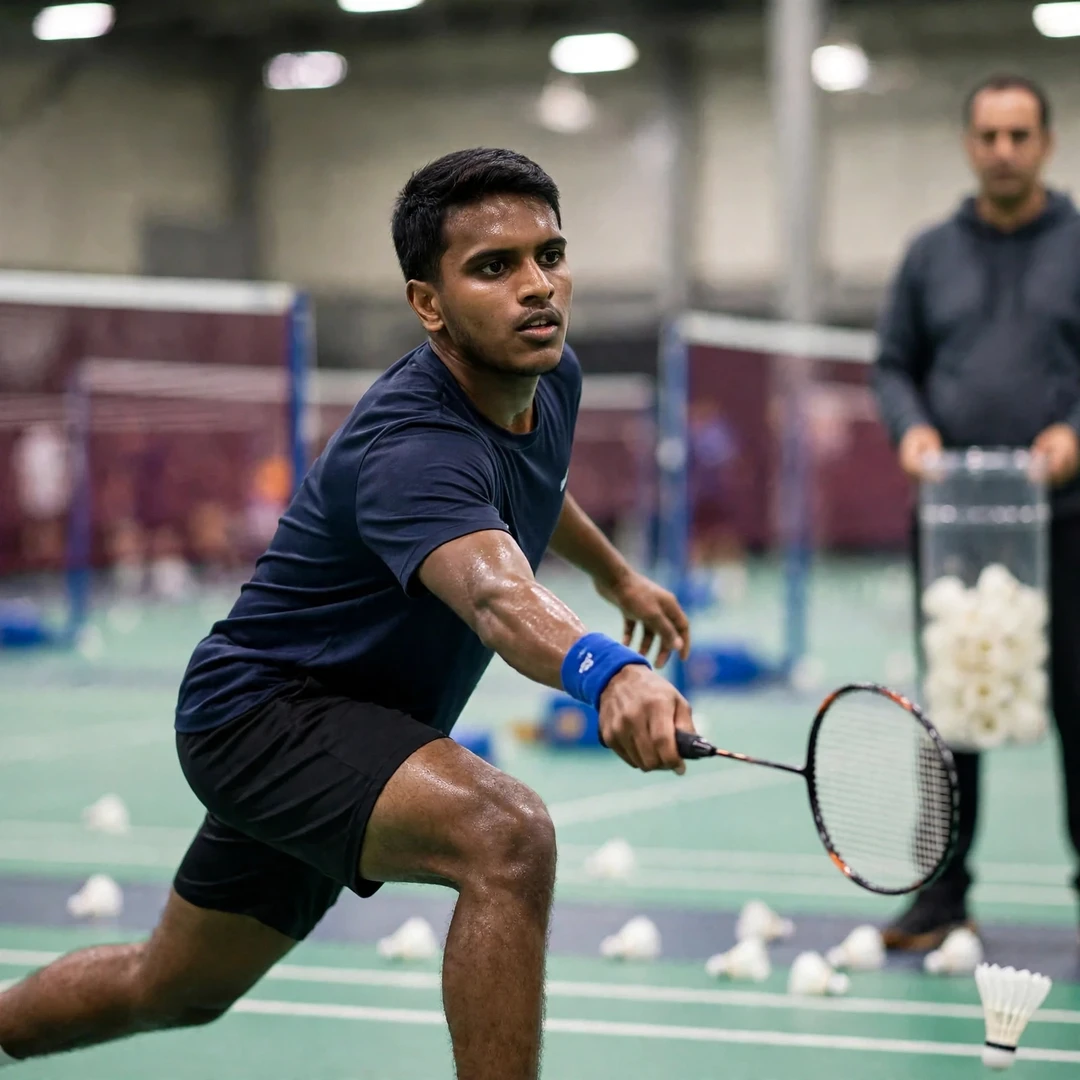
The second lesson is that the mental game is a skill, and skills can be studied. Abeywickrama literally studies his: a psychology degree, an interest in neuroplasticity, and a pressure routine built on keeping tournaments feeling like training days. “Before, I used to get a lot of pressure. But now, I just play, nothing. With nothing to lose.” That shift did not happen by talent or by accident — it was trained, the same way a cross-court drop is trained. Young players who freeze in finals are not missing character; they are missing a trainable skill, and his career shows one route to building it.
The third lesson is about support. Abeywickrama’s career runs on a small, committed team: parents who funded him for years, a coach in Seattle, a national coach coordinating from Colombo, and eventually a first sponsor who believed in his ranking. No player climbs alone — but the player himself has to give people something to believe in, through results earned level by level. For parents reading this profile, his story is the realistic middle path between fantasy and resignation: professional badminton is expensive and uncertain, and it can still be worth it when the work, the planning and the patience are real.
Learning Reference
ST Badminton Academy Connection
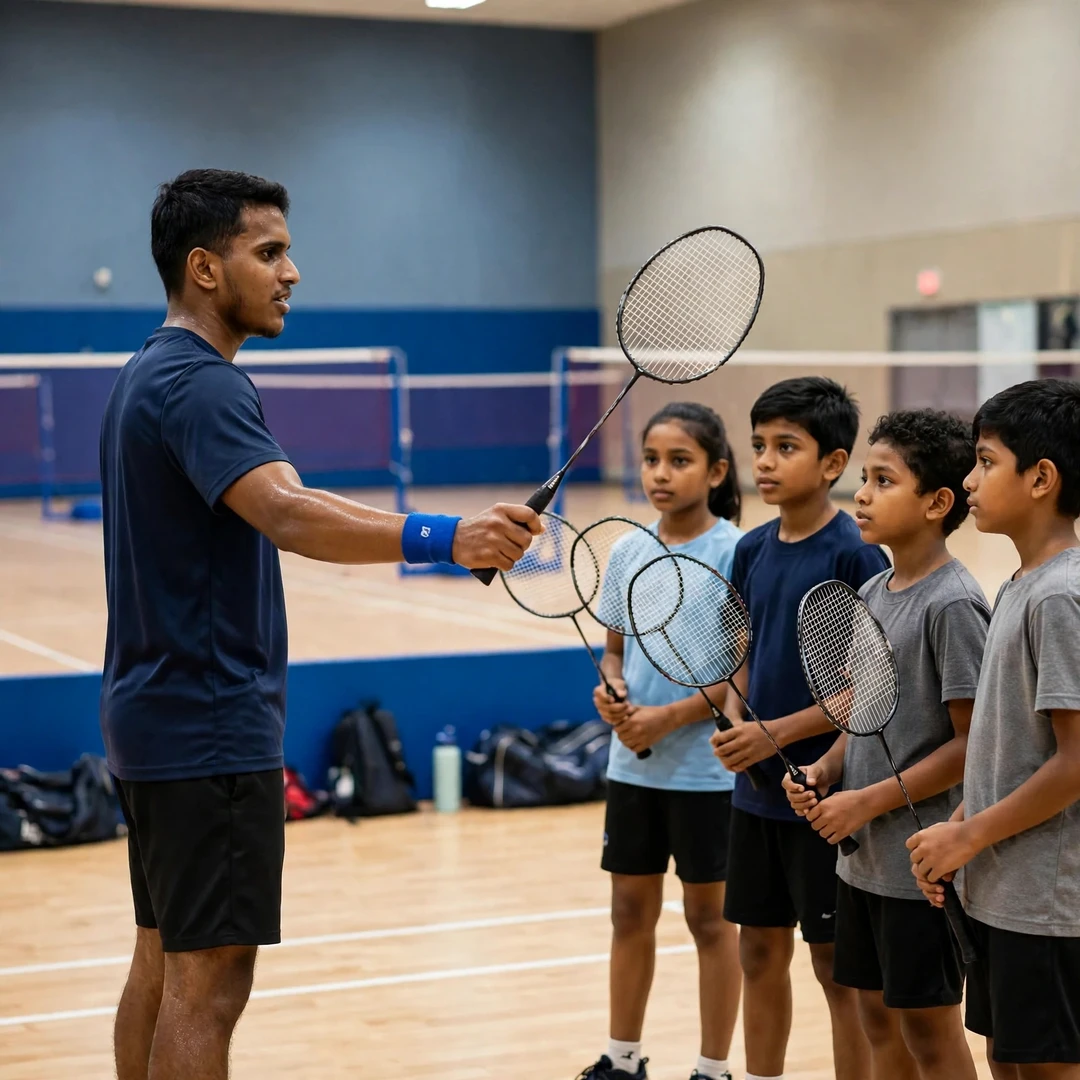
ST Badminton Academy uses Dumindu Abeywickrama’s matches as study material because he is a masterclass in beating players ranked above you. On the 2025 Latin American tour he defeated Aria Dinata, ranked No. 68 at the time, and a string of higher-ranked opponents, not by out-hitting them but by out-lasting and out-thinking them. Our coaches break down his rally patterns frame by frame — how he defends in the first ten minutes, how he changes pace with the cross-court shot, and how his deciding games are won — then rebuild those situations in drills for our students.
The academy is based in Malaysia and welcomes junior and adult players who want structured, professional coaching, from first grip to national-level competition preparation. Abeywickrama’s story is especially relevant for our students because so much of it was built without advantages: no famous academy, no big sponsor, no badminton superpower behind him — just schooling, coaching and an enormous amount of organised persistence. That is the exact environment a good academy tries to create for every child: a ladder, a plan and coaches who know what the next level demands.
Parents often ask whether a child should copy a favourite player’s style completely. Our answer, with Abeywickrama as the example, is no: copy the principles, not the player. Copy his patience and his deciding-game courage; copy his habit of treating pressure as a trainable skill; copy the way he and his family planned a career level by level. Then build the child’s own game around their body, their handedness and their temperament. That is how studying the stars turns into real improvement on court — the same way a Sri Lankan schoolboy became a world top-85 player.
FAQs: Dumindu Abeywickrama Sri Lankan Badminton Player
These frequently asked questions explain who Dumindu Abeywickrama is, what he has won, how he plays and what young players in Malaysia and Singapore can learn from his career, including his Latin American titles, his Commonwealth Games run and his two World Championships appearances.
Who is Dumindu Abeywickrama and which country does he represent in badminton?
Dumindu Abeywickrama is a Sri Lankan men’s singles badminton player from Colombo, born on 5 March 2003. A product of Royal College, Colombo, he represents Sri Lanka internationally, trains in Seattle in the USA, and reached a career-high world ranking of No. 82 in 2026.
What are Dumindu Abeywickrama’s biggest badminton achievements?
His biggest achievements are two international singles titles in 2025 — the Guatemala International Challenge, where he beat Mark Shelley Alcala in the final, and the Venezuela International — seven consecutive podium finishes on the 2025 Latin American tour, a bronze medal at the 2023 Kazakhstan Future Series, a round-of-16 singles run at the 2022 Commonwealth Games, and appearances at the 2025 and 2026 World Championships.
What is Dumindu Abeywickrama’s playing style?
Dumindu Abeywickrama is a right-handed all-court player. He builds rallies patiently, defends with full-length dives, changes the pace with late cross-court shots and is at his best in deciding games — both his Venezuela International title and his first World Championships win were comeback victories from a set down.
How did Dumindu Abeywickrama perform at the World Championships?
He has played at two World Championships. On his debut in Paris in 2025 he lost in the first round to Japan’s Kodai Naraoka. In New Delhi in 2026 he beat Peru’s Adriano Viale Aguirre 17–21, 21–15, 21–9 to reach the round of 32, where he lost to India’s Ayush Shetty — who had just beaten world No. 1 Shi Yu Qi in the previous round.
How can my child learn from Dumindu Abeywickrama’s training approach?
By copying principles, not highlights. Dumindu Abeywickrama’s rise was built level by level — school badminton, a junior top-40 ranking, Future Series medals, then International Challenge titles — and on mental skills he trained through his psychology studies: playing without fear and treating big matches like training sessions. A structured academy programme builds the same foundations step by step.
Did Dumindu Abeywickrama win any junior titles?
As a junior he broke into the top 40 of the BWF junior world rankings while at Royal College, Colombo, though he did not win a major junior title. His first senior international medal came at the age of 20 — bronze at the 2023 Future Series in Shymkent, Kazakhstan — two years before his breakthrough Latin American tour.
What is Dumindu Abeywickrama’s highest world ranking?
Dumindu Abeywickrama’s highest world ranking is No. 82, reached in August 2026 around the World Championships in New Delhi and held for eight consecutive ranking weeks. In the Week 43 rankings of 20 October 2026 he is ranked world No. 83 with 22,500 points.
What playing style should young players learn from Dumindu Abeywickrama?
Young players should learn his patience and rally craft: building points instead of forcing winners, defending with total commitment, staying calm when a set down and changing the pace with cross-court shots. His career also teaches the off-court skills a professional needs — planning a season, budgeting a tour and training the mental side of the game.
Does ST Badminton Academy have any connection with Dumindu Abeywickrama?
No, Dumindu Abeywickrama is not a student, coach or ambassador of ST Badminton Academy. He represents Sri Lanka and is profiled here purely as an elite player whose technique, resilience and career story our coaches use as study material for students in Malaysia and Singapore.
Dumindu Abeywickrama Career Highlights
Career Statistics and Rankings
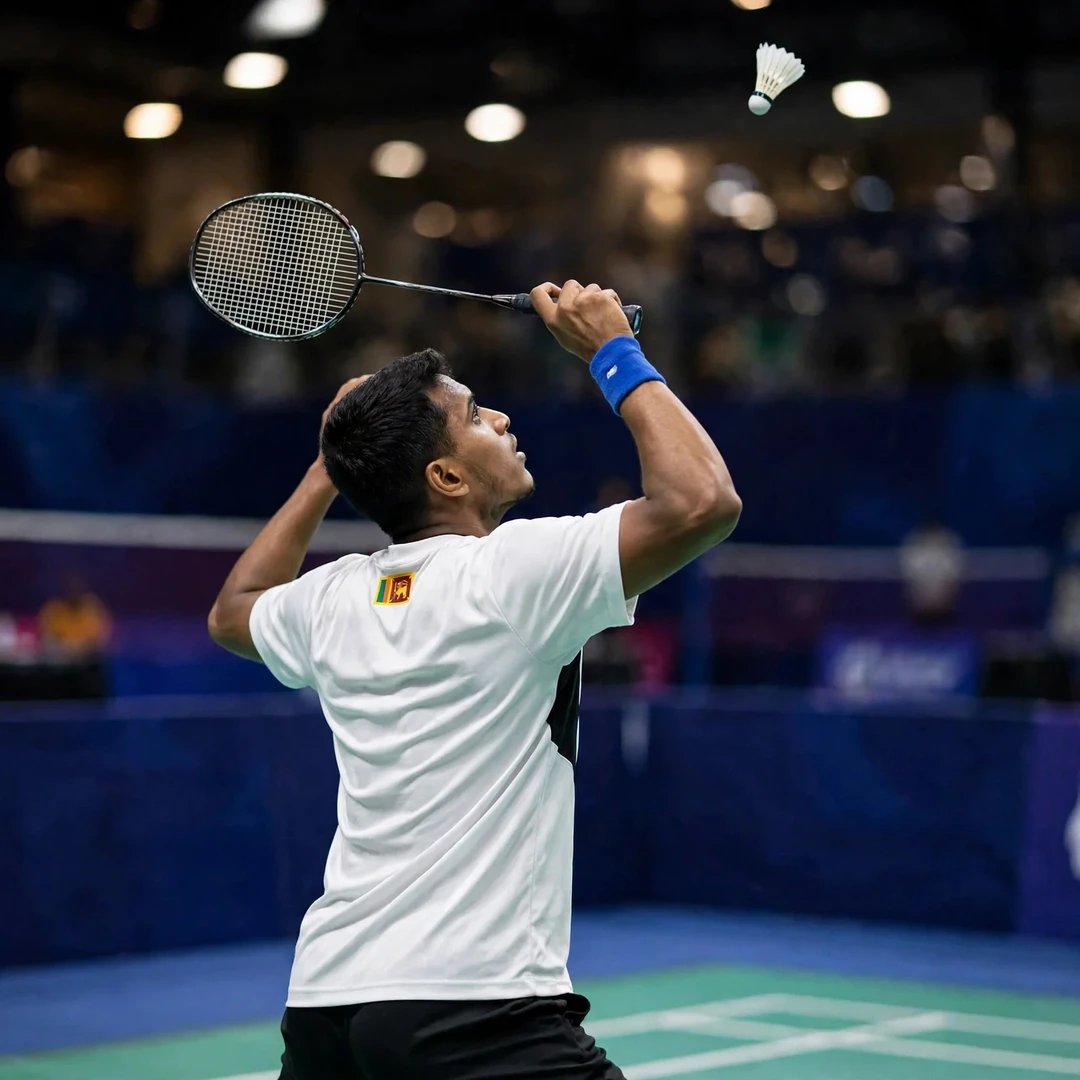
Dumindu Abeywickrama, born 5 March 2003 in Colombo, Sri Lanka, turned a doctor's advice into a professional career: a Commonwealth Games last-16 run at 19, a first international medal in Kazakhstan at 20, two titles and seven straight podiums in Latin America at 22, and a career-high world No. 82 with a World Championships round-of-32 win at 23 — almost entirely self-funded, while studying for a psychology degree.
| Development Area | Common Misconception | What Dumindu Abeywickrama's Career Shows REALITY |
|---|---|---|
| Junior Foundation | Only players from big badminton nations reach the world top 100. | Abeywickrama is a product of Royal College, Colombo, who broke into the junior world's top 40 and then climbed level by level — a structured school and national base came first, in a country where cricket takes almost all the attention. |
| Playing Style Priority | Kids should copy the flashiest attacking shots first. | Abeywickrama built a complete rally game first — patient defence, late cross-court changes and diving retrievals; his two international titles are the finishing touch on that all-court base. |
| Fitness Importance | Juniors can out-train everyone without rest. | Abeywickrama funds most of his own tour on roughly US$300 a month of government support, so every trip is planned and budgeted — smarter scheduling and recovery, not more spending, keeps him on the road. |
| Mental Approach | Top players never get nervous or upset. | Abeywickrama studies psychology alongside his career and talks openly about pressure — he learned to just play, with nothing to lose, proof that mental skills are trained, not inherited. |
| Attacking Training | Smashing harder is always the answer. | His Venezuela International title, won 10–21, 21–18, 21–12 from a set down, and his 2026 World Championships comeback against Adriano Viale came from rally patience and placement, not raw power. |
| National Milestones | Only world titles matter. | Future Series medals in Kazakhstan and Guatemala, then International Challenge titles in Guatemala and Venezuela, built Abeywickrama's ranking step by step — smaller milestones are what carry a small-nation player to the World Championships. |
| Career Timeline | One good tour makes a career. | From world No. 197 in 2023 to No. 82 in 2026, Abeywickrama climbed for three straight years — sustained, level-by-level development beats one short peak. |
Study Dumindu Abeywickrama's Resilience and Professional Approach
This profile explains who Dumindu Abeywickrama is, how he plays, his major achievements — including the Guatemala and Venezuela titles, the Commonwealth Games run and the 2026 World Championships — and what developing players at ST Badminton Academy in Malaysia can learn from his patience, his psychology and his persistence.