The Best Badminton Resistance Band Sets For Strength And Flexibility Training (Band Set Guide)
A resistance band set is a system, not a pile of rubber. The bands give the levels, the handles and ankle straps give the grip, the door anchor gives the fixed point every pulling exercise needs, and the carry bag keeps the whole kit together, dry and ready. Choosing a set well means judging all four parts: what is inside, how the levels step up, whether the working parts are sound, and whether worn pieces can be replaced one at a time. This guide takes those checks in order. There are no brand names and no prices here, only the contents and construction tests any buyer can run.

Set Check #1
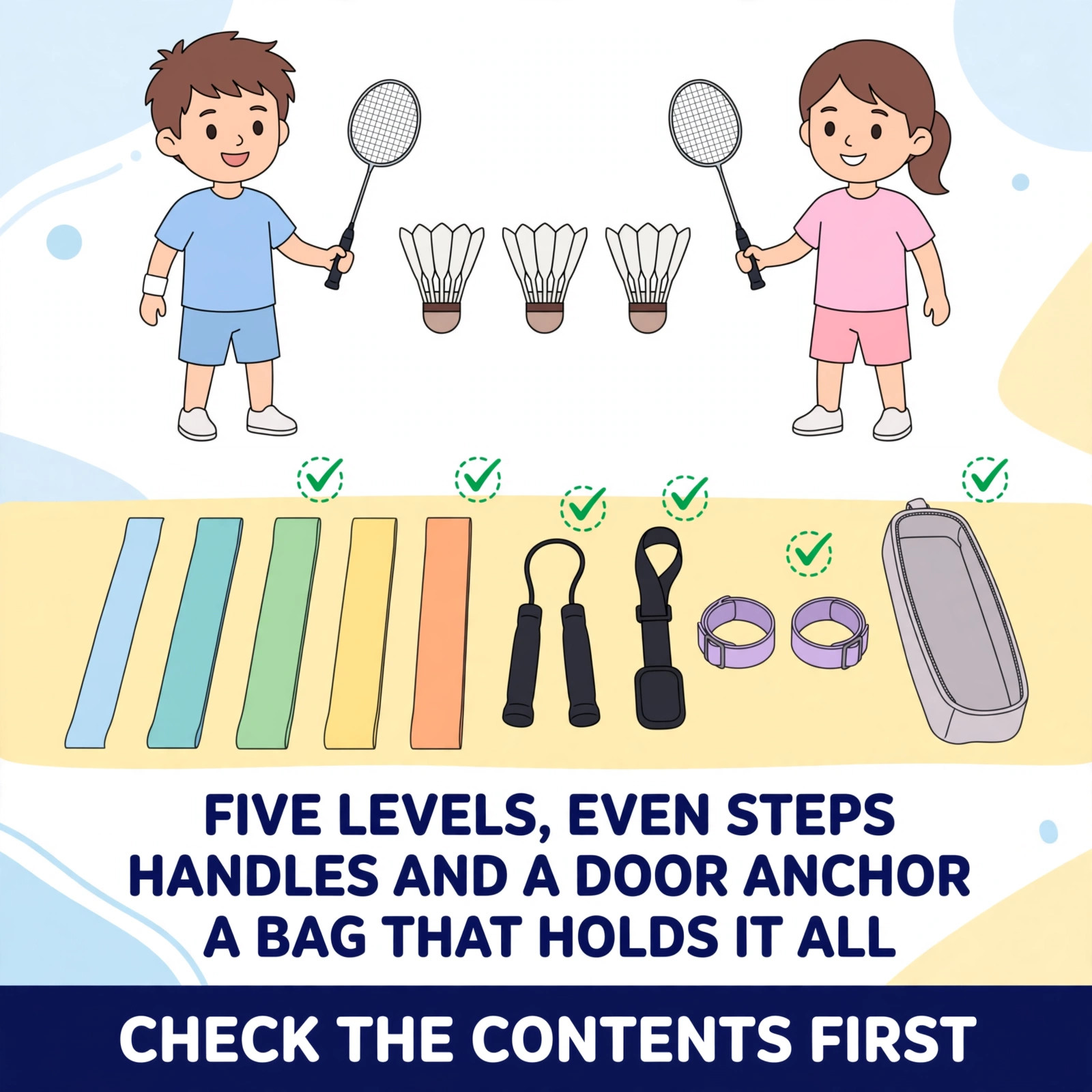
Inside a Good Set: Bands, Handles, Anchor and Bag
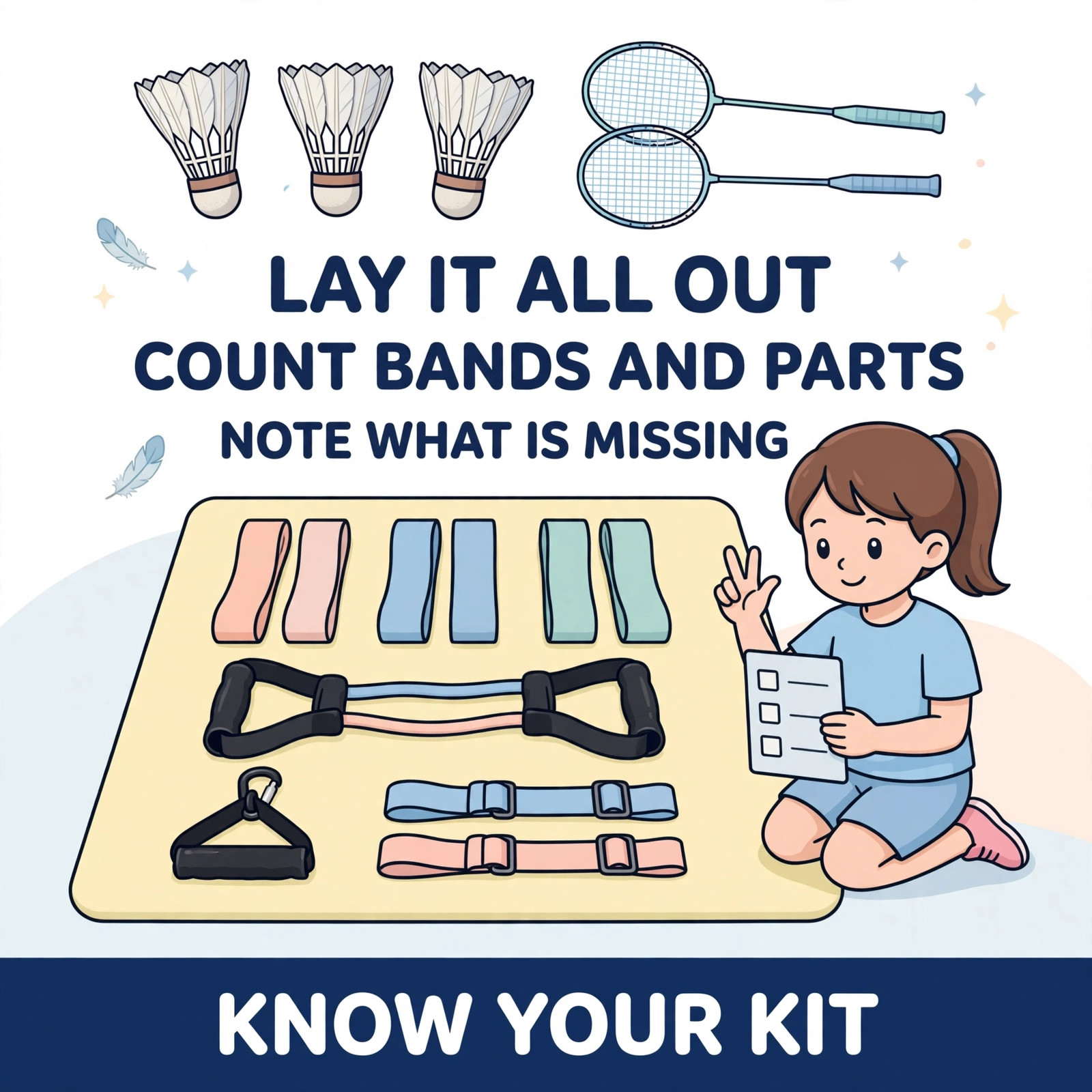
Open the bag first, in the shop or in the listing photographs, and count what a complete set should hold. Bands in several levels, usually tubes, loops, or a mix. A pair of handles that clip on and off. A door anchor: a strap with a solid loop or disc that the door closes on. Ankle straps for leg work. And a carry bag that actually fits everything without forcing. If any of those parts is missing, the set is a partial kit wearing a full kit’s name, and exercises will quietly go missing from your training.
Then handle each part like an inspector. Bands should feel even along their length, with no thin spots or sticky patches. Handles should be firm, with grips that do not spin loose on their cores. Clips should open with effort and close with a clean, full click. The door anchor strap should be wide, with stitching you cannot pull apart by hand. None of this needs expertise: pull, clip, tug and look. A set that feels sound on the bench usually stays sound in training, and a set that feels flimsy in the shop will not improve at home.
Set Check #2
Levels That Progress: Small Steps From Light to Heavy
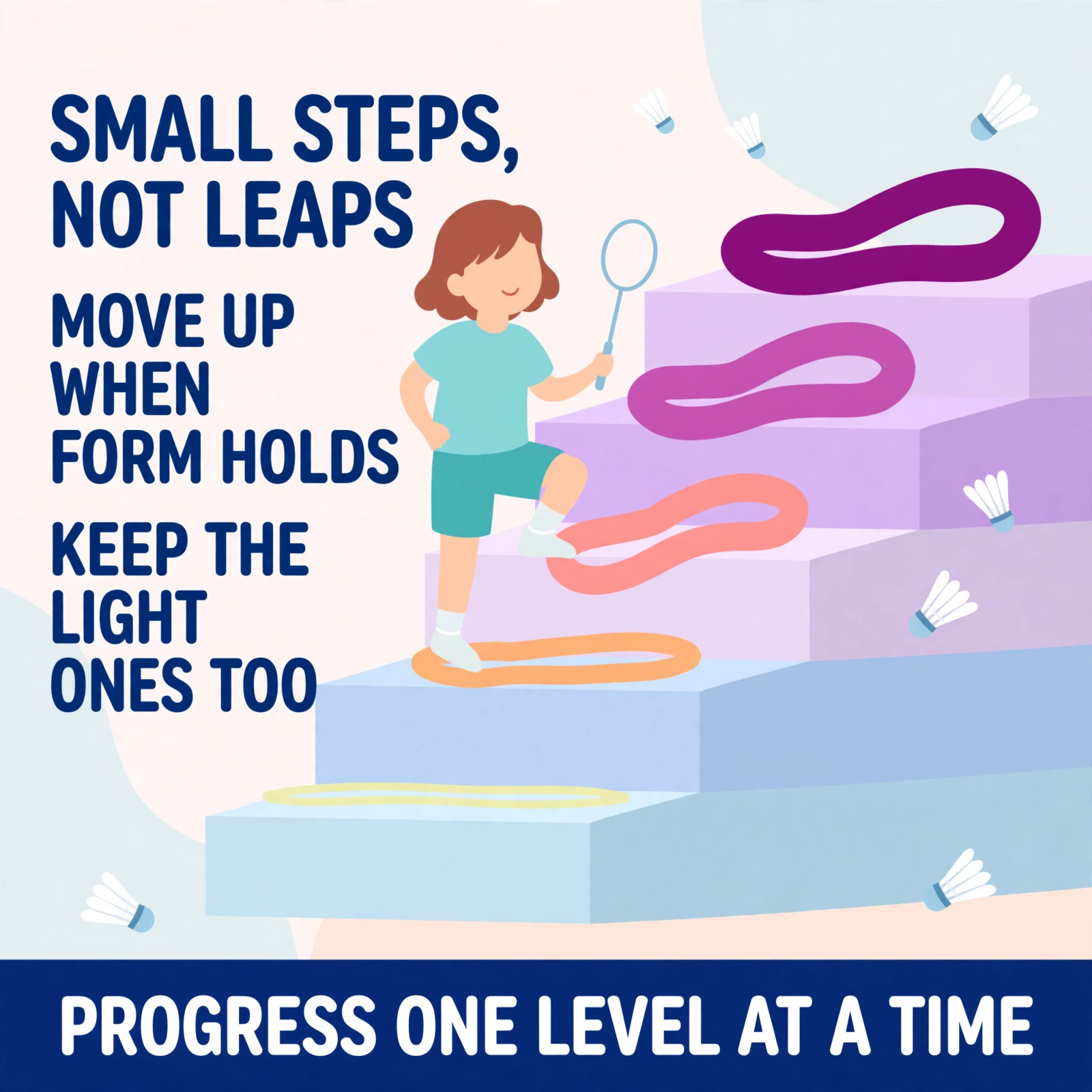
A set earns its keep through progression: light today, a step up next month, another step when that one is owned. For that to work, the levels must step evenly. A good set feels like a staircase with equal steps, each band clearly harder than the last without doubling the effort. A poor set has a staircase with a missing step: two bands that feel almost identical, then one giant leap that nobody can use with clean form. Test the steps in order before you judge a set complete.
The light bands in a set are not filler. They warm up shoulders, teach new exercises, serve juniors and returning players, and do the careful range of motion work that keeps hitting shoulders healthy. A set that starts at medium has skipped the levels half your training will use. The heavy end matters less than sellers claim: most badminton band work lives in the light to medium range, done with control, so judge a set by how useful its first three levels are, not by how heroic its last one sounds.
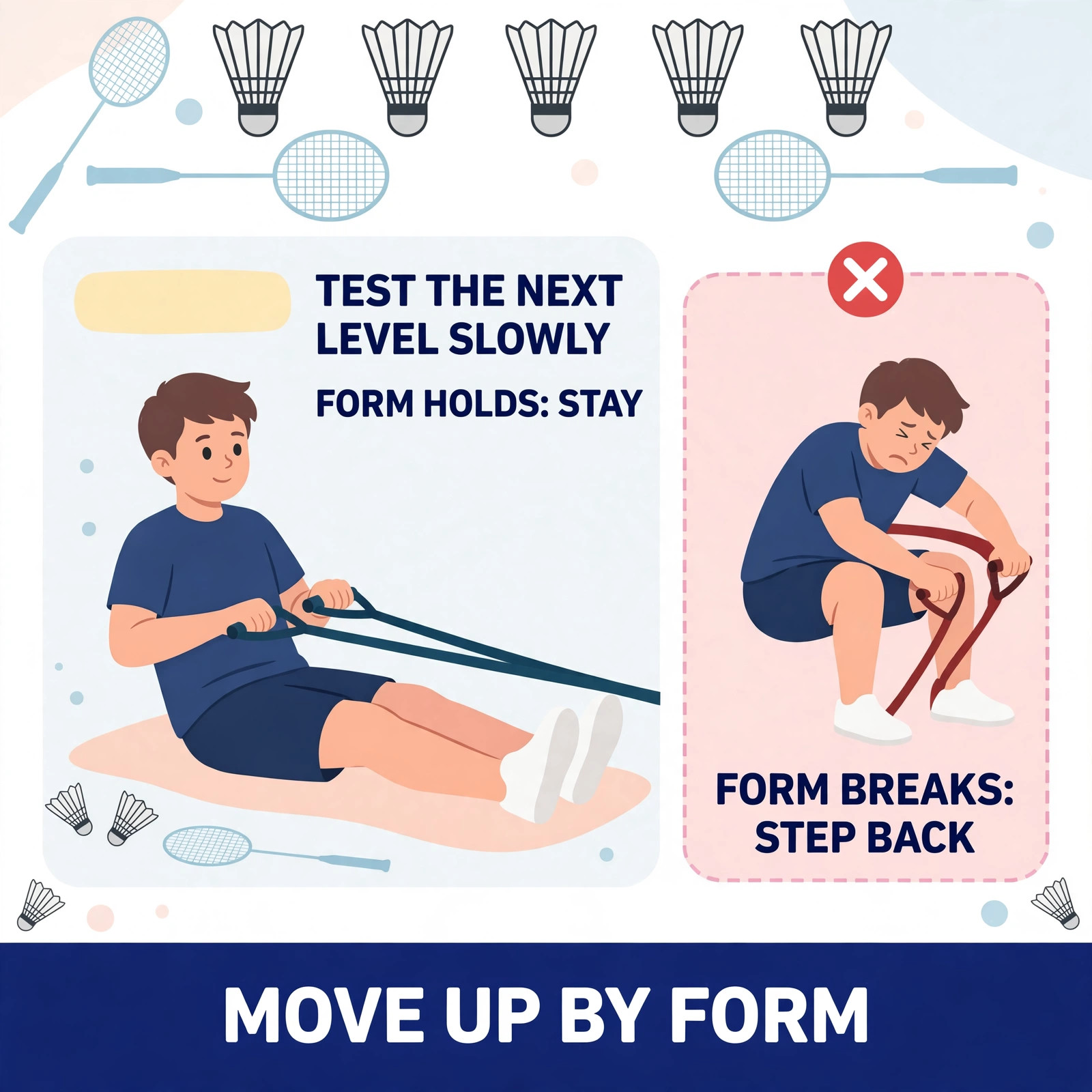
Move up a level by evidence, not by date. When a player finishes every planned set with the current band, form intact, two sessions running, the step up has been earned. Keep the old level in rotation for warm ups. Juniors step up slower, and only when a coach has watched the current level performed cleanly. A well built set supports this rhythm for years, because its levels were planned as a ladder. A random bundle forces players to jump gaps, and jumping gaps is where form, and then patience, breaks down.
Set Check #3
Anchors, Handles and Clips: The Working Parts
The door anchor is the part that turns a tube band into a training station, and it takes the full load of every row and press. Look for a wide strap that spreads the pressure on the door, and a loop or disc big enough that it cannot pull through the gap when the door is closed. Test it the way you will use it: anchor fitted, door shut, firm tug before any exercise. An anchor that creeps or twists under a test tug will fail under a working load, usually at the worst moment of the movement.
Handles and clips are the connection between your hands and all that stored energy, so they deserve suspicion. Handles should fit an adult hand and a junior hand without either swimming or cramping. Clips, usually small carabiner style hooks, must close fully every time; a clip that stops half closed is a disconnect waiting for its moment. Ankle straps should pad the leg and fasten firmly without cutting in. Wiggle every connection in the shop. The parts you will actually load are the parts to test, and in a set those parts are the clips.
Stitching and joints tell the truth about a set’s working life. Anchor straps and ankle straps live or die by their stitching: look for tight, even rows with no loose threads at the stress points. Tube ends should be finished cleanly where they meet the clips, with no fraying or sharp edges that saw at the elastic. Stretch each band once, fully, and watch the ends. A set is only as strong as its weakest joint, and the joints are exactly what a quick in shop inspection can judge honestly.

Set Check #4
Sharing a Set: Family, Friends and Class Use
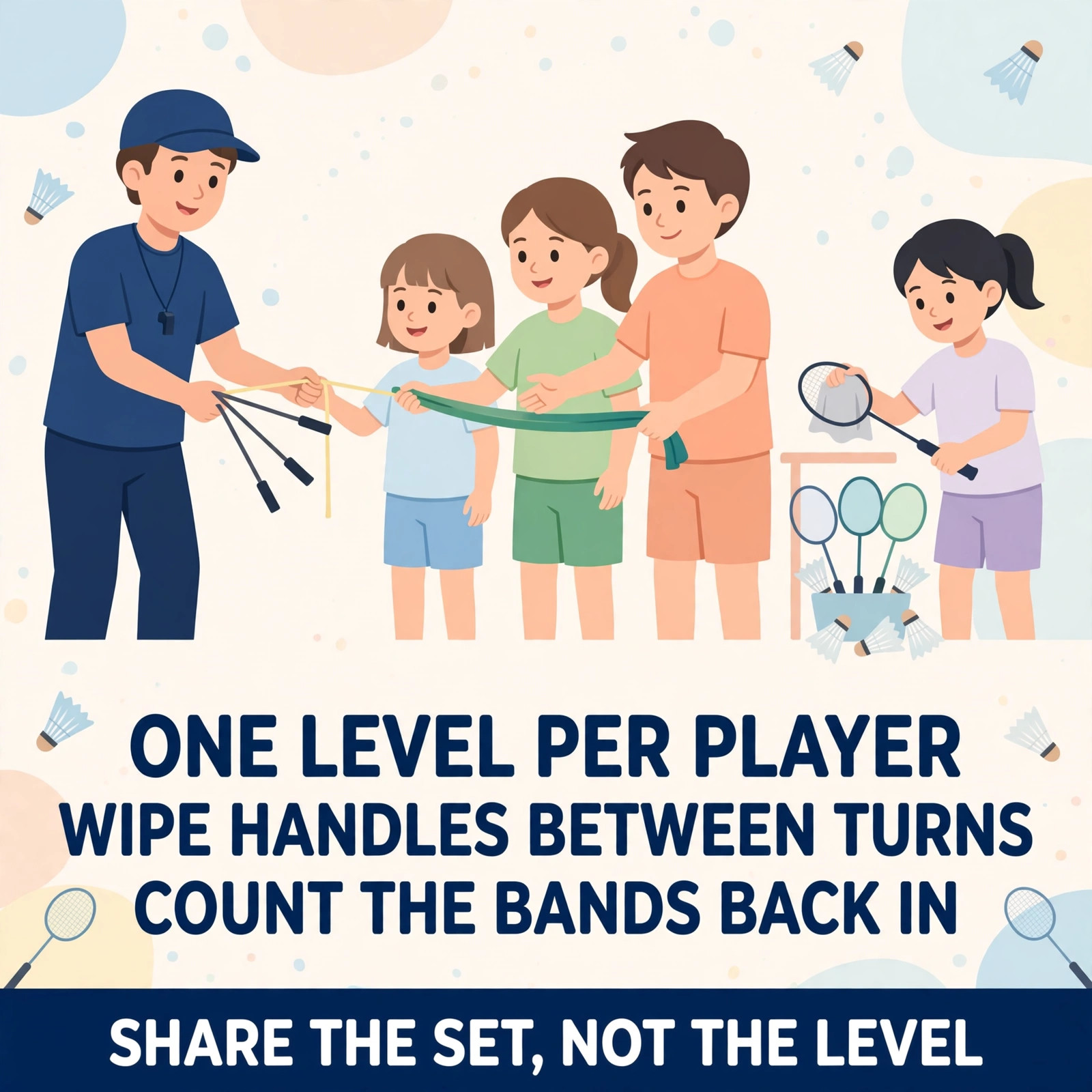
A set is the natural sharing format, and that is one of its quiet strengths. A family with one set holds a level for everyone: light for the youngest, medium for the teenager, stronger for the parent, all from the same bag. A class works the same way, with a coach handing each student the level that matches their body and the exercise. Sharing a pile of single bands can do this too, but the set’s bag, matched parts and even steps make it simple to run and simple to pack away.
Sharing needs two habits to stay fair and safe. The first is level discipline: one level per player, chosen by the coach or the strongest rule in the house, which is that nobody trains on a band their form cannot hold. Swapping up mid session because a sibling looks strong on theirs is how juniors get loaded too early. The second habit is the count: bands and parts counted out at the start and counted back in at the end. A set missing its anchor or one handle is a set that fails next session.
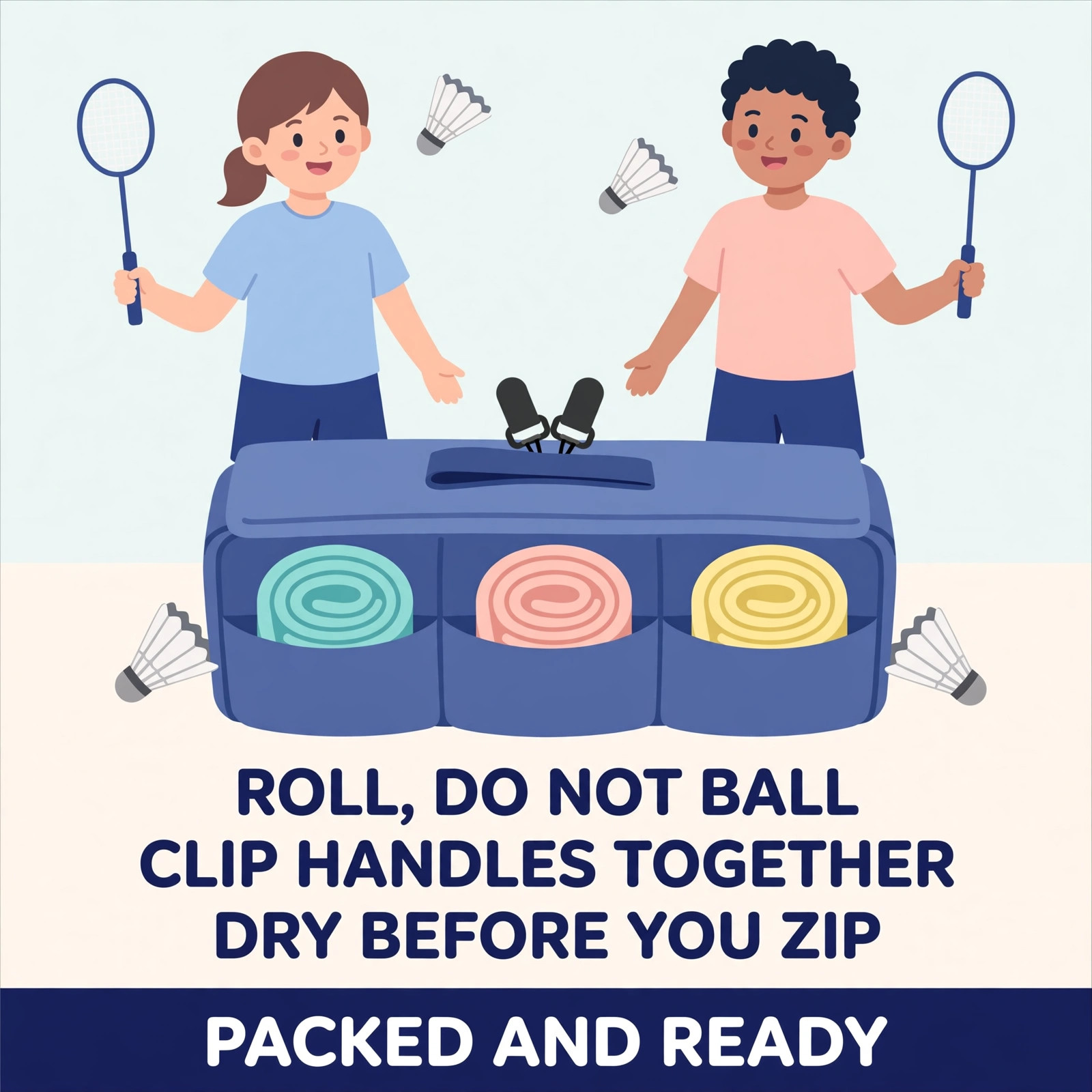
Hygiene is the third sharing habit, and the easiest. Handles get wiped between users; it takes ten seconds and a small cloth. Fabric bands in a shared set should wash easily and dry fast, because a set used by four people in Malaysian humidity lives a damp life. Sweat left on latex and stitching ages both. A shared set that gets wiped, aired and counted will outlast a private set that is thrown wet into a bag, which tells you care matters more than ownership.
Set Check #5
One Band Worn Out: Replace the Part, Not the Set
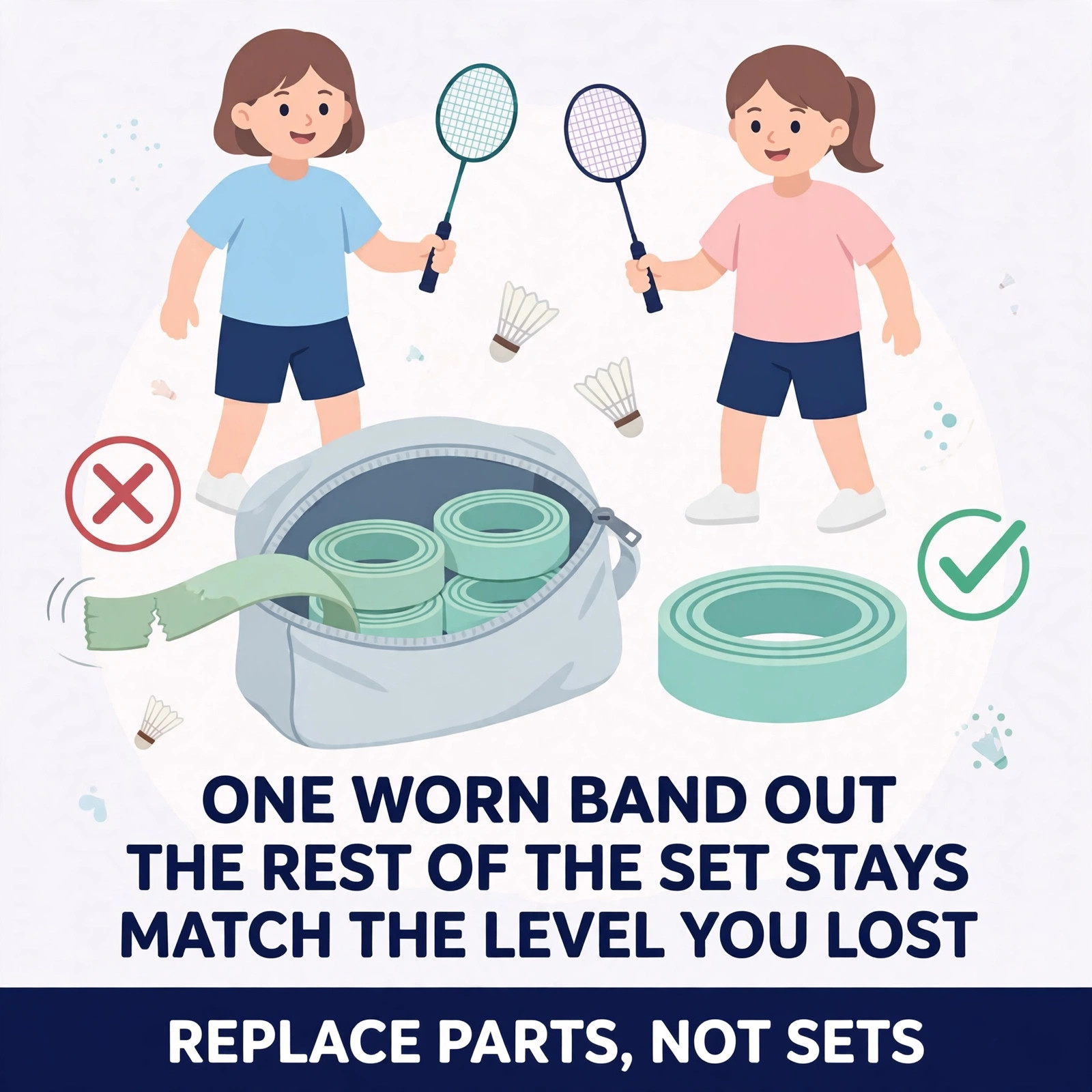
Bands wear out one at a time. The light loop that warms up every session ages faster than the heavy tube used twice a month, and an ankle strap’s stitching may tire while every band is still sound. The right response is to replace the worn part, not the whole set. Before choosing any set, check that its bands and parts can be replaced singly: standard clip fittings and common band styles make that easy, while unusual fittings can strand you with a bag of parts that nothing new matches.
Match the replacement like for like. Note the level you lost by its place in the staircase, not only by its colour, because a new maker’s colour may not mean the same pull. The stretch test settles it: the replacement should feel like the old band did when it was fresh, letting you finish sets with clean form and honest effort. Keep the set log beside the bag so the note is there when you need it. Replaced in time, a single band keeps the whole system in balance.
Planned this way, a set is a long term kit rather than a one season purchase. The bag lasts, the handles and anchor last, and the bands rotate out one by one as inspection retires them. That is the real value test of a set: not how many pieces it starts with, but how gracefully it continues when pieces wear. A set you can maintain is a set you will still be training with in three years, and its cost spreads itself quietly across hundreds of sessions without ever needing to be mentioned here.
Myth vs Reality
Myths About Badminton Band Sets
Myth one: more bands means a better set. A bag of twelve bands with missing steps, no anchor and clips that half close is worse than five sound bands with every working part present. Extra bands beyond your levels mostly tangle, age in the dark, and retire unused. Completeness is the measure: levels that step evenly, parts that connect solidly, and a bag that holds it all. Count what the set can do, not what it contains.
Myth two: the biggest set wins. Size impresses in photographs and disappoints in training when the levels jump wildly and the anchor strap is a ribbon. Players do not progress on band count; they progress on the next step being reachable. A modest set with even steps carries a player further than a giant set with a broken staircase. Judge the staircase, test the clips, tug the anchor, and let the big bag impress somebody else.
Myth three: one level suits everyone in the family. It cannot. The same band is a warm up for a strong father, a full workout for his daughter, and an overload for the youngest. Sets exist precisely because bodies differ, and sharing works only when each player takes the level their form can hold. A household that respects levels trains together happily for years. A household that shares one band trains at one person’s level and wonders why the others stall or strain.

Why Choose Us
Why Players Choose ST Badminton Academy
Class sets at ST Badminton Academy live by the rules in this guide. Coaches count bands and parts out at the start of a session and back in at the end, hand each student the level their form can hold, and wipe handles between users. With a maximum of four students per group, that discipline takes a minute and keeps every band session safe and fair. Students learn the routine by doing it, which means the academy’s juniors can run a shared set properly anywhere, not only in our hall.
The academy does not sell band sets, and that is deliberate. A coach with no stock to move can say the useful sentences: this set is complete, buy nothing more; or, this set is missing its anchor, and that part matters more than two extra bands. Parents hear the same honesty about levels: even steps, light levels present, parts that can be replaced singly. Advice that sometimes says do not buy is the only advice worth trusting when it says buy, and sets are where that trust is earned.
Running a set well is a small management skill we like juniors to own. Counting kit, matching levels to people, wiping shared parts, logging a worn strap before it fails: these habits turn a bag of elastic into a training system that serves a family or a class for years. At the academy we teach them as part of training, not as housekeeping, because the players who care for their kit are the players who keep showing up ready to work.
FAQs: Badminton Resistance Band Sets and Levels in Malaysia (KL)
Here are the questions players and parents ask us most about resistance band sets, levels, parts and sharing, and how our coaches advise on sets in Kuala Lumpur and Setapak.
What should a band set include for a junior starting classes in Setapak or Gombak?
Look for bands in several levels that step up evenly, a pair of handles, a solid door anchor, ankle straps and a carry bag that fits everything. The light levels must be present. If a part is missing, the set is a partial kit, whatever its name says.
How many levels should a band set have for training in KL?
Enough to make a staircase with even steps: usually four or five levels from light to heavy. More important than the count is the spacing. Each level should feel clearly harder than the last without doubling the effort, and the lightest levels must suit warm ups and juniors.
How often will a family use one band set at a steady level?
Most families use one set two or three times a week across different members, with each person on their own level. Count the parts out and back in, wipe the handles, and the set will serve everyone without arguments or overloads.
Is a bigger set always better, or can ten bands be too many?
No. Extra bands mostly tangle and age unused, while missing steps and missing parts limit real training. A complete modest set with even levels, a solid anchor and sound clips beats a giant bundle. Judge what the set can do, not what it contains.
What should I check before buying a band set for classes?
Open the bag and count the parts: levels stepping evenly, handles, anchor, straps, bag. Then test like an inspector: clips closing fully, stitching tight, anchor strap wide, and each band stretched once to check its ends and surface before deciding.
Do your coaches help students share a set safely near Wangsa Maju?
Yes. Coaches hand each student the level their form can hold, count the bands out and back in, and wipe handles between users. Students near Wangsa Maju and Setapak learn to run a shared set safely as part of normal class routine.
Does your academy sell band sets or just advise players in Malaysia?
We advise; we do not sell sets. Coaches explain what a complete set holds and how to test its parts, then families buy wherever suits them, or keep a current set if it passes the checks. The academy earns its living from coaching alone.
How long does a band set last with regular training?
A looked after set serves for years: the bag, handles and anchor last, while individual bands retire one at a time as inspection finds wear. Replace parts singly and the system keeps its balance. Neglected sets age fast in heat and sweat.
What makes Mr Eric Chuar a good coach for honest set advice for badminton?
Mr Eric Chuar has coached for over 15 years and judges a set the way he judges a training plan: by its steps. Even levels, sound parts, honest gaps named plainly. He refuses to call a big bag a good set, and players trust advice that stays that straight.
Badminton Band Sets and Training in Action

One Standard for Every Player and Every Session
The academy's standard for set advice matches its coaching standard: say what the kit does, say what it cannot do, and let the buyer decide with clear checks. Nobody at ST Badminton Academy will tell a parent that a bigger set will fix a child's strength. We will tell them how to judge levels, parts and replacements honestly.
| Factor | Random Bundle | Complete Kit SET |
|---|---|---|
| Frequency | 1 or 2 times a week. Mostly for fun and sweat. | Levels that step up evenly from light to heavy. |
| Drills Focus | Basic static feeding. Minimal footwork pressure. | Every part present: bands, handles, anchor, straps and bag. |
| Physical Conditioning | Rarely included. Just playing games on court. | Core, agility, and speed training included in every session to prevent injury and build stamina. |
| Tactical Awareness | "Just hit it over." No real game plan. | Video analysis, point construction, and learning to read the opponent's game. |
| Coach Ratio | Large groups (8-10 kids). Coach barely watches you. | Max 4 students. Mr Eric Chuar personally corrects every stroke and movement detail. |
| Goal Setting | Fun and exercise. | Worn bands replaced one at a time, not the whole kit. |
| Long Term Result | Good recreational player. | A player whose kit is ready for every session. |
Badminton Coaching and Honest Gear Advice in Kuala Lumpur
A good set is a staircase in a bag: even levels, sound parts, and a system for sharing and replacing that a whole family can run. Choose with the checks in this guide and maintain it part by part. If your child trains with us at ST Badminton Academy in Setapak, Kuala Lumpur, bring the set to a session and ask a coach to run the count with you. We will give you the straight answer.





