The Best Badminton Rackets for Every Player (Racket Guide)
Walk into any sports shop in Kuala Lumpur and you will face a wall of badminton rackets, from cheap steel frames to pro-level models that cost more than a month of court fees. Picking the best badminton racket is not about grabbing the most expensive one. It is about matching four things, weight, balance point, shaft flexibility and grip size, to your level and the way you play. This guide walks through those four specs in plain language, then shares the racket types our coaches recommend for beginners, intermediate players and advanced players in Malaysia.
At ST Badminton Academy Malaysia in Setapak, head coach Mr Eric Chuar and our stringing team handle hundreds of rackets every month, so the advice below comes from daily court and stringing work, not from a catalogue.
Racket Check #1
Does the Most Expensive Racket Make You Play Better?
Many players believe a premium racket will fix their game on its own. It will not. A top-end racket is built for a fast, strong swing. In a beginner’s hand, that same racket often produces weaker shots, because the stiff shaft does not bend enough to help the shuttle along. The player then swings harder, the shoulder gets tired, and timing goes missing. We see this every week at our academy in Setapak: a student arrives with a famous pro model, and his clears land shorter than with his old training racket.
The smarter way to choose is to start from your own game. How often do you play? Do you win points with smashes from the back court, or with fast drives and net play? Are you still building basic strokes, or already playing in school and district matches? Your answers point to the right specs far better than any brand logo. At ST Badminton Academy KL, we let students test different rackets during training before they spend money, because ten minutes of real rallies tells you more than an hour of reading reviews.
Racket Check #2
Why Do Weight and Balance Point Change Your Game?
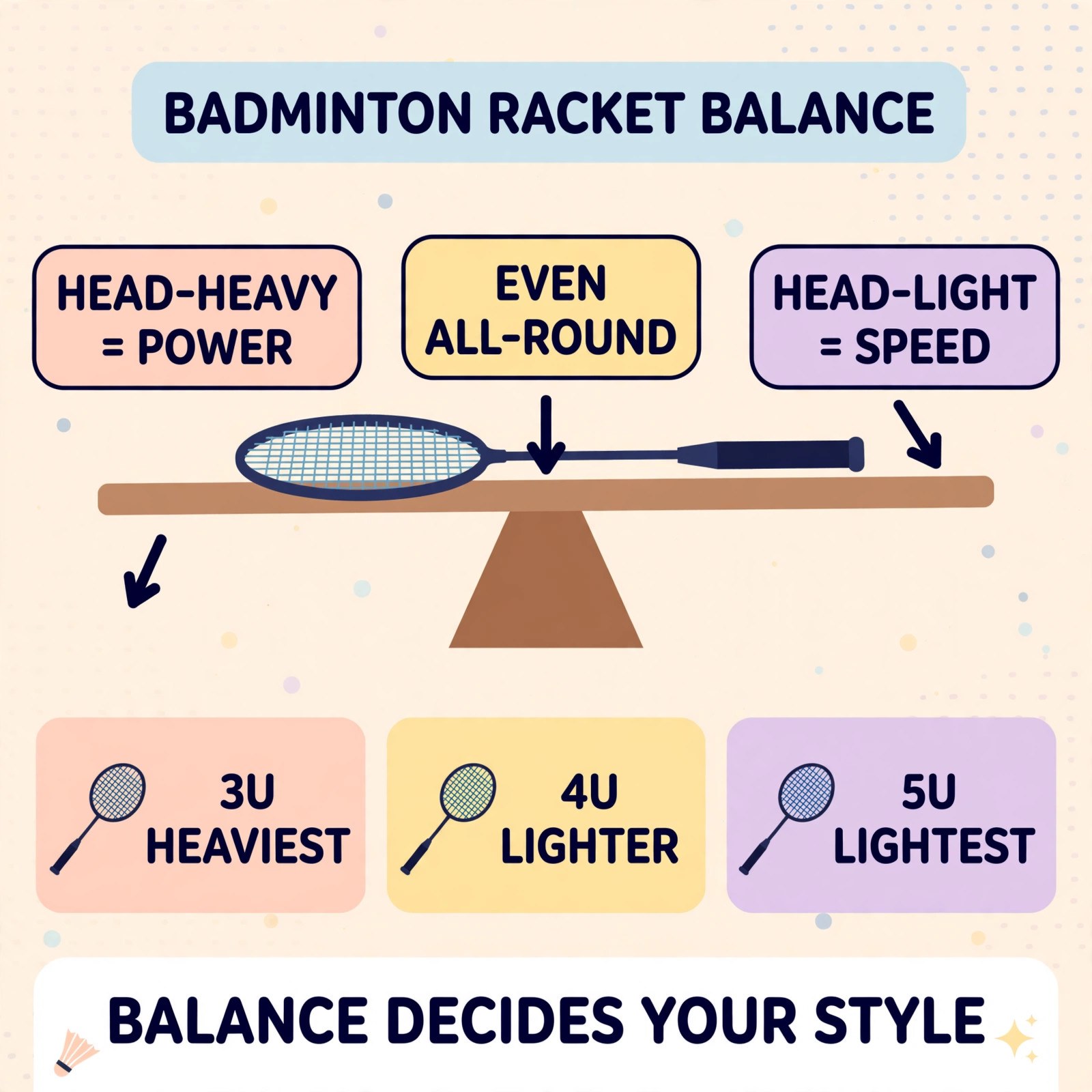
Racket weight is printed on the shaft as 3U, 4U or 5U. A 3U racket is the heaviest of the three and suits players with a strong arm who like to attack. A 4U racket is lighter and easier to swing again and again, which is why most intermediate players and doubles players prefer it. A 5U racket is the lightest, quick to move in defence, but it gives less power on full smashes. Young juniors and players with smaller builds usually start on 4U or 5U so the racket never feels like a burden during long rallies.
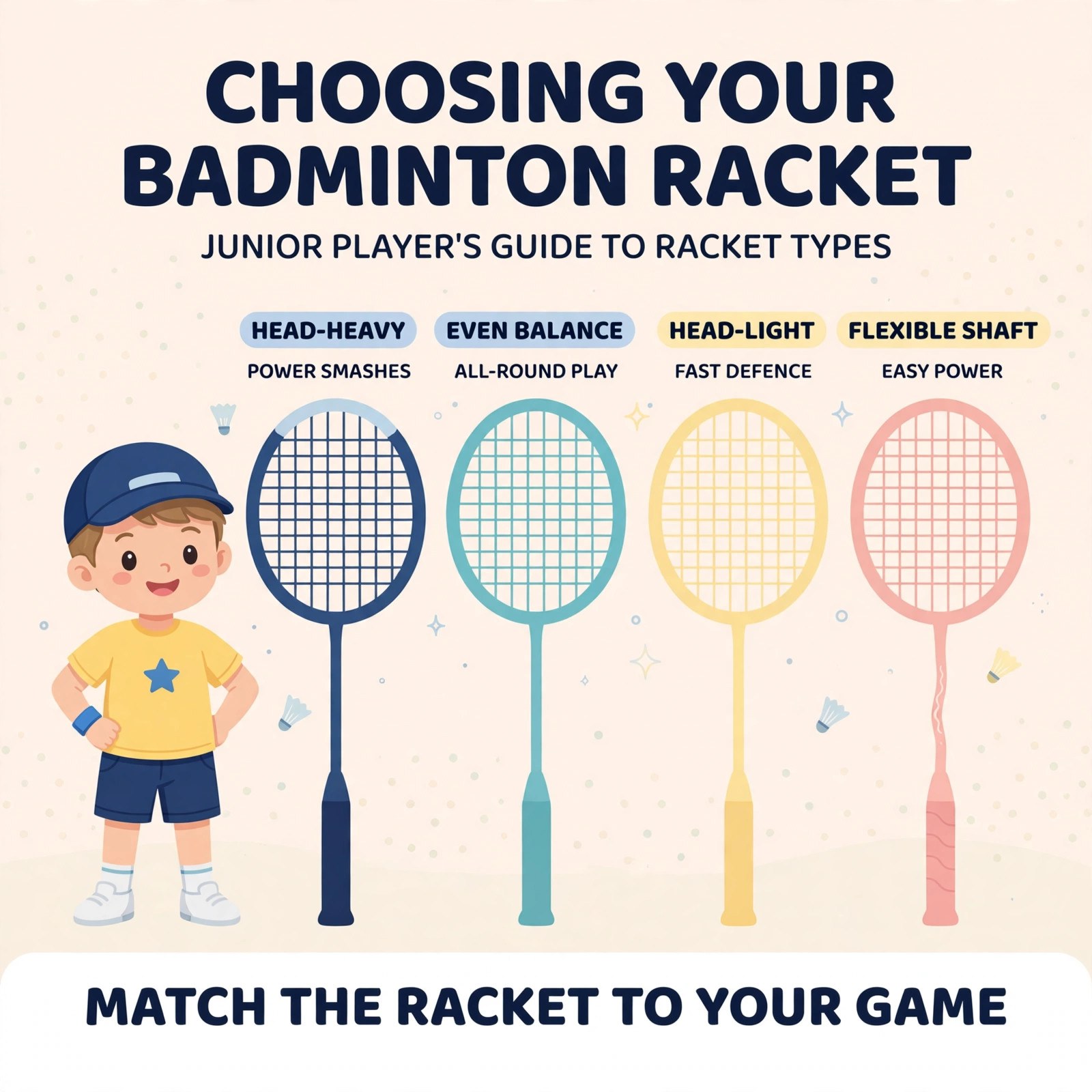
Balance point tells you where the weight sits. Hold the racket and find the spot where it balances on one finger. If that spot is closer to the head, the racket is head-heavy: smashes feel stronger, but defence and fast exchanges get slower. If the balance sits closer to the handle, the racket is head-light: defence and drives feel quick, but back-court power drops. An even-balance racket sits in the middle and suits all-round players who attack and defend in equal measure. Singles players often lean head-heavy; doubles defenders often lean head-light.
Players from Kepong, Cheras, Ampang and Danau Kota often ask us which combination is the best. There is no single answer. A head-heavy 3U racket in the hands of a small 12-year-old will slow her down, while the same racket suits a tall, strong 17-year-old attacker. Match the weight and balance to the player’s body and role on court first. Brand and colour come last.
Racket Check #3
Stiff Shaft or Flexible Shaft: Which One Suits Your Swing?
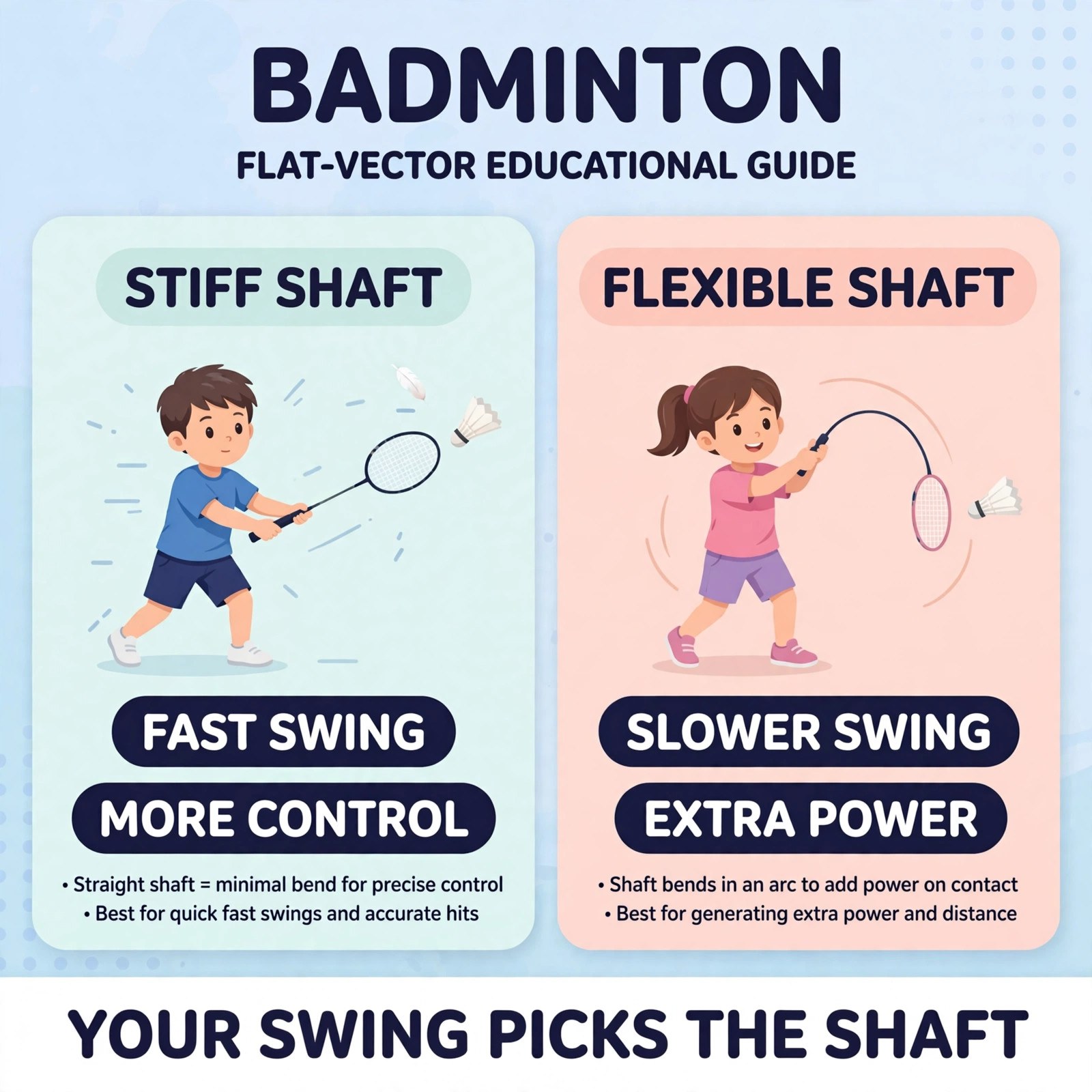
The shaft is the long middle part of the racket, and its stiffness shapes how your shots feel. A stiff shaft bends very little. It rewards players who swing fast and hit with a sharp snap, giving them control and accuracy. A flexible shaft bends more during the swing and springs back at contact, adding power for players whose swing is still developing. This is why beginners are usually told to start with a flexible or medium shaft: the racket helps them send the shuttle deep without forcing the arm.
Think of it this way. If your clears already reach the back line with ease and your problem is shots flying out, a stiffer shaft can tighten your control. If your clears keep landing around mid-court even when you swing hard, a more flexible shaft, or better footwork and timing, will help more than any stiff pro model. At our badminton training in Kuala Lumpur, coaches check a student’s swing speed before suggesting a shaft type, never the other way round.
Shaft labels differ between brands, so treat words like stiff and medium as a guide, not a promise. Two rackets marked medium can feel quite different in the hand. Whenever you can, swing the actual racket and hit a few shuttles before deciding. A short test tells you whether the shaft works with your natural swing or fights against it.
Racket Check #4
Grip Size and String Tension: Do the Small Details Matter?
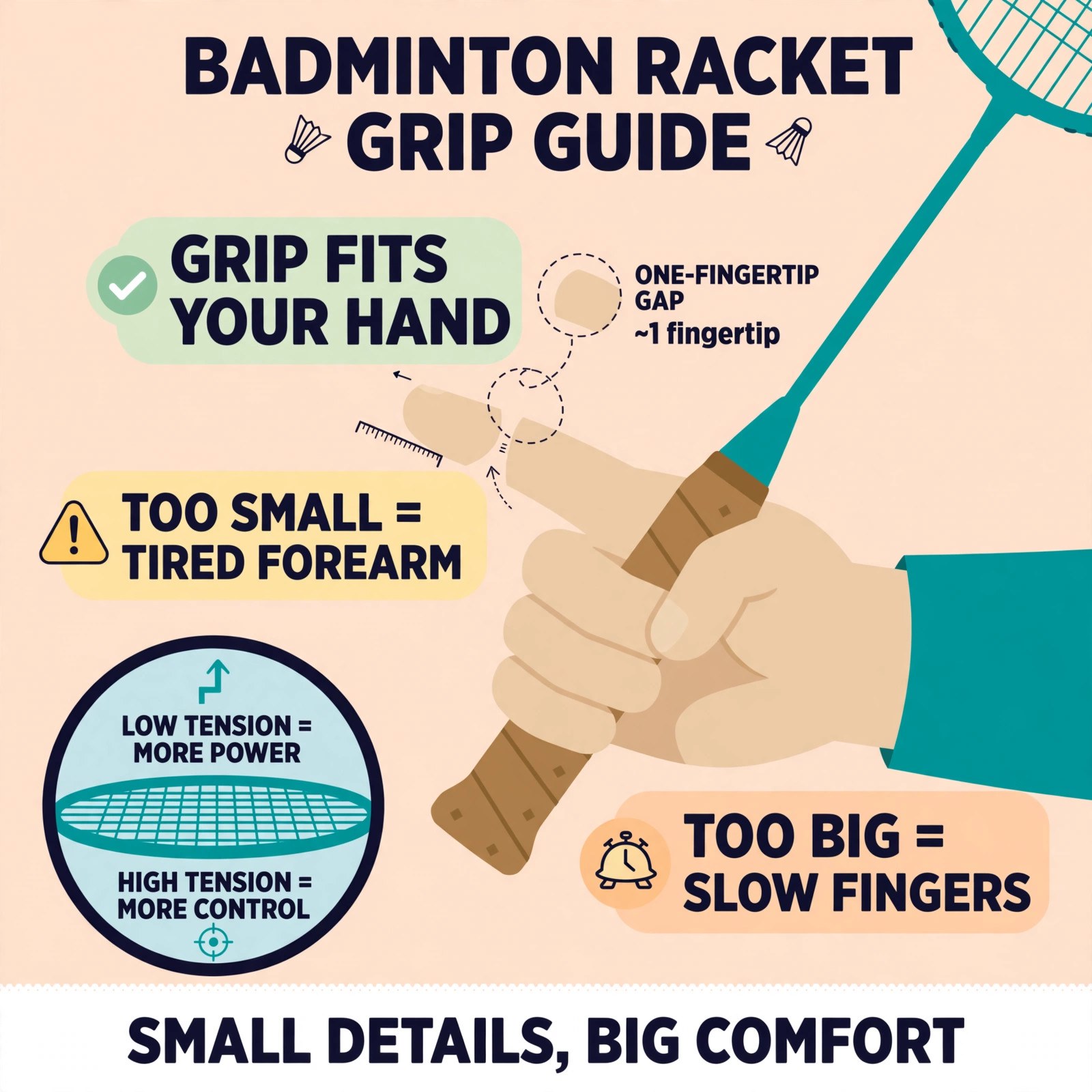
Grip size sounds minor until your forearm starts aching. A grip that is too small makes you squeeze harder on every shot, which tires the forearm and can leave the racket twisting on off-centre hits. A grip that is too big slows down finger work, and net shots and drives suffer. A simple check: hold the racket with your normal grip and look at your fingers. There should be a small gap, about one fingertip wide, between your fingertips and the base of your thumb.
String tension is the other quiet detail. Lower tension gives a bigger trampoline effect, so beginners get more power and a softer feel on the arm. Higher tension gives better control and a crisper sound, but it punishes mishits and needs a faster swing to work well. Most beginners play happily at the lower end of the range their racket allows. As technique improves, many players raise the tension step by step. Our stringing team at ST Badminton Academy Malaysia adjusts tension for students as their game grows, instead of copying whatever tension the pros use.
Grip and strings are also the cheapest parts of your setup to change. A fresh overgrip costs very little and can make an old racket feel new again. A restring at the right tension can wake up a racket you were ready to replace. Before you blame the frame, check these two first.
The Shortlist
Which Rackets Suit Beginners, Intermediates and Advanced Players?
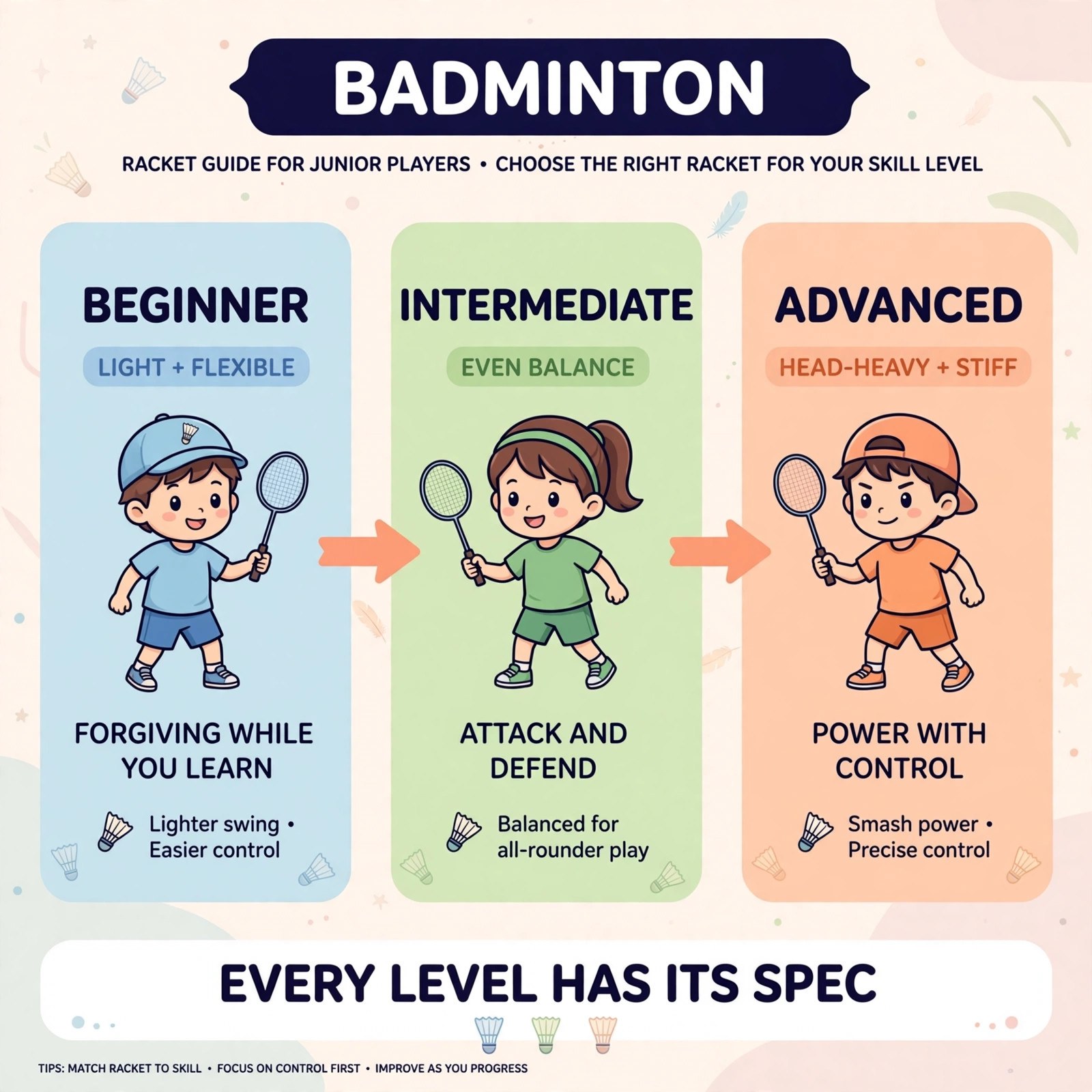
For beginners, look for a light racket (4U or 5U) with a flexible or medium shaft and an even balance. This mix is forgiving while strokes are still forming. Entry models in the Yonex beginner range follow exactly this recipe, which is why coaches keep recommending them to new players. Skip the heavy steel rackets sold in some supermarkets: they are cheap, but the weight and poor strings make learning harder from day one.
Intermediate players who train two or three times a week usually do well with an even-balance or slightly head-heavy 4U racket and a medium-stiff shaft. The Yonex Astrox 77 is a long-time favourite in this group because it attacks well without punishing the arm. The Victor Thruster Ryuga II is another balanced option that many of our KL students like for its easy handling in fast rallies.
Advanced players with a fast swing can handle head-heavy rackets with stiff shafts. The Yonex Astrox 100ZZ is built for this group: strong smashes, sharp control, little help from the shaft. The Li-Ning Aeronaut series is also popular with attacking players who want power with a stable frame. If you are not sure which group you are in, bring your current racket to a session at our Setapak academy and let a coach watch your swing before you buy.
Myth vs Reality
Myths About Choosing a Badminton Racket
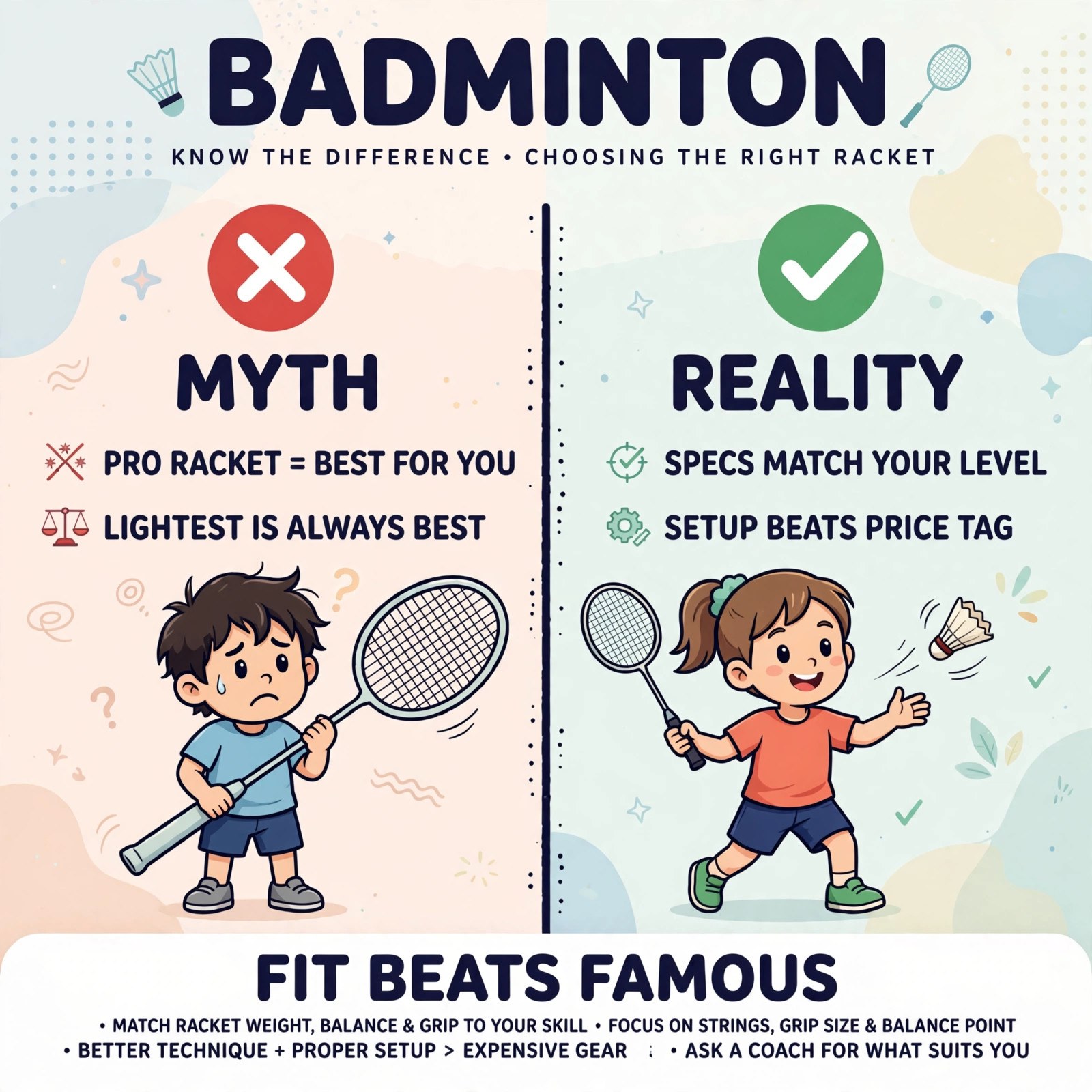
Myth: “The racket my favourite pro uses must be the best racket for me.” Reality: Pros use stiff, demanding rackets matched to years of full-time training. In a student’s hand, the same model often produces weaker, later shots. The best badminton racket is the one matched to your swing, not to a poster on the wall.
Myth: “The lightest racket is always the easiest to play with.” Reality: Very light rackets can feel unstable on smashes and clears, and some players end up swinging harder to get power, which strains the shoulder. Myth: “A new racket will fix my weak backhand.”
Reality: Weak shots come from grip, footwork and timing far more often than from the frame. A racket that suits your level will support your training, but it cannot replace it. Students in our badminton training KL program learn to judge a racket by how their shots land over ten rallies, not by how the racket looks in the shop.
Why Choose Us
Honest Racket Advice From Coaches Who String Daily
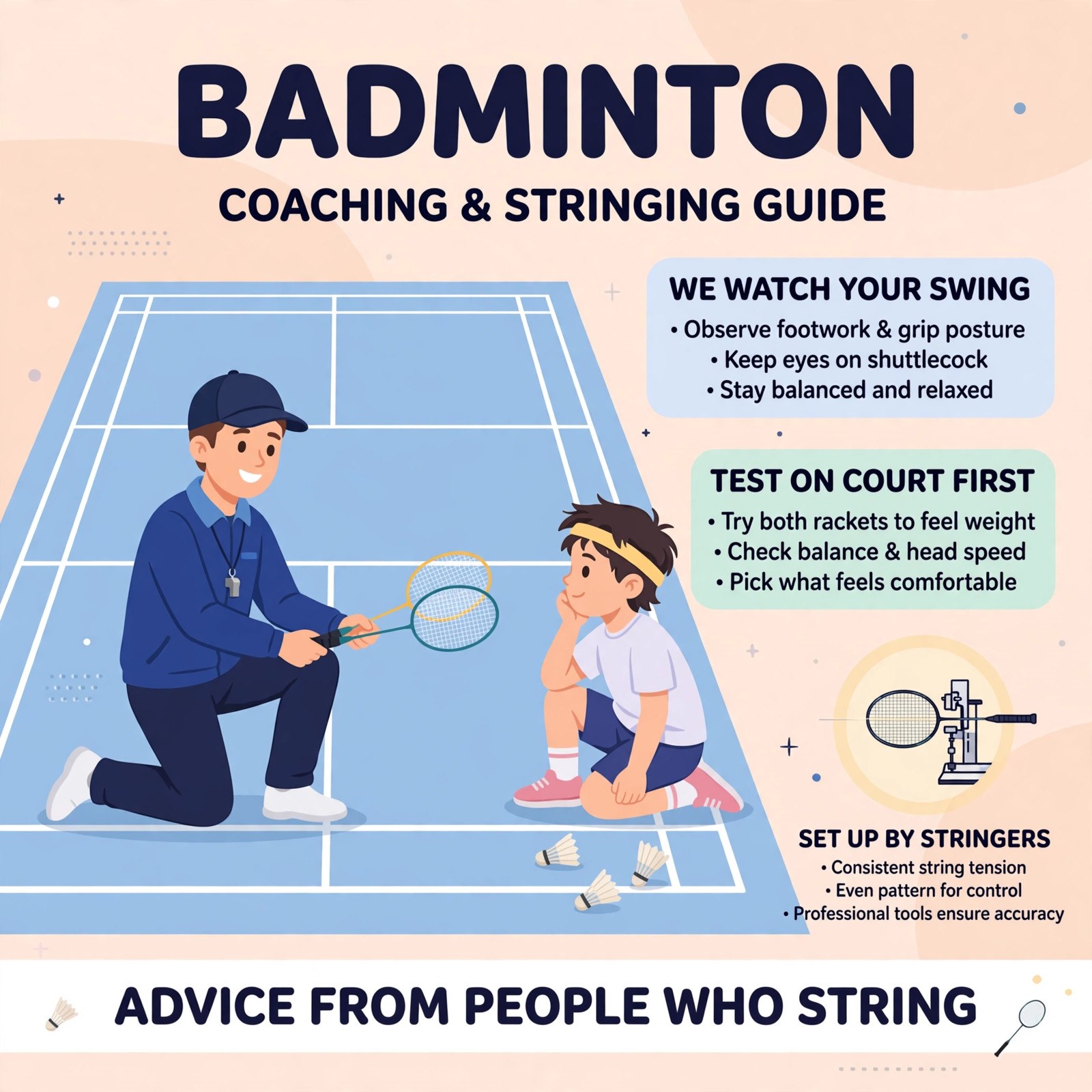
We sell nothing in this guide. ST Badminton Academy Malaysia is a coaching academy in Setapak, and our head coach Mr Eric Chuar has over 15 years of coaching experience in Singapore and Malaysia. Our team also runs badminton stringing daily, so we see exactly how rackets, strings and grips behave after months of real play, which frames crack at the same spot, which strings hold tension, which grips wear out first. That daily repair and restring work is what makes our racket advice practical instead of copied from a brochure.
Our small group policy (max 4 students) means coaches watch your swing closely during training in Kuala Lumpur. When a student is ready for a new racket, we can say honestly whether the current one is holding them back or whether the money is better spent on more training first. Sometimes the honest answer is: your racket is fine, your footwork is the problem.
We would rather help you keep a good racket in top shape, fresh strings, the right tension, a grip that fits, than push you towards the most expensive frame in the shop. Bring your racket along to your first session and we will check its setup as part of the assessment.
FAQs: Choosing the Best Badminton Racket in Malaysia (KL)
Here are answers to common questions from players and parents in Kuala Lumpur about choosing the best badminton racket.
What is the best badminton racket for a beginner?
Start with a light racket, 4U or 5U, with a flexible or medium shaft and an even balance. This setup is forgiving while your strokes are still forming, and it protects your arm. Entry models from known badminton brands follow this recipe and serve most beginners well for their first one or two years of play.
What is the best badminton racket for an advanced player in Malaysia?
Advanced players with a fast, strong swing usually choose a head-heavy racket with a stiff shaft, such as the Yonex Astrox 100ZZ, for power and control at the back court. These rackets demand good technique. If your swing is still developing, the same model will feel slow and unforgiving, so be honest about your current level first.
What is the difference between a stiff shaft and a flexible shaft?
A stiff shaft bends very little, so it gives control and accuracy to players with a fast swing and sharp hitting action. A flexible shaft bends more and springs back at contact, adding power for slower swings. Beginners and younger juniors usually play better with flexible or medium shafts while their technique is still growing.
How do I choose the right grip size for my hand?
Hold the racket with your normal playing grip and check the gap between your fingertips and the base of your thumb. A gap of about one fingertip means the grip size suits your hand. Too small and you will squeeze and tire your forearm; too big and your finger work at the net gets slow and clumsy.
What do 3U, 4U and 5U mean on a badminton racket?
The U numbers describe racket weight. A 3U racket is the heaviest of the three and suits strong attacking players. A 4U is lighter and is the most common choice for intermediate players and doubles. A 5U is the lightest, quick in defence but with less smash power. Most juniors start on 4U or 5U.
Is a head-heavy or head-light racket better for doubles?
For doubles, many players prefer head-light or even-balance rackets because rallies are fast and most exchanges happen at the front and mid court. Quick defence and drives matter more than one big smash. If you are the rear-court attacker in your pair, a slightly head-heavy racket can still work, as long as your defence stays sharp.
Can the wrong racket cause arm, wrist or shoulder pain in players?
Yes, it can. A racket that is too heavy, too stiff or fitted with a grip that is too small forces your arm to work harder on every shot. Over weeks of training, that strain can show up as wrist, forearm, elbow or shoulder pain. If pain keeps returning, get your setup checked by a coach before blaming your body.
How much should I spend on my first badminton racket?
Spend on the best genuine racket from a known badminton brand that you can comfortably afford, and skip the very cheapest steel rackets, which are heavy and hard to learn with. For most students, one good entry-level or intermediate racket, plus fresh strings and a spare grip, is a wiser buy than one top-end pro model.
Where can I test and restring a racket properly in Kuala Lumpur?
At ST Badminton Academy Malaysia in Setapak, our coaches and stringing team check rackets for students every week. You can test different rackets during training, get an honest read on weight, balance and shaft for your swing, and have your own racket restrung at a tension that suits your level, all in one place.
Badminton Rackets and Setup in Action


What It Takes to Pick the Right Racket
Choosing a badminton racket well takes more than picking a famous name. It takes honest checks on weight, balance, shaft and grip, matched to the player who will actually hold it. Our standards below are the same ones we use when students ask for racket advice in Setapak.
| Factor | Guessing in the Shop | Choosing by Specs SMART |
|---|---|---|
| Frequency | 1 or 2 times a week. Mostly for fun and sweat. | Weight, balance, shaft and grip all checked against your level before you pay. |
| Drills Focus | Basic static feeding. Minimal footwork pressure. | Tested in real rallies, clears, drives and defence, not just a few swings in the air. |
| Physical Conditioning | Rarely included. Just playing games on court. | Core, agility, and speed training included in every session to prevent injury and build stamina. |
| Tactical Awareness | "Just hit it over." No real game plan. | Video analysis, point construction, and learning to read the opponent's game. |
| Coach Ratio | Large groups (8-10 kids). Coach barely watches you. | Max 4 students. Mr Eric Chuar personally corrects every stroke and movement detail. |
| Goal Setting | Fun and exercise. | Clear targets: a racket that fits your hand, your swing speed and your role on court. |
| Long Term Result | Good recreational player. | A racket you can play with for seasons, restrung and regripped as your game grows. |
Badminton Racket Advice in Kuala Lumpur
This guide helps you choose the best badminton racket for your level, your swing and your role on court. ST Badminton Academy KL provides the coaching, racket checks and stringing support to get your setup right. If you train in Setapak, Wangsa Maju, Gombak or Cheras and want a coach to look at your current racket before you buy a new one, contact us today.




