The Best Badminton Compression Tops For Comfort And Support (Compression Top Guide)
Search for compression tops and you will meet big promises: better blood flow, faster recovery, more power, less fatigue. This guide takes a slower, more honest road. A compression top is a snug layer of stretch fabric worn close to the skin. It can keep you warm in a cold hall, it can feel held and smooth while you move, and it can sit neatly under a loose shirt. It cannot improve your circulation, speed your recovery, or add power to your smash. Those claims belong to marketing, not to cloth. Read on for what a top is, what it can and cannot do, how fit should feel, which fabrics and features matter, and how to wear, wash and replace one well.
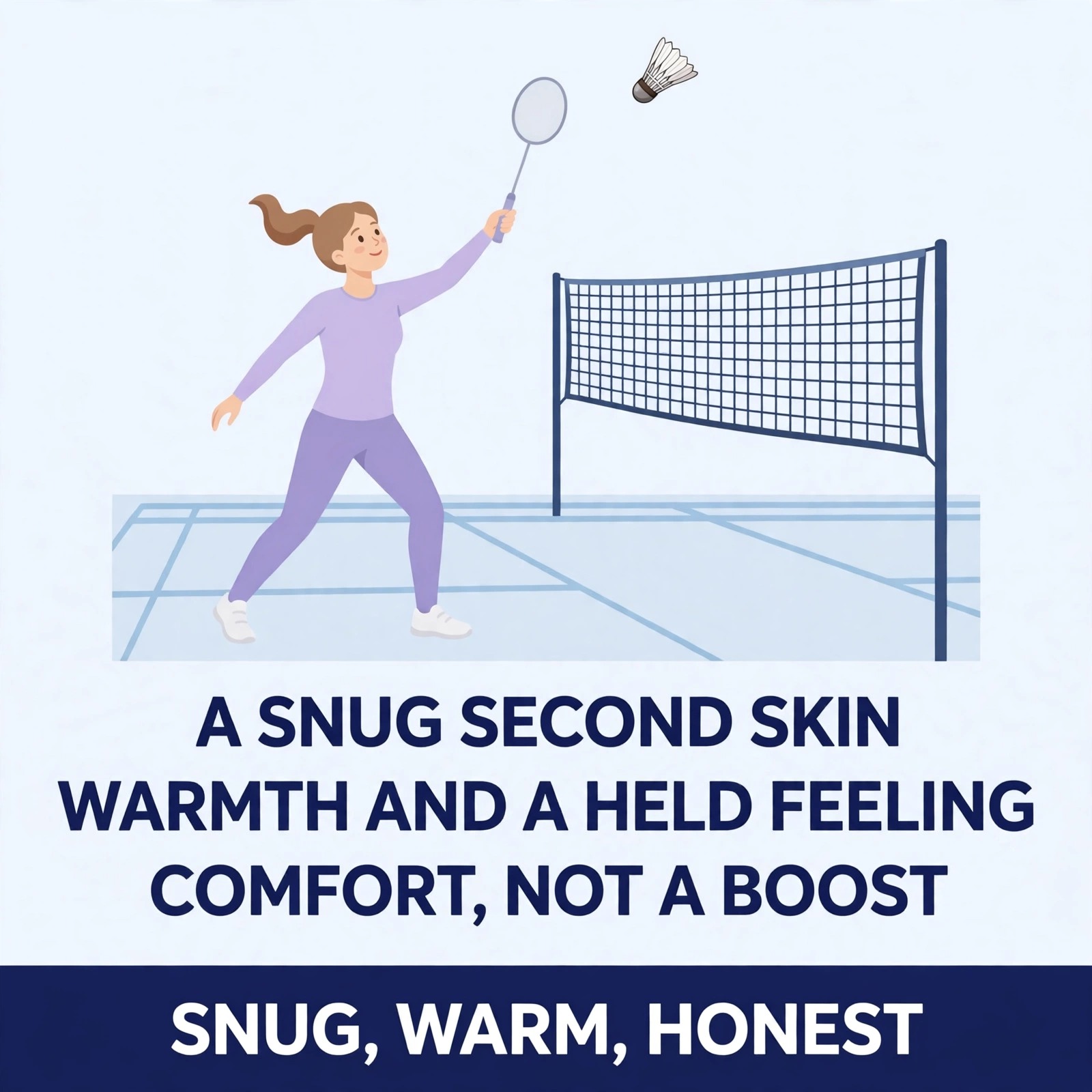
Top Check #1
What a Compression Top Is: A Snug Second Layer
A compression top is a shirt sewn from stretch fabric, usually a blend of polyester or nylon with elastane, cut to sit close against the body from neck to waist. It comes in long sleeve and short sleeve versions. Long sleeves suit cold halls and players who like their arms covered; short sleeves suit hotter sessions. You can wear it on its own, like a close fitting training shirt, or under a loose team shirt as a base layer. There is no padding in it, no armour, no built in support frame. It is cloth, cut snug and made to stretch. Everything honest about it starts from that simple fact.
Set it beside a regular training tee and the difference is plain. A loose tee is cut away from the body: it flaps when you lunge, rides up when you reach, and holds sweat against the skin until it feels heavy. A compression top stays where you put it. The hem stays down on a smash reach, the sleeves stay smooth on a drive, and the fabric dries faster because it sits thin against the skin. Players describe the feeling as a second skin, and that is fair. What it is not is a brace or a medical support. It holds cloth against you. It does not hold your body together.
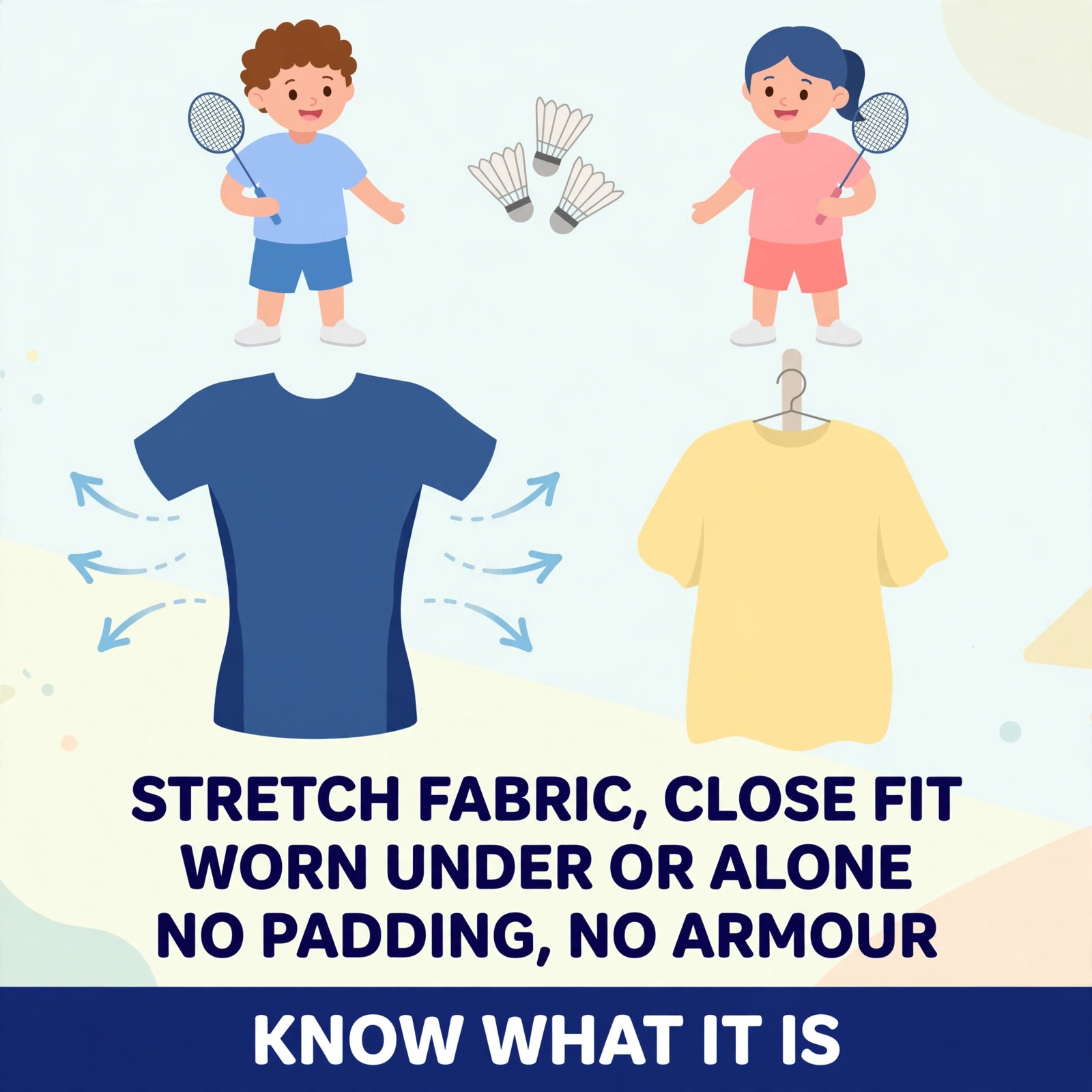
Top Check #2
What It Can and Cannot Do
What can a top honestly do? It can keep warmth in when a hall runs cold, which matters in strong air conditioning during warm ups and between games. It can give a held feeling that some players simply enjoy: the torso feels gathered, and movement feels tidy. It can sit smooth under a loose shirt so nothing bunches at the waist. It can also serve as a reminder layer. Many players use the ritual of pulling it on to switch into training mode. These are modest, real effects about warmth and feeling. They are worth having if you like them, as long as nobody mistakes them for changes inside the body.
What a top cannot do matters more, so let us be plain. It does not improve blood circulation in any way a player could bank on. It does not speed up recovery between sessions. It does not reduce fatigue by squeezing your muscles, and it does not add power, speed or accuracy to a single shot. Ask where the evidence for those claims sits and the honest answer is that it is thin, mixed and mostly about feeling. Feeling snug is real. Physiology is a different promise, and a shirt cannot keep it. Any product page that sells you a new body in a top is selling hope. Buy the warmth and the held feeling if you want them. Leave the miracles on the shelf.
The quiet risk of a compression top is belief. A player who trusts the marketing may size down hard, wear the top all day, or expect it to fix tiredness that is really about sleep, food and training load. None of that helps, and some of it hurts: a top worn too tight makes breathing work, and breathing is the one thing a badminton player should never have to fight. Treat the top as a comfort item with a small, honest job. If your legs feel heavy in the third game, the answer is conditioning, rest and honest scheduling, not a tighter shirt. Cloth can keep you warm and tidy. The rest of the work stays with you.
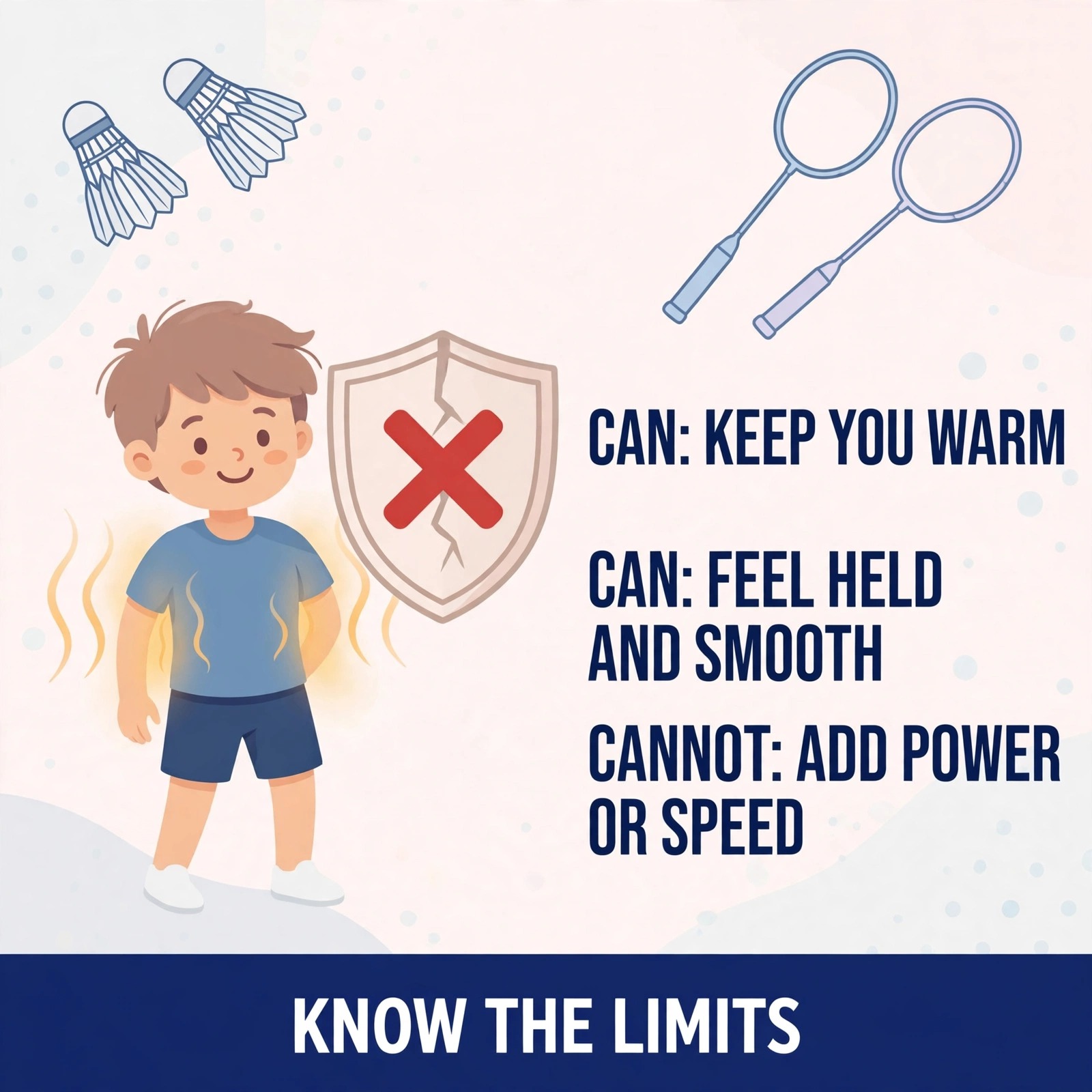
Top Check #3
Fit: Snug, Never a Struggle
Fit is the whole decision, and the rule is short: snug, never a struggle. The top should sit close everywhere, with the fabric stretched smooth rather than dragged tight. Then run three checks before you trust it. Breathe in deep: your chest should rise fully without the fabric arguing back. Reach both arms high, as if for a smash: the hem should stay near your waist, not climb to your ribs. Twist gently to each side: nothing should bite under the arms. If breathing feels like work, if deep marks ring your arms after ten minutes, or if you keep tugging the hem down, the top is too small. Size up. A size larger that lets you breathe beats a size smaller that looks sharper.
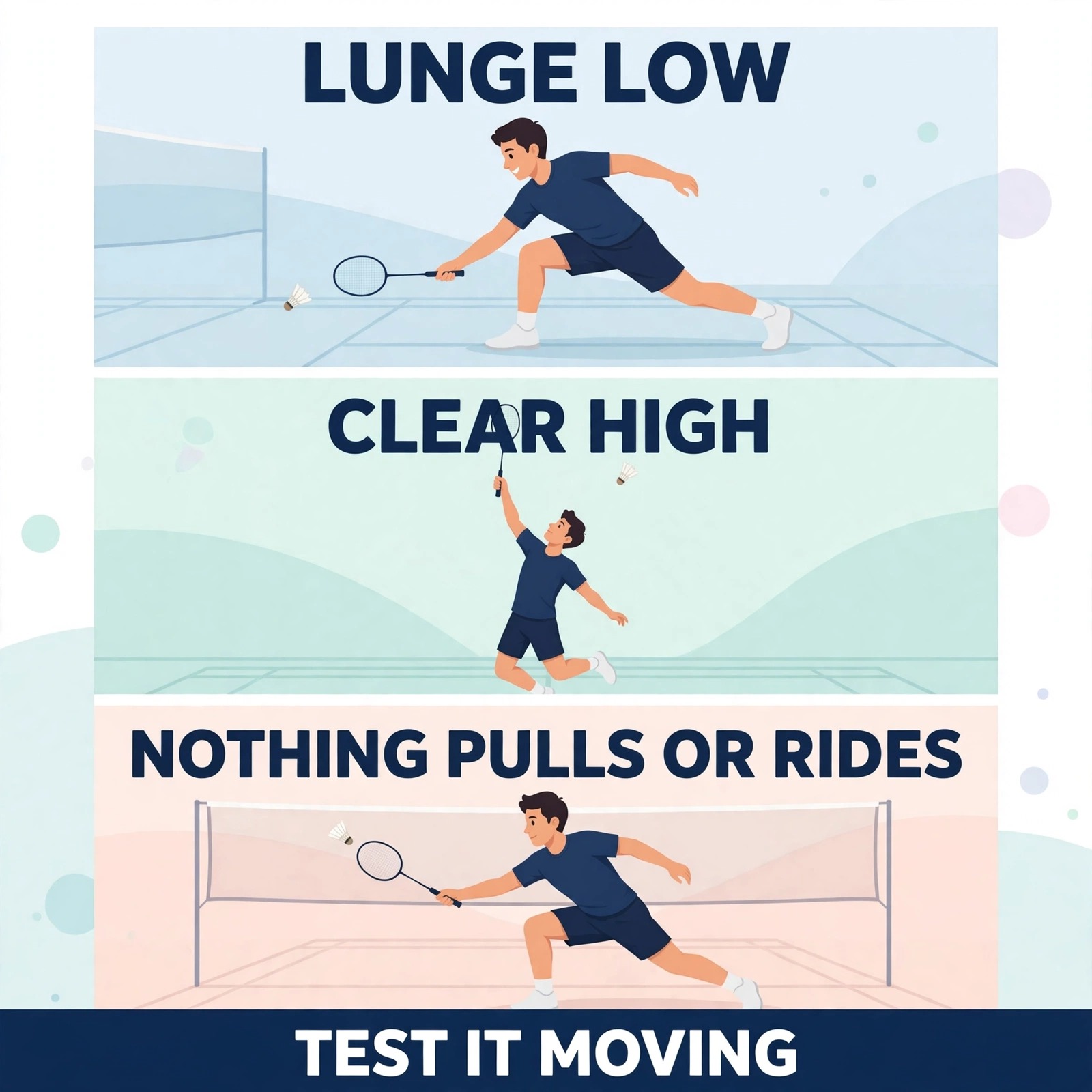
Keep checking while you move, because a mirror alone can flatter a bad fit. Do the movement test at home or in the shop: lunge low to each side, play a slow clear motion, bend for a net shot. The shoulder seams should stay near your shoulders, the sleeves should not cut into the arm when it bends, and the back should stay smooth rather than pulling across the blades. One more honest test: sit down for two minutes between games. A good top disappears from your attention when you rest. A bad one keeps reminding you it is there, digging, riding or squeezing. Comfort you forget about is the whole point of the garment.
Sizing deserves one plain warning: sizes are not standard. One maker’s medium is another maker’s large, and the chart on the packet is a guide, not a promise. Chest fit matters most, so measure your chest and start there. If you fall between sizes, choose the one you can breathe deeply in, every time. Junior players grow out of tops quickly, so recheck the three fit checks each term rather than squeezing into last season’s top. And ignore the idea that tighter means more compression means better. Past the point of snug, extra tightness buys nothing except discomfort. The best fitting top is the one you stop noticing by the second rally.
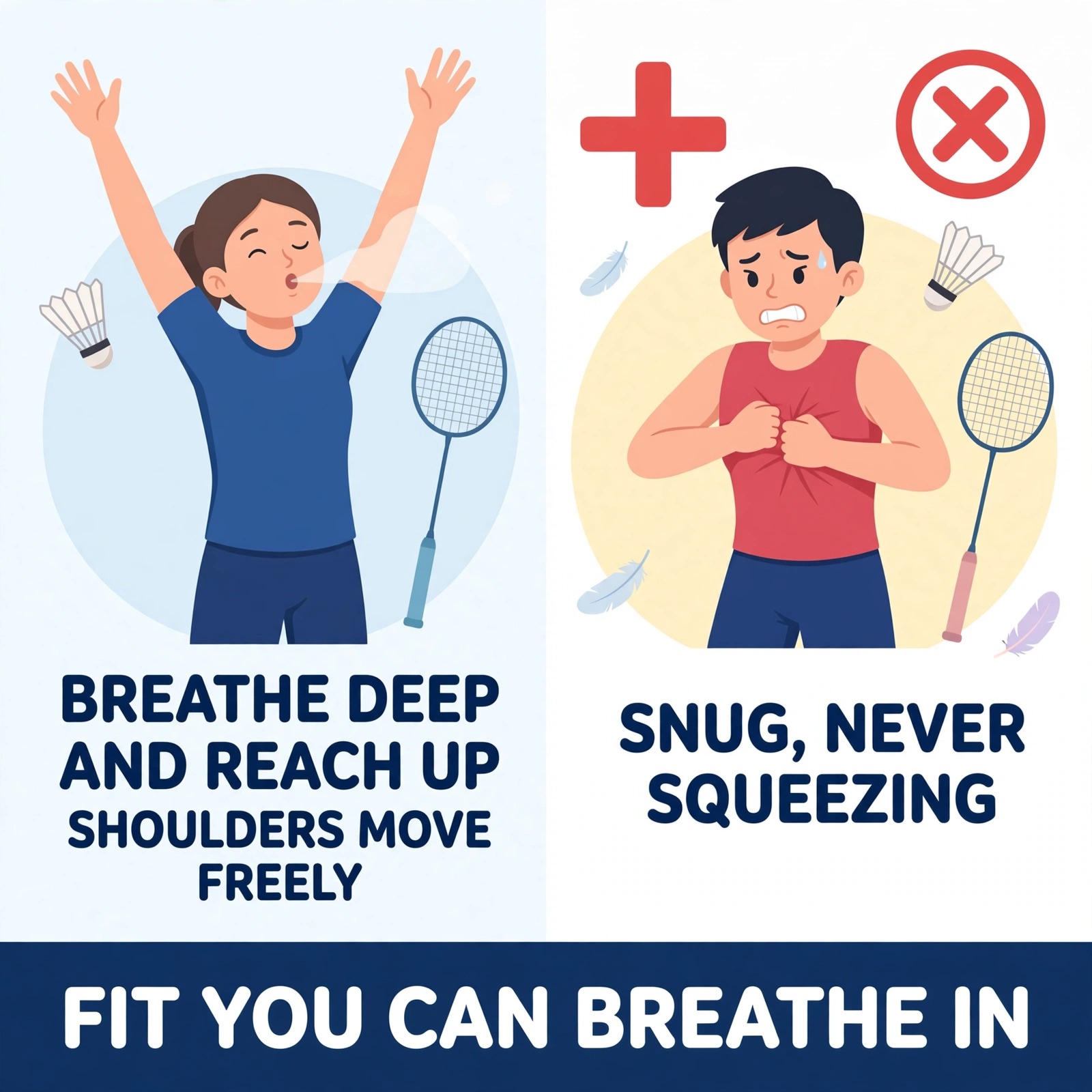
Top Check #4
Fabrics and Features
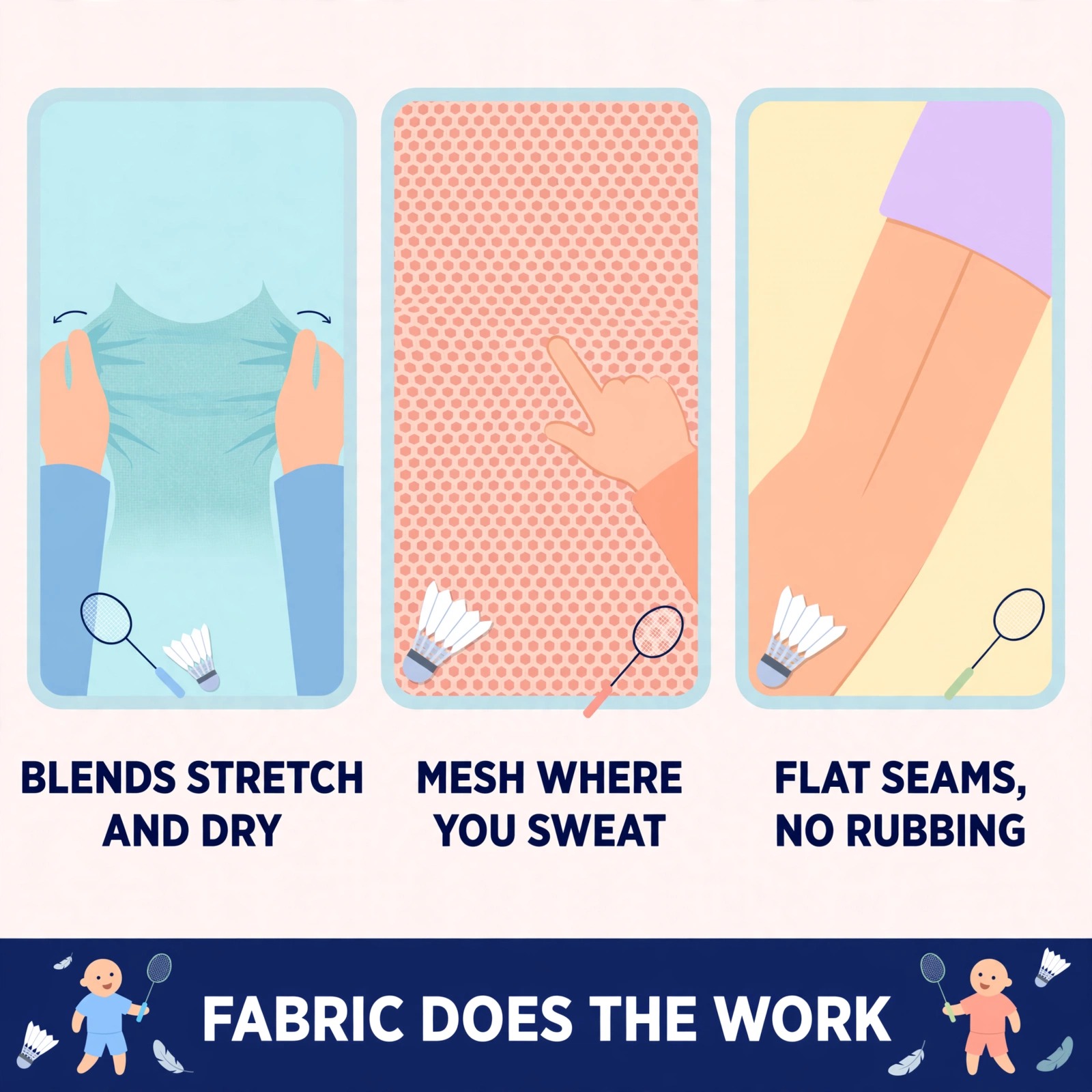
Fabric decides how the top behaves across a long session. The common blends pair a quick drying base, polyester or nylon, with elastane for stretch. Read the label in plain words: the base fibre does the drying, the elastane does the clinging. A good blend stretches wide when you pull it and springs back when you let go. If the fabric stays baggy after a stretch, the top will sag early in its life. Weight matters too. Very thin tops feel cool but wear fast; heavier ones last longer but can feel hot in Malaysian halls. Most players settle in the middle: light enough to forget, strong enough to survive a season of washing.
Two features earn their keep. Mesh panels, placed where you sweat most, across the back and under the arms, let air move so the top dries faster and feels less clammy. Flat seams, sewn so the join lies smooth against the skin, stop the rubbing that raised seams cause at the shoulder and under the arm during long rallies. The old sales talk also mentions sun protection ratings; badminton is played indoors, so treat that as decoration rather than a reason to pay more. Judge the fabric by stretch, drying and seams. Those three decide nearly everything you will actually feel on court.
The rest of the feature list matters far less. Thumb holes are taste. A small zip at the neck helps some players pull a snug top on and off, and bothers others. Prints and bright panels change nothing except how the top looks in the mirror. A simple, well cut top in a plain colour outlasts fashion and pairs with every pair of shorts you own. When two tops fit you equally well, choose the simpler one with the smoother seams. Players remember how a top felt in the third game, not how it looked in the shop. Features you cannot feel during play are not features. They are packaging.
Top Check #5
When to Wear One, Washing and Replacing
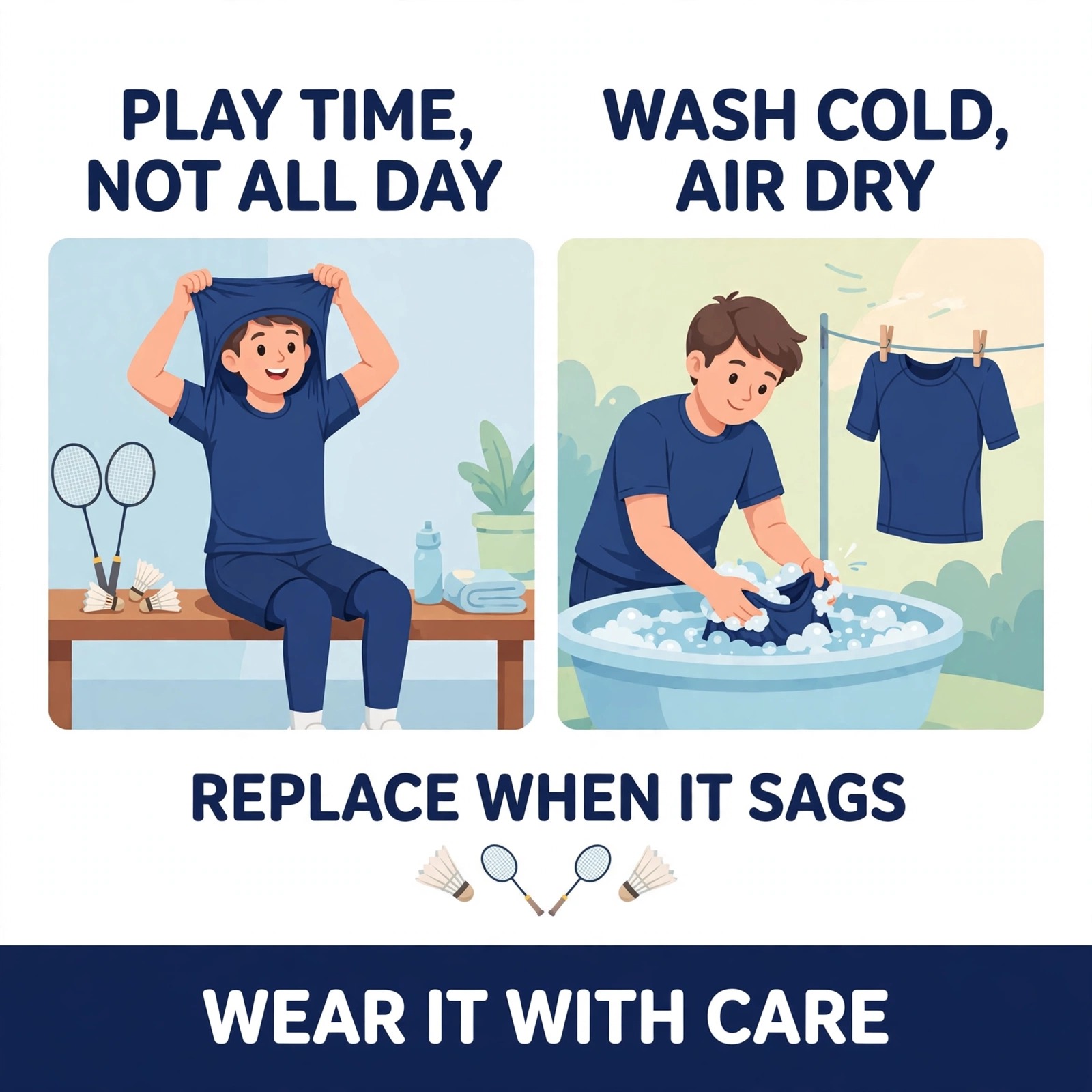
Wear the top where it helps: cold halls, early warm ups, and sessions where you enjoy the held feeling under a loose shirt. Long sleeves earn their place when the air conditioning is strong and muscles cool quickly between games. In a hot, humid hall, a short sleeve top or a plain light shirt may feel better, and choosing the plain shirt is not a failure. The top is a tool, not a uniform. Wear it for play and warm ups, then change out of it after the session. Living in compression cloth all day hides how your body actually feels and keeps damp fabric against the skin for hours. Play time, not all day, is the honest rule.
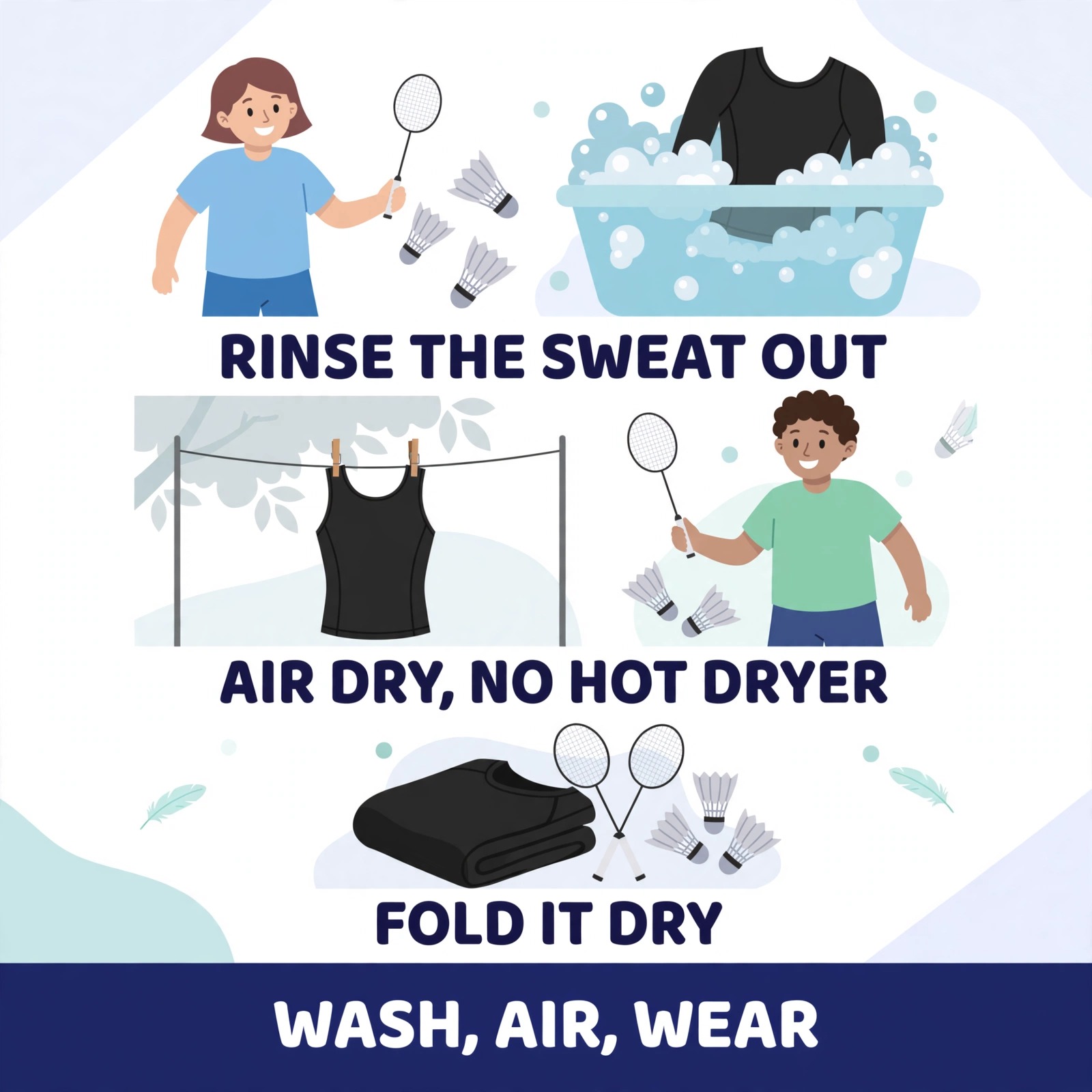
Washing is gentle and simple. Rinse or wash the top after sweaty sessions, in cool water with mild soap, so salt and sweat do not sit in the fibres. Skip the hot dryer: heat is what tires elastic fastest, and a tired top sags. Air dry it open, on a line or over a rail, until it is dry right through, then fold it away. A top washed kindly keeps its stretch and its shape far longer than one boiled and baked weekly. Two tops in rotation help as well: one in play, one washed and resting. Rotation is how a small wardrobe of gear survives a heavy training week without anything staying damp in the bag.
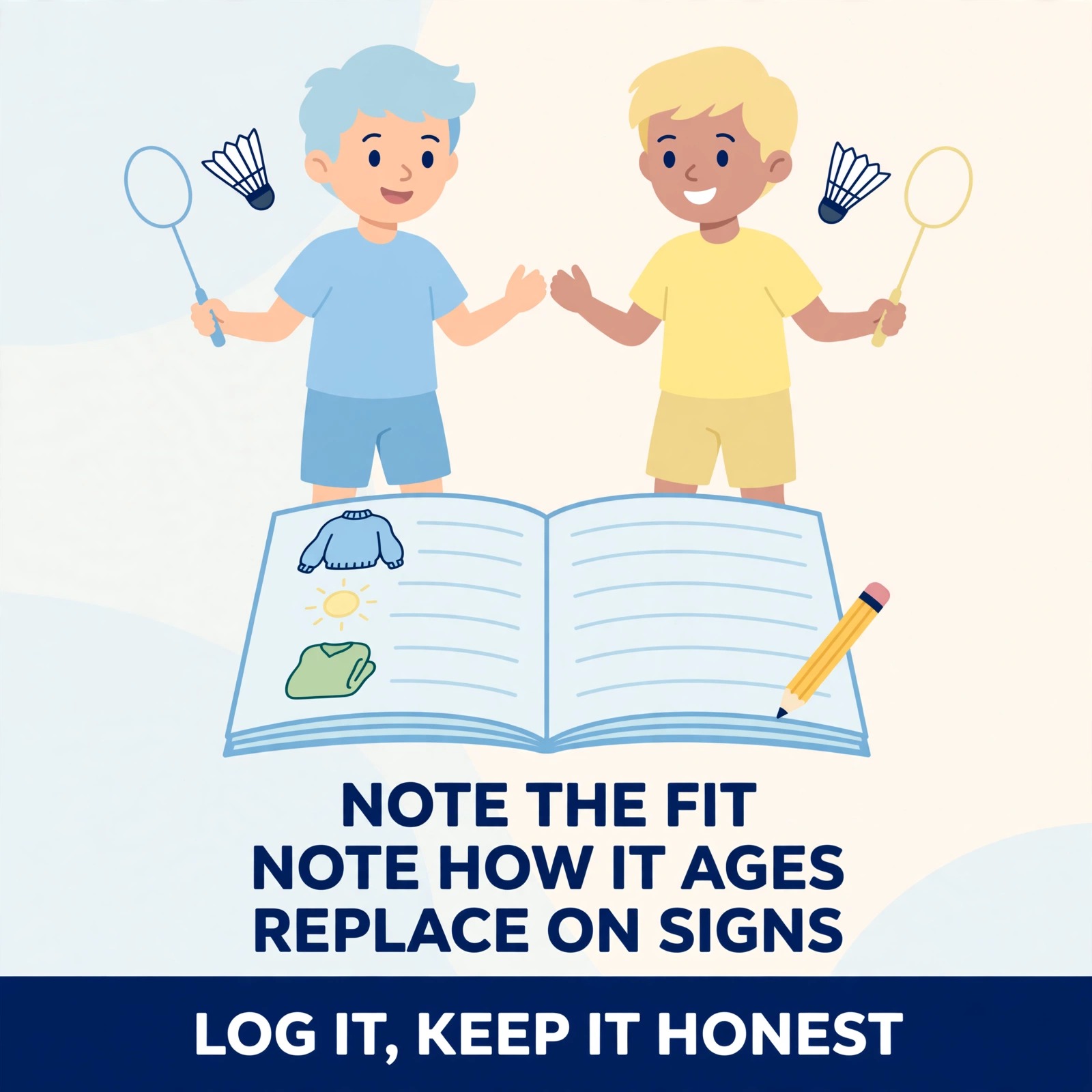
Replace the top when its behaviour changes. The signs are easy to read: it sags at the waist, the sleeves slip down during play, you keep pulling the hem back into place, or it needs constant adjusting between rallies. At that point the stretch has given up, and the top is just a tight shirt with a memory of its job. A small log helps you judge honestly: note the fit when new, how it feels after a month of sessions, and when the adjusting starts. Notes turn a vague feeling into a clear decision, and they make buying the next top simple. If the first one served you well, buy the same again.
Myth vs Reality
Myths About Compression Tops
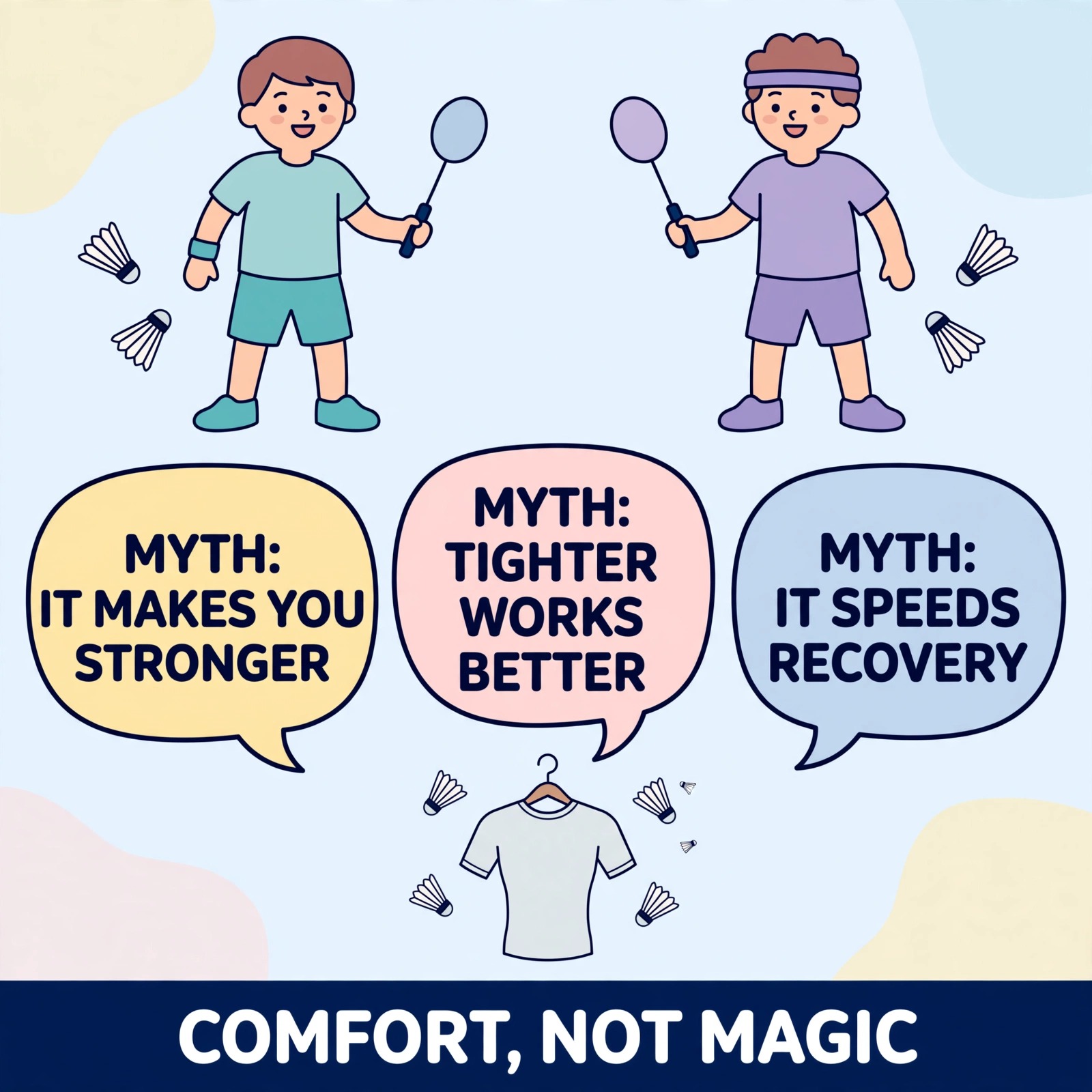
Myth one: a compression top makes you stronger. It does not. Strength is built in training, over weeks, with progressive work your muscles must answer. A snug shirt changes what your torso feels like while you play; it adds no force to any shot and no capacity to any muscle. The danger of the myth is subtle: a player who believes the top is doing strength work may skip the conditioning that actually does it. Enjoy the held feeling if you like it. Then go and earn the strength the slow way, because there is no other way and there never has been.
Myth two: tighter works better. A top works by fit, not by force. Squeezing harder does not press anything useful; it restricts the chest, makes breathing shallow, and leaves the player fighting their own shirt in the third game. If you need a tighter top every month to feel the same hold, the fabric has stretched, or the fit was wrong from the start. The right tightness is boring to describe: snug, smooth, forgotten during rallies, with breathing as free as it is in a loose tee. Anything you keep noticing for the wrong reasons is wrong. Loosen it, size up, and let your lungs do their job.
Myth three: a compression top speeds recovery. Recovery is sleep, food, fluid, rest days and sensible training load. A shirt worn during play, or even after it, does not move that list in any way you could measure. The myth survives because the held feeling is pleasant, and pleasant gets confused with healing. It is the same confusion that sells many products. Keep the two ideas apart. Wear the top for warmth and comfort while you play. Do recovery the unglamorous way on the days between sessions. Your body will thank you for the honesty, and your wallet will thank you for not buying the same promise twice.
Why Choose Us
Why Players Choose ST Badminton Academy
At ST Badminton Academy, gear talk stays honest. When a student asks about a compression top, the coach asks what they want it for. Warmth in a cold hall and a held feeling they enjoy: fair reasons, and the fit checks in this guide are the ones we share. Circulation, recovery and power: we say plainly that a shirt cannot do those things, because students deserve the truth before they spend. Coaches are not salespeople and there is no house top pushed at the counter. A student who plays happily in a plain shirt is dressed exactly right, and nobody here will tell them otherwise.
Small groups make the fit conversation practical. With a maximum of four students, a coach can see when a top is fighting its owner: the hem tugged down after every rally, the shallow breathing on a hard drill, the sleeve adjusted between points. The coach can pause, suggest the breathe and reach checks, and let the student decide. Students in Setapak, across KL and at our Singapore classes get the same handling, because the advice does not depend on the venue. Honest gear, checked while it is worn, by someone watching closely. That is a small thing, and it is the thing big halls rarely offer.
We also encourage the notebook habit for gear, not just for drills. Note the fit of a new top, how warm it feels in your usual hall, how it ages across a month. A minute of writing after class saves a season of vague shopping. Students who track their own kit make calmer decisions: they know when a top started sagging, they know which fabric dried fastest, and they buy the same again with confidence instead of starting from zero at the shop. A compression top is a small purchase. The system of noticing and noting around it is what turns small purchases into good ones.
FAQs: Badminton Compression Tops, Fit and Honest Comfort in Malaysia (KL)
Compression top questions usually come down to fit and honesty, so the answers below cover first steps when a top feels wrong, when one makes sense, how to judge it over time, what it cannot do, checks before buying, and how our coaches handle gear talk during badminton classes in Kuala Lumpur and Singapore.
What should a player do first when a compression top feels wrong in Setapak or Gombak?
Stop and run the three checks: breathe in deep, reach both arms high, twist to each side. If breathing feels like work or the hem keeps climbing, the top is too small, whatever the packet said. Change up a size before your next session and test it moving at home first.
When does a compression top make sense for a player training in KL?
It makes sense in cold, strongly air conditioned halls, during warm ups when muscles cool fast between games, and for players who simply enjoy the held feeling under a loose shirt. In a hot humid hall a plain light shirt may feel better, and that is an equally good choice.
How should a player judge a compression top while training at a steady level?
Judge by the trend across sessions, not by one good day. Note how breathing felt, whether you tugged the hem, and whether the warmth was right for your hall. A top that disappears from your attention week after week fits. A top you keep adjusting is telling you something.
Can a compression top make me play better, or is comfort the real story?
Comfort is the real story. A top can keep you warm and feel held, and that comfort can help you relax into your game, but it adds no power, speed or recovery by itself. Skill still comes from practice, and strength still comes from training. Buy the comfort with open eyes.
What should I check before buying a compression top for classes?
Check the fit first: breathe deep, reach high, twist, with the hem staying put. Check the fabric blend stretches and springs back, seams lie flat, and mesh sits where you sweat. Check the same top is easy to replace later, because a simple, honest top you can buy again beats a fancy one that vanishes.
Do your coaches give honest gear advice about compression tops to students near Wangsa Maju?
Yes. Coaches answer gear questions plainly, share the fit checks from this guide, and say clearly what a top cannot do. There is no house product and no sales talk. If a plain shirt serves a student well, we say so. Honest advice is part of the coaching, not an extra.
Does your academy sell compression tops or just advise players in Malaysia?
We advise, and students buy wherever they like. A coach will talk fit and fabric, suggest the breathe and reach checks, and warn against miracle claims on packaging. What a student wears is their choice. Our job is to make sure the choice is an informed one, made with clear eyes.
How long do compression tops last with regular training?
It depends on use, sweat and washing. Elastic gives up slowly: a top that sags at the waist, slips at the sleeves or needs pulling back into place during rallies has finished its useful life. Judge by behaviour on the body, not by the date on the packet. Replace it then.
What makes Mr Eric Chuar a careful coach for honest advice about compression tops in badminton?
Eric Chuar starts with honest limits, not with products. He has coached in Kuala Lumpur and Singapore for fifteen years, in small groups where he can watch a student’s breathing, movement and kit at close range. Ask him about a compression top and he asks first what you want it to do.
Badminton Compression Tops and Training in Action

One Standard for Every Player and Every Session
One standard runs through every session at ST Badminton Academy: honest comfort, honestly described. In groups of no more than four students, coaches check fit while kit is worn, correct the tall stories on packaging, and keep the real work where it belongs: practice, conditioning and rest. No shortcuts, no miracle shirts, and no claim that a top can replace training. Just a snug layer, judged by how it feels across weeks, inside a training system that tells the truth.
| Factor | The Honest Comfort | The Claims TOP |
|---|---|---|
| Frequency | 1 or 2 times a week. Mostly for fun and sweat. | Packaging promises blood flow, recovery and power. |
| Drills Focus | Basic static feeding. Minimal footwork pressure. | A snug layer that keeps you warm and feels held. |
| Physical Conditioning | Rarely included. Just playing games on court. | Core, agility, and speed training included in every session to prevent injury and build stamina. |
| Tactical Awareness | "Just hit it over." No real game plan. | Video analysis, point construction, and learning to read the opponent's game. |
| Coach Ratio | Large groups (8-10 kids). Coach barely watches you. | Max 4 students. Mr Eric Chuar personally corrects every stroke and movement detail. |
| Goal Setting | Fun and exercise. | Top sized down hard, worn all day on faith. |
| Long Term Result | Good recreational player. | A player who breathes freely and judges by weeks. |
Badminton Coaching and Honest Gear Advice in Kuala Lumpur
A compression top is a small tool with an honest job: warmth, a held feeling, and a smooth layer while you play. Fit it snug and never a struggle, wear it for play, wash it gently, and replace it when it sags. Keep the big promises for your training, where they belong. If you would like a coach to watch your movement and talk kit honestly in person, book a trial class with us and bring your racket and your questions.





