Japanese Men’s Singles Badminton Star
Shogo Ogawa

Japan
Player Event: Men’s singles
Born on 1 April 2001 in Miyazaki Prefecture
Right-handed power player · 2024 Vietnam Open champion and Paris 2024 Olympic sparring partner
Understanding Shogo Ogawa (Japanese Badminton Star)
Shogo Ogawa is a Japanese men’s singles player whose career is a lesson in patience rewarded. Born in Miyazaki Prefecture, he came through the classic Japanese pathway — prefectural club, strong school teams, Hosei University — and turned professional with the JTEKT Stingers in April 2023. After losing his first two senior international finals, he won his first BWF World Tour title at the 2024 Vietnam Open, added the Bendigo International the same year, and was trusted as a sparring partner for Japan’s Paris 2024 Olympic team. A career-high world No. 55 followed in March 2025; then came a slump, a year-end slip to No. 71, and a rebuild that produced two more international titles in the summer of 2026 — Saipan and the Malaysia International — and a famous win over Anthony Ginting. In the BWF Week 43 rankings of 20 October 2026 he stands at world No. 56 with 30,380 points, a 25-year-old right-hander still climbing.
Miyazaki Roots and the Hosei University Road
Ogawa was born on 1 April 2001 in Miyazaki Prefecture, on Japan’s southern island of Kyushu, and began playing badminton at the age of nine with the Miyazaki Bad Kids club. He attended Ikime Minami Junior High School and then Nissho Gakuen High School, a Miyazaki school with a serious badminton programme, before enrolling in the Faculty of Economics at Hosei University in Tokyo. Nothing about the path was glamorous or fast: a prefectural club at nine, school badminton through his teens, and a university degree alongside the sport. It is the standard architecture of Japanese badminton development — and Ogawa’s career is one of the clearest recent examples of how far that architecture can carry a player who keeps working inside it.
Mauritius 2023: a Doubles Title and a Singles Final
At Hosei, Ogawa was far more than a passenger. In 2021 he and Daisuke Sano placed third in men’s doubles at the All Japan Student Championship, the Inter-Collegiate — an early sign that his all-court skills translated across disciplines. The following year he won the 2022 All Japan Student Mixed Doubles Championship with Miori Miya, a national student title. He captained the university’s men’s badminton team, and received the 2022 Hosei University Supporter’s Association Award, given to athletes who bring distinction to the university. Student badminton in Japan is ferociously competitive — the corporate teams scout it heavily — and a national student title plus a captaincy marked Ogawa out as a professional prospect long before he signed for JTEKT.
The Vietnam Breakthrough: First World Tour Title
Ogawa joined the JTEKT Stingers, the corporate team of the automotive components maker JTEKT, on 1 April 2023 — his twenty-second birthday. His first tour event with the team, the Mauritius International in July 2023, produced both halves of a badminton education in a single week. With Daisuke Sano, his old Hosei partner, he won the men’s doubles title, beating India’s Hariharan Amsakarunan and Ruban Kumar 21–17, 21–16. In the singles final he met India’s Kartikey Kumar and lost 18–21, 17–21 — close enough to hurt, clear enough to teach. A title and a lost final in week one: the pattern of his first two professional years, in miniature.
Saipan 2026: Redemption in Seven Days
In May 2024 came an honour that never appears on a results sheet. Ogawa was selected as a sparring partner for the Japanese national team at the Paris Olympics — one of the trusted professionals brought in to give Japan’s Olympic players match-sharp preparation. Sparring partners are chosen for reliability: they must play at full intensity, imitate different styles, and absorb defeat after defeat in training without ever easing off. For a 23-year-old ranked outside the world’s top 100 at the time, the selection said a great deal about how the national coaches rated his level and his professionalism. He did not compete in Paris — but he helped prepare the players who did, and he left with a close-up education in what Olympic standard actually looks like, rally by rally.
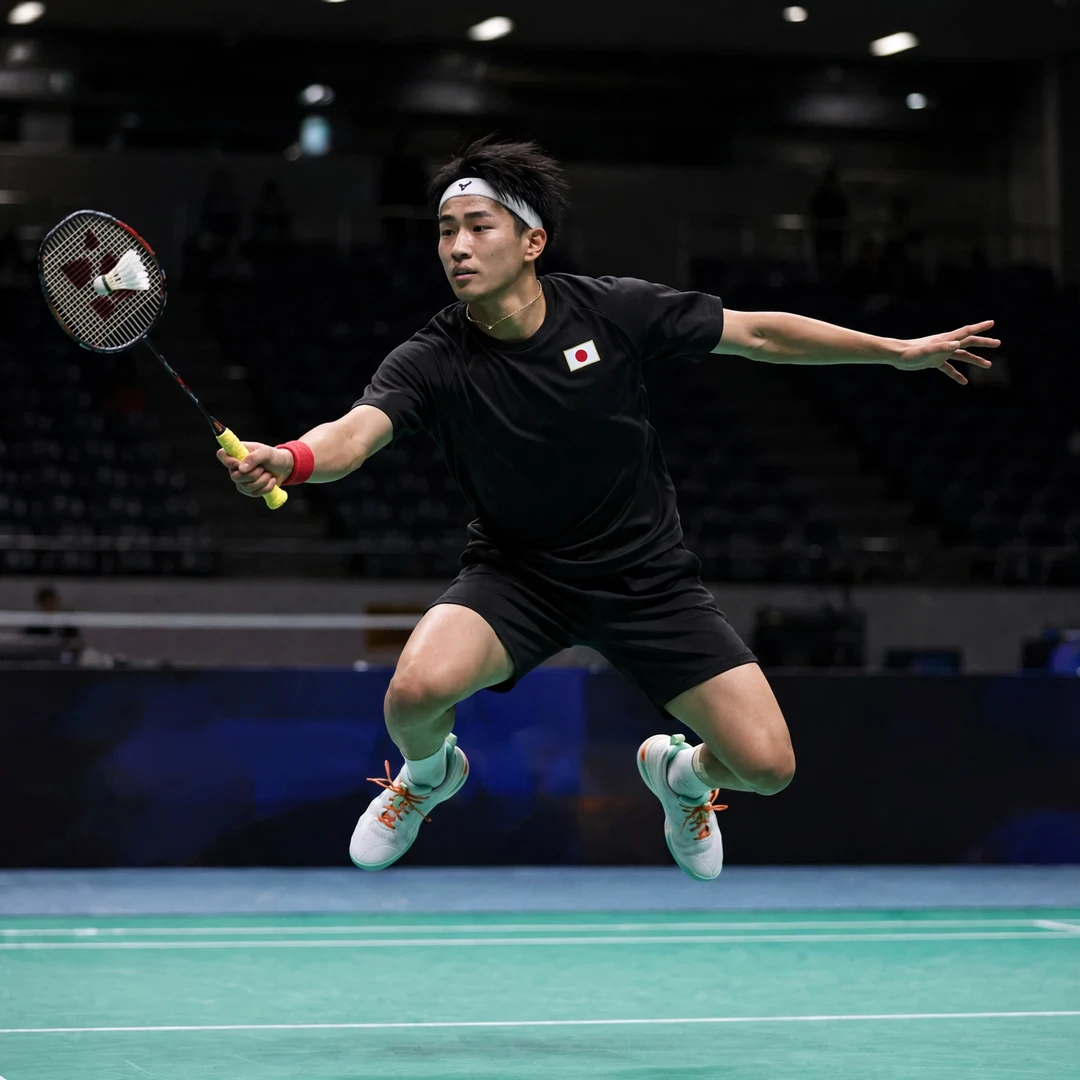
Career Milestone #1
Career High, a Slump, and the Long Way Back
The frustration of lost finals deepened before it lifted. In May 2024, at the Mexican International, Ogawa reached his second senior singles final and met compatriot Ryoma Muramoto. He took the opening game 21–16, led the match, and still lost, 21–16, 18–21, 16–21 — a defeat with a particular sting, because the title had been in his hands. Two senior finals, two defeats, one of them from a game up. Players are defined by what they do with that record: some start to flinch in finals. Ogawa’s response was to reach another one four months later — and change the ending.
The breakthrough came on 15 September 2024 at the Vietnam Open in Ho Chi Minh City, a BWF Tour Super 100. Ogawa reached the final and faced China’s Wang Zhengxing; this time there was no wobble. He won 21–19, 22–20 — two tight games, both closed out — and lifted his first BWF World Tour title. Four weeks later he doubled down in Australia, winning the Bendigo International with a 21–18, 21–9 final win over compatriot Keisuke Fujiwara. The Bendigo title made it two senior singles titles in a month, and together with the Vietnam crown it transformed his season: from a player who lost finals into a player who won them, home and abroad.
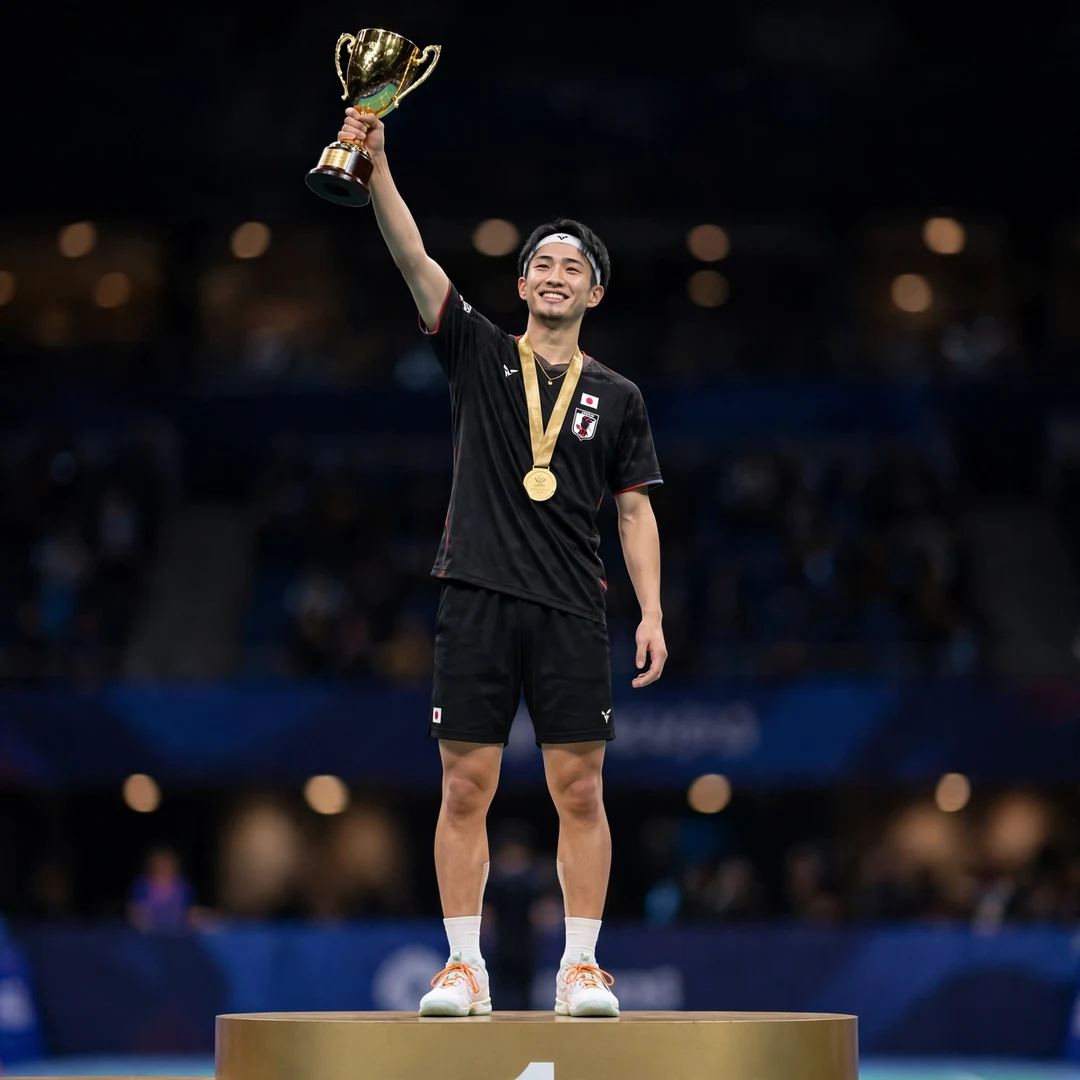
Career Milestone #2
2026: Two International Titles and a Ginting Upset
The rest of 2024 kept building. At the Sydney International in October he reached another final, losing a three-game battle to Huang Ping-hsien of Chinese Taipei, 14–21, 22–20, 14–21. Then, at the Syed Modi International in India — a Super 300, a level above anything he had won — he reached his first Super 300 semi-final, stopped only by home star Lakshya Sen. His year-end ranking told the story in one number: world No. 60, up from No. 204 at the end of 2023. In twelve months Ogawa had won a World Tour title, a second international title, reached two more finals and a Super 300 semi-final — the complete breakout season of a late developer.
On 11 March 2025, Ogawa reached a career-high world ranking of No. 55. And then, almost immediately, the season turned. Through the first half of 2025 he was eliminated in the early rounds of every tournament he entered. It is the most common story in professional badminton and still the cruellest: the ranking that proof of arrival brings also brings harder draws, seeded opponents in first rounds, and a target on your back. Ogawa’s game — built on patience and physical pressure — needs match rhythm to work, and early exits starve it of exactly that. The ranking slid as the points from his golden 2024 autumn began to expire, and he ended 2025 at world No. 71.
The rebuild started, as rebuilds usually do, with unglamorous progress. In September 2025 he reached the quarter-finals of the Indonesia Masters Super 100. In November came a genuine marker: at the Korea Masters, a Super 300, he beat Indonesia’s Zaki Ubaidillah in the quarter-finals and reached his second Super 300 semi-final, losing to Singapore’s Jia Heng Teh, the eventual champion. He closed the season at the Super 500 Australian Open in Sydney, where he beat former world No. 1 Kidambi Srikanth 22–20, 21–16 in the second round — a win over a giant of the previous era — before losing his quarter-final to Lin Chun-yi of Chinese Taipei, 17–21, 10–21. A semi-final, a famous win, and a quarter-final at Super 500 level: the slump was ending.
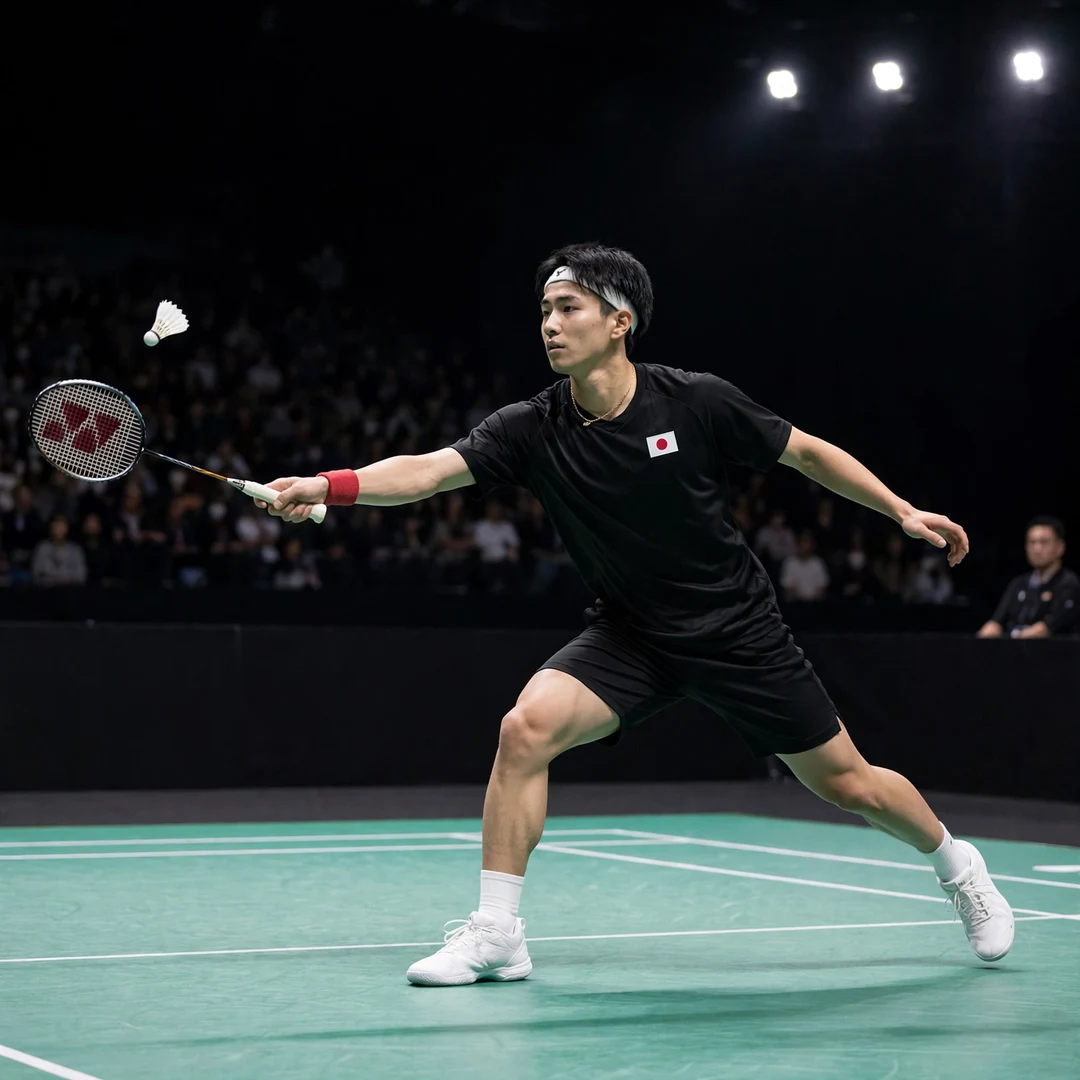
Career Milestone #3
Korea Masters: a Super 300 Semi-Final
Ogawa’s ranking graph is a sawtooth that rewards a second look: No. 204 at the end of 2023, No. 60 at the end of 2024, a career-high No. 55 in March 2025, then No. 71 by the end of 2025 as early exits bit — and now No. 56 again in the Week 43 rankings of 20 October 2026, with 30,380 points. Most players’ rankings move in one direction at a time; Ogawa has already lived a rise, a fall and a second rise by the age of twenty-five. His career record — 62 wins against 35 losses — shows the underlying level never disappeared. What changed across the dip was draw luck, rhythm and confidence, and the way he answered 2026 (below) shows all three coming back together.
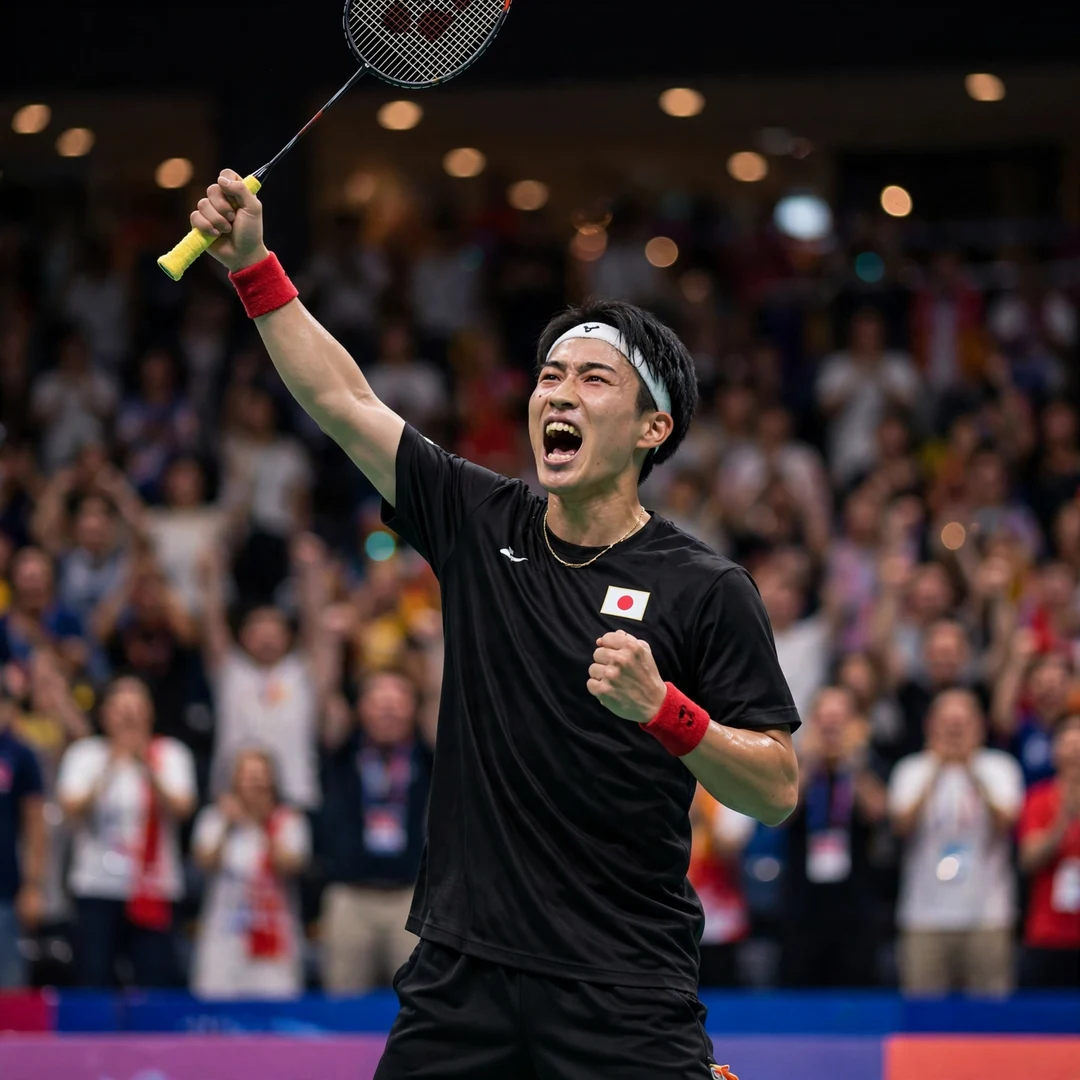
July 2026 gave Ogawa the most quoted week of his career. In Saipan, the Northern Mariana Islands host two back-to-back international tournaments. In the first, the YONEX Northern Marianas Open, Ogawa fell short. A week later, at the Crowne Plaza Saipan International, he reached the final and met South Korea’s Park Sang-yong — the man who had won the first week’s title. Ogawa lost the opening game 12–21, then changed everything: he won 12–21, 21–19, 21–18. ‘I just kept telling myself to go for the win,’ he said afterwards. ‘I needed to speed up, and in the second game I was able to smash more. That made all the difference.’ A title won seven days after a failure, against the same week’s champion, by changing his mindset and his tempo — the redemption arc wrote itself.
Three weeks later he struck again. At the Malaysia International in Ipoh in August 2026, Ogawa reached the final and faced a teammate, fellow JTEKT professional Kosuke Masumoto. Team-mate finals are psychologically awkward — you train together daily, there are no secrets — and this one went the distance before Ogawa closed it out 21–17, 18–21, 21–15. It was his third senior international singles title, after Bendigo 2024 and Saipan 2026, and it confirmed that the Saipan week was no island one-off: two titles in a month, on two different stops, in the middle of a ranking rebuild. His 2026 form line now read like his 2024 breakout — only this time built on scar tissue as well as talent.
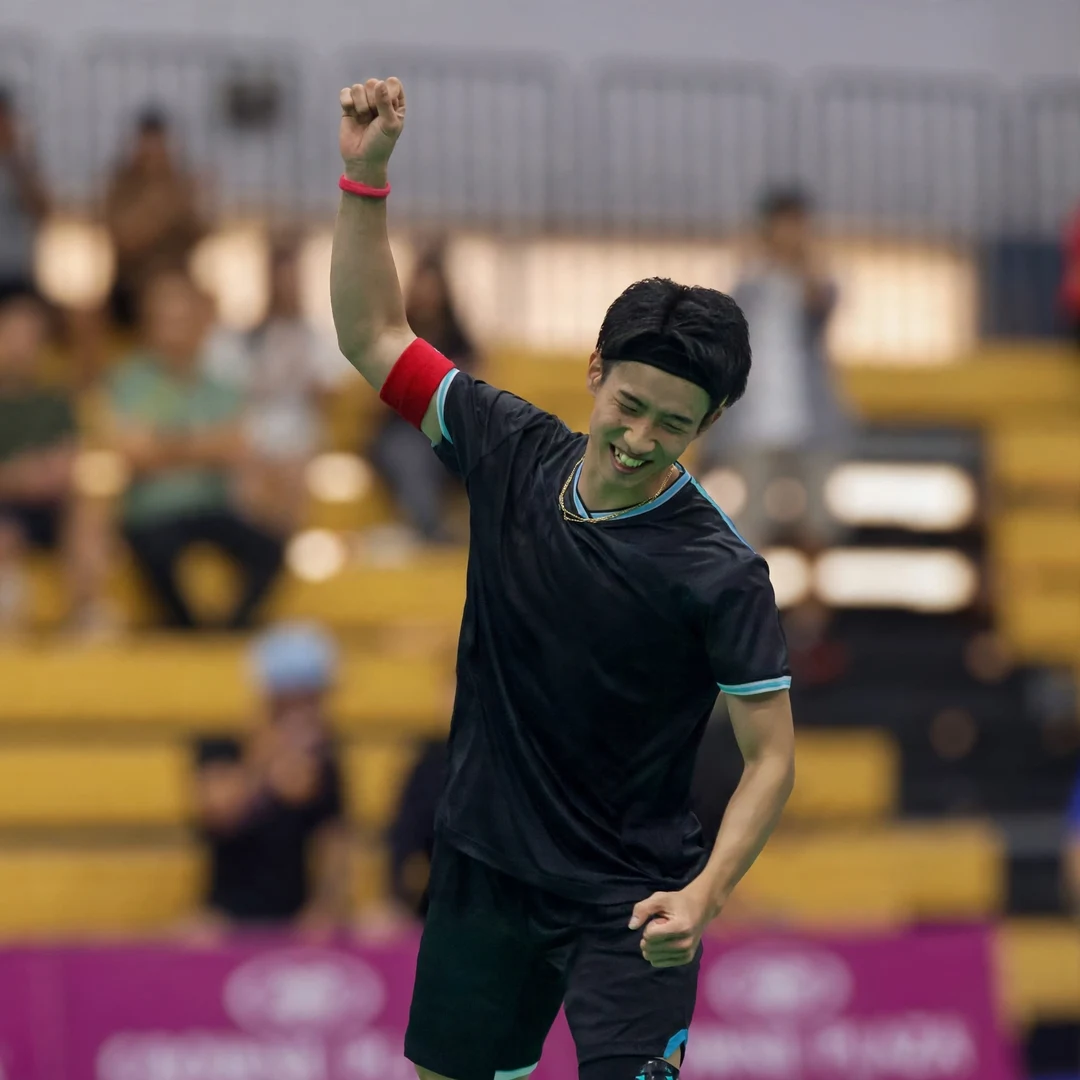
Career Milestone #4
World No. 56 and Climbing Again
September brought another step up in level. At the Indonesia Masters in Pontianak, a BWF Tour Super 100, Ogawa beat India’s Tharun Mannepalli in the round of 16, then defeated Indonesia’s teenage star Richie Duta Richardo in the quarter-finals, 8–21, 21–10, 21–16 — dropping the first game heavily and taking over the match, exactly the pattern of the Saipan final. His run ended in the semi-finals against Wang Po-Wei of Chinese Taipei. A Super 100 semi-final, added to the Korea Masters Super 300 semi-final of the previous November, showed the rebuild reaching the rounds that matter at World Tour level — the last eight and last four, week after week.
October 2026 then produced the signature win. At the Malaysia Super 100 in Johor Bahru, Ogawa opened by beating India’s Kavin Thangam Kavin in straight games — and then faced Anthony Sinisuka Ginting, Indonesia’s former world No. 2, a player with Super 1000 titles and an Olympic pedigree. Ginting took the first game 21–12. Ogawa, following the script he had written for himself in Saipan, raised his speed and his attacking intent and stormed back to win 12–21, 21–19, 21–6 — a 21–6 deciding game against one of the most gifted shot-makers of his generation. He beat China’s Sun Chao in the next round before losing his quarter-final to Zhu Xuan Chen. Beating Ginting does not make a career; but it announces, loudly, that the rebuild is real.
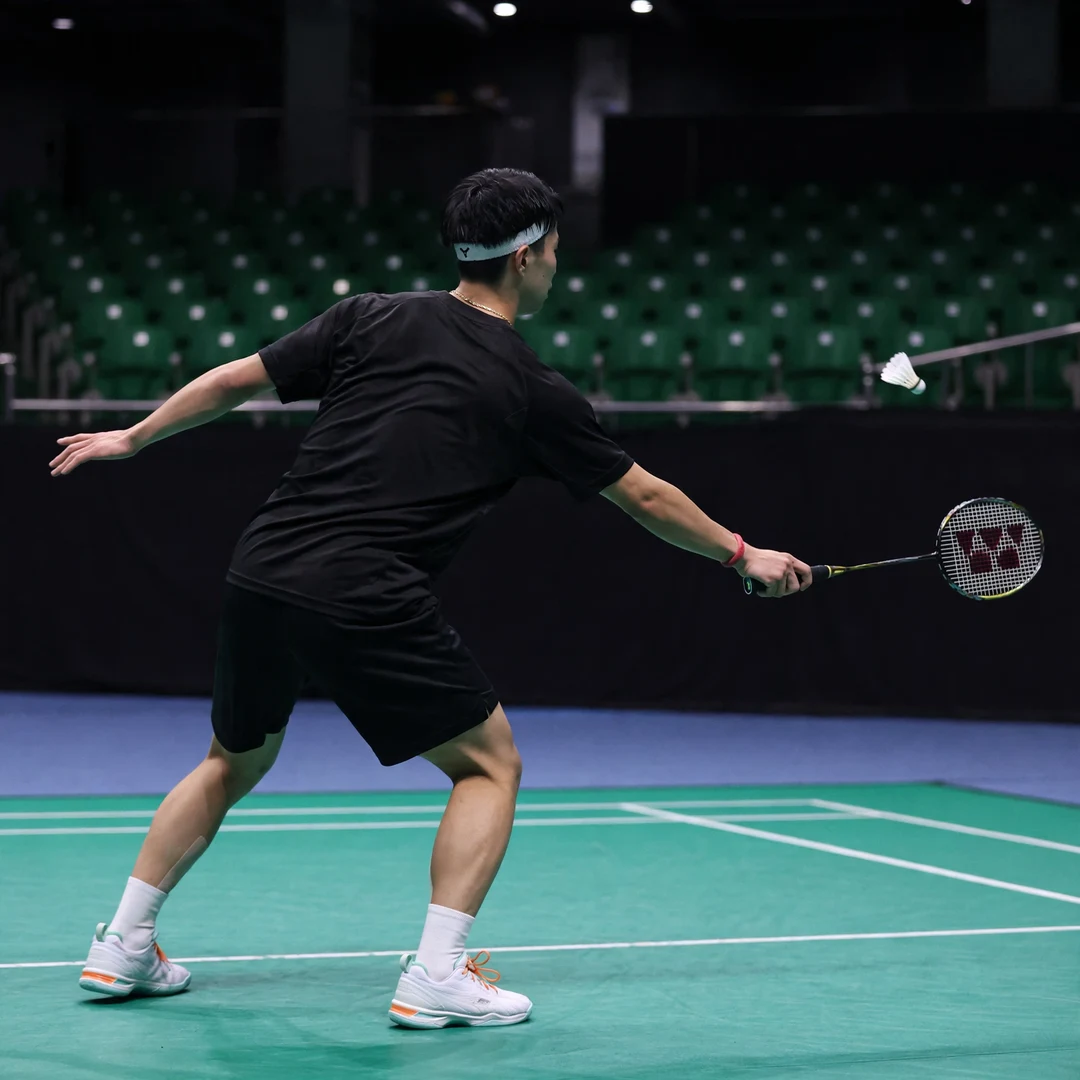
Playing Style
The Power-and-Patience Style
Strip the story back and its shape is what young players should study. A club player at nine in Miyazaki; school badminton; a university economics degree alongside national student titles; a corporate contract at twenty-two; a doubles title and a lost singles final in his first tour week; two lost finals before his first World Tour title at twenty-three; a career-high ranking, then a slump that cost him sixteen ranking places; two more titles and a win over a former world No. 2 by twenty-five. Every stage arrived in order, and nothing was skipped — not the degree, not the defeats, not the dip. That is the real curriculum of his career: development inside a system, sustained through the years when the system stopped handing him easy wins.
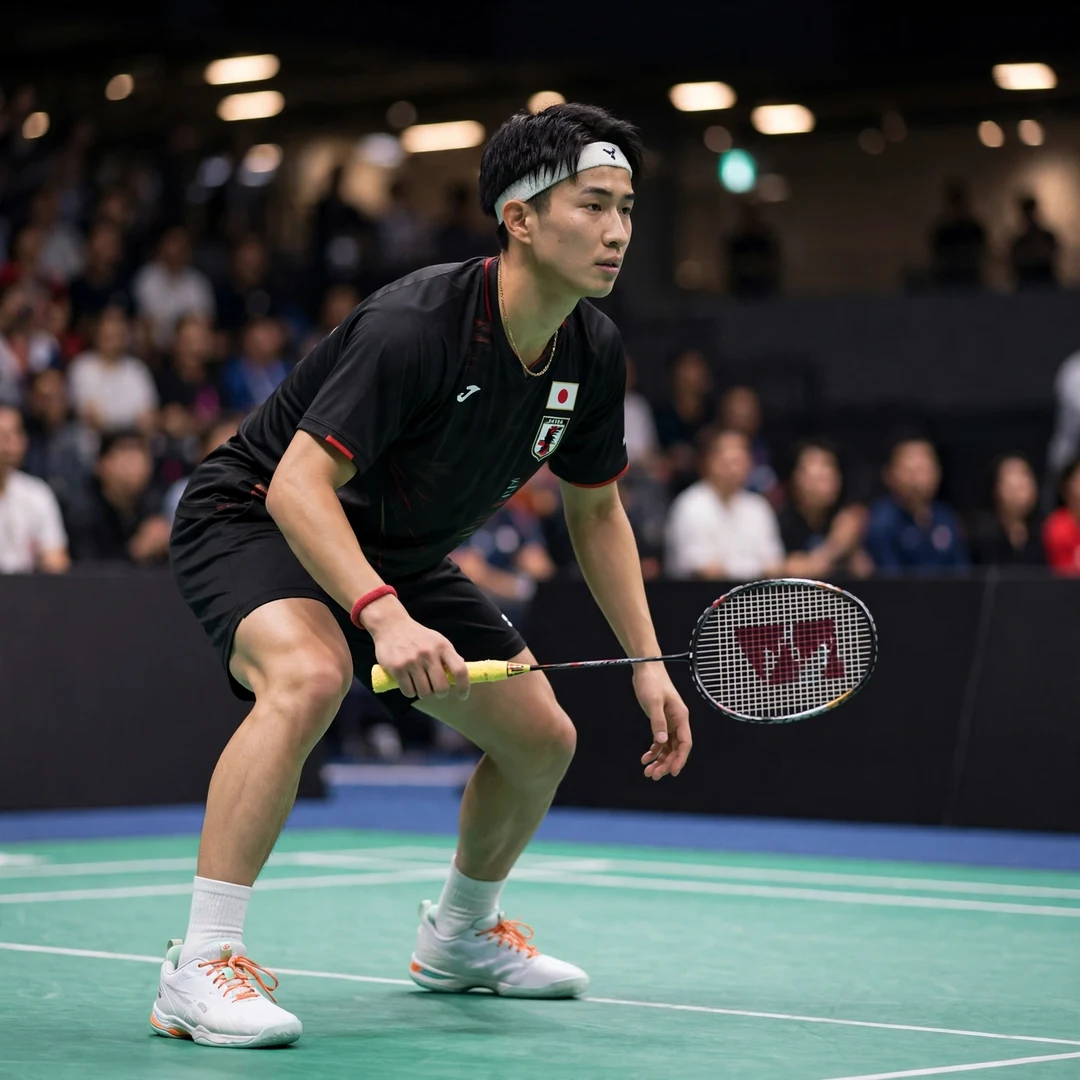
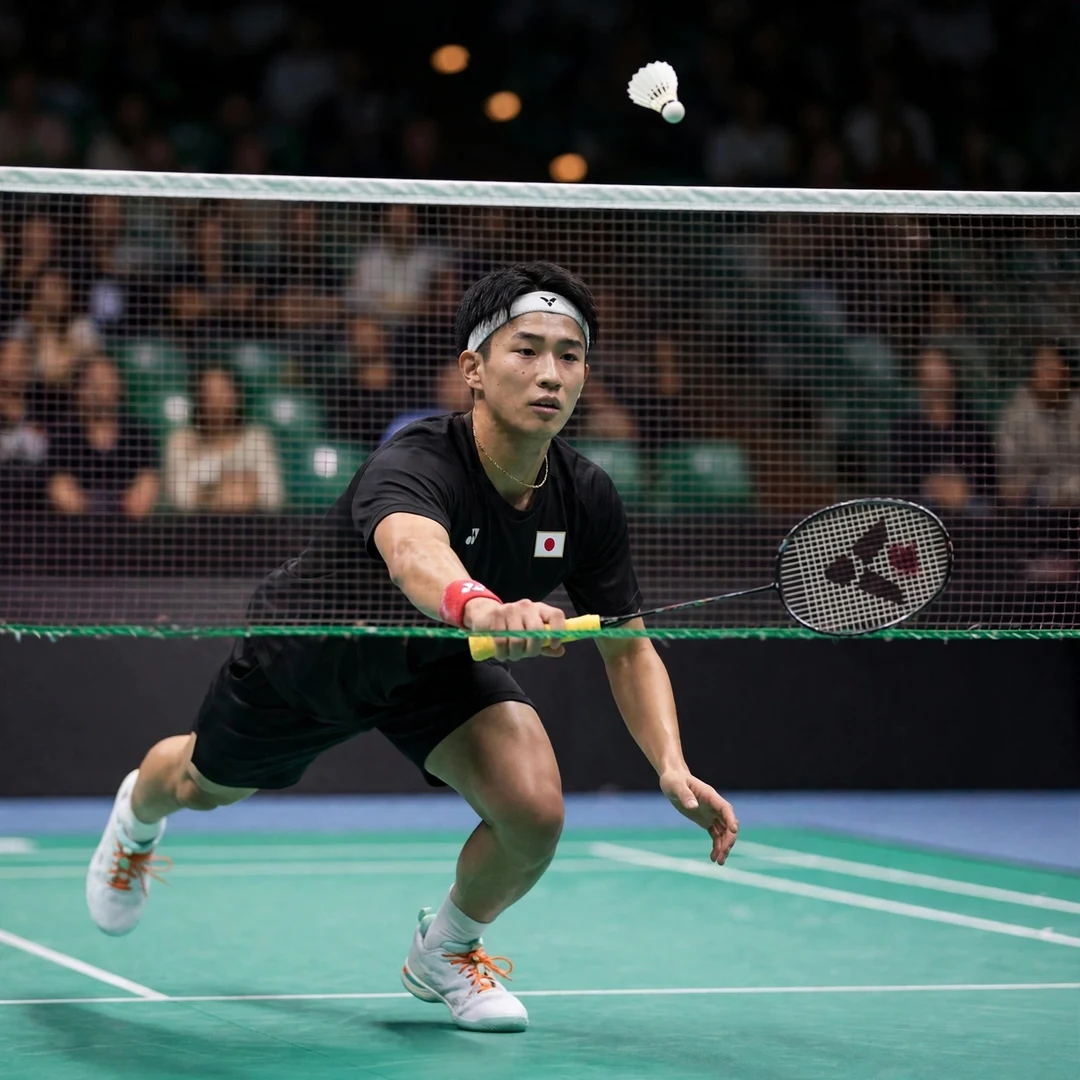
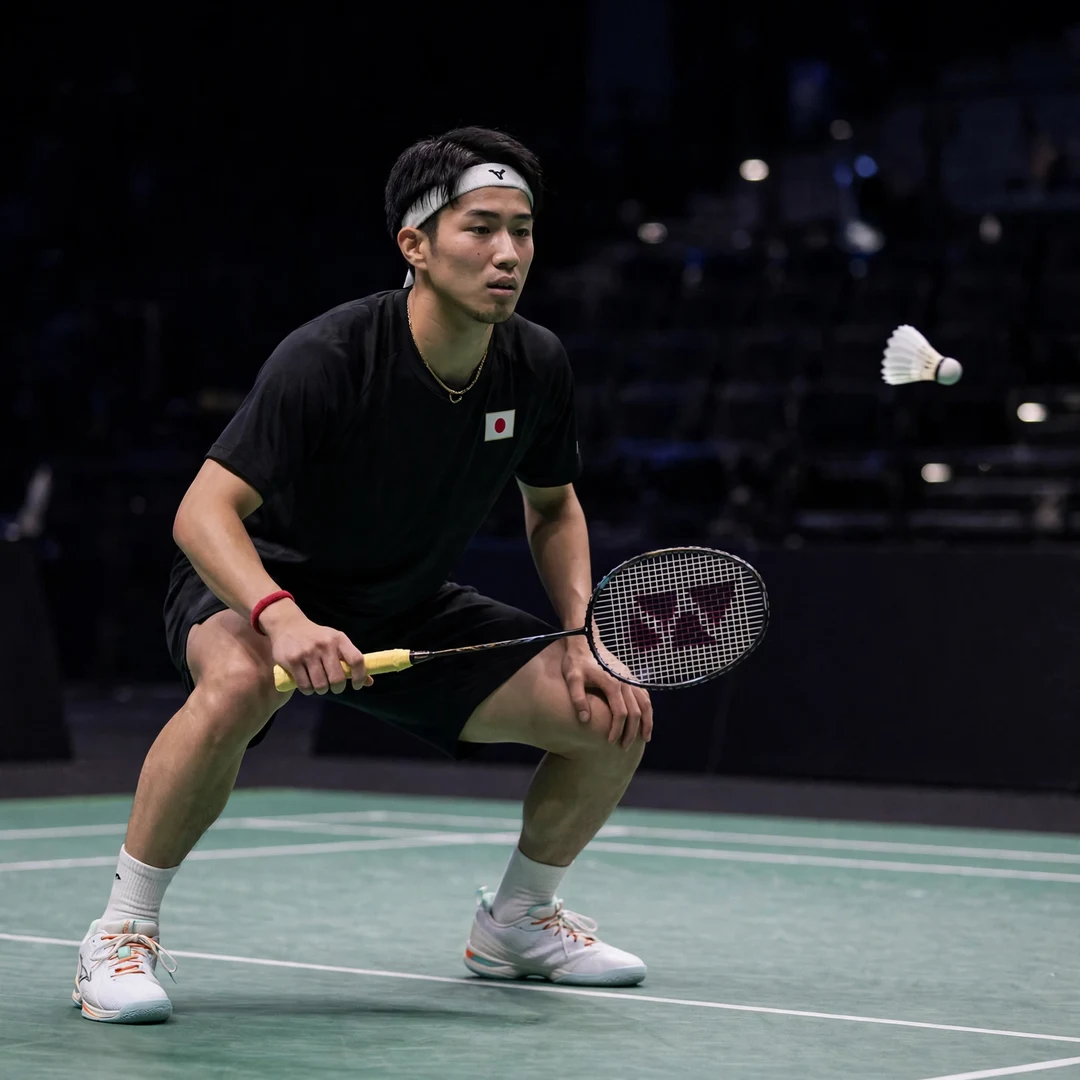
On court, Ogawa is a right-handed power player with a rally player’s patience — the combination defines him. At 1.78 metres he has the reach to cover the rear court comfortably, and his attacking game is built around the smash: not hit from everywhere, but loaded into rallies once he has worked an opponent out of position. The most revealing scouting report comes from the man himself, after Saipan: the fix for a failing final was to speed up and smash more. That is not blind aggression; it is a player who knows his rallying base is solid enough to survive trading blows, and who treats attacking intent as a decision he can switch on. Coached by Shu Wada and hardened in the JTEKT training hall, his game is typically Japanese in its footwork discipline and increasingly his own in its willingness to take the rally by the throat.
His own analysis is the most honest guide to his next step. After falling short in the first Saipan week, Ogawa did not blame the hall, the draw or the shuttle — he changed his mindset, his speed and his smash volume, in that order, and won the same island’s second title a week later. Coaches who watched his 2025 slump describe the same frontier from the other side: at Super 300 level and above, his patience can become passivity against elite defenders, and the deciding-game gear he found against Park Sang-yong and Ginting has to become his default, not his rescue plan. The backhand corner, where his around-the-head preference costs him court position against the very best, is the technical item on the same list.
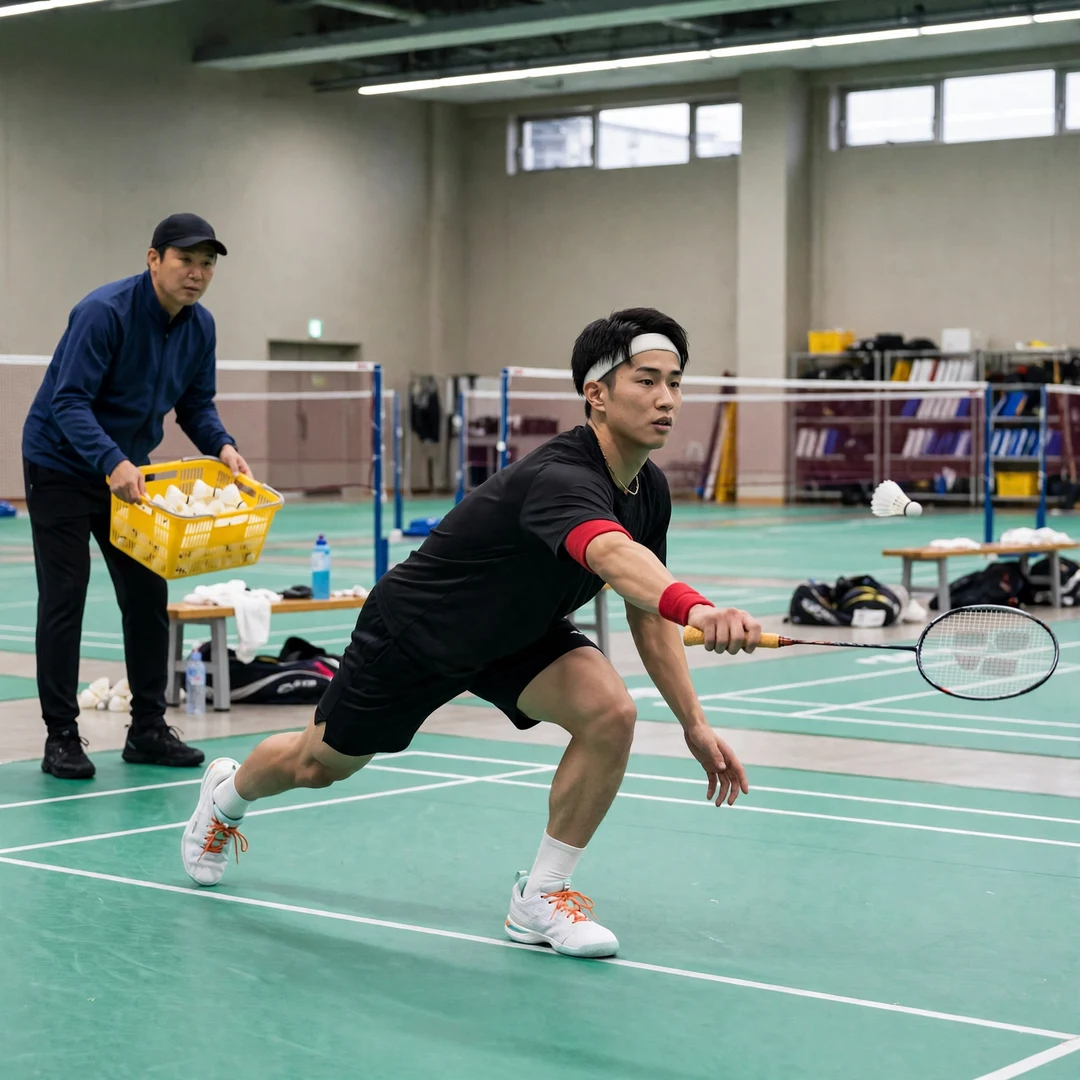
Mental Strength
Consistency Against the Elite: the Work Still Ahead
The first lesson of Ogawa’s career is that a complete game is built inside a system and cannot be faked later. Club at nine, school teams, a university programme that made him a national student champion in two disciplines — by the time he signed for JTEKT at twenty-two, his footwork, defence and rally craft were already formed, and the professional titles followed the basics, not the other way round. Young players who want his completeness should copy the order: movement and rally skills first, inside the best structure available to you; the spectacular winners are only the visible tip of years of basics.
The second lesson is that a lost final is a rehearsal, not a verdict. Ogawa lost the Mauritius International final in 2023 and the Mexican International final in 2024 — the second after winning the first game — and then won the Vietnam Open final in straight, tight games. In Saipan in 2026 he compressed the whole lesson into a fortnight: fell short one week, changed his approach, and beat the champion the next. A young player who treats one defeat as a definition has misunderstood the sport; at this level the rematch is always coming, and sometimes it is only seven days away.
The third lesson is about mindset as a trainable skill. Listen to how Ogawa talks about his own turning points: ‘I just kept telling myself to go for the win.’ No mystique, no excuses — a deliberate instruction to himself, repeated until the tempo of the match changed. Sports psychologists call this self-talk, and it is as trainable as a smash: decide the cue, practise it in training matches, and deploy it when the final starts slipping. Ogawa’s second rise — from No. 71 back to No. 56 with two titles and a Ginting win — is what that habit looks like when it is trained for years.
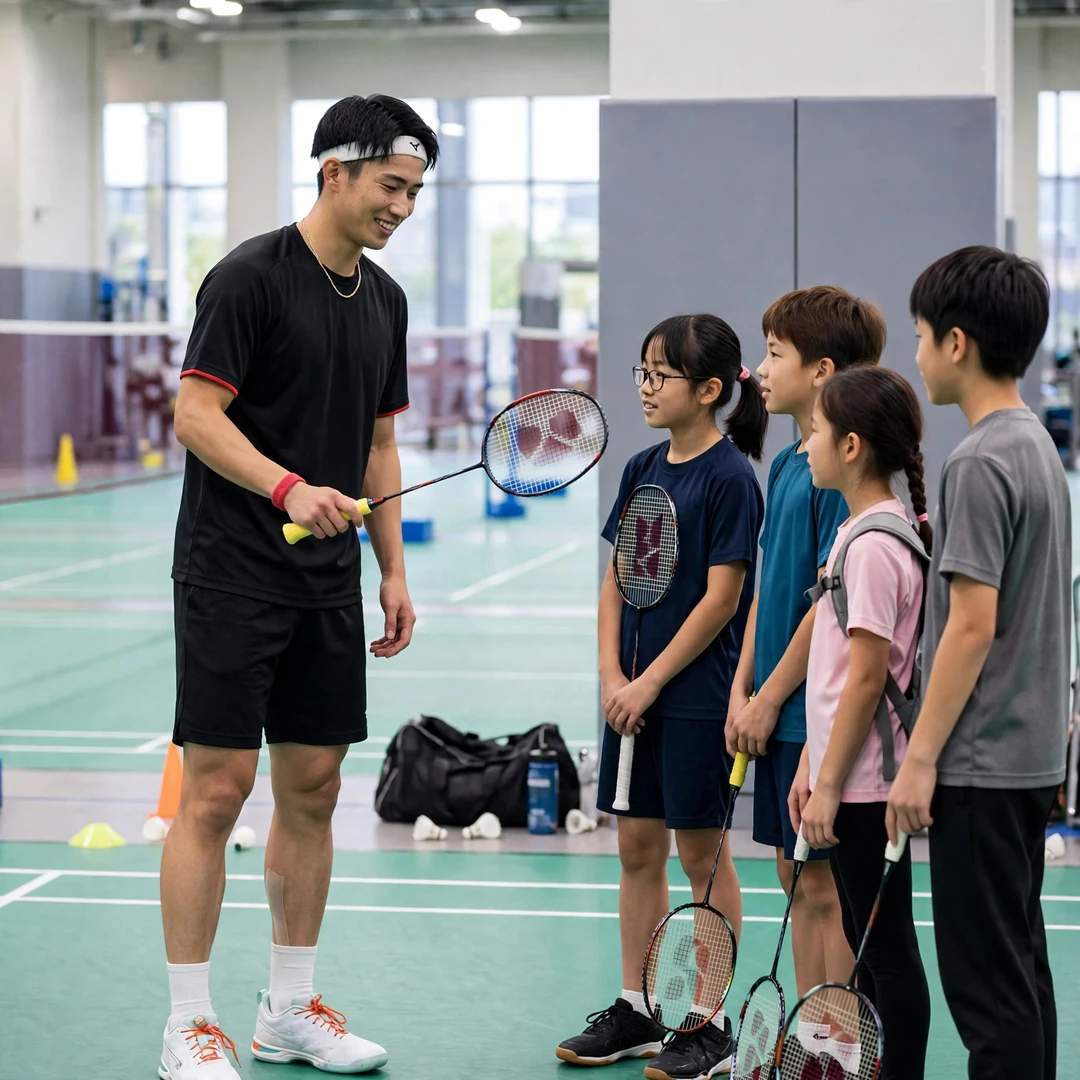
Learning Reference
ST Badminton Academy Connection
Shogo Ogawa is a Japanese player with the JTEKT Stingers and does not coach for, teach at or endorse ST Badminton Academy, and there is no official connection between him and the academy. Students may occasionally see his name in academy discussions of the professional game because his career — a Vietnam Open title, a Paris 2024 sparring role and a Saipan redemption inside three seasons — is such a clear case study in patient development — but he has no coaching role, sponsorship or teaching relationship with the academy, and nothing on this page should be read as his endorsement.
Coaches can use Ogawa’s Saipan fortnight as a teaching film for in-tournament adjustment. Show juniors the arc: the same player, on the same island, seven days apart — falling short at the Northern Marianas Open, then beating that week’s champion Park Sang-yong in the Saipan International final after losing the first game 12–21. Ask them to list what changed: the self-talk, the tempo, the smash volume. Then rebuild the exercise in training: play a practice set, lose it if necessary, and replay the same opponent within the week with a written plan naming exactly those changes.
For parents, Ogawa’s timeline is a healthy reality check. He started at nine, took a university degree while winning national student titles, signed professionally at twenty-two, won his first World Tour title at twenty-three — and still describes his career as unfinished business at twenty-five, with a slump survived and a ranking to rebuild. Progress measured in years, not weekends; a prefectural club player outlasting two lost finals, a ranking dip and an island redemption — that is what real development often looks like, and it is worth trusting.
FAQs: Shogo Ogawa Japanese Badminton Player
Here are the questions badminton fans in Japan, Malaysia, Singapore and beyond ask most about Shogo Ogawa — his Miyazaki roots, his Vietnam Open title, his Paris sparring role, and what young players can learn from his patience.
Who is Shogo Ogawa and which country does he represent in badminton?
Shogo Ogawa is a Japanese men’s singles badminton player. Born on 1 April 2001 in Miyazaki Prefecture, he is right-handed, plays for the JTEKT Stingers, and in the Week 43 rankings of 20 October 2026 he stands at world No. 56 with 30,380 points — close to his career-high No. 55, reached on 11 March 2025.
What are Shogo Ogawa’s biggest badminton achievements?
His biggest achievements are the 2024 Vietnam Open title — his first BWF World Tour crown — three senior international singles titles (Bendigo 2024, Saipan 2026 and the Malaysia International 2026), a men’s doubles title at the Mauritius International 2023, Super 300 semi-finals at the Syed Modi International 2024 and the Korea Masters 2025, a quarter-final at the Super 500 Australian Open 2025, and selection as a sparring partner for Japan’s Paris 2024 Olympic team.
What is Shogo Ogawa’s playing style?
Ogawa plays a power-based attacking game built on a patient rallying base: disciplined Japanese footwork, four-court construction, and a smash he deliberately unleashes more of when matches turn. By his own account after the Saipan title, the keys are tempo and intent — speed up, smash more, and keep telling himself to go for the win.
What was Shogo Ogawa’s role at the Paris 2024 Olympic Games?
Ogawa did not compete at the Paris 2024 Olympic Games, but he was inside the camp: in May 2024 he was selected as a sparring partner for the Japanese national team, training at full intensity with Japan’s Olympic players to prepare them for Paris. The role is given to trusted professionals whose level and reliability the national coaches rate — for a player then ranked outside the top 100, it was a significant mark of respect.
How can my child learn from Shogo Ogawa’s development path?
Children can learn from the order of his career: prefectural club basics first, school and university badminton alongside an education, then a corporate team, lost finals, and only then titles — a World Tour crown after two final defeats, and a ranking rebuild after a slump. On court they can copy his craft: at the 2026 Malaysia Super 100 he beat Anthony Ginting with the racket in his right hand by raising his tempo and attacking with intent rather than waiting for errors.
Did Shogo Ogawa win any titles as a student?
Yes — as a student at Hosei University, Ogawa won the 2022 All Japan Student Mixed Doubles Championship with Miori Miya, and took third place in men’s doubles at the 2021 All Japan Student Championship with Daisuke Sano. He also captained the Hosei men’s team and received the 2022 Hosei University Supporter’s Association Award.
What is Shogo Ogawa’s best result on the BWF World Tour?
His best BWF World Tour result is the title itself: the 2024 Vietnam Open, a Super 100 in Ho Chi Minh City, where he beat China’s Wang Zhengxing 21–19, 22–20 in the final. He has also reached Super 300 semi-finals at the Syed Modi International (2024) and the Korea Masters (2025), and a Super 100 semi-final at the 2026 Indonesia Masters.
What playing style should young players learn from Shogo Ogawa?
Young players should copy his constructed attacking: build the rally with patience and placement, defend in balance, and treat the smash as a decision — the finisher you unleash once the rally, and your mindset, are ready. His career also teaches the turnaround: review a defeat, change one or two specific things, and be ready when the rematch comes — sometimes within the week.
Does ST Badminton Academy have any connection with Shogo Ogawa?
No. Shogo Ogawa is a Japanese player with the JTEKT Stingers and has no official connection to ST Badminton Academy. He does not work with the academy as a coach or ambassador, and the academy follows his career only as followers of professional badminton and as a case study in player development.
Shogo Ogawa Career Highlights
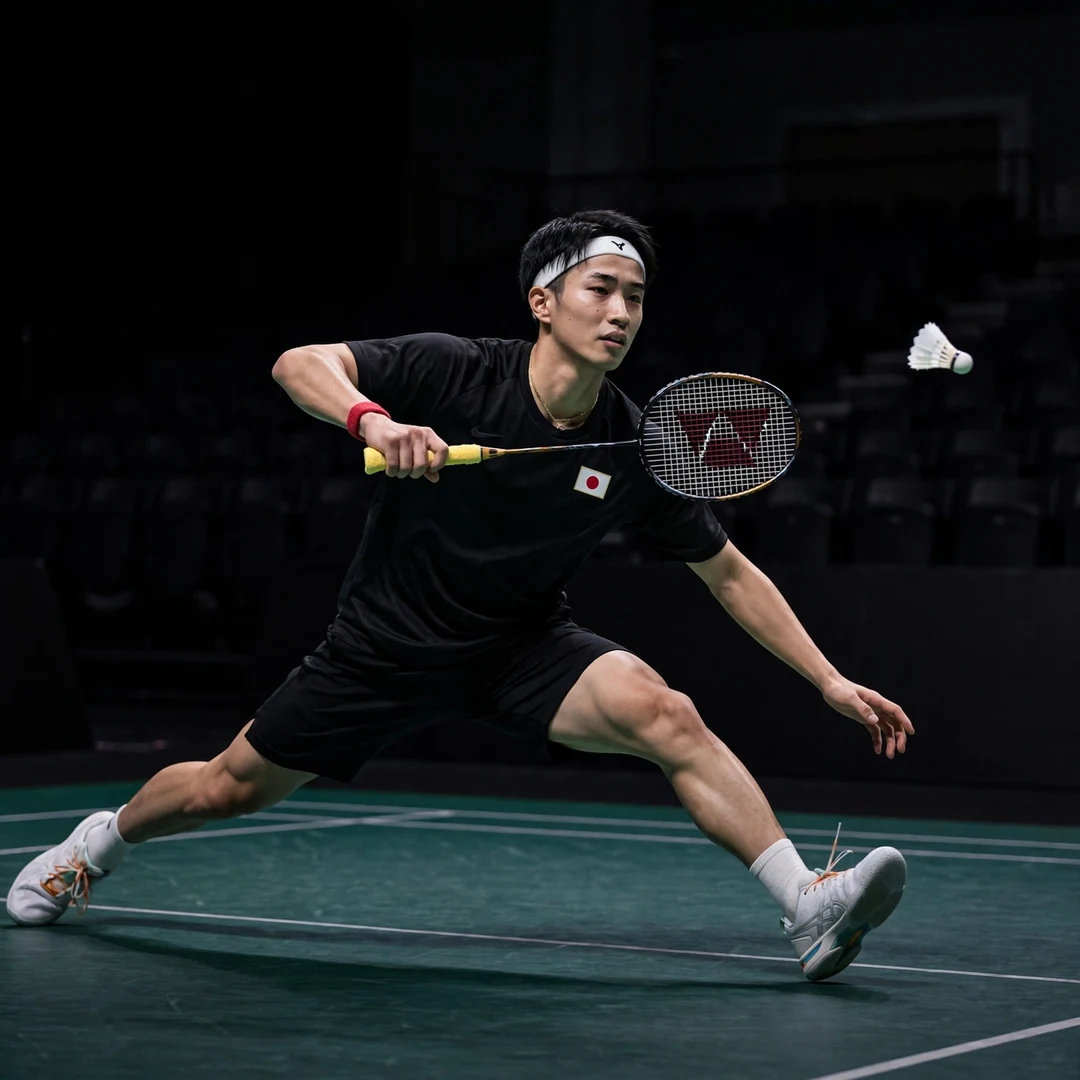
Career Statistics and Rankings
The next chapter is already being written. Ogawa is twenty-five, back at world No. 56 after touching No. 55, with a World Tour title, three international titles and a win over Anthony Ginting on his record. The targets now are a first Super 300 title, regular quarter-finals at Super 500 level, a climb into the top 40 — and a place in Japan's squads for the Thomas Cup and Sudirman Cup, the team events where Japanese professionals are judged most deeply — as the road to the Los Angeles 2028 Olympic Games takes shape.
| Development Area | Common Misconception | What Shogo Ogawa's Career Shows REALITY |
|---|---|---|
| Junior Foundation | Talent alone decides who becomes a champion. | Ogawa started at nine with the Miyazaki Bad Kids club, won national student titles at Hosei University and turned professional with the JTEKT Stingers at twenty-two — a structured base came first. |
| Playing Style Priority | Kids should copy the flashiest attacking shots. | Ogawa built a complete rallying game first; his power smashes are the finishing touch on patient construction, reliable footwork, defence and net play. |
| Fitness Importance | Juniors can out-train everyone without rest. | Ogawa lost the Mauritius International and Mexican International singles finals in 2023 and 2024, then won his first World Tour title at the 2024 Vietnam Open — setbacks answered at the next opportunity, not the next season. |
| Mental Approach | Top players never get nervous or upset. | Ogawa speaks openly about changing his own mindset after falling short in Saipan, then attacked more and smashed more to win the title a week later — mental skills are trained, not inherited. |
| Attacking Training | Smashing harder is always the answer. | His October 2026 win over Anthony Ginting at the Malaysia Super 100 (12–21, 21–19, 21–6) and his Saipan title comeback against Park Sang-yong (12–21, 21–19, 21–18) came from raising his tempo and attacking with intent, not from waiting for errors. |
| National Milestones | Only world titles matter. | Ogawa's 2024 Vietnam Open title and his national student championships at Hosei made him a trusted JTEKT Stingers professional and a sparring partner for Japan's Paris 2024 Olympic team — milestones build a career step by step. |
| Career Timeline | Champions peak once and fade fast. | From world No. 204 at the end of 2023 to a career-high No. 55 in March 2025 and No. 56 in October 2026 after a year-end dip to No. 71, Ogawa proves sustained development beats a short peak. |
Study Shogo Ogawa's Work Ethic and Professional Approach
Whether you are a Japanese supporter, a Malaysian fan who watched him beat Ginting in Johor Bahru, or a junior learning how a club player from Miyazaki reached the world's top 60, Shogo Ogawa's matches reward close study. Watch how he builds rallies patiently, then changes tempo and intent when a final is on the line — then bring that patience, and that switch, into your own training week.