Malaysian Men’s Singles Badminton Star
Huan Kai Hern

Malaysia
Player Event: Men’s singles
Date of Birth: 2 October 2005, Malaysia
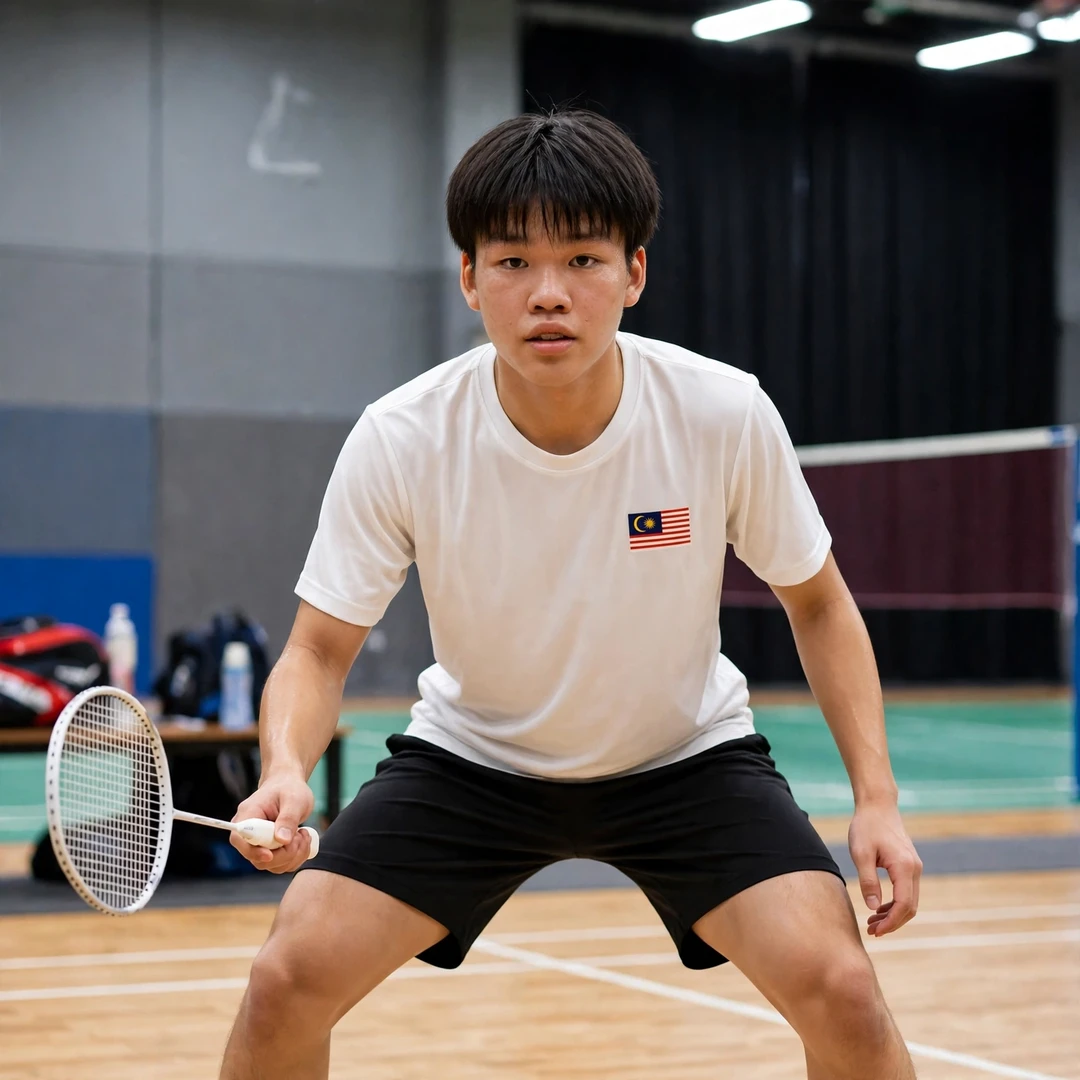
Playing Style: Right-handed all-court player who builds rallies patiently, defends deep into third games and turns defence into counter-attack
Known For: The 2026 Macau Open giant-killing win over Misha Zilberman, a career-high world ranking of No. 109, and three-game comeback victories
Journey: Selangor state team · national inter-state under-18 team final · BAM national back-up squad · first BWF ranking in 2023 · world top 150 in 2025 · world No. 109 in 2026
Understanding Huan Kai Hern (Malaysian Badminton Star)
Huan Kai Hern is a Malaysian men’s singles badminton player who stands at world No. 129 in the BWF rankings (Week 43, 20 October 2026) with 15,050 points from 16 tournaments. A member of the Badminton Association of Malaysia’s national back-up squad, he is one of the youngest players in this ranking bracket, and his career is a study in steady climbing: first ranked in July 2023 at No. 941, inside the top 200 a year later, inside the top 150 in October 2025, and at a career-high world No. 109 in September 2026. His signature week came at the 2026 Macau Open, where, as a qualifier, he beat a player ranked 71 places above him in one of the results of the tournament.
Early Life and the Selangor Junior Years
Huan Kai Hern’s junior career was built in the Malaysian state system with Selangor, one of the traditional powers of Malaysian schools and state badminton. State badminton in Malaysia is fiercely competitive — Selangor, Johor, Penang and Kuala Lumpur all run deep junior programmes — and earning a place in a state team for the national inter-state championships is the first serious selection test a Malaysian junior faces. Huan passed it, and by his late junior years he was trusted with the matches that decided titles.
The Selangor State Team
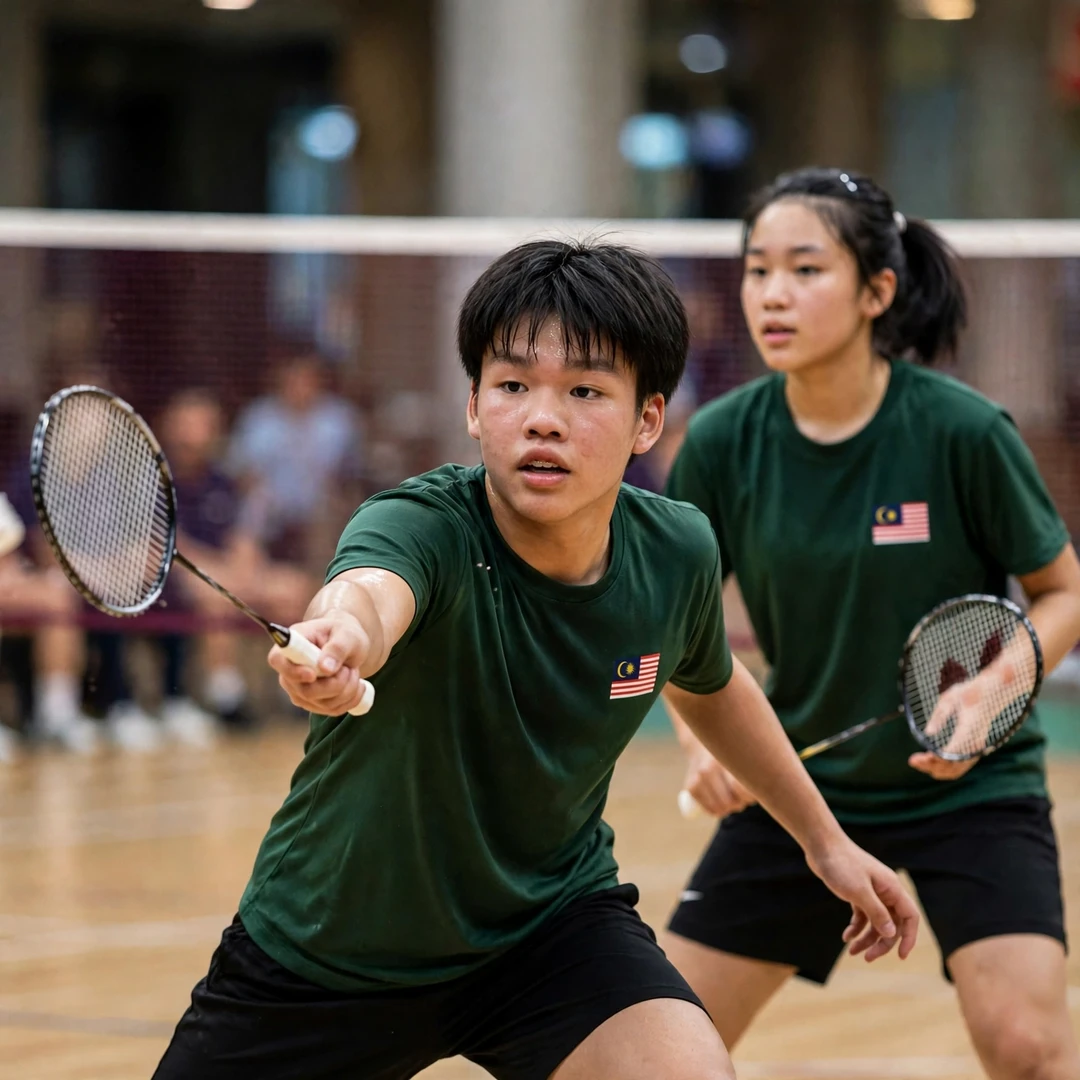
His most memorable junior assignment came at the PETRONAS National Inter-State Under-18 Mixed Team Championships, where Selangor reached the final against Johor. In a tie that went all the way to the last match, Huan was sent out in the deciding mixed doubles alongside Zi Yi Wong, with the championship resting on their shoulders. Selangor lost the tie 3-4 and took silver, but a teenager chosen to play the deciding rubber of a national team final has already learned the most valuable junior lesson of all: how to compete when everything is on the line.
A Deciding Mixed Doubles in the Inter-State Final
The step into senior international badminton came in 2023. Huan entered the BWF world rankings for the first time in July 2023 at No. 941 — the bottom of the mountain every professional has to climb. Later that year, on home soil in Kuala Lumpur, he won a qualifying match at the Malaysia Masters Super 100, beating compatriot Muhammad Faiq 21-16, 21-5. A first win at a World Tour event, even in qualifying, tells a young player that the level is reachable; the work is to reach it every week.
National Under-18 Team Finalist
Through 2024 the climb continued quietly, the way it usually does on badminton’s lower-tier circuit: qualifying draws, first rounds, small points hauls in small halls. In September 2024 he broke into the world’s top 200 for the first time at No. 192. There were no headlines — just an 18-year-old Malaysian stacking results across Asia while the ranking arithmetic slowly turned in his favour.
Career Milestone #1
First BWF Ranking and the Senior Climb
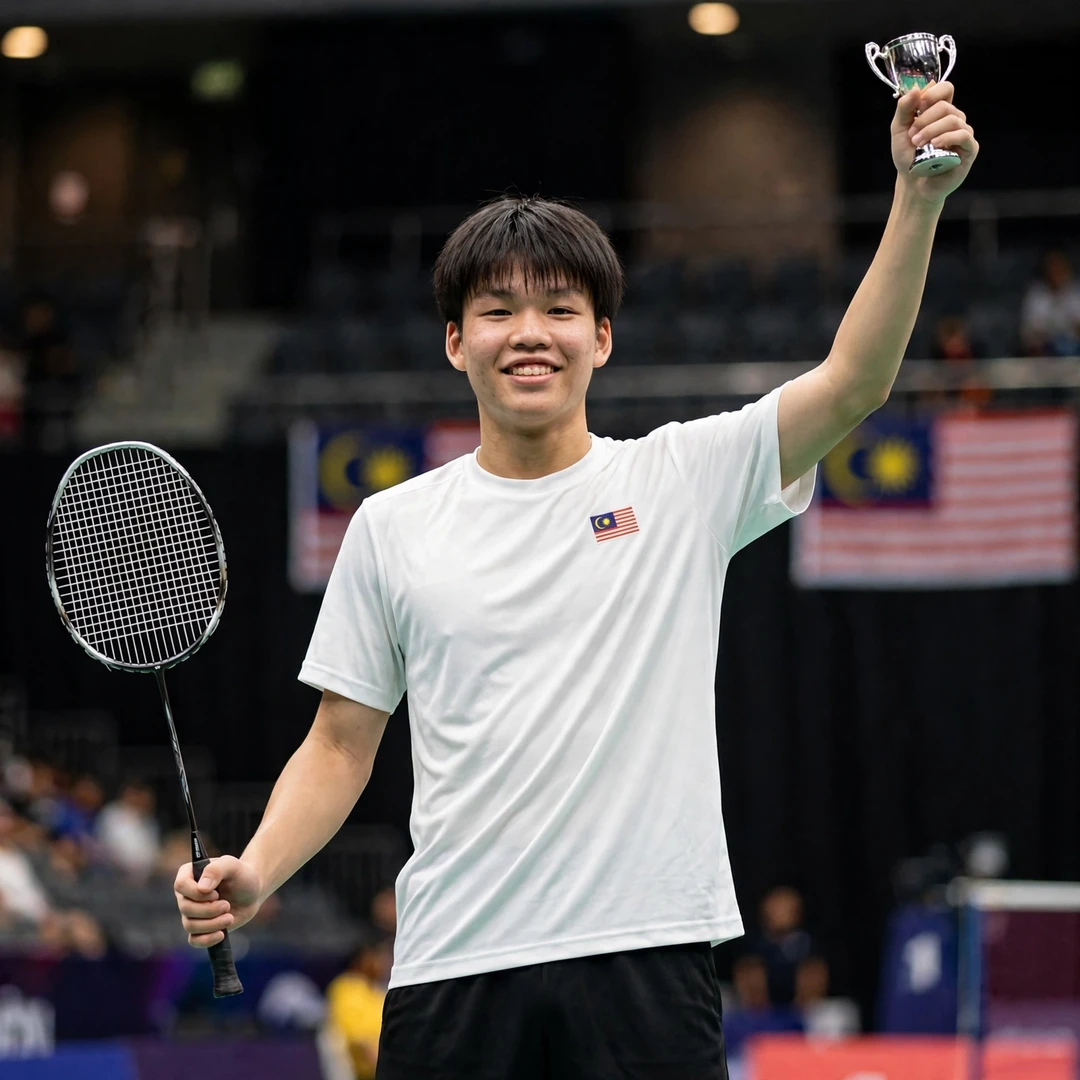
The 2025 season gave him his first substantial points. At the North Harbour International in Auckland, New Zealand, he reached the quarter-finals — a 2,200-point haul that remains one of the biggest single results of his career. He added another quarter-final at the Northern Marianas International in the Pacific, and a round-of-16 finish at the Baoji China Masters in a field full of Chinese professionals. Quarter-finals at International Challenge level are the currency of the climb: worth more than a dozen first-round wins.
In October 2025 the next barrier fell: Huan broke into the world’s top 150, reaching No. 147 in the rankings of 21 October 2025. For a player who had started at No. 941 just over two years earlier, the top 150 marked the point where the career stops being a promise and becomes a profession — entries into bigger draws, better training support, and a place in the Badminton Association of Malaysia’s national back-up squad, the group from which Malaysia’s senior team is selected.
Career Milestone #2
Quarter-Finals in New Zealand and the Pacific
The 2026 season has been his busiest yet — fifteen tournaments across Asia, Oceania, Europe and North America, from Singapore and Vietnam to Saipan, Auckland, Canada and Denmark. It is the reality of life just outside the top 100: ranking points live on every continent, so the player goes where the points are, often playing qualifying draws on Tuesdays in halls a world away from the televised finals of the World Tour.
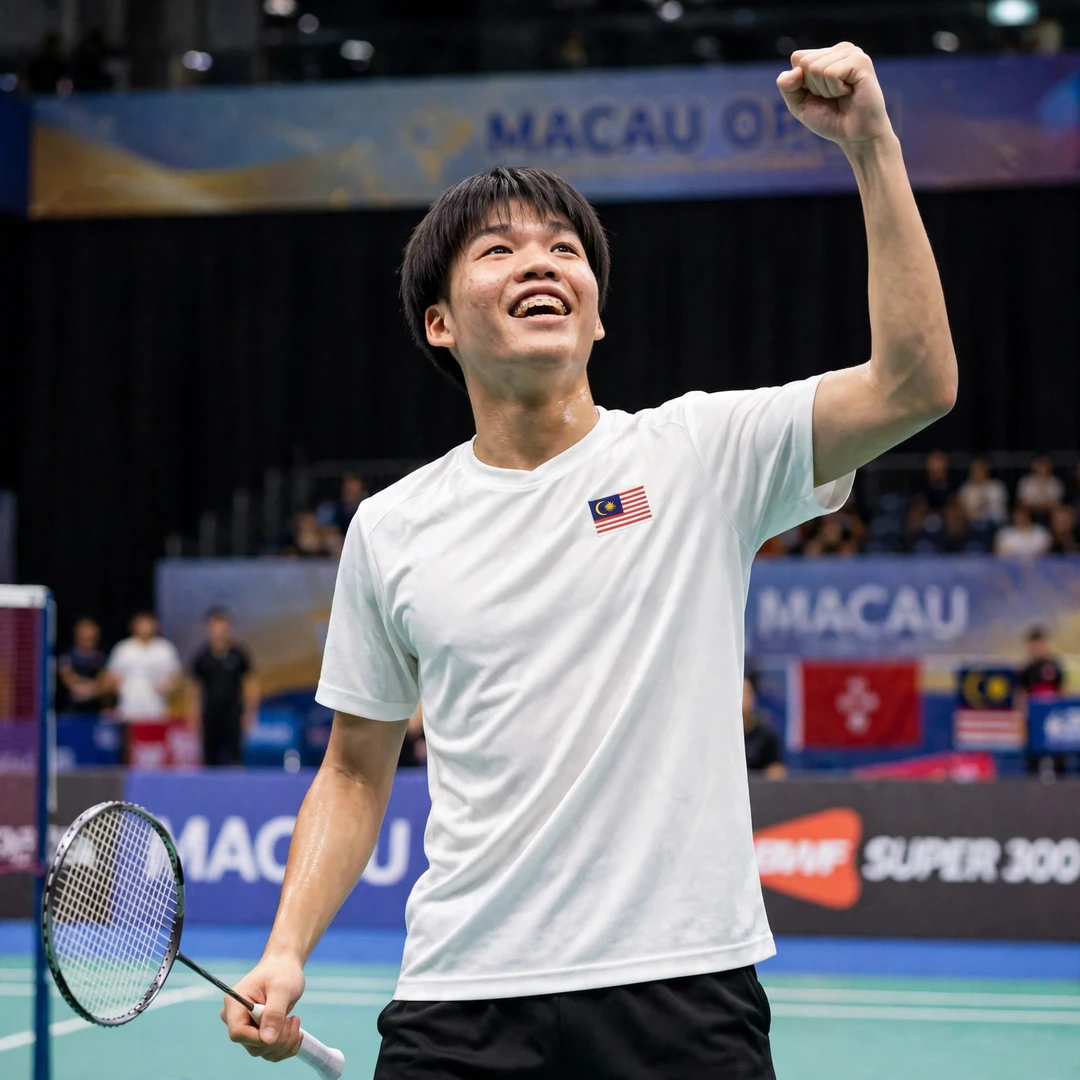
His defining week came at the Macau Open, a Super 300 event, in the summer of 2026. Huan had to qualify first, and he did it the hard way: a straight-games dismissal of Indonesia’s Dicky Dwi Pangestu 21-13, 21-11, then a tense 21-19, 22-20 win over China’s Sheng Xiaodong. Two wins had carried a world No. 110-range player into the main draw of a Super 300 — already a success. What happened next made it the week of his career so far.
In the first round of the main draw he faced Misha Zilberman of Israel, a veteran Olympian ranked around 71 places above him. Huan lost the first game 13-21 — and then turned the match completely, winning 13-21, 21-11, 21-9 in 56 minutes. Beating a player of Zilberman’s experience and ranking, from a game down, in a Super 300 main draw, is the result that Malaysian badminton media led with: the national back-up player who refused to be a first-round footnote.
Career Milestone #3
Career-High World No. 109
The run ended in the round of 16 against Thailand’s Kantaphon Wangcharoen, a former top-20 player, who won 21-10, 21-9. The scoreline is honest about the gap that still exists between the top 40 and the rest — and that honesty is useful. Huan left Macau knowing he could beat a top-60 veteran on a big court, and knowing exactly how much faster and heavier the next level hits. Both lessons are worth ranking points over a career.
Macau was not his only Super 300 qualifying campaign of 2026. At the Canada Open he beat Italy’s Fabio Caponio in three games in qualifying, then lost the qualifying final to his own compatriot and fellow back-up squad member Cheam June Wei in two tight games, 17-21, 19-21 — a peculiar feature of the Malaysian system, where the back-up squad trains together daily, then meets in qualifying draws around the world, each man blocking the other’s path. His best result of the season by round came in Indonesia, at the Pontianak International Challenge, where he reached the quarter-finals with three match wins in the week; he also reached the round of 16 at the Singapore International Challenge, the North Harbour International in New Zealand and the Saipan International, collecting the steady mid-size points hauls that keep a ranking alive while the big results are being built.
One of his most revealing wins came at the Denmark Challenge in 2026, against another familiar face: compatriot Eogene Ewe, his fellow BAM back-up squad member. Huan lost the first game 22-24, then refused to lose the match, coming back 21-19, 21-19. A two-point margin in back-to-back games against a training partner who knows every shot you own is a win built entirely on nerve — and it is not an isolated case. His signature victories, over Zilberman, Ewe and Caponio, all went to three games or turned on a game he had lost first.
Career Milestone #4
The Macau Open Run of 2026
The reward for the season arrived in September 2026: on 1 September, Huan Kai Hern reached a career-high world ranking of No. 109. He held a place around No. 110 through September — high enough to be seeded fourth at the North Harbour International in Auckland — and for a player who turns 21 in October 2026, standing on the edge of the top 100 before his twenty-first birthday puts him ahead of the curve for a Malaysian singles player.
The Week 43 rankings of 20 October 2026 show him at No. 129 with 15,050 points — a dip from the September peak that needs explaining rather than hiding. BWF ranking points expire after 52 weeks, so a player’s total is a treadmill: results must be replaced as fast as they age out. October took some of his oldest counting results away before the autumn events could replace them. He remains Malaysia’s No. 8 men’s singles player, behind Leong Jun Hao, Lee Zii Jia, Justin Hoh, Cheam June Wei, Eogene Ewe, Aidil Sholeh and Kok Jing Hong — seven men, most of them older, between him and the top of the national order.
Playing Style
The Patient Counter-Puncher
His place in that order matters because of how Malaysia builds its teams. The Badminton Association of Malaysia runs a back-up squad — the group Malaysian media described in June 2026 as ‘back-up men’s singles shuttlers Huan Kai Hern, Cheam June Wei and Eogene Ewe’ — who train at the national centre, travel the circuit, and wait for the senior squad places ahead of them to open. Thomas Cup squads and Asian Games teams are picked from exactly this pool. Huan is not yet a household name in Malaysian badminton; he is something more useful at 21 — next in line.
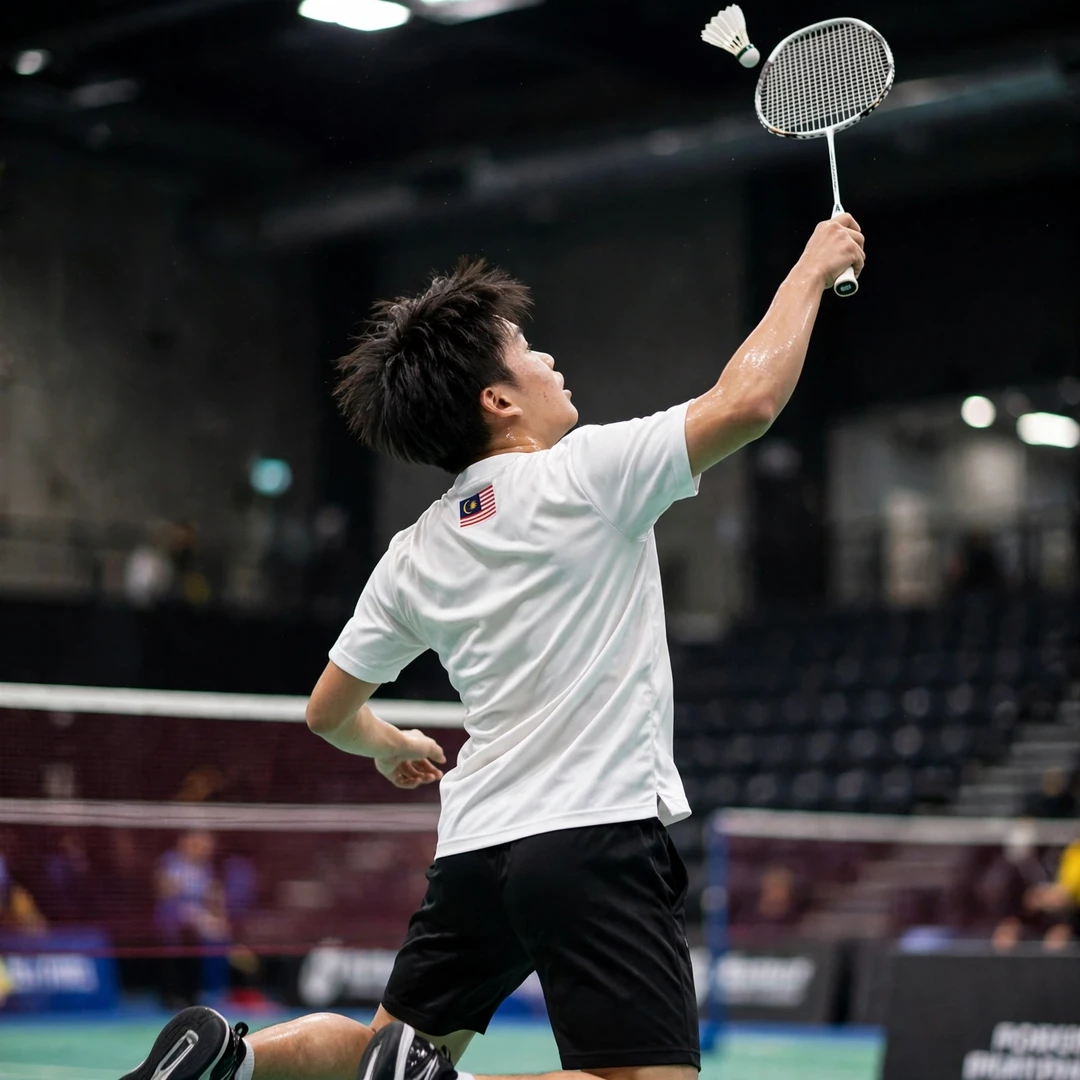
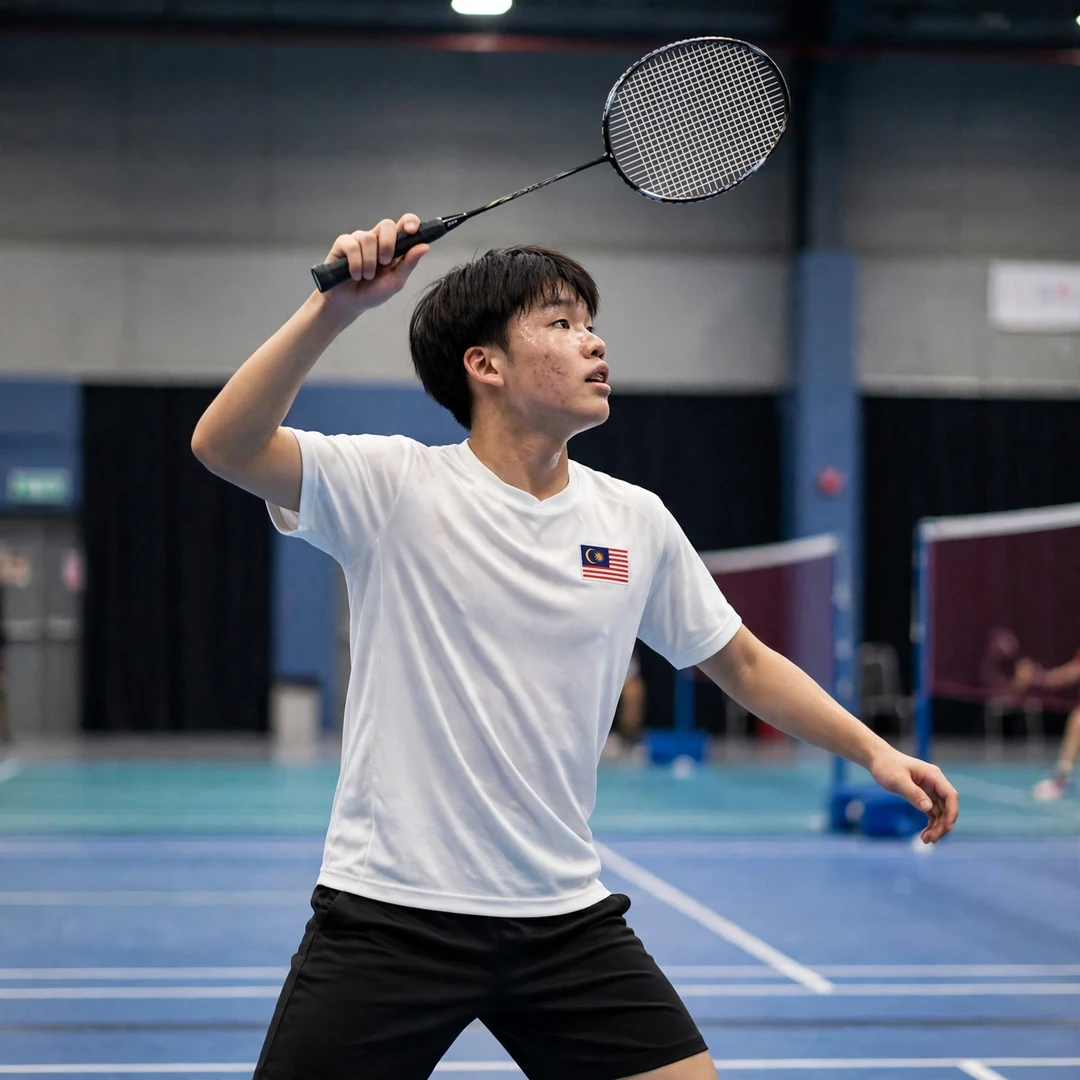
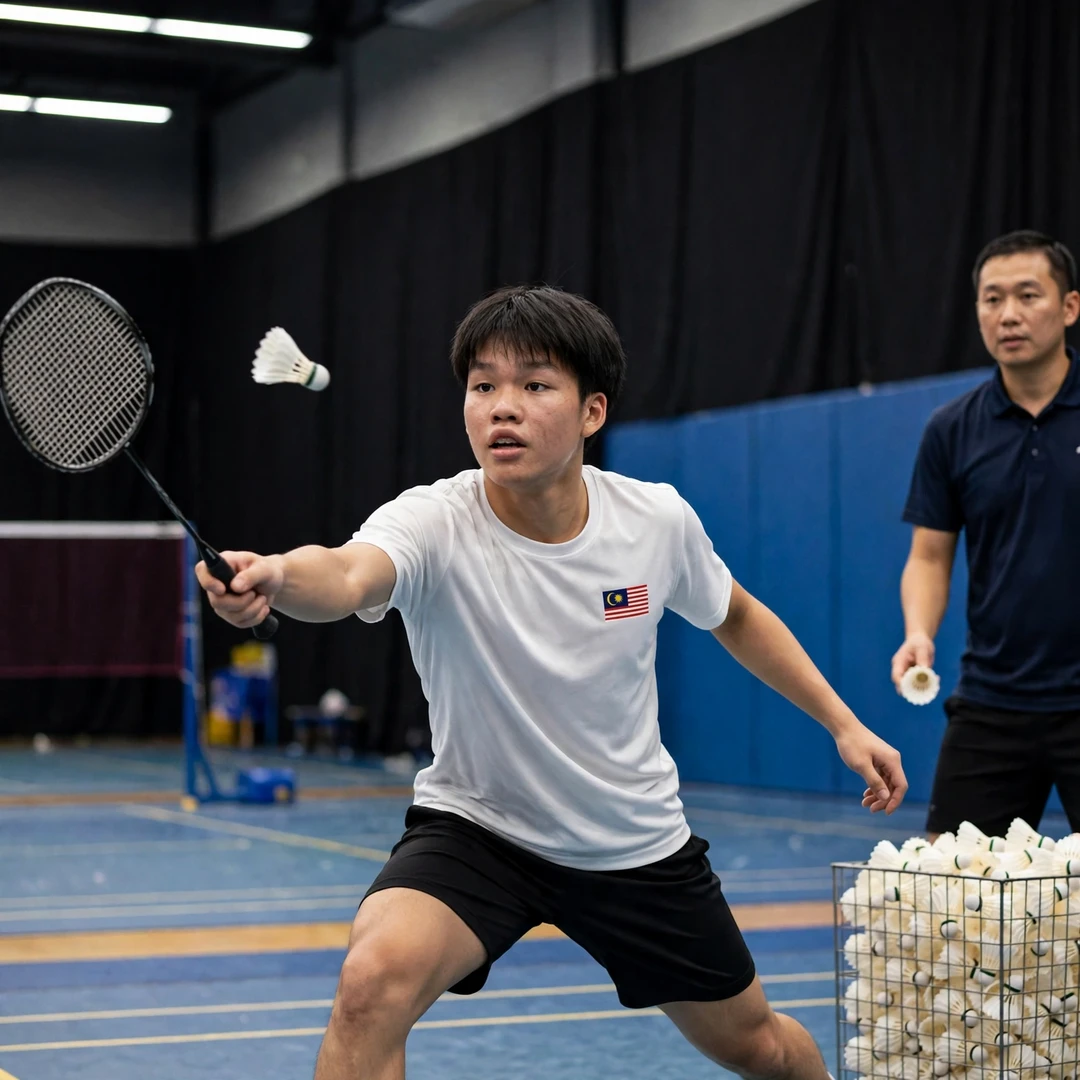
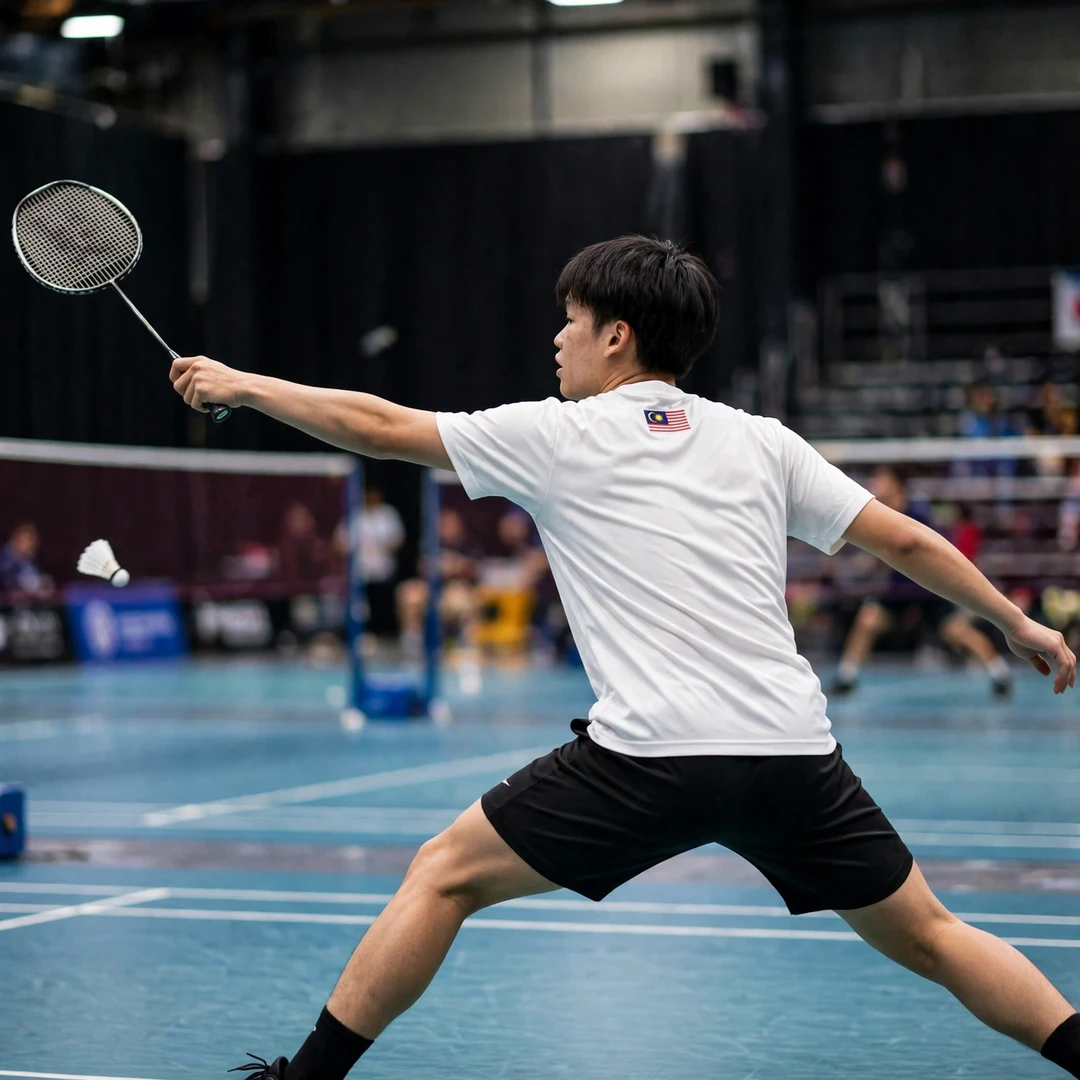
On court, Huan Kai Hern is a right-handed all-court player whose game is built on rally construction rather than first-strike power. The evidence is in his results: his biggest wins are three-game wins. Against Zilberman he absorbed a lost first game and raised his level; against Ewe he saved a match in the second game and closed the third by two points; against Caponio in Canada he again needed three games. Players who win like that share a trait — they do not need to be the best player in the hall, only the most patient one in the rally.
Coaches describe this kind of player as a counter-puncher: solid in defence, comfortable retreating and rebuilding the rally, and dangerous precisely when an opponent over-commits to attack. It is a game that suits the lower-tier circuit, where courts can be slow, halls drift, and the fancy attacking game breaks down — the player who keeps the shuttle in play, varies the pace and defends one more shot than the opponent expects tends to leave with the points.
Mental Strength
Patience, Resilience and the Three-Game Habit
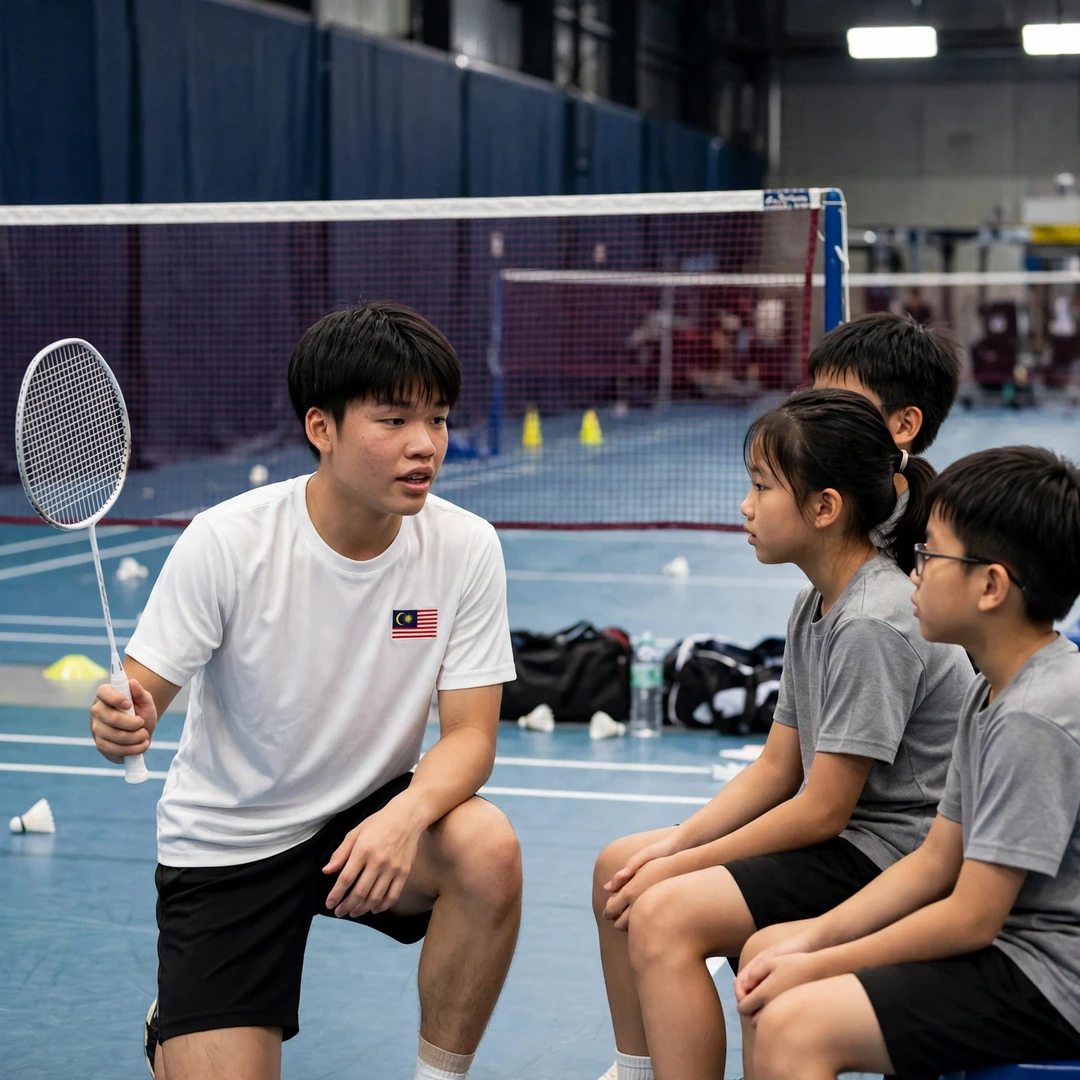
Young players studying Huan should watch what he does after losing a first game — because his career says the match often starts there. There is no visible panic, no sudden change of identity: the rally patterns stay, the defence holds, and the opponent discovers that the second game is harder than the first. Learning to lose a game without losing your structure is one of the most trainable skills in junior badminton, and it is the skill his whole ranking is built on.
His career also teaches the qualifying lesson. Most of his 2026 season was spent in qualifying draws — Macau, Canada, the China Masters events — where a player must win two matches before the tournament proper even begins, often on the same day. There is no glamour in qualifying, but there is an education: different opponents, no rhythm, no crowd, just problem-solving under fatigue. A junior who learns to love qualifying rounds will never fear a draw sheet again.
Practical lessons from his journey include building a game that travels — defence and rally tolerance work in every hall on earth; treating three-game fitness as a weapon, because his biggest wins all came late in matches; using qualifying draws as free match practice against unfamiliar styles; keeping perspective when the ranking dips as old points expire; and remembering that a national back-up squad place is earned by results across a whole season, not one famous week.
Learning Reference
ST Badminton Academy Connection
ST Badminton Academy has no official partnership or endorsement from Huan Kai Hern. He is not connected with our academy, and this profile is published purely as an educational case study for parents and junior players who want to understand how a Malaysian back-up squad player is climbing from No. 941 toward the world’s top 100.
Many of our students in Malaysia study his matches to understand the climber’s game: how a qualifier prepares to face a veteran ranked 71 places higher, how a player wins three-game matches on patience rather than power, and how the 52-week points treadmill shapes a professional’s calendar. His Macau week and his Denmark Challenge comeback are both used in our discussions of resilience.
We encourage our students to observe his defensive structure, his calm after losing first games and his willingness to grind through qualifying draws on three continents — and to notice that his career-high arrived at 21, built from quarter-finals and round-of-16 finishes stacked week after week, not from a single televised miracle.
FAQs: Huan Kai Hern Malaysian Badminton Player
Here are answers to common questions about Huan Kai Hern’s career, achievements and what young players in Malaysia can learn from the BAM back-up squad shuttler and his climb toward the top 100.
Who is Huan Kai Hern and which country does he represent in badminton?
Huan Kai Hern is a Malaysian professional badminton player competing in men’s singles. Born on 2 October 2005, he came through the Selangor state team, played the deciding mixed doubles in a national under-18 team final, and is now a member of the Badminton Association of Malaysia’s national back-up squad, standing at world No. 129 in October 2026 with a career-high of No. 109.
What are Huan Kai Hern’s biggest badminton achievements?
His biggest achievements are the 2026 Macau Open run — qualifying for the Super 300 main draw and beating veteran Misha Zilberman from a game down — a quarter-final at the 2026 Pontianak International Challenge, a career-high world ranking of No. 109 in September 2026, and, as a junior, a silver medal with Selangor at the PETRONAS National Inter-State Under-18 Mixed Team Championships, where he played the deciding match of the final.
What is Huan Kai Hern’s playing style?
Huan plays a patient, right-handed all-court game built on rally construction, stubborn defence and counter-attack. He is at his best in long matches: his signature wins over Misha Zilberman, Eogene Ewe and Fabio Caponio all went to three games or turned after he lost the first, which tells you his real weapons are patience, fitness and nerve in the closing points.
How did Huan Kai Hern perform at the Macau Open?
At the 2026 Macau Open, a Super 300 event, Huan qualified by beating Dicky Dwi Pangestu 21-13, 21-11 and Sheng Xiaodong 21-19, 22-20, then beat Israel’s Misha Zilberman 13-21, 21-11, 21-9 in the first round — a player ranked around 71 places above him. His run ended in the round of 16 against Thailand’s Kantaphon Wangcharoen, 10-21, 9-21.
How can my child learn from Huan Kai Hern’s training approach?
Young players can study Huan’s approach by training three-game fitness as a skill in itself, practising the habit of keeping the same rally structure after losing a game, and treating qualifying rounds and small tournaments as essential match education. At ST Badminton Academy we use his Macau run and his Denmark Challenge comeback against Eogene Ewe as video lessons in patience, then train the same patterns in rally-tolerance and defensive drills.
Did Huan Kai Hern win any junior honours?
His junior honours were team honours: a silver medal with Selangor at the PETRONAS National Inter-State Under-18 Mixed Team Championships, where the final against Johor went to a deciding mixed doubles and Huan was trusted to play it alongside Zi Yi Wong. Selangor lost the tie 3-4 — but being chosen for the deciding rubber of a national final is itself a mark of a junior his coaches trusted completely.
What are Huan Kai Hern’s best international results?
His best international results are the quarter-finals at the 2026 Pontianak International Challenge and the 2025 North Harbour International, another quarter-final at the 2025 Northern Marianas International, a round-of-16 finish at the 2026 Macau Open — a Super 300 main draw reached through qualifying — and round-of-16 finishes at the Singapore International Challenge and the Baoji China Masters.
What playing style should young players learn from Huan Kai Hern?
Young players should study Huan’s complete game rather than one spectacular shot: the defensive structure that absorbs stronger attackers, the patience to rebuild rallies instead of forcing winners, and the closing-points nerve that has won him three-game matches against training partners and veterans alike. His game is built from trainable skills, which is why coaches love teaching from it.
Does ST Badminton Academy have any connection with Huan Kai Hern?
No, Huan Kai Hern is not a student, coach or ambassador of ST Badminton Academy. He represents Malaysia and developed through the Selangor state system and the Badminton Association of Malaysia’s national set-up at Bukit Kiara. However, coaches at our academy in Kuala Lumpur regularly use his matches as teaching material, because his career shows Malaysian juniors exactly what the road from state badminton to the world top 110 looks like.
Huan Kai Hern Career Highlights
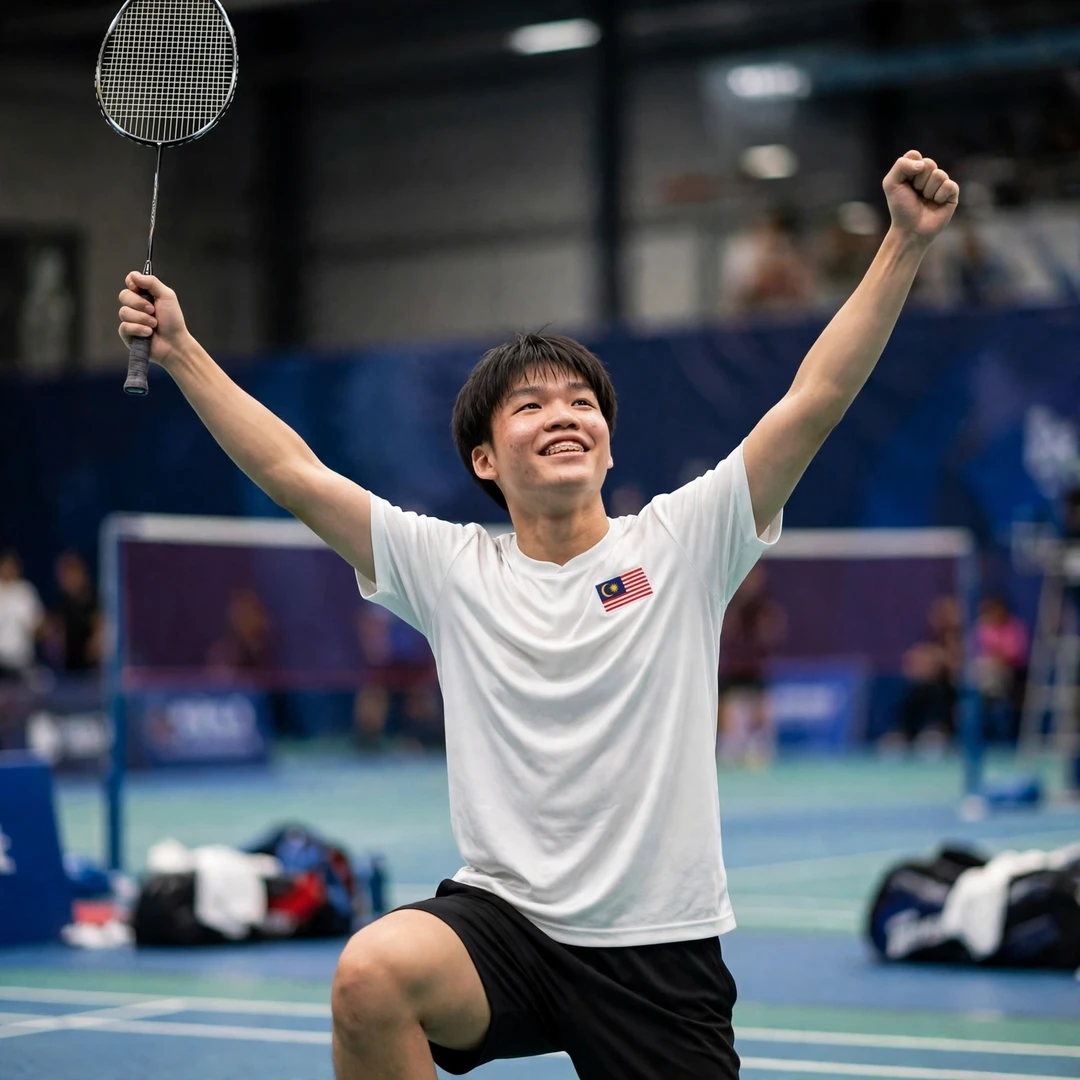
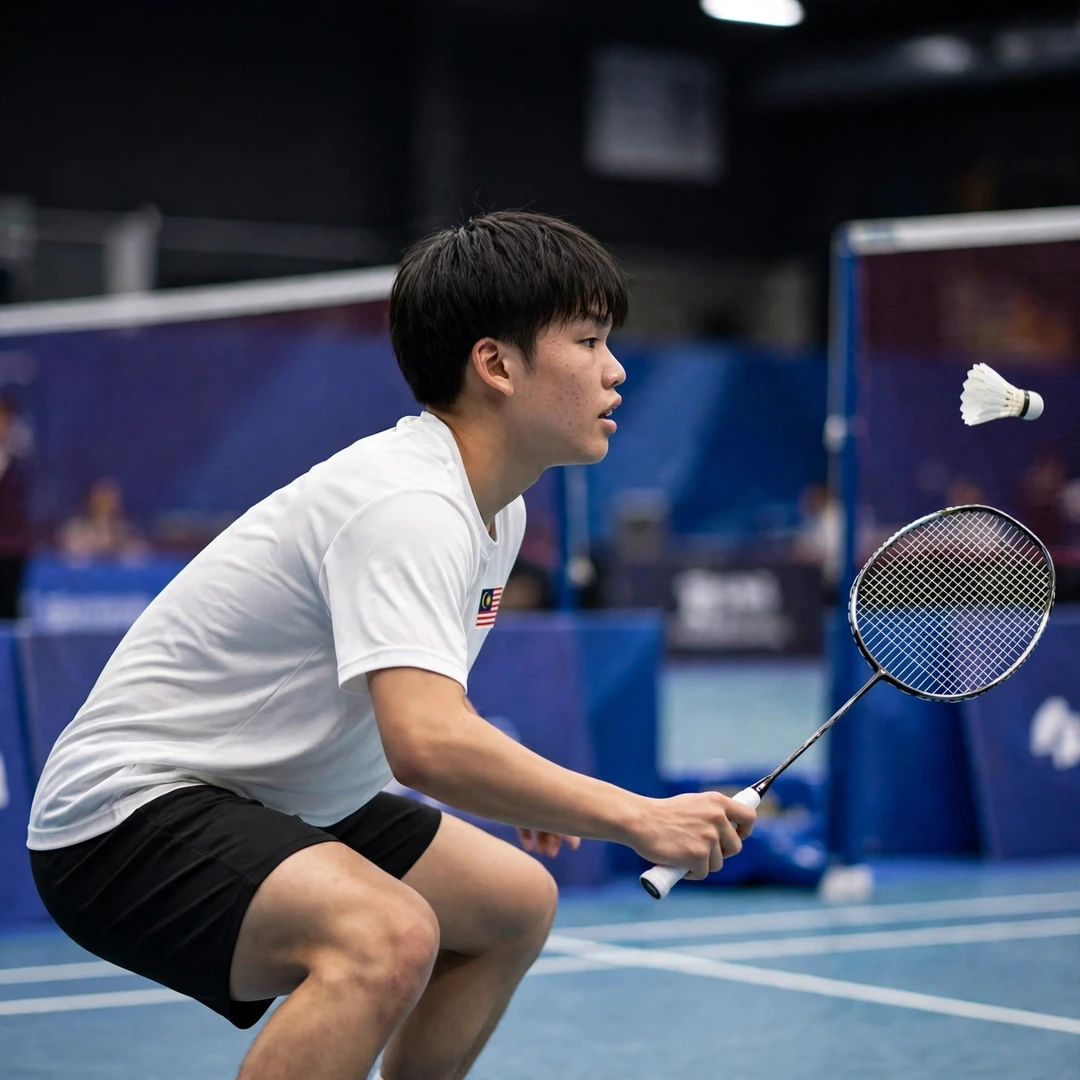
Career Statistics and Rankings
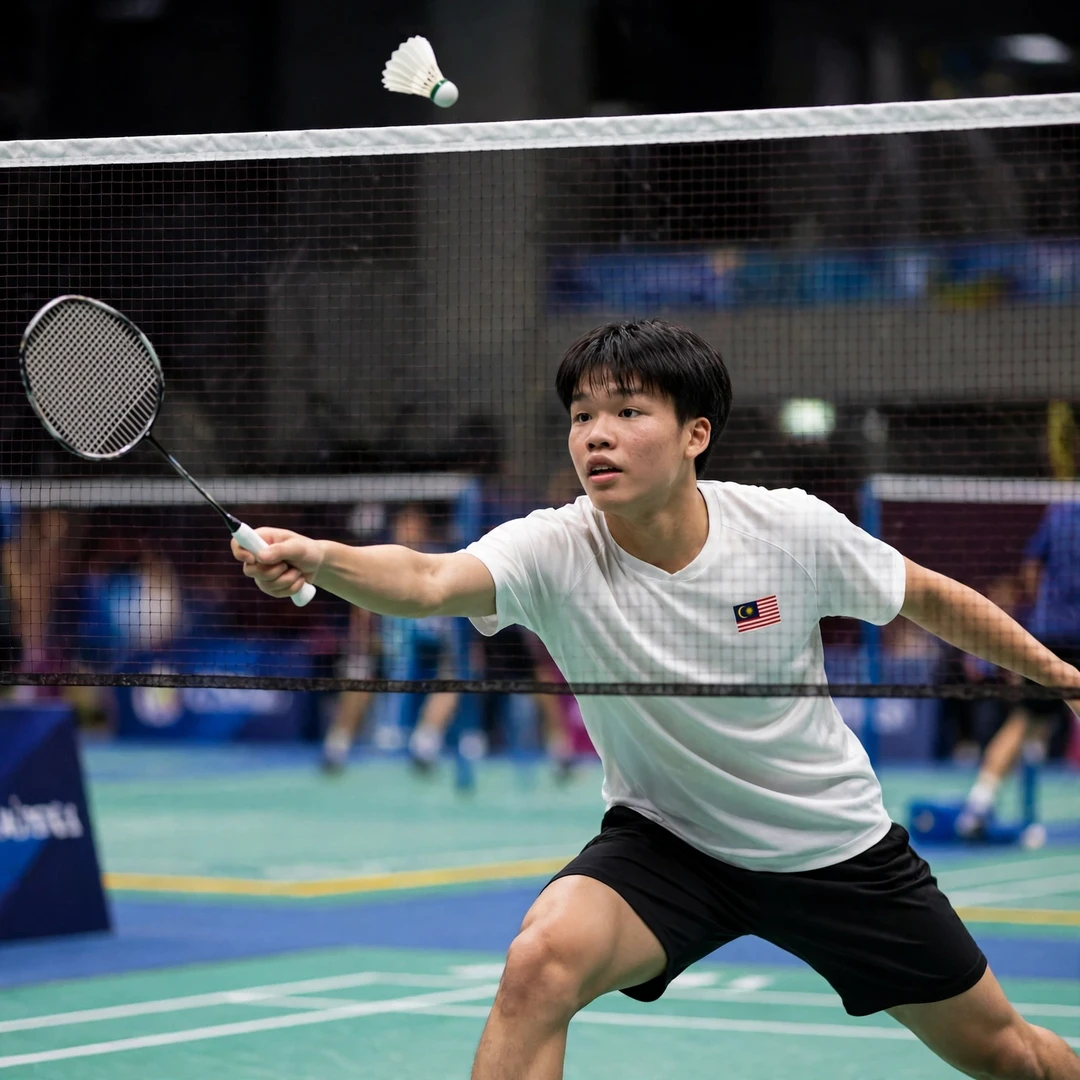
Huan Kai Hern, born 2 October 2005 in Malaysia, has climbed one of badminton's steepest ladders in just over two years: a Selangor junior trusted with a deciding national final, a first ranking of No. 941 in July 2023, a top-150 breakthrough in October 2025, a Super 300 giant-killing at Macau in 2026, and a career-high world No. 109 at twenty years old — now Malaysia's No. 8, waiting in the national back-up squad for his next step.
| Development Area | Common Misconception | What Huan Kai Hern's Career Shows REALITY |
|---|---|---|
| Junior Foundation | Talent alone decides who becomes a champion. | Huan started in the Malaysian state system with Selangor and played the deciding mixed doubles of a national under-18 team final — a structured junior base came first. |
| Playing Style Priority | Kids should copy the flashiest attacking shots. | Huan built a complete game first; his famous three-game comebacks are the finishing touch on patient rallying, reliable defence and net play. |
| Fitness Importance | Juniors can out-train everyone without rest. | Huan's ranking dipped from No. 109 to No. 129 in October 2026 as 52-week-old points expired — the ranking treadmill is managed with smarter scheduling, not more hours. |
| Mental Approach | Top players never get nervous or upset. | Huan is a qualifier who beat a veteran ranked 71 places above him at the Macau Open, yet he stays calm and patient on court — mental skills are trained, not inherited. |
| Attacking Training | Smashing harder is always the answer. | His 2026 Macau Open win over Misha Zilberman (13-21, 21-11, 21-9) came from rally control and defensive patience, not raw power. |
| National Milestones | Only world titles matter. | Huan's junior team silver with Selangor and his place in Malaysia's national back-up squad made him one of his country's next-in-line players — national milestones build a career step by step. |
| Career Timeline | Champions peak once and fade fast. | From a first BWF ranking of No. 941 in July 2023 to a career-high world No. 109 in September 2026, Huan proves sustained development beats a short peak. |
Study Huan Kai Hern's Work Ethic and Professional Approach
This profile explains who Huan Kai Hern is, his major achievements, and what developing players can learn from his journey. Whether you are a parent in Kuala Lumpur, Cheras or anywhere in Malaysia wondering what the road from state junior badminton to the professional circuit really looks like, Huan's story carries the answer: build a game that travels, win the third games, and never stop climbing — book a trial class with ST Badminton Academy on WhatsApp at +60 17-684 2136 and let your child begin a development journey built to last.