Indian Men’s Singles Badminton Star
Rounak Chouhan

India
Player Event: Men’s singles
Born on 20 August 2007 in Raipur, Chhattisgarh
Right-handed attacking talent · World Junior team bronze medallist and 2026 US Open semi-finalist
Understanding Rounak Chouhan (Indian Badminton Star)
Rounak Chouhan is the teenage name Indian badminton keeps circling. Born in Raipur, Chhattisgarh, he is a right-handed attacking player based at the National Centre of Excellence, Guwahati, and he has climbed the junior-to-senior ladder faster than almost anyone in his age group: back-to-back India Junior International Series titles in 2024 and 2025, a peak of world junior No. 11, India’s men’s singles lead in the country’s first-ever World Junior Championships mixed team bronze in 2025, and a first senior podium at the Odisha Masters that December. Then, in June 2026, the wider world noticed: entering the US Open as world No. 80, he beat top seed and world No. 6 Chou Tien Chen and reached the Super 300 semi-finals. In the BWF Week 43 rankings of 20 October 2026 he stands at a career-high world No. 57 with 30,340 points — still only nineteen years old.
Raipur Roots and the Guwahati Road
Chouhan was born on 20 August 2007 in Raipur, the capital of Chhattisgarh in central India, and picked up a racket at the age of eight for the simplest of reasons: his elder sister played, and he would not be left behind. Badminton was already in the house — his mother had played the game in college — and her advice became his compass: give 100 per cent on court, even on a bad day. The tall Raipur schoolboy progressed through state and national junior circuits with unusual speed, and by his mid-teens the decision was made for him by results: India’s national system came calling, and the boy from Chhattisgarh packed for the other side of the country.
Junior Champion: Back-to-Back Titles in Hyderabad
In 2023 Chouhan moved to the National Centre of Excellence in Guwahati, Assam — he was part of the first intake when the centre launched that year. Training under South Korean coach Park Tae-sang, the man who guided P. V. Sindhu to her Tokyo Olympic medal, gave the teenager a daily education in what elite badminton actually demands: structure, repetition, and accountability. Chouhan has credited the Guwahati environment with sharpening exactly the parts of his game that junior success had not yet tested, and it is where he still trains today, alongside India’s best young players.
Guwahati 2025: a World Junior Team Bronze for India
The junior honours piled up on schedule. At tournament level his defining junior result came in Hyderabad, at the India Junior International Series: champion in 2024, then — harder still — champion again in 2025, defending the title as the top seed with every young player in the draw hunting him. He rose to world junior No. 11 in the BWF junior rankings, finished runner-up at the All India Senior Ranking Tournament in Pune in 2025 while still a junior, and reached the second round of the Asian Junior Championships. Around those peaks came the apprenticeship results — early exits at the German Junior and Dutch Junior International — that taught him the depth of the world junior field.
Odisha Masters 2025: the First Senior Podium
His first senior footholds came quietly in 2024. At the CM Trophy India International Challenge he reached the quarter-finals, an eye-catching result for a seventeen-year-old in a senior field; at the Guwahati Masters, a Super 100 on the courts he trains on, he went out in the early rounds and learned how much faster the senior game moves. In 2025 he added a round-of-16 finish at the Phuket International Series in Thailand. None of it made headlines. All of it was the standard tuition of the professional game — paid early, by a player still eligible for junior events.
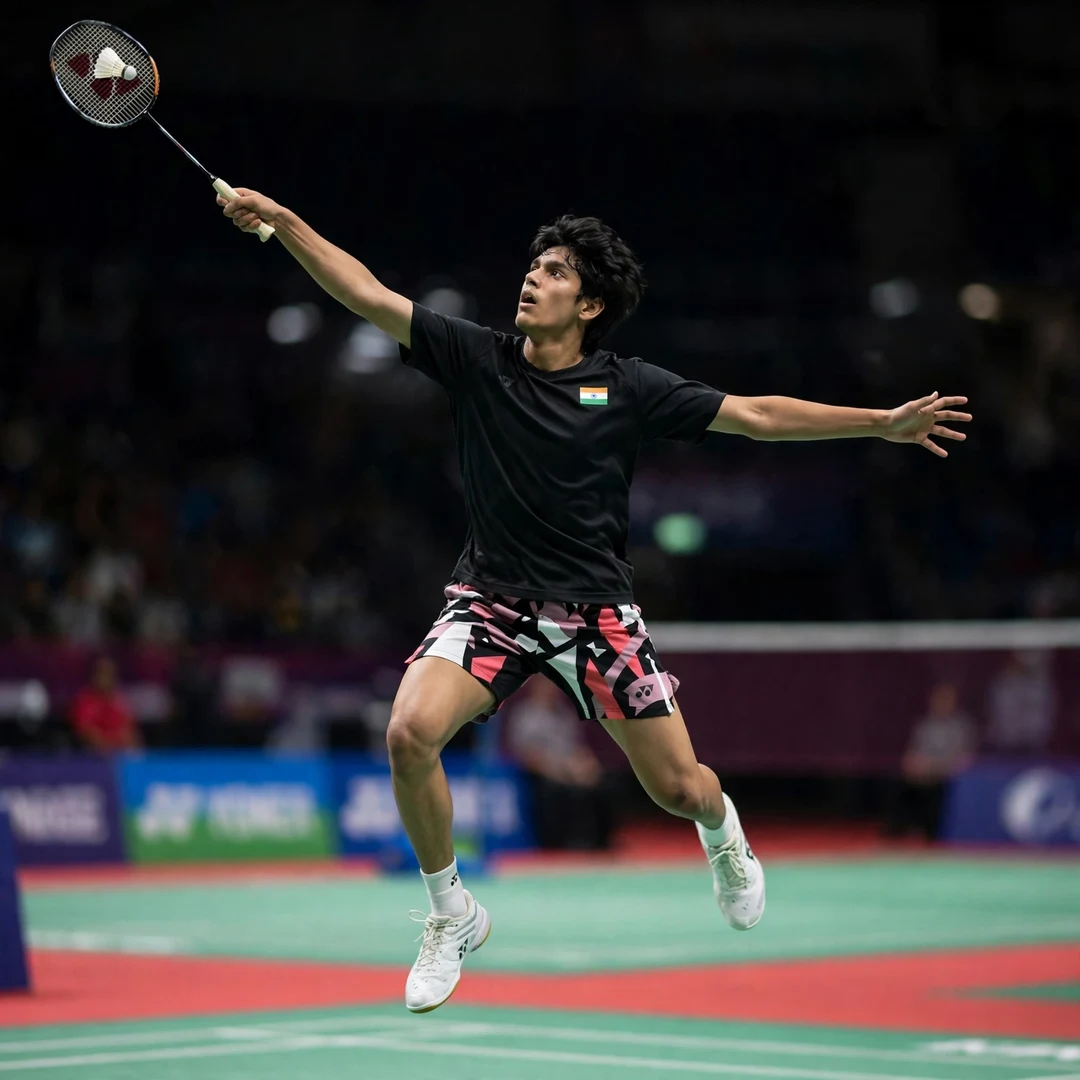
Career Milestone #1
California Breakthrough: Beating World No. 6 Chou Tien Chen
October 2025 brought the honour that will follow him for the rest of his career. The World Junior Championships were held in Guwahati — his training home — and India’s mixed team, with Chouhan as its men’s singles lead, beat South Korea in the quarter-finals to secure India’s first-ever medal in the team event. The semi-final against defending champions Indonesia ended the run, but the bronze medal was historic, and the doubles coach Ivan Sozonov singled Chouhan out as one of the standouts who handled the pressure. In the individual event, seeded eleventh, he opened by beating Sri Lanka’s Thisath Rupathunga 15–3, 15–6 before China’s Li Zhihang stopped him — a campaign that confirmed his place among the world’s leading juniors.
Two months later came his first senior podium. At the Odisha Masters in Cuttack in December 2025 — a BWF Tour Super 100 — Chouhan fought through the draw the hard way: he beat Sanskar Saraswat 11–21, 21–14, 21–9 in the round of 64, then Varun Kapur 21–18, 19–21, 21–17, recovering from losing positions in both matches. In the semi-finals he pushed compatriot Kiran George to the limit before losing 19–21, 21–8, 18–21 in 53 minutes — a bronze medal, and one of the first international podium finishes of his career. The pattern was already visible: slow starts, furious comebacks, and a teenager who refuses to accept that a match is gone.
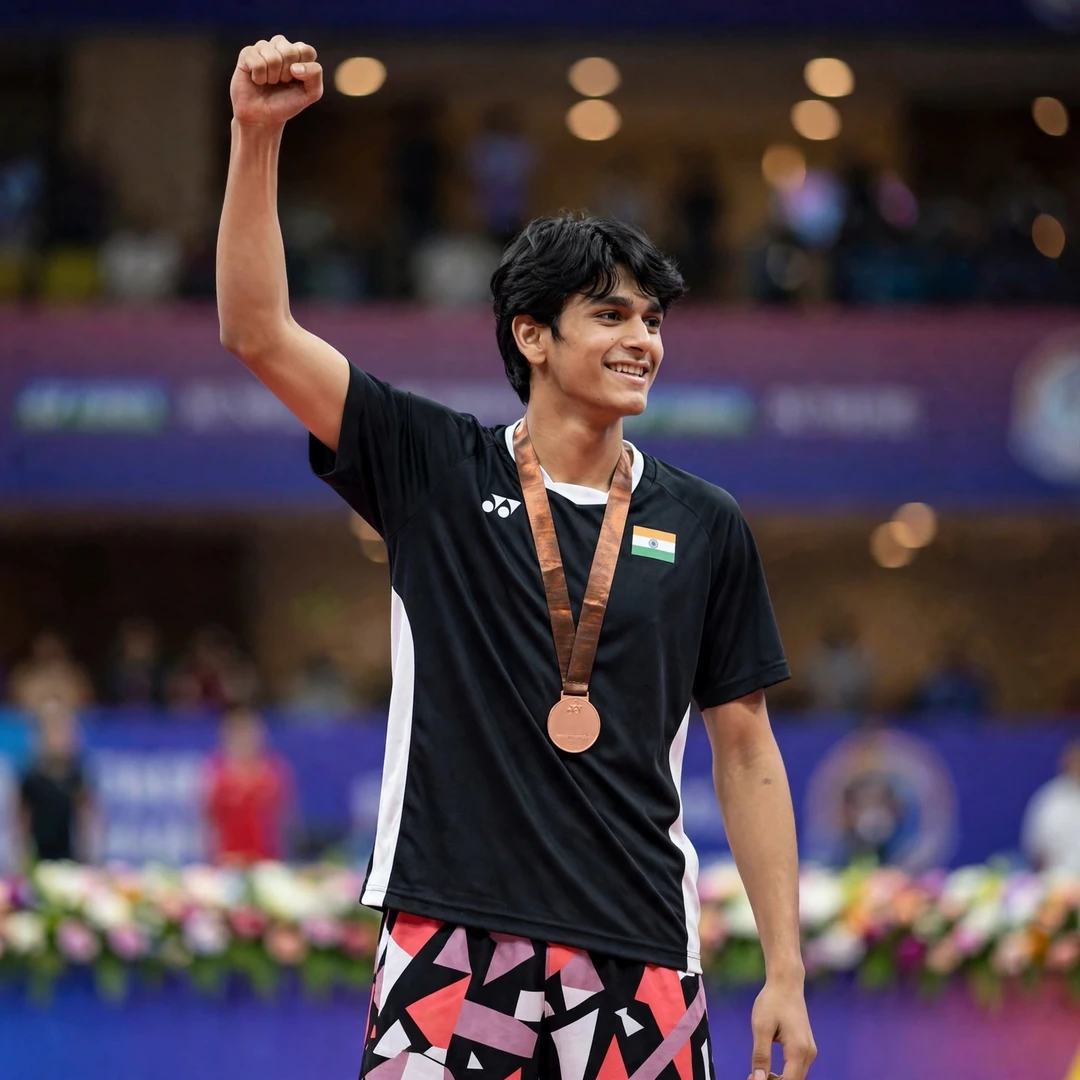
Career Milestone #2
2026: a Super 300 Semi-Final and a Ranking Surge
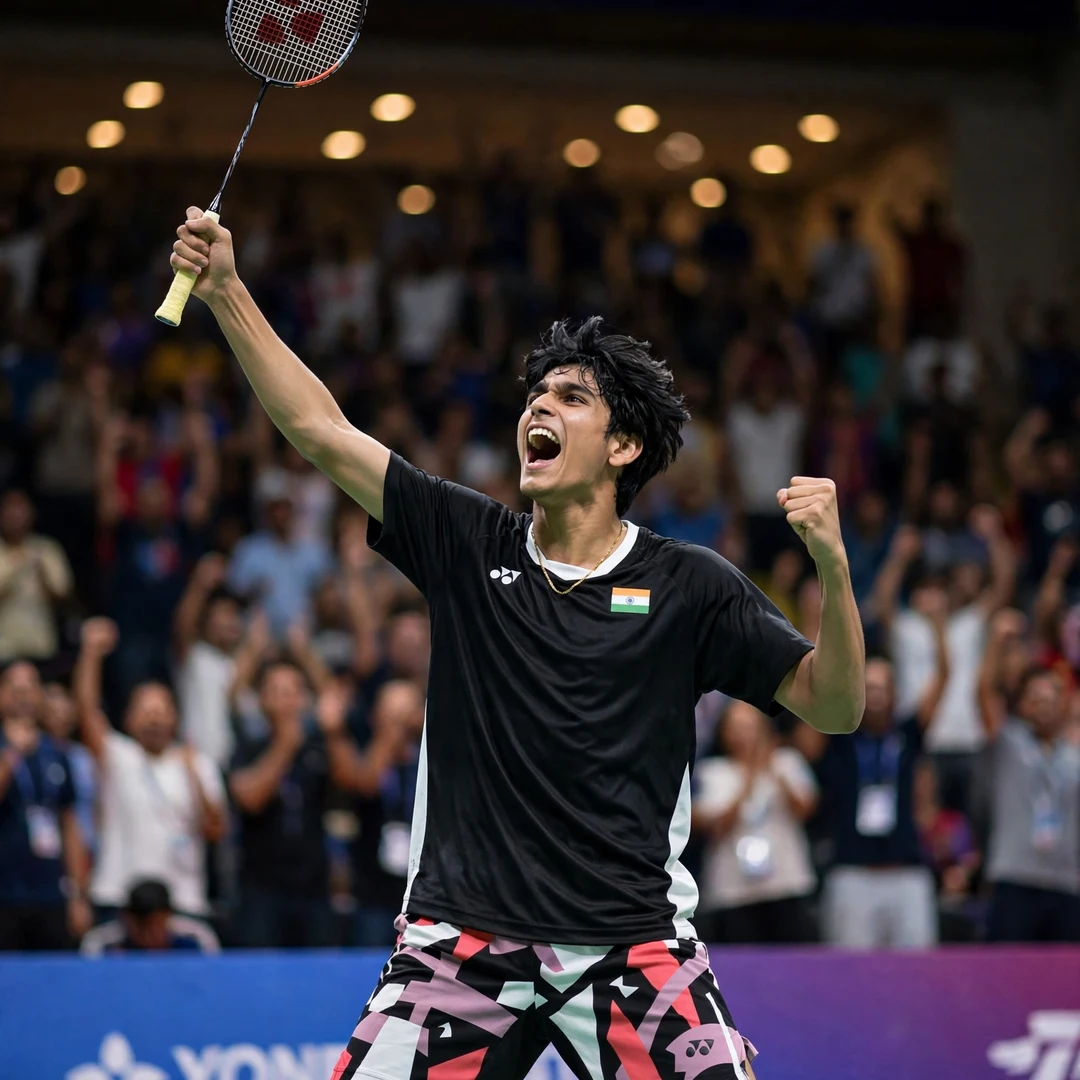
The breakthrough arrived in California in June 2026. At the US Open, a Super 300 in Fullerton, world No. 80 Chouhan survived qualifying — beating France’s Enogat Roy and Chinese Taipei’s Kuo Kuan Lin — then beat compatriot Sankar Muthusamy to reach the round of 16, where top seed and world No. 6 Chou Tien Chen waited. Chouhan trailed 15–17 in the first game and reeled off six straight points. He trailed 11–17 in the second, saved four game points, and converted his second match point to win 21–17, 26–24 in 49 minutes — his first victory over a top-ten player. In the quarter-finals he came from 8–14 down to beat Israel’s Misha Zilberman 23–21, 21–11. An 18-year-old qualifier was in a Super 300 semi-final.
The run ended one round later: Chinese Taipei’s Su Li Yang beat him 21–17, 21–19 in the semi-finals on 27 June 2026, closing a week that had announced Chouhan to the whole tour. There was no let-down afterwards. At the Taipei Open, another Super 300, in July 2026 he qualified for the main draw again — beating Joshua Nguyen 21–15, 21–11 and Kuo Kuan Lin 24–22, 21–10 — before Indonesia’s Richie Duta Richardo beat him 21–14, 21–16 in the round of 32. Two Super 300 events in a month, two qualifications survived, one semi-final: the US Open week was no accident, and the ranking was beginning to say so.
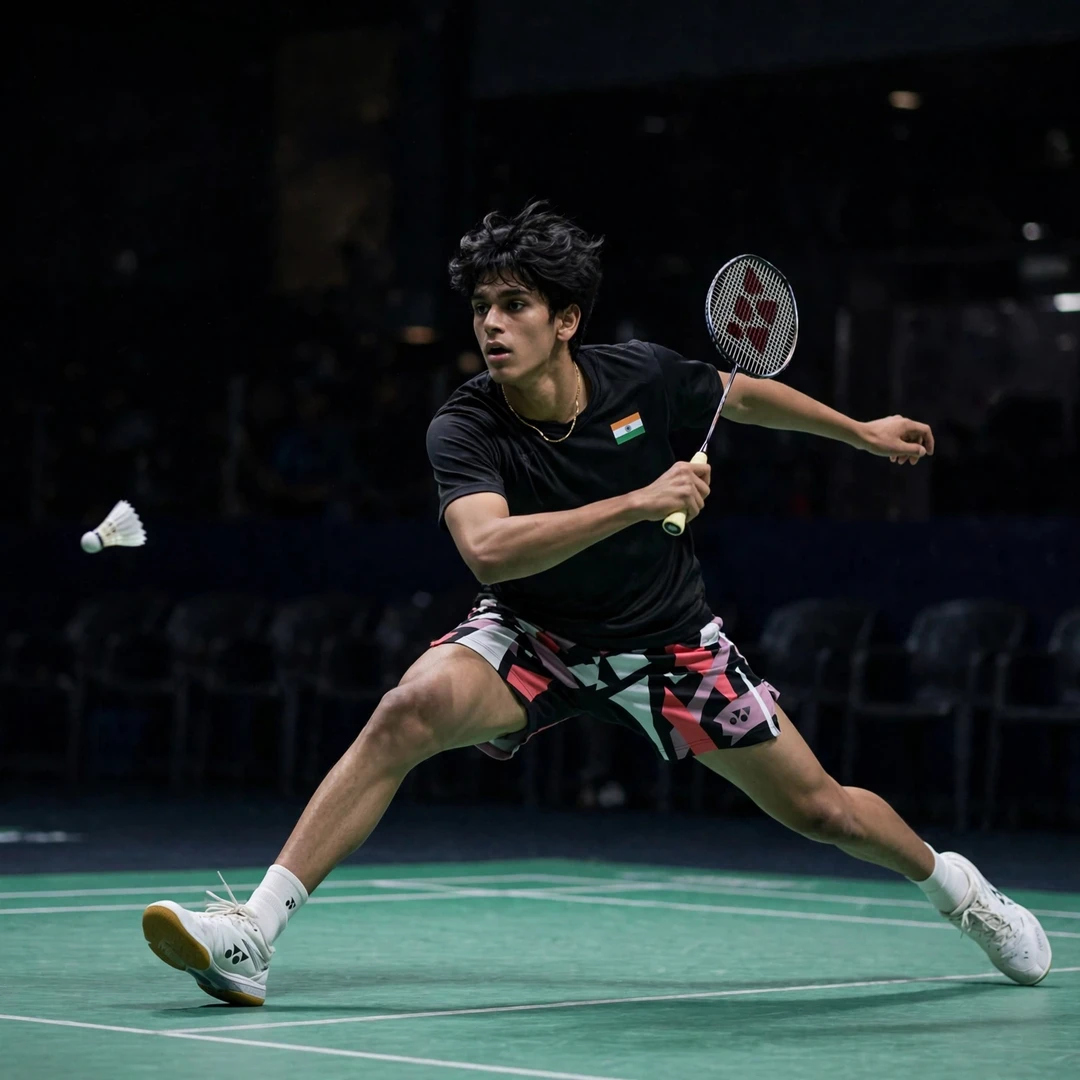
Rankings move slowly for qualifiers, then all at once. Chouhan had entered the US Open at world No. 80; by the autumn he was at No. 66, and in the Week 43 rankings of 20 October 2026 he reached No. 57 — a career high, with 30,340 points. What the number does not yet include matters as much: he has no senior international title, and his biggest wins have come against players he will now meet as an equal rather than an intruder. The next phase of a young career is the hardest — defending points, facing prepared opponents, winning the matches he is suddenly expected to win — and it is the phase he has just entered.
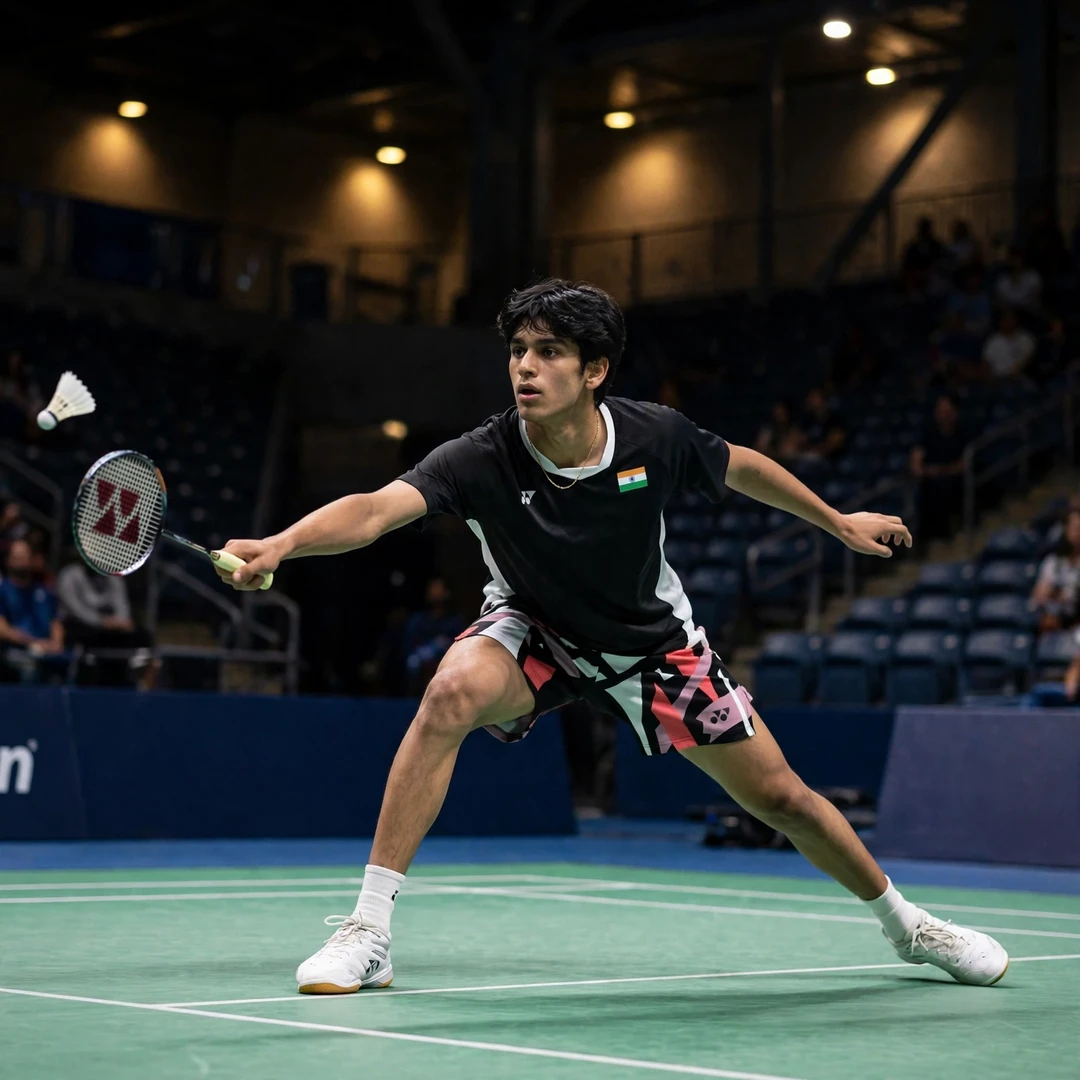
Career Milestone #3
The Arctic Test: a First Super 500 Main Draw
The autumn of 2026 showed him learning that phase in real time. At the Indonesia Masters Super 100 in Pontianak he beat Chinese Taipei’s Cheng-Han Tsai in straight games before Wang Po-Wei ended his run in the round of 16. A week later at the Vietnam Open in Ho Chi Minh City he beat Pranay Shettigar and then Shogo Ogawa of Japan, both in straight games, before Zhu Xuan Chen of China beat him in three. Beating Ogawa — a World Tour title winner — and trading games with the compact, fast Chinese school was exactly the education a 19-year-old needs: wins over established names, defeats that show precisely where the gaps are.
Read the ranking line as a graph and it slopes one way: world junior No. 11 in 2025; a senior ranking of No. 80 when he walked into the US Open in June 2026; No. 66 by the late summer; No. 57, a career high, on 20 October 2026 with 30,340 points — and he only turned nineteen in August. Most players his age are still deciding whether they belong on the senior tour at all. Chouhan has already banked a Super 300 semi-final, a Super 100 bronze, main-draw appearances at Super 500 level, and wins over a world No. 6 and a World Tour champion. The graph will not rise in a straight line — it never does — but its direction is not in doubt.
October 2026 took him to a new level of event. At the Arctic Open in Vantaa, Finland — a Super 500, two tiers above anything he had played before — Chouhan came through qualifying by beating Daniil Dubovenko in three games, then took a game off China’s Weng Hong Yang, a top-30 player, before losing in three in the round of 32. A first Super 500 main draw, a qualifying win, and a game taken from an elite opponent: for a teenager testing whether his game travels, the Arctic trip answered yes. He flew home with defeats, but they were the defeats of a player now operating at the tour’s top table.
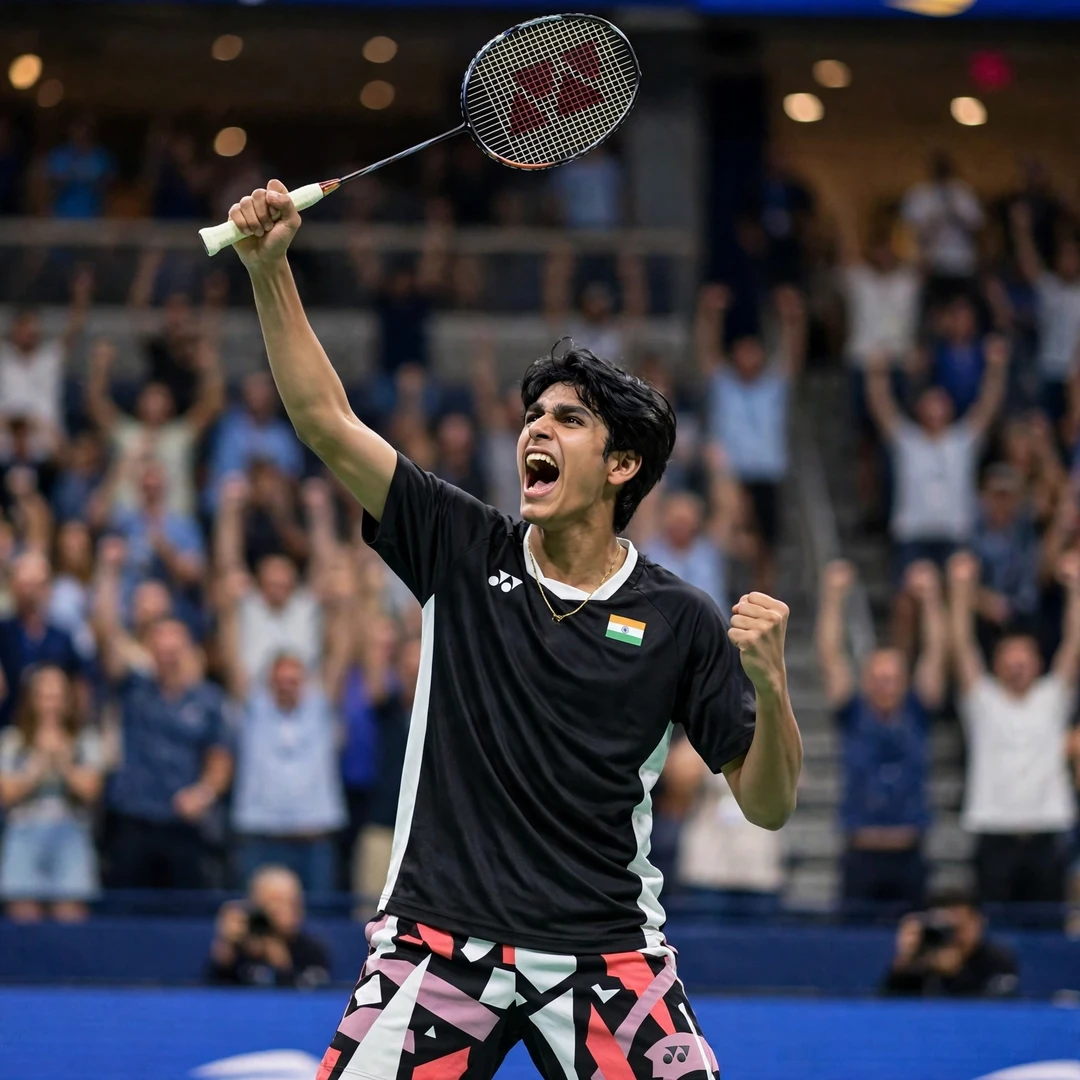
Career Milestone #4
World No. 57 at Nineteen: Still Rising
A week later, at the Malaysia Super 100 in Johor Bahru, home favourite Cheam June Wei beat him in straight games in the round of 32 — a reminder of the week’s true lesson. At No. 57, there are no soft draws left: every first round is a top-60 opponent, every opponent has studied the US Open tapes, and the fearless qualifier is now a name in the scouting reports. Chouhan’s 2026 season — a Super 300 semi-final, a Super 500 main draw, wins over a world No. 6 and a World Tour champion, and a career-high ranking — also sketches the work ahead: turning semi-finals into finals, and famous wins into ordinary Tuesdays.
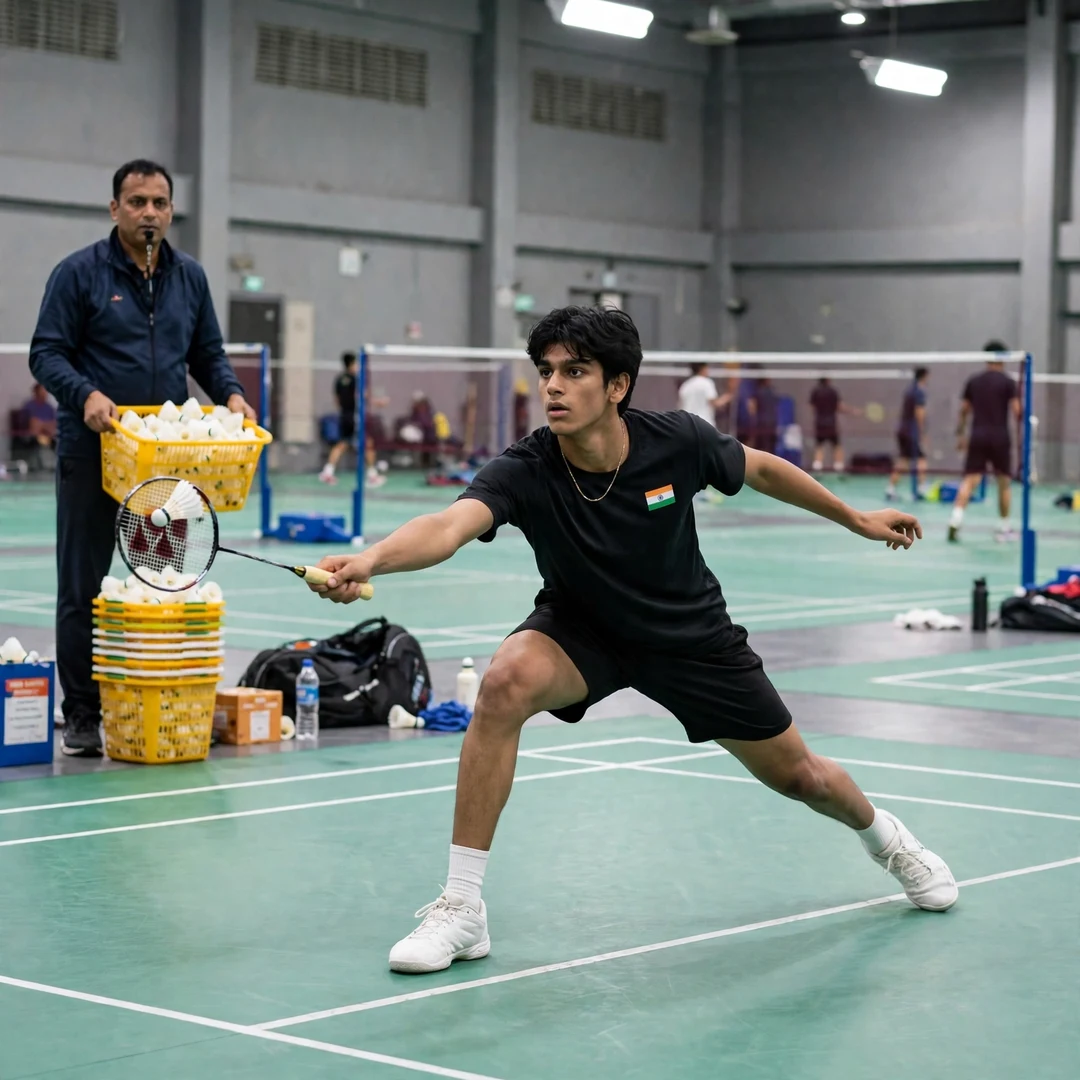
If one trait defines his young career, it is the comeback. Look at the evidence: a game and 15–17 down against Chou Tien Chen — six straight points. A second game at 11–17 — four game points saved, the match taken 26–24. Eight-fourteen down against Misha Zilberman — the game stolen 23–21. A set down against Sanskar Saraswat and Varun Kapur at the Odisha Masters — both matches won. Chouhan explains it plainly: he uses breathing exercises in the middle of matches to reset, and visualisation before them. His mother’s rule — give 100 per cent even on a bad day — has become a professional skill: the match is never treated as over, by him or, increasingly, by the man across the net.
Playing Style
The Ronaldo Jump: Attack Built on Speed
Strip the story back and its shape is the real curriculum. A boy in Raipur starts at eight because his sister plays; his mother, a college player, sets the standard; the national centre in Guwahati takes him at fifteen; junior titles follow in order — two India Junior International crowns, a world junior top-11 ranking, a historic team bronze; a first senior podium at eighteen; a giant-killing Super 300 run weeks later; and a career-high world No. 57 at nineteen. Nothing was skipped and nothing was gifted. That sequencing — family, system, juniors, seniors, breakthroughs — is precisely the order coaches try to build for every talented child, and Chouhan is its living proof.
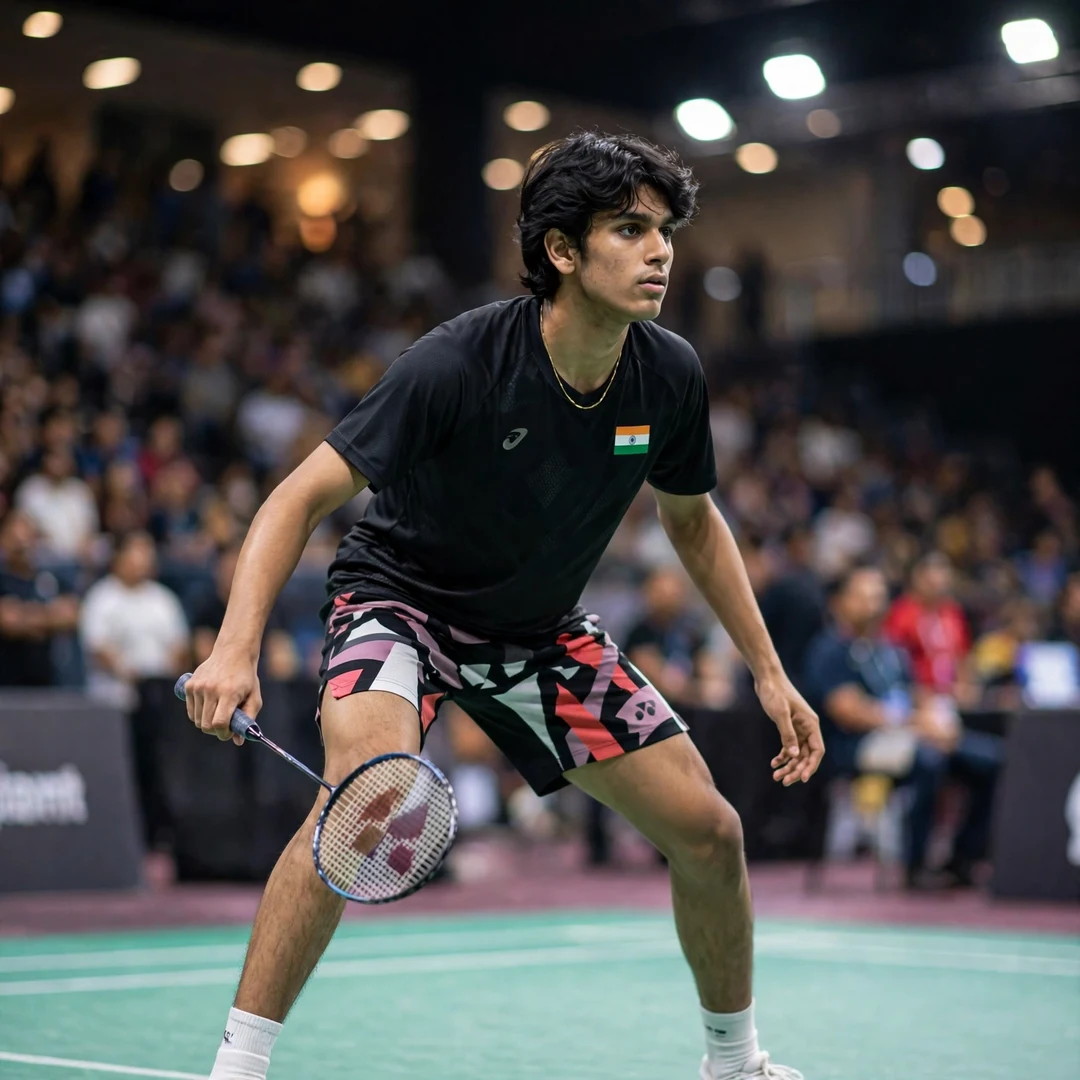
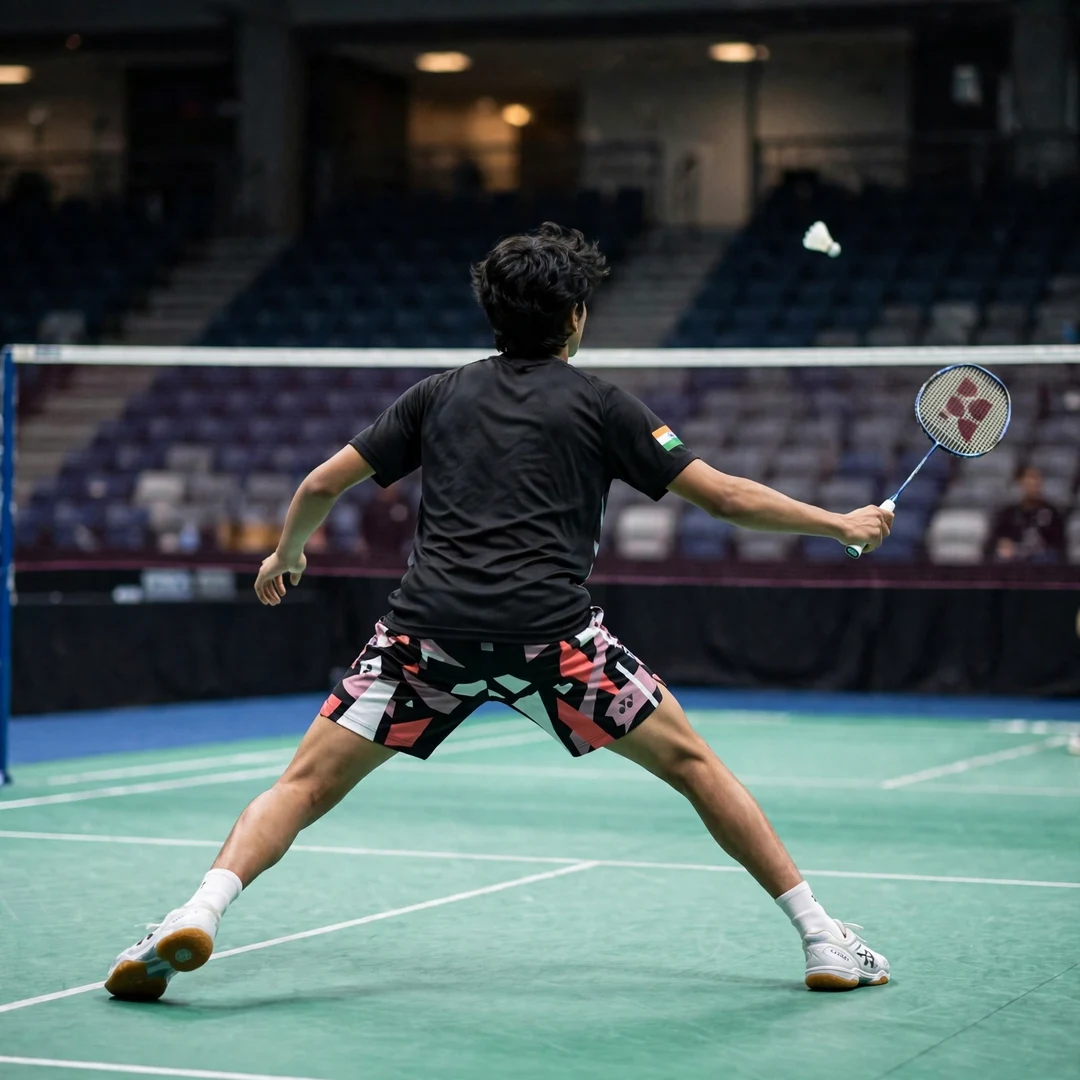
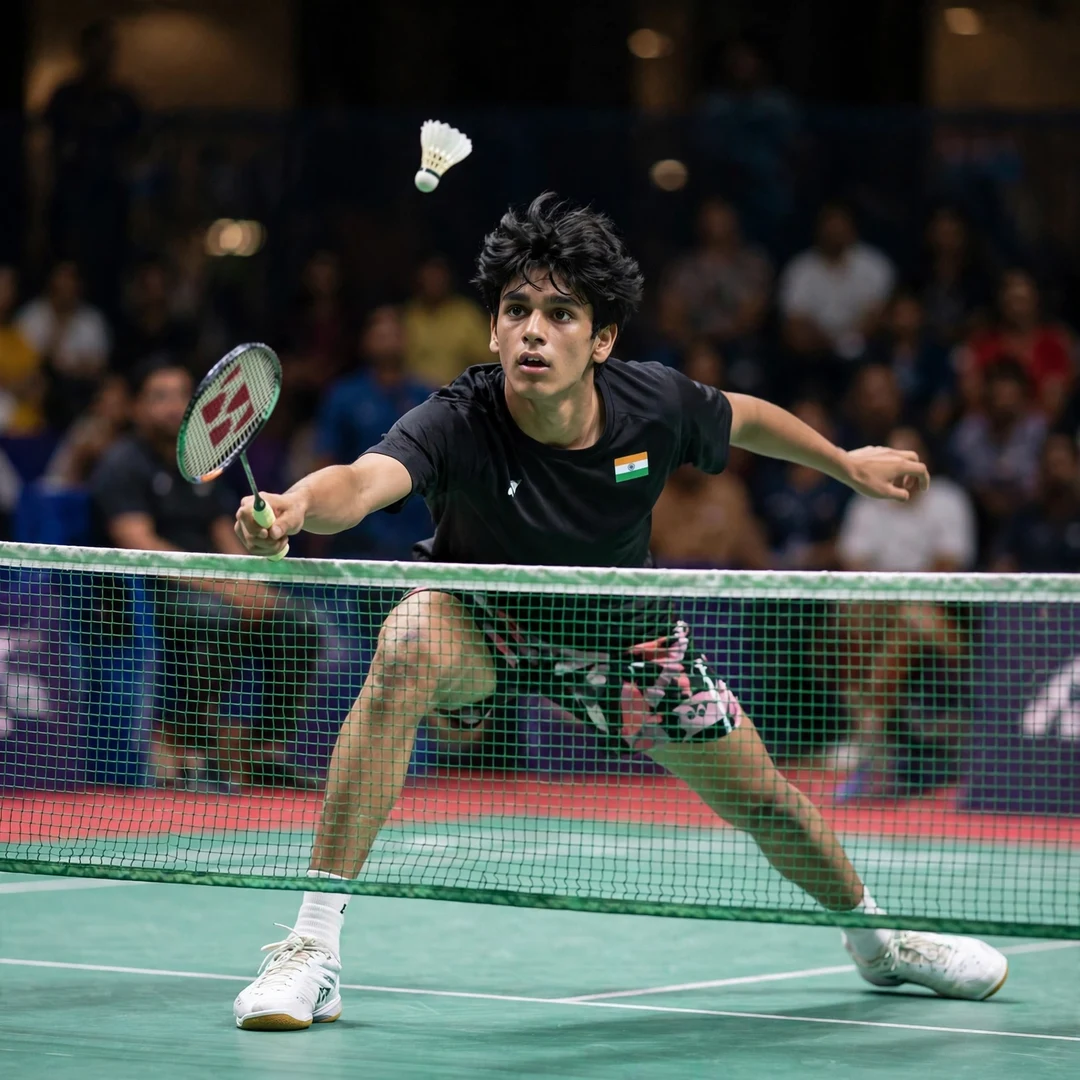
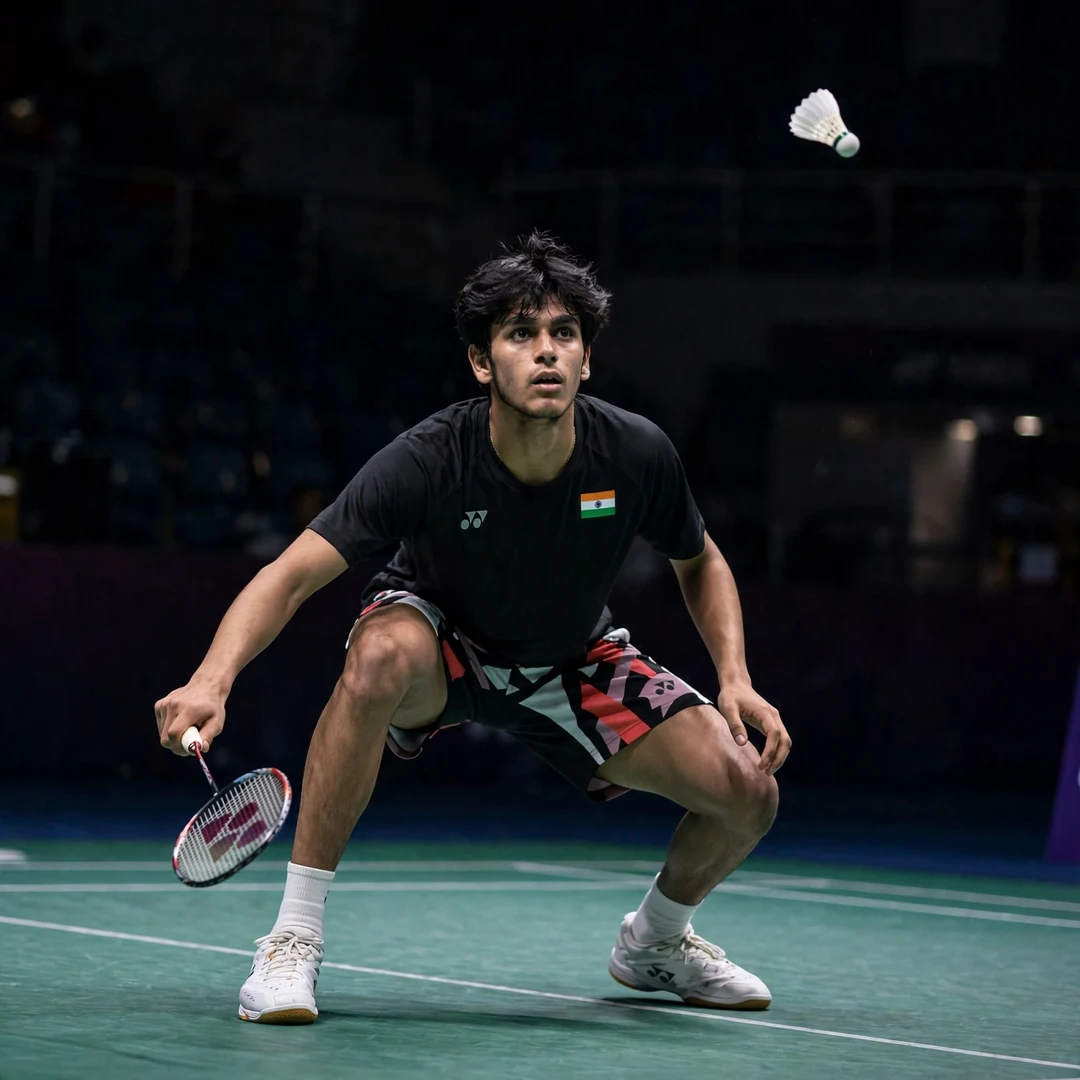
On court, Chouhan is a right-handed attacker whose signature is the jump smash — and its origin story is famous in Indian badminton already. A devoted Cristiano Ronaldo fan, he copied the footballer’s leap: ‘I used to watch him and jump every time from the back court. It became muscle memory.’ The result is an airborne smash few teenagers can produce. But Chouhan describes his own game more completely than the highlight reels do: attack as a strength, yes — plus good variations from the back court and a defence he trusts, with his net game the part he is still deliberately building. Off court he is a gamer and a film fan who, asked for a superpower, wished for the speed of The Flash — which tells you exactly what he values on court.
His own assessment points to the next frontier honestly. The net game he is working on is the difference between his current level and the top 30: against elite front-court players, his attacking chances still depend on winning the battle at the tape. The second frontier is physical — a 19-year-old frame still filling out, asked to survive five-match weeks at Super 300 and Super 500 level. And the third is repeatable endgame nerve: the US Open showed he can produce it once, underdog-free; the seniors he now faces weekly will test whether he can produce it as the favourite. The encouraging sign is that his camp — Park Tae-sang’s structure in Guwahati, with coach Rohit Ranaut in his corner for match preparation on tour — is built for exactly this kind of long project.
Mental Strength
From Junior Star to Senior Regular: the Work Ahead
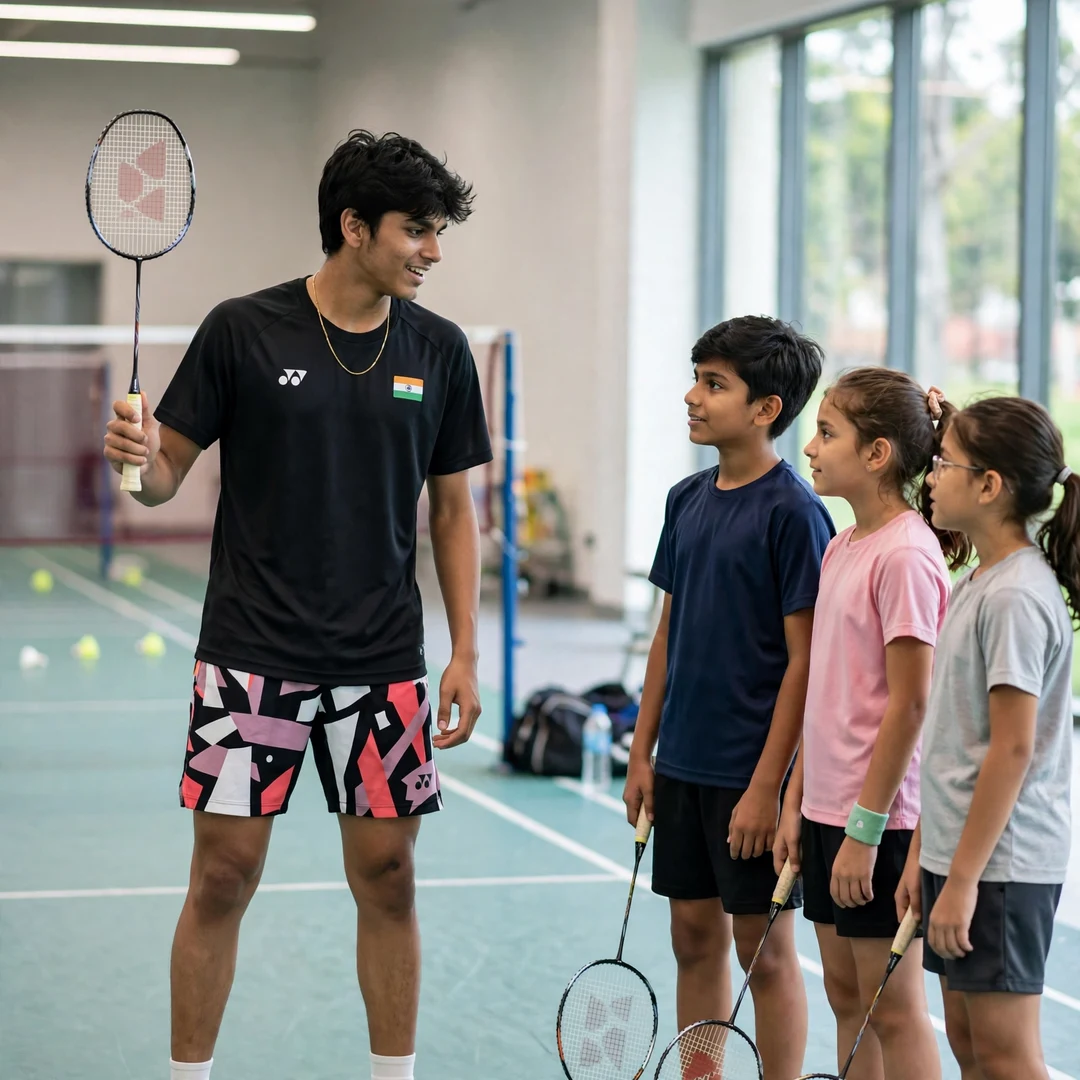
The first lesson of Chouhan’s career is that the base comes before the brilliance. He started at eight, in a family where badminton was normal; he entered a national centre at fifteen and submitted to its structure; the junior titles and the world junior No. 11 ranking followed the basics, not the other way round. By the time the leaping smash made highlight reels, the footwork, defence and rally craft underneath it were already years deep. Young players who want his attacking flair should copy the order: movement and rally skills first, inside the best structure available — the spectacular winners are the visible tip of years of unglamorous work.
The second lesson is that comebacks are a skill, not a mood. Chouhan’s signature wins were all, at some point, matches he was losing — 15–17 and 11–17 down to a world No. 6, 8–14 down in a quarter-final, a set down in two straight Odisha Masters matches. His tools are deliberately mundane: breathing exercises between rallies, visualisation before matches, music to settle into the contest, and his mother’s instruction to give 100 per cent even on a bad day. A junior who practises those resets in training matches — deciding the breath, the cue, the next rally’s plan — is training exactly the muscle Chouhan used in California.
The third lesson is about speed as a value, chased intelligently. The boy who wished for The Flash’s speed and modelled his smash on Ronaldo’s jump understood something early: in modern men’s singles, height at the shuttle and speed across the court are the currencies that buy attacking positions. But notice how he pursued them — not with tricks, but by copying an elite athlete’s movement until it became muscle memory, then embedding it in a complete game. Speed, for Chouhan, is homework: footwork patterns, jump timing, recovery steps, drilled for years in Guwahati until they look like talent.
Learning Reference
ST Badminton Academy Connection
Rounak Chouhan is an Indian player based at the National Centre of Excellence in Guwahati and does not coach for, teach at or endorse ST Badminton Academy, and there is no official connection between him and the academy. Students may occasionally see his name in academy discussions of the professional game because his career — two junior international titles, a World Junior team bronze and a giant-killing US Open run before his nineteenth birthday — is such a clear case study in junior-to-senior development — but he has no coaching role, sponsorship or teaching relationship with the academy, and nothing on this page should be read as his endorsement.
Coaches can use Chouhan’s US Open win over Chou Tien Chen as a teaching film for endgame courage. Show juniors the two crises: 15–17 down in the first game, 11–17 down with four game points against him in the second — and what he actually did: six straight attacking points, then a 26–24 finish built on breath resets and first-three-shot intent. Then rebuild it in training: start practice games at 15–17 down, require the trailing player to name their reset routine out loud, and play the endgame out. Chouhan’s lesson is not ‘be fearless’ — it is that fearlessness can be rehearsed.
For parents, Chouhan’s timeline is both inspiring and a healthy reality check. He started at eight, moved across India to a national centre at fifteen, won junior titles at seventeen and eighteen, stood on a senior podium at eighteen and beat a world No. 6 at eighteen — and even on that fast track, a decade separated his first racket from his first famous win, with his mother still reminding him to give 100 per cent on the bad days. Progress measured in years, not weekends; a boy from Raipur outlasting the juniors who beat him at under-15 level — that is what real development looks like, and it is worth trusting.
FAQs: Rounak Chouhan Indian Badminton Player
Here are the questions badminton fans in India, Malaysia, Singapore and beyond ask most about Rounak Chouhan — his Raipur roots, his World Junior bronze, his US Open giant-killing, and what young players can learn from his rise.
Who is Rounak Chouhan and which country does he represent in badminton?
Rounak Chouhan is an Indian men’s singles badminton player. Born on 20 August 2007 in Raipur, Chhattisgarh, he is right-handed, trains at the National Centre of Excellence in Guwahati, and in the Week 43 rankings of 20 October 2026 he stands at a career-high world No. 57 with 30,340 points.
What are Rounak Chouhan’s biggest badminton achievements?
His biggest achievements are the semi-final of the 2026 US Open — a BWF Super 300 — where he beat top seed and world No. 6 Chou Tien Chen; a bronze medal at the 2025 Odisha Masters (Super 100); India’s first-ever World Junior Championships mixed team bronze in 2025, as the team’s men’s singles lead; two India Junior International Series titles, in 2024 and 2025; and a peak of world junior No. 11.
What is Rounak Chouhan’s playing style?
Chouhan plays an attacking right-handed game built around a spectacular leaping smash modelled on Cristiano Ronaldo’s jump, which he practised from childhood until it became muscle memory. By his own description, his strengths are his attack, his variations from the back court and his defence — with his net game the area he is still working to complete.
What happened when Rounak Chouhan faced Chou Tien Chen at the 2026 US Open?
It became the result that announced him. In the round of 16 at the US Open in June 2026, qualifier Chouhan — then world No. 80 — faced top seed Chou Tien Chen, the world No. 6. Trailing 15–17 in the first game, he won six straight points to take it 21–17; trailing 11–17 in the second, he saved four game points and closed the match 26–24 on his second match point, in 49 minutes — his first win over a top-ten opponent. He went on to beat Misha Zilberman in the quarter-finals before Su Li Yang stopped him in the semi-finals.
How can my child learn from Rounak Chouhan’s junior-to-senior path?
Children can learn from the order of his career: family badminton first, a national centre’s structure at fifteen, junior titles, then senior podiums — and from his habits on court: breathing exercises to reset mid-match, visualisation before matches, and a mother’s rule to give 100 per cent even on a bad day. On court they can copy his craft: at the 2026 US Open he beat Chou Tien Chen with the racket in his right hand by attacking in bursts when each game looked lost, rather than waiting for the veteran to miss.
Did Rounak Chouhan win any titles as a junior?
Yes — Chouhan won the boys’ singles title at the India Junior International Series in Hyderabad in 2024, and defended it in 2025 as the top seed. Those two junior international titles, together with a world junior ranking peak of No. 11 and the 2025 World Junior Championships team bronze, made him India’s leading junior of his generation.
What is Rounak Chouhan’s best result on the BWF World Tour?
His best BWF World Tour result is the semi-final of the 2026 US Open, a Super 300 in Fullerton, California — reached from qualifying, with wins over Sankar Muthusamy, world No. 6 Chou Tien Chen and Misha Zilberman. He has also reached the semi-finals of the Odisha Masters (Super 100) in 2025 and played the main draw of the Arctic Open, a Super 500, in 2026.
What playing style should young players learn from Rounak Chouhan?
Young players should copy his complete attacking base: build the rally with variations from the back court, defend in balance, and treat the jumping smash as the finisher of a constructed rally — not a shortcut. Above all, copy his resets: breathe, visualise the next rally, and compete for every point even when the game looks gone; his biggest wins were all matches he was losing first.
Does ST Badminton Academy have any connection with Rounak Chouhan?
No. Rounak Chouhan is an Indian player based at the National Centre of Excellence in Guwahati and has no official connection to ST Badminton Academy. He does not work with the academy as a coach or ambassador, and the academy follows his career only as followers of professional badminton and as a case study in junior-to-senior player development.
Rounak Chouhan Career Highlights
Career Statistics and Rankings
The next chapter is easy to name and hard to do: a first senior international title, regular Super 300 quarter-finals, a push toward the world's top 40, and a place in India's senior team squads for events like the Thomas Cup as the road to the Los Angeles 2028 Olympic Games takes shape. Chouhan is nineteen, already owns a win over a world No. 6, and has the structure around him — Guwahati, Park Tae-sang's programme, a family that keeps him honest — to make those targets realistic rather than rhetorical.
| Development Area | Common Misconception | What Rounak Chouhan's Career Shows REALITY |
|---|---|---|
| Junior Foundation | Talent alone decides who becomes a champion. | Chouhan started at eight in Raipur after watching his elder sister play, won back-to-back India Junior International titles and reached world junior No. 11 — a structured junior base came first. |
| Playing Style Priority | Kids should copy the flashiest attacking shots. | Chouhan built a complete game first — attack, back-court variations and defence; his spectacular jumping smash is the finishing touch, not the whole game. |
| Fitness Importance | Juniors can out-train everyone without rest. | Chouhan lost the 2025 Odisha Masters semi-final in three games, then used the same attacking game to reach the US Open semi-finals six months later — setbacks answered with work, not doubt. |
| Mental Approach | Top players never get nervous or upset. | Chouhan uses breathing exercises, visualisation and music before matches and says he wants the speed of The Flash — mental skills are trained, not inherited. |
| Attacking Training | Smashing harder is always the answer. | His 2026 US Open win over Chou Tien Chen (21–17, 26–24) came from six straight attacking points when each game looked lost, not from waiting for the veteran to miss. |
| National Milestones | Only world titles matter. | Chouhan's World Junior team bronze with India in 2025 and his two junior international titles made him India's leading junior — junior and team milestones build a career step by step. |
| Career Timeline | Champions peak once and fade fast. | From world junior No. 11 to world No. 57 in the senior rankings by nineteen, with a Super 300 semi-final already banked, Chouhan proves early, steady development beats a short peak. |
Study Rounak Chouhan's Fearlessness and Professional Approach
Whether you are an Indian supporter, a Malaysian fan who watches the junior pipeline for the next stars, or a junior learning how a boy from Raipur reached the world's top 60 before turning twenty, Rounak Chouhan's matches reward close study. Watch how he refuses lost causes — the breath, the reset, the six straight attacking points — then bring that same refusal into your own training week.