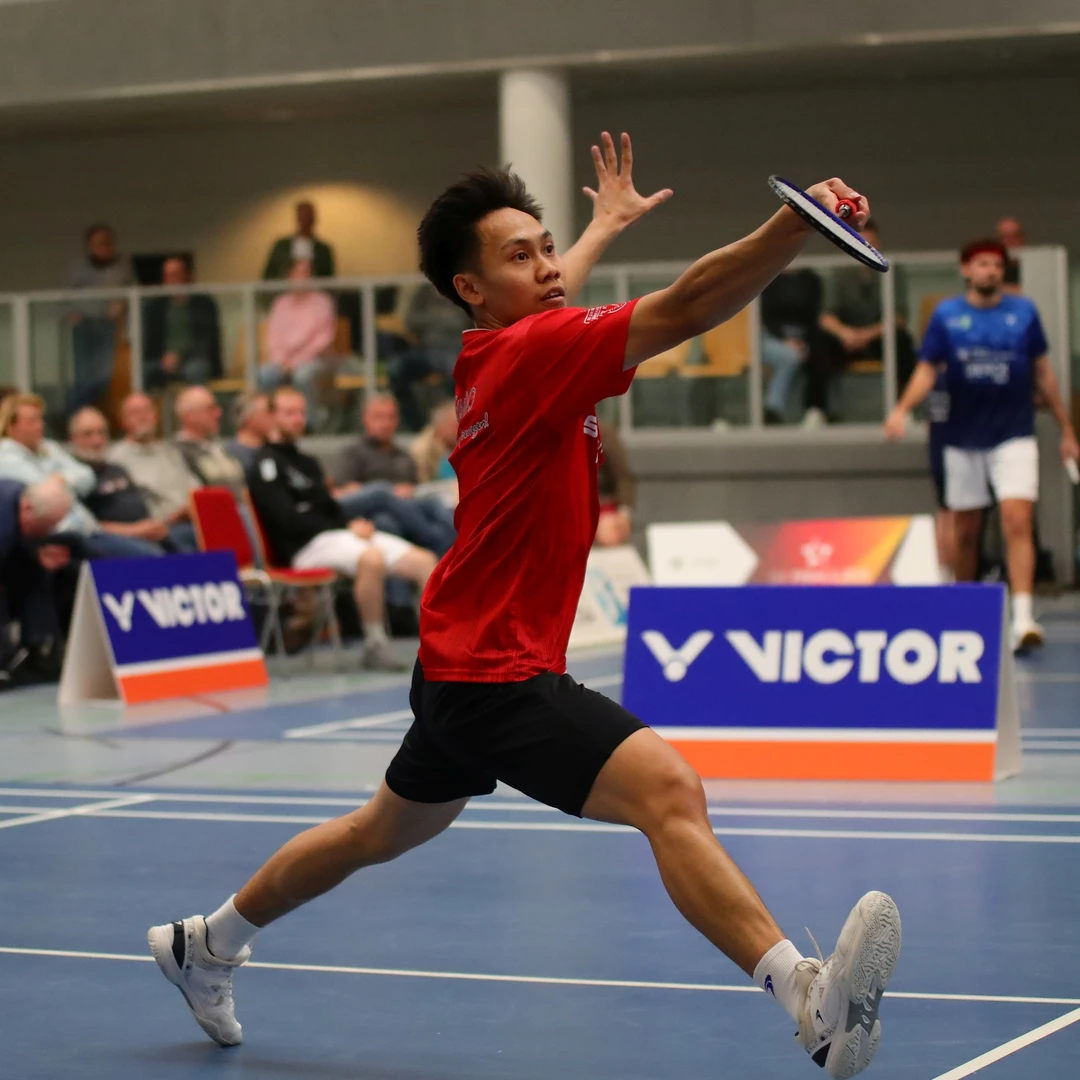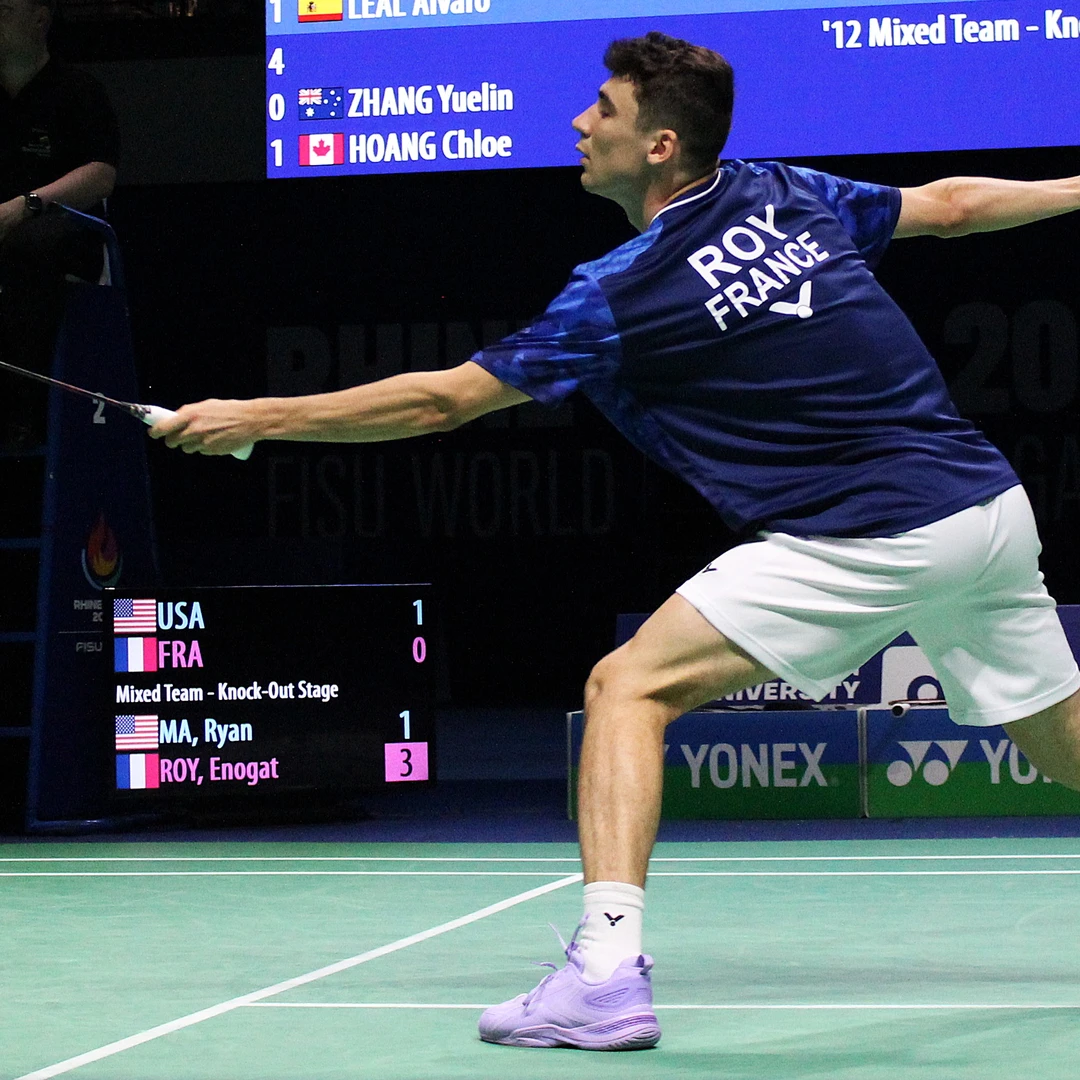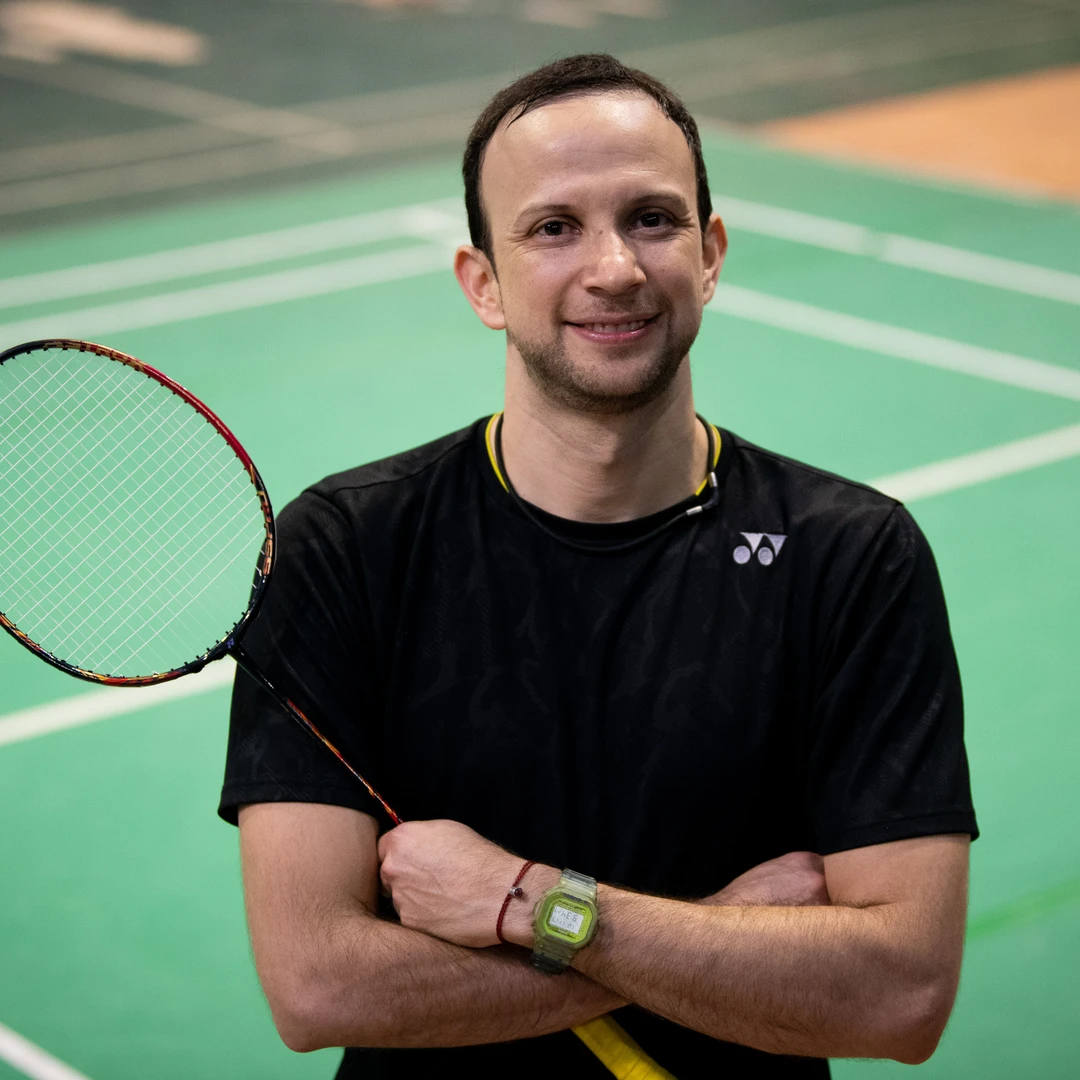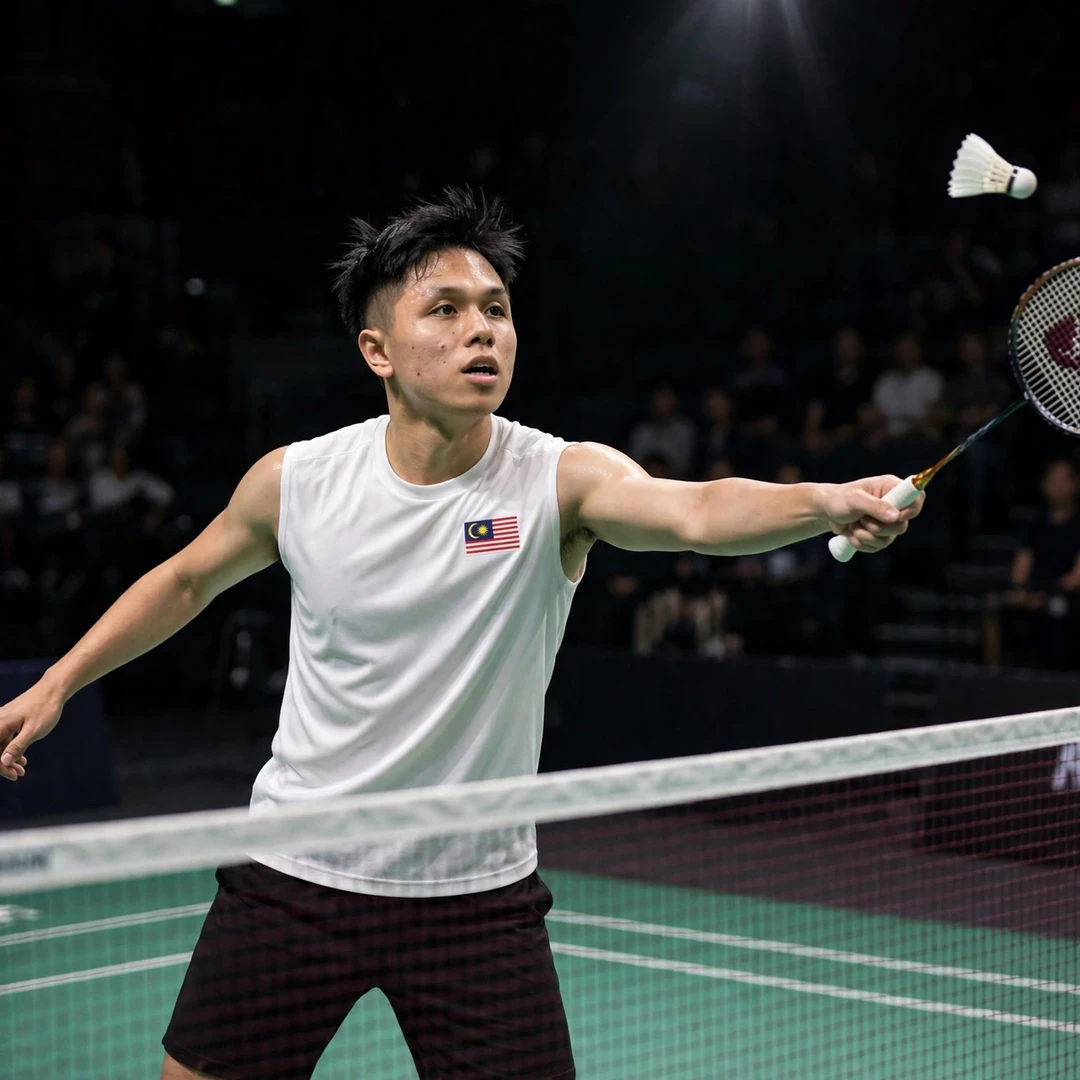
Malaysian Men’s Singles Badminton Star
Kok Jing Hong

Malaysia
Player Event: Men’s singles
From Alor Setar, Kedah, Malaysia · Born: 12 March 2002 · Left-handed · BWF World Ranking: No. 104 (Week 43, 20 October 2026)
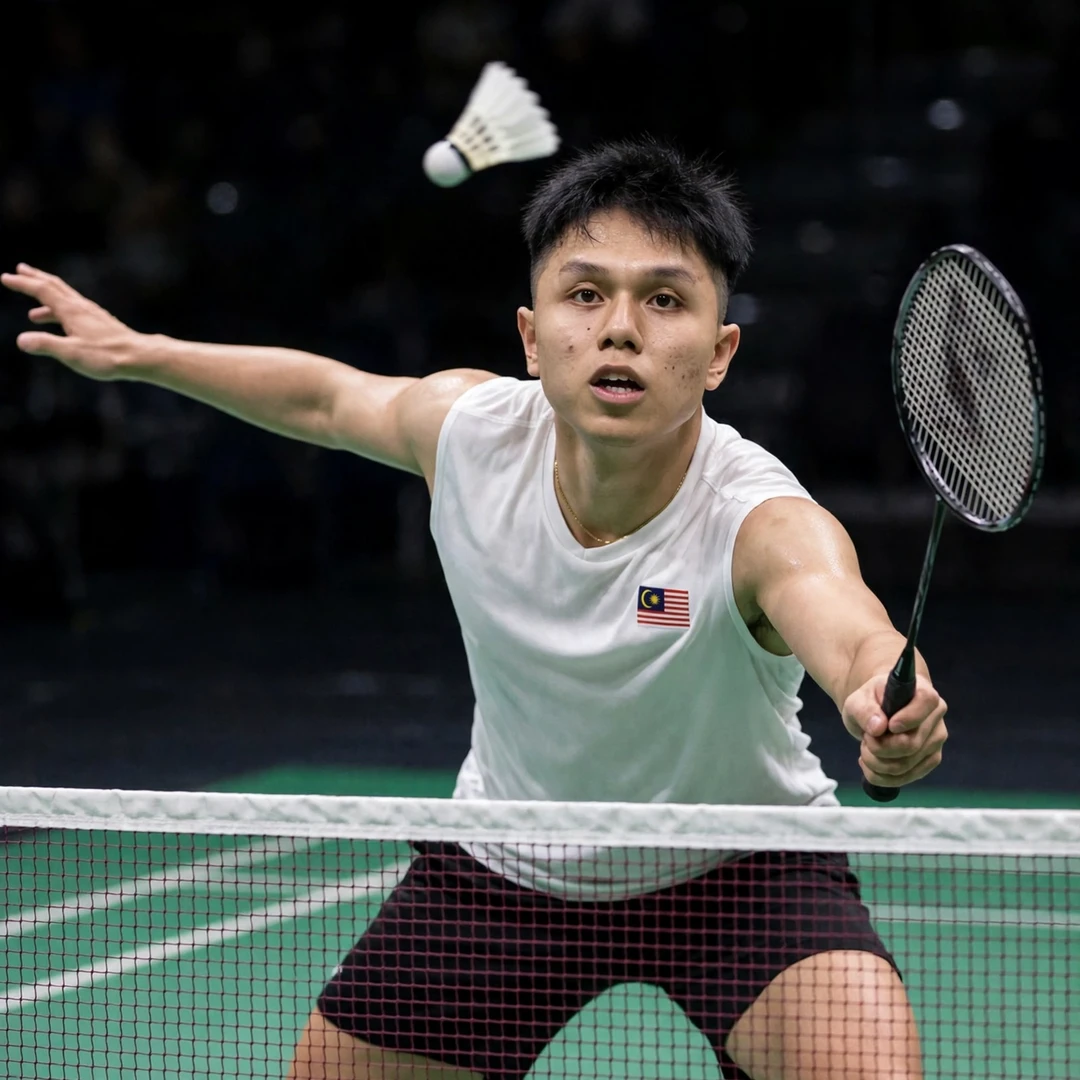
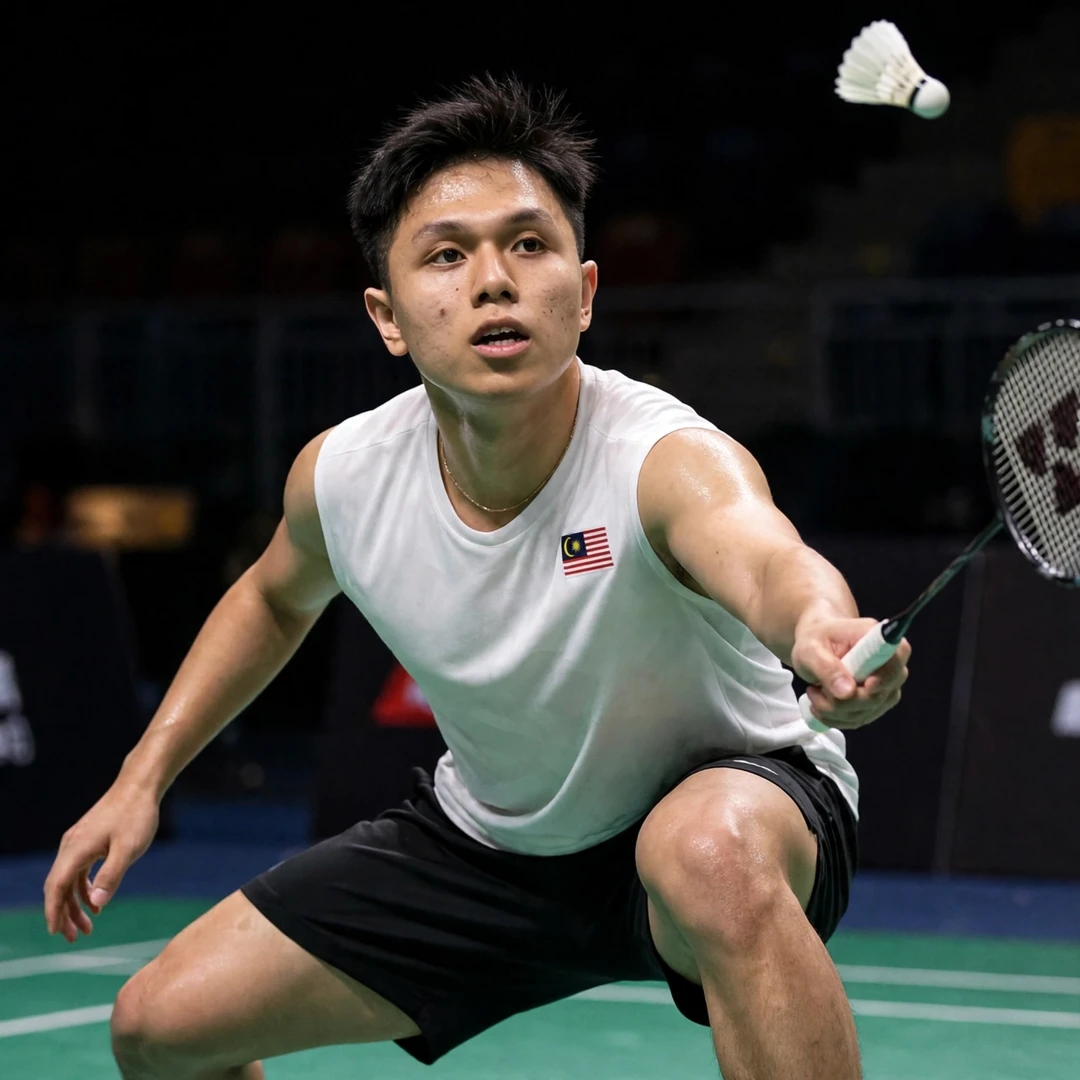
Playing Style: Left-handed all-court player who builds rallies patiently, spins the shuttle at the net and stays calm in deciding matches
Known For: Winning the deciding match that sent Malaysia into the 2023 SEA Games final, gold with Malaysia at the 2022 Badminton Asia Team Championships, and rebuilding his career as an independent player after leaving the national team
Journey: Bukit Jalil Sports School and nine years in the BAM national system · Swedish Open champion 2022 · Independent player guided by former international Ong Ewe Hock
Understanding Kok Jing Hong (Malaysian Badminton Star)
Kok Jing Hong is a professional men’s singles badminton player from Malaysia who competes on the BWF World Tour as an independent player after nine years in the Badminton Association of Malaysia (BAM) national system. He is currently ranked world No. 104 in men’s singles in the BWF Week 43 rankings of 20 October 2026 with 19,260 points, and he reached a career-high world No. 66 in January 2026. A left-hander from Alor Setar, Kedah, he owns one senior international title, a Badminton Asia Team Championships gold medal and two SEA Games team silver medals — and Malaysian fans remember him best as the player who won the deciding match of the 2023 SEA Games semi-final. His career is a study in rebuilding: released by the national team in October 2024, he started again on his own and climbed higher than he had ever been.
Early Life in Alor Setar and the Road to Bukit Jalil
Kok Jing Hong was born on 12 March 2002 in Alor Setar, the capital of Kedah in northern Malaysia, and everyone in Malaysian badminton knows him as Jacky. His first memory of the sport is watching his older siblings play; at six years old he decided he wanted to do the same and began taking badminton classes. The talent showed immediately — by the age of seven he was already testing himself against adult social players decades older than him, and in 2010, at eight, he won the BAKTI Boys’ Singles Under-8 title, the first championship of his life. Titles in Penang followed, in Under-9 singles and Under-12 doubles, where at nine years old he and his partner Muhammad Erfin bin Abdul Rahman beat twelve-year-olds to win.
A Junior Debut and a First Title in Korea
To push his development, Kok was coached by Quan An Yang, a former Kedah state player, and in 2014 he entered the Astro Kem Badminton programme in Kuala Lumpur, an intensive training camp for Malaysia’s best juniors. His progress there earned him a stint at the Li Yongbo Badminton Academy in China — run by the former head coach of the Chinese national team — where he was named the academy’s Best Player. On his return he joined the Bukit Jalil Sports School, Malaysia’s national sports school in Kuala Lumpur, and won national junior circuit titles, including the Under-12 crown and an Under-14 title run at the BAM National Junior Circuit Grand Prix Finals. From the age of 13 he was inside the BAM system, where he would spend the next nine years.
More Junior Titles and a Top-Three World Junior Ranking
Kok’s international career began in August 2016 at the Jakarta Junior International in Indonesia, where the 14-year-old finished runner-up in the Under-15 boys’ singles and reached the semi-finals of the Under-15 boys’ doubles. A year later he was on the podium at the Badminton Asia Under-15 & Under-17 Junior Championships, taking silver in the Under-17 boys’ doubles with Ooi Jhy Dar and reaching the singles semi-final. Weeks later, in November 2017, he won his first international title, crowned the Under-17 boys’ singles champion at the Korea Junior International — an early sign that his game travelled well.
German Junior Champion at 17
The titles kept coming in 2018. In April he won the Under-17 boys’ singles at the Jaya Raya Junior International in Indonesia, and in December he stepped up an age group to reach the Under-19 final of the Korea Junior International, losing a tight first game 21–23 to Jeong U-min of Korea before going down 14–21. By 2020 his consistency across two seasons of Asian junior badminton had lifted him to No. 3 on the BWF world junior rankings for men’s singles — one of the highest-rated juniors on the planet, and a player BAM coach Misbun Sidek would later say he had once touted as a possible successor to Lee Chong Wei.
Career Milestone #1
Senior Breakthrough: A First Title in Sweden
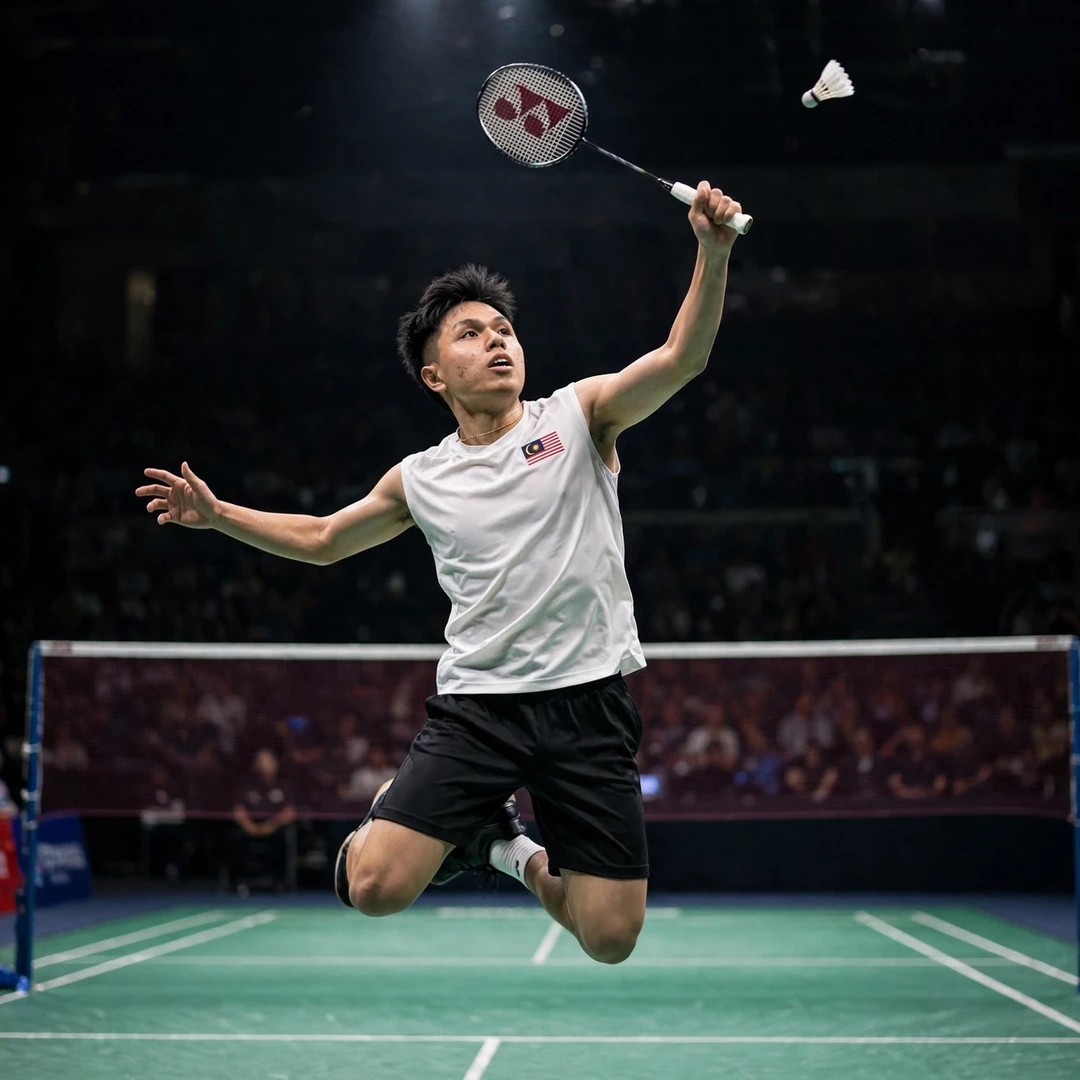
Kok closed his junior career with the biggest title of all in March 2020. At the German Junior International in Berlin, days before his 18th birthday, he swept Indonesia’s Alvi Wijaya Chairullah 21–15, 21–15 in just 25 minutes to win the Under-19 men’s singles title — an early birthday present, as The Star newspaper put it. Later that year he was promoted from the Bukit Jalil Sports School squad into the senior national team at 18, joining the full-time BAM setup at the Akademi Badminton Malaysia in Bukit Kiara.
His senior breakthrough came on a cold January swing through northern Europe in 2022. At the Estonian International, the 19-year-old marched to his first senior final before falling 20–22, 15–21 to France’s Alex Lanier, a future European champion. One week later at the Swedish Open he went one better: the all-Malaysian final against compatriot Yeoh Seng Zoe ended in a walkover in Kok’s favour, handing him his first senior international title. In the space of a fortnight he had gone from promising junior to senior title winner, and Malaysian badminton had a new name to watch.
Career Milestone #2
Team Glory: Asia Gold and Two SEA Games Silvers
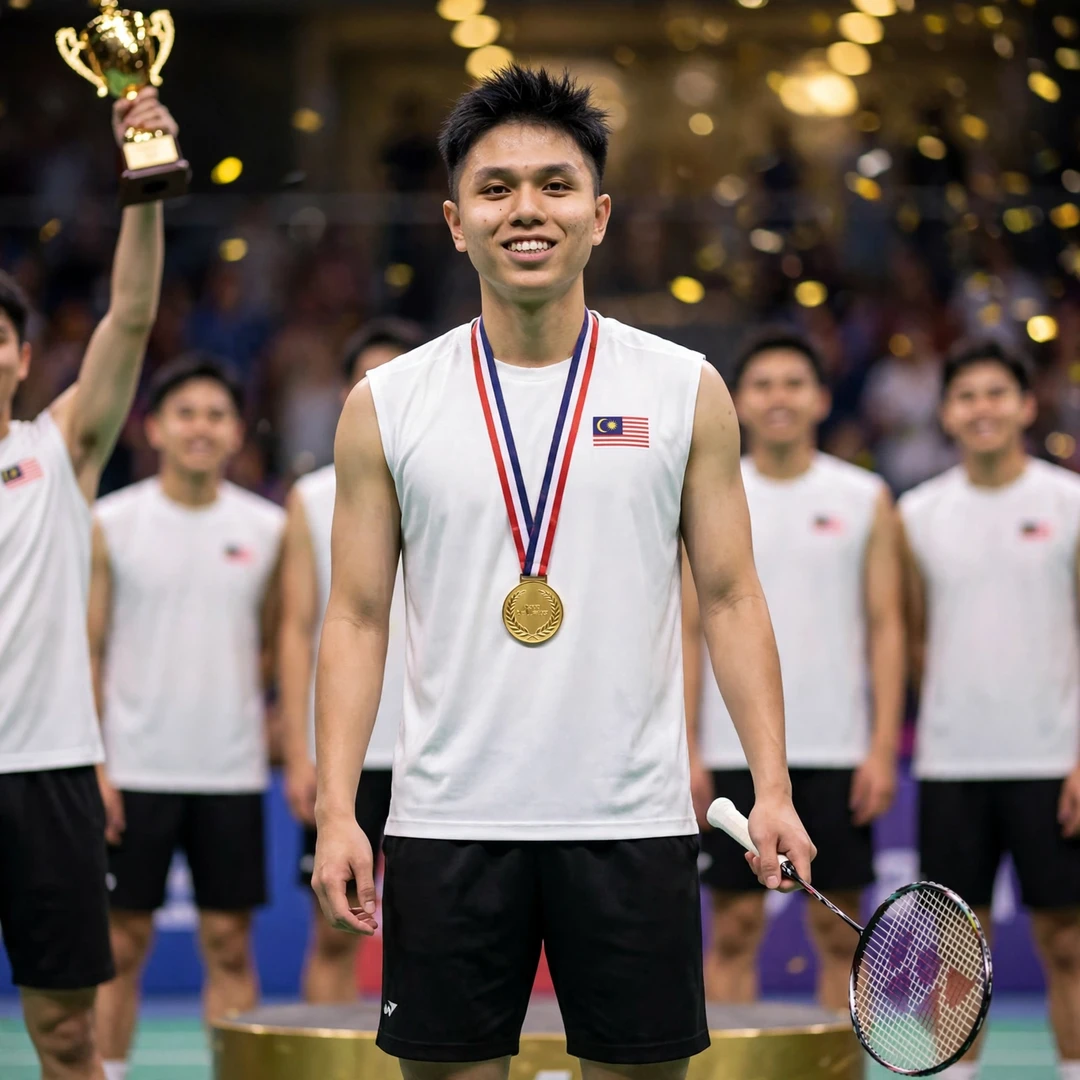
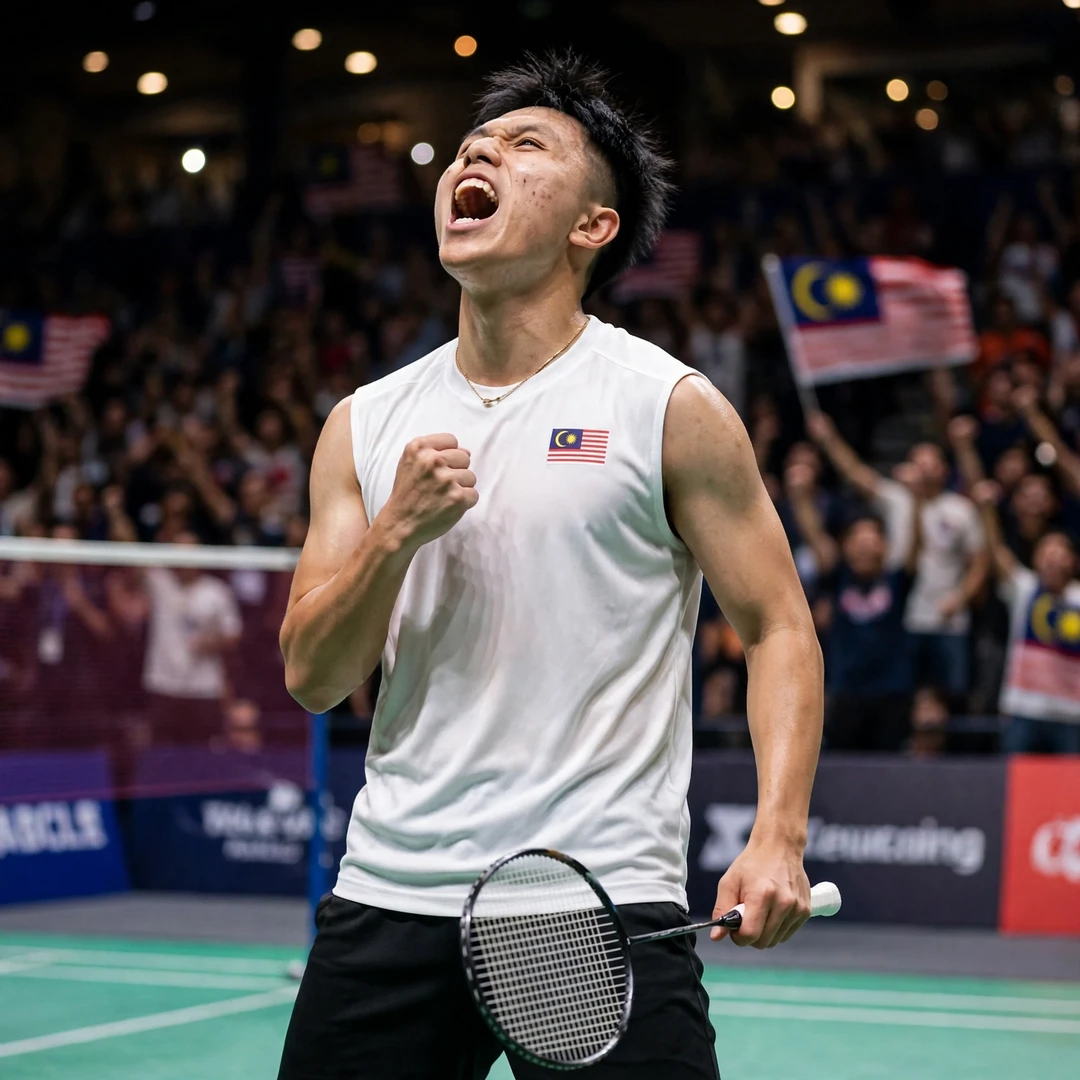
Team badminton then gave him his biggest medal. In February 2022, on home soil in Selangor, Kok was part of the Malaysian squad that won the Badminton Asia Team Championships for the first time in the country’s history, beating Indonesia 3–0 in the final. For a 19-year-old squad player, standing on top of a continental podium with the senior stars of Malaysian badminton was an education no training hall can give — and it marked him out early as a player coaches could trust in a team shirt.
Three months later he made his SEA Games debut in Vietnam, at the Games postponed from 2021, where Malaysia’s men again reached the team final and took silver. A year later, at the 2023 SEA Games in Cambodia, he was called into the squad late as a replacement for the injured Justin Hoh — and walked straight into the most pressurised situation in team badminton: a semi-final against defending champions Thailand, with Malaysia’s hopes resting on the last match of the tie.
What happened next is the match Malaysian fans still associate with his name. With the semi-final locked at 2–2 after Malaysia had let a 2–0 lead slip, the 21-year-old Kok played the fifth and deciding match against Thailand’s Saran Jamsri — and produced a performance of complete calm, winning 21–12, 21–13 to send Malaysia into the final. ‘The pressure was there, but I thought about what should be done on the court, and hit shots according to the strategy I had against the opponent,’ he said afterwards. Malaysia lost the final to Indonesia and took silver again — but the night belonged to Jacky Kok, the calmest man in the hall.
Career Milestone #3
Dropped by BAM After Nine Years
The hardest chapter came in October 2024. After a season of modest results, BAM released 13 players from the national team — and Kok, by then ranked world No. 123, was one of them, ending a nine-year stay that had begun when he was 13. He refused to leave bitter: at that month’s Malaysia Super 100 in Bukit Kiara, one of his last events in national colours, he upset India’s Mithun Manjunath — ranked 46 places above him — 21–16, 21–8. ‘Of course, there are ups and downs, but I will cherish everything that has happened to me, even the sad times,’ he said. ‘I’m not a top player… I just want to enjoy what is left of my time with the national team.’
Rather than quit, Kok rebuilt himself as an independent player, training at the Serdang Badminton Club under the guidance of former Malaysian international Ong Ewe Hock. The rebuild produced results within months. At the Vietnam International Challenge in Hanoi in March 2025, ranked world No. 86, he beat Yang Po Wei of Chinese Taipei 21–14, 21–13 in the semi-finals to reach his second career final — three years after his first. The title slipped away in a long three-game classic against Thailand’s Puritat Arree, 21–23, 21–17, 15–21, a rival he had himself beaten in three games at the Thailand Masters qualifying just two months earlier, 17–21, 21–11, 22–20.
The rest of 2025 was the grind of an independent player chasing ranking points wherever they were offered. He reached the quarter-finals of the Baoji China Masters twice in a Super 100 season that also took him to the last 16 of the Thailand Masters, the Vietnam Open and the Saipan International, and in July he represented Malaysia at the World University Games in Germany’s Rhine-Ruhr region, reaching the round of 32. Every week was a calculation of flights, entries and ranking points — the unglamorous arithmetic of life outside a national team’s funding, and Kok kept paying it.
Career Milestone #4
The Comeback: A Career-High World No. 66
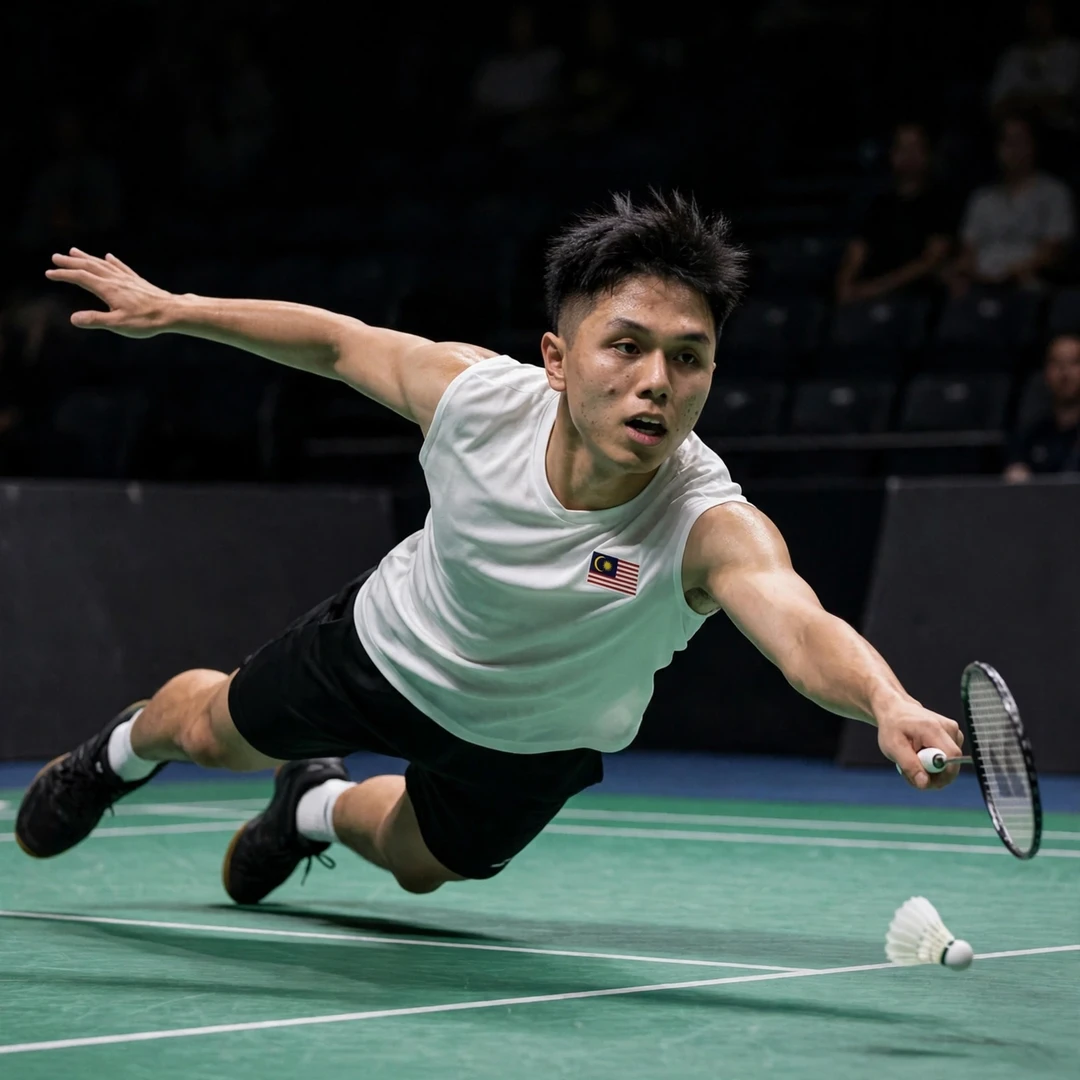
The reward arrived in November 2025 at the Kumamoto Masters Japan, a Super 500 event and the biggest stage of his career. Kok fought through the qualifying rounds, beating Chinese Taipei’s Huang Yu-Kai in three games, then stunned India’s Kiran George 22–20, 21–10 to reach the round of 16. There he pushed Japan’s Kenta Nishimoto, one of the most relentless retrievers in world badminton, before losing 20–22, 11–21 — but the 3,600 ranking points were the biggest single haul of his career, and in the 13 January 2026 rankings he stood at world No. 66, a career high reached as an independent. The 2026 season has kept him in the fight: a quarter-final at the Indonesia Masters II in Pontianak, where he beat Bismo Raya Oktora, Sathish Kumar Karunakaran and Cheng Ju-Sheng before falling to Wang Po-Wei; a game taken off former world top-ten star Prannoy H. S. at the Vietnam Open; qualifying wins at Super 500 level on home soil at the Malaysia Masters; and a home appearance at the Malaysia Super 100 in October 2026. In the Week 43 rankings he sits at No. 104 with 19,260 points as older results rotate out of the 52-week window — with the door to the top 100, and beyond, still open.
Kok’s schedule is itself a lesson for developing players. As an independent, nothing is arranged for him: he chooses his tournaments, plans his own travel and balances every entry against the ranking points on offer. His 2025 calendar alone ran from Thailand and China to Germany, Japan, Korea and Vietnam — mostly Super 100 and International Challenge events, with Super 300 and Super 500 weeks whenever his ranking opened the door. Young players often dream only of the biggest arenas; Kok’s career shows the real pathway is built in the smaller halls, one quarter-final at a time, by players who treat the grind as part of the job.
Playing Style
The Left-Handed Craft: Angles, Net Spins and Patience
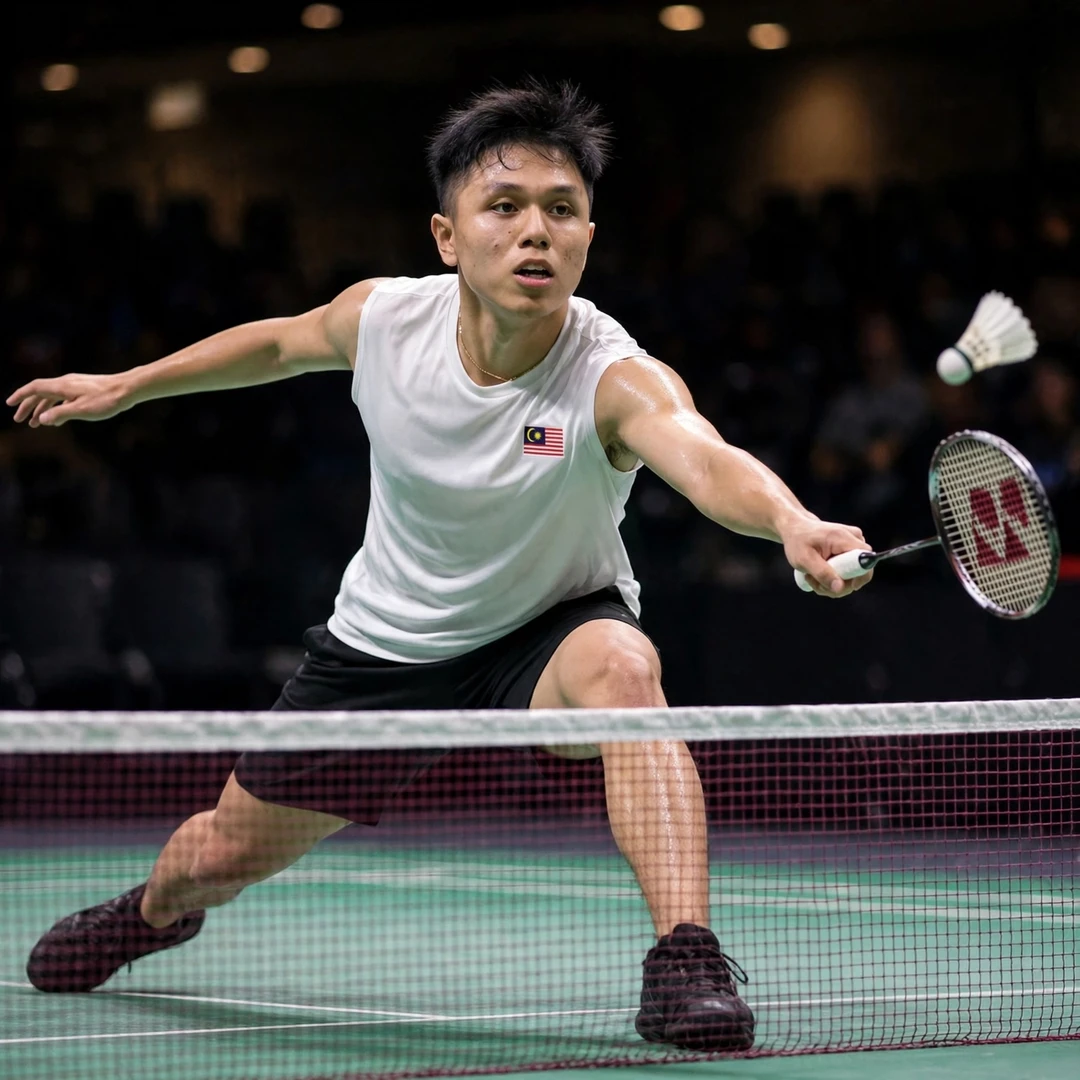
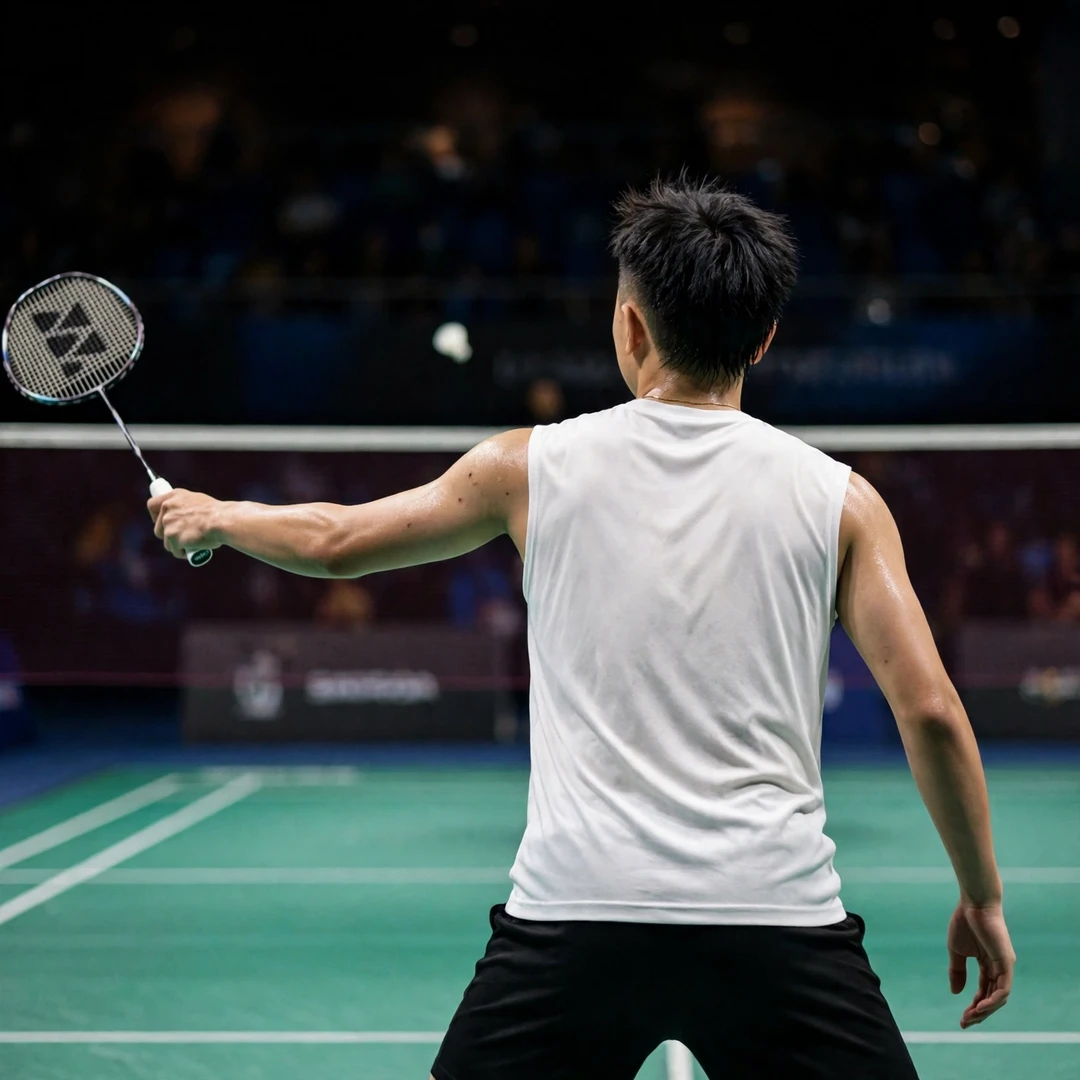
The first thing opponents notice about Kok Jing Hong is that everything comes from the other side. As a left-hander, his forehand is the mirror image of what most players train against: his cross-court forehand from deep in the backhand corner opens angles a right-hander cannot produce, and his around-the-head coverage is built on years of junior badminton against right-handed opponents. Left-handers are a minority on the World Tour, and that rarity is a genuine tactical asset — rivals must rewrite their patterns, their service returns and their defensive shapes simply because the shuttle arrives from unfamiliar directions.
His most eye-catching weapon is at the net. Kok’s spinning net shots — played with a relaxed grip and a slicing action that sends the shuttle tumbling over the tape — have become a favourite of Malaysian highlight reels, including a much-shared exchange against Lee Zii Jia. That touch is no accident: it is the product of his Bukit Jalil formation and of a junior career spent winning long front-court battles across Asia. Around the net craft sits a patient rallying base — deep lifts, patient clears and the discipline to keep the shuttle in play until the opening is real, rather than forcing winners from bad positions.
For young players, the copyable parts of Kok’s game are not the highlight shots but the habits underneath them. Watch how rarely he panics in defence, how he resets to the base position after every shot, and how his shot selection follows a plan agreed before the match — the same strategy-first thinking he described after the SEA Games deciding match. His career also teaches the value of the complete left-handed toolkit: a spinning net shot, a reliable cross-court block and a calm head under pressure will take a junior further than one spectacular smash.
Mental Strength
Calm in the Deciding Match: Mindset Lessons
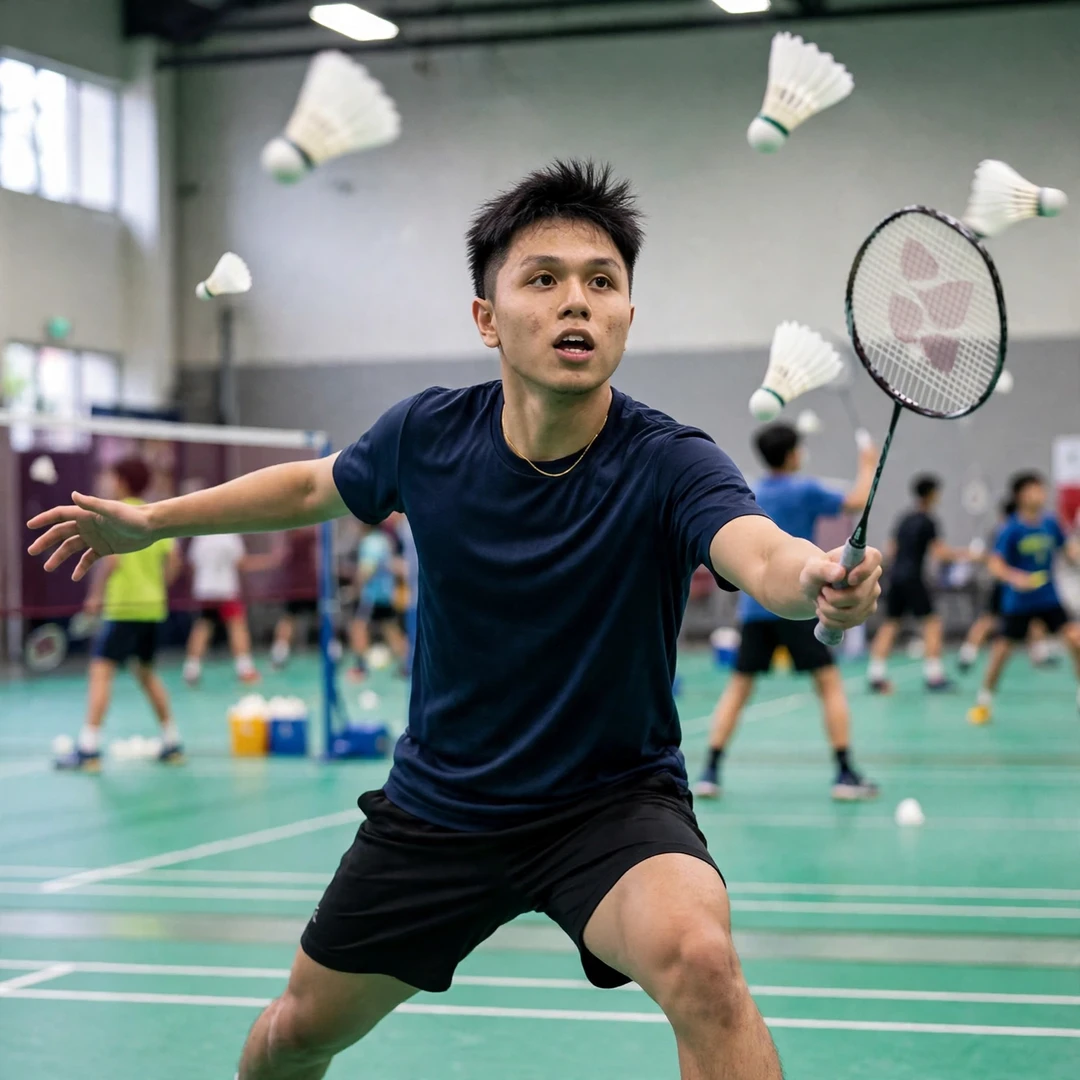
Kok has carried an unusual burden since his teens: expectation. When a coach of Misbun Sidek’s stature says publicly that he once saw you as the next Lee Chong Wei, every result is measured against a legend. Kok’s response has always been humility rather than hype. He describes himself simply, deflects credit to his coaches and teammates, and measures his progress in work rather than headlines. That grounded self-image is precisely what sports psychologists try to build in young athletes — an identity based on effort and process, sturdy enough to survive both a No. 3 junior ranking and a release letter.
The true test came in October 2024, when nine years of national-team security ended with one announcement. Many players fade away after such a cut; Kok treated it as a change of employer, not the end of a career. Within five months he was in a senior final again in Vietnam; within fifteen months he had reached a Super 500 round of 16 and a career-high ranking of world No. 66 — as an independent, paying his own way. His story gives every dropped or deselected junior in Malaysia a working example: the system’s decision is information, not a verdict, and a career can be rebuilt more than once.
The practical lessons from Kok’s journey are clear. Build your game through a proper system when you can — his years at Bukit Jalil gave him technique that has lasted his whole career. Bank team experience whenever it is offered; decisive-match pressure at the SEA Games taught him things no training hall can. And when circumstances change, adapt quickly: new coach, new base, new plan. Young players at ST Badminton Academy may never face exactly his choices, but the qualities he has shown at every turn — patience, composure and stubborn persistence — are trainable at any age.
Learning Reference
ST Badminton Academy Connection
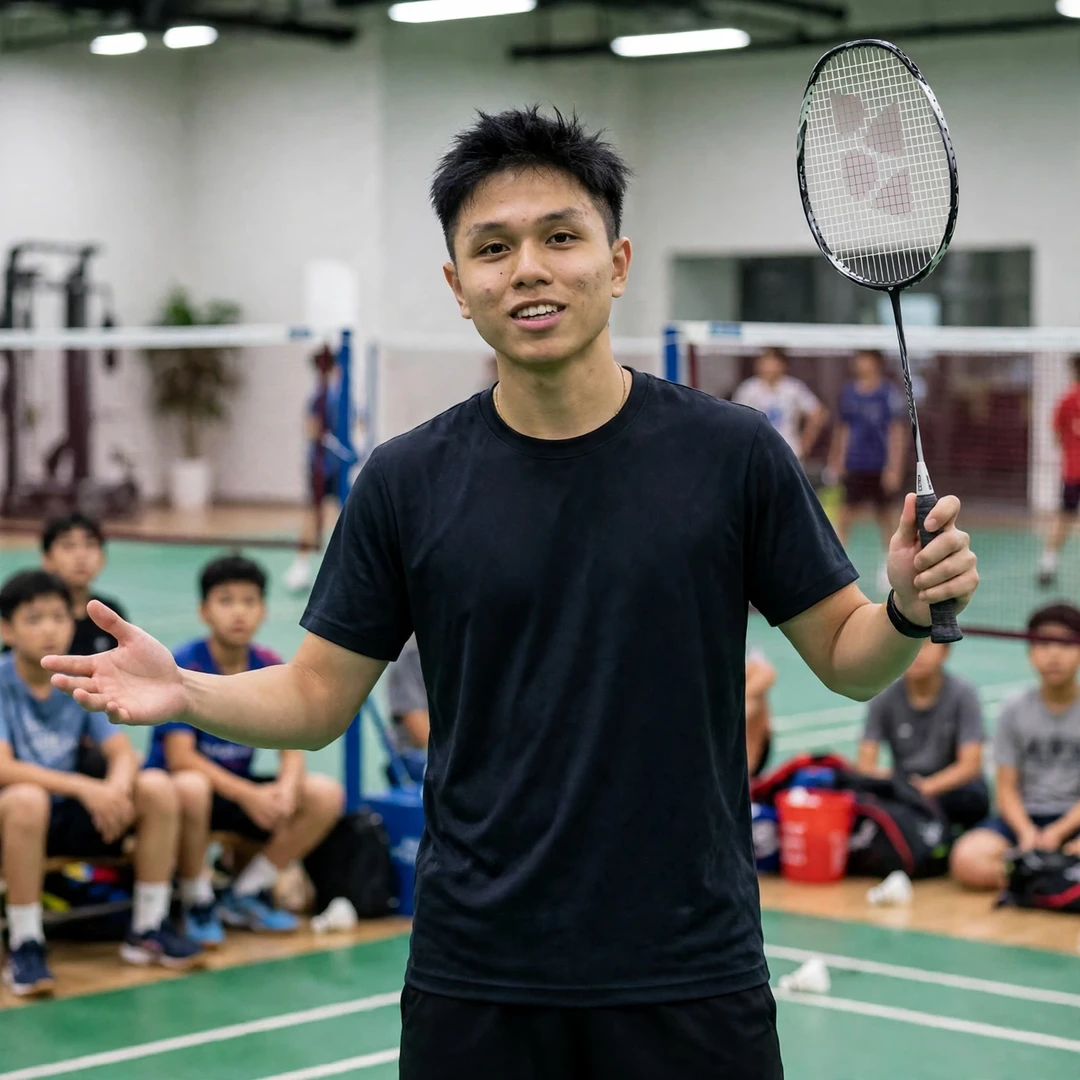
ST Badminton Academy has no official partnership, sponsorship or endorsement relationship with Kok Jing Hong. He is not a student, coach or ambassador of ST Badminton Academy. This profile is an independent educational resource created for our students, parents and Malaysian badminton fans who want to understand how a Kedah schoolboy became a continental team champion — and how he refused to let being dropped end his story.
Our students study Kok’s matches for three reasons. First, he is a Malaysian left-hander, and the young left-handers in our academy can copy his grips, his around-the-head movement and his cross-court patterns directly. Second, his SEA Games deciding match is one of the best recent examples of playing to a plan under maximum pressure. Third, his independent rebuild teaches the professional habits — planning a season, managing effort across a long calendar, and resilience after setbacks — that separate players who last from players who only start well.
For Malaysian parents, Kok’s pathway will feel familiar and reassuring: state-level beginnings in Kedah, a national sports school, years of patient development, and then the resilience to keep going when the pathway narrowed. Not every child will win a Badminton Asia Team Championships gold medal — but every child can learn to stay calm at 2–2 in a team tie, to accept a coach’s hard decision without bitterness, and to rebuild when a plan fails. Those are the lessons ST Badminton Academy teaches on court every week, and they are exactly the lessons Kok Jing Hong’s career keeps demonstrating.
FAQs: Kok Jing Hong Malaysian Badminton Player
Here are answers to the questions Malaysian badminton fans and parents ask most often about Kok Jing Hong.
Who is Kok Jing Hong and which country does he represent in badminton?
Kok Jing Hong (full name Jacky Kok Jing Hong) is a Malaysian men’s singles badminton player born on 12 March 2002 in Alor Setar, Kedah. A left-hander, he spent nine years in the BAM national system after joining Bukit Jalil Sports School as a teenager, and since late 2024 he has competed as an independent player guided by former international Ong Ewe Hock. In the BWF Week 43 rankings of 20 October 2026 he is world No. 104 with 19,260 points.
What are Kok Jing Hong’s biggest badminton achievements?
His biggest achievements are the gold medal he won with Malaysia at the 2022 Badminton Asia Team Championships — the country’s first title at the event — and his first senior international title at the Swedish Open in January 2022. He also won two SEA Games men’s team silver medals (2021 and 2023), reached the final of the 2025 Vietnam International Challenge, and achieved a career-high world ranking of No. 66 in January 2026 after reaching the round of 16 at the Super 500 Kumamoto Masters.
What is Kok Jing Hong’s playing style?
Kok Jing Hong is a left-handed all-court player. His game is built on patient rallying, clever left-handed angles — especially the cross-court forehand — and outstanding net craft, including a trademark spinning net shot. He is not a pure power player; he wins by constructing rallies, staying composed and choosing the right moment to attack, a style that made him Malaysia’s choice for the deciding match of the 2023 SEA Games semi-final.
How did Kok Jing Hong perform at the SEA Games?
Kok played at two SEA Games, winning men’s team silver at both. On his debut in Vietnam (the 2021 Games, held in 2022) Malaysia reached the final. In Cambodia in 2023 he produced his most famous performance: called up as a late replacement for the injured Justin Hoh, he won the deciding fifth match of the semi-final against Thailand’s Saran Jamsri 21–12, 21–13 to send Malaysia into the final, where the team again took silver behind Indonesia.
How can my child learn from Kok Jing Hong’s training approach?
Kok’s route — starting at six in Kedah, structured coaching, a spell at Li Yongbo’s academy in China, then Bukit Jalil Sports School — shows that development is a staircase, not a shortcut. Parents can copy the principles without copying the exact path: consistent coaching from a young age, regular competition against older players, and an emphasis on complete skills — net play, defence and rallying patience — before raw power. His comeback after being dropped also teaches children that setbacks are part of an athlete’s life, not the end of it.
Did Kok Jing Hong win any junior titles?
Yes. Kok was one of Asia’s outstanding juniors: he won the Under-17 boys’ singles at the Korea Junior International in 2017, the Under-17 title at the Jaya Raya Junior International in 2018, and the Under-19 German Junior International in March 2020, beating Alvi Wijaya Chairullah in the final. He also took Under-17 doubles silver at the 2017 Asian junior championships, reached the Under-19 Korea Junior final in 2018, and climbed to No. 3 in the BWF world junior rankings.
What are Kok Jing Hong’s best World Tour results?
His best BWF World Tour result is the round of 16 at the Kumamoto Masters Japan 2025, a Super 500 event, where he came through qualifying and beat India’s Kiran George 22–20, 21–10 before losing to Kenta Nishimoto. He has also reached Super 100 quarter-finals at the Baoji China Masters (twice in 2025) and the Indonesia Masters II (2026), and the last 16 of events including the Thailand Masters and the Vietnam Open — results that carried him to a career-high world No. 66.
What playing style should young players learn from Kok Jing Hong?
Young players should study Kok’s composure and his left-handed court craft: how he uses the cross-court forehand to wrong-foot right-handers, how his spinning net shot is built on a relaxed grip rather than a stiff wrist, and how he keeps rallies alive until the attack is truly on. Above all, copy his habit of playing to a pre-match plan — the quality he himself credited after winning the SEA Games deciding match.
Does ST Badminton Academy have any connection with Kok Jing Hong?
No, Kok Jing Hong is not a student, coach or ambassador of ST Badminton Academy, and there is no official partnership between him and the academy. ST Badminton Academy publishes profiles of leading Malaysian and world players as educational resources so that our students and parents in Kuala Lumpur and across Malaysia can learn from professional careers — including, in his case, how a player rebuilds after being dropped by a national team.
Kok Jing Hong Career Highlights
Career Statistics and Rankings
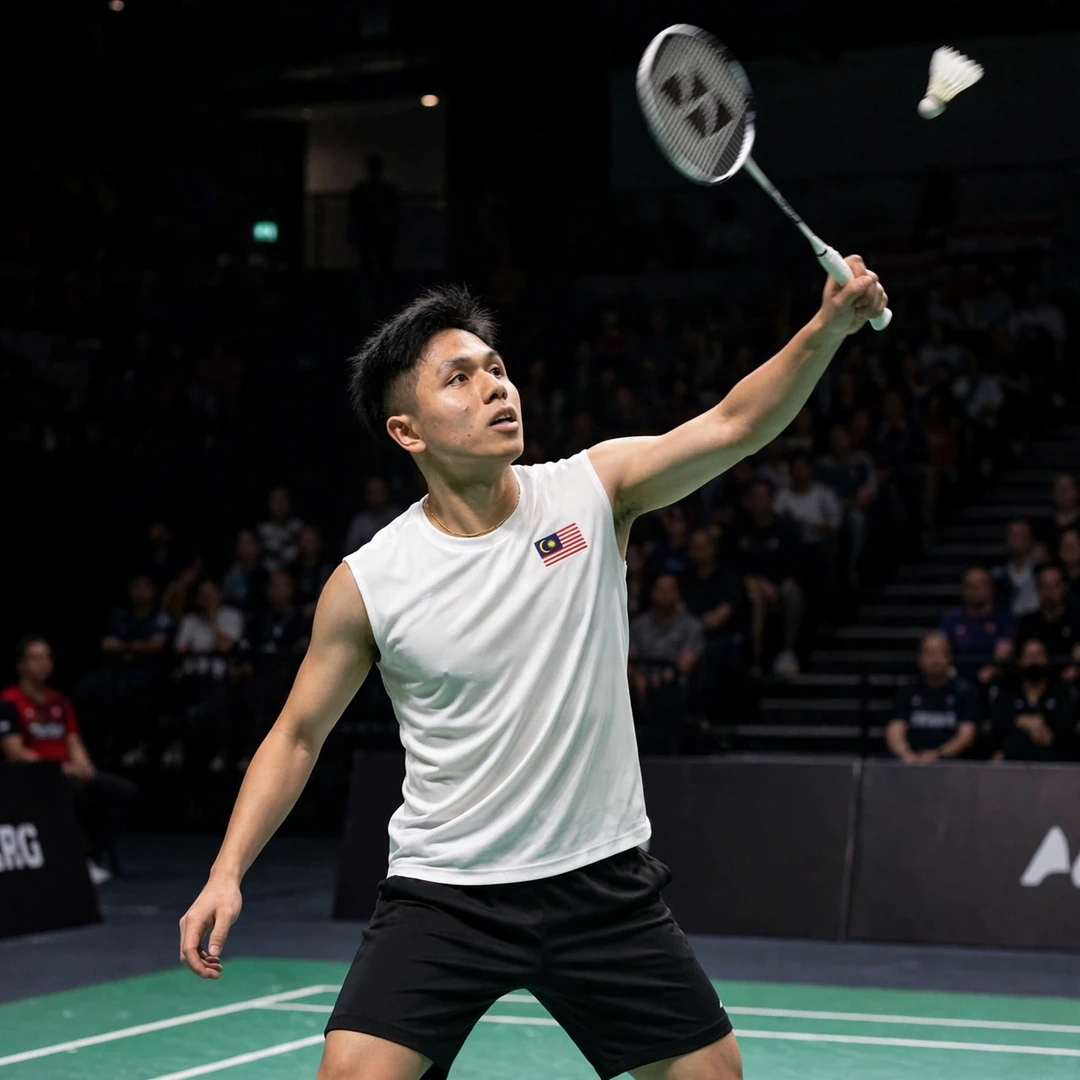
Kok Jing Hong, born 12 March 2002 in Alor Setar, Kedah, has produced a career of continental team gold, a senior title in Sweden, a famous SEA Games deciding-match win and — after being dropped by BAM in 2024 — an independent comeback that carried him to a career-high world No. 66. The left-hander's journey is proof that a badminton career can be rebuilt more than once.
| Development Area | Common Misconception | What Kok Jing Hong's Career Shows REALITY |
|---|---|---|
| Junior Foundation | Talent alone decides who becomes a champion. | Kok started at six in Kedah, was named Best Player at Li Yongbo's academy in China and reached world junior No. 3 — a structured junior base came first. |
| Playing Style Priority | Kids should copy the flashiest attacking shots. | Kok built a complete left-handed game first; his spinning net shots and cross-court winners are the finishing touch on patient rallying, footwork and defence. |
| Fitness Importance | Juniors can out-train everyone without rest. | Kok was dropped by BAM in 2024 after nine years in the national system, so he rebuilt as an independent under coach Ong Ewe Hock — and reached a career-high ranking afterwards. |
| Mental Approach | Top players never get nervous or upset. | Kok played the deciding fifth match of the 2023 SEA Games semi-final with the tie at 2-2 and won 21-12, 21-13 — mental skills are trained, not inherited. |
| Attacking Training | Smashing harder is always the answer. | His Vietnam International Challenge final in 2025 and his Kumamoto Masters wins came from left-handed angles and rally control, not from a single spectacular smash. |
| National Milestones | Only world titles matter. | Kok's Asia Team Championships gold in 2022 and two SEA Games team silvers made him a trusted team player for Malaysia — team milestones build a career step by step. |
| Career Timeline | Champions peak once and fade fast. | From world junior No. 3 to being dropped at 22, then back to a career-high world No. 66 as an independent, Kok proves a career can be rebuilt more than once. |
Study Kok Jing Hong's Work Ethic and Professional Approach
This profile explains who Kok Jing Hong is, his major achievements, and what developing players can learn from his journey. If you are a parent in Kuala Lumpur or anywhere in Malaysia looking for structured badminton training for your child or yourself, ST Badminton Academy welcomes new students. Message us on WhatsApp +60 17-684 2136, tell us your age, current level and training goals, and we will recommend the right class. Learn the patience, net craft and composure that took Kok Jing Hong from a Kedah school hall to Badminton Asia Team Championships gold — one well-planned rally at a time.