French Men’s Singles Badminton Star
Enogat Roy

France
Player Event: Men’s singles
Date of Birth: 5 May 2003 · Left-handed · Full-time member of the French national team in Paris
Playing Style: Left-handed all-court rally player with a tactician’s game plan, patient defence and awkward left-handed angles
Known For: Taking the first game off world No. 16 Koki Watanabe at the Sudirman Cup 2025, and winning men’s singles silver at the Rhine-Ruhr 2025 World University Games
Journey: A childhood in Malaysia · French sports school · National-team training in Paris · World University Games silver medallist
Understanding Enogat Roy (French Badminton Star)
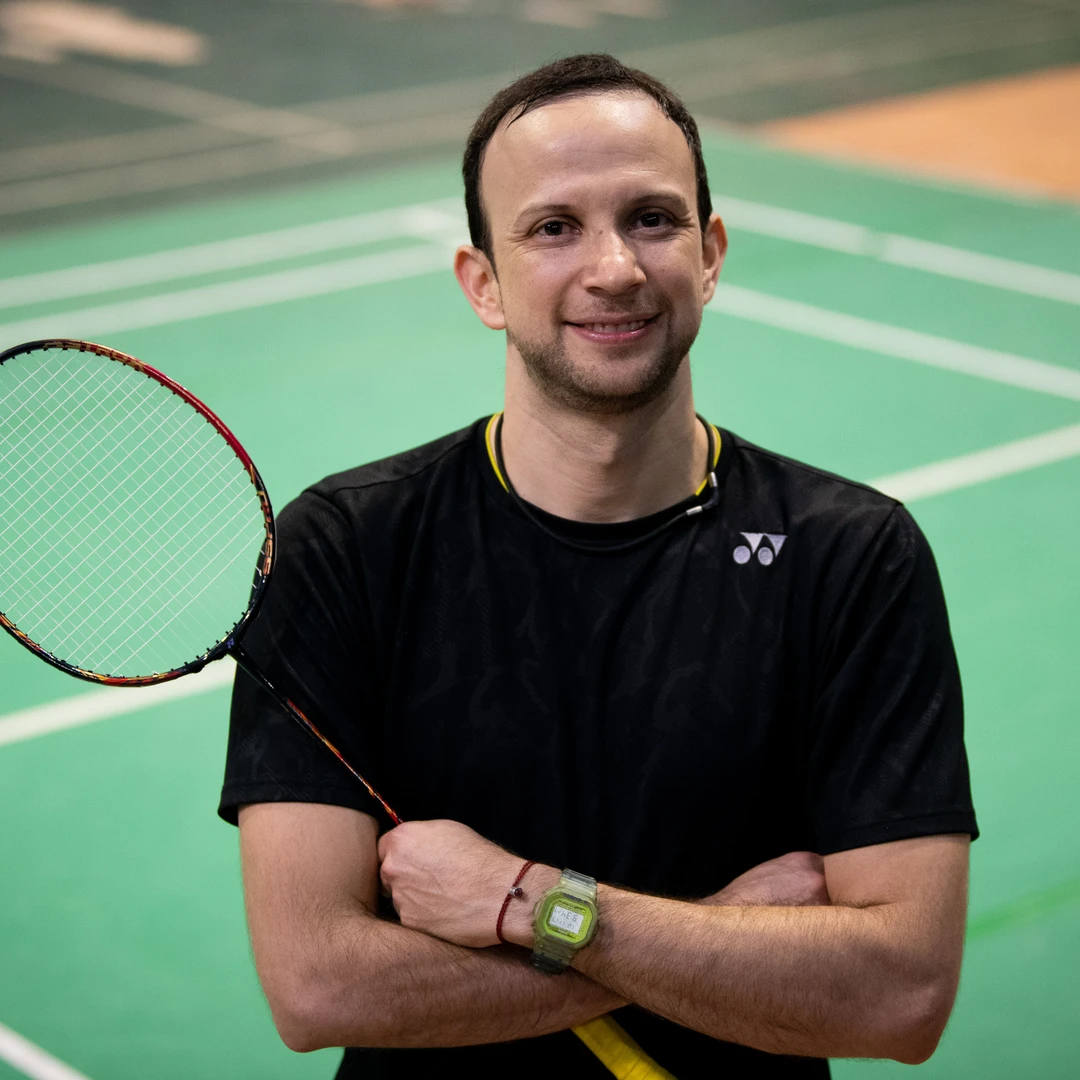
Enogat Roy represents France in men’s singles badminton at international level. Born on 5 May 2003, he is the French left-hander with perhaps the most unusual childhood in the current top 100: he spent the first eleven years of his life in Malaysia, where he first picked up a racket at the age of ten. In the BWF week 43 rankings published on 20 October 2026 he stands at world No. 95 with 20,834 ranking points, and his career is headlined by the men’s singles silver medal he won at the Rhine-Ruhr 2025 World University Games. He trains full-time with the French national team in Paris, alongside players such as Alex Lanier and Arnaud Merkle, while also studying at university online. This profile tells the story of a player shaped by two badminton cultures — Malaysia’s and France’s — and explains what young players can learn from his patient, tactical rise.
A Malaysian Childhood and a French Dream
Enogat Roy was born on 5 May 2003. He is French, but his childhood unfolded on the other side of the world: when he was just one year old, his parents moved to Malaysia as expatriates, and he lived there until the age of eleven. That meant growing up in one of the world’s great badminton countries, where the sport is on television, in school halls and in neighbourhood courts everywhere. For a French boy with sporting instincts, Malaysia was the perfect accidental classroom — badminton was simply part of everyday life around him, long before he ever thought about rankings or national teams.
Starting Badminton in Malaysia at Ten
Roy started playing badminton at the age of ten in Malaysia — remarkably late by elite standards, since many professionals begin at five or six. He had only about two years of casual play there before his family returned to France, so he never came through Malaysia’s elite junior system and never faced its best juniors of his age. What he took from Malaysia instead was a feel for the game and a love for it — plus a little of the language: asked years later whether he speaks Malay, he laughed and answered ‘Sikit-sikit’ — ‘a little bit’. It is a reminder that beginnings do not have to be elite to become serious; what matters is what a player does with the years that follow.
Back to France at Eleven for the National Team
The return to France at eleven was driven by badminton itself. Roy has explained that he came back because he loved the sport so much and already dreamed of joining the French national team one day. To make that possible he joined a sports school in France, where training and classroom study are timetabled together for young athletes. It was a brave decision for an eleven-year-old: leaving the country he had grown up in, chasing a sport he had only played for two years. But the structure of the French system gave his late start a pathway — coaching, sparring and competition week after week — and his development accelerated steadily from there.
From Junior Mixed Doubles to Singles
Like many all-round players, Roy did not play singles only. As a junior and young senior he also competed in mixed doubles, partnering Anna Tatranova — the pair appeared in the qualification rankings for the 2023 World Championships. Those early doubles experiences sharpened his net play, his reflexes and his understanding of angles, all of which still show in his singles game today. Singles, though, was always the main road: season by season he built his rallying game on the European circuit, learning how to win matches with structure and patience rather than with one big weapon.
Career Milestone #1
Senior Circuit Breakthrough: Four Semi-Finals in 2025
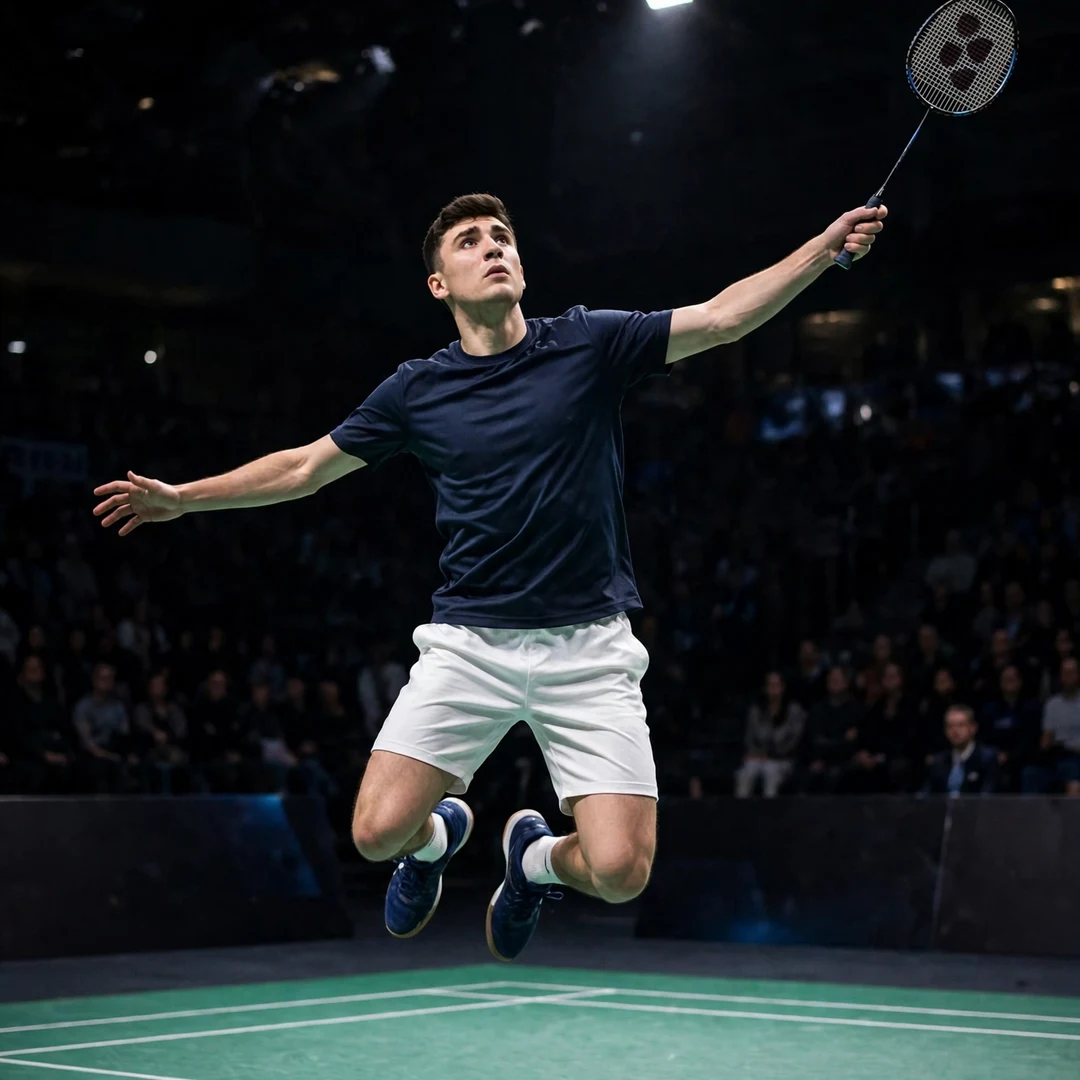
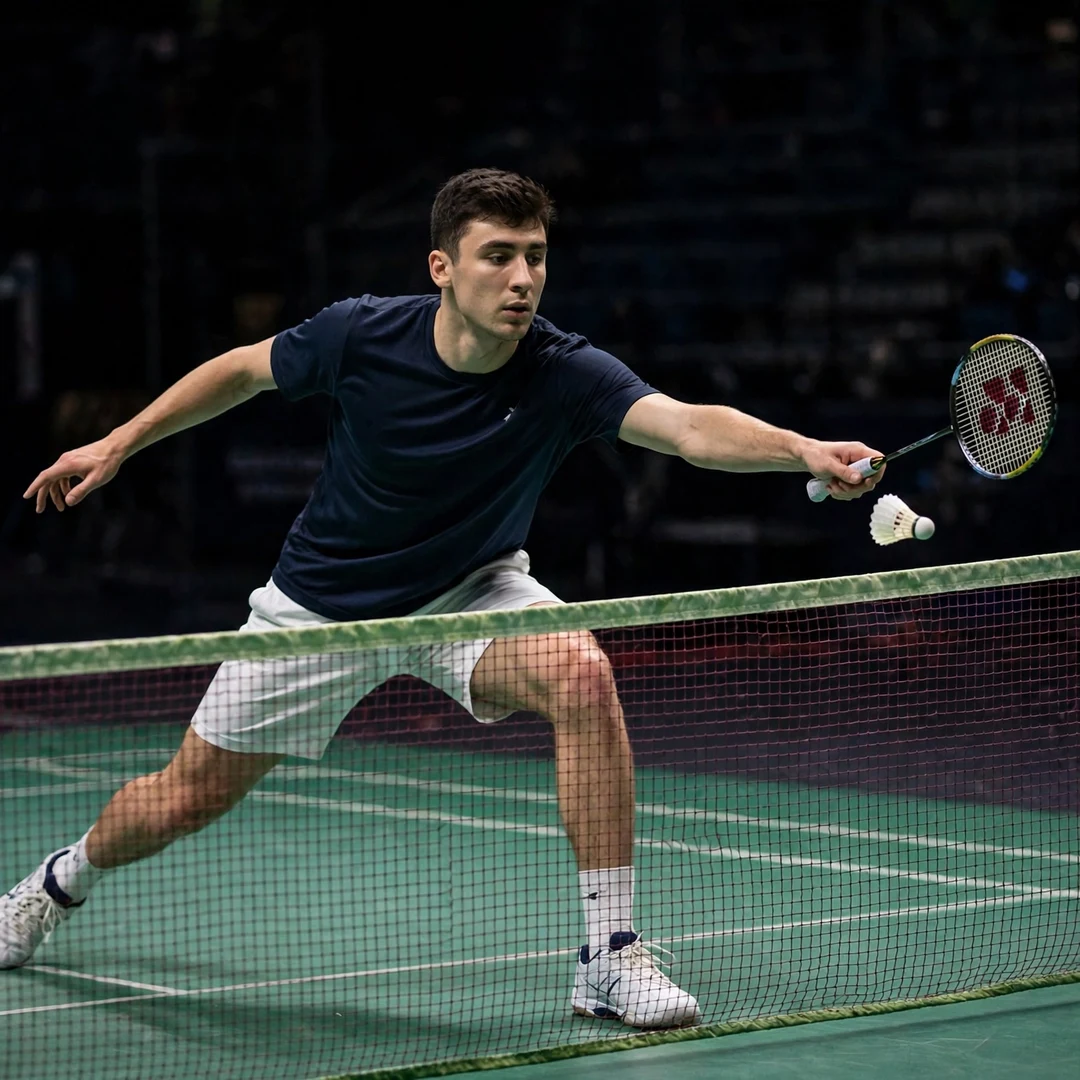
Roy’s senior breakthrough came across the 2025 season, when semi-finals started arriving with striking regularity. His ranking record for that year shows four semi-final finishes at international level: the Polish Open, the Dutch Open, the Hungarian International and the Astana International Challenge in Kazakhstan. For a player ranked outside the top 80 for much of that period, reaching the last four again and again was the clearest possible signal: his level was no longer a one-week surprise but a repeatable standard. Each of those runs also banked the ranking points that carried him towards the world’s top 100.
Just as telling was the consistency underneath the semi-finals. In the same period Roy reached the quarter-finals of the Irish Open and the Portugal International, and the round of 16 at the US Open — a BWF World Tour Super 300 event, where the fields are far stronger than the ones he usually faces. He also tested himself at events such as the Canada Open and the Arctic Open, accepting early exits against higher-ranked opposition as part of the education. This is the unglamorous reality of the circuit for a player in his ranking band: travel, qualify, compete, learn, and slowly turn respect into results.
Career Milestone #2
World University Games Silver in Rhine-Ruhr
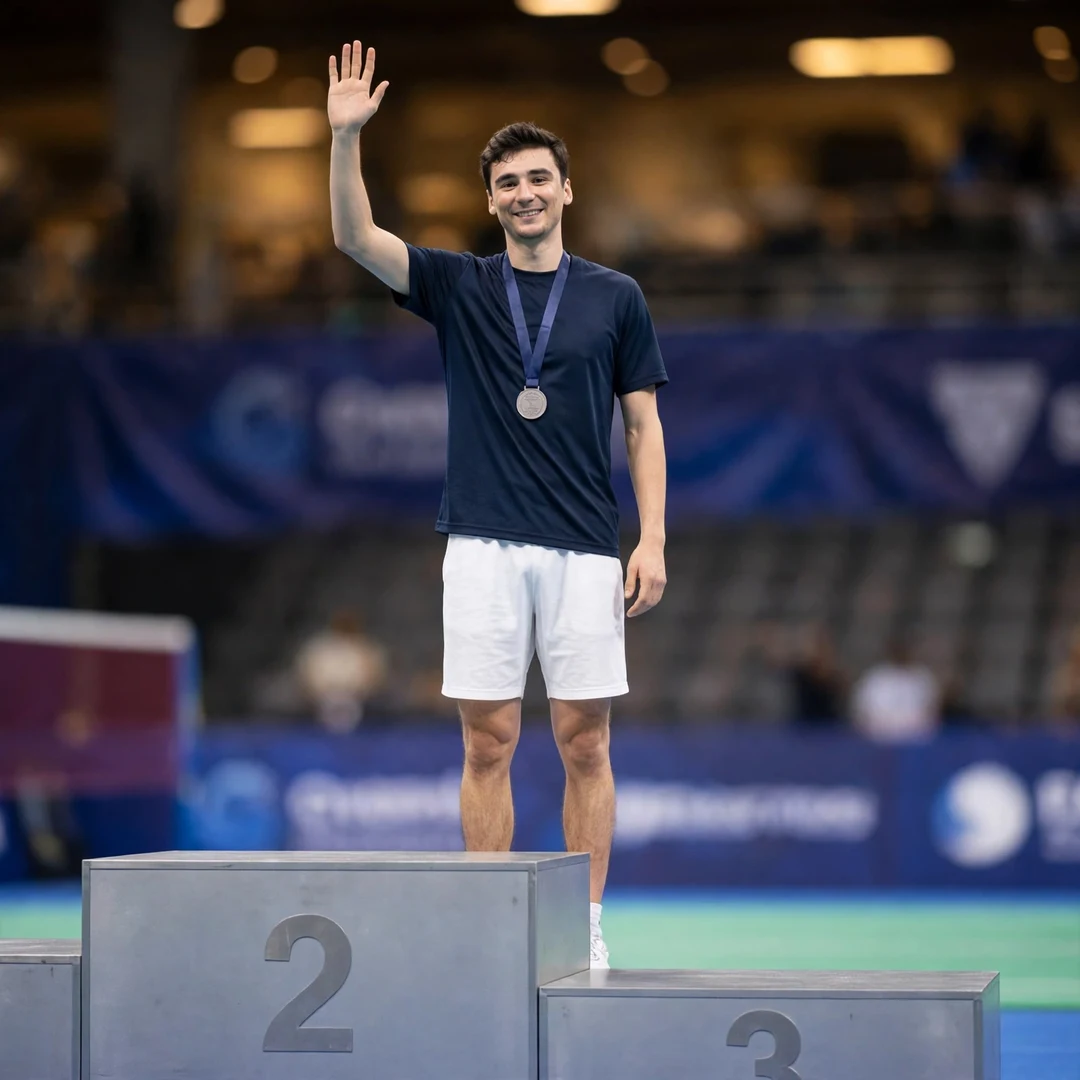
The defining week of Roy’s career so far came in July 2025 at the Rhine-Ruhr World University Games in Germany, where the badminton tournament was played in Mülheim. The men’s singles field was genuinely international — 76 players from 40 countries — and Roy, ranked around world No. 80 at the time, strung together the best run of his life. In the quarter-finals he beat South Korea’s Choi Ji-hoon in three games, 8-15, 15-6, 15-13, and in the semi-finals he came from a game down to beat Japan’s Rei Miyashita 13-15, 15-12, 15-8. Both matches were played under the event’s shortened 15-point scoring format, which punishes slow starters and rewards exactly the composure Roy showed.
In the final, Roy met Chinese Taipei’s Ting Yen-chen, the tournament’s standout player, and lost 8-15, 5-15. There was no fairytale ending — but there was a silver medal, the biggest result of his career and one of the finest by a French men’s singles player at a global student Games. A silver medal at the World University Games is a serious achievement: the event draws full-time professionals who happen to be students, from the strongest badminton nations on earth. Roy’s medal proved that his rallying game, his game plans and his nerve could carry him through a world-class draw — and it announced him to a far wider audience than the European circuit ever had.
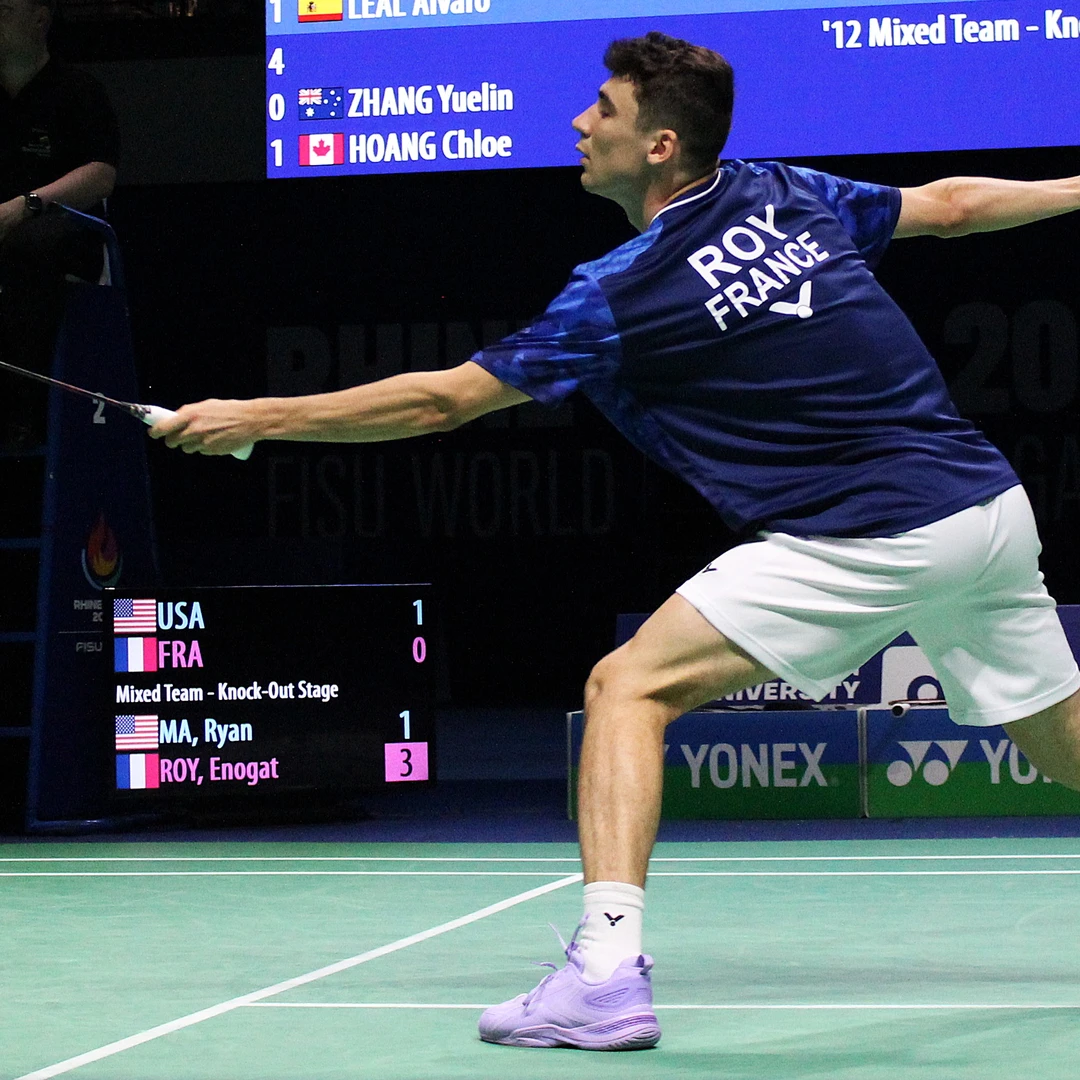
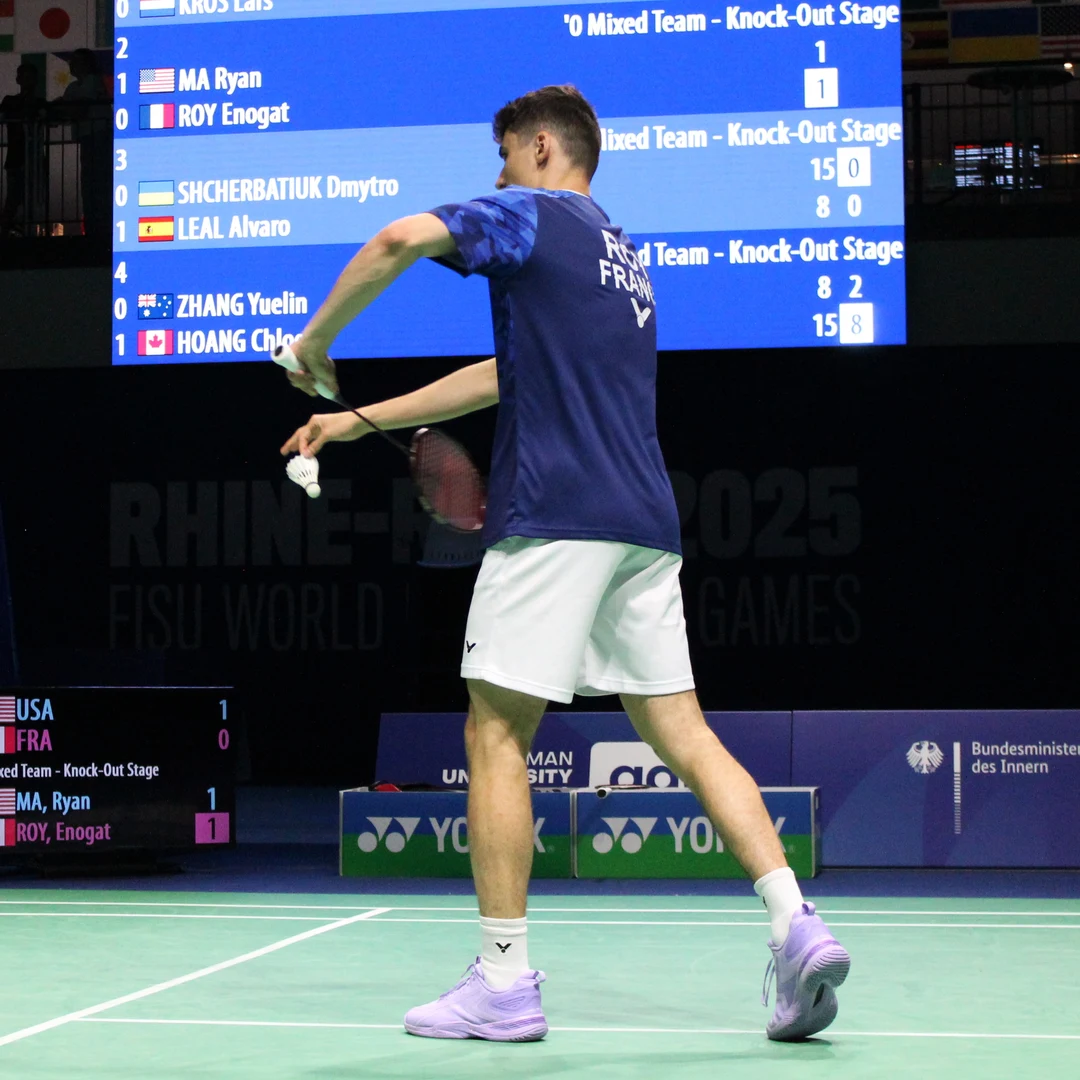
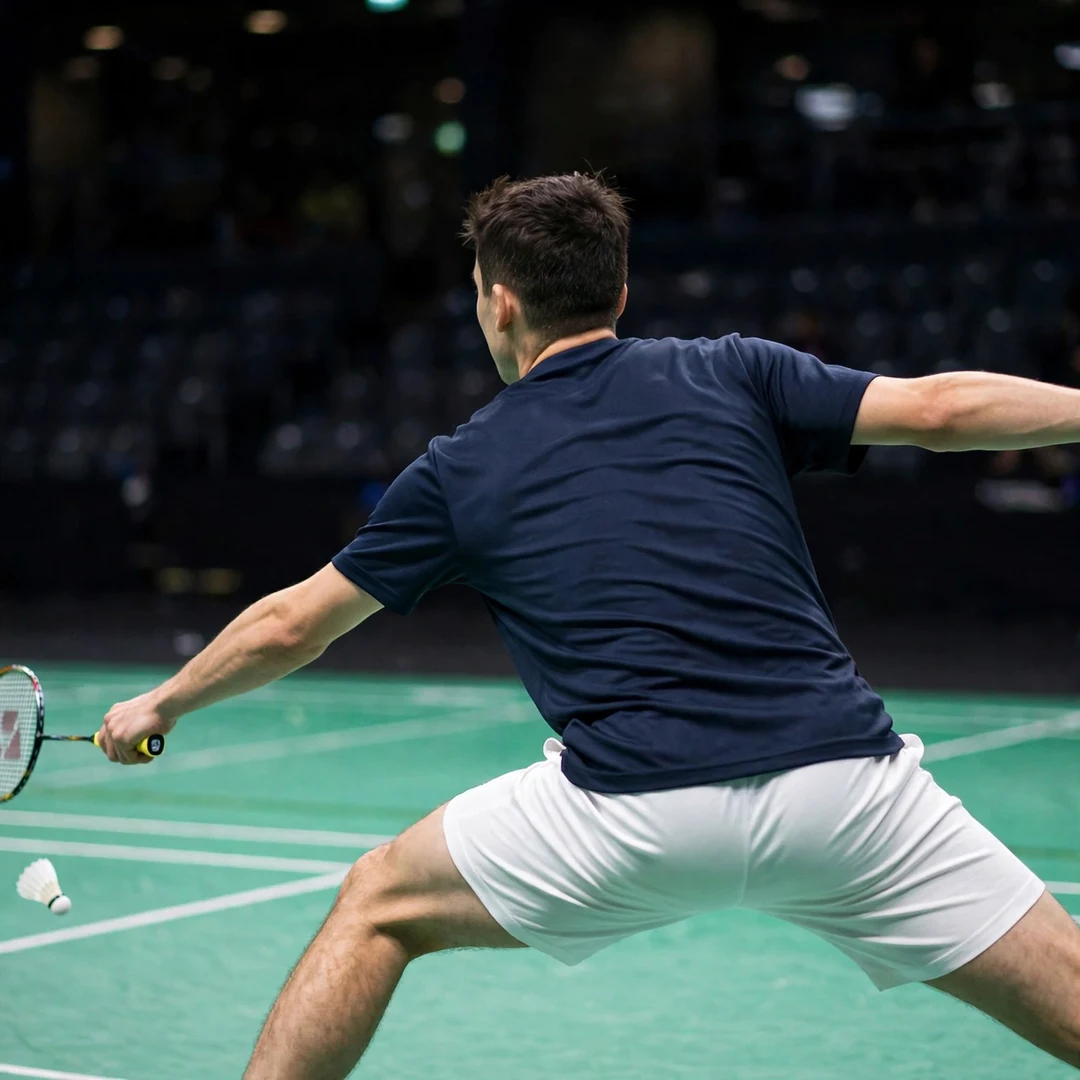
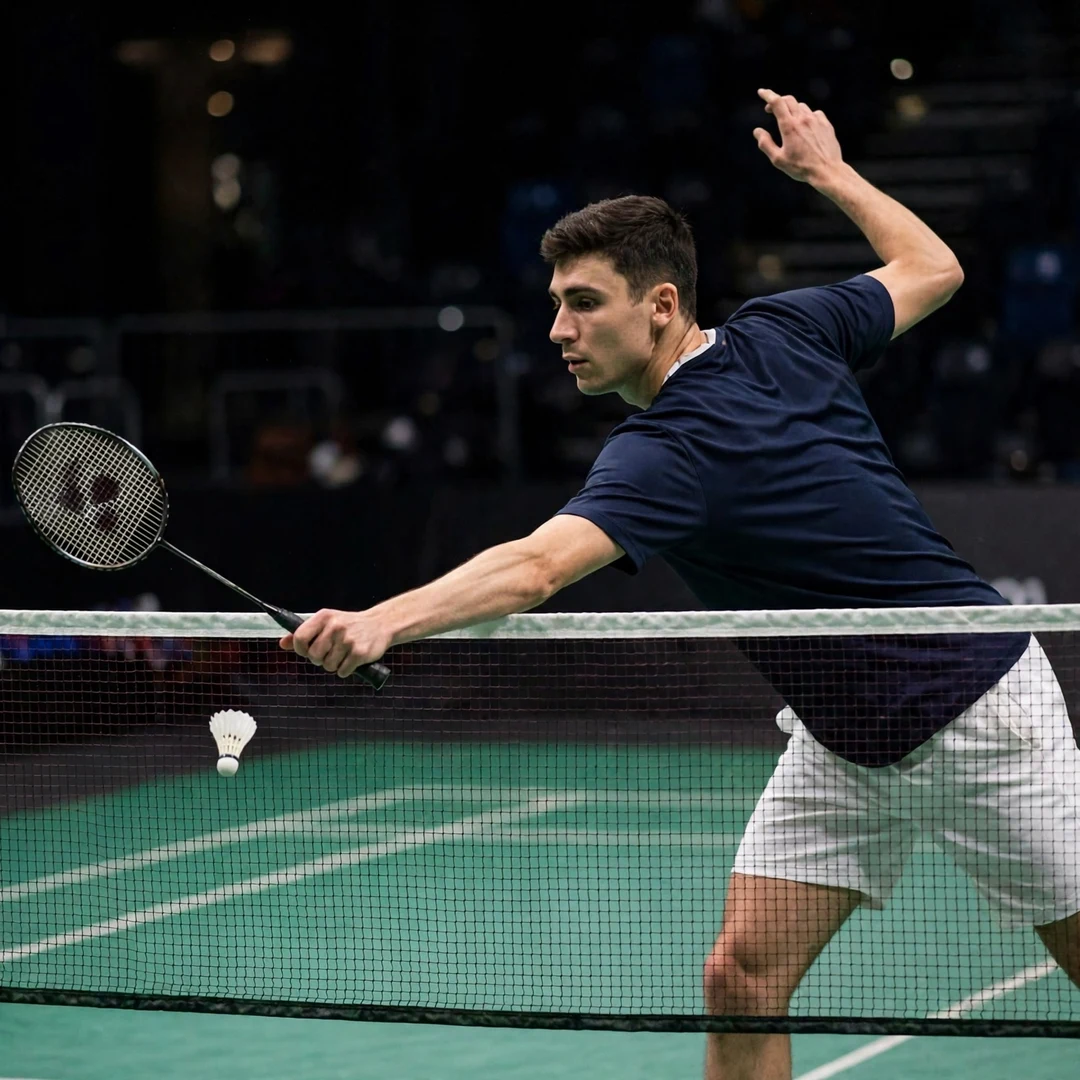
The Rhine-Ruhr week was about more than the individual event. Roy also represented France in the mixed team competition at the same Games — it was during the team knock-out stage, against the United States, that some of the best action photographs of him were taken, racket in his left hand and ‘Roy, France’ across his back. The World University Games are reserved for student-athletes, and Roy fits that description exactly: he studies at university online while training full-time in Paris. His silver medal is therefore also a story about balance — proof that a player can carry a degree and an elite training load at the same time, if the schedule is built intelligently.
Career Milestone #3
The Sudirman Cup Night He Took a Game Off the World No. 16
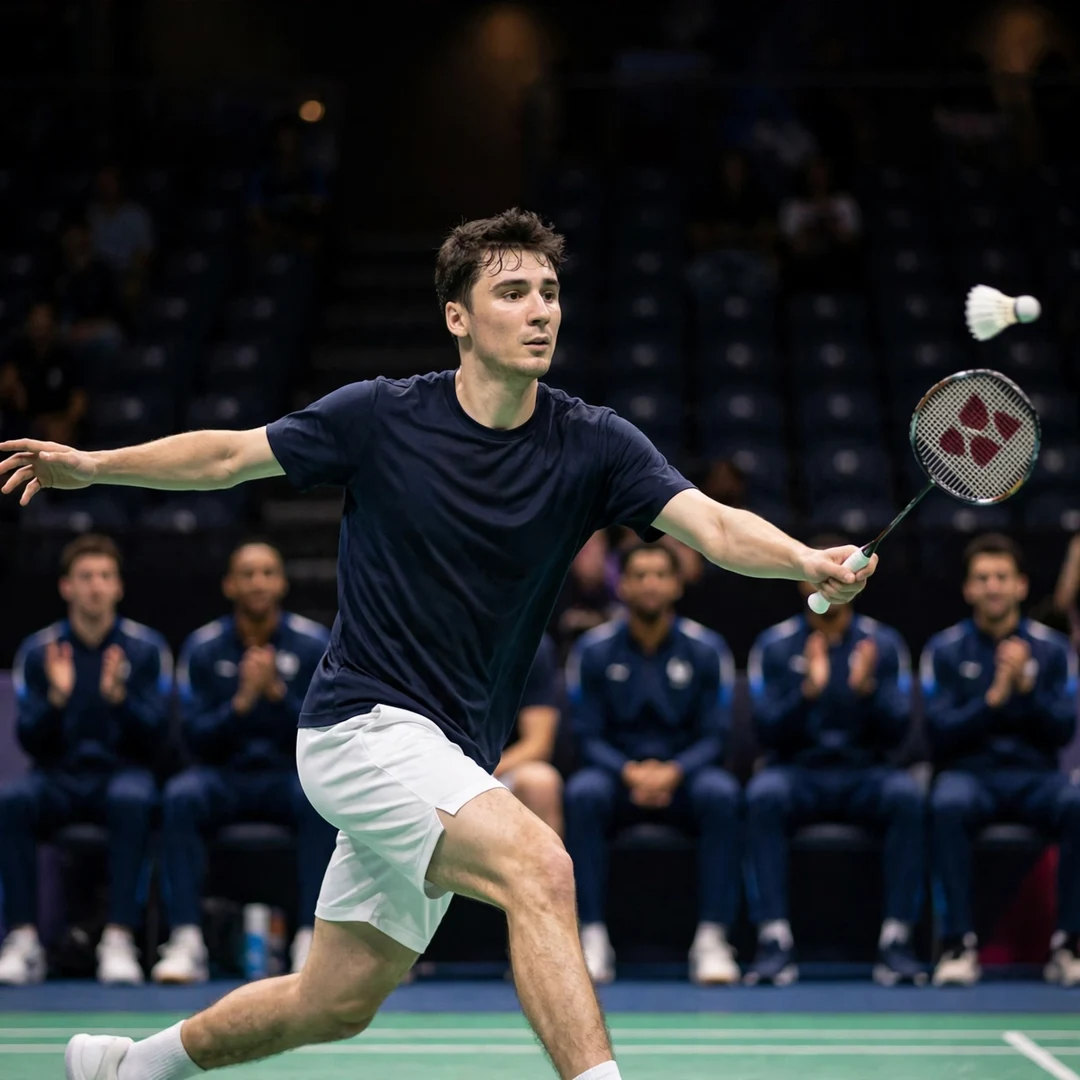
Three months before the Universiade, Roy had already produced the single most talked-about match of his career. At the Sudirman Cup Finals in Xiamen, China — the world mixed team championship — France were drawn against a mighty Japan side. In the men’s singles, Roy, then ranked world No. 84, walked on court against Japan’s Koki Watanabe, the world No. 16. What followed stunned everyone: the Frenchman took the first game 24-22, matching one of the world’s best rally players shot for shot. Watanabe’s class told in the end — Roy lost the next two games 6-21 and 11-21, and France lost the tie 0-5 — but for one game, the world No. 84 had outplayed the world No. 16.
Roy’s own verdict on that match, given to BWF afterwards, is a masterclass in honest self-assessment. ‘I had a good game plan,’ he said. ‘Physically, I still have a lot of work to do. But mentally, I know that I can compete at this level for one game.’ He added that his game was improving and that he expected to play more tournaments at that level. Notice what he did not do: he did not exaggerate one great game into a claim that he had arrived, and he did not hide from the gap that decided games two and three. Young players should study that mindset as carefully as any technique — celebrate the evidence, name the weakness, and get back to work on it.
The ranking graph tells the story of a player permanently knocking on the door of the elite. Roy stood at world No. 84 during the Sudirman Cup in the spring of 2025, and by the World University Games that July he had climbed to around world No. 80 — still his career-high. A year of hard circuit work later, the BWF’s April 2026 World Championships eligibility list showed him at No. 94, and in week 43, published on 20 October 2026, he holds world No. 95 with 20,834 points. His autumn 2026 form has been busy: at the Türkiye International Challenge he beat Switzerland’s Nicolas A. Mueller and India’s Dhruv Negi before falling to Denmark’s William Bøgebjerg.
Career Milestone #4
Into the Top 100 and Hunting the Top 50
The next targets are clear. Roy is still chasing his first title on the BWF circuit — for all his semi-finals, a trophy has so far stayed just out of reach — and the jump from the top 100 towards the top 50 is the hardest climb in the sport. His own analysis points the way: the tactics are already good enough to trouble a world No. 16 for a game, so the work is physical — building the engine to hold that level for three games, week after week. If he closes that gap, his game plan, his left-handed angles and his big-occasion temperament give him every chance of climbing much higher.
Managing a career like Roy’s takes intelligent planning on two fronts at once. In Paris he trains full-time inside the French national-team environment, where sparring partners include some of Europe’s best players, and around that schedule he fits online university study — lectures, assignments and exams arranged so they never collide with tournament weeks. The European circuit then demands constant travel: Poland, the Netherlands, Hungary, Ireland, Portugal, Kazakhstan and beyond in a single season. Peaking for the right weeks, recovering between them and keeping the study on track is a discipline in itself, and it is one of the clearest lessons his journey offers any young athlete trying to combine sport with education.
Playing Style
The Left-Handed Rallying Style
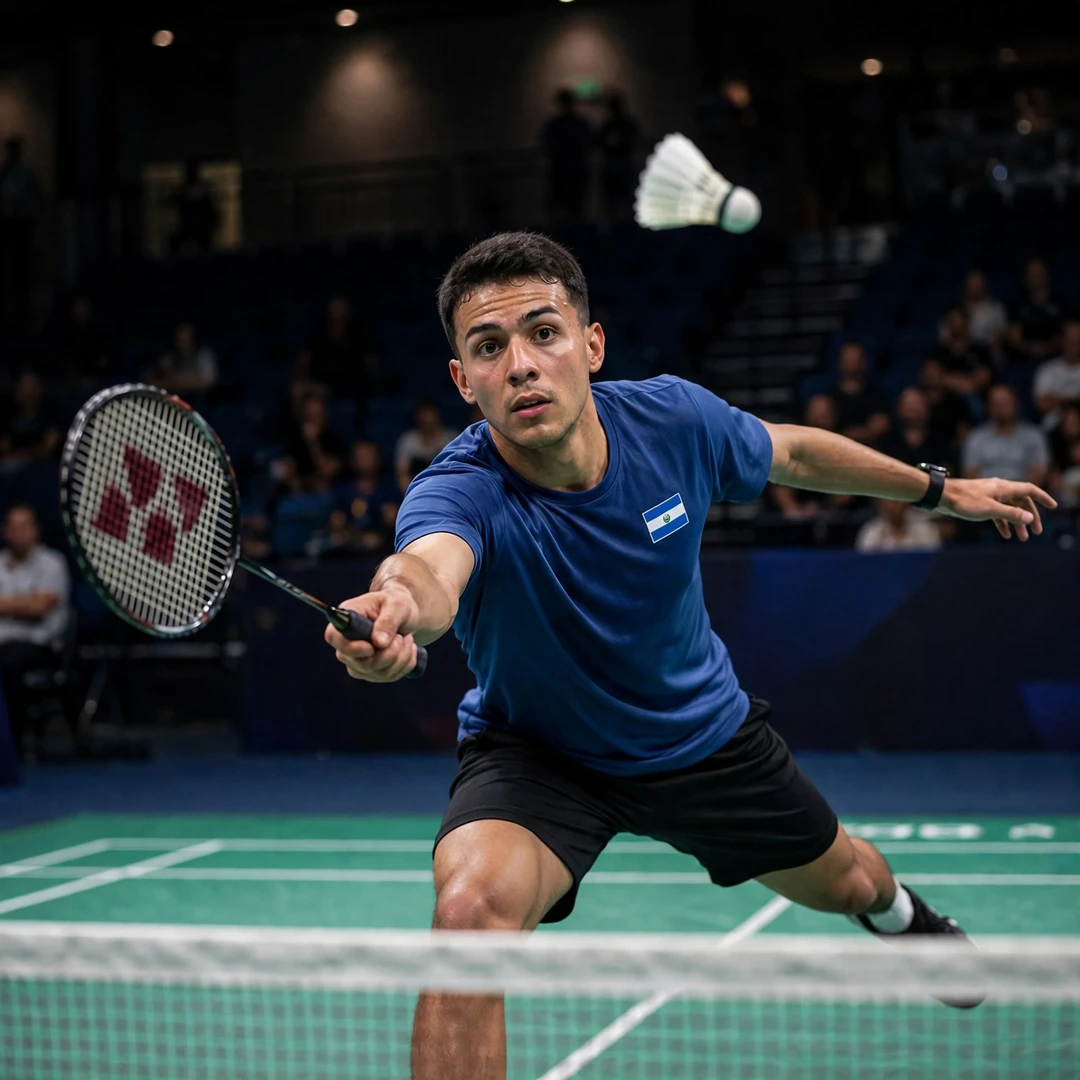
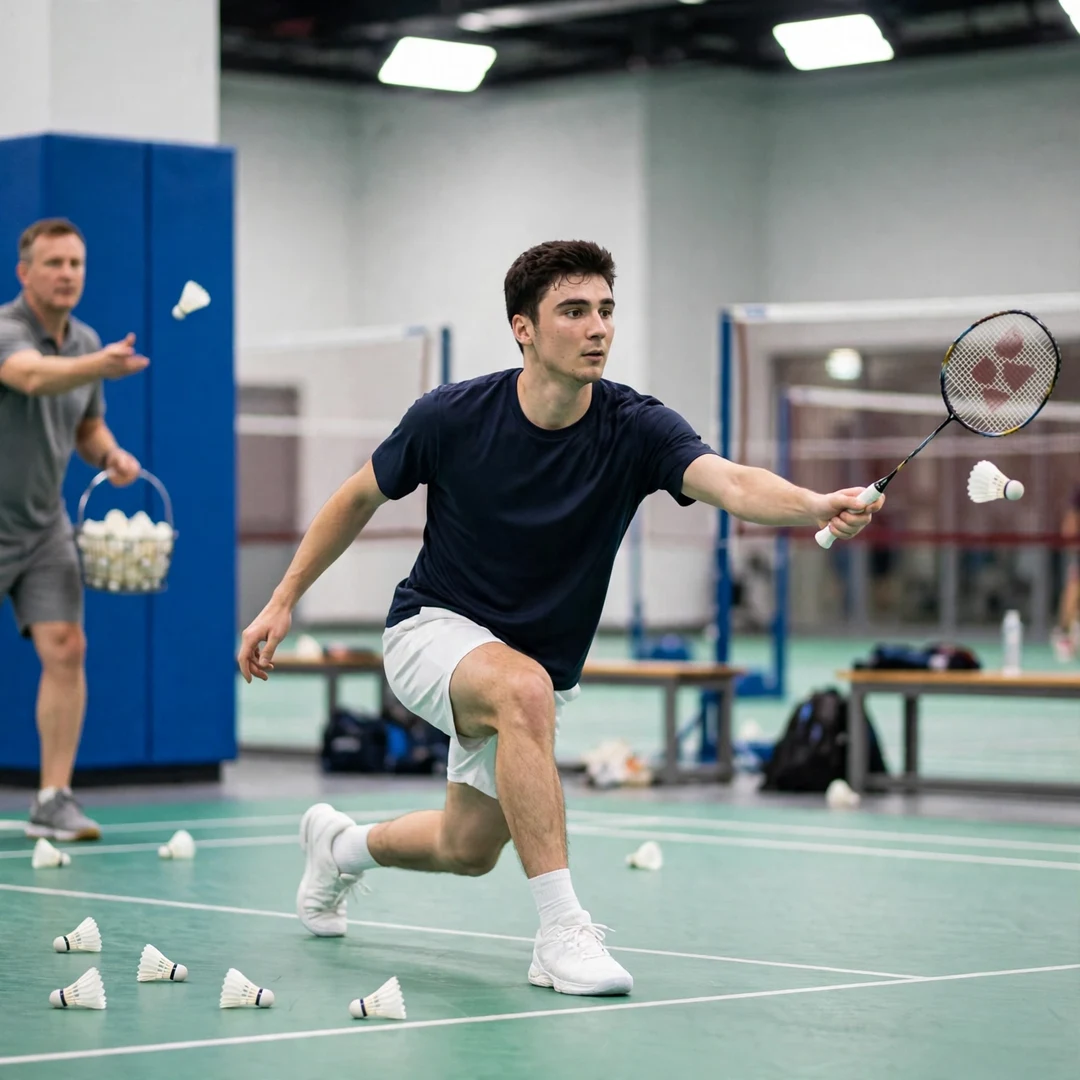
Enogat Roy plays a tactical, left-handed all-court game. He is not a power player who blows opponents off court; he is a planner. Coaches who have followed his rise point to his adaptability and tactical awareness — his ability to read an opponent, choose the right patterns and change them mid-match. The left hand is central to his threat: left-handers create angles and spins that right-handed players face far less often, from the wide forehand cross-court that pulls opponents off balance to serves and net shots that curve away from familiar positions. Roy builds rallies patiently, moves the shuttle around all four corners, and waits for the opening his game plan has been constructing.
His weapons sit on a base of reliable footwork, stubborn defence and tidy net control — and on that honesty about physicality he showed after the Sudirman Cup. Because he cannot yet outlast the very best over three games, his tactics have to be smarter: shorten points when the chance comes, defend in organised patterns, and never waste energy on low-percentage hero shots. That is why his matches are such good study material. Almost everything he does is repeatable by a developing player: the rally construction, the shot selection, the patience under pressure. You do not need a 300 km/h smash to copy Enogat Roy — you need a plan, and the discipline to trust it.
Young players studying his matches can observe how a left-handed tactician runs a rally: how he uses the serve to start points on his terms, how he pins opponents in the rear backhand corner, how he suddenly changes pace with a cross-court net shot, and how he defends smashes by blocking into space rather than swinging wildly. Watch also how he behaves between rallies — calm, deliberate, already thinking about the next pattern. For junior players at an academy like ours, Roy is proof that intelligence is a weapon: study your opponent, prepare a plan, and a ranking gap of sixty places can shrink to nothing for long stretches of a match.
Mental Strength
Discipline, Studies and the Student-Athlete Balance
Roy’s resilience started long before any ranking points. At eleven years old he left Malaysia — the only home he really knew — because he believed badminton could be his future and France was where that future had to be built. A late starter with no junior titles and no reputation, he had nothing to trade on except work and belief. Through his teens in the French sports-school and national systems, and through the long apprentice years on Europe’s smaller circuits, that belief never visibly wavered. Many talented juniors quit when the results lag; Roy’s whole career is an argument for staying.
His response to near-misses shows the same steel. Four international semi-finals in 2025 brought four weekends that ended one or two wins short of a trophy — the kind of run that makes some players tighten up and protect their ranking. Roy instead kept entering, kept travelling and kept refining the physical side he knows he must improve. The Sudirman Cup performance was no accident: it was what happens when a prepared player meets a big stage. Setbacks, in his story, are information. A lost semi-final tells him what the next training block must fix — and then he goes and fixes it.
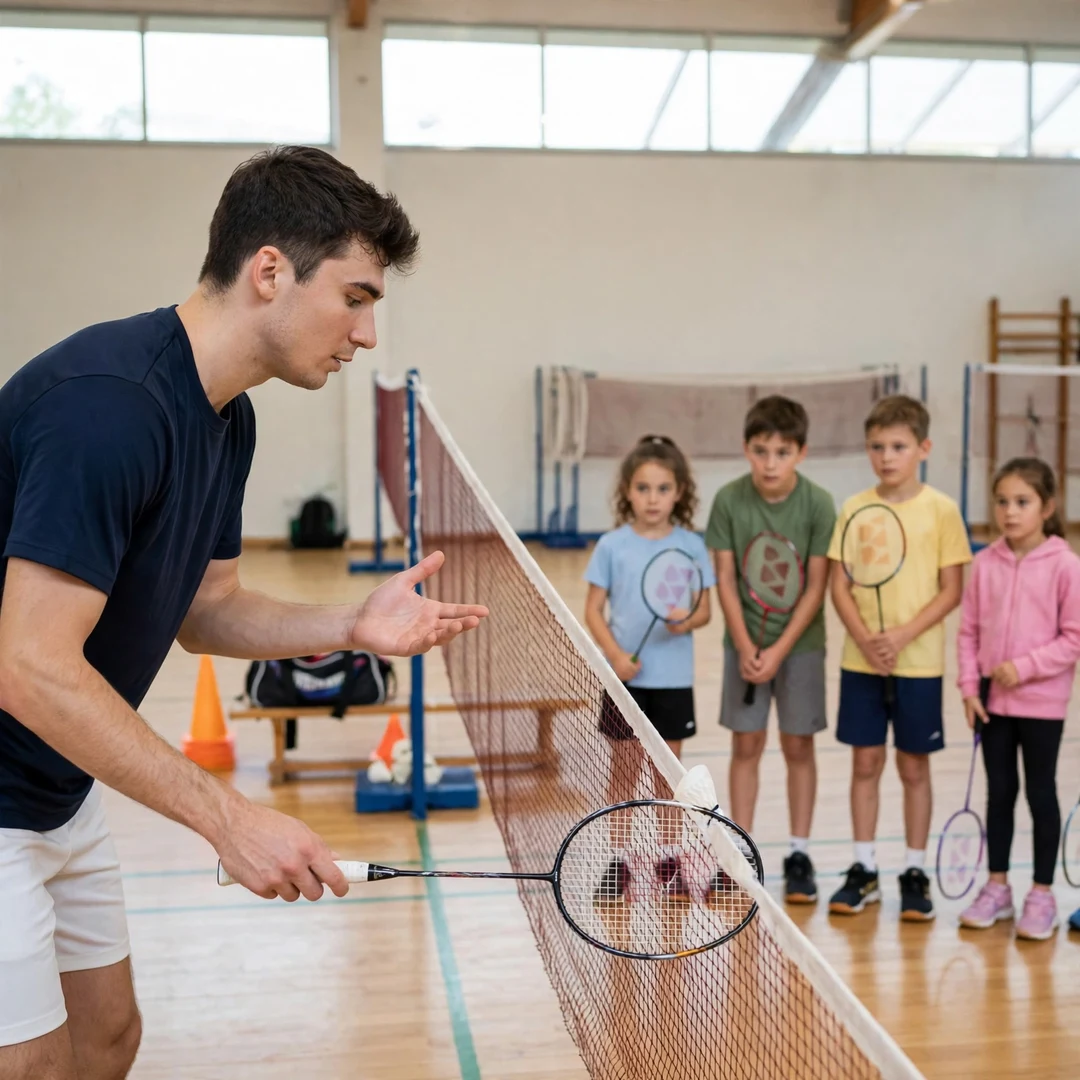
Practical lessons from his journey include starting exactly where you are — a ten-year-old beginner in a Malaysian hall became a world top-100 player; prepare for opponents with real game plans instead of hoping talent will improvise one; be honest about your physical gaps and train them specifically; protect your education alongside your sport, the way Roy does with online study; and treat every semi-final loss as data, not disaster. None of these lessons require rare gifts. They require the habits Roy has shown since he was eleven: decide, commit, and keep showing up.
Learning Reference
ST Badminton Academy Connection
ST Badminton Academy has no official partnership or endorsement from Enogat Roy. He is not connected to our academy, does not coach with us and has not visited our courts in Kuala Lumpur or Singapore. This profile is an educational study of a professional whose career we admire — and whose story has a special local angle for us, since the French international’s love of badminton began in Malaysia, the country where our academy is based. We use his matches as teaching material because his tactical, left-handed game shows our students exactly how far preparation and patience can take a player.
Many of our students in Malaysia find Roy’s story especially relatable: a boy who grew up in Malaysia, started the game at ten in local halls, and now plays for France against the best players in the world. His journey reminds Malaysian juniors that world-class badminton does not belong to any one country or any one starting age — and it reminds our visiting learners from Singapore how international the sport’s talent pathways have become. When his Sudirman Cup match against Watanabe is shown in our video sessions, the room always goes quiet at the same moment: the first-game score, 24-22, proof of what a good plan can do.
We encourage our students to observe his rally construction, his left-handed patterns and his competitive composure — and just as much, his honesty after matches. A player who can say ‘my game plan was good, my physicality needs work’ after the biggest match of his life understands development better than most. That is the mindset we try to build at ST Badminton Academy: clear eyes, a plan for the next block of training, and the patience to let steady work compound. Roy’s career so far — built across two countries, one late start and countless small tournaments — is exactly that philosophy in action.
FAQs: Enogat Roy French Badminton Player
Here are answers to common questions about Enogat Roy’s career, achievements and what young players can learn from the French left-hander who fell in love with badminton in Malaysia.
Who is Enogat Roy and which country does he represent in badminton?
Enogat Roy is a French professional badminton player competing in men’s singles. Born on 5 May 2003, he spent his childhood in Malaysia with his expatriate parents, started badminton there at the age of ten, and now trains full-time with the French national team in Paris while studying at university online. He plays left-handed, and in the BWF week 43 rankings published on 20 October 2026 he stands at world No. 95 with 20,834 points. His best-known results are the men’s singles silver medal at the Rhine-Ruhr 2025 World University Games and a famous first game taken off the world No. 16 at the Sudirman Cup.
What are Enogat Roy’s biggest badminton achievements?
Enogat Roy’s biggest achievement is the men’s singles silver medal at the Rhine-Ruhr 2025 World University Games, where he beat Choi Ji-hoon and Rei Miyashita in three games before losing the final to Ting Yen-chen. At the Sudirman Cup 2025 he took the first game 24-22 off Japan’s world No. 16, Koki Watanabe. He also reached four international semi-finals in 2025 — the Polish Open, Dutch Open, Hungarian International and Astana International Challenge — and climbed to a career-high world No. 80. One honest note: he is still chasing his first title on the BWF circuit, and that chase drives his current training.
What is Enogat Roy’s playing style?
Enogat Roy plays a tactical, left-handed all-court game built on planning and patience. He constructs rallies carefully, moves opponents around all four corners, defends in organised patterns and uses the unfamiliar angles and spins that left-handers create for right-handed opponents. He describes his own strengths as a good game plan and a clear head — and his own main weakness, openly, as physicality over three games, which he is working to improve. His is not a power game; it is a thinking game, which is precisely why developing players can learn so much from watching him.
How did Enogat Roy perform at the Sudirman Cup?
At the Sudirman Cup Finals 2025 in Xiamen, Roy played the men’s singles for France against Japan and faced the world No. 16, Koki Watanabe, while himself ranked No. 84. He won a superb first game 24-22 before Watanabe recovered to win 6-21, 11-21 in the next two games, and France lost the tie 0-5. Afterwards Roy said his game plan had been good, that physically he still had a lot of work to do, and that mentally he now knew he could compete at that level for one game — one of the most honest and useful post-match interviews of the year.
How can my child learn from Enogat Roy’s training approach?
Young players can learn from Enogat Roy’s approach in several concrete ways: prepare a specific game plan for every opponent, the way he did against Watanabe; study match video to find patterns, not just highlights; train physical weaknesses honestly instead of hiding behind strengths; and keep education moving alongside sport, as Roy does by studying at university online while training full-time in Paris. Coaches at ST Badminton Academy use his matches to teach rally construction and left-handed patterns, because almost everything he does well is a habit, not a gift — and habits can be coached.
Did Enogat Roy win any junior titles?
No — Enogat Roy did not win major junior titles, and that is one of the most encouraging facts about him. He only started playing at ten years old in Malaysia, had no elite junior background, and his junior years in France were spent building his game through the sports-school and national pathways. He did gain early experience in mixed doubles, partnering Anna Tatranova in events up to World Championships qualification level. His rise came the slow way, on the senior circuit — a genuine inspiration for late starters who fear they have missed their chance.
What are Enogat Roy’s best international results?
Enogat Roy’s best international results are the men’s singles silver medal at the Rhine-Ruhr 2025 World University Games and his four international semi-finals in 2025: the Polish Open, the Dutch Open, the Hungarian International and the Astana International Challenge. He also reached the quarter-finals of the Irish Open (2025), the Portugal International (2025) and the Swedish Open (2026), the round of 16 at the US Open Super 300, and he took a game off the world No. 16 at the Sudirman Cup. A first BWF circuit title remains the obvious next milestone in his career.
What playing style should young players learn from Enogat Roy?
Young players should study Enogat Roy’s complete rallying game rather than any single shot. Learn how he builds a point: serve with intention, pin the opponent in the back corners, defend patiently in patterns, and attack only when the rally has been shaped to allow it. Left-handed players in particular can study how he uses angles that right-handers rarely face. And every player can copy his preparation — researching opponents, planning tactics and reviewing his own weaknesses honestly after every match, win or lose.
Does ST Badminton Academy have any connection with Enogat Roy?
No, Enogat Roy is not a student, coach or ambassador of ST Badminton Academy. He represents France and is based with the French national team in Paris. Our coaches simply use his matches as study material, and our Malaysian students have a natural soft spot for him: his badminton story began in Malaysia, where he lived from the age of one to eleven. If your child would like to develop the kind of tactical, patient game Roy plays, our coaches would be delighted to help — the contact details are at the end of this profile.
Enogat Roy Career Highlights
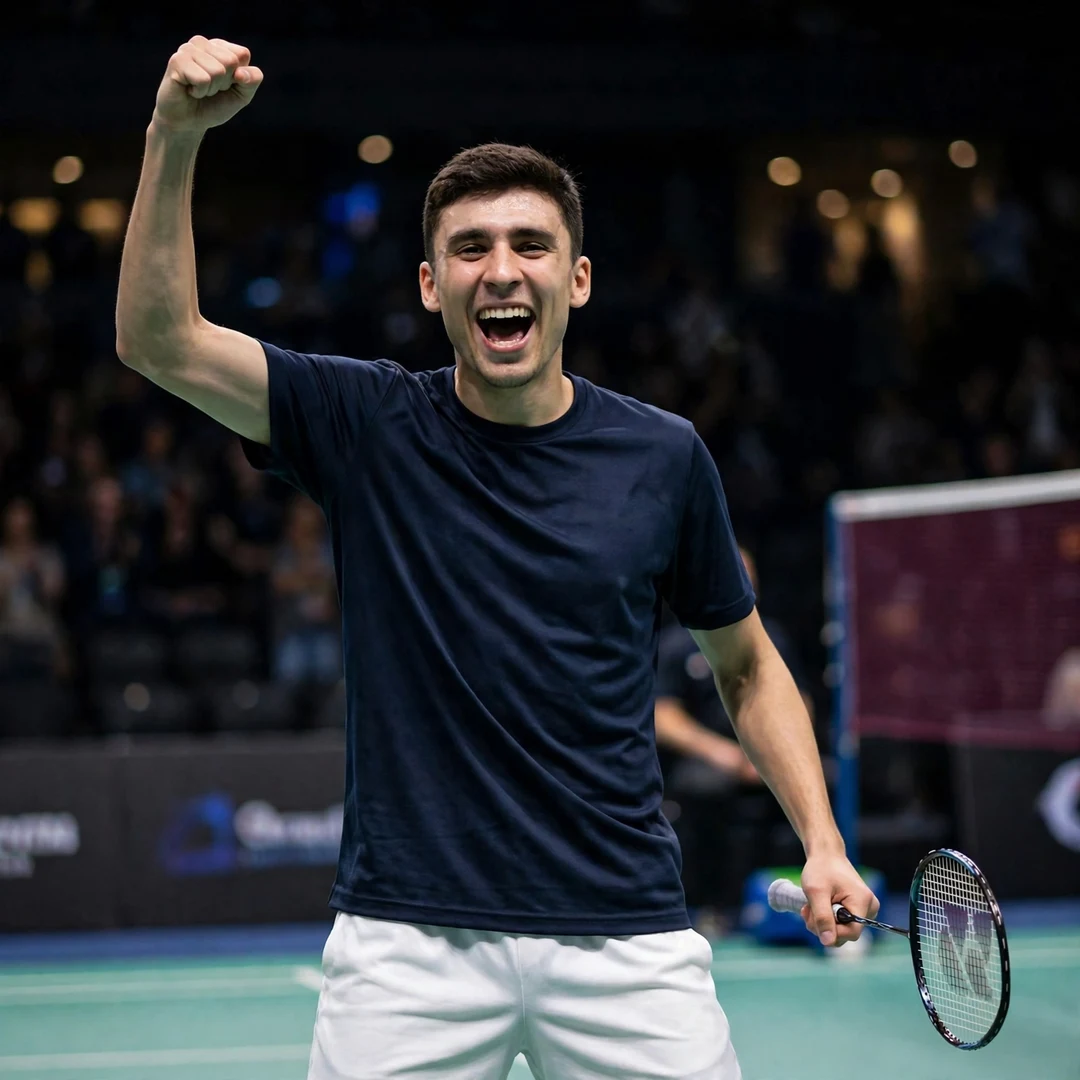
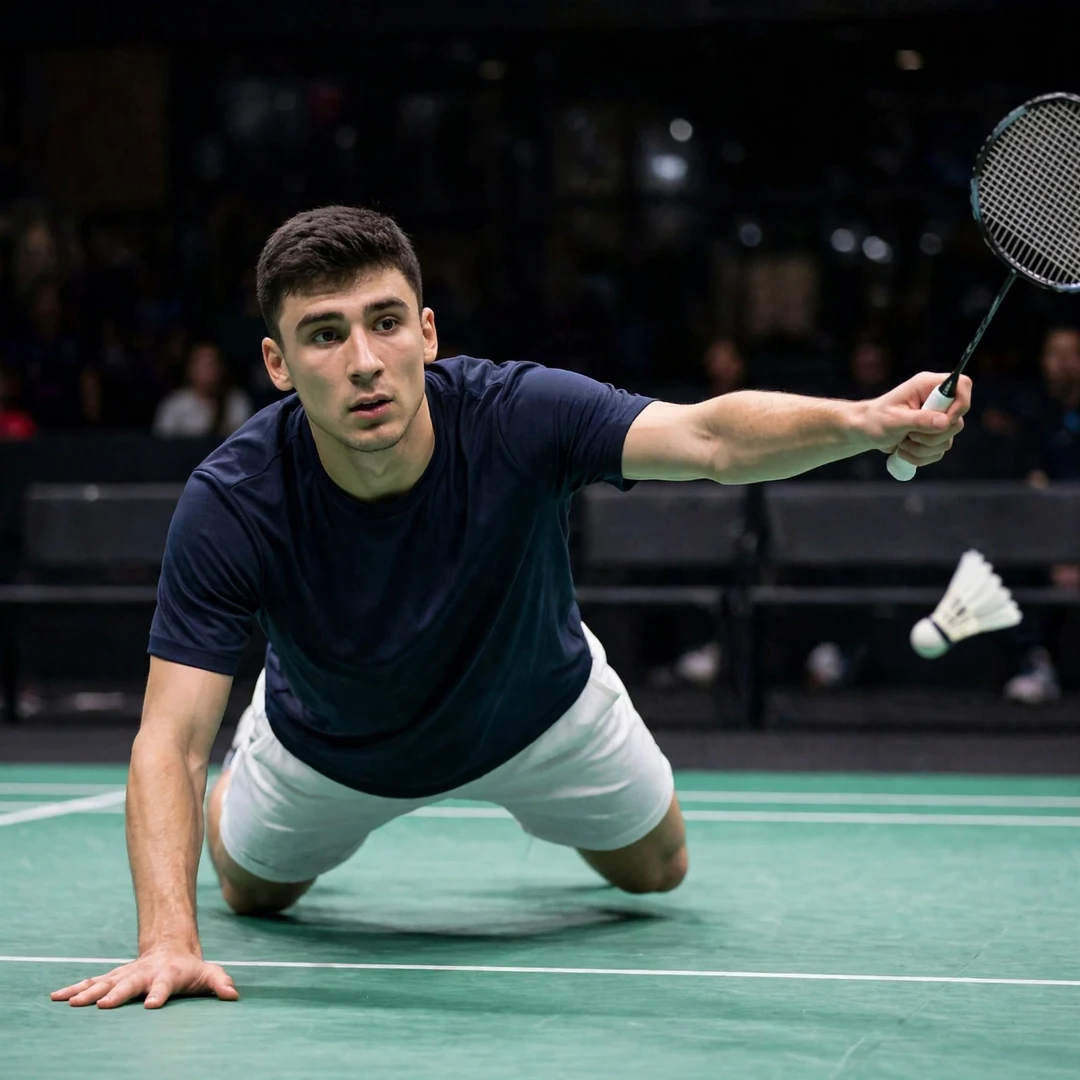
Career Statistics and Rankings
Enogat Roy, born 5 May 2003, has built one of the most unusual journeys in the current top 100: a French international who discovered badminton as a child in Malaysia, returned to France at eleven to chase a national-team dream, and climbed — without junior titles or early fame — to a career-high world No. 80. His silver medal at the 2025 World University Games and his first game won against the world No. 16 at the Sudirman Cup mark him as a player whose best years may still be ahead, and his current standing of world No. 95 (20,834 points, week 43 of October 2026) is a platform, not a ceiling.
| Development Area | Common Misconception | What Enogat Roy's Career Shows REALITY |
|---|---|---|
| Junior Foundation | Talent alone decides who becomes a champion. | Roy only started badminton at ten in Malaysia and won no major junior titles — a structured development path through a French sports school came first, not early fame. |
| Playing Style Priority | Kids should copy the flashiest attacking shots. | Roy built a complete left-handed rallying game first — his winners are the finishing touch on patient defence, tight net play and a clear tactical game plan. |
| Fitness Importance | Juniors can out-train everyone without rest. | Roy combines full-time national-team training in Paris with online university study, and is rebuilding his physical training after naming endurance as his main gap — smart scheduling, not endless hours, keeps a student-athlete progressing. |
| Mental Approach | Top players never get nervous or upset. | Roy took a game off the world No. 16 at the Sudirman Cup and then publicly analysed the physical gap that remained — mental skills and honesty are trained, not inherited. |
| Attacking Training | Smashing harder is always the answer. | His 2025 World University Games silver medal, won through three-game victories over Choi Ji-hoon and Rei Miyashita, came from rally control and controlled attack placement, not raw power. |
| National Milestones | Only world titles matter. | Roy's Universiade silver medal and four international semi-finals in 2025 made him a fixture of France's senior squad — milestones at student and continental level build a career step by step. |
| Career Timeline | Champions peak once and fade fast. | From a Malaysian childhood to a career-high world No. 80 and a permanent place in the top 100, Roy proves that steady development across two badminton cultures beats a short peak. |
Study Enogat Roy's Work Ethic and Professional Approach
This profile explains who Enogat Roy is, his major achievements, and what developing players can learn from his tactical game, his two-country journey and his student-athlete balance. At ST Badminton Academy Malaysia, our certified coaches offer structured badminton training for children and teenagers in Kuala Lumpur and Singapore, from beginner fundamentals to competitive junior development. If you would like your child to train with a plan the way the professionals do, message us on WhatsApp at +60 17-684 2136 to ask about trial classes, training schedules and junior programmes — we would love to help your child start a badminton journey of their own.