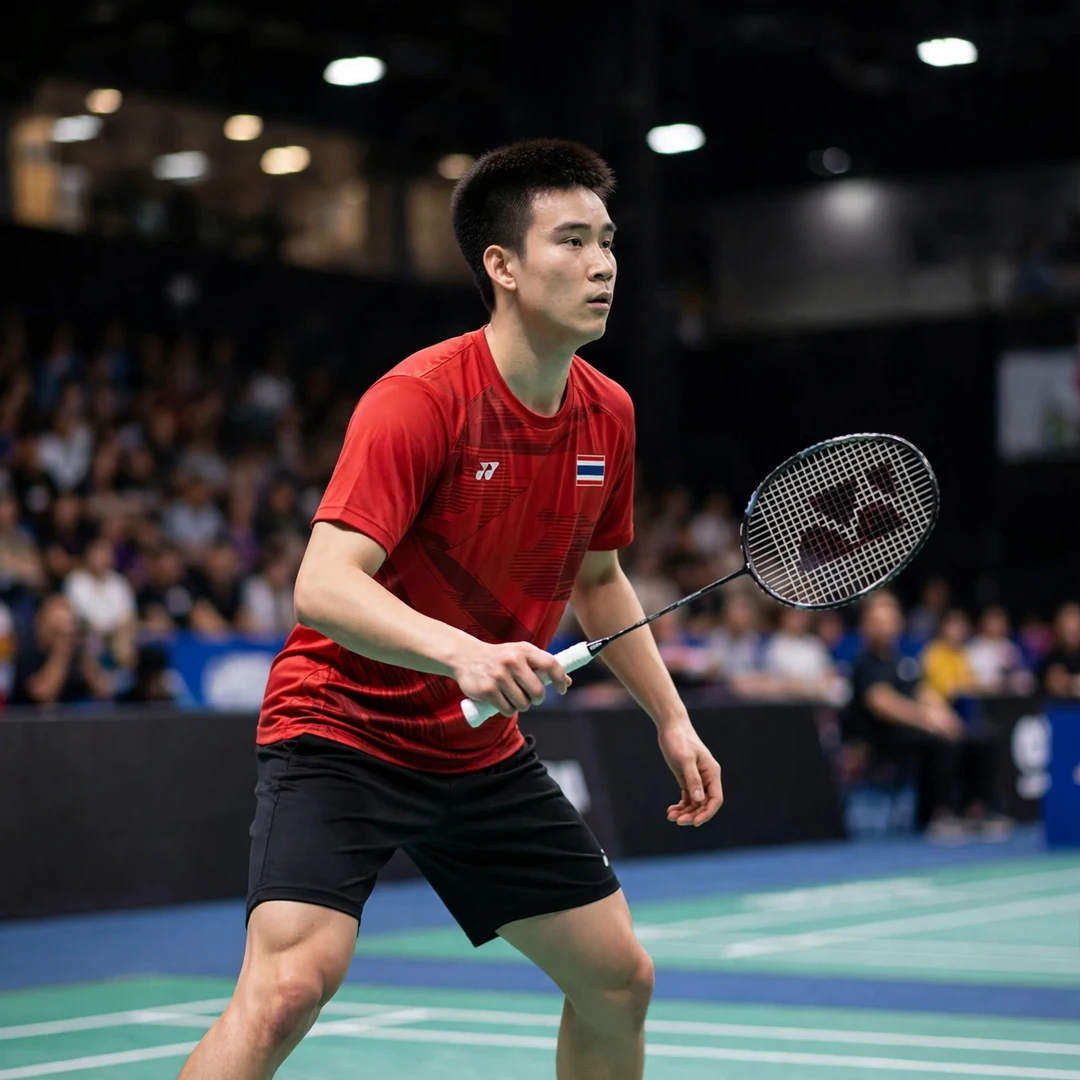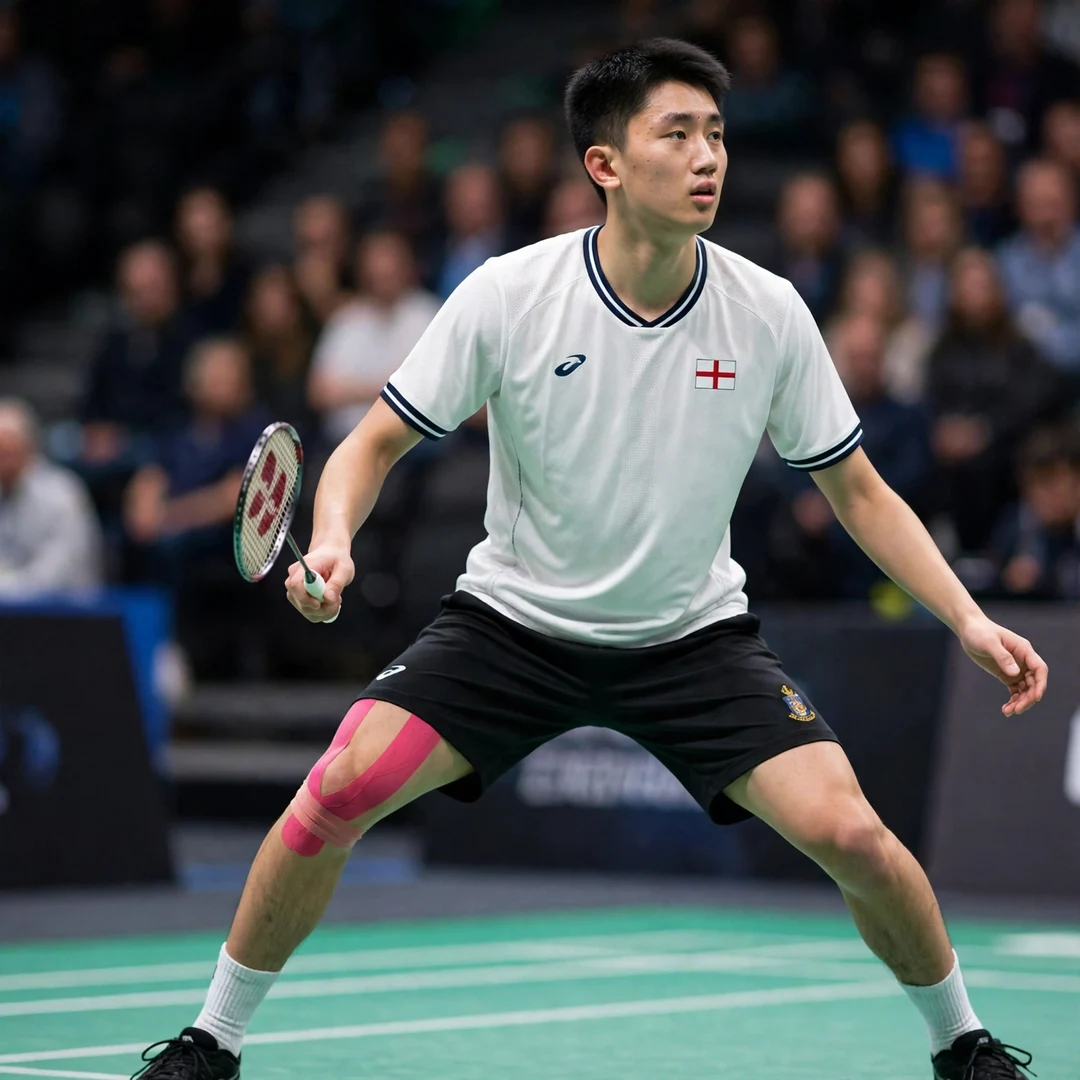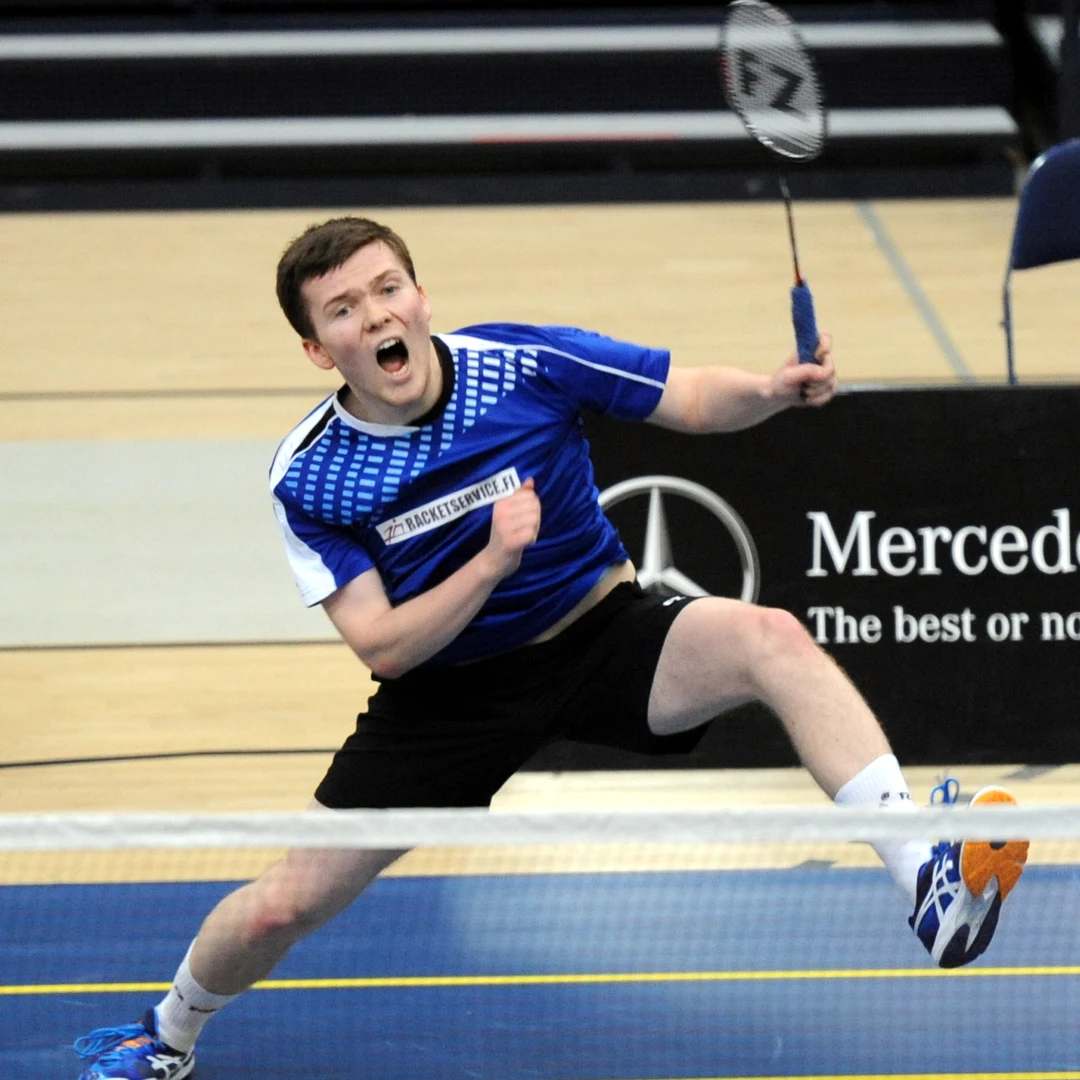
Finnish Men’s Singles Badminton Star
Kalle Koljonen

Finland
Player Event: Men’s singles
From Helsinki, Finland · Height: 1.75 m (5 ft 9 in) · Left-handed
Playing Style: Left-handed rallying all-rounder who builds points with angles, patience and stubborn defence
Known For: The first Finnish player ever to win a European Championships medal (Kyiv 2021 bronze), two Olympic Games, and a career-high ranking reached at the age of 31
Journey: Tapion Sulka, Espoo · Hungarian International champion 2015 · European bronze medallist 2021 · Tokyo 2020 and Paris 2024 Olympian · HYLO Open semi-finalist 2025
Understanding Kalle Koljonen (Finnish Badminton Star)
Kalle Koljonen is a Finnish men’s singles badminton player who stands at world No. 66 in the BWF rankings (Week 43, 20 October 2026) with 26,970 points. In a sport dominated by Asia and Denmark, Koljonen has carried Finnish singles badminton for more than a decade: he is the first player from Finland ever to win a medal at the European Championships, a two-time Olympian, and — most remarkably — a player who reached his career-high world ranking of No. 47 at the age of 31, twelve years after his first senior team medal. His is a story of patience: a left-hander from Helsinki who kept improving long after most players peak.
Early Life in Helsinki and the Tapion Sulka Club
Kalle Koljonen was born on 26 February 1994 in Helsinki, Finland. Badminton is a minority sport in a country that worships ice hockey, so a talented Finnish junior learns early that nothing will be handed to him: fewer sponsors, smaller halls, and long winter trips to find strong sparring. Koljonen developed in the capital region and came through Tapion Sulka, the Espoo-based club that has produced many of Finland’s internationals — the same club system that later developed Joakim Oldorff, the Finn who now stands beside him in the world’s top 70.
Learning the Trade in Espoo
The Finnish pathway is small but demanding. At Tapion Sulka and in the national-team environment, Koljonen trained in a group where every player doubled as a sparring partner for the others, and international competition meant constant travel across Europe’s International Series and Challenge circuit. That circuit — small halls, qualifying rounds, early-morning matches — became his university. By his early twenties he was already a fixture of Finland’s team squads, trusted with singles duty at European team events.
First Title in Hungary and a Habit of Finals
His first senior medal arrived in February 2014, just before his 20th birthday, when Finland took bronze at the European Men’s Team Championships in Basel, Switzerland. Team badminton teaches a young singles player a different kind of pressure: your match can decide the whole tie, and the bench lives every rally with you. Koljonen’s Basel bronze was the first entry in a medal collection that makes him one of the most decorated Finnish singles players of his era.
The Finalist Years
The first individual title came in 2015. After losing the Slovenian International final to Ukraine’s Dmytro Zavadsky in three games, Koljonen won the Hungarian International in Budapest, beating Denmark’s Rasmus Messerschmidt 19-21, 21-17, 21-15. A first title at 21 confirmed what the Finnish camp believed: the left-hander’s patient, angular game could close out finals, not just reach them.
Career Milestone #1
Kyiv 2021: The Bronze That Made Finnish History
What followed was a habit of finals. In 2016 he won the Norwegian International, beating Kasper Dinesen 21-19, 21-13, and finished runner-up in Bulgaria and at his home Finnish International, where he lost a five-game final to Victor Svendsen, 7-11, 7-11, 11-8, 12-10, 4-11, under the experimental 11-point format trialled that season. Runner-up finishes in Iceland and the Netherlands followed in 2017. Koljonen had become one of the most reliable players on Europe’s second-tier circuit — always in the late rounds, waiting for a bigger stage.
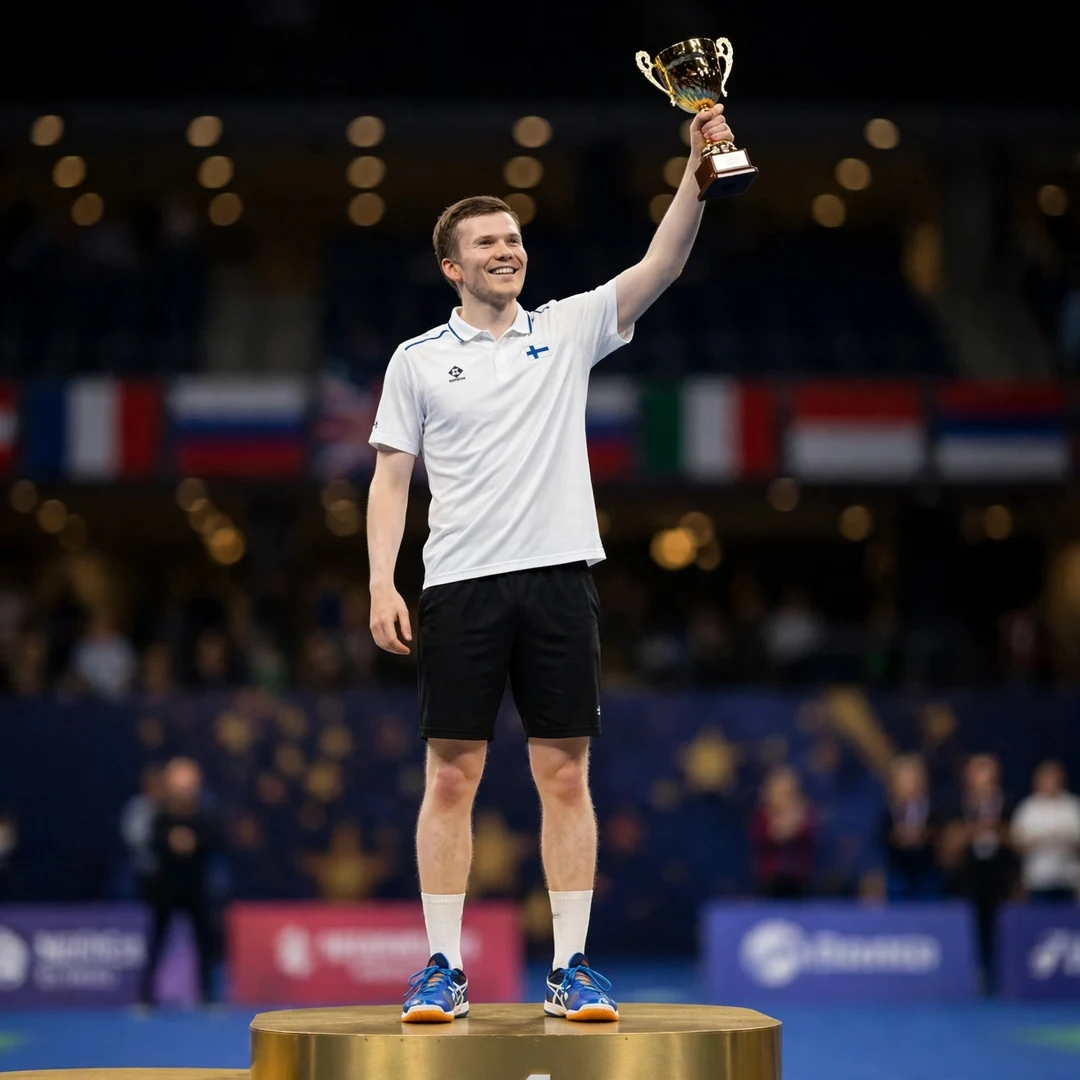
The bigger stage arrived in April 2021 at the European Championships in Kyiv. Ranked world No. 80, Koljonen was not supposed to reach the weekend. He beat Portugal’s Bernardo Atilano 21-18, 21-7, then stunned seventh seed Toma Junior Popov of France 21-12, 21-17. In the quarter-finals he produced what BadmintonPlanet called the biggest upset of the day: beating Denmark’s Rasmus Gemke — the world No. 12 and third seed — 21-15, 21-19, coming back from 17-19 down in the second game with four straight points.
Career Milestone #2
Olympic Debut in Tokyo
In the semi-final he fell 14-21, 14-21 to Viktor Axelsen, the world No. 1 — but the bronze medal was his, and it was historic: no Finnish player had ever won a European Championships medal before. ‘First ever Finnish medal’ was how Badminton Europe announced it. Koljonen had changed what Finnish badminton believed was possible, and he had done it at 27, an age when the sport usually stops rewarding late developers.
Three months later he was an Olympian. At the Tokyo 2020 Games, played in 2021, Koljonen was drawn in Group E with Axelsen — the draw’s cruel joke after Kyiv. He beat Austria’s Luka Wraber 21-13, 21-17, then lost to Axelsen 9-21, 13-21 as the Dane marched on to gold. A group-stage exit, but an Olympic debut banked — and that autumn he represented Finland at the Sudirman Cup in Vantaa, taking a game off India’s Kidambi Srikanth and pushing China’s Lu Guangzu to 16-21, 19-21 in front of a home crowd.
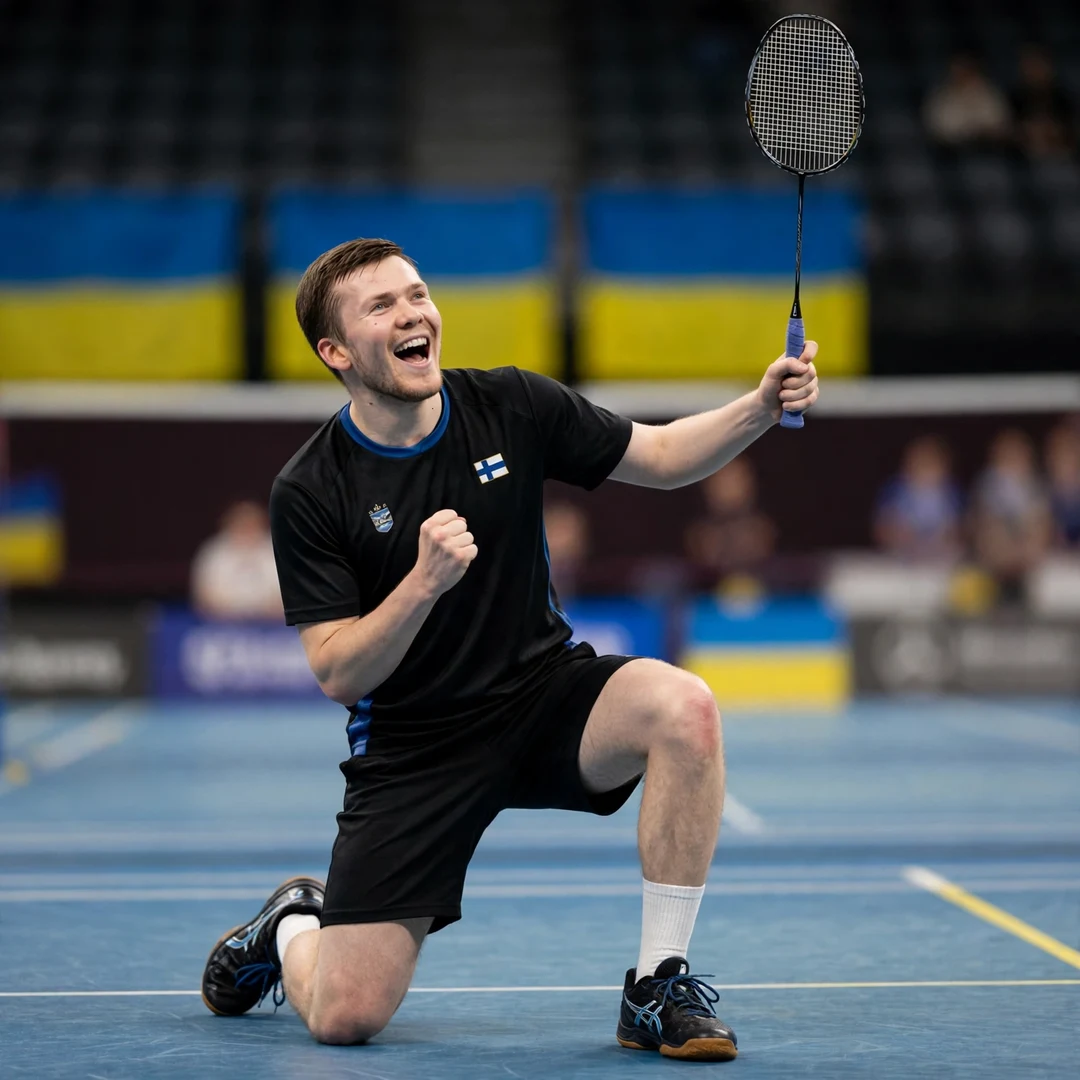
The years after Tokyo were leaner: a runner-up finish at the Bahrain International in 2022, and in 2023 finals at the Polish Open — where France’s rising star Alex Lanier beat him — and the Swedish Open. The ranking drifted, opponents got younger, and a lesser competitor might have wound down. Instead, in 2024, nine years after his first title and eight years after his second, Koljonen won again: the Türkiye International Challenge, beating India’s Aryamann Tandon 21-16, 21-18 in the final. A third international title, at 30, was a statement — the Finn was not finished.
Career Milestone #3
Eight Years Between Titles: The Türkiye Comeback
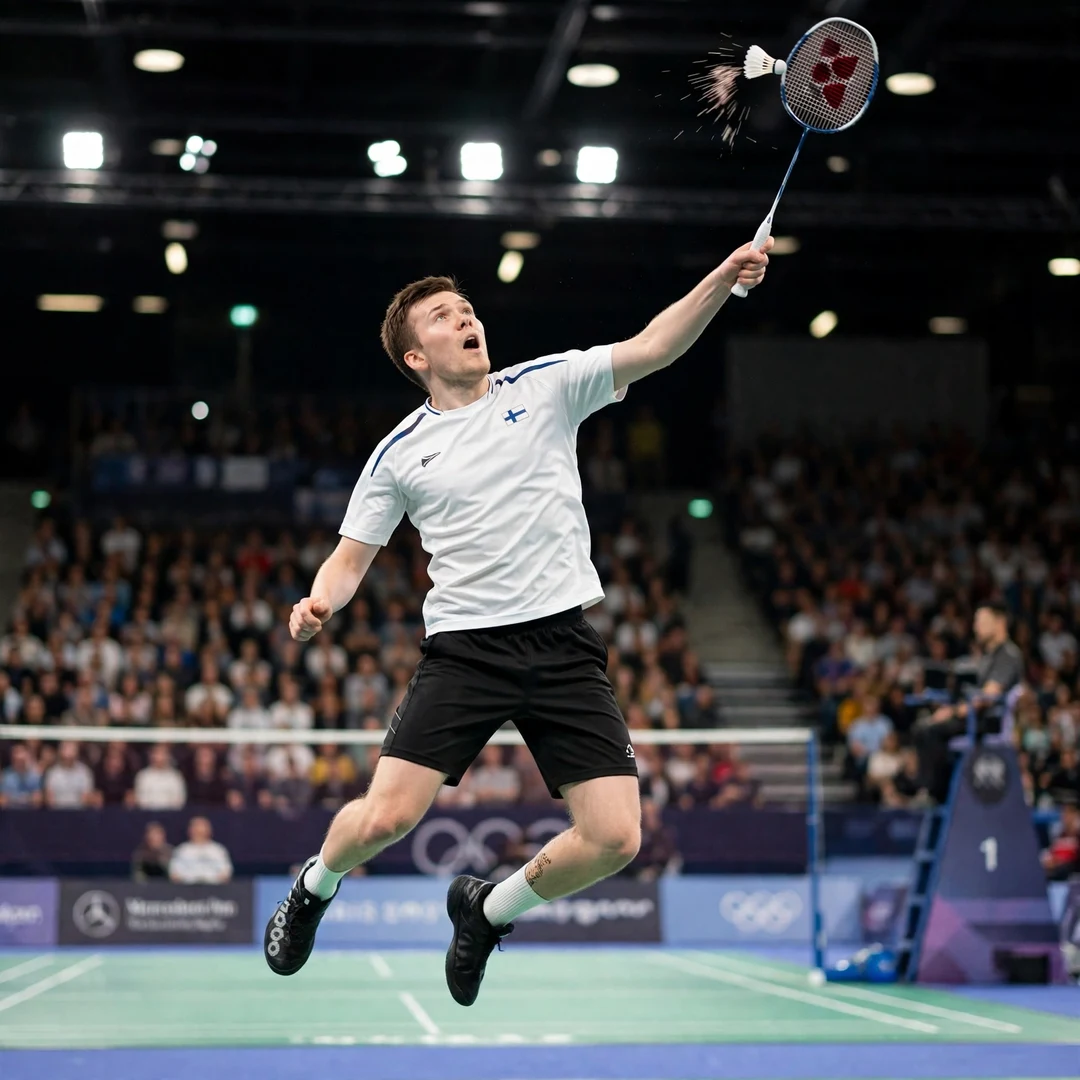
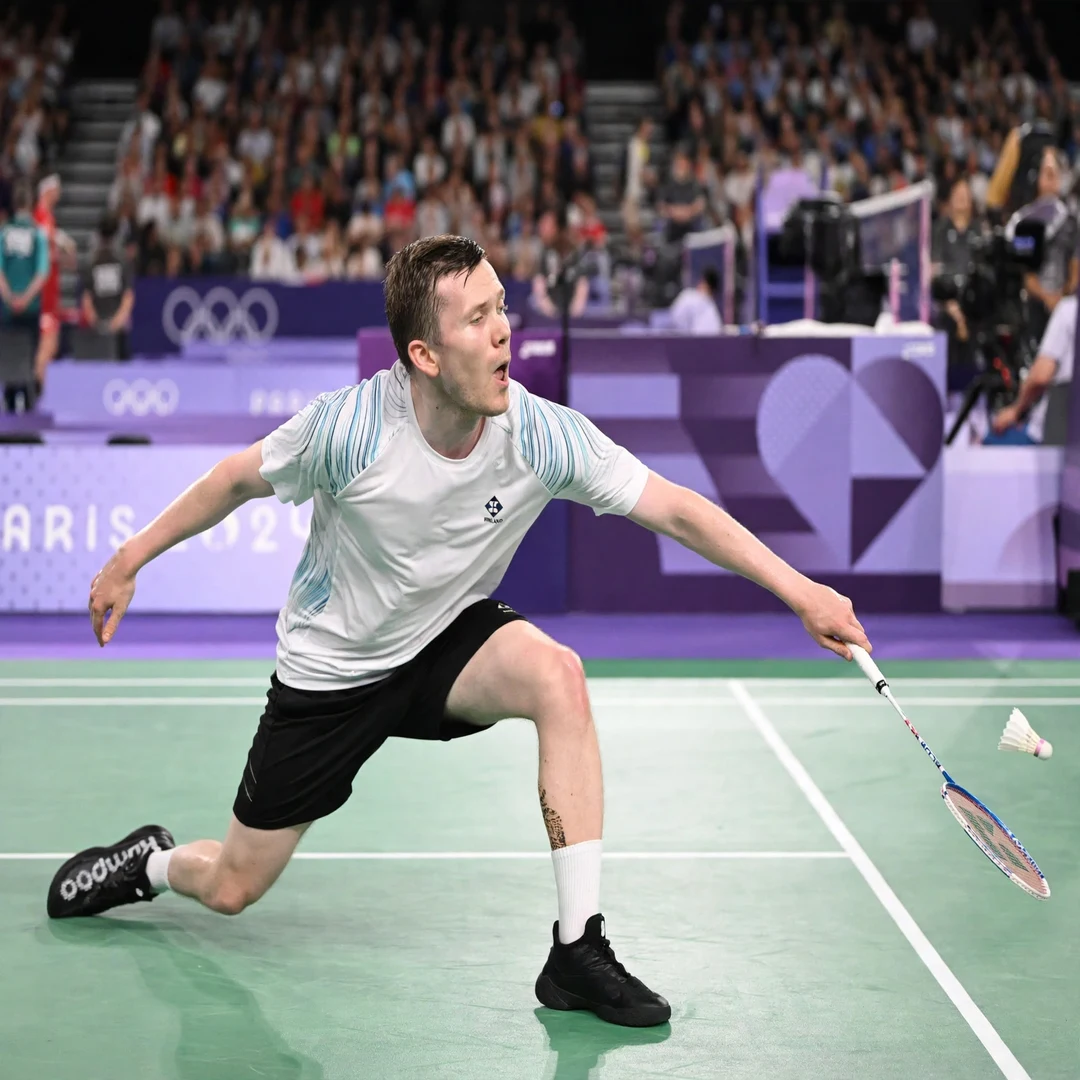
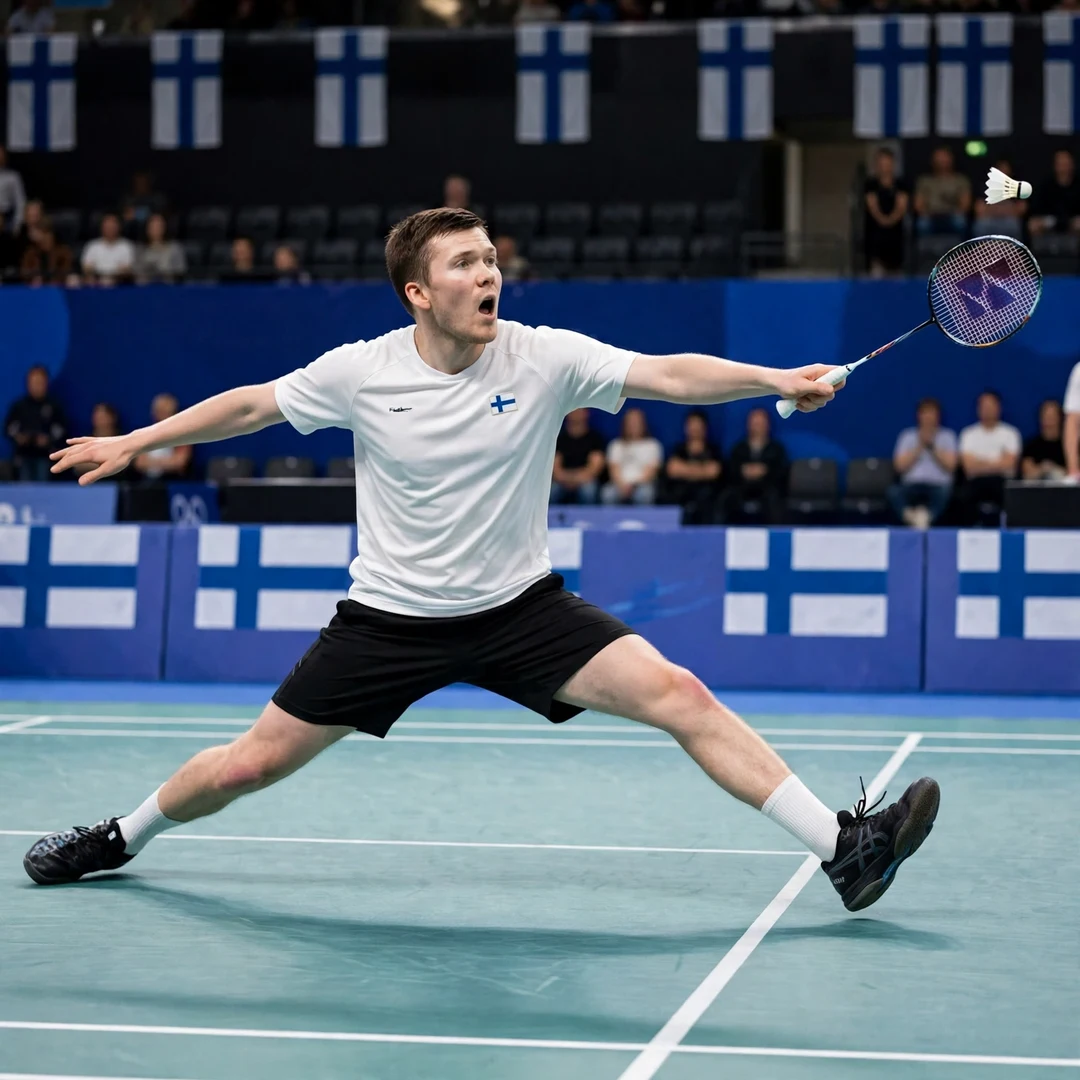
That summer he played his second Olympic Games, in Paris. Drawn in Group C, he beat Mauritius’s Julien Paul 21-9, 21-10 — the wide action photographs of his left-handed lunge at La Chapelle Arena now among the most recognisable images of Finnish badminton — before injury struck: he was forced to retire during his final group match against Thailand’s Kunlavut Vitidsarn, the eventual silver medallist, while trailing 4-21, 0-8. An Olympic campaign ended by his own body rather than by an opponent was the hardest result of his career to accept.
His answer came in 2025 — the best season of his life. Koljonen played the full World Tour calendar, reached the quarter-finals of the Al Ain Masters Super 100 and the Belgian International, and took a round-of-32 finish at the World Championships in Paris. In September 2025, at the age of 31, he climbed to world No. 47 — the highest ranking of his career, achieved more than a decade after he first represented Finland.
Then came Saarbrücken. At the HYLO Open 2025, a Super 500 event, the world No. 55 booked his maiden semi-final at that level, edging India’s highly rated Ayush Shetty 19-21, 21-12, 22-20 in the quarter-finals before Denmark’s qualifier Magnus Johannesen, the eventual finalist, ended the run 13-21, 13-21. ‘It was also a landmark day for Finland,’ the BWF reported. A Super 500 semi-final at 31, from a player who had retired hurt at the Olympics fourteen months earlier, is the result this whole profile is really about: development does not stop unless you do.
Career Milestone #4
Paris Heartbreak and a Career High at Thirty-One
The 2026 season has kept him inside the world’s top 70 at 32. At the World Championships in New Delhi he fell in the round of 64 to Thailand’s Panitchaphon Teeraratsakul. In October he reached the Dutch Open semi-finals in ‘s-Hertogenbosch — beating S. Sankar Muthusamy Subramanian, Enogat Roy and Adith Karthikeyan Priya before losing to Israel’s Daniil Dubovenko — and played the Czech Open in Prague days before the Week 43 rankings placed him at No. 66 with 26,970 points. At home, he remains Finland’s standard-bearer alongside the younger Joakim Oldorff: two Finns inside the world’s top 66, from a nation of five and a half million.
Koljonen’s schedule explains his longevity. For over a decade he has mixed World Tour events with Europe’s Challenge circuit, choosing tournaments where his ranking earns main-draw places and banking points steadily instead of chasing only glamorous stops. He has also managed his body honestly — the Paris retirement could have ended his career; instead, a patient rebuild produced a career-high ranking thirteen months later. For young players the lesson is unglamorous and priceless: careers are built by planning seasons, not just matches.
Playing Style
The Left-Handed Wall: Angles, Defence and Patience
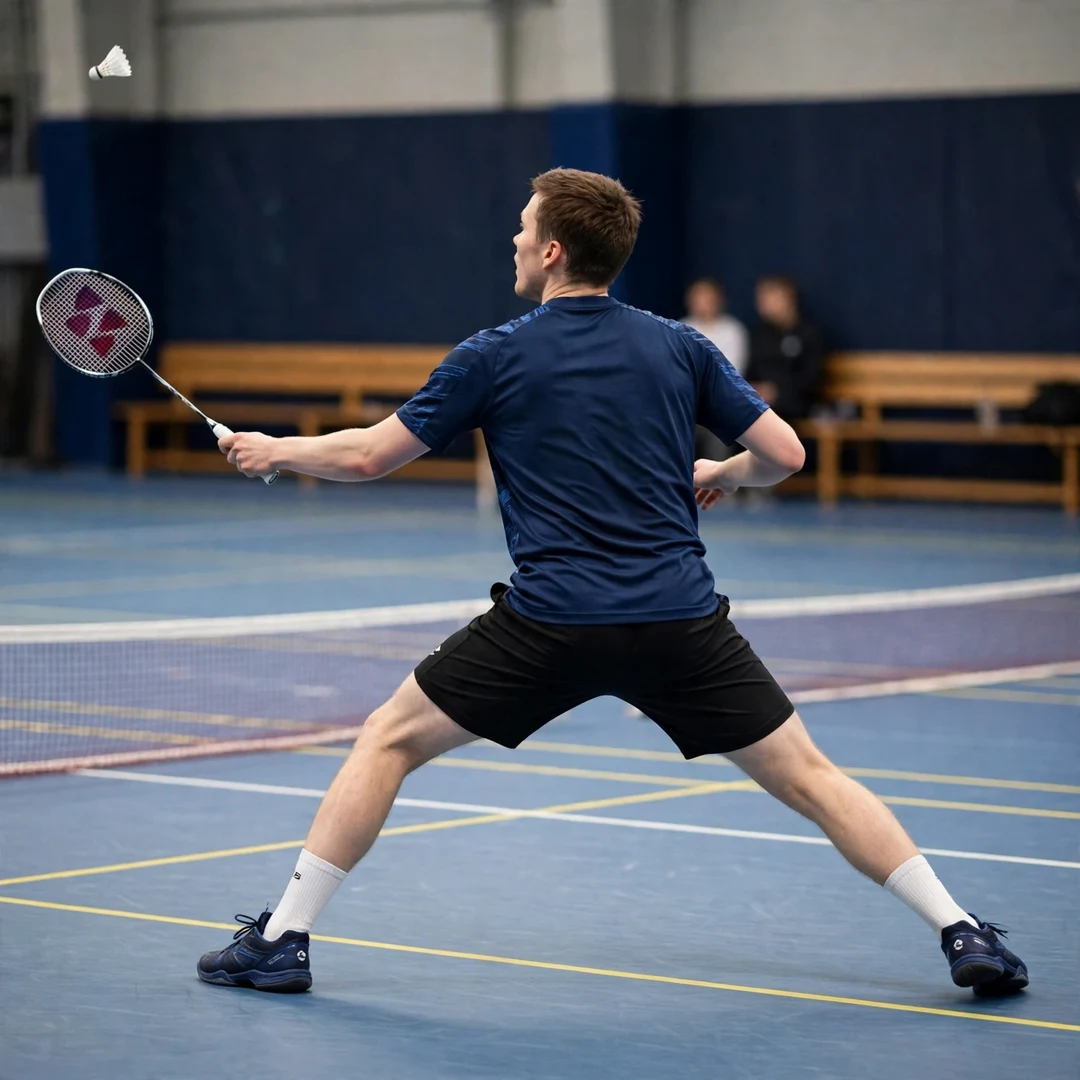
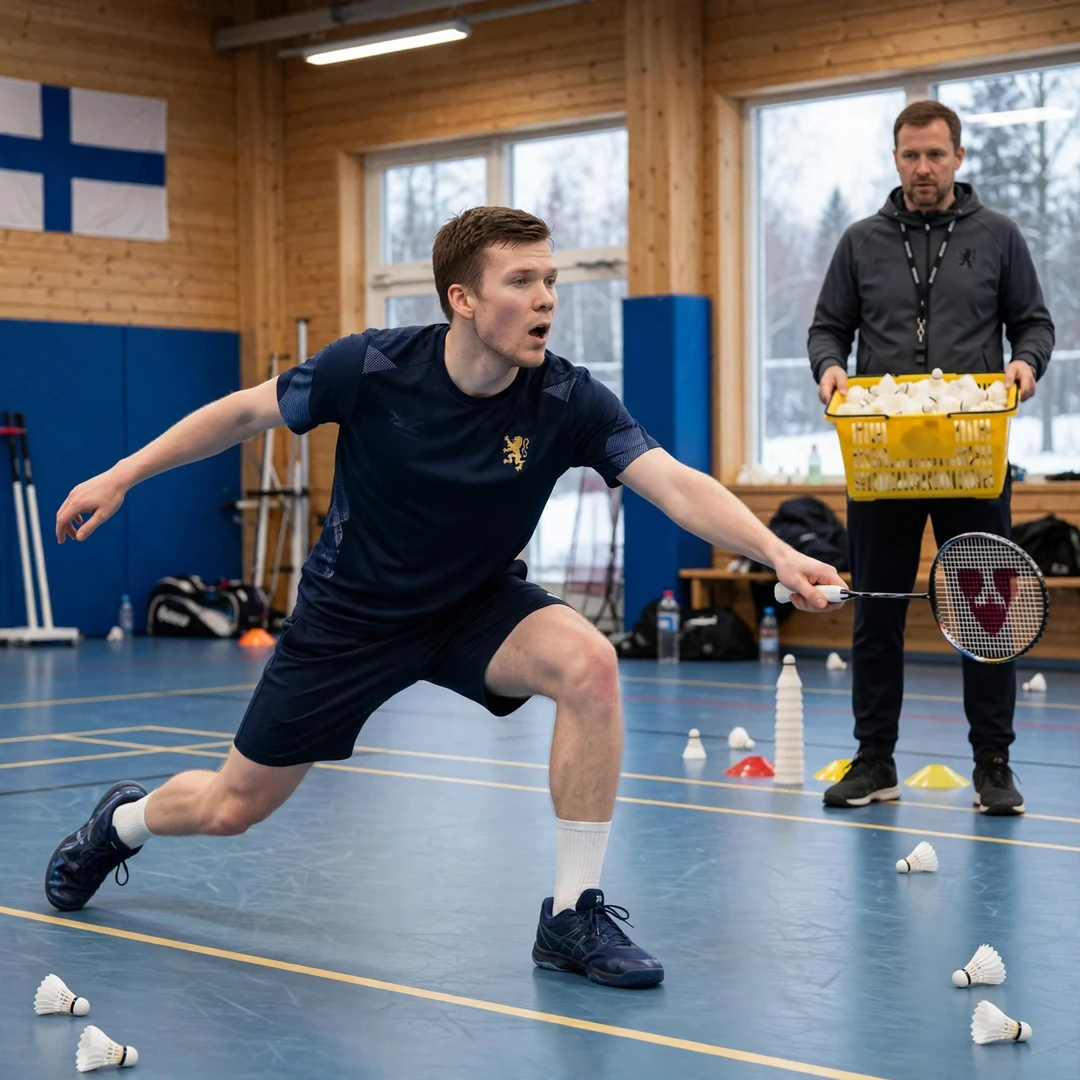
Koljonen’s game starts with being left-handed — and everything flows from the angles that creates. Right-handed opponents spend their careers grooving patterns against right-handers; against Koljonen the geometry flips. His forehand cross-court from the deep corner travels to the side right-handers defend least naturally, and his spins and slices at the net arrive from the opposite side they expect. Coaches call left-handers ‘angle players’, and Koljonen is a textbook case.
Within rallies he is patient and stubborn. His defence sits deep and balanced, his clears pin opponents to the back tramlines, and his net play — the tumbling, spinning shots that a lifetime on the European circuit teaches — wins the front-court battles that decide long matches. His signature wins share a pattern: Kyiv 2021 and Saarbrücken 2025 were both built on refusing to give away cheap points until higher-ranked opponents started forcing winners and missing. When the opening finally comes, his attack is placed, not blasted: placement first, power second.
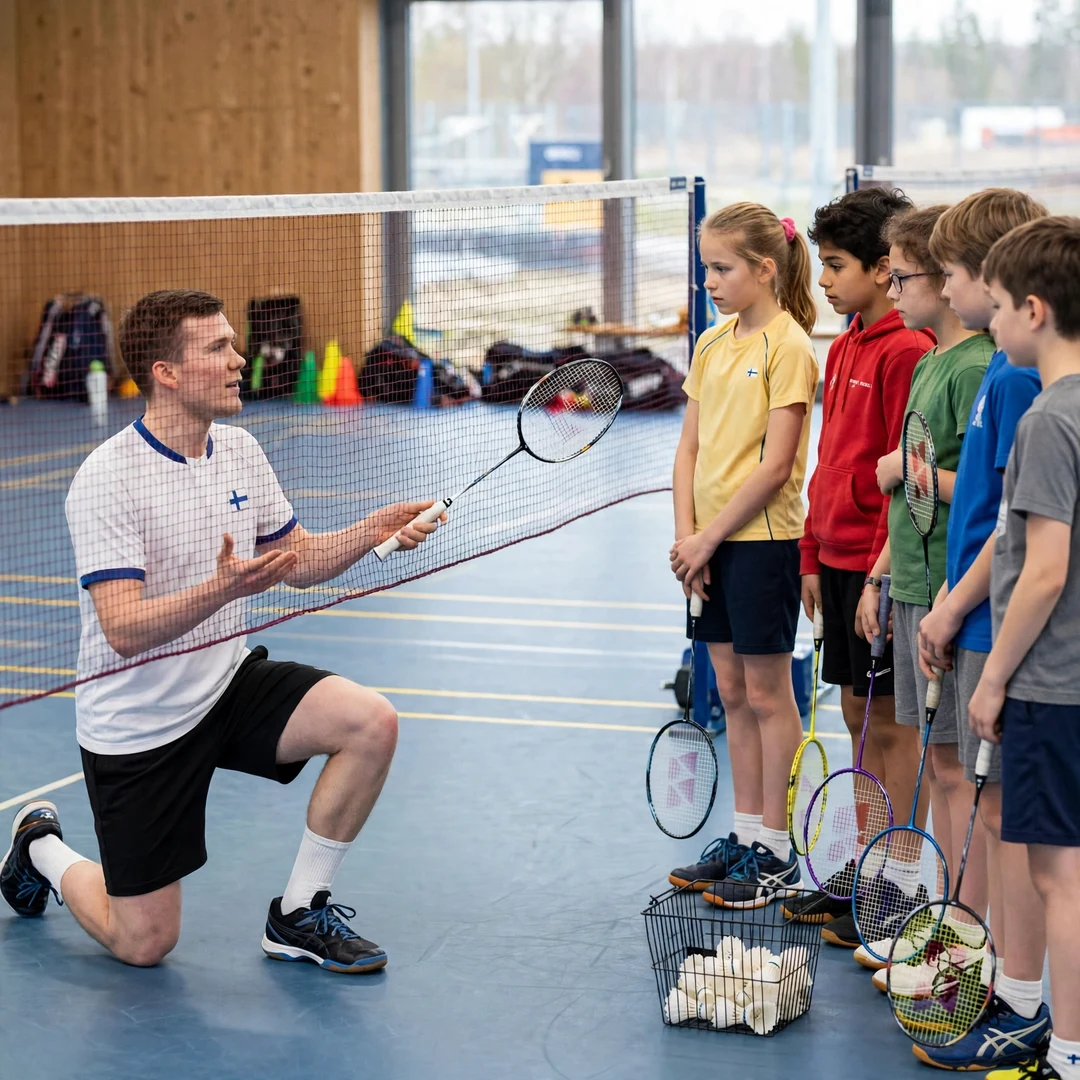
Young players studying Koljonen should notice how much of his game is copyable. You cannot copy being left-handed, but you can copy the habits: build rallies before ending them, defend without panicking, keep the shuttle tight at the net, and aim for the corners of the court rather than the opponent’s body. His career also gives left-handed juniors a genuine role model — proof that the southpaw style, drilled properly, troubles even the world’s top 15.
Mental Strength
Sisu: Perseverance, Patience and Never Quitting
Finnish culture has a word for Koljonen’s defining quality: sisu — the stubborn refusal to quit when quitting would be reasonable. Ranked world No. 80 at 27, he won Finland’s first European medal. Written off after an injury retirement at the Paris Olympics, he reached his career-high ranking at 31 and a Super 500 semi-final a few weeks later. His career is a twelve-year argument that a player’s development does not stop at 25 — or at 30.
His response to defeats is equally instructive. Alongside his three titles he has lost finals in Slovenia, Bulgaria, Finland, Iceland, the Netherlands, Bahrain, Poland and Sweden — eight runner-up finishes — and kept entering the next tournament. He lost to Axelsen at the European Championships, the Tokyo Olympics and the 2024 Europeans, and kept building a game that could trouble everyone else. For a junior, Koljonen’s record should be opened after every painful loss: this is what a career looks like when you treat defeats as data, not verdicts.
Practical lessons from his journey include giving yourself time — his biggest results came at 27, 30 and 31; building a complete game that travels, because a rallying style wins in small halls and big arenas alike; using team events to learn pressure, as he did from Basel 2014 onwards; and protecting your body, because the best ability in a long career is availability. None of these lessons requires a famous academy or a big budget — they require a plan, a club that believes in you, and the patience to outlast your own doubts.
Learning Reference
ST Badminton Academy Connection
ST Badminton Academy has no official partnership or endorsement from Kalle Koljonen. He is not connected with our academy, and this profile is published purely as an educational case study for parents and junior players who want to understand how a player from a small badminton nation built a twelve-year international career.
Many of our students from Malaysia and visiting learners from Singapore study his matches to understand the left-hander’s advantage: how Koljonen’s cross-court angles unsettled seeded players in Kyiv, how his defence absorbed Ayush Shetty’s attack at the HYLO Open until the Indian’s errors came, and how a player ranked world No. 80 used one European Championships to change his country’s badminton history.
We encourage our students to observe his rally construction and his calm between points — the walk back to the service box, the pause used to reset, the next rally played without the last one’s emotion. In a small-nation career there is no room for wasted energy, and Koljonen wastes none.
FAQs: Kalle Koljonen Finnish Badminton Player
Here are answers to common questions about Kalle Koljonen’s career, achievements and what young players in Malaysia can learn from the Finnish left-hander’s remarkable staying power.
Who is Kalle Koljonen and which country does he represent in badminton?
Kalle Koljonen is a Finnish professional badminton player competing in men’s singles. Born on 26 February 1994 in Helsinki, he developed at Tapion Sulka in Espoo, has represented Finland for over a decade, played at two Olympic Games, and won the first European Championships medal in Finnish badminton history, a bronze in Kyiv in 2021.
What are Kalle Koljonen’s biggest badminton achievements?
Koljonen’s major achievements are the bronze medal at the 2021 European Championships in Kyiv — the first European Championships medal in Finnish badminton history — team bronze at the 2014 European Men’s Team Championships in Basel, three BWF International Challenge/Series titles (Hungarian International 2015, Norwegian International 2016, Türkiye International Challenge 2024), two Olympic appearances, and a semi-final at the HYLO Open 2025, a Super 500 event. He reached his career-high world ranking of No. 47 in September 2025.
What is Kalle Koljonen’s playing style?
Koljonen plays a patient, left-handed rallying game based on angles, tight spinning net shots, deep clears and stubborn defence. He does not rush to finish rallies; instead he constructs them, moves opponents into the corners with cross-court shots right-handers find awkward, and attacks by placement when the opening is real.
How did Kalle Koljonen perform at the Olympic Games?
Koljonen played two Olympic Games. At Tokyo 2020 he beat Austria’s Luka Wraber in Group E before losing to eventual champion Viktor Axelsen. At Paris 2024 he beat Mauritius’s Julien Paul in Group C, but injury forced him to retire during his final group match against Thailand’s Kunlavut Vitidsarn, the eventual silver medallist.
How can my child learn from Kalle Koljonen’s training approach?
Young players can study Koljonen’s approach by copying the habits behind his longevity: train rally construction and defence before highlight-reel smashes, practise net shots until they spin tight over the tape, plan a season that mixes achievable tournaments with ambitious ones, and treat fitness and recovery as seriously as technique. At ST Badminton Academy we use his HYLO Open win over Ayush Shetty as a video lesson in patience against bigger hitters.
Did Kalle Koljonen win any junior titles?
Koljonen’s recorded breakthroughs came as a senior rather than as a junior star. His first international title was the Hungarian International in 2015, won at the age of 21, and his defining results — the European Championships bronze at 27, his Olympic debut the same year, and a career-high world ranking at 31 — all arrived in his late twenties and early thirties. His career proves that a player who is not a teenage champion can still reach the world’s top 50.
What are Kalle Koljonen’s best World Tour results?
Koljonen’s best World Tour result is his semi-final at the HYLO Open 2025 (Super 500), where he beat Ayush Shetty in the quarter-finals. He also reached the quarter-finals of the HYLO Open 2024 and the Al Ain Masters 2025, and the Dutch Open semi-finals in 2026, alongside main-draw appearances at Super 300 events such as the German Open, the US Open and the Canada Open across his career.
What playing style should young players learn from Kalle Koljonen?
Young players should study Koljonen’s complete game rather than one spectacular shot: the patient rally construction that wears opponents down, the left-handed cross-court angles, the defence that refuses to leak errors, and above all the mindset that kept improving for twelve years until it produced a career-high ranking at 31. His game is built from trainable skills, which is why coaches love teaching from it.
Does ST Badminton Academy have any connection with Kalle Koljonen?
No, Kalle Koljonen is not a student, coach or ambassador of ST Badminton Academy. He represents Finland and developed through Tapion Sulka and the Finnish national team. However, coaches at our academy in Kuala Lumpur regularly use his matches as teaching material, because his career shows what patience, planning and resilience can achieve for players from smaller badminton nations.
Kalle Koljonen Career Highlights
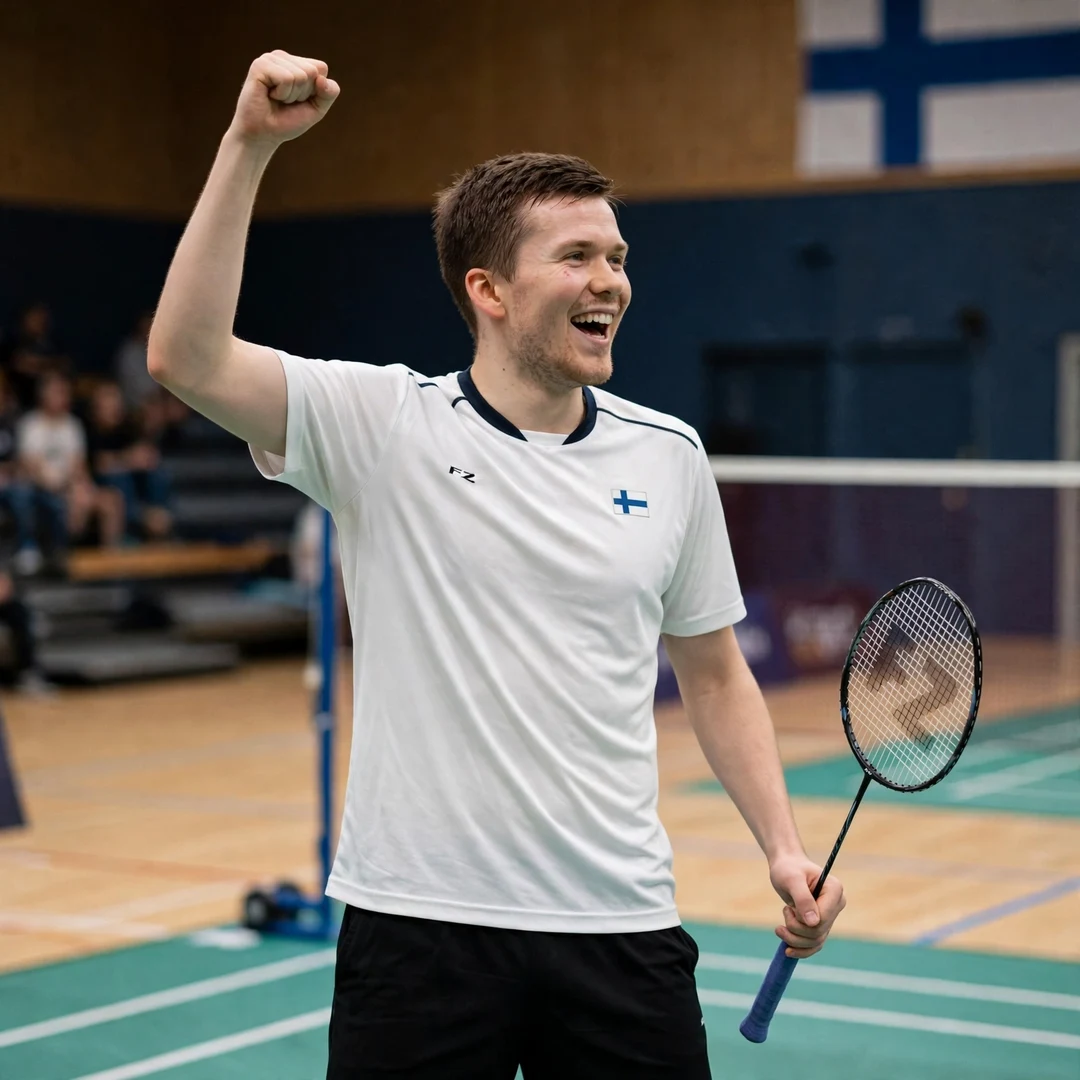
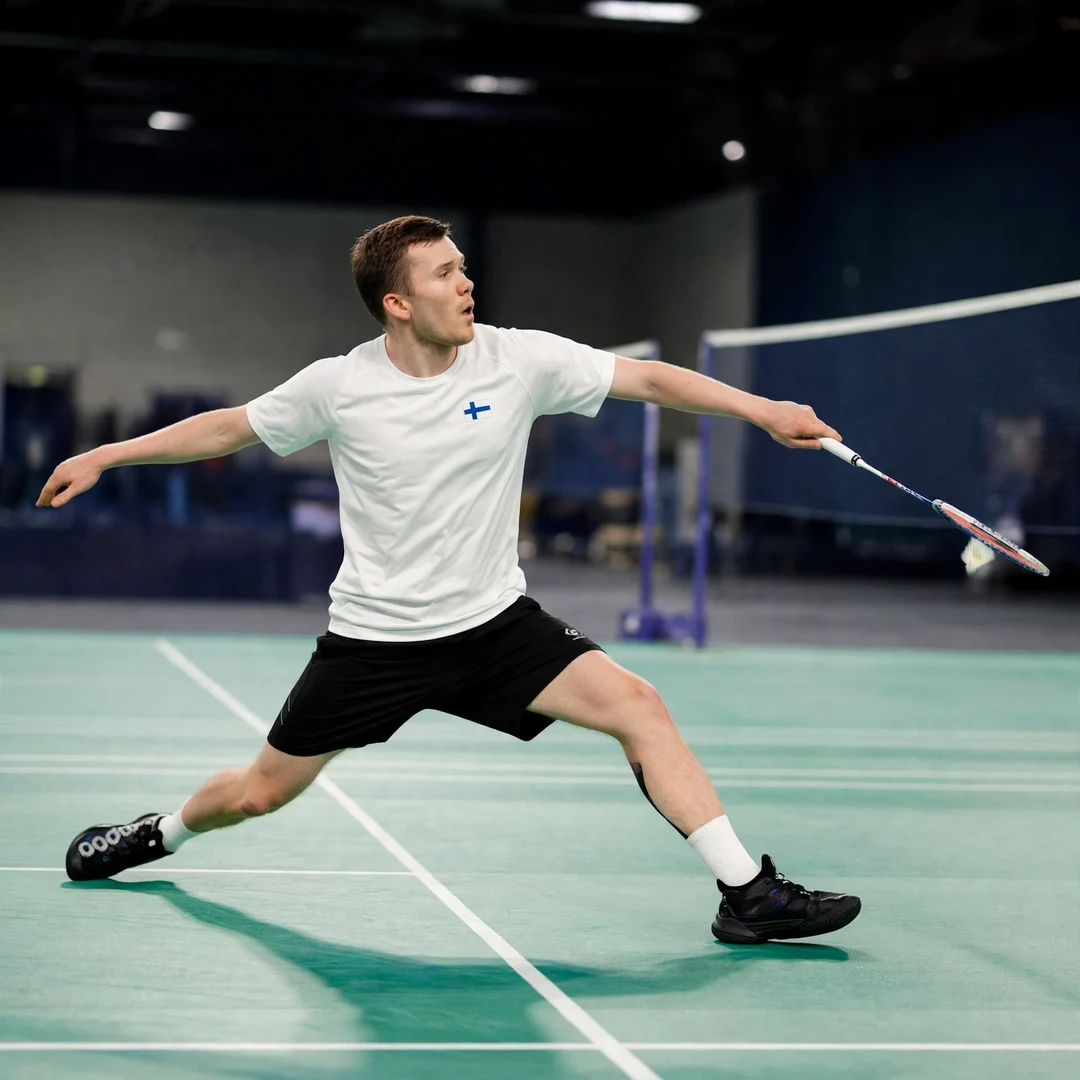
Career Statistics and Rankings
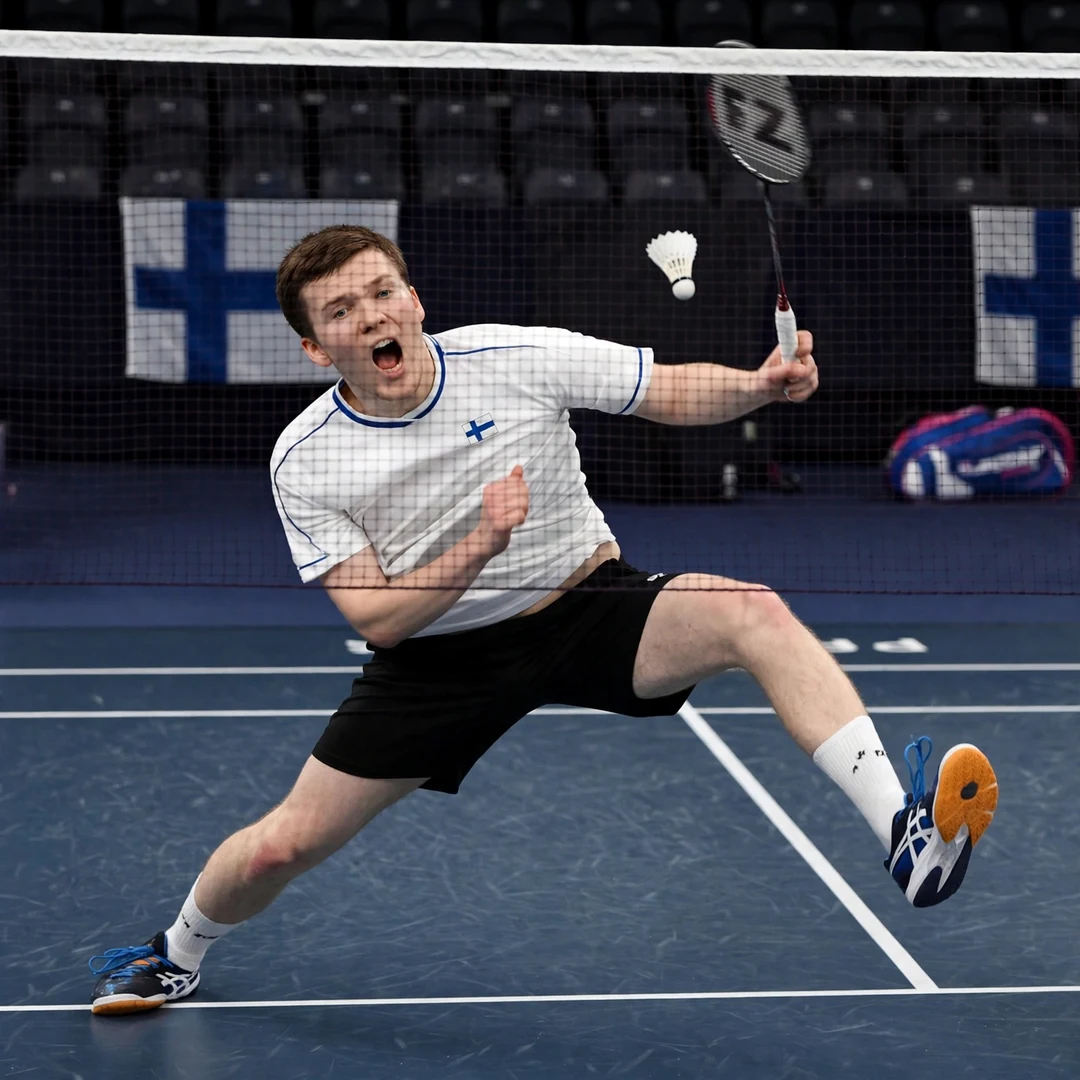
Kalle Koljonen, born 26 February 1994 in Helsinki, Finland, has built one of European badminton's most durable careers: a European team bronze in 2014, a first international title in 2015, a historic European Championships bronze in 2021, two Olympic Games, a comeback title in 2024, and — at 31 — his best season yet, with a career-high world No. 47 and a Super 500 semi-final.
| Development Area | Common Misconception | What Kalle Koljonen's Career Shows REALITY |
|---|---|---|
| Junior Foundation | Talent alone decides who becomes a champion. | Koljonen's breakthrough came with no junior hype behind him — ranked world No. 80 at 27, he beat two seeded players in Kyiv to win Finland's first-ever European Championships medal. |
| Playing Style Priority | Kids should copy the flashiest attacking shots. | Koljonen built a complete left-handed game first; his angled winners are the finishing touch on patient defence, tight net play and relentless rallying. |
| Fitness Importance | Juniors can out-train everyone without rest. | Koljonen's career-high ranking arrived at 31, after more than a decade on tour — smarter scheduling and honest body management, not more hours, kept him improving. |
| Mental Approach | Top players never get nervous or upset. | Koljonen retired injured at the Paris Olympics, rebuilt, and reached a Super 500 semi-final the following season — mental skills are trained, not inherited. |
| Attacking Training | Smashing harder is always the answer. | His HYLO Open 2025 quarter-final win over Ayush Shetty (19-21, 21-12, 22-20) and his Kyiv wins over Popov and Gemke came from left-handed angles and placement, not raw power. |
| National Milestones | Only world titles matter. | Koljonen's 2021 European Championships bronze — the first medal a Finnish player had ever won at the event — and his 2014 team bronze in Basel made him a national trailblazer — continental milestones build a career step by step. |
| Career Timeline | Champions peak once and fade fast. | From a first international title in 2015 to a career-high world ranking ten years later, Koljonen proves sustained development beats a short peak. |
Study Kalle Koljonen's Work Ethic and Professional Approach
This profile explains who Kalle Koljonen is, his major achievements, and what developing players can learn from his journey. Whether you are a parent in Kuala Lumpur, Cheras or anywhere in Malaysia wondering whether your left-handed child has an advantage worth building on — or whether it is too late to start seriously at 16, 18 or 20 — Koljonen's story carries the answer: development is a long game, and the patient players win it. Book a trial class with ST Badminton Academy on WhatsApp at +60 17-684 2136 and let your child begin a development journey built to last.